The Old North from Peneverdant

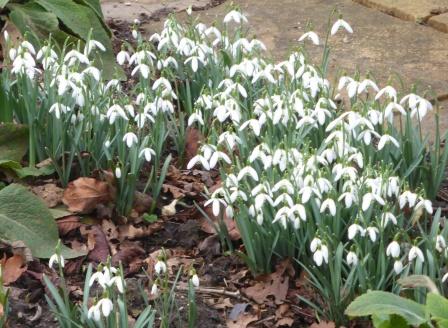
SnowdropsIn the land where I live, spring awakes. Snowdrops in their prime unfold the voluminous skirts of their lanterns. Lords and ladies push their courtship through the soil alongside first signs and scents of ransoms. Swollen mosses take on a bright green living vibrancy.

As I walk the path centuries of ancestors walked to St Mary’s Well, I hear the loudness of a thrush. Could it be the one who calls me from sleep each morning, speckled chest blanched and white as birch amongst ash and sycamore? The trees hold back for now, but I know the sap will start rising soon.

I pass the site of the healing well and cross the road to the War Memorial. Splashes of pink, purple and yellow primroses are planted in beds before the Celtic cross. Etched on blue-grey slabs are the names of seventy-three men who lost their lives in the First World War and forty-six who died in the second. They are honoured and remembered here. I also think of the dead who have no memorial or whose memories have been erased or forgotten.

I follow the footpath uphill onto Church Avenue. Leading to St Mary’s Church, it once went to a Benedictine Priory, dissolved and more recently demolished. A strange road this; trodden by pilgrims in search of miraculous cures and by funeral processions. By soldiers too, maybe armies, defending this crucial position from what we now see as the castle motte.

Passing the church on the hill’s summit I stand in the graveyard amongst tilted and fallen headstones, beneath sentinel beech trees whose shells and bronzed and curling leaves still litter the greening earth.

There’s no access to the motte’s vantage point, but through leafless trees I can make out the city of Preston with its clock tower, steeples, tower blocks and huge manufacturies along Strand Road. I recall images of its panoply of smoking chimneys, flaming windows, imagine the pounding Dickensian melancholy-mad elephants.

Preston’s sleeker now. Cleaner. Less red and black. Concrete grey. Not so smoky. But sometimes the industrial pall still holds. Somewhere behind its walls lies a medieval town and behind that…

The Pennines form a sweeping backdrop, rising higher than Priest Town’s spires ever could; Parlick, Wolf Fell, Longridge Fell, Billinge Hill, Great Hill, Winter Hill. An easterly green and purple barricade. To the west, the river Ribble, Belisama, strapped into her new course, stretches long arms to her shining estuary. A sea gull cries over the horizon and disappears.

I’ve spent several years researching the history of Penwortham. The Riversway Dockfinds mark the existence of a Bronze Age Lake Village. Ballista balls on Castle Hill and a huge industrial site at Walton-le-dale ascertain a Roman presence. Following the breakdown of Roman rule, history grinds to a halt.

There is a black hole in Penwortham’s past the size of the Dark Ages; during the time of the Old North.

Historians have conjectured about this. David Hunt and Alan Crosby agree that place names (where we find a mixture of Brythonic and Old English, like Penwortham* often conjoined) suggest a gradual settlement of the local area by Anglo-Saxons during the seventh century. They say Penwortham’s remoteness on the edges of Northumbria and Mercia meant it was not a major concern. However, this conflicts with the significance of its location as a defensive position for the early Britons and Romans and later probably for the Saxons of Mercia and the key role it played for the Normans during the harrying of the North.

History starts up again with the Saxon hundreds, invasions from Scandinavia and the Norman Conquest. But what happened in between?

Unfortunately, likewise, there is a black hole in the history of the Old North the size of Penwortham. And it isn’t the only one.

The very concept of ‘Yr Hen Ogledd’ ‘the Old North’ is problematic. It is a term used post datum by scholars to identify an area of land covering the majority of northern England and southern Scotland from the time of the breakdown of Roman rule in the fifth century until the Anglian kingdom of Northumbria came to dominate in the eighth century.

During this period, it was simply known as ‘Y Gogledd’ ‘the North’. Its people spoke a Brythonic language known as Cumbric, which was similar to the Cymric language of the Welsh. Its rulers ‘Gwŷr y Gogledd’ ‘the Men of the North’ claimed common descent from either Coel Hen (Old King Coel) or Dyfnawl Hen. Again, the genealogies are problematic because they were created by kings to certify their reign by tracing their lineage back to legendary ancestral figures.

The main kingdoms of the Old North are usually identified as Alt Clud, in the south-west of Scotland, which centred on Dumbarton and later became Strathclyde; Gododdin, in the south-east of Scotland, which had a base at Edinburgh; Elmet, in western Yorkshire and Rheged in north-west England.

The location of Rheged is a matter of ongoing debate. For Ifor Williams it centres on Carlisle and the Eden Valley and covers Cumbria, the Solway Firth and Dumfries and Galloway. John Morris posits the existence of a northern Rheged in Cumbria and a southern Rheged that extended into Lancashire and Cheshire. On the basis of landscape and resources, Mike McCarthy suggests a smaller kingdom or set of sub-kingdoms existed either north or south of the Solway. If McCarthy is correct, we do not have a name for present day Lancashire at all but a black hole the size of a county or larger!

Another problem is that textual sources about the Old North are extremely limited. We have some historical records such as the Annales Cambriae, the Historia Brittonum and Anglo-Saxon Chronicle. Much of the history of this period is derived from the heroic poetry of the Dark Age bards Taliesin and Aneirin. Later saga poetry construes dramatic dialogues between characters associated with earlier events.

Research leads to where history and myth converge but can take us no further. It becomes necessary to step beyond study across the threshold to otherworlds where the past, our ancestors and deities still live.

So I speak my intentions to the spirits of place; the Lady in the Ivy with her glance of green, wood pigeons gathered in the trees, the people buried here in marked and unmarked graves.

I speak with my god, Gwyn ap Nudd, who abides beyond this land but sometimes seems closer than the land itself. The god who initiated and guides this quest.

His suggestion: what is a black hole but a portal?

Our agreement stirs a ghost wind from behind the graves, rustling bronze beech leaves and tree whispers from above.

The hill seems greener. A single white sea gull barks. Then long-tailed tits come chittering and twirling to the brambles.

Beech trees and castle motte*Penwortham first appears in the Domesday Book in 1086 as ‘Peneverdant.’ Writing in 1857 Rev. W. Thornber claims this name is of British origin and ‘formed of three words- pen, werd or werid and want, as Caer werid, the green city (Lancaster) and Derwent, the water, that is the green hill on the water’. This describes exactly how I imagine Castle Hill would have looked during the eleventh century near the Ribble on the marsh. However, ‘verdant’ has always sounded more like French for ‘green’ to me.

Alan Crosby says ‘Peneverdant’ results from a Norman scribe trying to write an unfamiliar word (which was likely to have been in use for up to 500 years) phonetically. He tells us the ‘Pen’ element in Penwortham is British and means ‘prominent headland’ whilst ‘wortham’ is Old English and means ‘settlement on the bend in the river’.

If Penwortham had an older British name prior to Saxon settlement, it is unknown. I can’t help wondering if it would have been something like ‘y pen gwyrdd ar y dŵr,’ which is modern Welsh for ‘the green hill on the water’. It’s not that far from Peneverdant.

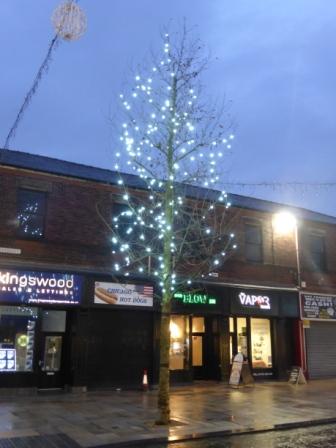
Fairy Lights and The Strangeness, Fishergate

Last night I dreamt I was watching a television programme in my living room. Somehow I entered it and became an active participant. With a group of friends I was preparing to stage a protest. For it to succeed, a special light on a tree needed to be changed. I ran with a blonde, sporty woman (who I did not know) across a car park to the tree, which stood on the end of a busy city street I identified as Fishergate in Preston.
The lights were off. The one we had to change looked more like a silver Christmas decoration and stood out as markedly special and ‘other.’ As the woman started taking it down, chatting easily, she paused. Her expression froze into uncanny wistfulness and her gaze grew distant. Speaking in a voice from far away, she told me “it belonged to Gwyn ap Nudd.”

I knew at this point (somehow being outside the programme and within it) the words and memory that possessed her were not her own. Like in a film there was powerful, beautiful music. A strange wind blew, stripping away the façade of the city streets. I had a profound sense of another landscape stirring and awaking at the sound of Gwyn’s name. Once the strangeness had blown over, the woman began chatting normally as if nothing had happened and traffic started driving past again.

Throughout the preparations there were rumours about the massing of an army of otherworldly beings. As someone in the programme with an audience member’s knowledge I knew they were the fay / Gwyn’s hunt and could sense them gathering in clouds and forests somewhere behind. I had the feeling they might disrupt the clash between the two sides in the protest. As audience, I was aware this was the part I was looking forward to.

This awareness brought me back to my living room to see the credits rolling down the screen…

***

The dream inspired me to walk into Preston at dusk tonight. Several months ago, Fishergate (the high street) was pedestrianised. The road was narrowed to make way for wider pavements and as a final touch, trees. Delighted when I saw first saw them, I walked the street, greeting them in turn and welcoming them to the city.

Since the Christmas lights went off, the trees have been lit by fairy lights. Following rain and hail, the pavements gleamed. Reflected in windscreens the lights shone like cold stars, miniscule glances leaping from fragments of hail.

Fishergate, PrestonIdentifying the tree from my dream, I noticed all the lights were working.

Tree, FishergateI stood with the tree for a short while. Crossing the road and looking back, I saw huge dark ominous clouds gathering over the County Hall, which is where the anti-fracking protests will take place on the 28th and 29th of January.

Fishergate, County HallThe music of hail came down. An immense strangeness like none I had known before came over the city. I felt as if I stood in another Preston where the landscape was more than it was by the strange life of those lights against winter’s silver-grey sky. Everything seemed more profound and enthused with meaning, although I couldn’t divine what the exact meaning was.

Fairy LightWhat happened to the silvery light, which belonged to Gwyn ap Nudd and led me to the strangeness remains uncertain.

Review: Your Face is a Forest by Rhyd Wildermuth

Your Face is a ForestRhyd Wildermuth is a writer and social worker based in Seattle. He writes for ‘The Wild Hunt,’ ‘Patheos Pagan’ and ‘Polytheist.com’ and blogs at ‘Paganarch.com.’ He describes himself as ‘a dream-drenched, tea-swilling leftist pagan punk bard.’ He is also a student of Druidry with OBOD. What drew me to his work was his boldness, passion, vision and the fact he proudly and outspokenly ‘worships gods.’

Your Face is a Forest is a collection of essays and prose. Rhyd describes his style as ‘weaving a forest from meaning’. This book’s a tapestry of poetic prose and prose poetry woven from themes that make sense as a whole only in the non-rational way trees make a forest. It’s rough, edgy and raw, and also a little rough around the edges, which adds to its anarchic charm.

Rhyd invites the reader to step into his life and accompany him through the places where he lives into forests behind to meet the faces of ‘the Other’ in ‘tasselled willows’, pines and alders, satyr dances and Dionysian revels. To find the tooth of an elk long dead and buried where cars now drive. A world full of life and another world behind it.

What I love about this book is that Rhyd speaks deeply and richly of both worlds. On pilgrimages to France and Germany he tells of the wonder of waking in a field of rabbits, playing flute with locals on unknown streets, sitting within the pink fur womb of a Berlin bar. He speaks of his despair at social inequality and the continuing repression of homosexuality in Christian colleges. He is a poet of the sacredness of this-worldly life on all levels.

He also shares some of his innermost visions of the gods and otherworlds. These have guided his life and thus form the reader’s guiding threads. Outstanding was a vision of Bran, which deserves quoting in full; ‘When I saw Bran, his great black cloak rippled in an unseen wind, his powerful form straddling a Breton valley between the River of Alder and the sea. But the cloak fled from his body, a myriad of ravens having stripped from his flesh sinew and skin, leaving only great white pillars of bone, the foundation of a temple and a tower. I do not yet know where his head lies.’ On his pilgrimages we find a mysterious tower on a mountain, a stone head in a fountain and a magical cloak. But Rhyd doesn’t give all his secrets away.

Other deities include Arianrhod, Ceridwen, Brighid, Dionysos and the unnamed gods and spirits of the city streets, buried forests and culverted rivers. What I liked most about these sections is that rather than kowtowing to being acceptable, Rhyd speaks his experiences directly and authentically. This was encouraging and inspiring for me and I think will be for other polytheists whose encounters with the gods go beyond known mythology and conventional Pagan text books. There are few modern authors who speak of the mystical aspects of deity and Rhyd does it exceptionally well.

I’d recommend Your Face is a Forest to all Pagans who are looking for real, undoctored insights into nature and the gods. Because it’s not only about Paganism and is written by somebody fully immersed in the beauty and pain of life and the search for love I’d recommend it to non-Pagans too, particularly those interested in spiritual journeys and visionary prose and poetry. Quoting Rhyd’s dedication, to ‘Everyone who’s ever looked into the Abyss / And brought back light for the rest of us.’

Your Face is a Forest is available through Lulu: http://www.lulu.com/shop/rhyd-wildermuth/your-face-is-a-forest/paperback/product-21887986.html

Fish House Brook

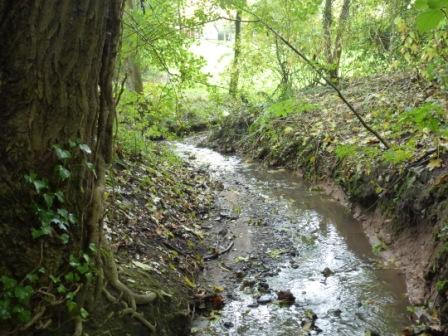
Fish House BrookFish House Brook is a stream in Penwortham, which runs from behind my street, Bank Parade, through Greencroft Valley to the river Ribble. Since I started litter picking in the valley three years ago I have been clearing the brook, walking it regularly and researching its history. This article traces its course from source to mouth and provides snap shots of the ways people have related to it over the last few centuries.

~

The source of Fish House Brook and its earliest stretch have been culverted underground. Its course is indicated by the street names Bank Parade and an adjacent cul-de-sac called Burnside Way. It runs underneath the gardens on the eastern side of Bank Parade.

Bank Parade and Burnside Way, courtesy of Mario Maps

Bank Parade and Burnside Way, courtesy of Mario Maps

A few months ago Gordon at number 14 kindly invited me into his garden to see the site of its steep banking, which is now occupied by a pond.

FHB tributary's old valley BP no. 14 - CopyHe also lifted the grille to let me take a peek at the swiftly flowing underground stream.

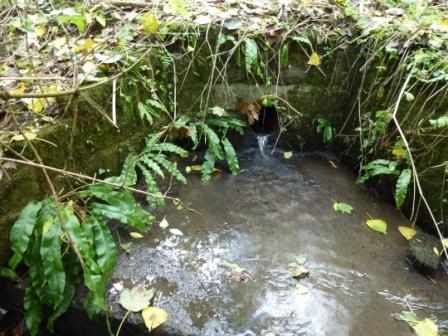
FHB culverted tributary - CopyThe brook now emerges from a concrete pipeline behind Malt Kiln Cottage.

Fish House Brook, sourceThe following maps show Fish House Brook running from behind Malt Kiln Cottage into Greencroft Valley in the 1840’s and today.

Malt Kiln Farm and Greencroft Valley

Malt Kilm Cottage and Greencroft Valley 1840’s, courtesy of Mario Maps

Malt Kiln Farm and Greencroft Valley

Malt Kiln Cottage and Greencroft Valley now, courtesy of Mario Maps

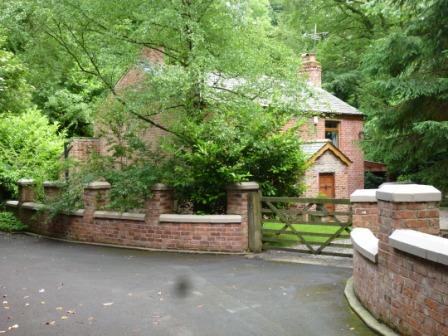
Malt Kiln Cottage

Malt Kiln Cottage

Malt Kiln Cottage originally housed a water mill used to mill grain for beer. A picture of the pool behind the mill leat can be found on the Tithe Map (1838). Elizabeth Basquill provides a detailed account of how the malsters in residence used water from the stream and adjacent well to soak barley in a malster’s trough before it was dried and delivered by horse and cart round the corner to the Black Bull pub (2).

Malt Kiln Cottage, Tithe Map, 1838

Malt Kiln Cottage, Tithe Map, 1838

During this period Fish House Brook must have been much larger and more powerful to turn a water wheel. Its diminishment shows the effect of building 300 houses and their accompanying pipelines for clean water, drainage and sewage during the Central New Towns Project in the 1980’s.

Greencroft Valley

Greencroft Valley

Greencroft Valley is the largest surviving green space between the new estates. The old field lines remain intact, indicated by rows of trees. The wooded areas provide living space and nesting places for hedgehogs, squirrels and birds including magpies, wrens, a variety of tits, nut hatches and a woodpecker.

Greencroft Valley

Greencroft Valley playing field

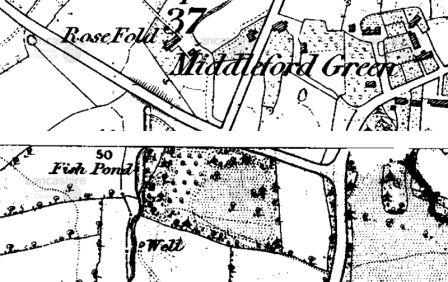
The brook has had its share of pollution problems, mainly from grey water out of faulty washing machines. Since reporting this, it has been less frequent. Frog spawn and frogs have been seen, and a few smaller insects. However, there is no sign of any fish. This is disappointing as the 1840’s map shows a fish pond, which according to the Tithe Map was in Fish Pan Field, suggesting local people used to pan in the brook for fish.

Fish Pan Field

Fish Pond and Greencroft Valley 1840, courtesy of Mario Maps

Fish Pan Field

Greencroft Valley now, courtesy of Mario Maps

The brook is culverted from Greencroft Valley beneath Hill Road South.

Fish House Brook, Culvert under Hill Rd SouthIt emerges close to Rosefold house and cottages.

Rose Fold Cottages

Rose Fold Cottages

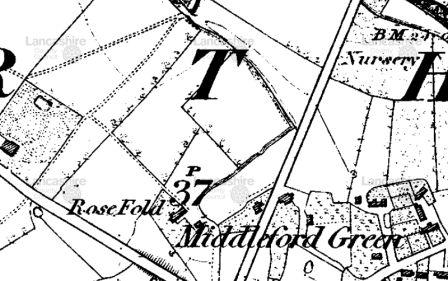
According to Elizabeth Basquill the cottages and yard were part of a tannery. During the late 19th century Fish House Brook was used to wash hides. ‘The hides were soaked in slaked lime first, then washed, and the hair and flesh scraped off.’ This process would have caused considerable pollution to the stream. Two adjacent fish ponds, which Elizabeth believes may have existed from the medieval period were ‘later used as tan pits for washing the skins’ (3).

Rosefold

Rose Fold 1840, Courtesy of Mario Maps

Rosefold

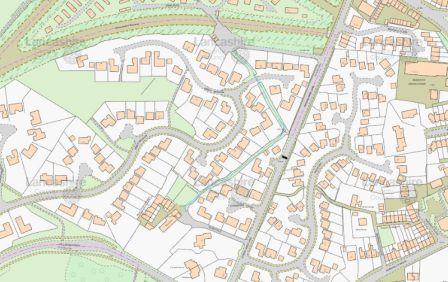
Rose Fold now, courtesy of Mario Maps

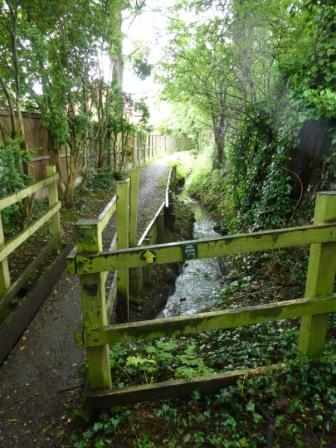
The first stretch of the brook, heading northeast, cannot be followed behind the houses. Where it makes a rightangle and heads northwest, a footpath runs alongside it. This follows the line of a much older route that led from Middleforth Green to St Mary’s Well (4).

Fish House BrookIt then bends right and passes through Campbell’s Park Homes following its old course round the back of the mobile houses.

Fish House Brook, Campbell's Park Homes

Fish House Brook, Campbell’s Park Homes

Campbells Park Homes, Meadows

Fish House Brook 1840, courtesy of Mario Maps

Campbell's Park Homes, Meadows

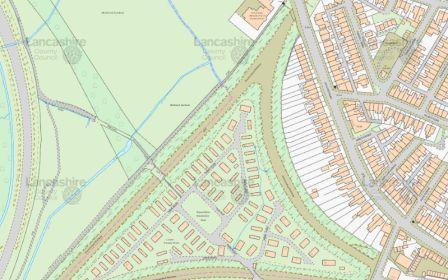
Fish House Brook, the Meadows and Campbells Park Homes now, courtesy of Mario Maps

The residential park nestles within the triangle of Penwortham Junction. The train lines pictured closed in 1965 and are now covered by beech, birch, sycamore, bramble and an array of wildflowers, forming important wildlife corridors.

Campbell's Park Homes

Campbell’s Park Homes

Another tributary enters Fish House Brook, running from the back of Far Field across the meadows. The pathway to St Mary’s Well crosses it, and there is a newer footbridge further south. At this time of year the meadows are thriving with mayflowers, buttercups, plantain, wild carrot, orange tipped and cabbage white butterflies and an abundance of bees.

The Meadows

The Meadows

The brook runs through Penwortham Allotments (unfortunately out of bounds) then is finally culverted beneath Leyland Road under Fish House Bridge.

Fish House Bridge

Fish House Bridge

Fish House Bridge

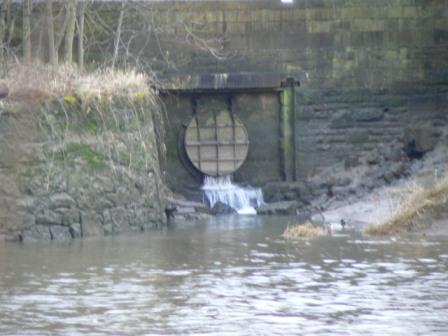
Fish House Brook culverted under Fish House Bridge

The 1840’s map shows a lodge beside Fish House Bridge. Alan Crosby says the bridge took its name from a timber building which ‘served as the quarters of the manorial river bailiff.’ This dwelling was adjacent to the fish garths, which were mainly used for catching salmon between December and August. It was the bailiff’s task to make sure the fishermen from different townships abided by the rules of the fisheries (5).

Fish House Bridge

Fish House Bridge 1840’s, courtesy of Mario Maps

Fish House Bridge

Fish House Bridge now, courtesy of Mario Maps

It is clear Fish House Brook derives its name from the Fish House, and as far as I know, no trace of an earlier name remains.

~

Each of these locations holds a story and discloses a relationship between the brook and the people who have depended on it. Since water started being piped in the 19th century, we’ve had no need to fetch it from wells or streams for drinking or bathing. Due to modern farming and production methods few of us rely on local waterways for fish, mill our own grain or tan our own skins.

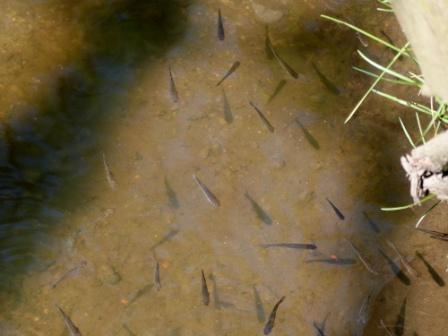
This has a distancing effect. Due to continuing building work, I cannot imagine a time when the water from Fish House Brook will be safe to drink. It is uncertain whether fish will return, although some small fish were sighted by mum in nearby Penwortham Brook.

Small fish photographed by my mum in Penwortham Brook. Can you identify them?

Small fish photographed by my mum in Penwortham Brook. Can you identify them?

Whilst it’s impossible to turn back the clocks, I think there is time to get to know and understand our watercourses, and the lives and motivations of the people who have worked with and changed them. This article is an early marker stone on the journey through this process for me.

(1) Courtesy of Mario Maps
(2) Elizabeth Basquill, More Hidden Histories of Penwortham Houses (2011), p6-11, 42-44
(3) Ibid, p34-36
(4) St Mary’s Well was famous for being the cleanest source of water in the area and was attributed healing properties. Local people used to walk a mile to access their favoured water source, and it was also a site of pilgrimage.
(5) Alan Crosby, Penwortham in the Past, (1988), p48

Gwyn Portrait, April’s End

The huntsman has ridden all night, following the brilliance of the spirit roads- the shining tracks that criss-cross the island of Britain. Instead of returning home he remains here for dawn, listening to the idiosyncrasies of each bird’s song, watching dew form on blades of grass, on petals of hawthorn blossoms and may flowers.

He is and is not the mist, riding through damp meadows over hills, mountains and moors on a pale horse accompanied by a hound of the same complexion. He is and is not each sun-lit cloud he travels with, the touch and whisper of the wind.

He cannot stay here long, for this world we see as the land of the living is not his. He must return home to Annwn, the Otherworld, to prepare for a battle that cannot be won. To fight for a maiden he shouldn’t have loved, shouldn’t still love… in bluebells and forget-me-nots, emerging greens and white and yellow flowers he sees her colours.

For a moment he is possessed by memories of their passion, and the crimes it drove him to. A glimpse of his blacked face in a reed strewn pool shows no amount of war paint can mask his guilt, which he must live with for as long as there are people to sing his songs.

He searches for a sign. What is Judgement Day? When is it? Although he knows the language of the trees and plants, the tracks of every wild creature and the flight of birds, these questions are beyond his power to divine. When the worlds end, will Creiddylad and I be together again?

May Flower, Penwortham

Corpse Road

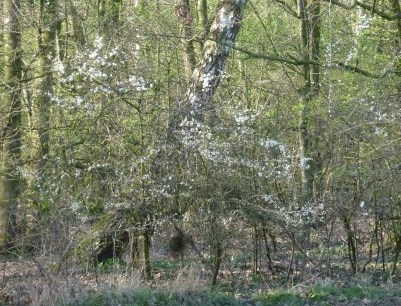
Birch and Blackthorn, Hurst Grange Park, PenworthamWho’ll walk the corpse road back to me?
– ‘Revenants’ Andrew O’Riordan

Where spring brings hope to downy birch
And blossoms of stars to blackthorn trees
When the hunt is still as the final frosts
Who will walk the corpse road back to me?

Where spring brings hope to drunks of the woods
With the pale potential of anemone
When my court dance in dew where a man lay cold
Who will walk the corpse road back to me?

Where spring brings hope to primrose hills
But none to vagrants on city streets
When wills clash like I do with impudent rivals
Who will walk the corpse road back to me?

Where spring brings hope to prison gardens
For a watchful moment the condemned walk free
When to solitary confinement comes Annwn’s darkness
Who will walk the corpse road back to me?

Where spring brings hope to those who can see it
Yet Victorian cells of asylums scream
When dreams of my kind are derided as madness
Who will walk the corpse road back to me?

Where spring brings no hope and death is release
And no fusion of flowers can quench the pain
When souls are lost as my absent queen
Will you walk the corpse road back to me?

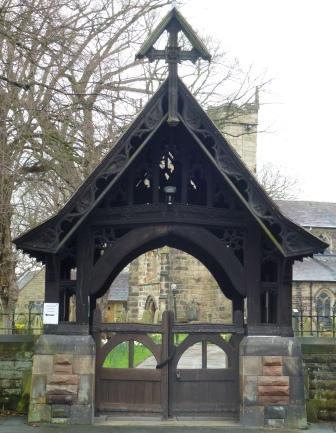
Lych Gate, St Mary's Church, Penwortham* Poem written in the voice of Gwyn ap Nudd, a British King of the dead and the fairies

Winter Kingdom

As I make my circuit stars hold vigil in an icy breath.
Roses of Annwn bring beauty from death.
Wintering starlings spotted with snow
sleep in a tree that nobody knows.
There is a courtship of stability in this kingdom of cold
where we reknit the bonds as dream unfolds
in shadows of farmhouses down the pilgrim’s path
through old stony gates in footsteps of the past
to the healing well where a serpent’s eye
sees through the layers of time’s disguise.
A procession sways down the old corpse road
where the lych gate swings open and closes alone.
From the empty church bells resound.
Reasserting its place on the abandoned mound
a castle extends to the brink of the sky.
Within its dark memory a fire comes to life.
As warriors gather to warm their cold hands
I know I am a stranger in a strange land.

Fungi, Greencroft Valley


*Roses of Annwn is a kenning for mushrooms I came across in The Faery Teachings by Orion Foxwood

Half Moon and the Holly King

Half moon over Greencroft ValleyHalf bitten moon cries a waning scream.
Her severed pieces are brought by the stream
to the cavernous lair of the holly king
who grinds his axe on a sharpening stone
and prepares his block for the gore of heroes.

Silent and pensive he waits in his cave.
The moon arrives and his blood red eyes
are filled with silver swimming.
Outside the blackbirds sing
a song which knows no kenning.

The half formed moon describes her sorrows.
The king laments his lack of heroes-
vision waned and bravery gone.
Blackbirds sing their endless song
of an empty sky and bloodstained block…

then as hope elides a knight of dawn
approaches on a starless horse
with fire-lit eyes and maenad’s locks.
She boldly casts her gauntlet down
at the feet of the holly king.

The half formed moon departs from his arms.
He performs his task with an aura of calm.
The blackbirds watch in silence.
Then moon and lair are gone.
Dawn rides free, afraid, yet unharmed.

Holly, Greencroft Valley

Awenydd

I.
As the longest night looses
darkest claws I walk amongst shadows
at dawn where moonlight floods
through the arms of trees
and a solitary lamppost lights the vale.

Lamppost, Greencroft ValleyII.
River-trees stand stark and tall,
consistent in her mind’s
unravelling of currents and tides,
cormorants and gulls,
a ragged heron.

RibbleIII.
The host’s roar to a lullaby
quells as moon leads dawn
over chiming hills to be swallowed
by cloud as the hunt returns
to graveyard and mound.

Moon over Castle HillIV.
My lord of the fay
makes his presence known.
He speaks to the mist within my bones
like the lych gate unfastening,
awenydd– my magic word.

Lych gate, St Mary's ChurchV.
The spirit paths are mine
to walk for an evanescent pulse
of dawn. Time stands still
from vale to hill and the stream
sings: awenydd, awenydd.

Fish House Brook