The King of Annwn’s Cheekbones

If I had a thousand words 
to describe the King of Annwn’s cheekbones 

I would say they were like icebergs, 
like the hulls of the ships that crash into them and sink, 
like the angles of the limbs of the dead men who float to the surface, 
like the way He lays out the dead in the icy caverns where the ice dragon
roams with a single icy jewel hidden deep within his forehead.

I would say they are like the way He says
the letter ‘A’, the capital, with the triangular tip, 
as if it is not the beginning but the end of the alphabet.

I would say they are like the broken glass
of shattered coffins in my good dreams and not the bad.

I would say they are the antithesis of polar bears and the peak of antinomy.
I would say that I have seen many a skier slide down them to death.

I would say they are like runways and the paths of aircraft
and the flightpaths of starships,
the souls trampling
across them to the otherworld.

I would say they are like the travels of swans and geese.

I would say they are like the strobe lights that shine down 
from the helicopters that fly over my house at night,
sometimes hunting for the criminals 
as He is always hunting 
for the dead.

I would say
they are like the spotlight
in which I stood, dancing, seeking to win His favour.

I would say they are like His anger, like His fury, like His lament,
that they were bent with a hammer in a forge that was
neither hot nor cold nor even burning.

I would say they are his secret.

I would say everybody knows but keeps quiet.

I would say they are like the divine madness that unfolds
itself within His followers in their shapeshifting,
folding, unfolding, spreading wings.

I would say they are bone-light
but heavy in my hands.

I would say
they are like the precipice
I walked on so narrowly between life and death,
so very thin and dangerous on both sides a fall into the abyss.

I would say they were the answer to my prayer after a long dark night
of soul searching, the first slants of the appearance 
of a face in the darkness,
the first strokes
of a name written on my soul.

I would say they were the remedy 
to the poison within me, the pharmakon, the paradox.

I would say they were the pride that summoned me from shame.

I would say they were the answer to my cry for help.

I would say they will help old men 
and feeble infants regain
their dignity again.

I would say
they will once more
be serpents and dragons
with wings bent at cheek-bone-like angles.

I would say I have spoken only half the words 
and will speak the other half 
to him alone 
in death.

“For the sake of the man you love”

When I was re-reading and re-telling the story of the Chasing of Rhiannon, from the First Branch of The Mabinogion, one line that I hadn’t paid much attention to before stood out to me. When Pwyll tires of chasing Rhiannon, he calls out, “Maiden, for the sake of the man you love most, wait for me.”

It stood out because it reminded me of the invocation of Gwyn ap Nudd in the Speculum Christiani – ‘Gwyn ap Nudd who are far in the forests for the love of your mate allow us to return home.’

I saw a similarity between Rhiannon, a Queen of Annwn, being called out to for the sake of the man she loves and Gwyn, a King of Annwn, being petitioned for the love of His mate. This got me wondering whether this evidences a tradition of petitioning the Queen and King of Annwn for the love of Their consorts. 

This is clearly the case in the fragment from the Speculum Christiani wherein Gwyn is petitioned for the love of His consort, Creiddylad, a Queen of Annwn.

It is less obviously so in the First Branch because the text suggests the  man who Rhiannon loves is Pwyll. Rhiannon says: “I am Rhainnon, daughter of Hyfaidd Hen, and I am to be given to a husband against me will. But I have never wanted any man, because of my love for you. And I still do not want him, unless you reject me. And it is to find out your answer on the matter that I have come.”

Yet this seems strange as, to all appearances in the tale as it is told, Rhiannon has not met Pwyll before – so how could She love him? Reading between the lines, however, in the preceding episode, Pwyll took the place of Arawn, a King of Annwn, for a year and a day, leading His hunt, feasting at His feast and sleeping with His wife. Yet Pwyll did nothing but sleep with the Queen of Annwn, turning his back in bed. One wonders whether the unnamed queen was Rhiannon, re-appearing at Gorsedd Arberth to seduce Pwyll. If that was true, it would make sense that Pwyll was calling out to Rhiannon, for the sake of the man She loves, Her husband, Arawn, King of Annwn. 

However, in the First Branch telling, Rhiannon does not present Herself as the wife of Arawn, but as the daughter of Hyfaidd Hen, who is forcing Her into an arranged marriage with Gwawl ap Clud. Her sovereignty has been removed and she is but a maiden being forced to marry a man against Her will.

This is suggestive to me of a Christian interlocutor purposefully removing the Queen Annwn’s status – a suggestion backed up by Her later calumniation – Her identity as a Horse Goddess is made a parody as She is forced to go on hands and knees bearing riders from the mounting block to the court of Arberth.

Similarly, in the episode of the battle of Gwyn and Gwyn Gwythyr, from Culhwch and Olwen, Creiddylad is also removed of Her sovereignty and shut in Her father’s house from where neither rival can take Her until the Day of Doom.

In Rhiannon: An Inquiry into the First and the Third Branches of the Mabinogi, W. J. Gruffydd argues that the conception of Pryderi by Rhiannon and Pwyll might originate from an older tale wherein Arawn in Pwyll’s form conceived Pryderi / Mabon – the Divine Son who gives His name to The Mabinogion.

If Gruffydd is correct this strengthens the argument that in the pre-Christian version Pwyll was speaking a petition to Rhiannon, Queen of Annwn. Thus, “For the sake of the man / woman you love,” and “for love of your mate,” might have been traditional ways of petitioning the King and Queen of Annwn.

The King of Annwn Complete

The King of Annwn is now complete. It was gifted to Gwyn and my patrons yesterday. It will not be officially published but is available as a PDF HERE. Donations can be made by emailing sisterpatience22@gmail.com. Below is the introduction.

Fragments of a Lost Mythos

I wrote this book for love of a God. He was known in ancient Britain as Vindos ‘White’ and is still known in Wales and beyond as Gwyn ap Nudd ‘White son of Mist.’

I met Gwyn at a nadir in my life at the head of a fairy funeral procession on Fairy Lane in my hometown of Penwortham in Lancashire. My rational mind refused to believe it. What would a wild Welsh God want with a suburban English poet? Yet, I knew deep within that I knew Him and had always known Him from time’s beginning. I dedicated myself to Gwyn as my patron God and began to serve Him as His awenydd ‘person inspired’ by bringing His stories and veneration back to the world.

In medieval Welsh mythology Gwyn is the King of Annwn, ‘Very Deep,’ the Otherworld, later known as Faery. Two of my books, The Broken Cauldron and Gatherer of Souls, recover and reimagine His stories from existing sources and reweave them back into the landscape of northern Britain from where they have been lost.

This book is different because I have been called to go beyond the existing texts, from the known to the unknown, under Gwyn’s guidance through meditation and journeywork to seek visions of the stories of His birth, His boyhood and how He built His kingdom. I’ve also drawn on Irish, Norse and other Indo-European sources.

What lies herein is an emerging myth, both new and ancient, telling the cycle of the birth and death of Vindos. I don’t believe it’s the only one – He told me there are as many stories of His birth as there as facets on the jewel in His forehead – but it is the one He has inspired me to tell.

In the later sections you will note I have drawn on the Four Branches of The Mabinogion, reading between the lines, finding the King of Annwn in different guises, to reconstruct the later episodes in the story of Vindos. For this I am indebted to Will Parker’s reading of the Four Branches as a plot by which the forces of Annwn are ‘drawn out’ ‘confronted’ and ‘neutralised’ by the Children of Don.

Whereas some of the stories are set in their traditional places I have chosen to locate others within my home county of Lancashire weaving the mythos of Vindos and His family into the landscape where I met and venerate Them. 

I decided to use the ancient British names for the Gods rather than their medieval Welsh names to create a more archaic feel. Thus Vindos rather than Gwyn, Nodens rather than Nudd, Uidianos rather than Gwydion, reconstructing with a little poetic licence where I have no scholarship to follow, for instance Kraideti rather than Creiddylad.

I started writing this book in 2019 and it took many forms before I decided on the current format of  fragmentary episodes and poems which follows the form of the medieval Welsh sources such as The Mabinogion, The Black Book of Carmarthen and How Culhwch won Olwen.

I share it here, not as an ur-text, as the one truth about Gwyn’s origins, but as one facet of the jewel of His mysteries. I hope it will help and inspire its readers to come to know and love Gwyn and to seek visions of His tales.

~

With the completion of this book I have made the decision to stop blogging and to close my Patreon in order to focus more deeply on my monastic calling and find paid work. For the past couple of years the Gods and spirits have telling me to slow down, calm down and get off the computer and the right time has finally arrived.

Having an online presence has provided the benefit of a platform to share research and devotional material for my Gods but has had significant costs to my mental health in terms of the time and energy used for little financial compensation. It’s addictive and distracting and has formed a substitute for life in the real world and I need to find out who I am without an online persona.

This blog will remain as a static website as an archive of my writing and as a place to offer donation-based soul guidance sessions and shamanic healings (once my training is complete).

Interior Castles – The Journeys of Saint Teresa and Arthur

Two castles – crystal, shining, illumined from within by the light of a glorious King. Each has seven appearances. Outside are venomous monsters. 

Two journeyers – a nun and a warlord. One goes to marry the King, one to kill Him.

The Vision

Theresa

She is gifted a vision of a ‘beautiful crystal globe’ ‘in the shape of a castle’ ‘containing seven mansions, in the seventh and innermost’ ‘the King of Glory, in the greatest splendour, illuminating and beautifying them all.’ (1)

‘A castle made of a single diamond or of very clear crystal, in which there are many rooms, just as in Heaven there are many mansions… some above, others below, others at each side; and in the centre and midst of them all is the chiefest mansion where the most secret things pass between God and the soul.’ (2)

Outside ‘foul, dark, infested with toads, vipers and other venomous creatures’. (3)

Arthur

He hears rumours of ‘the Glass Fort’ (4) ‘a tower of glass’ ‘in the middle of the sea’ (5). ‘Amid the land a castle tall’, shining as ‘crystal’, a hundred towers lighting the sky, ‘of diamond… battled stout’, lit from within, sparkling with ‘unearthly light’. Jewelled stones shining forth a light ‘like sunbeams.’ (6) The King glistening so bright, shining so hot none can gaze upon him. (7)

‘The fairest castle’ with ‘the best appointed troops,’ ‘minstrels,’ ‘music,’ comely youths, elegant maidens, in the midst ‘the king sitting in a golden chair’ offering ‘every dainty and delicacy’, ‘every drink and liquor,’ ‘every luxury of courtesy and service, of banquet and of honourable entertainment.’ (8)

Outside ‘a great scaled beast’ with ‘a hundred heads’, a battalion ‘beneath the root of his tongue’ and ‘in each of his napes’. ‘A black forked toad’ with ‘a hundred claws’. ‘A speckled crested snake’ torturing a hundred souls in her flesh. (9)

The Fortress of Impediment

Teresa

She goes with her sisters and tells them not to fight against the ‘snakes and vipers and poisonous creatures’ who ‘prevent the soul from seeing the light.’ She tells them they are nothing but dust in their eyes obscuring their vision. (10)

Here the soul is deaf and dumb. The ears must be opened, the tongue loosened. ‘The door of this castle is prayer’. (11) Not just vocal prayer, but mental prayer, ‘for if it is prayer at all, it must be accompanied by meditation. If a person does not think Whom he is addressing, and what he is asking for, and who it is that is asking and of Whom he is asking it, I do not consider that he is praying at all even though he be constantly moving his lips.’ (12)

Teresa and her sisters open the door with their prayers and are guided in.

Arthur

He takes ‘three loads of Prydwen’ and storms ‘Hell’s gate’ without a prayer. (13) Taliesin, with ‘two keen spears’ ‘from Heaven’ from ‘the streams of Annwn’ (14) pierces the monsters (15) but they do not die. They grow more heads and form a dark fog swelling like motes in the corners of every eye.

Battle-weary at last they find, or are found by, the glass fort, ‘six thousand men’ ‘standing on its wall’, its uncommunicative watchman. ‘Covered with men, to whom they often spoke, but received no answer.’ (16) Who is deaf and dumb?

Arthur and his warriors fight and break their way through the fortress door. 

The Four-Cornered Fortress

Teresa

Teresa and her sisters still find it hard to speak yet can hear. ‘These souls’ ‘understand the Lord when He calls them; for, as they gradually get nearer to the place where His Majesty dwells, He becomes a very good Neighbour.’ ‘He calls them ceaselessly, time after time, to approach Him; and this voice of His is so sweet that the poor soul is consumed with grief at being unable to do His bidding immediately’ so ‘suffers more than if it could not hear Him.’ (17)

It seems to come from all four corners of the fortress and Teresa’s sisters rush from one to the next in longing and she is forced to still them, tell them to listen. She reminds them their King is in the centre, the midst, infinitely patient. ‘His Majesty is quite prepared to wait for many days, and even years, especially when He sees we are persevering and have good desires.’ (18)

Arthur

A song is heard ‘in the four quarters of the fort revolving to face the four directions’. (19) Arthur tells his men to put their hands over their ears, to ignore its sweetness, the seductive music of the minstrels, the pipes and harp.

‘A song is heard in the four quarters of the fort, stout defence of the island.’ (20) The calling of the King is ceaseless and Arthur’s men rush from corner to corner, until Arthur takes the middle, tells them ‘I am King’, ‘hear no more.’

The Petrification Fort

Teresa

They spend ‘long periods of aridity in prayer’ (21) learning to be ‘humble’ not ‘restless’ (22). They face the testing of when His Majesty ‘withdraws His help’ (23)

It’s cold, so cold, in the Petrification Fort, they are tempted to close their hearts. To make them hard and solid as ice when their prayers are not fulfilled. 

They progress at a slow pace by penance and renunication of themselves.

When all their desires have run dry they hear the flow of fresh water mixing with jet and know their petrified hearts are melting and opening to the source.

Arthur

Cold and hard the fortress. Cold and hard the walls. But not cold and hard as the hearts of Arthur and his warriors who have slain a hundred witches and giants.

They listen not. They pray not. When ‘fresh water and jet are mixed together’ (25) they hear it not. When servants dressed in blue and red arrive to set ‘sparkling wine their drink’ ‘in front of their battalion’ (24) they slaughter them.

Blood and wine run crimson through the frozen corridors of the fort. 

The Fortress of the Silver-Headed Beast

Teresa

Teresa and her sisters ‘are now getting near to the place where the King dwells, they are of great beauty and there are such exquisite things to be seen and appreciated in them that the understanding is incapable of describing them’ ‘without being completely obscure to those devoid of experience.’ (26)

‘The water comes direct from its source, which is God, and, when it is His Majesty’s will and He is pleased to grant us some supernatural favour, its coming is accompanied by the greatest peace and quietness and sweetness’. (27) It enlarges the heart and dilates the soul. No effort is needed ‘for the Lord gives when He wills and as He wills and to whom He wills.’ (28)

The thaw is complete and the water rushes through the veins of the nuns. Teresa perceives a vision of the Lord as a silver-haired child riding a beast with a silver head and He laughs and He whispers to her the answers to the riddles about which day He was created and the mysteries of His birth at noon.

Arthur

Arthur’s frustrated, Taliesin too, at being ‘stuck with pathetic men, with no go in them.’ (29) The fortress is still cold, his warriors bent, buckled, as old men. Their joints creak, there is snow in their hair, hoar frost coats their beards.

A voice mocks ‘those who don’t know on what day the Lord was created, when, at noon, the ruler was born, what animal they guard with his silver head’. (30)

When finally they reach the centre of the fortress and kill the guards they find nothing but a bishop’s crozier, a silver-headed crook, the head of a cold old man.

The Fortress of God’s Peak

Teresa

A lovely land of water-meadows, aurochs grazing, horses on the green hills. A surprise the arrows shooting from the fortress as if from the bow of a Hunter.

Each nun is wounded by an ‘arrow of fire’ not ‘where physical pain can be felt, but in the soul’s most intimate depths. It passes as quickly as a flash of lightning and leaves everything in’ their ‘nature that is earthly reduced to powder.’ (31)

‘The soul has been wounded with love for the Spouse and seeks to be alone.’ (32) ‘It has completely died to the world so that it may live more fully in God.’ (33)

The nuns are prepared for their deaths for, like silkworms, they have fed well on the ‘mulberry leaves’ of prayer and meditation. Now they find their twigs, ‘upon which, with their tiny mouths, they start spinning silk, making themselves very tight cocoons, in which they bury themselves. Then, finally the worm, which was large and ugly, comes out… as a beautiful white butterfly.’ (34)

Teresa and her nuns take flight as white butterflies to the Fortress of God’s Peak.

Arthur

Taliesin’s still cursing the ‘pathetic men with their trailing shields, who don’t know who’s created on what day, when at mid-day God was born, who made the one who didn’t go to the meadows of Defwy.’ (35)

‘Those who know nothing of the Brindled Ox, with his stout collar and seven score links in its chain,’ (36) he berates them as they approach the majestic beast.

Arthur claims the Brindled Ox and sends his men to round up all the cattle – Yellow Spring, Speckled Ox, Chestnut, the Brothers from the Horned Mountain. (37)

From on high a rain of arrows from the bow of the Hunter and His huntsmen. Arthur and his men throw up their shields refusing the blows to pierce their souls.

“Attack!” They scale God’s Peak. ‘Shields shattered, spears broken, violence inflicted by the honoured and the fair’ to the ‘sorrow’ of the fair King. (38)

The Fair Fort

Teresa

They enter the fortress, filled with treasures of the soul, glittering more brightly than gold. Bright, so bright, but none so bright as the throne of the Lord.

‘God suspends the soul in prayer by means of rapture, or ecstasy, or trance.’ (39) It’s as if they’re in chains, blue-grey chains, yet in chains they are more free. ‘When the soul is in this state of suspension the Lord sees fit to reveal to it certain mysteries, such as heavenly things and imaginary visions.’ (40)

The doors of the fortress slam shut and He enters without need of a door with a brilliance ‘like that of infused light or of a sun covered with some material of the transparency of a diamond, if such a thing could be woven. This raiment looks like the finest cambric.’ A ‘terrible sight’  ‘because, though the sight is the loveliest and most delightful imaginable, even by a person who lived and strove to imagine it for a thousand years, because it so far exceeds all that our imagination and understanding can compass, its presence is of such exceeding majesty that it fills the soul with a great terror. It is unnecessary to ask here how, without being told, the soul knows Who it is, for He reveals Himself clearly as the Lord of Heaven and earth.’ (41)

Arthur

They storm into the fair fortress where they see the glistening spoils. Before them, in ‘the heavy grey chain’ is the ‘loyal lad’, ‘Gwair’, ‘singing sadly’. (42)

He’s in an ecstasy, a trance, a rapture, his soul suspended, rapt by a vision.

What could inspire his song, so sad, so beautiful it could melt the heart of the hardest warlord and bring a tear to the eye of one never broken by war?

“Listen not.” Arthur tells his men. “It is a spell. We must free the prisoner.”

None can break the chains, none can break the trance, but another Lord.

“Leave him be,” the voices of nuns, ‘until Doom our poetic prayer will continue.’ (43)

The Fortress of the Feast

Teresa

“These fortresses lie deep within our souls,” Teresa explains to her sisters. “In this seventh fortress we will enter our Spiritual Marriage one and all.”

‘Our Lord is pleased to have pity upon this soul, which suffers and has suffered so much out of desire for Him, and which He has now taken spiritually to be His bride, He brings her into this Mansion of His, which is the seventh, before consummating the Spiritual Marriage. For He must needs have an abiding-place in the soul, just as He has one in Heaven, where His Majesty alone dwells: so let us call this a second Heaven. (44)

‘This secret union takes place in the deepest centre of the soul, which must be where God Himself dwells… the soul remains… in that centre with its God.’ ‘This little butterfly has died’, ‘found rest,’ within her lives the Lord. (45)

They are married. He is their feast, their wine, their bread. They enter Heaven.

Arthur

Arthur and his warriors rush into the hall and bring an end to the feast. In the centre is ‘the cauldron of the Head of Annwn’ ‘kindled by the breath of nine maidens’ ‘with its dark trim and pearls’. ‘It does not boil a coward’s food.’ (46)

“Will you join me for meat?” asks the sovereign. “Bread?” “Wine?” “Mead?”

“I will not eat the flesh of the dead or drink the blood of devils!” 

“That’s no way to speak at the most sacred of weddings.”

“Kill him,” orders Arthur, “kill them all.” Arthur cuts off the King’s head. Lleog thrusts his ‘flashing sword’ into the cauldron and it is left ‘in Lleminog’s hand’. ‘Save seven, none’ return through ‘Hell’s gate’ where ‘lamps burn’. (47)

When he returns with the spoils of Annwn Arthur realises he is in Hell.

~

This prose piece is reconstructed from St Teresa of Avila’s Interior Castle and ‘The Spoils of Annwn’, which documents Arthur’s raid on the Otherworld, and supporting medieval Welsh texts. It attempts to draw out the contrasts between prayerful reverential and exploitative disrespectful approaches to the treasures and rulers of the ‘interior’ realms. Annwn has been translated as ‘inner depth’ and might be seen as a world within and without.

REFERENCES

  1. Saint Teresa of Avila, Interior Castle, (Dover Publications, 2012), p2
  2. Ibid. p15 – 16
  3. Ibid. p2
  4. Haycock, M. (transl), ‘The Spoils of Annwn’, Legendary Poems from the Book of Taliesin, (CMCS, 2007), p436
  5. Nennius, History of the Britons, (Book Jungle, 2008), p14
  6. Hunt, Edward Eyre, Sir Orfeo, (Forgotten Books, 2012), p19 – 20
  7. Ibid. p22
  8. Guest, Charlotte, ‘St Collen and Gwyn ap Nudd’, The Mabinogion, https://www.maryjones.us/ctexts/collen.html
  9. Haycock, M. (transl), ‘The Battle of the Trees’, Legendary Poems from the Book of Taliesin, (CMCS, 2007), p175 – 176
  10. Saint Teresa of Avila, Interior Castle, (Dover Publications, 2012), p25
  11. Ibid. p14
  12. Ibid. p18
  13. Haycock, M. (transl), ‘The Spoils of Annwn’, Legendary Poems from the Book of Taliesin, (CMCS, 2007), p435 – 6
  14. Haycock, M. (transl), ‘The Battle of the Trees’, Legendary Poems from the Book of Taliesin, (CMCS, 2007), p183
  15. Ibid. p175
  16. Nennius, History of the Britons, (Book Jungle, 2008), p14
  17. Saint Teresa of Avila, Interior Castle, (Dover Publications, 2012), p29
  18. Ibid. p29
  19. Haycock, M. (transl), ‘The Spoils of Annwn’, Legendary Poems from the Book of Taliesin, (CMCS, 2007), p435
  20. Ibid. p436
  21. Saint Teresa of Avila, Interior Castle, (Dover Publications, 2012), p38
  22. Ibid. p39
  23. Ibid. p40
  24. Haycock, M. (transl), ‘The Spoils of Annwn’, Legendary Poems from the Book of Taliesin, (CMCS, 2007), p436
  25. Ibid. p436
  26. Saint Teresa of Avila, Interior Castle, (Dover Publications, 2012), p53
  27. Ibid. 49
  28. Ibid. p47
  29. Haycock, M. (transl), ‘The Spoils of Annwn’, Legendary Poems from the Book of Taliesin, (CMCS, 2007), p437
  30. Ibid. p437
  31. Saint Teresa of Avila, Interior Castle, (Dover Publications, 2012), p141 – p142
  32. Ibid. p86
  33. Ibid. p65
  34. Ibid. p44
  35. Haycock, M. (transl), ‘The Spoils of Annwn’, Legendary Poems from the Book of Taliesin, (CMCS, 2007), p437
  36. Ibid. p437
  37. Davies, S. (transl.), The Mabinogion, (Oxford University Press, 2007), p195
  38. Hill, G. (transl.), ‘The Conversation between Gwyn ap Nudd and Gwyddno Garanhir’ https://awenydd.weebly.com/the-conversation-between-gwyn-ap-nudd-and-gwyddno-garanhir.html
  39. Saint Teresa of Avila, Interior Castle, (Dover Publications, 2012), p104
  40. Ibid. p105
  41. Ibid. 132 – 133
  42. Haycock, M. (transl), ‘The Spoils of Annwn’, Legendary Poems from the Book of Taliesin, (CMCS, 2007), p435
  43. Ibid. p43
  44. Saint Teresa of Avila, Interior Castle, (Dover Publications, 2012), p146 – 147
  45. Ibid. p151 – 152
  46. Haycock, M. (transl), ‘The Spoils of Annwn’, Legendary Poems from the Book of Taliesin, (CMCS, 2007), p436
  47. Ibid. p436

BIBLIOGRAPHY

Davies, S. (transl.), The Mabinogion, (Oxford University Press, 2007)
Haycock, M. (transl), ‘The Spoils of Annwn’, Legendary Poems from the Book of Taliesin, (CMCS, 2007)
Hill, G. (transl.), ‘The Conversation between Gwyn ap Nudd and Gwyddno Garanhir’ https://awenydd.weebly.com/the-conversation-between-gwyn-ap-nudd-and-gwyddno-garanhir.html
Nennius, History of the Britons, (Book Jungle, 2008)
Saint Teresa of Avila, Interior Castle, (Dover Publications, 2012)

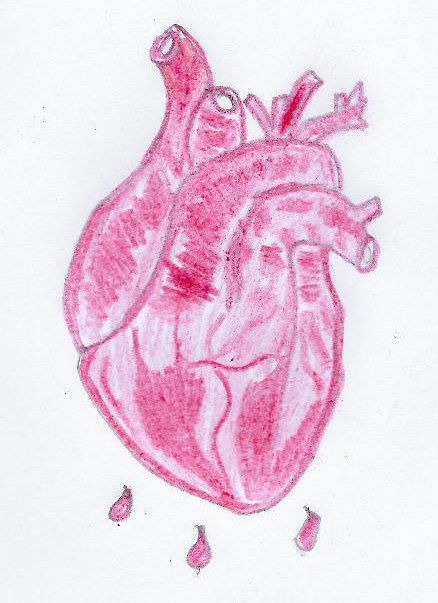
The Heart of Annwn

Over the past few years the Heart of Annwn has become increasingly important in the mythos Gwyn has gifted me and in my devotional practices. 

For me, the Heart of Annwn is Gwyn’s heart, inherited from His mother, Anrhuna, Mother of Annwn, and also the ever-beating heart of Annwn itself. 

I believe that, like Hades and Hades, Hel and Hel, are both Deities and Otherworlds, Gwyn, who is associated with Gwynfyd is one with His land as well.

The Heart of Annwn literally became the heart of my practice two years ago when I began playing its beat and chanting to align myself with Gwyn’s heartbeat. This led to the formulation of the Rule of the Heart within the Monastery of Annwn – following our hearts in alignment with the Heart of Annwn.

In this post I will be sharing two of the core stories of the Heart of Annwn.

*

The Heart of the Dragon Mother

Gwyn has shown me that the Heart of Annwn once beat in the chest of His mother, Anrhuna, the Mother of Annwn, when She was a nine-headed dragon. When She was slain Vindos / Gwyn ate Her heart. The Heart of Annwn became His and this gave Him sovereignty over Annwn as King.

“Now,” the ghost of Anrhuna turned to her corpse, “there is a rite amongst the dragons of Annwn – as you are the only one of my children left here you must eat my heart.”

The boy swallowed nervously as with a single bite of her ghost jaws she tore it from her chest and offered it to him, big and bloody, large and slippery, uncannily still beating. “My heart is the Heart of Annwn. If you succeed in eating it all, its power will be yours and you will be king.”

“But it is so much bigger than I and I have little appetite.”

“Little bite by little bite and you will be king.”

The boy very much wanted to be king. He needed his kingship within him. He bared his teeth and bit in, took one bite, then another. As he ate, he grew. He became a mighty wolf, a raging bull, a bull-horned man, a horned serpent, finally, a black dragon. As he tore and devoured the last pieces of the heart he spread his wings to fill the darkest reaches of the Deep. He roared, “I am King of Annwn! I will rule the dead! I will build my kingdom from the bones of dead dragons and the light of dead stars! I will bring joy to every serpent who has known sorrow and I will take vengeance on my enemies!”

Weary and full he slept and when he awoke he was just a boy with a large heart that felt too big for his body.

*

The Hidden Heart

In another story, in which Arthur raids Annwn, killing the King of Annwn and stealing His cauldron, Gwyn instructs His beloved, Creiddylad, to cut His heart from His chest and help hide it so that Arthur cannot take the Heart of Annwn.

Gwyn gave Creiddylad a Knife. “Cut my heart from my chest. Give it to my winged messengers and tell them to hide it in a place that even I could never find It.”

“Do what?” 

“I will not die.” 

“Worse – you will be heartless.”

One of my practices around this story was receiving the honour of finding Gwyn’s heart and returning it to Him and helping Him to return to life.

‘I knew it was a death unlike any other
but still I heard the beating 
of your heart…

Your hounds dug wildly beneath trees,
bloodying their frantic paws
to find only the hearts of 
dead badgers,

sniffed suspiciously at the edge of pools
where I searched through reeds
as if looking for a baby
in the bulrushes,
plunged in 
and emerged draped in duck-weed.

We snatched a still-beating heart 
from a bear’s claws (not yours).

We searched every cave for a heart-shaped box.
When we found one 
and the keys to the lock
inside was only a locket and a love letter in an illegible hand.

When we had searched everywhere in Annwn
we rode across Thisworld following
your fading heart beat.

We found your heart in the unlikeliest of places.

Clutching it tightly, fearing every time it skipped a beat,
we galloped back to Annwn with our hearts
beating just as wildly.

Through the fortresses within fortresses…

Into your empty chest we placed your still-beating heart.’

*

Gwyn has revealed a lot about the Heart of Annwn and I believe there is more to come. Recently I had a vision of Gwyn as a black dragon with His heart visible in His chest bearing an important message. He appears in this form when He brings tidings for the future. What will be the future of the Heart of Annwn? What stories from the past remain to be disclosed? I share what I know with gratitude and await further revealings.

Creiddylad’s Tears

Some say
lily of the valley
is the devil’s daughter

that you should not drink
from her poison cup.

Why so poisonous
now when she sprang from
Creiddylad’s tears clear and pure
when she mourned the death
of Annwn’s King?

Did she speak too much of the impossible?

Did she show her poisonous side?

Her flowers are white and her berries are red.

Was her talk of tears and blood deemed inappropriate
when everyone was celebrating Calan Mai?

Was she banished to the shady vales
where the death hounds bay?

To my suburban garden where
I cultivate dark and poisonous things?

The Shifting Identities of the Gods

“On an island lives the King of Annwn with a mysterious woman and no-one knows whether she is his sister, his beloved, his wife, his queen, or his daughter.”

These were words gifted to me at the beginning of a drumming journey that I undertook with the guidance of my patron god, Gwyn ap Nudd, a King of Annwn/Faerie, after asking him about the links I have intuited between his sister and beloved, Creiddylad, the mare goddess, Rhiannon, and the mother goddess, Modron.

There is little written about Creiddylad, but we know, like Rhiannon, she is a Queen of Annwn. As I have got to know her Creiddylad has revealed she is also associated with roses and horses. One of her names is ‘First Rose’ and she rides and takes the form of a white winged horse. Parallels exist between Rhiannon giving birth to Pryderi and him disappearing the same night as a foal is captured by a monstrous claw and Modron giving birth to Mabon, who is stolen away when he is three nights old. Whilst Creiddylad and Rhiannon are consorts of the King of Annwn, Modron is his daugher.

My journey resulted in the series of visions recorded in my poem ‘The Baby’s Gone’. My gnosis suggests Creiddylad, Rhiannon, and Modron are the same goddess with shifting identities.

Further, in the ‘Rose Queen Triptych’ I was inspired to draw, Creiddylad, ‘The Rose Maiden’, shifts into Rhiannon, ‘The Rose Queen’, then into the Mari Llwyd, ‘The Bone Mare’.

This didn’t come as a great surprise as I had similar experiences with Gwyn. When I first came to polytheism about ten years ago I regarded myself to be a hard polytheist (someone who believes the gods are real individual persons) as opposed to a soft polytheist (someone who believes the gods are aspects of a single god or goddess or psychological archetypes). I still stand by that belief, however, it has become a lot more fluid.

One of the defining characteristics of the gods across cultures is that individual deities have many names and titles. A prime example is the Norse god, Odin. Over forty of his names are recorded in The Poetic Edda alone and he is known by many more in other texts. The Greek goddess, Demeter, possesses several epithets such as aganippe ‘night mare’ and chloe ‘the green shoot’.

Gwyn first revealed himself to me by that name as the King of Annwn/Faerie in 2012. After our initial meeting I made my main focus the myths in which he is known as Gwyn but swiftly found he lay behind a number of our Fairy King and Wild Huntsman legends in Lancashire and my past experiences with the fay and the faerie realm.

My experience of dedicating myself to Gwyn at the cauldron-like White Spring beneath Glastonbury Tor confirmed the links I had made between Gwyn feasting on Glastonbury Tor in The Life of St Collen and Pen Annwn presiding over a mead-feast with his cauldron were correct.

I was far more cautious about equating Gwyn with other Kings of Annwn. However, as I worked with the myths, intuiting the similarities between Gwyn and Arawn, both of whom are huntsmen who preside over otherworldly feasts, have beautiful brides, and fight a seasonal battle against a summer god each year, I found myself inhabiting their overlapping tales.

In one instance, in a dream, I was thrust into the role of Pwyll, who took the identity of Arawn in Annwn and had to fight Arawn’s battle, in Arawn’s form, against his rival, Hafgan. Only, in my dream I was taking the role of Gwyn and was preparing to battle against Gwythyr. This resulted in my poem ‘If I Had To Fight Your Battle’. In another, as I was walking my local landscape in winter, I felt for a moment like Arawn-as-Pwyll making a circuit of a thiswordly kingdom, only my identity became conjoined, instead, with Gwyn’s as Winter’s King. Again, I recorded my experience in a poem: ‘Winter Kingdom’. To me this proves Gwyn ‘White’ and Arawn (whose name a translation has not been agreed on) are names or titles of the same god who has shifting identities across time and place.

Similar experiences from intuiting links in the myths and being gifted with poems and visions have led me to believe the King of Annwn goes by many other names. These include Afallach, the Apple King who presides over Avalon and Melwas who shares similar associations with Glastonbury, Llwyd ‘Grey’ who puts an enchantment on the land and abducts Rhiannon and Pryderi in The Mabinogion, Brenin Llwyd, ‘The Grey King’ who haunts the misty Snowdonian mountains, Ugnach, a figure with ‘white hounds’ and ‘great horns’ whose otherworld feast Taliesin refuses to attend, and Ogyrven the Giant, who presides over the spirits of inspiration.

Additionally, the King of Annwn spoke to me directly of his shifting identities in this poem:

I speak from the infinite
joining of the circle
as the snake bites its tail

the moment of awen
in every always of the universe

the sea behind the sea
the land behind the land
the sun behind the sun.

I come from many deaths.
From many deaths
I am reborn.

Dis, Vindonnus, Vindos,
Llwyd, Brenin Llwyd, Arawn,
Ugnach, Melwas, Ogyrven.

Across the sea I am Finn.
For tonight I am Gwyn.

Thus it is unsurprising his consort, the Queen of Annwn, has many shifting identities too.

Interestingly, when I was involved with Dun Brython, it was very much Rhiannon/Rigantona who brought the group together in the beginning and I came later as a devotee of Gwyn. One of the other members also had a strong relationship with Gwyn and it was member Greg Hill’s translations of poems featuring Ogyrven and Ugnach that helped me decipher the aforementioned connections. When Greg and I set up the Awen ac Awenydd group many other Gwyn devotees were drawn to it and the King and Queen of Annwn feel very central to the Brythonic tradition in the modern day.

The Baby’s Gone

“The baby’s gone.”

I see her, the one I love,
surrounded by wilted flowers.
Her sheets, her dress, are torn, bloody.
It’s as if something with a monstrous claw…
Do not awake oh innocent one
taste the blood on your lips.

“The baby’s gone.”

She’s sitting bolt upright
clutching nothing to her breast
staring at her bloody hands sharp nails
and has she bitten her tongue?

“Murderer.” “Cannibal.”

And above the accusations
the howling of a stag-hound bitch
for her six slaughtered pups.

“The baby’s gone.”

The circles beneath her eyes
are dark as the moon that has ceased
to ride across the night skies as she crawls
on her hands and knees through the long dark tunnels.

Upon her back she carries the world as a theatre
acting out a mystery play that begins
as a nativity and grows dark.

“The baby’s gone.”

And is that his laughter
she hears on the other side
of the wall or is it some changeling
she follows fingers tracing hieroglyphs?

Has this happened before and did she draw
these very pictures to remind herself?
Seek not the truth at the heart
of the labyrinth dear one.

“The baby’s gone.”

In the play I am evil –
on my head there are bull’s horns.
They dare not admit I am her father or lover
or brother reaching out from behind the curtains
to take the son who is mine from
where she lay with another.

“The baby’s gone.”

Where did I put him this time?

She’s tracing the outline of an otter
and she is splashing through the water
on the bank of a river with him trying
to catch a silver salmon slipping

through his claws turning to stone –

a cold dead speckled fish and next
the dragonfly that landed on the end
of her nose and how we laughed…

She did not see the wolf in me.

“The baby’s gone.”

Yet I saw her wild horse.

She’s close to touching the truth.
She’s reading the symbols like braille.
On her back the bone mare is riding to the stable
where the claw lies severed fingers clutching
neither boy nor foal but emptiness.

(We cannot hold what we love.)

He is the object of her riddles.

“The baby’s gone.”

I am behind her curtains.

On the stage there is a man
beneath her skirts and the time
of revelation is drawing nigh.

“The baby’s gone.”

When she reaches the heart
of the labyrinth the truth is too terrible
to behold the centre unfolds.

She gallops back into not-knowing.

She is waiting outside the stable
for the old man leading a colt
with a boy upon his back.

Whose is this kindness?

“The baby’s gone.”