I took up strength training two and a half years ago on advice from a physio who told me strengthening my muscles would help me with the problems that were holding me back with my running (‘runner’s knee’ and glute tendinopathy that affected my sciatic nerve in a similar way to piriformis syndrome). It has really helped and last year I exceeded my goal of running a sub 2 hour half marathon with a PB of 1:49:02. An additional bonus is that building muscle has fixed my over pronation.
At first strength training was just as an aid to running but as I have learnt and progressed I’ve come to value it in its own right and to prefer it to running. I’ve become fascinated by the different muscle groups, exercises and their variations and the ways they feel in my body and their effects. This is due to the expertise of my personal trainer, Marie Meagher, who I wouldn’t have managed to do a single squat without.
When I first started training I knew absolutely nothing. I could barely tell a dumbbell from a kettlebell. I couldn’t do basic squats or lunges or push a leg press because my technique was so bad everything hurt my knees.
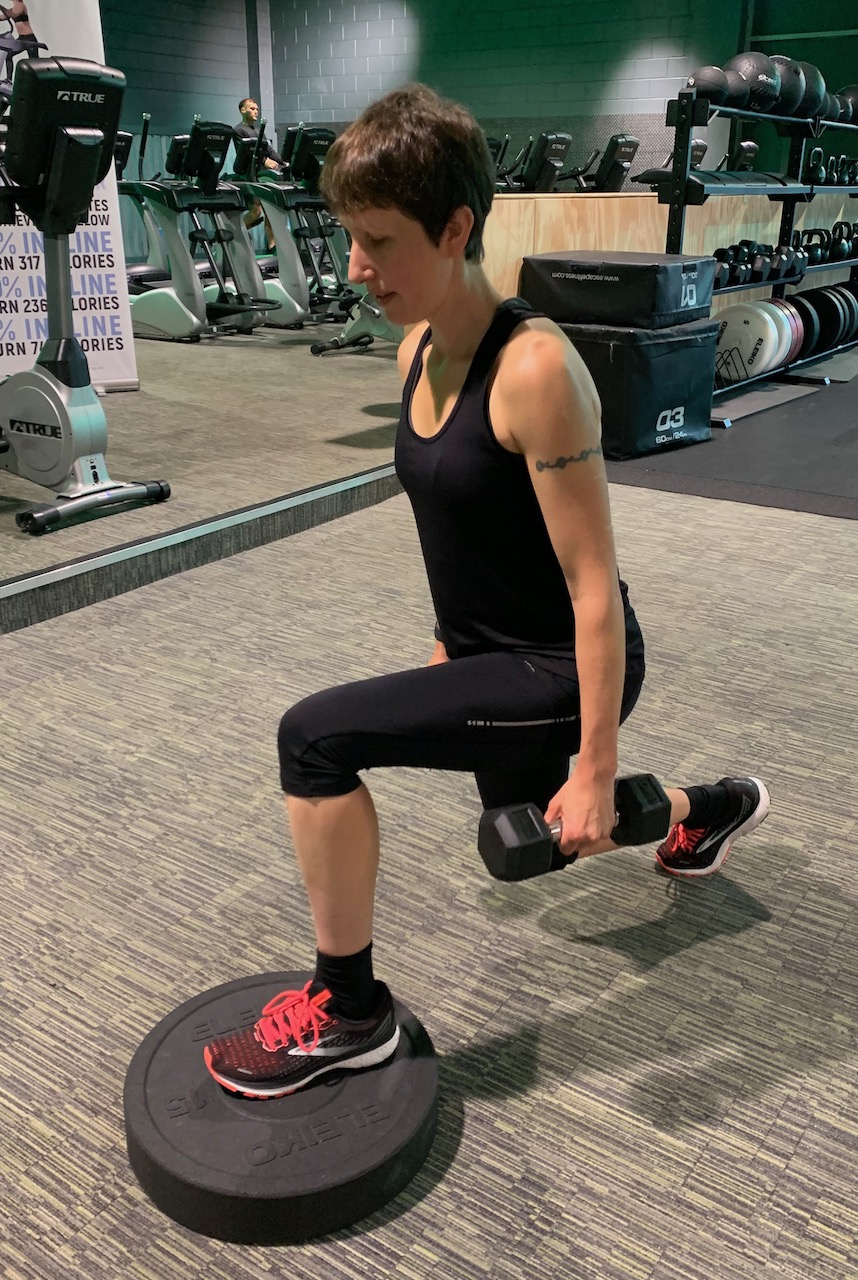
Fast forward to now and I’m doing quad and hamstring dominant leg days and push and pull upper body days featuring a variety of exercises with different grips and stances.
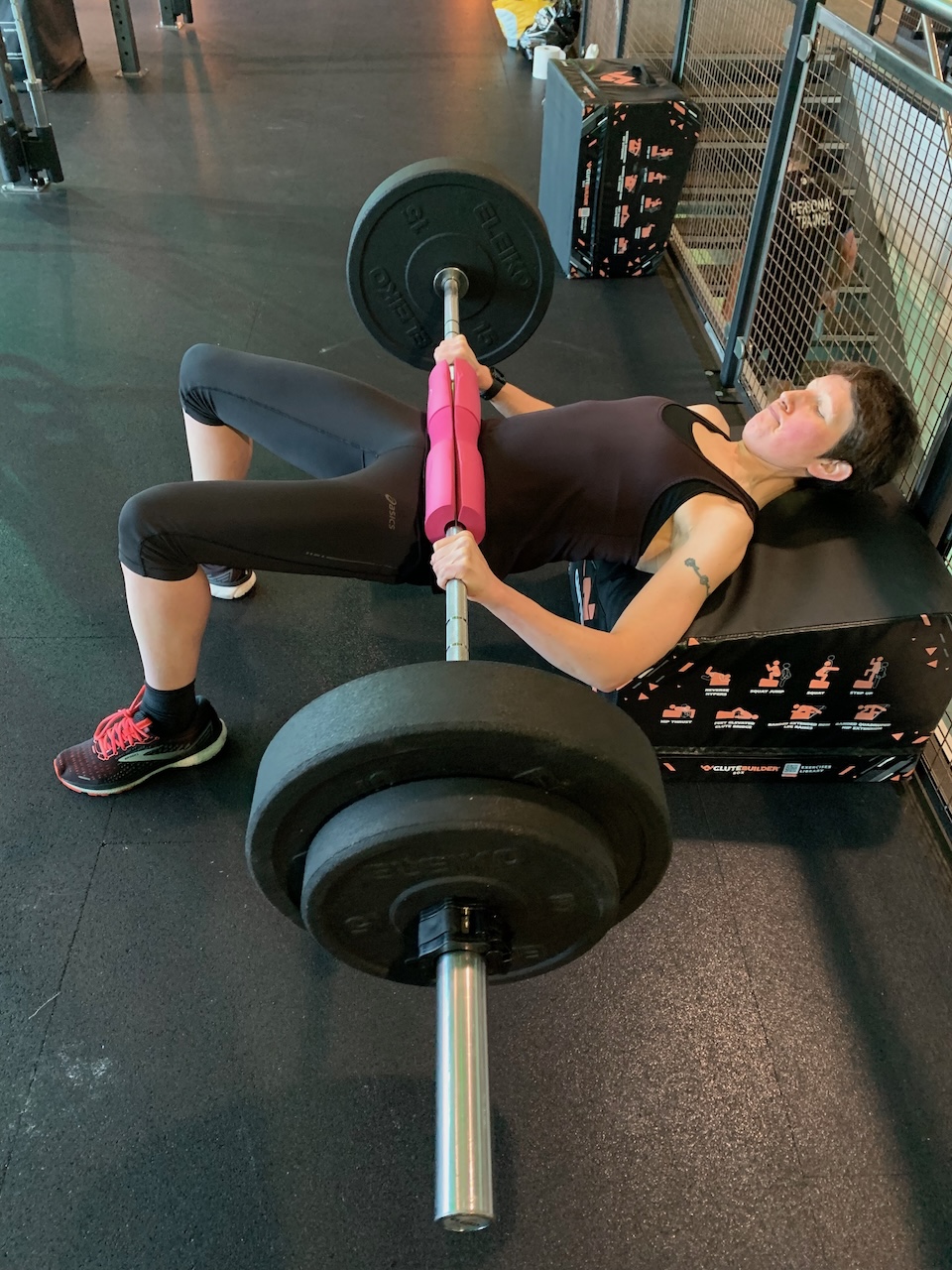
I’ve recently hit two of my goals for my lower body – my body weight on the leg press and barbell hip thrusts (60kg). To those of you who don’t go to the gym this might sound like a lot whilst seasoned gym goers will know it puts me at almost novice level (with 35kg being beginner and 67kg being novice). (1) It’s not much but it’s a huge achievement for me as a 42-year-old autistic woman with creaky knees.


Other goals I have to yet meet. I would really like to be able to do a full chin-up and am currently progressing towards that on a machine with a knee support that decreases your body weight.
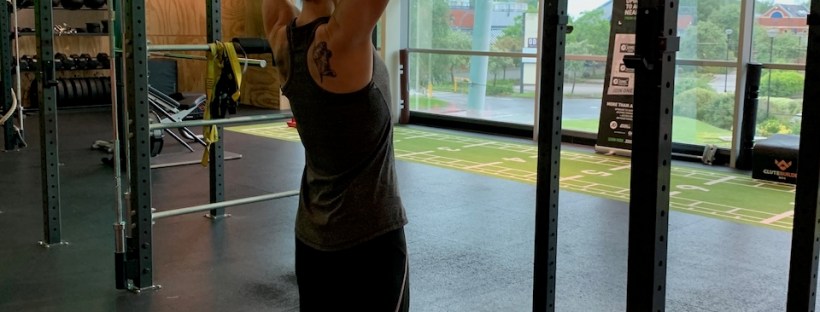
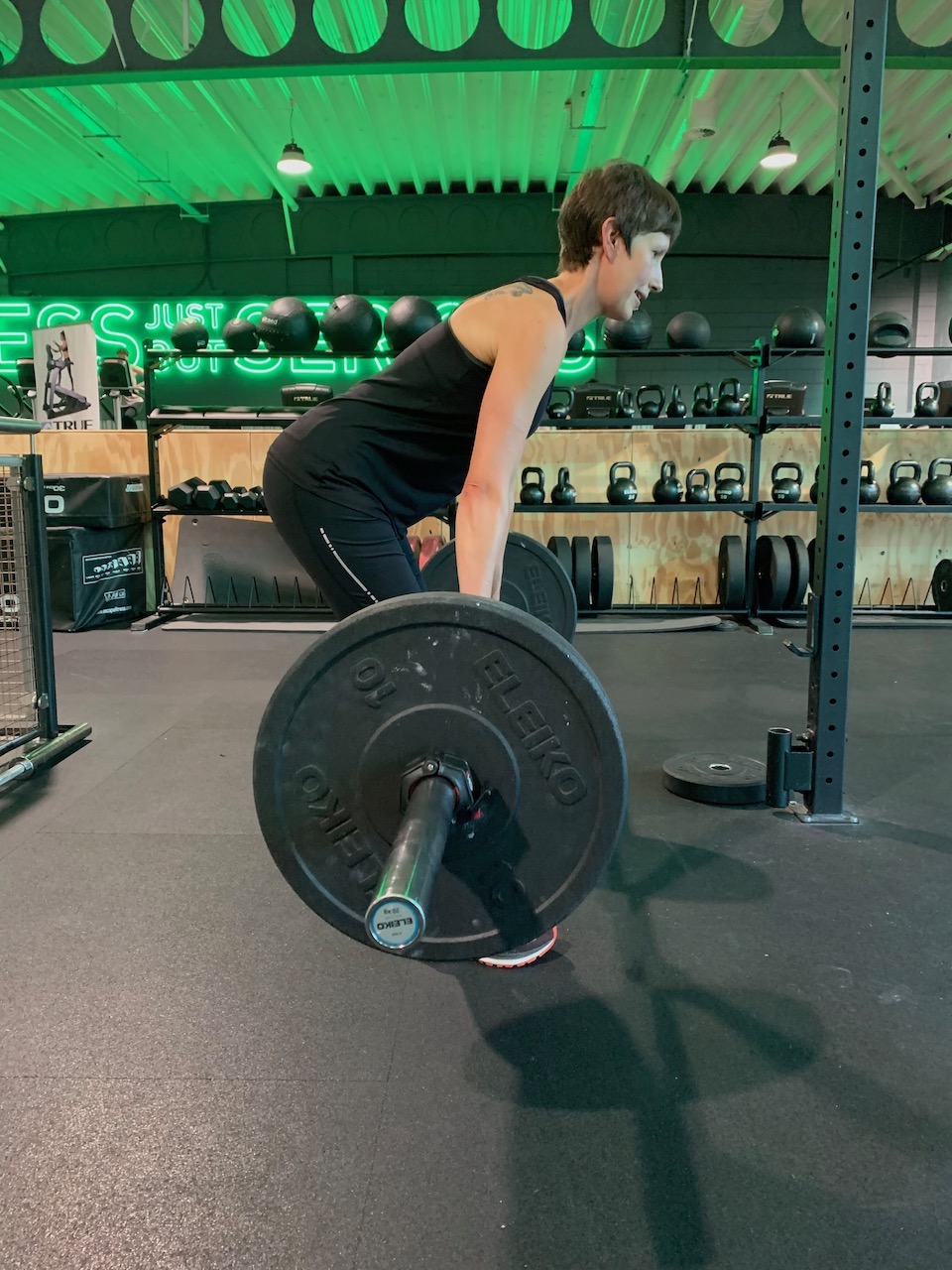
I’m continuing to learn new exercises with my most recent achievement being a barbell push press. For this one you have to rest the bar on your collar bone, bend at the knees and hips, then push (explosively!) with your legs and shoulders at the same time to press the bar up over your head. I would never have been able to get my head around this without Marie there to explain and to correct my mistakes.
I’ve put on muscle mass and feel stronger around the house and garden and am less injury prone.


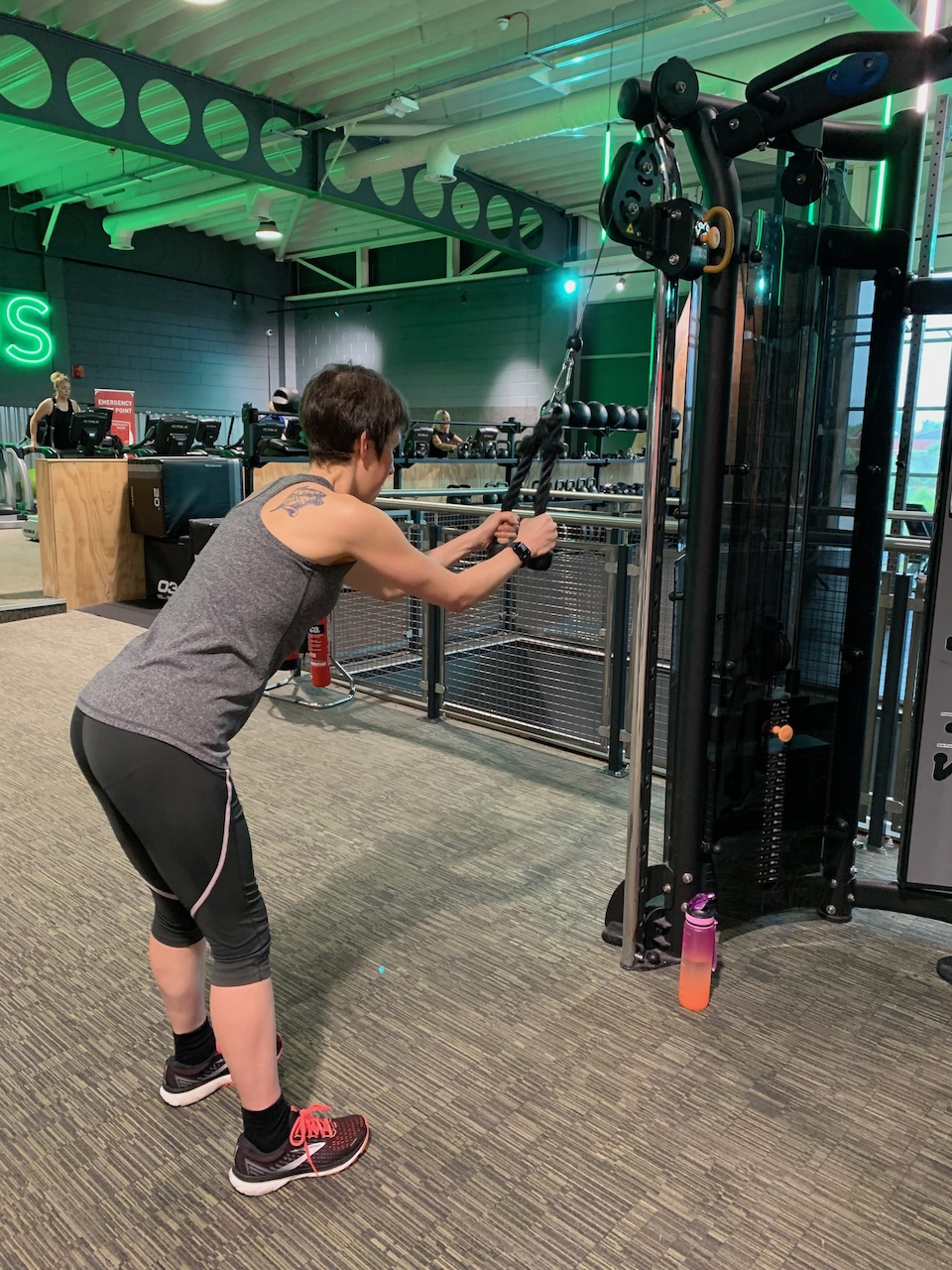
I have also begun to master the Matrix which, at a first look, with all its complicated pulleys, cables, bars and ropes is enough to melt the brain of a neurotypical person let alone somebody with autism. Yet Marie has slowly shown me some of the exercises one step at a time and I now use it regularly for exercises such as tricep extensions, mid-cable flys, face-pulls and straight arm pull downs.


Those of you who follow this blog likely know I’m a polytheist nun and might be surprised to see me in a gym. In response to this I’d like to point out there are varied attitudes towards exercise across monasticism from Buddhist monks who are not allowed to exercise because it is ‘not proper’ resulting in obesity (2), Christian nuns with gyms (3), and the Marathon Monks of Hiei who run 1000 marathons in 1000 days (4).
Druid author Rhyd Wildermuth talks about strength training as ‘ritual body work’ (5) and I’m very much in line with him for it demands just as much discipline and dedication as spiritual work and really is inseparable.
Having a fit and healthy body makes me a far better vessel for the inspiration of my Gods and better able to serve Them. Being physically strong has helped me to become mentally stronger and has played a large role in my giving up alcohol and with managing my anxiety. It recently got me through the initiation ritual for my shamanic practitioner training, which was physically, psychologically and spiritually demanding.
If I ever succeed in founding a monastery one of the first things to be built will be the gym.
*With many thanks to my personal trainer, Marie Meagher, (who took the photos and would be my first choice of trainer for the monastics) and to all the staff at JD Gym Preston for making it a clean and welcoming place. If you’re local to Preston I’d highly recommend JD and training with Marie whose Facebook page, PT with Marie, is here – https://www.facebook.com/Ptwithmarie/
(1) https://strengthlevel.com/strength-standards/horizontal-leg-press/kg
(2) “Monks should exercise but it is difficult for us… You cannot do weight lifting and you cannot jog, that is not proper, only fast walking or maybe a walking meditation. Yoga can also be fine, but not in public.” https://www.theguardian.com/world/2018/dec/26/battle-of-the-bulge-thailand-strives-to-bring-monk-obesity-crisis-under-control
(3) https://www.midsouthpresbytery.org/can-nuns-go-to-the-gym/
(4) https://www.theguardian.com/lifeandstyle/2015/mar/31/japanese-monks-mount-hiei-1000-marathons-1000-days
(5) https://rhyd.substack.com/p/shaping

 The Sanctuary of Vindos