I’m very excited to be presenting a new offering. This is tarot and oracle card readings with an optional shamanic journey. I’ve been reading the tarot for myself and friends for fourteen years and, more recently, have been reading for clients too. I have also been journeying to the spirits of the cards to ask for advice in my personal practice.
I’d been uncertain about how to integrate this into my shamanic work and this morning the idea came to me – tarot and oracle card readings with an optional shamanic journey to gain guidance from the spirits of the cards.
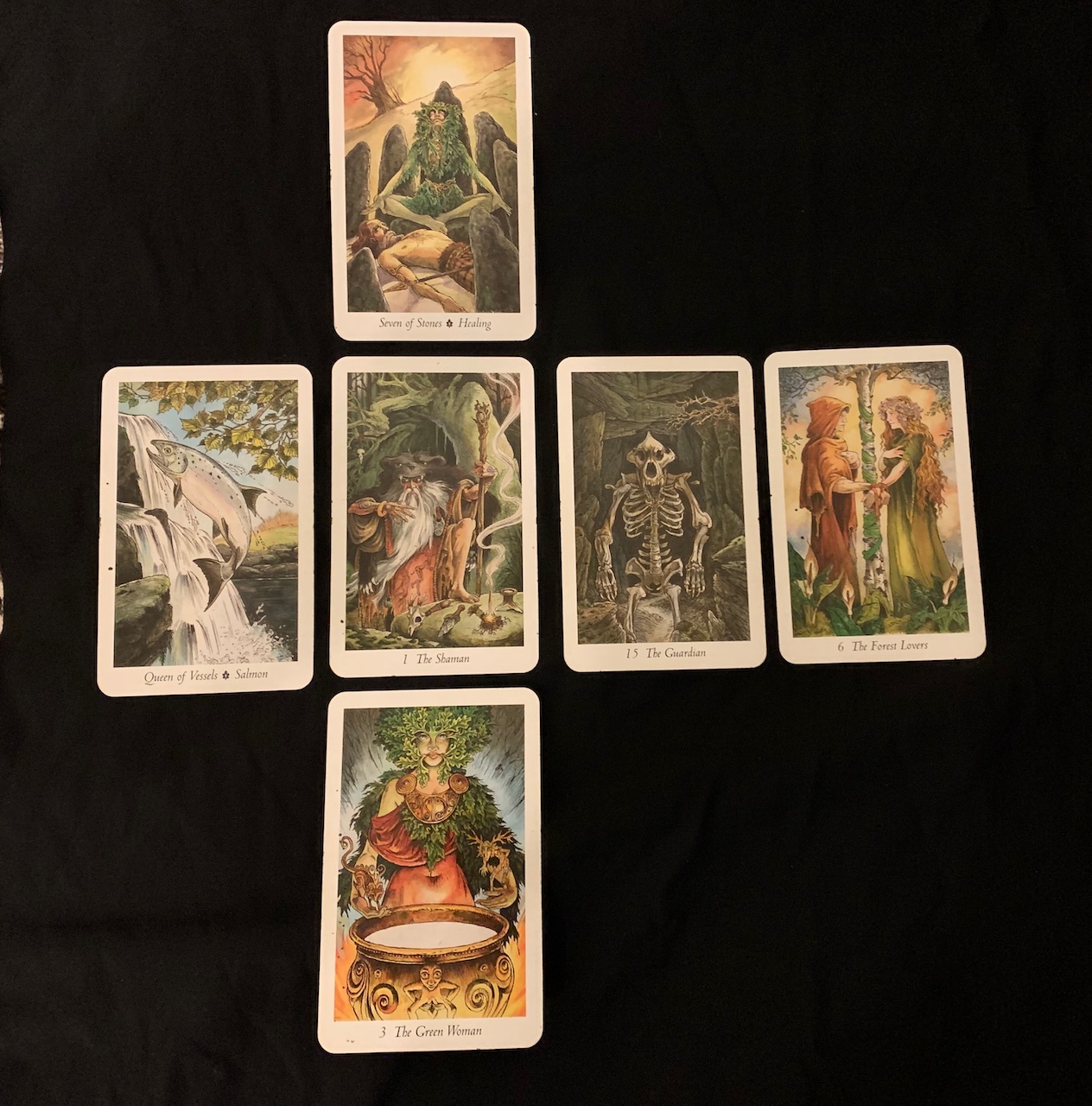
The decks I will be using are the Wildwood Tarot and the Shaman’s Oracle. The Wild Wood Tarot is inspired by the shamanic wisdom of the pre-Celtic cultures of Western Europe and features ‘classic forest archetypes’ such as the Green Man and Woman, the Hooded Man, and the Seer. It also includes animal spirits such as Wolf, Lynx, Hawk and Salmon.
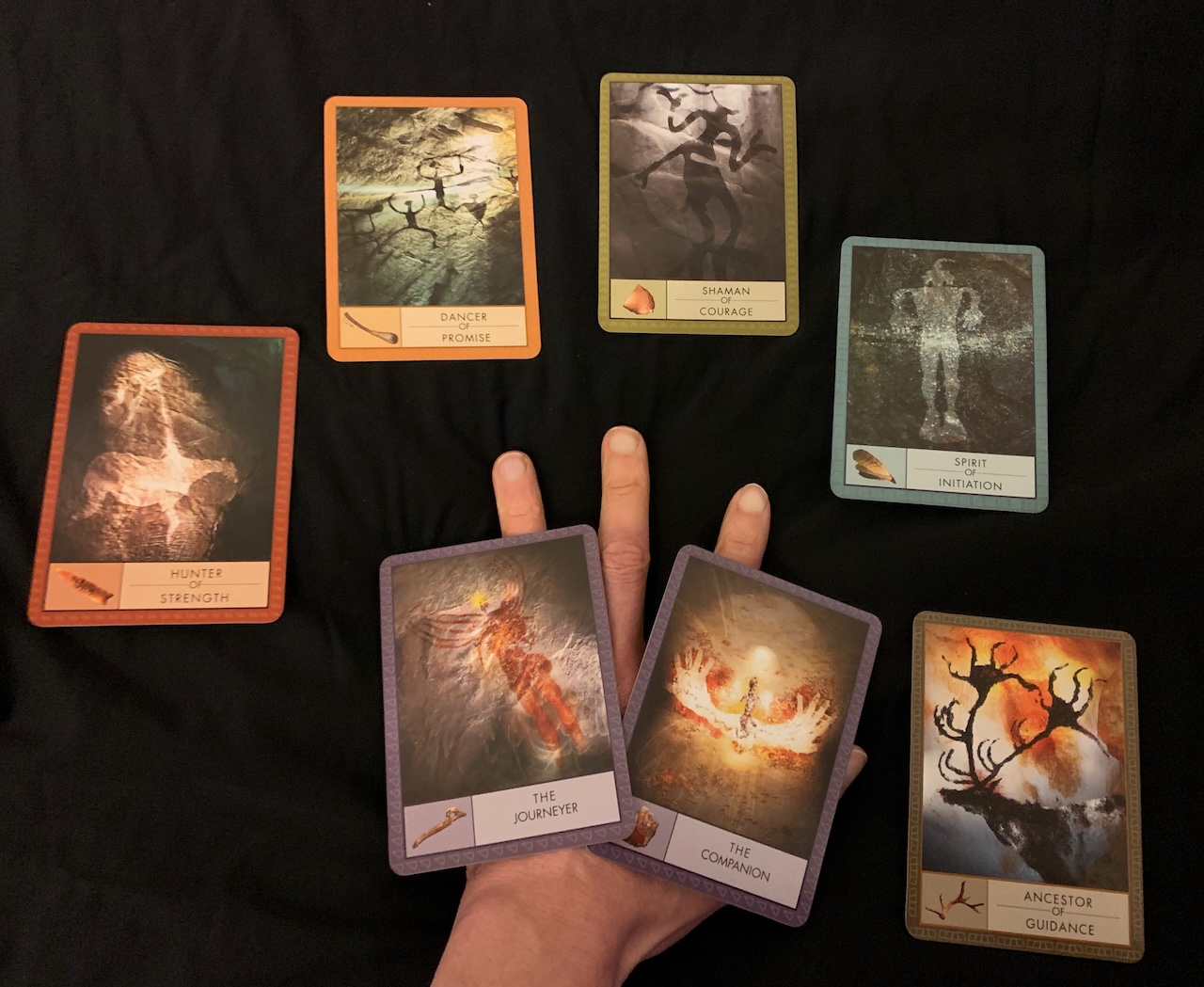
The Shaman’s Oracle is based on prehistoric cave paintings from around the world. Figures in your Caves of Earth, Rivers, Hearthfires, Winds and Ice will lead you into the darkness to inspiration and insight and back out again. Spirits you might meet include the Spirit of Truth, the Ancestor of Guidance, the Dancer of Joy, the Hunter of Conflict and the Shaman of Purification.
Readings will include an email consultation establishing a question and a spread. A reading will take 45 minutes to an hour and a reading with a shamanic journey will take an additional half an hour. I charge £15 an hour. I can provide in person, online, and distance options. Contact: lornasmithers81@gmail.com
Most people in today’s world who have an eating disorder have heard that voice. A lot of people who don’t have an eating disorder have likely heard it too.
Not feeling thin enough is an obvious driver of eating disorders such as anorexia, bulimia and binge eating disorder. We live in a culture where we’re surrounded by a surplus of food with the most readily available foods such as take aways and things in wrappers being processed and full of fat and sugar. Yet, we’re pressured to be thin. Thin bodies are associated with self-discipline, with eating ‘good’ foods like lean meat and salads, with being active. Fat bodies are associated with a lack of control, with eating ‘bad’ foods like chips and chocolate, with laziness and avoidance of exercise. This drives people to unhealthy dieting, which can lead to an eating disorder.
Yet, thin societal ideals have only been around for a couple of centuries. Eating disorders haven’t always mainly been about thinness. They might instead be related to other feelings of not being enough. Examples throughout history of anorexia mirabilis, ‘wondrous’, ‘miraculous’ or ‘holy anorexia’ were more to do with not feeling holy or special enough.
The earliest known example is Blaesilla, a Roman woman who lived in the 4th century. She was the daughter of Paula of Rome, a saint and Desert Mother, who became abbess of a convent of nuns under the strict ascetic regime of Saint Jerome.
Paula of Rome and her nuns
Blaesilla led a ‘merry life’ until, aged eighteen, she married, was widowed, then criticised by Jerome for her ‘frivolous’ behaviour. Like her mother, she began to follow the ascetic methods of Jerome. She took to wearing plain clothes, studied hard, prayed harder and fasted to extremes. The extremity of her fasting killed her at the age of twenty. It might be argued that not feeling holy enough in the face of the demands of Jerome and the status of her mother drove her to prove her worth by self-starvation.
It might, perhaps, be said that feelings of not being holy enough also drove other female religious figures in medieval times, such as Catherine of Siena, to starve themselves to death. Catherine gave up meat at a very young age. In her later life, she barely left her cell and went almost entirely without food or sleep. She wrapped an iron chain around her body and scourged herself until she bled. Still, her penances weren’t enough. She eventually came to reject all food except for the bread and wine of the Eucharist, for which she, unsurprisingly, developed such an extreme and unseemly hunger some members of the clergy refused to give it to her. She died at the age thirty-three.
In Hellenistic culture and during the medieval period, restrictive dieting and the resulting thinness were associated with self-discipline and religious purity. Fasting and being thin made a person feel more holy, more enough.
The ‘fasting women’ of the seventeenth and eighteenth centuries, such as Martha Taylor, Anne Moore and Mary Thomas, who were renowned for surviving for extended periods of time without food were seen as living ‘wonders’ or ‘miracles’. Their fasting has been linked to illness and trauma, but also might be seen to be related to feelings of not being enough.
At this point, it’s worth highlighting that the majority of historic examples of people suffering from eating disorders are female and this continues today with 75% being women and 25% men. I believe this to be a reflection of the patriarchal nature of Western European culture since the dominance of Christianity.
Women, subordinate to men, have rarely felt they are enough. Thus, female religious, unable to become clergy, turned instead to proving their worth and holiness through extreme ascetic practices including self-starvation. Later women starved themselves as they had no other means of leading wondrous lives.
Over the last couple of centuries, the media has constantly been sending out the message that we’re not enough – not thin enough, not fit enough. Social media influencers reinforce this by showing off their toned bodies and food and exercise regimes. This can lead to restrictive eating and over-exercising and thereby to Anorexia nervosa and Anorexia athletica. Feeling we are not enough can also cause us to comfort eat, over-eat, or binge, which can lead to Bulimia nervosa (for those who purge) or to binge eating disorder. It is common for a person to switch between eating disorder diagnoses.
***
My eating disorder began when I was six as a slightly tubby autistic child. I was neither thin enough nor normal enough to fit in, so I got bullied. This led to comfort eating, binge eating, then to binge eating disorder. I started restricting and over-exercising when I was thirteen because I wanted to be thinner and more normal (thin = normal) but the binger won out again. In my twenties I ‘conquered’ the binging at the price of slipping into mild anorexia.
My life continued to be dominated by destructive patterns of dietary restriction, excessive exercise and binge drinking. These were driven by a feeling of failure – not getting funding for my PhD, not succeeding in a career with horses, not being able to make a living as a writer, failing at a second attempt at a career – this time in conservation.
Taking up strength training and adopting a monastic lifestyle helped. Instead of being thin, I determined to become a strong vessel for the inspiration of my Gods. But I was never monastic enough. I was never holy enough.
Having moved on from monasticism I can see how much of my asceticism – giving up certain foods and alcohol, keeping a strict meditation and exercise regime, getting rid of clothes and books and cutting out entertainment – was driven by the same restrictive principle that, in extremes, becomes anorexia, starving oneself of all life’s sustenance.
The apogee was when I spent nine days in meditation at the Abyss with a spear in my belly – a representation of the impulse within that can lead to death through self-starvation.
Having realised that monasticism wasn’t entirely healthy for me and decided to focus on becoming a good shamanic practitioner, the voice remains, telling me I’m not shamanic enough. Trying to force upon me its ideals of what a shamanic practitioner should look like (which, of course, is thin, signifying purity and self-discipline). Mocking my more muscular body and red face. In opposition to this, my Gods and spirits tell me I have to be strong in body and mind for myself and my clients.
As I’ve deepened into my path, the unwavering support and unconditional love of my patron God, Vindos, my helping spirits, my mum, a good friend and my shamanic mentor, and kind words from clients, have helped me to feel more worthy, more enough.
I’d like to say that I have reached a point where I feel I’m of intrinsic worth and value but I’m not there yet. Being able to control my weight and my exercise routine remain a crutch. But being able to say “I’m enough” occasionally is a step forward.
Soul exchange is a shamanic healing for soul loss and might be seen as a form of soul retrieval. In this instance, the focus is on a loss of soul to another person who we have been in a relationship with. It’s based on the notion that as we move in and out of relationships with other persons we can pick up parts of each other. Persons can include family, friends, lovers and pets, and groups and organisations. This is a natural process. Soul exchange is needed if we become overly attached to, bound up with, or intertwined with another person and the attachments feel unhealthy. It’s a little like giving somebody’s possessions back at the end of a marriage.
A soul exchange, as I have been taught it, takes place in a neutral location in the Otherworld. Both parties have the opportunity to return soul parts that do not belong to them. In terms of what we mean by ‘soul parts’ in this context, I like Nicholas Breeze Wood’s definition ‘packages of personal energy’ (1). The soul parts appear as objects and are metaphorical.
The practitioner journeys the client to the location and the spirit of the person with whom the soul exchange is to take place is invited to attend. It is important to note that soul exchange is the only shamanic healing that does not require permission from the person in physical reality. This is firstly because the spirit of the person has free choice whether to join in and secondly because you are giving something back that belongs to them and are not taking anything of theirs. This makes possible the process with persons who may be reluctant in this world but are willing in spirit.
Once the spirit of the other person is present, the process has been explained to them, and they have agreed, the soul exchange can begin. The client takes the first turn, giving back any soul parts that do not belong to them. They do this by reaching into themselves and bringing forth the parts in the form of objects. These are given, one by one, to their power animal, who takes them to the power animal of the other person, who hands them over.
Another point to note is the importance of the exchange taking place between the power animals. This is to maintain distance and prevent re-entanglement or re-traumatisation if the relationship was traumatic. Direct speech and eye contact between the client and the other person should be avoided.
The recipient then has the choice of whether or not to take the soul parts. Any parts not taken are transformed or disposed of by the power animals or left in the Otherworld for the spirits of place to deal with as they see fit.
Once the client has unburdened themselves of all the soul parts that do not belong to them, the other person is invited to give back any soul parts they might have taken in the same way.
Once the soul exchange is done, it is also helpful to check for any unhealthy energy cords between the client and the other person and to ask the power animals to cut, dissolve, or transform them in some way.
Once the process has been completed, the spirit of the other person and the spirits are thanked and the practitioner and the client journey back to this world.
Afterwards, the client has a chance to speak to the practitioner about their experience. They may or may not want to discuss the significance of the objects. If they do, the practitioner will guide them to make their own interpretation rather than interpreting the objects for them. The client will be encouraged to journal their experience and to meditate on, journey on, or create art around the objects if they are inspired to do so.
As always, after a shamanic healing, the client should take it easy for the rest of the day and eat nourishing food and drink plenty of water. They should keep an eye out for any effects and shifts in their energy levels and in the sense of their relationship with the other person and others around them. It’s also good to look out for nature signs, dreams and other coincidences.
***
My first formal experience of soul exchange was under the guidance of my mentor. (I had tried it alone informally but hadn’t got it right). We decided to work with a family member with whom I have a difficult relationship, to check in whether either of us was holding on to soul parts that don’t belong to us.
The process was not straightforward because one of the person’s ancestors turned up and it turned out that an additional soul exchange needed to take place between the two of them before the one with me could be carried out.
Since the soul exchanges, the family member has had more energy and there have been less arguments between us, although our relationship hasn’t improved. I think that’s because 44 years of ingrained habits are difficult to unstick.
The soul exchanges overseen by my mentor gave me a good grounding for working with clients. I began by working with volunteer clients then moved on to charging a student rate. I have so far conducted soul exchanges for clients with a variety of persons, including family, friends, partners and an organisation.
When I first started out with soul exchange, I saw it as an accessory process to soul retrieval that was not quite on a par with the core shamanic techniques in the Harner school of shamanism. Having worked with it myself and with clients, I’ve come to realise that it is just as useful and just as powerful.
One of the things I like most about soul exchange, as an autistic person, is that it has a structure that is easy to follow. Because it takes place in a set location and follows a set procedure, it isn’t quite as unpredictable as soul retrieval, which can take you anywhere in the spirit world and anything can happen.
However, this doesn’t mean that things can’t get intense. The soul parts and the process of release can bring up strong emotions, as can cutting the cords, and the final parting (if it is made) between the persons involved. In these instances, I have intuited, with the help of my guides, when to speak and when to allow the client space, providing patient and compassionate support. I have also learnt to trust in the wisdom of my own spirit helpers and those of the client and the other person, who know what to do when we do not. On several occasions they have displayed ways of disposing of or transforming objects and removing cords beyond the thinking of me or a client.
From my own experience and client work, I have learnt how different interactions can feel between persons in the real world and in spirit. In the latter, there is a sense of lightness, as another client noticed, a generosity, in contrast to when the two sides are weighed down by material concerns and dissensions.
Afterwards, benefits have been felt in terms of unburdening, letting go and release. Memories have felt less intense. There has been a sense of distancing and separation. Energy has returned, with an ability to move on.
It has been a pleasure and an honour to hold space for this sacred process. My training in soul exchange is now complete and I am looking forward to continuing to offer this healing as an important component of my shamanic practice.
Footnotes
(1) Nicholas Breeze Wood, ‘Soul Loss and Retrieval’, Sacred Hoop 131, p50
They Called Me Pig is a poetry collection charting the development of an eating disorder that began with childhood bullying and how I have begun to heal by building a healthier relationship with food, exercise and my body. I have written it as part of the inner work of my shamanic apprenticeship, as a way of processing trauma and transforming it into art. I’m hoping it’s a topic everybody can relate to on some level as we all have a body and need to eat and exercise to live. You might also have relatives or friends with an eating disorder who might benefit from reading it.
It is downloadable for free but if you enjoy it please consider reciprocating by passing on the link to a friend or by telling somebody about my writing and shamanic work.
If you’re interested in working with me on using shamanic work combined with art as a method of healing, transformation and self-expression, I offer sessions at £15 an hour. Please get in touch lornasmithers81@gmail.com
‘In Annwn below the earth… there is one who knows what sadness is better than joy.’ ~ ‘The Hostile Confederacy’
‘No mud, no lotus.’ ~ Thich Nhat Hahn
If I was to define my core purpose in life at present, I would say that it is transforming suffering, within myself and within others, in service to my Gods. When I met my patron God, Vindos / Gwyn ap Nudd, I was struggling with suicidal ideation. He showed me the Brythonic Otherworld. He made me His awenydd ‘person inspired’ – a poet and spirit worker in the Brythonic tradition. He gave me meaning and purpose. My vocation has given me the strength to begin to heal my own wounds and, more recently, to help others.
Gwyn is a ruler of Annwn (the Otherworld) and a guide of souls. In a medieval Welsh poem (1), He speaks of gathering the souls of the battle dead. He and His people, the spirits of Annwn, later known as fairies, who also appear as the Wild Hunt, are depicted taking the souls of those who have died suddenly or traumatically to the Otherworld.
I believe Gwyn is the one in Annwn, in the poem ‘The Hostile Confederacy’, attributed to Taliesin, who knows ‘what sadness / is better than joy’. He’s seen countless sorrows, carries the weight of the battle dead, has gathered the souls of countless suicides, murder victims, those who have died in tragic accidents. Thus, He has an investment in the transformation of suffering so that such untimely deaths are less likely to happen.
Gwyn, as the Fairy King, and the fairies, are also renowned for taking living people, often those who have suffered trauma, to Their realm, or for leading them to wild places, where they mostly recover and then return. (2)
Gwyn and His people are associated with trauma and its healing. This usually takes place in the Otherworld or the wild. This is also shown in a fragment from the fourteenth century Latin document, Speculum Christiani, which describes how common folk in Wales invoked Gwyn to cure the evil eye: ‘Some stupid people also go stupidly to the door holding fire and iron in the hands when someone has inflicted illness, and call to the King of the Benevolent Ones and his Queen, who are evil spirits, saying: ‘Gwyn ap Nudd who are far in the forests for the love of your mate allow us to come home.’ This passage suggests that those suffering from the evil eye are ‘away’ and that Gwyn, who has a distant abode in the wild, is able to bring them home.
In medieval Welsh literature and later folklore, the Otherworld is depicted as a place of green hills and lush forests where there are sparkling rivers of wine and mead. The fortress of its king, with towers of glass, lit from within, is the centrepiece. Within are shining treasures, an endless feast of meat, fruit and mead.
Activities in the Otherworld include: hunting, feasting, dancing and carousing. Coming back from the land of no pain is difficult. Some people crumble to dust, some go insane, others pine away, those who survive become poets. The saying ‘Dead, mad, or a poet’ summarises the outcomes.
In the Brythonic tradition, poetry provides the means of processing trauma, transforming suffering and giving voice to experiences of ecstasis and healing. Medieval Welsh bards, such as Taliesin, Aneirin, Myrddin Wyllt, and Llywarch Hen all gave voice to personal and cultural trauma. In, and through them, their suffering and the suffering of their people was transformed into some of the most tragic, beautiful and potent works of poetry within our heritage.
I also found that poetry could help me to transform my suffering and that of the land and the ancestors but, alone, it was not enough. A bardic lifestyle of drinking too much and writing and performing poetry, unsurprisingly, proved to be detrimental to both my mental and physical health. At this point in time, I was very good at having ecstatic, often drunken experiences, and writing lots of poems, but not very good at coming home.
I began building a better relationship with my body and a meditation and mindfulness practice during the period I was a nun and began training as a shamanic practitioner. ‘Being present for Gwyn’ became one of my core practices.
Gwyn, through His likeness with Shiva, guided me to the yogic and Buddhist traditions. Over the last few months, I have been greatly inspired by the works of Thich Nhat Hahn and the Dharma teachings from Plum Village. Unlike other forms of Buddhism I have come across that preach negation of the body and the world to achieve enlightenment and view animals as inferior, the Plum Village tradition is embodied, trauma informed, and is based on inter-being in respectful relationship with the world and all beings. Joy and enlightenment can be found in the present moment at any place and time.
The Plum Village teachings centre on mindfulness, which involves the practice of coming home to our breath and to our bodies in the here-and-now. Mindfulness is the key to transforming suffering. In his book, No Mud, No Lotus: The Art of Transforming Suffering, Thich Nhat Hahn outlines the Buddha’s teachings on suffering and its transformation in the Four Noble Truths.
The first Noble Truth is that there is suffering. Suffering exists within us on physical, mental and spiritual levels and outside us, in our families, friendship circles, within our ancestry, within our culture and within the environment. In the West, rather than being taught how to handle our suffering, we are sold countless forms of numbing and distraction. We drink it away, stuff it down, or lose ourselves in social media and other virtual entertainment.
In the place of distraction, Buddhism posits mindfulness – ‘the capacity to dwell in the present moment, to know what’s happening in the here and now… with mindfulness you can recognise the presence of suffering… it’s with that same energy that you can tenderly embrace the suffering.’ He speaks of taking care of our suffering as being like a mother holding her child.
The second Noble Truth is: ‘there is a course of action that generates suffering’. We are encouraged to look deeply at the roots of our suffering. These often lie in past trauma, ancestral trauma, and the fears and habits that result. They can also lie in our attachments to materialist ideals. Gaining insight into the causes of our suffering helps to prevent us from making the same mistakes.
The Third Noble Truth is: ‘suffering ceases (ie. there is happiness)’. The key to true happiness is that it isn’t an aim for the future, ‘I will be happy when this problem is sorted, I have my dream job, my health is better.’ Happiness lies in dwelling mindfully in the present moment and if we can’t do it now, this very minute, we won’t be able to do it when that future moment arrives either.
This was a big learning for me because I have always been future orientated and placed my happiness in the future at the expense of ignoring the now. ‘I will be happy when I have my shamanic practitioner qualification’. ‘I will be happy when I am earning a living from my vocation’. No. ‘If I can’t be happy with my life now I won’t be happy if I achieve these aims in the future.’
The Fourth Noble Truth is: ‘there is a course of action leading to the cessation of suffering (the arising of happiness’)’. The Noble Eightfold Path, provides a tried and tested framework for generating happiness. It consists of Right View, Right Intention, Right Speech, Right Action, Right Livelihood, Right Effort, Right Mindfulness and Right Concentration. Mindfulness and ethical living form its core.
For me, the art of transforming suffering lies in a combination of mindfulness and shamanic work. Being able to go to the Otherworld and come home. Then, once I am home, making art out of the insights I have been gifted with.
When I gave up being Sister Patience, it was a shock to the system coming back to Lorna Smithers and all her shit (which I thought I’d transcended). Yet the shit has made good compost and flowers have grown from it in the form of three books (3) written in the last few months as well as recent articles.
If you’re interested in the process of transforming your own suffering through shamanic work, creativity, and coming home, I’m currently providing shamanic guidance sessions for £15 an hour at a student rate (contact lornasmithers81@gmail.com).
(1) The Conversation of Gwyn ap Nudd and Gwyddno Garanhir (HERE). (2) For example, see Sir Orfeo and the mythos surrounding Myrrdin Wyllt (HERE). (3) A memoir – The Edge of the Dark (HERE), a poetry collection – They Called Me Pig (soon to come), and an epic novel called The Lost Shrine of Nodens, which will be published through Sul Books in May 2017.
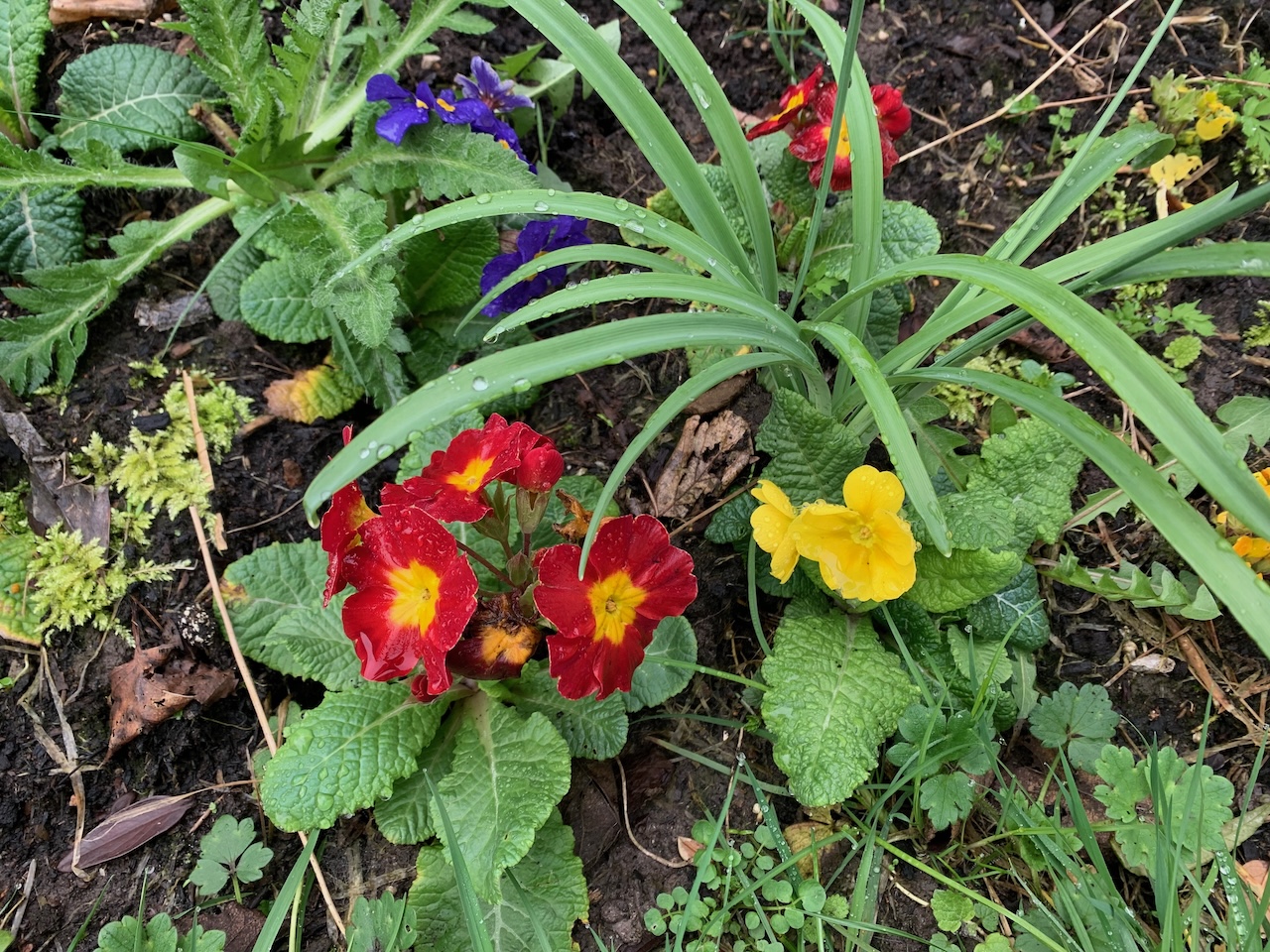
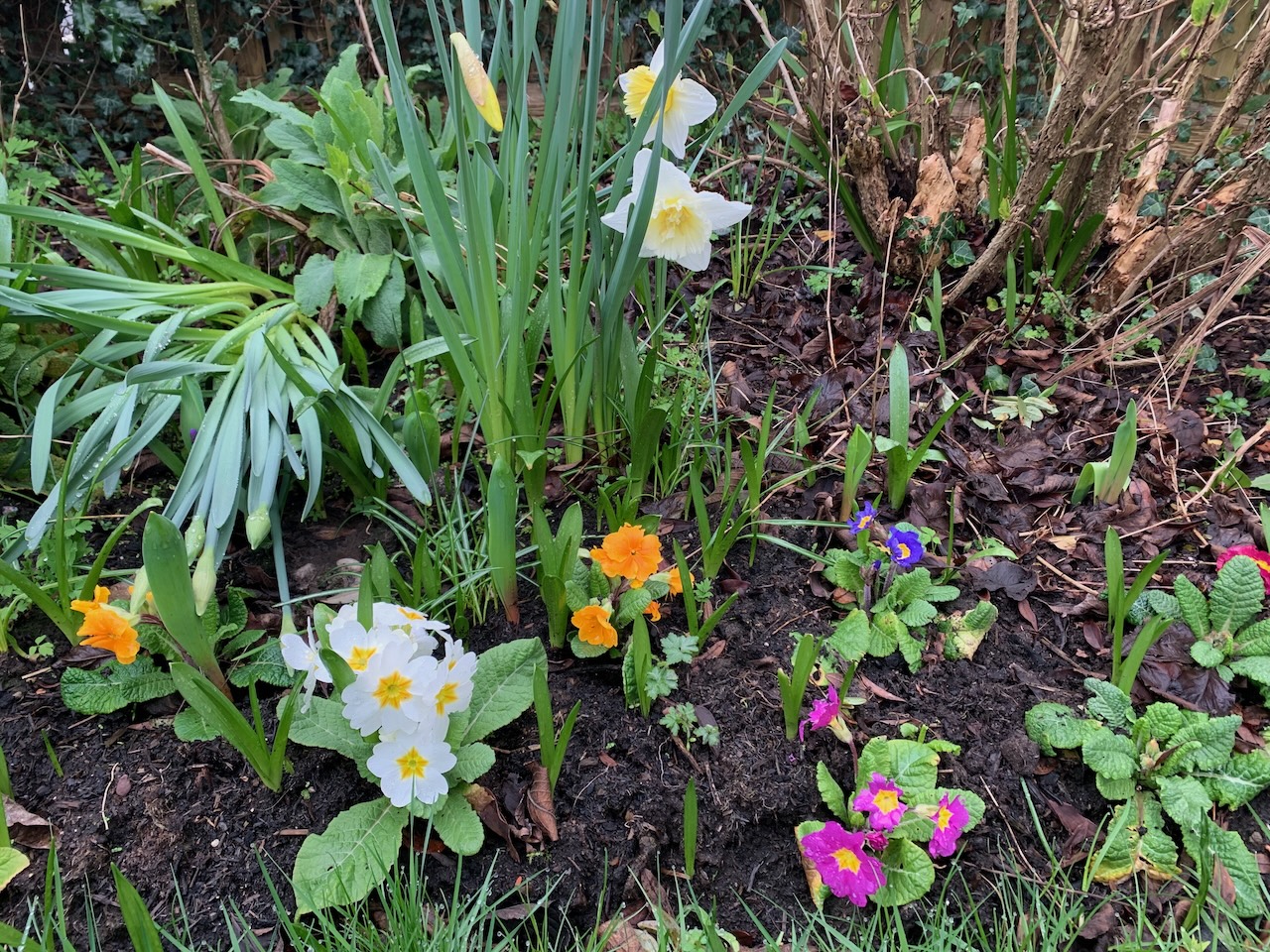
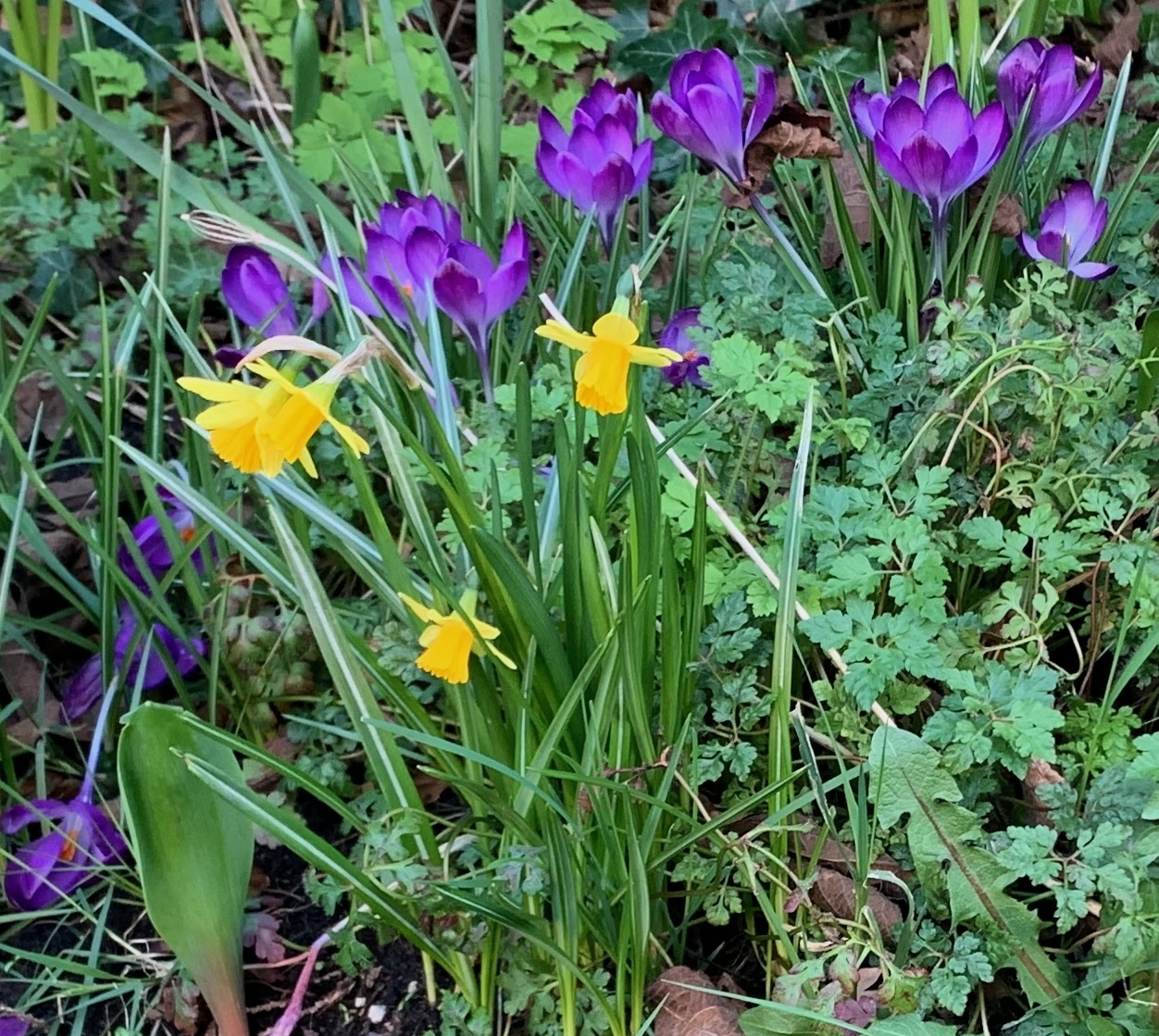
I hope everybody out there is well and enjoying the early spring flowers and lightening days.
Now is a good time to be tapping into the energies of the green things growing, the sap rising, the birds singing, the amphibians coming out of hibernation, the animals perking up. The Brythonic Goddess, Creiddylad*, who is associated with flowers and fertility, is taking Her first steps from Annwn (the Otherworld), so this is a great opportunity for connecting with Her.
I’m writing this post as I’m approaching the end of my shamanic apprenticeship and will only be charging student rates for a few more months (£15 for one hour shamanic guidance and £30 for a two hour shamanic healing).
I’ve got some spring offerings that might be helpful for you:
Shamanic Guidance Offer
If you’re struggling to establish a regular spiritual practice why not book three shamanic guidance sessions to get you on a roll? These can cover anything from meeting animal spirit guides, tree and plant allies, ancestors, and Gods and Goddesses, to divinatory journeys on life issues. Book three and get one half price (£37.50 in total). More info HERE.
Shamanic Healing Offer
Have you got a feeling you need a shamanic healing but you’re not quite sure what it is? Book a divinatory journey session to find out plus the shamanic healing session and get the journey session half price (£37.50). More info HERE.
Blessings of the spring flowers from Creiddylad’s garden.
*You can find out more about Creiddylad’s story HERE.
For most of my life, I have struggled with an eating disorder. It began with childhood bullying when I was six years old. This resulted in binge eating and I became overweight. When I was thirteen, I began skipping meals and exercising more and lost weight, but the binging returned. Since then, my eating disorder has taken various forms, characterised by differing patterns of binge eating, restricting, over-exercising, and binge drinking. This has led to me cycling between being overweight, of a normal weight, and underweight.
Until recently, I believed I solely had binge eating disorder, and saw myself as a ‘pig’ and a ‘fat binger’. My understanding was that it had a ‘fat side’ and a ‘thin side’. So long as I was on the ‘thin side’ and in control of the binging, I was winning. I didn’t see dietary restriction and excessive exercise as a problem, even when they led to me being underweight.
It was only when I started strength training at a local gym with a personal trainer, who told me I wasn’t eating anywhere near enough to fuel my exercise, that I received an inkling that restricting my caloric intake whilst exercising a lot was an issue. It’s taken a few years to build a healthy diet and exercise routine, which has benefited me physically and mentally. In spite of this, I still have issues with fear of weight gain and feel large at a healthy weight.
A few months ago, whilst researching eating disorders for a novel, I found out that one of the characteristics of binge eating disorder is that it is not accompanied by dietary restriction. It does not have a ‘thin side’. I then saw the diagnostic criteria for anorexia – restriction of energy intake relative to requirements leading to significantly low body weight, intense fear of weight gain, and disturbance of body image. It had been my understanding that only people who were severely underweight were classed as anorexic, but this is not the case. In DSM-4 there was a weight criterion (below 17.5 BMI, which I reached a couple of times), then, in DSM-5 this was removed and anybody above 17 BMI could be classed as having mild anorexia. Could this be the name for the ‘thin side’, the secret serpent, who had hidden herself away, causing damage to my mind and body?
I decided to reach out for a clinical diagnosis from a consultant psychiatrist at a local eating disorder clinic. She told me that I did have binge eating disorder as a child and teenager, but that ended when I stopped binging on food when I turned twenty. To my surprise, she told me, primarily, I have been suffering from restricting type anorexia (there is a binging type too but this applies only to food binges and is followed by purging). Binge drinking is seen as co-occurring and is not classed as a food binge. The anorexia began when I was thirteen and applies not only to the phases when I was underweight but of a normal weight and overweight too. It is a mental illness and as such is defined by the psychological symptoms. To my shock, she told me that I still have it because I’m still calorie counting and have to ensure that I’ve burnt every calorie that I’ve eaten before I go to bed. Also, because I see myself as large at a normal weight and am terrified of weight gain.
My ‘victory’ over binge eating and binge drinking (I began giving up alcohol six years ago, have had a few lapses, but am now certain I’ve given it up for good) have come at the cost of being in the hold of the secret serpent.
The recommended treatment is eating disorder CBT (CBT-E) and I’m currently in the process of attempting to access it through the NHS. I’ve had CBT before, for anxiety, and have found it to be very practical and useful. However, whilst it’s helped managed to symptoms, it hasn’t treated the cause.
I have also been exploring these insights with my shamanic mentor and writing poetry. What follows is the story of the evolution of my eating disorder as characterised by the warring impulses of the binger and the restrictions of the secret serpent. I’m sharing it as a way of processing my diagnosis and raising awareness that anorexia can occur across the full weight range. I hope bringing the serpent from hiding will help with the healing.
Age 6 – 13 – The Comfort Eating Child
The eating disorder began when I was bullied at primary school. I wasn’t fat at first, just a little tubby, with round and rosy cheeks. But this, compounded with my social inadequacy and having a southern accent at a school on a northern council estate, led to me being singled out.
I was ashamed of being bullied and wouldn’t talk to my parents about it. They didn’t know how to comfort me. Instead, they gave me chocolate. I soon learnt to stuff down my feelings by over-eating, but this had consequences in terms of the weight gain, which led to further bullying.
Even worse were the psychological effects. The cravings. Wanting chocolate so badly when, on some basic level, I knew it was doing me harm. The desire and dread when there had been a food shop or I’d gone to choose chocolate and knew that it was in the house. The horrendous feeling of losing control and not being able to stop until I’d eaten every last thing in a packet, a selection pack, or a box. Then, the guilt, the repulsion, the feeling of the fat growing all over me. The shame. The failure. The knowledge I was going to be bullied even more badly. I kept saying this would be the last binge, but it never was.
At this point, my mum suspected that I might be autistic, but my teachers denied it because there was nothing wrong with me academically. Having been late-diagnosed with autism, I wonder if I’d have developed an eating disorder if I’d been home schooled or sent to a school for autistic people.
Age 13 – The Turnaround
The bullying continued at high school. The level of disgust at myself for being overweight became so great that something within me snapped. I decided to put my foot down. No more binging. I decided to lose weight.
I started skipping lunch and eating only half of my tea. As well as under-eating, I began cycling to the stables and worked as hard as I could at evenings and weekends. Bring on the mucking out, the sweeping, let me at that midden! I took on all the hardest jobs to burn those calories.
The weight fell off. My school skirt was soon hanging off and I had to pin it up with a safety pin. I managed to get into smaller waist jodphurs. I felt great at first, but then started suffering dizzy spells, having to retire from mucking out to sit down in the toilet or on a banking in one of the stables.
I vaguely recall people at the stables saying I looked trimmer and my parents not noticing. The fat insults stopped, but the bullying didn’t.
Age 13 – 16 – The Return of the Binger
My initial efforts at losing weight by restricting and over-exercising were confounded when the binge eating impulse returned. Since I was little, my mum and I had baked chocolate chip cookies together and this was one of my favourite binge foods. I began devouring whole trays of them.
I can’t say what the trigger was, perhaps the approach of winter nights when I couldn’t cycle to the stables anymore, perhaps simple hunger. I recall only the intensity of the shame, the guilt, which led me to stop going to the stables every evening, instead staying in to binge and read or play computer games. My self-hatred became so intense I started self-harming.
At this point in my life, the binger won. I continued skipping some lunches and eating less at tea time but this was, by far, outweighed by binging and over-eating. I went back to scoffing three-packs of Cadbury’s Caramels. At weekends, at the stables, I had a Mars Bar dipped in a cup of tea at my morning break, after lunch (a Pot Noodle) and on my afternoon break. I went to McDonalds some evenings with a friend, who also had weight issues, and we ate three Big Macs in a row followed by a large milkshake.
By the time I was sixteen years old, I was at the higher end of overweight. I found this out when said friend and I went for a riding lesson on a holiday and were both weighed and assigned to the largest and cobbiest horses.
Age 16 – 21 – The War of Two Impulses
At college, I met a new group of friends who were into alternative music. An undiagnosed autistic, chameleon-like, I decided ‘new friends, new me’. My creation of a new ‘mosher’ image combined with losing weight again, kick-started by getting my tongue pierced and not eating for three days.
I went back to skipping meals and began eating only calorie-restricted meals. I’d usually eat cereal for breakfast (to my shame I was always ravenous in the morning). If I had lunch it was diced cheese and salad, sometimes with a piece of bread. A sandwich was a binge. If I ate tea it was a piece of fish or meat with unlimited vegetables or a plate of veg with soup poured over it. The veg satisfied my binge impulse but did no favours for my bowels.
I lost three stone in around six months but, again, the binging returned. I’d be good at the beginning of the week, but as my will power failed towards the end, I’d pack away a full tub of Häagen-Dazs with a cookie in it or three Pot Noodles in a row. The binging was always worst after alcohol, when I’d lose control and eat all the leftovers at a buffet or a huge kebab. When I’d been out and stayed over at some else’s house, in the morning, the first question that I would ask, in panic, was “What did I eat?” The day after drinking, I ate not only one but two plates of beans and cheese on toast for lunch. Binges were often followed by episodes of self-harm.
By this time I had already started drinking at weekends and smoking cigarettes and weed. I began drinking more regularly, usually vodka, to help me socialise, to regulate my anxiety and to help me sleep. I also discovered other drugs such as LSD, ecstasy and amphetamine. The use of the latter and going out dancing all night led to further weight loss.
After not being able to cope living away at university in Liverpool due to my autism combined with the unhealthy habits of under-eating then drinking heavily and binge eating, I returned home and went to UCLan.
Finally, I got the food binging under control, reducing my binges from walking from shop to shop buying chocolate bars, to diet snack bars, to diet drinks and sugar-free sweets. The latter two continued as binge substitutes.
Age 21 – 24 – Floating Away
My mental health hit an all-time low when I was in the second year of university. I was taking a lot of drugs, drinking heavily, and not eating enough. I struggled with dizziness, feeling faint, and panic attacks. I was barely in my body and felt like I was floating away. I suffered from derealisation and thought I was going mad. I couldn’t sleep. I had no idea what was real and what was not. I feared I was trapped in a nightmare world of my own imagining. I had black-outs and am still missing memories.
When I reached out to a psychiatrist I was turned away, even though I was struggling with self-harm and suicidal ideation, as I hadn’t attempted suicide.
Luckily, I wasn’t tempted to attempt suicide in order to get help. I found a more understanding GP, who prescribed beta blockers for the panic attacks and sleeping tablets. When the beta blockers didn’t work, just making me colder and number, and the sleeping tablets exacerbated my panic as they gave me the feeling of sinking down into sleep during the day, she put me on an anti-depressant recommended for treating anxiety called Venlafaxine.
I didn’t mention that I was under-eating as I saw myself as a fat pig. It wasn’t picked up on that I was slightly underweight. In fact, the GP prescribed exercise! The Venlafaxine helped and I left university with a first class degree.
Whilst finishing my degree and pursuing my MA, I exercised moderately. I joined a gym and did a bit of cardio and aerobics and took up taekwondo. I discovered it allowed me to eat a little more and stay at a low weight.
Age 25 – 26 – Mad for Exercise
When I failed to gain funding for a PhD, I was gutted. Forced to take a year out to re-apply for self-funded studies, I started over-exercising. I ran or did cardio in the morning, then worked a cleaning job in the afternoon. At weekends, I went on long bike rides. I didn’t know the meaning of a rest day. The exercise, the decreasing numbers on the scales and feeling lighter eased the pain of failure.
For the first time, I was noticeably underweight and people started commenting. When I went out running, I heard one of a group of lads say “Look at the size of her arse,” and thought he meant it was big until another of them added, “ugh, look how skinny she is.” My friend’s boyfriend’s mum, who went to the same gym, voiced her concerns about how I went at it on the cross-trainer. My mum was also concerned. I didn’t see it.
My periods stopped. I was tested for polycystic ovaries, which I didn’t have. That I was underweight wasn’t seen as a concern, perhaps because I was a runner.
Fortunately, although it didn’t feel it at the time, my over-exercising was put an end to by pattelofemoral syndrome (runner’s knee). No amount of icing, taping or acupuncture would cure it. I was forced to slow down.
Age 27 – 30 – Horses and Cider
I began a self-funded PhD and returned to Oakfield to work as a riding instructor to fund it but couldn’t cope with working and studying full time. Thus, I ditched academia in favour of working with horses full time. I loved the work and the horses and the exercise helped me to maintain a lowish weight.
Whilst I was at Oakfield, I managed to limit my drinking to a bottle of wine mid-week and a couple at the weekend. However, when I moved to Hertfordshire to work as an event groom, the head girl, who I lived with in a mobile home, was not only a fellow drunkard but a cider drinker. I got a taste for cider, drank far too much, and began to gain weight again. This continued when I moved back home and took a job as head girl at a dressage stud.
This job proved to be too high pressure. Thus, I abandoned my equine career in favour of attempting to fulfil my long-time ambition of becoming an author.
Age 30 – 34 – The Drunken Bard
I worked a variety of physical jobs including shelf-stacking at a supermarket, packing at Oakfield Saddlery and cleaning to support myself as I wrote a novel and began writing and performing poetry. This did not prove to be enough to work off the amount of calories I was consuming from alcohol.
At this point, I found my spiritual path as a bard, then as an awenydd, in the Brythonic tradition. For the first time since my teens, the binger over-ruled the infuriated hissing of the serpent. I was a Brythonic bard. A warrior woman. A bit of black eye-liner. A drink before I went out. I didn’t care if I was fat.
I loosened up on dieting. I joined a local Pagan Society and attended pie nights and started drinking beer. A friend introduced me to craft beer – chocolate stout, coffee porters, triple-hopped IPAs, Belgian beers such as Trippels, Dubbels and Quadrupels. Kwak, Maredsous, Leffe Brunne and Blonde. Some of those beers contained more than 400 calories! I drank heavily up to five times a week and sometimes from noon on a Saturday until the early hours of the next morning and this all led to me being borderline overweight.
The serpent seethed. I drowned her out. Yet, in moments of sobriety, I was unhappy with my size. Feeling down and desperate, I decided to try running again.
Age 35 – 39 Running Thin
With better shoes, at the beginning, my knee held out. And I genuinely enjoyed running. The sense of freedom. The runner’s high. It suited my power animal – Horse. It brought me closer to the Gods and spirits.
I got up to running 30 miles a week and to half marathons. As intended, I lost a couple of stone and got down to a lowish normal weight. However, under-fuelling food-wise for the amount I was running combined with heavy drinking took its toll on my body. I struggled with IBS and ended up with a stress fracture in my right foot. That put an end to running for a good while.
Age 39 – 40 – The Rake
When I realised that, in spite of my efforts with writing and performing poetry and succeeding in publishing three books, I was never going to make a living from my writing, I attempted to pursue a career in conservation. This fit with my spiritual path and the volunteering I had been doing in my local area. (And, yes, you guessed it, outdoor work felt like a good method of staying slim).
At the age of 39, realising that drinking was having an impact on my plans to volunteer my way into conservation, I gave it up for the first time. With the calories from alcohol gone, the weight fell off. I lost six pounds in a month. I lost another six pounds in a couple of months. My periods stopped again.
This was at the time Covid hit. With no volunteering and no job, I had little to do but exercise. I gutted the house. I worked in the garden. In spite of the lockdown rules, I went for long walks around my locality.
When I went back to volunteering at Brockholes, I was underweight and without the extra calories from alcohol was eating nowhere enough to sustain cycling there and back and doing outdoor work. I was told I looked like a rake when I was standing next to a rake. I came near to fainting and falling off my bike on the way home. I suffered from the cold. I developed Raynaud’s.
When I started a paid traineeship on the Manchester Mosslands, I started drinking again due to the stress and, to burn the calories, went back to running. As winter was approaching and I was struggling with runner’s knee and deep gluteal syndrome, I decided to join a local gym and try strength training.
Age 40 – 44 Strength
When I started at the gym and signed up with my PT, I was certain she would say I needed to lose weight. I’d put on over half a stone by drinking beer again. Thus, I was surprised when she told me I was eating nowhere near enough calories to cover running or going to the gym early in the morning then doing outdoor work. I could barely believe her. She went through how and where to add in extra calories, mainly in protein, which would help me feel fuller for longer and help me build muscle to support my joints.
As she had promised, I didn’t gain too much weight, just a few pounds in muscle. I felt a lot better and stronger physically and mentally. I stopped feeling fatigued and light-headed and haven’t had a panic attack since. I also managed to cut down on drinking as I preferred feeling good for my workouts.
However, I became incredibly attached to my eating and gym routine. This impacted the ecology job which I took when I finished my traineeship. Running or doing strength training early in the morning did not fit well with doing great crested newt surveys at night. I soon realised that, in any case, night work did not suit me as an autistic person who needs a regular sleep pattern and is naturally an early riser. Because of this, I left the job.
Age 41 – 44 – Monasticism and Shamanic Training
Retreating, I experimented with living as a nun and saw my food and exercise regime as a form of asceticism that fit with my monastic ideals. I practiced other forms of restriction such as paring down my wardrobe, getting rid of most of my books and cutting out most forms of entertainment. The secret serpent, unable to restrict my food intake, liked this very much.
I also began training as a shamanic practitioner. Initially, this took place in Devon with an organisation I have now left called the Sacred Trust. I was notably the only one who got up early to walk for six miles and took my own weights so I could get some of my strength training exercises in.
More positively, as I deepened into monasticism and worked with my mentor, Jayne Johnson, a shamanic practitioner and embodied relational therapist who took me on as a shamanic apprentice when I left the Sacred Trust for ethical reasons, I developed a number of practices that helped me develop a better relationship with my body. These included meditation, breathwork, mindfulness, and nervous system regulation based on polyvagal theory.
These stood me in good stead when my research revealed the true nature of my eating disorder and I had to revisit the past in order to piece together the story. This was incredibly painful as I’d forgotten a lot of the binges. I had to ask my mum what I ate as a child and was appalled as the memories returned, in conscious recollections, in unconscious moments, in dreams. Coming to acknowledge what a great impact under-eating and its effects had on my education and career came as a shock and formed a wake-up call.
Age 44 – Diagnosis and Lash Back
I was initially uncertain about whether to reach out for a diagnosis. Whilst the diagnostic criteria suggested I might have mild anorexia, the serpent voice in my head hissed its denial. “Nonsense.” “You’re too large.” “You’re too old.”
Since my diagnosis has been confirmed and the identity of the voice has been outed, in contrast to my expectations, it has initially got louder. “You’re a crap anorexic.” “You’re the fattest and oldest anorexic in the world.” “Look at how humungous you’ve got by doing all that strength training.” “You’re big and brawny.” “Look at your huge red face.” “You still look like a fat drunk.”
It remains a constant battle not to give in to the urge to over-exercise when I’m stressed and, if I do give in, to eat something to make up for it.
Towards Recovery
Recovery from an eating disorder looks different for every person. Some people recover completely. Others settle for learning to manage their eating disorder. I know full well that, because I’m autistic and my food and exercise habits are so bound up with the restrictive and repetitive behaviours that form the foundation of my life, I’m unlikely to be able to follow others in embracing intuitive eating and exercising and being ‘free’ from regulated patterns. What looks like freedom to some people scares the shit out of me! Instead, I have a greater hope of building on the work I’ve done already to enlist my autism in building healthy habits and ditching less healthy ones.
Many books and websites recommend separating from an eating disorder and learning to argue with it and stand up to it. I agree with this to a certain degree. It’s very easy to become identified with an eating disorder – to see oneself as a binger or as an anorexic and to be over-powered by these parts. Seeing these are just parts of oneself and not the whole is very important.
However, pathologising the eating disorder as entirely separate, like a disease, or a domineering partner or boss, and simply attempting to get rid of it does not strike me as a good strategy. In my experience, parts that are cut off just come back in different guises to bite you.
The way forward I have been taking with my shamanic mentor has been getting to know the binging and restricting parts and the function they have played. It’s my understanding that my binge eating began as a response to the trauma of bullying because I was not taught better coping mechanisms. Unfortunately, that caused more trauma in the form of my eating getting out of control. I still have nightmares about eating binge foods. The restricting part then came in to help me control the binger but herself got out of control, with under-eating leading to more trauma in the form of light-headedness, feeling faint, panic attack, black-outs and the stress of over-exercising on my body.
Thus, central to recovery is learning better coping mechanisms for dealing with trauma and the stress and overwhelm of living as an autistic person in a busy social world. Meditation and mindfulness have worked to bring me into the present moment rather than ruminating on failures of the past or feeling anxious about failing in the future. Breathwork, particularly breath retentions, has helped slow and still my mind. Slowing down and being in my body, particularly when exercising, have made me less prone to pushing too hard.
I’ve found that researching physiology, anatomy and nutrition and gaining an understanding of my body and how wonderful and intelligent it and its inner processes are have made me less likely to mistreat it. This, combined with shamanic journeys into my body have helped me to relate to it much better.
Having an animistic approach to food and an understanding of the complex web of life in which it and eating are enmeshed has instilled greater gratitude.
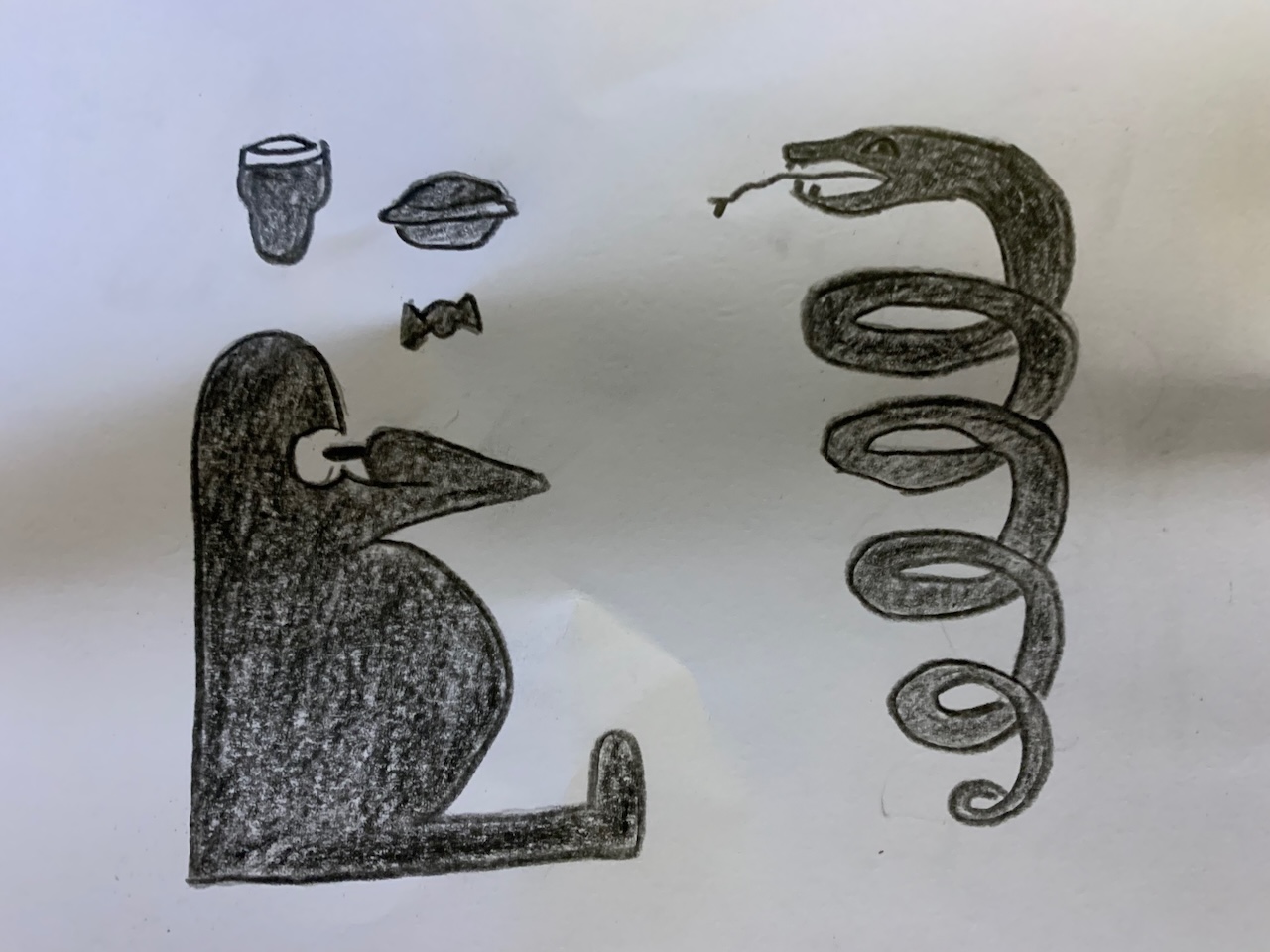
I have also done shamanic work dialoguing with, meditating on and journeying to the binger and the secret serpent. The former has appeared as a pup, a hungry hound and a ravening monster and I see him as representing my appetite. The latter appears as a woman in black or as a black serpent. Sometimes she is wound around me like a snake or a Siamese twin who is inseparable. I see her as representing restriction of appetite. Both are necessary and serve a function but can be deadly when they seize control. I’m hoping that building relationships with them will help me keep them in balance.
Another facet is that an eating disorder is a time thief. Obsessing about food and exercise takes time away from my relationship with my Gods and spirits. Thus, for me, recovery is about winning back more time for devotion and shamanic practice. In this, I can call for help from my patron God and spirit helpers.
I see the eating disorder as both a curse and a gift – it’s done a lot of damage but it’s also taught me a lot about the binging and restricting impulses that exist within me, within each one of us, and within our society and culture at large. So far I’ve done a lot of good work and I have a lot more work to do.
I’d be interested to hear about how others have dealt with eating disorders and about your relationship with food and exercise from a spiritual perspective.
Shamanic energy healing is a form of energy healing in which a practitioner works with their spirit helpers and traditional shamanic tools such as a drum and rattle to heal ailments which have a basis in a client’s energy body.
The notion that we have not only a physical body but an energy body and that they are both expressions of energy is common across indigenous and Eastern cultures. It was lost in the West due to the hegemony of our rational scientific worldview yet is now coming to be accepted in modern science. Einstein states E=mc² – energy and matter are basically the same thing.
There are many models of the energy body which share a common core. Firstly, energy runs in channels through the energy body (in India these are referred to as nadis and in China as meridians). Secondly, there a number of energy centres within the body with the main ones located along the spine. From the Indian yogic system is derived the modern seven chakra ‘wheel’ model you may be familiar with (root, sacral, solar plexus, heart, throat, brow, crown). As it is the best known this is the one most practitioners use. Thirdly, the body is surrounded and interpenetrated by an energetic field known as the aura.
A shamanic energy healing session typically begins with a scan of the client’s energy field and chakras to assess the overall flow and to locate any problems. Blocked or congealed energies are moved and / or transformed. Energetic imbalances are corrected. This might be done by the use of the hands or bodily movements (on an energetic level not touching the client), with a drum or rattle, the voice, or with a natural object such as a feather.
In some cases an extraction is required. Extraction involves removing intrusions. An intrusion is negative energy that does not belong to a client and intrudes into their energy field, often when they are feeling low. Intrusions can appear as objects such as arrows or stones or can take the form of beings, most commonly as insects or serpents. They are extracted from the energy field into an object such as a stone, crystal or feather then returned to the elements in some way (for example I put my crystals in salt water to neutralise the negative energy and hang my feathers on a tree). Because the extraction leaves a gap it is usually necessary to bring positive energy in. This can be resonant energy from the client’s energy field or might be brought from elsewhere by the practitioner or the spirit helpers. It might take the form of light, a colour, or an object such as a crystal.
The practitioner may also be guided to work with one or more of the chakras. Each chakra relates to a different system within the body. For example, the heart chakra to the circulatory system and the sacral to the reproductive system. The chakras can reveal what is happening in the related system.
I’ve found that it’s possible to journey, with or without the client, into a chakra in order to gain a vision of the ailment within the body or to trace its origin in history or ancestry or on a symbolic level within one of the Otherworlds. Healing work can be done within a chakra. Cleansing and energising the chakra once the work has been done also has a positive effect. The session might be finished with healing drumming or a rattle cleansing.
The energy system can be shaken up by the process and symptoms can get a little worse before they get better, but this only something to worry about if the aggravation is excessive or lasts for more than a few days.
*
In preparation for energy work with clients I spent a good couple of years beforehand getting to know and working with my own energy body. This was through yogic techniques such as meditation and breathwork focusing on the pancha kosha ‘five envelopes’ energy body and seven chakra model. I chose the yogic system because my personal spiritual path, Brythonic polytheism, shares its roots with yoga with both being Indo-European traditions. On advice of my mentor I also did journeywork with my chakras, exploring the inner landscapes and how they relate to my physical body and building a map of personal associations including their guardian spirit animals.
I offered the sessions in person, online, and, for the first time, provided a distance healing option. This consisted of an online interview followed by a remote healing session with an audio recording and an email summary.
I worked with eight clients in total. Most clients came to me with more than one problem. The most common were musculoskeletal. I also dealt with digestive ailments, eye and throat problems, womens’ issues and cancer.
I’ve learnt a good deal from these shamanic energy healing sessions. Each client and each ailment has led to a deeper knowledge of physical anatomy and how it is linked to the energy body and to energetic disturbances.
On several occasions I was prompted to mime the work I was doing on an energetic level on the physical level without touching the client (ie. stirring, swaying, massaging) and this felt very natural and intuitive. Having done some physical work and put in physical effort made me feel as if I’d worked more towards the effect and brought about more of an energetic shift.
Another point of learning was that I was guided to merge not only with my own spirit helpers but those of clients. This was most often with power animals but on a couple of occasions it was with angels (with whom I wouldn’t usually work in my day-to-day practice). This gave me a strong sense of their power and energy and how it might augment a healing. On a couple of occasions I had the opportunity to work with others who have relationships with Gwyn ap Nudd (my patron God) and working with His guidance and channelling His energy was a powerful experience for both myself and the clients.
I had the opportunity to work with one client who was far more clairsentient than clairvoyant (which is my main channel). I really had to listen to my body and in combination with what the client was feeling in order to build a rapport and tune in to what spirit was saying to both of us. It helped me develop my own clairsentience and ability to work with someone through this channel.
In most instances, I found that an ailment could be healed by pure energy work but, in others, that it was necessary to address the root cause, which in a couple of cases was power loss or soul loss, necessitating power or soul retrieval. In another couple of cases ailments were ancestral and communications with ancestors and addressing ancestral patterns and trauma was needed. My existing training stood me in good stead for bringing in other techniques.
An important point to note is that the shamanic energy healing was quite often a supplement to existing treatment from doctors and physiotherapists. It was encouraging that my findings and healings resonated with advice from the traditional medical professions and that they sat well side by side.
I found that whether I did sessions in person, online, or remotely did not affect the efficacy of the healing or the emotional intensity. I wondered whether the remote healings would feel more distant, but as soon as I with the client in spirit, it felt no different to being with a client in person.
Over the course of the sessions I have grown in confidence and feel that I now have the ability to work with my guides on any problem a client presents with recourse to my mentor and / or the medical professions where needed. I’m looking forward to exploring shamanic energy healing further in the future.
I am now offering shamanic energy healing at a student rate of £30 a session contact lornasmithers81@gmail.com
A memoir in the form of a novella based around my childhood, teens, and twenties. It records a confrontation with the darkness within the land, our culture and in my own psyche and a failed initiation into adulthood and shamanism. Finally, how my patron God, Gwyn ap Nudd, saved me from myself.
Free digital copy HERE. If you enjoy it please share the link to this post.
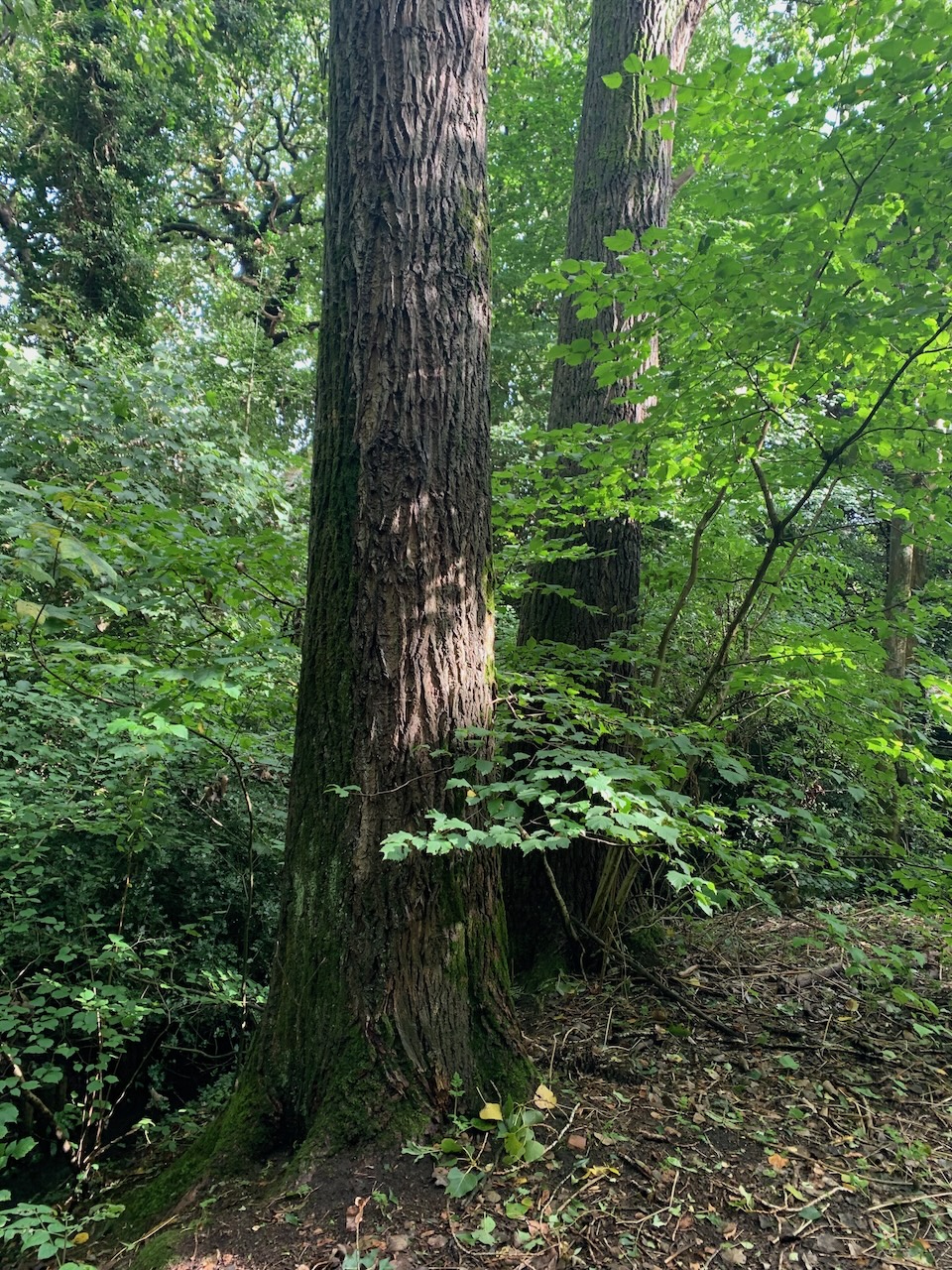
Beside the source of the brook in Greencroft Valley stand two black poplars. There aren’t any known British myths about black poplars but, in Greek myth, they are associated with Hades (the Underworld) and death.
In Homer’s Odyssey, poplars, described in different translations as ‘tall’ and ‘dusky’, so likely black, with willow, form Persephone’s Grove. Springs, throughout world myth, are seen as entrances to the Underworld.
In another story from ancient Greece, Phaethon, son of the sun God, Helios, drives his father’s chariot too close to the sun. His blazing end brings deep grief to his sisters, who are transformed into black poplar trees. The amber sap is said to be their tears. Thus its associations with death and sorrow.
In more recent folklore the red male catkins are referred to as ‘Devil’s Fingers.’
This leads me to believe that there might have once been parallel British myths about black poplar, connecting it with springs at the entrance to Annwn and with the groves of Annwn’s Queen. Perhaps there was once a story in which the red male catkins were the bloody fingers of Annwn’s King?
I will admit that I’m not sure if these trees are true black poplars (Populus nigra) or hybrids because black poplars are rare. Plus, I’m not referring to the true source of Fish House Brook but to the outflow pipe that the culverted brook emerges from. The original source would have lain further south, somewhere on Penwortham Moss, which has been drained and replaced by housing. The brook is culverted under the gardens on the other side of my street, Bank Parade, also giving its name to Burnside Way. I feel this relates to my founding of the Sanctuary of Vindos / Gwyn ap Nudd, a King of Annwn, very near to the ‘black poplars’ at the ‘source’.
In a shamanic journey I visited the poplars for advice on descending to the ancestors in preparation for some ancestral healing work. I was shown the left tree represented my mother line and the right my father line. I slid down the roots of the left into a cavern where a group of spirits were drinking from cups from the same source. I was told that on the new and full moons I must consecrate a cup of water and make an offering:
“To the Gods, spirits and ancestors – we all drink from the same source.”
I felt this related to keeping the source clean – something I have been trying to do as a volunteer in Greencroft Valley with the Friends group I set up (now part of Guardians of Nature).






 The Sanctuary of Vindos