Peneverdant, A Lunar Cycle

I. Dark Moon

On a dark moon
the lady in the ivy
winds down the dark hill
and the falling graves.

All memory
is sliding into darkness,
the river’s tides
her open mouth.

She is waiting
for the return
of her tribe
on their oaken boats.

The moon is dark
over the river-
an eye, a maelstrom
between the worlds.

The fleet are ready,
the church is empty,
graves as hollow
as the old green hill.

She will be waiting
in the ivy
for the return
of her tribe
on their oaken boats.

II. New Moon

All is darkness
but the splash of the tide,
the wing of an owl.

Lady Ivy
recounts her losses
on the hill
and the bank
where the hangman
wore his cowl.

They are waiting
in the maelstrom eye
of the new moon-
the river’s entryway
to living day
and deep Annwn.

They are waiting,
her hidden tribe
on their oaken boats
in a slit of light,
an opening moonbeam
to row through
the night
to the old green hill.

III. Moon First Quarter

There is wisdom
in the eyes of an owl-
a demand,
a categorical imperative.

Behind cumulonimbus clouds
secretly moon’s orb
is swelling.

They row.
History is written
in their woad-
gods and goddesses,
an oak king,
the lakes and water courses
of their oaken fleet,
the moon’s eye
in the shining river
and all the laws of the deep.

IV. Full Moon

The moon is full
behind the clouds.
She casts no light
on the empty boats,
the processional route
around the old green hill,
the moving river of woad.

Lantern bearers
pass the old iron rails,
the gloomy gathering of graves
to assemble on the mound,
igniting the beacon fire.

By the wing of an owl
the clouds are moved.
The moon looks down,
victorious.

They salute her orb
in the shining river,
the gods of the hill
and the deep.

On this night
of opened graves
anything is possible
in the light of the beacon fire
before the lambent eye of the moon.

V. Moon Last Quarter

Night has fallen
from the moon’s closing eye.

The owl has flown
to the hunt.

The fire gone cold
with the lanterns’ glow
is eclipsed by street lamps
and brake lights.

The by-pass roars
by the old green hill.
The river is concreted
back in her new course.

Lady Ivy
winds down
the hill and the graves.
She waits
for the tribe to row
to the river-moon
on their oaken boats,
to her maelstrom-eye
between the worlds.

Lady of the Oak

I leave the shelter of the grove ducking beneath twisted hawthorn branches. The trees weave the entrance closed behind me. Rain hits my face, falling from a heaven of relentless grey. Reading the sky’s grimace I wonder what has been seen.

A crow caws his warning. Sprinting toward me up the hollow way I see a young man, legs a blur of blue white checkers and feet a splash of mud and leather. Hair slicked to his head, his dark eyes flicker with awe and wariness. The first dapples of a beard play across his chin like leafy shadows.

“M-my Lady of the Oak,” he stammers pulling up.

His breathless chest heaves beneath a sodden tunic. It is rare for youths to approach me without an elder. Looking more closely at my gnarled face his eyes widen in dawning horror. “Bad news travels from up river. A Man of the Oak wishes to speak with you.” He runs away in a flurry of muddy feet.

I follow down the hollow way heedless of the downpour weighing my cloak for the damp of the air already resides deep within my bones. Looking east, rain drenches the green hill, our sacred headland, and the greener barrow housing our ancestors. The torrent’s drumming beat strikes bubbles across the marsh land. As I walk onto the wooden pad way the reeds hiss like snakes. Decay bites my throat. The steely cast of the river of shining water reflects the glumness of the sky.

In a canoe roped to the jetty my cousin Drust sits hunched in his robes. I question what he is doing here, alone.

The river’s song answers. Her visions flood my mind. I see the battle at the ford of roaring water. Broken chariots, tribesmen slaughtered, the hero light vanishing from their eyes like fleeing stars. The eagle standard flies high, reflected in the crimson river. Seeing the pale flicker of their separating ghosts I speak a prayer for the souls doomed to return to a land where they no longer belong.

Sorrow chokes me like bile. I vomit it in anger at Drust, “what are you doing here, when your clan are dead?”

Drust looks up, yet his face remains hidden by his cowl. “I am taking the remnants of our traditions and our gods to the island across the sea.”

I laugh, a throaty brittle sound like twigs twisting and snapping. “Gods are not like saplings, to be taken away and re-rooted and traditions are not nurtured by foreign soils. It seems the ideas of the invaders have penetrated more deeply than I imagined.”

Drust tenses. Drawing my knife from its leather sheath I lean down and slice the rope tying his canoe to the jetty. The river sluices him west and out to sea.

The wind carries enemy voices. Reflected in the falling droplets I see swords and plumed helms. Slipping on the wood and slithering up the hollow way I reach the grove and beg the hawthorns for passage. A peace of ancient green breaks over me, like I’m sinking into a bed of moss. Beneath the canopy’s protective shadow I believe myself safe until tumult disturbs the roots. Crows caw, anticipating carrion.

I cross a sea of acorns and approach the grove’s mighty king. Putting my arms around his trunk, I press my face to the rough bark. “Brother Oak, let me see into the future.”

My heartbeat merges with the pulse of rising sap. My feet become roots reaching downward through damp soil to the outer edges of the grove. My arms stretch into branches and split, bearing bunches of lobed leaves nourished by the hidden sun, washed by the rain, flourishing green.

The ground shudders at the march of soldiers, galloping hooves and chariot wheels. Battle cries are hollered. Bows hum to the crash of metal. Screams and groans rock me. I taste blood and its bitterness fills me.

Earth and water shift as ditches are cut, fields plundered to feed the enemy. Ancestral ghosts clutch my twigs shrieking of their barrow torn down and a temple built to a foreign god. I moan at the ache of rot softening my flesh, bowing and creaking as my branches snap and innards hollow. I beg for lightning’s merciful release but there is no answer from the clouds of sorrow.

“Brother, let me return,” I speak. “The tribe need my support in their defeat.”

I ease back from the oak as the hawthorns scream and turn to see branches broken, shredded leaves and burst haws at the sandaled feet of a man dressed in a plumed helmet, iron breast plate and red woollen tunic. His eyes are blue, skin tanned by the sun of a hotter land. Brandishing a sword stained with blood and sap he accuses me of witchcraft, of sacrificing innocents to divine the future from their death throes.

I smile. The man freezes in horror. I draw my knife and mustering all my oaken might I drive it between the iron plates and slice open his stomach, spilling his guts upon the grass. Attempting to gather them in like rope he drops twitching and groaning to his knees.

I read the future of his people and their empire from his pulsing entrails.

Kneeling, I pick up a handful of blood soaked acorns and address my brother, “do not fear. Whilst tribes and empires rise and fall, the steady strength of oak will conquer all.”
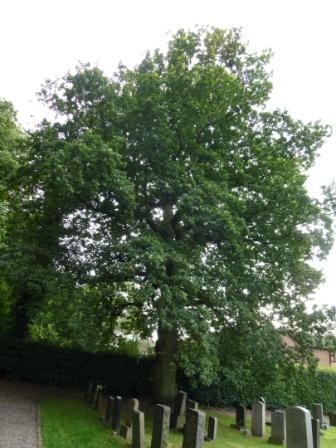
Oak, St Mary's graveyard, Castle Hill

Englyns on Auroch Skulls

Auroch Skull, the Harris Museum


Staring from the museum
eye pits glare beneath fierce horns,
haunted wells of atrophy,
gazes flee their blind prisons

back to Taurean eras
of thunder down the river,
reeking ride of reddish hides
steaming wild to the water,

skidding sudden to a halt,
thick bones trembling, muscles taut,
bullish courage killed by fear
of men’s spears and swift assault.

Seeing skies alive with darts
herd wheels, swings and departs.
Knees buckle and hocks collapse
at the agony of barbs.

Most escape, some are slaughtered,
five stagger, tidal water
rises as they struggle and sink.
Its cold brink claims their corpses.

Tides turn. Sediments heap.
Silt and till on layered peat
bury bones in sunken sands,
erred, abandoned for centuries

until wrested from repose
five bovine skulls are disclosed
by dockland’s excavation,
shivering blind and exposed.

Breezes trace visages bared.
Tongueless trophies taste the air.
Denied thunder impaled rage
hangs displayed, an endless stare.

Skull songs lie trapped in the eyes.
Visions burst where times collide.
Bones cry for wind-swept stampede,
aurochs released to the wild.

Auroch Skulls, Harris Museum


* This poem is based on a simplified variation of Englyn Cyrch, which I learnt from Robin Herne’s Bard Song.

Mist on the Holme

The Ribble from MiddleforthMist on the Holme-
the perfect phantom of a morning.
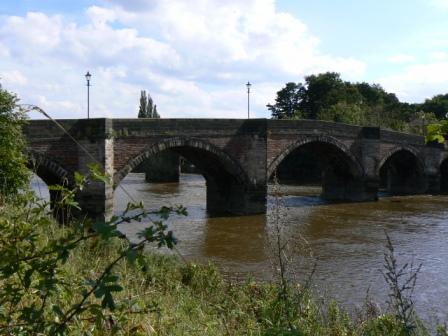
Bridges fade. The river finds her old routes.
Allotments and playing fields resume their archipelago.
Over thickening silt rough currents rush.
I am knee deep in mud, stumbling through rushes.
Gulls flit like ghouls with beaks of fog.
I hear the oar of a ferryman break the churning water
to claim my coin and take me home beyond the distant shore.

The Other Side

Looking beyond the embers of bridges glowing behind us
To a glimpse of how green it was on the other side
Steps taken forwards but sleepwalking back again
Dragged by the force of some inner tide
– Pink Floyd High Hopes

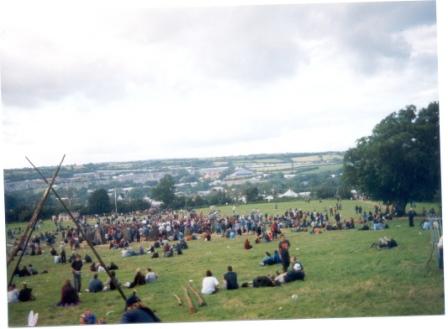
Glastonbury 2000

The world was ours, the moment all that mattered.
Our hopes were high in the mist of dawn.
We flung our friendship over the wildest horizons
riding rainbow lights and drums to distant haunts
that never satisfied the fire in our souls
nor the loneliness that lay its pall between us.
Strung out on stars, burning everything of value
we reached the ravaged borderlands and paused
so far gone even astronomers couldn’t find us.
Looking beyond the embers of bridges glowing behind us

they saw the stone circle and distant Tor,
the penumbra of a festival vanished to the night.
At last we staggered home lost and nearly blind,
dazzled by the sun we couldn’t find to tiny houses
with stiff front doors surrendering hope for certainty.
The return was hard, obeying the constant grind
of re-learning how to put one foot in front
of the other one. Re-mastering the system, unseeing
starry skies. Yet on the odd occasion reality elides
to a glimpse of how green it was on the other side.

I fought onward, eventually alone
as the division bell began to toll, making happy
families with freshly ironed clothes, polished homes
and forced smiles. From a dusty library I looked out
across the hills- a glimpse of green and beacon fire.
My feet trod through cotton grass to broken remains
of tribal ruins drawn by chants on the west wind.
The other side returned to life in the vestibules of trees.
I saw a river goddess wash her hair in the rain.
Steps taken forwards but sleepwalking back again

the fragments stayed broken, my vision incomplete.
Stunned by the Tor redrawing itself on the backdrop
of my mind I relit the embers on the Ribble’s bank
and recalled the last hint of paradise before everything
went black and time took our dreams away. Guided
by the voice of an otherworldy king I reclaimed my pride
at the Tor’s white spring. Time performed its circle,
gave back my starlit dream. The world is mine again.
To the other side and spiralling back I ride
dragged by the force of some inner tide.

Glastonbury Tor 2013

Porth Annwn

Porth-Annwfyn. Some numinous, arcane agnomen, but which to my dream cognition was livid as moonshine and did plainly signify: Gate of Elysium.’
– David Jones The Dream of Private Clitus

I.
Where is the door?
The shadowy portal exists
In the thickness of the veil
In the heart of mist
Where life divides
And fateful cataracts meet.
There are as many doors
As you have eyes that open.

II.
And who is the porter?
It is never who you thought it would be.
It is always who secretly you knew
From the world’s beginning.

III.
There are many doors
And I can speak of but a few.

Trees keep doors.
They are not in the front or back
But in the spiralling melt
Into arboreal existence.
This is the forest path.

Look into a river
To find yourself on the mirror side.
Remember to be returned
With the turning of the tide.

To reach the summer stars
Seek out a silver space ship.
Beware for Elysium’s bliss
Is more deadly than Annwn’s darkness.

Beside the door of death
A spectral hound sits.
He’s black or white-
Depends on the way
You’re looking.
He swallows whole souls.
The lucky ones hit the ground running.

The Colloquium of the Brooks

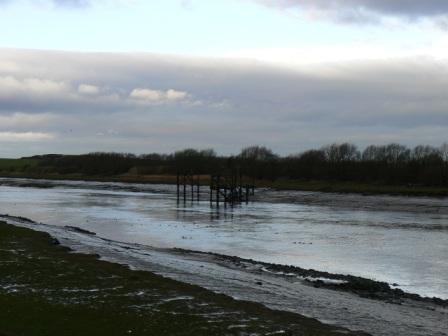
Ribble close to Mill Brook


On the silted shore of the Ribble
Where the gulls dip and call
The river banks her vista
And the tides ebb and flow
In unending expeditions
From the land to the sea
The brooks broach their quantas
And descry their misery.

Fish House Brook:
How long now?

Penwortham Brook:
Patience little sister, can’t you see the times are changing?

Fish House Brook:
I’m barely in a position to perceive change
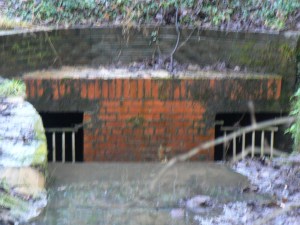
Caught in the constrictions of the concrete culverts
Cut by the man-made channels, blinkered in blind
Alley-ways, forced through dire traps and grilles,
Stumbling in terror via that jail house prison
Cruelly manufactured for me below Hill Road South.

Mill Brook:
If you would look beyond those despotic fixities you would see
The dark pall of the industrial era has lifted, your brother
And I are freed from servitude, our water running clearer by the day.

Fish House Brook:
And you see this as consolation?
Do you not remember when the magnitude of our flow
Turned water wheels, had the force to overturn wagons
And shifted the lay of the land to sculpt our valleys?

Mighty Belisama, you must recall our glory days
Before they shifted your course from Watery Lane to Castle Hill,
Deformed our travails, forever destabilised our tables?

Belisama:
Quarrelsome brooks, stare firmly at the quintessence
Of your course and see all that remains constant is change.
Since the ice lords rode our backs, pitched us deeper
Into the frozen earth, and through the aeons before
Our wills and paths have never been wholly our own.

Fish House Brook:
That the principalities of nature shape us I do not disclaim.
But these men… with their yellow jackets
And heaving ploughs, excavators and cranes,
Winding cords, caterpillar rolls, drop down drains,
Their discernment as dense as a builder’s helmet,
Vision blank as a steel lid, they are numb as their machines.

Penwortham Brook:
Not like the orphans who worked my looms.
I remember their knocked legs stumbling to my bank,
How they stared into the rainbow of my polluted depths.
With wide white eyes they contemplated their horror in me,
Knowing not what they were or what I could be.

Fish House Brook:
At least then we were seen. Now the people stagger
By blind as drunks, ditching debris on our banks.

Mill Brook:
Humans… still given wholly to gods
They cannot see. Servile seeking invisible wealth
Not even gleaming gold. Their only idols strip plastic
Features on the screens, flip in pixels to wide dumb grins.

Fish House Brook:
The vapid screens suck out their lives.
They are not aware of, nor do they understand their sacrifice.
Whilst trapped within their drains we wither up and die.

Penwortham Brook:
Belisama, tell her that isn’t true.

Belisama:
How many years have men visited our banks?

Fish House Brook:
Well, I remember when we were treated with reverence.
Do you recall the long days spent by smiths at the forge,
The bold shatter of sparks, the bright ring of the hammer,
The beauty of gifts delivered in resonant ceremonies,
Swords, axes, heads crafted from stone and those of enemies
Whilst now all they drop in is litter and fag ends.

Penwortham Brook:
It was when the factories rose that the human race
Became effulgence and we it’s dumping ground.

Fish House Brook:
Now red fades to grey and the system is dying.
Their wonders drop, one by one, like falling dolls.
They roam the streets, jobless and desolate.
There is no hope in their eyes.
They have no strength left.

Belisama:
Bearers of the brooks, steerers of the streams,
Deliverers of my bright waters. Do not dismay!
Like the course of a river, times will change
We are bound into a whole with sea and rain.
With he who brings the tides come the waves.
I still commune with the lords of the glaciers
And they say we have not got long to wait.

Fish House Brook

On Frenchwood Knoll

City drenched.
We bend against the rain.
Sandstone soaked,
Corporate faces are too pinched to sob.
The rain drops laugh tearfully,
Drip down red.
The bricks outlive the factories.
Vacant shops are hollowed out.
The ectoplasm of capitalism recedes
Like the spectre of Marxism.

On Frenchwood knoll
I met a tribesman who pointed
To the hills across the river,
Turbulent sky and spiralling stars,
I touched the earth and felt her rhythm,
Dark pulse caught
Between the supermarket and spire.
Sold off, covered over, offered up,
Remembered only by the weather.

Belisama: Goddess of the Ribble

Belisama is the goddess of the river Ribble, which runs from Ribble Head in North Yorkshire, through Ribblesdale, Central Lancashire and out to the Irish Sea. Her name is known from Ptolemy’s Geography 2AD, where at co-ordinates corresponding to the Ribble’s estuary he places ‘Belisama aest[1]’. Inscriptions to Belisama have also been found in Vaison-la-Romaine in Provence and Saint-Lizier, in the Pyrenees[2].

Her name has received a number of interpretations. Nick Ford translates ‘Rigabelisama (Riga-, a queen, and Belisama)’ as ‘Most Shining One’ making her the ‘Most Shining Queen’ or ‘Most Mighty Queen’[3]. Seeing the dazzling beauty of the Ribble illumined by sunlight or moonlight confirms the legitimacy of this epithet to me. However Delamarre claims the translation of bhel as ‘white or brilliant’ is based on a false interpretation of Belinus’ identification with Apollo. Belinus is ‘the Powerful One’ and Belisama is the ‘Most Powerful One’[4]. Watching the Ribble after heavy rain, particularly at high tide conveys a sense of her power, as does observing the landscapes she has shaped.

The town of Ribchester has a close connection with the Ribble. It’s native name Bremetonacon means ‘place by the roaring river[5].’ In Saint-Lizier Belisama is identified with the Roman goddess Minerva. A bust of Minerva was found at Ribchester and it was once largely accepted the town had a temple to Minerva-Belisama[6]. Whilst it would make sense that a place of worship dedicated to Belisama was located in the heart of the Ribble Valley beside the roaring ford this is based on a mistranslated inscription[7]. To whom the temple was dedicated is unknown. As a large part has been washed away by the Ribble it might be assumed either that it didn’t belong to Belisama or she didn’t want one.

A question I’ve pondered is how much to read into Belisama’s possible identification with Minerva at Ribchester- when the Romans built the fort in 70AD they were polytheists, and their experiences of Belisama may have led to this equation. Minerva is a goddess of wisdom, crafts and healing. From the Norman period (and indubitably before), until the end of the 18th century the Ribble was renown for being rich in salmon, the quintessential fish of wisdom, with the most important of the fish garths being located at Fish House Bridge in Penwortham[8]. Another possible reason for this identification is that wisdom can be gained from watching and listening to the flow of the Ribble in different spots. One of the lessons I’ve learnt from Belisama is dynamism and change; due to a combination of the tides, rain fall and the position of the sun or moon her waters never look the same in any place.

In terms of crafts, Belisama has inspired a good deal of creative writing from the poems of Richard Dugdale (the Bard of Ribblesdale 1849), James Flockhart’s ‘The River’ (1854), Gerard Manley Hopkins’ ‘Ribblesdale’ (1876) and John Heath-Stubb’s ‘The Green Man’s Last will and Testament’ – ‘the cruel nymphs / Of the northern streams, Peg Towler of the Tees / And Jenny Greenteeth of the Ribble, / Sisters of Belisama, the very fair one’ (1973)[9]. Jane Brunning, a Penwortham based author blogging as Reigh Belisama runs a site called ‘Save the Ribble,’ which played a leading role in preventing the river barrage at Brockholes and continues to oppose fracking on the Ribble Estuary[10].

Belisama’s influence on the cotton industry can be recalled by the number of old mills on her tributaries. Without Riversway Dockland, which was created by moving the Ribble from Strand Road to her present course beside Castle Hill, Preston could not have played its huge role in the industrial revolution. Whilst I’m unaware of any associations linking Belisama with physical healing, spending time beside the Ribble usually has a calming, cleansing effect on me.

Moving from Belisama to the Ribble, the first mention of the change of name is in ‘the Latin Life of St Wilfrid’ (patron saint of Preston) where ‘lands identified as ‘round Ribble’ (iuxta Rippel), Yeadon, Dent and Catlow’ are granted by the English ruler to ‘the community at Ripon’[11]. The Saxon Ripel was taken by Ekwall to mean ‘tearing, reaping’ making the Ribble ‘the tearing one’[12] relating Belisama’s qualities of power and might. Andrew Breeze suggests that Ribble may derive from the Welsh rhybwyll, which combined with the prefix ri could mean very great wisdom[13]. The name change and it’s interpretations demonstrate the qualities of flux and continuity innate to Belisama.

For me in present day Penwortham, (which without Belisama, in its current form would not exist), Belisama and her tributaries continue to shape the valleys and plains, as well as the lives of the wildlife and people who inhabit them. Belisama’s power and wisdom shine throughout her ever changing course and in those by which it is transmitted, whether by the spoken or written word, craftsmanship, or in the actions of those who stand against her exploitation and pollution.


[1] http://www.roman-britain.org/ptolemys-geography.htm
[2] Whilst this might be seen to indicate the presence of a goddess worshipped across Britain and Gaul, Nick Ford reminds us ‘most, if not all, the names of Celtic divinities seem to be descriptive epithets rather than real names.’ Nick Ford ‘Ribchester (Bremetenacum Veteranorum): Place of the Roaring Water’ Lancashire’s Sacred Landscape, ed. Linda Sever, 2010, p82.
[3] Ibid.
[4] http://theses.univ-lyon2.fr/documents/getpart.php?id=lyon2.2009.beck_n&part=159190
[5] Nick Ford ‘Ribchester (Bremetenacum Veteranorum): Place of the Roaring Water,’ Lancashire’s Sacred Landscape, ed. Linda Sever, The History Press, 2010, p82
[6] Malcolm Greenhalgh, Ribble River and Valley: A Local and Natural History, Carnegie Book Production, 2009, p83.
[7] ‘commander of the unit and region’ was mistranslated as ‘to the very mighty numen and queen’ Nick Ford ‘Ribchester (Bremetenacum Veteranorum): Place of the Roaring Water,’ Lancashire’s Sacred Landscape, ed. Linda Sever, The History Press, 2010, p82
[8] Alan Crosby, Penwortham in the Past, Carnegie Press, 1988, p48
[9] John Heath-Stubbs ‘The Green Man’s Last Will and Testament,’ Earth Shattering: Eco-Poems, ed. Neil Astley, Bloodaxe Books, 2007.
[10] http://save-the-ribble.blogspot.co.uk/
[11] Andrew Breeze, ‘Communications Yrechwydd and the River Ribble,’ Northern History, XLVII; 2, September 2010, p324.
[12] Ibid. p324
[13] Ibid. p326.

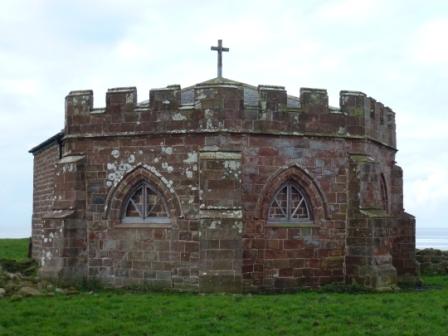
Cockersand Abbey

Chapter house meets silver frieze of dappled
clouds dipped in river. Beacon white sun lights
the margins of eyes; prior, pilgrim, traveller.
Holiday makers rush to shore, seekers
of ages dress lost walls. Broken healers
see a liminal sky, on a statue writ
in silver: Mars Nodontis. “Be our healer.
Beside the lapping tides and flashing sky,
Cloud Maker, fix our wounds and make us whole.
Return this no-time to a holy day.”