The Monstrous Claw

after the noise an enormous claw comes through the window, and grabs the foal by the mane. Teyrnon draws his sword and cuts off the arm at the elbow… by the door there is a small boy.’
The Second Branch

I’m just reaching out
for your foal, for your first-born son.
I like to see blood on my claws.
I like the taste although
I do not eat them.

I just want you to know
there is a hole in your reality
bigger than the sun.

That nothing is safe.

Nothing.

You are not the only one who feels terror.

I know you long for my blood –
to lick it from your blade
when you have nailed
my arm above your window.

The exchange must be complete.

You try to close the window again.

How long can I go on reaching out
when it only ends in pain?

How long can you go in dread?

Henwen – The Birthing and Devouring Sow

gloucester-old-spot-sow-public-domain

I. Henwen – ‘Old White’

In Triad 26. we find the story of a sow called Henwen ‘Old White’. She belongs to Dallwyr Dalben and is kept in Glyn Dallwyr in Cornwall in the care of Coll, son of Collfrewy, one of three ‘Three Powerful Swineherds.’ She becomes pregnant and it is ‘prophesied that the Island of Britain would be the worse for the womb-burden.’ Therefore Arthur and his warriors set out to destroy her.

When Henwen is ready to farrow she goes into the sea at Penrhyn Awstin and is followed by Coll (and, presumably, Arthur and his men). Landing in Wales she begins to give birth to offspring. Surprisingly, they are not piglets! In Gwent she brings forth a grain of wheat and a bee, giving the name to Wheat Field, and in Pembroke barley, ‘therefore, the barley of Llonion is proverbial.’ In these two instances, in South Wales, Henwen’s births are benign and generative, creating crops and pollinators.

When Henwen reaches North Wales, however, she gives birth to wild creatures. At the Hill of Cyferthwch in Arfon she brings forth a wolf-cub and a young eagle. The wolf is given to Bergaed and the eagle to Breat, princes of the North, and they are both ‘the worse for them.’ We find a contrast between the fertile plains of South Wales and the wilder, more rugged regions of North Wales.

‘At Llanfair in Arfon under the Black Rock’ she gives birth to a kitten who is thrown by Coll into the sea. The sons of Palug foster it in Môn (Anglesey) ‘to their own harm’ and it becomes known as Palug’s Cat. In ‘Arthur and the Porter’ we are told that it was eventually ‘pierced’ by Arthur and his men. However, before they managed to kill it, nine score chieftains fell at dawn and it devoured them. Palug’s Cat was one of Three Great Oppressions of Môn along with Daronwy, and Edwin, King of Lloegr.

II. A Sow’s Feast

It believe that Henwen also makes an appearance in ‘The Fourth Branch’ of The Mabinogion. In this story Gwydion is searching for his nephew, Lleu. Gwydion stays at the house of a peasant in Manor Bennard. He learns his learns his host owns a sow who returns every night to feed her piglets. However, nobody knows where she goes during the day ‘any more than if she sank into the earth’. These lines recall Triad 26. where Henwen sinks into the sea, suggesting her otherworldly nature.

Gwydion follows the trail of the sow to a mighty oak which stands between two lakes and is neither wetted by water nor melted by fire. At its roots the sow is feasting hungrily on rotten flesh and maggots. When Gwydion looks up he sees they are falling from Lleu, who is perching in eagle-form in the top-most boughs, pierced by the spear of his rival, Gronw, the gore dripping from his rancid wound.

In the context of this story it seems significant that Gwydion is led to Lleu by this mysterious sow. Earlier Gwydion stole the seven piglets who were given to Pryderi, son of Pwyll Pen Annwn, by Arawn, King of Annwn (along with Coll and Drystan, Pryderi was one of the ‘Three Powerful Swineherds’).

These piglets were special, ‘some kind of creature that has never been in this island before has arrived in the South’. Gwydion’s theft led to a chase from South to North Wales and several devastating battles between his men and Pryderi’s. Pryderi was finally killed by Gwydion in single combat.

It is my intuition Henwen was the Annuvian mother of the seven piglets. Her devouring of Gwydion’s nephew may represent her taking back from him in exchange for what was stolen from her. The chase South to North and trail of devastation are thematically linked with Henwen’s story.

Another point of note is that Daronwy, ‘The Oak of Goronwy’, is referred to as ‘the radiance of the men of Goronwy’ and therefore associated with Lleu’s rival, Gronw Pebr (pebyr mean ‘radiant’). It could be the oak where Lleu perched after being wounded by Gronw’s spear – a scene based on an older initiatory myth. With Henwen’s clawing child, Palug’s Cat, it is included in the Oppressions of Mon. Thus it makes sense to find Henwen devouring the dying Lleu back into Annwn at its roots.

III. Hwcha Ddu Gwta – ‘Black Short-Tailed Sow’

In Welsh folklore we find a mysterious verse about Hwch Ddu Gwta ‘Black Short-Tailed Sow’:

Black short-tailed sow
On every stile
Spinning and weaving
On Calan Gaeaf night

Get home quick, be the first
The Hwch Ddu Gwta gets the last.

She is said to emerge from the ashes of bonfires on Nos Galan Gaeaf and wait at stiles to prey on people walking home late. It is bad luck to be the last to get home as Hwch Ddu Gwta will eat you.

It seems possible the white Henwen, the birthing mother who provided the harvest, is also the black devourer.

There is a similar legend in southern Sweden. Gloso is a ‘glowing sow’ who appears ‘over the twelve days of Christmas’ with ‘eyes of fire, sparks spring from her bristle, and she travels like a burning flame.’ This recalls Hwch Ddu Gwta’s birth from the embers on Nos Galan Gaeaf.

She is also connected with the harvest. Three blades of wheat are left for her in the field. ‘These are for Gloso: one for Christmas night, one for the night of the new year, one for king’s night.’ This makes me wonder whether similar rituals existed to appease the harvest sow in her darker winter apparel.

IV. Ceridwen – The Old Mother

Greg Hill suggests Hwch Ddu Gwta might be connected with the Ladi Wen ‘White Lady’ who also walks abroad on Nos Galan Gaeaf, and with Ceridwen, the goddess of the cauldron. Robert Graves, in The White Goddess, also identified the sow with Ceridwen, ‘the White Lady of Death and Inspiration.’

It is my personal belief that Ceridwen is the Old Mother of the Universe, the Great Goddess from whose crochan, ‘womb’ or ‘cauldron’, all life is born and to whom it returns at death. This would certainly fit with the Henwen ‘Old White’ as the mother who births harvests and monsters and swallows the dead.

SOURCES

Charles Lecouteux, Phantom Armies of the Night: The Wild Hunt and the Ghostly Processions of the Dead, (Inner Traditions, 2011)
Greg Hill, ‘Traditional Customs for the Calend of Winter’, Dun Brython
Rachel Bromwich (ed), The Triads of the Island of Britain, (University of Wales Press, 2014)
Robert Graves, The White Goddess: A Historical Grammar of Poetic Myth (Faber & Faber, 1999)
Sioned Davies (transl.), The Mabinogion, (Oxford University Press, 2007)
William Skene (transl.), ‘Arthur and the Porter’, Mary Jones Celtic Literature Collective

A Grave for Pryderi

In Aber Gwenoli
Lies the grave of Pryderi
The Stanzas of the Graves

He was buried in Maentwrog, above Y Felenrhyd, and his grave is there
The Fourth Branch

In autumn last year I visited Aber Gwenoli in Coed Felinrhyd, the village of Maentrwog, and the Coedydd Maentwrog. These locations are all part of Snowdonia’s Atlantic oak woodland or temperate rain forest and are associated with the death of Pryderi, ‘Care’ or ‘Worry’, the son of Pwyll and Rhiannon.

Dyffryn Maentwrog Med

Pryderi is the only character who appears in all four branches of The Mabinogion. This has led scholars to speculate he may be the central figure. If this is the case he is a hapless kind of ‘hero’. Although he enjoys success in battle, he is constantly in trouble, sometimes on account of forces beyond his control, at others because of his impetuousness and lack of discernment. He is particularly unskilled at dealing with magic and with the uncanny forces of Annwn and this proves fatal.

On the night of his birth Pryderi mysteriously disappears when his mother and her women fall into an enchanted sleep. He reappears just as mysteriously when Teyrnon cuts off the enormous claw of a monster to save his foal. It’s clear he was stolen by the forces of Annwn, but the reason isn’t stated.

After Pwyll dies, Pryderi becomes the ruler of Dyfed and manages to conquer the three cantrefs of Ystrad Tywi and the four cantrefs of Ceredigion, incorporating them into the seven cantrefs of Seisllwch.

He is named as of one of the seven survivors of the terrible battle between the British and Irish in Ireland where the Irish dead are thrown into the Cauldron of Regeneration and reborn. Whether he survived through his skills in battle, sheer luck, or by cowering in a corner is not revealed.

Pryderi falls victim to Annuvian magic again when he pursues a white boar into a fortress and, enraptured by a golden bowl, gets stuck to it. His mother follows and suffers the same fate. With a ‘tumultous noise’ in a ‘blanket of mist’ they are both whisked away in the enchanted fort. It takes all the wit and persuasion of Manawydan to win them back from the otherwordly enchanter, Llwyd Cil Coed.

It is later revealed Pryderi is the owner of a herd of pigs whose ‘flesh is better than beef’. They were were sent to him by Arawn, a King of Annwn. This gift has its basis in Pwyll’s special relationship with Arawn. Pwyll traded places and identities with Arawn, literally becoming the Annuvian King and ruling in Annwn for a year. He won Arawn’s friendship by defeating his rival, Hafgan, and not sleeping with his wife. Pwyll received the title Pwyll Pen Annwn and they began to exchange horses, hunting dogs, hawks, and other treasures between their kingdoms.

It is possible to conjecture that this relationship has a deeper meaning. If Pwyll ‘is’ Pen ‘Head’ of Annwn, his and Arawn’s roles and identities remain fluid and interchangeable. Pryderi is the son of both Pwyll and Arawn, and thus a semi-Annuvian figure. This might explain why the forces of Annwn snatched him away the night of his birth – perhaps to initiate him into the Otherworld and meet his other father*. It is of interest he and his mother, Rhiannon, who is herself a divinity who originates from Annwn, are captured by the enchanted castle whilst Manawydan and Cigfa remain free.

In Triad 26. Pryderi appears as one of ‘Three Powerful Swineherds of the Island of Britain’. In Celtic mythology swineherds are often powerful magicians. The triad tells us Pryderi tends seven swine brought by ‘Pwyll Lord of Annwn’ and given to his foster father, Pendaran Dyfed. He keeps them in Glyn Cuch (the place Pwyll met Arawn). He is called a ‘powerful swineherd’ because no-one can ‘deceive or force him’. This portrait of Pryderi is much at odds with his gullibility in The Mabinogion.

The magician-god, Gwydion, nephew of Math, the ruler of Gwynedd, tricks Pryderi into giving him the pigs. He does this by disguising himself and eleven of his men as poets and conjuring twelve stallions with golden saddles and bridles and twelve hounds from toadstools. Pryderi agrees to exchange them for the pigs.

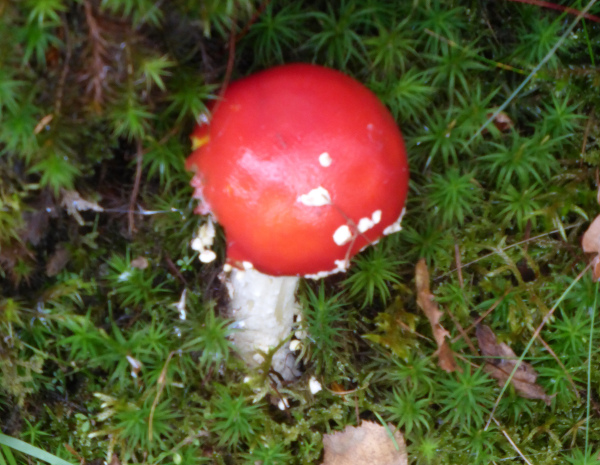
Fly Agaric, Coed Felinrhyd

A day later, when the enchantment wears off and Pryderi finds only toadstools in his stalls and kennels (a scene sadly left to the imagination of the reader), he raises an army and pursues Gwydion north.

Gwydion’s flight with the Annuvian pigs explains the place names Mochnant, Mochdref, and Creuwrion (moch means ‘pig’ and creu means ‘pen’). Gwydion waits for Pryderi to attack in Arfon, ‘the strongest part of Gwynedd’. A ‘great massacre’ takes place. Gwydion’s army retreats to Nant Call and there is, again, ‘immeasurable slaughter’. At Dol Benmaen Pryderi makes peace by giving twenty-four hostages.

The two armies travel together in peace to Y Traeth Mawr. However, at Y Felenrhyd, ‘The Yellow Ford’, a bank of sand across the river Dwyryd, battle breaks out again because the foot soldiers cannot resist shooting each other.

Y Felinrhyd

To prevent further slaughter Pryderi sends a message requesting Gwydion engage him instead in single combat. Gwydion agrees. ‘Because of strength and valour, and magic and enchantment, Gwydion triumphs and Pryderi is killed.’ Pryderi shows courage in taking on the trickster-god. Yet, surprisingly, his prowess in combat is not described. If he is the central character his swift end is a disappointing climax.

After being stolen away to Annwn on two occasions Pryderi returns there for his third and final sojourn.

We are told ‘he was buried in Maentwrog, above Felenrhyd, and his grave is there.’ A possible place of burial might be the village church where there is a marker stone. However, the church is dedicated to Saint Twrog, who reputedly threw the boulder from the Moelwyn mountains and killed a she-devil. In other accounts a giant threw the stone and destroyed a pagan altar. Aside from the line in The Mabinogion there are no folk memories connecting Pryderi with Maentwrog, ‘Twrog’s Stone’.

Maentwrog

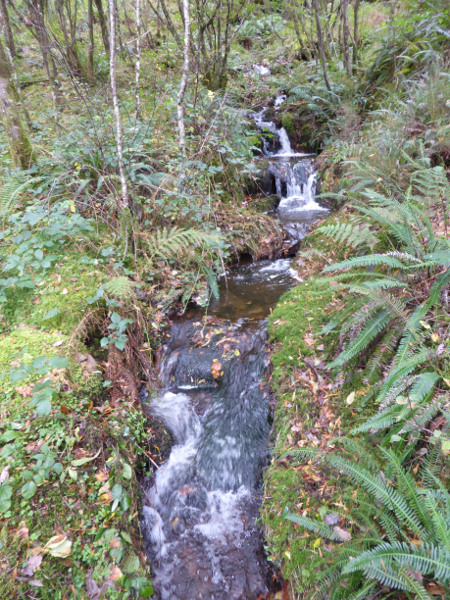
An alternative location for Pryderi’s burial place appears in ‘The Stanzas of the Graves’ in The Black Book of Carmarthen. ‘In Aber Gwenoli / Lies the grave of Pryderi’. Aber Gwenoli is a stream that runs down from Llyn Tecwyn into the river Prysor, which then joins the Dwyryd at Y Felenrhyd. With help from Greg Hill and another friend I managed to locate it just below Ivy Bridge.

Ivy Bridge

Stream near Pryderi's Grave

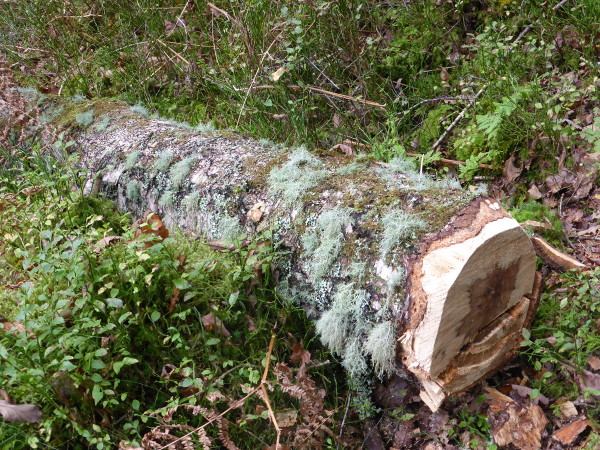
Afterwards we completed the circular walk of Coed Felinrhyd, taking in the autumnal colours, the multitude of lichens, mosses and liverworts supported by the rainforest climate.

Lichens

Just before we reached the end we found a ‘story telling chair’, placed there as if it was just for us, and took it in turns to read Pryderi’s story from ‘The Fourth Branch’.

Story Telling Chair

After departing I was not sure of the meaning of this visit. I now have an inkling of understanding. If Pryderi is the son of both Pwyll and Arawn and of Rhiannon he is an Annuvian figure who was killed by Gwydion. Gwydion’s theft of Pryderi’s pigs and slaughter of Pryderi are not the only instances of him stirring up trouble with the Otherworld.

Gwydion also stole a dog, lapwing, and roebuck from Annwn, inciting Arawn, ‘the Wealthy Battle Dispenser’ to lead an army against him. This included enchanted plants, trees, monsters, and giants. Arawn (presumably with the Cauldron of Regeneration) even brought Brân the blessed back from the dead!

Gwydion in turn enchanted 34 different trees and shrubs against Arawn. With help from his nephew, Lleu, ‘radiant his name, strong his hand, / brilliantly did he direct a host’ and the warrior-bard Taliesin, Gwydion’s men and the battling trees defeated the forces of Annwn.

For some reason I’m being drawn by the deities of Annwn to look at the damage Gwydion’s trickery has caused. Whether my patron god, Gwyn ap Nudd, is ‘the same’ deity as Arawn, Llwyd ‘Grey’ and Brenin Grey ‘The Grey King’, who all haunt the mist-soaked oak forests of Snowdonia, is not for me to determine. All I know is I feel ‘his’ influence drawing me back to these stories of the British Foretime and to North Wales where land, language, myth, and the misty breath of the gods are one.

Dyffryn Maentwrog II

*For a detailed discussion of joint fatherhood in Celtic mythology see Will Parker’s The Four Branches of the Mabinogi p167 – 170.

SOURCES

Lorna Smithers and Greg Hill, ‘Y Felenrhyd’, Caer Feddwyd, (2017)
Meirion Pennar (transl.), The Black Book of Carmarthen, (Llanerch Enterprises, 1989)
Rachel Bromwich (ed), The Triads of the Island of Britain, (University of Wales Press, 2014)
Rachel Dixon, ‘Walking in a Welsh rainforest‘, The Guardian, (2015)
Remy Dean, ‘Welsh Folklore: Significance of the Maentwrog Standing Stone’, Folklore Thursday, (2016)
Sioned Davies (transl.), The Mabinogion, (Oxford University Press, 2007)
Will Parker, The Four Branches of the Mabinogi, (Bardic Press, 2005)
The magical swineherds of Irish mythology’, Atlantic Religion, (2015)

The Changing Faces of Caer Siddi

Caer Siddi is a legendary fortress in the enigmatic medieval Welsh poem ‘The Spoils of Annwn’, which is written from the perspective of Taliesin and describes his journey with Arthur and his men aboard the warship, Prydwen (‘Fair Form’) to seven fortresses in Annwn (‘the deep’).

Their aim is to accomplish a series of tasks including the rescue of the divine prisoner, Gwair, the theft of the cauldron of the Head of Annwn and capture of the Brindled Ox. Parallels with the anoethau (‘impossible tasks’) in Culhwch and Olwen suggest a shared source in Brythonic tradition.

Caer Siddi is the first fortress Arthur’s party raid. The name Caer Siddi has been translated as ‘Fortress of the Mound’ or ‘Fortress of the Fairies’ from the Welsh caer ‘fortress’ and Irish síd which refers both to the aos sí ‘fairies’ and the sídhe ‘mounds’ they inhabit. Another translation is ‘Fortress of the Zodiac’ from the Welsh siddi ‘zodiac’.

In ‘The Spoils of Annwn’ Taliesin says:
‘Maintained was Gwair’s prison in Caer Siddi,
throughout Pwyll and Pryderi’s story.
No-one went there before he did –
into the heavy grey chain guarding the loyal lad.
And before the spoils/herds of Annwfn he was singing sadly.’

Caer Siddi is presented as a prison and Gwair is its first prisoner. Gwair’s imprisonment takes place throughout the story of Pwyll and Pryderi, which is set in the ‘British foretime’ preceding the Roman invasion. Gwair’s prison is magically maintained until Arthur’s day.

The line referring to ‘the spoils/herd of Annwfn’ links the first verse to ensuing verses where the cauldron is stolen, no doubt filled with Annuvian treasure, and the Brindled Ox is towed away from his custodianship of Annwn’s herds.

Gwair’s sad song may be likened to the lamentation of Mabon son of Modron in ‘a house of stone’ in Culhwch and Olwen. Mabon and Gweir son of Gweirioed (Gwair) are listed alongside Llŷr Half-Speech as ‘Three Exalted Prisoners of the Island of Britain’ in The Triads.

Mabon provides an alternative triad of prisoners: ‘he who is here has reason to lament… no-one has been so painfully incarcerated in a prison as I, neither the prison of Lludd Llaw Eraint nor the prison of Graid son of Eri.’

There are clear parallels between the trios Mabon, Llŷr, Gweir / Mabon, Lludd, Graid. Some scholars claim Llŷr / Lludd and Gweir / Graid are the same people.

Lundy's Jetty and Harbour by Michael Maggs, Wikipedia Commons

Lundy’s Jetty and Harbour by Michael Maggs, Wikipedia Commons

The name Gweir ap Gweirioed has been translated as ‘Hay son of Grassiness.’ Gwair means ‘hay’, gweirglodd ‘meadow’ and gweiryn ‘blade of grass.’ The green island of Lundy is known as Ynys Weir. Whether this was Gwair’s place of origin or imprisonment remains uncertain. Perhaps Gwair is a deity of grasslands and meadows and his imprisonment is representative of a barren or winter landscape.

In Culhwch and Olwen, Graid son of Eri is part of an army imprisoned by Gwyn ap Nudd, a ruler of Annwn and god of winter. Arthur rescues Graid and the other prisoners along with Graid’s dog, Drudwyn, the leash of Cors Cant Ewin to hold him with, and a steed called Myngddwn for Mabon to use on the hunt for Twrch Trwyth.

Whether these are two different tellings of the same narrative is unclear. However we can assert that imprisonment in Annwn is a longstanding theme in medieval Welsh literature.

***

Caer Siddi is also mentioned by Taliesin in ‘The Chair of Taliesin’:

‘Harmonious is my song in Caer Siddi;
sickness and old age do not afflict those who are there,
as Manawyd and a Phryderi know.
Three instruments/organs around a fire play in front of it
and around its turrets are the wellsprings of the sea;
and (as for) the fruitful fountain which is above it-
its drink is sweeter than white wine.’

Contrastingly, for Taliesin, Caer Siddi is a paradisal place where he has attained a Bardic chair. This has been linked to his claim to have spent ‘three times in the prison of Arianrhod’ in The Story of Taliesin. He also says ‘My darling is below / ‘Neath the fetters of Arianrhod’.

Arianrhod (‘Silver Wheel’) and her home, Caer Arianrhod, an island off the coast of Gwynedd seven miles south west of Caernarvon, are described by Taliesin in ‘The Chair of Ceridwen’:

‘Arianrhod, famed for her appearance surpassing the radiance of fair weather,
her terrifying was the greatest shame (to come) from the region of the Britons;
a raging river rushes around her court,
a river with its savage wrath beating against the land:
destructive its snare as it goes round the world.’

Here she appears as a beautiful yet imposing deity. This description fits with her representation in the Fourth Branch of The Mabinogion where she refuses to give her son, Lleu, a name, arms or a wife.

Unfortunately nothing is written about what happened to Taliesin during his imprisonment in Caer Arianrhod, whether he rescued his ‘darling’ and how this links to his chair in Caer Siddi. Analogies between the ‘heavy grey chain’ and ‘snare’ of a river may suggest Caer Arianrhod is Caer Siddi.

Many scholars and modern Druids interpret Taliesin’s period of imprisonment as a form of Bardic initiation giving rise to his shapeshifting capacities and omnipresence:

‘I was in a multitude of forms
before I was unfettered:
I was a slender mottled sword
made from the hand.
I was a droplet in the air,
I was the stellar radiance of the stars.’

‘I was revealed
in the land of the Trinity;
And I was moved
through the entire universe;
And I shall remain till doomsday
upon the face of the earth.’

***

It is of interest that Taliesin says Manawydan and Pryderi know Caer Siddi. In the Third Branch, Manawydan, his wife Rhiannon, Pryderi and his wife Cigfa follow a white boar to a fortress that belongs to Llwyd Cil Coed, a powerful enchanter who has put a spell on Dyfed.

In spite of Manawydan’s warnings, Pryderi enters. Captivated by a golden bowl hanging over a well he touches it and gets stuck. Rhiannon follows and meets the same fate. A blanket of mist descends and with a tumultuous noise the fortress disappears.

When Llwyd sends his people as mice to devour Manawydan’s wheat fields, Manawydan captures his pregnant wife in mouse form. By threatening to hang her on a miniature gallows, he persuades Llywd to remove the enchantment and release Rhiannon and Pryderi.

Afterward, Llwyd reveals he enchanted Dyfed as revenge for the violence inflicted by Pwyll, Rhiannon’s first husband and Pryderi’s father, on his friend Gwawl ap Clud. As Rhiannon is a divinity associated with Annwn, it may be suggested Gwawl and Llywd are Annuvian figures too.

This is backed up by Llwyd’s reappearance in Culhwch and Olwen. After Arthur and his men return from Ireland with the cauldron of Diwrnarch Wyddel, they land ‘at the house of Llwydeu son of Cilcoed at Porth Cerddin in Dyfed. And Mesur y Pair (‘the measure of the cauldron’) is there.’

The cauldron of Dyrnwch the Giant is listed amongst ‘The Thirteen Treasures of the Island of Britain’ and its property of not brewing meat for a coward identifies it with the cauldron of the Head of Annwn. The symbolic links between ‘the measure of the cauldron’ at Llwyd’s house and the well and golden bowl in his enchanted fortress are intriguing.

***

Caer Siddi is mentioned again in Ellis Gruffydd’s Chronicle of the Ages (16th C). Gruffydd claims that ‘Merlin was a spirit in human form’ who appeared in ‘the time of Maelgwn Gwynedd’ as Taliesin ‘who is said to be alive yet in a place called Caer Sidia.’

He appeared a third time as the son of Merfyn Frych son of Esyllt and ‘was called Merlin the mad. From that day to this, he is said to be resting in Caer Sidia, whence certain people believe firmly he will rise up once again before doomsday.’

An alternative story about Merlin’s resting place is found in Pen. 147. Myrddin (an earlier name for Merlin) sets out to acquire the Thirteen Treasures of the Island of Britain. The owners of the treasures agree to hand them over if Myrddin can obtain the Horn of Brân the Niggard.

Surprisingly, Brân agrees. Myrddin obtains all Thirteen Treasures and takes them to ‘the Glass House’, which is frequently identified with Bardsea Island.
Bardsey Island by Mynydd Mawr, Wikipedia Commons

Bardsea Island by Mynydd Mawr, Wikipedia Commons

***

Caer Siddi has many faces. It is the place where Gwair sings sadly fettered by a heavy grey chain. It disappeared with Rhiannon and Pryderi whilst they stared entranced into a golden bowl. Taliesin holds a Bardic chair there beneath a fountain of mead ever remembering when its rivers were a savage snare. Myrddin rests with an old, battered cauldron filled with rescued treasure beside the well where the golden bowl once hung.

These faces of Caer Siddi were known in medieval Wales. What are its faces now? I can’t tell you because I haven’t got there yet. Not getting there led to some surprising discoveries and I’ll share them in the next post.

SOURCES

Heron, ‘Merlin, Taliesin and Maponus’
John and Caitlin Matthews, King Arthur’s Raid on the Underworld, (Gothic Images, 2008)
Marged Haycock, Legendary Poems from the Book of Taliesin, (CMCS, 2007)
Patrick Ford, Mabinogi and Other Welsh Tales, (University of California Press, 2008)
Rachel Bromwich (ed), The Triads of the Island of Britain, (University of Wales Press, 2014)