I Am Home

‘I have finally arrived. I am home.’ 

This insight came to me after I had been considering taking my monastic vows for the third time this year whilst looking ahead to lifelong vows next year. If I am to pledge to being a nun of Annwn for life what will this life look like?

When I founded the Monastery of Annwn at first I dreamt it might become a physical reality. I drew up an ambitious plan with a central temple, underground shrines, healing huts, an arts centre, circles of huts for the monastic devotees, a garden, compost loos, a burial ground…*. Shortly afterwards I realised living in, let alone running, such a large and busy place would be more Uffern ar y Ddaer ‘Hell on Earth’ than abiding close to Annwn for me.

Still, as I continued to follow as monastic-a-path as I could while living with my parents in suburban Penwortham, I spent a lot of time dreaming of alternatives for a physical monastery. What about a large house with land? What about beginning with a small house with 2 – 3 monastics sharing the space? 

As my practice of being present and aware for Gwyn has progressed and I’ve got a lot better at watching and knowing myself as I undertake my daily activities I’ve come to realise that although I enjoy spending a limited amount of time holding sacred space for others I really appreciate having my morning and evening prayer and meditation times solely with my Gods and spirits.

Also, as I’m autistic and thrive on order and routine, in spite of my meditation practices helping me become more responsive and less reactive, I still get incredibly irritable and resentful if others make a mess or interrupt me. This is with my parents, who are relatively quiet and orderly. I dread to think of what I might be like with others with different personalities. I wouldn’t be prepared to change my diet or routine and thus couldn’t expect others to fit with mine. I’m also aware that my main trigger for autistic burnout and meltdowns is organising other people to do things and even worse doing things by committee.

So, finally, I have come to terms with the fact that I am not cut out to run or even be in a monastery. And this is fine because a few months ago I discovered the Carmelite model for lay monasticism and have since then been exploring how this suits me. Perfectly it turns out. I have a couple of hours in the morning and evening for prayer and meditation and the rest of my day is dedicated to shamanic work, studying, writing, housework, gardening and occasional conservation volunteering. I’m still ‘allowed’ to go to the gym.

I recently put forward the model of the monastery functioning as a support structure enabling us to serve our Gods as lay monastics bringing inspiration and wisdom from Annwn to the world, to the other members. Those who replied agreed it fits with them as most have family and work commitments.

Putting aside my hopes and fears around founding a physical monastery has allowed me to fully come home to my life as a lay nun in present-day Penwortham. It allows me to be happier and more present for Gwyn. And, most importantly, it pleases Gwyn too, because the more present I am in the world, the better I am at presencing Him and being of service to Him and my communities.
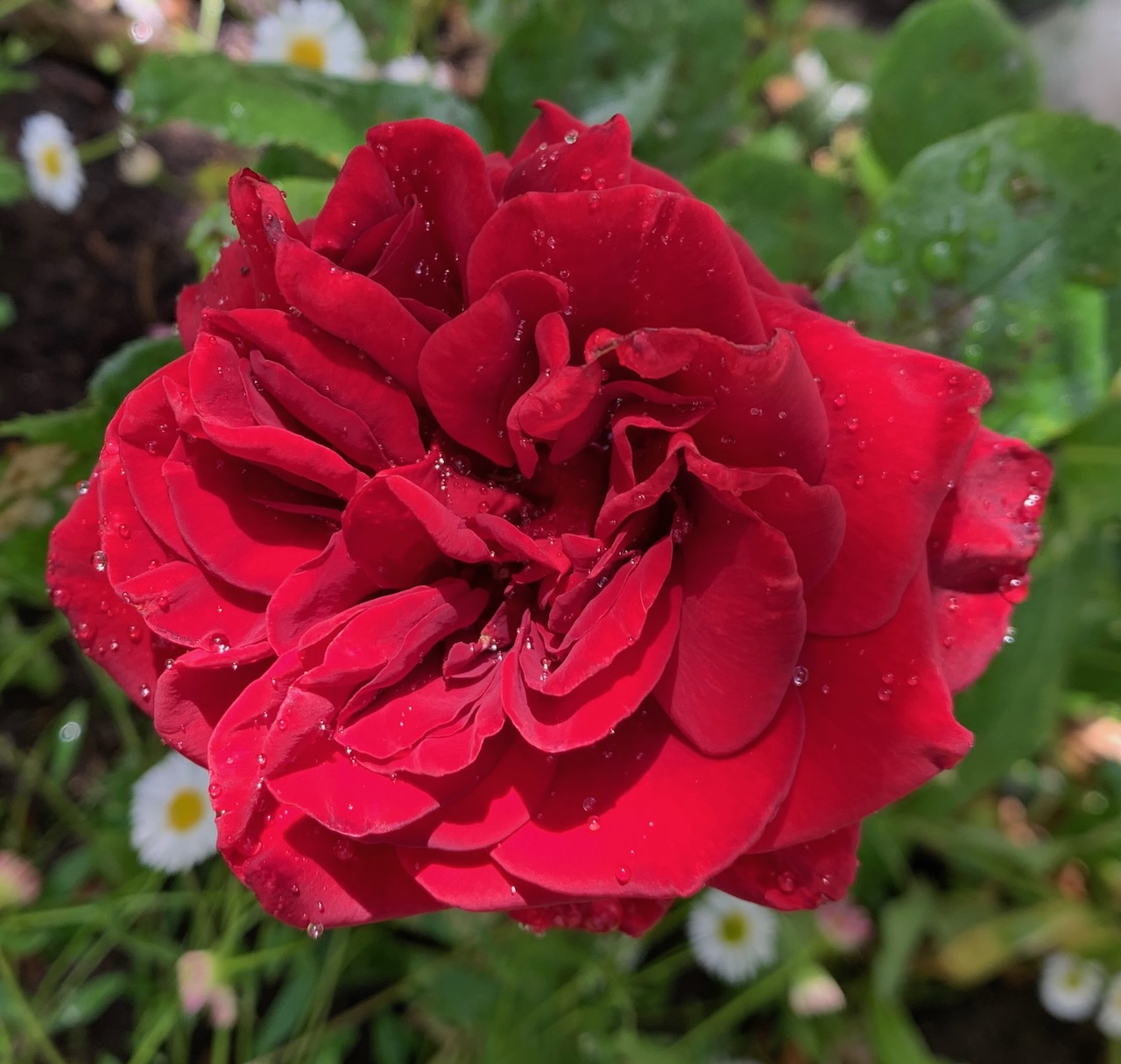
And my recently planted sanctuary rose bush has bloomed which I take to be a good sign.

*https://lornasmithers.wordpress.com/2024/05/17/dreaming-the-monastery-of-annwn/

Awareness – Three Guidelines from Gwyn

Over the past year I have been practicing meditations in the yogic tradition that develop awareness such as antar mouna ‘inner silence’ and ‘spaciousness.’ This has led from the development of my personal practice of being present for my patron, God, Gwyn, to be being aware that I am present. 

Whilst reflecting on this He gave me three guidelines for awareness – 

  1. Be present and aware in both Thisworld and Annwn.
  2. Be aware of Me without and within (I am everywhere).
  3. Spend time in solitude and silence so we can meet in awareness.

Having an awareness practice is very helpful for me as an autistic person who struggles with sensory and emotional overload and tends to disassociate and get lost in thoughts. It helps me stay present and grounded in Thisworld and focused when journeying in the Otherworld.

Being aware of Gwyn in each moment makes awareness a devotional act. Any moment, no matter what’s happening, can be transfigured by the knowledge that He is with me, inspiring me and guiding me. 

The hardest guideline to follow is withdrawing from the busyness of everyday life and quieting my mind enough to find inner silence and meet with Gwyn awareness to awareness but when this happens it works deep magic.

“Meet Me in the place between thoughts,” is a guiding thread running through these guidelines that has helped me, as a nun of Annwn and Bride of Gwyn, to rendezvous with my Beloved in any place and time.

Being Present for Gwyn

I. How the Furthest God became Present

My practice of being present for Gwyn arose from two different sources. The first is my marriage to Him. Before we were married, as the King of Annwn, I saw Him as distant, as Other, as the furthest away and Othermost God.

‘Gwyn ap Nudd who are far in the forests for the love of your mate allow us to come home,’ reads a 14th century invocation from the Speculum Christiani.

These words contain a paradox typical of the mythos of the King of Annwn. The God who is furthest away in the forest has the greatest ability to bring us home, to the places where we we live, to the here and now, to our ourselves.

I only realised this after our wedding when Gwyn came to reside within me as the Heart of my Heart and I realised He had been there all along. As I became accustomed to His indwelling I began to feel (paradoxically again) that the more present I am the closer He is. He confirmed this insight.

Secondly, in yoga, I became aware of the sankalpa – a heartfelt intention which might be stated at the beginning of an asana, pranayama or yoga Nidra practice. Immediately I intuited it – ‘being present for Gwyn.’ 

This resolution has more recently come to inform my whole life and I have associated it with mindfulness in the yogic and Buddhist traditions and with ‘the Practice of the Presence of God’ in the Christian tradition. Below I will share how I have related these learnings to being present for Gwyn.

II. Mindfulness – ‘the life-and-death matter of awareness’

Mindfulness derives from the Hindu and Buddhist concept sati which means ‘to remember or observe’. (1) It was introduced to the West by Thich Nhat Hanh and others in the second half of the twentieth century. Hanh defines it as ‘being aware of what is happening inside and around you in the present moment.’ (2)

In The Miracle of Mindfulness he refers to ‘the life-and-death matter of awareness’. (3) In a well-known passage: ‘If while washing dishes, we think only of the cup of tea that awaits us, thus hurrying to get the dishes out of the way as if they were a nuisance, then we are not “washing the dishes to wash the dishes.” What’s more, we are not alive during the time we are washing the dishes. In fact we are completely incapable of realizing the miracle of life while standing at the sink. If we can’t wash the dishes, the chances are we won’t be able to drink our tea either. While drinking the cup of tea, we will only be thinking of other things, barely aware of the cup in our hands. Thus we are sucked away into the future – and we are incapable of actually living one minute of life.’ (4)

It is this feeling of aliveness in the present moment that I believe Gwyn, a God of the Dead, is paradoxically attempting to cultivate in me and share, in the practice of being present for Him.

In Full Catastrophe Living Jon Kabat-Zinn says: ‘I define mindfulness operationally as the awareness that arises by paying attention on purpose, in the present moment, and non-judgmentally.’ (5) He describes in depth how our constant busyness, which stems from constantly wanting more, clinging onto what we like and trying to avoid what we don’t like, drives our inability to be present in the moment and thus truly alive. 

He writes of how mindfulness creates an island of non-doing in the ocean of doing and provides us with the insight we are not our thoughts. This liberates us from ‘the tyranny of the thinking mind’ and allows us to live more fully. (6)

Over the past few years my yogic practices and Gwyn Himself have been helping me to access my inner witness and be less enslaved by my thoughts. 

When Gwyn and I are in the present together we are free.

III. The Practice of the Presence of God

I discovered this delightful little book by a 17th century monk called Brother Lawrence whilst looking for inspiration for my monasticism in the Carmelite tradition. It was not written by Lawrence himself but pieced together after his death by his vicar from their letters and conversations in 1693.

Lawrence’s method is simple yet demanding.‘There is no art or formula to communing with God. All that’s needed is an unwavering heart determined to apply itself to nothing but Him, for His sake, and loving Him only.’ (7) The heart must be emptied of all but God – in particular the distractions that tear our attention away from Him and that might offend Him. ‘Wholehearted renunciation of everything that doesn’t lead us to God’ is required so we can attune ourselves to Him, carrying on a simple, continual conversation.’ (8) It is through constantly conversing with God we know and don’t stray from His will.

For Lawrence there is no separation between work and prayer. He says: ‘in the noise and clatter of my kitchen, as people all around are calling for different things, I possess God with all the peace in the world, as if I were upon my knees before the blessed sacrament.’ (9)

Through his practice of the presence of God Lawrence claims to have reached a state in which all he wants is God’s will in everything.

I will have to admit I’m not there yet. I’m still being swayed by my fears and desires, led astray by distractions, unable to quiet my thoughts. Yet I’m becoming more aware and able to bring my mind back to being present for Gwyn.

This feels all the more important in the summer, when as our Winter King He sleeps in Annwn, yet through me is able to participate in living in Thisworld.

REFERENCES

  1. https://en.wikipedia.org/wiki/Sati_(Buddhism)
  2. https://thichnhathanhfoundation.org/
  3. Hanh, Thich Nhat. The Miracle Of Mindfulness: The Classic Guide to Meditation by the World’s Most Revered Master. Kindle Edition. p26)
  4. Ibid. p5
  5. Kabat-Zinn, Jon. Full Catastrophe Living, Revised Edition: How to cope with stress, pain and illness using mindfulness meditation. Kindle Edition. p33
  6. Ibid. p149
  7. Lawrence, Brother. The Practice of the Presence of God: A Modern Translation. Kindle Edition. p12
  8. Ibid. p13
  9. Ibid. p18