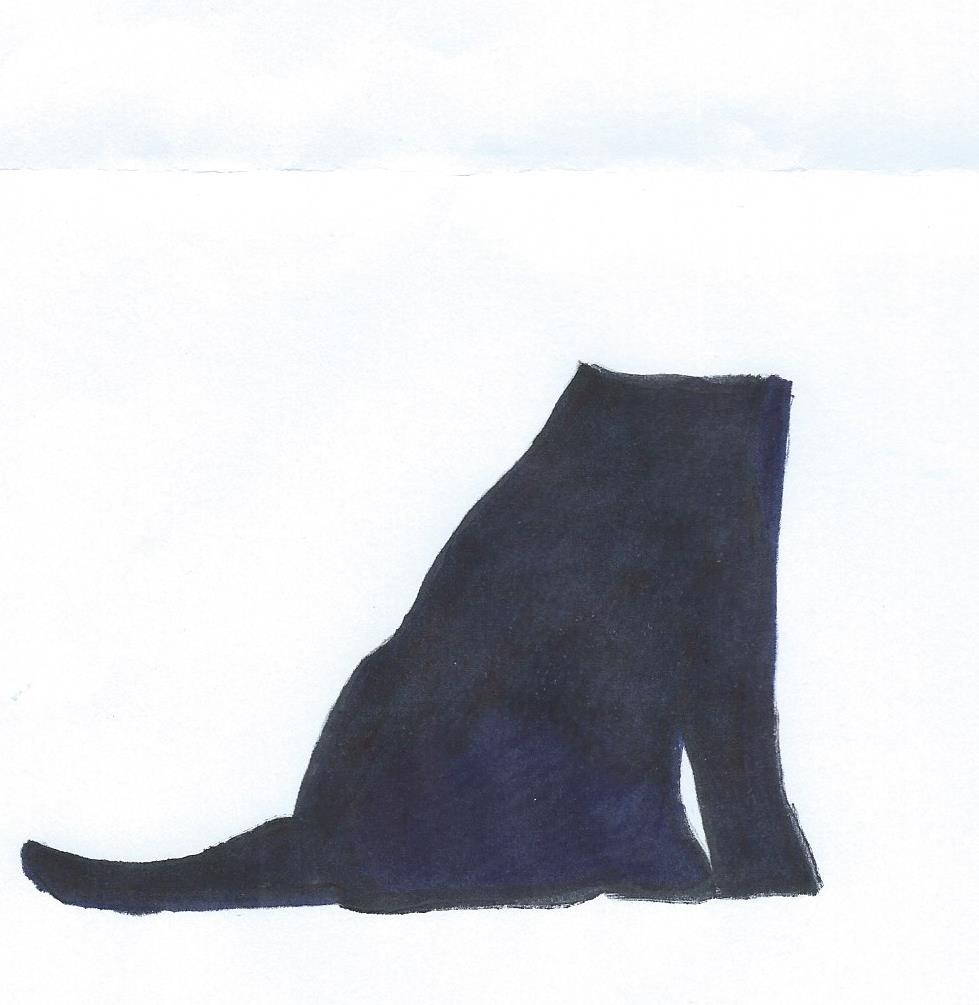
 I have recently been researching the legend of the black dog of Preston. The process has led me on a journey through the places it is associated with and their history. It has also brought me to consider the meaning and origin of its roles as a harbinger of death and guardian of the town’s gates.
I first came across this tale earlier in the year on a walk with local folklorist Aidan Turner-Bishop, which was organised by UCLan Pagan Society. Aidan told us that a headless black dog haunts the area between Maudlands and Marsh Lane.

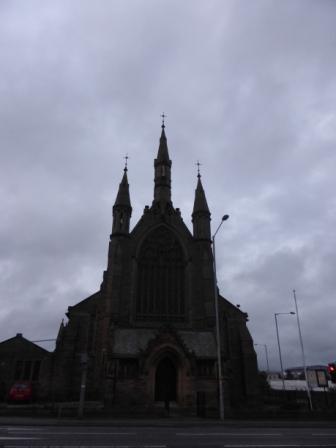
St Walburge’s
These locations seem significant due to their history. Maudlands receives its name from a 12th century leper hospital dedicated to St Mary Magdalene, which was dissolved in 1548 and later replaced by St Walburge’s.

Preston International Hotel
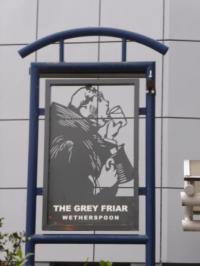
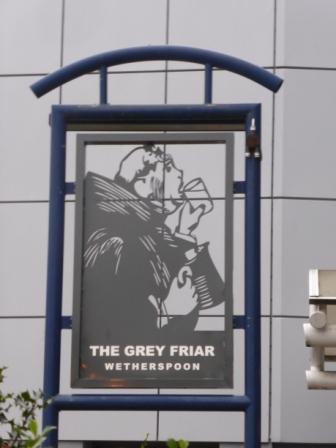
Marsh Lane was the location of a Friary belonging to the Franciscan Order, which was founded in 1260 and dissolved in 1539 and occupied the position of Preston International Hotel. The Friary gave its name to Friargate and the The Grey Friar Pub.
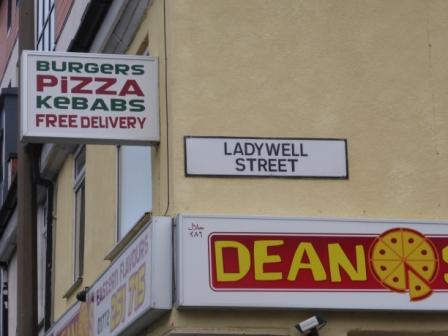
 Next to it was Ladywell, which was venerated up until the nineteenth century and is now remembered only by the street name (1). Water was piped from Ladywell to the Friary.
 The earliest written records of the black dog I have come across are in Charles Hardwick’s Traditions, Superstitions and Folklore (1872). Firstly, ‘I remember in my youth hearing a story of a headless boggart that haunted Preston’s streets and neighbouring lanes. Its presence was often accompanied by the rattling of chains. I forget now what was its special mission. It frequently changed its form, however, but whether it appeared as a woman or a black dog, it was always headless’ (2).
And secondly, ‘This spectre hound or dog is a very common sprite in Lancashire. I remember well being terrified in my youth in Preston, by Christmas recitals of strange stories of its appearance, and the misfortune which its howling was said to forebode. The Preston black dog was without a head, which rendered the said howling still more mysterious to my youthful imagination’ (3).
A story called ‘The Black Dog of Preston’ is serialised by James Borlase in The Preston Guardian in December 1878. This story is set in 1715 during the period of the Jacobite rebellion, which led to the Battle of Preston.
Once again, it appears as a portent of death ‘several people who had been abroad late at night and alone, had caught sight of the THE BLACK DOG OF PRESTON, a headless boggart, who could howl nevertheless, and whose howl meant death, as also did its lying down upon a doorstep to someone who dwelt within that special house’ (4).
A connection between the black dog and Gallows Hill is mentioned twice. The first instance is a mock sighting of ‘the huge and hideous form of The Headless Black Dog of Preston, a weird boggart that for centuries was famous in our town, pawing the air, swaying from side to side, and howling most lugubriously’. Here it turns out to be one of the protagonists’ servants clad in a sheepskin (5).
In the second it appears as a guardian of the dead; ‘sixteen of the lesser rebels were hanged upon Gallows Hill in chains, and there suffered to remain for many months, guarded, it is said, of a night time, by the Headless Black Dog of Preston’ (6).

English Martyrs’ Church

English Martyrs’ Church, Gallows Hill
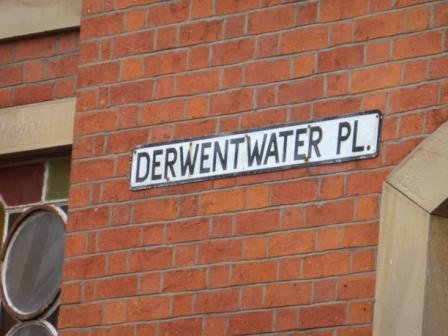
The English Martyrs’ Church, which now stands on the summit of Gallows Hill, derives its name from these executions. The nearby street names Derwentwater Place and Lovat Road refer to Jacobites captured and killed in the rebellion. That people were hung and decapitated there is evidenced by two headless bodies found during the building of North Road, which cuts through the hill. The area is described as a ‘provincial Tyburn’ (7).
 The black dog is also connected to the strange phenomenon of the parting of the Ribble’s waters, which occurred in the years 1715 and 1774 and is recounted by Peter Whittle. ‘The river Ribble, in Lancashire, stood still; and for the length of three miles, there was no water, except in deep places; in about five hours it came down with a strong current, and continues to flow as usual’ (8).
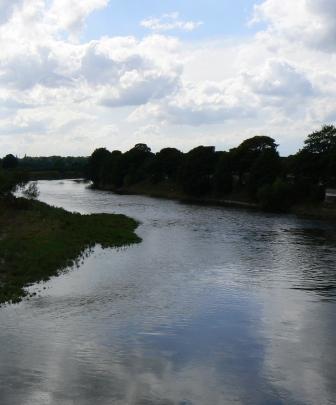
As the protagonists in Borlase’s story ride double into the Ribble, down river from Walton Bridge, their horse shies, ‘it was not the water that was terrifying the horse, but a great black something, like a weed-covered rock, that seemed to be lying half in and half out of it… the thing became suddenly instinct with life, and rolling rather than moving toward them exhibited the hideous form of The Headless Black Dog of Preston…The black dog uttered a most lugubrious howl, not withstanding its headlessness, and then waddled off; whereupon, and immediately, a most extraordinary circumstance occurred, for with a roar the river parted in twain from the Preston shore’ (9).
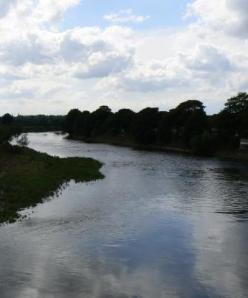
The river Ribble from Walton Bridge
Whilst this story is fictitious it is possible some of its elements are founded on earlier beliefs.
During the 19th century the superstition that a howling dog was a portent of death was popular. James Bowker says ‘few superstitions have a wider circle of believers in Lancashire than that which attributes to dogs the power of foretelling death and disaster’ (10). Hardwick attributes this to the dog’s delicate sense of smell, saying the capacity to scent putrid flesh ‘may have influenced the original personification of the dog as an attendant on the dead’ (11).
Contemporary writer Alby Stone suggests this superstition may relate to earlier beliefs about dogs being able to see spirits and thus forewarn of death. She adds ‘in many traditions… such creatures are not merely harbingers of death. They are both guides to and guardians of the land of the dead’ (12). In Borlase’s tale the black dog appears as a guardian of the dead on Gallows Hill and guides the protagonists across the Ribble.
It is possible to link this liminal role to the term ‘boggart,’ which Hardwick and Borlase use interchangeably with ‘black dog’. According to Brand ‘boggart’ may derive from the Northern pronunciation of ‘bar’ meaning ‘gate’ and ‘guest’ meaning ‘ghost.’ A boggart or ‘bar-guest’ is hence a ‘gate-ghost’ (13). To complicate things further ‘gate’ actually meant ‘street,’ hence Friargate. Brand says ‘Many streets are haunted by a guest, who assumes many strange appearances, as a mastiff-dog, &c. It is a corruption of the Anglo-Saxon gast, spiritus, anima.”’ (14).
 This is interesting as older maps of Preston show the town’s ‘bars.’ The bar of Friargate is located in the present day position of The Sun Hotel, not far from Marsh Lane (15).
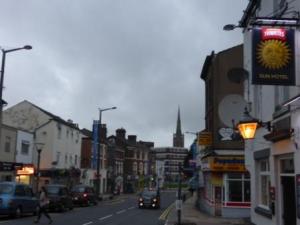
Approximate Location of Friargate Bar
This may go some way to explain the Friargate connection. The black dog may be seen as both a guardian of the physical gates of the town and the gateways between the lands of the living and dead. The former is supported by a reference on the Paranormal Database, which says ‘It is said that the town was once haunted by a headless black hound, appearing when danger threatened the town’ (16).
This idea may date back to pre-Christian beliefs. Alby Stone argues that evidence of ritual burials dating back to Bronze Age Britain suggests that dogs may have been killed and interred to serve as spirit guardians. She lists a pair of dogs buried at Flag Fen in Peterborough and another at Caldicot in Gwent (17). A recent example suggesting such practices may have continued into the medieval period and beyond is the discovery of the seven foot skeleton of Black Shuck outside Leiston Abbey (18).
At the time Bowker was writing it appears the belief in ‘foundation burials’ was current in Lancashire. He cites Rev. S. Baring Gould, ‘It was the custom to bury a dog or a boar alive under the corner-stone of a church, that its ghost might haunt the neighbourhood, and drive off any who would profane it—i.e. witches or warlocks’ (19). However, as far as I know, there is no archaeological evidence of this kind of practice in Preston.
There are other idiosyncrasies bound up with the legend that are less easy to interpret. For example how did the black dog lose its head; was it a dog beheaded as part of a ritual burial, or is it the ghost of a decapitated human?
There is also the paradox that although the boggart was supposedly laid it continues to haunt the streets of Preston. Hardwick says ‘The story went that this boggart or ghost was at length “laid” by some magical or religious ceremony in Walton Church yard. I have often thought that the story told by Weaver, a Preston antiquary, in his “Funerall Monuments,” printed in 1631, and which I have transcribed at page 149 of the “History of Preston and its Environs,” may have had some remote connection with this tradition’ (20). If the black dog was laid in 1560 as part of Dee and Kelly’s misdemeanours in Walton Churchyard, which are referred to in Weaver’s story, how come it figures so largely in tales set in 18th to 19th C Preston?
I’ve visited Walton Churchyard and seen no obvious signs of a boggart having been laid, such as the Written Stone in Longridge (21). However, like in this legend and a tale from Clayton Hall ‘Whilst ivy climbs and holly is green, / Clayton Hall boggart shall no more be seen’ (22) there is a holly tree in the centre of the graveyard and plenty of ivy about. Holly is renown for its apotropaic function (23).

Holly Tree, Walton Churchyard
One possibility is that it wasn’t laid. Another is that the laying was ineffective. The Gristlehurst Boggart was reputedly laid in a hollow and assuaged with milk but still seemed to be out and about causing trouble at the time Edwin Waugh was writing (24).

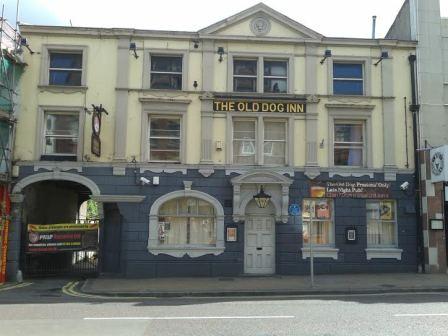
The Old Dog Inn
Aside from these stories, and the pub name The Old Dog Inn (which is tenuous as it pictures a grey coloured hound with a head) I haven’t come across any more evidence of its existence. More current accounts of paranormal activity in Lancashire refer to big cats.

The Old Dog
Could this be because the black dog of Preston has abandoned the city? Or could it be because nobody who has seen it or heard it howling has lived to hear the tale?..
(1) David Hunt, A History of Preston, (2009), p31-33
(2) Charles Hardwick, Traditions, Superstitions and Folklore, (2012), p130
(3) Ibid. p172
(4) The Preston Guardian, 17th December 1887
(5) Ibid.
(6) The Preston Guardian, 24th December 1887
(7)http://www.englishmartyrspreston.org.uk/history1.htm#Gallows%20Hill%20History%20of%20the%20Church%E2%80%99s%20Location
(8) Peter Whittle, aka Marmaduke Tulket, A topographical, statistical, & historical account of the borough of Preston, (1821), p15
(9) The Preston Guardian, 24th December 1887
(10) James Bowker, Goblin Tales of Lancashire,(1878), http://www.gutenberg.org/files/41148/41148-h/41148-h.htm
(11) Charles Hardwick, Traditions, Superstitions and Folklore, (2012), p174-5
(12) Alby Stone, ‘Infernal Watchdogs, Soul Hunters and Corpse Eaters,’ in ed. Bob Trubshaw, Explore Phantom Black Dogs, (2005), p36
(13) John Harland and T.T. Wilkinson, Lancashire Folklore, (1867), p50
(14) Ibid.
(15) David Hunt, Preston Centuries of Change, (2003), p39
(16)http://www.paranormaldatabase.com/reports/shuckdata.php?pageNum_paradata=9&totalRows_paradata=258
(17) Alby Stone, ‘Infernal Watchdogs, Soul Hunters and Corpse Eaters,’ in ed. Bob Trubshaw, Explore Phantom Black Dogs, (2005), p41
(18) http://www.dailymail.co.uk/news/article-2629353/Is-skeleton-legendary-devil-dog-Black-Shuck-terrorised-16th-century-East-Anglia.html
(19) James Bowker, Goblin Tales of Lancashire, (1878) http://www.gutenberg.org/files/41148/41148-h/41148-h.htm
(20) Charles Hardwick, Traditions, Superstitions and Folklore, (2012), p130
(21) Aidan Turner-Bishop, ‘Fairy and Boggart Sites in Lancashire’ in ed. Linda Sever, Lancashire’s Sacred Landscape, p105 and 107
(22) John Harland and T.T. Wilkinson, Lancashire Folklore, (1867), p50
(23) Aidan Turner-Bishop, ‘Fairy and Boggart Sites in Lancashire’ in ed. Linda Sever, Lancashire’s Sacred Landscape, p106
(24) Edwin Waugh, ‘Gristlehurst Boggart,’ Lancashire Sketches Vol. 2, http://gerald-massey.org.uk/waugh/c_sketches_2a.htm







 The Sanctuary of Vindos