 After two years studying Druidry (and many years prior to this of searching) on the morning of the winter solstice I received a name for my spiritual path- Awenydd. It was a gift, bestowed by Gwyn ap Nudd (1) and the spirits of my local landscape.
Over the past year my path has grown to centre on my apprenticeship to Gwyn, which began when I made a vow to him as my patron at Glastonbury’s White Spring last January. This role has involved learning more deeply the life cycles of the trees, plants and wildlife of my local area, journeying to meet their spirits and travelling into the land’s past to learn its history. With Gwyn’s guidance I have journeyed the Otherworld, gaining direct experience of realms such as Annwn and Faery, met their inhabitants and borne witness to mythic events.
In exchange I have strived to share this magic through poetry with the aim of revealing my local landscape as inspirited and communicating my vision of the Otherworld. I believe this serves Gwyn for it his task as a king of the Otherworld and leader of the Wild Hunt to maintain the dynamic between the worlds lest this one be destroyed (2). Being gifted with the role of the Awenydd seems to be a natural development of this relationship.
An early description of the Awenyddion can be found in Giraldus Cambrensis’ 12th century manuscript, Description of Wales.
‘There are certain persons in Cambria, whom you will find nowhere else, called Awenyddion, or people inspired; when consulted upon any doubtful event, they roar out violently, are rendered beside themselves, and become, as it were, possessed by a spirit. They do not deliver the answer to what is required in a connected manner; but the person who skilfully observes them, will find, after many preambles, and many nugatory and incoherent, though ornamented speeches, the desired explanation conveyed in some turn of a word: they are then roused from their ecstasy, as from a deep sleep, and, as it were, by violence compelled to return to their proper senses. After having answered the questions, they do not recover till violently shaken by other people; nor can they remember the replies they have given. If consulted a second or third time upon the same point, they will make use of expressions totally different; perhaps they speak by the means of fanatic and ignorant spirits. These gifts are usually conferred upon them in dreams: some seem to have sweet milk or honey poured on their lips; others fancy that a written schedule is applied to their mouths and on awaking they publicly declare that they have received this gift.’ (3)
When I first read this passage a couple of years back I found little I could relate to. Returning to consider it now I find the ideas more resonant.
A phrase which immediately stands out is that the Awenyddion are people inspired. Within the Bardic Tradition I have found the predominance of structured courses of training and people’s preconceptions about the role of the Bard problematic. Experience has taught me I cannot learn stories or poems by rote. Myths and the deities within them have a life of their own, calling through Bardic, folkloric and contemporary texts, or revealing themselves in the landscapes of either world to impart the gifts of inspiration and transformation when the time is right.
Following a conversation with a visiting speaker at my local pagan society, who when I named my path as “Druid Bard” assumed I was of the ‘Bardic Grade’ and completing a ‘gwers’ within OBOD I began to question (and not for the first time) whether this name was a true fit with my spirituality.
During this period I asked Gwyn how my apprenticeship related to Druidry. He told me my role is bound up with the primal Awen, which flows before thought through all things. This supported my suspicion that true inspiration can only speak when systems, concepts and fear of other people’s opinions are set aside. Only by listening directly to the Awen and my own intuition could I become a person inspired and create works worthy of sharing with others.
Another point of resonance is that inspiration is a gift from the spirits, through possession, dreams, milk or honey or a ‘written schedule.’
I’ve never been possessed in the sense of losing my senses and being unable to recall what happened afterward. However I have channelled the voices of spirits and deities whilst writing poetry. During a writing trance visions have appeared where they have revealed themselves in new ways and I’ve recognised their guiding hand even when making finishing touches, in the gift of a completing image or right feeling of a word.
I’ve also been gifted with inspiration in dreams. One of my most significant dreams was when I learnt the identity of my white totem mare. She appeared to me winged and I joined consciousness with her to fly to the top of Castle Hill, a local sacred site. Another important dream occurred the night before my birthday. After seeing a moon bridge in the river Ribble I dreamt of questioning a series of gnarled fay in a cave in Castle Hill. When I realised the process was futile Gwyn appeared and inquired why I hadn’t asked him. By this time I had forgotten the question. The dream conveyed a powerful message about the ethos of questioning in the realms of Faery and dream.
The mention of milk or honey puts me in mind of mead, which in my experience certainly inspires connection with the spirits, writing processes, performances and rituals. The image of the ‘written schedule’ touching an Awenydd’s lips seems to symbolize direct inspiration through the written word.
In the modern world the role of the Awenydd is not limited to ecstatic prophets. Kristoffer Hughes places ‘becoming Awenydd’ – ‘becoming the inspirer’ at the core of Druidry. He says ‘they were the enlightened ones, those who serve, those who inspire to bring others into the mystery of spirit and the great song… by inspiration.’ (4)
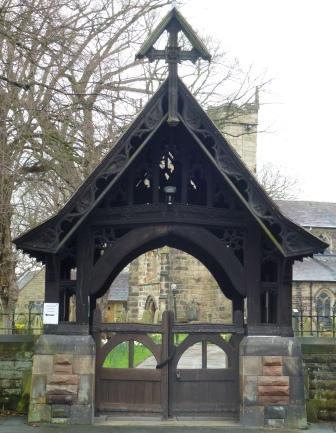
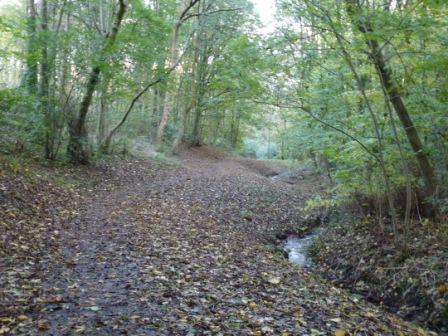
Elen Sentier is an ‘awenydd, a spirit keeper and taleweaver from a long family lineage.’ She describes this path as ‘British native shamanism.’ (5) Alongside her reindeer goddess, Elen of the Ways she works with Gwyn as ‘the goddess’ guardian.’ Part of her work involves tracing Elen’s Deer Trods which are also the ‘energy roads’ down which Gwyn leads the Wild Hunt. Many of these are ‘spirit paths’ taking souls to the Otherworld (6) and correspond with corpse roads such as Church Avenue on Castle Hill.
For me the name Awenydd has a magic born of its direct connection with the spiritual source which flows through the land defying all systems and can only be spoken in poetry. My role as an Awenydd is one that I only have intimations of at present- small clues to the potential of learning with the leader of the wild chase and king of the Otherworld to travel the spirit paths and experience the mysteries of the primal Awen in order to return as the inspirer.
(1) Gwyn ap Nudd is a Brythonic deity. His name means White Son of Mist. He is a king of the Otherworld, leader of the wild hunt and guide of souls.
(2) Evidence of this role is found in The Mabinogion, ‘Twrch Trwyth will not be hunted until Gwyn son of Nudd is found- God has put the spirit of the demons of Annwfn in him, lest the world be destroyed. He will not be spared from there.’ Sioned Davies, ‘How Culhwch won Olwen,’ The Mabinogion, (2007), p199
(3) http://www.gutenberg.org/cache/epub/1092/pg1092.html
(4) Kristoffer Hughes, Natural Druidry, (2007), p67
(5) Elen Sentier, Elen of the Ways, (2013), pvii
(6) Ibid. p26-28
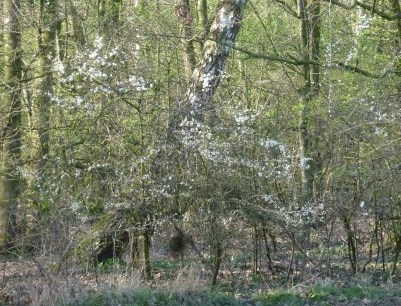 ‘Who’ll walk the corpse road back to me?’
 * Poem written in the voice of Gwyn ap Nudd, a British King of the dead and the fairies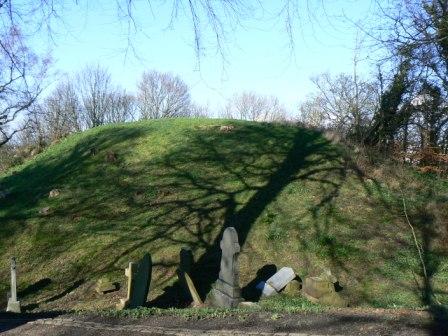


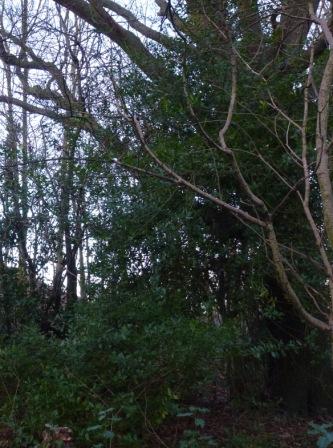




 The Sanctuary of Vindos