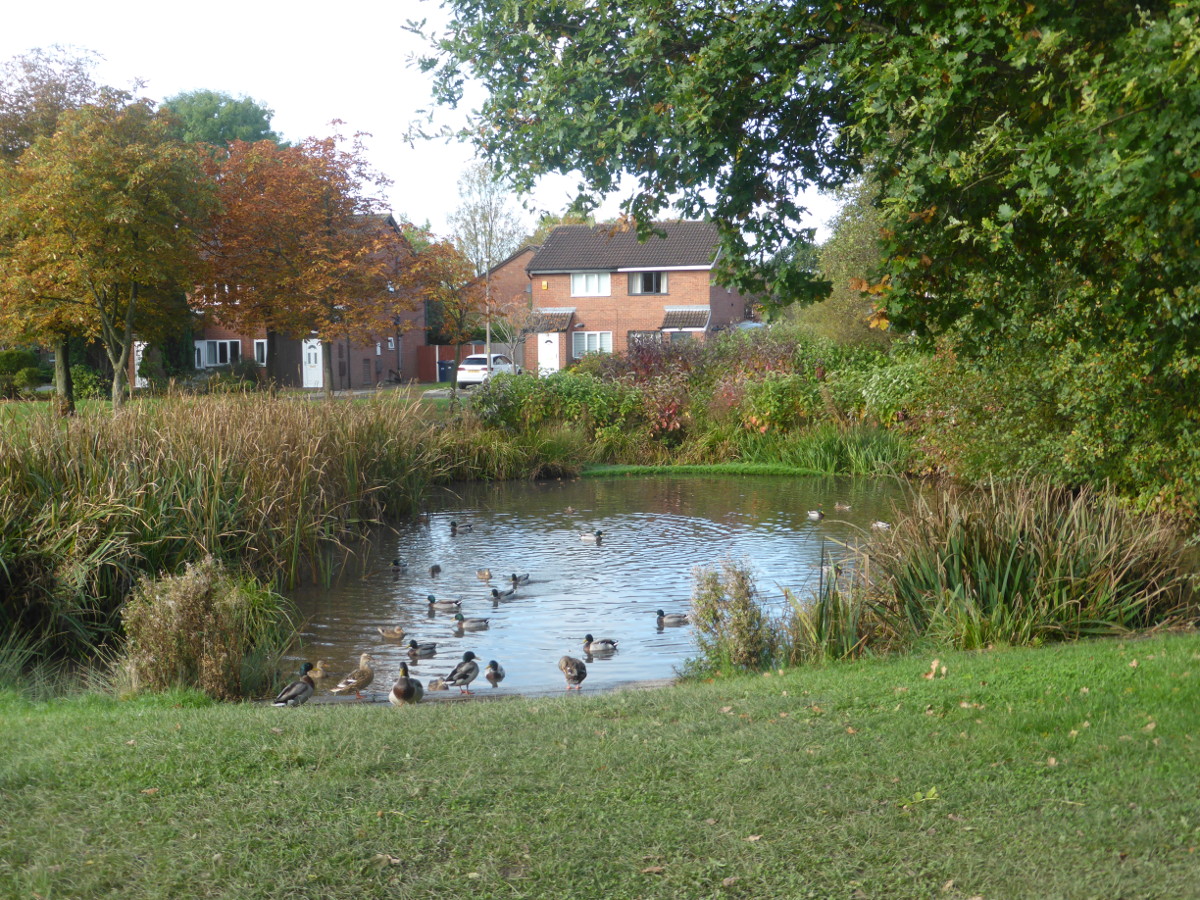
Black Poplars at the Source

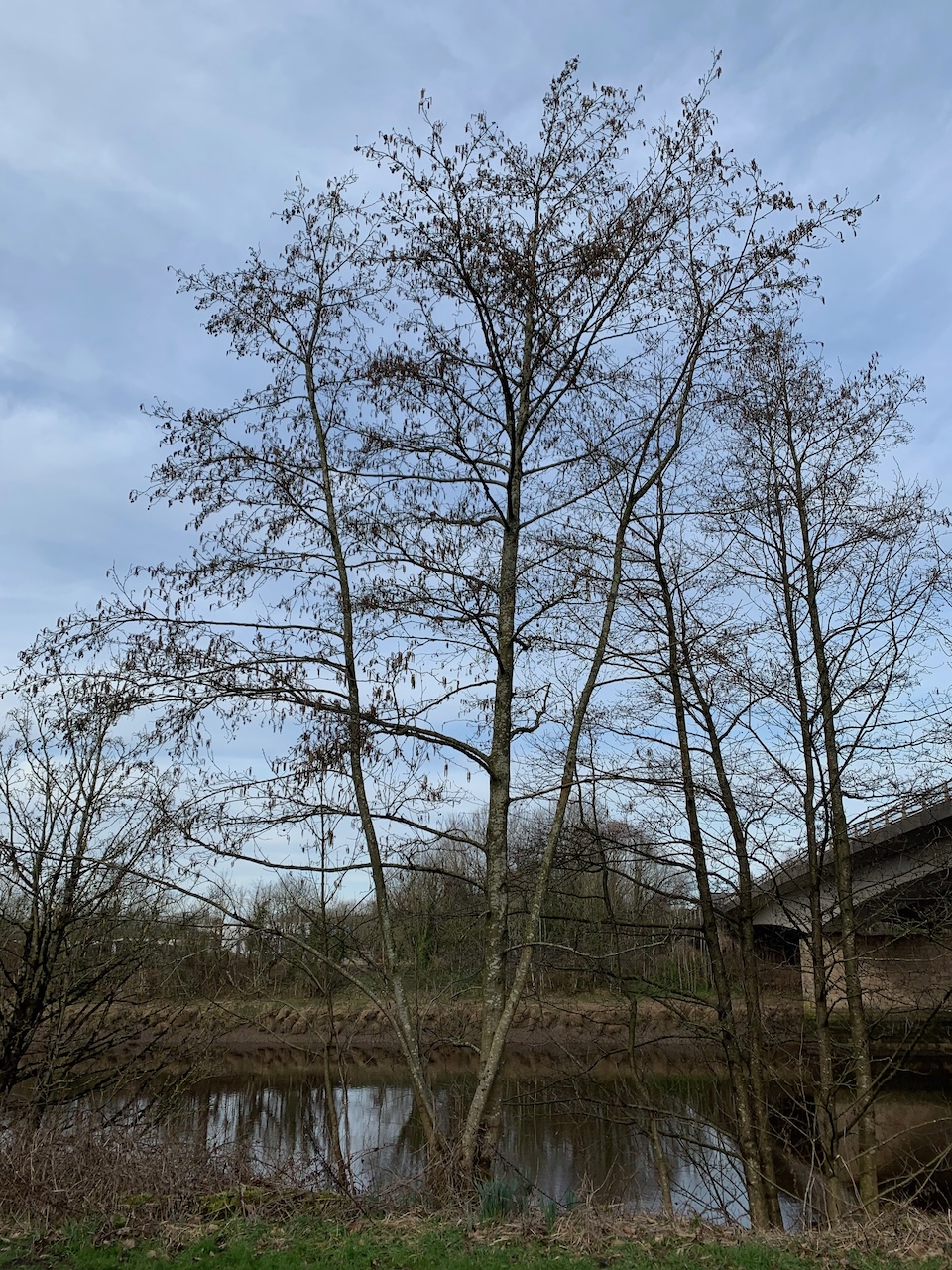
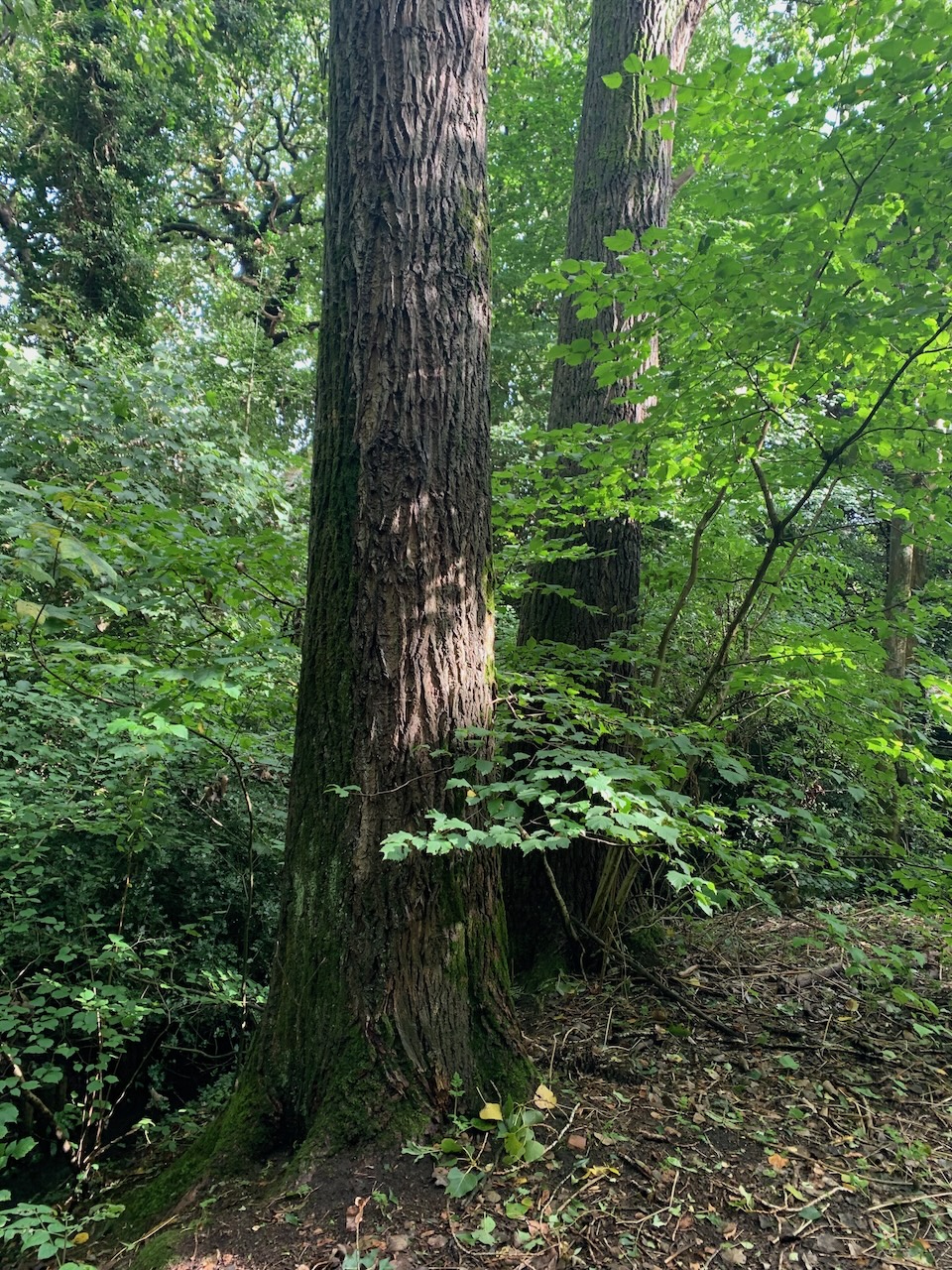
Beside the source of the brook in Greencroft Valley stand two black poplars. There aren’t any known British myths about black poplars but, in Greek myth, they are associated with Hades (the Underworld) and death. 

In Homer’s Odyssey, poplars, described in different translations as ‘tall’ and ‘dusky’, so likely black, with willow, form Persephone’s Grove. Springs, throughout world myth, are seen as entrances to the Underworld.

In another story from ancient Greece, Phaethon, son of the sun God, Helios, drives his father’s chariot too close to the sun. His blazing end brings deep grief to his sisters, who are transformed into black poplar trees. The amber sap is said to be their tears. Thus its associations with death and sorrow. 

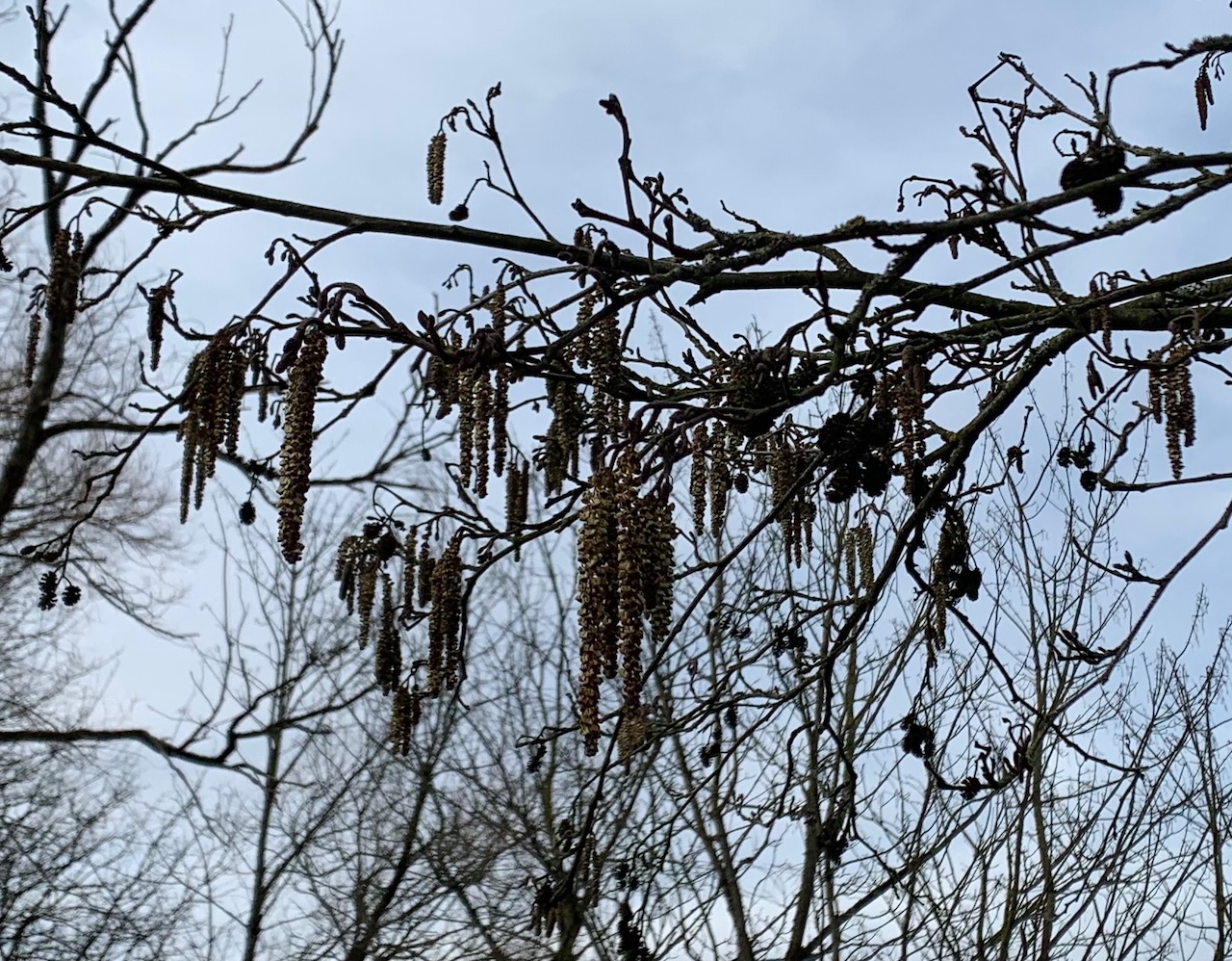
In more recent folklore the red male catkins are referred to as ‘Devil’s Fingers.’

This leads me to believe that there might have once been parallel British myths about black poplar, connecting it with springs at the entrance to Annwn and with the groves of Annwn’s Queen. Perhaps there was once a story in which the red male catkins were the bloody fingers of Annwn’s King?

I will admit that I’m not sure if these trees are true black poplars (Populus nigra) or hybrids because black poplars are rare. Plus, I’m not referring to the true source of Fish House Brook but to the outflow pipe that the culverted brook emerges from. The original source would have lain further south, somewhere on Penwortham Moss, which has been drained and replaced by housing. The brook is culverted under the gardens on the other side of my street, Bank Parade, also giving its name to Burnside Way. I feel this relates to my founding of the Sanctuary of Vindos / Gwyn ap Nudd, a King of Annwn, very near to the ‘black poplars’ at the ‘source’.
In a shamanic journey I visited the poplars for advice on descending to the ancestors in preparation for some ancestral healing work. I was shown the left tree represented my mother line and the right my father line. I slid down the roots of the left into a cavern where a group of spirits were drinking from cups from the same source. I was told that on the new and full moons I must consecrate a cup of water and make an offering:

“To the Gods,
spirits and ancestors –
we all drink from the same source.”

I felt this related to keeping the source clean – something I have been trying to do as a volunteer in Greencroft Valley with the Friends group I set up (now part of Guardians of Nature).

Greencroft Valley Shamanic Circle

First Monday of the month 1 – 2.30pm

Entry £5

~Learn about shamanism in a safe inclusive space.
~Connect with nature on a lovely suburban park.
~Find out about local history, mythology, folk and fairylore.
~Explore the spirit worlds and build relationships with spirit guides.
~Journey for yourself and others for guidance and healing.
~Work with the fae and British Gods and Goddesses.
~Become part of a like-minded community.
~Experience spiritual growth and personal transformation.

Woodland Nursery, off Alderfield, Penwortham, PR1 9LB

For further details contact: sisterpatience22@gmail.com

Sunless Solstice

I.
It’s a sunless solstice
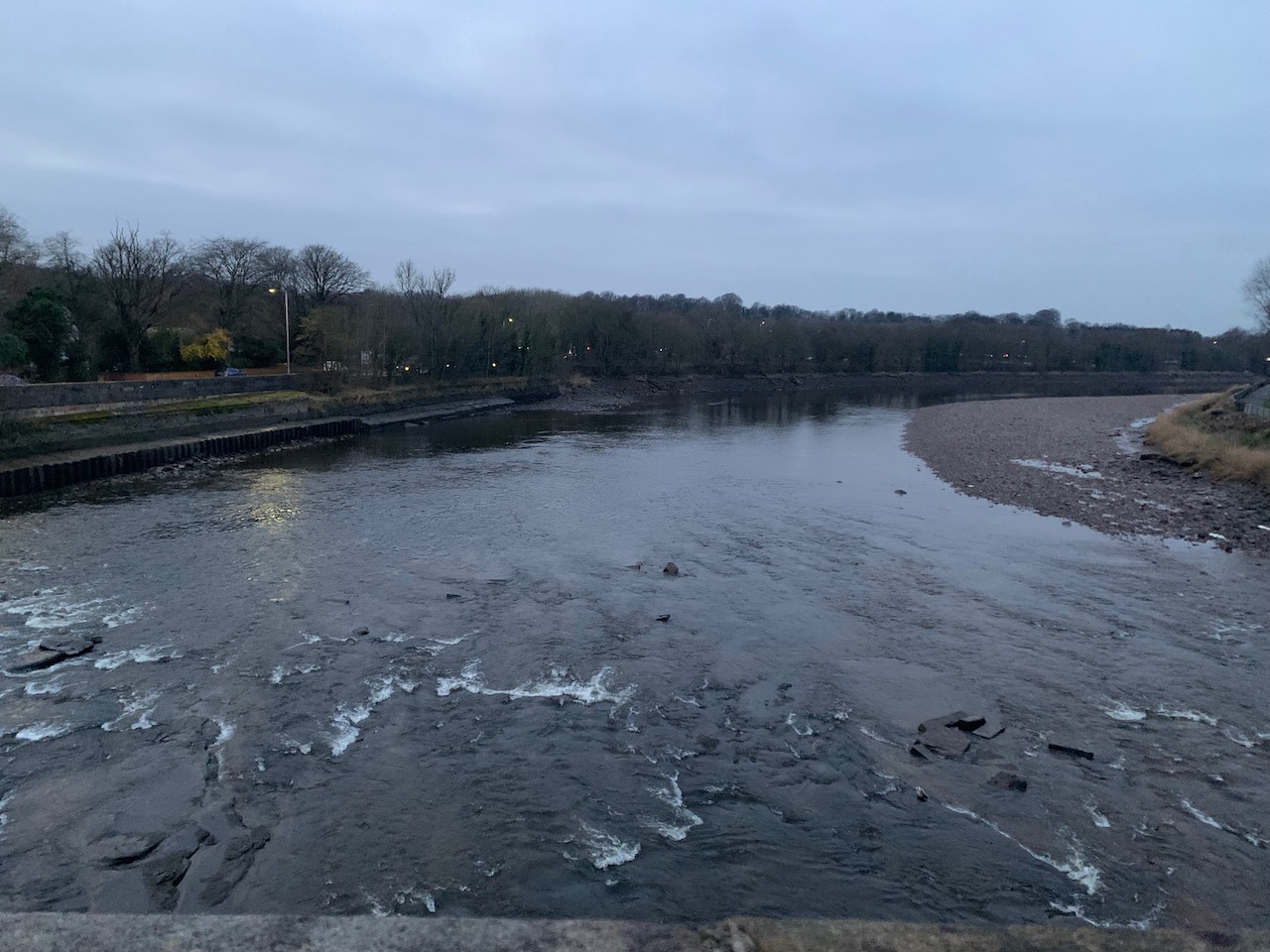
on my bridge over the Ribble
but yet the river flows

as if she has done so
since the beginning of time

in spite of the stopping and 
starting of the ice floes.

II.
I remember how once-upon-a-time
I held the sun in my hand
like the monster with the monstrous

CLAW

and wonder if I am the monster from
beneath the bridge who stole
the girl whose bike lights shine above.

III.
As the streetlights light up one-by-one

I ask Belisama – Great Goddess of the Ribble,
Old One, Shining One, Mighty One,

how many suns and how many stars,
how many daughters have swum
down your river to the GREAT BEYOND?

Will they ever be returned like Peter Pan

and the Lost Boys from Never Never Land,
like Pryderi, like Mabon, like the unnamed girls

whose names never reached the tongue-tip of song?

IV.
A sunless solstice, bike lights shine bright,
past Tinkerbell’s Nursery
I cycle on.

Allotment C23

A plot of land in the bend of Fish House Brook,
tell me, my gods, is this my allotted place?

A place to dig, to sow, to watch life grow,
leaving the battlefield and the ravens behind me

like the servicemen returning from the First World War?

Is it time to leave the heroes to be pecked apart
and join, instead, with the labouring poor?

To set aside the books of heroic poetry –
the verses on shattered shields and clashing spears,

the blood and bones to the soil return with spade
and hoe to feed the future generations?

Tell me, my gods, is this my allotted place?
A plot of land in the bend of Fish House Brook

my Bremetennacum Veteranorum as I enter my later years?

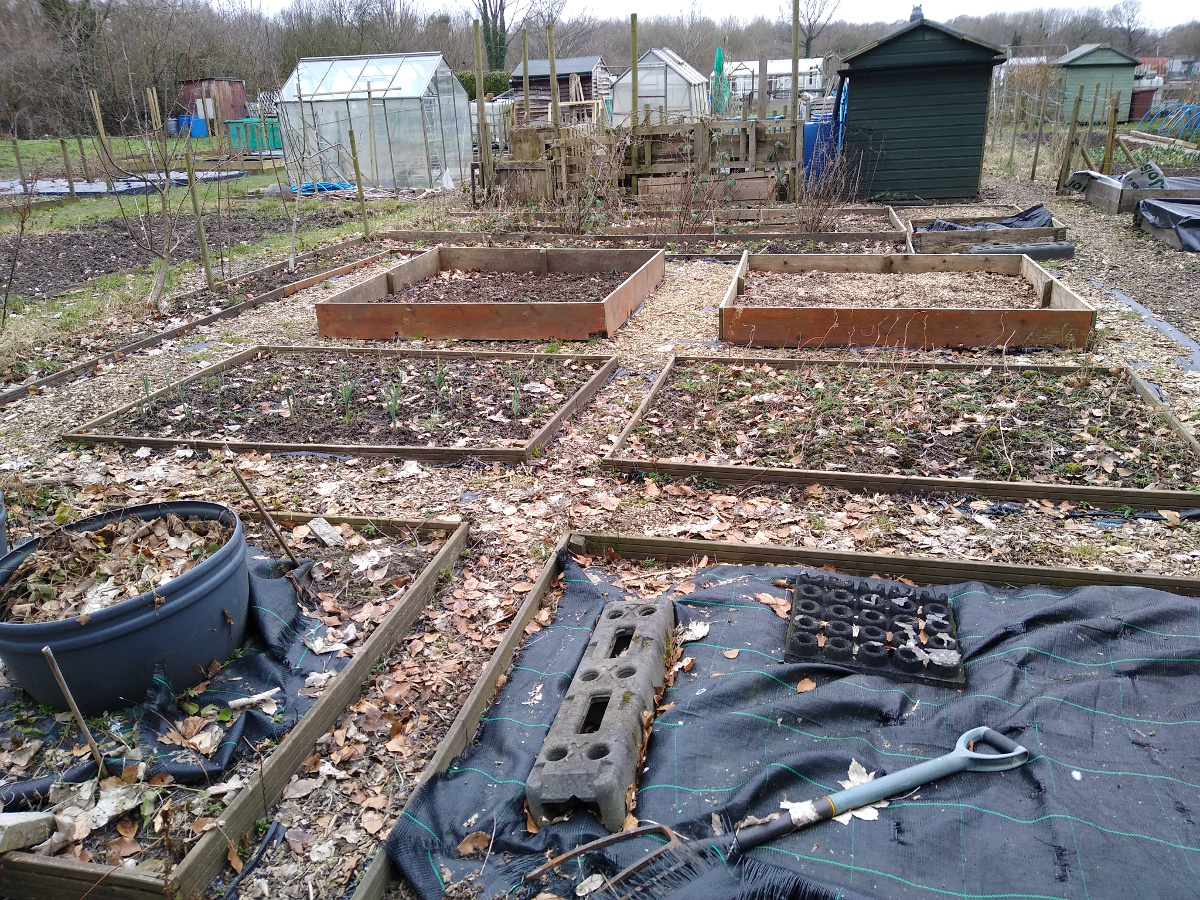
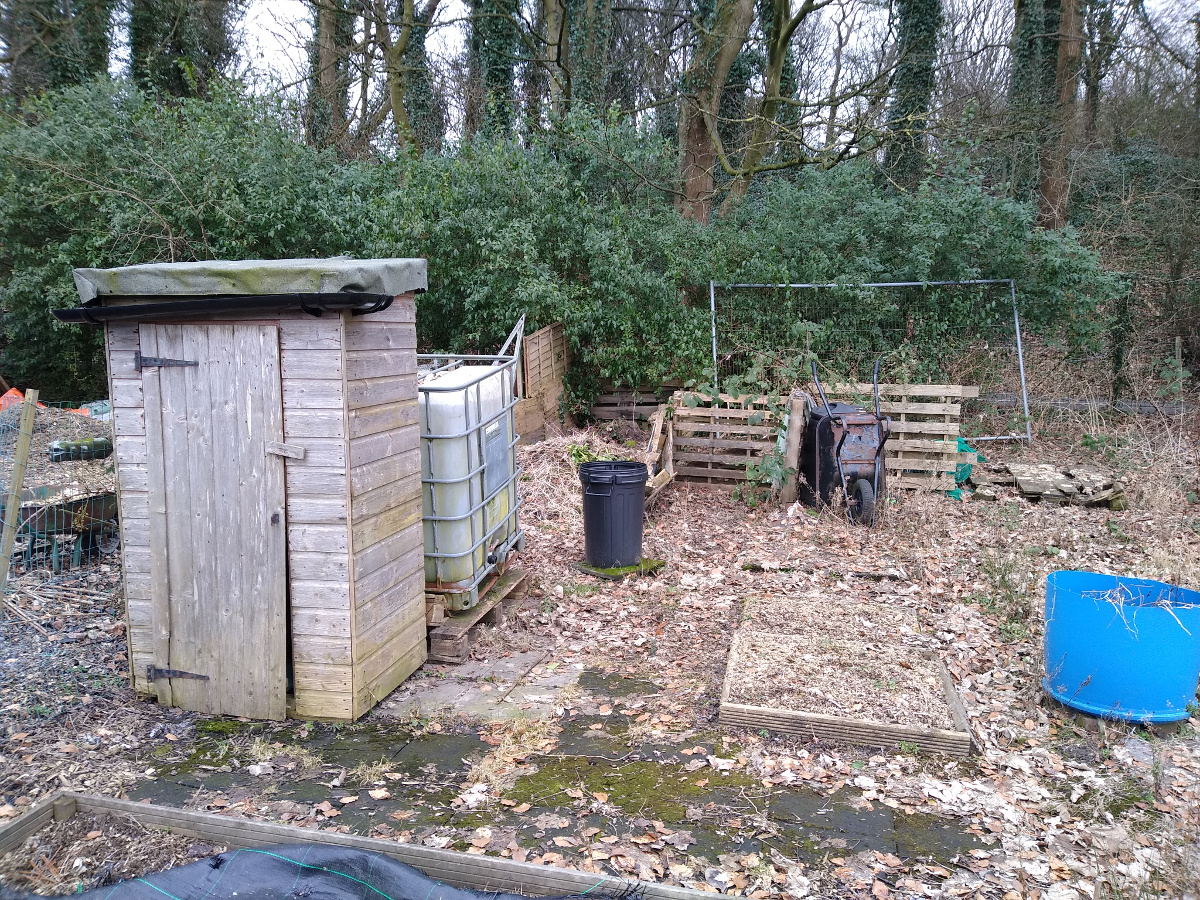
As you might have guessed, after a year’s wait, I am finally the proud tenant of an allotment. This has come about after a difficult year during which I’ve felt like I’ve been kicked in the teeth by the universe in many ways, one of them being the landslide on Castle Hill cutting off my access to the yew tree where I dedicated myself to Gwyn on Fairy Lane.

I now feel my gods have gifted me with an alternative. It is happily within a bend of Fish House Brook, which begins near my house and runs through Greencroft Valley, where I run a friends group, before joining the Ribble at Fish House Bridge on the other side of the allotments. In this I see the guiding hand of Belisama, goddess of the Ribble, along with the land spirits and Gwyn and his ‘family’ – the Tylwyth Teg or ‘fairies’.

Whereas I had been considering moving away to find a job in conservation this has led me to decide to remain rooted in Penwortham, even if it means a longish commute. I am beginning a month of cotton grass planting on Little Woolden Moss near Manchester next week, which will be my first paid contract, and a couple of paid traineeships have come up in Bolton, so possibilities are opening up.

Having spent the last decade working with the heroic poetry of the Old North, not least in my latest collection ‘Co(r)vid Moon’ whose main characters are battlefield ravens, I’m sensing a shift away from the medieval courts, where I never belonged with the Taliesins, toward a poetry of the land, to where I belong, alongside other labouring poets.*

Although I’m far from retirement age I see this as a step in maturing and and stepping up to take responsibility for leading a sustainable life as I head toward the big 40 this November.

Since I took this photograph I have been clearing the paths, weeding, digging and putting manure on the beds, and chitting my first early potatoes.

I can now call myself an allotmenteer 🙂

*For example Ted Hughes and Alice Oswald whose work is based on their lived experience of working the land. (Although, of course, I do not claim to be as good!).

Landslip

Fairy Lane, January 2021

Landslip, landslide,
we live in treacherous times,
the very land we hold so dear to us
with the grounds of life as we know it is
being pulled from beneath our feet.

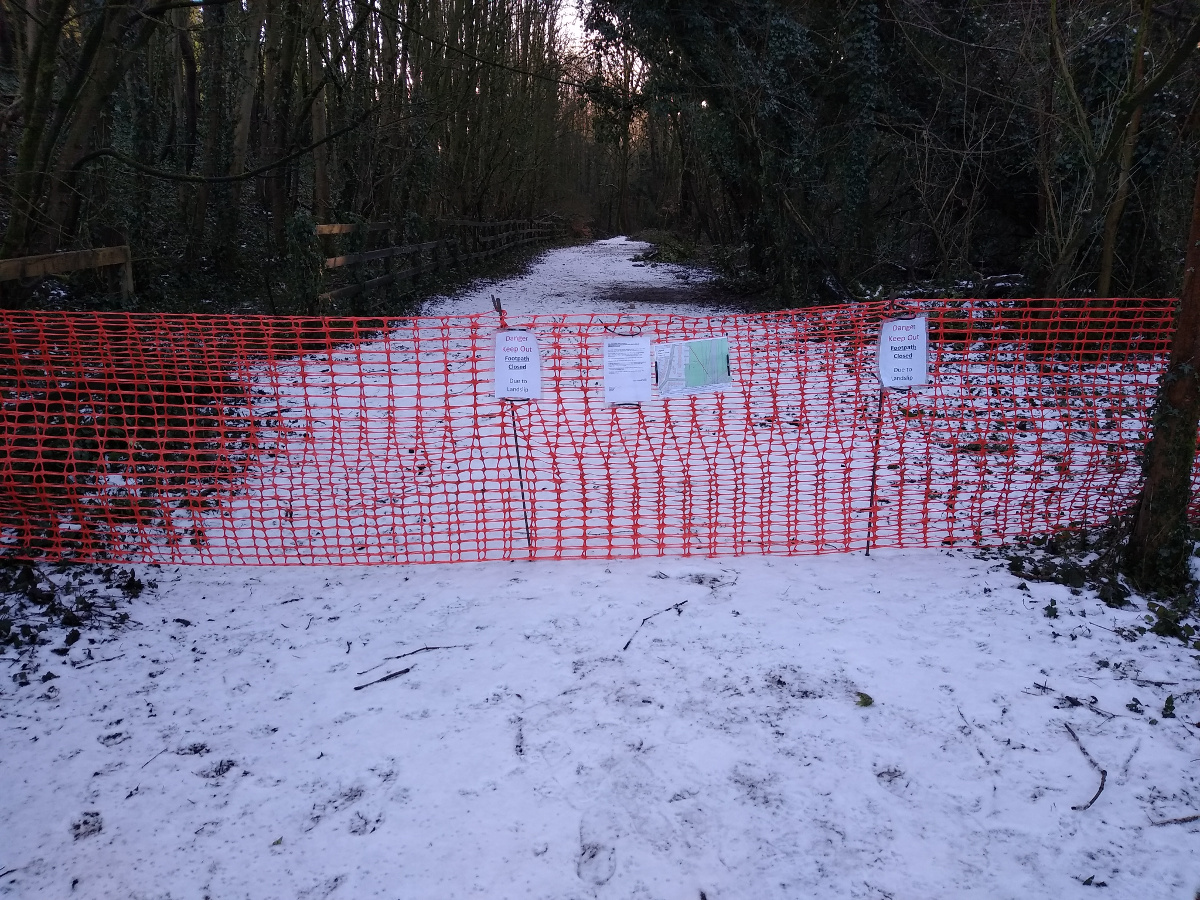
Orange mesh and ‘Do Not Enter’ signs
at the entrances to Fairy Lane do not deter me
slipping by fay-like to bear witness
to another cataclysmic event.

For a long while railings, gravestones,
have been falling away and no-one speaks
of gathering up the bones of the dead.

This has been a place of peace with its
holy well, monastery, church, and chapel,
but has also been a place of penitence.

Black Roger sent to the ends of the earth.

(I sometimes wonder if I am a penitent
and whether I have served my time).

The weather gods have been cruel
this year with their freeze-thaw-rain
dichotomy opening fresh wounds.

The steps leading down to the yew
where I first met Gwyn ap Nudd and to him
made my dedication defying the transcendent gaze

of the Christian God who has never set foot on this earth
(except perhaps in his son whose feet in ancient times
may have walked here in Blake’s poetry)

are now twisted like something out of Labyrinth.

He has thrown my world out of kilter again –
a consequence of being devoted to a wild god…

When I see trees upside-down I think how natural
it is for us to fall whereas trees are born upright
and to go root over crown is certain death.

Yet as we grow older falls hurt more
and we come to wonder which will be the last.

~

I wrote this poem after being called to bear witness to yet another cataclysmic event in my local area. It was three days until the January full moon, on which I made my life-long dedication to my patron god, Gwyn ap Nudd, beside the leaning yew tree on Fairy Lane two years ago. (I made my initial dedication to him at the White Spring beneath Glastonbury Tor on the January moon in 2013.)

It’s a place I visit often, so I was surprised, when I got there, to find orange mesh across the entrance from the A59 and to read a notice stating that the footpath was closed due to a landslip. I walked to the second entrance by the Ribble where, again, I found the orange mesh, but it didn’t extend into the woodland.

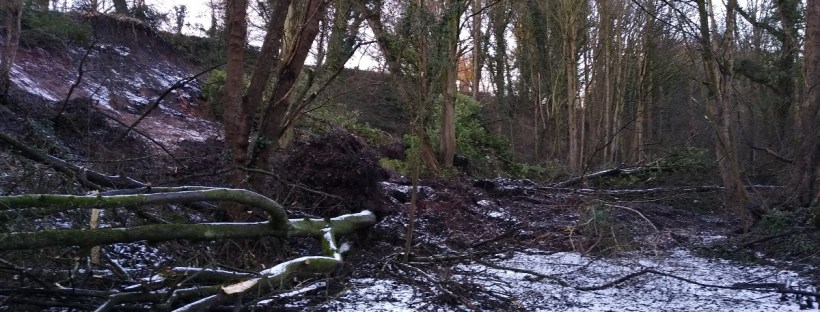
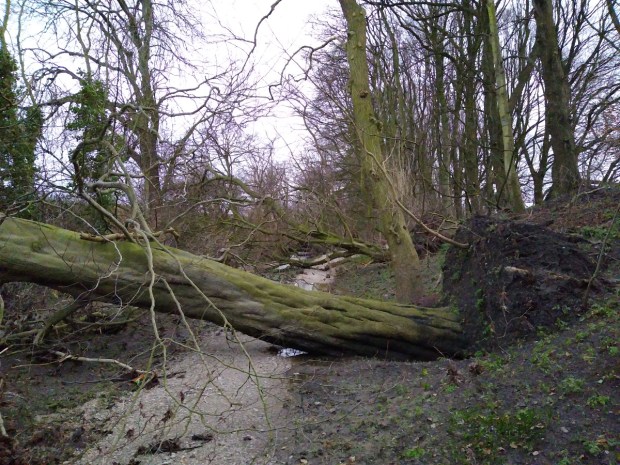
Following the intuition that the place was safe now and my gods wanted me to see what had happened I slipped past. Usually the council will fence things off at the tiniest reason. This was not small. It was catastrophic. A whole swathe of land had slipped away from the side of Church Avenue, which runs along Castle Hill – a pen ‘prominent headland’ – shaped a bit like Pendle. It had piled up on Fairy Lane with the debris of huge ivy-clad trees in their prime, fallen root over crown.

Furthermore the steps leading down to the leaning yew had been skewed and looked dangerous.

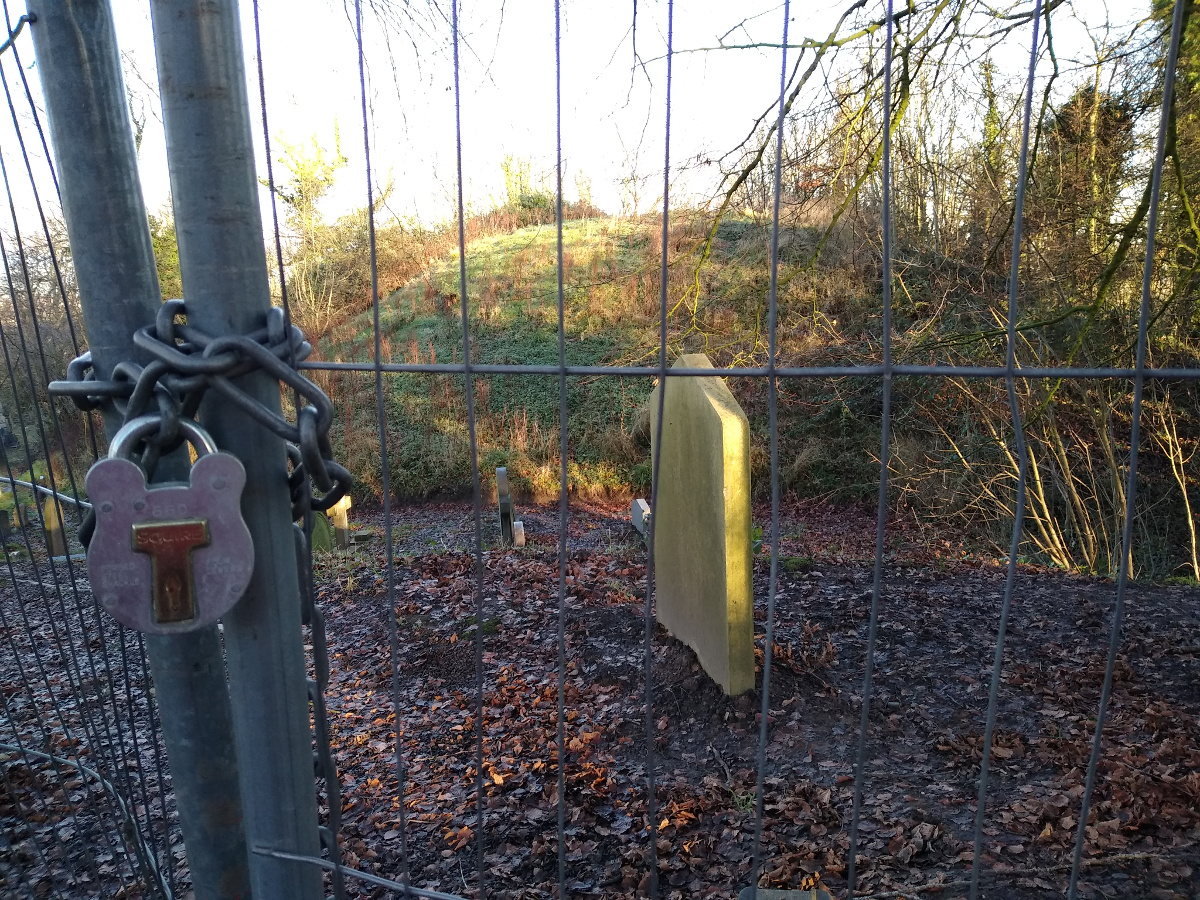
In some ways, that this had happened, was not a surprise. The whole bank, with its leaning trees, has always looked precarious. There have been landslips before, bearing away railings and graves. Due to falling gravestones the castle mound and parts of the graveyard have been closed off for several years.

There are several reasons for the instability of the land. When the river Ribble was moved five hundred yards south from her original course to run beside Castle Hill, the sandstone bedrock was shattered. The aquifer beneath the hill was broken, leading to the holy well at the hill’s foot drying up. The building of the adjacent by-pass and its vibrations are likely causing the damaged land to slip.

The final contributor to this is the recent weather with its dangerous patterns of freezing, thawing, and heavy rain. No doubt all these factors have come together to cause these landslip.

Yet as well as physical reasons there are spiritual reasons too. The conversion of the hill and well from a pre-Christian to Christian sacred site and the severing of the links between the people and the gods of the land have led to the mindset that makes moving a river, shattering an aquifer that feeds a holy well, and building a by-pass beside a sacred place acceptable. Within a culture that saw the river as a divinity and the hill as the body of a goddess and abode of the dead and their god these would have been seen as acts of desecration that would bring about the wrath of the gods. And so their anger is seen in the decline of this once (and still on occasion) beautiful and enchanting place.

My first thought, when I arrived at the scene, was that this was linked somehow to my Gwyn dedication. Had I done something wrong? Was I on the wrong track? Might it be linked to the series of workshops on Gwyn and his family I am planning with other Gwyn devotees for Land Sea Sky Travel?

I received the gnosis that the landslip had nothing to do with me or my actions and would have happened anyway. I was already in two minds about visiting the yew on my dedication day as I am at my conservation internship on that day and don’t really want to go at night without a friend to accompany me (due to lockdown).

What it means to have the place I met Gwyn and made my life-long dedication cut off I haven’t cogitated yet. It seems to fit with two bridges over the Ribble being declared dangerous and closed. The land, the gods, displaying their anger, the council attempting to protect us, connections being severed.

This event has also made me aware the yew, leaning precariously on an ash, won’t be there forever…

The Well of Life

‘From the Well of Life Three Drops Instilled’
John Milton

This image is based on a combination of the lines above from John Milton’s Paradise Lost, a sketch of St Mary’s Well in Penwortham by Edwin Beattie (which can be viewed HERE), and the following words written about it by James Flockhart in 1854:

‘On the road which leads from Penwortham Bridge to the Church, at some distance before reaching the avenue leading to the entrance, there is a narrow pathway by which the traveller, after descending a few rude steps, may reach the fields on the left hand. At the bottom of the steps, a little to the right, is a spring of clear water flowing into a sort of natural basin, surrounded by brushwood, near which I have seen primroses and other wild flowers blooming in the greatest luxuriance. This well, like others in the olden time, had its patron saint. It was one of those acts of piety practised by our forefathers to acknowledge the inestimable value of water by dedicating all springs to some saint, but more particularly to the Virgin Mother of our Saviour, as being emblematical of purity. The well at Penwortham, in accordance with this custom, is said to have been dedicated to ” Our Blessed Ladye,” and to have been formerly remarkable for working extraordinary cures; and it is even believed by some to possess this power at the present day; in fact, I have heard many people in the neighbourhood say, that to wash the hands in its water is a certain antidote to evil.’

St Mary’s Well, at the foot of Castle Hill in Penwortham, dried up between 1884 and 1888 when the aquifer was shattered by the moving of the river Ribble during the creation of Riversway Dockland. As a Well of Healing and a Well of Life, which I believe was sacred to an older goddess named Anrhuna before it was re-dedicated to Mary, it continues to exist in Peneverdant, which for me is becoming a mythic reality of Penwortham much as Avalon is to Glastonbury and Blake’s Jerusalem is to London.

It was not the storm

that broke me or the storm
before it or the storm before it.
Ciara, Brendan, Atiyah, even
distant Ophelia or Freya.

It was not the winter storms
of 2013 – 2014 before storms
were given alphabetical names.
It was not the St Jude storm,

the London or Birmingham
tornadoes, Storm Kyrill – killer
of 11 people, the Great Storm
of 1987 or any of the storms

before I was born in 1981.
It was not the cliché of the storm
within although winds have swept
through my branches broken

my fingers swayed me that way
and this like a sapling turned me over
like a hay wheel rattled me like
a bag on a barbed wire fence.

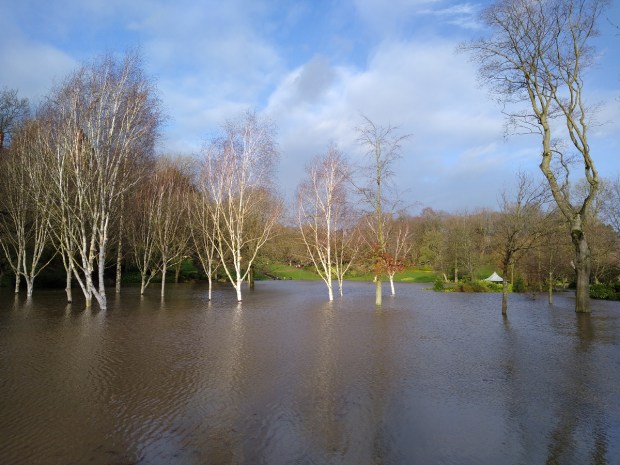
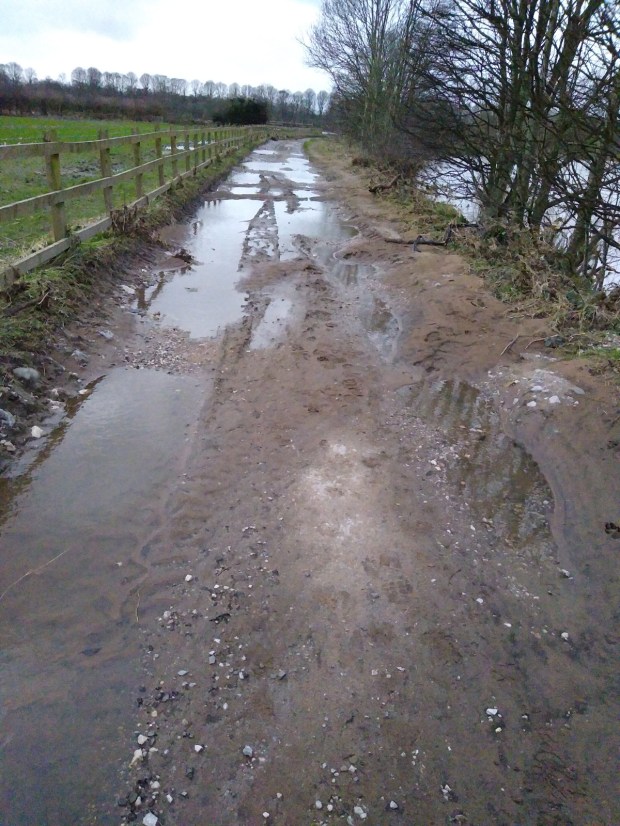
Rain has flooded my landscape,
rising up over my pagodas and bins,
my fountain and its four nymphs,
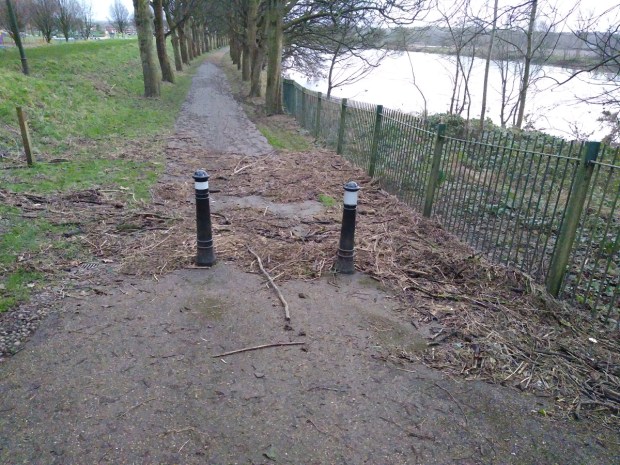
washed away all my bridges,

receded to leave a mottle of reed,
rainbow puddles to splash wellies in,
birches surprising in their reflections
like Rimbaud illuminated in 1876.

It has cleaned and cleansed me.
My Taekwondo belt is blue and green.
I am learning O Jang I but I do not
call myself Master of the Wind

for I do not know what broke me –
childhood bullying, a neurotic father,
a defective gene or something deeper
within? But it was not the storm.

*Arthur Rimbaud wrote his Illuminations in 1876.
**O Jang means ‘Wind’ and it is the fifth pattern in WTF Taekwondo.
***I wrote this poem in the aftermath of Storm Ciara during which the Ribble broke her banks at Avenham and Miller Parks and further upriver.

Remembering Penwortham Marsh

In the Doomsday Book my home town of Penwortham is referred to as Peneverdant. It has been translated by Rev. Thornber as ‘the green hill on the water.’* The name refers to Castle Hill, which stood on Penwortham Marsh, a tidal freshwater marsh frequently flooded by the river Ribble.

The marshland developed after the Ice Age and its water levels changed with the tides and the rise and fall of sea levels. During the Bronze Age there was a wooden lake dwelling evidenced by the remains of a ‘platform some 17m by 7m in extent… formed of brushwood set amidst piles’.

It seems likely people inhabited this milder lowland location in winter and, in the summer, when there were lots of midges, moved to the uplands, following the aurochs. (There are echoes of this tradition in the people of Penwortham pasturing their cattle in Brindle, in the foothills of the Pennines, up until the 14th century, when Brindle separated from Penwortham parish).

During the marine transgressions of the second millennium BC, when the weather got colder and wetter, Castle Hill would have been part of the Ribble estuary and quite literally ‘on the water’. In the Romano-British period the sea levels fell again and have remained relatively stable until now.

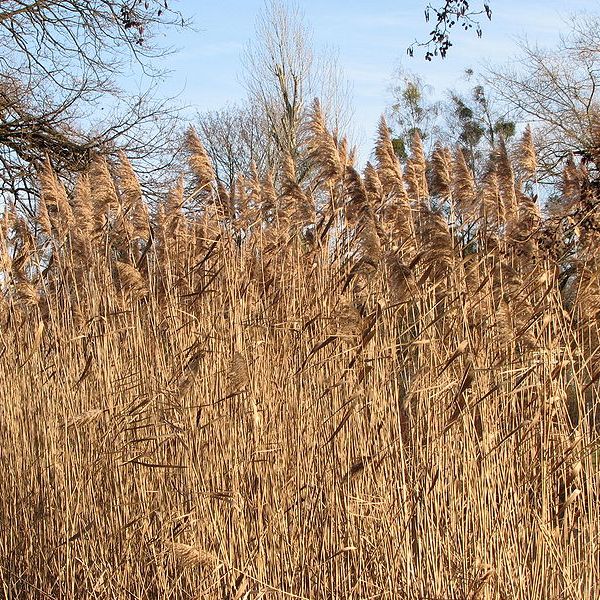
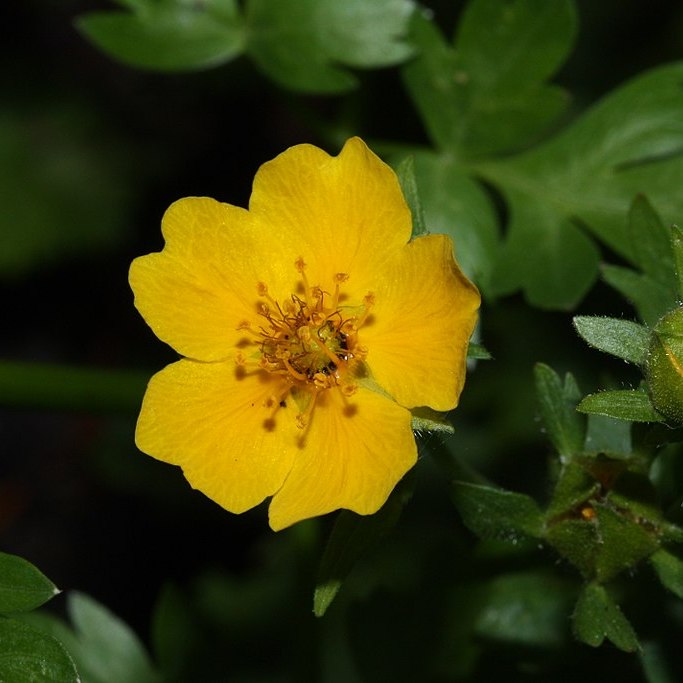
The vegetation of Penwortham Marsh was likely to have consisted mainly of common saltmarsh grass (pucinellia maritima), with saltmarsh rush (juncus gerardii) and red fescue (festuca rubra), areas of reed (phragmites communis) and reedmace (typha latifolia), and perhaps water crowfoot (ranunculis aquatis), lesser spearwort (rannunculus flamula), and yellow flag iris (pseudacorus).

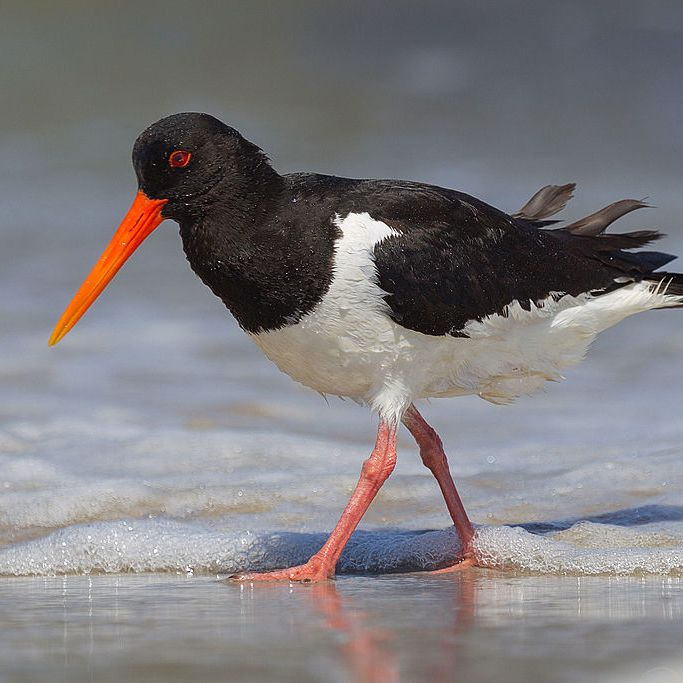
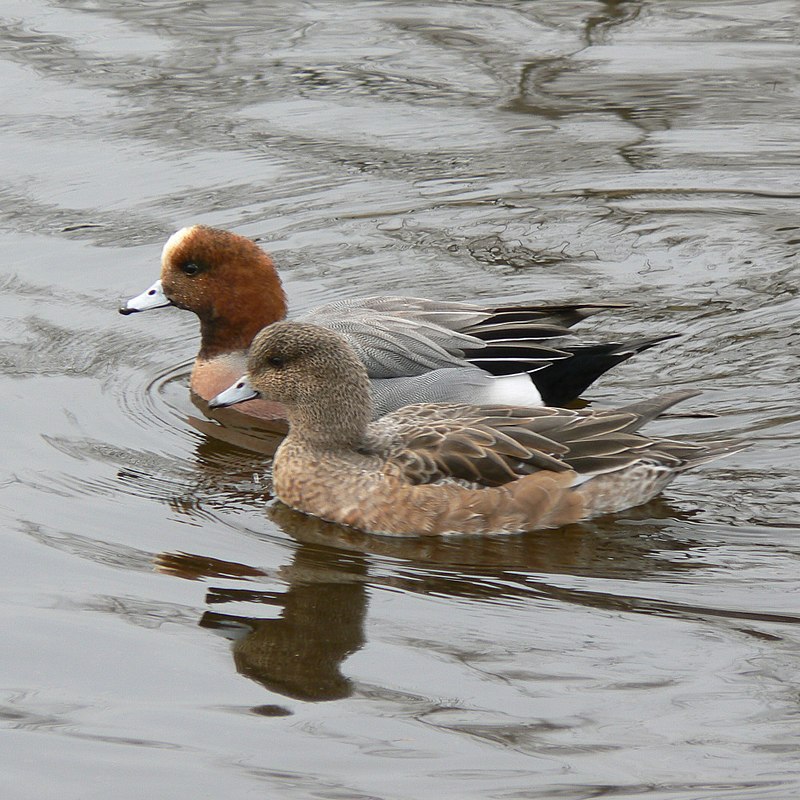
Breeding birds would have included redshanks, dunlins, oyster catchers, grebes, curlews, shelducks, mallards, lapwings, egrets, herons, and cranes. Over-wintering birds such as pink-footed geese, Bewick’s swans, whooper swans, widgeon, teal, knot, pintails, bar-tailed godwits, black-tailed godwits, sanderlings, and golden plover would also have been seen and their calls heard across the marshland.

This remarkable species-rich habitat remained untouched until the 16th century. Its draining began with land on the south of the marsh at Blashaw close to the medieval boundary ditch. Land north of Castle Hill was also reclaimed at this time. A survey of the Farington estates from 1570 refers to the Corn Marsh of 28 ½ acres and Little Burgess Marsh, which was fenced off with posts and rails. In the 16th century, from Howick to the foot of Castle Hill, a band of marsh was enclosed as ‘large square fields’. Finally, in the 17th century the marsh at Howick closest to the river Ribble was drained.

The newly reclaimed land was used for arable agriculture from the 16th until the 18th century. In 1725 the Corn Marsh was renamed Pasture Marsh showing it was used for grazing instead. The name Cow Gate Marsh is also suggestive of use for pasturage. Other field names include Innes Marsh, Little Marsh, Middle Marsh, New Marsh, and Long Marsh. The small strips that remained as intertidal marshland beside the Ribble were called Out Marsh and Great Marsh.**

The greatest change, in the 1880s, was the movement of the Ribble 500 yards south from its original meander at present-day Watery Lane to bend sharp west then flow in a concrete channel straight out to the estuary. This had the effect of cutting Penwortham Marsh off from Castle Hill, and from Penwortham, making it part of Preston. The marsh was then dug out to form Riversway Dockland.

There is now no sign Penwortham Marsh ever existed. Not even a street name. People who visit the docks are largely unaware they are walking on a former marshland where early Britons dwelled amongst reed, rush, waterfowl, mighty aurochs, and their gods, spirits, and ancestors.

Unlike with other intertidal marshlands beside the Ribble which, following, their draining have been rewetted, such as Hesketh Out Marsh, there is no way that Penwortham Marsh can ever be restored. Its separation from Castle Hill by the river and the digging of the docks has irreversibly destroyed it. Ironically the dock only functioned for 100 years before the Ribble silted up (Belisama’s revenge?***).

Along with climate change, the destruction of Penwortham Marsh and the channelling of the river are now causing flooding upriver at Broadgate. If the Ribble had been left to her old course and the marshland had remained as a buffer zone we would not need to be building higher flood defences.

Drained and dismembered, Penwortham Marsh cannot be put back together again. Yet it can be remembered. Its memories continue to speak from beneath the dock. When we look on those concrete walls, the restless waters brimming with green-blue algae, we can recall the marshland stretching away to Castle Hill, whistling with the calls of birds, and hear the voices of our ancestors.

They speak their warnings of a time when the green hill will once more be on the water again…

*Thornber claims ‘Peneverdant’ is of Brythonic origin from ‘pen, werd, or werid and want, as Caer Werid, the green city (Lancaster) and Derwent, the water’.
**The draining of Penwortham Marsh is recorded with a map in Alan Crosby’s Penwortham in the Past.
***Belisama is the goddess of the river Ribble.

Marsh Roads

I.

Walking

down Marsh Way past Marsh Way Pond,

down Marsh Lane I think of other marshless Marsh Roads
in Preston, Thornton-Cleveleys, Bolton, but also

of Marsh Road near Banks and Marshside
where hundreds of widgeon and teal
jester the waters pintail arrow
and lapwings

peal

like spaceships
on computer games.

II.

There are no alders
on Alderfield

where I lived
without trees or water,

on Alder Close, Alder Grove, Alder Lane,
around the pond in Carr Wood where they cut them down.

On Carr Head Lane, Carr Moss Lane, Carr End Lane,

Carr Hill High School where I first sparred
at Taekwondo ignorant of Gwern
and Brân’s alder shield.

III.

There are no reeds
on Reeds Brow, Reedmace Road,
Reedfield Place, Reed Acre Place, Reeds Lane.
On Rushwood Close, Rushwood View, Rushy Hey
there are no rushes.

There are no willows
on Willow Crescent or Willow Coppice
to weave into a willow tunnel to grant safe passage,
but Willow Cottage Bed and Breakfast
was a haven for two friends –
one of them a heron.

V.

There is no sedge in Sedgefield

but the pendulous sedge is rioting here
on the banks of the brook in Greencroft Valley
and the green is soggy and my wellies are getting stuck
and slipping in and out of the land like a jelly.

It’s coming back it’s coming back –
the marshland of the Setantii.

We have been sinking by an inch each year.

There are things that are born to suck up the roads.

Discovering Anrhuna

Anrhuna… it’s taken me many years to find out her name… nearly as many years as the many names I’ve known her by: Lady Ivy, Lady Green, Lady of Peneverdant (‘The Green Hill on the Water’), Lady of the Marsh, Mother of the Marsh, Mary of the Marsh, Marian, Mother of Annwn.

At my local sacred site, Castle Hill in Penwortham (Peneverdant in the Domesday Book), the church on the summit is dedicated to St Mary the Virgin, as was the well at the hill’s foot. I have known for a long time a goddess replaced by Mary lies beneath. I’ve felt her presence in the water dripping from the ivy, in ferns, hart’s tongue, enchanter’s nightshade, all the plants that love the damp.

Lady on the Mound - Copy

She’s gifted me with visions of how the land appeared to the ancient Britons who worshipped her. The Bronze Age Lake Village, the way across the marsh to the sacred hill marked out by stakes, the moonlit processions spiralling around the hill to light a beacon fire, the burial mound beneath the castle mound, the grove of trees circling the area where the church now stands, beloved of the druids.

Where the river Ribble (known then as Belisama, ‘Most Shining One’) runs culverted and shifted from her course and on the other side stand the flats and out of town stores around the redundant docks I have listened to widgeon whistling and curlew calling across the marsh. I have seen tall, handsome cranes grazing beside the river and taller, mightier aurochs drinking deep, raising horned heads.

River Ribble, water level

Stranger still, two people from the US have contacted me to share visions of this place. A while back Heather Awen spoke of witnessing women making offerings from a wooden platform, praying for ‘a baby to fill their womb’, and seeing a woman ‘wrapped in burlap… tied with ropes’ lowered into the marsh. More recently Bryan Hewitt reported being drawn to do healing work in the area and seeing people in wooden boats traversing the river. Afterwards I had my first vision of the goddess as a person – a woman in a wooden boat getting bigger and bigger until she filled the skies, then trying to take the hill and docklands, severed by the moved river, in her arms to make her marshland one again.

Mother of the Marsh I

Bryan spoke to me of his relationship with a goddess he knows as the Mother of Annwn. When I met her on a journey she presented me with watery marshland imagery. A number of threads came together and I realised my local marsh goddess is this goddess of the waters of life flowing from Annwn.

Another thread that helped to complete this mysterious tapestry of place and deity is Bryan’s knowledge that the Mother of Annwn is the mother of Gwyn ap Nudd, my patron god, who I met in the damp woodland on the east bank of Castle Hill, where our local fairy funeral legend is set.

It is well known from his patronymic that Gwyn’s father is Nudd/Nodens, but the identity of his mother has fallen into obscurity. In The Descent of the Saints Gwyn is listed as the son of Tywanwedd, a little-known sixth century saint, who is also the father of Gwallog and Caradog, yet this has never rung true. Neither has the ungrounded claim of Robert Graves that Gwyn’s mother is Arianrhod.

The only real clue I have found is Ann Ross’s mention that at Nodens’ temple at Lydney there was found a stone statuette of a mother goddess, thirty inches in height, ‘her left leg crossed over her right’, ‘a corncupia in the crook of her left arm’, her head unfortunately missing. Pins were offered to her by women seeking aid with childbirth. It seems likely she is Nodens’ consort and Gwyn’s mother.

There is also evidence for the worship of Nodens here in Lancashire. Two statuettes dedicated to him were found on Cockersand Moss very close the remains of Cockersand Abbey. This was dedicated to Mary of the Marsh – my marshland goddess Christianised. I realised it was likely she and Nodens were worshipped together both there and here on Castle Hill with their son, Gwyn.

The final thread was finding out the goddess’s name. When guesswork failed I asked her directly and she set me searching for it through the reeds as if for a bird’s egg scaring up whistling ducks, digging down into the peat through layers of history to the age of dug-out canoes and bronze spears, hearing it whispered in my ear as if on the breath of a bog body – “Anrhuna” (tentatively ‘Very Great’).

The tapestry of land and deity at Castle Hill – Anrhuna, Nodens, Gwyn, alongside Belisama, is complete.

Castle Hill Mound Autumn 2018