“Can you hold your tongue for a year and a day?” My patron God, Gwyn, challenged me.
“No,” turned out to be my answer, “no – I cannot.”
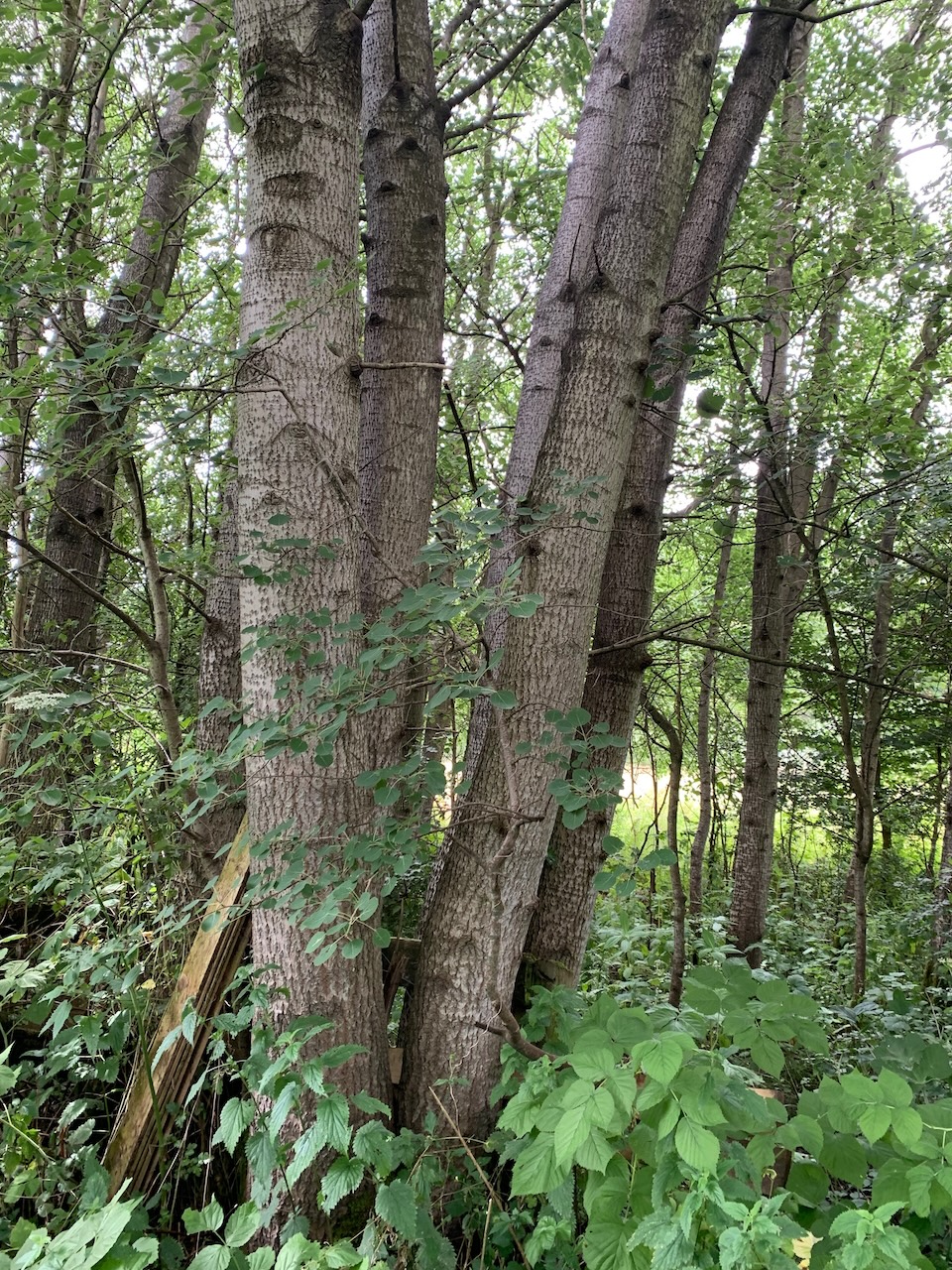
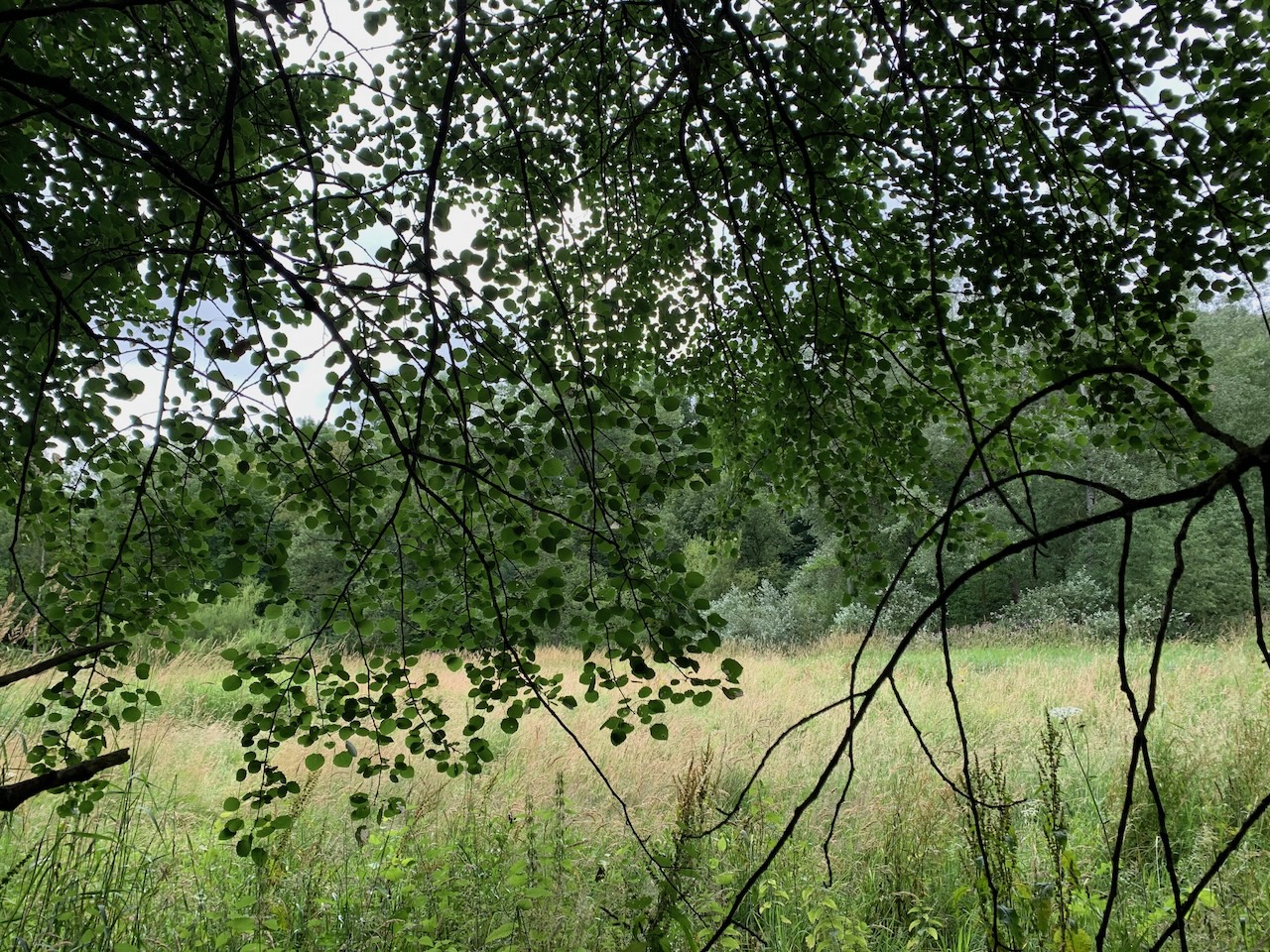
No coincidence that this year I have been connecting more deeply with aspen. Because of the talkative rattling of is leaves it is known in Welsh as coed tafod merchen ‘tree of the woman’s tongue’ and coed tafod gwragedd ‘tree of the wife’s tongue’. Similarly in Scotland it is known as ‘old wives’ tongues’.
The English, ‘aspen’ derives from the Germanic asp perhaps relating to its snake-like bark or to snake’s tongues. Its Latin name, Populus tremens, refers to its leaves which are said to quake restlessly as it provided wood for the cross Jesus was crucified on.
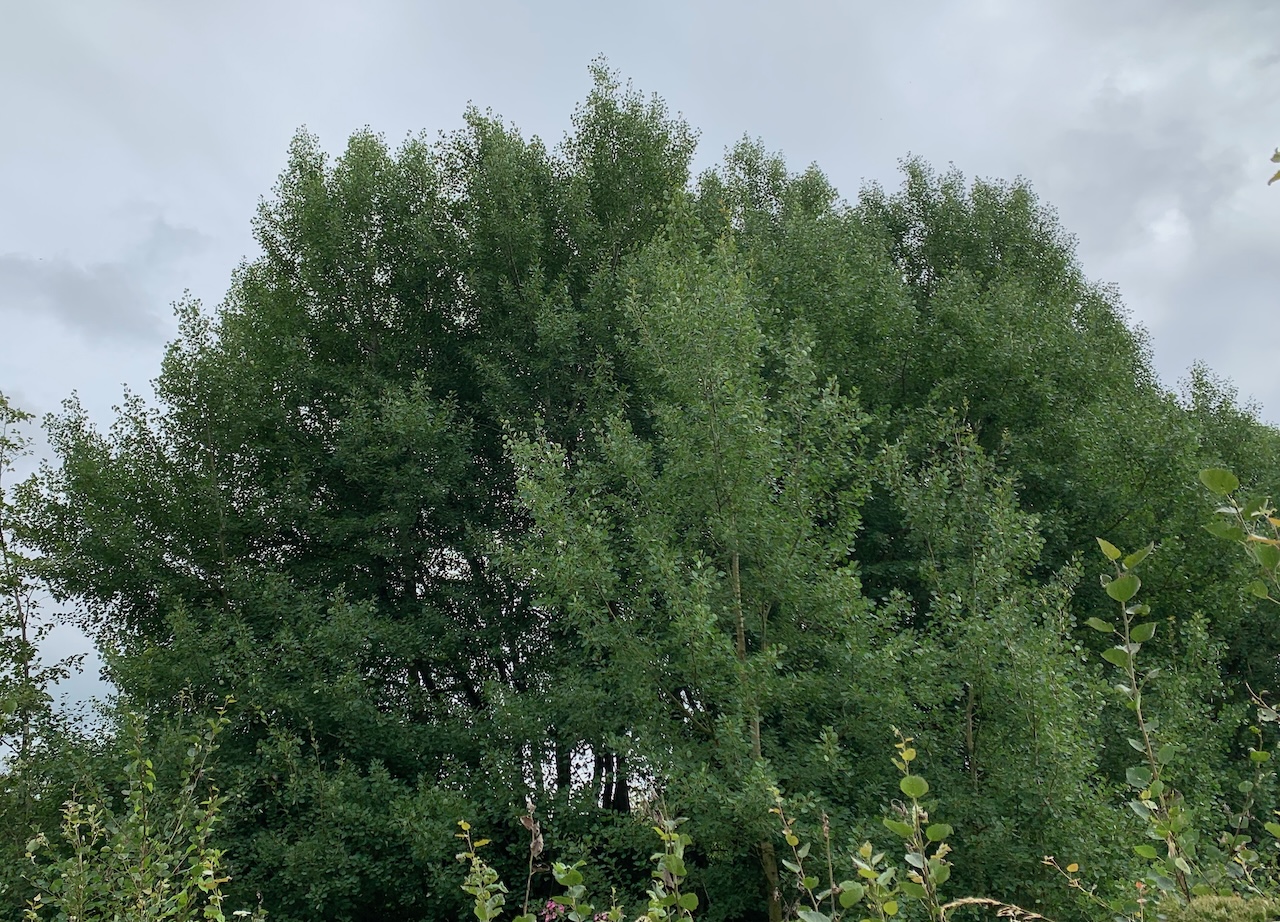
An ominous tree, associated with prophecy, until recently it existed at the peripheral edges of my vision. Small stands in local woodlands, on the edges of roads and paths, just one considerable colony at Fishwick Bottoms.
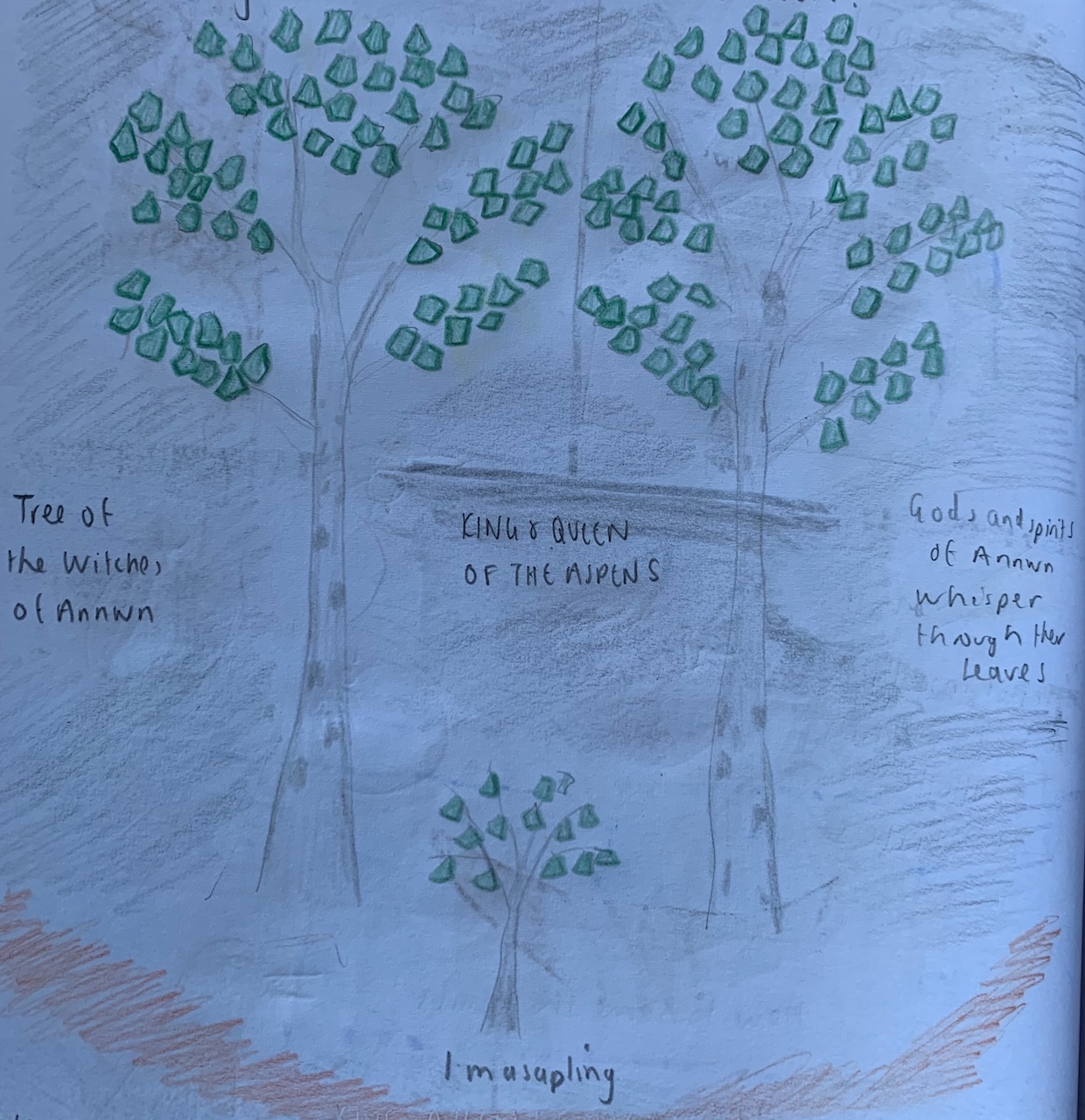
I’ve spoken to it in passing and sat beneath its leaves and listened to its chatter. I’ve journeyed to it, met the King and Queen of the Aspens, learnt that it was the favoured tree of Orddu, Orwen and and their ancestors, the Witches of Annwn who have become spiritual guides for me in the traditions of the Old North.
Orddu showed me that the woodland in Pennant Gofid, ‘the Valley of Grief’ was an aspen wood that had been there since the end of the Ice Age. We walked together as she pointed out the fungi and buzzing flies in areas of decay. Afterwards I learnt that aspen supports numerous detrivore species of fungi, up to 155 on a rotting log and saxoproxylic Diptera favour the microhabitats created by decaying sap under its bark.
Aspen is usually a sociable tree that grows in colonies yet Orddu introduced me to a single Talking Aspen she and her ancestors sat under to read the prophecies from its leaves. I was instructed to sit beneath it with her mother, Orwen’s skull, to listen to the wagging tales of old and dead witch’s tongue.
I was shown, in autumn, how the Witches of Annwn fly as birds of aspen.
“In winter, when the aspen is silent,” Gwyn asked me, “can you hold your tongue?”
“No,” turned out to be my answer, “no – I cannot.”
Like old women, old wives, old witches, this middle-aged nun of the aspened suburbs and wife of the King of Annwn cannot hold her tongue.
Aspen needs to tremble. Tongues need to wag. Words need to be typed. I need to write for the sake of my well being, for my Gods, for those who find inspiration in my work in spite of giving up all hope I will make a living from it.
Over my period of silence I’ve found a new way forward as a shamanic guide providing one-to-one shamanic sessions in my local community and am planning to start a shamanic circle here in Penwortham in the New Year.
Step by step my Gods and spirits are showing me my path as a nun of Annwn. Part of this is reclaiming my relationship with my abandoned creativity and embracing it as a way to health and healing for myself and others.
*Information about aspen in this document comes from ‘The Biodiversity and Management of Aspen Woodlands: Proceedings of a one-day conference held in Kingussie, Scotland, on 25th May 2001.’
Heretofore I have proved myself only with words, with books, although those months on the mosslands planting cottongrass and sphagnum might count for something.
I have said too much – talking about me, me, me, my problems.
The time for whining and complaining has come to an end.
It’s time to listen, to learn, craft a new art to heal the violence.
(I will not speak again of how Arthur killed her with his knife, drained her blood into two bottles to grease a giant’s beard, neither will I drive Carwennan again into my own wounds.)
A life off the page lies ahead of me now – the spirits call.
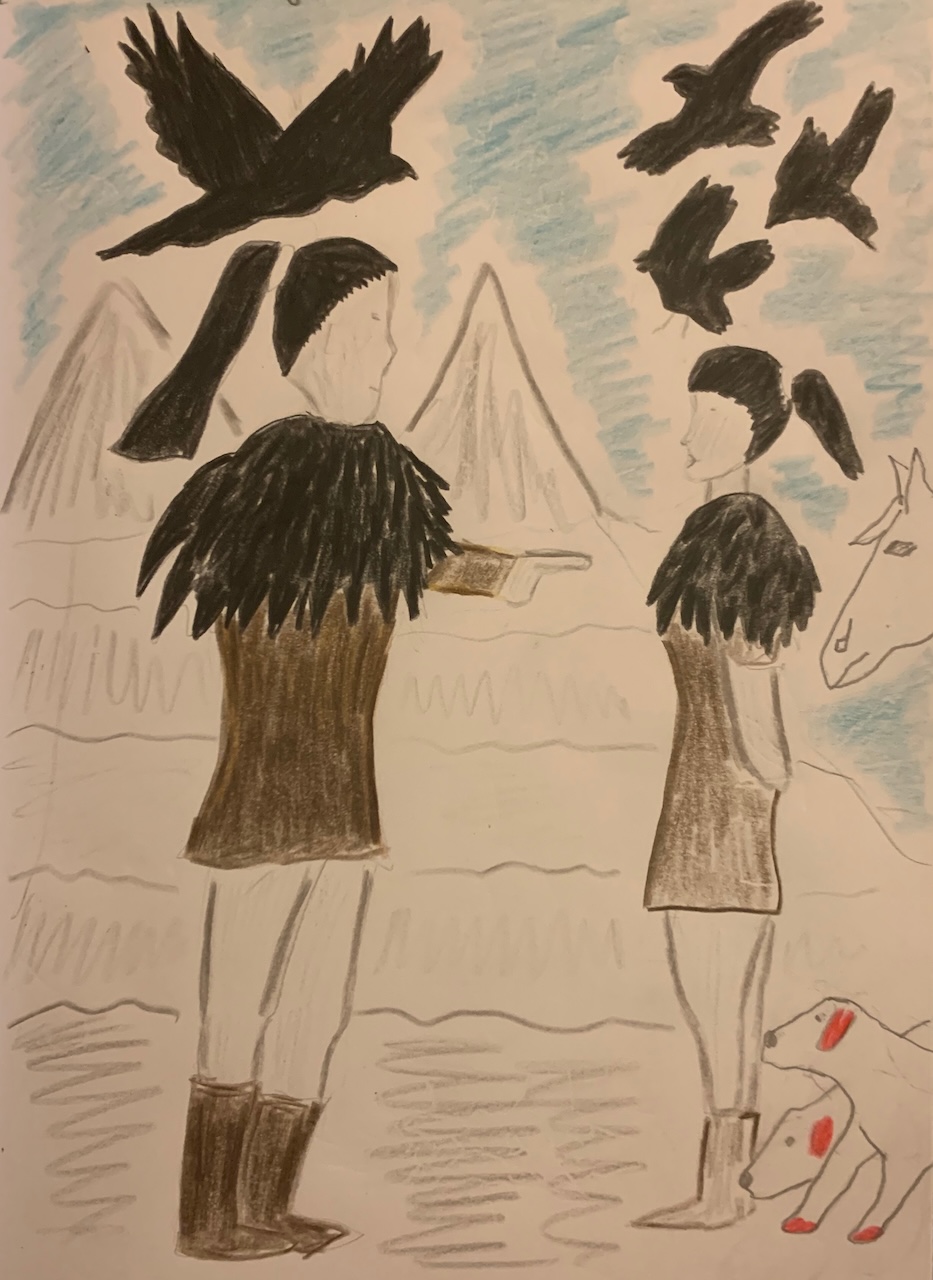
As part of the process of introducing Orddu and the Witches of Annwn into my daily practice as spiritual ancestors I am beginning to produce some devotional art for them as well as writing them poems and telling their stories. Here I am trying to capture Orddu’s characteristics as a ‘very black witch’ and ‘hag’ who battles against Arthur as presented in the original tale without inclining towards more traditional caricatures. I aimed to create the sense of harsh formidable and dark figure who was esteemed as a warrior woman and prophet. As you can probably tell I have no formal training as an artist just a history of doodling characters from writings of my own and others from a very young age.
and life is filled with lumps and bumps and knots and cracks.
There will always be problems. You will learn to solve them.
There will always be pain. You will learn to heal.
That is the secret of our art – of the inspired one and the witch.
II. There is a cauldron in the cave and a vision in the cauldron,
the lining of the womb of Old Mother of Universe
and this is the Web of Fate. You are the needle travelling
in and out of the weft of time to re-weave the tapestry.
III. You are not perfect distant daughter of mine
and life is filled with perils worse than the monsters of Annwn.
One-eyed giants, eyeless, blind. You will learn not only to face
but to help these things that should not have been made –
to help them return to the dark of the Old Mother’s womb.
IV. A universe is in the cauldron and the cauldron is in you
kindled by the breath of ninefold wise women,
by wisdom of the ancestors. In it our visions boil and brew.
Be a strong vessel distant child so this old world can be born anew.
These words were received from Ogddu on a spirit journey to the Cave of the Ancestors this morning. I believe Ogddu to be the mother of Orwen and grandmother of Orddu. Her name derives from ogof ddu ‘black cave’ and one of her epithets is ‘the Voice of the Dark Cave’. Receiving this poem from her confirmed that my choice to walk Orddu’s path and to begin working more deeply with this lineage of Inspired Ones of the North (who I perceive to be spiritual ancestors rather than blood ancestors) is the right one.
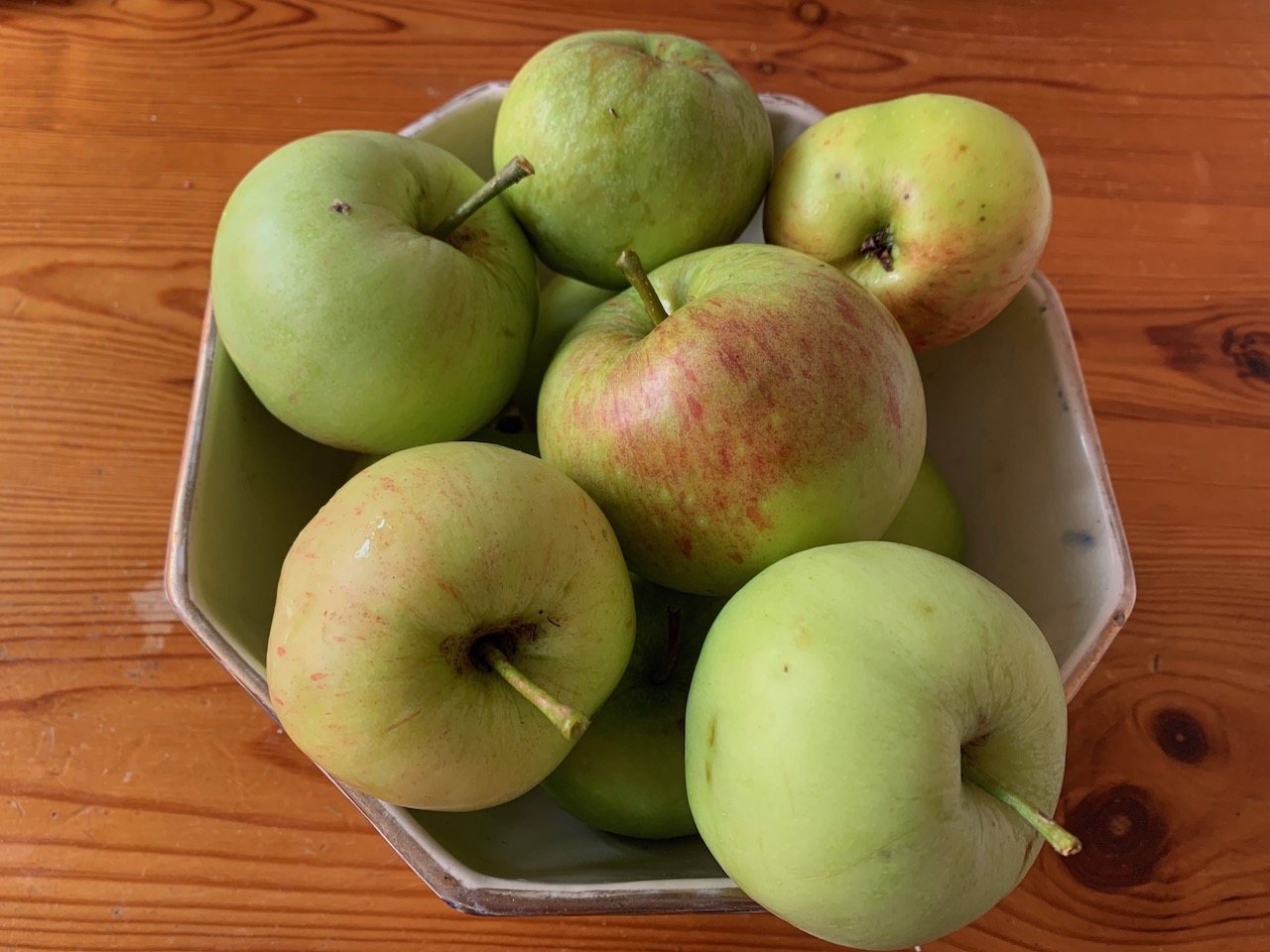
It’s harvest time. I’ve been gathering in the apples from our back garden. I’ve also started to take some time out to reflect on what I have harvested on a spiritual and creative level whilst, although living with my parents, spending most of my time in solitude since leaving my ecology job in August last year.
I’ve been through a lot of changes. It was a big blow realising that the limitations of my autism rendered me incapable of coping with the demands of working in either conservation or ecology due to my inability to manage projects and people, multi-task, or work flexible shifts or do night work.
Yet my patron God, Gwyn ap Nudd, gifted me with two tasks that gave me purpose and hope. The first, writing a series of books titled The King of Annwn Cycle imagining His unknown story from His birth until the end of the world. The second building the Monastery of Annwn of which He is also the patron.
For the first few months I threw myself into those tasks with utter joy and was completely absorbed in the awen working on my first book In the Deep. I took initial vows as a nun of Annwn on the new moon in October and being part of a group of monastic devotees devoted to the Annuvian Gods and Goddesses has been an ongoing source of inspiration and support.
II. Losing Hope
Yet over the winter I had a few things that derailed me. Blocks with the book after realising that due to it being a personal vision of Gwyn’s story with only subtle links to the existing myths it is unlikely to reach as wide an audience as my work that explicitly related Brythonic content to our environmental crisis.
Minor health problems. Tests around raised liver function that never came to anything. Rosacea. Runner’s knee. Then in spring, just as my knee issues were easing and the weather was getting better I went and pulled my sciatic nerve in my glute and had to reduce my running and strength training.
At this point I was also struggling with breathwork meditation. Gwyn began encouraging me to learn to focus on my breath prior to covid and has told me holding spaces of calm free of chattering thoughts is one of the most important things we can do for the world on an energetic level.
Failing to master my internal chatter alone I tried looking to Buddhism and considered going to meditation classes at a Preston’s Kadampa Buddhist Meditation Centre. To prepare I read one of the books by the Venerable Geshe Kelsang Gyatso Riposte who founded the Kadampa tradition. It led me to the realisation the path of freeing oneself from the suffering of earthly existence isn’t for me and left me feeling profoundly unspiritual so I did not go.
On top of my feelings of despair about being called to write a series of books that would never sell, dread of my savings running out and having to return to menial work, and my nerve pain, this led to me feeling ‘there is no hope left.’
The very moment this thought popped into my mind, when I was open and vulnerable, on my way home from a local walk, my nerve bothering me, I met a person who somehow knew my name and that I ran an online monastery and invited him to join and he caused trouble and had to be thrown out.
This was a big lesson on my failure to address the negative thought patterns that had got a hold on me. I’ve long been quite good at serving my Gods but terrible at taking care of my mental health and spiritual development.
I’ve served as a vessel for Their inspiration without taking care of the vessel.
III. Taking Care of the Vessel
My recovery from what I now believe to be ‘power loss’ began with a ‘power retrieval’ journey with the Way of the Buzzard Mystery School.
Therein I was given a set of ‘wolf’s teeth’ and told that I must be ‘fiercer’. This went against my preconceptions of what being a nun meant as I was striving to be humbler. Yet I took my teeth and the advice. When I reported this to Gwyn, not long before his death and departure on May Day, He told me by the time He returns at the end of August He wanted me to own them.
Shortly afterwards, on the suggestion of my personal trainer, I started practicing yoga to help with my sciatic nerve problems and with flexibility. I had never considered it before due to issues around its appropriation by westerners.
However I decided to give it a go and immediately found a Youtube channel called Breathe and Flow led by a pair of practitioners who make clear from the start the poses are just part of a wider spiritual practice and philosophy and who make the effort to incorporate breathwork and meditation into their classes.
At once I found both a physical practice to help heal my sciatic nerve pain and improve my flexibility and mobility and support with breathwork and meditation.
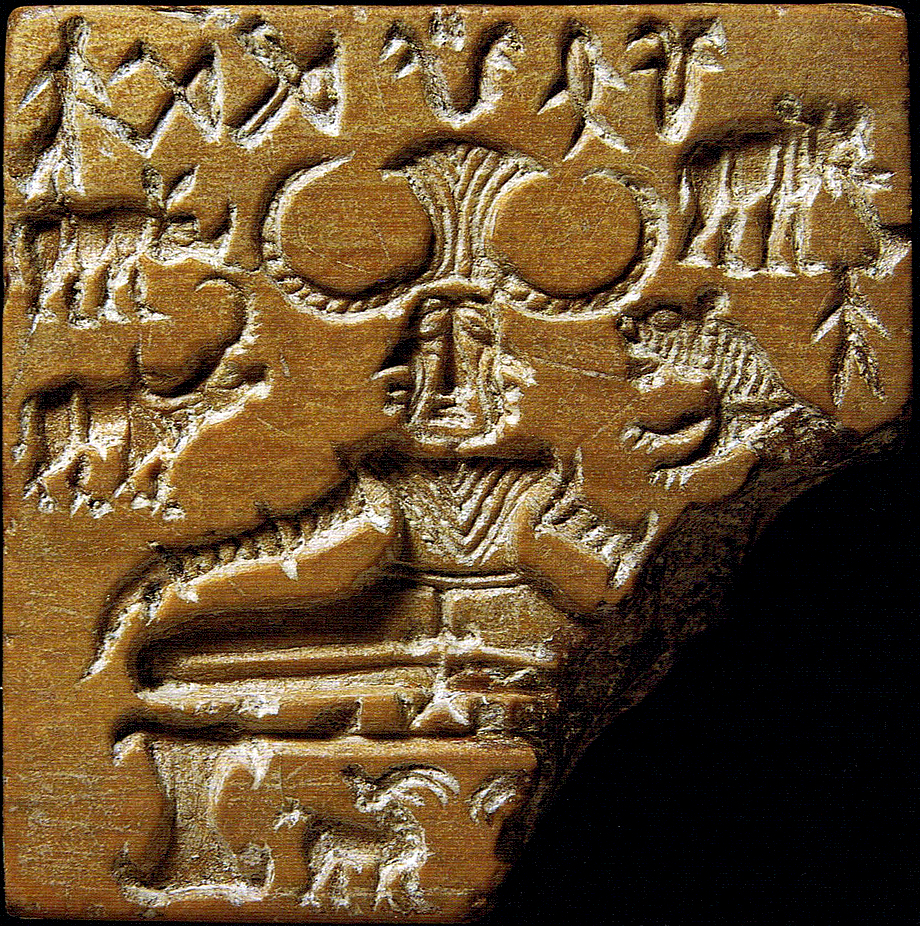
When I started reading up on the religious and philosophical background of yoga to my amazement I found out the Hindu God who is Lord of Yoga is Shiva and He bears similarities to Gwyn as a destroyer and transformer. They both have associations with bulls and serpents and, to my surprise and delight, Shiva’s serpent, Nandi, has a magical jewel on his forehead. In my personal gnosis Gwyn and the serpents of Annwn have similar jewels.
The images of Shiva and the meditating deity who I believe to be Gwyn on the Gundestrup Cauldron bear a striking resemblance. As I persevered with my meditation practice over the summer, although asleep, Gwyn began visiting me in spirit form, as ‘meditating Gwyn’, in the likeness of this image. As if he had been cut from the cauldron, in shining silver, to help me with my breathing. I finally found the practices I needed to take care of my vessel.
Another source of help and support has been working with a supervisor and therapist, who is also a shamanic practitioner and I was put in touch with by Nicola Smalley who co-runs the Way of the Buzzard Mystery School. This is the first time I have had a human teacher and it has taken a long while for the circumstances to come into play that have made this desirable and possible.
When we were looking into my fears around panicking/freezing/melting down when faced with unexpected difficulties, particulary in social situations, we journeyed together on it and she saw a red dragon on my shoulder breathing fire and was told by Merlin that I must learn to ‘tame the dragon’.
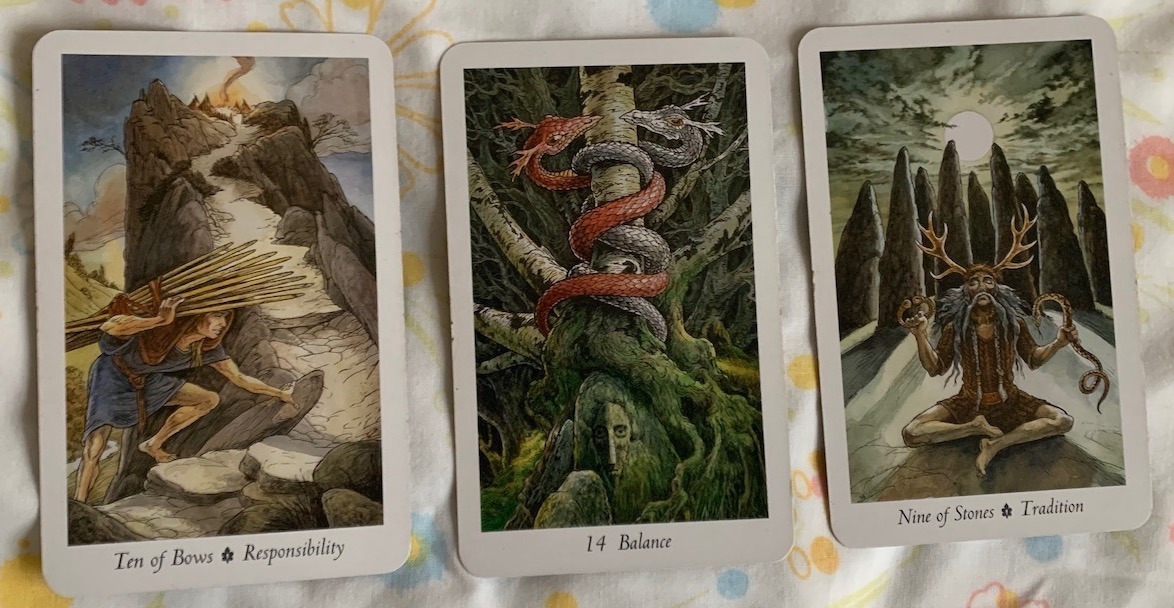
This unsurprisingly led ‘my red dragon’ to rebel which I gave voice to in a poem*. Yet a tarot reading revealed that what Merlin was calling for was the need not so much to tame the red dragon but to balance her energies with those of the white dragon through meditative traditions and taking responsibility.
Of course, in the Welsh myths, it is Merlin who reveals the red and white dragons battling beneath Dinas Emrys where Vortigern wants to build his fortress following their burial by Gwyn’s father, Nudd/Lludd. Amazingly my supervisor knew nothing of my connection with these myths prior to the journey.
I have begun a process of transmuting the anger of the red dragon to strength and the panic of the white dragon to calm in my yoga practice by coupling them with holding postures on either side and with alternating nostril breathing along with trying lion’s breath to release the fiery energy.
V. Unblocking the Flow
Prior to this I had considered alternative options for possible paid work – running courses and workshops or writing a book on Brythonic Polytheism as quite a few people have asked me for reliable material. However, whenever I have attempted to put something together I have met a block.
On the one hand I felt with my background in research into the Brythonic tradition and my experiential relationship with a few of the deities I was in a position from which I could deliver this. Yet I also knew my approach is highly personal and idiosyncratic and critical of the medieval Welsh texts, penned by Christian scribes, in which Gwyn and the spirits of Annwn, the witches, giants and ancient animals are demonised and repressed.
I’m not a person who could deliver the literary background formally, without opinion, without a few of the teeth and claws of the spirits of Annwn getting through.
When I entertained the idea again this year I was told by Gwyn to set it aside and ‘stop thinking about money’. Yet my feeling this might be a future obligation and potential source of income in spite of my blocks continued to persist.
I finally let go of this once and for all following a conversation with my supervisor. She advised that rather than acting from my sense of obligation and presuppositions about what the world wants and needs I should follow my inspiration, the flow of my creativity, asked where my passion really lies.
I said, “in my books”, “in Gwyn,” “in the Annuvian,” “in all He and the Otherworld represent”. She told me this is what I should focus on and write about in spite of my fears about my work not being well received or making money.
For the past year I had increasingly been struggling to create blog content based on what I think my readers want in terms of Brythonic content and poetry. My prayers and songs for Gwyn had all been from the heart but I’d had to drink alcohol to force the poetry out and I hadn’t managed to write much about the other Brythonic Gods and Goddesses in spite of my intent.
As soon as I let go of what I felt my obligations are I had two new poems come through without the aid of alcohol pretty much complete and was inspired to write a couple of pieces on my ‘forbidden pleasure’ – dark fantasy.
VI. The Dark Magician’s Door
At the time I was considering where my future prospects and obligations lie I dismissed the possibility that I might gain a larger readership for my books, which I would describe as mythic fiction containing elements of heroic and dark fantasy, by engaging more with the world of fantasy and its readers.
I flirted briefly with the idea of starting a new blog for thoughts on fantasy and reviews but decided it would be too time consuming and didn’t like the idea of having two blogs and profiles. I also got put off by the fact a lot of engagement takes place on social media and this is an absolute no-no for me. I took one look at Twitter and felt like I was staring into the pits of Hell.
I also dismissed the idea of posting fantasy content on this blog as I have tried it in the past and it hasn’t been well received. I decided there are enough people in the world talking about fantasy and not enough talking about the Brythonic Gods so I should continue to make that duty my focus.
I then had a seemingly unrelated experience that led to my giving up alcohol for good. I used alcohol to self-medicate my anxiety from my late teens until 2020 when I began giving it for periods and cutting down a lot. The habit of weekends and occasional mid-week drinking had snuck back during my difficulties with my sciatic nerve pain even though my body was rebelling against it – expunging it with night sweats and its stink in my piss and shit.
I really wanted to give it up for another long period but was having no success.
Then I had a dream in which my dark magician guide (who is a character in a fantasy novel who has been with me since I was around thirteen) showed up with a vision of planks leading up and down a wall to different doors, told me he was angry I had ‘closed his door’ and left through it.
The next morning he appeared again in my meditation, vivid as in a dream, in Annwn, beside the Abyss, with the part of myself who is addicted to alcohol, sweating, writhing, stinking of its excesses, wrapped in a white shroud. He told me it was time I gave up alcohol for good and that I must cast her in. Although this completely terrified me I went along with what he said. Afterwards I reported it to Gwyn and solemnly promised Him I would not relapse.
Knowing I would never have the comfort of alcohol again was scary at first but has proved to be a big release with the part of my mind obsessing about whether I’ll drink then feel guilty and like a failure having finally been laid to rest. It has opened a lot more space for communion with my Gods and creativity.
I forgot all about the dark magician’s door until the block allowing me only to write Brythonic content and poetry for my blog was released and I came up with new poems and the fantasy book reviews I had denied myself of writing.
I’d closed his door – the door to fantasy – and now it stands open again.
VII. Returning to Orddu’s Cave
Over this year of solitude I have harvested a good many things. I have produced a finalish draft of my first book, In the Deep, and am well on my way with the drafting of my second book, The King and Queen of Annwn. The building of the Monastery of Annwn is going well with our development of our shared practices, meditation group and first year of online rituals.
I’ve come a long way in discerning the direction of my path as an awenydd and nun of Annwn devoted Gwyn and learning to follow my inspiration.
Another important learning is that whereas in the past I forced myself out into various communities, spiritual, creative and environmental, I am happiest when I am alone or interacting with very small groups of like-minded people.
There is a lot of stigma around solitude identifying it with mental ill health. Yet, for me, and I would warrant a lot of autistic people, it is a source of well being.
This has led me back to the cave of Orddu, the Very Black Witch, an inspired one and warrior woman intimately connected to Gwyn who was slaughtered by Arthur.
I no longer see it as my duty to sing back the traditions in which the King of Annwn and his followers are demonised and killed but to join the inspired ones past and present who are perceiving new visions from the Cauldron of Inspiration, brewing them in their own vessels, birthing them in words. Owning my wolf’s teeth, my black beak and claws, all that Arthur forbids.
In my cave, my room, my monastic cell, I tend my cauldron and my awen sings.
*This is the poem recording my initial rebellion against Merlin’s words.
The Dragon on my Shoulder Breathes Fire
I. She sees the things that are unseen but are – the dragon on my shoulder breathes fire.
Not just any fire but Annwn’s fire, the type that warms the belly, implodes the head, bursts forth as poetry (on a good day) but is otherwise expressed as anger.
Anger that will not be satiated by death or by the spilling of blood.
Where do dragons come from?
II. There are fire eaters and fire breathers and those who swallow stars not to make a living but to avoid our soul’s death.
Dragon fire has been within us all along.
III. Red is danger and danger is anger with a letter d at the front.
Red and hatred have the same vibe. Red, goch, iron, the red at the earth’s core. My temper will not be tempered – my metalwork got melted down.
I did not master fire.
Instead I released the dragon soaring soaring from the forge wept the day I did not save my Lord from Arthur’s sword.
But it was I who freed the fiery serpents sizzling, hissing, spitting.
IV. Now a large grandfather clock is ticking down to doomsday. The dragons are fighting again and will not be quieted.
Merlin tells me that I must ‘tame the dragon’.
Why, oh prophet, diviner, madman, must I try to tame what cannot be tamed?
Why, oh son of a demon, who prophecies in dragon fire are you speaking this Arthurian language of taming?
All I know is you have demons inside you too, in your heart, in your head, that both of us like to sit beneath the apple trees.
The dragons are within me.
The Island of Prydain.
The dragons are within you too.
The dragon on my shoulder breathes fire and she sees the things that are unseen but are.
There is the bard in the mead hall. The one who sings at the feast in Caer Vedwit, the Mead Feast Fort, in Gwyn’s hall, in a heavy blue-grey chain.
I sung there once, where the harp of Teirtu plays on its own. Where the ghost of Maponos walked. Where the fair folk and the dead dance and mix and eat the meat of leaves whilst the king watches from his throne of bones.
I drank enough mead to feast the dead for centuries and took the songs of our king to the halls of towns and cities, to libraries, pubs, shopping centres.
I sang in chains, tried to strangle myself with them, then cast them off.
I walked this path for a while but this path was not for me.
~
There is the path of the madman, the wild woman, the path of the followers of Myrddin Wyllt. Those who are afflicted by trauma and by the claws of Annwn torn out of themselves, split open, as if by a spear, their bird spirits flying out.
Hawk spirits, golden eagle spirits, goldcrest spirits, passerines in strange migrations. All heading to their forests of Celyddon. To pines and raided gold mines. To the damps of the Celtic rainforests where it rains five days a week. To the remnants of woodlands in the suburbs along the trickle of suburban streams.
I was the wren in the bush singing of how I tore myself open for our God and how my heart was my sacrifice on mid-winter’s day still beating beneath the yew.
A part of me is still there, singing for Him, loud yet hidden. No-one hears.
I walked this path for a while but this path was not for me.
~
There is the path of the cave woman, the inspired one, the witch. Orddu ‘Very Black’, Orwen ‘Very White’, all their ancestors around the cauldron.
Black skin, white hair, white skin, black hair, wolf furs, corvid feathers, black beaks.
Those who sing with crows and wash the skulls of their ancestors in holy springs. Cast the wolf bones. Lie beneath wolf furs waiting for visions of the Deep.
Those who drink the awen, scry in the cauldron like our God, sing of past and future things. Swallow stars. Universes. Things too big to speak. Die in His arms.
I swallowed the star of the King of Annwn and it is within me still and I am still in my cave after all these centuries with a murder of crow women inside me.
The nun in her cell who still flies, still runs, divines with black feathers.
I walked this path for a while and have decided it is for me.
I wrote this poem as a step along my journey in discerning what it means to be an inspired one and nun of Annwn devoted to Gwyn ap Nudd in relation to the Brythonic tradition and my solitary life in suburban Penwortham.
‘Arthur said, “Are there any of the wonders we have still not obtained?
One of the men said, “Yes, the blood of the Very Black Witch, daughter of the Very White Witch from Pennant Gofid in the uplands of hell.
Arthur set out for the North, and came to where the hag’s cave was.’
– Culhwch ac Olwen
I. The Witch’s Cave
In the medieval Welsh story Culhwch ac Olwen (1090), Orddu ‘Very Black’, a ‘witch’ who lives in a cave in Pennant Gofid ‘the Valley of Grief’, battles against the servants of Arthur and is slaughtered by him in a gristly scene where he cuts her in twain with his knife to drain her blood.
In this tale Gwyn ap Nudd, a Brythonic god of the dead and ruler of Annwn, is dubiously made to appear beside his eternal rival, Gwythyr ap Greidol, as an advisor to Arthur. I judge this to be a move by a Christian interlocutor do demonstrate Arthur’s power not only over Orddu but her god.
It is my personal belief that Orddu was the last of a lineage of ‘witches’ of the Old North who resided in the cave at Pennant Gofid, which is identified with hell, showing Annuvian associations. They were powerful warrior-women and prophets who shared a kinship with the Witches of Caer Loyw who trained Peredur and with Scatach ‘the Shadow’ who schooled Cú Chulainn.
Their martial prowess and ability to commune with Gwyn and the spirits of Annwn to prophecy were seen as a threat to Christianity thus Orddu met her brutal end at the hands of the Christian king.
Orddu’s story has long haunted me. A few years ago it led me to trace her lineage through a series of spirit-journeys and in inspired writing from her mother, Orwen ‘Very White’, back to Snow, the first of her ancestors to arrive in Pennant Gofid (then known as the Valley of Winter) after the Ice Age.
Of all the stories I have written Snow’s has felt the realest, the deepest and the most profound. It tells how she and her people were led by Vindos/Gwyn and his wolves and ravens, following the reindeer and wild horses, to her northern cave, where it is remembered in her lore her ancestors once lived.
I have no idea whether Orddu, Orwen, or Snow are real or mythic persons or whether Pennant Gofid is an actual place in northern Britain (if it is I haven’t found it yet). However, archaeological evidence demonstrates that people lived here in caves after the last Ice Age and in the interstadials.
During recent research I found out from Barry Cunliffe’s Britain Begins and Stephen Oppenheimer’s The Origins of the British that a high percentage of the modern population can trace its ancestry back to the period after the last Ice Age when people recolonised Britain from Northern Iberia along the Atlantic seaways and from the North European Plain across Doggerland.
Up until now it had never occurred to me to question who Orddu’s people were and where they came from. To follow their footsteps back to the continent, into older times, and deeper into the cave.
II. After the Ice Age
Following the end of the last Ice Age, the Younger Dryas Stadial, (12,900 to 11,700 BP), the earliest evidence for the inhabitation of Britain comes from caves in south-west Wales. The oldest human remains from Worm’s Head include a human scapula (9920 BP), an ulna (9450 BP), a femur (9420 BP), and a cranium (9360 BP). Human bones dating from between 9000 and 7000 BP have been found at Paviland, Foxhole Cave, Ogof-yr-Ychen ‘Cave of the Oxen’, Potter’s Cave, and Daylight Rock.
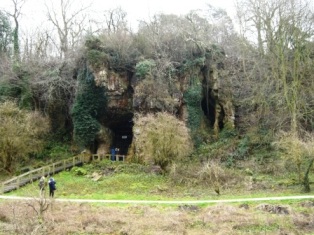
One of the most famous Mesolithic burial sites is Aveline’s Hole in the Mendip Hills of Somerset. It was discovered in 1797 and investigations reported the presence of between 50 and 100 human skeletons. Unfortunately most of the finds and documentation were destroyed by bombing during World War II. Only 21 skeletons remain and they have been dated to between 9115 and 8740 BP.
Most were adults and adolescents, but they also included three children aged between 2 and 7 and an infant of 6 – 18 months. One of the skeletons was buried ceremonially in a disused hearth with ‘red ochre, abundant animal teeth some of which were perforated, and a set of fossil ammonites’.
The cave was sealed after the burial. This may have symbolised closing a connection to relatives become ancestors and to the Otherworld, or may have been a precaution to prevent their return.
In 2003 ‘an engraved panel’ consisting ‘of two rows of crosses with six in the upper row and four in the lower’ was discovered in Aveline’s Hole. Because the cave was sealed after the burial it is suspected this cave art belongs to the Mesolithic. Further art, three engravings taking the form of ‘rectilinear abstract designs’, possibly of a similar date, were found nearby, in Long Hole.
Other finds from the Mendips from this time include a mandible (9360 BP) and cranial fragments (9060 BP) from Badger Hole and the skeleton of Cheddar Man (9100 BP) from Gough’s Cave. Research into DNA has made possible a reconstruction of Cheddar Man’s appearance. His genetic make-up shows he had dark skin of a pigmentation ‘usually associated with sub-Saharan Africa’ and blue eyes.
This suggests that the earliest inhabitants of Britain, including Snow and her people, were dark-skinned. Snow received her name because she was born in a snow storm not because she had snow-white skin. Dark skin is hinted at in the way I describe Snow’s Very Great Grandmother whose face was ‘wrinkled like an old crowberry’, crowberry (empetrum nigrum), being black. Perhaps Orddu ‘Very Black’ was herself black due to a gene that linked her back to oldest ancestors.
In northern Britain a piece of human thigh bone contemporary with the burials in Aveline’s Hole was found in Kent’s Bank Cavern near the Kent estuary where it enters Morecambe Bay. Other evidence of human inhabitation of this area includes microliths and an antler point from Bart’s Shelter.
III. Creswell Crags Cave Art
Snow possessed stories about her cave, passed down by her ancestors, suggesting her people had lived in Britain in the past. Archaeological finds from a number of caves show the landmass, then attached to the continent, had indeed been occupied during the Lateglacial Interstadial (14,670 – 12,890 BP).
Creswell Crags, a limestone gorge in Derbyshire, is famous for its parietal and portable cave art and stone tools. According to Paul Petitt these have ‘very direct parallels with material from France, Belgium, the Netherlands, and Germany… the term Magdalenian… links these British industries to a much wider population dispersal into empty areas of Europe following the Last Glacial Maximum. This dispersal has its roots in the Magdalenian of south-western Europe… Magdalenian sites in Britain cluster relatively tightly between 12,600 and 12,200 radiocarbon years ago, which places the sites in the relatively mild conditions of the first half of the Lateglacial Interstadial.’
There are 25 examples of parietal art at Creswell; 23 in Church Hole, one in Robin Hood Cave, and one in Mother Grundy’s Parlour. All are engravings that often use the structures of the cave walls.
The clearest engravings are of a stag, bison, and an ibis. The latter is a bird for whom we have no faunal remains in Britain, but would have been seen on the continent by the highly mobile artists.
One of the most intriguing is a bird/woman motif, which has been interpreted as ‘long-necked birds of some kind…. cranes, herons, bitterns, and swans’ and ‘schematic human females, drawn upside down.’
Another, equally ambiguous, is described as ‘a diving bird, a serpentiform or a stylised human female?’ There is a also a ‘headless horse’, ‘small incomplete engraved animal’ and ‘abstract designs such as a ‘boomerang’, ‘engraved triangle’, ‘horn-like motif’ and ‘two small triangles’. ‘Figures of uncertainty’ include a ‘square’, a ‘bison-head profile’, a ‘horse-head’, and a ‘bear’.
In Robin Hood’s Cave was found a rib engraved with a horse coloured by red ochre. William Boyd Dawkins described it in 1867: ‘the head and fore quarters of a horse incised on a smoothed and rounded fragment of rib, cut short off at one end and broken at the other. On the flat side the head is represented with the nostrils and mouth and neck carefully drawn. A series of fine oblique lines show that the animal was hog-maned. They stop at the bend of the back which is very correctly drawn.’
The Ochre Horse shares parallels with portable Ice Age horse depictions from the caves of Perigord in France and Kesserloch in Switzerland. It is also contemporary with a decorated horse jaw from Kendrick’s Cave, Llandudno, which had five panels of chevrons cut into it creating a zig-zag effect. That people carried these representations with them may suggest horses held a special place in their traditions. Whether this was simply as a prey animal or as a spirit guide or deity remains unknown.
In Pin Hole Cave, engraved on the rib-bone of a woolly rhincoeros, was a masked figure described by Albert Leslie Armstrong as a ‘masked figure in the act of dancing a ceremonial dance.’ Again, the identity of this figure and why he was carried into and left in the cave remains a mystery.
Other British examples include an engraving of a reindeer from Gower Cave in Wales and engraved plaquettes from La Varines in New Jersey featuring abstract designs and ‘zoomorphic representations’, possibly of horses, mammoths, a bovid, and human face, dating to 14,000 years ago.
The art of Creswell Crags shares similarities with Magdalenian art from across south-western Europe. Paul Pettitt links its characteristics artworks at Altamira in Spain and Lascaux in France. He suggests the Creswell Crag artists spent their summers in this area and retreated to the lowlands that now form part of the North Sea or the Netherlands and central Rhine areas and says they would have been in contact with people from Ardennes and the Dordogne, which was also accessible on foot. “The Magdalenian era was the last time that Europe was unified in a real sense and on a grand scale.”
IV. Prehistoric Chapels and Rites of Initiation
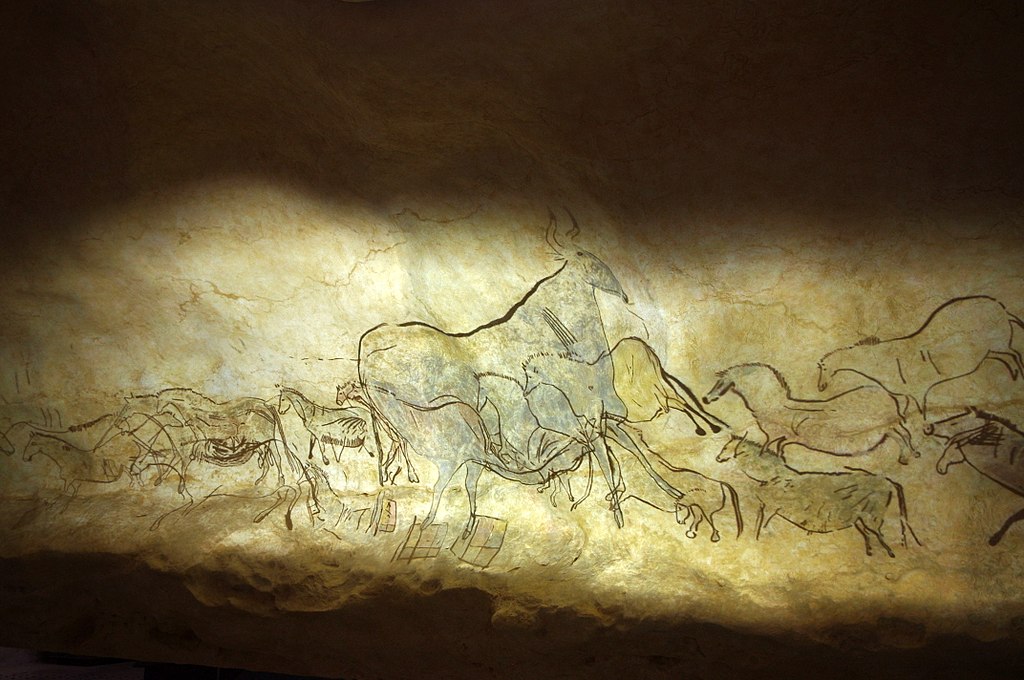
The French archaeologist and Catholic Priest, Abbé Breuil, referred to Lascaux as ‘the Sistine chapel of prehistory’. The caves of the Franco-Cantabrian area have long been seen as sacred sites that were central to the religion of the Magdalenian people and their predecessors who made earlier paintings.
According to Bruno David these caves were used for ritual performances and rites of passage. He describes Cougnac: ‘Human engagements in the deep, dark space of the cave are intriguing: here are found animals that take shape along rock walls in a combination of natural concretions and painted red or black lines. At the entrance of chambers, palms of hands were dipped in red ochre and fingers smeared with black pigment, and then pressed against rock walls to leave distinctive marks. Animals were neatly arranged along rock walls, their viewing intentionally and carefully choreographed. Depictions were made of repeatedly speared humans or human-like creatures, and rocky concretions were tapped to make a ringing sound, it appears. This is the stuff of rituals… It formed part of an inner sanctum of knowledge, of an inner life, one that needed to be performed.’
David speaks also of ‘orchestrated performance’ at Tuc d’Audoubert where, adjacent to the Gallery of the Clay Bison, in the Chamber of Heels are found ‘183 impressions of the balls of human heels and myriad shallow impressions of fingertips’ ‘which show that those who walked this space did so on the heels of their feet, carefully avoiding placing the flat of their feet on the ground… The size of the heel imprints… indicates they were not made by adults but by youths probably adolescents.’
‘What we see in the art and imprints in the clay are the products of choreographed actions involving youths walking on the balls of their feet and pressing fingertips into clay along long and sometimes narrow tunnels underground, leading to sculpted clay bison that were never meant to be seen by the broader populace of the outside world. These were rituals along passageways that were, we think, literally rites of passage for youths approaching adulthood. The art was not just to be seen, but to be performed.’
David Williams argues that Lascaux holds ‘the key to major mysteries’ as a place for ‘vision quests’ leading to shamanic initiation. He says ‘different rituals were performed in contrasting areas’. In the ‘Hall of the Bulls’ the only area that can accommodate a large number of people, ‘dancing, music, and chanting’ may have taken place. He describes this area as a ‘vestibule’. In the Axial Gallery the Roaring Bull might have evoked auditory hallucinations and the Falling Horse sensations of falling and descent.
The dense engravings in the Apse featuring ‘crowded images of horses, bison, aurochs, ibexes, deer, and a possible wolf’ etched on top of one another might have provided a glimpse of the spirit world. Having passed a pair of ‘Cerberus-like paired bison’ and crawled down a tunnel to the Diverticule of the Felines to eight formidable cave-lions, ‘a horse seen face-on’, and ‘bison with a raised tail’, ‘questers came face to face with visions of power and made personal contact with the spirit realm.’
The Shaft, and end area, which falls away into a deep well is where offerings with ‘broken signs’ were left. Here is the famous painting of a bison wounded by a spear charging down a bird-headed man with a bird-staff. Williams says here ‘we have transformation by death: the ‘death’ of the man paralleling the ‘death’ of the eviscerated bison. As both ‘die’, the man fuses with one of his spirit helpers, a bird’. He interprets this as the ‘zoomorphic transformation… becoming a shaman necessitated.’
It seems possible that Creswell Crags was also seen as a prehistoric ‘chapel’ where people communed with spirit animals and sought and then engraved visions of the spirit world. Perhaps the witch’s cave at Pennant Gofid was also used for rituals of descent presided over by Orddu and her kin that led to initiates, like them, becoming awenyddion, ‘people inspired’, the Brythonic term for ‘shamans’.
V. Gough’s Cave – Skull Caps and Cannibalism
A discussion of the cave-based rituals of the people living in Britain during the Magdalenian period would not be complete without mention of the skull caps of Gough’s Cave, Somerset, and ritual cannibalism.
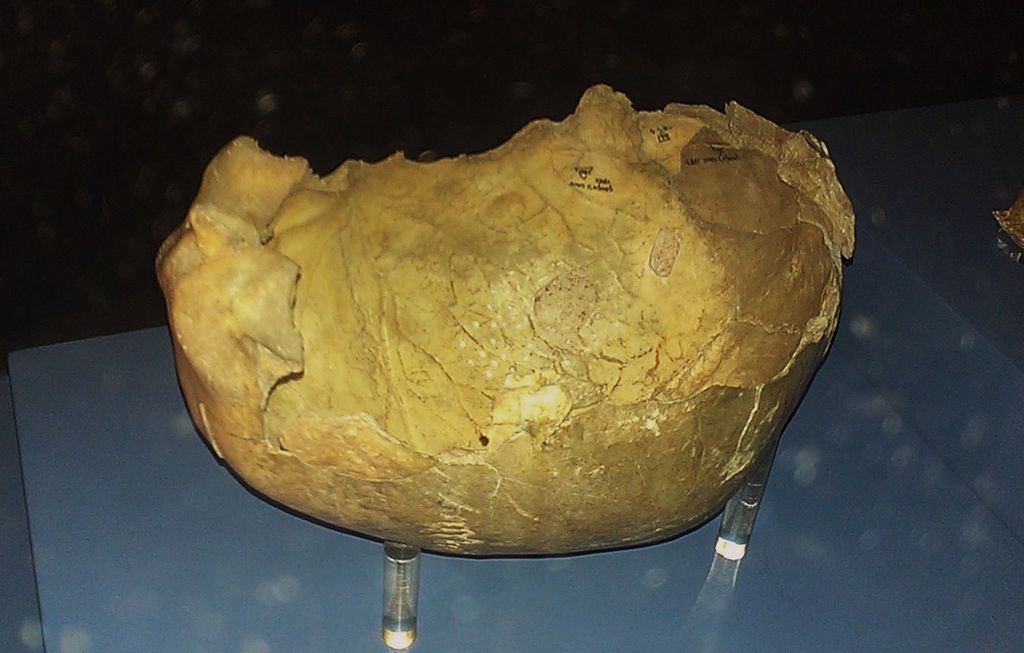
There were discovered the skeletal remains of ‘a Minimum Number of six individuals: a child (aged 3.2 years), a young adolescent (approximately 12–14 years old), an older adolescent (approximately 14–16 years old), at least two adults and an older adult’ dating to 14,700 BP. Results of the research by Silvia Bello et al. ‘suggest the processing of cadavers for the consumption of body tissues (bone marrow), accompanied by meticulous shaping of cranial vaults. The distribution of cut-marks and percussion features indicates that the skulls were scrupulously ‘cleaned’ of any soft tissues, and subsequently modified by controlled removal of the facial region and breakage of the cranial base along a sub-horizontal plane. The vaults were also ‘retouched’, possibly to make the broken edges more regular. This manipulation suggests the shaping of skulls to produce skull-cups.’
These skull caps resemble those from other Magdalenian sites such as La Placard Cave and Isturitz in France, and from Herxhein, Germany, in the Neolithic period, and El Mirador, Spain, in the Bronze Age.
In Gough’s Cave was also found a human radius engraved with a zig-zag pattern of ‘87 incisions: 33 single-stroke incisions, 32 to-and-fro sawing incisions’, also bearing evidence of cannibalism. What was particularly interesting is that ‘the decorative pattern seems to have been applied in the middle of this process: the break where the bone was snapped to extract marrow cuts across the zig-zag. It seems that the arm’s flesh had been removed, but then the butchery was paused while someone engraved the bone, and only then was it broken to get at its contents.’
This shares similarities with an ulnus from Kent’s Cavern with fine cut marks and percussion marks dating to 8185 BP. The zig-zag also resembles the pattering on the Kendrick’s Cave decorated horse skull.
It is clear that complex rituals and beliefs surrounded these acts of cannibalism and the creating of skull-caps and engraving of bones. Were these acts performed to honour the ancestors? Was eating one’s kindred an act of holy communion through which their life’s essence passed from the dead to the living?
What did the marks on the bones symbolise? Days? Acts? The release of the spirit from the bones? Was the creation of skull caps linked to belief that the soul presided in the head and with its release? What did wearing or drinking from the skull caps mean? Answers to these questions can only be guessed at.
It is worth nothing that, in Culhwch ac Olwen, Gwyn is associated with ritual cannibalism. He feeds the heart of Nwython, the ruler of Strathclyde to his son, Cyledyr, who becomes wyllt ‘mad’ or ‘wild’, but later becomes a rider on the hunt for Twrch Trwyth – a veiled version of the Wild Hunt. Here the consumption of the flesh of an ancestor is initiatory, leading first to madness, then to prowess.
Orddu is associated with Gwyn and witchcraft and her abode is described as hellish. One wonders whether the practice of cannibalism lived on and was practised by her and her ancestors in the Old North.
It certainly continued into the Iron Age in other areas of Britain. In the Bone Cave of Alveston, in Gloucestershire, the remains of seven individuals were found including an individual murdered by a pole-axe. The femur of one these adults ‘had been split longitudinally and the bone marrow scraped out.’
The skeletons were deposited with dog bones, cattle bones, a possible bear vertebra, and wooden twigs.’ Mark Horton says: ‘This was a highly structured deposit that can only have got there as a result of some form of ritual activity. This region was an important centre for underworld cults during the later Iron Age, some of which survived into the Roman period; in particular the Celtic Hound God, Cunomaglus, was represented as a dog guarding the underworld in a local temple sculpture.’
VI. Further Back in Time and Back to Now
The footsteps of Snow and her ancestors might be followed back from Britain to the continent and back again through earlier glacials and interglacials. The famous ‘Paviland Red Lady’, actually a male hunter found in Goat’s Hole Cave, Paviland, on the Gower Peninsula in Wales, his bones stained with red ochre, with mammoth ivory and nerite shells, dates to 33,000 BP. This is our earliest evidence for a ritual burial and thus for beliefs linking caves and the Otherworld.
The first record of Homo sapiens in Britain comes from a maxilla fragment from Kent’s Cavern, Devon, and is dated to between 34,700 and 36,400 BP and an Aurignacian burin busqué from Ffeunon Beuno, Wales, dated to 36,000 BP may have belonged to an early ancestor.
Homo sapiens arrived in Europe in 43,000 years ago having travelled through Israel after dispersing from Africa 120,000 years ago where the earliest evidence, from Omo I, dates to 195,000 years ago.
The stories of Snow and her predecessors remind us of our shared European heritage and its origins in Africa when, as Brexit approaches, Britain is cutting itself off from the EU and limiting foreign aid.
Whilst the cave art of the Magdalenians appears to have been born of a shared culture and religion, much later on, due to Christianity, Orddu, the last carrier of these traditions, appears alone in her cave. Isolated like those of us drawn to the Brythonic tradition today and those isolating due to COVID-19.
Dare we hope, instead of fearing death by Arthur’s knife, for a happier time when we can meet safely in caves and other sacred places to celebrate our bond with the Otherworld and its gods and spirits?
‘There is no document of civilization which is not at the same time a document of barbarism.’ Walter Benjamin
Orddu has been a powerful presence in my life since I started investigating the story of her death. In the medieval Welsh tale, Culhwch and Olwen (1070AD), she meets a gruesome end. She is cut in twain by Arthur’s knife, then her blood is drained and bottled to dress the beard of the giant, Ysbaddaden Bencawr.
The murder of Orddu is the penultimate act in a trail of bloody atrocities committed by Arthur and his men so Culhwch can win Olwen. Ancient animals are hunted down, giants butchered, otherworldly treasures stolen, numerous historical and mythical figures subordinated and incorporated into Arthur’s court. Finally, Ysbaddaden is barbered and beheaded.
The civilising rule of Arthur as a champion of Christianity unifying Britain is asserted by his barbaric assault on this land’s divinities and those who interact with them. His reign as a national hero is based on his wiping out not only of the lives, but the stories, of a myriad Others cast into an abyss of ignominy from which few of us hear their screams.
Orddu’s death cry has resounded in my ears for several years now. Sadly she does not appear in any other sources. Nothing is known about her outside Culhwch and Olwen, where she takes to the stage for a brief and brutal battle before her life is snuffed from the page and from history. However, clues to her significance can be gleaned by reading the surface text otherwise, from the perspective of Annwn, ‘the deep’, the ancient British Otherworld.
Orddu is introduced as ‘the Very Black Witch, daughter of the Very White Witch’ (Orddu means ‘Very Black’ and Orwen ‘Very White’). This is suggestive of a matrilineal tradition of witchcraft passed on from mother to daughter through the generations. Whether Orddu and Orwen are titles, or refer to the witches’ skin colour, hair colour, or the type of magic they practiced remains unclear. Still, these women can be pictured singing spells, passing on plant knowledge, caring less for labels than the flow of magic that runs in their blood and sings in their souls.
When Arthur embarks on his quest to bottle Orddu’s blood he sets out for the North. Northern Britain, with its rough terrain and cold weather, where the influence of Rome struggled harder to maintain its hold, is traditionally viewed as hostile and dangerous in medieval Welsh literature.
Orddu is located in ‘Pennant Gofid in the uplands of hell’. Pennant Gofid means ‘Valley of Grief’. This may be viewed simultaneously as a place where people come to grief and a place where they come to grieve. ‘Hell’ is translated from ‘Uffern’, ‘Inferno’, a word used synonymously with ‘Annwn’. The associations with mourning and the Otherworld suggest Pennant Gofid was a valley of the dead and that Orddu was its custodian. As such it would have been viewed as profoundly sacred by local ‘pagans’, but as hellish by Christian intruders with no understanding of their beliefs. I have not managed to locate Pennant Gofid within the physical landscape, but when I journey there in spirit it is steep and stony. A white river with foaming rapids roars through it. Through its ever-present mists hardy stumpy trees can be glimpsed, cairns, dolmens and, occasionally, mountain ghosts.
Orddu is found in a ‘hag’s cave’. This signifies her connection with ancient ancestral traditions which have no place in the civilised world of Arthur. Caves are places of access to Annwn and its mysteries. The bones of Orddu’s ancestors may have been buried in the cave’s recesses. In my journeywork it is half way up the valley; a precarious scramble. Nearby a spring emerges from the rock. There I received the gnosis it is the place Orddu and her kindred grieved for their predecessors and the dead who are buried in the valley. Their salt tears are the source of the white waters of the River of Grief. There I mourned Orddu’s death.
To find Orddu’s cave, Arthur is dependent on the guidance of the pre-Christian deities Gwyn ap Nudd (‘White son of Mist’) and Gwythyr ap Greidol (‘Victor son of Scorcher’). Gwyn is a god of Annwn and ruler of its spirits who are referred to as ‘demons’ in Culhwch and Olwen. In The Black Book of Carmarthen (1350AD) he appears as a gatherer of the souls of the dead.
Gwyn and Gwythyr are deadly rivals for the love of a maiden called Creiddylad. In an earlier episode, Arthur put an end to their conflict by placing a command on them to fight for Creiddylad every May Day until Judgement Day. Their appearance together and as advisors to Arthur seems contrived as a way of demonstrating Arthur’s power.
Read beneath the surface and we see that Gwyn’s presence in Orddu’s story has deeper roots. If Orddu is located on the edge of Annwn, then Gwyn is the deity who must be called upon to part the mists to find her. Orddu’s witchcraft may be rooted in her relationship with Gwyn as a god of Annwn and with the spirits and the dead who he presides over.
Evidence of groups working magic with the deities of the Otherworld has been found in Gaul. The Tablet of Larzac (90AD), from a seeress’s grave, refers to a coven of witches practicing andernados brictom ‘underworld-group magic’. The Tablet of Chamalieres (50AD) evidences a group of men calling on ‘Andedion’ ‘Underworld God(s)’ for aid in battle. ‘Annwn’ and ‘Andedion’ share the same stem. The poet Dafydd ap Gwilym refers to ‘witches of Annwn’ suggesting similar groups existed in Britain.
We also have records of a native tradition of prophesy and spirit-work. In his Description of Wales (1194AD), Giraldus Cambrensis refers to ‘Awenyddion’, ‘people inspired’ who are possessed by spirits and perform oracular trance when consulted on ‘doubtful events’. Orddu can be pictured prophesying with the spirits of Annwn and invoking their aid. Arthur’s subordination of Gwyn represents the negation of her source of magic.
When Arthur and his men approach Orddu’s cave she shows no sign of fear. Arthur hesitates until Gwyn and Gwythyr advise him to send in two of his servants, Hygwydd and Cacamwri. Orddu grabs Hygwydd by the hair and wrestles him to the ground, disarms and thrashes them both and beats them out ‘shrieking and shouting’. When Arthur tries to rush the cave, Gwyn and Gwythyr say, “It is not proper and we do not want to see you wrestling with a hag.” They tell Arthur to send another pair of servants in. We do not hear what Orddu does to Hir Amren and Hir Eiddil (Hir means ‘long’ or ‘tall’ – these are formidable men), only that their fate is ‘far worse’ and the four are so severely incapacitated they cannot escape without being put onto Llamrei, Arthur’s gigantic mare. After this, Arthur loses his temper and strikes Orddu dead.
It is uncertain whether Gwyn and Gwythyr are being presented as stupid or as tricking Arthur to defend Orddu. Whatever the case, in spite of being alone in her cave and outnumbered, Orddu displays considerable skill in hand-to-hand combat and puts up a courageous fight.
Comparisons may be drawn with the witches of Caer Lowy who teach Peredur how to ride a horse and handle weapons. Afterward, Peredur turns on them and slaughters them with Arthur’s aid. Conspicuously he kills one of the witches by striking her on the helmet so her head is split in two. As she dies she tells Peredur he was destined to kill her. It may be conjectured that Orddu belonged to a similar lineage of women who were not only witches but also trained the warriors of the North.
Thus it makes sense that for Arthur’s tasks to be completed this powerful woman must be removed from her position at Pennant Gofid where she teaches the arts of warriorship and utters prophecies from the mouth of Annwn. Her death signals the end of a tradition that may be as old as the ancestral remains in the cave where she abides.
Long has she lain there, her skull split in twain, her bones in two weary piles. Long has her story been forgotten, until now, as the rule of Arthur and the hegemonic brand of Christianity that gave us the Crusades, witch hunts and the British Empire united under ‘One King, One God, One Law’ begins to crumble.
The blood of witches does not stay bottled forever even in the bottles of a dwarf. The glass walls that contain magical women are shattering. Orddu’s call is to win back our powers of prophecy and fighting strength, to rebuild our relationships with Annwn and its gods and spirits. To reach into our caves of potential and fulfil our vocations with courage, remembering how her life was cut short.
*This article was solicited by Kate Large and was first published in Pagan Dawn, No 202, Spring 2017
We are the children you never knew you would have.
We do not see you but we keep on building
the future you made your crossing for.
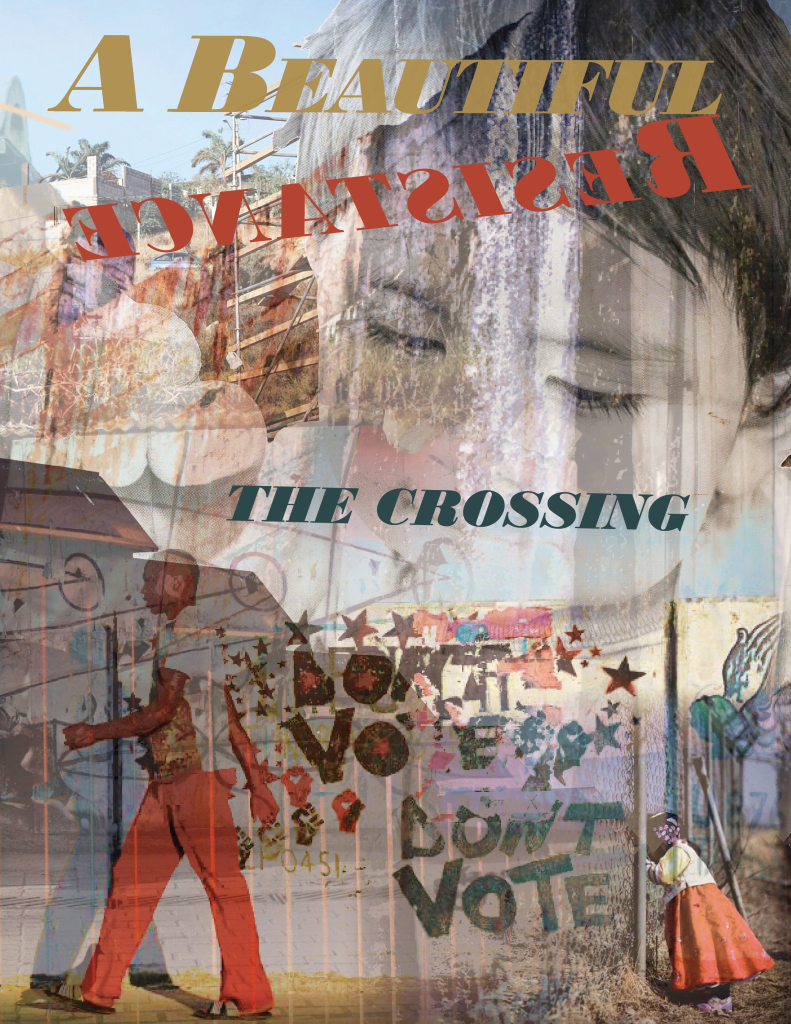
Gods&Radicals is pleased to announce that the fourth issue of our journal, A Beautiful Resistance, will be released into the world 15 November.
Edited by Lorna Smithers and Lia Hunter, foreworded by Peter Dybing, and yet again featuring the brilliant cover artistry of Li Pallas, A Beautiful Resistance: The Crossing features literary and artistic works from Europe, Africa, Asia, and North America, by:
Nina George, Nimue Brown, S. A. O’Hungerdell, Angharad Lois, Nicole Heneveld, Bryan Hewitt, Rex Butters, Rhyd Wildermuth, Lorna Smithers, Dennis Mombauer, Dr. Bones, Boham, Ingi House, Jason Derr, Aicila Lewis, Joe DiCicco, Tahni J. Nikitins, Shane Burley, Innocent Chizaram Ilo, Michael Browne, Nebulosus Severine, Finnchuill, Rune Kjær Rasmussen, Sean Donahue, Sonali Roy, Christine…
I journeyed for weeks
through mist and hunger
to find the split rack of her bones,
bones stripped, flesh burnt
and boiled in the cauldron,
blood drained and bottled in two jars.
I plundered the ashes where the cauldron stood,
sniffed for blood where the jars were filled.
Played maracas with her bones,
made intricate arrangements,
chanted and sung
but could not raise her ghost.
“She is amongst the spirits of Annwn now,”
spoke the god I called instead.
“Lay her bones to rest. In the fire of poetry
console her burning spirit.”
***
I’m laying her bones to rest. The Last Witch of Pennant Gofid. Her name was Orddu. It meant ‘the Very Black Witch’. Whether she had black skin, black hair or used black magic seem irrelevant now. All that is left is her scapula split in twain, her shattered pelvis, two arms, two legs, her broken skull. Jagged shadows in two orbits retrieved from either side of the cavern.
Her bones are still. I am angry and restless. I cannot abide the story of her death. How Arthur came as he always did into every story every world every myth with his hatred of witches: sword slung over his shoulder like a sundered lightning bolt, a living knife in his hilt, a shield on his thigh adorned with an image of the Virgin Mary, aboard a huge mare.
Caw of Prydyn behind him a giant with a curling beard and the damned jars like heinous milk bottles on each side of his saddle; half a man in size, well-stoppered, thick-glassed, unbreakable. Then the retinue with spear and shield, tawdry banners and flags.
Following to stragglers’ jeers Hygwydd the servant staggering bow-legged bent-backed beneath the gigantic cauldron that brewed food for the brave. Hygwydd’s brother Cacamwri with Hir Amren and Hir Eiddil dragging ponies piled with saddle-bags of food and weapons.
At Arthur’s right Gwythyr ap Greidol, a gristled war-lord with fire and a hundred bloody campaigns in his eyes. A blazing passion. And to Arthur’s left Gwyn ap Nudd, the guide who tricked and dizzied their quest cloaked in mist summoning his hounds to eat the fallen from the mountainside.
Of the host who went to Pennant Gofid only a fragment reached the cave where Orddu plaited her black hair, blackened her skin with war-paint, fastened down her helmet. Sharpened her sword then set it aside like an afterthought. Cracked her knuckles and flexed her talons.
When Arthur blanched a voice mocked from the mist “if you’re scared, witch-killer, why not send your servants in instead?”
Arthur pointed Hygwydd and Cacamwri toward Orddu beckoning. She grabbed Hygwydd by the hair, dragged him to the floor, threw off Cacamwri’s assault, arrested their weapons, beat them out bloody and bruised. Arthur sent Hir Amren and Hir Eiddil in to be crushed in her wrestling hold, torn by her talons, beaten out with broken bones. Arthur fumbled for his knife.
“Why are you afraid, Christian warlord?” Orddu asked. “Far from home. Far from heaven. Do you remember I trained your northern warriors? Without my wisdom, gifts from our gods, they will be nothing but bickering chieftains with a lust for gold and immortality that will bring Prydain’s downfall?”
Overcome by fury Arthur threw his knife in a wrathful arc that sliced down through Orddu’s helmet through her ribs. Dropped to the floor as she fell aside in two halves screaming “Prydain will fall!” “Prydain will fall!” “Prydain will fall!” as the mist writhed and the hounds of Annwn howled.
When her twitching halves lay still Caw filled the bottles with her blood still warm and jammed down the corks. They stripped her of armour and flesh. Boiled a merry meal. Stole her sword. Left with a cauldron filled with northern treasure whilst her spirit watched aghast in the misted arms of Gwyn ap Nudd.
***
I cannot abide the story of Orddu’s death. How Arthur came as he always came into every story every world every myth with his hatred of witches with his living knife to put an end to wild recalcitrant women. Now I’ve laid it to rest I’ll share another story instead.
I shall tell what this fatal blow and the blows on the Witches of Caerloyw cost Prydain (“Prydain will fall!” “Prydain will fall!” “Prydain will fall!”). Not only the fall of the Old North and the Men of the North. The rise and fall of the British Empire (it had to needed to fall). But the splitting and bottling of magical women for over a thousand years.
Draining of our blood. Boiling of our flesh. Testing if we float. Gave us The King James Bible and The Malleus Maleficarum. Took away our prophecies and visions, gods and goddesses, our fighting strength. Gave us virginity and chastity belts. Cut us off from plants and spirits, rocks and rain, rivers and mist, otherworlds.
Over a thousand years on we are but shadows of ourselves. Mirrored pouts tottering on high heels. Watching ourselves on selfie-sticks. Worshipping televisions. Still split in half, bottled, boiling, floating, banging to get out.
Not long ago I split the jars. Escaped to another place. Wandered my estate kissing Himalayan Balsam. Watching Ragwort sway with wasps. Mugwort flowering like coral. But this was not enough. Gods and fairies walked to the world of the dead and called me after them. Since then I have seen the dead walk in the bright eye of the sun.
I could not go back to the jars. To glass windows and tower blocks. To numbers on computer screens. The pencil skirts of offices. To fracking rigs threatening to break both worlds.
So I came to Pennant Gofid searching for answers and companionship on my lonely path. Found only Orddu’s bones and the god who took her spirit. Yet found a link in spirit with a companion and a god in the magical tradition of the Old North.
***
So I constructed a fire of poetry and spoke my words of consolation:
“Orddu Last Witch of Pennant Gofid
know you are not the last
to walk these paths
to caves and mountain ranges,
through otherworlds and distant ages,
seeking visions of the present
the future and past.
The rule of Arthur has fallen.
Though Prydain still falls
we have broken the jars.
Our blood is no longer contained
by the tyrants of Arthur’s court.
We are winning back our flesh.
Our magic. Our strength.
Remembering our gods.
Know your life will be remembered
where there are prophecies and hailstorms,
rain and rivers, caves and heresy,
in the mists of Gwyn ap Nudd
where your spirit burns
forevermore.”
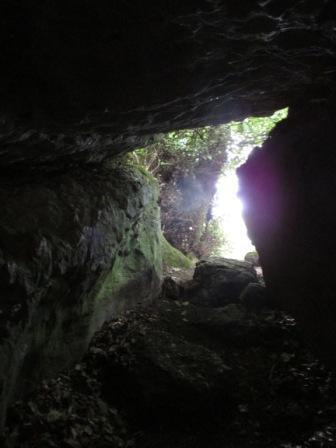
Then I took her bones in my rucksack and crawled through to a dark chamber. On a little shelf beside Orwen ‘the Very White Witch’ I laid Orddu’s bones to rest.












 The Sanctuary of Vindos