Trampled like Cut Reeds to the Ground

‘Gwyn ap Nudd, helper of hosts,
Armies fall before the hooves of your horse
As swiftly as cut reeds to the ground.’
~ ‘The Conversation of Gwyn ap Nudd and Gwyddno Garanhir’

So far it’s been a grim month. Grey skies. Heavy rain. Storms. 

The scythe of the Reaper has been swinging, chopping, cutting. The cut reeds have been falling swiftly. The huge round hooves of His horse, of the horses of Annwn have been trampling them into the rain-soaked ground.

Sister Patience, chop, cut, gone. The Monastery of Annwn, chop, cut, gone. My dream of living the rest of my life as a nun of Annwn, chop, cut, gone

It’s happened so suddenly. Yesterday I spent a moment, like waking in the morning after a night I’d self-harmed, in shock, thinking what have I done? 

Yet this was not the work of my blade but the Reaper’s blade…

Gwyn was there to reassure me, His hand on my shoulder (slightly bony) letting me know that it was for the best, that dying reeds have got to fall. 

I could see the monastery was dying but Sister Patience felt alive to me.

“Sometimes you don’t know you’re dying until it’s too late.” 

I trust His wisdom in taking a part of me – a sacrifice to save the whole. 

What now? I stare down at crushed reeds in the muddy churned-up ground, attempting to scry a message from the mess of my life – the mash of criss-crossed stalks and the rain-filled half moons of the hoofprints spilling into pools.

There’s always been an obvious road that I’ve never managed to take. Write that much-needed book on Brythonic polytheism or Brythonic shamanism. Write some how-tos on how to meet the Brythonic Gods. It’s always been blocked. That dark hooded figure with His scythe in the way.

“That is not your work,” he slides a whetstone along the curved blade. “I want you to write the words that cut to the truth, that hurt, that have edge.”

I see I’ll always be an edge person. Not salesy enough to sell. Not humble or practial enough to crawl away from the blogosphere and get a proper job. Suburban in the sense of lower down rather than rows of identical houses with cut lawns (although I live in one). Far too English to be properly Brythonic.

I’ll never be able to say, “Look at my bright shiny life you can have this too!”

Yet, in giving voice to uncomfortable edges, to exploring the messier, lesser-spoken side of relationship with Gods and spirits I feel I have a place as a writer and guide.

A place of cut and trampled reeds, muddy waters, dark hooves, forever shadowed by the Reaper’s hooded form and His skeletal touch.

Photograph from when I was cutting reeds during a fen cut (albeit with a brushcutter rather than a scythe) when I worked for the Lancashire Wildlife Trust on the Wigan Flashes.

Notes on Being a Bad Nun

I.
I didn’t make a very good nun. The Dark Magician mocked me when I told him I was going to be a holy woman. I think he knew I did it to escape my name. 

“Loo-nar,” they called me at school. Somehow they knew I’d be a loner. Loony. Pulled and pushed, against my will, by the tides of the moon.

How I wanted to get rid of that name. How I wanted to get rid of my memories: of how it was spoken with mockery, of how it was used by my parents and teachers to order me about as if they were magicians summoning and ordering a spirit, of how lovers I couldn’t satisfy spoke it.

I think I preferred ‘pig’ even in the mouths of the bullies and those who spoke it more jokingly because I snaffled up the leftovers using a hatred of food waste as an excuse because I couldn’t control my hunger when I was drunk.

And ‘Smithers’ was far too English for someone who worshipped a Welsh God.

To escape her lowliness, upon the calling of the Gods, Lorna Smithers tried to make a name for herself; standing on a stage in the centre of the Flag Market in Preston, in cafés, in pubs; posting on social media. 

It was all too much – she vanished into the land and reappeared as Sister Patience.

II.
Sister Patience sprung up like a mushroom from an invisible mycelial network. Nuns of Annwn and Fruits of Annwn are similar things. They appear with birch trees – a pioneer species. Neither lasts for long. But they both prepare the way for future dreams, strange and hallucinatory, then they disappear.

III.
What can I say of monastic life? I might have learnt to play the Heartbeat of Annwn but did I live truly live in alignment with it? Was I truly alive? 

Or did I just obsess about how well I did with giving up things?

I battled with food, alcohol, exercise, emails, blogging, books, all my addictions…

And some of them I conquered and some of those things I could not give up. 

Exercise – the gym. The satisfaction of shifting more than my body weight on the leg press, getting one more rep in on my barbell bench press without dropping the bar on myself, removing another 2.3kg towards an unassisted pull-up. 

Food – Gods damnit, I love food. I managed to eliminate all added sugar. I weaned down to oats, fish, meat, cheese, eggs, multicoloured fruit and veg – to what my body, my gut, spoke it truly needed. But could I fast for a day or even or a half day? No.

I came to realise that, as an active person, fasting is not my ascesis. I was not destined, like the saints, the boddhisatvas, the gurus, to be like a bee or a hummingbird, living lightly, drifting that way into inebriation.

I had too much guilt to carry. Like my running shoes. Deceivingly light. My final confession. Brooks Ghosts, women’s size 7.5, every 500 miles. Now I’m not running so much, I’ve cut down, but I still get my steps in on the treadmill, the elliptical, the stairstepper…

“Ghosts on your feet, my beloved,” the King of Annwn speaks with irony, hinting at the petroleum-based materials taken from the Underworld.

Yet, the original meaning of ascesis related to athleticism. Maybe I can be redeemed?

IV.
And what of those other athleticisms of monks and nuns for which they are revered? Of prayer and meditation? In my experiments, did I fail or succeed?

Unfortunately, there are few words to describe the silence that one enters into in deep prayer or deep meditation, but there were times I got there.

Instead, I might tell you of a rather guilty and hubristic dream in which Sister Patience and Saint Theresa of Ávila were both the recipients of offerings beside a pool in a woodland grove. Afterwards, they ran ecstatically, barefoot, in their habits, into the woodland, and I never saw them again. 

Once, in the silences between chanting Om, I gained a sense of Absolute Consciousness. Was this Brahman, Bhairava, Shiva? Was Gwyn the equivalent in our Brythonic tradition? I have no answers. 

The Christian tradition of kenosis, ‘self-emptying’, in order to be filled with the divine, relates to the shamanic concept of the ‘hollow bone’, to being an empty cauldron or vessel in the Brythonic tradition and still intrigues me. 

I gained access to the witness part of oneself, which features in Eastern and Western traditions and is summarised in the Camoldolese rule: ‘Sit in your cell as in paradise. Put the whole world behind you and forget it. Watch your thoughts like a good fisherman watching for fish.’ In my personal mythos, this relates to Gwyn’s father, Nodens / Nudd ‘the Fisher King,’ to the patient Heron.

V.
I wasn’t a very good nun. I had no prospects of being a saint. Yet the insights I gained will be carried with me into being a good devotee of Vindos / Gwyn. Into being a good shamanic practitioner. I’m hoping that, in the future, the impulse to be holy will be tempered by the impulse to be human, and this will help me to serve my Gods and others better through my writing and shamanic work.

The Death of Sister Patience

The wind is blowing. The Reaper is busy with His scythe. After my insights about being more of a hermit than a nun a whisper on the wind, ‘Sister Patience must die.’ Three years ago I took temporary vows by this name as a nun of Annwn and, as the time comes to renew them approaches, I realise I will not be taking them again this year. Instead I must surrender this name, this identity, disrobing over the next few weeks, then giving it entirely back to Gwyn, from whom it came, on His feast day on September the 29th. I have learned many lessons and received many blessings from this name. Hopefully some of the virtues of Sister Patience will live on as I return to my birth name and continue to serve Gwyn as a hermit and shamanic practitioner.

The Truth is I’m a Hermit Nun

I’ve recently spent a week in retreat and a huge insight came up as I was contemplating why I’m struggling to feel I’m of value and to stand in my truth as a nun, not only in polytheist and shamanic groups but in my local community. 

I realised this is firstly because I’m not a cloistered nun and secondly that, although I’ve tried on the role of a lay nun, this doesn’t truly fit either. I’m not naturally a community person. I’m not naturally an active. I’m not smily and sociable. This is not only because I’m autistic and struggle with social anxiety but because my soul has a deep need for solitude and silence – it hurts when that state of being is broken by the social demands for polite conversation and small talk.

One sign that I was forcing myself to do the wrong thing by trying to be a community person was the problems I experienced when I tried running in-person shamanic circles (something I felt I should do but was not told to by my Gods). I had to cancel the first one at Galloways, a lovely venue that was formerly a home for the blind, due to the extremely cold weather in January. After this, the numbers were good for one circle, then dwindled, meaning we couldn’t afford the room. When I tried co-organising another at the Education Hut in Greencroft Valley, where I’ve been conservation volunteering for thirteen years, it was very stressful due to being weather-dependent as based in a woodland and was called off due to a storm. 

Ok, I admitted to the Gods, I’m not meant to be running in-person circles. If I don’t listen next time, you’ll send something worse than cold and ice and a minor storm. In retrospect, I could see they were safeguarding me from the stress of organising people to do things (my main trigger for burnout) along with the discomforts of making small talk at the beginning and end and co-ordinating the group drumming (which really hurt my head!). I realised I’d be able to mask for a certain amount of time, but long term, the attendees would perceive how uncomfortable I am in community.

As I sat with these thoughts, I received the gnosis ‘the truth is I’m a hermit’. It’s risen from within before and has been repeated by the people who really know me. I’ve shrugged it off again and again as I haven’t felt hermit-like enough. I run an online monastery. I’m training to be a shamanic practitioner. I go to the gym. 

When I looked into this, I found there were no rules that prevented a hermit from going to the gym. Most hermits are expected to support themselves by work that fits with leading a prayerful solitary life, and being a shamanic practitioner does. And it is possible for a hermit to found and run a monastery that accommodates an eremitic lifestyle as exemplified by St Romauld and the Camaldolese order.

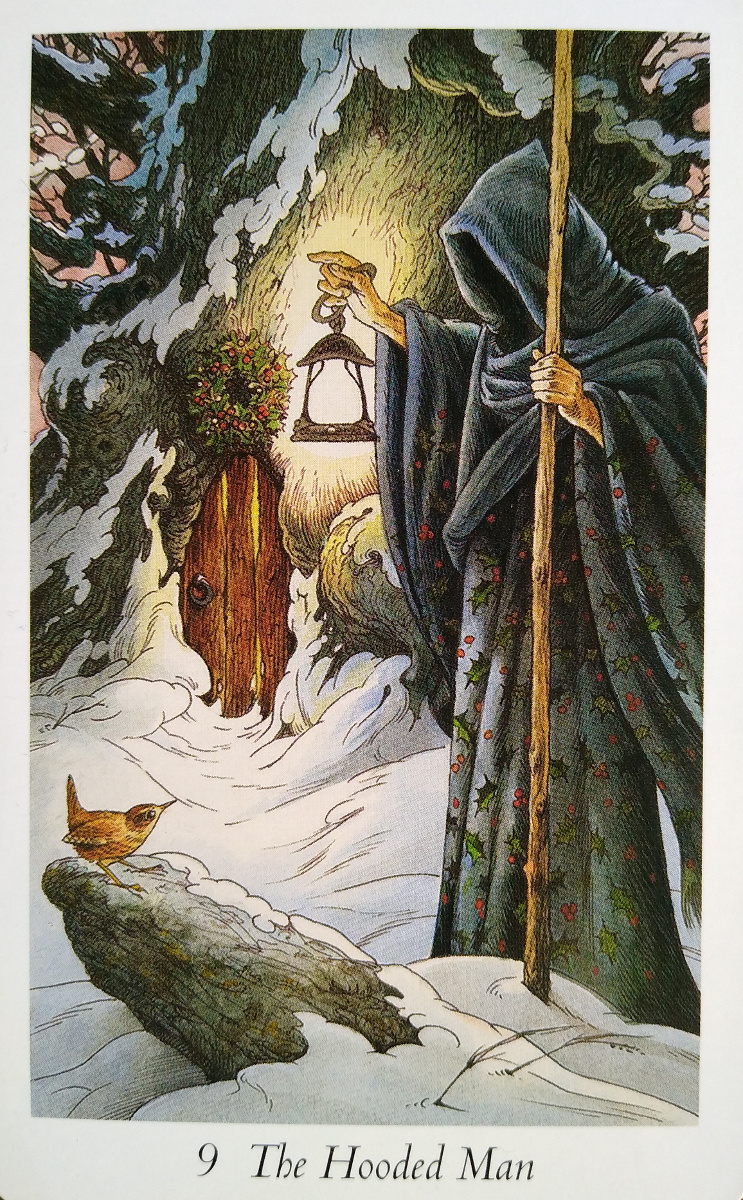
So, I realised, I can be a hermit nun. This thought made me feel incredibly happy and at peace with myself. It made me think of all the times I’ve drawn the Hooded Man in the Wildwood Tarot, ‘my old friend’, and felt the deepest of kinships. 

Finally, I can stand in my truth when people ask me what I do without feeling I need to put on pretences to be a smily sociable lay nun but can explain I am a hermit nun and that silence and solitude are intrinsic to my role.

For the first time in my life, my nature and vocation are at one.

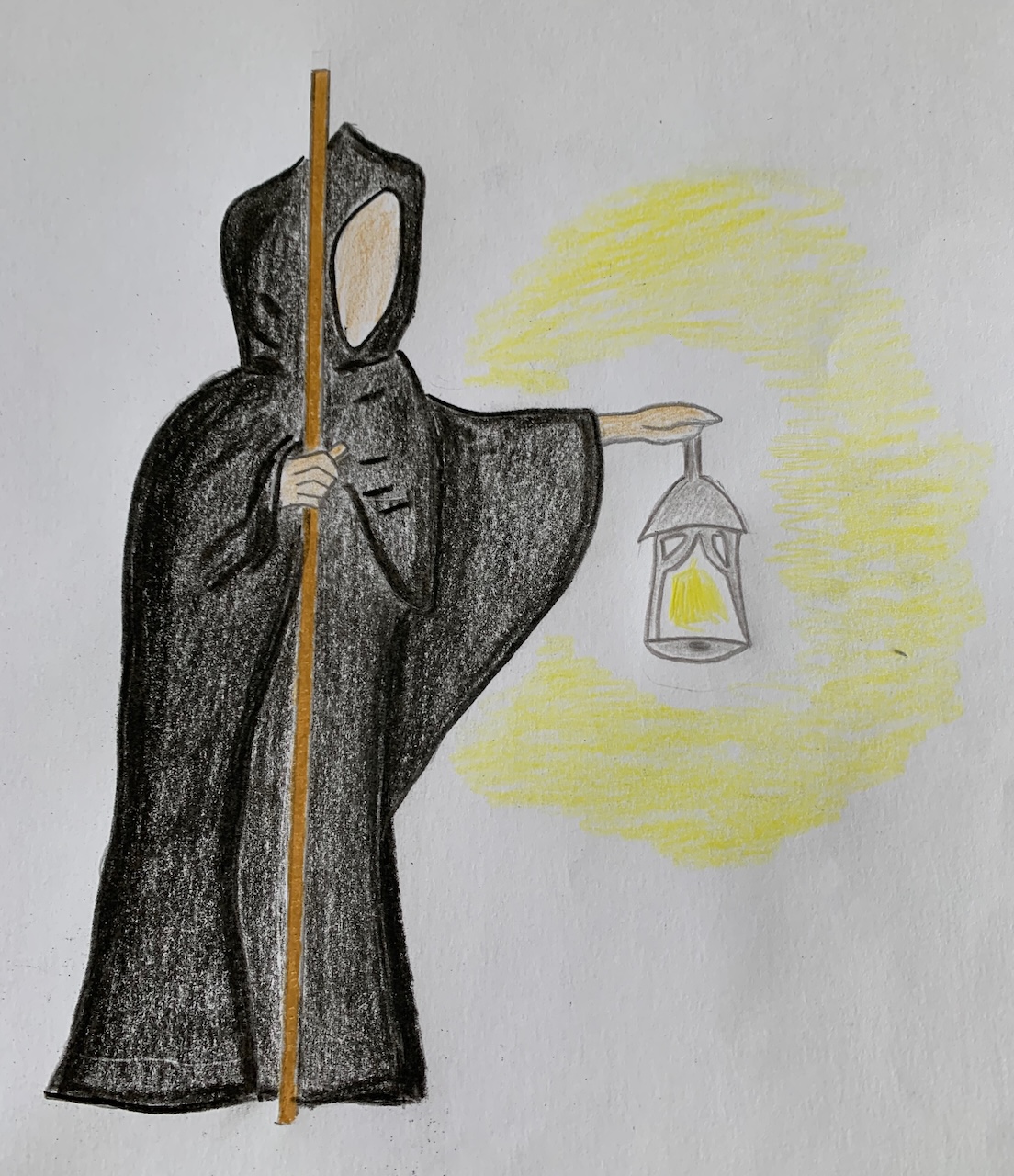
Self portrait as a hermit nun and shamanic guide

I Am Home

‘I have finally arrived. I am home.’ 

This insight came to me after I had been considering taking my monastic vows for the third time this year whilst looking ahead to lifelong vows next year. If I am to pledge to being a nun of Annwn for life what will this life look like?

When I founded the Monastery of Annwn at first I dreamt it might become a physical reality. I drew up an ambitious plan with a central temple, underground shrines, healing huts, an arts centre, circles of huts for the monastic devotees, a garden, compost loos, a burial ground…*. Shortly afterwards I realised living in, let alone running, such a large and busy place would be more Uffern ar y Ddaer ‘Hell on Earth’ than abiding close to Annwn for me.

Still, as I continued to follow as monastic-a-path as I could while living with my parents in suburban Penwortham, I spent a lot of time dreaming of alternatives for a physical monastery. What about a large house with land? What about beginning with a small house with 2 – 3 monastics sharing the space? 

As my practice of being present and aware for Gwyn has progressed and I’ve got a lot better at watching and knowing myself as I undertake my daily activities I’ve come to realise that although I enjoy spending a limited amount of time holding sacred space for others I really appreciate having my morning and evening prayer and meditation times solely with my Gods and spirits.

Also, as I’m autistic and thrive on order and routine, in spite of my meditation practices helping me become more responsive and less reactive, I still get incredibly irritable and resentful if others make a mess or interrupt me. This is with my parents, who are relatively quiet and orderly. I dread to think of what I might be like with others with different personalities. I wouldn’t be prepared to change my diet or routine and thus couldn’t expect others to fit with mine. I’m also aware that my main trigger for autistic burnout and meltdowns is organising other people to do things and even worse doing things by committee.

So, finally, I have come to terms with the fact that I am not cut out to run or even be in a monastery. And this is fine because a few months ago I discovered the Carmelite model for lay monasticism and have since then been exploring how this suits me. Perfectly it turns out. I have a couple of hours in the morning and evening for prayer and meditation and the rest of my day is dedicated to shamanic work, studying, writing, housework, gardening and occasional conservation volunteering. I’m still ‘allowed’ to go to the gym.

I recently put forward the model of the monastery functioning as a support structure enabling us to serve our Gods as lay monastics bringing inspiration and wisdom from Annwn to the world, to the other members. Those who replied agreed it fits with them as most have family and work commitments.

Putting aside my hopes and fears around founding a physical monastery has allowed me to fully come home to my life as a lay nun in present-day Penwortham. It allows me to be happier and more present for Gwyn. And, most importantly, it pleases Gwyn too, because the more present I am in the world, the better I am at presencing Him and being of service to Him and my communities.

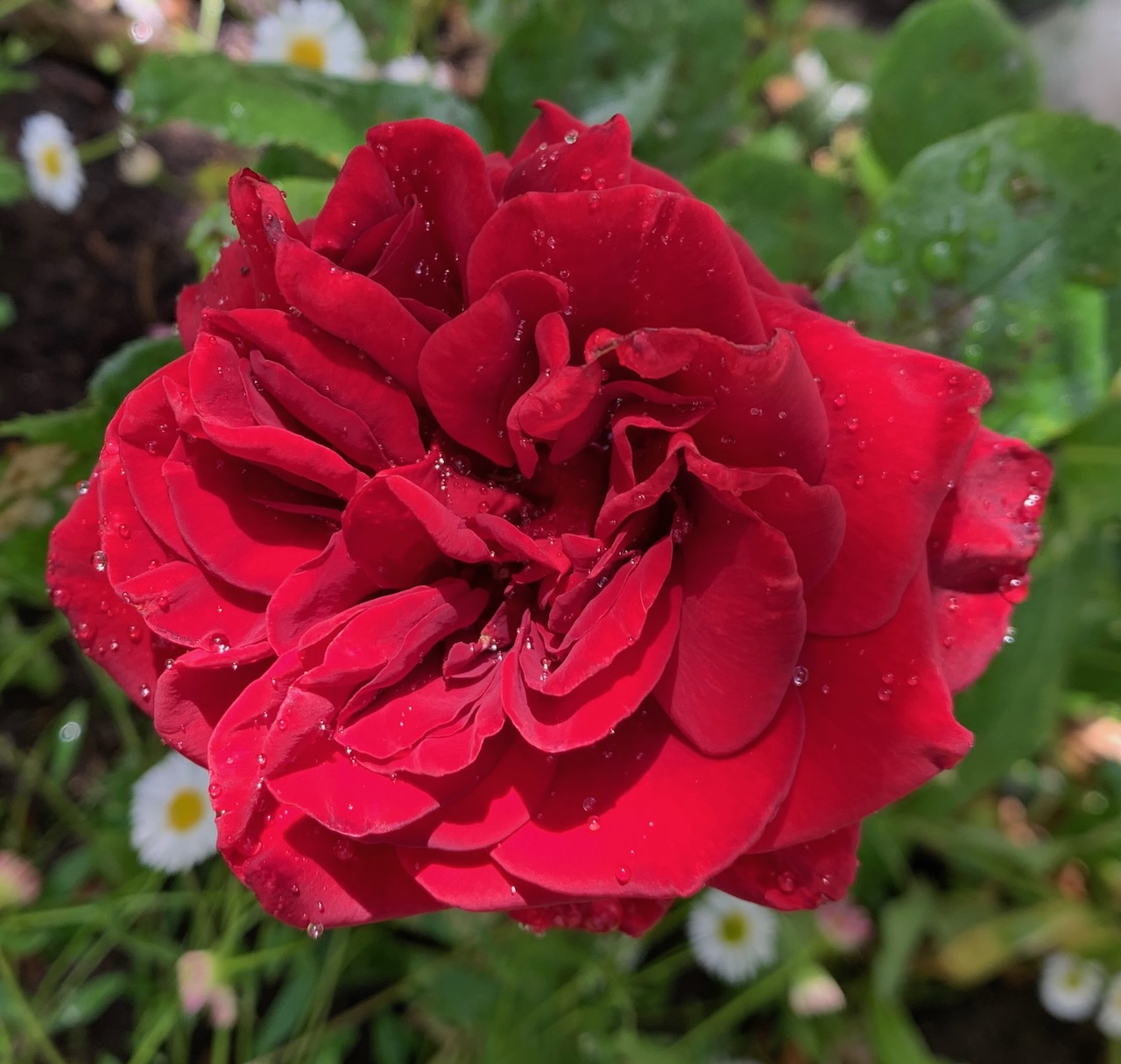
And my recently planted sanctuary rose bush has bloomed which I take to be a good sign.

*https://lornasmithers.wordpress.com/2024/05/17/dreaming-the-monastery-of-annwn/

Awareness – Three Guidelines from Gwyn

Over the past year I have been practicing meditations in the yogic tradition that develop awareness such as antar mouna ‘inner silence’ and ‘spaciousness.’ This has led from the development of my personal practice of being present for my patron, God, Gwyn, to be being aware that I am present. 

Whilst reflecting on this He gave me three guidelines for awareness – 

  1. Be present and aware in both Thisworld and Annwn.
  2. Be aware of Me without and within (I am everywhere).
  3. Spend time in solitude and silence so we can meet in awareness.

Having an awareness practice is very helpful for me as an autistic person who struggles with sensory and emotional overload and tends to disassociate and get lost in thoughts. It helps me stay present and grounded in Thisworld and focused when journeying in the Otherworld.

Being aware of Gwyn in each moment makes awareness a devotional act. Any moment, no matter what’s happening, can be transfigured by the knowledge that He is with me, inspiring me and guiding me. 

The hardest guideline to follow is withdrawing from the busyness of everyday life and quieting my mind enough to find inner silence and meet with Gwyn awareness to awareness but when this happens it works deep magic.

“Meet Me in the place between thoughts,” is a guiding thread running through these guidelines that has helped me, as a nun of Annwn and Bride of Gwyn, to rendezvous with my Beloved in any place and time.

Sister Patience of the Heart of Annwn

Whilst watching the Carmelcast Podcast on Youtube for its discussions on prayer I noticed the hosts introducing themselves as Brother John Mary of Jesus Crucified and Brother Pier Georgio of Christ the King. This alerted me to the fact many monastics not only take a monastic name but add a dedication to an aspect of their Deity or religion. Other examples include Saint Elizabeth of the Trinity and Sister Mary of the Divine Heart.

Thus I meditated on what aspect of Gwyn or my tradition I’d dedicate myself to. I considered firstly our Monastery of Annwn Nine Faces of Gwyn – Gwyn the Warrior, Gwyn the Hunter, Gwyn the Lover, Gwyn the Dreamer, Gwyn the Inspirer, Gwyn the Reaper, Gwyn the Gatherer, Gwyn the Unknown.

Ten years back I might have chosen Gwyn the Inspirer. As a trainee shamanic practitioner practicing soul retrieval I wondered if Gwyn the Gatherer (of souls) might be apt but it didn’t feel right. I felt drawn to Gwyn the Unknown but that didn’t feel quite right either.

I then contemplated aspects of our tradition such as the Awen. Not as important in my life as it was once was. I gave up and went upstairs to the bathroom and on my way saw what should have been obvious considering that central to our monastery is the Rule of the Heart – the Heart of Annwn. I saw and felt it beating in the depths of the Otherworld and within my own heart. 

“Will you dedicate yourself to the mysteries of my Sacred Heart?” Gwyn asked.

Returning to meditation I agreed and for the first time Gwyn took me into His heart. 

Artwork by Morgannah

The Return of the Hooded Man

Oh Hooded Man, my old friend,
what have you come to say?
In solitude and silence cloaked
dark and familiar on a spring day?

~

After two years of solitude focusing on my writing my shamanic work has led me out into the community again. I’ve really enjoyed guiding individuals and groups into the Otherworlds in one-to-one sessions and shamanic circles. Offering shamanic healings is magical work that fits perfectly with my calling as a nun of Annwn dedicated to Gwyn and makes my soul sing.

However, I’ve discovered that, as an autistic person and introvert who needs a set routine (my natural circadian rhythyms work best on 4.30am get-ups and 8.30am bed times) I can only cope with such intense interpersonal interaction in the daytime. I tried shifting my timings half an hour to 5am and 9pm to make it easier to attend and run groups in the evenings. Yet when I did, I found I was getting overstimulated, unable to sleep, then when I slept, waking up early with my mind whirring desperately trying to process the events. As a knock-on effect I was coming to dread late groups and that was causing additional sleep loss. Running a shamanic circle each month locked me into a monthly cycle of anxiety and sleep deprivation. Thus, although it was sad, it was also a relief when due to not having enough numbers to pay for the room, I was forced to close Penwortham Shamanic Circle. 

As an alternative to evenings I thought about running weekend groups as I wanted to provide opportunities to practice shamanism to working people. As an experiment I tried attending a seasonal creative workshop on a Sunday but in spite of it being really thoughtfully put together and well run struggled with the shift in routine. It made me realise how much I need weekends after working with clients during the week. Once-upon-a-time my Saturday wind-down was drinking a bottle of wine and writing drunken poetry but more recently I’ve replaced that with playing the heartbeat of Annwn for Gwyn for an hour then entering deep relaxation through an hour of body scan meditation or Yoga Nidra. This provides me with a much-needed nervous system resest before I spend Sunday continuing to recharge by praying, meditating, cleaning and going for a local walk or a swim. Attending an event on a Sunday made me stressed all Saturday and unable to benefit from my wind-down then resentful on Sunday as I couldn’t have my alone time. This made me realise that weekends aren’t going to work for me either.

I’ve been trying to force myself to do things against need for solitude and routine for several reasons. One is that I have been trying to follow as role models shamanic practitioners who have succeeded in making a living from their work by running evening shamanic circles and weekend workshops. Another is, although I’m not naturally a community builder, I have mistakenly stepped into the role of attempting to build community in the hope this will establish a foundation for my one-to-one work. The last is financial insecurity – feeling that if I can provide more opportunities for more people I will be more likely to make a living from my shamanic services.

By trying to copy others I’ve not only gone against my own nature but forgotten there are other models available. In the Brythonic tradition the awenyddion ‘people inspired’ (our native soothsayers / spiritworkers / shamans) appear to be hermits, edge dwellers, who were occasionally consulted by the community for prophecies spoken through possession by spirits. One of my spirit guides, who I consider to be an ancestor of spirit, Orddu, lived alone in a cave in Pennant Gofid ‘the Valley of Grief’ in ‘the uplands of Hell’ and was referred to as a gwrach ‘witch’ likely on account of her practicing spiritwork / shamanism inspired by Gwyn and the spirits of Annwn. Myrddin Wyllt is another prophetic figure who lived a hermitic life as a wildman in the forest of Celyddion and only occasionally appeared to prophecy.

I have a print-out of the Hooded Man from the Wildwood Tarot on my wall to remind me to honour my need for solitude. He’s been absent from my tarot readings of late and it’s unsurprising he has reappeared at this point in time. I have taken this as a sign that I need to better balance my monastic need for solitude and routine with my outward-facing vocation of doing shamanic work.

Prayer – Some Scaffolding

I’ve recently been re-reading St Teresa of Avila for inspiration on forming a framework for my own practices and experiences of prayer. Teresa’s techniques are complicated and vary as her ideas change over time as evidenced in The Way of the Perfection and The Interior Castle.

During this time I had a dream in which the Mother Superior of an abbey was giving a talk on prayer and told the audience not to mistake the scaffolding for the thing itself. I thought her words were wise but at present feel like I need a little scaffolding as I attempt to build a palace for prayer fit for Gwyn – Annwn’s King. Below, inspired by Teresa, is my scaffolding for prayer.

Formal Prayer

Formal prayers are those that are addressed to the Gods and are often written down and spoken regularly – daily, monthly or at seasonal celebrations. For example prayers of praise (“Gwyn ap Nudd, Lord of Annwn, I adore Your starlit crown”), prayers of thanksgiving (“I thank You, White Son of Mist, for guiding me on the misty ways”) and prayers of celebration (“Hunter in the Skies tonight we honour You as You ride out with Your hunt.” Prayers of petition and intercession might also be included here. “Bull of Battle, with Your horned helmet, strong shield and piercing spear, lend me Your strength”. “Gatherer of Souls please gather the soul of… to Your realm.”

Conversational Prayer

Conversational prayer is less formal and gives the Gods more space to respond. As St Teresa says it is like conversing with a friend. Checking in, asking what They need from us and for Their advice and guidance, listening to Their opinions on how we have served Them throughout the day. “Good morning.” “I’m feeling… how are you?” “How might I serve you best?” “I’ve got this problem.” “Good evening.” “My day’s been… how was yours?” “I messed up, I’m sorry, what do you think and how can I make repairs?”

Conversations with the Gods might take place like those between human persons, like between two friends, with a Deity appearing in human-like form and speaking directly through the inner senses. The Gods might also respond in more nuanced ways, providing us with a feeling or a knowing, they might show us a vision or a sign in nature or gift us with a dream.

The Prayer of Vision

The prayer of vision involves the active visualisation of a Deity. We can visualise our Gods before us, at our altars, or we can use visualisation meditation to visit Them at Their sacred places in Thisworld or the Otherworld. In this type of prayer we often find at the beginning we feel like we’re ‘making it up’ and we are to some degree yet the very act of imagining is sacred and the beginning of the co-creation of a vision that often shifts and takes on a life of its own as we enter deeper communion with our Gods. Spontaneous visions can also occur both in and outside of prayer time.

The Prayer of Silence

Whilst the prayer of vision involves the active use of the imagination and the inner senses the prayer of silence occurs when the faculties are stilled. Here, it is common to experience a deep sense of calm, of quiet, of abiding with a God. As it lacks sensory content it is notoriously difficult to put into words. I experience it as the otherside of Gwyn’s paradoxical nature – the calm within the storm, the hunter waiting patiently before He rides out hunting for souls, His sleep as the Sleeper in Deep Annwn throughout the summer months.

The Prayer of Union

In the prayer of union we not only abide with a God but are united. This is the sacred marriage or hieros gamos wherein we become one with our Gods. This is not only difficult to put into words but on account of its intimate nature is a mystery that is shared between devotee and God alone.

The Prayer of Presence

I’ve come to this type of prayer last but it might as easily have been first or come anywhere in between because it’s the type of prayer that takes place inside and outside set prayer times and can be practiced any time day and night. That is being present, in the moment, for the Gods and those who we are in relationship with in our every daily lives in both the seen and unseen worlds. 

In most religions we find the aspiration towards ‘unceasing prayer’. Every act, if we have but the will and focus, can become an act of prayer – waking, eating, drinking, working, gardening, cleaning, sleeping. It might be argued that the purpose of the types of prayer above is to provide us with the connection and communion with the Gods that enables to lead deeper and richer lives in Thisworld and to be of better service to the land and to others.

To the Spirit of the Sanctuary

A place of quiet beyond the row,
the heartbeat of Annwn
is Your only sound,
the occasional song rising
like heartbreak from the Deep.

To keep me safe Your invisible roses twine around.

Your forget-me-nots remind me
of the King of Annwn in the summer.

Into You I am gathered by the Gatherer of Souls.
In You, with my Beloved, I am at home.

In You I can heal and I can heal others too.
Into You I gather the lost pieces of our souls.

In You I am complete in every single moment.
In You I can breathe every single breath.
In You my heartbeat is at one
with the heartbeat of Annwn – the heart of my Lord.

So hold me here, until I die, my sacred home.