A Winter of Dreaming the Rain

P1130736 - Copy

For Nodens

I.
I’m working with horses again, putting a saddle and bridle into a tack box outside a stable. The setting feels like a long time ago as at modern yards everything is locked in a tack room, burglar alarm set. The last task is to take the horses to the fields. This must be done quickly because the tides will come in to cover the path.

We lead the horses out in a single line down the narrow raised track: impatient, pulling at their bridles, hooves clomping on the water-logged ground. We take them through the gate and set them free. They spit their bits then buck and leap into the distance. On the return, water washes over our wellingtons. I realise no-one can steal the tack because of the tides.

II.
I’m standing with a friend beside a road. The road is composed of water and leads uphill into an old mill town and. Instead of cars, timber boats move slowly upward on a pulley like a fairground water-ride. I’m kind of glad to see this change. It will slow my friend’s driving down. It will slow everyone down.

We’re standing together again, this time at a roundabout on Penwortham By-Pass. But this time it’s like spaghetti junction but worse and all the roads are rushing water-courses. A Bard on a motorbike appears to show us a secret lane, cutting water with his tyres. We splosh through safely.

III.
I’m in bed. Where my altar usually stands is a dressing table and shoe rack. Water seeps up through cracks in the floor boards and over my shoes. In reality I don’t have lots of shoes and I’m not a shoe-hoarder. However in this dream I have strappy golden stilettos, heels with complex buckles, shiny fat-tongued trainers, studded leather boots. The most important task is to rescue the shoes.

I gather as many as I can and take them to the edge of a lake. The only way to cross is on a duck. Even though the ducks are duck size this is possible and they’re used to it. Lots of ducks are giving rides. When I get halfway across the lake, someone turns the wave machine on. My duck bobs and leaps. We can’t get across and to my horror I start dropping the shoes.

IV.
I’m standing at the top of a tall stone tower. Beneath is a lake. The Keeper of the Tower has given me a missive. I must steal the young of a monstrous cat before they cause trouble. I’m expecting something like Cath Palug. Looking down I see my parents’ house cat; black with a white snip, fast asleep, tail wrapped around yellow tennis balls in which she keeps her kittens.

It looks too easy to be true. Except, how am I going to get down? Suddenly I’m swooshing downward on swift black wings. I can fly! I’m a raven! I can barely believe it. Delighting in my newfound ability I circle and swoop, skate on the water, flap my wings.

“Look! Look! Look at that raven!” children pull on the sleeves of their mothers gathered with prams to feed the ducks at the water’s edge, pointing excitedly.

I’m having so much fun I don’t care until I remember my mission. I swish down and steal one of the tennis balls from the sleeping cat. When I take it from beneath my wing it is nothing but a piece of wood engraved with a number. I’ve been tricked.

V.
Old college friends have moved into my street because it’s one of few places left unflooded. Fish House Brook has become a river. However that isn’t the threat. Water rises from drains with sewer rats. Some are big as dogs. One floats by balloon-like, dead, bloated with disease.

We bag up our belongings and camp beneath the By-Pass. For some reason there are rat-sized portholes in the tents. Volleys of rats pour in, sleek and wet as otters, biting, squealing. We’re forced to leave in a mass exodus with our lives on our backs down a long and watery road knowing nowhere is safe.
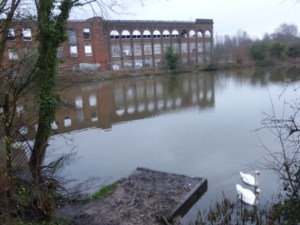
What Ails You, Father? The Rain of Nodens

P1130621 - Copy

My article ‘What Ails You, Father? The Rain of Nodens’ has been published on Gods & Radicals HERE.

After heavy rain and floods across northern England, Scotland and Wales my article focuses on addressing Nodens (‘the Catcher’) as a Romano-British rain god. Exploring Nodens’ identification with Neptune as a god of rain it moves onto his role as a dream-god at Lydney and transformation into Lludd of the Silver Hand (a Catcher who cannot catch) and parallels with the Fisher King. It ends by discussing the importance of ‘asking the question’ and being open to answers in a time of uncertainty and climate change.

Invernith

My arrival is slow to wonder
initial disbelief
fading into silver-lined water
the mirror imprint
of Nith’s name a god in glass
becoming grey cloud
in the ether says
BELIEVE BELIEVE.

In the netherworld gloaming birds
shriek BELIEVE BELIEVE:
barnacle geese beat
black and white hearts against Crifell.
As the dark moon starts her slow pull
downward to Invernith
my fingers brush water
and touch a silver hand.

Invernith with Crifell

Nith’s Estuary

After visiting the site of the Battle of Arfderydd, we chose to stay in the Nith Hotel at the mouth of the estuary as it was close to Caerlaverock and because I wondered whether, like Neath, there was a connection with Nudd and his son, Gwyn. I went with no strong expectations or feelings.

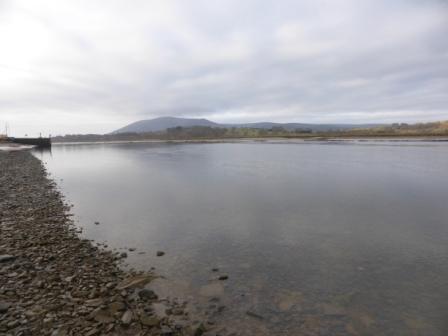
When we arrived at the car park I was utterly blown away. Clouds dark blue and dappled silver were reflected perfectly in still quiet waters. Splitting the silence hollering overhead flew drove after drove of barnacle geese following the river’s course then disappearing from sight at the estuary.

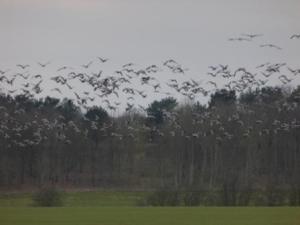
Earlier we had accidentally spooked a field filled with these magnificent birds. With barking cries and clamouring wings they took off flashing black and white, ascending into hurtling v’s.Shortly afterward a covey of swans flew over honking deep and resonant calls.

SwansIn the folklore of Wales, northern England (and beyond) ‘the Wild Hunt’ is associated with flights of swans and geese. Gwyn is one of its leaders. The term is usually limited to instances where the birds cannot be seen and those who hear them fear for their lives and souls.

My experience in this case was more of beauty than terror. The estuary of the Nith where sky met river and Criffel displayed its otherside in the lucid water was clearly a liminal place. There was something deeply magical about the passing birds and their wild song.

This reminded me a translation of Annwn (the Brythonic ‘otherworld’ Gwyn rules) is ‘the deep’. Annwn as hidden depth has intriguing resonances with the sound of ‘Nudd’. Onomatopoeically it links not only to Neath and Nith but the concepts beneath, underneath and the netherworld. This evening showed Annwn’s depth is immanent in this-world and can be experienced here.

Later on the brink of sleep I found myself thinking of Nudd / Nodens’ temple on the estuary of the river Severn. People made votive offerings to him as a god of hunting, healing and dream then slept in a designated space and priests interpreted their dreams in the morning.

Recently I discovered Nudd is not only the name of a family of Brythonic gods but also a human family name. Dreon ap Nudd fought on the dyke of Arfderydd not far from the Nith. His father, Nudd Hael, is included in the genealogies of the Men of the North. In the Yarrow valley lies a memorial stone to ‘the illustrious princes Nudus and Dumnogenus. In this tomb lies the son of Liberalis.’ Tim Clarkson says ‘Nudus is a Latinisation of Nud or Nudd.’

It seems possible this ancient northern family derived their name from Nodens / Nudd and that he was their ancestral deity and they may have served him in a similar way to the priests on the Severn. Preparing to slip into the netherworld, ‘the land of Nod,’ I wondered how many other worshippers of Nudd and his kindred had slept on Nith’s estuary.

In the morning when I awoke the barnacle geese were flying back up river to feed on the fields and salt marsh. Several groups landed on the banks and by making a careful approach we managed to draw close enough to photograph them.

Barnacle GeeseBarnacle geese possess some fascinating folklore. It was once believed they grew on driftwood like barnacles hanging down from their beaks until they grew a coat of feathers and were ready to fly away. Their growth from barnacles in summer explained why they only appeared as birds in the winter months.

Visiting the Caerlaverock Wildfowl and Wetlands Trust we found out the ‘real’ reason they can only be seen in winter. Barnacle geese incubate their eggs and raise their goslings in Svalbard in Norway between May and September when the Gulf Stream melts the ice. As winter approaches they fly 3000 km south to the Solway Firth.

In the 1940’s there were only 300 birds. Due to the work of the trust there are now over 30,000. However, if global warming continues it is possible that ice melting early in Svalbard will leave their eggs vulnerable to being eaten by polar bears.

As well as finding out more about barnacle geese we got to see whooper swans up close at feeding time. Whooper swans are another over-wintering bird who fly in from Iceland and can be told apart from mute swans by their yellow beaks.

Whooper SwansIt is my growing intuition that Gwyn, as a god of winter, may have a connection with birds over-wintering in Britain and that this would vary from place to place.

Forgotten Arfderydd and the Hearsay of Corvids

Last Saturday I set out north to the site of the Battle of Arfderydd. At the forefront of my mind was the matter of forgetting.

If Arfderydd was significant enough to be recognised as one of Three Futile Battles of Britain, if it was where Gwenddolau, the last pagan Brythonic king of the Old North, made his final stand and one hundred and sixty men lost their lives before he died and three hundred after and where Myrddin Wyllt went mad, why no marker of the site? Why no songs? Why has Arfderydd been forgotten?

Considering Gwyn ap Nudd stated his presence at Gwenddolau’s death and at the deaths of other northern warriors and the episode where he abducts Creiddylad, Gwythyr and his (mainly northern) supporters takes place in the Old North why has his memory faded from the minds of the people of northern Britain?

In search of clues, a friend and I travelled north to Longtown and set off on foot up Netherby Road, consciously following in the footsteps of William Skene and Nikolai Tolstoy. The first place we visited was Netherby Hall, the mansion of the Graham family built on the site of the Roman fort Castra Exploratum. An altar dedicated to a god called Vitris and ram-horned head carved from local red sandstone found nearby suggest it was the location of a Romano-British cult.

Netherby HallAs we approached from the south Netherby Hall’s sandstone walls came into view atop a prominent ridge with polygonal towers, parapets and scaffolding. An encircling wire fence said strictly out of bounds. Following the path round the mansion we passed a woodland carpeted with snowdrops and trees stacked with rooks’ nests filled with noisy, vocal, raucous birds

Never before had I seen many rooks or heard such a racket. Their croaking and cawing see-sawed in my mind like something trying to break through. Unfortunately I don’t speak very good rook. Yet the rooks seemed important. More important than the blank face of the mansion and its ‘Private’ sign.

We rejoined the main road and headed north for Carwinley. When Lailoken (Myrddin Wyllt) told St Kentigern of his guilt at the deaths of the combatants and vision of a host of warriors (who I believe to be Gwyn and the spirits of Annwn) he stated the battle took place ‘in the field between Liddel and Carnwanolow.’ Skene identified Liddel with Liddel Water and Carnwanolow as Caer Gwenddolau and connected this with Carwinley.

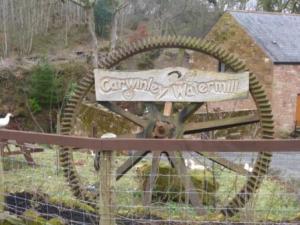
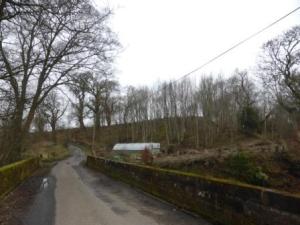
Passing Carwinley cottage, farm and water mill we looked down into the sandstone gulley of the burn, steep banks green with ferns, onto shining reddish water. I recalled Andrew Breeze’s interpretation of Arfderydd as ‘burning weapon’ relating to this bloody stream forming the parish of Arthuret’s boundary. Breeze said ‘Car’ need not mark a fort but a defensive stockade. It certainly seemed possible the burn was named after Gwenddolau’s fall.

Carwinley BurnThe Triads of Ancient Britain also mention ‘the retinue of Dreon the Brave at the Dyke of Arfderydd.’ Dreon ap Nudd is the son of Nudd Hael. If this etymological link to Gwyn ap Nudd (and his father Nudd or Nodens) suggests an ancient connection between a northern family and their ancestral deities it is no surprise Gwyn and his host appeared at the battle where Dreon and his retinue met their end.

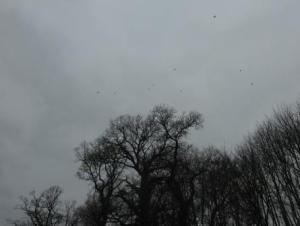
As I pondered whether the ‘Dyke’ they fought on was above Carwinley Burn I saw crows over the trees who shouted and cawed then pitched their games across a sky of constant silver-grey cloud. A sky of concealing. A sky of protection. A sky of no openings onto crashing visions of warriors.

Fields of Arfderydd


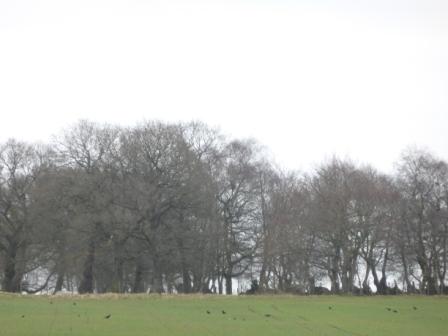
As we passed the green and well-tilled-over crow-haunted fields the dead did not rise. There were no whispers, no warnings, only the hearsay of corvids.


Upper Moat


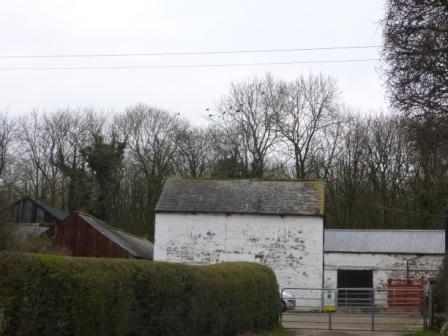
At Upper Moat where reputedly the three hundred men who fought after Gwenddolau’s death were buried there was no sign of the orchard Skene mentioned but crows filled the trees in the background.

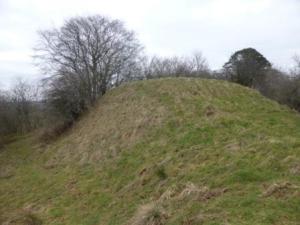
Our final destination was Liddel Strength, a motte and bailey which might have been the location of Gwenddolau’s fort and where his ‘Faithful War Band’ could have made their last stand, fighting for a month and a fortnight after the death of their leader. Unable to find our way we were directed by a local farmer (coincidentally Skene was directed by a farmer from Upper Moat too!) onto a shooter’s path which climbed steeply beside Liddel Water.

On the way we encountered a line of not-dead reeds hauntingly reminiscent of flags or ribboned spears blowing in the wind on an abandoned battlefield. Or of forlorn warriors.

Reeds of ArfderyddThe site of Liddel Strength was badly eroded by the river and appallingly overgrown. Breaching the defensive ditch we scrambled through hat-snatching hawthorns and ankle-snagging brambles up the motte which didn’t feel overly welcoming in its firm return to nature. There were no crows but a bird of prey screeched somewhere out of sight reminding me of Gwenddolau’s birds who fed on the corpses of the Britons.

Looking down from the summit Liddel Water flowed far below at the foot of a slope impossible to ascend. Fields and woodland stretched out before us. The land seemed as determined in swallowing time as it was in absorbing the abandoned railway track Skene arrived on two hundred years ago. On our return journey only the bridge and fragments of the embankment remained.

The dereliction of Liddel Strength contrasted sharply with Caer Laverock Castle (the ‘Lark’s Nest’ Arfderydd was supposedly fought over) which we visited the next day. This splendid medieval stronghold belonging to the Maxwell family was well preserved by the National Trust. Its siege by the English immortalised in the ‘Song of Caerlaverock’ was reconstructed on a video in the display rooms.

Caer Laverock CastleCrows flocked in the trees and played over its terraces. South was an earlier fort closer to the Solway Firth, an artist’s representation showed the higher sea levels and its importance as a strategic location.

Heading north again we climbed Ward Law, a lookout point where the Maxwell Clan gathered shouting their battle cry: “Wardlaw! I bid ye bide Wardlaw!” Beyond was another Roman camp invisible from the ground.

Ward LawLooking south from Ward Law to Solway Firth for the first time the all-encompassing silver-grey clouds broke. Seeing clear light and waters ablaze with cold fire I was reminded of the unendurable brightness Myrddin saw as Gwyn approached with the hosts of Annwn. The otherworld opening only just beyond the sands and tides of this-world.

Solway FirthI left with intuitions but no answers about Gwyn and his kindred, battles, forgetting, clouds and corvids… another part of this story waits to be told about the estuary of the river Nith and I shall be sharing this in my next post…

SOURCES

Breeze, Andrew “The Name and Battle of Arfderydd, near Carlisle,” Journal of Literary Onomastics: Volume 2: Issue 1, Article 1. (2012)
Clarkson, Tim The Men of the North: The Britons of Southern Scotland (John Donald, 2010)
Heron (transl) ‘Gwyn ap Nudd and Gwyddno Garanhir’ https://barddos.wordpress.com/2015/02/08/gwyn-ap-nudd-and-gwyddno-garanhir/
Pennar, Meirion (transl.) The Black Book of Carmarthen (Llanerch Enterprises, 1989)
Ross, Anne Pagan Celtic Britain (Cardinal, 1974)
Skene, William F. The Four Ancient Books of Wales (Forgotten Books 2007)
Tolstoy, Nikolai The Quest for Merlin (Sceptre, 1985)

Streets of Dream

Clouds arrive, seasonal and grey,
smothering the town’s jagged edges.
Wrapped in an amniotic haze
I wander streets of dream forgetting
old boundaries between sky and pavement
in the driving rain. Wind spirits
and fierce hounds howl the day down.
I feel the out-breath of a distant king.
The wisdom of Nodens is lost to me.
I wander streets of dream forgetting
all boundaries in the driving rain.

*Nodens is an ancient British god associated with sleep, healing and hunting. In a relief found at his temple in Lydney he is depicted with hounds and putti (wind spirits).

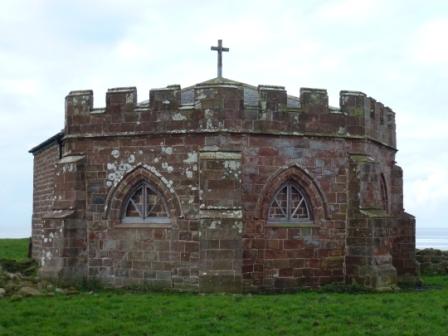
Cockersand Abbey

Chapter house meets silver frieze of dappled
clouds dipped in river. Beacon white sun lights
the margins of eyes; prior, pilgrim, traveller.
Holiday makers rush to shore, seekers
of ages dress lost walls. Broken healers
see a liminal sky, on a statue writ
in silver: Mars Nodontis. “Be our healer.
Beside the lapping tides and flashing sky,
Cloud Maker, fix our wounds and make us whole.
Return this no-time to a holy day.”