 Greencroft Valley is located in Penwortham, and is split down its centre between Kingsfold Ward on the east and Middleforth Green to the west. From (at least) medieval times up until 1984 the valley was farmland. The 1839 Tithe map shows the fields at the south end of the valley (between Pope Lane and the old Oak) as belonging to the Mayor family, who owned Malt Kiln Farm and Cottage. The cottage was originally a water powered mill, where barley from the local fields was made into grain. Following this, grain was soaked in a stone trough, ‘chitted’, germinated, dried in a kiln and ‘riddled’ before being placed in sacks to be taken by horse and cart to the Black Bull Inn. The land was bought by the church in 1860[1].
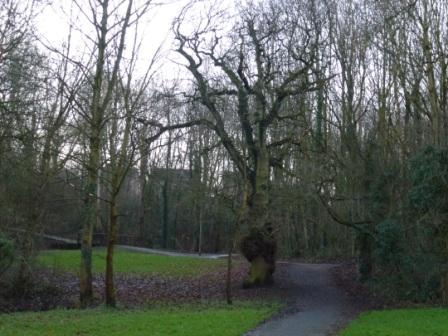
The fields north of the Oak belonged to the Baker family, who lived in a house called Alderfield, and later became Miss Whittam’s riding school (the site is now covered by Greencroft). The old hedge line can still be seen between the old Oak, the adjacent trees and another oak tree of a similar age near the Malthouse Way entrance. Another visible hedge line divides the green from the woods close to the Maltings. This divided the fields belonging to Alderfield from Fish Pan Pasture.
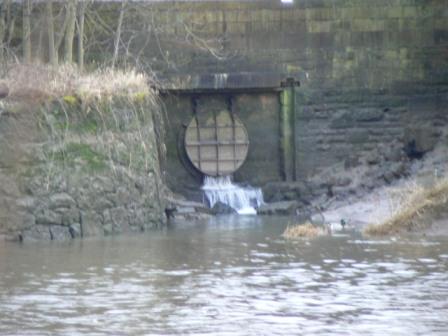
The presence of the mill combined with the two fishing ponds on the Tithe Map and the large culvert adjacent to Hill Road South, all form evidence that Fish House Brook was several times larger and more forceful than it is now, showing the drastic shifts that have been brought about in the water table over the past 150 years. Another point of note is that there was a well in the valley close to the edge of the brook, to whose steps a path ran from Alderfield; this disappeared with the building of the new estates.
The large and irregular field patterns suggests they date back at least to medieval times. A 1590 map refers to the land that stretches from Pope Lane to Castle Hill as ‘all these ancient and several lands of the manor of Penwortham as well as the Queen’s as of freeholders and copyholders[2]’. The first entry for Penwortham in the Domesday book cites the existence of ‘two ploughs,’ in reference to Penwortham End and Middleforth Green. Evidence from the Dock Finds shows the area adjacent to the Ribble near Castle Hill was occupied from the Neolithic period onward. If this was the case in higher Penwortham, then judging by the population figures (the population of Britain was higher in the Iron Age than it was during the Norman period[3]) it is possible Middleforth Green and the valley have been occupied and farmed just as long.
The occupation and land use changed dramatically between 1979 and 1984 as a result of the Central Lancashire New Towns project. This was set up in 1973 and aimed to draw together Penwortham, Preston, Walton, Leyland and Chorley in a vast urban sprawl with a population of half a million, covering 55 square miles with houses[4]. During this period the estates of Greencroft, Malthouse Way, Alderfield and the Maltings were built- over 300 houses, bringing an approximate number of 600 people[5] into the area, in stark contrast to the small number who occupied Malt House Farm and Cottage and Alderfield. It was during this period that Middleforth School, which was founded in 1861 and was formerly a Chapel-School situated where Church Brook House now stands at the bottom of Marshall’s Brow, was moved to its present site[6]. It seems needless to say that the impact on the nature and wildlife of the area must have been huge.
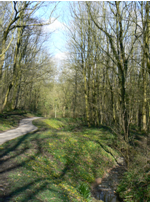
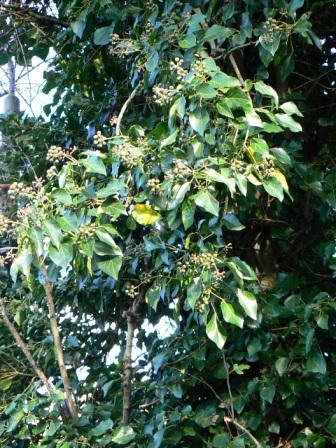
This open green space and woodland now forms an important habitat for wildlife, a roosting place for birds, a possible swimming place for stream life and a pleasant vista for dog walkers and play area for children, and is the only place amidst the new estates where the traces of so many centuries of our rural past is preserved. Home to a plethora of living things, from those with roots and leaves, to those with legs, tails or wings, it is an eco-system that deserves care and respect, and this is the purpose of the Friends of Greencroft Valley.
[1] Elizabeth Basquill, More Hidden Histories of Penwortham Houses, (The Friends of Hurst Grange Park, 2011), p6-11, 42-44.
[2] Alan Crosby, Penwortham in the Past, (Carnegie Press, 1988), p67
[3] There were 3 million people in 700 BC compared to 2.5 million in 1086 http://www.ukagriculture.com/countryside/countryside_history.cfm
[4] Alan Crosby, Penwortham in the Past, (Carnegie Press, 1988), p145
[5] Going by the average figure of 2.32 people per household http://www.communities.gov.uk/documents/statistics/pdf/1172133.pdf
[6] Penwortham Magazine, Issue 3.





 The Sanctuary of Vindos