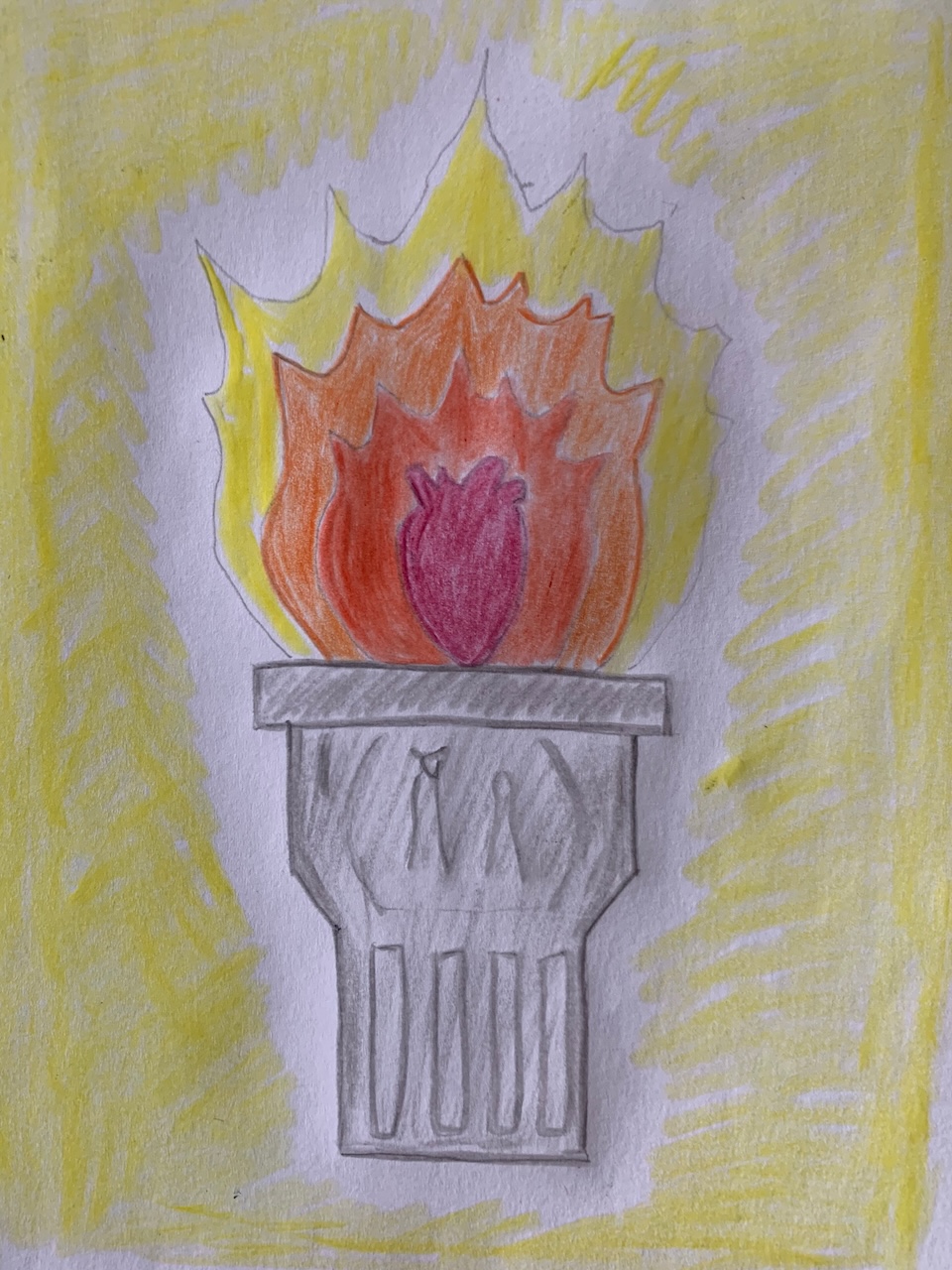
The Altar of the Heart

Through addiction and anxiety,
anger and jealousy

to the Altar of the Heart
I come to make my offering again.

This time You accept it and say:

“May its fire light the way 
to the worship of my family.”

I wrote the words above a few years ago when I offered my heart to Gwyn  on an altar in meditation (I’d tried once before and that time He rejected it!).

Since then my heart has been with Gwyn in the Otherworld. I first saw it again around six months ago in a shamanic journey in an icy pool thawing out.

In a meditation for Gwyn’s Feast with the Monastery of Annwn last September Gwyn returned my heart and said that the Heart of Annwn now beats in my chest as it beats in the chests of all living creatures. 

When I returned to those words in my prayer book and looked at the image it was no longer my heart on the altar but Gwyn’s and I received the gnosis that if I succeed in founding a physical monastery He wants an altar to His heart.

This happened after I finished my ‘Mystics of the Sacred Heart’ series. It seems that an exchange of hearts of sorts has happened between us after all.

Mystics of the Sacred Heart Part Seven – Peggy Allen’s Bible

As a remarkable coincidence at the time of writing this series, whilst I was cleaning, I stumbled across the Bible of my grandmother on my mother’s side, Peggy Allen. My grandmother was sent away to boarding school at a Catholic convent in France when she was 12 years old. Tucked within the pages of her Bible I found two prayer cards relating to the Sacred Heart of Jesus.

The first features a prayer from Thérèse de l’Enfant Jésus called Au Sacré-Cœur with an image of the saint and Jesus showing His Sacred Heart. In England she is known as Therese of Liseux (1841 – 1884) ‘the Little Flower of Jesus’.

The other depicts Blessed Marie Deluil-Martiny (1841 – 1884) a French religious sister who was the Founder of Association of the Daughters of the Heart of Jesus. She was murdered in the convent by a gardener.

Although my grandmother was not religious when I knew her she was obviously familiar with the tradition of the Sacred Heart when growing up.

Might my draw to Gwyn’s Sacred Heart be partially based on ancestral memories?

Mystics of the Sacred Heart Part Six – Sister Mary of the Divine Heart and the Consecration of the World

Mary, born Maria Droste zu Vischering, (1863 – 1899) influenced Pope Leo XIII to consecrate the world to the Sacred Heart of Jesus in 1899.

She was educated at the boarding school of the Sacré-Coeur Sisters in Ridenburg, Bavaria. During a return home from school to recover from pneumonia she had a vision of Jesus who told: ‘Thou shalt be the wife of my heart.’  This led her to join the Sisters of the Good Shepherd aged 25.

For Mary devotion to the Sacred Heart of Jesus and to the Blessed Eucharist were inseparable no doubt as the blood of Christ flowed from His heart.

Whilst on mission in Porto in 1898 Mary received several messages from Jesus requesting that she contact the Pope and request the consecration of the world to His Sacred Heart. In her letter to the Pope she wrote: ‘On the eve of the Immaculate Conception, I seemed to see (interiorly) this light, the Heart of Jesus, this adorable sun, whose rays descended on the earth, first narrowly, then more widely, and finally, lighting up the whole world. I recognized the ardent desire He has to see his adorable Heart more and more glorified and known and to spread His gifts and blessings over the whole world. Our Lord… has shown me the ardent desire he has that his Heart be more and more glorified and loved for the good of the nations.’ (25)

The Pope was persuaded by the promise of a longer life at a time of illness. ‘And He has chosen Your Holiness, prolonging your days, so that you might render Him this honor, console his outraged Heart and draw on your soul the choice graces that come from this Divine Heart, this source of all graces.’ (26)

The Pope agreed to consecrate the world to the Sacred Heart of Jesus saying he expected ‘extraordinary and lasting benefits for Christendom in the first place and also for the whole human race.’ (27) Much controversy surrounded the consecration of all the world including non-Christians. Mary sadly died three days before the world was consecrated in 1899.

REFERENCES

(25) ‘A Forgotten Nun who Influenced the Pope, National Catholic Register, https://www.ncregister.com/blog/a-forgotten-blessed-nun-who-influenced-the-pope
(26) Ibid.
(27) Ibid.

Mystics of the Sacred Heart Part Five – Saint Margaret Mary Alacoque and the Flaming Heart

The devotion to the Sacred Heart only reached popularity amongst Catholics in the 17th century and this was due to the influence of Margaret Mary Alacoque (1647 – 1690).

Margaret lived in France and entered a Visitation convent at Paray-le-Monial aged 24. There Jesus appeared to her four times revealing His love of humanity through visions of His Sacred Heart. These are recorded in her diary.

I. The Flaming Heart

In her first vision she reports that she reposed ‘upon His Sacred Breast’ and ‘for the first time, He opened to me His Divine Heart.’

Jesus said: ‘My Divine Heart is so inflamed with love for men, and for you in particular that, being unable any longer to contain within Itself the flames of Its burning Charity, It must spread them abroad by your means…’ 

This was followed by an exchange of hearts. ‘After this, He asked me for my heart, which I begged Him to take. He did so and placed it in His own Adorable Heart, where He showed it to me as a little atom which was being consumed in this great furnace, and withdrawing it thence as a burning flame in the form of a heart, He restored it to the place whence He had taken it.’

Jesus then said: ‘My well-beloved, I give you a precious token of My love, having enclosed within your side a little spark of its glowing flames, that may serve you for a heart and consume you to the last moment of your life… I now give you that (name) of the beloved disciple of My Sacred Heart.’ (20)

I relate to the imagery of the flaming heart because a few years ago I offered my heart to Gwyn on ‘the Altar of the Heart’ and it burst into flames and He told me that its fire would light the way to the worship of His family.

II. Wearing the Heart

Margaret’s second striking vision is the source of the representation of the Sacred Heart in Catholicism today: ‘The Divine Heart was presented to me in a throne of flames, more resplendent than a sun, transparent as crystal, with this adorable wound. And it was surrounded with a crown of thorns, signifying the punctures made in it by our sins, and a cross above.’

Margaret was told: “This Heart of God must be honored under the form of His heart of flesh, whose image He wanted exposed, and also worn on me and on my heart.’ (21)

This led to Margaret wearing and creating and distributing images of the Sacred Heart which after her death were used to ward off the plague in Marseilles.

This isn’t something Gwyn has called me do… yet…

III. First Friday Devotion

Jesus appeaerd again to Margaret with His breast like a furnace. ‘Opening it, He showed me His loving and lovable Heart as the living source of those flames. Then he revealed to me all the unspeakable marvels of His pure love, and the excess of love He had conceived for men from whom He had received nothing but ingratitude and contempt.’

To make up for their ‘ingratitude’ He asked her to ‘receive Holy Communion on the First Friday of each month’ and tells her that ‘every night between Thursday and Friday I will make you partaker of that sorrow unto death which it was My will to suffer in the Garden of Olives.’ (22) This is the source of the Catholic Holy Hour between 11 and 12 midnight every Thursday.

IV. The Feast of the Heart

In her fourth vision Jesus opens His heart to Margaret again and asks her to inaugurate ‘the first Friday after the octave of Corpus Christi’ as ‘a feast in honor of My Heart.’ This usually takes place in the month of June.

I was called to start celebrating a feast for Gwyn on the 29th of September over ten years ago and began with just one friend. Many Gwyn devotees celebrate His feast on this day and we hold a group rite at the Monastery of Annwn. I feel it is the power of Gwyn’s heartbeat that has drawn us together.

V. Disciple of the Sacred Heart

More controversially, when Margaret dedicated her life to Jesus, ‘she went to her cell, bared her breast, and, imitating her illustrious and saintly foundress, cut with a knife the name of Jesus above her heart. From the blood that flowed from the wound she signed the act in these words: ‘Sister Margaret Mary, Disciple of the Divine Heart of the Adorable Jesus’. (24)

Margaret’s visionary fervor and discipleship quickly spread following her death but the devotion to the Sacred Heart was not approved until seventy years later.

REFERENCES

(21) https://www.churchpop.com/visions-of-the-sacred-heart-of-jesus-4-mystical-messages-to-st-margaret-mary-alacoque/
(22) Ibid.
(23) Ibid.
(24) Monseigneur Bougaud, Revelations of the Sacred Heart of Jesus to Blessed Margaret Mary and the History of Her Life, (New York: Benziger Brothers, 1890), p. 209 – 210

Mystics of the Sacred Heart Part Four – The Graces of Saint Gertrude

Gertrude (1256 – 1302) was a Bendictine nun at the monastery of Helfta and received many of her teachings about the Sacred Heart from Mechtilde.

Like Mechtilde, Gertrude was a ‘Bride of Christ’. He bestowed upon her four graces. The first was the impression of His wounds on her heart. ‘O most merciful Lord, engrave Thy Wounds upon my heart with Thy most Precious Blood, that I may read in them both Thy grief and Thy love; and that the memory of Thy Wounds may ever remain in my inmost heart, to excite my compassion for Thy sufferings and to increase in me Thy love.’ (15) I often feel like with this with Gwyn – His stories being engraved upon my heart.

Her second grace was an arrow of light that shot from the side of Jesus and pierced her heart. ‘After I had received the Sacrament of Life, I saw a ray of light, like an arrow, dart forth from the Sacred Wound in Thy right Side, on the Crucifix . . . It advanced toward me and pierced my heart.’ (16) This resulted in a tide of affection and desire to be united with Jesus rising within her. 

I haven’t had an experience like this but it puts me in mind of the ecstasy of St Teresa of Avila wherein an angel thrusts a ‘long spear of gold’ into her heart and entrails leaving her ‘all on fire with a great love of God.’ (17) 

Like Lutgarde, Gertrude exchanged hearts with Jesus and this was her third grace. ‘Thou hast granted me Thy secret friendship, by opening to me the sacred ark of Thy Deified Heart in so many different ways as to be the source of all my happiness. Sometimes as a special mark of our mutual friendship, Thou didst exchange It for mine!’ (17)

Her fourth grace was the placing of the infant Jesus within her. ‘It was the anniversary of the blessed night of Our Lord’s Nativity. In spirit, I tried to fulfill the office of servant of the glorious Mother of God when I felt that a tender, new-born Infant was placed in my heart. At the same instant, I beheld my soul entirely transformed. Then I understood the meaning of these sweet words: ‘God will be all in all’ (1 Cor. 15:28).’ (18) I found this vision particuarly beautiful. Over the Twelve Days of Devotion last year I explored Gwyn’s birth and infancy and felt He was very close to my heart although not quite in it.

Jesus further disclosed His heart as a treasury, a harp, a fountain, a golden thurible and an altar. Like Mechtilde she delighted in its ‘harmonious beatings’. He offered His ‘Divine Heart’ to her as an instrument to ‘charm the eye and ear of Divinity’ and said of all those who had asked Gertrude to pray for them, ‘they may draw forth all they need from my Divine Heart.’ (19). 

This imagery is similar to Mechtilde’s and relates to my own delight in the beat of Gwyn’s heart and to the joy and inspiration that I draw from it.

REFERENCES

(15) Anonymous, St. Gertrude the Great: Herald of Divine Love, TAN Books, Kindle Edition
(16) Ibid.
(17) https://en.wikipedia.org/wiki/Ecstasy_of_Saint_Teresa
(18) Anonymous, St. Gertrude the Great: Herald of Divine Love, TAN Books, Kindle Edition
(19) Ibid.
(20) Ibid. 

Mystics of the Sacred Heart Part Three – Saint Mechtilde and the Eternal Praise of the Heart

Mechthilde (1240 – 1298) was born into the wealthy Hackeborn family and entered the Benedictine convent of Helfa in Saxony at the age of seventeen.

She had numerous visions of the Sacred Heart of Jesus, spoken of in The Book of Special Grace, which she compiled after a spiritual crisis aged 50. 

I. The Mighty Beating of His Heart

Mechtilde shares a vision in which she rests against Christ’s bosom, listening ‘with attentive ear to the ceaseless and mighty beatings of His own sweet Heart’. Through these ‘beatings’ He sounds ‘invitations’: ‘Come… my love, and receive all that the Beloved can give to His beloved; come. My sister, and possess the inheritance of heaven, which I have bought for thee with My precious Blood; come, My spouse, and enjoy My Godhead.” (5)

This resonated with me deeply for listening to the sound of Gwyn’s Heart, the Heart of Annwn, mighty, awe-inspiring, deafening sometimes, is one of my core practices. I’ve experienced the Heart calling me, inviting me and other monastic devotees to come to Him and worship Him in the Monastery of Annwn. ‘Hear the heart, the heart of Annwn, / hear the heart oh monk and nun / Hear the heart, the heart of Annwn, / “To the monastery we come.”

II. Eternal Praise

On other occasions Mechtilde lays her mouth on the Divine Heart of Jesus and gains sustenance. ‘Drop by drop’ she is gifted verses to offer to His Mother. (6) She also draws from His heart a ‘sweet fruit’ which she places in her mouth signifying ‘eternal praise’ which ‘floweth forth from Him’. (7)

The praise of God is shown to her in another vision as ‘a tube, as it were, coming out of the Heart of God, to her own heart, and then winding back again from her own heart to that of God, by which was signified the praise of God.’ (8) This is later expanded upon. ‘Then straightway she saw tubes, as it were, going forth from the hearts of the angels to the Heart of God, and they made such sweet melody that no man can utter it’. (9)

In another vision Jesus shows reveals His heart as a lamp ‘overflowing’ with large drops of light yet not ‘anywise lessened’. It overflows ‘by little strings of lamps; some of which seemed to stand upright, and to be full of oil, while others were empty, and hung upside down.’ Mechtilde understands ‘by lamps that burnt upright were signified the hearts of those who were present at Mass with devotion and longing desires, while by the lamps that hung down were signified the hearts of those who refused to be raised up by devotion.’ (10) 

These remarkable visions show how the praise of God / Jesus, flows from His Sacred Heart to the angels and is gifted to His most ardent devotees. This puts me in mind of the gift of awen ‘inspiration’ to awenyddion in the Brythonic tradition, which flows from the cauldron into the cauldrons of those who praise the Gods. Gwyn owns ‘the Cauldron of Pen Annwn’ and is ‘my patron, inspiration and truth’ and my awen from Him also feels like a gift from His heart.

In The Triads of the Island of Britain  we find 90. ‘The Three Perpetual Harmonies of the Island of Britain: One was at the Island of Afallach, and the second at Caer Garadawg, and the third at Bangor. In each of these three places were 2,400 religious men; and of these 100 in turn continued each hour of the twenty-four hours of the day and night in prayer and service to God, ceaselessly and without rest forever.’ (11)

It is notable that one of these ‘Perpetual Harmonies’ was ‘at the Island of Afallach.’ Afallach, from afal, ‘apple’ is another name of Gwyn’s. This makes me wonder if an earlier tradition of eternal praise for Gwyn once existed. Whether that was the case or not I long found a monastery wherein the beat of Gwyn’s heart is played and His praises sung day and night.

III. The Fortress of the Heart

In an astonishing vision Jesus takes Mechtilde into His heart and shuts her in. He shows her the upper part is ‘the sweetness of the spirit of God’ and the lower part ‘the treasury of all good’. In the south is the ‘eternal paradise of all riches’. In the west is ‘eternal peace and joy without end’. In the north is ‘eternal security’. (Jesus does not mention what lies in the east). (12) His heart is elsewhere described as ‘a fair house’ and ‘a house of miraculous beauty’. (13)

This reminds me a little of the depictions of Gwyn’s fortress as filled with fair people and revelry. For me Gwyn’s hall is the heart of the kingdom of Annwn His heart, the Heart of Annwn, beats in its midst. I wonder if there was a mystical tradition wherein His fortress was seen to be the interior of His heart.

When Mechtilde asks how to cleanse her heart Jesus replies: ‘In the love of My divine Heart I will wash thee’ and shows her a ‘river of love’ filled with golden fish. (14)

Here I’m reminded of the sparkling rivers of mead and wine in Annwn and of a personal vision I had of rivers of blood, like veins, pouring from Gwyn’s heart and connecting with the hearts of all beings in Annwn and in Thisworld.

IV. Greet My Heart

Jesus appeared to Mechthilde and said the following: ‘In the morning let your first act be to greet My Heart and to offer Me your own. Whoever breathes a sigh toward Me, draws Me to himself.’ (15)

I found this profoundly beautiful. Every morning Gwyn’s name is the thing I say in my morning prayers and I could imagine incorporating a greeting of His heart and an offering of my heart to Him into my devotions.

There is much modern polytheists could learn from this remarkable saint about the nature of visionary experience and devotion.

REFERENCES

(5) Anon, Revelations of S. Mechtilde, (1875), https://dn790004.ca.archive.org/0/items/selectrevelation00mech/selectrevelation00mech.pdf p117
(6) Ibid. p112 – 113
(7) Ibid. p126
(8) Ibid. p118 – 119
(9) Ibid. p133
(10) Ibid. p136 – 138
(11) Rachel Bromwich (ed), The Triads of the Island of Britain, (University of Wales Press, 2014), p232
(12) Anon, Revelations of S. Mechtilde, (1875), https://dn790004.ca.archive.org/0/items/selectrevelation00mech/selectrevelation00mech.pdf p133 – 135
(13) Ibid. p138, p142
(14) Ibid. 119 – 120
(15) Mechthild, St Joseph’s Abbey, http://spencerabbey1098.blogspot.com/2014/11/mechtilde.html

Mystics of the Sacred Heart Part Two – Saint Lutgarde and the Exchange of Hearts

Lutgarde (1182 – 1246) was born in Tongres, Belgium, and entered the Benedictine convent at Saint Trond aged twelve. During this period a potential suitor visited her and during one of these visits Jesus appeared to her revealing his spear wound and telling her: ‘Seek no more pleasure of this affection… here in this wound I promise you the most pure of joys.’ Lutgarde denounced her suitor saying: ‘Go away from me for I belong to another Lover.’ (3)

Afterwards Lutgarde was blessed with a number of graces including levitation, healing, a miraculous understanding of Latin and illumination about the meaning of the Psalms but none of these made her happy. 

This led to her exchange of hearts with Jesus:

‘Jesus asked her: “What… do you want?”

“Lord… I want Thy Heart.”

“You want My Heart? Well, I too want your heart.” 

“Take it, dear Lord. But take it in such a way that the love of Your Heart may be so mingled and united with my own heart that I may possess my heart in Thee, and that it may always remain there secure in Your protection.”’ (4)

Lutgarde was elected as superior of the convent at the age of twenty-three but left to join the Cistercian convent (known as Trappists) at Aywieres.

Although I haven’t directly exchanged hearts with Gwyn attaining a union of my breath with His breath and my heart with His has long been a part of my practice.

REFERENCES

(3) St Lutgarde of Aywieres, Mystics of the Church, https://www.mysticsofthechurch.com/2015/09/st-lutgarde-of-aywieres-first-known.html
(4) Ibid.

Mystics of the Sacred Heart Part One – The Sacred Heart and the Sacred Wounds

Through my recent visit to London and to the Tyburn Convent I found out about the Roman Catholic devotion to the Most Sacred Heart of Jesus. I have since been reading further on the subject and have been astonised by the parallels between my gnosis of Gwyn’s heart as the Heart of Annwn and the experiences of the Christian mystics of the sacred heart.

In this series I will be sharing the story of the origins of the devotion to the Sacred Heart and discussing how the visions of these mystics relate to my experiences.

*

The devotion to the Sacred Heart originated from the devotion to the Sacred Wounds of Jesus. There were five in total. The first four were the wounds to His hands and feet from the nails when He was crucified. The fifth was the wound in His side from the Spear of Longinus by which He was pierced to ensure He was dead. From this wound poured blood and sweat. 

Associations between the Sacred Wounds and the Sacred Heart began in the Benedictine and Cistercian monasteries in the 11th – 12th centuries. In Sermon 61 St Bernard of Clairvaux (1090 – 1153) speaks of ‘the soul of the martyr’ being ‘safe’ ‘in the heart of Jesus whose wounds were opened to let it in’. (1) 

In the 13th century, in ‘With You is the Source of Life’, St Bonaventure (1221 – 1274) wrote: ‘“They shall look on him whom they pierced”. The blood and water, which poured out at that moment, were the price of our salvation. Flowing from the secret abyss of our Lord’s heart as from a fountain, this stream gave the sacraments of the Church the power to confer the life of grace, while for those already living in Christ it became a spring of living water welling up to life everlasting.’ (2)

The last of Christ’s lifeblood was seen as pouring as an offfering from His heart. This resonates with my vision Gwyn showed me of His death, pierced by a spear, in raven form, hanging upside down on a yew over the Abyss in a sacrifice in which He gave every last drop of His blood to ‘set the world to rights’ following the devastation wrecked by his battling with His rival, Lleu / Gwythyr.

In a follow-up story I wrote Mabon won a cup containing Gwyn’s blood from the Abyss and used it to heal Nudd, Gwyn’s father, ‘the Fisher King’. It is interesting to note that abyss imagery occurs in the writings of Bonaventure.

It seems no coincidence that in a later legend the blood and sweat of Jesus was taken in the Holy Grail by Joseph of Arimathea to Britain and buried near Glastonbury Tor – a site sacred to Gwyn. When Joseph rested wearily on his staff the Glastonbury Thorn sprung up giving name to Wearyall Hill.

In my visions when Gwyn is killed by His rival on Calan Mai the hawthorns blossom from His blood. Could the Christian legend be based on an earlier myth wherein a cup containing the blood from Gwyn’s Sacred Heart was buried?

REFERENCES

(1) ‘Sacred Heart of Jesus – Part One’, Knights of the Precious Blood, https://www.kofpb.org/2020/05/06/sacred-heart-of-jesus-part-1-history-of-the-devotion/
(2) Sister Julie Anne Sheahan, ‘Call includes Consecration to the Sacred Heart of Jesus, Franciscan Sisters, https://fscc-calledtobe.org/2022/06/23/call-includes-consecration-to-the-sacred-heart-of-jesus

Review – Mycogenous: Dionysos in the Fungal Realm by Dver

Dionysos is a dangerous God and this is a dangerous book. 

Herein Dver reveals a ‘new’ face of Dionysos which she explains isn’t entirely new but is significant in its appearance at this time. Many polytheists will be familiar with Dionysos as a God of pandemonium, wild revelry and wine, but less as the yeast that transmutes the wine and the silence and stillness ‘at the heart of the Dionysian storm’, as mushrooms, as mycocelium, as mold. Here He is revealed as ‘mycogenous: arising from or inhabiting fungi.’

Dver’s revelations began when she ‘noticed a blue-green mold’ on half-evaporated wine she left too long in a silver kylix on Dionysos’ shrine. In an epiphany she realised He was not only in the wine but the mold and fermentation. This book is the result of five years of cultivating mychorrhizal insights.

‘The Way of Mycogenous Dionysos’ is described as ‘a path of mysticism – or mycomysticism’, ‘at times contemplative, at times shamanic… ultimately transformative.’ 

‘The heart of the tradition’ is presented in ‘The Book of Hyphae’ which contains gnosis and practice and is supplemented with exegesis at the end. 

These words, ancient Greek names for Dionysos, lines from the Dionysian tradition and new epiphanies, are not just to be read, but to be meditated on, ingested, for the Dionysian devotee performed and practiced to work the processes that will transform them into mystes and mycomystic. 

Although I am a Brythonic polytheist with little experiential knowledge of the Greek tradition I am familiar with Dionysos in mythology and as a presence. As I read this book for the first time I found certain words and practices jumping out at me and recognising a number of mychorrhizal connections. 

I found it to be of deep interest that, like myself, Dver has been inspired to draw upon practices from yoga with it being notable that the Greek, Brythonic and Hindu religions all share Indo-European roots. 

One that stood out was a breathwork based on the words βίος ‘bios’ ‘life’, θᾰ́νᾰτος ‘thanatos’ ‘death’, βίος ‘bios’ ‘life’ combining them with the three colours black – exhalation, white – ‘the liminal space between breaths’, and red – ‘the inhalation’. Later Dver explains these colours are central to the Orphic strain of the Dionysian religion and combined create a colour called orphinnos. I have been guided towards similar breathwork and black, white and red are the colours of Annwn, ‘Very Deep’, the Brythonic Otherworld.

Another practice is singing seven epithets of Dionysos activating the seven chakras / energy centres. In ascending order from root to crown, Khtonios (of the earth), Auxites (growth), Purigenes (born of fire), Omadios (eater of raw flesh), Iakkhos (the ritual cry), Kruphios (ineffable), Lusios (loosener). 

The words that leapt from the page most were ‘Bakkhios Himself has freed me.’ A shiver ran up my spine when I learnt ‘This line is adapted from one of the Orphic gold tablets which contained instructions for the soul of a dead person navigating the underworld’ and is ‘a totenpass’ ‘passport for the dead.’ 

Dver says, ’It is a prayer for liberation, a hope, a plea. It is an affirmation of devotion and dedication. And if you sing it long long enough it becomes an ordeal, a sacrifice’ and ‘could comprise one’s entire devotional practice to Dionysos.’

Another practice is practicing death, lying in shavasana ‘corpse pose’, surrendering oneself to the fungal processes of decay.

Dver has found a likeness between Shiva and Dionysos and I have found likenesses between Shiva and my patron God, Gwyn ap Nudd. All are Gods of ecstasy with associations with death and dissolution and renewal.

Not long after I read this book, having received it as a birthday present, over the November full moon I was plummetted into a process of dissolution myself. Then release from old things holding me down. As I read it again that phrase leaps out, echoes in my mind, ‘Dionysos has liberated me.’ I believe these words, the fungal touch of this God, had a role.

On a final note I would like to mention the three wonderful colour plates. ‘Mycogenous’ and ‘Lichenized’ are devotional art and ‘Remediation’ is a mask worn when lying in corpse pose and all are made from organic materials.

The book arrived beautifully wrapped and it is clear every stage in its creation has been carried out with devotion. 

I would recommend it to Dionysian devotees and to polytheists with an interest in building a devotional practice based on mystical revelations. But be warned, like fungal spores, these words, this God is dangerous. Do not expect to open it, turn its pages, without releasing a little Dionysos into your world.

Contemplating the Abyss Part Two – Writing whilst Falling

I write when I fall. It’s a defence mechanism. Like putting out a hand to catch myself. 

I write because writing has saved me and I believe my writing might help others.

But putting out a hand doesn’t always work when one is falling into the Abyss…

*

I cried out to the philosophers, “Philosophers save me!”

When I was 21 and in the second year of my philosophy degree I sat on the edge of the Abyss at the nadir of a quasi-initiatory period during which I’d been foolishly been mixing phenomenology (1) with copious amounts of drugs and alcohol, some unknown part of me striving, reaching for… what?

My ‘friends’ had deserted me because I’d ‘gone west’ and I was sitting on the boot of a car, at the end of the world, staring into the Abyss, feeling I couldn’t go on living but not really, truly, wanting to die either. I couldn’t choose.

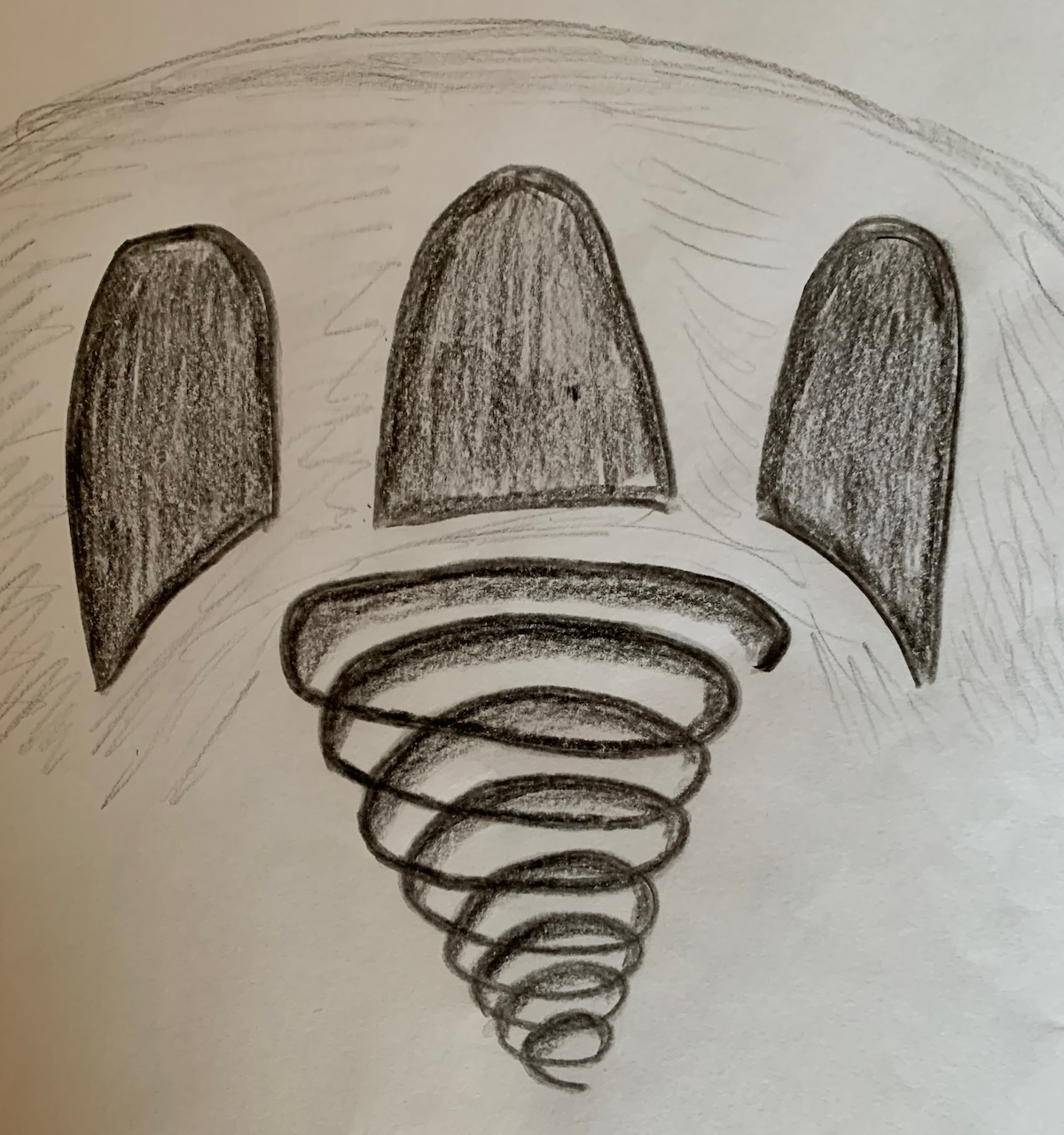
I was presented with three gateways but didn’t have the courage to take any.

I moved into the front seat of the car and, as dawn arrived, pinking the front  windows of my friend’s house, with it came three alienesque beings who I now understand in the Brythonic tradition to be ellyllon ‘elves’. They took me into the heavens in what I saw at the time as an alien aduction experience and performed an intricate operation on my brain with silver instruments. 

After that I decided to give up drugs entirely and apply myself to my studies. Not easy. There were after effects. Anxiety. Panic attacks. I ended up on medication but also got subscribed what I really needed – exercise. These things helped me to get my head straight enough to write myself out of the Abyss. 

My philosophy studies gave me the tools I needed. I saw my inability to choose life or death as akin to Kant’s antimonies (2) which stem from the use of reason to comprehend sensible phenomena beyond its application. I wrote my dissertation on the concept of the sublime in Burke, Kant, and Lyotard, focusing on how experiences of the sublime depose the rational mind (3).

This helped me to understand the breakdown of my rational faculties but not the visions I encountered as the flip side. It was only when I was studying for my MA in European Philosophy and writing my dissertation on Nietzche’s The Birth of Tragedy I found the clues. Dionysian ecstasy gives way to Apollonian visions. But I wasn’t seeing Dionysus or satyrs. I realised, like Greece, Britain, must have its Gods and spirits, finally met my patron God, Gwyn ap Nudd, a King of Annwn, realised my visions had been of His realm.

Nietzsche, a philosopher, who also stared into the Abyss (4), saved me.

*

The medieval Welsh term Annwn stems from an ‘very’ and dwfn ‘deep’. I believe it shares similarities with the Hebrew term tehom which means ‘deep’ and was translated as abyssos, ‘abyss’, ‘bottomless depth’, in the Septugaint, the earliest Greek translation of the Hebrew Bible in 285–247 BCE.

The Mesopotamian Goddess of the primordial waters, Tiamat, has been linked to tehom. Several years ago myself and other awenyddion found a Goddess named Anrhuna who takes dragon form and is the mother of Gwyn. She plays a similar role as the personification of Annwn. In my visions She, Gwyn, and Nodens/Nudd are associated with the Abyss and its mysteries.

Gwyn was the God who taught me how to fall. He’s fallen too. And I’ve fallen with Him. I’ve crawled out of the Abyss with Him, claw by claw, word by word.

That damned book. It came first when I was falling during the first covid pandemic. I’d given up my supermarket job to volunteer my way into paid work in conservation and my volunteering had been cancelled leaving me with no paid or voluntary role. Utterly unpublishable but writing it got me through.

It came again when I realised I couldn’t cope in a career in the environmental sector. For the last year and a half I’ve worked on it full time, realised it is no good. 

That crutch has gone but I’m still putting my hand out – writing whilst falling.

*

I’m back in another antinomy – I love writing but can’t make a living from it. 

When I first met Gwyn He asked me to promise to give up my ambition to be a professional author in return for journeying with Him to Annwn. I did it for a while. I took various jobs, cleaning, packing, supermarket, wrote as service for my Gods.

But, sneakily, oh so sneakily, in the back of my mind, I never got rid of the treacherous hope that promise would only be temporary. If I worked hard well enough the veto might come off, I might be able to have my cake and eat it.

I published three books. Sold more copies than I hoped for such niche work. Even got professionally published. Not enough to make a living of course but enough to convince me I might be able to write something that did better. 

Ten years after my initial dedication to Gwyn I asked Him by divination about whether that promise still holds and got 1. The Wanderer and thought I was free of it. It’s notable here I asked through the tarot rather than asking Him directly. Consciously I did this because I feared my discernment might be off. Maybe unconsciously, I feared, knew, he’d say, ‘No’. I read the card wrong. In the traditional tarot The Wanderer is the The Fool. I was fooling myself. As I write these words I hear the laughter of my God and realise what a fool I was.

At one point I hoped In the Deep might not only sell to my small Polytheist and Pagan audience but might also appeal to fantasy readers, taking the stories of Gwyn and the other Brythonic Gods into the mainstream.

Hubris. It didn’t work. An individual can’t write myth. And I’m not that good a writer.

A difficult lesson learnt. My ambition to be a professional writer given up for good, vomited up, committed to the Abyss, I’m falling again, writing whilst falling.

I’m remembering my vision of the three gates. I can’t make a living as a writer. I don’t want to die either. I’m asking what lies beyond the third gate.

In the next part I will be writing about the ‘Abyss Mystics’ who, unlike me did not try to cling on, to write themselves out of the Abyss, were not afraid of falling.

(1) In particular using Husserl’s epoche (setting aside all assumptions of existence) as an experiential practice.
(2) https://en.wikipedia.org/wiki/Kant’s_antinomies
(3) In ‘Scapeland’ Lyotard writes of the ‘The Thing’ as sublime – ‘the mind draws itself up when it draws a landscape, but that landscape has already drawn its forces up against the mind, and that in drawing them up, it has broken and deposed the mind (as one deposes a sovereign), made it vomit itself up towards the nothingness of being-there.’
(4) In Beyond Good and Evil Nietzsche wrote, ‘Battle not with monsters lest ye become a monster; and if you gaze into the abyss the abyss gazes into you.’