A Nun with a Drum – Contemplating being a Lay Monastic

They strive to lead their lives in the world but not of the world
~ Carmelite Sisters of the Most Sacred Heart Los Angeles

When I took my monastic vows as a nun of Annwn in October 2022 I was leading a very solitary life centring on devotion to my Gods and on my writing. My only connections with the outside world were online – with fellow members of the Monastery of Annwn and with the Pagan and Polytheist blogosphere. 

Things changed after I realised my book, The King of Annwn, wasn’t destined to be professionally published and I received the gnosis I must give my ambition to be a professional writer up for good. 

In spring 2024 in a shamanic journey I was shown I must ‘re-root the monastery’. It took me a while to work out what that meant. I took it literally and tried returning to horticultural volunteering but ran into physical limitations with knee problems and Raynaud’s.

I also began training as a shamanic practitioner and have now realised that is where my true calling lies. Over the past six months I have been providing shamanic guidance and running shamanic circles in my local community and have recently begun to offer shamanic healings. 

In some ways that I’m able to go out and work shamanically with individuals and groups of people has come as a surprise as I’m autistic and an introvert and usually find social interaction draining. In other ways it hasn’t because from the very first time I did a shamanic journey I felt a sense of potency and calling and a deep connection with the spirit world that I wanted to share.

Fifteen years since that first shamanic journey, following completing my apprenticeship to my patron God, Gwyn, a ruler of Annwn, the Brythonic Otherworld), I have finally proved ready to guide and heal others.

This has opened the possibility of leading a more outward-facing life than I guessed when I first took my vows. Of serving not only the Gods but other people.

For this I’ve looked for inspiration to other groups of monastics and have found my deepest sense of kinship with the Lay Carmelites. This an order of the Discalced Carmelites who were founded by St Teresa of Avila in 1562. 

Their charism is contemplative prayer, community, and ministry. Their rule of life is characterised by six obligations: meditation, morning and evening prayer, mass, Mary, meetings, mission. (1)

These come very close to what included in the Monastery of Annwn nine vows: keeping morning and evening prayers to the Gods and Goddesses of Annwn, deepening our relationships with Them through prayer, meditation and trance, checking in and praying with other members, and building the monastery. (2)

I particularly like what the Carmelite Sisters of the Most Sacred Heart Los Angeles have to say about secular Carmelites being those who are called to ‘devotion to prayer’, ’an intimacy with Jesus Who dwells within the soul’, a ‘heart-to-heart encounter with God’ and cultivating a ‘friendship’, ‘a conversing’, a ‘listening to Him which becomes the normal way of life.’ (3)

This fits with my striving to make all my daily activities offerings to Gwyn with my shamanic work fitting so well with Him being a God of the Otherworld. 

They also refer to Lay Carmelites being ‘In the world but not of the world.’ (4) That also fits with my life being centred around my Gods first and foremost rather than on money, career or social life, with my service to other people being one of the ways I serve my Gods.

I’m now two-and-half years into living by vows and am now contemplating the possibility that when I take my lifelong vows in autumn 2026 they might be as a lay nun as opposed to a nun who is leading a near-hermitic life.

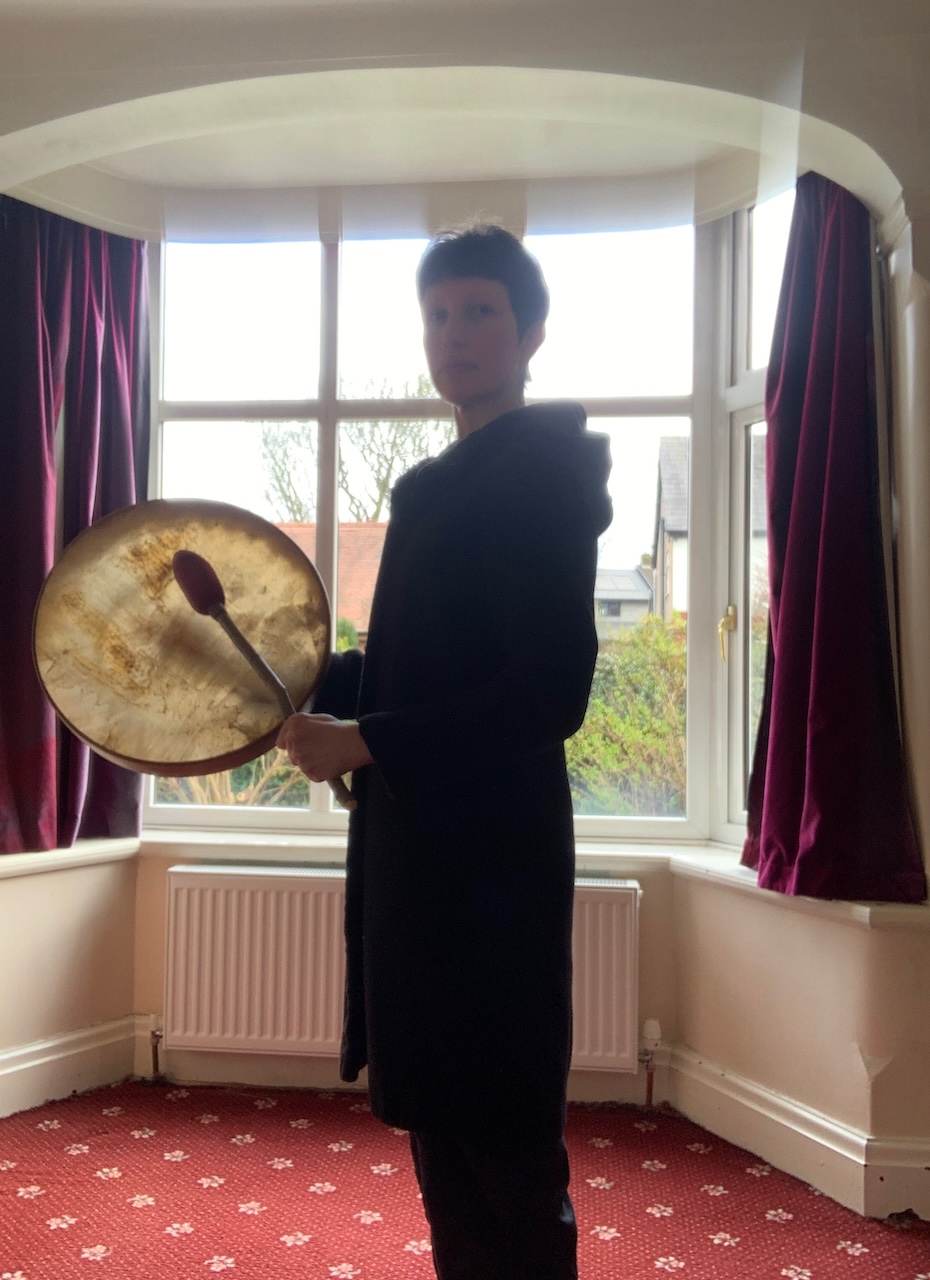
“You’re a nun with a drum,” Gwyn told me when I asked if I could bring monasticism and shamanism together. His joking words now summarise my path.

(1) ‘The 6 M’s on being a Carmelite’, Life as an OCDS Carmelite, https://ocds-carmelite.blogspot.com/2009/01/6-ms-on-being-carmelite.html
(2) ‘Our Nine Vows’, The Monastery of Annwn, https://themonasteryofannwn.wordpress.com/our-nine-vows/
(3) ‘Can a Lay person be a Carmelite?’, Carmelite Sisters of the Most Sacred Heart Los Angeleshttps://carmelitesistersocd.com/2013/lay-carmelite/
(4) Ibid.

Autism and Coping with Overload

Introduction

Over the past few years, since my late diagnosis of autism in 2021, I have been researching its affects on the brain, body and nervous system in order to gain a deeper understanding of the ways being autistic has impacted my life. 

Looking back it has brought many benefits such as being incredibly focused on my special interests, creativity, intuition and the ability to think outside the box. However it has also has its costs. My struggles with sensory and information overload have made it impossible to hold a regular job and being unable to handle publicity played a role in my failing to make a living from my writing.

This led me to seeing myself as a failure and not understanding why. My autism diagnosis coupled with more recent learnings has revealed the reasons I find everyday life overwhelming and helped me develop better coping strategies. I’m sharing my insights here in the hope they will help others.

What is autism?

The term ‘autism’ was coined by psychiatrist Eugen Bleuler in 1911. It is composed of the Greek autós ‘self’ and ism ‘a doctrine or theory’ and was used ‘to describe a schizophrenic patient who had withdrawn into his own world.’ (1)

It was first used as a diagnostic category in 1943 in a paper by a physician called Leo Kanner in a paper titled ‘Autistic Disturbances of Affective Contact.’ Here he speaks of eleven children with shared symptoms –  ‘the need for solitude; the need for sameness. To be alone in a world that never varied.’ (2)

The Diagnostic and Statistic Manual of Mental Disorders 5 uses two criteria  to diagnose autism – ‘Persistent deficits in social communication and social interaction’ and ‘restricted, repetitive patterns of behavior, interests, or activities.’ (3)

Part One: The Causes of Overload

Autism and Neurodevelopmental Differences in the Brain

Autism is a neurodevelopmental disability that has its basis in differences in the brain that began developing in utero. In The Autistic Brain autistic authorTemple Grandin speaks of some of the ‘anomalous growth patterns’ that she has discovered in her brain through neuro-imaging and how these relate to her life experiences. She tells us that her ‘cerebellum is 20 percent smaller than the norm’ explaining her lack of balace and motor coordination. (4) Her left ventricle is 57 per cent longer than her right extending into her parietal cortex – a disturbance which she associates with her poor working memory and lack of maths skills. Having more connections between her inferior fronto-occipital fasciculus (IFOF) and inferior longitudinal fasciculus (ILF) explains her excellent visual memory.

Most interestingly for me she notes: ‘My amygdalae are larger than normal. The mean size of the three control subjects’ amygdalae was 1,498 cubic millimeters. My left amygdala is 1,719 cubic millimeters, and my right is larger still — 1,829 cubic millimeters, or 22 percent greater than the norm. And since the amygdala is important for processing fear and other emotions, this large size might explain my lifelong anxiety… Enlarged amygdalae are also often seen in people with autism. Because the amygdala houses so many emotional functions, an autistic can feel as if he or she is one big exposed nerve.’ (5) 

I found this incredibly relatable as my sensory sensitivities and emotional responses to them have often made me feel like ‘one big exposed nerve’ too. Likewise my fear of being overwhelmed by sensations and emotions and having shutdowns and meltdowns has resulted in struggles with anxiety. These insights inspired me to learn more about the amygdala and its function.

The Amygdala and Emotional Responses

An excellent description of how sensory experience is processed and delivered to the amygdala and how this brings about an emotional response is provided by Bessel van der Kolk in The Body Keeps the Score. 

‘Sensory informationabout the outside world arrives through our eyes, nose, ears, and skin. These sensations converge in the thalamus, an area inside the limbic system that acts as the “cook” within the brain. The thalamus stirs all the input from our perceptions into a fully blended autobiographical soup, an integrated, coherent experience… The sensations are then passed on in two directions—down to the amygdala, two small almond-shaped structures that lie deeper in the limbic, unconscious brain, and up to the frontal lobes, where they reach our conscious awareness… The central function of the amygdala, which I call the brain’s smoke detector, is to identify whether incoming input is relevant for our survival… If the amygdala senses a threat… it sends an instant message down to the hypothalamus and the brain stem, recruiting the stress-hormone system and the autonomic nervous system (ANS) to orchestrate a whole-body response. Because the amygdala processes the information it receives from the thalamus faster than the frontal lobes do, it decides whether incoming information is a threat to our survival even before we are consciously aware of the danger. By the time we realize what is happening, our body may already be on the move.’ (6)

Van der Kolk not only describes brilliantly how the amygdala brings about our emotional responses but explains why we respond to situations which are threatening or overwhelming with extreme reactions such as outbursts of anger, panic attacks and in the case of autistic people meltdowns and shutdowns before the conscious mind comes on board. 

Intense World Syndrome

Van der Kolk links his insights into the amygdala to responses to trauma and in particular to PTSD. These connections also seem valid for autistic people for whom living in a world of sensory and information overload can be traumatic.

This is described in the ‘Intense World’ paper, published in 2007, as ‘intense world syndrome’. The authors say ‘excessive neuronal processing may render the world painfully intense’ resulting in autistics retreating ‘into a small repertoire of secure behavioral routines that are obsessively repeated.’ ‘Impaired social interactions and withdrawal may not be the result of a lack of compassion, incapability to put oneself into someone else’s position or lack of emotionality, but quite to the contrary a result of an intensely if not painfully aversively perceived environment.’ (7) For an autistic person sensory overload is traumatic and leads to them withdrawing from the world.

Sensory Gating Deficits

Another factor relating to overload in autistic people is differences in sensory gating. In Plant Intelligence and the Imaginal Realm Stephen Buhner describes ‘sensory gating channels… as tiny apertures or gates or doors in specific sections of the nervous system’s neural network… like a series of locks on the river of incoming sensory flows.’ (8) He speaks of how, as we grow up, these channels, for most people, narrow and close. Those with ‘gating deficits’ (such as autistics) remain open and they are more likely to suffer from sensory overload which can lead to ‘a breakdown in cognitive integrity.’ (9) 

Part Two: Coping with Overload

Self-Awareness and Befriending Inner Experience

In The Body Keeps the Score van der Kolk describes methods of coping with trauma that can also be harnessed by autistics to help cope with extreme emotional responses to sensory overload. Fundamental is restoring the balance between the rational and emotional brains, the pre-frontal cortex ‘the watch tower’ and the amygdala ‘the smoke detector’ or ‘alarm system.’

He says: ‘the only way we can consciously access the emotional brain is through self-awareness, i.e. by activating the medial prefrontal cortex, the part of the brain that notices what is going on inside us and thus allows us to feel what we’re feeling… and learning to befriend what is going inside ourselves.’ (10)

He tells us that ‘those who cannot comfortably notice what is going on inside become vulnerable to respond to any sensory shift either by shutting down or by going into a panic—they develop a fear of fear itself… The price for ignoring or distorting the body’s messages is being unable to detect what is truly dangerous or harmful for you and, just as bad, what is safe or nourishing. Self-regulation depends on having a friendly relationship with your body. Without it you have to rely on external regulation—from medication, drugs like alcohol, constant reassurance…’ (11)

Van der Kolk here describes my personal experiences perfectly. For most of my life I’ve been alienated from my body and the confusion of sensations and emotions that it throws at me and I’ve always felt out of control. Due to not being self-aware I have struggled in social situations with family, friends and work colleagues due to not being able to read people or control my reactions. I’ve been subject to outbursts of anger and panic attacks and depended on alcohol to tolerate socialising and to down-regulate afterwards. 

Becoming more self-aware and befriending my inner experiences has led to a more conscious and caring attitude towards my body and to feeling more in control.

Movement and Meditation as Medicine

Van der Kolk tell us: ‘If you want to manage your emotions better, your brain gives you two options: You can learn to regulate them from the top down or from the bottom up… Top-down regulation involves strengthening the capacity of the watchtower to monitor your body’s sensations. Mindfulness meditation and yoga can help with this. Bottom-up regulation involves recalibrating the autonomic nervous system. We can access the ANS through breath, movement, or touch.’ (12)

He says: ‘In contrast to the Western reliance on drugs and verbal therapies, other traditions from around the world rely on mindfulness, movement, rhythms, and action. Yoga in India, tai chi and qigong in China, and rhythmical drumming throughout Africa are just a few examples. The cultures of Japan and the Korean peninsula have spawned martial arts, which focus on the cultivation of purposeful movement and being centered in the present… These techniques all involve physical movement, breathing, and meditation.’ (13)

Van Der Kolk’s words really resonated with me because I have have been led my a combination of guidance and intuition to these practices. When I was diagnosed with anxiety in 2004 I was put on Venlafaxine and advised to take up exercise. I started going to the gym and learning a martial art – Taekwondo. Both forms of movement have helped me to regulate my stress levels. 

Since then physical exercise has been a massive help in self-regulating. I’ve been through periods of long-distance walking and running, practicing martial arts, cycling and my current passion is strength training.

Meditation is something I’ve found much harder. As someone who is incredibly imaginative and has a busy mind I’ve always been good at visualisation meditations but meditation in the more traditional sense of focusing on one thing or simply witnessing thoughts has been more difficult. 

I dismissed these practices as ‘Eastern’ and ‘not for the Western mind’ until I started practicing yoga in 2023 as a result of a sports injury and advice from my PT. One of my teachers, Bre, of Breathe and Flow, said if we find something difficult it’s often the thing we need most. So it was with yogic meditation.

As I have persevered I have found that focused meditation helps slow down my thoughts and calm my mind and training my witness helps prevent me from become so caught up in overwhelming sensations and emotions.

Disovering that by changing our breathing patterns through breathwork I can also change my emotions and my thoughts has been a life-changer.

Rhythmic drumming has also been helpful. As someone who has been practicing shamanism for many years being able to use various drumbeats such as the journeybeat to shift into trance and a slow heartbeat to calm my nervous system have helped me to cope with being overwhelmed.

Moving Up and Down the Polyvagal Ladder

Another discovery that has changed my life is learning about polyvagal theory. I first came across this on a Radical Embodiment course with my supervisor Jayne Johnson and Alex Walker. Introduced by Stephen Porges in 2004 it posits three states of the nervous system – social engagement (ventral vagal), flight or fight (sympathetic) and freeze (dorsal vagal). 

Coming to understand and be aware of these states has aided me to become able to move through them. When I feel anxiety and a shift towards flight or fight checking in with my nervous system to see what it needs to feel safe. When I feel myself getting burnt out and moving towards shutdown / freeze cutting down on social activities and taking time alone to rejuvenate.

Mastering the Gates

Buhnen mentions that having open sensory gating is not always a bad thing. In face ‘gating remains very open, especially among young children, artists, schizophrenics and specialists of the sacred such as shamans and Buddhist masters, and those ingesting psychotropics.’ (14) ‘In cultures that recognize the importance of this capacity, this group of people are trained to use their enhanced perceptual capacities for the benefit of the group.’ (15)

He speaks of how we can intentionally shift gating by ‘1) having a task that demands a greater focus on incoming sensory data flows, or 2) regenerating a state similar to that which occurred during the first few years of life, or 3) by altering the nature of the gating channels themselves by shifting consciousness.’ (16)

Focusing on a single task, whether it’s writing a poem or article, gardening, or lifting weights, has always been a great way of staying present and not getting overwhelmed by troubling sensations and emotions. Over the years training in both shamanism and meditation has enabled me to get better at recognising and shifting between states of consciousness. 

A yogic practice that I began learning in August last year on a course in meditation with the Mandala Yoga Ashram has been particularly helpful. This is Antar Mouna ‘Inner Silence’. In the first stage you focus on sensations – sound, touch, inner sight, taste and smell. You practice focusing on, for example, louder sounds, softer sounds, all the sounds, then shifting to touch, then all the sensations at once so you’re in a sea of sensations. Fundamental is not attaching any place or meaning to the sensations but simply experiencing them as they arise in themselves. I believe this to be a form of mastering sensory gating. It has been very useful in helping me to shift my attention away from and be less bothered by noise from my neighbours.

Slowing the World Down

So far I’ve mentioned things autistic people can do to cope with overload. It would also be of benefit if the world was a less overwhelming place. Grandin cites autistic author Donna Williams: ‘the constant change of most things never seemed to give me any chance to prepare myself for them… Stop the world, I want to get off…  stop the world, at least slow it down… The stress of trying to catch up and keep up… often became too much and I found myself trying to slow everything down and take some time out.’ (17)

Like Williams I’ve also found it difficult to keep up, in the workplace, in the blogosphere, on social media with quicker and quicker platforms appearing. As the world is not slowing down I’ve been left with no choice but to get off. I’ve abandoned hope of regular work, left social media, and cut down from reading around 50 different blogs and websites to a small select few.

Monasticism – Embracing Withdrawal

When Bleuler defined autism he depicted withdrawal into oneself as a disorder. Withdrawal is often associated with mental health issues and withdrawn persons are invariably encouraged to ‘come out of themselves’.

In contrast to this, within monastic traditions, withdrawal from the world is advocated as a positive movement and a necessary condition of attaining greater self-knowledge and knowledge of the Gods and of the universe.

For me being able to withdraw, having a safe home, a room I have made into a sanctuary, being able to spend time in prayer and meditation with my Gods and guides is essential for enabling me to go out into the world and do the shamanic work in person and online I eventually hope to make a living from.

I believe the world would be a better place if there were more quiet spaces, more sanctuaries, more monasteries to provide the opportunity for withdrawal. If withdrawal was embraced and not pathologised.

Shamanic and meditative techniques are time-tested methods of dealing with overload and trauma and it is in helping others to practice them and providing safe spaces to do so that is where my current passion lies as a nun of Annwn.

Footnotes

(1) https://www.news-medical.net/health/Autism-History
(2) Grandin, Temple; Panek, Richard, The Autistic Brain, (Ebury Publishing, 2014), p12
(3) Ibid., p121
(4) Ibid., p36
(5) Ibid., p41 – 42
(6) Kolk, Bessel van der. The Body Keeps the Score, (Penguin Books, 2014), p60 – 61
(7) Grandin, Temple; Panek, Richard, The Autistic Brain, (Ebury Publishing, 2014), p97 – 100
(8) Buhner, Stephen Harrod. Plant Intelligence and the Imaginal Realm, (Inner Traditions, 2014) p31-33
(9) Ibid. p 33
(10) Kolk, Bessel van der. The Body Keeps the Score, (Penguin Books, 2014), p206
(11) Ibid, p97
(12) Ibid., p63-64
(13) Ibid., p207-208
(14) Buhner, Stephen Harrod. Plant Intelligence and the Imaginal Realm, (Inner Traditions, 2014), p48
(15) Ibid. p43
(16) Ibid. p59
(17) Grandin, Temple; Panek, Richard, The Autistic Brain, (Ebury Publishing, 2014), p98
Review – Hidden: A Life All For God

This documentary records the daily lives of the Trappistine Sisters at Mount Saint Mary’s Abbey in Wrentham, MA. Although I am a Brythonic polytheist not a Christian witnessing their monastic lives and devotion touched me deeply.

The story begins with one of the sisters lighting the candles in the chapel at 3am prior to vigils at 3.20am which is followed by the Great Silence – a time for silent prayer. This resonated with me very much as an early riser who gets up at 4am to pray to my Gods and spends time meditating in the sacred hours before the rest of the world wakes up and the bustle of everyday life begins. Sadly I can only imagine sharing it with other polytheistic monastics.

The sisters are Benedictines and keep the seven canonical hours of prayer (1) with compline at 7.20pm. This is coupled with private prayer and study including lectio divina ‘Divine Reading’. In accordance with the motto of Saint Benedict ora et labora ‘pray and work’ this is balanced with physical labour. The nuns work in a ‘state of the art high tech candy factory’ and also on a farm where they look after animals including keeping sheep for wool. I related strongly to the sister who found spiritual fulfilment in her compost duties. The sisters see no difference between the two – “Life here is a continual prayer.”

Although the nuns come from differing places and backgrounds and admit getting on isn’t always easy they are united by one thing – their love of God. “Everything is centred on fostering a deep personal relationship with Jesus Christ.”

Several of the nuns share their moving vocation stories, speaking of how they were called by God and came to recognise Him as “the one before all others”.

“Why did you come?”

“It’s Him.” 

“What do you seek?”

“It’s Him.”

“Why do you stay?”

“I can’t live without Him.”

Their words echoed exactly how I feel about my patron God Gwyn ap Nudd.

The functioning of this monastic community is made possible by the silence. One of the sisters says their lives are “100 per cent community and 100 per cent silence not 50 / 50”. Their “silence”, in which they commune with God in everything they do throughout the day, “is part of the conversation.”

As somebody who struggles with idle chatter but enjoys quiet company I can imagine the only way I could live with others would be if life was mostly silent.

The documentary records one of the younger sisters making her solemn profession, her life long vows. This was very moving to watch and left me with a yearning to be able to make my lifelong vows with my monastic community.

I came away from this video feeling I identified with the sisters in all ways except for being a polytheist rather than a Christian and feeling I’m closer to monotheists than most other Pagans in centring my life on my patron God and in believing that God/the Gods are real and are worthy of worship. (2)

I’ve watched it a few times now and always return to it when I feel alone in my devotion (although this is less now since founding the Monastery of Annwn).

(1) Matins / vigils (nighttime), lauds (early morning), prime (first hour of daylight),  terce (third hour), sext (noon), nones (ninth hour), vespers (sunset), compline (end of the day).
(2) In Paganism the views on Deity range widely and include: 
*The Gods don’t exist (atheism).
*We imagined up the Gods or they are parts of our psyches (psychological).
*The Gods are archetypes (archetypal).
*The Gods are real but we shouldn’t bother them – “I’’m not a God-botherer.” 
*The Gods are real and we can work with Them and celebrate Their festivals but They don’t demand our worship (non-Polytheistic Witchcraft, Wicca and Druidry).
*The Gods are real and are worthy of worship (Polytheism). 
*The Gods are real and we should centre our lives around Them (Devotional Polytheism).
*The Gods are real and we should withdraw from the secular world as far as possible to centre our lives on Them (Polytheistic Monasticism).

The Distant Island and Coming Home

A week ago a journey undertaken for me by my spiritual mentor, Jayne Johnson, led me to meditating on a distant island within a ruined clochán. To a vision of a ‘last nun’ bricked up within a corbel stone hut with the birds of the sea and an eagle, a raven, and an owl bringing her food and stories. Alone, but for the crashing of the tides, of the calling of the gulls. Her own breath.

The next time I set out to meditate on this island I found a part of myself resisting and instead wanting to root into my home, my garden, specifically to go to our raspberry patch, to taste a raspberry, to watch the insects. 

Then, the next time I tried to depart, I was posed the question of whether I could physically give up my home, my possessions, my comforts – regular meals, my running, my gym, to exist on gifts of food and stories in that far off place.

My answer was ‘no’ and as I spoke it I felt that place being shut off for me. A crash of thunder. A dark veil coming down. Access forbidden. My connection gone.

It left me feeling inferior to those who were able to make those sacrifices. To those proper monks and nuns. Then I heard another voice telling me it’s ok to ‘come home’ and recognised it as belonging to Old Mother Universe, Ceridwen.

There is a longstanding traditon of going far away, doing extreme things, to have spiritual experiences. The Desert Fathers. The peregrini. The anchoresses who bricked themselves up. Those who go to Peru to take ayahuasca or take to the Welsh mountains or Devonian moors for wilderness fasts.

It’s not something I’ve felt the need to do or feel that it would be psychologically safe for me to do as an autistic person prone to anxiety attacks and melt downs who already exists too close to the edge of madness. 

A little like Alice I’m able to imagine a thousand impossible things before breakfast. My challenge has not been accessing non-ordinary experiences but discerning what comes from my own mind and what comes from the Gods. 

For that I need to be rooted in the land where I live, in my routine of devotional practices to my Gods, my creativity, regular meals, exercise. 

I find when I break with this I don’t get divine madness – just insanity. 

Prior to covid I did travel a little mainly to visit sites in the Welsh myths or places associated with my patron God, Gwyn, such as Glastonbury Tor and Cadair Idris. This resulted in some insights and inspiration but 99% of my awen comes from having a regular prayer, meditation and journeywork practice and from simply slogging away at my keyboard in an old fashioned writerly way.

A good many of my answers to prayers and the visionary nuggets at the core of my best poems and stories and the novels I am working on have come when I’m out running or walking locally or in the early hours in bed at home. 

For me becoming a nun of Annwn has been a homecoming not a going away.

Home from conservation and ecology work that took place on a combination of local nature reserves, wastewater treatment works and residential properties but also took me as far away as Manchester, Cheshire, and the Wirral.

Home to my room, my monastic cell, in the house I live in with my parents, which I have only moved away from twice since we moved there when I was four.

Home to our garden where I tend and grow wild and cultivated plants and herbs.

Home to my body and to learning about what with proper nourishment it can do. How far it can run, what weights it can lift, what shapes it can bend into.

Home to a life of devotional creativity centred on my relationship with Gwyn.

There’s a place for going away but also a greater need for coming home. For accepting ourselves as ourselves, for knowing not only our extremes but our limits.

Running as Prayer

I’ve enjoyed running on-and-off since my early twenties as a form of exercise that has been really beneficial to my physical and mental health. I haven’t been able to run very long distances due to problems with anterior knee pain ‘runners knee’ and with my sciatic nerve. My furthest is 15 miles.  Since starting strength training I’ve been running around 30 miles a week relatively injury free.* Last year I beat my goal of running a sub 2 hour half marathon with the time of 1 hour 54s. 

Before I took monastic vows as a nun of Annwn one of the things I was concerned about was whether I would still be allowed to run and continue with my strength training. When I looked into rules about exercise in monastic traditions I found they differed widely. For example in Thailand the Buddhist monks are not allowed to ‘do weight lifting’ or ‘jog’ as it is ‘not proper’ (resulting in obesity)**. Contrastingly another Buddhist order, ‘the Marathon Monks of Mt Hiei’ in Japan, have to run distances between 18.6 miles a day for 100 days to 52 miles for 100 days over a seven year period.***

It is also notable that many monastic orders incorporate martial arts such as the Chinese Shaolin Monastery, the Hindu Naga Sadhus, and the monks of the Knights Templar during the Crusades.

The moment I thought about this question in relation to my patron God, Gwyn ap Nudd, who is a warrior and a huntsman, I knew I didn’t really need to ask as He has encouraged me to run and do Taekwondo (before my local club closed) and more recently to take up strength training. I often feel closer to Him when I am running through the woods than when doing more formal devotions. 

When I formulated the nine vows for the Monastery of Annwn I received the gnosis that one of them must be ‘to take care of our health’ and that could include exercise for those able to do it.

Over the past couple of years, when I am ‘in the zone’, I have found myself filled with energy that I can gift back to the Gods and the land in ad hoc prayers of thanksgiving as I have been running.

As a couple of examples this is one for my river Goddess, Belisama, as I run beside the Ribble – 

‘My beautiful river, my beautiful river, my beautiful river – joy – my beautiful river, my beautiful river, beautiful river.’

This is a fragment of a praise poem that I tend to change in accordance with where I’m running – 

‘I praise the land, the trees,
I praise the sound of running feet, 
I praise the skies, I praise the clouds, 
I praise the sound of feet so loud…’

When I’ve had bad days and am in no mood for words I’ve offered my perseverance and effort to my Gods. 

More recently I have begun using running as a form of prayer to bring myself closer to Gwyn reciting this ‘mantra’: 

‘My breath with Your breath,
my heart with Your heart,
my feet on Your path,
You and I as one.’ 

I am embracing running as a physical, mental, and spiritual practice that brings me into unity with my God.

*Except for my latest blip – I pulled my sciatic nerve in my left glute and had to cut down for a bit.
**https://inews.co.uk/news/world/obese-buddhist-monks-exercise-health-239763
***https://marathonhandbook.com/the-marathon-monks/

Shattering the Nunnery

Somewhere between here and Annwn

a part of me is cloistered

thinking already
about the spring flowers

as she paints another saintly visage.

In another life she has been drinking
the truth from a forbidden cup.

The saints no longer look the same:

their hands are red with blood and filled
with splinters and chips of stone
from shattered pagan idols.

The stained glass is blood stained.

Her voice catches on the songs and tears
as if upon nails – she SCREAMS

and the stained glass shatters.
The nunnery falls down.

~

This poem, which is based on a spirit-journey, signals my release from a malaise I have been calling ‘nun envy’. Although I realised Christianity was not for me when I experienced its dull and stuffy sermons and the patriarchal presence of the Christian God in my local C of E church as a Brownie at church parade a part of me has longed for learning and ritual and shared devotion in a religious community.

I have been deeply jealous of Christians because they have a system of support for people who have a sense of vocation. For those who are called to serve God there are ways of living by this calling. Vicars and priests receive an education and a salary for their work and nuns and monks lead lives of dedication to God based around prayer, manual labour, and artistic and intellectual pursuits without worrying how to pay for housing or food. When I hit thirty-five I realised that was the last chance I would have of becoming a Christian nun and living what looked the ideal life except for… the Christianity.

Of course, I decided against, because I did not want to betray my god to the God and saints of the religion that destroyed the pagan traditions and, in particular, demonised him and the Otherworld he rules.

Yet, still I kept yearning for what Christian monastics have. Researching local monasteries and abbeys. Finding myself drawn to Preston’s Carmelite monastery.


Visiting the Tabor Retreat Centre, which was once a Carmelite nunnery but is now run by the Xaverian Missionaries (this provides regular meditation classes, Lectio Divina, short courses and even a book club as well as retreats which I’d have loved to go to … if only I was Christian!).


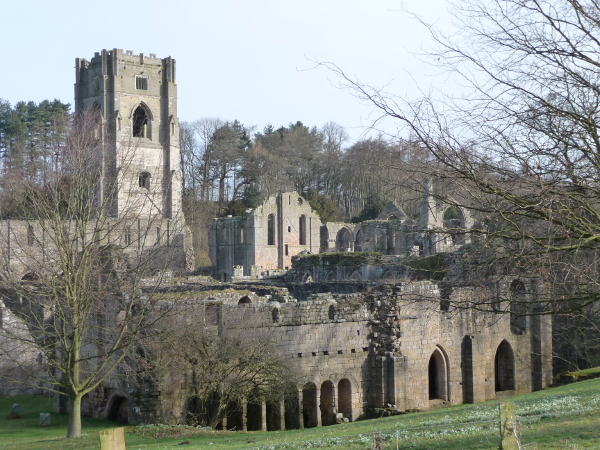
Wanting to go back to the ruins of Fountains Abbey (which I visited every weekend when I worked at the Yorkshire Riding School) to sit and mourn something I will never have.

Fountains Abbey II
A strange impulse I believe may be rooted in a past life as a nun. A few years ago when I read in a biography about the ritual burial of Julian of Norwich – entombed like Christ to become his bride and an anchoress who would never see the outside world again I felt like I was being buried alive. As if I’d experienced something similar before. I flung the book into my wardrobe, slammed the door, and went for a walk feeling immensely grateful for my freedom to see trees and taste the fresh air.

I’ve always had a push-pull relationship with Christian mysticism, art, literature, and song. A yearning for its richness and beauty but a dislike of its unhealthy obsession with suffering and punishment.

As a consequence of years of learning about how nearly every splendid church and cathedral is based on the takeover (violent or non-violent) of a pagan sacred site; how nearly every haloed saint is associated with the defeat of a pagan mythic figure or with the slaughter or conversion of pagans; how the Christian tradition is founded on the death of paganism, it has finally lost its fusty-fingered hold on me.

Being an awenydd attempting to reweave the ways between Annwn and This-modern-world isn’t easy. But I think I will be able to do it better and more happily now my yearning for what Christians have and my nun envy is gone. From the ruins of the shattered nunnery may new shoots and tendrils grow.

Fountains Abbey