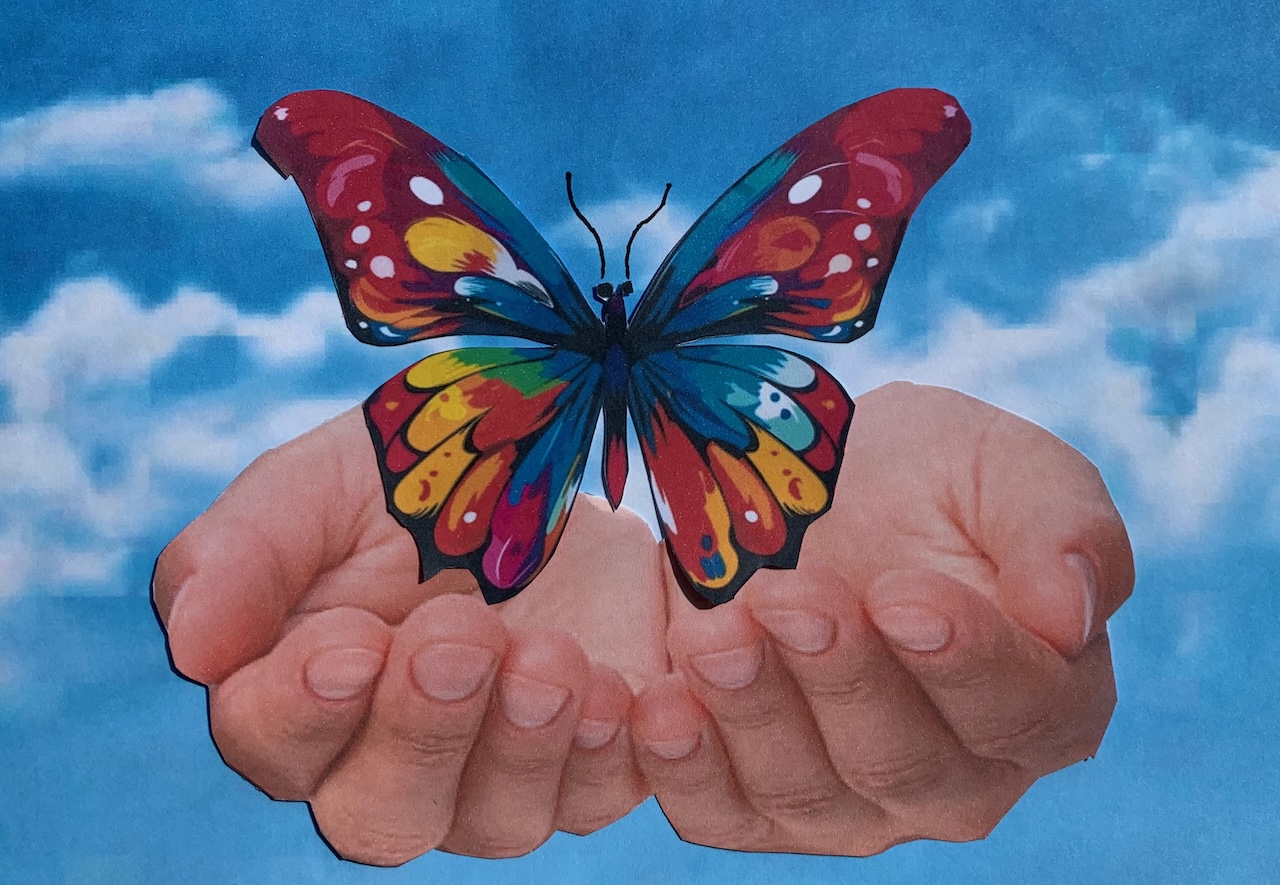
Soul Retrieval and Soul Loss

Soul retrieval is a central practice within core shamanism. It was (re)introduced to the West by Michael Harner in the 1970s following his study and practice with indigenous shamans around the world. 

From a shamanic perspective, one of the main causes of illness is soul loss. This occurs in moments of trauma wherein the pain is so great a part of the soul departs from the body in order to preserve the intregrity of the whole. Soul loss can occur as a result of major trauma such as accidents, near-death experiences, war-time experiences, abuse and neglect. It can also be brought about by ongoing traumas such as bullying and being trapped in a controlling relationship. What constitutes trauma for one person might be different for the next. We can also, consciously or unconsciously, send soul parts away in order to fit in with family, friends, or the demands of society. These are often child parts, sensitive parts, or wild parts that do not cohere with social norms.

Within a shamanic context the soul parts can depart to various places. They can remain stuck at the site of the trauma here in the Middle World or take flight to a favourite place where they feel safe. They can also go to the Upper World or the Lower World. It is common to find they are looked after by guides or ancestors or protected by guardians.

The technique for bringing these missing soul parts back is called soul retrieval. It is possible for spontaneous soul retrieval to happen – for soul parts to come back on their own – and for a person to be able to find or call back their own soul parts. However, most often, because a person has sent their soul parts away and they no longer trust them or believe being with them is safe, it takes the skill of a shamanic practitioner to bring them back.

In a soul retrieval the practitioner journeys into the spirit realm with their guides to find the lost soul part. Negotiations with the protectors and with the soul part itself are usually needed to persuade it to come back. Soul parts will rarely return if the client is in the same conditions as when they left – for example trapped in abusive relationship or in an intolerable job. The soul parts frequently ask that the client make life changes to accomodate them (if they have not already done so) and might also ask that they make room for their needs – such as time for play or for spirituality or creativity. They might also ask for ritual acts such as the client eat their favourite food on a particular day, wear their favourite clothes, or do a favourite activity. Once the negotiations have been completed the soul parts sometimes need healing. After this, the practitioner returns and blows the soul part into the client’s body (usually a chakra) then rattles around to seal them in. The journey is then discussed with the client and they are advised on integration.

The main symptom of soul loss is feeling like you are not all here or a part of you is missing. Other symptoms include lost or fragmented memories and recurring dreams. Often, talking therapies fail to work because they are not addressing the parts that are missing. This fits with what, today, we call PTSD. In fact, the concepts of soul retrieval and soul loss fit very well with contemporary findings in neuroscience which demonstrates that trauma causes certain parts of our brain to go offline (causing parts of ourselves to disappear). Also, with psychotherapy, particularly Internal Family Systems, wherein protector parts are negotiated with and exiled parts integrated back into the whole. Following soul retrieval it is common for a person to feel more grounded and whole, for memories to return, and recurring dreams to ease.

Like most people I’ve experienced a fair amount of trauma. I’m autistic and was bullied throughout school and have also been bullied in the workplace. As a result I was often disassociated and retreated into fantasy to escape. I also depended on alcohol to self-medicate my anxiety for most of my life. Having a soul retrieval with my mentor and retrieving a soul part from one of my past lives have helped me to be happier and more present in the world. 

My patron God, Gwyn ap Nudd, gathers the souls of the dead in the Brythonic tradition. He played a role in my soul retrieval, guiding my mentor to one of my lost soul parts and bringing it back to me. This experience was very emotional. Afterwards I realised that gathering lost soul parts was also His role. From thereon I knew soul retrieval was to be an important part of my work.

For my training towards becoming a shamanic practitioner I completed ten case studies. Soul retrieval proved popular because so many people relate to the concept of soul loss and recognise they are suffering from it. Finding and returning lost soul parts has been challenging but beautiful and inspiriting work and a fulfilment of service to both my clients and my God.

At first I was anxious about doing this healing for a couple of reasons. Firstly, there was the fear that I’d be completely useless at it and unable to find the soul parts. This was assuaged a little when one of my crow guides joked that I’d find it easier finding the soul parts than the people they belonged to. 

Secondly, I was nervous about interacting with other people on such a deep level as an autistic person with social anxiety who has little experience of interpersonal relationships. Would I be able to show adequate care and kindness towards my clients and the lost and wounded parts of their souls? To make the shift from being an anxious and defensive person who has survived in a neurotypical world by masking to being more open-hearted I had to put a lot of trust in Gwyn and my guides and the people I was working with. Following my prayers I was able to drop down from the chatter in my head to working on a more intuitive and heart-centred level. This enabled me to interact with clients empathetically face-to-face and during the journeys. Not only that, on many occasions, I shared their emotions – both joy and sorrow, and even ended up hugging a couple of people afterwards (I never hug!).

During the healings I recovered soul parts from various places. Some remained at the site of trauma in the Middle World often within urban landscapes. Others had chosen to remain in or had fled to familiar places Middle World such as family homes, woodlands and beaches. A couple had escaped to fairytale landscapes in the Upper World. Some had gone to or were stuck in the Lower World – being submerged in underwater places or trapped in underground tunnels were common themes. Some of the soul parts had otherworldly guardians. Others had been looked after by ancestors, animal spirits, or favourite pets who had passed over.

The soul parts varied in age and appearance. Many were child parts. I was surprised to find a foetal part. I’d come across very young and baby parts but had been unaware that parts could leave whilst in the womb. I was equally surprised by the appearance of an elderly part. I hadn’t realised we contained or could lose parts older than our current age but this made sense within the context of the soul containing all our possibilities within it. Whilst most appeared as human some at first appeared as objects or essences.

In order to return, some of the soul parts simply wanted loving and nurturing. Others asked the clients to make room for emotions such as fear and joy. In some instances specific rituals were given which helped with the integration.

I didn’t have any problems journeying and so far have not returned without any soul parts. Contrarily, after discussing the healings with my mentor, in a couple of cases I feel I might have been overtrying, pushing too hard to find the soul parts, rather than letting the journeys unfold at a slower pace and allowing for distractions that might provide other revelations about a client’s problems.

Another thing I noticed was my reactions to the feedback (provided a month later). I was really attached to my clients providing positive comments and assuring me that all the classical effects of a soul retrieval had been felt. In a couple of instances life stresses had got in the way or clients had felt less certain about whether the soul parts had returned making me feel I’d failed.

When I spoke to my mentor about this she reminded me that spirit does not follow the Western model of cause and effect. Shamanic healing isn’t linear. When we’re working with spirit / energy / the web of life, if we change or unpick something in one place it will alter something elsewhere in space and time but it might not be the thing we expect. Also, it is common for clients to have ups and downs and for the healing work to bring up issues that need to arise and to be integrated and processed. These issues of having certain expectations and being attached to results are something I need to work with.

Overall I felt the soul retrievals were a success. On all occasions my clients had powerful and moving experiences and experieced the return of soul parts. In my feedbacks it was repeated that they felt safe and comfortable working with me, that they were listened to, that I was calm and… patient. I still have alot to learn but my foundational training in soul retrieval is complete and I’m looking forward to further developing my skills with this practice.

I am now offering soul retrieval at a student rate of £30 for a 2 hour session (1/2 hour online interview and 1 1/2 hour healing online or in-person for local people).

Power Animals and Power Animal Retrieval

The term ‘power animal’ was introduced to the West by Michael Harner as one of the central concepts within core shamanism. It is borrowed from the native North American peoples and is interchangeable with ‘guardian spirit’.

A power animal helps us to connect with the natural world and the spirit world. According to Harner its presence provides us with energy and good health, whereas when we lack a guardian spirit, we are no longer power-filled and this leaves us open to the intrusive energies that cause illness.

Harner notes ‘the individual characters represent entire species or larger classes of animals… the entire genus or species… a person usually possesses not just the power of a bear, or of an eagle, but the power of Bear or of Eagle.’

Power animals or guardians spirits can be found across cultures. It’s a concept I relate to deeply because I connect so strongly with Horse. When I was little I used to run round the playground playing horses (until I got it bullied out of me). I managed to persuade my parents to let me go horseriding and spent all my time outside school helping out at a local riding school in exchange for free rides and later in life worked with horses.

When I was eighteen I got a tattoo of a white winged unicorn on my back and, later, when I discovered shamanism, she appeared as my guardian spirit. It didn’t take me long to work out that my power animal was Horse.

Since our ‘meeting’ (I believe she’s always been there) she has brought an abundance of joy and energy into my life whether out walking or at the gym or when she carries me between the world in my shamanic journeywork.

I’ve had relationships with other power animals and have a regular ‘team’. It’s common to have one or more power animals who stay for life and others who appear to guide us through certain life lessons then depart once they are done. For example, a one-legged raven guided me on my explorations of the Old North then disappeared and I haven’t seen him since.

Different power animals bring different powers and qualities into our lives. We can call on their power and shapeshift into them – a practice seen in the Brythonic culture wherein warriors invoked their energy as bulls of battle, wolves of war and ravening ravens when they fought on the battlefield and in the Anglo-Saxon and Norse cultures where we find the Berserkers ‘Bear Shirts.’

Such relationships are reciprocal with the human benefiting from the animal’s power and the animal benefiting from being able to express its power in the world.

The absence of a power animal results in power loss, which can cause ill health. The shamanic healing for this is a power animal retrieval. This is a practice that Harner borrowed from the native North American peoples. Herein a shamanic practitioner journeys to the Lower World to bring back a power animal for the client. Harner tells us, ‘the secret to recognizing the power animal is a simple one: it will appear to you at least four times in different aspects or at different angles.’ For example, one might see Stag at a distance, shapeshift into Stag, see Stag on a cave wall, then ride on Stag. Once the identity of the power animal is established, the practitioner gathers the power animal into their arms and returns to blow them into the body of the client (Harner notes the Jívaro blow the animal into the chest and then into the fontanelle but I have been guided to blow them into one of the chakras) and then rattles around the client to seal them in.

I first learnt power animal retrieval at The Shaman’s Pathway workshop with the Sacred Trust and have progressed towards using it to heal clients in my one-to-one shamanic training. Including the person I worked with in the introductory workshop I have so far completed six power animal retrievals. I have found these healings to be a source of power and wonder for both the client and myself as I have helped (re)unite them with their guardian spirits.

I have used the traditional way of journeying for a client then reporting back and other methods taught to me by my mentor which provide more scope for agency and participation for the client. These are speaking out loud as I journey so the client is more immersed, taking them with me on the journey so they can look around and interact, and holding space for them to journey.

Each journey was unique and ranged from one client being courted by every animal in the forest to another to whom only one animal appeared. In some instances the client’s power animal turned out to be the one who had consistently shown itself as the most powerful presence in their lives, whereas others were less frequent guides or a complete surprise.

I was astounded by the immense power and intelligence of other people’s guardians. Each was unique and it was a privilege to meet and interact in such a close way and to play a role in helping clients to establish and deepen their relationships with them. When I was sealing agreements between the client and their animal I felt a sense of being a bridge between the worlds and, somewhat laughably, like a celebrant, as they made their ‘vows’.

This work was a step up from the guidance journeys as there was more responsibility in finding a power animal who would bring energy and health to the client and might be a friend and source of guidance and wisdom for life. I feel I met the demands, ensuring that I was fully present for each person, listening to their needs, and paying full attention during the journeys.

One of the things I was slightly uncertain about was Harner’s method of recognising the power animal from four angles. In an introductory workshop to core shamanism I got an animal who showed themselves in four different ways (Panther) but who didn’t turn out to be my power animal (Horse). 

I was also unsure about this method of recognition because there is no evidence that it was ever used in British or other Western European traditions. However, I went with it for the journeys and found when doing  power animal retrievals for clients it was integral for identifying the power animal from all the other animals and could think of no better method.

The greatest challenges I faced were self-doubt and the desire of my ego to get things ‘right’ by providing a journey that matched those of shamanic authors. Being aware of these tendencies I made sure I trusted and stayed with what was shown by my guides, the spirit world, and the spirits we met.

The effects of the healings for the clients have varied from experiencing more power and joy in their lives and new or deeper connections with their power animals, to ailments easing and being able to come of some medications. It has been a beautiful and edifying experience for clients, their guardians and myself.

I’m very happy to announce that I have now completed my power animal retrieval training and am offering this healing at a student rate of £30 HERE.

Core Shamanism and its Advantages and Disadvantages

Shamanism was conceptualised and reintroduced to Western Europe in the 1970s by an American anthropologist called Michael Harner. Harner travelled to the Amazon in the late 1950s and 1960s and lived with the Shuar and Conibo peoples to study their religion. When he reached the point he could find no more information one of the Conibo elders told him he must experience it directly by drinking ayhuasca. The visions he experienced served as proof of the existence of a spiritual reality. He was initiated into both tribes as a shaman and trained in their practices. He then travelled the world visiting shamanic peoples and learning from them.

From this process Harner extracted the core of world-wide indigenous shamanisms without the cultural rites and trappings and made it accessible to Westerners. Harner-style shamanism is therefore also referred to as core shamanism.

Harner claimed that at the core of all shamanic cultures is the belief in three worlds. The Middle World is unique because it has both a physical reality (this world) and a spiritual reality (which might be seen as the other side of this world). Then there is the Lower World, below, where we find natural landscapes and nature spirits such as animals, plants and trees. We might also find mythic and folkloric beings, Gods and Goddesses and ancestors (who are most often from ancient shamanic cultures). In the Upper World, above, we find ethereal and heavenly landscapes and the spirits of clouds, the sun, the moon, the stars, along with the Gods and spirits associated with the heavens in world religions including the Christian God and angels. We also find ascended ancestors such as Christian saints, Hindu gurus, Buddhist boddhisatvas and wise elders such as philosophers and magicians.

It was Michael Harner who brought the shamanic journey to the forefront of shamanism and backgrounded the traditions of inviting the spirits to be here with us or into our bodies. A core shamanic journey has a set framework and structure.

First and foremost one always journeys with an intention. This is the focus of the journey and keeps it on track, preventing the practitioner from getting side-tracked or lost. The intention can be to ask for guidance on a problem, for healing, to find something that has been lost, or simply to explore or spend time with the spirits. It is essential that the intention is held to throughout the shamanic journey.

The shamanic journey always begins at a departure point. This is somewhere in the physical world that is meaningful to the practitioner. To get to the Lower World it must be a place from where one can descend and can be a natural feature such as a cave, a pool, a spring, a tree root, or a manmade feature like a tunnel or a subway. For the Upper World one can take flight from a hill or mountain, or a church tower, or go up a chimney, or travel upwards on smoke or up a ladder. In the Middle World we merely need to enter a trance state to travel its spiritual otherside.

It is through Michael Harner the shamanic journey came be primarily associated with a drum. Harner trialled many different methods of entering a shamanic trance and reached the conclusion that a drumbeat is the quickest, safest and most effective. A beat of 4 – 7 beats per second shifts the mind very quickly into the theta state (gamma – highly focused, beta – everyday busy mind, alpha – meditative, theta – daydream-like, delta – sleep). It offers both a safe way to journey and come back. To signal the end of a journey a call-back beat is sounded – 4 rounds of six sharp beats. This is followed by a minute or so of rapid fire beats. This tells the person who is journeying to thank whoever they are communicating with, then turn around and retrace their steps to their departure point following the same route as they went in. This method brings them back, well-grounded, into their body.

There are also a number of core concepts and practices. One of the concepts is that each of us has a power animal. This is drawn from the northern Native American cultures and is seen to be a spirit animal who is with us throughout our life and is the source of our personal power. Our relationship with our power animal is usually deeper and more personal than with other animal spirit guides who tend to come and go. Power animals are most often found in the Lower World.

Another core concept is the spirit teacher who is usually found in the Upper World. This teacher, again, unlike other human and spirit teachers, tends to be with us throughout most of our lives supporting us and offering guidance through life’s lessons.

One of the best known core practices is soul retrieval. This is based on the notion that when we experience traumatic events a part of our soul is shocked out of us and takes refuge in spiritual reality. We also send parts of our souls away in order to fit in with consensus reality in the physical world – these are often parts that are child-like or wild and might prevent us from attaining material success and financial security. Because those parts are long lost or because we sent them away it takes a shaman’s skill to bring them back. Spontaneous soul retrieval can also occur when we make positive changes in our lives that appeal to lost soul parts, calling them to return. Other core practices include extraction – the removal of harmful energies, depossession – the removal of harmful entities, and psychopomping.

Core shamanism has its advantages and disadvantages. Its main advantage is that it is not tied to one culture or religion, thus making it universal and available to everyone. It also allows practitioners from across varying traditions to practice together.

The disadvantage of this, however, is that the practices take place without the cultural rites for interacting with local and communal spirits such as prayers and offerings, there is no mythic framework or roadmap of the spiritual reality, neither are there traditions of initiation or tribal elders to oversee the initiatory and learnng processes.

Yet the universality and proliferation of core shamanism is overall a good thing as it is giving people back their birth right – the ability to journey to the spiritual reality and commune with helping spirits in order to gain guidance, healing and inspiration.