Most people in today’s world who have an eating disorder have heard that voice. A lot of people who don’t have an eating disorder have likely heard it too.
Not feeling thin enough is an obvious driver of eating disorders such as anorexia, bulimia and binge eating disorder. We live in a culture where we’re surrounded by a surplus of food with the most readily available foods such as take aways and things in wrappers being processed and full of fat and sugar. Yet, we’re pressured to be thin. Thin bodies are associated with self-discipline, with eating ‘good’ foods like lean meat and salads, with being active. Fat bodies are associated with a lack of control, with eating ‘bad’ foods like chips and chocolate, with laziness and avoidance of exercise. This drives people to unhealthy dieting, which can lead to an eating disorder.
Yet, thin societal ideals have only been around for a couple of centuries. Eating disorders haven’t always mainly been about thinness. They might instead be related to other feelings of not being enough. Examples throughout history of anorexia mirabilis, ‘wondrous’, ‘miraculous’ or ‘holy anorexia’ were more to do with not feeling holy or special enough.
The earliest known example is Blaesilla, a Roman woman who lived in the 4th century. She was the daughter of Paula of Rome, a saint and Desert Mother, who became abbess of a convent of nuns under the strict ascetic regime of Saint Jerome.
Paula of Rome and her nuns
Blaesilla led a ‘merry life’ until, aged eighteen, she married, was widowed, then criticised by Jerome for her ‘frivolous’ behaviour. Like her mother, she began to follow the ascetic methods of Jerome. She took to wearing plain clothes, studied hard, prayed harder and fasted to extremes. The extremity of her fasting killed her at the age of twenty. It might be argued that not feeling holy enough in the face of the demands of Jerome and the status of her mother drove her to prove her worth by self-starvation.
It might, perhaps, be said that feelings of not being holy enough also drove other female religious figures in medieval times, such as Catherine of Siena, to starve themselves to death. Catherine gave up meat at a very young age. In her later life, she barely left her cell and went almost entirely without food or sleep. She wrapped an iron chain around her body and scourged herself until she bled. Still, her penances weren’t enough. She eventually came to reject all food except for the bread and wine of the Eucharist, for which she, unsurprisingly, developed such an extreme and unseemly hunger some members of the clergy refused to give it to her. She died at the age thirty-three.
In Hellenistic culture and during the medieval period, restrictive dieting and the resulting thinness were associated with self-discipline and religious purity. Fasting and being thin made a person feel more holy, more enough.
The ‘fasting women’ of the seventeenth and eighteenth centuries, such as Martha Taylor, Anne Moore and Mary Thomas, who were renowned for surviving for extended periods of time without food were seen as living ‘wonders’ or ‘miracles’. Their fasting has been linked to illness and trauma, but also might be seen to be related to feelings of not being enough.
At this point, it’s worth highlighting that the majority of historic examples of people suffering from eating disorders are female and this continues today with 75% being women and 25% men. I believe this to be a reflection of the patriarchal nature of Western European culture since the dominance of Christianity.
Women, subordinate to men, have rarely felt they are enough. Thus, female religious, unable to become clergy, turned instead to proving their worth and holiness through extreme ascetic practices including self-starvation. Later women starved themselves as they had no other means of leading wondrous lives.
Over the last couple of centuries, the media has constantly been sending out the message that we’re not enough – not thin enough, not fit enough. Social media influencers reinforce this by showing off their toned bodies and food and exercise regimes. This can lead to restrictive eating and over-exercising and thereby to Anorexia nervosa and Anorexia athletica. Feeling we are not enough can also cause us to comfort eat, over-eat, or binge, which can lead to Bulimia nervosa (for those who purge) or to binge eating disorder. It is common for a person to switch between eating disorder diagnoses.
***
My eating disorder began when I was six as a slightly tubby autistic child. I was neither thin enough nor normal enough to fit in, so I got bullied. This led to comfort eating, binge eating, then to binge eating disorder. I started restricting and over-exercising when I was thirteen because I wanted to be thinner and more normal (thin = normal) but the binger won out again. In my twenties I ‘conquered’ the binging at the price of slipping into mild anorexia.
My life continued to be dominated by destructive patterns of dietary restriction, excessive exercise and binge drinking. These were driven by a feeling of failure – not getting funding for my PhD, not succeeding in a career with horses, not being able to make a living as a writer, failing at a second attempt at a career – this time in conservation.
Taking up strength training and adopting a monastic lifestyle helped. Instead of being thin, I determined to become a strong vessel for the inspiration of my Gods. But I was never monastic enough. I was never holy enough.
Having moved on from monasticism I can see how much of my asceticism – giving up certain foods and alcohol, keeping a strict meditation and exercise regime, getting rid of clothes and books and cutting out entertainment – was driven by the same restrictive principle that, in extremes, becomes anorexia, starving oneself of all life’s sustenance.
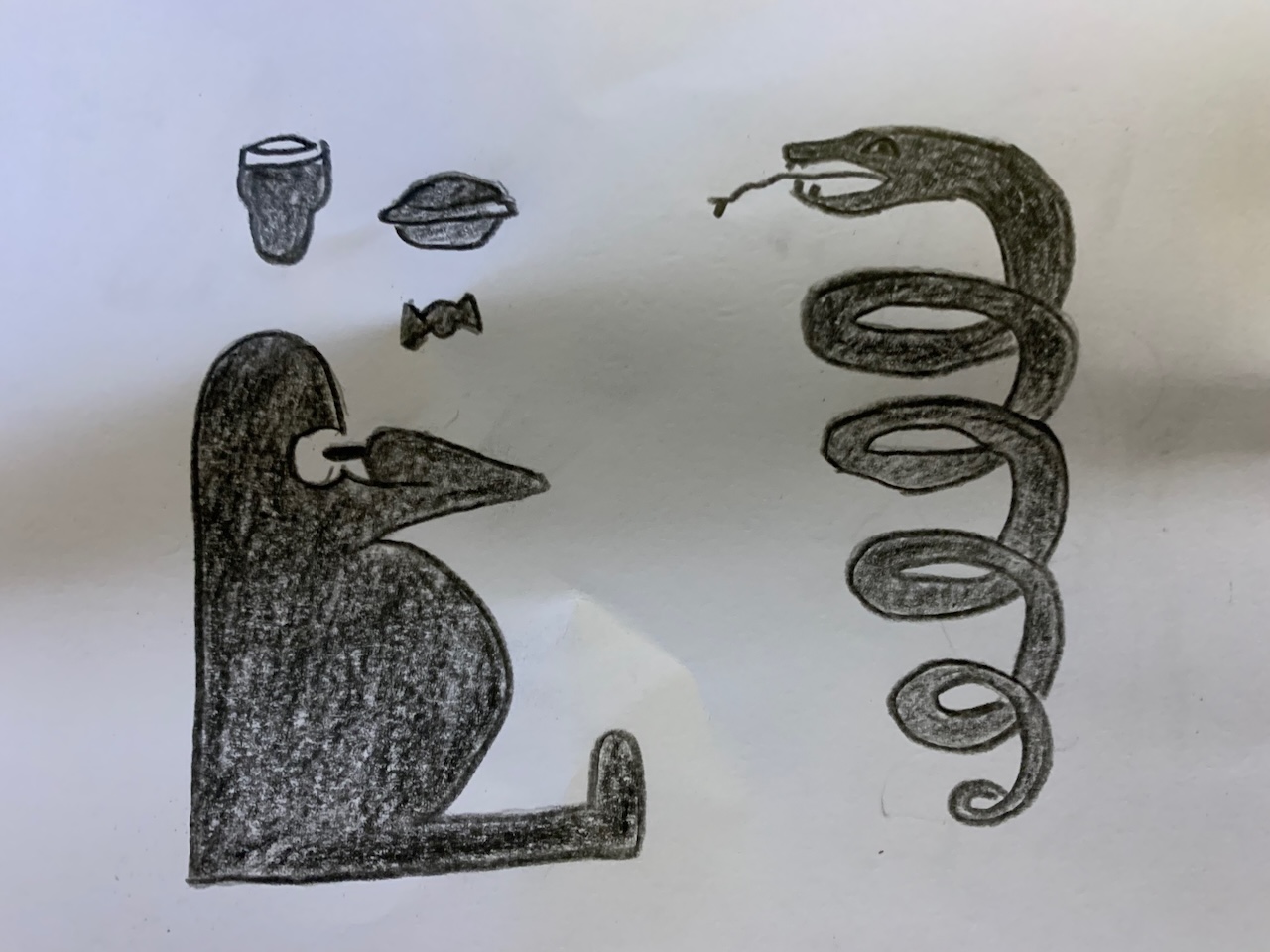
The apogee was when I spent nine days in meditation at the Abyss with a spear in my belly – a representation of the impulse within that can lead to death through self-starvation.
Having realised that monasticism wasn’t entirely healthy for me and decided to focus on becoming a good shamanic practitioner, the voice remains, telling me I’m not shamanic enough. Trying to force upon me its ideals of what a shamanic practitioner should look like (which, of course, is thin, signifying purity and self-discipline). Mocking my more muscular body and red face. In opposition to this, my Gods and spirits tell me I have to be strong in body and mind for myself and my clients.
As I’ve deepened into my path, the unwavering support and unconditional love of my patron God, Vindos, my helping spirits, my mum, a good friend and my shamanic mentor, and kind words from clients, have helped me to feel more worthy, more enough.
I’d like to say that I have reached a point where I feel I’m of intrinsic worth and value but I’m not there yet. Being able to control my weight and my exercise routine remain a crutch. But being able to say “I’m enough” occasionally is a step forward.
A few months ago, I learnt how the new weight loss jabs not only help people to lose weight but dampen ‘food noise’. I hadn’t heard of ‘food noise’ before and quickly found out that the term was coined in the 2000s and relates to ‘food-related intrusive thoughts’ – the constant chatter about food that goes on in a person’s mind even when they’re not hungry. I recognised it immediately as something I used to experience (along with ‘alcohol noise’) and still experience to a certain degree. It has been labelled in eating disorder communities as ‘the eating disorder voice’.
Other the past few years, I had worked out that my food and alcohol related thoughts were just a couple of the varieties of the many types of noise generated by my over-thinking mind and had learnt to quieten them with meditation. Thus, I was shocked and intrigued to find out that an injection can mimic the effects of a practice I had taken a number of years to develop and still struggle with. This got me researching how the weight loss jabs work and how they affect the same neural pathways that are affected by meditation.
The medications in the weight loss injections are called GLP-1 receptor agonists. They are synthetic variants of GLP-1, an essential gut hormone, which lowers blood sugar, reduces appetite, and brings about feelings of satiety. Variants include semaglutide (Ozempic and Wegovy) and tirzepatide (Mounjaro).
When a person eats a meal, GLP-1 is released, and travels through the bloodstream and the vagus nerve to the brain, where it causes appetite suppression. It also goes to the pancreas, which produces insulin, lowering blood sugar.
GLP-1 ‘effectively shuts down areas in the brain involved in feeding response, homeostatic controls, energy balance and decision-making about food—as well as the liking and wanting of food and impulsive behaviours associated with eating.’ Thus, it dampens cravings and food-related thoughts.
Researchers have identified that GLP-1 shuts down the Default Mode Network – the background setting of the brain which drives mind-wandering, ruminating on the past, planning for the future, and self-reflection. This is responsible for us getting stuck in negative thought loops and food-related thoughts.
Like GLP-1, meditation, which involves training the mind to concentrate on one object of thought of a time, also shuts down the Default Mode Network. It not only stops ‘food noise’ but all other types of noise as well.
GLP-1 has also been shown to have an effect on the reward pathways that are not only associated with addiction to food but with other addictions. ‘Neurons that produce dopamine—a chemical with pivotal involvement in motivation and pleasure—project to the nucleus accumbens, a midbrain structure important for experiencing reward… Like other brain structures, the nucleus accumbens has GLP-1 receptors. Studies have shown that in animals, dopamine release peaks after they eat a sweet meal of sucrose—and after they are exposed to cocaine or opioids.’ GLP-1 dampens this effect, meaning the peak to such rewards is no longer received, weakening these pathways.
Meditation strengthens our ability to recognise cravings as just thoughts and not to act on them, thus weakening the neural pathways of food addiction. Both could thus be helpful for people with binge eating disorder and bulimia.
It’s notable, here, that restrictive eating disorders, such as anorexia, re-wire the brain to get the dopamine hit from restricting food intake and / or over-exercising to lose weight. Meditation can also help with addiction to restricting and excessive exercise.
It has been shown that people who use weight loss injections usually gain weight afterwards if they do not continue to follow a healthy lifestyle. Combining taking a GLP-1 receptor agonist with learning meditative techniques can help people to lose weight and keep the weight off.
They Called Me Pig is a poetry collection charting the development of an eating disorder that began with childhood bullying and how I have begun to heal by building a healthier relationship with food, exercise and my body. I have written it as part of the inner work of my shamanic apprenticeship, as a way of processing trauma and transforming it into art. I’m hoping it’s a topic everybody can relate to on some level as we all have a body and need to eat and exercise to live. You might also have relatives or friends with an eating disorder who might benefit from reading it.
It is downloadable for free but if you enjoy it please consider reciprocating by passing on the link to a friend or by telling somebody about my writing and shamanic work.
If you’re interested in working with me on using shamanic work combined with art as a method of healing, transformation and self-expression, I offer sessions at £15 an hour. Please get in touch lornasmithers81@gmail.com
For most of my life, I have struggled with an eating disorder. It began with childhood bullying when I was six years old. This resulted in binge eating and I became overweight. When I was thirteen, I began skipping meals and exercising more and lost weight, but the binging returned. Since then, my eating disorder has taken various forms, characterised by differing patterns of binge eating, restricting, over-exercising, and binge drinking. This has led to me cycling between being overweight, of a normal weight, and underweight.
Until recently, I believed I solely had binge eating disorder, and saw myself as a ‘pig’ and a ‘fat binger’. My understanding was that it had a ‘fat side’ and a ‘thin side’. So long as I was on the ‘thin side’ and in control of the binging, I was winning. I didn’t see dietary restriction and excessive exercise as a problem, even when they led to me being underweight.
It was only when I started strength training at a local gym with a personal trainer, who told me I wasn’t eating anywhere near enough to fuel my exercise, that I received an inkling that restricting my caloric intake whilst exercising a lot was an issue. It’s taken a few years to build a healthy diet and exercise routine, which has benefited me physically and mentally. In spite of this, I still have issues with fear of weight gain and feel large at a healthy weight.
A few months ago, whilst researching eating disorders for a novel, I found out that one of the characteristics of binge eating disorder is that it is not accompanied by dietary restriction. It does not have a ‘thin side’. I then saw the diagnostic criteria for anorexia – restriction of energy intake relative to requirements leading to significantly low body weight, intense fear of weight gain, and disturbance of body image. It had been my understanding that only people who were severely underweight were classed as anorexic, but this is not the case. In DSM-4 there was a weight criterion (below 17.5 BMI, which I reached a couple of times), then, in DSM-5 this was removed and anybody above 17 BMI could be classed as having mild anorexia. Could this be the name for the ‘thin side’, the secret serpent, who had hidden herself away, causing damage to my mind and body?
I decided to reach out for a clinical diagnosis from a consultant psychiatrist at a local eating disorder clinic. She told me that I did have binge eating disorder as a child and teenager, but that ended when I stopped binging on food when I turned twenty. To my surprise, she told me, primarily, I have been suffering from restricting type anorexia (there is a binging type too but this applies only to food binges and is followed by purging). Binge drinking is seen as co-occurring and is not classed as a food binge. The anorexia began when I was thirteen and applies not only to the phases when I was underweight but of a normal weight and overweight too. It is a mental illness and as such is defined by the psychological symptoms. To my shock, she told me that I still have it because I’m still calorie counting and have to ensure that I’ve burnt every calorie that I’ve eaten before I go to bed. Also, because I see myself as large at a normal weight and am terrified of weight gain.
My ‘victory’ over binge eating and binge drinking (I began giving up alcohol six years ago, have had a few lapses, but am now certain I’ve given it up for good) have come at the cost of being in the hold of the secret serpent.
The recommended treatment is eating disorder CBT (CBT-E) and I’m currently in the process of attempting to access it through the NHS. I’ve had CBT before, for anxiety, and have found it to be very practical and useful. However, whilst it’s helped managed to symptoms, it hasn’t treated the cause.
I have also been exploring these insights with my shamanic mentor and writing poetry. What follows is the story of the evolution of my eating disorder as characterised by the warring impulses of the binger and the restrictions of the secret serpent. I’m sharing it as a way of processing my diagnosis and raising awareness that anorexia can occur across the full weight range. I hope bringing the serpent from hiding will help with the healing.
Age 6 – 13 – The Comfort Eating Child
The eating disorder began when I was bullied at primary school. I wasn’t fat at first, just a little tubby, with round and rosy cheeks. But this, compounded with my social inadequacy and having a southern accent at a school on a northern council estate, led to me being singled out.
I was ashamed of being bullied and wouldn’t talk to my parents about it. They didn’t know how to comfort me. Instead, they gave me chocolate. I soon learnt to stuff down my feelings by over-eating, but this had consequences in terms of the weight gain, which led to further bullying.
Even worse were the psychological effects. The cravings. Wanting chocolate so badly when, on some basic level, I knew it was doing me harm. The desire and dread when there had been a food shop or I’d gone to choose chocolate and knew that it was in the house. The horrendous feeling of losing control and not being able to stop until I’d eaten every last thing in a packet, a selection pack, or a box. Then, the guilt, the repulsion, the feeling of the fat growing all over me. The shame. The failure. The knowledge I was going to be bullied even more badly. I kept saying this would be the last binge, but it never was.
At this point, my mum suspected that I might be autistic, but my teachers denied it because there was nothing wrong with me academically. Having been late-diagnosed with autism, I wonder if I’d have developed an eating disorder if I’d been home schooled or sent to a school for autistic people.
Age 13 – The Turnaround
The bullying continued at high school. The level of disgust at myself for being overweight became so great that something within me snapped. I decided to put my foot down. No more binging. I decided to lose weight.
I started skipping lunch and eating only half of my tea. As well as under-eating, I began cycling to the stables and worked as hard as I could at evenings and weekends. Bring on the mucking out, the sweeping, let me at that midden! I took on all the hardest jobs to burn those calories.
The weight fell off. My school skirt was soon hanging off and I had to pin it up with a safety pin. I managed to get into smaller waist jodphurs. I felt great at first, but then started suffering dizzy spells, having to retire from mucking out to sit down in the toilet or on a banking in one of the stables.
I vaguely recall people at the stables saying I looked trimmer and my parents not noticing. The fat insults stopped, but the bullying didn’t.
Age 13 – 16 – The Return of the Binger
My initial efforts at losing weight by restricting and over-exercising were confounded when the binge eating impulse returned. Since I was little, my mum and I had baked chocolate chip cookies together and this was one of my favourite binge foods. I began devouring whole trays of them.
I can’t say what the trigger was, perhaps the approach of winter nights when I couldn’t cycle to the stables anymore, perhaps simple hunger. I recall only the intensity of the shame, the guilt, which led me to stop going to the stables every evening, instead staying in to binge and read or play computer games. My self-hatred became so intense I started self-harming.
At this point in my life, the binger won. I continued skipping some lunches and eating less at tea time but this was, by far, outweighed by binging and over-eating. I went back to scoffing three-packs of Cadbury’s Caramels. At weekends, at the stables, I had a Mars Bar dipped in a cup of tea at my morning break, after lunch (a Pot Noodle) and on my afternoon break. I went to McDonalds some evenings with a friend, who also had weight issues, and we ate three Big Macs in a row followed by a large milkshake.
By the time I was sixteen years old, I was at the higher end of overweight. I found this out when said friend and I went for a riding lesson on a holiday and were both weighed and assigned to the largest and cobbiest horses.
Age 16 – 21 – The War of Two Impulses
At college, I met a new group of friends who were into alternative music. An undiagnosed autistic, chameleon-like, I decided ‘new friends, new me’. My creation of a new ‘mosher’ image combined with losing weight again, kick-started by getting my tongue pierced and not eating for three days.
I went back to skipping meals and began eating only calorie-restricted meals. I’d usually eat cereal for breakfast (to my shame I was always ravenous in the morning). If I had lunch it was diced cheese and salad, sometimes with a piece of bread. A sandwich was a binge. If I ate tea it was a piece of fish or meat with unlimited vegetables or a plate of veg with soup poured over it. The veg satisfied my binge impulse but did no favours for my bowels.
I lost three stone in around six months but, again, the binging returned. I’d be good at the beginning of the week, but as my will power failed towards the end, I’d pack away a full tub of Häagen-Dazs with a cookie in it or three Pot Noodles in a row. The binging was always worst after alcohol, when I’d lose control and eat all the leftovers at a buffet or a huge kebab. When I’d been out and stayed over at some else’s house, in the morning, the first question that I would ask, in panic, was “What did I eat?” The day after drinking, I ate not only one but two plates of beans and cheese on toast for lunch. Binges were often followed by episodes of self-harm.
By this time I had already started drinking at weekends and smoking cigarettes and weed. I began drinking more regularly, usually vodka, to help me socialise, to regulate my anxiety and to help me sleep. I also discovered other drugs such as LSD, ecstasy and amphetamine. The use of the latter and going out dancing all night led to further weight loss.
After not being able to cope living away at university in Liverpool due to my autism combined with the unhealthy habits of under-eating then drinking heavily and binge eating, I returned home and went to UCLan.
Finally, I got the food binging under control, reducing my binges from walking from shop to shop buying chocolate bars, to diet snack bars, to diet drinks and sugar-free sweets. The latter two continued as binge substitutes.
Age 21 – 24 – Floating Away
My mental health hit an all-time low when I was in the second year of university. I was taking a lot of drugs, drinking heavily, and not eating enough. I struggled with dizziness, feeling faint, and panic attacks. I was barely in my body and felt like I was floating away. I suffered from derealisation and thought I was going mad. I couldn’t sleep. I had no idea what was real and what was not. I feared I was trapped in a nightmare world of my own imagining. I had black-outs and am still missing memories.
When I reached out to a psychiatrist I was turned away, even though I was struggling with self-harm and suicidal ideation, as I hadn’t attempted suicide.
Luckily, I wasn’t tempted to attempt suicide in order to get help. I found a more understanding GP, who prescribed beta blockers for the panic attacks and sleeping tablets. When the beta blockers didn’t work, just making me colder and number, and the sleeping tablets exacerbated my panic as they gave me the feeling of sinking down into sleep during the day, she put me on an anti-depressant recommended for treating anxiety called Venlafaxine.
I didn’t mention that I was under-eating as I saw myself as a fat pig. It wasn’t picked up on that I was slightly underweight. In fact, the GP prescribed exercise! The Venlafaxine helped and I left university with a first class degree.
Whilst finishing my degree and pursuing my MA, I exercised moderately. I joined a gym and did a bit of cardio and aerobics and took up taekwondo. I discovered it allowed me to eat a little more and stay at a low weight.
Age 25 – 26 – Mad for Exercise
When I failed to gain funding for a PhD, I was gutted. Forced to take a year out to re-apply for self-funded studies, I started over-exercising. I ran or did cardio in the morning, then worked a cleaning job in the afternoon. At weekends, I went on long bike rides. I didn’t know the meaning of a rest day. The exercise, the decreasing numbers on the scales and feeling lighter eased the pain of failure.
For the first time, I was noticeably underweight and people started commenting. When I went out running, I heard one of a group of lads say “Look at the size of her arse,” and thought he meant it was big until another of them added, “ugh, look how skinny she is.” My friend’s boyfriend’s mum, who went to the same gym, voiced her concerns about how I went at it on the cross-trainer. My mum was also concerned. I didn’t see it.
My periods stopped. I was tested for polycystic ovaries, which I didn’t have. That I was underweight wasn’t seen as a concern, perhaps because I was a runner.
Fortunately, although it didn’t feel it at the time, my over-exercising was put an end to by pattelofemoral syndrome (runner’s knee). No amount of icing, taping or acupuncture would cure it. I was forced to slow down.
Age 27 – 30 – Horses and Cider
I began a self-funded PhD and returned to Oakfield to work as a riding instructor to fund it but couldn’t cope with working and studying full time. Thus, I ditched academia in favour of working with horses full time. I loved the work and the horses and the exercise helped me to maintain a lowish weight.
Whilst I was at Oakfield, I managed to limit my drinking to a bottle of wine mid-week and a couple at the weekend. However, when I moved to Hertfordshire to work as an event groom, the head girl, who I lived with in a mobile home, was not only a fellow drunkard but a cider drinker. I got a taste for cider, drank far too much, and began to gain weight again. This continued when I moved back home and took a job as head girl at a dressage stud.
This job proved to be too high pressure. Thus, I abandoned my equine career in favour of attempting to fulfil my long-time ambition of becoming an author.
Age 30 – 34 – The Drunken Bard
I worked a variety of physical jobs including shelf-stacking at a supermarket, packing at Oakfield Saddlery and cleaning to support myself as I wrote a novel and began writing and performing poetry. This did not prove to be enough to work off the amount of calories I was consuming from alcohol.
At this point, I found my spiritual path as a bard, then as an awenydd, in the Brythonic tradition. For the first time since my teens, the binger over-ruled the infuriated hissing of the serpent. I was a Brythonic bard. A warrior woman. A bit of black eye-liner. A drink before I went out. I didn’t care if I was fat.
I loosened up on dieting. I joined a local Pagan Society and attended pie nights and started drinking beer. A friend introduced me to craft beer – chocolate stout, coffee porters, triple-hopped IPAs, Belgian beers such as Trippels, Dubbels and Quadrupels. Kwak, Maredsous, Leffe Brunne and Blonde. Some of those beers contained more than 400 calories! I drank heavily up to five times a week and sometimes from noon on a Saturday until the early hours of the next morning and this all led to me being borderline overweight.
The serpent seethed. I drowned her out. Yet, in moments of sobriety, I was unhappy with my size. Feeling down and desperate, I decided to try running again.
Age 35 – 39 Running Thin
With better shoes, at the beginning, my knee held out. And I genuinely enjoyed running. The sense of freedom. The runner’s high. It suited my power animal – Horse. It brought me closer to the Gods and spirits.
I got up to running 30 miles a week and to half marathons. As intended, I lost a couple of stone and got down to a lowish normal weight. However, under-fuelling food-wise for the amount I was running combined with heavy drinking took its toll on my body. I struggled with IBS and ended up with a stress fracture in my right foot. That put an end to running for a good while.
Age 39 – 40 – The Rake
When I realised that, in spite of my efforts with writing and performing poetry and succeeding in publishing three books, I was never going to make a living from my writing, I attempted to pursue a career in conservation. This fit with my spiritual path and the volunteering I had been doing in my local area. (And, yes, you guessed it, outdoor work felt like a good method of staying slim).
At the age of 39, realising that drinking was having an impact on my plans to volunteer my way into conservation, I gave it up for the first time. With the calories from alcohol gone, the weight fell off. I lost six pounds in a month. I lost another six pounds in a couple of months. My periods stopped again.
This was at the time Covid hit. With no volunteering and no job, I had little to do but exercise. I gutted the house. I worked in the garden. In spite of the lockdown rules, I went for long walks around my locality.
When I went back to volunteering at Brockholes, I was underweight and without the extra calories from alcohol was eating nowhere enough to sustain cycling there and back and doing outdoor work. I was told I looked like a rake when I was standing next to a rake. I came near to fainting and falling off my bike on the way home. I suffered from the cold. I developed Raynaud’s.
When I started a paid traineeship on the Manchester Mosslands, I started drinking again due to the stress and, to burn the calories, went back to running. As winter was approaching and I was struggling with runner’s knee and deep gluteal syndrome, I decided to join a local gym and try strength training.
Age 40 – 44 Strength
When I started at the gym and signed up with my PT, I was certain she would say I needed to lose weight. I’d put on over half a stone by drinking beer again. Thus, I was surprised when she told me I was eating nowhere near enough calories to cover running or going to the gym early in the morning then doing outdoor work. I could barely believe her. She went through how and where to add in extra calories, mainly in protein, which would help me feel fuller for longer and help me build muscle to support my joints.
As she had promised, I didn’t gain too much weight, just a few pounds in muscle. I felt a lot better and stronger physically and mentally. I stopped feeling fatigued and light-headed and haven’t had a panic attack since. I also managed to cut down on drinking as I preferred feeling good for my workouts.
However, I became incredibly attached to my eating and gym routine. This impacted the ecology job which I took when I finished my traineeship. Running or doing strength training early in the morning did not fit well with doing great crested newt surveys at night. I soon realised that, in any case, night work did not suit me as an autistic person who needs a regular sleep pattern and is naturally an early riser. Because of this, I left the job.
Age 41 – 44 – Monasticism and Shamanic Training
Retreating, I experimented with living as a nun and saw my food and exercise regime as a form of asceticism that fit with my monastic ideals. I practiced other forms of restriction such as paring down my wardrobe, getting rid of most of my books and cutting out most forms of entertainment. The secret serpent, unable to restrict my food intake, liked this very much.
I also began training as a shamanic practitioner. Initially, this took place in Devon with an organisation I have now left called the Sacred Trust. I was notably the only one who got up early to walk for six miles and took my own weights so I could get some of my strength training exercises in.
More positively, as I deepened into monasticism and worked with my mentor, Jayne Johnson, a shamanic practitioner and embodied relational therapist who took me on as a shamanic apprentice when I left the Sacred Trust for ethical reasons, I developed a number of practices that helped me develop a better relationship with my body. These included meditation, breathwork, mindfulness, and nervous system regulation based on polyvagal theory.
These stood me in good stead when my research revealed the true nature of my eating disorder and I had to revisit the past in order to piece together the story. This was incredibly painful as I’d forgotten a lot of the binges. I had to ask my mum what I ate as a child and was appalled as the memories returned, in conscious recollections, in unconscious moments, in dreams. Coming to acknowledge what a great impact under-eating and its effects had on my education and career came as a shock and formed a wake-up call.
Age 44 – Diagnosis and Lash Back
I was initially uncertain about whether to reach out for a diagnosis. Whilst the diagnostic criteria suggested I might have mild anorexia, the serpent voice in my head hissed its denial. “Nonsense.” “You’re too large.” “You’re too old.”
Since my diagnosis has been confirmed and the identity of the voice has been outed, in contrast to my expectations, it has initially got louder. “You’re a crap anorexic.” “You’re the fattest and oldest anorexic in the world.” “Look at how humungous you’ve got by doing all that strength training.” “You’re big and brawny.” “Look at your huge red face.” “You still look like a fat drunk.”
It remains a constant battle not to give in to the urge to over-exercise when I’m stressed and, if I do give in, to eat something to make up for it.
Towards Recovery
Recovery from an eating disorder looks different for every person. Some people recover completely. Others settle for learning to manage their eating disorder. I know full well that, because I’m autistic and my food and exercise habits are so bound up with the restrictive and repetitive behaviours that form the foundation of my life, I’m unlikely to be able to follow others in embracing intuitive eating and exercising and being ‘free’ from regulated patterns. What looks like freedom to some people scares the shit out of me! Instead, I have a greater hope of building on the work I’ve done already to enlist my autism in building healthy habits and ditching less healthy ones.
Many books and websites recommend separating from an eating disorder and learning to argue with it and stand up to it. I agree with this to a certain degree. It’s very easy to become identified with an eating disorder – to see oneself as a binger or as an anorexic and to be over-powered by these parts. Seeing these are just parts of oneself and not the whole is very important.
However, pathologising the eating disorder as entirely separate, like a disease, or a domineering partner or boss, and simply attempting to get rid of it does not strike me as a good strategy. In my experience, parts that are cut off just come back in different guises to bite you.
The way forward I have been taking with my shamanic mentor has been getting to know the binging and restricting parts and the function they have played. It’s my understanding that my binge eating began as a response to the trauma of bullying because I was not taught better coping mechanisms. Unfortunately, that caused more trauma in the form of my eating getting out of control. I still have nightmares about eating binge foods. The restricting part then came in to help me control the binger but herself got out of control, with under-eating leading to more trauma in the form of light-headedness, feeling faint, panic attack, black-outs and the stress of over-exercising on my body.
Thus, central to recovery is learning better coping mechanisms for dealing with trauma and the stress and overwhelm of living as an autistic person in a busy social world. Meditation and mindfulness have worked to bring me into the present moment rather than ruminating on failures of the past or feeling anxious about failing in the future. Breathwork, particularly breath retentions, has helped slow and still my mind. Slowing down and being in my body, particularly when exercising, have made me less prone to pushing too hard.
I’ve found that researching physiology, anatomy and nutrition and gaining an understanding of my body and how wonderful and intelligent it and its inner processes are have made me less likely to mistreat it. This, combined with shamanic journeys into my body have helped me to relate to it much better.
Having an animistic approach to food and an understanding of the complex web of life in which it and eating are enmeshed has instilled greater gratitude.
I have also done shamanic work dialoguing with, meditating on and journeying to the binger and the secret serpent. The former has appeared as a pup, a hungry hound and a ravening monster and I see him as representing my appetite. The latter appears as a woman in black or as a black serpent. Sometimes she is wound around me like a snake or a Siamese twin who is inseparable. I see her as representing restriction of appetite. Both are necessary and serve a function but can be deadly when they seize control. I’m hoping that building relationships with them will help me keep them in balance.
Another facet is that an eating disorder is a time thief. Obsessing about food and exercise takes time away from my relationship with my Gods and spirits. Thus, for me, recovery is about winning back more time for devotion and shamanic practice. In this, I can call for help from my patron God and spirit helpers.
I see the eating disorder as both a curse and a gift – it’s done a lot of damage but it’s also taught me a lot about the binging and restricting impulses that exist within me, within each one of us, and within our society and culture at large. So far I’ve done a lot of good work and I have a lot more work to do.
I’d be interested to hear about how others have dealt with eating disorders and about your relationship with food and exercise from a spiritual perspective.
Over the past couple of weeks I’ve been blogging about my problematic relationship with technology as a source of distractions and my unhealthy habits surrounding compulsions to check emails and keep up with what is happening online.
After writing last Sunday about considering the possibility I might be able to check my emails once a day or even take a day off I realised what a huge hold this habit has over me and something within me said, “Enough. I’m not going to be ruled by this any more.” I made the decision to cut my email checking down to just twice a week, Wednesdays and Saturdays, and have managed it.
As part of the process I have spent some time reflecting on where it is coming from. As mentioned in a previous post I believe it to be caused by a combination of pernicious influences without and anxieties within.
I haven’t always had this habit. I didn’t have it when I was at university when I only had email traffic from tutors. I certainly didn’t have it at all when I was working with horses (when I worked in Hertfordshire and lived in a mobile home on the yard I could only check once a week on my employer’s computer!).
I believe it began around around 2011 when I started getting involved in local community groups such as South Ribble Transition Towns and a number of local poetry groups and in the latter took up a co-ordinating role. It got worse when I was also acting as editor for Gods & Radicals, so dealing with a lot of email submissions, then on top of that took a part time admin job at UCLan which involved a lot of emails and multi-tasking and left me very burnt out.
I had some time out after that and recovered a bit but didn’t address the problem of my anxiety as I was using alcohol several times a week to blank it out.
When I was volunteering in conservation and during this period gave up alcohol I began feeling better, but when I got paid work it involved more admin. When I was a trainee with the Lancashire Wildlife Trust I was doing my admin, including dealing with emails, 7 – 9am before my drive to the Manchester Mosslands to be onsite for 10am then driving back at 3pm to deal with the last of my admin 4 – 5pm. Having two hours of unpaid driving made for long days and I got very anxious about missing emails or not answering them correctly particularly in relation to plans for contract work.
Then, when I worked in ecology, I had to multitask a lot when I was in the office. Organising surveys often took as much work as doing them. Surveys for great crested newts and bats needed at least two and up to eight to ten people, with maps to be printed, meeting times and places arranged, all the equipment got together (there is a lot of equipment for bats!) and we were constantly having to rearrange with the weather and it was very stressful.
When I was writing an ecological report I had to keep my emails open to co-ordinate surveys and in case my employer sent me quotes to send out to clients and then to reply to clients about quotes as well and it was overwhelming.
After I resigned from that job, which left me very burnt out, instead of taking time to process what had happened I poured all my energy into my writing and escaped my feelings of failure by exercising and weekend drinking.
Since I came to Paganism and through it Polytheism I have been good at serving the land and my Gods through outdoor work and creativity but no good at looking after my mental health or working on my spiritual development.
That has begun to change as I have been drawn to Polytheist Monasticism, taken vows as a nun of Annwn, committed to becoming Sister Patience and been spending more time in meditation and contemplation.
I have come to believe that, if the mind is a whole, and is more than a thinking thing (the origin of the concept of ‘mind’ comes from the Greek psyche and means a lot more – ‘animating spirit’, ‘soul’,’ and comes from the root psykhein ‘to blow, breathe’*) then forcing it to do more than one thing at once is in opposition to its nature.
It’s common to see the mind referred to as a muscle. I believe it’s more than that, but let’s take that analogy. Trying to work a muscle in more than one direction at once is going to result in weakness and tears and an ineffective muscle.
I think that’s what’s happened to my mind. The last few years of doing a lot of both paid and voluntary admin work along with being part of the blogosphere and engaging with social media for short periods have weakened my mind, left me scatty, scattered, and far more prone to being dominated by my anxieties and prey to compulsions from within and without.
Identifying what ails me has helped me to see my solution lies with monasticism. The origin of this term is in the Greek monos, ‘one’, ‘single’, ‘alone’**. It might be seen as the practice of spending time alone, apart from secular society, off the Internet in order to recover the lost wholeness of our scattered pysches.
When I speak of alone I mean away from other humans – at least noisy ones – to better hear the voices of the land and the Gods and one’s own soul. Shifting our focus from the barrage of human noise on and offline to one thing – this might be praying to a God, meditating on a myth, spending time in nature, working on a novel, perfecting a poem, crafting a necklace or a shawl.
These practices feel very important to me at the moment as an antidote to the effect our increasingly technologised jobs have on our minds. I am currently in the privileged position of being to live as a nun until my savings run out with minimal online commitments such as running the monastery, sending material to my patrons, and maintaining this blog.
I feel like I’m well on my way to conquering my email and blog checking habits, having got them down to twice a week and having countered my fears of critcisms for not responding sooner with the knowledge that the people who matter to me respect I am a monastic and need to spend time offline.
Already I have seen improvements in my ability to focus in meditation, maintain the flow of my writing and be my more mindful when working in the garden. Small changes, I know, but steps towards healing my scattered psyche.
It’s been a year since I joined my local JD gym in Preston and started strength training sessions with a personal trainer and I’m writing this post to share some of the benefits this has brought to both my physical and mental health.
As background I have run on and off since my early twenties as a way of keeping fit and managing my anxiety. However, I have struggled to maintain running longish distances due to a variety of issues such as runner’s knee and problems with my piriformis and hamstrings.
Over a decade ago a physio recommended strengthening my legs to help with my knee pain by doing squats and lunges but this seemed to make my knees worse and I gave up on this course of action and running for a while.
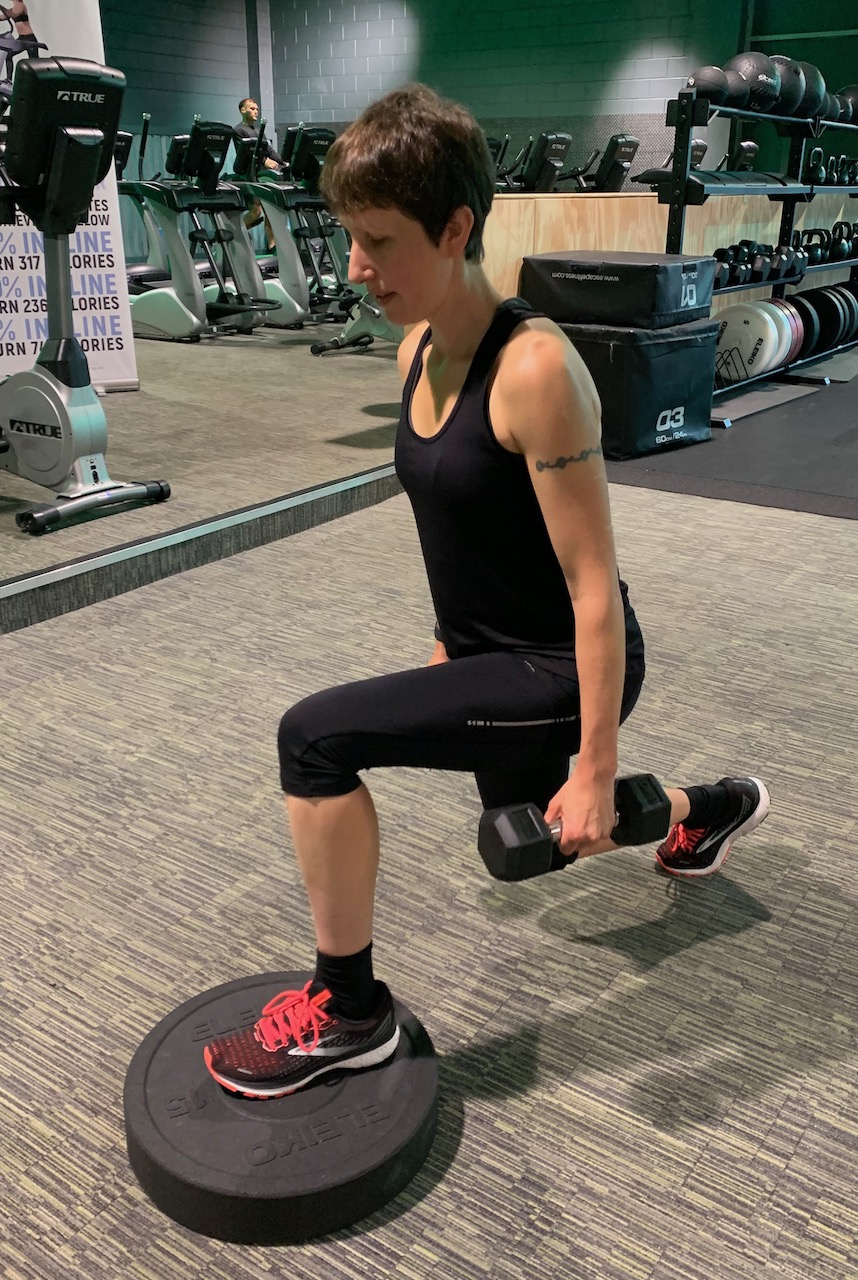
Since starting sessions with my excellent personal trainer, Marie Meagher, I have learnt that I am perfectly capable of doing squats and lunges. Initially my form was incorrect and, with her help correcting me, I have progressed to learning a variety of different forms (sumo squats, split squats, reverse lunges) and to adding weights such as kettle bells, dumb bells and bar bells.
She has also helped me learn to use the resistance machines and free weights. When I first started at the gym all the cogs and pullies and weights and fastenings were utterly bewildering and I didn’t understand the exercises or know much about my muscle groups and the best ways of working them.
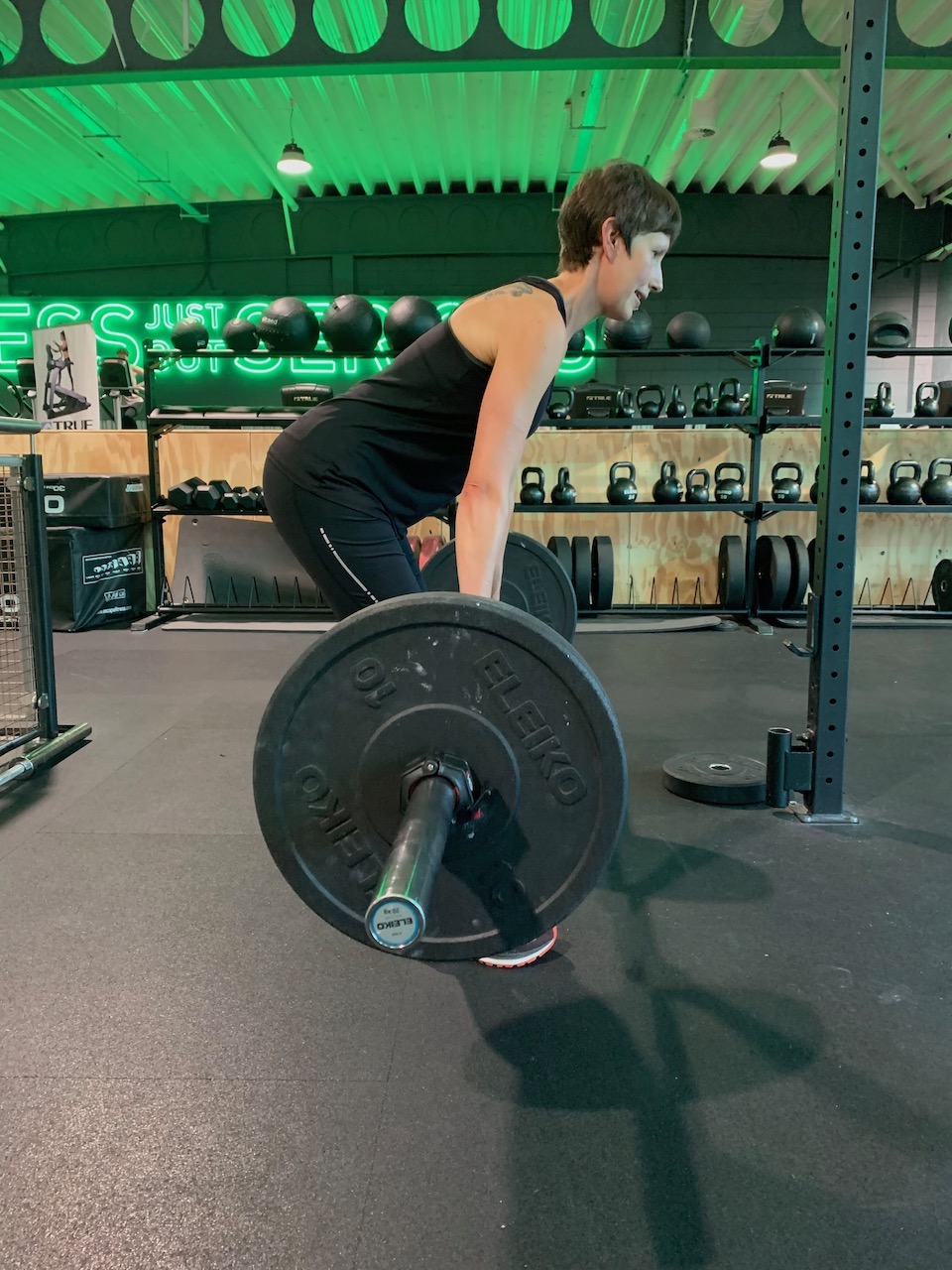
I can now put together an effective workout incorporating a variety of exercises such as leg extensions, hamstring curls, hip adductions and dead lifts for my lower body or dead rows, chest and shoulder presses, and assisted pull-ups for my upper body. I know what weights to use, the right techniques, how many reps to do.
Strengthening my legs has worked wonders for my running. Before training, the most I had been able to run was 4, 7, and 10 miles a week with the occasional half marathon which usually left me crippled for a couple of days. I am now running 7 and 9 miles and a half marathon every week and have taken 15 minutes off my half marathon time from 2hrs 10 mins to 1hr 55 mins.
I’ve also noticed the difference that doing exercises for my upper body, abs, and core has made when I’m doing outdoor work in my local green space or gardening.
It is now rare that I suffer from any of my former issues either during or after a run. Another big help has been finding a good physio, Phil Noblett at South Ribble Physiotherapies, who has been brilliant at sorting out my minor injuries and keeping me running. It’s been a big revelation that some of the niggles I’ve had are simply due to lactic acid build up and can be massaged out.
Learning about my different muscle groups, how to work them, and discovering muscles I didn’t know I had has provided me with much better knowledge of my body and a more positive and mindful relationship with it.
My successes with strength training and running have also improved my mental health. Being physically stronger helps me feel mentally stronger and and provides me with a source of accomplishable achievements when I’m struggling in other areas of life due to limits with my autism and anxiety.
I have found both are better antidotes to stress than alcohol or overeating and am far less likely to do either as I know they will have a detrimental effect on my training.
Although I will never run record beating times or lift heavy weights it is an accomplishment, at the age of forty, to be the strongest and fittest I’ve ever been.
*With thanks to Marie for taking the photographs as this morning’s PT session.
So it reaches an end. The trajectory that began with volunteering on local nature reserves, took me into paid work restoring the Manchester Mosslands, and eventually led to me working for a local ecological consultancy on developments across the North West.
Whereas my choice to work in conservation was guided my Gods, when my traineeship reached its end, and no conservation positions came up, I chose my ecology job because it was local, permanent, well paid, and offered financial security, and because I had a good interview and liked the people.
I knew next to nothing about ecology, the high pressure environment, how distant some of the sites would be, or how badly working nights would affect my mental health. I hadn’t thought through how I’d feel about working for developers, some just people who needed a bat survey for an extension on their home, but others who wanted to build on green spaces and nature reserves.
Working just one night a week, the dread beforehand and the tiredness afterwards, had a massive impact on my mental health due to my need for a regular routine and sleep pattern as an autistic person who suffers from anxiety.
This, combined with travelling to sites over an hour’s drive away, and learning to write technical reports and mastering an unneccessarily complex and counterintuitive mapping system called QGIS whilst, at the same time, organising surveys, preparing quotes, and replying to clients, swiftly led to stress and burnt out.
Within a matter of weeks I went from being a happy, fit, and confident person with hopes of excelling in botany, pursuing an MSc in ecology, and running an official half marathon to being unable to read academic articles or comprehend the logistics of getting to a run or navigating the crowds.
I started waking early in the morning in tears and crying until I went to the gym or on a run and somehow cried all the way through a run on a very bad day.
I turned up in tears, managed to get on with my work, in spite of the crushing feeling in head, which increased as the day went on and throughout the week. I drove the wrong way up to M62 and through a red traffic light. I got hopelesssly muddled on a survey and drew the map the wrong way up. One day my brain melted to the point I couldn’t recall what a PDF was.
My manager took me off nights and I stayed because I liked the team, who were kind and supportive, because I didn’t want to let them down, because it was my mistake for rushing into what was the wrong job but right location and people.
I didn’t speak much to my Gods at first. But when drinking ceased to cure my troubles and I realised it was doing me more harm than good, both in my work life, and strength training and running performance, I began to pray.
I began to seek a place of retreat and healing as respite from an overwhelming world. “Remember who you are,” said Gwyn, recalling me to my vocation as an awenydd, as Sister Patience, as a nun of Annwn.
Somewhat laughably, as is often the case of Gwyn, at a time when I was craving financial security due to fear of losing my job, He told me do the thing least likely to make money in the world – “build the Monastery of Annwn”.
Yet His imperative, my vocation, could not be ignored. I have set up the Monastery of Annwn as a virtual space; started laying the foundations in terms of daily devotions, a ritual year, and practices such as journeying to Annwn and tending Creiddylad’s Garden; and begun dialogue with others.
Desiring to partake in lectio divina and lacking an Annuvian creation myth I have been inspired to return to writing one – a pursuit I began a couple of years back with a book called The Dragon’s Tongue, which didn’t work out.
This attempt to weave a new creation story, from the perspective of the Annuvian Gods, from the existing Welsh and Irish myths and also drawing on the Mesopotamian epic ‘Enuma Elish’ and the Bible has been renewed as ‘In the Deep’ (the antithesis of ‘When On High’ – the translation of ‘Enuma Elish’).
In returning to devotional writing I have found deep joy, which has dissipated as soon as the stresses of work and worldly career have got in the way.
This positive discovery/recovery combined with the knowledge that, as an autistic person, I am not suited to full time high pressure work, has led to the decision to hand in my notice at my ecology job and seek less stressful, part time work in conservation or horticulture that will allow me to fulfil my vocation.
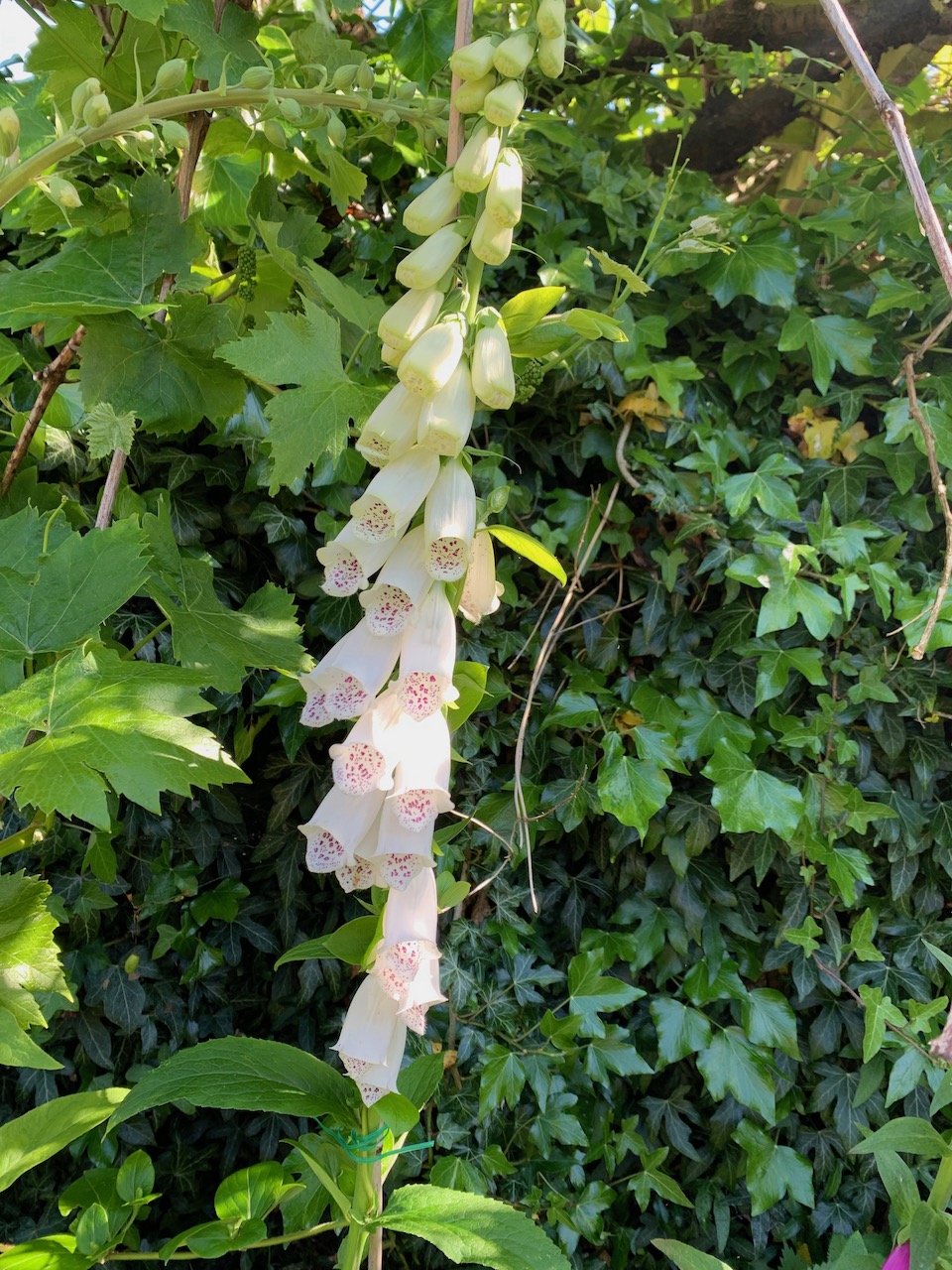
It has been a relief and a release. Although I have two months’ notice to work I have a myth to tend, a monastery to build, and can find solace at my altar and in Creiddylad’s garden, where the bees are loving the blue geraniums and the foxgloves I grew from seed last year are looking magnificent.
For me the lockdown has been a safe bubble and has had a number of benefits. I’ve had the opportunity to cultivate a better relationship with my immediate reality at home, where I live with my parents. I’ve been doing more gardening and this has included food growing. We are now self-sufficient in lettuce, green vegetables, and fresh herbs. This has fitted with having more time to cook with them, to make tasty meals from scratch, my favourites being pea and mint soup and minty lamb stew.
The raspberries long ago strayed from their patch and ramble freely around the garden and they have gifted us a brilliant crop this year in spite of the rain.
I’ve had the time and space to begin repairing my mental health. I’ve struggled with anxiety all my life and, since my late teens, used alcohol as a way of self-medicating. I stopped drinking in January and, over the last few months, have completed a series of counselling sessions through the Minds Matter service.
This has resulted in me finding out that the source of my anxiety is likely having Asperger’s and that’s why I struggle with loud, noisy social situations, whether in public or online, and thrive on time alone or in quiet company, working on the land, in devotion to my gods, and nurturing my creativity.
In the place of alcohol, which obliviated my worries only temporarily, I’ve developed some worry management strategies. This has included keeping a worry diary and assessing whether a worry is practical or hypothetical. If it’s practical I have problem solving techniques to deal with it, and if hypothetical, a technique of setting it aside for a worry period so it doesn’t interfere with the rest of my day. This has made my worries seem less overwhelming thus I’m less worried about worry itself. Other small dietary changes like excluding caffeine and cane sugar have helped too.
The most major result is the realisation that my mental health limitations make it more important to focus on my gift – my awen, my creativity. This has led to my next book, The Dragon’s Tongue, in which I explore a myth of origins personal to me and my deities.
From the safety of my bubble I’ve been watching the lockdown ease. The shops, the hairdressers, the pubs opening, the traffic building up. I barely ever buy clothes, decided to clip my hair off, have stopped drinking, and rarely borrow my dad’s car, preferring to walk or cycle, so this hasn’t affected me much (although the busyness of the roads has made walking and cycling more unpleasant).
Yesterday, however, my bubble finally went pop. I cycled to Brockholes Nature Reserve for the first time since its reopening for a walk. My long term plan for finding paid work that doesn’t have a negative impact on my mental health has been getting a job in conservation which involves working outside alone or in the quiet company of other staff and volunteers. I was due to begin an internship at Brockholes to gain the necessary experience before the lockdown began and it was postponed.
On arrival I was pleased to see the meadows in flower with a mixture of lady’s bedstraw, thistle, vetch, ox-eye daisies, red campion, ragged robin, bird’s foot trefoil and other wild flowers.
Yet when I walked past the office I saw and spoke to the reserve manager, who informed me there have been staffing cuts. Everything is up in the air at the moment. If I was still to take the internship there would be less work and my opportunities would be limited to ‘income projects’ with less conservation.
The prospect of finding paid work with the Lancashire Wildlife Trust or any other conservation organisation is looking bleak. As is finding employment in any sector aside from key work. The future, due to coronavirus and the environmental crisis is a great unknown, with little chance of ‘normal’, much less ‘better’.
Still, I’m going to continue with my internship and other conservation volunteering whether it leads to paid work or not as I value the work of the Wildlife Trust and it is a way of serving my land and gods.
And I’m going to pull my bubble back around myself for a while and continue to use this opportunity to ‘tend to my domain – myth, gods, and the soul’, as my deity advised this morning.








 The Sanctuary of Vindos