Autism and Coping with Overload

Introduction

Over the past few years, since my late diagnosis of autism in 2021, I have been researching its affects on the brain, body and nervous system in order to gain a deeper understanding of the ways being autistic has impacted my life. 

Looking back it has brought many benefits such as being incredibly focused on my special interests, creativity, intuition and the ability to think outside the box. However it has also has its costs. My struggles with sensory and information overload have made it impossible to hold a regular job and being unable to handle publicity played a role in my failing to make a living from my writing.

This led me to seeing myself as a failure and not understanding why. My autism diagnosis coupled with more recent learnings has revealed the reasons I find everyday life overwhelming and helped me develop better coping strategies. I’m sharing my insights here in the hope they will help others.

What is autism?

The term ‘autism’ was coined by psychiatrist Eugen Bleuler in 1911. It is composed of the Greek autós ‘self’ and ism ‘a doctrine or theory’ and was used ‘to describe a schizophrenic patient who had withdrawn into his own world.’ (1)

It was first used as a diagnostic category in 1943 in a paper by a physician called Leo Kanner in a paper titled ‘Autistic Disturbances of Affective Contact.’ Here he speaks of eleven children with shared symptoms –  ‘the need for solitude; the need for sameness. To be alone in a world that never varied.’ (2)

The Diagnostic and Statistic Manual of Mental Disorders 5 uses two criteria  to diagnose autism – ‘Persistent deficits in social communication and social interaction’ and ‘restricted, repetitive patterns of behavior, interests, or activities.’ (3)

Part One: The Causes of Overload

Autism and Neurodevelopmental Differences in the Brain

Autism is a neurodevelopmental disability that has its basis in differences in the brain that began developing in utero. In The Autistic Brain autistic authorTemple Grandin speaks of some of the ‘anomalous growth patterns’ that she has discovered in her brain through neuro-imaging and how these relate to her life experiences. She tells us that her ‘cerebellum is 20 percent smaller than the norm’ explaining her lack of balace and motor coordination. (4) Her left ventricle is 57 per cent longer than her right extending into her parietal cortex – a disturbance which she associates with her poor working memory and lack of maths skills. Having more connections between her inferior fronto-occipital fasciculus (IFOF) and inferior longitudinal fasciculus (ILF) explains her excellent visual memory.

Most interestingly for me she notes: ‘My amygdalae are larger than normal. The mean size of the three control subjects’ amygdalae was 1,498 cubic millimeters. My left amygdala is 1,719 cubic millimeters, and my right is larger still — 1,829 cubic millimeters, or 22 percent greater than the norm. And since the amygdala is important for processing fear and other emotions, this large size might explain my lifelong anxiety… Enlarged amygdalae are also often seen in people with autism. Because the amygdala houses so many emotional functions, an autistic can feel as if he or she is one big exposed nerve.’ (5) 

I found this incredibly relatable as my sensory sensitivities and emotional responses to them have often made me feel like ‘one big exposed nerve’ too. Likewise my fear of being overwhelmed by sensations and emotions and having shutdowns and meltdowns has resulted in struggles with anxiety. These insights inspired me to learn more about the amygdala and its function.

The Amygdala and Emotional Responses

An excellent description of how sensory experience is processed and delivered to the amygdala and how this brings about an emotional response is provided by Bessel van der Kolk in The Body Keeps the Score. 

‘Sensory informationabout the outside world arrives through our eyes, nose, ears, and skin. These sensations converge in the thalamus, an area inside the limbic system that acts as the “cook” within the brain. The thalamus stirs all the input from our perceptions into a fully blended autobiographical soup, an integrated, coherent experience… The sensations are then passed on in two directions—down to the amygdala, two small almond-shaped structures that lie deeper in the limbic, unconscious brain, and up to the frontal lobes, where they reach our conscious awareness… The central function of the amygdala, which I call the brain’s smoke detector, is to identify whether incoming input is relevant for our survival… If the amygdala senses a threat… it sends an instant message down to the hypothalamus and the brain stem, recruiting the stress-hormone system and the autonomic nervous system (ANS) to orchestrate a whole-body response. Because the amygdala processes the information it receives from the thalamus faster than the frontal lobes do, it decides whether incoming information is a threat to our survival even before we are consciously aware of the danger. By the time we realize what is happening, our body may already be on the move.’ (6)

Van der Kolk not only describes brilliantly how the amygdala brings about our emotional responses but explains why we respond to situations which are threatening or overwhelming with extreme reactions such as outbursts of anger, panic attacks and in the case of autistic people meltdowns and shutdowns before the conscious mind comes on board. 

Intense World Syndrome

Van der Kolk links his insights into the amygdala to responses to trauma and in particular to PTSD. These connections also seem valid for autistic people for whom living in a world of sensory and information overload can be traumatic.

This is described in the ‘Intense World’ paper, published in 2007, as ‘intense world syndrome’. The authors say ‘excessive neuronal processing may render the world painfully intense’ resulting in autistics retreating ‘into a small repertoire of secure behavioral routines that are obsessively repeated.’ ‘Impaired social interactions and withdrawal may not be the result of a lack of compassion, incapability to put oneself into someone else’s position or lack of emotionality, but quite to the contrary a result of an intensely if not painfully aversively perceived environment.’ (7) For an autistic person sensory overload is traumatic and leads to them withdrawing from the world.

Sensory Gating Deficits

Another factor relating to overload in autistic people is differences in sensory gating. In Plant Intelligence and the Imaginal Realm Stephen Buhner describes ‘sensory gating channels… as tiny apertures or gates or doors in specific sections of the nervous system’s neural network… like a series of locks on the river of incoming sensory flows.’ (8) He speaks of how, as we grow up, these channels, for most people, narrow and close. Those with ‘gating deficits’ (such as autistics) remain open and they are more likely to suffer from sensory overload which can lead to ‘a breakdown in cognitive integrity.’ (9) 

Part Two: Coping with Overload

Self-Awareness and Befriending Inner Experience

In The Body Keeps the Score van der Kolk describes methods of coping with trauma that can also be harnessed by autistics to help cope with extreme emotional responses to sensory overload. Fundamental is restoring the balance between the rational and emotional brains, the pre-frontal cortex ‘the watch tower’ and the amygdala ‘the smoke detector’ or ‘alarm system.’

He says: ‘the only way we can consciously access the emotional brain is through self-awareness, i.e. by activating the medial prefrontal cortex, the part of the brain that notices what is going on inside us and thus allows us to feel what we’re feeling… and learning to befriend what is going inside ourselves.’ (10)

He tells us that ‘those who cannot comfortably notice what is going on inside become vulnerable to respond to any sensory shift either by shutting down or by going into a panic—they develop a fear of fear itself… The price for ignoring or distorting the body’s messages is being unable to detect what is truly dangerous or harmful for you and, just as bad, what is safe or nourishing. Self-regulation depends on having a friendly relationship with your body. Without it you have to rely on external regulation—from medication, drugs like alcohol, constant reassurance…’ (11)

Van der Kolk here describes my personal experiences perfectly. For most of my life I’ve been alienated from my body and the confusion of sensations and emotions that it throws at me and I’ve always felt out of control. Due to not being self-aware I have struggled in social situations with family, friends and work colleagues due to not being able to read people or control my reactions. I’ve been subject to outbursts of anger and panic attacks and depended on alcohol to tolerate socialising and to down-regulate afterwards. 

Becoming more self-aware and befriending my inner experiences has led to a more conscious and caring attitude towards my body and to feeling more in control.

Movement and Meditation as Medicine

Van der Kolk tell us: ‘If you want to manage your emotions better, your brain gives you two options: You can learn to regulate them from the top down or from the bottom up… Top-down regulation involves strengthening the capacity of the watchtower to monitor your body’s sensations. Mindfulness meditation and yoga can help with this. Bottom-up regulation involves recalibrating the autonomic nervous system. We can access the ANS through breath, movement, or touch.’ (12)

He says: ‘In contrast to the Western reliance on drugs and verbal therapies, other traditions from around the world rely on mindfulness, movement, rhythms, and action. Yoga in India, tai chi and qigong in China, and rhythmical drumming throughout Africa are just a few examples. The cultures of Japan and the Korean peninsula have spawned martial arts, which focus on the cultivation of purposeful movement and being centered in the present… These techniques all involve physical movement, breathing, and meditation.’ (13)

Van Der Kolk’s words really resonated with me because I have have been led my a combination of guidance and intuition to these practices. When I was diagnosed with anxiety in 2004 I was put on Venlafaxine and advised to take up exercise. I started going to the gym and learning a martial art – Taekwondo. Both forms of movement have helped me to regulate my stress levels. 

Since then physical exercise has been a massive help in self-regulating. I’ve been through periods of long-distance walking and running, practicing martial arts, cycling and my current passion is strength training.

Meditation is something I’ve found much harder. As someone who is incredibly imaginative and has a busy mind I’ve always been good at visualisation meditations but meditation in the more traditional sense of focusing on one thing or simply witnessing thoughts has been more difficult. 

I dismissed these practices as ‘Eastern’ and ‘not for the Western mind’ until I started practicing yoga in 2023 as a result of a sports injury and advice from my PT. One of my teachers, Bre, of Breathe and Flow, said if we find something difficult it’s often the thing we need most. So it was with yogic meditation.

As I have persevered I have found that focused meditation helps slow down my thoughts and calm my mind and training my witness helps prevent me from become so caught up in overwhelming sensations and emotions.

Disovering that by changing our breathing patterns through breathwork I can also change my emotions and my thoughts has been a life-changer.

Rhythmic drumming has also been helpful. As someone who has been practicing shamanism for many years being able to use various drumbeats such as the journeybeat to shift into trance and a slow heartbeat to calm my nervous system have helped me to cope with being overwhelmed.

Moving Up and Down the Polyvagal Ladder

Another discovery that has changed my life is learning about polyvagal theory. I first came across this on a Radical Embodiment course with my supervisor Jayne Johnson and Alex Walker. Introduced by Stephen Porges in 2004 it posits three states of the nervous system – social engagement (ventral vagal), flight or fight (sympathetic) and freeze (dorsal vagal). 

Coming to understand and be aware of these states has aided me to become able to move through them. When I feel anxiety and a shift towards flight or fight checking in with my nervous system to see what it needs to feel safe. When I feel myself getting burnt out and moving towards shutdown / freeze cutting down on social activities and taking time alone to rejuvenate.

Mastering the Gates

Buhnen mentions that having open sensory gating is not always a bad thing. In face ‘gating remains very open, especially among young children, artists, schizophrenics and specialists of the sacred such as shamans and Buddhist masters, and those ingesting psychotropics.’ (14) ‘In cultures that recognize the importance of this capacity, this group of people are trained to use their enhanced perceptual capacities for the benefit of the group.’ (15)

He speaks of how we can intentionally shift gating by ‘1) having a task that demands a greater focus on incoming sensory data flows, or 2) regenerating a state similar to that which occurred during the first few years of life, or 3) by altering the nature of the gating channels themselves by shifting consciousness.’ (16)

Focusing on a single task, whether it’s writing a poem or article, gardening, or lifting weights, has always been a great way of staying present and not getting overwhelmed by troubling sensations and emotions. Over the years training in both shamanism and meditation has enabled me to get better at recognising and shifting between states of consciousness. 

A yogic practice that I began learning in August last year on a course in meditation with the Mandala Yoga Ashram has been particularly helpful. This is Antar Mouna ‘Inner Silence’. In the first stage you focus on sensations – sound, touch, inner sight, taste and smell. You practice focusing on, for example, louder sounds, softer sounds, all the sounds, then shifting to touch, then all the sensations at once so you’re in a sea of sensations. Fundamental is not attaching any place or meaning to the sensations but simply experiencing them as they arise in themselves. I believe this to be a form of mastering sensory gating. It has been very useful in helping me to shift my attention away from and be less bothered by noise from my neighbours.

Slowing the World Down

So far I’ve mentioned things autistic people can do to cope with overload. It would also be of benefit if the world was a less overwhelming place. Grandin cites autistic author Donna Williams: ‘the constant change of most things never seemed to give me any chance to prepare myself for them… Stop the world, I want to get off…  stop the world, at least slow it down… The stress of trying to catch up and keep up… often became too much and I found myself trying to slow everything down and take some time out.’ (17)

Like Williams I’ve also found it difficult to keep up, in the workplace, in the blogosphere, on social media with quicker and quicker platforms appearing. As the world is not slowing down I’ve been left with no choice but to get off. I’ve abandoned hope of regular work, left social media, and cut down from reading around 50 different blogs and websites to a small select few.

Monasticism – Embracing Withdrawal

When Bleuler defined autism he depicted withdrawal into oneself as a disorder. Withdrawal is often associated with mental health issues and withdrawn persons are invariably encouraged to ‘come out of themselves’.

In contrast to this, within monastic traditions, withdrawal from the world is advocated as a positive movement and a necessary condition of attaining greater self-knowledge and knowledge of the Gods and of the universe.

For me being able to withdraw, having a safe home, a room I have made into a sanctuary, being able to spend time in prayer and meditation with my Gods and guides is essential for enabling me to go out into the world and do the shamanic work in person and online I eventually hope to make a living from.

I believe the world would be a better place if there were more quiet spaces, more sanctuaries, more monasteries to provide the opportunity for withdrawal. If withdrawal was embraced and not pathologised.

Shamanic and meditative techniques are time-tested methods of dealing with overload and trauma and it is in helping others to practice them and providing safe spaces to do so that is where my current passion lies as a nun of Annwn.

Footnotes

(1) https://www.news-medical.net/health/Autism-History
(2) Grandin, Temple; Panek, Richard, The Autistic Brain, (Ebury Publishing, 2014), p12
(3) Ibid., p121
(4) Ibid., p36
(5) Ibid., p41 – 42
(6) Kolk, Bessel van der. The Body Keeps the Score, (Penguin Books, 2014), p60 – 61
(7) Grandin, Temple; Panek, Richard, The Autistic Brain, (Ebury Publishing, 2014), p97 – 100
(8) Buhner, Stephen Harrod. Plant Intelligence and the Imaginal Realm, (Inner Traditions, 2014) p31-33
(9) Ibid. p 33
(10) Kolk, Bessel van der. The Body Keeps the Score, (Penguin Books, 2014), p206
(11) Ibid, p97
(12) Ibid., p63-64
(13) Ibid., p207-208
(14) Buhner, Stephen Harrod. Plant Intelligence and the Imaginal Realm, (Inner Traditions, 2014), p48
(15) Ibid. p43
(16) Ibid. p59
(17) Grandin, Temple; Panek, Richard, The Autistic Brain, (Ebury Publishing, 2014), p98
Building Brythonic Polytheistic Monastic Practices Part Two – Meditation

Meditation is most developed in the Hindu and Buddhist religions. The earliest references to meditation are in the Vedas from around 1500 BC. In Hinduism the aim of yoga – a combination of meditation (dhayana), breathwork (pranayama) and body postures (asana) – is to still the mind, liberating it from sensory distractions and ultimately from the cycle of death and rebirth, unifying the self (atman) with the Gods (the Brahman or Shiva). In Buddhism the aim of meditation is to reach enlightenment, which resulted in liberation from the cycle of reincarnation as a buddha ‘awakened one’.

These forms of meditation begin with training the mind to focus on one thing – usually the breath. Other subjects of meditation include nature and virtues. Both employ the chanting of sacred syllables to still the mind. Tantric practices involve meditating on and attaining union with a multitude of Deities.

In Christianity meditation is a form of contemplative prayer. Discursive meditation is rooted in the scriptures and involves imagining oneself in the stories, in the shoes of the protagonists, to develop a deeper understanding. Lectio Divina focuses on passages of scripture and has four phases – Lectio (read), meditatio (reflect), oratio (respond) and contemplatio (rest).

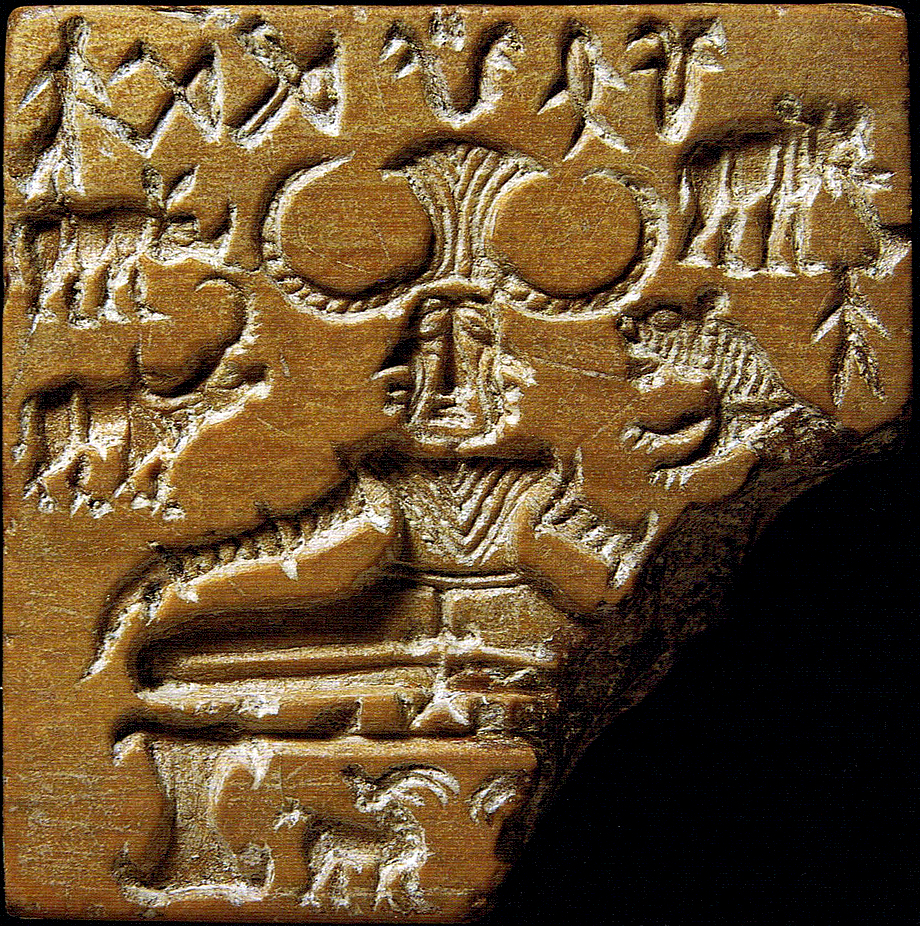
Unfortunately I haven’t been able to find any references to meditation in ancient polytheist cultures. The only evidence I have found is the image of the antlered Deity on the Gundestrup Cauldron (150 BC) who is sitting in a meditative position and bears a striking resemblance to Shiva the ‘Lord of Yoga’.

The cauldron is of Celtic La Tène period design and the antlered figure has tentatively been identified as Cernunnos, ‘Horned’, which might be a Gaulish title for Vindos / Gwyn ap Nudd, who I believe is pictured on another plate plunging dead warriors into a vessel headfirst to emerge as riders on His hunt. 

*

When I came to Paganism and Polytheism the first type of meditation I came across was guided meditation, which involves being guided by written words or voice into imaginal landscapes to meditate in safe places or meet with Deities. 

Examples include meditations leading to an inner grove, a spring, or a tree, or another form of sanctuary, meeting Brigit at a well or Cernunnos in a woodland. To the best of my knowledge this type of meditation originated in the Western esoteric tradition with groups like the Hermetic Order of the Golden Dawn and Thelema and was later taken up by Wiccans, Druids and polytheists.

The way I see guided meditation to work is that one must first consciously imagine the scenery (our imagination is one of the tools by which we connect with the Divine) and this act of imagining creates an interface through which the spirit realm speaks. In my experience it is an act of co-creation. Some comes from one’s own imagination and some from the spirit realm in varying degrees and intensity. On some occasions I’ve remained within my imagination and felt like the scenery and Gods are nothing more than cardboard cut-outs and on others I have found myself in lands that are not of my imagining, entirely other, having genuine conversations with the Gods.

Through Druidry I learnt ways of working meditatively with the Brythonic myths by entering into them and standing in the shoes of some of the Deities. Most notably Afagddu, when Taliesin stole His awen and the Cauldron of Ceridwen shattered leaving Him with its poisoning of Gwyddno’s lands.

I also developed a practice akin to Lectio Divina drawn from creative writing workshops in which I meditated on a line or a scene from a medieval Welsh story or poem, then did free writing around it, then crafted it into a finished piece.

*

It’s only over the last couple of years I’ve looked into more traditonal forms of mediation. As a Brythonic polytheist I steered clear of the ‘Eastern’ traditions until I learnt that India and Europe shared an Indo-European culture and there are lots of resonances between Hindu and Brythonic beliefs.

Last year I started practicing yoga and integrating meditation, breathwork and body postures into my practice on the basis of a revelation of the Gundestrup Deity as ‘Meditating Gwyn’ as a way of unifying myself with Him.

At the core of my practice is uniting my breath with Gwyn’s breath, my heart with His heart, being as present in my body as possible so He and my other spirits can experience presence in Thisworld through their union with me.

When I first tried focused meditation I found it incredibly difficult (and still do). I avoided it for a while sharing the beliefs of many others that Eastern meditation isn’t for Westerners and isn’t suitable for our busy Western minds.  This changed when I discovered the Breathe and Flow yoga channel and Bre mentioned that if something is difficult it’s often the thing we need most. 

I started practicing focused meditation with their Expand programme and particularly benefited from their meditation, ‘Refocus’, which describes the benefits of stilling our busy ‘monkey minds’, shifting from sympathetic to parasympathetic states of the nervous system and rewiring our neural pathways. This meditation is very useful as every couple of minutes there are reminders, if thoughts have begun to trickle in, to return the attention to the breath. When I meditate alone it often takes longer to catch myself thinking.

Learning from Breathe and Flow that by focusing on and changing my breath I can control my mind and my emotions has been life changing in helping me manage my anxiety and panic which were beforehand often out of control.

I’ve been inspired to adapt some of the pranayama practices to fit with my spiritual path. Sama vritti, ‘box breathing’ (inhale, hold, exhale, hold), I do to a count of seven heartbeats to unite myself with ‘the Breath of the Gods’. Nadi shodhana, ‘alternating nostril breathing’ I use as a way of balancing the red and white dragons, fire and mist, strength and calm. Dirga ‘deep breathing’ and ‘sleep breath’ (4-7-8) I associate with the healing states of Nodens.

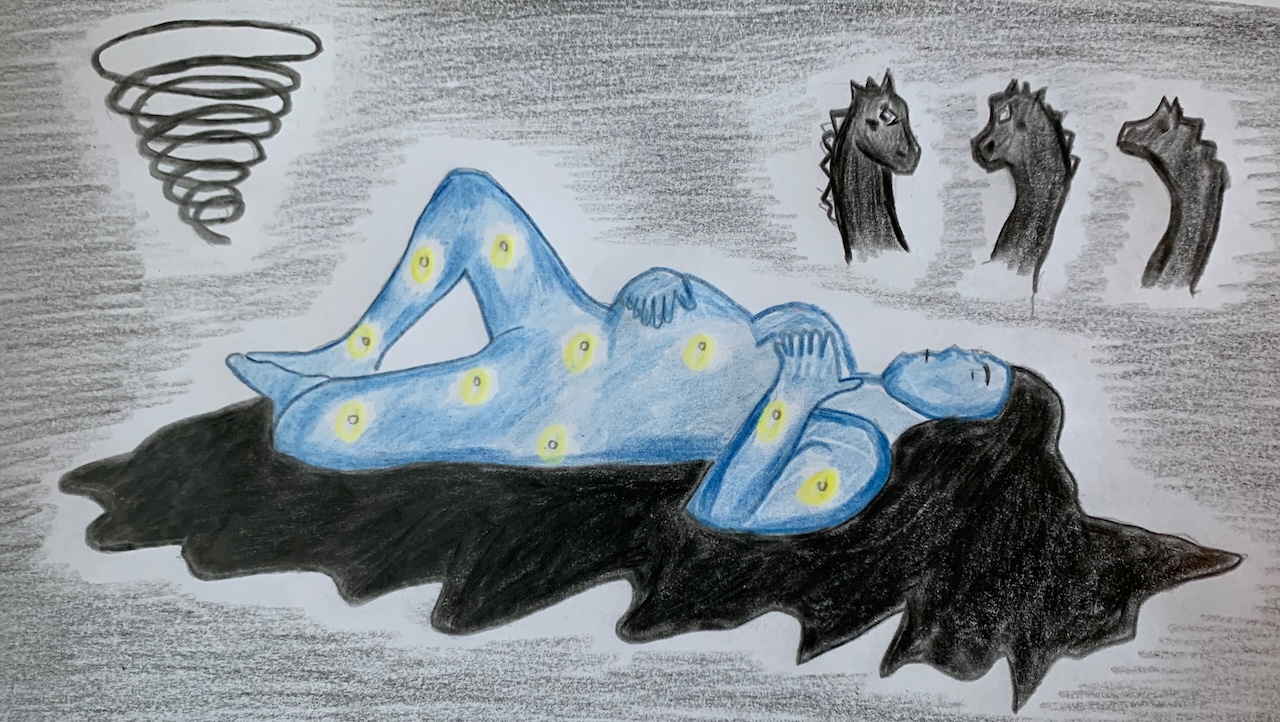
As I have learnt the body postures I have come to link some with my Deities and with various animals in the Brythonic myths. Suptka Baddha Konasana ‘reclining bound angle pose’ is Anrhuna as Mother of Annwn and Parsva Savasana ‘side corpse pose or foetal position’ is foetal Gwyn. Tadasana ‘Mountain Pose’ and Utkata Konasana ‘Goddess pose’ invoke the strength of Anrhuna. Adho Mukha Svanasa ‘downward dog’ and ‘Uttana shishosana ‘puppy pose’ are Gwyn’s hounds or the healing dogs in the temple of Nodens.

The medley of animals, Marjaryasana ‘Cat Pose’, Bitilasana ‘Cow Pose’, Mrigasana ‘Deer Pose’, Catur Svanasana ‘Dolphin’ puts me in mind of the animals surrounding the antlered God on the Gundestrup Cauldron and I wonder if the flows between the poses might have been based around stories featuring sacred animals such as the search for Mabon.

The power of these practices and the changes they have brought about in my life have led me to believe that what we know about the Bardic Schools and their twenty-year programmes for memorising poetic forms and traditional tales is but the remnant of a deeper spiritual tradition in which the stories were meditated on and embodied and lived as mythic realities.

Twelve Days of Devotion to Gwyn ap Nudd – The Birth of Gwyn

Over the twelve days of devotion (25th of December to 6th of January) I focused on the birth of Gwyn and was guided through a series of practices. I was called to chant, sing, meditate, draw and embody Gwyn and His mother, Anrhuna. On this last day I bring them together to share as an offering to Him and to my online community hoping it will inspire others to delve more deeply into the mysteries of His birth in the future.

Mam Annwfn

Chant: Mam o mam o mam o mam o mam o man Annwfn.

Embodiment practice*: Lying in a modified version of Suptka Baddha Konasana (reclining bound angle pose) with left hand on heart and right hand on belly.

Meditation 1: I am the Deep and I am its mother.

Meditation 2: My heart and His heart beating as one.

Unborn Gwyn

Chant: Gwyn heb ei eini, Gwyn fettws, Gwyn breuddwydio, Gwyn dreaming, foetal Gwyn, unborn Gwyn.

Embodiment practice: Lying in Parsva Savasana (side corpse pose or foetal position). 

Meditation 1: I dream the universe.

Meditation 2: I am promise.

Birth

Meditation 1: 

Where shall I birth You 
into the world, 
my son, my king, 
my patron, my muse, 
my inspiration, my truth? 

Meditation 2: 

A mother’s longest hours 
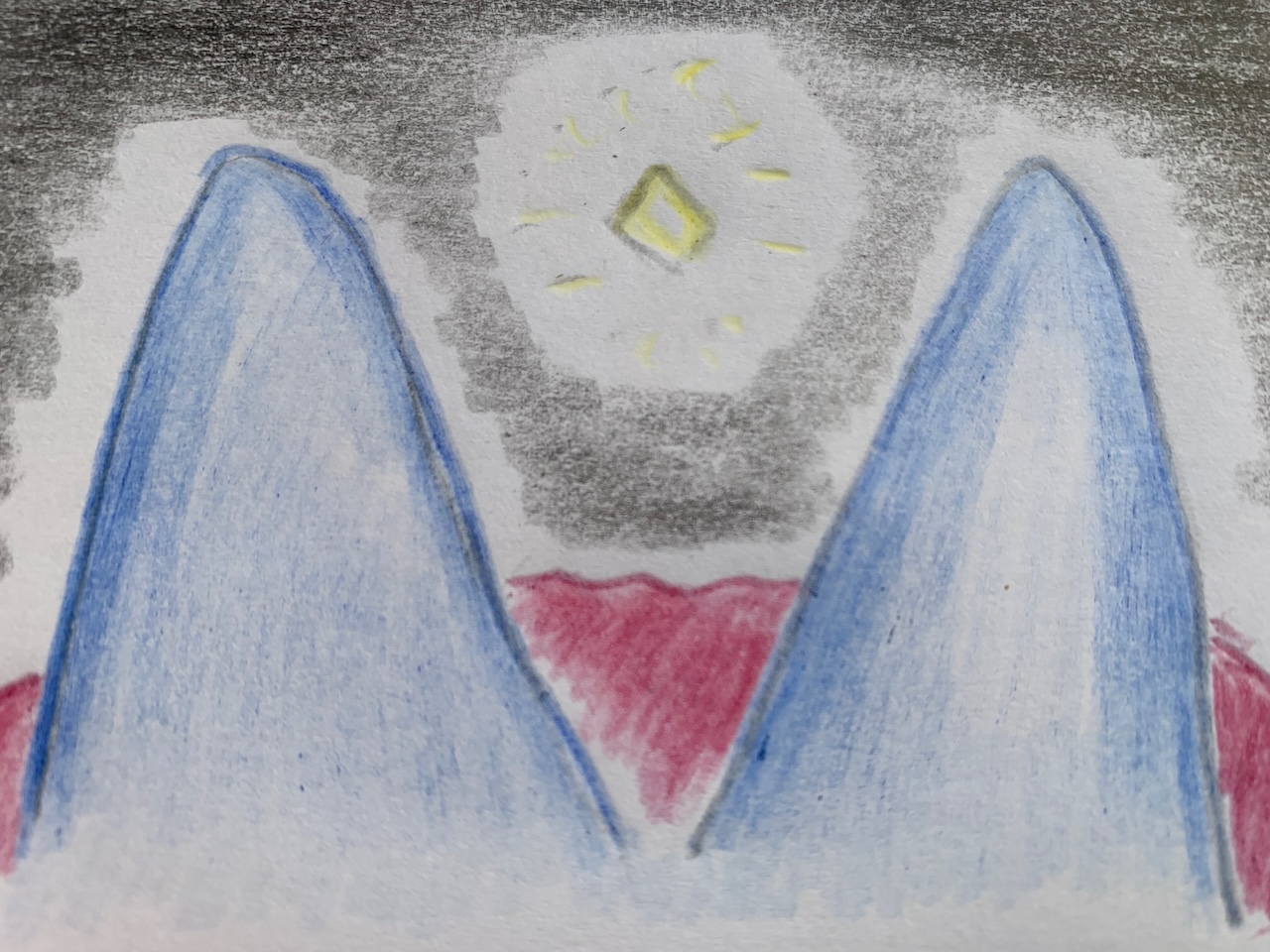
like mountains, heaving belly, knees bent, 
reaching the peak, screaming, running down holding a baby
knowing prophecy is born in moments of pain,
the first cry of an infant mouth.

She Holds Her Son

Song: 

She holds Her son 
between space and time
in the place that’s Hers
and His and mine.

The Newborn

Meditation 1:

Born with a laugh 
to change the world
wise a changeling 
speaking in riddles
comes a newborn
to break all the rules.

He sings:

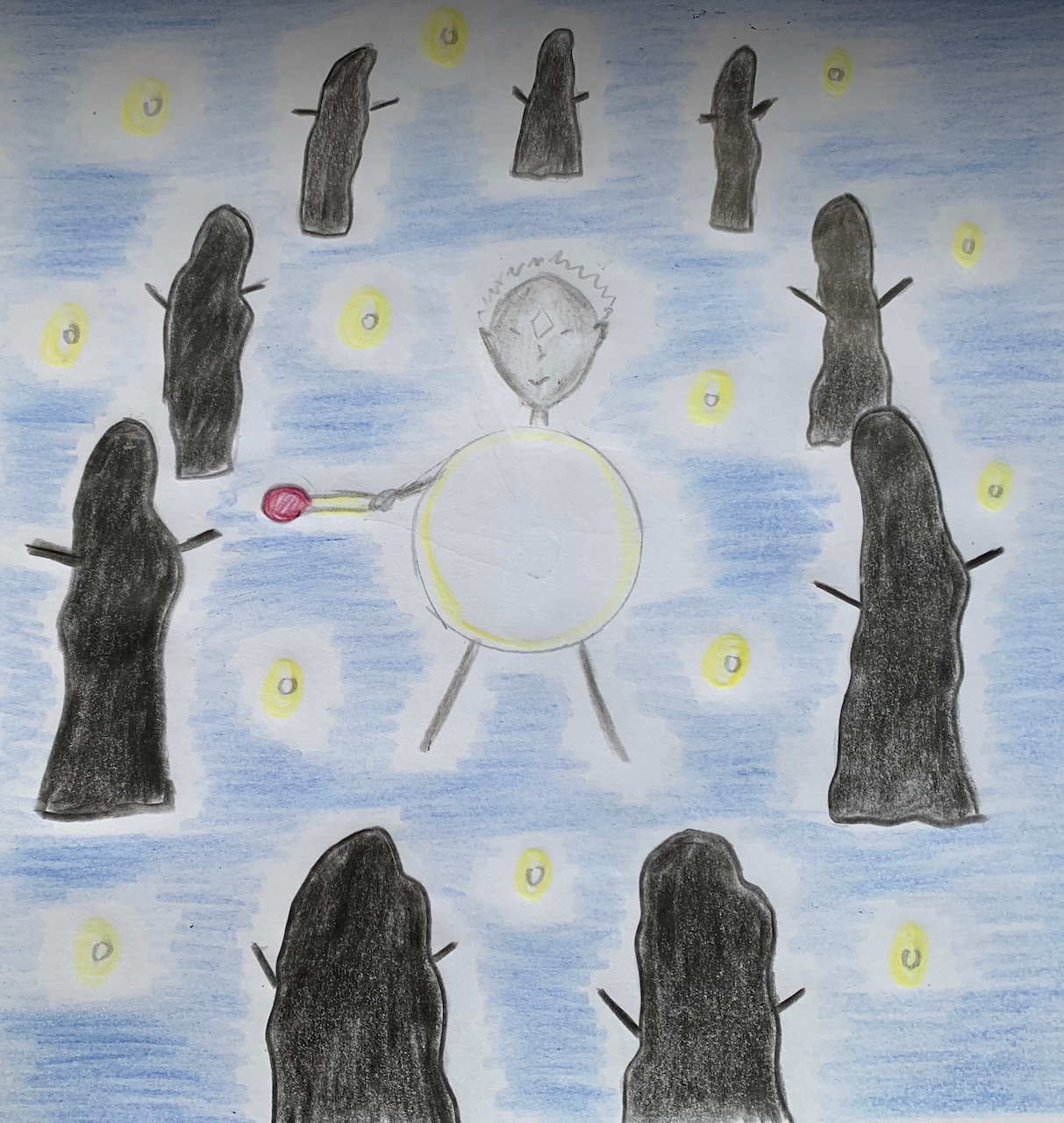
Hear the heartbeat, hear the drumbeat, hear the call.
Feel the heartbeat, feel the drumbeat stir your soul. 

Sing, chant, dance, drum with newborn Gwyn and the shadow nuns. 

WE ARE REBORN
here, now, in this moment, always, forever.

Inspiration

No-one knows the day or hour of Your birth because You were born before the universe.

*

You have as many births as the facets on your jewel – their number is infinite.

*

The geni in ca fi’n geni ‘I am born’ stems from the Proto-Indo-European root *gene that gives us ‘genesis’. With You, with each child, a universe is born. 

*

Each of us contains a universe, like a cauldron, and it’s only when our cauldrons crack and the relationships between the constellations of our presuppositions break down we perceive the sea of stars, the darkness of the Deep, the vastness of Annwfn, the Abyss, the Void. 

*

Floating on the starry tide, the infinite waters, You are always being born.

*I have been drawn to use yoga poses in my practice on the basis of gnosis about shared Indo-European origins of Brythonic polytheism and Hinduism. I have found likenesses between Anrhuna and the Hindu Goddess of primordial waters, Danu, who gave birth to the dragon, Vritra, and the Davanas. Gwyn shares many similarities with Shiva.

Meditating Gwyn

My breath with Your breath,
my heart with Your heart,
my feet on Your path,
You and I as one.

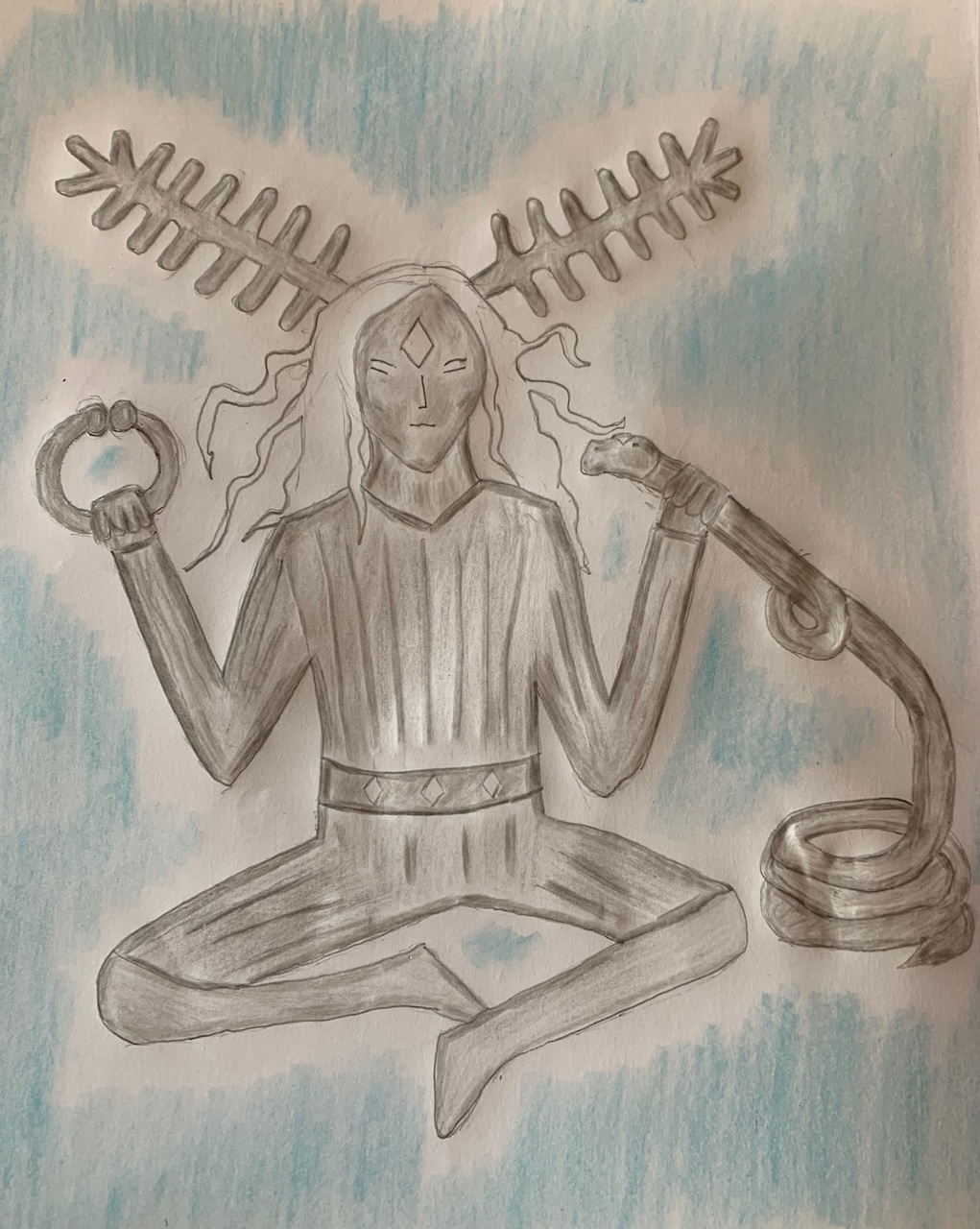
This piece of devotional art represents a face of my patron God, Gwyn ap Nudd, who I know as Meditating Gwyn and the Inspirer. Gwyn first appeared to me in this form when I started to take seated breathing meditation seriously after finding techniques that worked for me from yoga.

Several years ago I received the gnosis that the meditating deity on the Gundestrup Cauldron is likely to be Gwyn (who may also be Cernunnos ‘Horned’ by another title) and Gwyn’s appearance in this guise confirmed it.

I had not thought of Gwyn, as a warrior-hunter God who gathers the souls of the dead, as being associated with meditation until He took this apparel. Yet it made sense in terms of my experience of Him paradoxically being not only the storm of the Wild Hunt but the calm at the heart of the storm. It also ties in with His likeness with Shiva, the Hindu Lord of Yoga, with them both being creator-destroyers with connections with bulls and snakes/serpents depicted in similar poses.

Since then Gwyn has continued appearing to me in this guise when I meditate, helping me to align my breath with His breath, my heart with His heart, keep my feet on His path and enter union with Him.

Whilst this image resembles the image on the Gundestrup Cauldron in many ways, it differs in others. You will probably notice Gwyn’s antlers don’t look like real antlers. They look more like radio antennas. I asked Him about that and He said it represents His ability, when meditating, to tune into what is happening in Thisworld and the Otherworld and sense the deaths of those whose souls He needs to gather.

Gwyn and the serpents have jewels in their foreheads. This addition has come to me in personal gnosis as I’ve journeyed with Him into the deep past, before the world was created, before humans, when He lived in Annwn amongst serpents. He and the serpents all had these magical jewels. I found no evidence of this for a long while until I saw a bronze head with a forehead jewel from Furness, Lancashire in Pagan Celtic Britain. I then learnt the serpent associated with Shiva, Nandi, has a magical forehead jewel. There are also three jewels in Gwyn’s belt which, to me, are the three stars in the belt of His constellation, the Hunter (Orion).

He wanted hair. Although Gwyn is not pictured on a cauldron I kept His silver-grey apparel as I see Him as having grey skin in His more primordial form (Creiddylad has green skin, Nodens/Nudd blue, Anrhuna grey) which I later realised fits with representations of the Gods in the Hindu and Buddhist yogic traditions.

This image on the Gundestrup Cauldron has also been associated with awenyddion ‘people inspired’ who likely used meditation and journeywork to travel to Annwn to bring back inspiration for their poetry. I see it as an image of Gwyn as the Inspirer which can be imitated by His Inspired Ones.

Twelve Days of Devotion to Gwyn ap Nudd

For the last couple of years, as a Pagan/Polytheist alternative to the traditional ‘Twelve Days of Christmas’ (26th December – 6th January) I have been practicing twelve days of devotion to Gwyn ap Nudd, my patron God, as a Brythonic Winter King.

This year, over the twelve days, I am going to be meditating on the following aspects of His identity and mythos and writing and sharing devotional poems addressed to Him.

I. Your Birth
II. Your Boyhood
III. Your Hunt
IV. Your Beloved
V. Your Battle
VI. Winter
VII. Your Horse
VIII. Your Hound
IX. Your Doors
X. Your Kingdom
XI. Your Cauldron
XII. Your Death

If you would like to join in with this or do something similar for Gwyn or your personal Gods please feel welcome and let me know how it goes.

The Lost Temple of Nodens

Nobody knows where the Lost Temple of Nodens on the Lancashire coast once stood.

All we know is that two silver Romano-British statuettes dedicated to Nodens as Mars-Nodontis were found on Cockerham Moss (in the 19th century?) and have since been stolen.

I believe it is likely they came from a shrine. My meditations reveal nothing more than the shuffling of robes against chapped skin, quick stitches undone rubbing bare legs, splashing feet. I do not know if they were dropped or deposited, whether by thieves or priests.

I long to know what the statues looked like, who shaped the Cloud Shaper from the clouds and gave him a form and name, who caught the Catcher with his catching hand, so fittingly made of silver

(arian, eraint, airgead, airgetlam, argentum, Ag, relating to quicksilver, hydrargyrum, Hg).

I long to know who brought them back from the Isles of Dream, from the Land of Nod, where our mythos is always forming, ever forming, from the combining of elements into molecules, where air meets water, from the oceans whence emerged the first life where he embraced his consort.

I long to know if he truly deemed it wise to teach the secrets of the atom to his son…

Long I have pondered the existence of his temple, never really got there, seen only the yawn of a priest called Slumber in a huge mouth-like hood and the departures of countless peregrini.

Yet my focus has been on the past. He and the cloud-shapers still shape the clouds as their temple.

Last week a group of polytheists came together to connect with Nodens in the misty interstices of the internet where we might sense him working with Gobannos in the co-creation of other worlds.

When we journeyed to the Lost Temple of Nodens we did not find an ancient temple, but a temple in progress, shaped from clouds, ‘like a cartoon in the making’*, becoming in the here-and-now.

I do not know how or if this temple will be built as its mysteries escape me like the phenomenon of a god made of mist becoming flesh and, on the battlefield, losing his hand, having it replaced by silver.

I do not know how I was touched by that hand, reaching out across the seas, from the Abyss.

I do not know how something comes from nothing, the distinction between dé and andé, god and un-god.

Temples are swept away by the sea, what is dissolved is lost, knowing the past is impossible.

The impossibility of truth shines like a star that died millions of years ago yet is seen by us so far away.

Perhaps in loss we recall ourselves through the light years – ours the silver hands to shape the now – the subtle vibrations of molecules that respond to form our temples in the old gods’ names.

This piece is based on a meditation on the lost temple of Nodens which I ran with Thornsilver Hollysong and Bryan Hewitt for Land Sea Sky Travel on the Nodens/Nudd day of our ‘Tylwyth Gwyn’ series.

*The quote ‘like a cartoon in the making’ was how one of the participants, Emily Kamp, described the temple. She has kindly given me permission to use her words.

The dark people on the silver beach

how like moonlight they waltz
where the shells
are not cracked and peeling.
The walruses and the distant military
come to seek healing their dark hands held out like flippers.
How I long to dance in the shell of the moon
where the wounded masks fall away
like faces where the craters
are not too deep
to heal.

The dark people on the silver beach

when the horses left their hoofprints in the sand
they were taken to the dance
after the explosion
after counting
to ten.

The dark people on the silver beach

the seals of their souls wear anoraks now
their children lick ice-creams.

The dark people on the silver beach

do not know who they are
who they were until
the dance begins.

I dance amongst them. Look – a shoal of dolphins!
How they bend their backs and arch
into the deep sea.

p1180418-copy

*Last month I visited Formby Beach and took this photograph. During a full moon meditation I saw a vision of ‘the dark people on the silver beach’ dancing there by moonlight and that inspired this poem.

Ribble Illusions

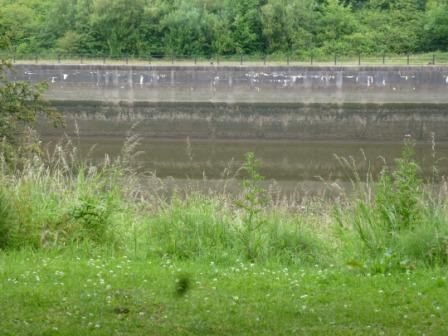
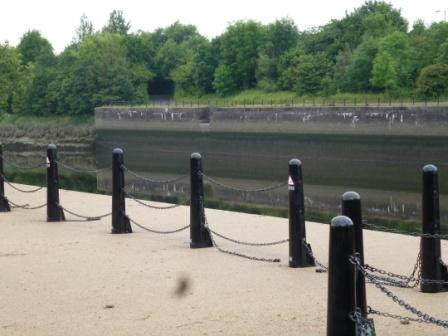
Yesterday I had a most uncanny experience. Approaching the river Ribble from Castle Hill, I found myself facing a long stretch of tide marked wall that gave the appearance it had dropped away into nowhere. I was struck by a sudden sense of vertigo. The Ribble couldn’t have disappeared, as if had fallen into a void, surely?

River RibbleOn closer inspection, seeing the reflections of the grilles and staircases, and catching subtle fluctuations in the surface of the water, I realised this was an illusion created by a combination of its stillness with the markings on the stone.

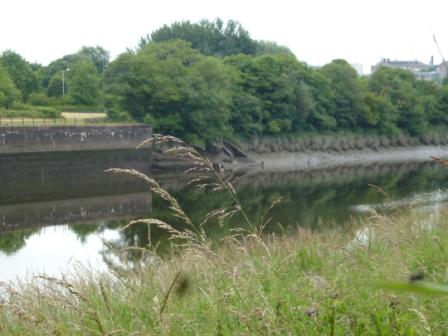
River Ribble, reflection of a grilleRiver Ribble, stairsTo my relief at either end of the concrete barriers, the ‘true’ water level was clear.

River Ribble, water level

River Ribble, water levelDrawn  to stay a while in meditation on the strange appearance and disappearance of the river, which occurred as I shifted my eye-line, I was gifted with the sight of several birds. Common and black headed gulls and terns circled, their darker shadows mirrored in the water. Another bird, which I think may have been a grebe or even a black throated diver flew in. Diving with quick flips of its tail it emerged, for the most part, triumphant with white-silver fish, which after a brief kerfuffle vanished down its throat. Finally, a heron arrived to land majestically on a piece of flotsam.

Heron, river RibbleFor me this goes to show that even where it is channelled, the Ribble is a magical and mind altering place. I give thanks to the river, all its visitors and inhabitants, and its goddess Belisama.