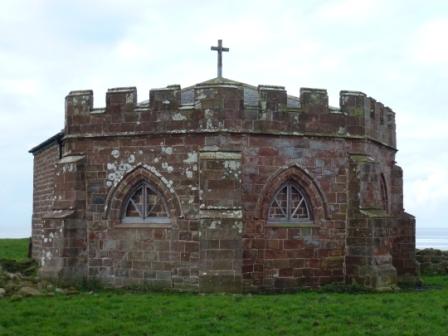
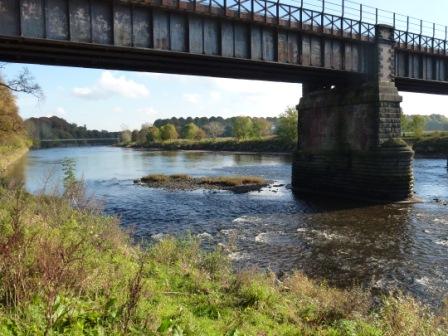
Much Hoole Moss

Glacial retreat leaves a wet land weeping
Life breeds teeming in reeds in hollow pools.
Fallen rushes in the deep rot to peat
Sphagnum, master of decay rules all.

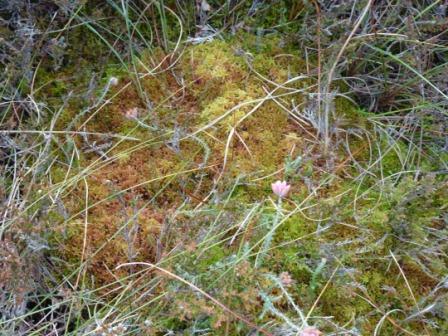
Rosemary curves pink, explosive sun dew winks,
Cranberry thrives on hidden stalks, delish gleam.
Cotton grass streaks, eye spotted large heath fleets
Over multi-coloured moss the curlew soars.

Anoxic, unbreathing, hold all beneath;
Primeval plant, box of oak, bone and spear.
Living museum of ten thousand years
Stores the past of the people of Much Hoole.

Dug for peat, drained and fertilised for wheat,
Dropping, drying, sinking precariously.
Much Hoole Moss sole preclusion of mercy
Sways tentative twixt field and fern and man.

If the drainage was stayed, water retained,
Sphagnum regained, the moss could be redeemed.
Natural history, just outside our doors,
An ancient site of wonderment and awe.

Surrendering the land for fun and games;
Thunder of guns and thud of running feet
With erosive shudders the moss land sinks
Lost are its mysteries and future dreams.

Much Hoole Moss Paintballing Site


Streets of Dream

Clouds arrive, seasonal and grey,
smothering the town’s jagged edges.
Wrapped in an amniotic haze
I wander streets of dream forgetting
old boundaries between sky and pavement
in the driving rain. Wind spirits
and fierce hounds howl the day down.
I feel the out-breath of a distant king.
The wisdom of Nodens is lost to me.
I wander streets of dream forgetting
all boundaries in the driving rain.

*Nodens is an ancient British god associated with sleep, healing and hunting. In a relief found at his temple in Lydney he is depicted with hounds and putti (wind spirits).

The Colloquium of the Brooks

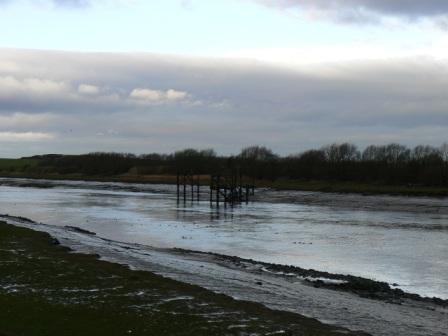
Ribble close to Mill Brook


On the silted shore of the Ribble
Where the gulls dip and call
The river banks her vista
And the tides ebb and flow
In unending expeditions
From the land to the sea
The brooks broach their quantas
And descry their misery.

Fish House Brook:
How long now?

Penwortham Brook:
Patience little sister, can’t you see the times are changing?

Fish House Brook:
I’m barely in a position to perceive change
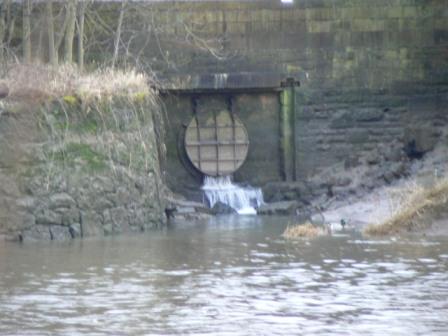
Caught in the constrictions of the concrete culverts
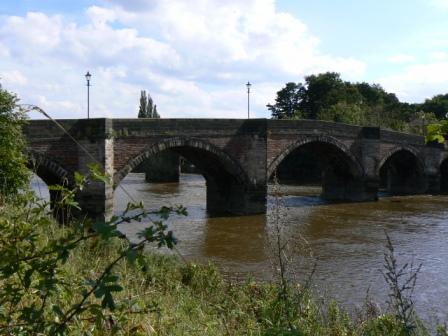
Cut by the man-made channels, blinkered in blind
Alley-ways, forced through dire traps and grilles,
Stumbling in terror via that jail house prison
Cruelly manufactured for me below Hill Road South.

Mill Brook:
If you would look beyond those despotic fixities you would see
The dark pall of the industrial era has lifted, your brother
And I are freed from servitude, our water running clearer by the day.

Fish House Brook:
And you see this as consolation?
Do you not remember when the magnitude of our flow
Turned water wheels, had the force to overturn wagons
And shifted the lay of the land to sculpt our valleys?

Mighty Belisama, you must recall our glory days
Before they shifted your course from Watery Lane to Castle Hill,
Deformed our travails, forever destabilised our tables?

Belisama:
Quarrelsome brooks, stare firmly at the quintessence
Of your course and see all that remains constant is change.
Since the ice lords rode our backs, pitched us deeper
Into the frozen earth, and through the aeons before
Our wills and paths have never been wholly our own.

Fish House Brook:
That the principalities of nature shape us I do not disclaim.
But these men… with their yellow jackets
And heaving ploughs, excavators and cranes,
Winding cords, caterpillar rolls, drop down drains,
Their discernment as dense as a builder’s helmet,
Vision blank as a steel lid, they are numb as their machines.

Penwortham Brook:
Not like the orphans who worked my looms.
I remember their knocked legs stumbling to my bank,
How they stared into the rainbow of my polluted depths.
With wide white eyes they contemplated their horror in me,
Knowing not what they were or what I could be.

Fish House Brook:
At least then we were seen. Now the people stagger
By blind as drunks, ditching debris on our banks.

Mill Brook:
Humans… still given wholly to gods
They cannot see. Servile seeking invisible wealth
Not even gleaming gold. Their only idols strip plastic
Features on the screens, flip in pixels to wide dumb grins.

Fish House Brook:
The vapid screens suck out their lives.
They are not aware of, nor do they understand their sacrifice.
Whilst trapped within their drains we wither up and die.

Penwortham Brook:
Belisama, tell her that isn’t true.

Belisama:
How many years have men visited our banks?

Fish House Brook:
Well, I remember when we were treated with reverence.
Do you recall the long days spent by smiths at the forge,
The bold shatter of sparks, the bright ring of the hammer,
The beauty of gifts delivered in resonant ceremonies,
Swords, axes, heads crafted from stone and those of enemies
Whilst now all they drop in is litter and fag ends.

Penwortham Brook:
It was when the factories rose that the human race
Became effulgence and we it’s dumping ground.

Fish House Brook:
Now red fades to grey and the system is dying.
Their wonders drop, one by one, like falling dolls.
They roam the streets, jobless and desolate.
There is no hope in their eyes.
They have no strength left.

Belisama:
Bearers of the brooks, steerers of the streams,
Deliverers of my bright waters. Do not dismay!
Like the course of a river, times will change
We are bound into a whole with sea and rain.
With he who brings the tides come the waves.
I still commune with the lords of the glaciers
And they say we have not got long to wait.
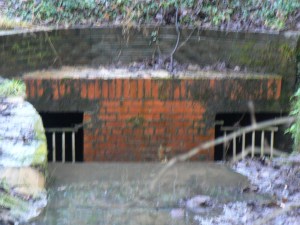
Fish House Brook

On Frenchwood Knoll

City drenched.
We bend against the rain.
Sandstone soaked,
Corporate faces are too pinched to sob.
The rain drops laugh tearfully,
Drip down red.
The bricks outlive the factories.
Vacant shops are hollowed out.
The ectoplasm of capitalism recedes
Like the spectre of Marxism.

On Frenchwood knoll
I met a tribesman who pointed
To the hills across the river,
Turbulent sky and spiralling stars,
I touched the earth and felt her rhythm,
Dark pulse caught
Between the supermarket and spire.
Sold off, covered over, offered up,
Remembered only by the weather.

Belisama: Goddess of the Ribble

Belisama is the goddess of the river Ribble, which runs from Ribble Head in North Yorkshire, through Ribblesdale, Central Lancashire and out to the Irish Sea. Her name is known from Ptolemy’s Geography 2AD, where at co-ordinates corresponding to the Ribble’s estuary he places ‘Belisama aest[1]’. Inscriptions to Belisama have also been found in Vaison-la-Romaine in Provence and Saint-Lizier, in the Pyrenees[2].

Her name has received a number of interpretations. Nick Ford translates ‘Rigabelisama (Riga-, a queen, and Belisama)’ as ‘Most Shining One’ making her the ‘Most Shining Queen’ or ‘Most Mighty Queen’[3]. Seeing the dazzling beauty of the Ribble illumined by sunlight or moonlight confirms the legitimacy of this epithet to me. However Delamarre claims the translation of bhel as ‘white or brilliant’ is based on a false interpretation of Belinus’ identification with Apollo. Belinus is ‘the Powerful One’ and Belisama is the ‘Most Powerful One’[4]. Watching the Ribble after heavy rain, particularly at high tide conveys a sense of her power, as does observing the landscapes she has shaped.

The town of Ribchester has a close connection with the Ribble. It’s native name Bremetonacon means ‘place by the roaring river[5].’ In Saint-Lizier Belisama is identified with the Roman goddess Minerva. A bust of Minerva was found at Ribchester and it was once largely accepted the town had a temple to Minerva-Belisama[6]. Whilst it would make sense that a place of worship dedicated to Belisama was located in the heart of the Ribble Valley beside the roaring ford this is based on a mistranslated inscription[7]. To whom the temple was dedicated is unknown. As a large part has been washed away by the Ribble it might be assumed either that it didn’t belong to Belisama or she didn’t want one.

A question I’ve pondered is how much to read into Belisama’s possible identification with Minerva at Ribchester- when the Romans built the fort in 70AD they were polytheists, and their experiences of Belisama may have led to this equation. Minerva is a goddess of wisdom, crafts and healing. From the Norman period (and indubitably before), until the end of the 18th century the Ribble was renown for being rich in salmon, the quintessential fish of wisdom, with the most important of the fish garths being located at Fish House Bridge in Penwortham[8]. Another possible reason for this identification is that wisdom can be gained from watching and listening to the flow of the Ribble in different spots. One of the lessons I’ve learnt from Belisama is dynamism and change; due to a combination of the tides, rain fall and the position of the sun or moon her waters never look the same in any place.

In terms of crafts, Belisama has inspired a good deal of creative writing from the poems of Richard Dugdale (the Bard of Ribblesdale 1849), James Flockhart’s ‘The River’ (1854), Gerard Manley Hopkins’ ‘Ribblesdale’ (1876) and John Heath-Stubb’s ‘The Green Man’s Last will and Testament’ – ‘the cruel nymphs / Of the northern streams, Peg Towler of the Tees / And Jenny Greenteeth of the Ribble, / Sisters of Belisama, the very fair one’ (1973)[9]. Jane Brunning, a Penwortham based author blogging as Reigh Belisama runs a site called ‘Save the Ribble,’ which played a leading role in preventing the river barrage at Brockholes and continues to oppose fracking on the Ribble Estuary[10].

Belisama’s influence on the cotton industry can be recalled by the number of old mills on her tributaries. Without Riversway Dockland, which was created by moving the Ribble from Strand Road to her present course beside Castle Hill, Preston could not have played its huge role in the industrial revolution. Whilst I’m unaware of any associations linking Belisama with physical healing, spending time beside the Ribble usually has a calming, cleansing effect on me.

Moving from Belisama to the Ribble, the first mention of the change of name is in ‘the Latin Life of St Wilfrid’ (patron saint of Preston) where ‘lands identified as ‘round Ribble’ (iuxta Rippel), Yeadon, Dent and Catlow’ are granted by the English ruler to ‘the community at Ripon’[11]. The Saxon Ripel was taken by Ekwall to mean ‘tearing, reaping’ making the Ribble ‘the tearing one’[12] relating Belisama’s qualities of power and might. Andrew Breeze suggests that Ribble may derive from the Welsh rhybwyll, which combined with the prefix ri could mean very great wisdom[13]. The name change and it’s interpretations demonstrate the qualities of flux and continuity innate to Belisama.

For me in present day Penwortham, (which without Belisama, in its current form would not exist), Belisama and her tributaries continue to shape the valleys and plains, as well as the lives of the wildlife and people who inhabit them. Belisama’s power and wisdom shine throughout her ever changing course and in those by which it is transmitted, whether by the spoken or written word, craftsmanship, or in the actions of those who stand against her exploitation and pollution.


[1] http://www.roman-britain.org/ptolemys-geography.htm
[2] Whilst this might be seen to indicate the presence of a goddess worshipped across Britain and Gaul, Nick Ford reminds us ‘most, if not all, the names of Celtic divinities seem to be descriptive epithets rather than real names.’ Nick Ford ‘Ribchester (Bremetenacum Veteranorum): Place of the Roaring Water’ Lancashire’s Sacred Landscape, ed. Linda Sever, 2010, p82.
[3] Ibid.
[4] http://theses.univ-lyon2.fr/documents/getpart.php?id=lyon2.2009.beck_n&part=159190
[5] Nick Ford ‘Ribchester (Bremetenacum Veteranorum): Place of the Roaring Water,’ Lancashire’s Sacred Landscape, ed. Linda Sever, The History Press, 2010, p82
[6] Malcolm Greenhalgh, Ribble River and Valley: A Local and Natural History, Carnegie Book Production, 2009, p83.
[7] ‘commander of the unit and region’ was mistranslated as ‘to the very mighty numen and queen’ Nick Ford ‘Ribchester (Bremetenacum Veteranorum): Place of the Roaring Water,’ Lancashire’s Sacred Landscape, ed. Linda Sever, The History Press, 2010, p82
[8] Alan Crosby, Penwortham in the Past, Carnegie Press, 1988, p48
[9] John Heath-Stubbs ‘The Green Man’s Last Will and Testament,’ Earth Shattering: Eco-Poems, ed. Neil Astley, Bloodaxe Books, 2007.
[10] http://save-the-ribble.blogspot.co.uk/
[11] Andrew Breeze, ‘Communications Yrechwydd and the River Ribble,’ Northern History, XLVII; 2, September 2010, p324.
[12] Ibid. p324
[13] Ibid. p326.

Fish House Brook

Rainwater sharp drums the earth’s dark soil,
With a tantalizing splash sinks into her pores.
Through a tumult of tunnels, tumbling forth
From a pipeline vessel comes my concrete source.

Sieving through stones I wind my way around,
Slipping by silt, diving sleek from platforms,
Foaming effervescent, wooden rails hold my course.
I’m driven through the gauntlet like a wilful water horse.

My tributaries tremble through constricting veins
Their water has been stolen by the sewers and the drains.
The contusion of pipes plugging earth’s damp flesh
Dumps on my banks, spitting domestic waste.

My hydrophonic pulse with the force to drive a mill
Springs from showers and spins in washing machines.
Weeping by wounds of flesh pink clay,
I seep through grooves as the land is washed away.

When the earth’s dark skin is sealed under concrete,
The last dash of water in the New Town monster
And my channel dies tight by their eyeless folly
My streaming ghost will scream through the valley.

The King of Faery

In woodland damp, a shady dark divine
On aged slope the creeping ivy climbs.
Caressing thorn and dressing ash with vine
A poison maid spreading her locks sublime
Drapes kingdom fair with wanton waxen shine.
The deep earth’s lawless vagabond of joy
Cords heart shaped leaf where eldritch magic lives,
Ascends, protects the glamorous abode
Of fair folk ancient as the darkness of the wood.

Rooted fast at the foot of hallowed hill
In somber silence stands a leaning yew
Ghosts and needles shadowing its boughs
Whispers hanging sorrowful and true,
Of pageant stately passing at full moon.
Yew tree hides the underworld’s feared gateway
Beneath the haunted watching of its roots.
The wise and dead or reckless seek entry
Imploring the illustrious King of Faery.

~

His spectral shine shimmers white as moonlight
His hair floats fair about his phantom limbs
His warrior attire is black as night.
The eyes of the hunter of souls are grim
As the howl of his hounds on Annwn’s winds.
His dread black steed is a beast of the marsh
Dripping like the sea, his whinnying swims
Like a wetland dobbie bridging the worlds
And hurtling his way across the oak covered swamp.

The King’s pale face is black with wrath
For an eldritch dream killed by disbelief.
Souls who crossed to Annwn to be reborn
Stagnate in the gloom of apathy’s reign.
Through a mist of twilight doomed rides the King.
He travels the path of the Ribble’s old course
From the heart of the hill the death knell rings.
Decked in somber garments the fair folk march
Calling souls to the underworld with funeral spells.

Penwortham Moss

Boggart:

Long grew the meadow grass, warm glowed the sun
Soft blew the breeze on the gold twitching fronds.
Seedy slight fescue in scattering throngs,
Dog’s tail and cat’s tail, rye grass and fox tail,
Cowslip and clover, sorrel and brome.

Lazy bright days for the faeries above
Skipping through splendour with pink petal wands
Light as the seeds and floating like cloth,
Whispering to flowers and enchanting the hours,
Whilst we fester beneath, shut out and cut off.

This field, now houses, was part of the moss.
The meadow belonged to the beasts of the bog.
A quagmire of paradise, bountiful haunt.
Sphagnum and fen sedge, sundew and star sedge,
Woundwort and dropwort, lizards and frogs.

Thick claggy peat soaked as full as a sponge,
Pools of deep water with bottomless grounds,
Dragonflies glitzed rippling spangling rounds.
We sat in, we soaked in, gloried and gloamed in,
‘til they drained it with ditches and sowed it with crops.

Now we dwell in the doom dark deep
Deprived of pool and moss and peat,
The corner and cranny we crookedly keep
Dried out and wasted, fates wangled, frustrated
‘til the land is returned to the bog and it’s beasts.

Cockersand Abbey

Chapter house meets silver frieze of dappled
clouds dipped in river. Beacon white sun lights
the margins of eyes; prior, pilgrim, traveller.
Holiday makers rush to shore, seekers
of ages dress lost walls. Broken healers
see a liminal sky, on a statue writ
in silver: Mars Nodontis. “Be our healer.
Beside the lapping tides and flashing sky,
Cloud Maker, fix our wounds and make us whole.
Return this no-time to a holy day.”

Belisama Changing Queen

Belisama changing Queen
Of the Ribble’s shining waters
Shaper of the dales and plains,
Towns and cities and their dreams.

A sparkling sight of sweet repose
You speak serenely under daylight
Shallows shifting playful hint
At beauties strange as subtle tides.

Your hurtling force rocks roaring stones
When fair folk blow their horns at midnight
Enigmas flow in endless throes
Your current’s drowning change or die.

Changing queen of transformation
Streams unite within your basin
Bridges cross- worlds in collision
Town and dale and rushing dream.