Green Equinox

This equinox
seems greener than before –
warmth, steam remind me of the Atlantic rainforests in Wales
where it rains six days out of seven glaw, glaw, glaw,
whilst protests sweep the planet like clouds
but do not quell the Amazon fires.

I win my green belt in a martial art
learning to harness light like photosynthesis,
undoing my roots, learning to twist, kick, turn, leap,
kicking back against body dysmorphia.

The leaves, all green-brown, are not yet
in their autumn splendour bursting into colour
like lollipops like coloured belts I don’t yet know the meaning of.

Leaves of ash fall, touch my shoulder, give me strength.

Heaven and Light, Joyfulness, Fire and Sun, these
are the names of the first three poomsae but the fourth
is Thunder and the morning after I win that belt

I’m awoken by a mighty roar and flash of lightning
illuminating my room, the altars of my gods, a broken mirror,
my laptop and the jam jar in which I keep my pens
painted black with yellow and red stars,

the rubber the only dumb thing like the doubts
that hold me back yet the eraser of my past.

The skies are broken glass and the stream a darkness
running from eternity as a voice from a martial arts film asks:
“What do you see in front of your fist?” “My destiny.”

This slideshow requires JavaScript.

*‘Glaw, glaw, glaw’ is Welsh for ‘rain, rain, rain’.
**The martial art I am learning is Taekwondo and my instructor is Eddie Ellison.
***The lines from the martial arts film are from Streetfighter II: The Animated Movie (1994).
****All photos are my own except ‘Lightning Ground Storm‘ by Brandon Morgan on Unsplash.

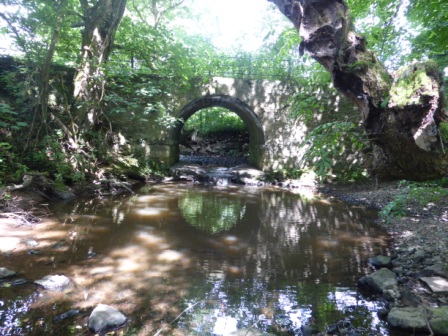
Bezza Bridge

Pink of willowherb
and white of meadowsweet

line the road to Bezza Brook.
Where you cross at Bezza Bridge

step down, step down, step down
in the incantation of the strange-light

hear the brook’s flow see the spirits stream
on the walls of the tunnel of life.

Dwell not on the tunnel of death
lest you hear the Skriker skrike.

Do not look for a rag on the wind
or an eye in the midst of the strange-light.

Bezza Bridge

Four Wells

Four wells at Preston New Road.
Four wells at Roseacre.
Four wells in the darkness
between drilling and decision.

Four wells of steel meets shale.
Four wells boring into the mind.
Four wells of screaming poison.
Four wells of deadly sands of time.

Four wells where gas the question
scorches ears of invisible skies.
Four wells? An uneasy whisper
from underworld gods.

Four wells to decide the future.
Four wells of choice. Four wells of trembling.
By the word on four wells our land
will be saved or destroyed.

~

This is a poem I sent to Lancashire County Council’s Development Management Group along with more logical reasons why I am opposed to Caudrilla’s drilling and hydraulic fracturing (fracking) of four wells at Preston New Road and Roseacre. Protests at the County Hall will be beginning tomorrow (Wed 23rd June) as LCC make their final decision about Caudrilla’s application. For more information on how to register opposition by e-mail and join the protest see Frack Free Lancashire’s website.

Sign for fracking protest

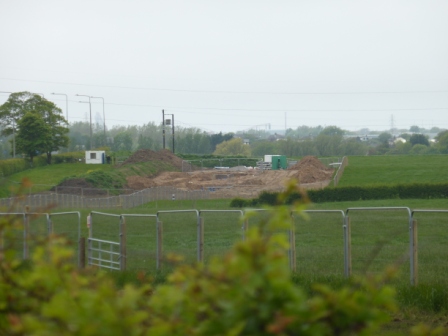
Below are some photos from when I visited the potential fracking site at Preston New Road. The area is cordoned off and anti-trespassing notices are in place. It looks like work has already been done to prepare it for the drilling rig.

Edwina Walk, Penwortham Live 022 - CopyPreston New RoadEdwina Walk, Penwortham Live 028 - CopyEdwina Walk, Penwortham Live 054 - Copy

Teyrnllwg: A Bright Kingdom Slips Away Like Dust

A couple of weeks ago something immensely exciting happened: I received a response to queries on my blog regarding the black hole in the post-Roman history of Lancashire. A Penwortham resident called Ozrico told me the area between the Ribble and the Dee was known as Theyrnllwg. It belonged to the Britons until the Battle of Chester in 613 where its king, Brocmail, took on the Saxon king, Aethelfrith (and lost).

Therynllwg! I thought I had finally found the lost name of the kingdom to which south Lancashire belonged. Not only that, I had the name of its king!

Searching the internet, I found two sources for Theyrnllwg. The first was Charles Onam’s England Before the Norman Conquest (1921). Onam said ‘the lands between the Ribble and the Dee’ were ‘originally known as Therynllwg, of which the later Powys was the surviving remnant. It then extended from the Ribble to the Upper Wye, and from the Clwyd to Cannock Chase, and had been for a century a connecting link between the Britons of the North and those of the West.’

Onam’s words extended the territory of Theyrnllwg into Wales and were doubly exciting because for the first time I had found scholarship stating the area we now know as Lancashire formed a link between Wales and the Old North. This would have meant people had a connecting route (or routes) by which to trade and on their travels would have shared myths and stories. In relation to my on-going quest to uncover Gwyn ap Nudd’s forgotten connections with the Old North, if he was known in Wales and by the Strathclyde Britons this would have made it likely he was known in Lancashire too.

Through a reference in the footnotes, I traced Onam’s words back to William Stubbs’ Origines Celticae (1883) where I found within a list of Welsh names of districts ‘Theyrnllwg from Aerfen to Argoed Derwenydd’ (the river Arfon in Gwynedd and the woodland of the river Derwent in Cumbria?). This extended Theyrnllwg further and led to more sources. Stubbs said the list originated from the ‘Iolo MSS’ and this was ‘taken from a MS belonging to Mr Cobb of Cardiff, and is a mere fragment, a page of the MS having been torn out.’

Having obtained as much information as I could on the internet, I contacted Heron (who lives in Wales and is knowledgeable on such matters) and asked if he knew anything about Theyrnllwg. When I received his answer I was greatly disappointed.

Heron replied saying the name Theyrnllwg derives from Teyrnllwg and sent me an extract from Peter Bartrum’s A Welsh Classical Dictionary (1994). Bartrum stated Teyrnllwg was an ‘imaginary territory’ derived from the name of Cadell Ddyrnllug, a prince of Powys mistakenly taken to be its ruler.

I found out Cadell Ddyrnllug first appeared in Nennius’ History of the Britons (830) as Catel Durnluc, a servant of the tyrannical king of Powys, Benlli. When St Germanus arrived to remonstrate Benlli, Castel offered him hospitality. After Benlli, his city and his subjects had been burned by fire from heaven, Germanus rewarded Castel for his hospitality by making him king. This fulfilled ‘the prophecy of the Psalmist: “He raiseth up the poor from dust, and lifteth the needy out of the dunghill”.’

Bartrum said in modern Welsh Durnluc would take ‘the form Ddyrnlluch or Ddyrnllug, meaning ‘gleaming hilt’, from dwrn, ‘hilt’ and lluch, ‘gleaming’ or llug, ‘bright’. The meaning evidently became obscure very early, and was perhaps interpreted as derived from teyrn, ‘prince’ and llwch, ‘dust’. This may have been the basis of the legend which derived Cadell from a humble origin, the author actually quoting Psalm 113 vv.7.8.’

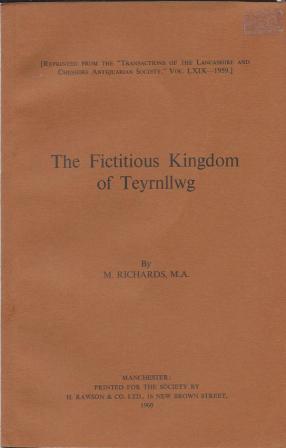
The name Teyrnllwg was later and erroneously identified as Teyrnllwg’s kingdom. When I looked it up on the internet, I found a pamphlet titled The Fictitious Kingdom of Teyrnllwg (1960) by Melville Richards reprinted for Transactions of the Lancashire and Cheshire Antiquarian Society which provided further explanation.

The Fictitious Kingdom of TeyrnllwgIn its two pages Richards criticises an earlier article by Dr. J . D. Bu’Lock which ‘recreates the history of ‘The lost kingdom of Teyrnllwg’’ saying he has been misled by ‘the comparative validity and authenticity of the Welsh material’ (ie. the Iolo MS). ‘Dyrnllug is an epithet which can be readily analysed as dwrn (‘fist’) and llug (‘bright’), referring to some (?) physical characteristic of Cadell… By the fifteenth century Dyrnllug had become Deyrnllug in the genealogical lists.’

Teyrnllwg became accepted as a ‘territorial designation’ firstly because teyrn means ‘king, ruler’ and secondly because -wg was a common territorial suffix (ie. Morgannwg ‘country of Morgan’). Whilst Richards accepted the possible existence of a kingdom in the area of Cheshire and Lancashire he stated adamantly ‘its name was not Teyrnllwg’.

The existence of Teyrnllwg, kingdom of a prince with a bright and gleaming hilt or fist who rose from dust was well and truly refuted. (Although it continues to exist in the gleaming brightness of the name. The glamoury of a bright kingdom slipping away like dust…)

***

However a loose end remained to be tied up. If Teyrnllwg was fictitious what about Brocmail, its king? Oman said Brocmail is the son of Cincen, a descendant of Cadell. I discovered this was backed up by the Harleian MS 3859: The Genealogies, where he appears in the lineage of the rulers of Powys ‘[S]elim map Cinan map Brocmayl map Cincen map Maucanu map Pascent map Cattegirn map Catel dunlurc.’

It was also likely Brocmail was present in the Battle of Chester. In Bede’s Ecclesiastical History of the English People (8th C) Brocmail was the guard of 1200 monks from Bangor who had come to pray for the Welsh army. When the Saxon ruler Aethelfrith commanded his army to slaughter them, Brocmail fled, escaping with fifty.

The Anglo-Saxon Chronicle (9th C) stated Scromail (a mis-spelling of Brocmail?) was the leader of the Welsh. After Aethelfrith slew ‘countless Welsh’ and ‘200 priests’ ‘he escaped as one of fifty.’ In Geoffrey of Monmouth’s The History of the Kings of Britain (1136) Brocmail was Earl of Leicester and the battle took place in Leicester. Brocmail made a stand against Aethelfrith, in spite of having less soldiers, and only fled after he had ‘inflicted exceeding great slaughter upon the enemy.’ This version also mentioned ‘one thousand two hundred monks’ were killed.

As Brocmail is listed as a king of Powys, it seems more likely he was a leader in the battle than a guard. Nick Higham notes Bede is unreliable because he is more concerned about writing ‘providential history’ than military reality and is dubious about the slaughter of the monks. This makes it possible Brocmail’s deposition from a British king who faced the Saxons to a cowardly guard reflects his bias. (However it is equally possible Monmouth’s glorification of him as a British king is biased too…).

Archaeological evidence from Heronbridge, near Chester (a group of skeletons with clear signs of violent injury buried in a pit, believed to be the dead of the Saxon victors) demonstrates the battle took place in Chester and not Leicester. From this we can derive that the Battle of Chester really took place, Brocmail took part in it, and at this pivotal point Cheshire, and perhaps south Lancashire, first became subject to Saxon rule.

Brocmail’s involvement in the Battle of Chester also demonstrates these areas had real political links with Powys. This is supported by the fact when the Mercian Saxons took rule, they formed an alliance with the rulers of Gwynedd and Powys to take on Oswald and the Saxons of Northumbria at Maserfelth (Makerfield in Lancashire). It seems likely they were drawing on a pre-existing alliance.

Whilst the kingdom of Terynllwg may be dismissed as fictitious, the name provides important clues to links between rulers of Powys and the Britons of Cheshire and Lancashire.

***

A more realistic picture of these post-Roman British territories is drawn by Denise Kenyon in The Origins of Lancashire (1991). Kenyon notes attempts to locate Teyrnllwg in north-west England are not widely accepted. She goes on to suggest that concentrations of British place-names may be used to identify areas of lordship.

She posits three main territories. The first centres around Makerfield and Wigan and extends into the Leyland and Newton hundreds down to the Mersey (I assume its northern limit is the Ribble). The second includes the Fylde and centres on ‘Preese and Preesall, Greater and Little Eccleston and Inskip.’ There are two groups in Greater Manchester; around Manchester itself and ‘on the edge of the Rossendale forest’.

A further possibility is that ‘iuxta Rippel was in origin a small British kingdom or lordship encompassing the west Lancashire lowlands on either side of the Ribble, as far south as Makerfield, and extending into the Pennine foothills above Whalley’. These British lordships would have formed the basis for later Anglo-Saxon territorial units.

Kenyon identifies my home town of Penwortham as a ‘central place’ occupying a nodal position in the communication network on a crossing of the Ribble. She says its name is of interest as a hybrid of British and English: ‘Pen’ is British and means ‘hill’ whilst ‘ham’ is English and means ‘safe place’.

‘Ham’ names are indicative of ‘central places’ connected with ‘Roman military and industrial settlements’ (in Penwortham’s case Walton-le-dale) and are often seats of ancient parishes. The construction of the name reflects the acculturation of an important British ‘central place’ by the English.

Thus we have a picture of post-Roman Penwortham lying either on the northern edge of a British lordship centring around Makerfield or in the midst of iuxta Rippel. Differences between the dialects north and south of the Ribble (ie. ‘chester’ to the south and ‘caster’ to the north) make the former seem more probable. This lordship would have been taken over by the Saxons some time after the Battle of Chester. The ‘wahl’ element of Walton-le-dale suggests a strong British presence remained in this town, adjacent to Penwortham.

Kenyon’s identification of Penwortham as a central place on the communication network re-opens the possibility of it linking Wales and the North. Whilst most historians are dubious about connection by road due to boggy ground, the river Ribble was no doubt used for transport and communication with Penwortham as a look-out point and possible port.

Is there any way of making a case that the Britons of the lordship centring on Makerfield once shared a pagan mythology and told similar stories to those further north and in Wales?

The only evidence of native British pagan worship in the vicinity comes from Romano-British altars, statues and inscriptions to deities such as Deae Matronae (the mother goddesses), Apollo-Maponus (Maponos was a Brythonic god of youth) and Mars-Nodontis (Nodens was a Brythonic god of hunting and healing and is cognate with Nudd, Gwyn’s father). These are not in our Makerfield lordship but north of the Ribble in the Fylde.

That Kenyon believes the Anglo-Saxon ecclesiastical divisions are likely to have been founded on earlier British ones (drawing on the etymology of Eccles from eglys ‘church’) and monks from Bangor were praying for the Welsh army suggests the Britons had been Christian before the English arrived in 613.

How and when they were converted (or chose to convert) remains a matter for further investigation. Insights in this direction may throw light on how the ancient British gods and goddesses slipped from the consciousness of the people of my locality like the bright dust of Terynllwg.

The Old North from Peneverdant

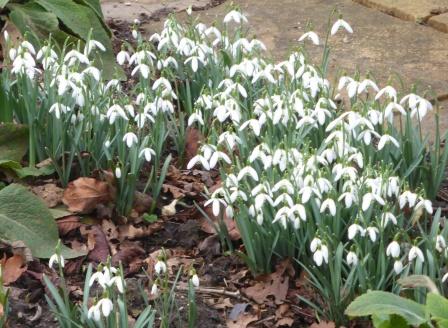
SnowdropsIn the land where I live, spring awakes. Snowdrops in their prime unfold the voluminous skirts of their lanterns. Lords and ladies push their courtship through the soil alongside first signs and scents of ransoms. Swollen mosses take on a bright green living vibrancy.

As I walk the path centuries of ancestors walked to St Mary’s Well, I hear the loudness of a thrush. Could it be the one who calls me from sleep each morning, speckled chest blanched and white as birch amongst ash and sycamore? The trees hold back for now, but I know the sap will start rising soon.

I pass the site of the healing well and cross the road to the War Memorial. Splashes of pink, purple and yellow primroses are planted in beds before the Celtic cross. Etched on blue-grey slabs are the names of seventy-three men who lost their lives in the First World War and forty-six who died in the second. They are honoured and remembered here. I also think of the dead who have no memorial or whose memories have been erased or forgotten.

I follow the footpath uphill onto Church Avenue. Leading to St Mary’s Church, it once went to a Benedictine Priory, dissolved and more recently demolished. A strange road this; trodden by pilgrims in search of miraculous cures and by funeral processions. By soldiers too, maybe armies, defending this crucial position from what we now see as the castle motte.

Passing the church on the hill’s summit I stand in the graveyard amongst tilted and fallen headstones, beneath sentinel beech trees whose shells and bronzed and curling leaves still litter the greening earth.

There’s no access to the motte’s vantage point, but through leafless trees I can make out the city of Preston with its clock tower, steeples, tower blocks and huge manufacturies along Strand Road. I recall images of its panoply of smoking chimneys, flaming windows, imagine the pounding Dickensian melancholy-mad elephants.

Preston’s sleeker now. Cleaner. Less red and black. Concrete grey. Not so smoky. But sometimes the industrial pall still holds. Somewhere behind its walls lies a medieval town and behind that…

The Pennines form a sweeping backdrop, rising higher than Priest Town’s spires ever could; Parlick, Wolf Fell, Longridge Fell, Billinge Hill, Great Hill, Winter Hill. An easterly green and purple barricade. To the west, the river Ribble, Belisama, strapped into her new course, stretches long arms to her shining estuary. A sea gull cries over the horizon and disappears.

I’ve spent several years researching the history of Penwortham. The Riversway Dockfinds mark the existence of a Bronze Age Lake Village. Ballista balls on Castle Hill and a huge industrial site at Walton-le-dale ascertain a Roman presence. Following the breakdown of Roman rule, history grinds to a halt.

There is a black hole in Penwortham’s past the size of the Dark Ages; during the time of the Old North.

Historians have conjectured about this. David Hunt and Alan Crosby agree that place names (where we find a mixture of Brythonic and Old English, like Penwortham* often conjoined) suggest a gradual settlement of the local area by Anglo-Saxons during the seventh century. They say Penwortham’s remoteness on the edges of Northumbria and Mercia meant it was not a major concern. However, this conflicts with the significance of its location as a defensive position for the early Britons and Romans and later probably for the Saxons of Mercia and the key role it played for the Normans during the harrying of the North.

History starts up again with the Saxon hundreds, invasions from Scandinavia and the Norman Conquest. But what happened in between?

Unfortunately, likewise, there is a black hole in the history of the Old North the size of Penwortham. And it isn’t the only one.

The very concept of ‘Yr Hen Ogledd’ ‘the Old North’ is problematic. It is a term used post datum by scholars to identify an area of land covering the majority of northern England and southern Scotland from the time of the breakdown of Roman rule in the fifth century until the Anglian kingdom of Northumbria came to dominate in the eighth century.

During this period, it was simply known as ‘Y Gogledd’ ‘the North’. Its people spoke a Brythonic language known as Cumbric, which was similar to the Cymric language of the Welsh. Its rulers ‘Gwŷr y Gogledd’ ‘the Men of the North’ claimed common descent from either Coel Hen (Old King Coel) or Dyfnawl Hen. Again, the genealogies are problematic because they were created by kings to certify their reign by tracing their lineage back to legendary ancestral figures.

The main kingdoms of the Old North are usually identified as Alt Clud, in the south-west of Scotland, which centred on Dumbarton and later became Strathclyde; Gododdin, in the south-east of Scotland, which had a base at Edinburgh; Elmet, in western Yorkshire and Rheged in north-west England.

The location of Rheged is a matter of ongoing debate. For Ifor Williams it centres on Carlisle and the Eden Valley and covers Cumbria, the Solway Firth and Dumfries and Galloway. John Morris posits the existence of a northern Rheged in Cumbria and a southern Rheged that extended into Lancashire and Cheshire. On the basis of landscape and resources, Mike McCarthy suggests a smaller kingdom or set of sub-kingdoms existed either north or south of the Solway. If McCarthy is correct, we do not have a name for present day Lancashire at all but a black hole the size of a county or larger!

Another problem is that textual sources about the Old North are extremely limited. We have some historical records such as the Annales Cambriae, the Historia Brittonum and Anglo-Saxon Chronicle. Much of the history of this period is derived from the heroic poetry of the Dark Age bards Taliesin and Aneirin. Later saga poetry construes dramatic dialogues between characters associated with earlier events.

Research leads to where history and myth converge but can take us no further. It becomes necessary to step beyond study across the threshold to otherworlds where the past, our ancestors and deities still live.

So I speak my intentions to the spirits of place; the Lady in the Ivy with her glance of green, wood pigeons gathered in the trees, the people buried here in marked and unmarked graves.

I speak with my god, Gwyn ap Nudd, who abides beyond this land but sometimes seems closer than the land itself. The god who initiated and guides this quest.

His suggestion: what is a black hole but a portal?

Our agreement stirs a ghost wind from behind the graves, rustling bronze beech leaves and tree whispers from above.

The hill seems greener. A single white sea gull barks. Then long-tailed tits come chittering and twirling to the brambles.

Beech trees and castle motte*Penwortham first appears in the Domesday Book in 1086 as ‘Peneverdant.’ Writing in 1857 Rev. W. Thornber claims this name is of British origin and ‘formed of three words- pen, werd or werid and want, as Caer werid, the green city (Lancaster) and Derwent, the water, that is the green hill on the water’. This describes exactly how I imagine Castle Hill would have looked during the eleventh century near the Ribble on the marsh. However, ‘verdant’ has always sounded more like French for ‘green’ to me.

Alan Crosby says ‘Peneverdant’ results from a Norman scribe trying to write an unfamiliar word (which was likely to have been in use for up to 500 years) phonetically. He tells us the ‘Pen’ element in Penwortham is British and means ‘prominent headland’ whilst ‘wortham’ is Old English and means ‘settlement on the bend in the river’.

If Penwortham had an older British name prior to Saxon settlement, it is unknown. I can’t help wondering if it would have been something like ‘y pen gwyrdd ar y dŵr,’ which is modern Welsh for ‘the green hill on the water’. It’s not that far from Peneverdant.

The Star-Strewn Pathway

‘Thence rolled down upon him the storm-clouds from the home of the tempest;
thence streamed up the winter sky the flaming banners of the Northern lights;
thence rose through the illimitable darkness on high
the star-strewn pathway of the fairy king.’
-Wirt Sikes

I write this post as a newcomer to the path of the Awenydd, having walked it in earnest little longer than a year and a day. The terms Awen and Awenydd have been familiar since coming to Druidry. In the Awen I found a name for the all-consuming force of inspiration that has burnt forever in my veins with the fire of stars in the iciest reaches of a dark universe. Its furious purpose was revealed by a god after many years of searching.

Restless years. Wilder years. Seeking Blake’s infinite. Throwing my soul into the furthermost abysses of Western European philosophy where reason bites its own tail, curls up and dies and the only way to survive the white hot sun of truth is to burn with and express its creativity.

Trying to find a framework to decipher visions of our native spirit world without knowing if my experiences were ‘real’. Searching Christian mysticism, Graeco-Roman, Saxon and Norse mythologies and finding only analogies. Discovering Britain has its own mythology in The Mabinogion, The Triads of the Island of Britain, The Four Ancient Books of Wales and regional folk and faerie lore.

Finally, Gwyn ap Nudd, my Fairy King finding me and teaching me to walk the Star-Strewn Pathway.

***

The Star-Strewn Pathway begins in one’s local area with the recognition the whole landscape is inspirited. Awen sings from the earth-sun at this world’s core through its molten mantle, sandstone bedrock, layers of clay and harrowed loam. Wonder can be found in backyards of composting earthworms and hatching spiders.

Pathways lead to suburban edgelands. Narrow valleys of trees impossible to build on, brooks shrunken by drainage systems tripping down wooden platforms. Algae-covered stagnant ponds beloved of ducks. Decaying mills pink with Herb Robert housing volleys of pigeons circling above.

These places are inspirited and there are spirits: huge boggarts who once stretched gurgling through mosslands grey and whiskery; undines clasping their last waters; newly planted woodlands arising into forms of consciousness with inherent knowledge of tree, bird and mycelia of mushrooms to the tread of deer.

Inevitably pathways lead abroad. It is necessary to trace local brooks to the river’s crashing heart, find its trickling source and greet rolling tides with the sea at its shining estuary. To meet its Great Goddess who washes her hair by moonlight and stretches watery arms throughout the watershed.

To travel ancient woodlands of oak men, snow-topped mountains of icy blasting and cities of tower blocks, steeples and malls which guard a heritage locked in catacombs and glassy vaults. Every facet of woe and joy, awe and strife, adds to the alchemy of our own sun.

***

In rain or mist, at twilight to the touch of thunder, it is possible to step from known to unknown pathways. Wandering lost in a storm-cloud of emotion I have often found myself on unfamiliar tracks with strange figures, no longer myself. Sometimes it is those dusky shadows who beckon me, footsteps leading into the wildwood’s tangled heart.

In the wildwood all the fay lights are lit by stars. They dance and glimmer, throwing bright shapes and longer shadows across paths which intertwine like roots. These paths have their own lives, untwining and uprooting to walk their own way through the wood. Where the fay strew their lanterns on the ground one might find the Star-Strewn pathway.

There is a long tradition of caves and holes leading to the underworld. Their entryways are utter darkness. Timeless. Illimitable as despair. They lead into a womb of tunnels, the edge of an abyss, to where that age-old creatrix Old Mother Universe gives birth to stars. From thence the Star-Strewn Pathway unfurls through underground heavens.

When the moon is full she lays out her bridge of vibrant stars in the river. The ripples become stepping stones. From the river-moon the Star-Strewn Pathway leads through the catastrophic beauty of falling stars to the star-decked parapets of the Fairy King’s hall.

At his banquet stars burn and freeze. The order of things is undone. In the crux of fairy arts, the Fairy King’s Star Cauldron, the wonder of the universe is reflected and re-made anew.

***

There are other ways to reach Gwyn’s Hall. As many ways as there are souls. Some fly with coveys of hounds or wild geese. Others do not need to fly at all.

This is not the path for everyone. There are many gods, stars and cauldrons.

Any soul flight requires a return to and grounding in the body of this world; dragging backward through hedgerows, screaming and echoing from slanting rock-faces to kiss the earth with bloodied and muddy lips.

Apostasies need voicing in cafes and bars, chain-stores and museums. Launching into the internet’s mirror-void where the dust-mote of a spark of Awen can be multiplied into a million blazing simulacra fading as quickly into black holes.

Following the Star-Strewn Pathway does not lead to catasterism ‘placing amongst the stars,’ but living a full life upon this earth, returning to and from the halls of our deities, knowing only our bones and star-songs will survive for future generations. Until, with our land and gods, we are swallowed by the sun. Perhaps in this manner we will receive our final catasterism.

***

*This article was written for and first published with an introduction by Heron on ‘The Path of the Awenydd‘. This blog aims to explicate and explore this lesser known path. It is also an excellent and growing resource on Bardic, Brythonic and Faerie Lore. Do check it out. Many thanks to Heron for supporting my work.

The Old Grey Man of Lancashire

He wears twigs for antlers,
a long wolfish face
and smile or grimace
trapped somewhere between.

His coat is staring and grey
as something dead for years.

A bottomless cloak
covers what he’d call his feet.

When he moves, he sways
like something blown in on the wind.

He staggers,
tilting like a chess piece,
holds out a black pad with yellow claws,
unable to unlock heavy jaws,
mumbles, “beri, beri, beri.”

His words are grey as the melting moor
fading with the sense
of his request or question.

Does he want berries,
or does he want me to bury him?

He shivers with the hills,
passes away into a crack of light.

~

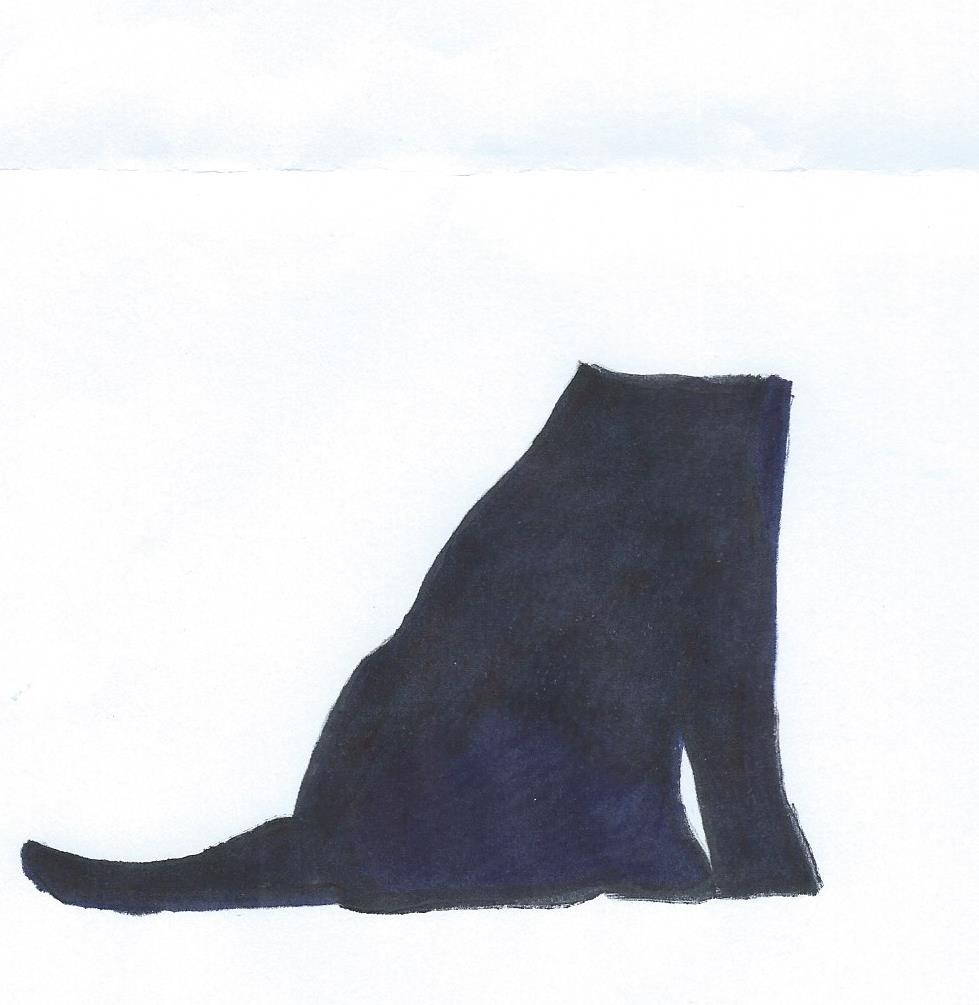
I wrote this poem in July after a vivd dream where I saw the sketchy image below, there labelled ‘an old grey man of lancashire,’ in vivid purple on a black computer screen. After waking, I scribbled it in my dream journal.

The Old Grey Man of Lancashire


In the space between waking and dream before my alarm clock went off the scene in the poem came to me. Fans of Ted Hughes may recognise that I was immersed in ‘The Remains of Elmet’ at the time and this colours the imagery.

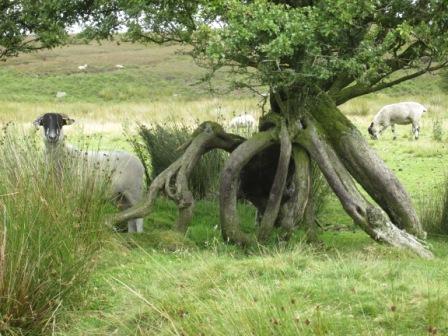
A couple of days later, planning a walk, I had an impulse to visit Brinscall. Getting the map out, I noticed nearby was Old Man’s Hill, which became the destination on a suitably grey Lancashire day. I encountered a ram beside a strangely rooted hawthorn but nothing extraordinary happened and I received no clear answer to my pondery.

Brinscall and Old Man's HillSheep, Brinscall MoorsOld Man's Hill

The Edge of the Dark

‘as ‘th’ edge o’ dark’ threw its weird glamour over the scene, boggarts and phantoms would begin to creep about to the music of the unearthly voices heard in every sough and sigh of the wandering wind…’
– James Bowker, Goblin Tales of Lancashire

This landscape has only just been claimed and in its deepest knowing holds the memory of the edge of the dark. The majority of Lancashire’s towns and fields developed where thick shaggy mosses, carr and marsh held rule. Its people lived on the edge of darkness, the edge of unknowable waters, the edge of the otherworld.

Is this existence on the edge the source of its legends? Its fairy lanes and dells, boggart bridges, cloughs and holes, its headless phantoms and saucer-eyed spectral hounds?

How far do these stories stretch back in the minds of its people? Are they the creation of an industrial age that sought to banish darkness and uncertainty with city walls yet built a new hell in its abominable mills: its Dickensian fairy palaces as the wilderness outside grew wilder?

Are they based on the wildening of tales always strange yet homely: of the household boggart whose help might be bought with butter or milk but whose wrath could estrange a family; of fay whose magic could curse or cure; of water spirits who gave of themselves and their secrets but only at great sacrifice?

Could these stories signal an endemic relationship with the otherworld stretching back through centuries? Through Anglo-Saxon boggarts and barguests to the arcane myths of Britain to the repository of stories about ‘Yr Hen Ogledd’ ‘The Old North’ in Welsh mythology and beyond to a near forgotten oral tradition? All hinge upon the cusp of thisworld and the otherworld: the edge of the dark.

In Welsh mythology the otherworld is known as Annwn: the not-world, the deep. It is the beyond of adventure, the locus of alterity. Its landscapes are unstill, its deities and monsters have many faces. It is a source of beauty and terror, of awe, of Awen, the divine inspiration quested by the bards and awenyddion who crossed the edge of the dark to explore its depths.

The ways between the worlds are fraught with danger. Safe passage is only granted at a cost. Those who return from the otherworld are never the same. Thus they shroud themselves in the cowl of the edge of the dark.

Those who live on the edge see our precarious reign over the land and its myths is illusory. Tower blocks and elaborate street lamps are ephemeral as Dickens’ fairy palaces. Electric lighting is no defence against the edge of the dark, which seeps in because its memories are deeper than us, its darkness more permeating than headlights.

These memories evoke intense loss and mourning. Yearning for the fluting wetland birds, bog oaks, reeds, rushes, and hoofed and pawed animals of the wild quagmire we banished. For the fairies and boggarts we dare not believe in. For the gods of the otherworld who haunt the edge of the dark with pawing steeds and sniffing dogs whilst we seal ourselves in a not-world that is not Annwn choosing to occupy tiny lamp lit portions of thisworld beyond the bog’s rushy melodies.

Immersed in false light we neither perceive the people of thisworld nor Annwn until the rain pours down, the marshland rises up, and the weird glamour of the edge of the dark undoes all security as the deepest memories of our land and its legendary reality return.

Greencroft Valley

Penwortham By-Pass and the City Deal

Today I went to a consultation organised by South Ribble Borough Council at Kingsfold Community Centre about changes to the planning of a new section of Penwortham By-pass. When I received an invitation through the post I was surprised as this was the first time I had been made aware of the original plan, let alone the new one.

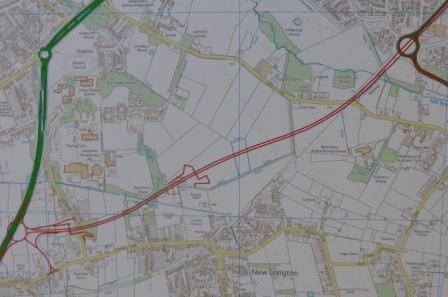
The rescinded route was to run from Broad Oak Roundabout in Penwortham, across Lindle Lane, several fields, part of Bamford’s Wood, then across Saunders Lane to join a new roundabout on the A59 close to Chapel Lane in Longton.

Penwortham By-pass Original Rescinded Route

Rescinded Route, Courtesy of South Ribble Borough Council

The new route will run from Broad Oak Roundabout, north of Lindle Lane and just north of Mill Brook. After crossing a series of fields it will join the A59 near to Howick Cross.

New Route of Penwortham By-pass

New Route, Courtesy of South Ribble Borough Council

The proposal (1) states an extra section of by-pass is needed to divert traffic away from Penwortham and residential and shopping areas on the A59, to improve conditions for residents, pedestrians and cyclists and reduce road casualties.

Reasons for the change of plan include not demolishing five houses; a smaller environmental impact with less loss of land; half a mile shorter; a more direct route to a new Ribble crossing.

All well and good. But why do we ‘need’ this new stretch of by-pass in the first place? This assumption is based on the premise that we need to prioritise economic development. This is the purpose of the City Deal.

‘The Preston, South Ribble and Lancashire City Deal is an ambitious programme of work that builds on the strong economic performance of the area over the last ten years and will help ensure the area continues to grow by addressing major transport issues to deliver new jobs and housing. Over a ten-year period the deal will generate more than 20,000 jobs, over 17,000 homes and more importantly grow the local economy. With the funding certainty it brings, we are able to deliver these transport improvements sooner we would otherwise be able to. This means new homes and jobs can come sooner and we can reduce congestion on existing roads and improve areas for communities and road users.’

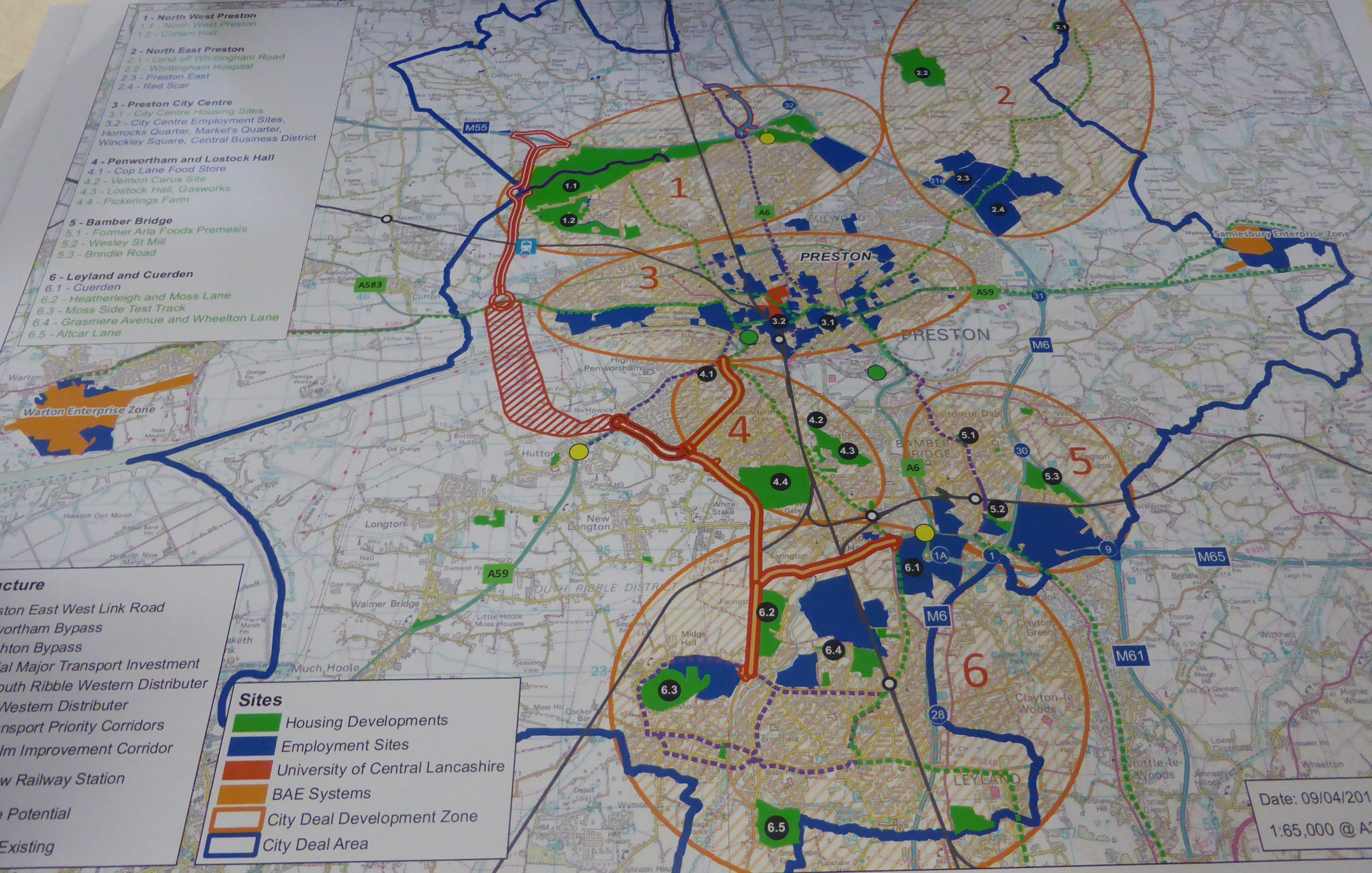
Let’s pause to look at the bigger picture. This is a map of the overall plan for the City Deal over the next ten years.

City Deal Map, courtesy of South Ribble Borough Council

City Deal Map, courtesy of South Ribble Borough Council

The piece of by-pass in question is outlined in darker red close to the number 4. Its ultimate aim is to link to a new piece of road from Howick Cross to a new bridge over the River Ribble, across Lea Marsh to join the M55 at Swillbrook.

Lea Marsh is home to numerous birds and an area of environmental importance. I was assured that if it was built on, another nature reserve would be created in its place. Surely there can be no real compensation for an irreplaceable piece of land and its inhabitants?

This new piece of road will improve access to BAE and other businesses at Warton. BAE play a major part in the Lancashire Enterprise Partnership (2).

I found it somewhat chilling when I learnt this was the reason there was no junction built on the M55. It seems this was all been planned a long, long time ahead…

I’ve got a form to fill out now. Aside from minor details my only real chance to share my opinion is in a box labelled ‘Please tell us any issues that you think may affect our proposed route for the completion of Penwortham By-pass.’

There is no clear room for objection; to the by-pass or to the premise that economic development is the right or only way forward.

There is no way of arguing for alternative improvements to public transport. ‘Even with a greater investment in public transport, cycling and walking, our current roads will not be able to cope.’

It seems this consultation is a symbolic gesture and the decision that we must have one road or the other has already been made far in advance.

(1) City Deal, Preston, South Ribble and Lancashire, Share your views on the proposals for the completion of Penwortham By-pass (August 2014)
(2) http://www.lancashirelep.co.uk/media/8787/LEP-growth-plan.pdf p10

The Black Dog of Preston

The Black Dog of PrestonI have recently been researching the legend of the black dog of Preston. The process has led me on a journey through the places it is associated with and their history. It has also brought me to consider the meaning and origin of its roles as a harbinger of death and guardian of the town’s gates.

I first came across this tale earlier in the year on a walk with local folklorist Aidan Turner-Bishop, which was organised by UCLan Pagan Society. Aidan told us that a headless black dog haunts the area between Maudlands and Marsh Lane.

St Walburge's

St Walburge’s

These locations seem significant due to their history. Maudlands receives its name from a 12th century leper hospital dedicated to St Mary Magdalene, which was dissolved in 1548 and later replaced by St Walburge’s.

Preston International Hotel

Preston International Hotel

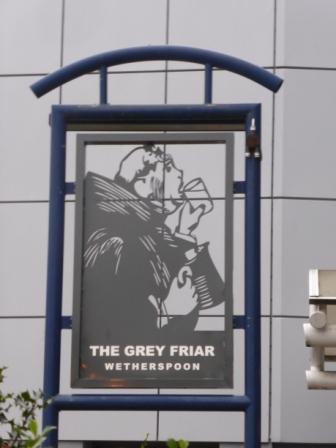
Marsh Lane was the location of a Friary belonging to the Franciscan Order, which was founded in 1260 and dissolved in 1539 and occupied the position of Preston International Hotel. The Friary gave its name to Friargate and the The Grey Friar Pub.
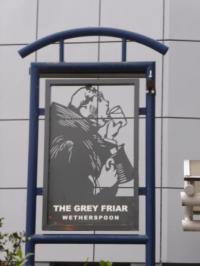
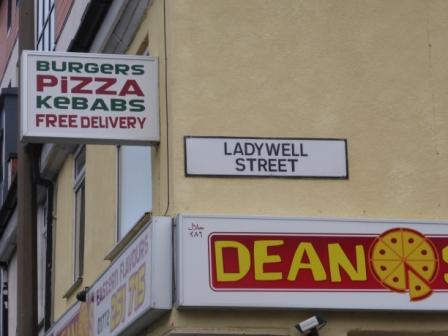
The Grey FriarNext to it was Ladywell, which was venerated up until the nineteenth century and is now remembered only by the street name (1). Water was piped from Ladywell to the Friary.

Ladywell - CopyThe earliest written records of the black dog I have come across are in Charles Hardwick’s Traditions, Superstitions and Folklore (1872). Firstly, ‘I remember in my youth hearing a story of a headless boggart that haunted Preston’s streets and neighbouring lanes. Its presence was often accompanied by the rattling of chains. I forget now what was its special mission. It frequently changed its form, however, but whether it appeared as a woman or a black dog, it was always headless’ (2).

And secondly, ‘This spectre hound or dog is a very common sprite in Lancashire. I remember well being terrified in my youth in Preston, by Christmas recitals of strange stories of its appearance, and the misfortune which its howling was said to forebode. The Preston black dog was without a head, which rendered the said howling still more mysterious to my youthful imagination’ (3).

A story called ‘The Black Dog of Preston’ is serialised by James Borlase in The Preston Guardian in December 1878. This story is set in 1715 during the period of the Jacobite rebellion, which led to the Battle of Preston.

Once again, it appears as a portent of death ‘several people who had been abroad late at night and alone, had caught sight of the THE BLACK DOG OF PRESTON, a headless boggart, who could howl nevertheless, and whose howl meant death, as also did its lying down upon a doorstep to someone who dwelt within that special house’ (4).

A connection between the black dog and Gallows Hill is mentioned twice. The first instance is a mock sighting of ‘the huge and hideous form of The Headless Black Dog of Preston, a weird boggart that for centuries was famous in our town, pawing the air, swaying from side to side, and howling most lugubriously’. Here it turns out to be one of the protagonists’ servants clad in a sheepskin (5).

In the second it appears as a guardian of the dead; ‘sixteen of the lesser rebels were hanged upon Gallows Hill in chains, and there suffered to remain for many months, guarded, it is said, of a night time, by the Headless Black Dog of Preston’ (6).

English Martyrs' Church

English Martyrs’ Church

English Martyrs' Church, Gallows Hill

English Martyrs’ Church, Gallows Hill

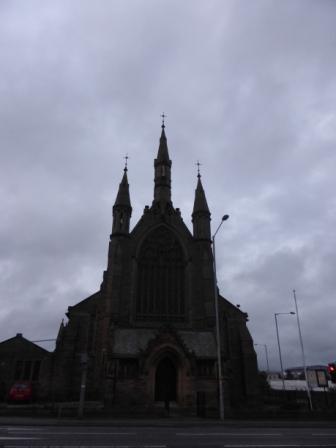
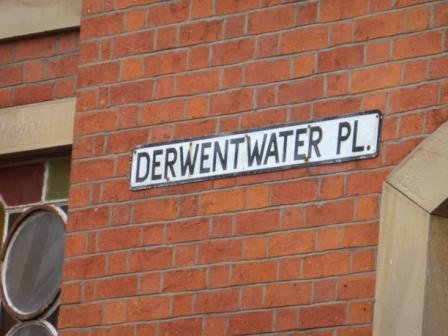
The English Martyrs’ Church, which now stands on the summit of Gallows Hill, derives its name from these executions. The nearby street names Derwentwater Place and Lovat Road refer to Jacobites captured and killed in the rebellion. That people were hung and decapitated there is evidenced by two headless bodies found during the building of North Road, which cuts through the hill. The area is described as a ‘provincial Tyburn’ (7).

Derwentwater PlaceThe black dog is also connected to the strange phenomenon of the parting of the Ribble’s waters, which occurred in the years 1715 and 1774 and is recounted by Peter Whittle. ‘The river Ribble, in Lancashire, stood still; and for the length of three miles, there was no water, except in deep places; in about five hours it came down with a strong current, and continues to flow as usual’ (8).

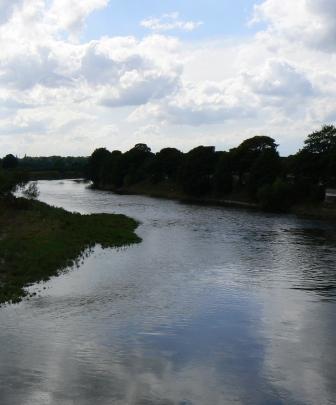
As the protagonists in Borlase’s story ride double into the Ribble, down river from Walton Bridge, their horse shies, ‘it was not the water that was terrifying the horse, but a great black something, like a weed-covered rock, that seemed to be lying half in and half out of it… the thing became suddenly instinct with life, and rolling rather than moving toward them exhibited the hideous form of The Headless Black Dog of Preston…The black dog uttered a most lugubrious howl, not withstanding its headlessness, and then waddled off; whereupon, and immediately, a most extraordinary circumstance occurred, for with a roar the river parted in twain from the Preston shore’ (9).
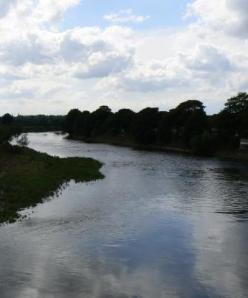
The river Ribble from Walton Bridge

Whilst this story is fictitious it is possible some of its elements are founded on earlier beliefs.

During the 19th century the superstition that a howling dog was a portent of death was popular. James Bowker says ‘few superstitions have a wider circle of believers in Lancashire than that which attributes to dogs the power of foretelling death and disaster’ (10). Hardwick attributes this to the dog’s delicate sense of smell, saying the capacity to scent putrid flesh ‘may have influenced the original personification of the dog as an attendant on the dead’ (11).

Contemporary writer Alby Stone suggests this superstition may relate to earlier beliefs about dogs being able to see spirits and thus forewarn of death. She adds ‘in many traditions… such creatures are not merely harbingers of death. They are both guides to and guardians of the land of the dead’ (12). In Borlase’s tale the black dog appears as a guardian of the dead on Gallows Hill and guides the protagonists across the Ribble.

It is possible to link this liminal role to the term ‘boggart,’ which Hardwick and Borlase use interchangeably with ‘black dog’. According to Brand ‘boggart’ may derive from the Northern pronunciation of ‘bar’ meaning ‘gate’ and ‘guest’ meaning ‘ghost.’ A boggart or ‘bar-guest’ is hence a ‘gate-ghost’ (13). To complicate things further ‘gate’ actually meant ‘street,’ hence Friargate. Brand says ‘Many streets are haunted by a guest, who assumes many strange appearances, as a mastiff-dog, &c. It is a corruption of the Anglo-Saxon gast, spiritus, anima.”’ (14).
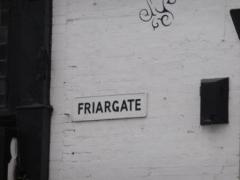
Friargate IIThis is interesting as older maps of Preston show the town’s ‘bars.’ The bar of Friargate is located in the present day position of The Sun Hotel, not far from Marsh Lane (15).
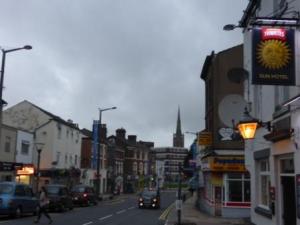
Approximate Location of Friargate Bar

Approximate Location of Friargate Bar

This may go some way to explain the Friargate connection. The black dog may be seen as both a guardian of the physical gates of the town and the gateways between the lands of the living and dead. The former is supported by a reference on the Paranormal Database, which says ‘It is said that the town was once haunted by a headless black hound, appearing when danger threatened the town’ (16).

This idea may date back to pre-Christian beliefs. Alby Stone argues that evidence of ritual burials dating back to Bronze Age Britain suggests that dogs may have been killed and interred to serve as spirit guardians. She lists a pair of dogs buried at Flag Fen in Peterborough and another at Caldicot in Gwent (17). A recent example suggesting such practices may have continued into the medieval period and beyond is the discovery of the seven foot skeleton of Black Shuck outside Leiston Abbey (18).

At the time Bowker was writing it appears the belief in ‘foundation burials’ was current in Lancashire. He cites Rev. S. Baring Gould, ‘It was the custom to bury a dog or a boar alive under the corner-stone of a church, that its ghost might haunt the neighbourhood, and drive off any who would profane it—i.e. witches or warlocks’ (19). However, as far as I know, there is no archaeological evidence of this kind of practice in Preston.

There are other idiosyncrasies bound up with the legend that are less easy to interpret. For example how did the black dog lose its head; was it a dog beheaded as part of a ritual burial, or is it the ghost of a decapitated human?

There is also the paradox that although the boggart was supposedly laid it continues to haunt the streets of Preston. Hardwick says ‘The story went that this boggart or ghost was at length “laid” by some magical or religious ceremony in Walton Church yard. I have often thought that the story told by Weaver, a Preston antiquary, in his “Funerall Monuments,” printed in 1631, and which I have transcribed at page 149 of the “History of Preston and its Environs,” may have had some remote connection with this tradition’ (20). If the black dog was laid in 1560 as part of Dee and Kelly’s misdemeanours in Walton Churchyard,  which are referred to in Weaver’s story, how come it figures so largely in tales set in 18th to 19th C Preston?

I’ve visited Walton Churchyard and seen no obvious signs of a boggart having been laid, such as the Written Stone in Longridge (21). However, like in this legend and a tale from Clayton Hall ‘Whilst ivy climbs and holly is green, / Clayton Hall boggart shall no more be seen’ (22) there is a holly tree in the centre of the graveyard and plenty of ivy about. Holly is renown for its apotropaic function (23).

Holly Tree, Walton Churchyard

Holly Tree, Walton Churchyard

One possibility is that it wasn’t laid. Another is that the laying was ineffective. The Gristlehurst Boggart was reputedly laid in a hollow and assuaged with milk but still seemed to be out and about causing trouble at the time Edwin Waugh was writing (24).

Old Dog Inn

The Old Dog Inn

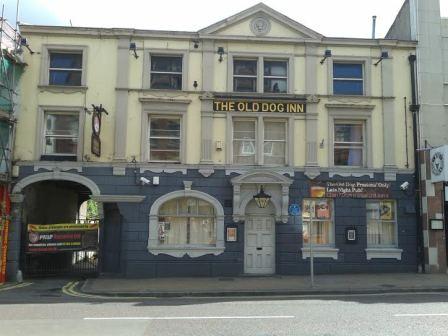
Aside from these stories, and the pub name The Old Dog Inn (which is tenuous as it pictures a grey coloured hound with a head) I haven’t come across any more evidence of its existence. More current accounts of paranormal activity in Lancashire refer to big cats.

Old Dog - Copy

The Old Dog

Could this be because the black dog of Preston has abandoned the city? Or could it be because nobody who has seen it or heard it howling has lived to hear the tale?..

(1) David Hunt, A History of Preston, (2009), p31-33
(2) Charles Hardwick, Traditions, Superstitions and Folklore, (2012), p130
(3) Ibid. p172
(4) The Preston Guardian, 17th December 1887
(5) Ibid.
(6) The Preston Guardian, 24th December 1887
(7)http://www.englishmartyrspreston.org.uk/history1.htm#Gallows%20Hill%20History%20of%20the%20Church%E2%80%99s%20Location
(8) Peter Whittle, aka Marmaduke Tulket, A topographical, statistical, & historical account of the borough of Preston, (1821), p15
(9) The Preston Guardian, 24th December 1887
(10) James Bowker, Goblin Tales of Lancashire,(1878), http://www.gutenberg.org/files/41148/41148-h/41148-h.htm
(11) Charles Hardwick, Traditions, Superstitions and Folklore, (2012), p174-5
(12) Alby Stone, ‘Infernal Watchdogs, Soul Hunters and Corpse Eaters,’ in ed. Bob Trubshaw, Explore Phantom Black Dogs, (2005), p36
(13) John Harland and T.T. Wilkinson, Lancashire Folklore, (1867), p50
(14) Ibid.
(15) David Hunt, Preston Centuries of Change, (2003), p39
(16)http://www.paranormaldatabase.com/reports/shuckdata.php?pageNum_paradata=9&totalRows_paradata=258
(17) Alby Stone, ‘Infernal Watchdogs, Soul Hunters and Corpse Eaters,’ in ed. Bob Trubshaw, Explore Phantom Black Dogs, (2005), p41
(18) http://www.dailymail.co.uk/news/article-2629353/Is-skeleton-legendary-devil-dog-Black-Shuck-terrorised-16th-century-East-Anglia.html
(19) James Bowker, Goblin Tales of Lancashire, (1878) http://www.gutenberg.org/files/41148/41148-h/41148-h.htm
(20) Charles Hardwick, Traditions, Superstitions and Folklore, (2012), p130
(21) Aidan Turner-Bishop, ‘Fairy and Boggart Sites in Lancashire’ in ed. Linda Sever, Lancashire’s Sacred Landscape, p105 and 107
(22) John Harland and T.T. Wilkinson, Lancashire Folklore, (1867), p50
(23) Aidan Turner-Bishop, ‘Fairy and Boggart Sites in Lancashire’ in ed. Linda Sever, Lancashire’s Sacred Landscape, p106
(24) Edwin Waugh, ‘Gristlehurst Boggart,’ Lancashire Sketches Vol. 2, http://gerald-massey.org.uk/waugh/c_sketches_2a.htm