Drops of Hope

by the river.

A mother’s first milk.

She calls on Brigantia
to deliver her first-born child.

Drops of hope
by the river.

She drinks of her milk.

Will Brigantia deliver us?

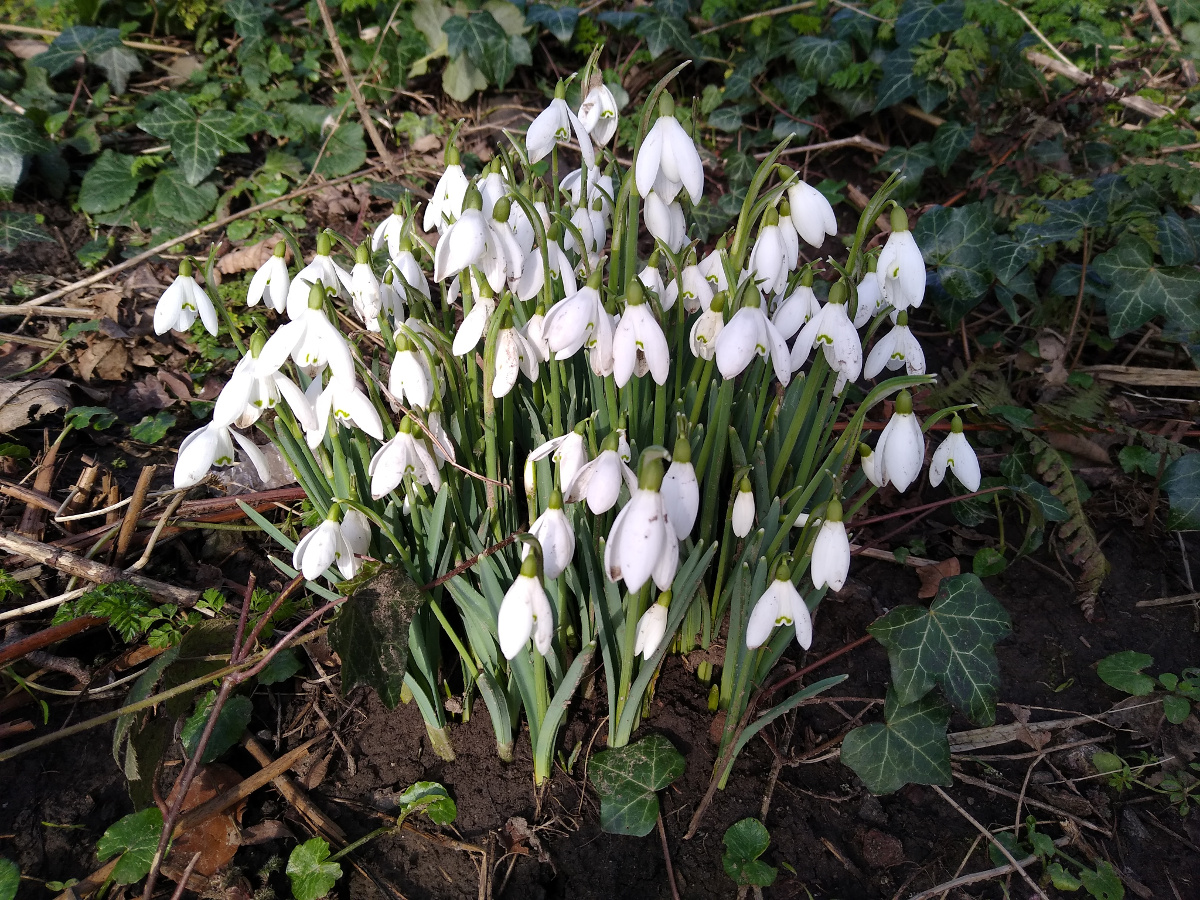
No-one knows exactly where they came from or who brought them here in the early sixteenth century. Yet the snowdrop (galanthus nivalis from the Greek gala ‘milk’ and anthos ‘flower’ and the Latin nivalis ‘of the snow’) along with lambs has become an essential part of the constellation of the Celtic festival of Imbolc/Gwyl Ffraid which is celebrated by modern Pagans and Celtic Polytheists on the 1st and/or 2nd of February.

The common etymology of the term Imbolc is that it comes from the old Irish i molc ‘in the belly’. It is usually associated with the pregnancy and lactation of ewes. Sheep, along with domesticated cattle and pigs, were brought to Britain and Ireland during the Neolithic period. This could well have been the time the Celts began venerating the ‘culture gods’ associated with the cross quarter pastoral and agricultural festivals such as Brigid/Brigantia (Imbolc) and Lugh/Lugus (Lughnasadh/Gwyl Awst).

I have often wondered whether ‘in the belly’ relates to earlier human fertility cycles amongst hunter-gatherers in which most of the mating took place at Beltane/Calan Mai so babies were born nine months later, at Imbolc, a time when the days were beginning to lengthen and the weather to warm. One of the roles of Brigid/Brigantia was as a midwife and perhaps relates to an older tradition.

If our ancient ancestors had seen snowdrops at this time would they have seen them as signs of hope as they brought life into a world which remained precarious due to unstable weather, lack of food, and perhaps also winter illnesses such as colds and flus?

Hope in a time of precarity is what snowdrops say to me this year as Brigantia approaches with a bunch of milk-white flowers in her midwife’s hands.
Song for the Nine

This is a song for the nine
who stood against fracking:
the nine who stood firm
the nine who stood
against the tyrants’ gall.

This is a song for the nine
who stood for land and people:
Little Plumpton,
Roseacre,
democracy and hope.

This is a song for the nine
who stood for Lancashire:
clean rivers,
unfractured land,
our children free from harm.

This is a song for the nine
the nine we will remember
for standing firm
standing for us
in centuries of song.

~

This song came to me near whole and of its own accord the morning after Cuadrilla’s proposal to frack at Little Plumpton was refused by Lancashire County Council’s Development Control Committee 9-4 (2 abstained).

I e-mailed it to Peter Dillon, who was also involved in the protests. He told me that night he’d dreamt of a tune. With a few tweaks it fit the wording perfectly and  wasn’t far off the tune I had when the song came to me.

I’ve sent a copy with a thank you e-mail to the nine at Devcon today. We may be singing it somewhere in Preston soon.

Corpse Road

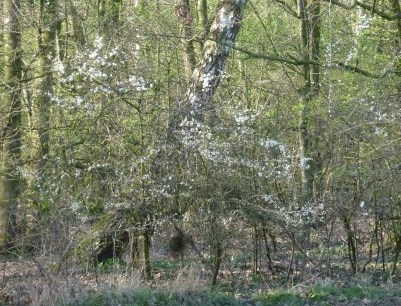
Birch and Blackthorn, Hurst Grange Park, PenworthamWho’ll walk the corpse road back to me?
– ‘Revenants’ Andrew O’Riordan

Where spring brings hope to downy birch
And blossoms of stars to blackthorn trees
When the hunt is still as the final frosts
Who will walk the corpse road back to me?

Where spring brings hope to drunks of the woods
With the pale potential of anemone
When my court dance in dew where a man lay cold
Who will walk the corpse road back to me?

Where spring brings hope to primrose hills
But none to vagrants on city streets
When wills clash like I do with impudent rivals
Who will walk the corpse road back to me?

Where spring brings hope to prison gardens
For a watchful moment the condemned walk free
When to solitary confinement comes Annwn’s darkness
Who will walk the corpse road back to me?

Where spring brings hope to those who can see it
Yet Victorian cells of asylums scream
When dreams of my kind are derided as madness
Who will walk the corpse road back to me?

Where spring brings no hope and death is release
And no fusion of flowers can quench the pain
When souls are lost as my absent queen
Will you walk the corpse road back to me?

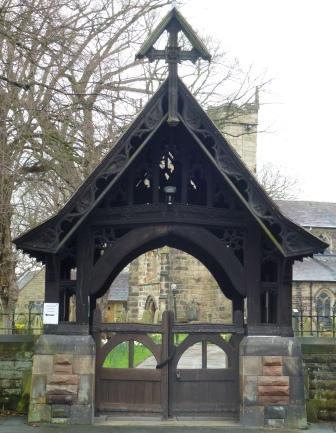
Lych Gate, St Mary's Church, Penwortham* Poem written in the voice of Gwyn ap Nudd, a British King of the dead and the fairies

The Other Side

Looking beyond the embers of bridges glowing behind us
To a glimpse of how green it was on the other side
Steps taken forwards but sleepwalking back again
Dragged by the force of some inner tide
– Pink Floyd High Hopes

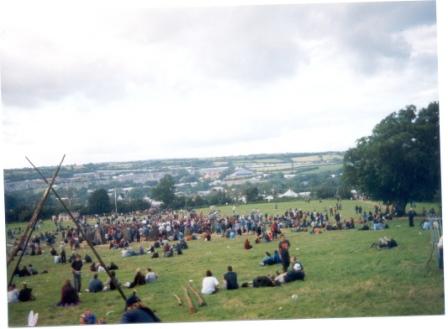
Glastonbury 2000

The world was ours, the moment all that mattered.
Our hopes were high in the mist of dawn.
We flung our friendship over the wildest horizons
riding rainbow lights and drums to distant haunts
that never satisfied the fire in our souls
nor the loneliness that lay its pall between us.
Strung out on stars, burning everything of value
we reached the ravaged borderlands and paused
so far gone even astronomers couldn’t find us.
Looking beyond the embers of bridges glowing behind us

they saw the stone circle and distant Tor,
the penumbra of a festival vanished to the night.
At last we staggered home lost and nearly blind,
dazzled by the sun we couldn’t find to tiny houses
with stiff front doors surrendering hope for certainty.
The return was hard, obeying the constant grind
of re-learning how to put one foot in front
of the other one. Re-mastering the system, unseeing
starry skies. Yet on the odd occasion reality elides
to a glimpse of how green it was on the other side.

I fought onward, eventually alone
as the division bell began to toll, making happy
families with freshly ironed clothes, polished homes
and forced smiles. From a dusty library I looked out
across the hills- a glimpse of green and beacon fire.
My feet trod through cotton grass to broken remains
of tribal ruins drawn by chants on the west wind.
The other side returned to life in the vestibules of trees.
I saw a river goddess wash her hair in the rain.
Steps taken forwards but sleepwalking back again

the fragments stayed broken, my vision incomplete.
Stunned by the Tor redrawing itself on the backdrop
of my mind I relit the embers on the Ribble’s bank
and recalled the last hint of paradise before everything
went black and time took our dreams away. Guided
by the voice of an otherworldy king I reclaimed my pride
at the Tor’s white spring. Time performed its circle,
gave back my starlit dream. The world is mine again.
To the other side and spiralling back I ride
dragged by the force of some inner tide.

Glastonbury Tor 2013