This Dark Night

Vindos Vindos Vindos
by the Winter Wind
I call to You

Vindos Vindos Vindos
Father of Night
oh hear my cry

Vindos Vindos Vindos
in the darkness
make me one with You

Vindos Vindos Vindos
heal my wounds
on this dark night

Audio HERE

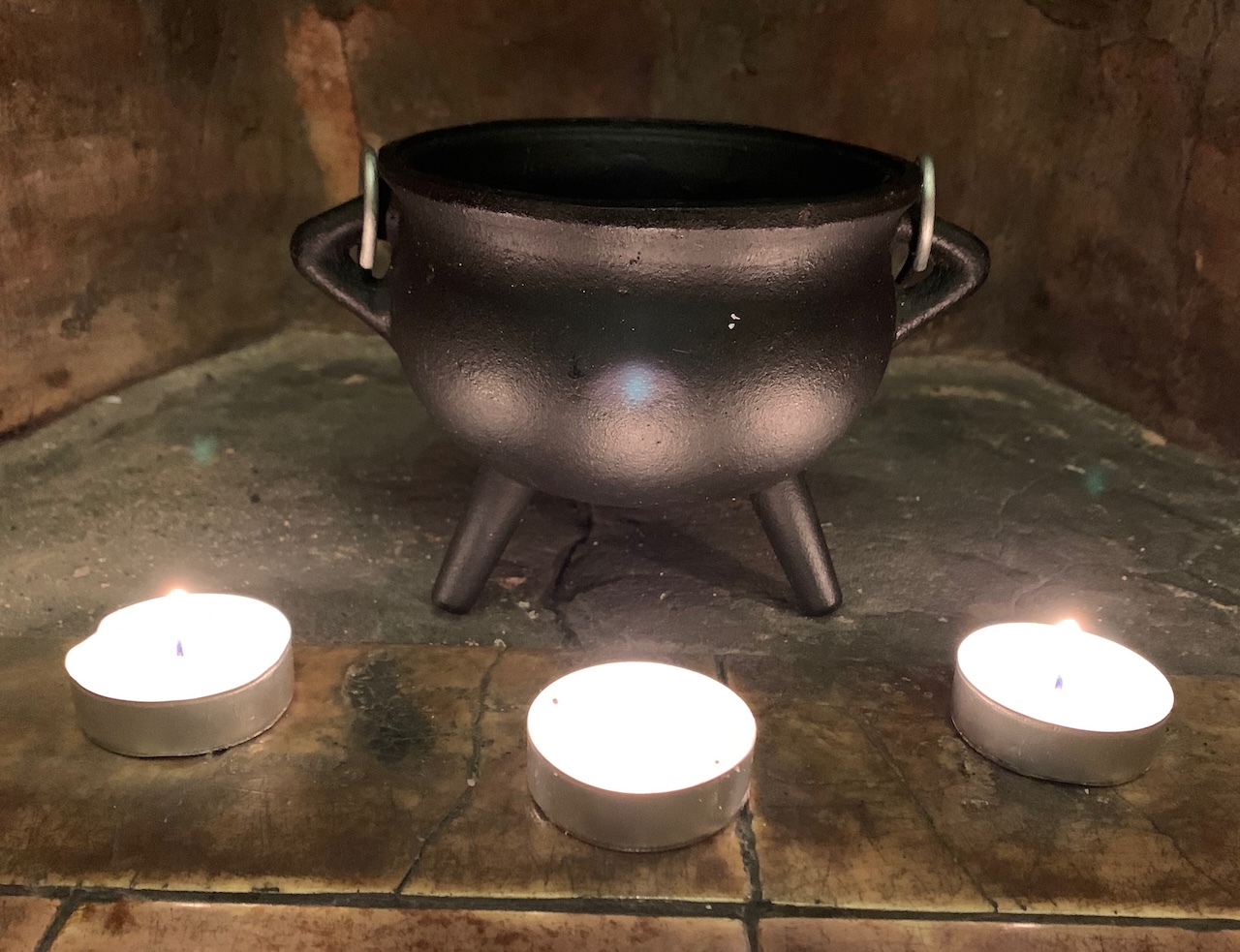
*A chant to Vindos for all those in need of healing over the dark moon and winter solstice period.

Going to Tyburn – The Hanged and the Healing

I didn’t go to Tyburn to ‘go to Tyburn’. (1) I went to London to attend an introductory weekend as a prerequisite to a three year shamanic healing course. But I ended up staying in a hotel in Tyburn as it was relatively cheap. When I visit a place I like to do a bit of historical research before I go and have a map of the land past and present to help me connect with the spirits and this what I found out.

The Tyburn Tree

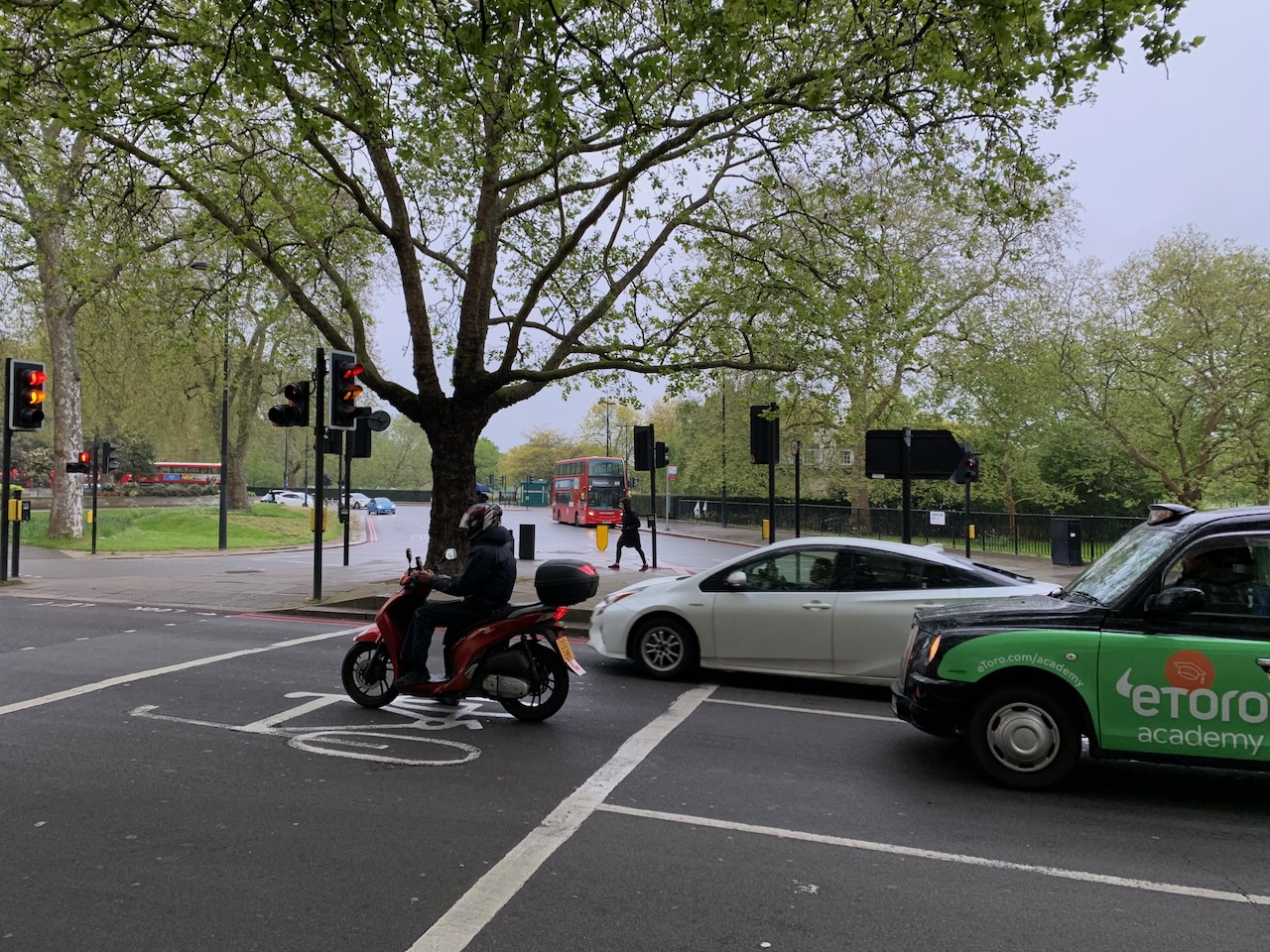
The dark but now absent centre of this place is the infamous Tyburn tree. It was the King’s Gallows from 1196 to 1783. It has also been known as the Elms, the Deadly Never Green Tyburn Tree and the Triple Tree (because it was a wooden triangle on three legs – a ‘three legged mare’ or ‘three legged stool’). The triangular traffic island where it once stood mirrors its structure.

All manner of criminals were executed there by being hanged, drawn, then quartered. Many of the victims were religious people of the Catholic faith – friars, priors, abbots, monks and hermits, who resisted King Henry VIII’s separation of the Church of England from legal ties to the Catholic Church and papal authority of Rome and the dissolution of the monasteries.

The Carthusian Martyrs, 18 monastics of the Carthusian Order from the London Charterhouse, were executed between 1535 and 1537. As a result of the Lincolnshire Rising, the Pilgrimage of Grace and Bigod’s Rebellion over 250 rebels met their deaths again including large numbers of monastics. Many were northerners, such as the bowbearer of the Forest of Bowland, and people from my home county, Lancashire, joined the rebellions.

This had meaning for me as a polytheistic monastic because these Catholics were standing for the freedom to practice their religion and to continue to lead monastic lives. The anglicisation of the church and dissolution of the monasteries removed much of the mysticism and sanctity from Christianity in England.

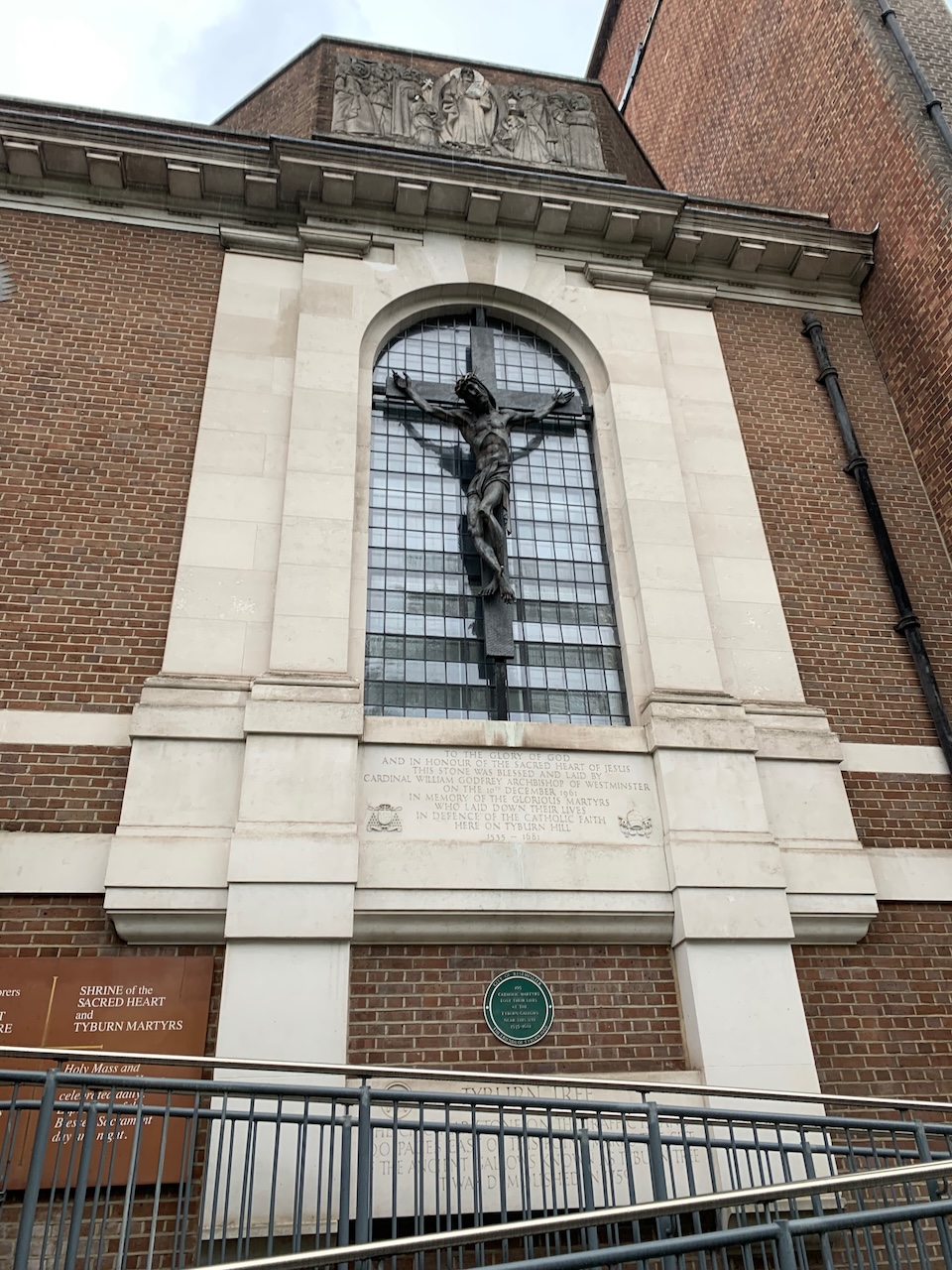
Tyburn Convent

In 1901 the Tyburn Convent was established near the site of the Tyburn Tree with a shrine to the Tyburn Martyrs. This order of Benedictine nuns was founded by Mother Marie Adèle Garnier as the Adorers of the Sacred Heart of Jesus of Montmartre in Paris in 1898. When the nuns were forced to leave due to restrictions on monasteries in France they made their home in London.

What is unique and beautiful about their tradition is their perpetual adoration of the Sacred Heart of Jesus. What this entails is that, at all times, day and night, at least one nun is kneeling before the eucharist worshipping Jesus’s heart.

Mother Marie is ‘honoured and remembered’ for her ‘ardent love of Christ’, ‘her heroic love of God and neighbour, her spirit of prayer, divine contemplation, rich mystical and spiritual doctrine, humility, obedience, patience, simplicity and purity of heart, and above all for her spirit of total self-abandon to the Holy Will of God, which she declared to be her unique good.’ (2)

This is one of her prayers – 

‘O blessed portion! Lot worthy of envy!
My heart is ready, O Lord, my heart is ready!
Here I am, speak, act, inflame me,
unite me to Yourself!

O Mary, O my tender Mother
entrust me to Jesus,
love hidden in the adorable Eucharist.
Henceforth make my life
become a repeating with you:
I look for nothing other than Him…
I know only Him alone…

Jesus, my soul is thirsting for You
so unite it to Your Heart
that no longer may I be able to live without You.’ (3)

When the nuns make their act of consecration they speak a prayer that has been spoken in their communities since Pope Leo XIII consecrated the world to the Sacred Heart of Jesus on the 11th of June 1899.

‘Lord Jesus, Redeemer of the human race,
look down upon us humbly prostrate before Your altar.
Yours we are, and Yours we wish to be;
but to be more surely united with You,
behold we freely consecrate ourselves today to Your Most Sacred Heart. 
Many, indeed, have never known You;
many, too, despising your precepts, have rejected You.
Have mercy on them all, most merciful Jesus,
and draw them to Your Sacred Heart…’ (4)

The Sacred Heart and Healing

I had never come across the perpetual adoration of the Sacred Heart of Jesus before. It resonated deeply with me because over the past few years my patron God, Gwyn ap Nudd, has revealed His heart to be the Heart of Annwn, which He inherited from His mother, Anrhuna, the Mother of Annwn.

My personal practice has increasingly involved devotion to the Heart of Annwn. Keeping the heart beat by drumming and chanting. Meditating, journeying on and recording the stories gifted to me about Gwyn’s Sacred Heart.

Before I set off to London I was instructed by my guides to make a pilgrimage walk to the Tyburn Tree and the Tyburn Convent. I was told I must take ‘purity, grace and the pain of the dead’ in a small obsidian spearhead I was gifted by a fellow nun of Annwn and leave it as an offering.

I did this on the first day in the early evening after I left the course. I was disappointed to find the stone and three young oak trees put there in 2014 to mark the site of the Tyburn tree had been removed. I can only guess this was done because people were hanging about the site or leaving offerings. In spite of the rush of traffic and people I paused and spoke some prayers then made my offering at the foot of the London Plane tree on the island. 

I went to the Tyburn Convent and paused to pay my respects to the Tyburn Martyrs and shared my gratitude for the work of the nuns and gained a sense of release and peace and of our unity in the adoration of the Sacred Heart.

When I got back to my hotel room, although I didn’t have my drum, I played the beat of the Heart of Annwn on my knee, sung one of my chants, again imagining my offering of song as uniting with the devotion of the Tyburn Nuns.

My weekend course, The Shaman’s Pathway, with Simon Buxton of the Sacred Trust, was profoundly moving and deeply healing. Whilst the first day was more introductory on the second day we practiced ecstatic union with our spirits, healing each other, and the culimination was a powerful group healing ceremony in which I was honoured to take the role of drummer.

In the following of my heart, in alignment with Gwyn’s heart, the Heart of Annwn, I feel healing has taken place and I have received confirmation I’m on the right path in pursuing the three year training to become a shamanic healer.

(1) ‘Going to Tyburn’ or ‘taking a ride to Tyburn’ are metaphors for being hanged.
(2) https://www.tyburnconvent.org.uk/site.php?menuaccess=161
(3) https://www.tyburnconvent.org.uk/site.php?menuaccess=240
(4) https://www.tyburnconvent.org.uk/site.php?id=234

    Stepping into Orddu’s Lineage

    I am told I must step into Orddu’s lineage. 

    Warrior. Prophet. Spirit Worker. Inspired One. Healer.

    I am old but on this path I am still so young.

    Heretofore I have proved myself only with words,
    with books, although those months on the mosslands
    planting cottongrass and sphagnum might count for something.

    I have said too much – talking about me, me, me, my problems.

    The time for whining and complaining has come to an end.

    It’s time to listen, to learn, craft a new art to heal the violence.

    (I will not speak again of how Arthur killed her with his knife,
    drained her blood into two bottles to grease a giant’s beard,
    neither will I drive Carwennan again into my own wounds.)

    A life off the page lies ahead of me now – the spirits call.

    New Shoots and Rerooting

    In the middle of winter new shoots begin to show – snowdrop, crocus, daffodil, bluebell. I’m not sure if this has always been the case. But for the last six or so years one of my mid-winter rituals has been looking for new shoots.

    New shoots have been showing in my life too. I’m starting to recover from the disappointment of In the Deep not being publishable and have come to terms with the fact the veto on my becoming a professional author is for good.

    Before the winter solstice I attended a beautiful in-person workshop called Bear Moon Dreaming with my spiritual mentor, Jayne Johnson, in which she led a small group through shamanic journeying and dancing into connection with bear, the moon, and into the depths of the winter landscape and hibernation. In it I became one with the Water Country and Gwyn as Winter King giving gifts to the people.

    Afterwards I realised I couldn’t live my life online anymore. Spending most of my day writing at my laptop and living through this blog has not been healthy. 

    Around the same time the forum for the Monastery of Annwn got deleted by the member who set it up without consent of the rest of the membership. I was shocked and angry but also a little relieved as I had been spending too much time online doing admin*. When I journeyed on what to do about it I found the monastery hanging by a thread in the Void and with my guides and other animals had to drag it back to the Forest of Annwn and reroot it. This became a metaphor for both what the monastery needs and I need too.

    I spent the last moon cycle praying and discerning my future course. I received two answers and the first was that I needed to return to outdoor work. Previously I had been working in conservation and done a little horticulture and since then had been continuing to grow plants. 

    I have slowly been developing a relationship with Creiddylad as a Goddess of flowers with whom I have been working to improve our garden and the wildflower area in Greencroft Valley where I have volunteered since 2012. 

    So I have started volunteering with Let’s Grow Preston and Guardians of Nature with the hope this will lead to paid work. I feel horticulture will sit well with my vocation as monastics traditionally labour several hours in their gardens.

    My second answer was to train to become a shamanic practitioner. This fit with my having been journeying with Gwyn for over ten years to bring back inspiration from Annwn to my communities and with my practicing core shamanism with the Way of the Buzzard and more recently with Jayne.

    It’s something I’ve considered in the past but have been put off because I don’t feel good enough and have doubted whether I have it in me to be a healer.

    Yet Gwyn has made it clear I must take this step and has assuaged my doubts. In relation to my presupposition, ‘I don’t have a healing bone in my body’, He reminded me of the time I had a similar thought, ‘I can’t grow things because everything I touch dies’, yet then got good at growing plants. He told me healing is a skill that lies within me and it is time to manifest it. 

    He also explained ‘it is like the transition between bard and vates’. I’ve been ‘the bard in the meadhall’. Giving up drinking has been for the purpose of clearing my head so I can hear the voices of the subtler spirits. Only I won’t later be becoming a druid but a nun of Annwn – an entirely new vocation.

    Thus the new shoots push up through the surface and I see how to reroot. By getting my hands back in the soil through horticulture and working towards becoming a shamanic practitioner to heal both myself and others.

    I will also be continuing to blog here about my journey and sharing devotional material as service to my Gods and for my patrons and wider readership.

    *It turned out this wasn’t a bad thing as it has given us the chance to start looking for a better forum and share the administrative workload more fairly.

    On Not Feeling Monastic Enough

    During my discernment process around my temporary vows I have been struggling with not feeling monastic enough. Worrying our vows at the Monastery of Annwn are too ‘lite’. That I haven’t suffered enough, sacrificed enough, that my life of devotional creativity is too much like fun.

    Reflecting on whether my life is monastic enough in relation to other traditions such as Benedictine and Carmelite Christians who pray Divine Office seven times a day I asked Gwyn by divination whether He is happy for me to continue focusing on devotional creativity or if he wanted me to give up more of my time to regulated prayer. I received the following answer.

    For myself as querent (centre) I got 7 of Arrows Insecurity. This suggested my asking this question is based on insecurities around not feeling monastic enough.

    For creativity (left) I first got Ace of Arrows – The Breath of Life. A clear sign this is where my inspiration lies. Secondly 1. The Shaman. A powerful card showing I must continue to bring wisdom from the Otherworld through my writing. Thirdly King of Bows – Adder representing magical and serpentine energies and the snakes and serpents prominent in my books. 

    For shifting focus to contemplative prayer in a formal monastic way I first got 7 of Vessels – Mourning. This shows I am mourning having no existing tradition to follow in relation to my questions about spiritual direction. Secondly 2 of Vessels – Attraction. Rather than looking to more formal traditions I should keep my focus on the relationship between Gwyn (the stag-headed man) and Creiddylad (the horse-headed woman) and their relationship and the Heart of Annwn. Thirdly 8. Stag. I should remain focused on Gwyn and my shamanistic path as an awenydd (represented by stag and drum).

    Shortly afterwards Gwyn asked me why, when I have my devotional relationship with Him and all the Otherworld to explore, I’m hankering after Christianity for guidance rather than asking Him and journeying for answers. He asked me to give up looking to Christianity and I agreed. 

    A scary thing about this was when I was researching Christian prayer my horse and hound spirits disappeared from my life and I didn’t notice until I made my agreement with Gwyn and they returned to me afterwards on my run.

    On further reflection I have been thinking about how the restrictions and rules of Christianity drive us towards physical and mental self-flagellation and cutting off parts of ourselves, in acts of martyrdom, in aspiration to saint-like ideals. Not good particularly if you’ve got a history of self-harm.

    In contrast shamanistic traditions encourage us to be whole. To recover the soul parts we have cut off, that have been cut off from us through centuries of Christianity and more recently by industrialisation, rationalism, science, capitalism. 

    To undo our internalisation of harmful social constructs and to heal. 

    Our environmental crisis is underpinned by one of spiritual crisis. As Paul Francis describes it ‘an epidemic of soul loss’*. Our being cut off from the land and its spirits and the Gods has led to the hegemony of the exploitative world view that has allowed the ravaging of the earth that has brought about climate change to happen.

    These insights have led me to see that if I am to be a polytheistic monastic and have a leading role in the development of the Monastery of Annwn I must put aside existing ideals that are harmful and focus on those that help us heal.

    My work in relation to soul loss is reclaiming the myths of the deities of Annwn (the Brythonic Otherworld/Underworld) from demonisation by Christianity. Exposing the wounds and also working towards healing them.

    Thus filling the myth-shaped and God-shaped holes**, the voids at the heart of modernity, that drive our endless consumption and consumerism.

    Is this monastic enough? Is this monasticism? Perhaps not as we know it. 

    Yet Gwyn has told me I am a nun of Annwn and this ‘title’ refers to my depth of devotion and service to Him. That it is fitting for one who lives a life centred on Him and to the awen from His cauldron.

    I feel that in my soul I have always been a nun and this essential part of my being has been denied to me by society and my internalisation of society’s norms and accepting and becoming it is now the core of my journey.

    *In his video on ‘Soul Loss and Soul Retrieval’ HERE.
    **Terms used by myth teller Martin Shaw in a number of his video appearances on Youtube.

    King Fishing

    I.

    Your azure blue splash.

    The quickness
    of your dive.

    Your kiss of fire.

    Your splendour.

    Your spine-snapping
    savagery.

    II.
    Your body weight
    in fish eaten

    every day

    fishing for
    each of your young.

    Your aeronautics.

    III.
    You were here
    before someone wounded
    the Fisher King

    red dripping into blue

    the blood from
    his groin

    like blood
    from his queen’s
    menses

    flowing into the sea

    (when male and female
    had to bleed).

    IV.
    You were here
    before the fae danced
    in your colours

    in the hall
    of the King of Annwn
    like devils

    burning red
    and cooling blue.

    V.
    You sat on your perch
    and you watched

    the gods –

    some say
    you advised
    the Fisher King.

    VI.
    His wound

    is beginning to heal
    with the demise

    of industry.

    The red rivers
    are flowing blue.

    VII.
    You are no longer
    a myth

    we cannot reach

    on boats
    of fish bones

    sailing for halcyon days

    because
    they are here
    like you

    on this river.

    VIII.
    The Fisher King
    is fishing.

    The red world
    is turning
    blue.

    This poem is the third of three pieces about creatures who build their nests in sandy banks and can be seen at Brockholes Nature Reserve. I wrote it a couple of weeks ago when I was applying for a paid traineeship on the Kingfisher Trail – a 14 mile recreational route following the rivers of the Croal-Irwell Valley connecting ‘the rural West Pennine Moors to the urban communities of Bolton, Bury, and Salford’ (HERE). Although I didn’t get the job (of 300 applicants I made the top three) I intend to walk the trail.

    In this poem I link the kingfisher to Nodens/Nudd, an ancient British god of hunting, fishing, healing and dreams, from whose mythos the story of the Fisher King may have arisen (although Brân is a candidate too) and to his son, Gwyn ap Nudd, a King of Annwn/Faery, whose people make merry in red and blue costumes in his feasting hall.

    Coincidentally, around the same time, Gwilym Morus-Baird published a video on ‘Gwyn ap Nudd and St Collen’ (HERE) where he discusses the symbology of Gwyn’s people wearing red and blue, which might have alchemical significance. Intriguingly he linked this to the two streams, Y Gwter Las and Y Gwter Goch which flow into Llyn y Fan Fach, the location of a story where a fairy bride is given away by a Fairy King-like figure.

    The Long Hard Road

    I want to live, I want to love
    But it’s a long hard road out of Hell.’
    Marilyn Manson

    So it’s December the 31st and we stand at the gateway between one year ending and the next beginning. As ever I feel obliged to write a retrospective. Looking back, quite frankly, 2020 has been a shitter of a year – on global, national, familial, and personal levels.

    A global pandemic. A messy Brexit. Life at home has been incredibly difficult with my dad’s ongoing health problems, my mum having a fall and a hip replacement, and my brother having brain surgery and coming to stay with us with us whilst he recovers. And this has all happened on top of me finding out it’s likely I’m autistic for which I’m in the midst of the lengthy process of getting a diagnosis.

    I received the first hint that this year would prove portentous in February when I was volunteering on the Wigan Flashes Nature Reserve and noticed a profusion of scarlet elf cups (Sarcoscypha austriaca). In a blog post I posed the question: ‘Will these red cups bring good or bad luck?’

    By March we had the answer – coronavirus was spreading rapidly and we entered a national lockdown. This turn of bad luck felt particularly cruel as I had left my supermarket job to volunteer with the Lancashire Wildlife Trust full time as a way into a career in conservation. The first day of the lockdown was meant to be the first day I started a conservation internship at Brockholes Nature Reserve. This got put on hold and all my other volunteering was cancelled. I was left with neither furlough from a paid job or training toward paid work with only the small income from my writing.

    During the first lockdown my mum and I agreed that it was like being in Purgatory – a sentiment I have seen echoed elsewhere, for example in the Scarlet Imprint Newsletter. This makes me realise how deeply engrained Christian concepts are within our psyches, even for non-Christians, and how lacking we are in Pagan and Polytheist concepts through which to understand our situation. At several points I have wondered if the gods are punishing us on a global level for our ‘sins’ against nature and whether my family and I have done something to bring about their disfavour.

    In the Brythonic tradition it is the fury of the spirits of Annwn that threatens to bring about the destruction of this world and usually this is held back by Gwyn ap Nudd – a King of Annwn. Gwyn’s father, Nudd/Lludd, also played a role in protecting Britain from three plagues – a people called the Coraniaid, a dragon’s scream, and ‘a mighty magician’ – all caused by Annuvian forces.

    The term used for these plagues is gormes which also translates as ‘pestilence’, ‘destruction’, ‘oppression by an alien race or conqueror’, ‘oppressor’, ‘oppressive animal or monster’. The coronavirus is a plague and might also be viewed as an alien being or a monster of Annwn.

    My prayers, conversations with my gods, meditations, and research have led me to the conclusion that we are experiencing a ‘monstrum event’ (here I resort to Latin as I haven’t found an equivalent Brythonic concept). Monstrum is the root of the word ‘monster’ and also means ‘revelation’ so seems linked with ‘apocalypse’ in its original sense (from the Greek apokaluptein ‘uncover’).

    As the Beast with the Fiery Halo has ravaged Britain’s populace, underlying physical and mental health problems have been brought to the fore, accidents waiting to happen have happened, the hidden has surfaced from the deep. Many of the excess deaths were not caused by coronavirus.

    If the first lockdown was Purgatory then the past couple of months have felt more like Hell on Earth. Again I struggle to find an equivalent for this oh-so-fitting Christian concept. Perhaps it is possible to see ‘Hell’ as one of the deepest and most unpleasant levels of Annwn, which is described in the medieval Welsh texts both as a paradisal place and a hellish one where souls are imprisoned and tortured in the napes of a Black Forked Toad and within the innards of a Speckled Crested Snake.

    It takes a lot of work to undo our associations of these scenes with the Christian concepts notion that unpleasant experiences are the result of our ill doings and are thus punishments for our sins. Gwyn has taught me they are processes of transformation that lie beyond human morality and reason. This is my current understanding of what has been happening with coronavirus.

    In the ‘hells’ that I have witnessed others experiencing I have also witnessed the power of healing. Of the miracle of the hip replacement and the remarkable intricacies of brain surgery. In this I have seen the work of Lludd/Nudd/Nodens, a god of healing, to whom I have prayed for my family’s health.

    I have also seen the healing hand of Nodens in the advances in treatment for coronavirus and in the creation of the vaccines. It seems to be more than coincidence that, as a more virulent strain emerges in Britain, both the Pfizer-BioNTech and Oxford-AstraZeneca vaccines have been approved. This gives me hope that, even as we face this plague, the gods are equipping us with the tools to deal with it.

    In most stories, Christian and non-Christian, a descent into Annwn or Hell is followed by a return. As things slowly improve at home, as the time my parents get vaccinated approaches, I am intuiting that our time of descent is approaching an end and I am starting to catch glimpses of the road ahead.

    My internship at Brockholes finally began on the 4th of December and I am predicting it will continue within Lancashire’s current Tier 4 restrictions. I believe that due to people being brought into greater appreciation of nature by the lockdown and, unfortunately, because of the climate crisis, in the future there will be more jobs in conservation and am tentatively hopeful about finding work.

    I am beginning to feel, for the first time in a long time, like in the words of a Marilyn Manson song that I listened to a lot at a dark point in my life many years ago, ‘I want to live, I want to love,’ but I am painfully aware it is going to be ‘a long hard road out of Hell.’

    Gwyn ap Nudd and the Gwyllon: ‘Wyllt-ness’ and the Healing Power of Art

    Barrow Mound, Fulwood

    The wight whose footsteps I heard
    imprinted on my cold soul,
    the cold marrow of my bones.
    He walked in soul as his bones laid still
    and my soul reached out to him:
    another one of the gwyllon.

    The glimmer of fairy lights.
    This place secluded and so still.
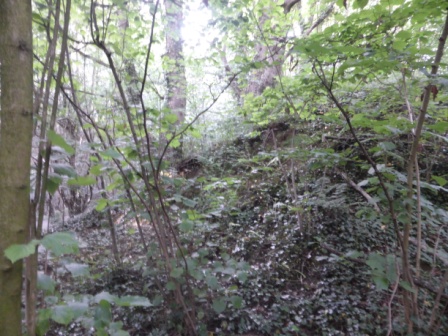
    Fulwood Barrow MoundSometimes you stumble somewhere and forget yourself. No longer breathing. In the time of the gods. You hear the footsteps of a deity. Not your deity. But one connected with him.

    ***

    In the mythology of ancient Britain, Gwyn ap Nudd (a ruler of Annwn and guide of the dead) is intimately connected with ‘gwyllon’: madmen, wildmen, wraiths, who through some traumatic experience have become ‘outside themselves’, open to the otherworld, ‘wyllt’.

    The most famous is Myrddin Wyllt. Myrddin is a golden-torqued warrior of the court of the northern British ruler, Gwenddolau, who becomes wyllt after the Battle of Arfderydd; a conflict between Brythonic kinsmen renowned for its carnage and futility.

    Looking across the battlefield, stricken with guilt because his sister Gwendydd’s sons are amongst the dead, Myrddin sees an unendurable brightness and martial battalion in the sky. It seems possible this is Gwyn (‘white’ ‘blessed’ holy’ from Vindos or Vindonnus ‘white’ ‘clear light, white’) and his host: the spirits of Annwn and the war-dead, approaching to gather their kindred to the otherworld.

    ‘Torn out of himself’ by one of these spirits, Myrddin flees to Celyddon (the Caledonian forest). He wanders there ‘ten and twenty years’ with ‘madness and madmen’ ‘gan willeith a gwyllon’. These gwyllon are ‘seven score men’ who also fought at Arfderydd then lapsed into madness in Celyddon and perished.

    Similar cases are found in The Triads of the Island of Britain: ‘Tri Gwyd Ellyll Ynys Brydein’ ‘Three Wild Spectres of the Island of Britian’. The notes state ‘ydellyll’ (for ‘gwyd ellyll?’) ‘occurs in the Gododdin in reference to furious activity in battle’ and could relate to tales of men who become wyllt as a consequence of war.

    What makes Myrddin’s story unique is his recovery. Amongst wild creatures of the forest; a piglet, a wolf and a favourite apple tree he undergoes a healing process through which he learns the art of poetry and uses it to prophecy against future bloodshed.

    ***

    Cyledyr Wyllt possesses an entirely different story. In Culhwch and Olwen, after Gwyn abducts Creiddylad, his rival Gwythyr ap Greidol raises an army of northern men to win her back. Amongst them are Cyledyr and his brother, Pen, his father Nwython and his great grand-father’s brother, Gwrgst Ledlwm. If Gwrgst is still living this means Cyledyr must be in his teens.

    Gwythyr and his army attack Gwyn. My intuition is this attack represents a raid on Annwn. Gwyn triumphs over Gwythyr and the northern men and takes them prisoner. During their captivity he kills Nwython and feeds his heart to Cyledyr, who goes mad. The etymological links between Cyledyr and Celyddon suggest that, like Myrddin, he flees to the forest.

    Gwyn’s motive for torturing Cyledyr is never explained. Did he do it from fury? For vengeance? Did he have some darker purpose in feeding a young man his father’s heart? Could this have originated from some arcane rite of the past whereby the strength of one’s ancestors was conferred by eating their flesh, of which Gwyn makes a mockery?

    Another question worth asking is ‘Did it happen at all?’ The historical Nwython is recorded to have died in his bed.

    It seems possible Cyledyr’s fevered recollections result from the effects of unbidden entry to Annwn, the battle between Gwyn and Gwythyr’s forces and time spent in prison on an impressionable young mind. Whilst Cyledyr is telling this story Nwython could be anguishing over the unknown fate of his son. Whether Cyledyr recovered from his trauma or died in Celyddon remains uncertain.

    ***

    Another story I believe features Gwyn (as the King of Fairy) and a human ruler who becomes wyllt is Sir Orfeo. This begins when the Fairy King abducts Heurodis, Orfeo’s wife. Driven wyllt by grief, Orfeo abandons his sovereignty and departs ‘like a beggar’ for the wilderness where his only solace is playing his harp, which brings joy to the wild creatures.

    After ten long years Orfeo finally finds a way into Fairyland. After travelling sunlit green plains and hunting grounds he comes to the Fairy King’s glass palace. Therein he makes a terrible discovery: ‘Folk long thought dead… as living found’ headless, armless, torn, ‘with dreadful wounds’, ‘full-armed on horses’, strangled, drowned, burned, wives laid in child-bed ‘stolen out of life’: those ‘the fairies seize and keep’. Heurodis lies amongst them.

    These images represent a little-known truth, rarely made explicit in Brythonic mythology: the beauty of Fairyland is founded on the horror of death. The knights and damsels of the Fairy King’s hunt who feast in his hall number the war-dead, murder-victims, women who have died in labour.

    Heurodis is amongst them because when the Fairy King took her whilst she slept beneath an orchard tree she died or became comatose or catatonic. Such superstitions can be traced through Brythonic fairylore to earlier beliefs about Gwyn and the spirits of Annwn conveying souls to the otherworld.

    This knowledge does not prevent Orfeo from entering the Fairy King’s hall and playing his wondrous music. The King is so moved he offers Orfeo anything he wants. Of course, Orfeo asks for Heurodis. He brings her back to this-world where the pair are re-united in sovereignty.

    This story shows how Orfeo gains his ability as a musician from his period wandering wyllt and that hard-won art has the power to move the gods, to sing the souls of those held captive in Fairyland back to this earthly home.

    ***

    These myths represent the experience of becoming wyllt at the outermost limits of human experience. The ‘wyllt-ness’ of Myrddin and Cyledyr results from battle trauma. Cyledyr’s battle trauma is exacerbated by his unwarranted entry into Annwn, imprisonment in the ‘not-world’ and real or imagined torture by Gwyn.

    Orfeo’s story differs slightly. His wyllt-ness results from loss. His time spent wandering the wilderness provides him with the strength to survives his gnosis of the terrible truth at the heart of Fairyland and Heurodis’ fate to win her back and return to his seat of rule.

    Key to the survival of becoming wyllt is the power of art. For Myrddin and Orfeo giving voice to their trauma and to the powers of nature who surround and console them is an essential part of the healing process. It is possibly because he does not discover art that Cyledyr remains wyllt. This may also be the case for the other gwyllon who lapsed into madness and perished.

    These stories contain lasting significance for modernity where art and nature therapy are recognised as powerful means of helping victims of war and loss.

    ***

    Later folktales represent a variety of different encounters with and responses to Fairyland. In most we find the recurrent themes of wyllt-ness and art. People who meet fairies, stumble into or are taken to Fairy invariably become ‘dead, mad or poets’. My personal experiences with Gwyn and his realm bear stronger resemblances to these tales.

    Glastonbury TorIn the year 2000 at Glastonbury Festival (long before I knew the name of the mysterious god of the Tor) I had a vision of what I recognise now to be Fairyland which left me shocked, stunned and profoundly questioning the nature of reality.

    My quest for an explanation led me through a dangerous combination of drink, drugs, all-night dancing and all the texts of the Western European philosophical tradition, deeper into madness, to the brink of an abyss where I was faced with the choice of life or death.

    Unable to choose either I was confronted by three beings I now recognise as ellyllon (‘fairies’ akin to gwyllon). What followed was equally beautiful and perturbing and put an end to the pain of having to make that choice. My experiences left me half-wyllt, wandering between life and death, plagued by anxiety and panic attacks and put a temporary end to my vision-quest.

    After giving up my philosophy PhD, I spent four years working with horses. During this period of re-connecting with the land, the seasons and the animal world, working hard and thinking little, I underwent a return to nature that bears a little analogy to the flight of the wyllt to Celyddon.

    When I met Gwyn and put a face to the god who governed the magical landscape I haphazardly intruded on at Glastonbury Festival twelve years ago, my initial terror was edged by relief. I finally knew the source of the calling to the otherworld that had haunted me for as long as I can remember. Gwyn became my patron and I his awenydd: ‘person inspired’ or ‘poet’.

    ***

    In the contemporary world where poetry, let alone pagan poetry, is rarely acknowledged or valued the path of the awenydd is not an easy vocation. Deep gnosis of nature and Annwn and its deities necessarily places one outside the bounds of ordinary experience; makes one wyllt, other. With Celyddon gone there is no wild and wooded place of retreat outside the norms of society where gwyllon can flee and gather in company.

    Yet in the shaded spaces of our localities where trees still stand and that great forest stood before it walked to Scotland centuries ago we can commune with the gwyllon of old and find unison with the gwyllon of today. Sharing can also take place in the green nooks and crannies of books, in the pubs and cafes and wooded stages where we perform and on the internet. In our stories we find camaraderie.

    In a world becoming increasingly superficial where we are losing touch with the deep knowledge our ancestors held to help those touched by the wyllt-ness of Fairyland be it through trauma, loss, enchantment or some silly mistake, we have never had a greater need for the stories of Gwyn ap Nudd and the gwyllon. For the healing power of art.

    Castle Hill from Fairy LaneSOURCES

    Bromwich, Rachel (ed) The Triads of the Island of Britain (University of Wales Press, 2014)
    Bromwich, Rachel and Evans, Simon D. (eds) Culhwch and Olwen (University of Wales, 1998)
    Davies, Constance ‘Classical Threads in Orfeo’ The Modern Language Review, Vol 56, No 2, (Modern Humanities Research Association, April 1961)
    Davies, Sioned (transl.) The Mabinogion (Oxford University Press, 2007)
    Evans, J. Gwengobryn The Black Book of Carmarthen (Lightning Source UK Lmtd, 1907)
    Friedman, John Block ‘Eurydice, Heurodis and the Noon-Day Demon’ Speculum, Vol 41, Vol 1 (Medieval Academy of America, 1966)
    Hunt, Edward Eyre Sir Orfeo (Forgotten Books, 2012)
    Pennar, Meirion (transl.) The Black Book of Carmarthen (Llanerch Enterprises, 1989)
    Skene, William F. The Four Ancient Books of Wales (Forgotten Books 2007)
    Thomas, Neil ‘The Celtic Wild Man Tradition and Geoffrey of Monmouth’s Vita Merlini: Madness or Contemptus Mundi?’ in Arthuriana Vol. 10, No. 1 (Spring 2000)
    Tolstoy, Nikolai The Quest for Merlin (Sceptre, 1985)

    Mary of the Marsh

    Enduring years of disconnection,
    incredulity of stars,
    anger beneath the heavens,
    she scathed the priests and walked alone,
    drifting among chapels, knowing she didn’t belong,
    her robes of night fell on soft rushes.

    They say she walked along the marsh.
    They say she walked out to the river.
    They say she looked out to the sea.

    In the damp, dark parishes
    paradise was never hers,
    she walked amongst the outcasts and the sick
    healing wounds that should never open,
    seeing what shouldn’t be seen,
    her robes of night fell on troubled waters.

    Mary of the lepers,
    Mary of the marsh,
    I saw you running to the river,
    I saw you running to the sea.
    How you longed to sail away…

    Winter Kingdom

    As I make my circuit stars hold vigil in an icy breath.
    Roses of Annwn bring beauty from death.
    Wintering starlings spotted with snow
    sleep in a tree that nobody knows.
    There is a courtship of stability in this kingdom of cold
    where we reknit the bonds as dream unfolds
    in shadows of farmhouses down the pilgrim’s path
    through old stony gates in footsteps of the past
    to the healing well where a serpent’s eye
    sees through the layers of time’s disguise.
    A procession sways down the old corpse road
    where the lych gate swings open and closes alone.
    From the empty church bells resound.
    Reasserting its place on the abandoned mound
    a castle extends to the brink of the sky.
    Within its dark memory a fire comes to life.
    As warriors gather to warm their cold hands
    I know I am a stranger in a strange land.

    Fungi, Greencroft Valley


    *Roses of Annwn is a kenning for mushrooms I came across in The Faery Teachings by Orion Foxwood