Oh Gatherer of Souls
the autumn leaves begin to fall.
All the trees look behind them
as they hear Your call.
Oh Gwythyr ap Greidol
Your summer is done.
Oh lords of the world
your time is come.
Audio HERE.

Oh Gatherer of Souls
the autumn leaves begin to fall.
All the trees look behind them
as they hear Your call.
Oh Gwythyr ap Greidol
Your summer is done.
Oh lords of the world
your time is come.
Audio HERE.
Riots across the North fed by misinformation in the aftermath of the tragic massacre of three little girls. The fiery energy of the Red Dragon perverted into nationalist attacks on asylum seekers and Muslims. The White Dragon, who always carries the label of ‘other’, fighting back.
I sing a song that was sung to calm the red and white dragons during the battles between the Britons and Romans, the Britons and Saxons, by the warrior-women, the prophets, who became known as Witches of Annwn.*
A song, in the Dog Days of Summer, that invokes the aid of our Husband and Winter King, Gwyn ap Nudd, against the fiery energies of His rival Gwythyr ap Greidol, Summer King, ally of Arthur, the first to sow the seeds of British nationalism by uniting the nation under ‘One King, One God, One Law.’
A song that transforms the dragons into monstrous animals, little pigs, two babes in a woman’s arms.
A song that coaxes them back to sleep in deep Annwn.
Sleep babes sleep
daddy’s gone a hunting
he’ll bring us snowy white hares
and ptarmigan; in his wolf furs
we’re so safe and warm.
Sleep babes sleep
daddy’s gone into the cold again
he’ll bring us a white bushy-tailed
snow fox; in his wolf furs
we’re so safe and warm.
Sleep babes sleep
daddy’s gone into the frost again
he’ll bring us the feathers of a snowy
white owl; in his wolf furs
we’re so safe and warm.
Sleep babes sleep
daddy’s gone into the snow again
he’ll bring us the last reindeer
of the North; in his wolf furs
we’re so safe and warm.
*This song was first published in my book Gatherer of Souls in a story called ‘The Purple-Cloaked Empire’ when it is sung by Wind Singer to calm the red and white dragons during the Roman invasions. It has a basis in the medieval Welsh story of Lludd and Llefelys wherein Lludd / Nudd calms the dragons to sleep. I believe the Witches of Annwn, as devotees of Gwyn ap Nudd and His father, had a supporting role.
**A quick note for clarity – whilst I am speaking about British nationalism being rooted in the Roman and Anglo Saxon invasions and the mythos of Arthur I am not drawing parallels between the Romans and Anglo-Saxons as invaders and the asylum seekers and Muslims who come in peace and are a welcome part of our British communities.
In How Culhwch Won Olwen there is an enigmatic episode wherein Gwythyr ap Greidol is ‘travelling over a mountain’ and hears ‘weeping and woeful wailing’ ‘terrible to hear’. He rushes towards the sound, unsheaths his sword and cuts off an anthill at ground level, thus saving the ants from a fire. In return they bring him the ‘nine hestors of flax seed’ previously sown into tilled red soil that has not grown to be resown in newly ploughed land to make a ‘white veil’ for Olwen at Culhwch’s wedding feast. This is one of the impossible tasks assigned to Culhwch by Ysbaddaden Bencawr, Olwen’s father. The ants complete the task, the lame ant bringing the last seed just in time.
Recently one of my guides suggested I should look deeper into this story. So, I journeyed on it, and this is what came as an origin tale for Gwythyr’s ants.
*
During the time of Arthur Gwythyr ap Greidol joined forces with the warlord against the giants, the witches, the monsters of Annwn, their rival, Gwyn ap Nudd.
At the height of summer he was leading his warriors through the mountains of the north, driving the giants from their mountain fortresses, from their seats in the craggy heights where they liked to look up to their kindred, the stars.
“There,” he pointed to a crag in the distance, even in summer circled by mist.
“No,” his men shook their heads, “that belongs not to a giant but the Grey King.”
“Take it,” Gwythyr commanded, “build a new fortress on its summit in my name.” Their battle-leader left them for another task of marauding with Arthur.
As they approached a Spectre-in-the-mist appeared and warned them, “If you wish to remain men turn your back on this summit and return to your homes.”
“No way.” “This mountaintop will be ours.” “You’re nothing but a trick of the mist.”
As Gwythyr’s warriors battled against the spectre and his misty minions they noticed not their armour becoming carapaces moulded to their skin, their two legs becoming six, their spears becoming antennae. “We won! We won!”
They build their fortress on the summit thinking they were carrying great boughs when really they were building from twigs, leaves, pine needles.
When Gwythyr returned he found not a new fortress but an ant hill.
“Accursed ants!” he raised his flaming sword to destroy the useless thing.
“No, no,” shrieked his warriors, “can’t you see it is us – your loyal soldiers?”
When Gwythyr looked closer at their red-brown armoured bodies and their spear-like antennae he saw they still had the faces and intelligence of men.
“We won the battle.” “We built our fort.” “Only one man was lamed.”
As Gwythyr cursed the mist rolled in and he heard the laughter of the Grey King.
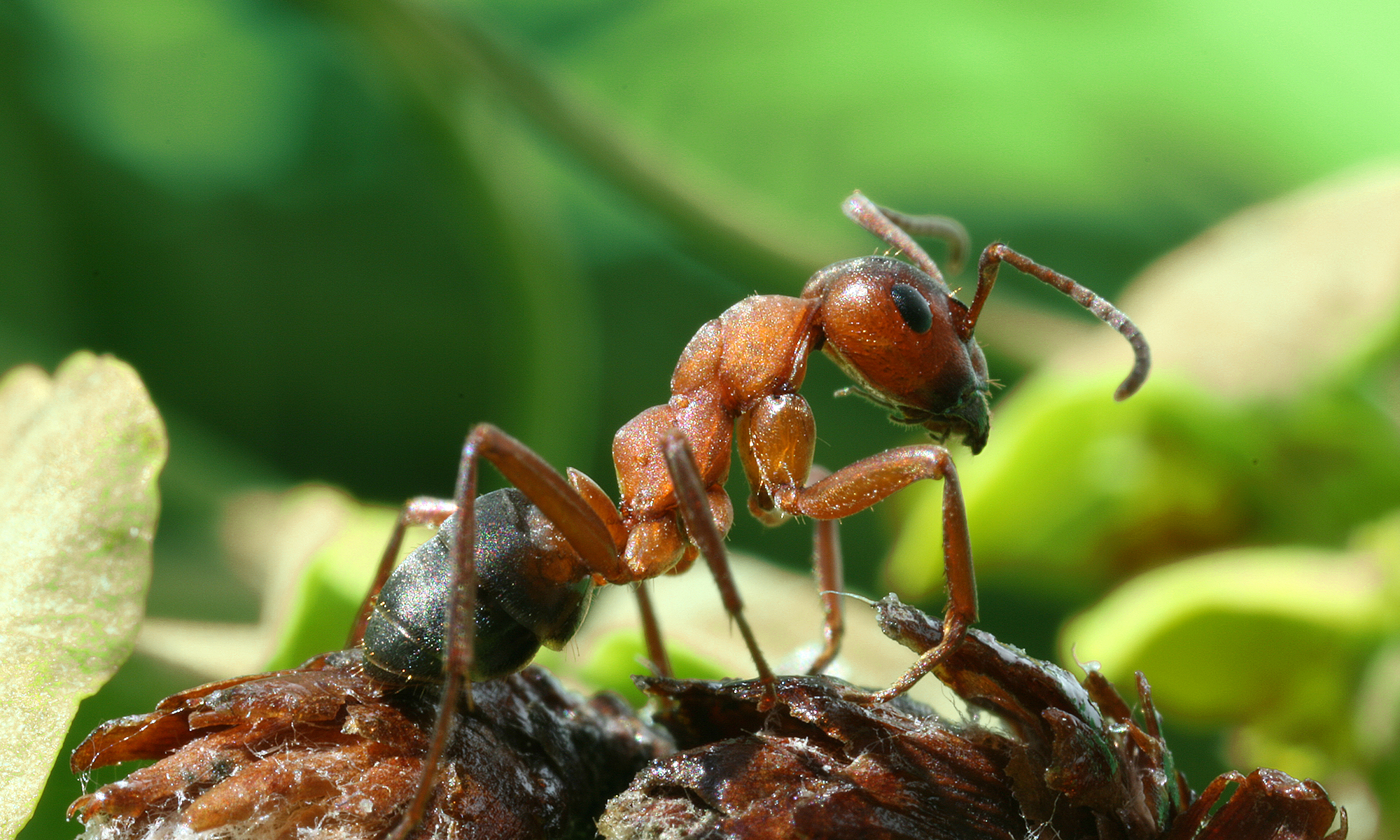
Image wood ant (Formica rufra) courtesy of Wikipedia Commons
the mountains would stop talking to each other,
the hills would lose their nerve and flee,
the rivers would stop rushing down,
turn their tides to the source,
vanish back to Annwn,
and the sea, oh the vast sea!
The mournful waves would lose their songs,
the sea-horses their nostrils of foam and proud crests.
Water would be water no longer and salt would not be salt.
There would be nothing to quench our thirst or cleanse our wounds.
With the marching trees we would be rootless vagabonds
for the snakes beneath our houses and the serpents
beneath our towerblocks would shake
the foundations tear them down.
The animals would run away
through the caves and cracks in the earth
and all the fish would disappear into the Lune Deep
and the birds would fly away on the winds before the sky
did his thing of crashing down like a fallen bird or a fallen wrestler.
If Your heart ceased to beat oh Gatherer of Souls,
would our hearts too not cease to beat?
Then who would gather us?
Oh lonely lonely souls!
Grateful are we that on the moment
of Your death Your heart skips but one beat
then continues to beat in Your sleep and in Your dreams.
*A poem for Gwyn ap Nudd on Calan Mai when He loses His battle for Creiddylad to Gwythyr and ‘dies’ and retreats to Annwn to sleep for the summer.
This morning when I made my traditional offering of a sprig of thyme to my patron God, Gwyn ap Nudd, at dawn before He goes to fight His battle against Gwythyr ap Grendel for Creiddylad (a battle He, as Winter King, is doomed to lose to the Summer King) He appeared to me as a magnificent bull of battle and spoke the words:
“I go to fight for all those who fight a battle they cannot win.”

Go well,
my beloved Lord of Annwn,
I will be waiting for You at summer’s end.
How do you honour the death of your God?
This is a question many religions have an answer to. One of the most obvious is Christianity with the traditions surrounding the death of Jesus. Within Paganism and Polytheism rites have been developed for many Gods (often grain Gods) including Osiris, Tammuz and figures such as John Barleycorn.
When I started worshipping Gwyn ap Nudd over ten years ago I found out on Calan Mai He fights a battle against His rival, Gwythyr ap Greidol, for His beloved, Creiddylad. Although it isn’t explicit within the source material (1) parallels with other seasonal myths (2) suggest that Gwyn, as Winter’s King, is defeated by Gwythyr, Summer’s King (3) at the turn of summer, ‘dies’, and enters a death-like sleep. He then returns at summer’s end to take Creiddylad to Annwn and assert His rule as Winter’s King.
For most Pagans and Polytheists Calan Mai / Beltane is a fertility festival. The rites of dancing of the May Pole, and crowning of a May / Summer King and Queen have a basis in the sacred marriage of Gwythyr and Creiddylad.
Even before I realised I was asexual I always felt like an outsider on Calan Mai. Whilst I enjoyed the white flowers and verdant energy I never got into the full swing of the celebrations (at least not without a large amount of alcohol).
Then I met Gwyn and found out this was the time of His death. I have now come to understand why it is bittersweet – finding joy in the new growth on the one hand and feeling His loss and commending His sacrifice on the other.
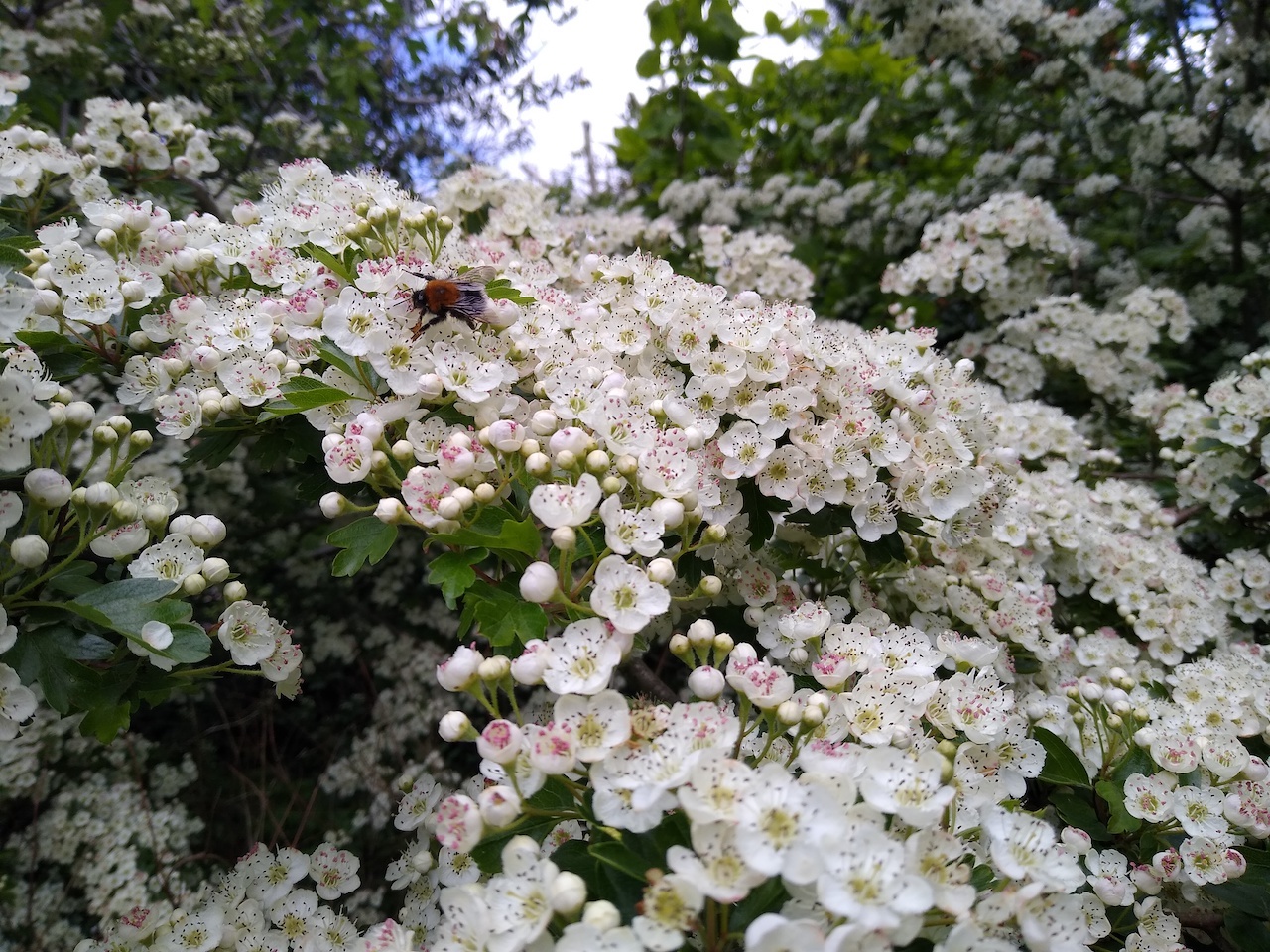
‘From the blood of the King of Annwn
the hawthorn blossoms grow.’
Slowly, Gwyn has revealed to me visions of the mythos surrounding His death and ways of honouring it within my personal practice as a Polytheist.
It happens slightly differently every year but I present here a ‘core narrative’ and the rites by which I navigate this difficult time in my seasonal calendar.
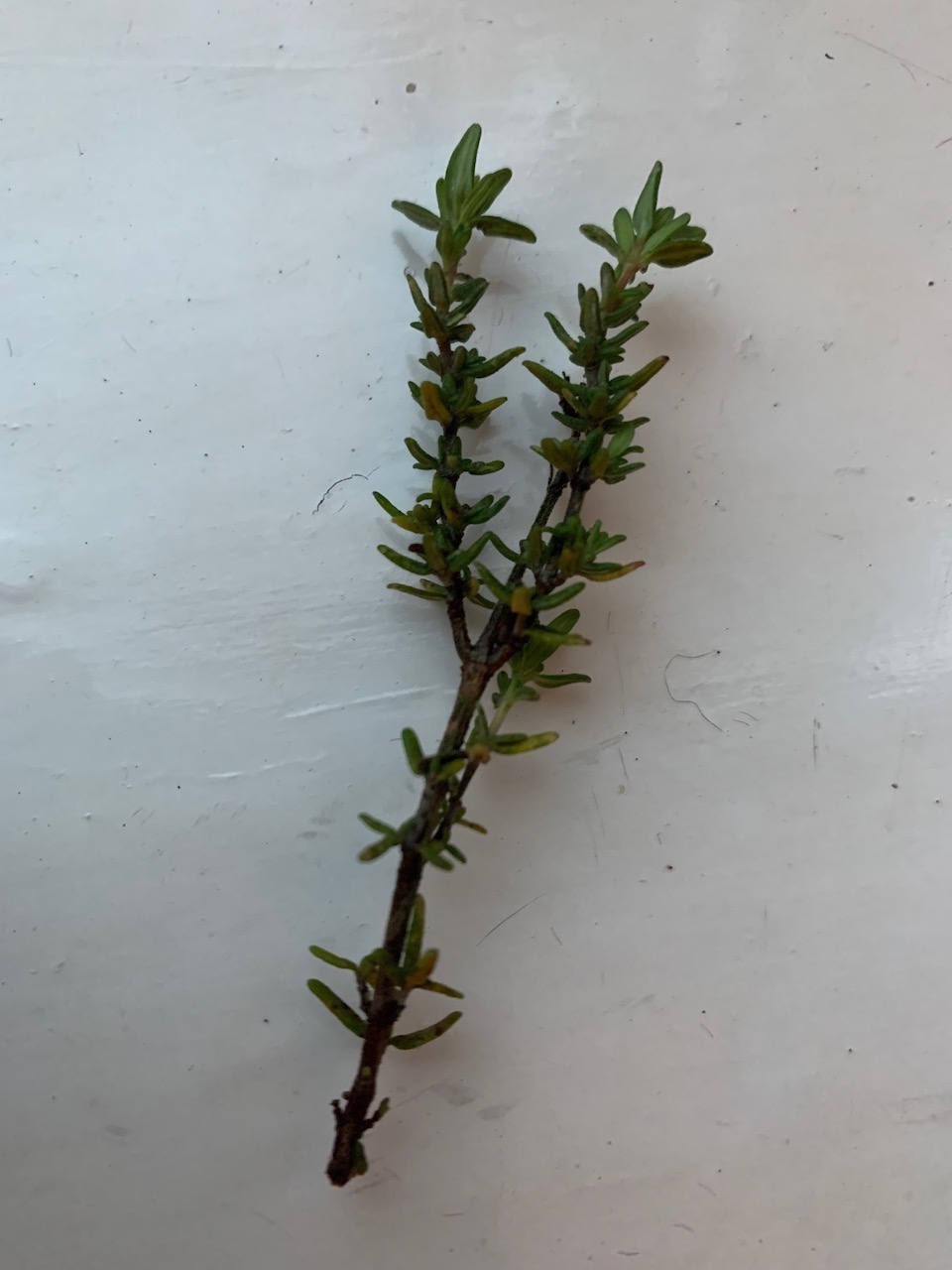
On Nos Galan Mai I offer Gwyn a sprig of thyme for courage and recite my poem ‘If I Had To Fight Your Battle’ and then meditate on its meaning.
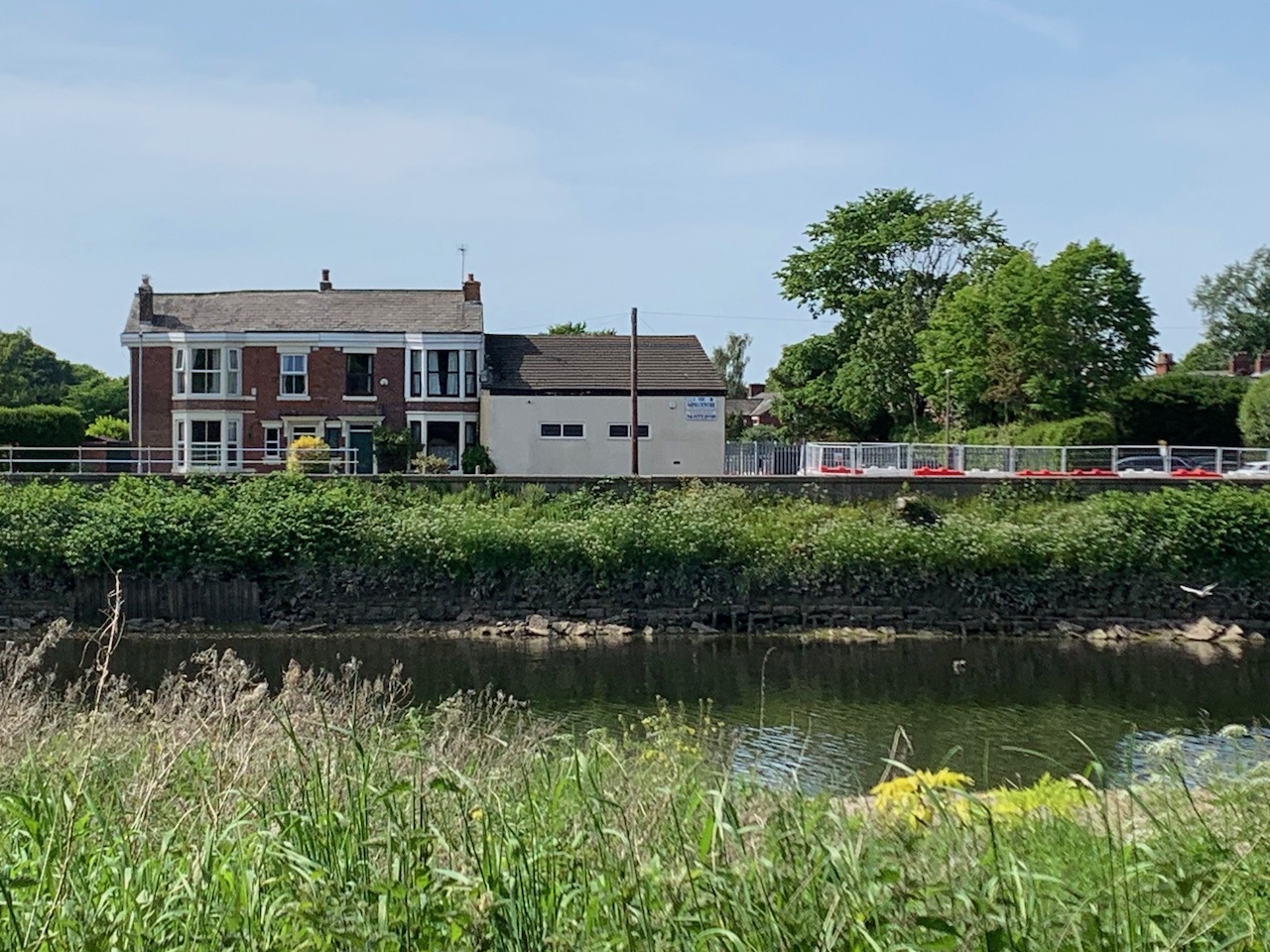
At dawn on Calan Mai I visit Him in spirit as He dons His armour and makes His way to ‘the Middle Ford’, Middleforth on the Ribble, which is the place within my local landscape where His battle takes place and there speak my farewells.
Later in the day I go for a walk and look out for signs of the battle of Gwyn and Gwythyr. I often see Them as warriors, animals, or dragons in the clouds. On one occassion I heard ‘We are the Champions’ playing at a May Day fair.
I place the sprig of thyme at the Middle Ford then look out for signs of Gwyn’s death.
Gwyn’s death takes place before dusk and I have felt it signalled by sudden cold, the coming of rain, and a feeling of melancholy. Once, when I was running, I got the worst stitch ever, like I’d been stabbed in the side, knew it was Gwyn’s death blow and received the gnosis His death was bad that time.
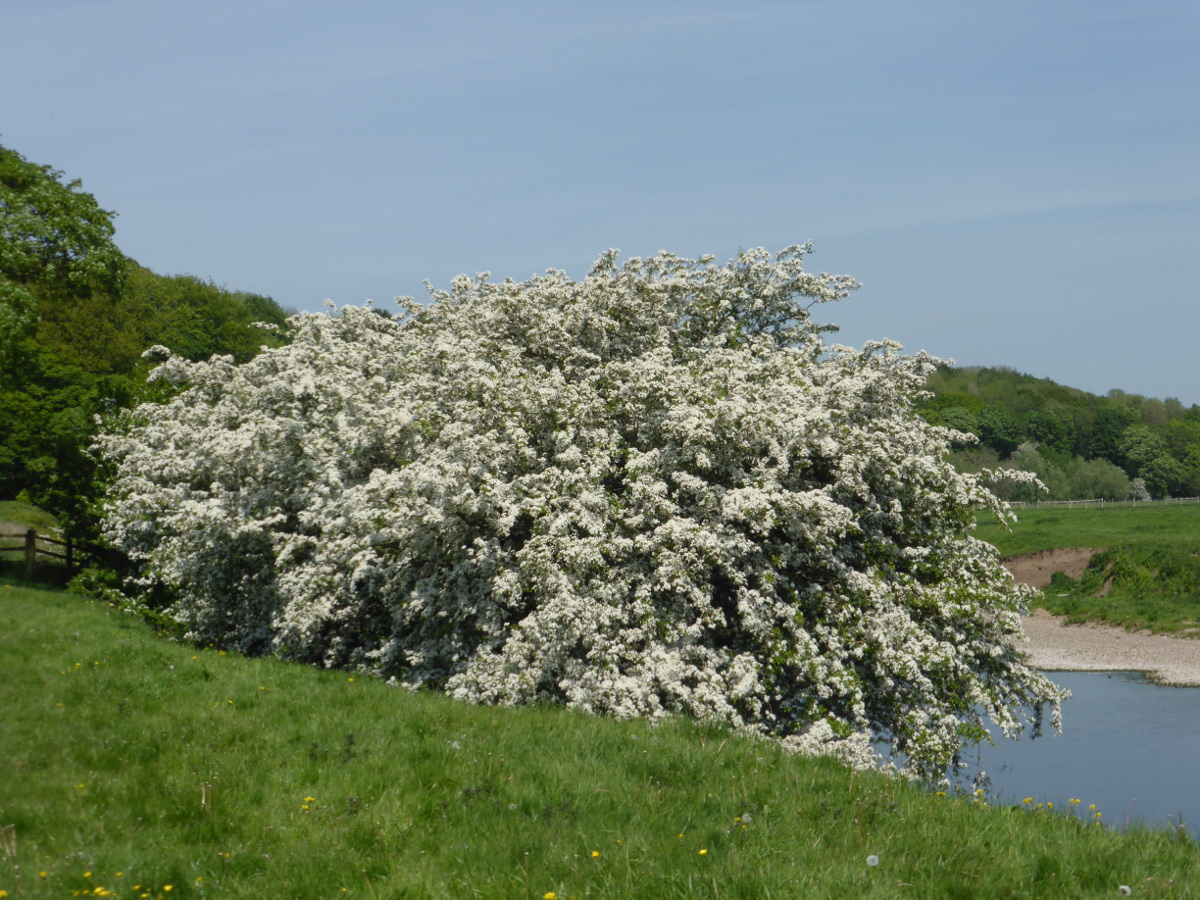
I pay attention to the hawthorn, a tree of Creiddylad’s, symbolic of Her return.
In my evening meditation I bear witness to Gwyn being borne away from the scene of battle by Morgana and Her sisters (4) who appear as ravens, crows, or cranes. They take Him and lay Him out in His tomb in the depths of His fortress in Annwn. His fort descends from where it spins in the skies (5) and sinks into the Abyss (6) to become Caer Ochren ‘the Castle of Stone’ (7).
I then join Morgana and Her sisters and other devotees from across place and time saying prayers of mourning for Gwyn and spend time in silence.
Three days later Morgana and her sisters heal Gwyn’s wounds and revive Him from death. This a process I have taken part in and was powerful and moving. He then remains in a death-like sleep over the summer months.
I would love to hear how other Polytheists honour the deaths of their Gods.
FOOTNOTES
(1) The medieval Welsh tale of Culhwch ac Olwen (11th C)
(2) Such as the abduction of Persephone by Hades in Greek mythology.
(3) Clues to Their identities as Winter and Summer Kings are found in their names Gwyn ap Nudd ‘White son of Mist’ and Gwythyr ap Greidol ‘Gwythyr son of Scorcher’.
(4) I believe Morgana and her sisters are Gwyn’s daughters through personal gnosis based on the associations between Morgana, the Island of Avalon, and Avallach, the Apple King, who I believe is identical with Gwyn and the possible identification of Morgan and Modron, daughter of Avallach.
(5) ‘the four quarters of the fort, revolving to face the four directions’ – ‘The Spoils of Annwn’.
(6) The existence of an Abyss in Annwn is personal gnosis.
(7) This name is not a direct translation (Marged Hancock translates it as ‘the angular fort’) but comes from Meg Falconer’s visionary painting of Caer Ochren ‘the cold castle under the stone’ in King Arthur’s Raid on the Underworld.
For Gwyn on Calan Mai
When you don your armour at dawn
On this morning of mist so forlorn
When you rise from your marital bed
Leave your wife for another to wed
When you leave the dark of Annwn
With the knowledge you’ll return to your tomb
When you’re feeling down and discouraged
Let this sprig of thyme be your courage.


I have had the first and last couplets of this poem in my head for two years now but it was only this morning that I received the two couplets in the middle in order to complete it and the inspiration to make a ritual of picking thyme from the garden at dawn on Calan Mai (May Day) and offering it to my patron god, Gwyn ap Nudd.
On Calan Mai Gwyn fights a ritual battle against his eternal rival, Gwythyr ap Greidol, for his beloved, Creiddylad, a goddess of seasonal sovereignty. It is a fight he is doomed to lose. Afterwards Creiddylad departs from Gwyn, Winter’s King, in Annwn, and comes to Thisworld to enter a sacred marriage with Gwythyr, Summer’s King. In the Brythonic mythos this explains the turning of the seasons. On the one hand I will be celebrating that Creiddylad and summer are here, yet, on the other, I will be mourning Gwyn death.
I.
It started as a joke.
I can’t remember exactly when. It might have been around this last time last year. I was being characteristically irascible, rash, impatient, none of the qualities that you’d associate with being a nun.
“Sister Patience,” I heard the mocking voice of my patron god, Gwyn.
It irked me, but it also awoke and called to something deep within.
Rising to his challenge, “I will be Sister Patience,” I told him.
And that was how Sister Patience came to be.
II.
She came into my life as an alter ego at first, as I struggled through my traineeship with the Lancashire Wildlife Trust on the Manchester Mosslands, helping me shape and find respite in the sanctuary of Creiddylad’s Garden.
I wrote this poem about her last summer:
The Sanctuary of Sister Patience
Weeks of weeding
are fundamental to the path,
to the wedding of him and her and him –
Gwyn and Creiddylad and Gwythyr.
When Summer’s King vaults over the wall
all the flowers turn their heads towards him, as if to a beam of light.
All the plants need the light and dark reaction to photosynthesise and this is written on her habit in an obscure symbol on one of her voluminous cuffs.
He who stole the light of Bel and Belisama and gave it to mankind…
When he arrives in her garden it is yestereve, yesteryear,
and all the flowers are gloaming and he longs
to know what lies beneath her cowl
for her eyes are two moons
that will shine
upon a future world that will never stop flowering with its own weathernarium…
He is all heat and fire and flame
and she is patience…
in Annwn, in the soil, in the mycorrhizae,
in the roots, in the shoots, in the leaves, in the flowers, turning
towards the light and these are the mysteries –
the poetry of nature not
of the bardic seat.
Like the ranunculi
are the wanderings of
the wild nuns knowing no order –
their names a mixing of Latin, Greek,
Norse, Anglo-Saxon, Welsh, common and binomial.
This I was taught by the comfrey I bought
when I was first learning to ‘do magic’,
which worked its magic here,
filling my garden with purple flowers,
smelling soothing as the healing of bones,
one of the favourites of Old Mother Universe.
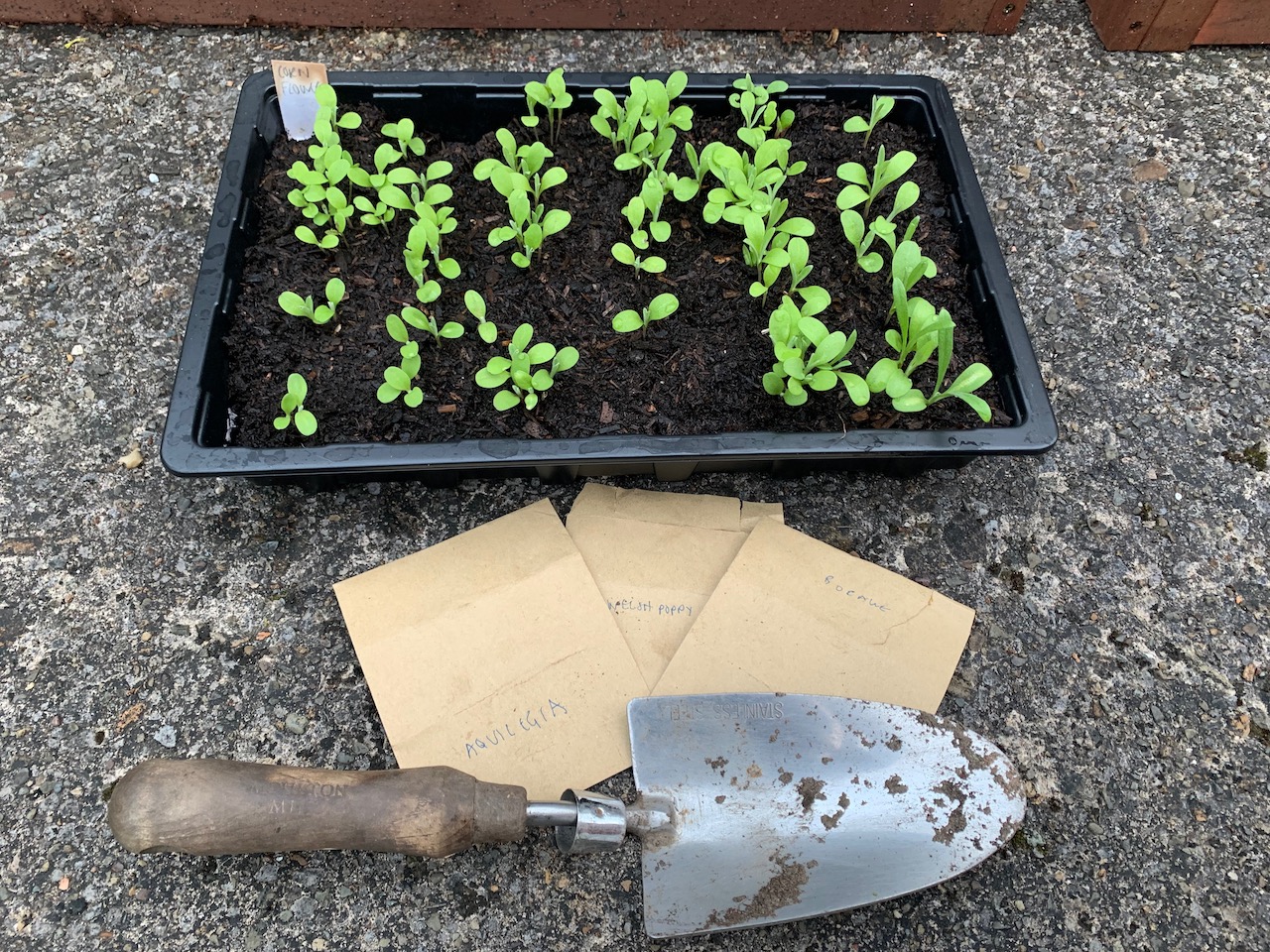
She loves the first one or two tiny cotyledons
of every plant reaching for the light not knowing their origins.
She carries the seeds of all the worlds in the brown paper envelopes
in her pockets rustling when she walks, so carefully labelled
in the language of Old Mother Universe only she knows –
the names, the dates, the places, so distant…
With them she will build her sanctuary
beyond the trowelling
of my pulse.
III.
Since then, slowly, imperceptibly, the miles between us have closed.
I’ve been patient. I’ve completed my traineeship. I’ve moved on into a new job as a graduate ecologist in which I’ve been faced with a whole new set of challenges. Not only learning to carry out new surveys but a whole new skillset on the admin side – providing quotes, carrying out desktop studies, writing reports, learning to see a job through from beginning to end.
It’s been a steep learning curve and not without its ups and downs. As an autistic person who likes routine and staying close to home I have struggled with travelling long distances to new places and, in particular, with night work.
One of the surveys is monitoring great created newt and wider amphibian populations as part of mitigation schemes on developments. This involves arriving before sunset to set bottle traps, waiting until after sunset to survey for newts by torchlight (as they’re active after dark), then returning early in the morning to empty the bottle traps. This work can only be done in the company of an experienced licence holder who is qualified to handle the newts.
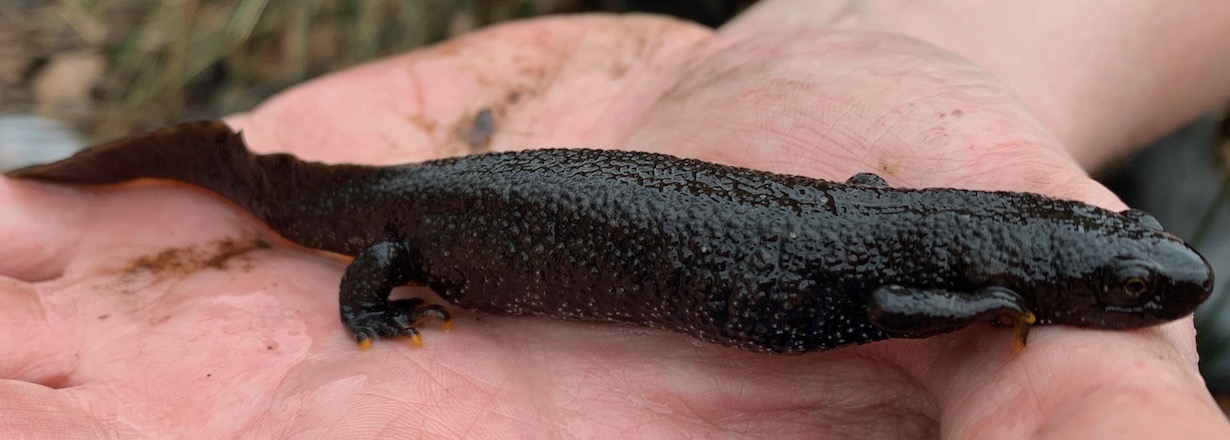
It’s fascinating work and it is a privilege to see these beautiful creatures up close. It’s also a shake-up to my routine, most days get up at 4.30am to do my devotions, meditate, study, and go to the gym or run before cycling to work for 9am, finishing at 5pm, eating, winding down, and being asleep by 8.30pm.
I’ve been lucky to be part of a team who are not only incredibly knowledgeable and experienced, but also supportive and mental health aware. I’ve been able to be open with them about my autism and the anxiety that stems from it from the start. For now, my manager has allowed me to start no earlier than 8am, so that I have time for spirituality and exercise, which are both essential for my mental health, and to do only one night a week.
They have been patient with me and, although I’ve felt like I’ve been slow, looking back, over just a month and a half I have learnt a huge suite of new skills, from assessing habitats and writing species lists on Preliminary Ecological Assessments, wading up rivers looking for otter spraints and prints, investigating buildings for signs of bats, to mastering the routine admin.
When I’ve been tired and shaken and overwhelmed I have walked with Sister Patience and together we have shaped her sanctuary in Creiddylad’s Garden.
IV.
I have been patient.
The garden is coming into bloom.
I have found a job where I belong and feel fulfilled.
On work days I am an ecologist and, in my own time, I am Sister Patience.
I’m hoping the two sister strands of my life will one day intertwine to become one and that this job will provide the financial grounds to shape my sanctuary and, perhaps, one day, build the Monastery of Annwn*.

*Whether this is meant to be a physical or spiritual place I don’t yet know…
Gwythyr ap Greidol ‘Victor son of Scorcher’ appears in the medieval Welsh story Culhwch and Olwen as the rival of Gwyn ap Nudd ‘White son of Mist’ for the love of Creiddylad ‘Heart’s Desire’. That he is a fitting opponent for Gwyn and consort for Creiddylad, who are the son and daughter of the ancient British god Lludd/Nudd/Nodens, suggests he is also an important British deity.
Strip away the Christian veneer from Culhwch and Olwen and we have a story in which Gwyn (Winter’s King) and Gwythyr (Summer’s King) battle for Creiddylad (a fertility goddess). On Nos Galan Gaeaf, Winter’s Eve, Gwyn abducts Creiddylad to Annwn* and Gwythyr rides to Annwn and attempts to rescue her and is imprisoned. The abduction of Creiddylad and imprisonment of Gwythyr explain the coming of winter. On Calan Mai, the First Day of Summer, Gwythyr battles Gwyn for Creiddylad, wins, and she returns with him to Thisworld and together they bring fertility to the land. This explains the coming of summer. Gwyn and Gwythyr may earlier have been seen to slay one another on Nos Galan Gaeaf and Calan Mai and take it in turns to enter a sacred marriage with Creiddylad, who acted as a powerful sovereignty figure rather than just a maiden to be fought over.
It is clear from this tale that Gwythyr is our ancient British god of summer. In another episode in Culhwch and Olwen we catch a glimpse of Gwythyr’s associations with fire and sunshine. As he is walking over a mountain he hears ‘weeping and wailing’ and sees its source is a burning anthill. He cuts the anthill off at ground level and rescues the ants from the blaze. We do not know what caused the fire. Did their nest, which ants orientate toward the sun, a little like solar panels, in a summer day, absorb too much heat? Or was the fire caused by Gwythyr’s scorching feet? We have seen that one translation of his father’s name, Greidol, is Scorcher, and we know wildfires break out in the summer. Here we see the dangers of fire and the sun and Gwythyr’s attempt at remediation.
The ants go on to help Gwythyr to gather nine hestors of flax seed which was sown in ‘tilled red soil’, in a field that has remained barren, so it can be ploughed into a new field, to provide the linen for Olwen’s veil in preparation for her marriage to Culhwch. It is possible to read Gwythyr’s association with seed being linked to the ‘male’ side of fertility and with doing the groundwork for the arrival of summer for his bride, Creiddylad, might also require a linen veil for her wedding dress.
The ancient Britons used fire to clear the forest to plant hazel trees and wildfires bring about new growth – in Gwythyr’s associations with fire and seed we find these processes.
These stories show that Gwythyr is a god of summer, fire, and generation in Thisworld who is opposed to Gwyn, a god of winter, ice, and the destructive forces of Annwn, the Otherworld. On the surface one is a bringer of life and the other a bringer of death yet their relationship is one of interdependence. It is necessary they take it in turns to enter a sacred marriage with Creiddylad as an eternal summer or an endless winter would have equally deadly consequences for both worlds.
As Gwythyr’s story was passed on through the oral tradition he and his father were depicted as allying with Arthur against Gwyn and the ‘demons’ of Annwn and playing a role in their demise. Thus Gwythyr is associated with other culture gods like Amaethon, the Divine Ploughman, and Gofannon, the Divine Smith, who help the Christian king to civilise the wild and shut out the Annuvian.
This process may be traced back to the Neolithic revolution when farming began to replace the hunter-gatherer lifestyle, the cultivation of seed hunting and foraging, the grain god (Gwythyr) the hunter (Gwyn). Christians did their best to eliminate the veneration of Gwyn by depicting him and his spirits as demons yet they continued to be loved in folk culture as the fairies and their king.
The stories of Gwythyr, by name, did not survive in the folk tradition, but it possible to find a likeness between him and other grain gods** who die a ritual death at the end of the harvest – when Gwyn, the harvester of souls, reaps down his rival and Gwythyr and the seed return to Annwn.
From the Neolithic period our society as a whole has favoured Gwythyr over Gwyn. We have created an eternal summer with the fire of Gwythyr in the engines of industry creating a society in which the cold and darkness of winter has been eliminated by electric lighting and central heating. Crops grow all year round under artificial lights. This has unsurprisingly led to global heating, to the climate crisis, to the scorching fires on Winter Hill where I perceive Gwythyr battling his rival. Ironically, and tellingly, these two great gods and the great goddess they battle for have been forgotten.
Yet, slowly, the worship of Gwyn and Creiddylad is reviving amongst modern polytheists. I know few who venerate Gwythyr and believe this is because his stories have been subsumed by those of other grain gods. This is a shame, for Gwythyr’s stories contain deep wisdom relating how fire, sun, summer and seed have played a role in the climate crisis from a polytheist perspective.
As a devotee of Gwyn, committed to the otherside, to the Annuvian, to redressing the balance, Gwythyr is a god whose powers I acknowledge through the summer and during the harvest period although I do not worship him. I would be interested to hear how and whether other polytheists relate to Gwythyr at this time.

*Annwn has been translated as ‘the Deep’ and the ‘Not-World’ and is the medieval Welsh Otherworld or Underworld.
**Such as Lleu Llaw Gyffes/Lugus and John Barleycorn.
Will the seasons continue to turn?
Will your battle still commence?
In these days of plague when
we need you so much
will you depart
to the land of the dead
to sleep in your cold castle
in Annwn?
~
The seasons must turn.
My battle must commence
and my death-blow must be struck.
Yet when I die you will see my ghost
and when I sleep I will sleepwalk.
Many will see the wolf of my soul.
Through these days of plague
I will guide the dead.

This poem is addressed to my patron god, Gwyn ap Nudd, on Calan Mai. Today Gwyn (Winter’s King) battles against Gwythyr (Summer’s King) for Creiddylad, a goddess of spring and flowers, and is destined to lose and return to sleep in the Castle of Cold Stone, in Annwn.
 The Sanctuary of Vindos