Forgotten Arfderydd and the Hearsay of Corvids

Last Saturday I set out north to the site of the Battle of Arfderydd. At the forefront of my mind was the matter of forgetting.

If Arfderydd was significant enough to be recognised as one of Three Futile Battles of Britain, if it was where Gwenddolau, the last pagan Brythonic king of the Old North, made his final stand and one hundred and sixty men lost their lives before he died and three hundred after and where Myrddin Wyllt went mad, why no marker of the site? Why no songs? Why has Arfderydd been forgotten?

Considering Gwyn ap Nudd stated his presence at Gwenddolau’s death and at the deaths of other northern warriors and the episode where he abducts Creiddylad, Gwythyr and his (mainly northern) supporters takes place in the Old North why has his memory faded from the minds of the people of northern Britain?

In search of clues, a friend and I travelled north to Longtown and set off on foot up Netherby Road, consciously following in the footsteps of William Skene and Nikolai Tolstoy. The first place we visited was Netherby Hall, the mansion of the Graham family built on the site of the Roman fort Castra Exploratum. An altar dedicated to a god called Vitris and ram-horned head carved from local red sandstone found nearby suggest it was the location of a Romano-British cult.

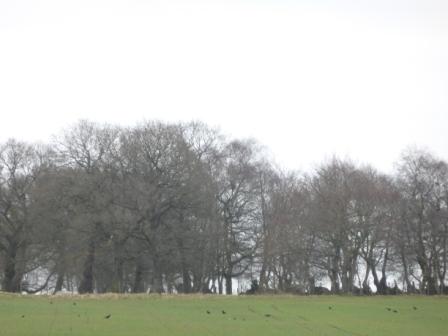
Netherby HallAs we approached from the south Netherby Hall’s sandstone walls came into view atop a prominent ridge with polygonal towers, parapets and scaffolding. An encircling wire fence said strictly out of bounds. Following the path round the mansion we passed a woodland carpeted with snowdrops and trees stacked with rooks’ nests filled with noisy, vocal, raucous birds

Never before had I seen many rooks or heard such a racket. Their croaking and cawing see-sawed in my mind like something trying to break through. Unfortunately I don’t speak very good rook. Yet the rooks seemed important. More important than the blank face of the mansion and its ‘Private’ sign.

We rejoined the main road and headed north for Carwinley. When Lailoken (Myrddin Wyllt) told St Kentigern of his guilt at the deaths of the combatants and vision of a host of warriors (who I believe to be Gwyn and the spirits of Annwn) he stated the battle took place ‘in the field between Liddel and Carnwanolow.’ Skene identified Liddel with Liddel Water and Carnwanolow as Caer Gwenddolau and connected this with Carwinley.

Passing Carwinley cottage, farm and water mill we looked down into the sandstone gulley of the burn, steep banks green with ferns, onto shining reddish water. I recalled Andrew Breeze’s interpretation of Arfderydd as ‘burning weapon’ relating to this bloody stream forming the parish of Arthuret’s boundary. Breeze said ‘Car’ need not mark a fort but a defensive stockade. It certainly seemed possible the burn was named after Gwenddolau’s fall.
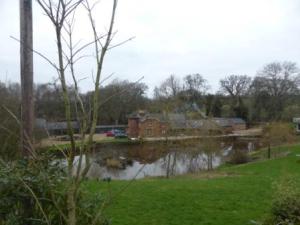
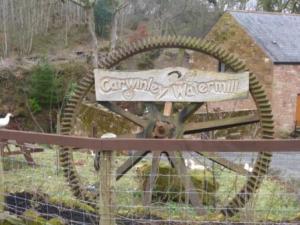
Carwinley BurnThe Triads of Ancient Britain also mention ‘the retinue of Dreon the Brave at the Dyke of Arfderydd.’ Dreon ap Nudd is the son of Nudd Hael. If this etymological link to Gwyn ap Nudd (and his father Nudd or Nodens) suggests an ancient connection between a northern family and their ancestral deities it is no surprise Gwyn and his host appeared at the battle where Dreon and his retinue met their end.

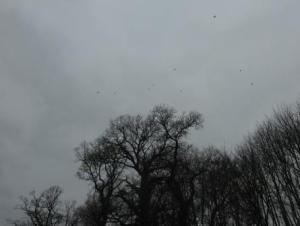
As I pondered whether the ‘Dyke’ they fought on was above Carwinley Burn I saw crows over the trees who shouted and cawed then pitched their games across a sky of constant silver-grey cloud. A sky of concealing. A sky of protection. A sky of no openings onto crashing visions of warriors.
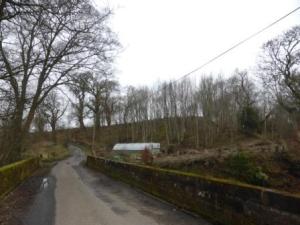
Fields of Arfderydd


As we passed the green and well-tilled-over crow-haunted fields the dead did not rise. There were no whispers, no warnings, only the hearsay of corvids.
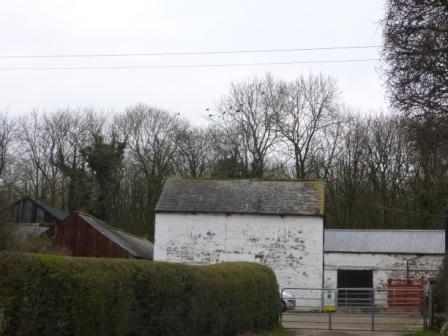
 

Upper Moat


At Upper Moat where reputedly the three hundred men who fought after Gwenddolau’s death were buried there was no sign of the orchard Skene mentioned but crows filled the trees in the background.

Our final destination was Liddel Strength, a motte and bailey which might have been the location of Gwenddolau’s fort and where his ‘Faithful War Band’ could have made their last stand, fighting for a month and a fortnight after the death of their leader. Unable to find our way we were directed by a local farmer (coincidentally Skene was directed by a farmer from Upper Moat too!) onto a shooter’s path which climbed steeply beside Liddel Water.

On the way we encountered a line of not-dead reeds hauntingly reminiscent of flags or ribboned spears blowing in the wind on an abandoned battlefield. Or of forlorn warriors.

Reeds of ArfderyddThe site of Liddel Strength was badly eroded by the river and appallingly overgrown. Breaching the defensive ditch we scrambled through hat-snatching hawthorns and ankle-snagging brambles up the motte which didn’t feel overly welcoming in its firm return to nature. There were no crows but a bird of prey screeched somewhere out of sight reminding me of Gwenddolau’s birds who fed on the corpses of the Britons.
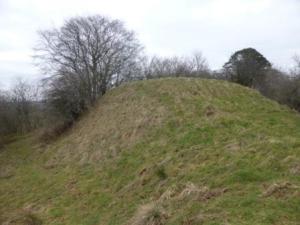
Looking down from the summit Liddel Water flowed far below at the foot of a slope impossible to ascend. Fields and woodland stretched out before us. The land seemed as determined in swallowing time as it was in absorbing the abandoned railway track Skene arrived on two hundred years ago. On our return journey only the bridge and fragments of the embankment remained.
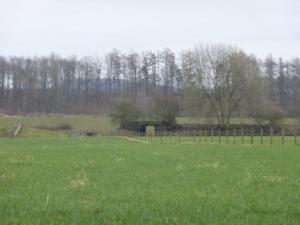
The dereliction of Liddel Strength contrasted sharply with Caer Laverock Castle (the ‘Lark’s Nest’ Arfderydd was supposedly fought over) which we visited the next day. This splendid medieval stronghold belonging to the Maxwell family was well preserved by the National Trust. Its siege by the English immortalised in the ‘Song of Caerlaverock’ was reconstructed on a video in the display rooms.

Caer Laverock CastleCrows flocked in the trees and played over its terraces. South was an earlier fort closer to the Solway Firth, an artist’s representation showed the higher sea levels and its importance as a strategic location.

Heading north again we climbed Ward Law, a lookout point where the Maxwell Clan gathered shouting their battle cry: “Wardlaw! I bid ye bide Wardlaw!” Beyond was another Roman camp invisible from the ground.

Ward LawLooking south from Ward Law to Solway Firth for the first time the all-encompassing silver-grey clouds broke. Seeing clear light and waters ablaze with cold fire I was reminded of the unendurable brightness Myrddin saw as Gwyn approached with the hosts of Annwn. The otherworld opening only just beyond the sands and tides of this-world.

Solway FirthI left with intuitions but no answers about Gwyn and his kindred, battles, forgetting, clouds and corvids… another part of this story waits to be told about the estuary of the river Nith and I shall be sharing this in my next post…

SOURCES

Breeze, Andrew “The Name and Battle of Arfderydd, near Carlisle,” Journal of Literary Onomastics: Volume 2: Issue 1, Article 1. (2012)
Clarkson, Tim The Men of the North: The Britons of Southern Scotland (John Donald, 2010)
Heron (transl) ‘Gwyn ap Nudd and Gwyddno Garanhir’ https://barddos.wordpress.com/2015/02/08/gwyn-ap-nudd-and-gwyddno-garanhir/
Pennar, Meirion (transl.) The Black Book of Carmarthen (Llanerch Enterprises, 1989)
Ross, Anne Pagan Celtic Britain (Cardinal, 1974)
Skene, William F. The Four Ancient Books of Wales (Forgotten Books 2007)
Tolstoy, Nikolai The Quest for Merlin (Sceptre, 1985)

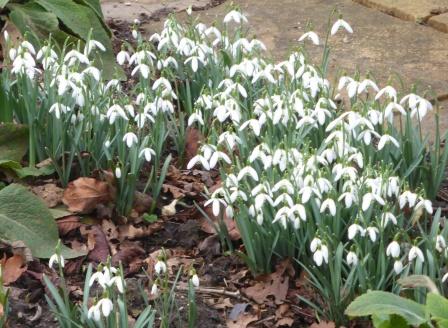
The Brightness beyond Endurance: Gwyn ap Nudd and the Battle of Arfderydd

In my waking dream spears pierce the night sky opening onto another night filled with rainbows and blinding stars. Battle cries ascend from black fog. In a stained glass window I glimpse a man with a hunched back in a green and mossy gown departing from a picture into darkness. From these images I derive my research on Gwyn ap Nudd and the Old North should begin with the Battle of Arfderydd. This is an account of my initial findings and thoughts to date.

The Battle of Arfderydd haunts Britain’s consciousness as one of three of the most futile Dark Age battles. It took place in 573 and was fought between Brythonic rulers of the Old North; Gwenddolau ap Ceidio and his cousins Gwrgi and Peredur ap Eliffer. All were descendants of Coel Hen. Thus it epitomises the internecine strife that prevented northern rulers from putting up a successful resistance to the Angles of Northumbria.

The Triads of Ancient Britain tell us it was fought over a lark’s nest. This probably refers to Caerlaverock (‘Lark’s Fort’) on the site of which still stands a stunning medieval castle. It is generally believed the Battle of Arfderydd took place on the plain between Liddel Water and Carwinley Burn. It is possible the motte and bailey named Liddel Strength was the location of Gwenddolau’s fort. After Gwenddolau was killed, his war-band retreated to the fort and held out for ‘a fortnight and a month’ before their defences fell and they too were slain and (according to a local tradition) buried near Upper Moat.

In ‘The Dialogue of Gwyn ap Nudd and Gwyddno Garanhir’ Gwyn states his presence at Gwenddolau’s death:

‘I was there when Gwenddolau was slain,
Ceidio’s son, a pillar of poetry,
When ravens croaked on gore.’

That Gwenddolau adhered to a pre-Christian mythos featuring Gwyn as a god who gathered the souls of the dead to Annwn is hinted at by certain lines in the Triads. Gwenddolau is referred to as one of three ‘Bull Protectors’ of Britain. Gwyn himself is referred to as a ‘Bull of battle’. Contrary to popular belief, Celts and not Vikings wore helmets affixed with bull horns. The bull was viewed as a sacred animal and its qualities were attributed to war leaders and psychopomps. It is also of interest ‘Gwyn’ and ‘Gwen’ both mean ‘white’ or ‘blessed’.

Gwenddolau is also said to own a pair of birds who wear a ‘yoke of gold’ and devour two corpses of the Britons for dinner and two for supper. If the latter is an oblique reference to funerary practices whereby bodies are left on stone slabs for their flesh to be consumed by carrion birds this shows Gwenddolau and his people were not performing Christian burials. The northern Britons may have believed Gwyn’s presence as a gatherer of souls was signalled by the approach of corpse-eating birds (or dogs or wolves). Gwenddolau’s birds may have had a permanent position in this role.

Another striking passage which may read as a portrayal of Gwyn’s presence at the Battle of Arfderydd with the spirits of Annwn can be found in The Life of St Kentigern. Here, Lailoken (Myrddin Wyllt) tells the saint of a vision which drove him to madness in Coed Celyddon (the Caledonian Forest):

‘In that fight the sky began to split above me and I heard a tremendous din, a voice from the sky saying to me ‘Lailocen, Lailocen, because you alone are responsible for the blood of all these dead men, you alone will bear the punishment for the misdeeds of all. For you will be given over to the angels of Satan, and until the day of your death you will have communion with the creatures of the wood. But when I directed my gaze towards the voice I heard, I saw a brightness too great for human senses to endure (my italics).

The Brightness beyond EnduranceI saw, too, numberless martial battalions in the heaven, like flashing lightning, holding in their hands fiery lances and glittering spears which they shook most fiercely at me. So I was torn out of myself and an evil spirit seized me and assigned me to the wild things of the woods, as you see.’

It seems possible the introduction of the voice of God and angels of Satan are a Christian cover for the appearance of Gwyn and the spirits of Annwn. Gwyn’s earlier name Vindonnus ‘clear light, white’ links him to the unendurable brightness. As a god of thresholds; between the worlds and life and death, experiences of his presence take place on the edge of human sense. Hence Lailoken / Myrddin’s transition from ‘sanity’ to ‘madness.’

The battalions in the sky look more like warriors than angels. The notion that the spirits of Annwn include deified ancestors arriving to take their fallen kindred fits with their numinous apparel. These spirits are frequently demonised by Christian writers. That an ‘evil spirit’ (ie. a spirit of Annwn) tears Lailoken / Myrddin ‘out of himself’ and assigns him to the wildwood is a significant factor in his flight and later recovery.

In the saga poetry of The Black Book of Carmarthen and The Red Book of Hergest we witness Myrddin’s transformation from a golden-torqued warrior of Gwenddolau’s court into a poet who prophecies against war. Myrddin shares harrowing depictions of ‘the blood-shed of battle’ and his guilt about the deaths of Gwendydd’s children. Whether he is literally responsible for killing them or feels responsible is uncertain.

‘Now Gwendydd loves me not and does not greet me…
I have killed her son and daughter.
Death has taken everyone, why does it not call me?
For after Gwenddolau no lord honours me.’

He mourns Gwenddolau’s death:

‘I have seen Gwenddolau, a glorious prince,
Gathering booty from every border;
Beneath the brown earth now he is still,
Chief of the kings of the North, greatest in generosity.’

Myrddin also speaks of his flight from ‘Rhydderch Hael, defender of the Faith’. Rhydderch was ruler of Alt Clut and renowned for championing Christianity and his patronage of St Kentigern. Myrddin’s words have led some scholars to believe Arfderydd was fought between Pagan (Gwenddolau) and Christian (Rhydderch) forces. After Gwenddolau’s death Rhydderch rises to greater power, forming an alliance with Urien Rheged, Gwallog ap Llenog and Mercant Bwlc against the Angles at Lindisfarne.

During this period Myrddin retreats to Celyddon, keeping the company of wild creatures such as wolves, a piglet and a favoured apple tree. He states he has wandered ‘ten and twenty years’ with ‘madness and madmen’ ‘gan willeith a gwyllon.’ Myrddin’s epithet ‘gwyllt’ means ‘mad’ or ‘wild.’ ‘Gwyllon’ can refer to ‘madmen’, ‘wildmen’ or to ‘spirits’ or ‘shades.’ They may be equated with the ‘seven score men’ who fought at Arfderydd then lapsed into madness in Celyddon and perished. These gwyllon are ancestral presences; spirits of Annwn.

Myrddin’s capacity to see the spirits of Annwn may result from his vision of the brightness beyond endurance. Whilst initially it tips him over the edge, it confirms the existence of Gwyn and his spirits and an afterlife. This provides him with the strength to live through suffering; ‘Snow up to my hips among the wolves of the forest, / Icicles in my hair’ until his ‘threefold’ death. Myrddin says ‘After enduring sickness and grief in the Forest of Celyddon / May I be a blissful man with the Lord of Hosts.’ (In ‘The Dialogue of Gwyn ap Nudd and Gwyddno Garanhir’ Gwyn is referred to as ‘Lord of Hosts’.)

Associations between Gwyn and healing processes that take place in the wild also appear in a fourteenth century Latin manuscript called Speculum Christiani: ‘Some stupid people also stupidly go to the door holding fire and iron in the hands when someone has inflicted illness, and call to the king of the Benevolent Ones and his queen, who are evil spirits, saying ‘Gwyn ap Nudd who are far in the forests for the love of your mate allow us to come home.’

Myrddin’s vision also grants him the power of prophetic poetry. It is noteworthy that this former warrior uses poetry to give voice to the horror of warfare and to warn against future bloodshed. A critical attitude toward war differentiates the saga poems from earlier heroic poetry. We might recall similarities between Myrddin’s ‘Death has taken everyone, why does it not call me?’ and Gwyn’s ‘I have been where the warriors of Britain were slain / I live on; they are dead’. Both are laments.

Unfortunately, the northern British stories of Gwyn ap Nudd and Myrddin Wyllt and the deep, wild wisdom they contain are little known in contrast to the courtly Christian tales of King Arthur, Merlin and his knights. For a medieval aristocracy later bent on Crusades; ‘One King, One God, One Law’ there was no room for a northern wild man and his words against war or the ruler of an otherworld and ancestral presences immanent in the wild places of this-world. Perhaps this can be changed…

***

SOURCES

Blake, William The Complete Poetry and Prose of William Blake (Anchor Books, 1988)
Breeze, Andrew “The Name and Battle of Arfderydd, near Carlisle,” Journal of Literary Onomastics: Volume 2: Issue 1, Article 1. (2012)
Evans, J. Gwengobryn The Black Book of Carmarthen (Lightning Source UK Lmtd, 1907)
Heron (transl.) ‘Gwyn ap Nudd and Gwyddno Garanhir’ https://barddos.wordpress.com/2015/02/08/gwyn-ap-nudd-and-gwyddno-garanhir/
Hunt, August The Arthur of History: A Reinterpretation of the Evidence (August Hunt, 2012)
Pennar, Meirion (transl.) The Black Book of Carmarthen (Llanerch Enterprises, 1989)
Rudiger, Angelika H. ‘Gwyn ap Nudd: Transfigurations of a character on the way from medieval literature to neo-pagan beliefs’ in Gramarye, Issue 2 (University of Chichester, Winter 2012)
Skene, William F. The Four Ancient Books of Wales (Forgotten Books 2007)
Thomas, Neil ‘The Celtic Wild Man Tradition and Geoffrey of Monmouth’s Vita Merlini: Madness or Contemptus Mundi?’ in Arthuriana Vol. 10, No. 1 (Spring 2000)
Tolstoy, Nikolai The Quest for Merlin (Sceptre, 1985)

The Old North from Peneverdant

SnowdropsIn the land where I live, spring awakes. Snowdrops in their prime unfold the voluminous skirts of their lanterns. Lords and ladies push their courtship through the soil alongside first signs and scents of ransoms. Swollen mosses take on a bright green living vibrancy.

As I walk the path centuries of ancestors walked to St Mary’s Well, I hear the loudness of a thrush. Could it be the one who calls me from sleep each morning, speckled chest blanched and white as birch amongst ash and sycamore? The trees hold back for now, but I know the sap will start rising soon.

I pass the site of the healing well and cross the road to the War Memorial. Splashes of pink, purple and yellow primroses are planted in beds before the Celtic cross. Etched on blue-grey slabs are the names of seventy-three men who lost their lives in the First World War and forty-six who died in the second. They are honoured and remembered here. I also think of the dead who have no memorial or whose memories have been erased or forgotten.

I follow the footpath uphill onto Church Avenue. Leading to St Mary’s Church, it once went to a Benedictine Priory, dissolved and more recently demolished. A strange road this; trodden by pilgrims in search of miraculous cures and by funeral processions. By soldiers too, maybe armies, defending this crucial position from what we now see as the castle motte.

Passing the church on the hill’s summit I stand in the graveyard amongst tilted and fallen headstones, beneath sentinel beech trees whose shells and bronzed and curling leaves still litter the greening earth.

There’s no access to the motte’s vantage point, but through leafless trees I can make out the city of Preston with its clock tower, steeples, tower blocks and huge manufacturies along Strand Road. I recall images of its panoply of smoking chimneys, flaming windows, imagine the pounding Dickensian melancholy-mad elephants.

Preston’s sleeker now. Cleaner. Less red and black. Concrete grey. Not so smoky. But sometimes the industrial pall still holds. Somewhere behind its walls lies a medieval town and behind that…

The Pennines form a sweeping backdrop, rising higher than Priest Town’s spires ever could; Parlick, Wolf Fell, Longridge Fell, Billinge Hill, Great Hill, Winter Hill. An easterly green and purple barricade. To the west, the river Ribble, Belisama, strapped into her new course, stretches long arms to her shining estuary. A sea gull cries over the horizon and disappears.

I’ve spent several years researching the history of Penwortham. The Riversway Dockfinds mark the existence of a Bronze Age Lake Village. Ballista balls on Castle Hill and a huge industrial site at Walton-le-dale ascertain a Roman presence. Following the breakdown of Roman rule, history grinds to a halt.

There is a black hole in Penwortham’s past the size of the Dark Ages; during the time of the Old North.

Historians have conjectured about this. David Hunt and Alan Crosby agree that place names (where we find a mixture of Brythonic and Old English, like Penwortham* often conjoined) suggest a gradual settlement of the local area by Anglo-Saxons during the seventh century. They say Penwortham’s remoteness on the edges of Northumbria and Mercia meant it was not a major concern. However, this conflicts with the significance of its location as a defensive position for the early Britons and Romans and later probably for the Saxons of Mercia and the key role it played for the Normans during the harrying of the North.

History starts up again with the Saxon hundreds, invasions from Scandinavia and the Norman Conquest. But what happened in between?

Unfortunately, likewise, there is a black hole in the history of the Old North the size of Penwortham. And it isn’t the only one.

The very concept of ‘Yr Hen Ogledd’ ‘the Old North’ is problematic. It is a term used post datum by scholars to identify an area of land covering the majority of northern England and southern Scotland from the time of the breakdown of Roman rule in the fifth century until the Anglian kingdom of Northumbria came to dominate in the eighth century.

During this period, it was simply known as ‘Y Gogledd’ ‘the North’. Its people spoke a Brythonic language known as Cumbric, which was similar to the Cymric language of the Welsh. Its rulers ‘Gwŷr y Gogledd’ ‘the Men of the North’ claimed common descent from either Coel Hen (Old King Coel) or Dyfnawl Hen. Again, the genealogies are problematic because they were created by kings to certify their reign by tracing their lineage back to legendary ancestral figures.

The main kingdoms of the Old North are usually identified as Alt Clud, in the south-west of Scotland, which centred on Dumbarton and later became Strathclyde; Gododdin, in the south-east of Scotland, which had a base at Edinburgh; Elmet, in western Yorkshire and Rheged in north-west England.

The location of Rheged is a matter of ongoing debate. For Ifor Williams it centres on Carlisle and the Eden Valley and covers Cumbria, the Solway Firth and Dumfries and Galloway. John Morris posits the existence of a northern Rheged in Cumbria and a southern Rheged that extended into Lancashire and Cheshire. On the basis of landscape and resources, Mike McCarthy suggests a smaller kingdom or set of sub-kingdoms existed either north or south of the Solway. If McCarthy is correct, we do not have a name for present day Lancashire at all but a black hole the size of a county or larger!

Another problem is that textual sources about the Old North are extremely limited. We have some historical records such as the Annales Cambriae, the Historia Brittonum and Anglo-Saxon Chronicle. Much of the history of this period is derived from the heroic poetry of the Dark Age bards Taliesin and Aneirin. Later saga poetry construes dramatic dialogues between characters associated with earlier events.

Research leads to where history and myth converge but can take us no further. It becomes necessary to step beyond study across the threshold to otherworlds where the past, our ancestors and deities still live.

So I speak my intentions to the spirits of place; the Lady in the Ivy with her glance of green, wood pigeons gathered in the trees, the people buried here in marked and unmarked graves.

I speak with my god, Gwyn ap Nudd, who abides beyond this land but sometimes seems closer than the land itself. The god who initiated and guides this quest.

His suggestion: what is a black hole but a portal?

Our agreement stirs a ghost wind from behind the graves, rustling bronze beech leaves and tree whispers from above.

The hill seems greener. A single white sea gull barks. Then long-tailed tits come chittering and twirling to the brambles.

Beech trees and castle motte*Penwortham first appears in the Domesday Book in 1086 as ‘Peneverdant.’ Writing in 1857 Rev. W. Thornber claims this name is of British origin and ‘formed of three words- pen, werd or werid and want, as Caer werid, the green city (Lancaster) and Derwent, the water, that is the green hill on the water’. This describes exactly how I imagine Castle Hill would have looked during the eleventh century near the Ribble on the marsh. However, ‘verdant’ has always sounded more like French for ‘green’ to me.

Alan Crosby says ‘Peneverdant’ results from a Norman scribe trying to write an unfamiliar word (which was likely to have been in use for up to 500 years) phonetically. He tells us the ‘Pen’ element in Penwortham is British and means ‘prominent headland’ whilst ‘wortham’ is Old English and means ‘settlement on the bend in the river’.

If Penwortham had an older British name prior to Saxon settlement, it is unknown. I can’t help wondering if it would have been something like ‘y pen gwyrdd ar y dŵr,’ which is modern Welsh for ‘the green hill on the water’. It’s not that far from Peneverdant.

Imagine the Old North

Imagine the Old North. What can it be? Can you see it in this land, from your green hill across the marsh how the ordinary people saw it?

Can you see ravens in trees amongst the crows? Was it common enough for magpies?

Can you imagine the rumours of embittered warlords and honey-tongued bards who sung their praises? Can you taste weak beer or braggot? Do you feast on dog or wild boar?

Can you imagine living in a world where the animals speak? How will you learn their tongues? Will they lead you into their expanses?

Your books are filled with stories. Can you imagine the ones who got away? How their hearts beat on river-banks and they were pierced by spears as carrion birds circled? How the sleek otter swept into the depths and carried their death-cries to his young? Can you imagine what the ravens whispered in their thatched nest?

Can you imagine the task of bringing peace to the battle-dead?

Where all the darkness of history wanders and I hold the spirits of Annwn back… can you imagine?

What can our poetry be? A sound, a scream, a panorama of the Old North in a beam of light?

River Ribble from the Ribble Way, east of Ribchester Bridge
*Questions posed by Gwyn ap Nudd.
**Photograph of the river Ribble from the Ribble Way east of Ribchester Bridge.

Gwyn ap Nudd and the Old North

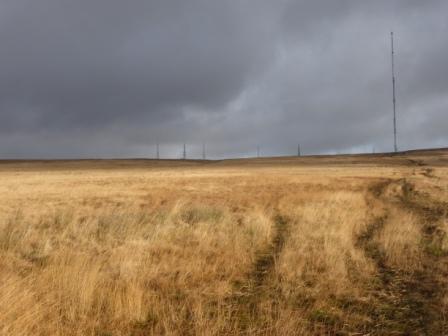
Rivington Moor with Winter HillI’ve recently started researching Gwyn ap Nudd’s neglected connections with the Old North. In the final verses of ‘The Dialogue of Gwyn ap Nudd and Gwyddno Garanhir’ Gwyn states his presence at the deaths of northern warriors. In How Culhwch won Olwen Gwyn’s rival for the love of Creiddylad, Gwythyr, and his allies (who Gwyn takes captive) are of northern descent. There is consensus amongst scholars that this episode and ‘The Very Black Witch’ originate from the Old North.

As somebody who venerates Gwyn in Lancashire I find it strange, perplexing and quite sad that, whilst in medieval texts equal precedence is given to Gwyn’s roles in Wales and the north, in later literature his northern links disappear entirely. I’m in the process of developing some ideas about how this happened.

Before I started reading Welsh mythology I thought it was solely about the area of land we now know as Wales. When I discovered William Skene’s translation of The Four Books of Ancient Wales I realised that the earliest heroic poetry attributed to Taliesin and Aneirin originates from and is about the fall of the Old North to the Anglian kingdom of Northumbria. Whilst the focus of The Mabinogion is Wales many adventures lead beyond. Welsh mythology contains the lore of all of ancient Britain.

This body of ancient British lore was absorbed into ‘Welsh’ mythology because when the Anglo-Saxon kingdoms came to rule, many Britons were forced west, taking their stories with them. The tantalising fragments of Gwyn’s earliest myths in the medieval texts result from the mixing of northern and Welsh oral tales, which were later penned by Christian scribes.

Memories of Gwyn were kept alive by the reminiscences of Welsh saints, soothsayers and poets and later revived by nineteenth century scholars and folklorists. During this process his name became synonymous with areas where his stories were still told; Wales and Somerset. This is evidenced by Shakespeare’s ‘Heavens defend me from that Welsh Fairy’ and John Cowper Powys’ reference to Glastonbury Tor as ‘the great haunted hill, the hill of Gwyn-ap-Nud, the Welsh Fairy-Demon’.

His northern connections sank into the background. As far as I know there have been no literary references to Gwyn ap Nudd in the north since the medieval period.

***

Last year, when I was giving a talk on ‘Voicing Place’ in Ipswich, I mentioned my relationship with Gwyn and how some of my journeys under his guidance had led not only to Annwn but to memories in the dreamscape of my locality. Afterward, I got questioned about the legitimacy of my work with a ‘non-local’ god; shouldn’t it be ‘local gods for local people’?

I disagreed, both on the principle that only relationships with local gods are valid and that Gwyn isn’t a local god. Gwyn revealed his presence to me (quite unexpectedly!) at a local fairy site. His imperative of ‘enchanting the shadowlands’ referred to my locality. Throughout my relationship with him he’s demonstrated a concern for the north and its history.

I’ve been pondering this for a while and reached the following conclusion: Gwyn is a king of Annwn and is said to ‘contain’ (literally to hold within and to hold back) the fury of the spirits of Annwn. These are chthonic spirits, referred to today as ‘fairies, who play a role in mediating between this-world and the otherworld, the living and dead. Because of this intermediary role they have a deep concern for the land and the way we maintain our heritage. Their concerns are Gwyn’s.

Gwyn’s concern with history (and some of his fury) also stems from the fact he and the spirits of Annwn have been all but erased by the processes of Anglicisation and Christianisation. Gwyn and his kindred spirits also seem bound up with other voices written out of history by the victors. Thus, he calls me to step outside history to listen to those voices and bring his myths back to life on the land from which they have been erased.

This marks a new direction in my research and writing. Since my dedication to Gwyn, my path as an Awenydd has focused on what Heron refers to as ‘imaginative recall’; working with historical fragments and maps and listening to the land and its deities in order to gather memories in poems and stories.

In Enchanting the Shadowlands my focus was my local area. I am now experiencing the impulse to revisit some of Britain’s most ancient myths at a deeper level and visit the places they are set with the purpose of reweaving Gwyn’s neglected connections with the Old North into the present day.

In this respect, I share aims with Charlotte Hussey who in her collection of medieval glosa Glossing the Spoils set out through active imagining to ‘mend a break in tradition and time.’ Charlotte mentions that P. K. Page ‘defined ‘religion (re-legere)’ as ‘to read again.’’ Re-reading and re-imagining our ancient myths is a religious duty, an act of devotion to land, gods and ancestors.

Hence as an Awenydd to Gwyn and his spirits and all the voices between the lines of known history and myth, I embark on this new project. I am aware at this point it is not only memories I must quest, but an appropriate form to fit them.

Gwyn ap Nudd and Gwyddno Garanhir

This is a link to Heron’s translation and interpretation of ‘The Dialogue of Gwyn ap Nudd and Gwyddno Garanhir,’ found in The Black Book of Carmarthen. This dramatic dialogue is one of the earliest pieces of known literature featuring Gwyn ap Nudd, who appears as a divine warrior and gatherer of the battle-dead.

Heron has undertaken an important task, as the only translation currently available to the public on the internet is William Skene’s (1868), which is both dated and considered flawed. His hard work and understanding of this poem on historical and mythic levels is highly appreciated.

Greg Hill's avatar

IMG_0109
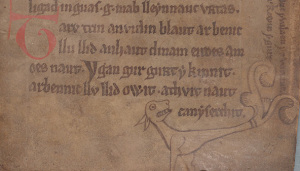
The beginning of the Exchange Between Gwyn ap Nudd and Gwyddno Garanhir in the manuscript of The Black Book of Carmarthen

An interpretation of the conversation between 
Gwyn ap Nudd and Gwyddno Garanhir.

 This conversation appears in a manuscript collection known as The Black Book of Carmarthen which is a collection of copies from earlier manuscripts made by a monk in Carmarthen in the Thirteenth Century, some of which are verses which may have originally been embedded in lost prose sagas. As with much early Welsh verse some parts of it are difficult to interpret and the only easily available version in English is that contained in Skene’s Four Ancient Books of Wales, a pioneering translation which is now regarded as flawed. I’ll provide my own attempt to translate it during the course of the ensuing discussion based on consulting modern editions and commentaries in Welsh. There are some…

View original post 1,690 more words

Brigantia Stone

Brigantia Stone Earlier in January I dreamt the Oak and Feather Grove were holding a celebration on the West Pennine Moors around a sandstone monument carved with a goddess figure rooted in the earth drawing up its energy to combine with shining rays of sunshine. I knew this was a ‘Brigantia Stone.’

Today is the Gaelic festival of Imbolc, which is connected to the goddess Brighid or Bride. In Scottish mythology she is imprisoned in a mountain by the Cailleach throughout winter and escapes her prison in spring, bringing new growth and regeneration. In Wales she is known as Ffraid and this festival is Gwyl Ffraid.

Here in Northern England she is known as Brigantia. Her name is Brythonic and means ‘High One.’ She was the warrior goddess of the Brigantes tribe, whose tribal confederation dominated the North until the Roman Invasions. I associate Brigantia with high places, locally with the West Pennine Moors and in particular Great Hill.

Great Hill from Brindle

Great Hill viewed from Brindle

In contrast to Brighid, whose stories and roles as a poet, smith and healer are well documented, we know comparatively less about Brigantia. Seven inscriptions exist to her across Northern England and Southern Scotland. She is equated with Victory, and on a statue with Minerva in warrior form, holding a spear and a globe of Victory and wearing a Gorgon’s head.

In my experience, Brigantia is a goddess of the wild harshness of the high hills. A warrior for certain and a goddess of the all-consuming fire of the Awen, the hammer beat of creation and a forger of souls. She’s the first goddess I met. Because she’s a poet and we share a fiery irascible temperament I thought she would become my patroness.

I was wrong and the reason behind this was a difficult one to learn. I worked very closely with Brigantia for two years whilst completing a fantasy novel. It was about a fire magician who, in order to bring down capitalism, made a pact with fire elementals which resulted in his near destruction of the world and death in the flames by which he made his pact. With my anti-hero a part of me burnt and was consumed.

After completing the novel I realised it was too dark and incomprehensible to publish. I’d wasted two years, wasn’t cut out to be a fantasy writer and and I’d lost my trust in Brigantia.

The death of my novel left a void. And into it stepped my true god. Perhaps this was Brigantia’s plan. I needed to learn the dangers of working with the untrammelled Awen; fire in the head, pure imagining, without relation to this world or the realities of the Otherworld, to which Gwyn ap Nudd opened the gates.

Afterward I resented her. Because I’d sold my car and could no longer drive to the Pennines we also became physically distanced. In spite of this, looking down on my valley from the surrounding hills, in the fire of the Awen, she has continued to be a presence in my life. I still honour her as the warrior goddess of the North. But we rarely speak in person.

My dream of the Brigantia Stone came as a surprise, even though Brigantia is in many ways a patroness of the Oak and Feather grove. I experienced the calling to redraw the stone for our Imbolc celebration (which I’d sketched in my diary) in colour, as a Bardic contribution to the grove and for Brigantia as an offering on her festival day. It came out perfectly first time, so well I decided to make copies for each member of the grove.

Lynda has suggested we take a grove walk to find the stone on the West Pennine Moors. Whether it ‘really’ exists on the moors, or in their dreamscape, I’m not certain. However, I do know it is the time to acknowledge and accept Brigantia’s role and place in my life.

Brigantia Altar

The Star-Strewn Pathway

‘Thence rolled down upon him the storm-clouds from the home of the tempest;
thence streamed up the winter sky the flaming banners of the Northern lights;
thence rose through the illimitable darkness on high
the star-strewn pathway of the fairy king.’
-Wirt Sikes

I write this post as a newcomer to the path of the Awenydd, having walked it in earnest little longer than a year and a day. The terms Awen and Awenydd have been familiar since coming to Druidry. In the Awen I found a name for the all-consuming force of inspiration that has burnt forever in my veins with the fire of stars in the iciest reaches of a dark universe. Its furious purpose was revealed by a god after many years of searching.

Restless years. Wilder years. Seeking Blake’s infinite. Throwing my soul into the furthermost abysses of Western European philosophy where reason bites its own tail, curls up and dies and the only way to survive the white hot sun of truth is to burn with and express its creativity.

Trying to find a framework to decipher visions of our native spirit world without knowing if my experiences were ‘real’. Searching Christian mysticism, Graeco-Roman, Saxon and Norse mythologies and finding only analogies. Discovering Britain has its own mythology in The Mabinogion, The Triads of the Island of Britain, The Four Ancient Books of Wales and regional folk and faerie lore.

Finally, Gwyn ap Nudd, my Fairy King finding me and teaching me to walk the Star-Strewn Pathway.

***

The Star-Strewn Pathway begins in one’s local area with the recognition the whole landscape is inspirited. Awen sings from the earth-sun at this world’s core through its molten mantle, sandstone bedrock, layers of clay and harrowed loam. Wonder can be found in backyards of composting earthworms and hatching spiders.

Pathways lead to suburban edgelands. Narrow valleys of trees impossible to build on, brooks shrunken by drainage systems tripping down wooden platforms. Algae-covered stagnant ponds beloved of ducks. Decaying mills pink with Herb Robert housing volleys of pigeons circling above.

These places are inspirited and there are spirits: huge boggarts who once stretched gurgling through mosslands grey and whiskery; undines clasping their last waters; newly planted woodlands arising into forms of consciousness with inherent knowledge of tree, bird and mycelia of mushrooms to the tread of deer.

Inevitably pathways lead abroad. It is necessary to trace local brooks to the river’s crashing heart, find its trickling source and greet rolling tides with the sea at its shining estuary. To meet its Great Goddess who washes her hair by moonlight and stretches watery arms throughout the watershed.

To travel ancient woodlands of oak men, snow-topped mountains of icy blasting and cities of tower blocks, steeples and malls which guard a heritage locked in catacombs and glassy vaults. Every facet of woe and joy, awe and strife, adds to the alchemy of our own sun.

***

In rain or mist, at twilight to the touch of thunder, it is possible to step from known to unknown pathways. Wandering lost in a storm-cloud of emotion I have often found myself on unfamiliar tracks with strange figures, no longer myself. Sometimes it is those dusky shadows who beckon me, footsteps leading into the wildwood’s tangled heart.

In the wildwood all the fay lights are lit by stars. They dance and glimmer, throwing bright shapes and longer shadows across paths which intertwine like roots. These paths have their own lives, untwining and uprooting to walk their own way through the wood. Where the fay strew their lanterns on the ground one might find the Star-Strewn pathway.

There is a long tradition of caves and holes leading to the underworld. Their entryways are utter darkness. Timeless. Illimitable as despair. They lead into a womb of tunnels, the edge of an abyss, to where that age-old creatrix Old Mother Universe gives birth to stars. From thence the Star-Strewn Pathway unfurls through underground heavens.

When the moon is full she lays out her bridge of vibrant stars in the river. The ripples become stepping stones. From the river-moon the Star-Strewn Pathway leads through the catastrophic beauty of falling stars to the star-decked parapets of the Fairy King’s hall.

At his banquet stars burn and freeze. The order of things is undone. In the crux of fairy arts, the Fairy King’s Star Cauldron, the wonder of the universe is reflected and re-made anew.

***

There are other ways to reach Gwyn’s Hall. As many ways as there are souls. Some fly with coveys of hounds or wild geese. Others do not need to fly at all.

This is not the path for everyone. There are many gods, stars and cauldrons.

Any soul flight requires a return to and grounding in the body of this world; dragging backward through hedgerows, screaming and echoing from slanting rock-faces to kiss the earth with bloodied and muddy lips.

Apostasies need voicing in cafes and bars, chain-stores and museums. Launching into the internet’s mirror-void where the dust-mote of a spark of Awen can be multiplied into a million blazing simulacra fading as quickly into black holes.

Following the Star-Strewn Pathway does not lead to catasterism ‘placing amongst the stars,’ but living a full life upon this earth, returning to and from the halls of our deities, knowing only our bones and star-songs will survive for future generations. Until, with our land and gods, we are swallowed by the sun. Perhaps in this manner we will receive our final catasterism.

***

*This article was written for and first published with an introduction by Heron on ‘The Path of the Awenydd‘. This blog aims to explicate and explore this lesser known path. It is also an excellent and growing resource on Bardic, Brythonic and Faerie Lore. Do check it out. Many thanks to Heron for supporting my work.

The Star Cauldron

‘Is it not the cauldron of the chief of Annwn? What is its intention?
A ridge about its edge and pearls.
It will not boil the food of a coward, that has not been sworn…’
The Spoils of Annwn

Returning not on time
but at the perfect time
to the place I made my vow,
your cauldron of pouring water
is still flowing and today
it contains the stars.

As always I have a question,
tearing through the veil
torn a million times,
calling through the names
and faces of indefinite thoughts,
impelled by a shape and form unsung:

the suggestion of a bardic book
prompted by a voyage
to the moon in the river
where I stood amongst your stars
and in the river-rain of their fire
learnt the Awen only follows absolute necessity.

You say “do what is necessary.
Write the book that needs to be written.
The stars in my cauldron, write it in their fire.”

Ribble Stars

Fairy Lights and The Strangeness, Fishergate

Last night I dreamt I was watching a television programme in my living room. Somehow I entered it and became an active participant. With a group of friends I was preparing to stage a protest. For it to succeed, a special light on a tree needed to be changed. I ran with a blonde, sporty woman (who I did not know) across a car park to the tree, which stood on the end of a busy city street I identified as Fishergate in Preston.

The lights were off. The one we had to change looked more like a silver Christmas decoration and stood out as markedly special and ‘other.’ As the woman started taking it down, chatting easily, she paused. Her expression froze into uncanny wistfulness and her gaze grew distant. Speaking in a voice from far away, she told me “it belonged to Gwyn ap Nudd.”

I knew at this point (somehow being outside the programme and within it) the words and memory that possessed her were not her own. Like in a film there was powerful, beautiful music. A strange wind blew, stripping away the façade of the city streets. I had a profound sense of another landscape stirring and awaking at the sound of Gwyn’s name. Once the strangeness had blown over, the woman began chatting normally as if nothing had happened and traffic started driving past again.

Throughout the preparations there were rumours about the massing of an army of otherworldly beings. As someone in the programme with an audience member’s knowledge I knew they were the fay / Gwyn’s hunt and could sense them gathering in clouds and forests somewhere behind. I had the feeling they might disrupt the clash between the two sides in the protest. As audience, I was aware this was the part I was looking forward to.

This awareness brought me back to my living room to see the credits rolling down the screen…

***

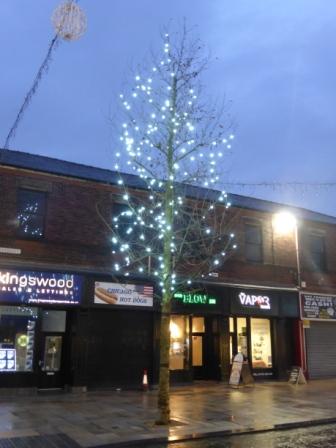
The dream inspired me to walk into Preston at dusk tonight. Several months ago, Fishergate (the high street) was pedestrianised. The road was narrowed to make way for wider pavements and as a final touch, trees. Delighted when I saw first saw them, I walked the street, greeting them in turn and welcoming them to the city.

Since the Christmas lights went off, the trees have been lit by fairy lights. Following rain and hail, the pavements gleamed. Reflected in windscreens the lights shone like cold stars, miniscule glances leaping from fragments of hail.

Fishergate, PrestonIdentifying the tree from my dream, I noticed all the lights were working.

Tree, FishergateI stood with the tree for a short while. Crossing the road and looking back, I saw huge dark ominous clouds gathering over the County Hall, which is where the anti-fracking protests will take place on the 28th and 29th of January.

Fishergate, County HallThe music of hail came down. An immense strangeness like none I had known before came over the city. I felt as if I stood in another Preston where the landscape was more than it was by the strange life of those lights against winter’s silver-grey sky. Everything seemed more profound and enthused with meaning, although I couldn’t divine what the exact meaning was.

Fairy LightWhat happened to the silvery light, which belonged to Gwyn ap Nudd and led me to the strangeness remains uncertain.