The Last Wolves

Every district has its last wolf.’
Lays of the Deer Forest

I watch across the troubled waters
of the Bay whilst you gather up
the Last Wolf of Lancashire
from Humphrey Head.

Some say he was driven
over Kirkhead and Holker
and plunged across the Leven,
sheltered on Coniston Old Man,
swam Windermere to Gummershaw,
Witherslack, Eggerslack, Grange,
met his end in Sir Edgar’s cave
by John Harrington’s lance,

others he fled the Bowland forest
where your ghost-wolves still howl
and was stuck by a thousand pikes
where tides meet the headland.

With thumb and forefinger
you squeeze his wounds closed,
pass your hand across glazed eyes
like the shadow of a lantern.

You shake out his pelt. His soul slips free
to join the wolf-dance in your death-light:

the dance of all the Last Wolves you gathered up…

From Gleann Chon-fhiadh, the Wolves’ Glen,
you gathered up the Last Wolf of Chisolm:
pulled the dirk from her breast, the spear
from her flank, the steel gauntlet,
lamhainn chruaidh from
the trap of her jaws,
laid her amongst
her slaughtered cubs
and sang out their yelping souls.

From between Fi-Giuthas and Pall-a-chrocain,
pinewood known for deer and township in the crooked river,
you gathered up the Last Wolf of Chisolm:
carried back his heavy black head
severed for fear he’d live again,
sewed up his severed throat,
wounds where he’d been
buckled and dirkit,
sang his black shape hurtling back
through pines, upriver, startling deer.

From a cave of bones in Helmsdale
you gathered up the Last Wolf of Sutherland:
closed her stab-wounds,
straightened out her tail from when she was suspended
by a God-like hand, wolf-shadow snapping
ineffectually over her dead cubs,
their ruddy-armed killer.
Her tail straight,
you sang her family whole into the Otherworld.

You gathered up the Last Wolf
of Inverness: pieced together his skull
shattered by an old woman’s frying pan,
sang him back to where he will no longer
prowl into houses or lick
a human hand.

You gathered up all the Last Wolves from
the Wolf’s Rivers, Burns, Crags, Glens, Dens,
Hills, even from Wormhills. You gathered
up the Last Wolf of the Weald

as you gathered up the Last Elk, Aurochs, Bear, Lynx, Boar…

I watch the Last Wolves join your wolf-dance.
White wolves, grey wolves, black wolves,
she-wolves and cubs vivid as stars
whilst bioluminescent fishes
leap across the Bay.

Humphrey Head III

Annuvian Awen

Annuvian Awen

Allan o dywyllwch caf fy ngeni
Allan o waed caf fy ngeni
Allan o ysbryd caf fy ngeni

Yn canu o Annwn

Tri phelydryn golau
Tri phelydryn llais
Tri phelydryn wirionedd

I oleuo â rhyfeddod
Ac yn torri’r galon wytnaf

Yn canu o Annwn

~

Out of darkness I am born
Out of blood I am born
Out of spirit I am born

Singing from Annwn

Three rays of light
Three rays of voice
Three rays of truth

To illuminate with wonder
And break the hardest heart

Singing from Annwn

~

About a month ago I awoke with the symbol above in my mind with the name ‘Annuvian Awen’. Awen derives from the Indo-European *-uel ‘to blow’ and has the same root as the Welsh awel ‘breeze’. It is the primordial breath that binds all things, as Kristoffer Hughes says, ‘the voice of the universe speaking to itself’.

The Awen symbol was popularised by Iolo Morganwg in the 1860s. He claimed it was derived from a Welsh alphabet recorded by Nennius in the ninth century and that its meaning was ‘I am that I am’. It has been used by Neo-Druids since.

In medieval Welsh poetry ‘the ogyrven of threefold inspiration’ originate from the cauldron of Ceridwen. Crochan means both ‘cauldron’ and ‘womb’. It is the place from which all beings of the universe are born and to where they return at death.

The cauldron of Ceridwen lies in Annwn, ‘Very Deep’, the ancient British Otherworld. It is guarded by the Head of Annwn: a god with many names who I know as Gwyn ap Nudd. Gwyn guides the souls of the dead and of living initiates to the cauldron.

The black background of the Annuvian Awen represents the origin of Awen from the darkness of Ceridwen’s cauldron in the depths of Annwn. The red stands for the blood of the dead (human and non-human) whose sacrifices have made it possible the living can have Awen. The white is spirit: the breath, the voice of truth, the misty otherlight of the ogyrven ‘spirits’ contained in the person of Gwyn ‘White’ who is also known as the giant Ogyrven.

When I had created the design I received the gnosis I must write a poem to accompany it in English and Welsh. My Welsh is very basic. Having written the English version with an eye to how it looked and sounded in Welsh, translating as I went, I contacted fellow awenydd and Welsh-speaker Greg Hill for help with the translation.

Greg corrected my grammatical errors and helped me with choices of individual words. Interestingly this led to changing the tense of the English poem from past to present which was a big improvement. This fortuitous exchange of Awen between awenyddion gave birth to the poem in its present form. We decided to use it with the symbol on the front page of ‘Awen ac Awenydd’: a website providing a repository of information on the awenydd path.

For me the Annuvian Awen forms an expression of the path of the awenydd that acknowledges the importance of depth in our increasingly superficial world; the need to recover the inspiration that lies in the deeps of Annwn and in the deep places of our souls to combat the soullessness that allows the destructive systems that are wrecking Thisworld to thrive.

The ways to Annwn are dark, misty, uncertain, steeped in blood, for the most part forgotten. Yet there are gods and guides who offer to walk with us and share our quest. So we go with them through the darkness, across the river of blood, to return with the otherlight to illuminate the beauty of Thisworld because not only our lives but the lives of our souls depend on it.

SOURCES

Angela Grant, ‘A Short History of the Awen’, The Druid Network
Greg Hill, ‘Awen’, Awen ac Awenydd
Greg Hill, ‘Taliesin, the Bardic Tradition and the Awen’, The Way of the Awenydd
Greg Hill, ‘The Girl in Ogyrven’s Hall’
Kristoffer Hughes, Natural Druidry, (Thoth Publications, 2007)
Kristoffer Hughes, From the Cauldron Born, (Llewellyn, 2013)
Marged Haycock, Legendary Poems from the Book of Taliesin, (CMCS, 2007)
Awen’, Wikipedia

A Glimpse of Pure Sunshine

The final prose poem in Melissa Lee-Houghton’s challenging confessional collection, Sunshine, is called ‘Hope’. Hope is scarce. The subject is a dream akin to a horror movie where the narrator is kidnapped and her companions are beheaded one by one, ‘blood gushing like red schnapps.’ When she is the only one left alive for a moment she thinks she’s won. Yet the time arrives for her to hang her head over the metal sink for the man in the white surgeon’s mask with the scalpel. ‘Hope’ ends with the following lines: ‘Although my psychiatric worker said it’s more than unusual, I died in that dream, and I went somewhere. Part of me remains there, happily, in the glamorous glare of lost hope and a sadness spun of pure sunshine.’

This poem struck a chord because two years ago I had a horrific dream ending with the suggestion of an afterlife. I was a soldier fighting in a jungle and had been captured to be executed. As I faced the firing squad, I knew I was going to die. I called to Gwyn ap Nudd, my patron god, for help. Filled with superhuman strength, I broke away in the form of a heavily muscled pig-like warrior. However, I was tracked down and recaptured. When I consulted Gwyn from my cell, he told me he couldn’t save me again. I must send my soul into the hazel, the beetle and… a third thing I can’t remember when it came to my execution. The next minute I was walking amongst hazel trees with a friend, speaking with complete calm about how to get my soul into a tree and turning over the leaves to find a beetle. I was utterly convinced about the survival of my soul, the calmest and surest I’ve ever felt. That reassuring feeling, like a glimpse of pure sunshine, remains with me to this day.

Fairy Lane

Gwyn’s Hunt

For Nos Galan Gaeaf: An article on soul hunting and soul flight in the Brythonic tradition of Gwyn’s Hunt on this night of deep magic as the borders between thisworld and Annwn, life and death, and the laws that govern time and space break down.

Lorna Smithers's avatarDun Brython

Within Neo-Paganism Gwyn ap Nudd is generally understood to be a leader of ‘the Wild Hunt’. Before Jacob Grimm developed ‘the Wild Hunt’ as a concept applied to various otherworldly hunts across Europe in his Deutsch Mythologie (1835), they were known by individual names often referring to their leaders such as ‘Woden’s Hunt’, ‘Household of Harlequin’, and ‘Herla’s Assembly’. This essay will focus on the Brythonic tradition of ‘Gwyn’s Hunt’.

The earliest literary reference to Gwyn as a hunter comes from Culhwch and Olwen (1090) where it is stated, ‘Twrch Trwyth will not be hunted until Gwyn son of Nudd is found.’ This suggests Gwyn was the leader of the hunt for Twrch Trwyth, ‘King of Boars’, prior to Arthur. According to the text, which was penned by Christian scribes, Twrch Trwyth was a king changed into a swine by God ‘for his sins’. This overlay conceals a pagan tradition…

View original post 1,062 more words

Grey Geese and Oracles

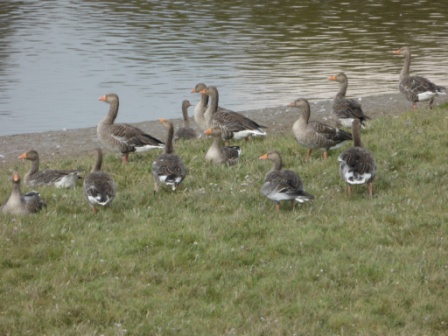
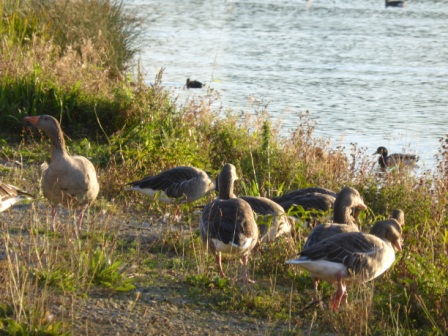
Between September and November grey geese arrive in my locality. I’ve seen a local flock of greylag geese on the stretch of the river Ribble near Howick Cross at this time two years running. Greylags are the ancestors of domestic geese and residents in the UK all year round; migratory birds are only found in Scotland. This flock also contains Canada and domestic geese.

Greylag Geese, Ribble

Greylag geese, river Ribble

More dramatically pink-footed geese begin arriving from Iceland and Greenland. They can be heard flying overhead to WWT Martin Mere. This year the first group touched down on September the 9th and there are currently 15000 roosting on the reserve.

Pink-footed Geese, Martin Mere

Pink-footed geese, Martin Mere

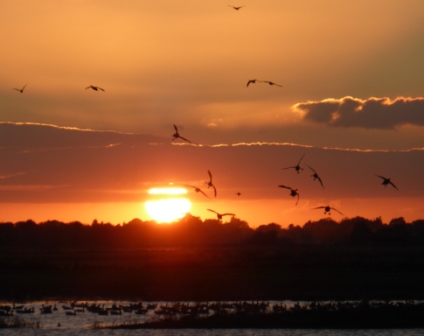
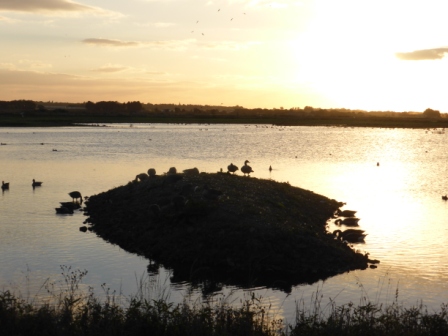
Watching their return to the last fragment of Martin Mere at sunset is awe-inspiring. One can only imagine the noise and patterns of the skeins before the Lancashire’s Lost Lake, once 15 miles long, was drained.

Pink-footed Geese, Martin Mere

Pink-footed geese return at sunset, Martin Mere

 ***

In the folklore of northern England, the cries of migrating geese are linked to Gabriel Ratchets. ‘Gabriel’ may derive from the name of the Angel of Death, the ‘gabble’ of geese, or the medieval word gabbe, ‘corpse’. ‘Ratchet’ originates from the Old English ‘ræcc’ meaning a ‘a dog that hunts by scent’.

The earliest record of Gabriel Ratchets is from 1664. Whilst living at Coley Hall in the Calder Valley, Reverend Oliver Heywood wrote in his Memoranda:

‘There is also a strange noise in the air heard of many in these parts this winter, called Gabriel-Ratches by this country-people, the noise is as if a great number of whelps were barking and howling, and ‘tis observed that if any see them the persons that see them die shortly after, they are never heard but before a great death or dearth… Though I never heard them.’

In his Notes on the Folklore of the Northern Counties of England and the Borders (1879), William Henderson suggests the ‘belief in a pack of spectral hounds’ originates from ‘the strange un-earthly cries, so like the yelping of dogs, uttered by wild fowl on their passage southwards.’

Lancashire folklorist James Bowker notes, in his Goblin Tales of Lancashire (1879), ‘Mr Yarrell, the distinguished naturalist, reduces the cries of the Gabriel Hounds, into the whistling of the Bean Goose… as the flocks are flying southward in the night, migrating from Scandinavia.’

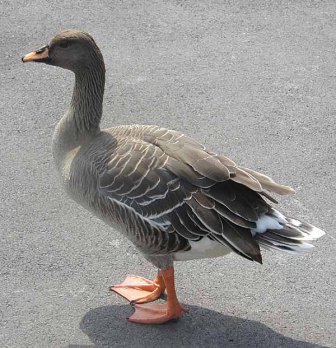
Bean Goose, WWT Slimbridge, Wikipedia Commons

Bean Goose, WWT Slimbridge, Wikipedia Commons

This appears to be a mistake: bean geese migrate from Scandinavia to Norfolk and southern Scotland. Here in Lancashire it seems more likely that pink-footed geese, with their ‘high-pitched honking calls, being particularly vocal in flight, with large skeins being almost deafening’ would have been associated with Gabriel Ratchets. The pink-footed goose is closely related to the Bean Goose and was once considered a subspecies. Perhaps Mr Yarrell conflated the two.

Gabriel Ratchets are often associated with a spectral huntsmen. This may originate from pagan beliefs about ‘the Wild Hunt’ which takes place at the time of year geese migrate. In Norse and Germanic tradition it is usually led by Odin or Woden, to whom a goose was sacrificed on the Autumn Equinox. The Germanic goddess, Berchta, has a goose-foot and also leads a hunt with a goose flying in front of her. Dancers in her processions, the Berchten, wear bird-masks.

In Brythonic tradition a leader of ‘the Wild Hunt’ is Gwyn ap Nudd. His hounds are known as Cwn Annwn ‘Hounds of the Otherworld’, Cwn Wybyr ‘Hounds of the Sky’, or Cwn Cyrff, ‘Corpse Hounds’. Like the Gabriel Ratchets they are seen as death portents because they hunt the souls of the dead. Gwyn is a ruler of Annwn who oversees the passage of souls between the worlds, which is mirrored by the migrations of geese.

***

Goose is traditionally eaten on Martinmas, November the 11th, which is dedicated to St Martin of Tours. This festival ‘originated in France, then spread to the Low Countries, the British Isles, Germany, Scandinavia, and Eastern Europe’. Martin attempted to hide in a goose pen to avoid being ordained as a bishop, but was given away by the cackling of geese. (I can’t help noticing connections between Martin, Martin Mere and geese…)

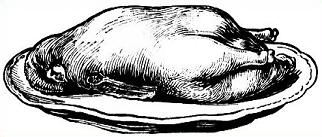
Roast goose, all things clipart

After the feast, divination was performed by the breast-bone. In 1455, Dr Hartlieb wrote, ‘When the goose has been eaten on St Martin’s Day or Night, the oldest and most sagacious keeps the breast-bone and allowing it to dry until the morning examines it all around, in front, behind and in the middle. Thereby they divine whether the winter will be severe or mild, dry or wet.’ In Hampshire ‘the nature of the coming winter’ was divined from a breast-bone and, in Yorkshire, weather was predicted from the colour of goose-flesh.

The British Apollo (1708) poses the question why the ‘breast of a fowl’ is ‘called the Merry Thought’ and provides the answer, ‘The original of that name was doubtless from the pleasant fancies that commonly arise from the breaking of that bone, and ‘twas then first certainly so called, when these merry notions were first started.’ Every Commercialmas someone in my family breaks the ‘wish-bone’ of our turkey and makes a wish.

These traditions are rooted in a wide-spread belief that the goose was an oracular bird. It has been argued this derives from the Etruscans who ‘believed geese had supernatural visionary powers as oracle birds with these prophetic powers residing within its bones’ and was brought to Britain by the Romans.

***

Our understanding of the oracles of geese has diminished; drained away with their wetland homes. We can no longer tell, from the cacophany of voices barking overhead, who carries news and who carries a death portent. Goose is rarely eaten in Britain, with the tradition of rearing flocks of domestic geese for food, particularly for during the festive season, being replaced by turkey farming. Divination has been reduced to a facile act of wish-fulfilment in a world increasingly disconnected from the language of the divine.

Yet, whilst there are geese, there is hope that their language can be re-learnt by re-attuning to their flight paths, their life ways, listening to their gabble, divining how this relates to teachings from our gods. Perhaps, as pumps are shut down and wetlands are re-flooded, our abilities to divine will return with the geese.

Martin Mere at Sunset

Martin Mere at sunset

***

SOURCES

 Edward A. Armstrong, The Folklore of Birds, (Dover, 1958)
James Bowker, Goblin Tales of Lancashire, (Classic Reprint, 2015)
William Henderson, Notes on the Folklore of the Northern Counties of England and the Borders (Create Space, 2014)
‘Origin of the Wishbone Tradition’, Republic of You Blog
‘The Gabble Ratchets’, Ghosts and Legends of the Lower Calder Valley
Pink-Footed Goose, RSPB
WWT Martin Mere

Du y Moroedd

Black horse of wonder
Black horse of terror
Black of the seas
Take me under

Du y Moroedd Devotional Art Benllech Beach

Devotional Art for Du y Moroedd on Benllech beach, Anglesey

Du y Moroedd, ‘Black of the Seas’, is a legendary water-horse in Brythonic tradition. His fame is attested by Taliesin in ‘The Song of the Horses’, ‘The Black, from the seas famous, / The steed of Brwyn’.

He is referred to in The Triads of the Islands of Britain in ‘44. Three Horses who carried the Horse Burdens’:

‘Du y Moroedd… horse of Elidyr Mwynfawr, who carried on his back seven and a half people from Benllech in the north to Benllech (Elidir) in Mon. These were the seven people: Elidyr Mwynfawr and Eurgain his wife, daughter of Maelgwn Gwynedd, and Gwyn Good Companion and Gwyn Good Distributor, and Mynach Naoman his counsellor, and Prydelaw the Cupbearer, his butler, and Silver Staff his servant, and Gelbeinifen, his cook who swam with two hands and on the horse’s crupper – and he was the half person.’

This passage shows that Du is not only a sea-going water-horse, as his name suggests, but of supernatural size and strength to be able to carry seven-and-a-half people and swim vast distances. He is intimately associated with the sea-lanes between northern Britain and Wales; perhaps sightings of him off the west coast were once common.

Triad 44 is set in the mid-6th century and has a historical basis. According to The Black Book of Chirk, Elidyr made a voyage from his home in the Old North to Wales to press the claim of his wife, Eurgain, to the throne of Gwynedd following the death of Maelgwn in 547, because Maelgwn’s son, Rhun, was illegitimate. Elidyr was slain at Aber Mewdus in Arfon. An army of northern men, including Clyddno Eiddin, Nudd Hael, Mordaf Hael, and Rhydderch Hael avenged Elidyr by burning Arfon, then were driven back north by Rhun to the river Gweryd.

Morecambe Bay, Lancashire

Morecambe Bay, Lancashire

In Brigantia, Guy Ragland Phillips conjectures that Du might be identified with the Black Horse of Bush Howe in the Howgill Fells in Cumbria. He suggests Elidyr’s northern Benllech was Bush Howe and cites an alignment down Long Rigg Beck valley to Morecambe to Anglesey, saying the horse would be within its line of sight. This might have been the route taken by Du and his riders. ‘Benllech in Mon’ is likely to be present-day Benllech on Anglesey.

Benllech beach, Anglesey

Benllech Beach, Anglesey

Elidyr’s voyage aboard Du with seven-and-a-half or eight people was well known by Welsh poets until the early 16th century. Tudur Aled says ‘Of greater vigour than Du’r Moroedd, such was his strength and daring… for a spree with the cold wind, eight men formerly went upon his back’. Guto’r Glyn speaks of a foal whose ‘mother was a daughter to that horse of Mon who went to carry eight men: Du y Moroedd has grandsons – this one, I know was one of them.’

Another renowned rider of Du is Gwyn ap Nudd, a Brythonic hunter-god and ruler of Annwn. In Culhwch and Olwen it is stated ‘No steed with be of any use to Gwyn in hunting Twrch Trwyth, except Du, the steed of Moro Oerfeddog’ (the latter is a jumbling of Du’s name).

Because he fails to recruit Gwyn, Arthur does not manage to kill Twrch Trwyth, ‘King of Boars’, who finally escapes into the sea. Only the otherworldly Gwyn can ride Du to hunt the Twrch into the ocean, which might also be identified with Annwn, ‘the Deep’, ‘the Otherworld’.

Gwyn’s father, Nudd/Nodens, is pictured in a chariot pulled by four water-horses. At Vindolanda Nodens is equated with Neptune. Both Neptune (as Neptune Equester) and his Greek counterpart, Poseidon (as Poseidon Hippios) were associated with sea-horses (hippocampi).

Intriguingly we find a story in Irish mythology called ‘The Pursuit of Giolla Deacair’ featuring Gwyn’s cognate, Fionn, wherein fifteen-and-half of Fionn’s men are abducted into the sea by a water-horse.

Giolla Deacair, ‘the Troublesome Slave’ and his horse are taken in by Fionn. Both are described as monstrous. Giolla has a ‘twisted mouth with long pointed teeth projected from it at all angles’ and ‘eyes like black holes in the skull of a corpse’. He drags a large iron club leaving ‘a deep trench in the ground’.

His horse is described as ‘dirty, shaggy hair covered its long, spiny back and the ribs were sticking out through its sides. Its legs and feet were crooked and splayed and a leg that seemed too large for his body dangled awkwardly from a scrawny neck.’

The horse causes trouble amongst the other horses. Feargus tells Conan to jump on its back and ride it across country to break its spirit. However, it will not move until it carries the weight of its rider, Giolla Deacair, which is equal to fifteen men. This shows Giolla and his horse are gigantic. The men pummel and kick the horse yet still it won’t move.

Infuriated by his horse’s mistreatment, Giolla leaves. His horse follows with the men ‘welded’ to him ‘like a sword to its hilt’. Fionn and his remaining warriors follow, but no matter how fast they pursue the horse goes even faster, like the wind, over mountains, rivers, and valleys until reaching the sea. As it shoots into the waves one of Fionn’s warriors grabs onto its tail.

We are told that, as it journeys through the sea, ‘The waves did not touch it nor the fifteen Fianna on its back, nor the unfortunate man clinging to its tail. Instead, the water parted before the animal, so that it travelled on a path of dry land.’ We might imagine Du travelling similarly.

Fionn and his men sail after Giolla and his horse to where the riders are imprisoned in Tír fo Thuinn, ‘The Land Under the Wave’. Giolla reveals he is a magician called Abartach. Fionn’s marriage to Taise persuades Abartach to release his men. As retribution Goll claims fourteen of Abartach’s women to return on the horse’s back and his wife to cling onto the horse’s tail.

This tale suggests Du also originates from the watery regions of the Otherworld. I wonder whether, like Giolla’s horse, Du had an earlier otherworldly owner whose name and stories have been forgotten. Perhaps there was once a story about how Gwyn came to ride Du between worlds.

Du also shares resemblances with the Welsh ceffyl dwr, the northern British dobbie, and the Scottish kelpie. The latter are notorious for luring humans onto their backs then drowning them. Once a rider has mounted, their hand sticks to the kelpie’s neck and they cannot let go.

Du’s stories have fascinated me since I heard his splashing hoofbeats approaching whilst meditating on the Ribble estuary. When I travel to the west coast his presence is always on the edges of my mind: his great arched neck, his oar-like legs, the multitude of riders he has carried. My fingers are caught in his mane and he is forever drawing me toward the Otherworld…

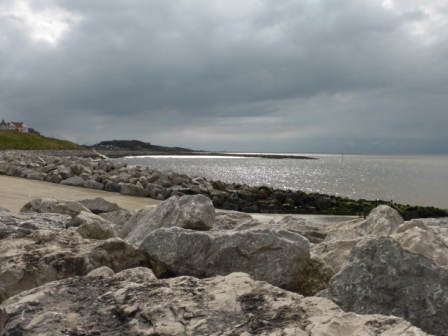
Irish Sea from Morecambe

The Irish Sea from Morecambe Bay

Orddu, the Very Black Witch

There is no document of civilization which is not at the same time a document of barbarism.’
  Walter Benjamin

Orddu has been a powerful presence in my life since I started investigating the story of her death. In the medieval Welsh tale, Culhwch and Olwen (1070AD), she meets a gruesome end. She is cut in twain by Arthur’s knife, then her blood is drained and bottled to dress the beard of the giant, Ysbaddaden Bencawr.

The murder of Orddu is the penultimate act in a trail of bloody atrocities committed by Arthur and his men so Culhwch can win Olwen. Ancient animals are hunted down, giants butchered, otherworldly treasures stolen, numerous historical and mythical figures subordinated and incorporated into Arthur’s court. Finally, Ysbaddaden is barbered and beheaded.

The civilising rule of Arthur as a champion of Christianity unifying Britain is asserted by his barbaric assault on this land’s divinities and those who interact with them. His reign as a national hero is based on his wiping out not only of the lives, but the stories, of a myriad Others cast into an abyss of ignominy from which few of us hear their screams.

Orddu’s death cry has resounded in my ears for several years now. Sadly she does not appear in any other sources. Nothing is known about her outside Culhwch and Olwen, where she takes to the stage for a brief and brutal battle before her life is snuffed from the page and from history. However, clues to her significance can be gleaned by reading the surface text otherwise, from the perspective of Annwn, ‘the deep’, the ancient British Otherworld.

Orddu is introduced as ‘the Very Black Witch, daughter of the Very White Witch’ (Orddu means ‘Very Black’ and Orwen ‘Very White’). This is suggestive of a matrilineal tradition of witchcraft passed on from mother to daughter through the generations. Whether Orddu and Orwen are titles, or refer to the witches’ skin colour, hair colour, or the type of magic they practiced remains unclear. Still, these women can be pictured singing spells, passing on plant knowledge, caring less for labels than the flow of magic that runs in their blood and sings in their souls.

When Arthur embarks on his quest to bottle Orddu’s blood he sets out for the North. Northern Britain, with its rough terrain and cold weather, where the influence of Rome struggled harder to maintain its hold, is traditionally viewed as hostile and dangerous in medieval Welsh literature.

Orddu is located in ‘Pennant Gofid in the uplands of hell’. Pennant Gofid means ‘Valley of Grief’. This may be viewed simultaneously as a place where people come to grief and a place where they come to grieve. ‘Hell’ is translated from ‘Uffern’, ‘Inferno’, a word used synonymously with ‘Annwn’. The associations with mourning and the Otherworld suggest Pennant Gofid was a valley of the dead and that Orddu was its custodian. As such it would have been viewed as profoundly sacred by local ‘pagans’, but as hellish by Christian intruders with no understanding of their beliefs. I have not managed to locate Pennant Gofid within the physical landscape, but when I journey there in spirit it is steep and stony. A white river with foaming rapids roars through it. Through its ever-present mists hardy stumpy trees can be glimpsed, cairns, dolmens and, occasionally, mountain ghosts.

Orddu is found in a ‘hag’s cave’. This signifies her connection with ancient ancestral traditions which have no place in the civilised world of Arthur. Caves are places of access to Annwn and its mysteries. The bones of Orddu’s ancestors may have been buried in the cave’s recesses. In my journeywork it is half way up the valley; a precarious scramble. Nearby a spring emerges from the rock. There I received the gnosis it is the place Orddu and her kindred grieved for their predecessors and the dead who are buried in the valley. Their salt tears are the source of the white waters of the River of Grief. There I mourned Orddu’s death.

To find Orddu’s cave, Arthur is dependent on the guidance of the pre-Christian deities Gwyn ap Nudd (‘White son of Mist’) and Gwythyr ap Greidol (‘Victor son of Scorcher’). Gwyn is a god of Annwn and ruler of its spirits who are referred to as ‘demons’ in Culhwch and Olwen. In The Black Book of Carmarthen (1350AD) he appears as a gatherer of the souls of the dead.

Gwyn and Gwythyr are deadly rivals for the love of a maiden called Creiddylad. In an earlier episode, Arthur put an end to their conflict by placing a command on them to fight for Creiddylad every May Day until Judgement Day. Their appearance together and as advisors to Arthur seems contrived as a way of demonstrating Arthur’s power.

Read beneath the surface and we see that Gwyn’s presence in Orddu’s story has deeper roots. If Orddu is located on the edge of Annwn, then Gwyn is the deity who must be called upon to part the mists to find her. Orddu’s witchcraft may be rooted in her relationship with Gwyn as a god of Annwn and with the spirits and the dead who he presides over.

Evidence of groups working magic with the deities of the Otherworld has been found in Gaul. The Tablet of Larzac (90AD), from a seeress’s grave, refers to a coven of witches practicing andernados brictom ‘underworld-group magic’. The Tablet of Chamalieres (50AD) evidences a group of men calling on ‘Andedion’ ‘Underworld God(s)’ for aid in battle. ‘Annwn’ and ‘Andedion’ share the same stem. The poet Dafydd ap Gwilym refers to ‘witches of Annwn’ suggesting similar groups existed in Britain.

We also have records of a native tradition of prophesy and spirit-work. In his Description of Wales (1194AD), Giraldus Cambrensis refers to ‘Awenyddion’, ‘people inspired’ who are possessed by spirits and perform oracular trance when consulted on ‘doubtful events’. Orddu can be pictured prophesying with the spirits of Annwn and invoking their aid. Arthur’s subordination of Gwyn represents the negation of her source of magic.

When Arthur and his men approach Orddu’s cave she shows no sign of fear. Arthur hesitates until Gwyn and Gwythyr advise him to send in two of his servants, Hygwydd and Cacamwri. Orddu grabs Hygwydd by the hair and wrestles him to the ground, disarms and thrashes them both and beats them out ‘shrieking and shouting’. When Arthur tries to rush the cave, Gwyn and Gwythyr say, “It is not proper and we do not want to see you wrestling with a hag.” They tell Arthur to send another pair of servants in. We do not hear what Orddu does to Hir Amren and Hir Eiddil (Hir means ‘long’ or ‘tall’ – these are formidable men), only that their fate is ‘far worse’ and the four are so severely incapacitated they cannot escape without being put onto Llamrei, Arthur’s gigantic mare. After this, Arthur loses his temper and strikes Orddu dead.

It is uncertain whether Gwyn and Gwythyr are being presented as stupid or as tricking Arthur to defend Orddu. Whatever the case, in spite of being alone in her cave and outnumbered, Orddu displays considerable skill in hand-to-hand combat and puts up a courageous fight.

Comparisons may be drawn with the witches of Caer Lowy who teach Peredur how to ride a horse and handle weapons. Afterward, Peredur turns on them and slaughters them with Arthur’s aid. Conspicuously he kills one of the witches by striking her on the helmet so her head is split in two. As she dies she tells Peredur he was destined to kill her. It may be conjectured that Orddu belonged to a similar lineage of women who were not only witches but also trained the warriors of the North.

Thus it makes sense that for Arthur’s tasks to be completed this powerful woman must be removed from her position at Pennant Gofid where she teaches the arts of warriorship and utters prophecies from the mouth of Annwn. Her death signals the end of a tradition that may be as old as the ancestral remains in the cave where she abides.

Long has she lain there, her skull split in twain, her bones in two weary piles. Long has her story been forgotten, until now, as the rule of Arthur and the hegemonic brand of Christianity that gave us the Crusades, witch hunts and the British Empire united under ‘One King, One God, One Law’ begins to crumble.

The blood of witches does not stay bottled forever even in the bottles of a dwarf. The glass walls that contain magical women are shattering. Orddu’s call is to win back our powers of prophecy and fighting strength, to rebuild our relationships with Annwn and its gods and spirits. To reach into our caves of potential and fulfil our vocations with courage, remembering how her life was cut short.

Picture

*This article was solicited by Kate Large and was first published in Pagan Dawn, No 202, Spring 2017

Gods and Radicals's avatarGODS & RADICALS

We have started rebuilding from the ruins.

We are the children you never knew you would have.

We do not see you but we keep on building

the future you made your crossing for.

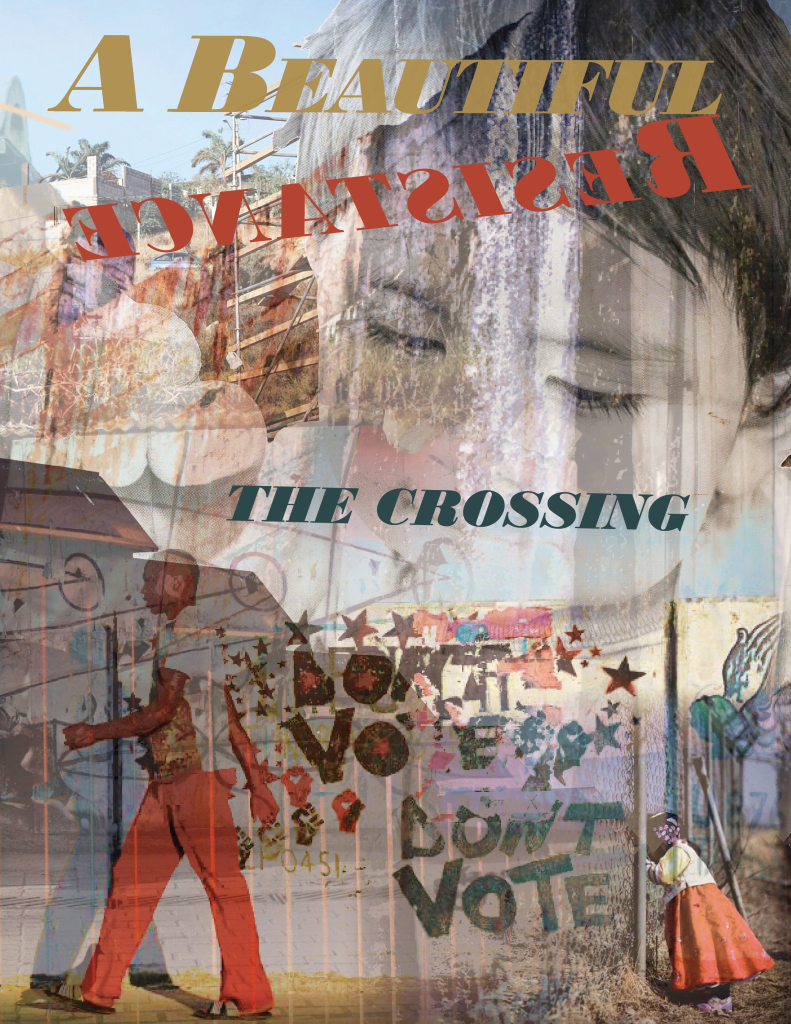
Gods&Radicals is pleased to announce that the fourth issue of our journal, A Beautiful Resistance, will be released into the world 15 November.


Edited by Lorna Smithers and Lia Hunter, foreworded by Peter Dybing, and yet again featuring the brilliant cover artistry of Li Pallas, A Beautiful Resistance: The Crossing features literary and artistic works from Europe, Africa, Asia, and North America, by:

Nina George, Nimue Brown, S. A. O’Hungerdell, Angharad Lois, Nicole Heneveld, Bryan Hewitt, Rex Butters, Rhyd Wildermuth, Lorna Smithers, Dennis Mombauer, Dr. Bones, Boham, Ingi House, Jason Derr, Aicila Lewis, Joe DiCicco, Tahni J. Nikitins, Shane Burley, Innocent Chizaram Ilo, Michael Browne, Nebulosus Severine, Finnchuill, Rune Kjær Rasmussen, Sean Donahue, Sonali Roy, Christine…

View original post 16 more words

Missing God

For Gwyn

I knew you were there from the day I was born
because I needed you.

I could not find your name in The Bible
or scrawled on church walls,

there was something about the Devil,
but no…

The feeling in my navel kept tugging me
through the portals in the books I read about sundered worlds.

They opened something and I fell into you
but I didn’t know what you were,

(that a god could be the underworld).

I searched the absences
and filled my hands with empty air

and filled my ears with words without sound.
I danced and raised my hands to the sky

but only found you when I fell to the ground.
I drank my way back to you living

in the epoché where the rules of thisworld
fall away like empty shells

and all the hidden people are revealed,
the times piled on top of one another like broken cars.

You showed me silver spaceships,
three shining gateways,

pathways to the stars that always led back down.
Your world – you – were so beautiful you frightened me.

I returned to my shell
but could not deny what you are or what I am.

Eventually you showed me your face and told me your name.

P1220706 - Copy

Nodens and the Serpents of the Deep

Nodens is in an ancient British god of hunting/fishing, water, the weather, healing, and dreams. ‘Nodens’ has been translated as ‘the Catcher’ and ‘Cloud-Maker’, and ‘Deus Nodens’ as ‘God of the Abyss’ and ‘God of the Deep’. The latter links him with Annwfn, ‘the Deep’, the underworld. The nursery rhyme name for the dreamworld, ‘the Land of Nod’, derives from ‘Nodens’.

Nodens is a god of the subliminal realms beneath the everyday world and their hidden processes. This is suggested by the imagery of his Romano-British dream-temple at Lydney. In the centre was a mosaic depicting two blue and white sea-serpents with intertwined necks and striking red flippers. William Bathurst likens them to the icthyosaurus, ‘fish lizard’, of the late Triassic and early Jurassic whose remains have been found across Europe and Asia.

Mosaic from Nodens' temple

The mosaic also depicts numerous fish, possibly salmon, which would fit with salmon fishing on the river Severn, which the temple overlooks, and the legend of the salmon of Llyn Lliw carrying Arthur’s men up the Severn to Gloucester to rescue Mabon.

An inscription on the mosaic reads: ‘D(eo) N(oenti) T(itus) Flavious Senilis, pr(aepositus) rel(oqiatopmo), ex stipibus possuit o [pus cur]ante Victorio inter[pret]e.’ ‘The god Nodens, Titus Flavious Senilis, officer in charge of the supply-depot of the fleet, laid this pavement out of money offerings; the work being in charge of Victorious, interpreter of the Governor’s staff.’ It has been argued Victorio inter[pret]e, ‘Victorious, interpreter’ was an interpreter of dreams.

Another artefact found in Nodens’ temple was a bronze plaque from a priest’s ceremonial headdress. Nodens rides from the deep on a chariot pulled by four water-horses. He wears a crown, carries a sceptre in his right hand, and a sea-serpent is looped around his left arm. Flanking him are two winged wind-spirits and two icthyocentaurs, ‘fish-centaurs’ or ‘centaur tritons’, with heads and chests of men, front hooves of horses, and tails of fish. They carry hammers and anchors. Beneath is another icthyocentaur with a hammer and chisel and a fisherman with a short tail and gills hooking a fish, which could be a salmon.

Plate XIII Bathurst

All of this imagery is suggestive of the deep: rivers, the sea, and the depths of the dreamworld/underworld where prehistory gives birth to myth and the boundaries between species break down.

Pilgrims came to Lydney for dream-healing. They would arrive at the guesthouse, bathe in the baths, then make offerings to Nodens through a funnel in his temple (which suggests he dwelled below in the deep). They would then retire to a long row of cells to enter a sacred (likely drug-induced) sleep during which they would receive a vision from Nodens. The dream-interpreter would listen to the dream then suggest a method of healing based on Nodens’ message.

Offerings included coins and several beautifully crafted bronze hounds. It is likely dogs were present to lick the wounds of the injured to aid in the healing process. They may also have acted as psychopomps guiding the sleepers through the dreamworld. The son of Nodens/Nudd, Gwyn ap Nudd, had a red-nosed dog called Dormach with two serpents’ tails.

***

Nodens’ temple was built on an iron ore mine and he was known as ‘Lord of the Mines’. This may explain the hammers and chisels carried by the icthyocentaurs. Mines are associated with the chthonic depths of the underworld and its riches, which are often guarded by serpents.

Intriguingly a man called Silvianus vowed half the worth of a 12g golden ring to Nodens in exchange for withholding health from its thief, Senicianus, until it was ‘returned to the Temple of Nodens’. The ring was dug up in a field in Silchester in 1785 with a new inscription: Seniciane vivas in deo, ‘Senicianus, may you live in God’. What was originally inscribed on it remains unknown. It seems possible it served a ritual function in Nodens’ temple.
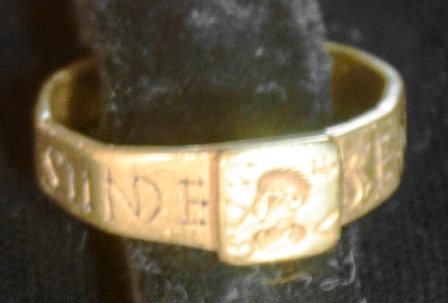
Ring of Silvianus - Wikipedia Commons

In ‘The Conversation of Gwyn ap Nudd and Gwyddno Garanhir’, Gwyn states ‘I have a carved ring, a white horse gold-adorned’. His ring is an important part of his symbology and  might have been a gift from his father. Angelika Rüdiger links its circularity with the ouroboros.

The ouroboros first appears in ‘The Enigmatic Book of the Netherworld’ in the ancient Egyptian Funerary text KV62, which focuses on the union of the sun-god Ra with Osiris, god of the underworld. In an illustration two serpents with their tails in their mouths coil around the unified Ra-Osiris. The image represents the beginning and the end of time.

The ouroboros was passed on to the Phoenicians and ancient Greeks who gave it its name. In Greek oura means ‘tail’ and boros ‘eating’, thus ‘tail eater’. The ouroboros appears in most cultures across the world and throughout history.

A pair of sea-serpents are central to Nodens’ temple. He holds a sea-serpent. It seems possible two ouroboros serpents may have been carved on a ring worn by Nodens and passed on to his son, representing their knowledge of the depths of time where beginning and end meet as they bite their tails. Silvianus’ ring may have been a replica of this powerful mythic artefact.

It’s rumoured that Tolkien based his One Ring on the ring from the temple of Nodens and that Nodens, ‘Lord of the Mines’ was a precursor to Sauron, ‘Lord of the Rings’.*

***

In medieval Welsh literature Nodens appears as Nudd/Lludd Llaw Eraint, ‘Lludd of the Silver Hand’. Their linguistic connection is certified by a bronze arm found in the temple of Nodens.

Nobody knows how Lludd lost his arm or how his silver one was made. Parallels might be found with his Irish cognate, Nuada Airgeadlámh, ‘Nuada Silver Arm’, king of the Tuatha Dé Danann, who lost his arm battling against the Fir Bolg. Because of his physical imperfection Nuada was replaced as king by the tyrant, Bres. After Bres was removed Nuada was restored to sovereignty with a new silver arm made by the healer Dian Cecht.

In the story of Lludd and Llefelys, Lludd’s sovereignty is also under threat. Although he is described as ‘a good warrior, and benevolent and bountiful in giving food and drink to all who sought it’ he is unable to defend Britain from three plagues; perhaps this is due to his missing arm.

The first plague is a people called the Coraniaid who cannot be harmed because they can hear all  conversations on the wind. The second is a scream every May eve that causes such terror that men lose their strength, women miscarry, youths go mad, and the land becomes barren. The third is the disappearance of the year’s supply of food and drink from the king’s courts.

This story is set during Caesar’s invasion of Britain in 55BC. The Coraniaid are the Caesariad, ‘Romans’ and the other plagues seem linked to the ill effects of their attacks. Lludd, of course, was not a ‘real’ king at that time but a divine ruler of the underworld who may have been called upon by the Britons for aid against the Romans.

Unable to defeat the plagues himself, Lludd is forced to seek the aid of his brother, Llefelys, ‘king of France’. Llefelys instructs Lludd to poison the Coraniaid with insects crushed into water. He then explains the scream: ‘that is a dragon, and a dragon of another foreign people is fighting it and trying to overthrow it, and because of that your dragon gives out a horrible scream.’
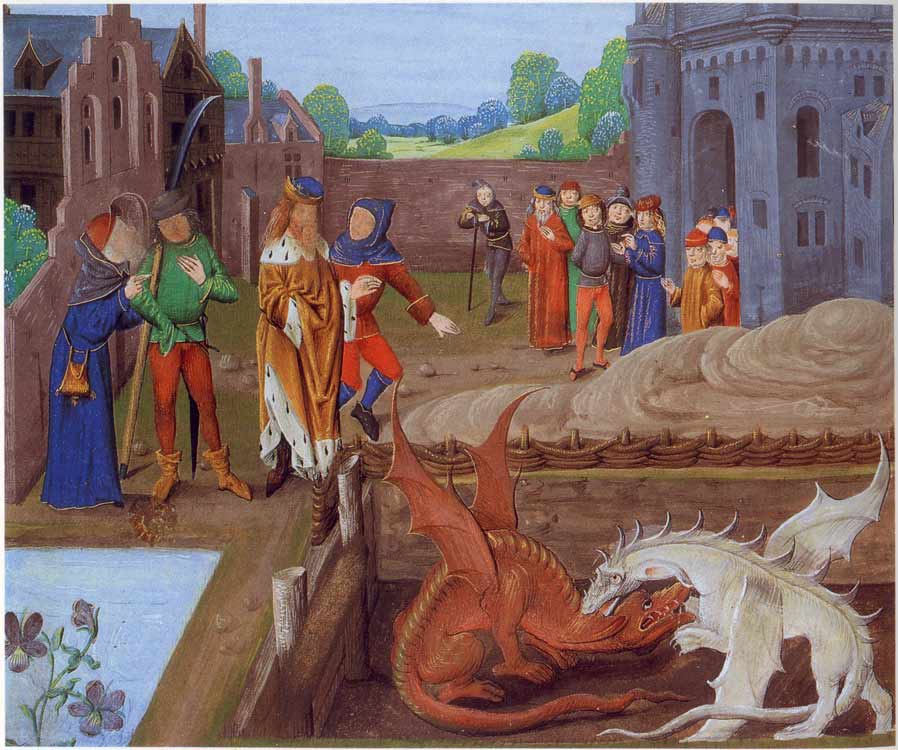
Red and white dragons - from 15th C History of the Kings of Britain - Wikipedia Commons

Lludd’s dragon represents the Britons and the other dragon the Romans. Lludd, again, is connected with two dragons/serpents. Will Parker has likened Lludd’s dragon’s scream to ‘the scream over Annwfn’, a ‘mysterious ritual frenzy’ uttered by a person threatened with losing their claim to inherited land. It may have originated as an invocation of the spirits of Annwfn to bring about madness and barrenness. Likewise Lludd’s dragon screams as its land is lost to the Romans, blighting all who live there. Lludd has lost control of these chthonic forces.

Llefelys teaches Lludd to put an end to the second plague by a complex ritual process. He must measure Britain, length and breadth, and locate its centre. This omphalos, ‘navel’, turns out to be Oxford. It is of interest that the Greek omphalos, Delphi, was formerly known as Pytho and its oracle, the Pythian priestess, spoke with the aid of the whispering python coiled beneath.

Could Oxford have been the location of a dragon (or dragons) who whispered prophecies from the navel of Britain? Dragon Hill lies 50 miles outside Oxford. Its connections with Uther Pendragon and a dragon-slaying by Saint George are suggestive of an older and deeper mythos.

Lludd is instructed to dig a hole at the centre of Britain then place in it a vat of mead with a sheet of brocaded silk over the top. Llefelys says, ‘You will see the dragons fighting in the shape of monstrous animals. But eventually they will rise into the air in the shape of dragons; and finally when they are exhausted after the fierce and frightful fighting, they will fall onto the sheet in the shape of two little pigs, and make the sheet sink down with them, and drag it to the bottom of the vat, and they will drink all the mead, and after that they will fall asleep.’

This scene depicts the return of the escapee dragons to the omphalos of Britain and the deep. It is intriguing that they are not just dragons but are capable of taking many different forms. It is possible to perceive a mythic and perhaps evolutionary development in their shapeshifting from ‘monstrous animals’ beyond description to ‘dragons’ to two seemingly innocent ‘little pigs’.

Finally Llefelys tells Lludd to ‘wrap the sheet around them, and in the strongest place you can find in your kingdom, bury them in a stone chest and hide it in the ground, and as long as they are in that secure place, no plague shall come to the island of Britain from anywhere else.’

Lludd buries the dragons at Dinas Emrys in Snowdonia. The next time they cause trouble is during the reign of Vortigern. Every time he attempts to build a fortress on the hill it falls down. Merlin Emrys reveals to him that the cause is two dragons battling. The red one represents the Welsh and the white one the Anglo-Saxons.

Llefelys informs Lludd that the food and drink are stolen from his court by a magician who uses a sleep spell. He suggests Lludd step in a tub of cold water to keep himself roused. Lludd defeats the magician in combat, all that is lost is restored, and the magician becomes his vassal.

All three plagues are defeated. The chthonic forces of Annwfn are brought back under Lludd’s control. Caesar’s invasion of Britain fails. Lludd and Llefelys depicts the mythic processes beneath this historical period, which the Druids and seers who interacted with the deities of the underworld might have been aware of and perhaps instigated with prayers and invocations.

Lludd reigns ‘until the end of his life’ ‘in peace and prosperity’. One wonders whether Llefelys had a role in creating Lludd’s silver arm…

It seems Lludd’s ‘kingdom’, Annwfn, the deep, is passed on to his son, Gwyn ap Nudd, whose role is to contain the spirits of Annwfn to prevent them from bringing about the end of the world.

Does Gwyn’s inheritance include the serpents of the deep: beings who are older than gods, whose ‘battles’ may be less about conflicts between groups of humans than the regenerative processes that shape the earth through the aeons, through the beginnings and endings of each world?

***

*Tolkien advised Sir Mortimer Wheeler on his excavation of Lydney in 1938

SOURCES

Angelika Heike Rüdiger, ‘Gwyn ap Nudd: A First and Frame Deity, Temple 13, (Temple Publications)
Caitlin Matthews and Jane Dagger, ‘Temple of Nodens Incubation’ http://www.hallowquest.org.uk/temple-of-nodens-incubation
Elizabeth A. Grey (transl), The Second Battle of Mag Tuired, (Forgotten Books, 2007)
Greg Hill (transl), ‘Gwyn ap Nudd and Gwyddno Garanhir’ https://barddos.wordpress.com/2015/02/08/gwyn-ap-nudd-and-gwyddno-garanhir/
Sioned Davies, The Mabinogion, (Oxford University Press, 2008)
Sylvia Victor Linsteadt, ‘The Return of the Snake’ http://theindigovat.blogspot.co.uk/2017/05/the-return-of-snake.html
William Hiley Bathurst, Roman Antiquities at Lydney Park, https://archive.org/details/romanantiquitie00bathgoog
‘The Forest of Dean and Wye Valley’s Celts and Romans’ http://www.deanweb.info/history4.html