Gwyn’s Feast

Gwyn ap Nudd is a god of the dead and ruler of Annwn. As the Brythonic leader of ‘the Wild Hunt’ he gathers the souls of the deceased back to his realm to be united in an otherworldly feast. This repast of the dead can, at certain times of the year, be participated in by the living.

Unfortunately this is a tradition that Christians went to great lengths to bring to an end. This article will introduce the evidence for Gwyn’s Feast, how it was abolished, and how it can be reclaimed by modern polytheists.

*

In ‘The Spoils of Annwn’, as Pen Annwn, ‘Head of the Underworld’, Gwyn presides over a feast in Caer Vedwit, ‘The Mead-Feast Fort’. At its centre is the cauldron of Pen Annwn, with its ‘dark trim, and pearls’, which ‘does not boil a coward’s food’: a vessel symbolic of rebirth.
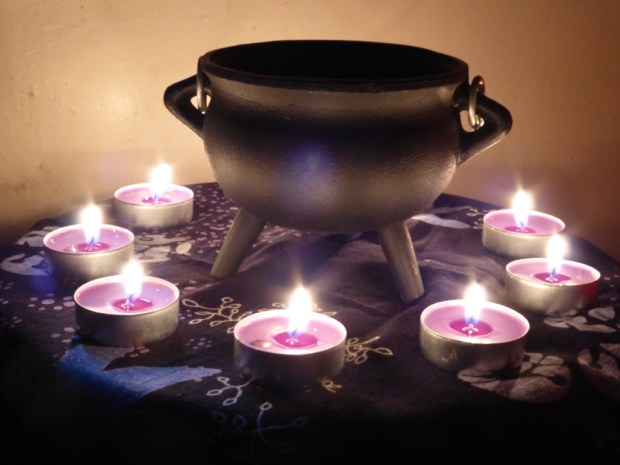
Cauldron

Arthur raids seven Annuvian fortresses, confronting six thousand speechless dead men, inflicting violence on ‘the honoured and fair’ and stealing the Brindled Ox, kidnapping a bard called Gweir, and stealing the cauldron of Pen Annwn before slamming ‘Hell’s Gate’ shut.

I believe Arthur’s raid on Annwn replaced an earlier tradition of the soul’s return to the underworld and journey through seven fortresses (which are faces of the same fort) to Gwyn’s Feast and the Cauldron of Rebirth. Arthur’s defeat of Gwyn and his people and theft of his cauldron represent the triumph of Christianity over the pagan mysteries of death and rebirth.

This story is paralleled in Culhwch and Olwen, where Arthur raids Gwyn’s fortress to rescue Gwyn’s rival, Gwythyr, and his army (who include Graid who might be equated with Gweir), and steals a number of otherworldly treasures including the Brindled Ox and a magical cauldron.

Arthur also usurps Gwyn’s hunt for Twrch Trwyth, ‘King of Boars’, ‘a king and for his sins God changed him into a swine’. This thinly disguises that Arthur takes leadership of Gwyn’s hunt for a human soul in boar-form – ‘the Wild Hunt’ – reducing it to just a boar hunt and again obscuring pagan traditions.

*
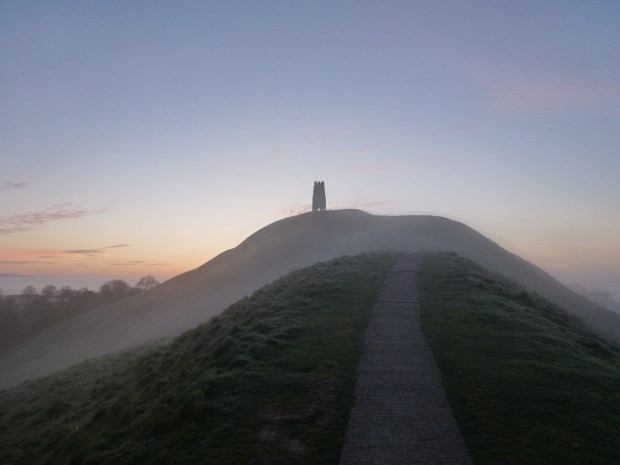
Glastonbury Tor Calan Mai 2013

Gwyn is intimately associated with Glastonbury Tor. Excavations have revealed the existence of a building with several hearths dating to the 5th – 7th century. Two north-south aligned graves (not Christian) nearby along with an empty stone cairn and helmeted bronze head with ‘a narrow face’ and ‘slit mouth’ in the ‘long’ Celtic style suggest it may have been a pagan temple.

Bones of cattle, sheep, and pigs, from joints of meat, and Mediterranean amphorae (large jugs for holding wine) suggest feasting took place at this temple on the Tor; a liminal place where Thisworld and Annwn and the living and the dead meet in revels presided over by Gwyn.

Several pernicious accounts in saints’ lives record Christian attempts to abolish this tradition. In The Charter of St Patrick, Patrick and his brother Wellias climb the Tor and find ‘an ancient oratory’. There they fast for three months ‘dominating the devils and wild beasts’ and are rewarded with a vision of Jesus telling them to claim the place in his name and invoke St Michael.

In The Life of St Collen, Collen, Abbot of Glastonbury, derides Gwyn and his host as ‘devils’. When Gwyn invites him to the summit of the Tor to feast in ‘the fairest castle he had ever beheld’, Collen refuses to ‘eat the leaves of trees’, says the red of Gwyn’s people’s clothing signifies ‘burning’ and the blue ‘coldness’, then supposedly banishes them with holy water.

Gwyn appears as Melwas (1) in The Life of Gildas, where he violates Arthur’s wife, Gwenhwyfar, and carries her off to the Tor, which is well fortified by ‘thickets of reed, river, and marsh’. Gildas sides with Arthur and wins Gwenhwyfar back. The tradition of ‘Arthur’s Hunting Path’ from Cadbury to Glastonbury and his burial further illustrate his replacement of Gwyn.

*

The tradition of invoking St Michael on Glastonbury Tor continued. In the 11th century a wooden church dedicated to him was built on the summit. In 1243 Henry III granted permission for an annual fair to be held there for six days around the Feast of St Michael, September 29th.

It is likely St Michael’s Feast replaced a feast day for Gwyn. The 29th of September was the final day of bringing in the harvest. In Cornwall, September is known as Gwynngala, ‘White or Blessed Fields’, a name which contains suggestions that Gwyn, a death-god, is associated with reaping and celebrations for him were held when the fields were cleared at the month’s end.

This date has also become attached to St Michael’s defeat of Satan in a war of Heaven and banishment of him to Hell. It seems this Biblical story was recalled to reinforce St Michael’s defeat of Gwyn on his feast day. According to a folkloric tale the Devil first fell to earth and landed in a blackberry bush and spat or urinated on the blackberries, explaining why they go rotten.

Gwyn was identified with ‘that ancient serpent called the Devil’. This is not surprising as Gwyn’s father, Nodens/Nudd/Lludd is associated with two dragons and Gwyn’s dog, Dormach, ‘Death’s Door’, has two serpent’s tails. It may be suggested Gwyn took serpent-form (2).

On the tower of the 14th century stone church on Glastonbury Tor (the wooden one was unsurprisingly destroyed in an earthquake in 1275!) is an image of St Michael with a set of scales weighted toward him, rather than his opponent, the Devil-as-serpent. St Michael’s taking souls to heaven and weighing them forms an antithesis to Gwyn gathering souls to Annwn where all are united at his feast without moral judgement.
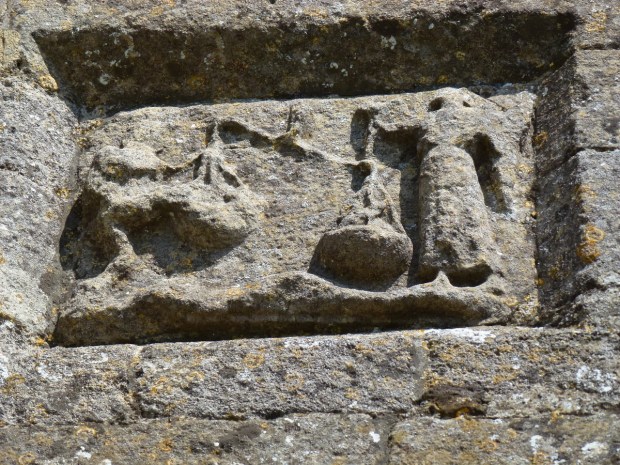
St Michael, Scales, Dragon, Glatonbury Tor 2013

*

I’ve been celebrating Gwyn’s Feast on the 29th of September since 2013 as a way of reaffirming his presence in the place of Arthur and St Michael, who has taken over many other sites sacred to Gwyn and the spirits of Annwn/the fairies, including some in Lancashire (3).

When I asked Gwyn if I could celebrate a feast for him on this date, he agreed. Since then I’ve been joined annually by a friend, and Dun Brython members such as Greg Hill and Lee Davies have held their own celebrations. This year I know of several other devotees of Gwyn, who I’m in contact with online, who will be celebrating Gwyn’s Feast.

A meal I have developed and found Gwyn is happy with (4) is pork with apple sauce, a glass of mead, and offerings of meat for his hounds and apples for his horses. I open the feast by calling to Gwyn and his spirits and acknowledging the connection with all who have feasted with him in the past and those who are feasting with him on September the 29th today. Then we eat.

After the meal I read prayers, poems, and stories, which have been written for Gwyn or remind me of him by myself and others. This is followed by some form of communion with Gwyn such as divination, journeywork, or quiet contemplation. Rather than saying farewell I end by welcoming Gwyn and his spirits back into the landscape as we enter the dark half of the year.

This year I will be holding a feast for Gwyn then afterwards the readings will take place at the launch of Gatherer of Souls at the Black Horse in Preston. The publication of this book, which is dedicated to Gwyn and recovers his mythos, is the culmination of six years of devotion.

*

(1) The identification of Gwyn and Melwas is also backed up by Welsh tradition. In ‘The Dialogue of Melwas and Gwenhwyfar’ Melwas introduces himself: ‘Black is my steed and brave beneath me / No water will make him fear / And no man will make him swerve.’ This is clearly Gwyn’s mount, the legendary water-horse Du y Moroedd, ‘the Black of the Seas’. Other lines suggesting Melwas is Gwyn, referring to his otherworld nature, include, ‘It is I that will ride and will stand, / And walk heavily on the brink of the ebb’, and ‘I would hold against a hundred of myself’.

(2) Robert Graves refers to Gwyn as ‘the Serpent Son’ in The White Goddess. This name is of his own coining based on personal inspiration and does not have any historical basis, yet is fitting.

(3) John Rhys notes Michael ‘was regarded as par excellence the defender of Christians against the sprites and demons with which the Celtic imagination peopled the shades of night, the gloom of the forest, and even the straggling mist on the tops of hills. Perhaps it would not be rash to suppose that most of the old foundations associated with his name occupy sites of sinister reputation, inherited from the time when paganism prevailed in the land, sites which were considered to be dangerous and to form the haunts of evil spirits.’ Here in Lancashire there is a church dedicated to St Michael in Whitewell, which is named for its white well, which many be connected with Gwyn. It is close to Fairy Holes and Fair Oak. In Beetham St Michael’s is the destination of a coffin path/fairy path which is famous for its Fairy Steps.

(4) One small word of advice on something he was very unhappy with… avoid eggs at all cost. In 2014 we decided to add boiled eggs to the arranged meal of ham without asking him. Three times we boiled them for the right amount of time and they were completely uncooked!

An earlier version of this article was published on the Dun Brython blog HERE.

SOURCES

Alex Langstone, ‘The Berwyn Mountains of Poetic Adventure’, Mirror of Isis
Anon, ‘The Charter of St Patrick’, Britannia History
Anon, ‘The Dialogue of Melwas and Gwenhywfar’, Mary Jones Celtic Literature Collective
Ben Johnson, ‘Michaelmas’, Historic UK
Caradoc of Llancarfan, The Life of Gildas, http://www.maryjones.us/ctexts/gildas06.html
Charlotte Guest (transl), ‘St Collen and Gwyn ap Nudd’, Mary Jones Celtic Literature Collective
John Rhys, Studies in the Arthurian Legend, (Adamant Media Corporation, 2001)
Marged Haycock, Legendary Poems from the Book of Taliesin, (CMCS, 2007)
Mary Beth Albright, ‘Michaelmas: The Day the Devil Spit on Your Blackberries’, National Geographic
Nicolas R. Mann, The Isle of Avalon, (Green Magic, 2008)
Sioned Davies (transl.), The Mabinogion, (Oxford University Press, 2007)
Yuri Leitch, Gwyn: Ancient God of Glastonbury and key to the Glastonbury Zodiac, (The Temple Publications, 2007)
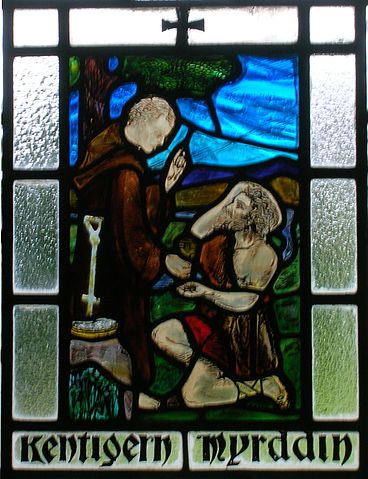
The Ghost of Myrddin Wyllt

Mountain ghosts come to me
here in Aber Caraf
A Fugitive Poem of Myrddin in his Grave

He haunts me. He who speaks from his grave at Aber Caraf with other wyllon mynydd, ‘mountain ghosts’ – Myrddin Wyllt.

He entered my life when he broke from a scene we both despise. In Stobo Kirk, in a stained glass window, he kneels before Kentigern, begging for the sacrament, as The Life of St Kentigern claims.

368px-Merlin_and_St_Kentigern,_Stobo_Kirk

“This isn’t true!” the gnosis struck me like shattering glass as Myrddin leapt free in an explosion of splinters; ethereal blue, red, green. The bishop fell in pieces with his chalice and crozier. The light swept in. Not just sunlight but that otherlight, the unendurable brightness that Myrddin gazed upon after the Battle of Arfderydd, which made him gwyllt, ‘wild’, ‘mad’. The light of truth. The ‘White/Clear Light’ of Vindonnus, Vindos, Gwyn ap Nudd, Lord of Annwn.

It illuminated Myrddin in all his naked glory, leafy-haired, bony-limbed, spry and supple as a sapling even in his old age. It glinted in the scintillae of his pupils, declaring him wildman, madman, prophet, awenydd: one who speaks the Awen from the tangled heart of the forest, from the wind-swept mountains where ghosts scream, from the deep wells of Annwn.

The stories of this wild Myrddin have been smothered beneath the fusty robes of Merlin. The popular wizard, who is frequently depicted as an advisor to King Arthur in film and television, was created by Geoffrey of Monmouth in The History of the Kings of Britain (1136) and The Life of Merlin (1150) from the lives of two very different men.

Merlin Ambrosius was based on the Romano-British war leader Ambrosius Aurelianus. He acted as advisor to Vortigern and helped Uther Pendragon to father Arthur by magically disguising him as Gorlois, the husband of Igraine, so he could sleep with her.

Merlin Caledonensis was based on Myrddin Wyllt: a northern British warrior who became gwyllt after the Battle of Arfderydd in 573 and retreated to Celyddon (the Caledonian forest) where he learnt the arts of poetry and prophesy and used them to warn against future wars. The two Merlins became conflated.

In Robert de Boron’s Merlin (1190-1200), Merlin became Uther Pendragon’s advisor and responsible for Arthur’s fosterage, his pulling the sword from the stone, and building the Round Table. The ‘Mage Merlin’ appears as Arthur’s advisor and as a guide to the grail quest in Thomas Malory’s Le Morte D’Arthur (1485). His later depictions draw upon these associations.

The conflation of the two Merlins and the downplaying of Myrddin Wyllt’s stories is deeply problematic. Firstly Myrddin lived after Arthur making their association impossible. Secondly Myrddin would never have supported the warmongering of Arthur and his ‘knights’.

Yet he has been subsumed within the Arthurian tradition and its vile strain of Christian militarism, which brought about the slaying of the dragons, giants, and witches of ancient Britain, then the Anglo-Saxons, then ‘the infidels’ who fell in the Crusades, leading to our War on Terror.

He rages against his identification with Merlin: a political advisor to the warlords of Britain who supports going to war over chemical weapons that don’t exist and approves arms sales to countries using our weapons in attacks that breach international humanitarian law.

He calls to me, a fellow awenydd, to shatter the illusion of his complicity in Arthurian imperialism with the otherlight of Annwn from our god, Gwyn ap Nudd. Here I share his story.

Myrddin grew up amongst the warband of Gwenddolau, the last Pagan warlord of the Old North. He was fierce in those days, blood thirsty, callous, with a love of gold and strong mead. Warring in nothing but the golden torque gifted him by Gwenddolau, his battle-madness was legendary. He piled up corpses for Gwenddolau’s two sea-eagles to strip their flesh.

View from Liddel Strength

Caer Gwenddolau (present-day Liddel Strength)

A great change came over Myrddin after the Battle of Arfderydd. This was fought between the armies of Gwenddolau and Rhydderch, who was married to Gwenddydd, Myrddin’s twin sister. Rhydderch had allied with a number of Gwenddolau’s kinsmen.

Gwenddolau was slaughtered. Aggrieved by the death of his lord Myrddin was consumed by such a battle rage that he killed his niece and nephew, the son and daughter of Gwenddydd and Rhydderch, who were fighting on Rhydderch’s side.

After the battle Myrddin was near-blinded by an unendurable brightness illuminating the carnage. By it he recognised the pale faces of his sister’s offspring who he had hacked apart. Martial battalions filled the sky. To his horror he realised they were the victims he had slaughtered gathered in the form of a cold and angry god staring at him with countless dead eyes.

One of those spirits swept down and tore Myrddin out of himself. With a howl of terror and pain that became a whimper and squeak he leapt and fluttered up like a bird-puppet on a string. He was tossed on the winds of Annwn, on a merlin’s wings, to the forest of Celyddon where he shivered in the branches of an apple tree.

That image of Gwyn ap Nudd containing all the dead who he had killed was indelibly impressed on his mind like an irremovable afterimage from staring foolishly at the sun.

Myrddin does not remember the days when he flitted from tree to tree, a lost soul, birdlike, unable to feel or think or see. He remembers some of his slow return to himself, to chill recumbent flesh, relearning the contours of his body and its need to eat and drink, sights, sounds.

Blog 6. Coille Coire Chuilc

A last remnant of Celyddon at Coille Coire Chuilc

The birds of the forest guided him to tasty berries, the squirrels to hazelnuts, and a happy little piglet to roots and grubs and the most exquisite truffles. When the bleak northern winter brought snow to his hips and icicles to his hair a white-haired wolf taught him the secrets of endurance.

Words came last. Stuttering, stammering, then in a sudden stream. With them the wells of the past opened. Every memory flooded back to him and he poured them out to his apple tree and little pig in a poetry that was only stemmed when each wound had bled, was cauterised, could heal.

Most terrible were his outpourings of guilt and desire for death; his attempts to drown and leaps from trees. Gwyn ap Nudd would not take him. Instead he showed him black holes in the fabric of reality from which the otherlight of Annwn streamed in illuminating future battles.

Myrddin knew then that he must give his suffering a purpose by using his prophetic abilities to warn against those devastating wars. Knowing the influence of Kentigern he took himself to the stone above Molendinar Burn, where the bishop spoke his sermons, to share his prophecies.

Kentigern did not listen. Preoccupied with teaching the word of the one true God he had little time for the words of a wildman naked as a new born rabbit and rambunctious as a rutting stag. Yet the truth of Myrddin’s words pierced some of Kentigern’s followers like antlers. The otherlight in his pine-green eyes terrified and enticed them and some began to believe him.

When Myrddin came to Kentigern to prophesy his death the bishop did not think he could die thrice: by being stoned, pierced by a stake, and drowning. He thought the impossibility of this prediction coming true would put an end to his peoples’ belief in the madman’s prophecies.

Myrddin died as predicted. Kentigern constructed the story of him begging for the sacrament to prove his power over him and his uncanny prophecies, which he claimed were no match for the word of God.

Afterward Myrddin haunted Kentigern with the furore of a soul unable to live out its entelechy because more powerful forces have got in its way.

The poetry of a lonely voice was not enough to stop the rise of Christian militarism seeded by Arthur which dominates Britain to this day. Yet Myrddin opened in many people the portals through which the otherlight comes in, illuminating the horrors Merlin’s illusions cannot conceal.

Myrddin walks amongst us opening doors and haunting us with the countless eyes of the dead until we cannot bear to be complicit with the world of Arthur and the wizard Merlin anymore.

Breaking every window, every text, every screen, he tears us out of ourselves and takes us back to the forest.

The ghost of Myrddin Wyllt sets us free.

*First published in Pagan Dawn, 204, August 2017

SOURCES

Geoffrey of Monmouth, The History of the Kings of Britain, (Penguin Classic, 1973)
Geoffrey of Monmouth, The Life of Merlin, (Forgotten Books, 2008)
Meirion Pennar (transl.), The Black Book of Carmarthen, (Llanerch Enterprises, 1989)
Neil Thomas, ‘The Celtic Wild Man Tradition and Geoffrey of Monmouth’s Vita Merlini: Madness or Contemptus Mundi?’, Arthuriana, Vol. 10, No. 1 (Spring 2000)
Nikolai Tolstoy, The Quest for Merlin, (Sceptre, 1985)
Robert de Boron, Merlin and the Grail: Joseph of Arimathea, Merlin, Perceval (DS Brewer, 2008)
Thomas Malory, Le Morte D’Arthur, (Cassel, 2003)
Tim Clarkson, Scotland’s Merlin, (Berlinn, 2016)
William F. Skene, The Four Ancient Books of Wales, (Forgotten Books 2007)

Caledfwlch

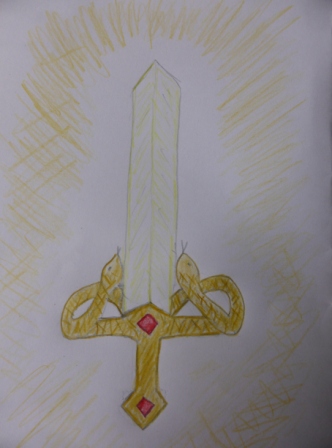
He got up with Arthur’s sword in his hand and the image of two golden serpents on the sword. When the sword was drawn from the sheath, it was like seeing two flames of fire from the serpents’ jaws. And it was not easy for anyone to look at that, because it was so terrifying.’
Rhonabwy’s Dream

On the edge of Celyddon two serpents
danced, ziz-zag bodies tumbling, twining, jaws
bared, jets of fire
hissing from their sword-
like tongues as they rose and fell in terrifying
splendour beneath the golden

sun competing for the favour of a golden-
eyed female. Arthur followed the serpents’
tracks to behold the terrifying
sight. His jaw
dropped as their sword-
like bodies intertwined in deadly combat; fiery

and tempestuous as the fires
of Hell. From the burning undergrowth a golden
lizard scurried to avoid their sword-
play – a flash in a serpents’
eye before jaws
closed over him and a terrifying

darkness. Remembering the terrifying
battle between gods of ice and fire;
Flame-Lipped and Wolf-Jaws,
white and golden-
haired interlocking like serpents
wielding flaming and ice-rimmed swords,

Arthur decided he wanted a sword:
sharp-edged, cloud-lit, to tame those terrifying
rivals. He grasped the serpents,
hissing and spitting fire
in his golden
gauntleted hands beneath their jaws,

took them to the forge of anvil-jawed
Gofannon. “I want a sword
of purest gold,
beaten into the most terrifying
form; living, breathing two flames of fire,
harnessing the strength of these struggling serpents.”

Gofannon plunged the serpents, flickering-eyed, wide-jawed,
into his fire, skins sloughing, blackening, goldening,
intertwining as one terrifying sword.

Caledfwlch

*This is one of the poems that didn’t make it into Gatherer of Souls, but relates to the theme of Gwyn’s opposition to Arthur. The form I have used is the sestina.


Gwythyr and the Lame Ant

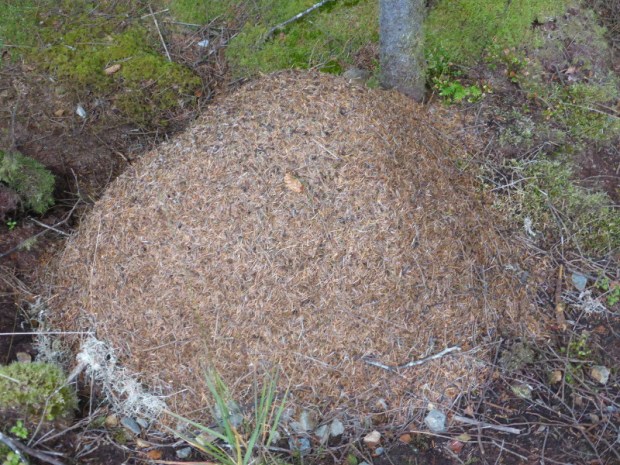
In Culhwch and Olwen there is an episode which opens with a curious scene. Gwythyr ap Greidol, ‘Victor son of Scorcher’, ‘was travelling over a mountain’ and heard ‘weeping and woeful wailing… terrible to hear.’ The source was a burning anthill. ‘He rushed forward, and as he came there he unsheathed his sword and cut off the anthill at ground level and so saved them from the fire.’

anna-popovic-187219-unsplash_med

What to make of this strange opening? Why, on earth, was the anthill on fire? Was Gwythyr having a burning bush moment akin to that of Moses on Mount Sinai? The fire shared a similar revelatory and numinous quality. However, the anthill, unlike the bush, definitely appeared to be burning up.

Did Gwythyr’s scorching feet cause the fire? His patronym suggests that, like his father, he is a god of fire and war. If so, his rescue of the ants shows a softer and more compassionate side to his nature. Or did the anthill catch fire on its own? It’s well known that wood ants orientate their complex homes (which have tunnels, storerooms, bedrooms, nurseries and even a graveyard) south toward the sun as if using solar panels in order to harness the energy for heat. Did it just get too hot?

Wood Ant Nest Coed y Brenin

Whatever the case, Gwythyr, rescued the ants. The symbolism of this act reveals Gwythyr’s connections with fire, the sun, the South, summer, and the building, heating, and saving of civilisation. These underlie the rest of the episode and his role in the narrative of Culhwch and Olwen.

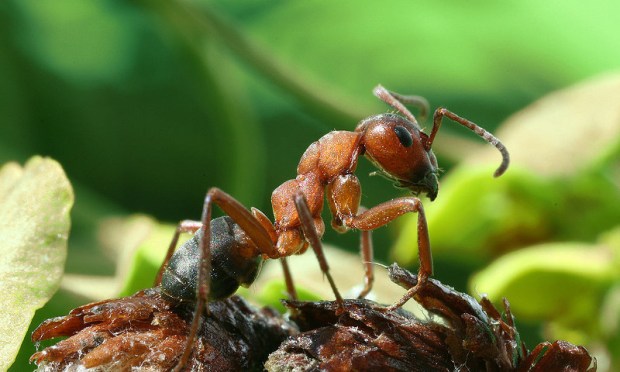
Following their rescue the ants said to Gwythyr, ‘Take with you God’s blessing and ours, and that which no man can recover, we will come and recover it for you.’ ‘After that’ they ‘brought the nine hestors of flax seed that Ysbaddaden Bencawr had demanded of Culhwch, in full measure, with none missing except for a single flax seed, but the lame ant brought that before nightfall.’

1024px-A_Formica_rufa_sideview

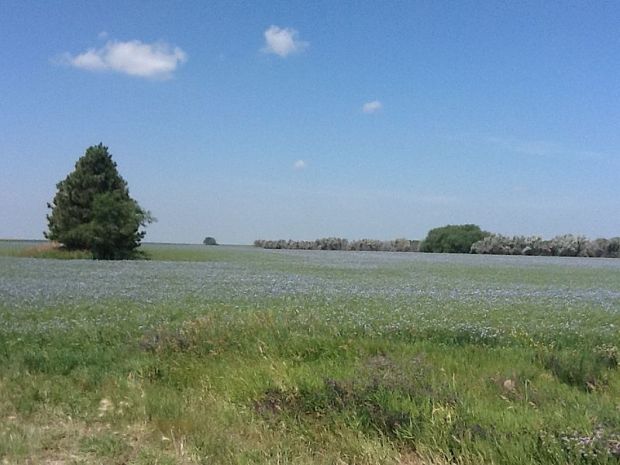
The retrieval of the flax seed was one of the forty amoethau, ‘impossible tasks’, that the giant, Ysbaddaden Bencawr, set Culhwch to win his daughter, Olwen. The flax seed was sown in ‘tilled red soil’ the day Ysbaddaden first met Olwen’s mother yet had never flowered. Culhwch was told he must resow it in a newly ploughed field to make a veil for Olwen in preparation for their wedding day.

Culhwch and Olwen is rooted in the folk motifs of ‘The Giant’s Daughter’ and ‘Six Go Through the World’. However, in this retelling, Culhwch did not fulfil the tasks with six helpers. Instead, his uncle, Arthur, completed them with aid from six warriors and a retinue of outlandish figures with strange abilities (such as Sgilti Sgafndroed who ‘would travel along the tops of trees’, Osla Gyllellfawr whose dagger could bridge a torrent, and Clust son of Clustfieniad ‘if he were buried seven fathoms in the earth he could hear an ant fifty miles away stirring from its bed in the morning’) and pre-Christian gods including Gwythyr, Amaethon the plough-god, and Gofannon the smith-god.

On the surface this narrative is about the overthrow of the primitive and oppressive reign of Ysbaddaden to bring fertility to the land as symbolised by Culhwch and Olwen’s marriage. The story of Gwythyr and the Lame Ant shows how, through an act of kindness, Gwythyr enlisted the aid of helping insects to perform a task no human could accomplish – crawling into the airy interstices of the soil to retrieve the flax seed. It’s possible to imagine that in longer versions there was far more suspense surrounding whether the flax seed was gained by the giant’s deadline and veritable relief when the lame ant finally appeared, limping valiantly, to add the final flax seed to the measure. The sowing and flowering of the seed demonstrates the fertilisation of a barren landscape.

800px-Flax_field

This gentle and benign episode is at odds with the violence pervading the rest of Culhwch and Olwen. Giants were mutilated and beheaded. Orddu the witch was cut in half and her blood drained and bottled. Ysgithrwyn was slaughtered for his tusk, Twrch Trwyth’s seven piglets were killed, and the Twrch only just escaped. Culhwch’s quest to win Olwen was twisted by the narrator to demonstrate Arthur’s civilising of the wild and banishment and all-out slaughter and destruction of the Other.

This conflict is embodied in Arthur’s allegiance with Gwythyr against his rival, Gwyn ap Nudd. In other texts we find out that Greidol was one of Arthur’s forty-two counsellors and that Gwythyr was the father of one of Arthur’s three wives (who are all named Gwenhwyfar!). Gwyn is a ruler of Annwn contrastingly associated with wildness, winter, the North, destructive Annuvian spirits, and death.

In Culhwch and Olwen, Arthur went North to intercede in the battle between Gwyn and Gwythyr for Creiddylad, a fertility goddess. He rescued Gwythyr and his men from Gwyn’s imprisonment, then bound the rivals in combat every May Day and said neither could take the maiden until Judgement Day. This seems to be a Christianised reworking of a seasonal myth in which Gwythyr, Summer, won Creiddylad on Calan Mai and this was surrounded by fertility rites, then she returned to Annwn with Gwyn, Winter, on Nos Galan Gaeaf, and Gwythyr and the powers of summer were imprisoned.

Once Arthur had defeated Gwyn – the Head of Annwn – and the body of Annwn had fallen, he usurped Gwyn’s leadership of the hunt for Twrch Trwyth and slaughtered Ysbaddaden. When his nephew, Culhwch, married Olwen, his civilising hegemony over the wild and the Otherworld was complete.

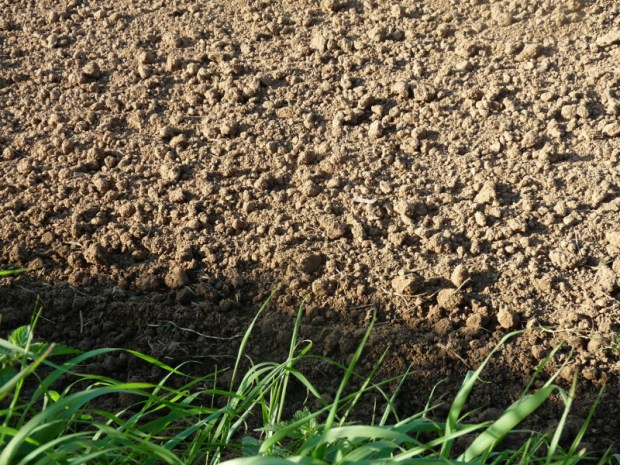
Yet it will not last forever. Otherworld gods don’t stay dead for long and dead giants, witches, and monstrous boars, having joined the furious and vengeful spirits of Annwn, will not remain shut out. Arthur is still dependent on the aid of the gods. And the gods of civilisation are dependent on the Other. Gwythyr depends on the help of the ants to traverse the chthonic regions beneath the red soil to rescue the seeds from the underworld, from the clutches of the spirits of Annwn. And one of those ants is lame. This mission is dangerous and touch-and-go. As more and more of our soil blows away, becomes barren and red, it seems less and less likely the Lame Ant will make the deadline.

soil_free_stock_photo_med

Strange Stars

I’m in the midst of a dream, a very normal dream. I’m on the bus to Leyland. Realising I don’t want to go to Leyland at all, knowing I need to be somewhere else, I head for the doors and ask to get off.

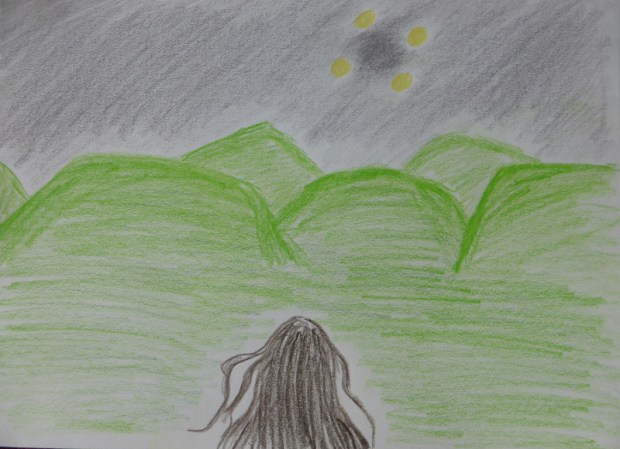
Suddenly I’m whisked away by Gwyn (who has a habit of doing this on occasions when he wants to show me something) to a scene of tall, green, mountainous hills. I know they’re in northern Britain, but can’t place them. They’re not quite the Howgills, or in Bowland, or the Lakes, or the Yorkshire Dales.

Above is an ominous grey sky. The wind is gathering at my back. Overhead I see four stars converging on a fifth star. It disappears, obliterated, without a trace, without a sound. I intuit the strange stars are four war planes shooting down a fifth and know with certitude this is happening NOW.

When I awake I question the reality of the dream. Was a war plane really shot down over our northern hills last night? Or were the strange stars something else? And, in the dream world, when is NOW?

Strange Stars

Heart

I carry my heart in my hands
and lay it upon your altar.

“It is so heavy, so sad, so lonely.”

Your spirits bear witness
in the blinking eyes of trees,
shivery breezes rustling leaves,
the distant bones of wind chimes.
Some amongst them are hungry.
They are held back only by
your invisible command.

A part of me wishes it would break.

“What do you want me to do with it?”
You speak wearily from your sleep.

“Bury it and someone will dig it up.

Take it to the end of the universe
and it will return in a space shuttle.

Give it away and it will still be yours.

If I feed it to my hounds or devour it
myself your pain will live on in us.”

It stares back at me – obdurate aorta,
perfect superior vena cava, pulmonary
arteries and veins, atria and ventricles
pumping out their irrepressible beat.

“Take it away,” you speak abruptly.

As I gather it up and depart tearfully,
“it is strong,” you say more kindly,
“see it as a gift and not as a burden.”

A dozen invisible hands press it back
into my chest and seal the vision shut.

heart-drawing-real-61-by-lunacanan-getdrawings


Uffern ar y Ddaear

Uffern ar y Ddaear – Hell on Earth

I’m surrounded by the smell of dead grass
dreaming of a machine that creates water from nothing.
Someone’s got the radio on too loud and always a baby is wailing.

I lift my nose and smell the smoke on the wind and my throat
is already whining for my master dead on the moors
like cottongrass, heather, butterfly, grasshopper,

where the battle that began on the first of May is still going on
between a fire ignited by one who belongs to the inferno
and the fire fighters with hoses, beaters, leaf blowers.

If only they could bring the rains and autumn winds,
summon them into a summer already too hot and too long,
where reservoirs empty and carbon reservoirs bake, burn, reignite.

I hear they’re trying to save the mast, 1000 feet high, which I saw
lit red like a warning sign beneath the full moon transmitting not only
radio, television for the BBC, ITV, C4, signals for mobile phones,

but some kind of howl we’ve somehow got used to between silences.
What if it goes down like the plane that crashed on the 27th of February
in 1958 when the snow was so cold no-one could rescue the 35 dead

who still roam the hill cursing the faulty radio signals and the drones
flying overhead in the way of the helicopter pouring its cauldron
of water from the reservoirs over the baking baking peat?

When the endless chatter ceases will everyone hear the howl
pouring the dead down Winter Hill like radio waves
from the spring where the Douglas starts

and the mourning song for Winter’s King
dead like a bog body amongst the burial mounds
beneath the burning feet of his rival who is ever victorious?

When we try to shut Hell’s gate with torches on each side
and inside red as a death hound’s oesophagus will we realise
the throat will never close and the howl wrenched from it is us?

800px-Campfire_flames

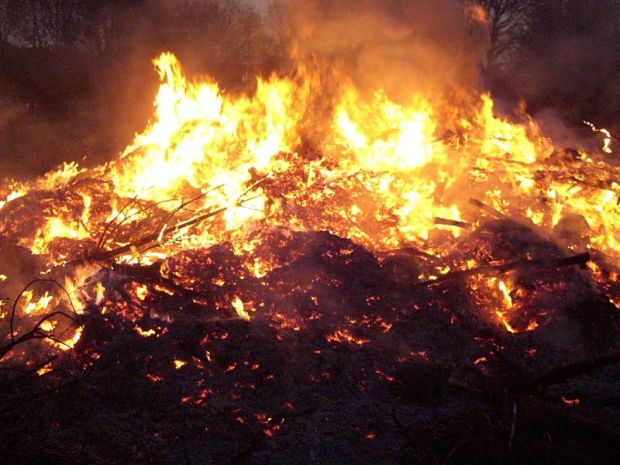
*This poem is based on the Winter Hill fire and the mythic battle between Gwyn ap Nudd (Winter) and Gwythyr ap Greidol (Summer).

Scorched

The UK is in the throes of a heat wave. Here in Lancashire temperatures have reached a scorching 30 degrees for four consecutive days. It’s been uncharacteristically warm and dry for two months. Preston, dubbed the ‘wettest city in England’, has barely seen an inch of rain since the beginning of May. Our lawn is scorched, our raspberries are shrivelled, the rivers and streams are running low.

In northern British mythology the first of May is the day that Gwythyr ap Greidol ‘Victor son of Scorcher’ beats Gwyn ap Nudd ‘White son of Mist’ in a ritual battle to win the hand of Creiddylad, a fertility goddess whose name may stem from creir/crair ‘treasure… object of admiration or love.’

Scorched Fire Sign

Gwythyr ap Greidol’s name suggests he is a god of victory in combat, the scorching fire of war and the heat of passion. His is the spark that gives life to the land but also initiates the wildfire. Over the last week wildfires have raged across Saddleworth Moor, Rivington Moor, and Winter Hill. The latter seems symbolic of Gwythyr, Summer’s King, beating Gwyn, Winter’s King, on his home ground. Of course I haven’t been up to Winter Hill whilst it is ablaze (last night it reignited in multiple locations), but I noticed the portent of the full moon over the mast, lit up red like a warning sign.

Scorched Winter Hill Warning

People have been evacuated from their houses and schools closed. Less has been said about the numerous birds, small mammals and insects who have lost their lives or been driven from their homes.

Just as concerning is the Ribble running the lowest I have ever seen, banks of silt and sandstone bedrock exposed, tributaries becoming drier and drier, pond water getting lower and lower. Water shortages have already hit in the South East and Staffordshire. In the North West United Utilities are recommending that we cut down on water use. On next week’s forecast there is not a drop of rain in sight.

Scorched Ribble

May 2018 was the hottest on record in the UK and June looks set to be a record breaker too. What is causing this uncharacteristic heat, empowering Gwythyr, the Victor, to increasingly destructive victories?

***

Research suggests this long period of hot weather results from the effects of man-driven global warming on the North Atlantic Polar Front Jet Stream. The Jet Stream is a ‘ribbon’ of winds blowing east to west at up to 200 miles an hour 9 to 16 kilometres above the earth’s surface over the mid-latitudes. It arises due to the contrast between warm tropical air and cold polar air. The differences in the pressure of warm and cold air produce a ‘pressure gradient force’. These winds would blow from high to low pressure, from south to north, if it wasn’t for the Coriolis effect.

jet_streams_wpclipart

The higher the contrast in temperature the stronger the Jet Stream. It is strongest in winter due to the cooling of the poles and weakest in summer due to their warming. Low pressure systems causing wet windy weather occur to the north of the Jet Stream and high pressure systems causing warm settled weather to the south. During the winter, when it’s strong, the Jet Stream lies south of the UK and gives us rain and wind. If it remains to the south we tend to have wet summers too. If the Jet Stream weakens in the summer and shifts north of the UK we are more likely to have hot still weather.

According to Dr. Jennifer Francis and Stephen Vavrus the warming of the Arctic is lessening the temperature gradient between the equator and the North Pole and causing the jet to slow and become ‘wavier’. James Mason explains that when ‘the eastwards progression of these upper waves becomes sluggish or stalls’ this ‘leads to prolonged weather-conditions of one type or another’ like this heat wave, which is dangerous not so much due to its temperature but the length of time without rain leading to wildfires and water shortages and potentially to drought and crop failure.

***

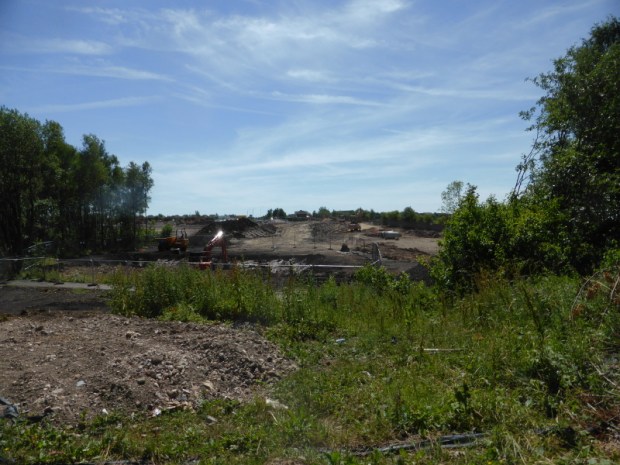
The root of global warming is humanity’s reckless drive for economic growth at the cost of the environment. Our government are aware of the increasing dangers of drought in the summer and flooding in the winter and are taking steps to deal with the effects but not the cause. Instead they are pushing ahead with plans to create more houses, more roads, more jobs; pumping out more greenhouses gases, removing more green space, causing more warming. Here in South Ribble alone 9000 houses are being built along with new and expanded roads and business parks. Preston, South Ribble, and Chorley are being merged into one urban conglomerate with parks as our only green spots.

Lostock Hall Gasworks Development

Dissenting voices are not listened to by the victors. From their positions of wealth and comfort they refuse to see, acknowledge, care about the effects their victory is having on the land and its creatures.

In British mythology Gwythyr and his father sided with Arthur against Gwyn and his spirits, the ancient animals, the monsters, the giants, the witches, and were victorious. In modern Britain the Arthurian court of war-mongering treasure-hoarding politicians and business leaders reign supreme.

800px-Holy-grail-round-table-bnf-ms-120-f524v-14th-detail

What to do in a world where history is determined and written by the victors, when, as Gwyn knows before going into battle every May Day, as Walter Benjamin says, ‘this enemy has not ceased to be victorious’?

Perhaps we must look beyond battle, beyond victory, which can only makes us the next victors, for other ways to our bit for the scorched land, the drying rivers, the dying creatures, the cast-out gods.

SOURCES

Ed Walker, ‘Winter Hill fire reignites and is in multiple locations’, Blog Preston,
John Mason, ‘A Rough Guide to the Jet Stream’, Skeptical Science,
Francis Perraudin, Helen Pidd and Kevin Rawlinson, ‘A hundred soldiers sent in to tackle fire on Saddleworth Moor’, The Guardian
Walter Benjamin, ‘On the Concept of History’, Marxists.Org
BBC Weather, Penwortham, BBC website
Climate change the jet stream’, Climate Central
Preston’s named wettest place in England’, Lancashire Evening Post,
UK weather: Water shortage warnings and hosepipe bans as heatwave intensifies’, The Indepedent
What is the jet stream?’, Met Office

Between Texto and Gloss

I. The Glosa

As an awenydd and polytheist writing and sharing poetry is an essential part of my path. Of all the poetic forms I have experimented with, including English, Welsh, Irish, French, and Italian metres, I have found the Spanish glosa the most conducive to religious practice.

The glosa was invented by the Spanish court poets during the Golden Age. It takes the form of four lines of text (texto) from an existing poet and four ten line stanzas of commentary (gloss) written by the glosser with the final line taken consecutively from the quatrain. The conventional rhyme scheme is ABBAACCDDC.

This versatile form was popular in Parisian literary salons during the reign of Louis XVI, in Germany in the Romantic period, and in Latin America throughout the struggles for independence. It was introduced into the English language comparatively recently by the Canadian poet P. K. Page in 1994.

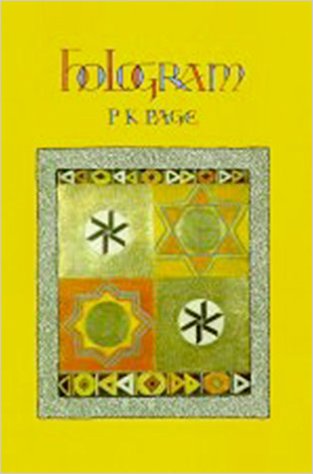
Hologram by P.K.Page

In Hologram, Page used a series of glossae to pay homage to other poets. Her use of a rhyme scheme where the sixth and ninth lines rhyme with the borrowed tenth, and italicisation of the text and its repetitions, has set the form for poetry in English.

Page’s work prepared the ground for Charlotte Hussey, another Canadian poet, who teaches Old Irish and Arthurian literature and studied Celtic Shamanism with Tom Cowan. Her collection of glossae, Glossing the Spoils (2012), glosses the ‘earliest Western European texts’ to ‘mend a break in tradition and time’, thereby reweaving the ancient myths into modernity.

Glossing the Spoils by Charlotte Hussey

In these glossae Hussey opens a visionary space between texto and gloss where it is possible for conversations with mythic personages and experiences of the transformative qualities of ‘the spoils’ to take place. In ‘Lake of the Cauldron’ she glosses lines from ‘Branwen Daughter of Llyr’. After watching a ‘huge man with yellow-red hair’ emerging ‘from the lake with the cauldron on his back’ the narrator is pushed ‘into the boil’ by a woman with ‘dreadlocks’, ‘long breasts’, and ‘a sweaty belly’ who ‘hacks / shoulder blades, buttocks apart, / scrapes off chunks of flesh / bones sinking then surging to the rim’. The ‘great monstrous man’ from the text watches her dismemberment ‘with an evil thieving look about him’.

Many of the poems reveal the subliminal influence of these near-forgotten myths on our time. ‘Trolls’ is based on lines spoken by the Loathly Lady in Parzival. It ends with ‘The knight, lifting his fluted, iron / visor with its narrow sights’ to ‘stare out’ for ‘a crusading convoy / to join, another holocaust to start, / or a melancholic witch to burn’. Glossing Perlesvaus, Hussey draws parallels between the animistic qualities of the ghastly black shield of the knight’s aggressor with its ‘dragon’s head throwing out / fire and flame with a terrible force’ and the atom bomb – a weapon of destruction she notes cannot be contained or exorcised (1).

I read Glossing the Spoils for the first time in 2012. Discovering the glosa and Hussey’s use of it as a gateway to visionary experience has had a profound effect on my spiritual path and my approach to the medieval Welsh texts that are central to my tradition as an awenydd.

II. The Bull of Conflict

I wrote my first glosa in September that year after an initiatory encounter with Gwyn ap Nudd, a god of the dead and ruler of Annwn, the Brythonic Otherworld. Desiring to honour and thank him for pulling me back from the brink of an abyss and to learn more about him, I decided to gloss four lines from ‘The Dialogue of Gwyn ap Nudd and Gwyddno Garanhir’ (2).

This poem, from The Black Book of Carmarthen (1350) documents a conversation that takes place in the misty hinterland between the worlds following Gwyddno’s death. Gwyn appears as a ‘bull of conflict’ – a divine warrior and psychopomp – to guide Gwyddno back to Annwn. Set during the fall of northern Britain to the Anglo-Saxons it contains some of the most powerful and poignant lines in Western European literature, ending with Gwyn’s lament:

I was there when the warriors of Britain were slain
From the east to the north;
I live on; they are in the grave.

I was there when the warriors of Britain were slain
From the east to the south;
I live on; they are dead.

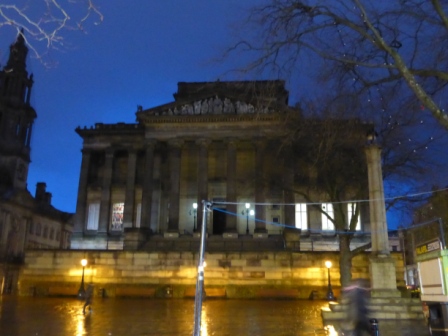
Choosing four lines I started by meditating on the first and was taken back to walking the streets of Preston that afternoon in the aftermath of the Preston Guild Festival (4) and the pervading melancholy. Drifting amongst shadow-people I found myself in the Harris Museum surrounded by the spoils of war and face-to-face with Gwyn stepping from the poem.

The Harris

The Harris Museum

In this familiar yet unfamiliar space, between texto and gloss, between poet and god a conversation took place that would change my life. Gwyn’s imperative of ‘enchanting the shadowlands’ gave me a purpose, became the title of my first book, and has guided my path ever since.

The Bull of Conflict

I come from battle and conflict
With a shield in my hand;
Broken is the helmet
By the pushing of spears.
‘The Dialogue of Gwyddno Garanhir and Gwyn ap Nudd’

On an empty day automata drift,
Wending suit shapes through the mist.
Touchless I fade like a symbol unhitched.
The spoils of war quake in the museum.
Piercing the grey wearing horns of a bull
A white warrior blackened and bloodied
Disguises his limp in an infinite gloom,
On his spear leans, softly says:
“My comrades are slain and yet I live,
I come from battle and conflict.”

His dire avowal brings howling winds,
Chill clutch at my shoulders their lament dins
Of hero light fading from mortal skin.
In glass cabinets swords clash savage,
Raging figures thrash on ragged pages
Chanting the desolate past of ravaged war bands.
With war-torn wisdom, sombrely he whispers:
“These gathered memories to you I give.
Gone are the days I crossed this land
With a shield in my hand.”

His barrage of sadness barks in my mind
Like hapless hounds on a winter’s night.
Fierce their madness, dark their plight,
For the perishing souls they collect,
The past’s great spirit protect.
Like thundering wind obligation overwhelms me.
The blade of futility threatens to unfasten me.
“How do I cherish and defend these memories
When like the kingdoms of Rheged and Elmet
Broken is the helmet?”

I ask the Bull of Conflict.
His tears run bright with the passing of time,
Chariots wheeling in multihued light,
Victims reflected in star lit skies.
He says: “this shadow land needs enchantment
To banish the blight of despair.
Nurture the memories with magic
And they’ll sing a blessed new year.
Do not be pressed into fear
By the pushing of spears.”

This was a once-in-a-lifetime experience which led me to devote myself to Gwyn as my patron god. Nothing quite like it has happened since and I have written many glosa, good and bad.

III. The Spoils

Hussey’s title, Glossing the Spoils, works on many levels. By ‘the spoils’ it refers to the spoils of war, the spoils of the distant past gathered in museums, and the spoils of our literary heritage. It also subtly alludes to ‘The Spoils of Annwn’, from The Book of Taliesin (14th C). Taliesin, the narrator, accompanies Arthur and his men on a raid on Annwn to plunder its treasures, including the cauldron of Pen Annwn, ‘Head of the Otherworld’ (Gwyn). There a catastrophic battle takes place, which Gwyn later describes to Gwyddno:

And to my sorrow
I saw battle at Caer Fanddwy.

At Caer Fanddwy I saw a host
Shields shattered, spears broken,
Violence inflicted by the honoured and fair.

Arthur assaults ‘the honoured and fair’: the fair folk ruled by Gwyn, who are forced to retaliate. In a moment suggestive of both pillage and rape Lleog thrusts his ‘flashing sword’ into the cauldron and it is ‘left behind in Lleminog’s hand’. Arthur escapes from Annwn with the spoils, slamming ‘Hell’s Gate’ shut. Only seven of three ship-loads of his men survive the conflict.

Analogously most of the spoils in our museums have been plundered violently from other lands. The literary heritage of Western Europe is largely based on a history of the victors, mythic and real, crusading, conquering, colonising. As Walter Benjamin says: ‘There is no document of civilization which is not at the same time a document of barbarism.’

These thoughts were on my mind when I embarked on a quest to explore the contemporary relevance of the Thirteen Treasures of the Island of Britain (3). They include the cauldron (which is kept by Dyrnwch the Giant), the Hamper of Gwyddno Garanhir, vessels for eating and drinking, weapons, items of clothing, and vehicles for transport. It is likely most of them were won or stolen from Annwn by the northern British warlords who own them.

Like the spoils evoked by Hussey the treasures are animate, inspirited, alive, expressing their agency through magical qualities. The cauldron will only brew meat for the brave. Brân’s horn provides any drink one wishes. Morgan’s chariot takes a traveller wherever they wish quickly. Rhydderch’s sword bursts into flames in the hand of any man who is well-born.

The Gwyddbwyll Gwenddolau, ‘Chessboard of Gwenddolau’ (4), is made of gold and has silver gwerin, ‘men’, who play by themselves. The men represent Gwenddolau’s army and his enemy and serve a divinatory function – the outcome of the game predicts the result of real battles.

Writing a glosa based on four lines about the chessboard took me on a visionary journey to Gwenddolau’s seat of rule in Arfderydd (modern day Arthuret in Scotland) and gave me a glimpse of its magic outliving Gwenddolau to predict the outcomes of upcoming wars.

View from Liddel Strength

Caer Gwenddolau

The Chessboard of Gwenddolau

The Chessboard of Gwenddolau…
if the pieces are set,
they play by themselves.
The board is gold and the men silver
(5).
The Thirteen Treasures of the Island of Britain

I leave my world behind at Carwinley Burn
to follow the feral steps of a girl,
red-haired, torqued, coloured-trousered,
a wild thing with fox’s teeth at her neck
down a fox-hole to the grave
of Gwenddolau.
Beside his bull-horned corpse
stands a table and upon it a golden board.
Round its edges silver dead men lie.
The Chessboard of Gwenddolau

has lain here as long as my father,”
she says. “It predicts the outcome of battles.
It played before Arfderydd, Catraeth,
when Britain’s air force clashed
with the Luftwaffe,
on the eve of the invasion of Iraq. As yet
it has never mispredicted an event.
At times of peace it sleeps.
At times of threat
if the pieces are set

they play out every move in the coming conflict.”
As she speaks the eyes of a warrior
jerk open and his spasmodic
hand grips his spear.
A warhorse rises from a tangle of stirrups and mane.
A bishop shakes off his robes and delves
for fireballs and mist in his pockets.
Caers rebuild their ramparts.
Returning to health
they play by themselves

speechless as automata resuming their positions.
Warriors move forward two squares
spearing on the diagonal.
Warhorses leap
over the mounting carnage,
on a fiery blast fall into splinters.
A king drags his queen into a caer.
As the bishops prepare the final spell
I am shaken by a premonitory shiver.
The board is gold and the men silver.

For me this glosa reveals the sad fact that since the war-torn period when Gwenddolau lived and now there has barely been a time when the warriors of Britain have not been at war. The uncanny battles fought between the gwerin, beneath the earth, in Annwn, represent our militant history.

As modern glossers we are faced with a past of ravaging, wounding, spoiling: a world spoilt by Arthurian warlords. How, between texto and gloss, can we enchant its shadows, heal its wounds?

Footnotes

(1) In ‘Glossing Faery
(2) At this point I was working with William Skene’s 1868 translation. I recommend the 2015 translation by Greg Hill. The title and glossed lines are from Skene, but the other two are from Hill.
(3) The Thirteen Treasures of the Island of Britain appear in several medieval Welsh manuscripts. The earliest is the autograph of Gwilym Tew in Peniarth Manuscript 51 (1460).
(4) Gwyddbwyll means ‘wood-sense’. Its translation as ‘Chessboard’ isn’t entirely correct because chess originated in the Arab world and was imported to Britain by the Normans in the 11th century.
(5) Here I took the poetic liberty of changing the form and tense of the original quote.

Sources

Charlotte Hussey, Glossing the Spoils, (Awen Publications, 2012)
Charlotte Hussey, ‘Glossing Faery’, Awen ac Awenydd
Greg Hill, ‘The Conversation Between Gwyn ap Nudd and Gwyddno Garanhir’, Awen ac Awenydd,
Keith Ellis, ‘The Glosa: A Genre to be Noticed for its Constructive Values’, Comparative Literature and World Literature, Vol 1. No. 2 (2016)
Marged Haycock, Legendary Poems from the Book of Taliesin, (CMCS, 2007)
P. K. Page, Hologram, (Brick Books, 1995)
Walter Benjamin, ‘On the Concept of History‘, Marxists.org
William Skene, ‘The Dialogue of Gwyn ap Nudd and Gwyddno Garanhir’, The Four Books of Ancient Wales, (Forgotten Books, 2007)

How to Pray

After Rilke’s First Duino Elegy

In Annwn below the earth…
There is one who knows
what sadness
is better than joy
The Hostile Confederacy

Who, if I cried out, would hear me
in the depths of Annwn? Its spirits
have wings yet are not Rilke’s angels.
I am all alone in my dark sobbing.
My hands are clasped. How to pray
when told prayer has little worth?
How to fling out this heartfelt cry
on the unclipped wings of a bird,
throughout Prydain make it heard
and in Annwn below the earth?

Voices, voices, whisper in my ears.
I, unsaintly, do not know how to hear.
How to listen as saints have heard
to voices of spirits derided as devils,
denied, defied on summits of hills,
chthonic shrines now unhallowed?
How to respond to spirits of Annwn
cast out with their unangelic terror?
Deep below, so very deep below
there is one who knows.

Oh what does he know?
Speak, please, not of sorrow,
the hardness of being dead and those
who move between the dead and living,
who died violently and could not rest,
wandered lost to their madness
until he called them home.
Speak instead of the glow
of his mead hall, the gladness
of his poetry, not what sadness

lies within his soul of many souls.
It’s said he contains the fury of the devils
of Annwn within him – an eternal current
sweeping through all the ages,
both worlds. Swept along
only knowing him when we die,
we have lost so much and are so lost.
How to pray to him in his immensity?
Fling out my cry knowing his reply
will be better than joy?seagull-flying-3-public-domain-photos