Fragments of Annwn – Fallings

The Broken Harp

I.
My nerves are timbres.

Taut and tense the ganglia
no longer relay the music.

Weak, worn, frayed, spent,
the tendrils torn and stretched
from the strings of a harp.

Like broken bowstrings
they sting and twitch.

II.
On the empty frame
the ‘devils’ of Annwn sit
and mock and chatter.

I cannot take my eyes
from their neat little fangs
and paper-like origami wings.

I cannot shut out their voices,
low, high, squeaking in the wind,
fat with my stolen melodies,

for I am strangely in love
with my distractions.

I court them feed them daily.

I have become their instrument.

And so I lie broken beneath their claws…

III.
And where is my god? Not the harpist
or the one who taught him but the one who
listens for the song in his eternal hall

where the harp played with no player at all?

Is he still listening? Waiting? For the bow
to be restrung? For the song to be sung? For
the arrow that will pierce his heart fine and true?

~

The Place Where the Sky is Falling

In the place where the sky is falling and the winged and the wingless ones with it I am galloping. The faster I gallop the faster it falls and the faster they chase me, swishing, swooping, on wings and not on wings (yet still sounding torn and leathery and creaky-jointed), with and without teeth and claws.

As a little experiment I touch a rein, a brief half-halt, steady from a flat-out to a slower gallop. The sky-fall slows, the flight of the ‘devils’ of Annwn who pursue me, the winds of the abyss that drive us all. I slow to a canter, to a trot, to a walk, pull up. The sky is still. The winged and wingless ones hang before me like puppets on strings, immobile in the air, without a single wing-beat. I frown. They frown. I move my left hand. They move to the left. I move my right hand. They move to the right.

“Is this some game?”

An eruption of laughter flows through them, breaking the strange spell. They shift, flap, nudge, jest. Some fly away and others descend to look on this strange phenomenon of an awenydd in Annwn.

“What are you?” I ask. “Are you devils?” For that is what Christians have called them for hundreds of years and they do look like something out of Doré’s woodcuts for Milton’s Paradise Lost. Yet I have a feeling they have existed in the Otherworld before the Christian imposition of Heaven and Hell.

They laugh and shriek and pull their grins wider with their foreclaws like demonic Cheshire cats.

“Seriously…”

“Fliers,” squeaks one. “Fliers, fliers,” the others echo. “Fliers.” “Clawers.” “Takers.” “We take…” “We take what you feed us.” “We feed.” “We bring the takings.” “We bring what you feed us to the abyss.”

“Cursed, cursed.” “We cannot set down our feet.” “We have no feet.” “We fly between the worlds knowing nothing but taking.” “We even sleep on the wing.” “Ours is the dream-storm over the abyss.”

“What have you taken from me?” I have no wounds but no teeth and no claws leave no mark…

They cackle, grin, smack their lips. “What you fed us.” Their mouths purse like secrets.

“Then you are welcome to it,” I incline my head in acknowledgement, “add it your storm of dreams.”

I depart at a slow walk knowing gratefully in Thisworld I will dismount onto the ground onto two feet.

~

It’s Easy to Fall

and keep on falling
when there is nothing
to hold on to – no can,
no bottle and its easy

soon empty comfort.

Its gentle guidance
down into oblivion.

(It is an illusion the
abyss has a bottom).

It’s easy to fall
and keep on falling
when you don’t know
how to do anything else.
Because no-one taught you
how to tread empty air.
How to breathe when
there is no oxygen.
How to balance when
there is nothing between
your two empty ears.

How to hear what
when there is nothing
beyond the abyss?

It’s easy to fall
and keep on falling
unless some unexpected
hand reaches out to
shake you from

that free fall before
you wake with a jolt –
upright in your bed.

It’s easy to fall
and keep on falling
before some person
or some god gives

you a task only you
can do. HERE. NOW.
Where there is land to
stand on air to breathe.
Hope on the horizon.

~

Why These Worries

I do not need unlike the wind that moves the washing?

Why the fear that if they stop I will be nothing
like a lump of a coal in the toe
of a Christmas stocking?

Why do I feel worthless
when I am wanted by a god?

Why do I feel like a failure
when I’ve written three books?

Why does it feel more heroic
to be battling on against these thoughts
when I could let them go to the graveyards
of the winds beneath the towers
from which they were born?

How big a grave for a thought?

How great the work of the gravedigger?

How to engrave the gravestones
with suitable death’s heads?

And if I should let them slip away…
If I should carry them like childhood toys
gifted on Christmas morning then broken by bullies
in cardboard boxes like little coffins (each has a face like my own
like in the fairy funeral and the Fairy King sings
a mournful chant as I lower them in)…

how do I know I will let them rest

and not dig them up like a restless hound?

Come, come, a blast on his horn, come away
from my graveyards and away from mourning.
Spring is here and flowers and hares to chase.
In these sunrise mists a new hunt dawning.


~

*These poems are based on journeys to Annwn undertaken during the process of giving up alcohol as self-medication for my anxiety (which I began on New Year’s Day). This forced me to stop falling, face my worries, and see them for what they are – distractions from my work as an awenydd devoted to Gwyn.
**The image is Doré’s ‘The Fall of Lucifer’ (courtesy of Wikipedia Commons).

Lifelong Dedication to Gwyn – A Year and a Day on

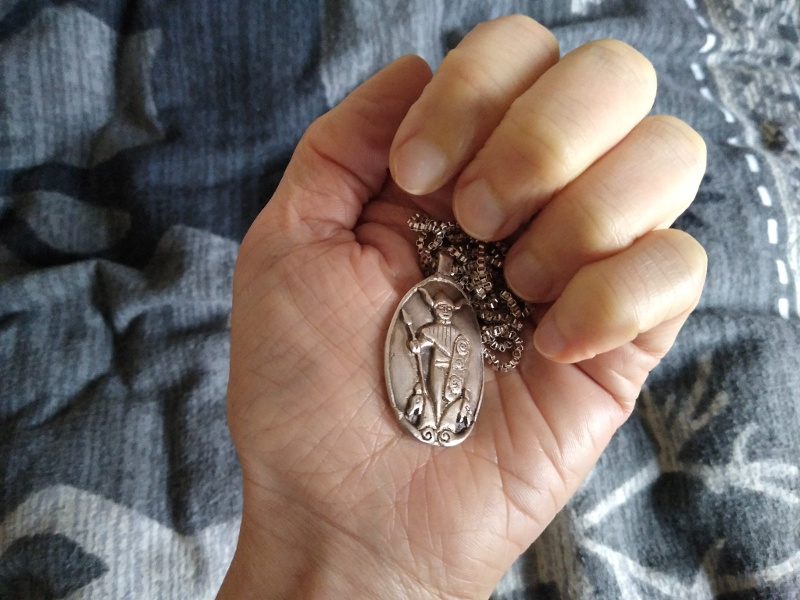
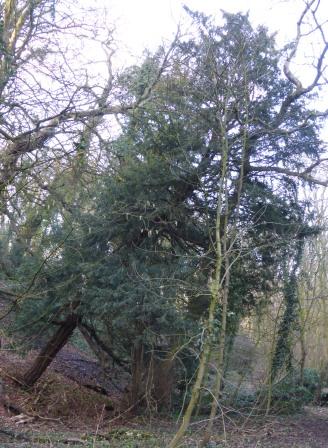
A year and a day ago I made my lifelong dedication to Gwyn ap Nudd, a Brythonic warrior-hunter god and ruler of Annwn, following a vigil on the night of the ‘super blood wolf moon’ beneath the leaning yew on Fairy Lane in my home town of Penwortham.

Unlike my initial dedication to Gwyn as my patron god at the White Spring beneath Glastonbury Tor it wasn’t easy. Beforehand I’d suffered from a stress fracture to my foot and I was awaiting an umbilical hernia repair operation shortly afterwards.

The vigil, of six hours before I went out and made my dedication during the lunar eclipse at around 4am, was based around six tarot cards and took me on an intense journey of death and rebirth.

Looking back and interpreting the meaning symbolically I saw the foot injury forced me to slow down and the operation on my naval, my natal place, was bound up with the rebirthing process.

Once I’d recovered I realised, to my surprise and disappointment, in spite of having been through an intense inner experience my external life had not changed. I was still in the same situation as before. Skint and living with my parents, my book recovering Gwyn’s mythos written, with no idea of what to do with the rest of my life aside from knowing I must live within the parameters of my vows.

To remedy my financial situation I took a job in a supermarket. Frustratingly, in my own work, which I had hoped would take me deeper into Welsh mythology and into Annwn I hit several brick walls.

Firstly, after near-completing a course called ‘The Gates of Annwn’ for Gods & Radicals, seeing myself on the videos attempting to teach in six weeks what has taken me years of questioning, doubt, being torn apart and put back together, I realised I’d made a mistake. An Annuvian path is one people find themselves (or are found by). It cannot be taught.

Secondly, I really wanted to write a book called Porth Annwn documenting my explorations of Annwn. However, the deeper I went, the further away I got from traditional depictions in Welsh mythology and folklore, attaining instead personal visions that were fantastical, paradoxical, and contained elements of ‘faerie’, but could not be linked directly to the Brythonic sources.

My third block was failing to learn Welsh as I am not embedded in the culture. This was accentuated by my awareness of the debates about cultural appropriation and the derogative attitudes of Welsh scholars (who are mainly non-conformist Christians) towards Brythonic polytheists.

My frustrations with my work and my supermarket job reached a nadir and resolution when I accidentally killed a dragonfly whilst cycling to Brockholes. This led me to leave the supermarket to volunteer with the Lancashire Wildlife Trust as a way of finding paid work in conservation and to shifting my creative focus away from Wales and Welsh mythology back to the (once Brythonic-speaking) land where I live.

Both these shifts have helped me to deepen and renew my relationship with Gwyn. I feel far more connected with him in my everyday life when I am outside working on the land, whether I’m tree planting, coppicing, clearing scrub, dead hedging etc. than when I was stacking shelves or, worse, sitting on a till beneath the artificial lights in the supermarket.

My new creative project ‘The Dwellers in the Water Country’, which focuses on the prehistoric people of wetland Lancashire, has guided me back to the earliest hunter-gatherers who may have venerated Gwyn as a hunter god. My outdoor work and research have knitted together as I’ve learnt skills and used tools our ancestors would have used.

This new more physical connection with Gwyn has also manifested in my running and in taking up Taekwondo. Interestingly, the Fianna, the followers of Finn, Gwyn’s Irish cognate, lived in the woodland, and had to master poetry along with physical feats that involved fighting and running*. These and my work outdoors have made me more connected with Gwyn as a warrior-hunter.

I have also experienced a deepening of my personal relationship with him through spending more time at my altar in stillness and prayer as well as continuing to journey with him.

So a year and a day on, after spending eight months lost, I have finally gained a vision of the path ahead and the central facets of a life shaped around my devotion to Gwyn:

*Personal devotions
*Working on the land
*Poetry
*Journeywork
*Practicing a martial art and running

I have moved on from confusion and frustration to feeling excited about a future full of challenges and promise.

*In ‘A Wildness Comes on the Heart of the Deer’ Christopher Scott Thompson cites the initiation tests of the Fianna: ‘And there was no man taken into the Fianna till he knew the twelve books of poetry. And before any man was taken, he would be put into a deep hole in the ground up to his middle, and he having his shield and a hazel rod in his hand. And nine men would go the length of ten furrows from him and would cast their spears at him at the one time. And if he got a wound from one of them, he was not thought fit to join with the Fianna. And after that again, his hair would be fastened up, and he put to run through the woods of Ireland, and the Fianna following after him to try could they wound him, and only the length of a branch between themselves and himself when they started. And if they came up with him and wounded him, he was not let join them; or if his spears had trembled in his hand, or if a branch of a tree had undone the plaiting of his hair, or if he had cracked a dry stick under his foot, and he running. And they would not take him among them till he had made a leap over a stick the height of himself, and till he had stooped under one the height of his knee, and till he had taken a thorn out from his foot with his nail, and he running his fastest. But if he had done all these things, he was of Finn’s people.’

Twelve Days of Prayer

‘The Twelve Days of Christmas’ is a ‘sacred and festive season’ marked by Christians between Christmas Day (25th December) and the Epiphany (6th January). It was instituted by the Council of Tours in 567 to mark the period between the birth of Jesus and the revelation he is God incarnate on the visit of the magi.

For me, as a Brythonic polytheist who venerates Gwyn ap Nudd as Winter’s King, the mid-winter holy days have always felt particularly special and sacred. They begin with Eponalia, on 18th December, the feast of the horse-goddess and midwife of the sun. This is followed by the Winter Solstice, 21st / 22nd December, the height of Gwyn’s reign and presence within the land. 24th December is Mother’s Night and, although this is traditionally an Anglo-Saxon festival, one I associate with the Mother Goddesses such as Matrona/Modron and Anrhuna. 25th December is the day of the rebirth of the sun-child Maponos/Mabon. Then the next twelve days are a time of rest and celebration based around casting out the old year and welcoming in and preparing for the new.

Over the past few years I have noticed an increasing number of other pagans and polytheists exploring ways of marking these holy days. There are existing traditions of using them for divination. From my mum I learnt of the tradition of recording one’s dreams and linking them numerically to the calendar months. Cailtin Matthews has suggested using the Twelve Days for reading nature omens in a similar way.

In his essay ‘On the First Day of Christmas, the Dead brought back to me…’ Lee Davies connects the Twelve Days with Gwyn, the Wild Hunt, and the dead, who ride out to clear the ground for the New Year and also bring blessings of prosperity. He speaks of the koryos tradition in which people not only embody but ‘become the dead’ – a possible root of the misrule associated with the Twelfth Night.

With this in mind I decided to use the Twelve Days as a period of more intensive prayer and prayer writing for Gwyn and the spirits of Annwn and the dead with whom he rides out on his hunt through the winter months. This resulted in a series of visions and visionary dialogues. Here I share a selection from the twelve prayers.

Twelve Days of Prayer

For Gwyn

I.
Prayer
is to open
the little box of the heart
to let in the god who cannot fit within

two sides of a membrane
flap, dissolve like
the so-called
‘veil’

between the worlds
when you ride from the mist
on a creature somewhat like a horse
two hounds with teeth within teeth
all the countless uncontainable
monsters of Annwn

filling
this little box
I sometimes call a heart.
When it bursts and otherworlds
spill forth I know it is
so much more.


III.
You are ghost.
You and your legions.

You clothe yourselves
in cloud, in mist, you move
through our world like the wind.
Sometimes we hear you passing through.
Sometimes we sense only your silence
as you fill our vales with neither
your presence or absence.

Sometimes I feel ashamed
of my flesh and my fear to follow
you into battle in the wars that
rage on between the worlds.

Could it be that I’m afraid of death?

Of seeing my ghost looking back at me
as I write this poem from amongst your kind?

“You wear your flesh and your fear well.”

You speak in the voice that turns gold to leaves
and flesh to dust and skin to paper bearing
an elegy on the heels of your host.


IV.
“Fierce bull of battle,
awesome leader of many,”
I find myself whispering
Gwyddno’s words as though
they were the beginning
of an ancient prayer.

“Who will protect me?

“I will protect you.”

Your armour is a night
of stars and each of them
wields a spear against

my deep demonic fears.

I am awed by your strength
as I am mystified by its origin
for to whom does a god turn?
To whom does a god pray?

I see a bull striding majestic
down a passageway of light
into the infinite brightness
of a star, a heart, a fortress,
the Otherworld within his chest.

VI.
I come to pray
when I want to scream.

If I could comprehend you
could I contain the spirits within?

I fear to scream is the obliteration

of all prayer until you show me

how you tend to all the silent
and the unsilent screams

for a scream is prayer
as crescendo.


VIII.
I pray to you
as your awenydd
as your inspired poet

speak of my restlessness
the jangling of spirits within
my intimation I could be

so much more and you say:

“Poetry is more than rhyming words.
Awen is more than human speech.

The soul of the earth is living poetry
and each soul itself a poem breathed –

part of the divine breath which keeps

the rivers afloat, the mountains high,
the deer running through the woodlands,
the birds in the skies, the flowers growing
upwards turning their heads towards the sun.
And has the power to transform it all –
hurricanes, volcanic flames, tidal waves,
the death-wind from a nuclear blast creating
the wolves with glowing eyes and the monsters
with limbs where there should not be limbs
spoken of by awenyddion of long ago.

It can destroy (or fix) everything.

Why do you think I keep the awen
in a cauldron in a fortress that disappears
that spins that is shrouded by mystery and mist
and is sometimes known as the towers of the winds
and sometimes as the whale’s belly?

There is nothing more – I should know
for I have sought, I have hunted, with every
hound of Annwn beyond where the winds
of Thisworld and Otherworld blow beyond
the Universe and its moment of conception and
come back with nothing on my bloodless spear,
my hounds with nothing in their empty jaws,
bearing nothing in my empty hands but
knowing a little more about nothing.

One cannot be any more and about nothing
there is nothing to be said so be happy
as you are, awenydd, whilst still
a bearer of the divine breath.”


XII.
Your gift

is a shining bow
washed in the light
of the New Year’s sun.

I pray for the strength to draw it.
I pray for the patience to carve the arrows
each engraved with the words of a spell.
I pray for the focus to shoot true,

mind, body, and bow as one,
straight to the heart.

Words Found in Stillness

In stillness
strength

in strength
courage

in courage
the will

to serve you
mind body soul

when yours at one
in stillness

I wait to know
your will

***

Of all the challenges in my life that are linked to my path of devotion to Gwyn – poetry, running, fighting, the restoration of wild places and creatures, learning practical skills out in the woodlands – the one that requires the least is probably the hardest, that is spending time in stillness and silence listening.

There’s seldom anything to show from it. Few ways to express the feeling of simply being in the presence of a god yet the subtle realignments of the soul that take place in such a state are slowly revealed.

In moments where once I’d have panicked I find myself falling back instead on those moments of stillness, find my strength in the strength of the bull-horned warrior-hunter god who works tirelessly to gather the souls of the dead back into his realm. I’m beginning to understand that, having led me to my spiritual path, gifted me with its magical core, given me a reason to live, he is now teaching me the means of survival and opening up possibilities of me finding a place within the wider world.

Where exactly that will be I’m not sure but I’m coming to know I’m heading in the right direction when I can find stillness, when my breath is one with my god’s, when my will is aligned with his will.

The Hunt is Late

I fear
the hunt
is late
this year

because
of the green
canopies

because
of the unfallen
leaves

because
your presence
is just

a whisper
of an antlered
figure in

boughs
not yet shaken
by wind.

You are here.

You are here

I know it
by the black cat
who leaps

into my
arms trembling.
The quick-

ening beat
of my heart and
the shiver

of winter
rain falling by
lamplight.

You are here.

You are here.

I know it
when I recite
my poem –

the rain
falls harder your
night-drum

beating
within me and
the wood.

Shadows
stretch and prowl
yet your

hunters
remain dark to
the seer.

I fear
the hunt
is late
this year.

*This poem is addressed to Gwyn ap Nudd, a Brythonic god whose hunt traditionally rides to gather the souls of the dead on Nos Galan Gaeaf. It is based on my marking of the occasion by reciting my poem ‘When You Hunt for Souls in the Winter Rain‘ (in the winter rain!) for Gwyn in Greencroft Valley. I find it disturbing that some of the leaves are still green and many have not yet fallen at this time of year, which in the Celtic calendars marks the beginning of winter. (The Welsh Nos Galan Gaeaf means ‘The night before the first day of winter’ and the Irish Samhain means ‘Summer’s End’).

You Read of a Smith

who made a pact with the devil
know little of how the story began
or what it implies when he sees the huntsman
galloping out of the fog on a cold dark October night.

You see the sweat dripping from his forehead sizzling
in the flames and are unable to tell what passes
between those dark brows when he sees
the horse he always shoes is lame,
its rider tired, shrouded by desperation,
yet still quiet-spoken when he makes his request
for shoes for running further faster between the worlds
to hunt down something that isn’t dead yet but isn’t living either.

You see the smith shiver as if ice has been dropped down his back
but not waver as he pumps the bellows, heats the furnace,
fires the steel, raises his hammer tries to imagine
what he is shoeing is only a hoof with wall,
toe, sole, tough and sensitive parts,
that this creature might be able to feel,
tries not to count the hooves that keep his forge ablaze all night
as the arched neck towers over him and the eyes flicker and glow.

Instead of counting his heartbeat he counts the beat of his hammer
which steeled his will during his ordeal in the fires that burn
like ice beyond good and evil, where he is working now,
face reddened, straining every muscle, engulfed
in the pain and ecstasy of creation for…
he will only ponder when there is nought but ashes
and hoof prints leading to where he, lame, cannot wander.
To where the stories you have read have come to an end and beyond.

*This poem is a Brythonic retelling of the traditional folkloric tale of a smith shoeing a horse for the devil. It features the smith-god, Gofannon, shoeing Du y Moroedd ‘The Black of the Seas’ for Gwyn ap Nudd. Gwyn is a ruler of Annwn, the Otherworld, and was equated with the devil. He rides out with his hunt to gather the souls of the dead on Nos Galan Gaeaf.

**Image ‘Man Shoeing a Horse’ by Jonathon Bean on Unsplash

The King of Annwn’s Treasures

The golden horn of endless mead.
The golden plates that make even leaves edible.
The golden cauldron that boils the flesh of the dead.
The golden helmet that lends the strength of the bull.
The golden armour that makes its wearer invincible.
The golden shield that deflects not only blows.
The golden spear that pierces every heart.
The golden leashes that hold back the hounds
and the spirits who strain against the possible.
The golden horseshoes for the horse that runs
between worlds and his golden saddle and bridle.
The golden ring that turns time into a circle.
The golden mist that makes terror beautiful.
The golden keys to the gates of every soul.
The golden secret in the stone chest that rattles
and bleats and sings a strange prophetic song.

~

This poem is based around the depiction of Gwyn ap Nudd as a ‘bull of battle’ in ‘The Conversation of Gwyn ap Nudd and Gwyddno Garanhir’ and his role as a King of Annwn presiding over its spoils. It is one of the poems in the narrative of Y Darogan Annwn.

The Awenydd Identity and Cultural Appropriation

Introduction

I’m writing this essay because, over the past few months, I have noticed a number of people speaking either of their reluctance to identify as awenyddion due to fears of cultural appropriation or more generally voicing their concerns about English and American Pagans appropriating the term.

I first came across the term awenydd ‘person inspired’ in Natural Druidry by Kristoffer Hughes. In its lightning-like connection to the awen ‘poetic inspiration’ and used as a descriptor of one who quests and gives voice to this divine breath in poetry I intuited it was the word I’d been searching for to describe my spiritual path (I had formerly identified as a bard). This was confirmed by my patron god, Gwyn ap Nudd, on the Winter Solstice in 2013. Since then I have served Gwyn as an awenydd by giving voice to his myths and those of other Brythonic deities, the lore of the land, and the ancestors. With Greg Hill I co-founded the Awen ac Awenydd website and, with Lia Hunter, we have been working on compiling an anthology featuring the voices of other modern awenyddion.

So it came as a bit of a shock that my adoption of the awenydd identity might be seen as cultural appropriation. And that, much worse, I might have unwittingly influenced the choice of others to appropriate the term. Over the past few weeks I have led discussions on the topic on the Awen ac Awenydd Facebook page and discussed it with Greg by email and would like to share some conclusions.

The Awenydd Identity

Firstly I will provide an introduction to the awenydd identity. The earliest use of the term awen is found in Nennius’ History of the Britons (828) where he refers to Talhearn ‘Tad Awen’ ‘Father of Inspiration’, chief of the famous bards Aneirin, Taliesin, and Cian. This may be our first reference to an awenydd.

Here it is important to note that bardism has its roots in an older Brythonic tradition. From the Iron Age, throughout the Roman-British period, until the Anglo-Saxon invasions all of present-day England, Wales, and southern Scotland were part of a shared Brythonic culture. Taliesin and Aneirin composed poems about the battles between the Brythonic rulers and the Anglo-Saxons which gave rise to the fall of Yr Hen Ogledd ‘The Old North’. As the invaders pushed the Brythonic peoples west they took their stories and traditions with them, leading to them being maintained in Wales.

In his Description of Wales (1194) Gerald of Wales speaks of awenyddion ‘people inspired’ who ‘when consulted upon any doubtful event, they roar out violently, are rendered beside themselves, and become, as it were, possessed by a spirit.’ Their answers are described as ‘nugatory’, ‘incoherent’, and ‘ornamented’ yet can be explained the ‘turn of a word’. These are hallmarks of both poetic and prophetic language. Their inspiration comes from states of ecstasy and dreams. The awenydd is depicted as a solitary spirit-worker and soothsayer.

In medieval Welsh poetry awen originates from the cauldron of Ceridwen and/or from God. It is seen to flow from Annwn, ‘the Deep’ or ‘the Otherworld’, where the cauldron is guarded by Pen Annwn. In The Story of Taliesin receiving (or in some versions stealing!) awen from the cauldron, thereby becoming an awenydd, is the source of Taliesin’s omniscience and mastery of the bardic arts.

The term awenydd is consistently used as a synonym for an inspired poet. For example the fourteenth century poet Dafydd ap Gwilym describes himself as an ‘awenydd gwyrdd’ ‘green poet’. Lewis Glyn Cothi, in the fifteenth century, refers to Grufydd ab Rhys and his kinsmen as ‘awenyddion’.

In a letter to his cousin (1694) the Welsh poet Henry Vaughan speaks of an orphaned shepherd receiving awen when the ‘hawk upon the fist’ of ‘a beautiful young man with a garland of green leaves upon his head… a quiver of arrows att his back’ flies into his mouth and awakes in him ‘fear’, ‘consternation’ and ‘the gift of poetrie’. This of interest because it is suggestive of awen being gifted by a numinous figure – perhaps Maponos/Mabon, a god of youth, hunting, and music/poetry.

During the Druidic revival, awenyddion are conceived radically differently. In hisBarddas (written in the late 18th century but published in 1862), Iolo Morganwg speaks of Awenyddion as ‘Aspirants’ who have ‘no privileges’ within the Gorsedd of the Bards of the Island of Britain until they have completed three years of discipleship. Only then may they graduate from the lowly status of Awenydd to ‘Primitive Bard Positive’. Iolo states that Awen comes ‘from God’.

Following Iolo, in his introduction to the heroic elegies of Llywarch Hen (1792) William Pughe refers to Awenyddion as ‘disciples’ who are examined for their ‘understanding, affections, morals, and principles’, undergo ‘severe trials’, and must ‘learn such verbs and adages as contained the maxims of the institution, and to compose others himself, on any relative subject, doctrinal or moral’ to gain the the degree of ‘Bardd Braint’ a ‘Bard of Privilege’.

Here we find the awenydd as the lowest position within a highly moralistic order based on Christian concepts. We are miles away from the shepherd lad being gifted with inspiration by an unnamed god.

The term awenydd is defined today in The Dictionary of the Welsh Language as an ‘(inspired) poet; bardic pupil; inspired person, genius’. In modern Wales it is used to refer to poets who write in strict metre.

Like many terms some parts of the meaning of awenydd have changed through the centuries, but its essence remains the same. It consistently refers to somebody who receives awen from the divine (be it the Brythonic gods and spirits or the Christian God) and expresses it in well crafted poetry.

Last year, on the basis of these two underlying currents, at Awen ac Awenydd we created our own definition of the awenydd identity – ‘an awenydd is a spirit-worker and inspired poet in the Brythonic tradition’.

Cultural Appropriation

Awen ac Awenydd is a community of self-identified awenyddion. Some of us, such as Greg, live in Wales and are Welsh speakers. Others, such as myself, live in other parts of the UK, or in America, and are learning Welsh. For us the question has risen of whether we are appropriating the awenydd identity.

To answer this question we need to understand the concept of cultural appropriation. This came into use in the 1980s as part of the discourse critiquing Western expansionism and colonialism. It entered the Oxford Dictionaries in 2017 where it is defined as ‘the unacknowledged or inappropriate adoption of the customs, practices, ideas, etc. of one people or society by members of another and typically more dominant people or society.’

Cultural appropriation involves a dominant culture taking elements from a minority culture and using them to make a profit, for fun, or for fashion, without giving anything back. This is often done without knowledge of or sensitivity to their meaning within the culture they are taken from and is a form of colonialism. This differs from cultural exchange in which the interchange is mutually beneficial.

Examples of cultural appropriation include the adoption of ‘exotic’ aspects of Indian culture following the economic exploitation of the Indian subcontinent by the British Empire, the claiming of the religious term ‘Shaman’ outside the indigenous religion of Siberia and its neighbouring peoples, and the use of ‘Sweat Lodges’ from the Amerindian tradition against the wishes of the Lakota elders (who suggest casually employing their techniques may be harmful to the participants).

Unfortunately, since the term has become fashionable, there have been a proliferation of more superficial examples such as an eighteen-year-old girl wearing a cheongsam to her high school prom and the row over Jamie Oliver’s ‘punchy jerk rice’.

Am I Appropriating?

So the question arises of whether English and American Pagans (members of dominant cultures) are appropriating the term awenydd from the Welsh (a minority culture) thus engaging in an act of colonialism.

First off I’d like to say that this question is based on the presuppositions that there is an absolute distinction between England and Wales and that Wales has been colonised by the English. There is a strong argument for the English colonisation of Wales over the last thousand years. There are numerous examples of military (Anglo-Norman castles), economic (mines, reservoirs), religious (the English Prayer Book), and linguistic (the Welsh Not) oppression. However, Wales along with England and Scotland, has benefited from oppressing other countries as part of the British Empire. More positively there are numerous examples of mutually beneficial cultural exchange between Wales and England (such as the Anglo-Welsh poetry of Henry Vaughan, David Jones, and Dylan Thomas).

These issues are complex, thorny, put our presuppositions into question, and do not take into consideration that for many centuries beforehand present-day England, Wales, and southern Scotland were part of a Brythonic culture which remains alive within the land and our shared heritage.

During our conversations Greg suggested, as a general condition, that an English or American Pagan would be appropriating the awenydd identity if they were doing so without knowledge of the Welsh culture and its Brythonic roots and were profiting in some way without giving anything back. For example an English Pagan selling courses on becoming an awenydd without knowing the background of the Welsh myths and mispronouncing the names would be appropriating.

Since I discovered that the stories of the Brythonic deities have been preserved in the Welsh myths I have been studying them and sharing them online and through performances in my local community. I’ve written three books based on the lore of the land and Brythonic mythology. I occasionally give talks and workshops sharing my knowledge and facilitating connection with the Brythonic gods. I am slowly learning Welsh, am a member of Preston’s Welsh Club, and for the past few years have made sure that Welsh poetry is included in the World Poetry Day event I help organise.

I believe I’m making the necessary effort to learn about the Welsh/Brythonic culture and language. Yet could it be said I’m profiting financially and in terms of status from selling it to other English people? Possibly, but my financial gains from books, talks/workshops,and poetry performances are miniscule in contrast to the amount of time and effort I’ve put into research and creative writing, plus the majority of my work is available for free online to people of all nationalities. And there is really nothing to be gained in terms of status by identifying with a little known path – it’s not like I’m declaring myself Arch High Druid of the Old North or Chief Bard of Gwyn ap Nudd or something.

Conclusion – In the Eyes of the Gods

More fundamentally it’s my personal belief that what we call the awen and the deities associated with it are much older and deeper than human concepts and distinctions. When Gwyn appeared in my life seven years ago I was completely befuddled by the question of why a wild Welsh god would want anything to do with a suburban English poet. It’s taken me that long to unravel his connections with the Old North and role as a psychopomp guiding the dead and the living back to Annwn and presiding over the mysteries of the awen as the guardian of the cauldron of Ceridwen.

For me being an awenydd is a religious calling based on my relationship with my patron god. It’s not something I can give up because I’m afraid someone will accuse me of cultural appropriation.

This was proven when I tried taking down the term ‘awenydd’ from my blog and the Annuvian Awen symbol I’d been gifted. It hurt. Both are essential to my relationship with my god and to my soul.

My personal decision to continue identifying as an awenydd is based on this feeling rather than logical and political arguments, which always break down into meaninglessness in the eyes of the gods.

cropped-annuvian-awen1-250

*With thanks to discussion and feedback from Greg Hill, who is a paradigmatic example of an awenydd who honours and serves the Brythonic gods and is engaged in modern Welsh culture, having learnt Early Welsh and provided translations of many Welsh texts into English as part of his vocation.

Fragments of Annwn – Petrifactions

The Towers of the Wyrms

Nine towers of stone.
Around each coils a wyrm.
No way in – no door, lock, key,
but a single row of windows at the top
where I think I glimpse the face of a madman.
They are old as the grey mountains.
I want to claim they were built
by the haulers of scree,
the wyrms summoned and bound
by the might of magicians or that they came
of their own free will raising the towers
from some secret land underground
that has never been seen. Share rumours
of a sibylline prophetess who consulted the wyrm’s heads
but whose words are not recorded in dusty books
in an arcane language eaten by bookworms.
But no explanation rings true or exists.
I feel like banging my head against
the stone demanding an answer
from the inexplicable unblinking eyes
and long stony tongues silent as the purple

In the Shadows of the Ogres

There is a village in the Shadows of the Ogres – Orius, Oron, Thoronius – whose march through the mountains clubs in hand wading through stone was put to an end to by some unknown magician countless years ago. Now the time is told by their shadows as they loom across the village as the sun moves from east to south to west then sinks back down again and at night they are shadowier still. There is a village fifty miles away in the shadows an ogress. I tend a small garden, growing rosemary and thyme where one by one the clubs fall but no damage is done to the tender leaves.

A Sword in a Stone

I travel as a breath over a land of dark rock until I see something silver glint, sweep down, and see, to my consternation, it is a sword. It’s a tall sword, nearly as tall as me. It’s impossible to know whether someone plunged it into the stone or the living stone claimed it. The pommel is embroidered with a a pair of intertwined serpents and on the blade are runes in the language of an unknown culture. Tied around the hilt there is a lock of hair – the hair of a dead man.

It’s like an adolescent boy’s dream and it makes me uneasy although I’ve never prayed for peace on a full moon. I know what you do with swords stuck in stones and what happens afterwards. I don’t want to be King or Queen and I don’t want to reduce it to a symbol of my own sovereignty. Whereas others would either try what is begging to be done or simply walk away I circle around it like a mill horse, try to philosophise it away, wonder if I can get away with just writing a poem about it.

“If you don’t pull it from the stone another will – you can’t just leave it lying about for another Arthur.”

I don’t know whose voice that is, most likely Temptation’s, that of a secret part of me that wants a sword.

“Ok, whoever you are,” I know if I don’t do it now I’ll be back and utterly furious with myself if it’s gone. Like all the other chances I got that I failed to take, like all those missed opportunities.

A part of me is laughing at myself for assuming that I might be able to pull it out at all. What a relief that would be – another proof that I’m doomed to fail, might as well stop trying, return to the supermarket. Another part has already guessed it will slide out as easily as if from dark magma.

It’s astonishing light, easy to wield, as if I’d wielded it in another life. When I sit down cross legged with it across my knees and run my hands over the runes I realise each marks a life taken and I weep.

The Soul Watcher

A land of stone. A giant’s sword abandoned. A stony citadel lit by cobwebs of pulsing green light. Inside I find a work station with a gigantic swivel chair in the middle. There are billions and billions of monitors, only a quarter of them working, tracking graphs in countless glowing colours. Frequently one flickers out and occasionally another one flickers on. A machine that reminds me of a fruit machine has either broken or been smashed. The screen is shattered and it gapes black behind. At the work station there are databases with flashing figures and I see the names of various species: Acetobacter aurantius, Acinetobacter baumannii, Actinomyces israeliiLycaena boldenarum, Lycaena epixanthe, Lycaena rauparahaVulpes velox, Vulpes vulpes, Vulpes chama, Homo sapiens… for one the figures are rising and most of the rest are rapidly going down. On a stone plinth is a book with a last scrawled note: ‘steep decline… can’t reboot the machine… the well.’ As I depart I notice the green light is fading and know soon the citadel, the sword, we will be gone.

A Worm

You give me

a worm
no longer than
my palm

but alive
so very alive
it pulses

like a heart
it is packed
with life

with light
I know it can
fly through

the night
through stone
bring the dead

back to life
awaken giants
bring back

the morning
if only I can
let it go.

pedro-lastra-cotesauvageatsunset-unsplash

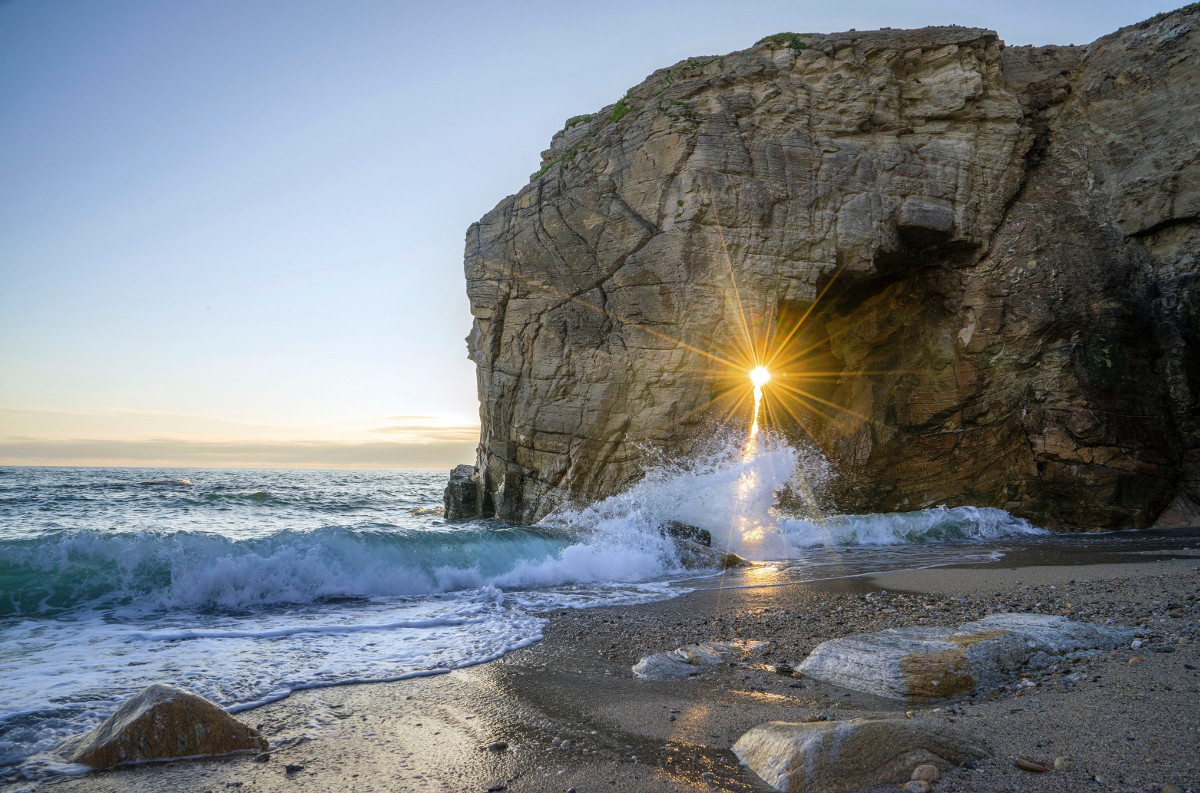
Image ‘Cote Sauvage at sunset’ by Pedro Lasta on Unsplash.