“Stop thinking about money!” ~ the voice of my God
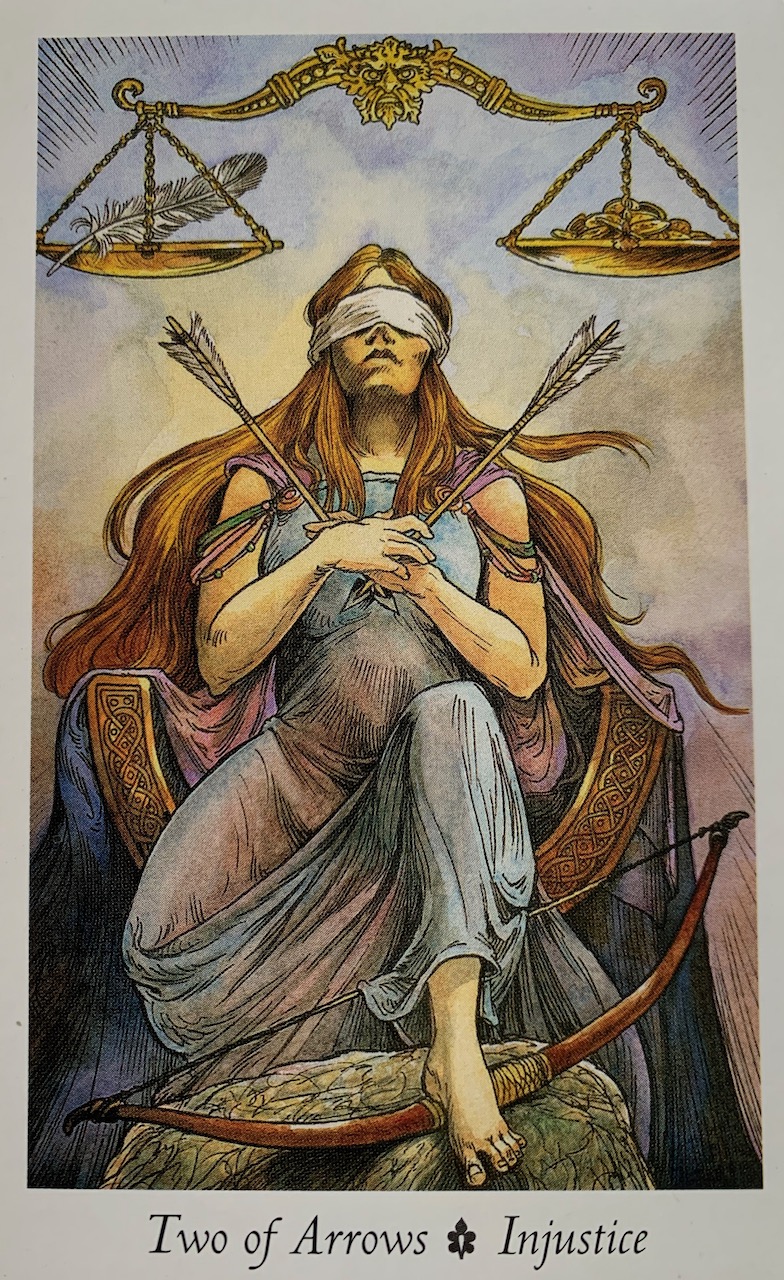
I. I am the blindfolded woman and two arrows have pierced my heart in spite of my charms and incantations against love.
I have been wrapped up in my own heartbreak leaving me blind.
I have been trying to weigh inspiration against money, a feather against gold – one heavy one light.
I have been a slave to what is bled from rocks over millenia at such toil and cost, ignoring what is easily shed, fletched, lifted by a breath.
You are the archer and as always Your arrows strike true.
II. What is it I fear? Hunger? Having no home?
I do not think I could sit and beg but would rather walk, homeless, foodless, until I could walk no longer, lie down and die, be back with You.
III. When I think of my worst fear it is fear of madness –
I am looking into a round tunnel without a train but just a whistling train track rushing through it,
the dance of limbs on the platforms belonging to no-one, not to people, to robots, or to spirits.
That the whole journey of life is nothing but meaninglessness.
IV. I think of my longstanding fear of falling apart.
I recall my vision of a knight riding forth, the plates of his armour rusting, his flesh starting to decay, falling from his limbs,
the skeletal man falling from his skeletal horse
but his horse going on to where the bones of all horses crumble and the dust of dead horses is borne on the winds to where You ride Lord of Annwn.
You taste the wind, lick Your forefinger, another failed quest.
Your hounds prowl and sniff at the dust and Your pale horse rolls in it.
IV. Yet I have chosen to collect feathers not gold for the birds are giving and we are nothing but birds who are learning how to fly and to empty out our pockets.
I want to be light, my lord, to depart from lands where scales exist.
To where we no longer need to weigh, measure, measure up. To where You tear my blindfold off and show me the truths that lie in my unbroken heart.
I. You tell me summer is not a time for absence but for presence,
to be HERE in Creiddylad’s garden
with these plants I have sown, watered, nurtured, grown.
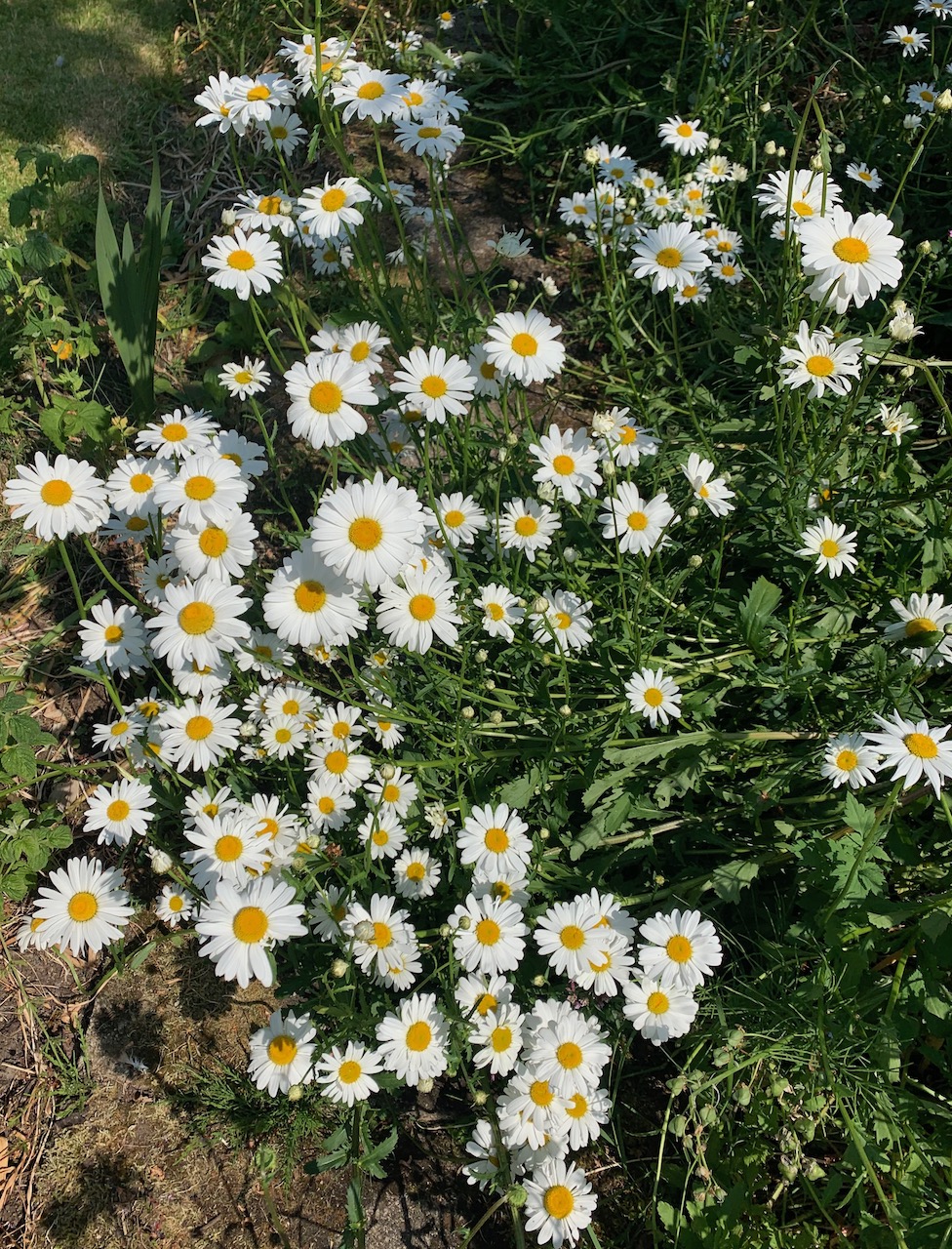
A thousand oxeye daisies reminding me of Your colourful ox and the thousand names for You and Creiddylad forgotten but one day will be sung again by your awenyddion.
The meadow cranesbill that reminds me of Your conversation with Gwyddno Garanhir the wise crane dancer.
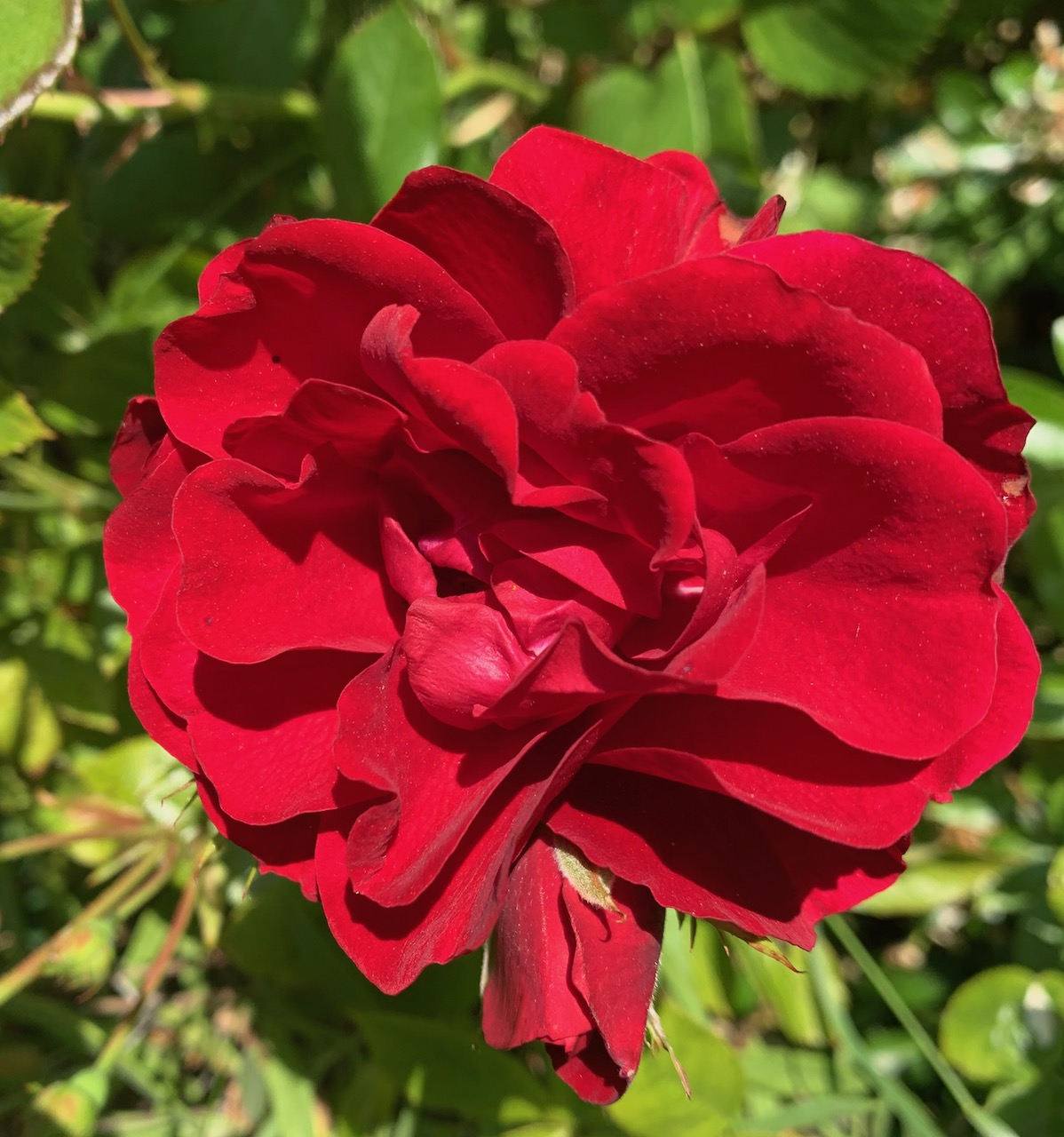
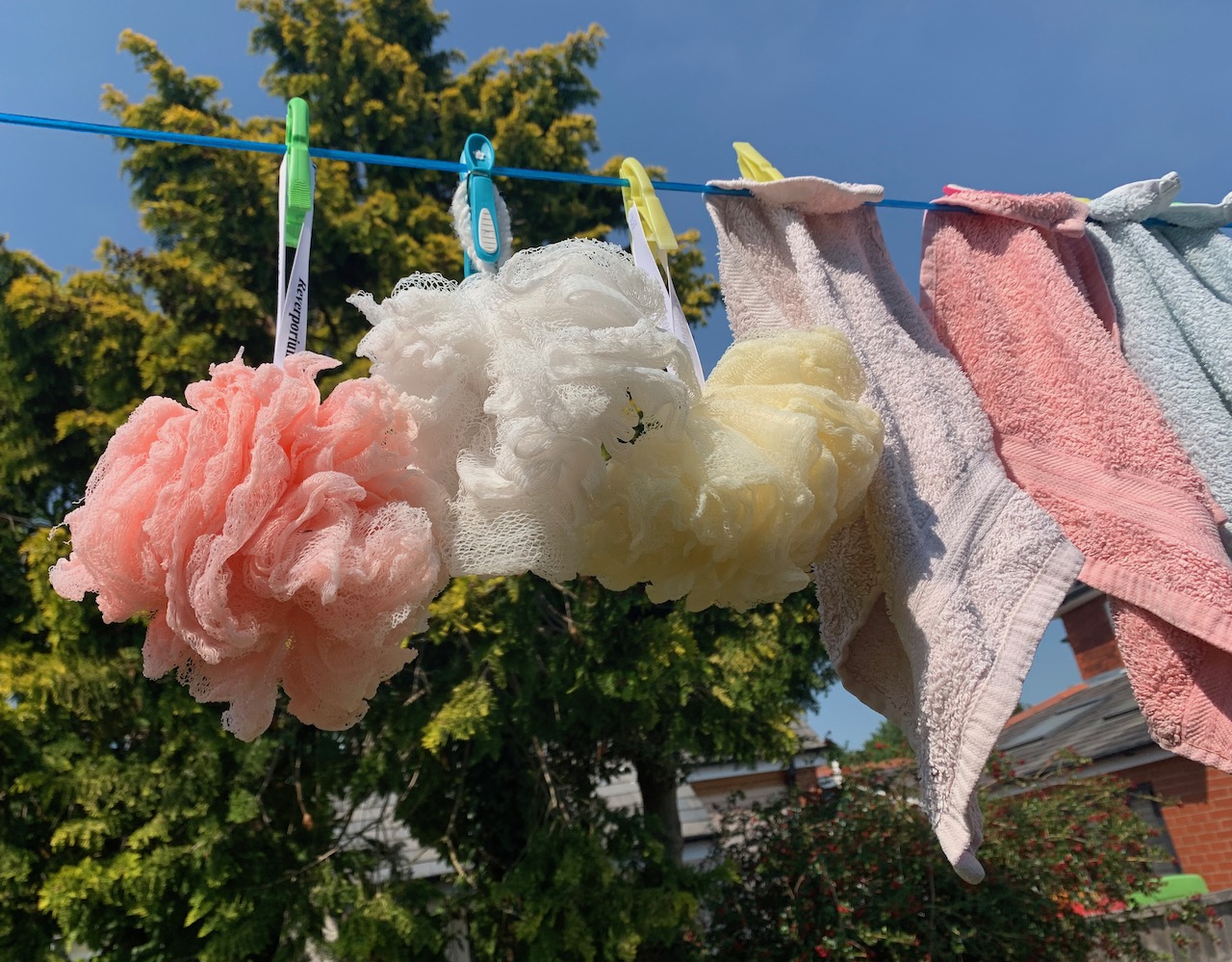
The roses that should have been white and red but white was pink as a bath puff.
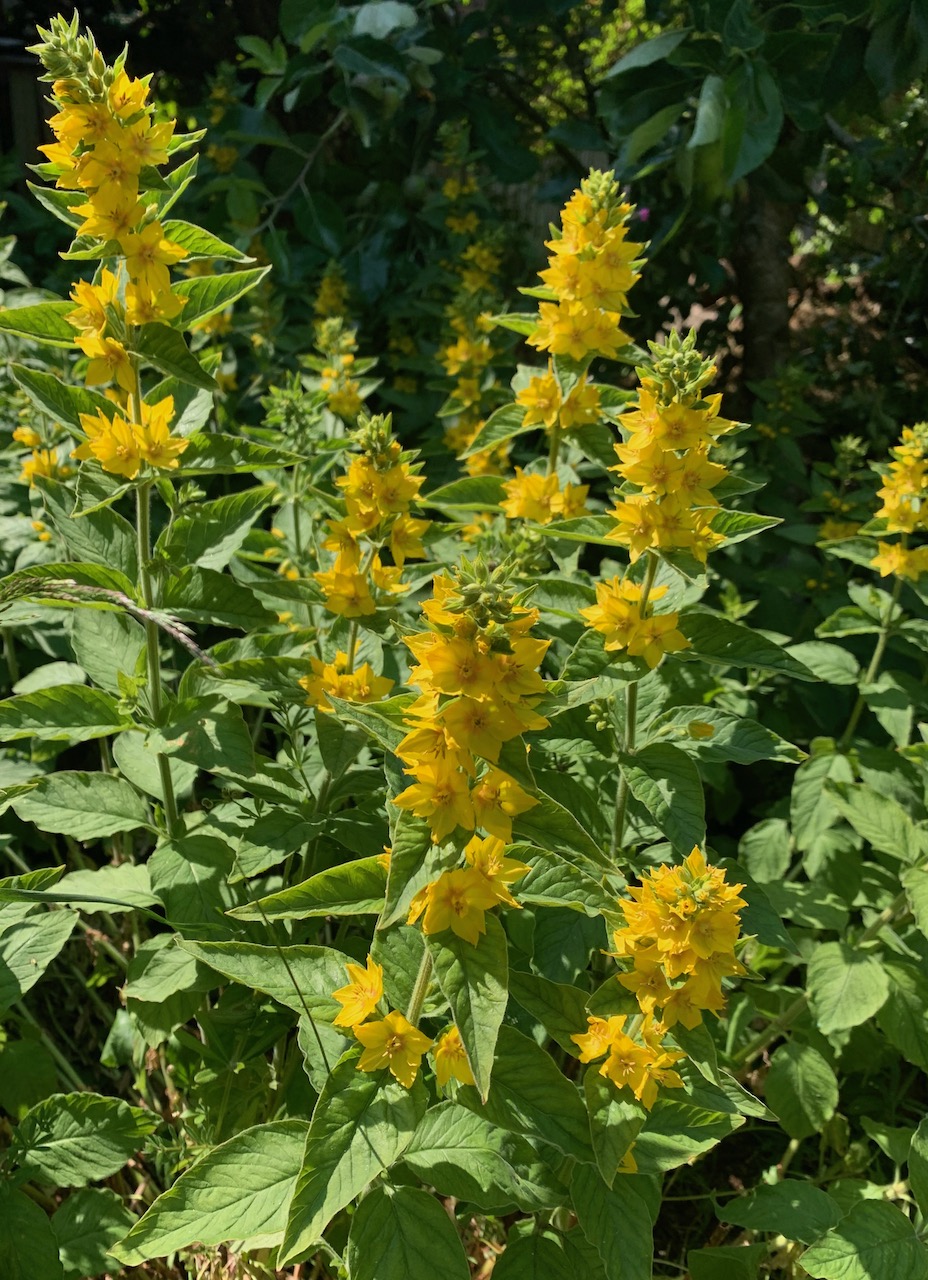
The yellow loosestrife my wand.
The foxgloves in which I would build our monastery if only they lasted all year round.
That I am slowly becoming Sister Patience – I am.
II. And I dream they put me in hospital because flowers are growing between my toes.
I joke about becoming a flower maiden
but I fear they have taken root in my flesh, intertwining with my veins, with my nerves, might be sinking into my soul.
Am I not a beast, another Afagddu, Your dark one?
III. I laugh about the tales of flower maidens who become thorns and owls.
I could never desert You,
turn my face towards the sun god like an oxeye daisy.
The flowers wilt and fall from my feet one by one as I walk from Thisworld to the Otherworld to Your tomb
as Your apprentice, Your awenydd, as Your nun, to speak my poetry as You lie in Annwn’s silence.
*A poem addressed to Gwyn ap Nudd, my patron God, the lover of Creiddylad, who spends winter with Gwyn and summer with His rival Gwythyr.
This is a question many religions have an answer to. One of the most obvious is Christianity with the traditions surrounding the death of Jesus. Within Paganism and Polytheism rites have been developed for many Gods (often grain Gods) including Osiris, Tammuz and figures such as John Barleycorn.
When I started worshipping Gwyn ap Nudd over ten years ago I found out on Calan Mai He fights a battle against His rival, Gwythyr ap Greidol, for His beloved, Creiddylad. Although it isn’t explicit within the source material (1) parallels with other seasonal myths (2) suggest that Gwyn, as Winter’s King, is defeated by Gwythyr, Summer’s King (3) at the turn of summer, ‘dies’, and enters a death-like sleep. He then returns at summer’s end to take Creiddylad to Annwn and assert His rule as Winter’s King.
For most Pagans and Polytheists Calan Mai / Beltane is a fertility festival. The rites of dancing of the May Pole, and crowning of a May / Summer King and Queen have a basis in the sacred marriage of Gwythyr and Creiddylad.
Even before I realised I was asexual I always felt like an outsider on Calan Mai. Whilst I enjoyed the white flowers and verdant energy I never got into the full swing of the celebrations (at least not without a large amount of alcohol).
Then I met Gwyn and found out this was the time of His death. I have now come to understand why it is bittersweet – finding joy in the new growth on the one hand and feeling His loss and commending His sacrifice on the other.
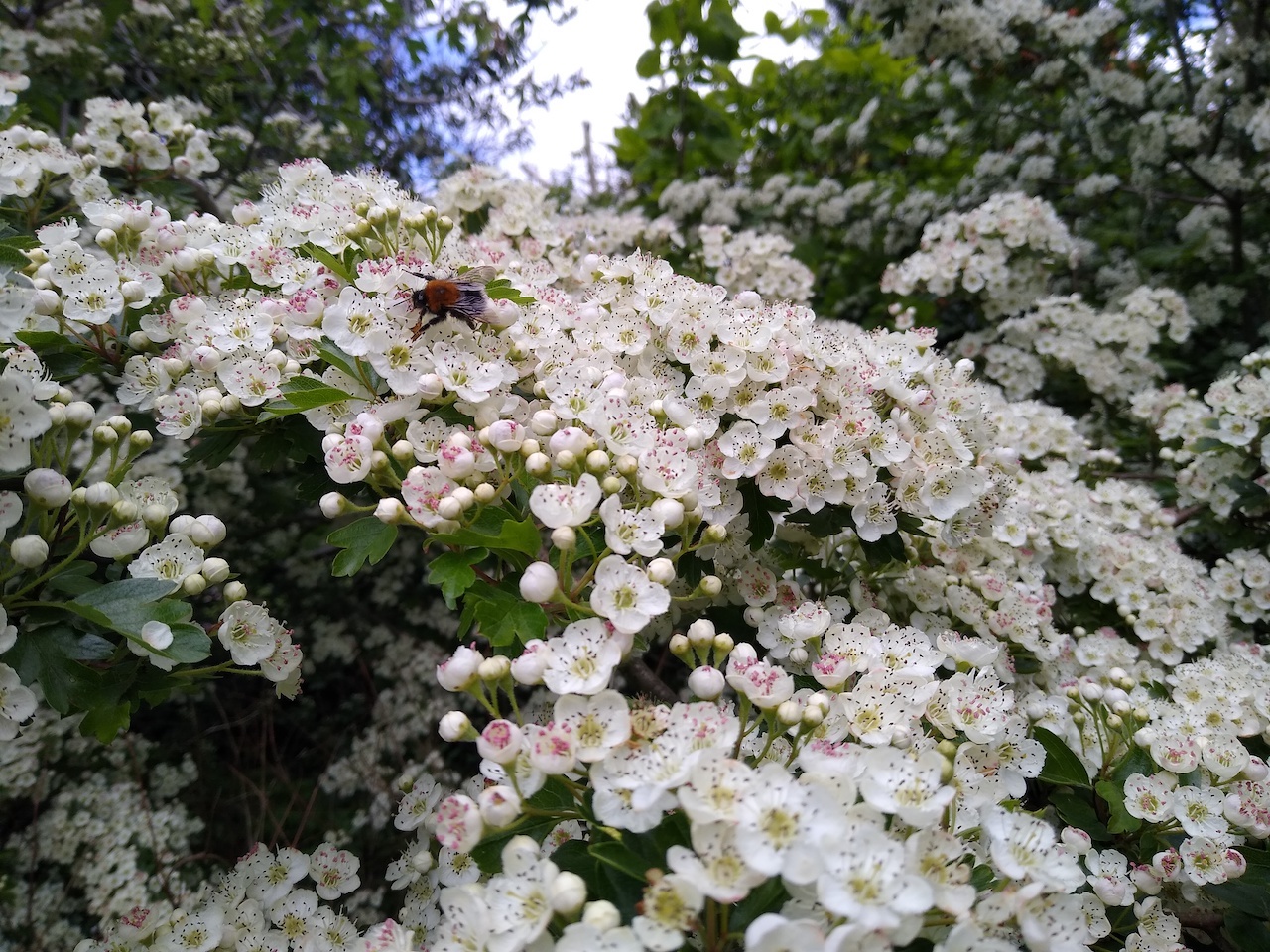
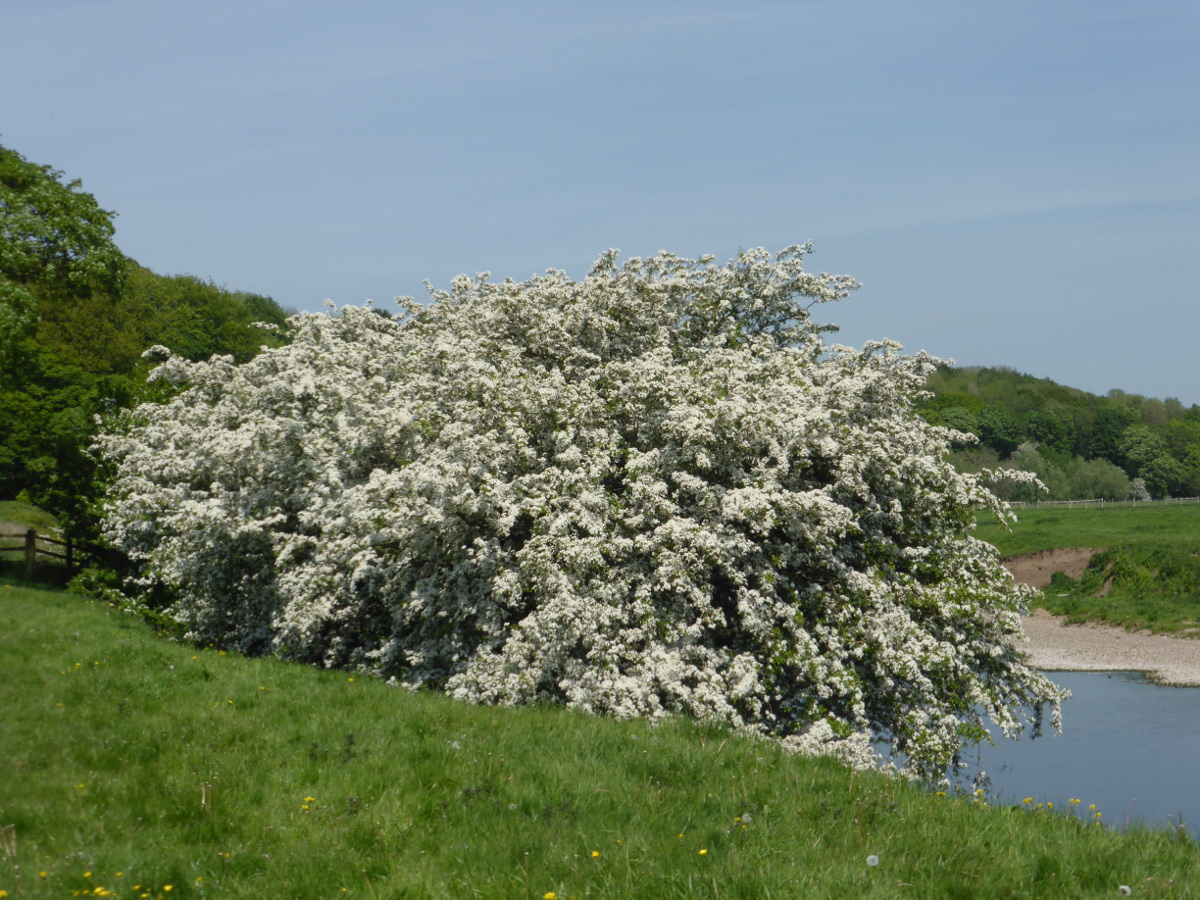
‘From the blood of the King of Annwn the hawthorn blossoms grow.’
Slowly, Gwyn has revealed to me visions of the mythos surrounding His death and ways of honouring it within my personal practice as a Polytheist.
It happens slightly differently every year but I present here a ‘core narrative’ and the rites by which I navigate this difficult time in my seasonal calendar.
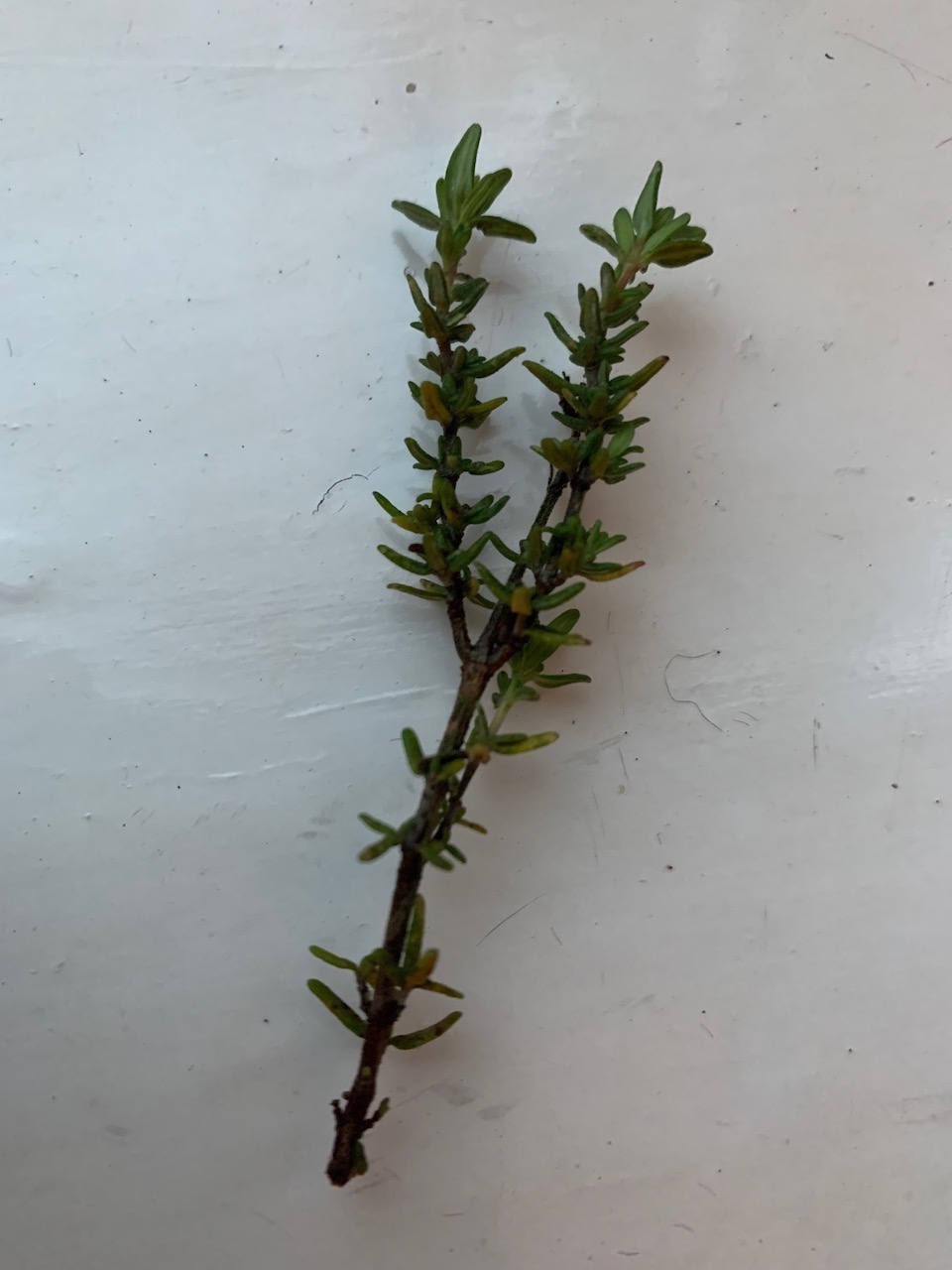
On Nos Galan Mai I offer Gwyn a sprig of thyme for courage and recite my poem ‘If I Had To Fight Your Battle’ and then meditate on its meaning.
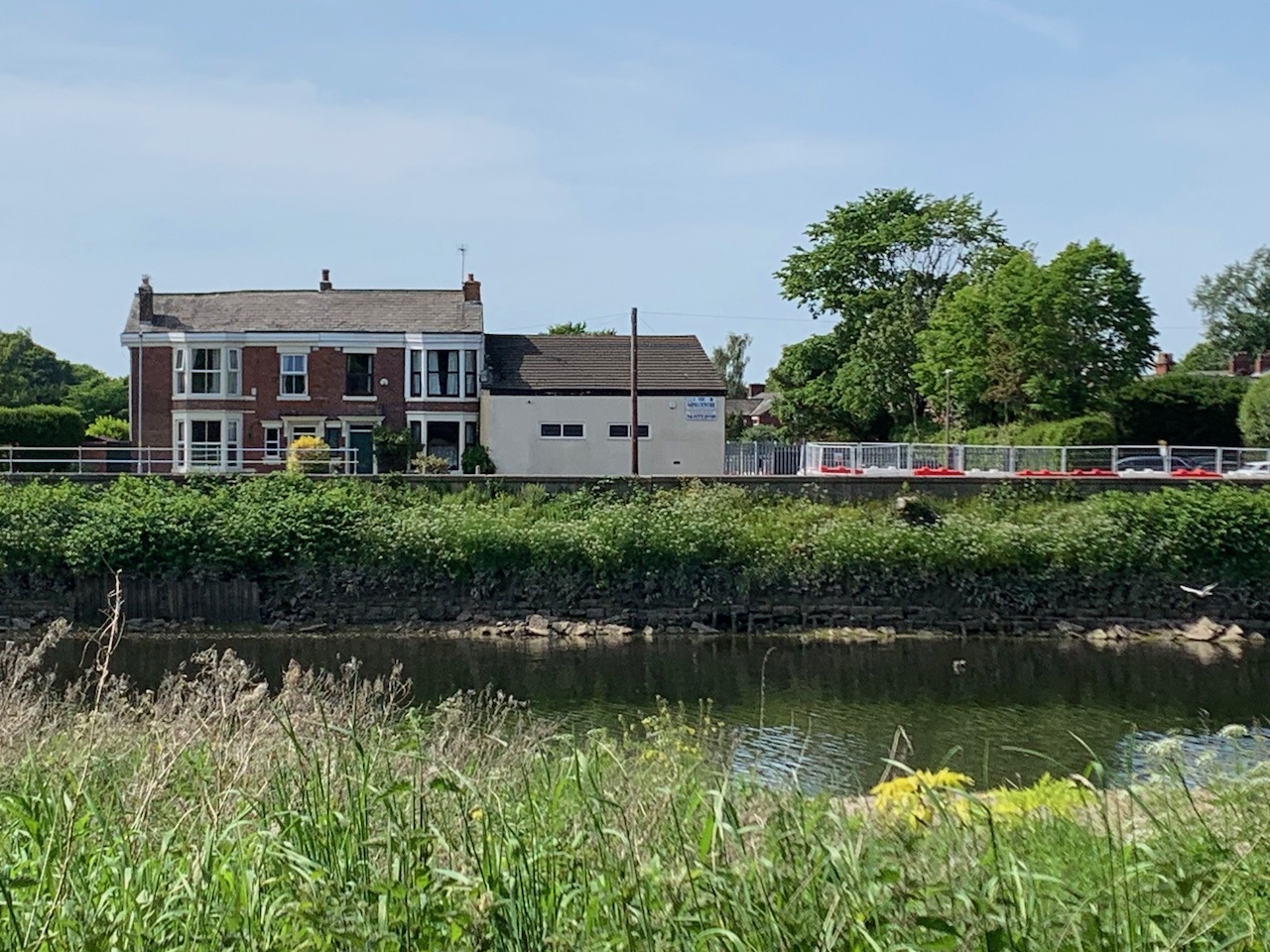
At dawn on Calan Mai I visit Him in spirit as He dons His armour and makes His way to ‘the Middle Ford’, Middleforth on the Ribble, which is the place within my local landscape where His battle takes place and there speak my farewells.
Later in the day I go for a walk and look out for signs of the battle of Gwyn and Gwythyr. I often see Them as warriors, animals, or dragons in the clouds. On one occassion I heard ‘We are the Champions’ playing at a May Day fair.
I place the sprig of thyme at the Middle Ford then look out for signs of Gwyn’s death.
Gwyn’s death takes place before dusk and I have felt it signalled by sudden cold, the coming of rain, and a feeling of melancholy. Once, when I was running, I got the worst stitch ever, like I’d been stabbed in the side, knew it was Gwyn’s death blow and received the gnosis His death was bad that time.
I pay attention to the hawthorn, a tree of Creiddylad’s, symbolic of Her return.
In my evening meditation I bear witness to Gwyn being borne away from the scene of battle by Morgana and Her sisters (4) who appear as ravens, crows, or cranes. They take Him and lay Him out in His tomb in the depths of His fortress in Annwn. His fort descends from where it spins in the skies (5) and sinks into the Abyss (6) to become Caer Ochren ‘the Castle of Stone’ (7).
I then join Morgana and Her sisters and other devotees from across place and time saying prayers of mourning for Gwyn and spend time in silence.
Three days later Morgana and her sisters heal Gwyn’s wounds and revive Him from death. This a process I have taken part in and was powerful and moving. He then remains in a death-like sleep over the summer months.
I would love to hear how other Polytheists honour the deaths of their Gods.
FOOTNOTES
(1) The medieval Welsh tale of Culhwch ac Olwen (11th C)
(2) Such as the abduction of Persephone by Hades in Greek mythology.
(3) Clues to Their identities as Winter and Summer Kings are found in their names Gwyn ap Nudd ‘White son of Mist’ and Gwythyr ap Greidol ‘Gwythyr son of Scorcher’.
(4) I believe Morgana and her sisters are Gwyn’s daughters through personal gnosis based on the associations between Morgana, the Island of Avalon, and Avallach, the Apple King, who I believe is identical with Gwyn and the possible identification of Morgan and Modron, daughter of Avallach.
(5) ‘the four quarters of the fort, revolving to face the four directions’ – ‘The Spoils of Annwn’.
(6) The existence of an Abyss in Annwn is personal gnosis.
(7) This name is not a direct translation (Marged Hancock translates it as ‘the angular fort’) but comes from Meg Falconer’s visionary painting of Caer Ochren ‘the cold castle under the stone’ in King Arthur’s Raid on the Underworld.
Dawn arrives yet You are gone. The birds are singing yet You are gone. The flowers are turning their petalled heads towards the sun yet You are gone.
Your absence is like the spinning of the Void.
You are gone to its bottommost depths with Your castle of cold stone.
You are gone but Your haunting is everywhere with Your promise of return.
You died but You are not dead but only sleeping.
We share a heartbeat and a breath and every one brings us a little closer together. I remember this when You are gone.
This is a gifted song that I have been singing for Gwyn at His altar in my morning and evening devotions since His death in His seasonal battle against Gwythyr on Calan Mai after which He sleeps over the summer months in His castle of cold stone. (At night I replace ‘dawn’ with ‘dusk’ and ‘towards’ with ‘from’).
This is the first time I have sung on video and I’ve only sung in public once before in a performance group. I was put off when a friend jestingly told me I ‘sing like a nun’ in the sense I am not rock ‘n’ roll enough. Well I am a nun now so I can sing like a nun!
The image on my altar is a visionary painting by Meg Falconer of Caer Ochren ‘the cold castle under the stone’ from King Arthur’s Raid on the Underworld.
‘This is a point in our lives where we decide (or are forced) to throw the anchor down, to live in one place, have a teacher, dig in.’ – Martin Shaw
The word ‘anchorite’ or ‘anchoress’ comes from the Greek, anachoreo, meaning ‘to withdraw’. – Mary Wellesney
I am not quite an anchorite. I have not yet been buried alive. Not with Christ. Not even with Gwyn. I do not live in a cell twelve metres by twelve metres with servants to bring my food, remove my waste and feed me books in exchange for insights from a tiny window called a squint.
I have not yet given up all my worldly possessions or ambitions.
I like to run and might have been one of the nuns who ran away like Isolde de Heton from Whalley Abbey in the 1470s but not for forbidden children or men
but simply for the desire to roam however far my walking, running or cycling legs will carry me through the labyrinth of this land following the streets that lie on older streets, on pilgrim’s paths and padways and Roman roads and horse paths and deer paths.
The horses in me bolt from their stables when kept in too long.
They run with the hounds before the wolves and ravens, the owls with their crazy eyes mad on psychedelics, the portents from the stars and our gardens.
Honesty is here and all the pavement plants.
I am told I must be ‘a guide to the soul.’
I fear my revelations will be mundane and suburban.
They will include words like ‘cloths’ and ‘washing’ and ‘washing up’ but also honesty, Lunaria annua, enchanter’s nightshade, Circaea lutetiana, ivy, hedera, yew, Taxus buccata.
In a vision I am a hell-hound prowling around my anchor. I am the anchoress who howls and where my head is I do not know.
Like you I try to hide my face and my tears for my boy-god and my longing for some kind of miracle.
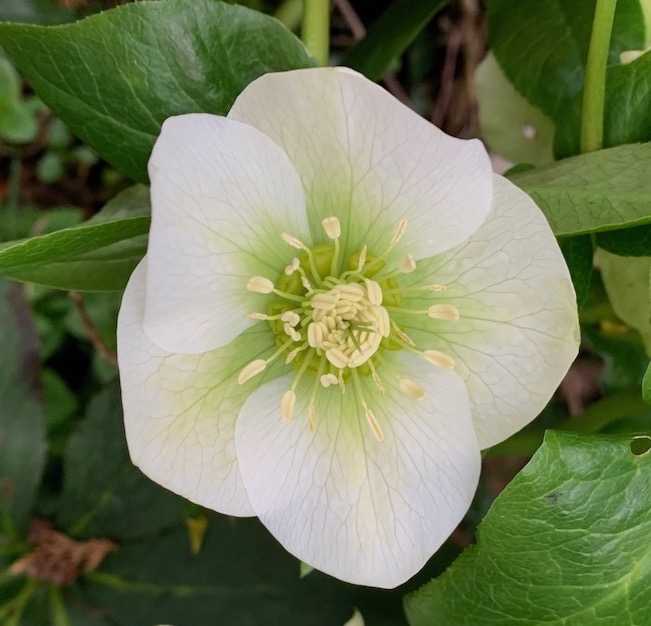
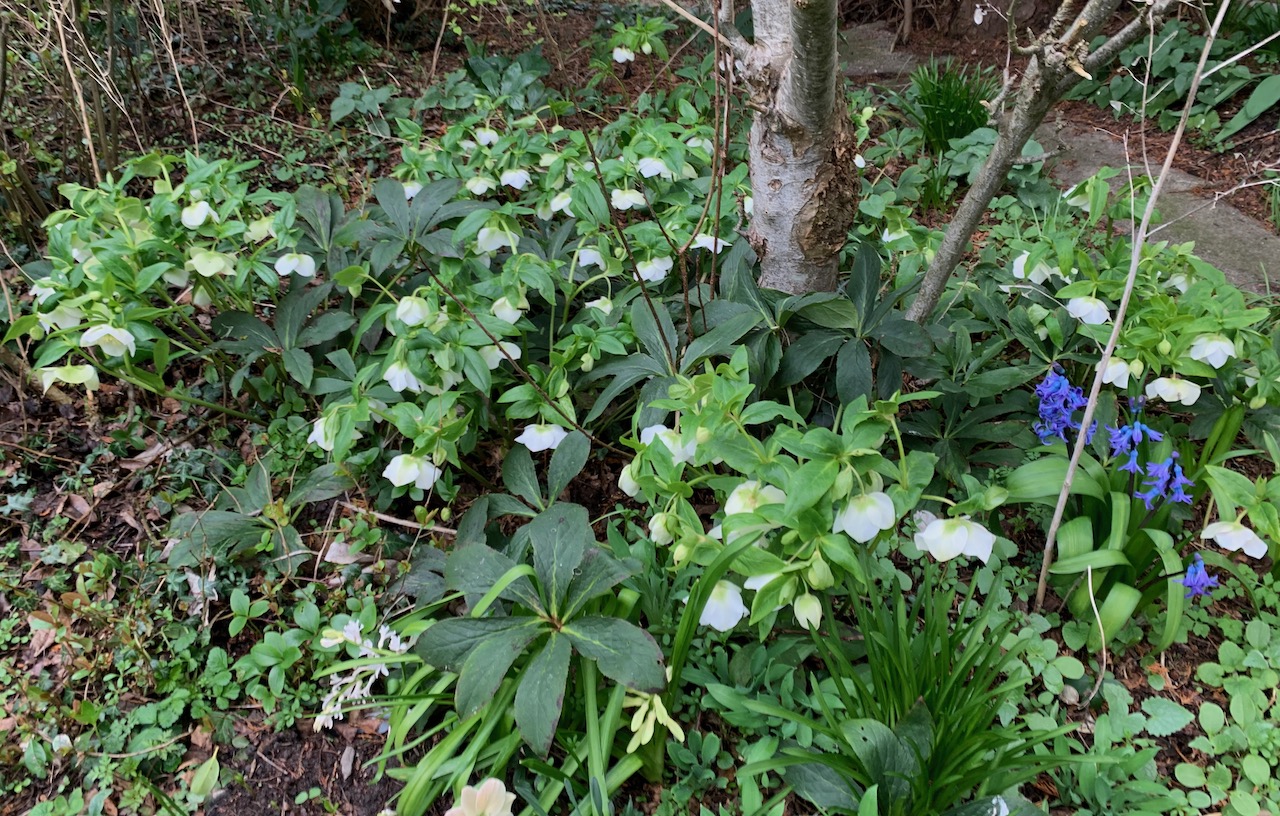
I did not plant you, but I grew up alongside you and have known you for almost forty years.
So close you were invisible and I never asked your name.
Hellbeborus, ‘to kill, to injure, food.”
You are dark green evergreen life and bones.
You remind me of cartilage creaking in my bad knees when they are not tracking right like the sound of a rocking horse or a rocking chair or the fall of a doll’s house.
Memories creak and my attempts to forget them.
If not for my knees I would run forever, until skeletal – the perfect rose.
Like you I am happy to stay in place repeating the same patterns and the same cycles yet the world will not have it that way – it likes to break us and remove us from our habits and our homes
to journey by candlelight or dead starlight to the land of the King of Bones
whilst the sound of spring flowers opening is the sound of something happening.
The lampshade over my face disguises my identity.
All I want is to stay another forty years, repeating the same patterns over again, but I hear another king is trying to build a road to Annwn from the bones of his enemies.
This poem addresses the hellebores in my back garden. It is partly based on frustrations with minor health problems. I have recently been diagnosed with rosacea (facial redness) and it has made me feel even less like showing my face in public. After cutting down my running over winter, as I’m increasing my mileage, my anterior knee pain ‘runner’s knee’ has returned. After hoping strength training had cured it, it is holding me back from attaining my goal of returning to 30 miles a week. The boy-god I speak of, also the King of Bones, is a guise of Gwyn, my patron God, a King of Annwn, has been appearing to me in as I write about Annwn before the creation of the world, long before humans and medieval tales.
Who would go with the boy in the serpent skins draped over one shoulder fastened with a bone pin
to the world of dead dragons at the bottom of the Otherworld?
Who would go with him clambering over the corpses where his hands and feet are always bloody because the aftermath of the battle is endless?
Who would follow him down the trails of the scales of dead serpents to where they have sloughed off their skins, one, then another?
Who would face what lies beneath, the glistening organs, the hearts, the lungs, the livers hung up in caves, the bowels woven into a pattern on a loom, the heart strings strung on a harp?
Who would walk amongst those who took the pickings?
Who would run ragged through the caves of a hundred claws?
Who would refuse to admit defeat to the jaws that hang on the walls?
Who would take off all their masks and skins and expose not only raw flesh and organs but what lies underneath and hope it is a soul?
~
Vindos/Gwyn ap Nudd first appeared to me as the Boy in the Serpent Skins during some journeywork I was doing to find out more about his boyhood as part of the process of writing my novel-in-progress In the Deep.
The book begins in Annwn, ‘the Deep’, prior to the creation of the world. After his Dragon Mother is slain by the Children of the Stars and he is flung into and escapes the Abyss, the boy finds himself alone except for the corpses and ghosts of dead dragons and the devouring serpents who lie beneath.
Over the past six months I have been journeying with him to find out more about this phase in his life and how it has been shaped by the challenges of the serpents and his descent and initiation into their savage and visceral culture. This has provided the raw material for a good part of the story of In the Deep.
In the image beneath he is pictured as he appears to me with grey skin, white hair and a white jewel in his forehead*, wearing white serpent skins fastened with a bone pin. He has seven fingers and toes with claws.** He carries a handful of white dragon jewels in his right hand and in the left a serpent’s tooth. Above him are the four winged ghost serpents with whom he forms a bond and come to serve him as his messengers – Tero, Goro, Fero and Kilya.
*I had thought this was an appearance unique to me until by coincidence I was re-reading Pagan Celtic Britain by Anne Ross and came across an image of a bronze head with a jewel in its forehead from Furness, Lancashire, not far from me!
**This is not unknown in Celtic mythology. In The Tain Cu Chullain is described thus – ‘Each foot had seven toes and each hand seven fingers, the nails with the grip of a hawk’s claw or a gryphon’s clench.’ Cu Chullain’s former name was Setanta and he might have been known in northern Britain as Setantios, a possible deity of the Setantii tribe here in Lancashire.
You can support my work in return for exclusive excerpts from In the DeepHERE.
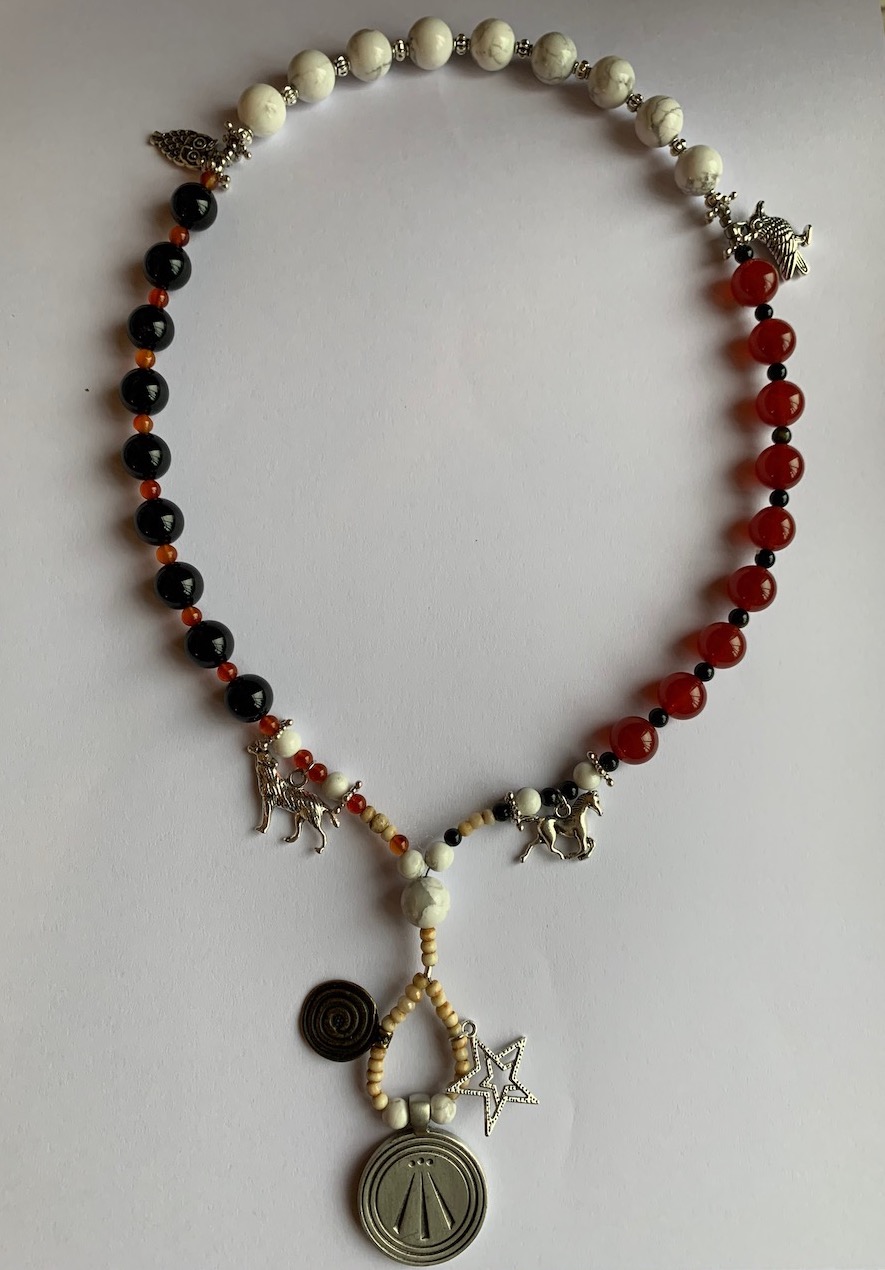
As a gift for my dedication as a nun of Annwn my friend Aurora J Stone made me some prayer beads. Crafted in the colours of Annwn from howlite (white), carnelian (red) and onyx (black) and the smaller ones from bone they include animals and symbols I associate with my patron God, Gwyn ap Nudd – a horse, a hound, an owl, a raven, a star, a spiral and the Awen. They are the most beautiful and meaningful gift I have ever been given.
When I received the beads earlier in January I was unsure what to do with them. I learnt that in the Christian tradition the person praying starts with the charm (the Awen) and the nearby symbols then moves onto the central bead, which is the invitation to prayer. There are then set prayers to be recited with the beads moving around in a clockwise direction from start to finish.
As we don’t have a set way of praying with beads or a body of prayers for Gwyn and the deities of Annwn in the Brythonic tradition I created my own by listening to the beads and for what came through from Gwyn and from the Awen. They are written below. The words in bold represent a bead or a symbol and can work as a pause for deeper meditation.
Prayer Beads of Annwn
Dedicated to Gwyn ap Nudd and the Mysteries of Annwn
The Awen: Annuvian Awen prayer*
Your Star: the first to shine and the last to die**
Your Spiral: I walk with You from beginning to end
~
Invitation:
Gwyn ap Nudd, White Son of Mist by this white bead of howlite, I respond to Your call to prayer – let it be a doorway to Your deep mysteries, a gateway to the depths of Annwn.
~
Your Hound: the opening howl
~
Black is for dark, for the darknessof Annwn, for the Cauldron of Pen Annwn, for the womb of Old Mother Universe. For the primordial material and the black dragon, for the chaos and terror before the birth of stars and worlds.
~
Your Owl: wisdom in madness
~
White is for spirit, for the spiritsof Annwn, for the horses and hounds of Your Hunt, for the fury held in Your kingdom and in You, for all souls gathered at the end of time, for the divine breath uniting all.
~
Your Raven: croaks over gore
~
Red is for blood, for the heartbeatof Annwn, for the heart of Your Kingdom and the berries of the yew, for the river of blood uniting us with our ancestors, for our sacrifices and our eternal battles.
~
Your Horse: carries me home
*I wrote this in English and fellow awenydd Greg Hill translated it into Welsh HERE. **This echoes a poem for Gwyn called ‘For the First Star’ by another fellow awenydd and Gwyn devotee Thornsilver Hollysong HERE.







 The Sanctuary of Vindos