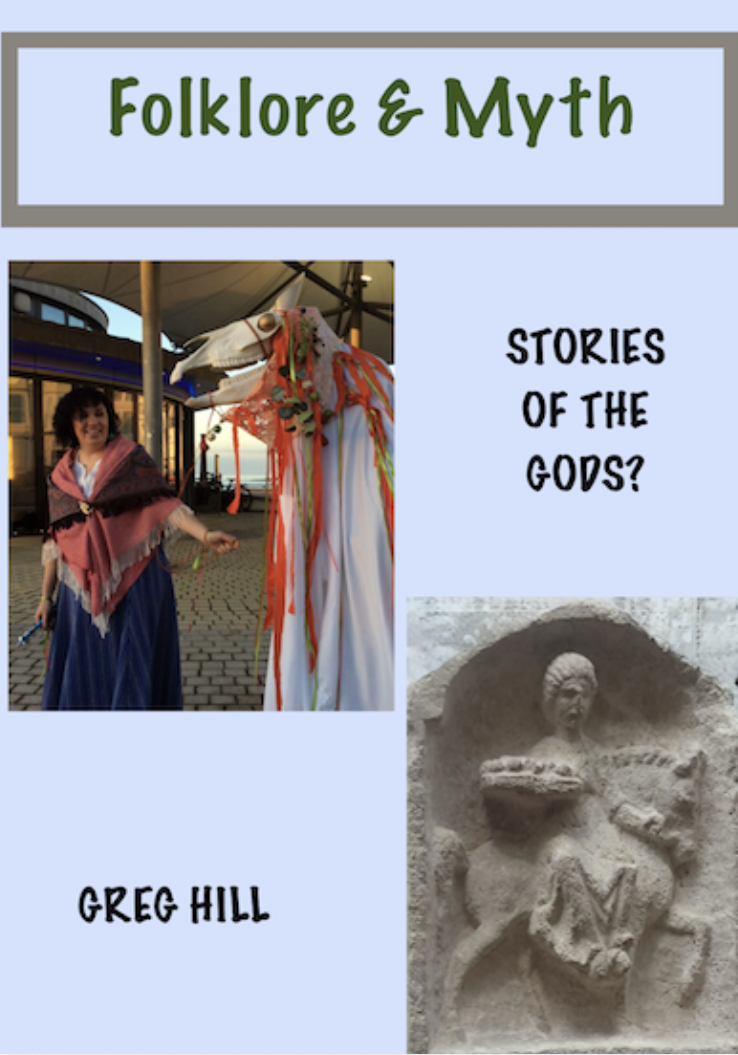
Folklore and Myth – Stories of the Gods? by Greg Hill

Fellow Brythonic polytheist Greg Hill has recently put together an important booklet presenting ‘A consideration of the argument that Medieval Welsh tales contain elements of Brythonic mythology and a critique of the argument that because they share motifs with folktales they cannot count as stories of the gods.’

Herein he critiques ‘the refusal to accept that there could be any continuity of coherent narrative tradition from the Pagan Iron Age to the Christian Middle Ages’ in the works of Ronald Hutton.

This is a really important piece of scholarship arguing that through ‘folklore motifs… stories of the gods were carried through the generations to be made into written tales in the Middle Ages’ and experienced in place and time through ‘experience of the numinous’.

Please read the article HERE and share.

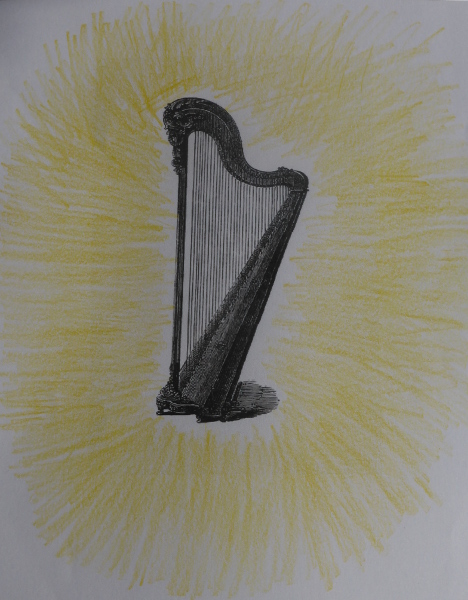
Mabon Learns to Play the Harp

It was Mabon who played then in the youth of the world
Greg Hill

Take the hand of the invisible
and make it visible.

Pluck a chord of light
like a string from the ball of the sun.

Imagine spiders spinning their webs

between the constellations;
the songs of the stars,

make them audible.

Fashion the nine chords
of my harp – the harp of Teirtu –

do not think of how it will play alone
as you in this House of Stone

in the hall of Pen Annwn.
Think not of the turning of his fortress

‘in Annwn below the earth’
or ‘in the air above’.

Do not ponder the reason
for your imprisonment – why

you must become an awenydd or bard.

Reach into the darkness with the audacity
of youth and imagine the discovery

of the wealthy realms of Pluto.

Ask not why the sun does not shine there,
why a dog’s jaws are the doors

and questions remain unanswered.
Reach deep within for the chord that moves

the hearts of planets – underworld gods.

In the river of tears consume the hazel nut
unknowing if it contains the awen

or countless meteoric souls.

Escape down the trail of a meteor
on the salmon of Llyn Llyw.

Take the hand of the visible
and make it invisible.

Forget this story –
you have always been the harper
and my harp has always played on…

Mabon's Harp

Annuvian Awen

Annuvian Awen

Allan o dywyllwch caf fy ngeni
Allan o waed caf fy ngeni
Allan o ysbryd caf fy ngeni

Yn canu o Annwn

Tri phelydryn golau
Tri phelydryn llais
Tri phelydryn wirionedd

I oleuo â rhyfeddod
Ac yn torri’r galon wytnaf

Yn canu o Annwn

~

Out of darkness I am born
Out of blood I am born
Out of spirit I am born

Singing from Annwn

Three rays of light
Three rays of voice
Three rays of truth

To illuminate with wonder
And break the hardest heart

Singing from Annwn

~

About a month ago I awoke with the symbol above in my mind with the name ‘Annuvian Awen’. Awen derives from the Indo-European *-uel ‘to blow’ and has the same root as the Welsh awel ‘breeze’. It is the primordial breath that binds all things, as Kristoffer Hughes says, ‘the voice of the universe speaking to itself’.

The Awen symbol was popularised by Iolo Morganwg in the 1860s. He claimed it was derived from a Welsh alphabet recorded by Nennius in the ninth century and that its meaning was ‘I am that I am’. It has been used by Neo-Druids since.

In medieval Welsh poetry ‘the ogyrven of threefold inspiration’ originate from the cauldron of Ceridwen. Crochan means both ‘cauldron’ and ‘womb’. It is the place from which all beings of the universe are born and to where they return at death.

The cauldron of Ceridwen lies in Annwn, ‘Very Deep’, the ancient British Otherworld. It is guarded by the Head of Annwn: a god with many names who I know as Gwyn ap Nudd. Gwyn guides the souls of the dead and of living initiates to the cauldron.

The black background of the Annuvian Awen represents the origin of Awen from the darkness of Ceridwen’s cauldron in the depths of Annwn. The red stands for the blood of the dead (human and non-human) whose sacrifices have made it possible the living can have Awen. The white is spirit: the breath, the voice of truth, the misty otherlight of the ogyrven ‘spirits’ contained in the person of Gwyn ‘White’ who is also known as the giant Ogyrven.

When I had created the design I received the gnosis I must write a poem to accompany it in English and Welsh. My Welsh is very basic. Having written the English version with an eye to how it looked and sounded in Welsh, translating as I went, I contacted fellow awenydd and Welsh-speaker Greg Hill for help with the translation.

Greg corrected my grammatical errors and helped me with choices of individual words. Interestingly this led to changing the tense of the English poem from past to present which was a big improvement. This fortuitous exchange of Awen between awenyddion gave birth to the poem in its present form. We decided to use it with the symbol on the front page of ‘Awen ac Awenydd’: a website providing a repository of information on the awenydd path.

For me the Annuvian Awen forms an expression of the path of the awenydd that acknowledges the importance of depth in our increasingly superficial world; the need to recover the inspiration that lies in the deeps of Annwn and in the deep places of our souls to combat the soullessness that allows the destructive systems that are wrecking Thisworld to thrive.

The ways to Annwn are dark, misty, uncertain, steeped in blood, for the most part forgotten. Yet there are gods and guides who offer to walk with us and share our quest. So we go with them through the darkness, across the river of blood, to return with the otherlight to illuminate the beauty of Thisworld because not only our lives but the lives of our souls depend on it.

SOURCES

Angela Grant, ‘A Short History of the Awen’, The Druid Network
Greg Hill, ‘Awen’, Awen ac Awenydd
Greg Hill, ‘Taliesin, the Bardic Tradition and the Awen’, The Way of the Awenydd
Greg Hill, ‘The Girl in Ogyrven’s Hall’
Kristoffer Hughes, Natural Druidry, (Thoth Publications, 2007)
Kristoffer Hughes, From the Cauldron Born, (Llewellyn, 2013)
Marged Haycock, Legendary Poems from the Book of Taliesin, (CMCS, 2007)
Awen’, Wikipedia

Dôn and Returning to the Source

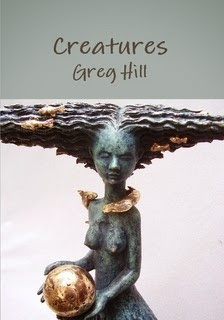
Creatures by Greg Hill

On the cover of Greg Hill’s poetry collection, Creatures, is an image of a sculpture by Fidelma Massey called ‘Water Mother’. The first ekphrastic poem bears the same name. Rivers flow through the book with rain and turning tides.

When I reviewed Creatures in November 2014 I didn’t think I’d ever meet a mother goddess; I decided not to have children at an early age and don’t have a nurturing bone in my body.

However I’ve long been drawn to local rivers, streams and wells, above ground and those unseen, been haunted by the songs of their spirits whether rippling in sunshine, hurtling through darkness, rattling against culverts or running free.

I’ve seen a water dragon shrink and die because we shattered her aquifer, heard the screams of her daughters, stood before the empty greyness of her ghost.

In retrospect it’s not that surprising I should meet a water mother: the primal source from whom every river flows and returns. The fountainhead of all water. She who gives and draws back into the abyss.

***

Her name is Dôn. I met her last October in a vision where I was surrounded by hills filled with people. Somehow the hills became the folds of my coat and I was privileged with custodianship of these people whilst together we witnessed a primordial creation scene.

A dark orb appeared, then pupil-like, placenta-like, emerged the diaphanous form of a goddess. After her appearance the orb came to life: amoeba, green moving swards of vegetation, trees, people, marching through a labyrinthine kingdom back into the void carrying houses and entire civilisations.

Sometimes people get stuck, I heard them knocking, felt they wanted to shout out through me. From a huge crow watching above I received the gnosis my patron, Gwyn, carries the lost ones under his wings, that I too bear some responsibility for them; albeit by carrying their stories.

At the end the goddess’s name rang through the hills, from the spiralling abyss of the deep, echoing in the minds of her people, in the vow I’d made to Gwyn who flies between them: Dôn Dôn Dôn. I had the feeling of being part of her family.

***

Little is known about Dôn from Brythonic tradition. The rivers Don in south Yorkshire and Aberdeenshire bear her name suggesting she is a water goddess. In The Mabinogion we find her children: Gwydion, Gilfaethwy, Arianrhod, Gofannon, Amaethon, Eufydd and Elestron.

To learn more it is necessary to turn to Irish parallels and Danu, mother goddess of the Tuatha Dé Danaan (‘Tribe of the Goddess Danu’). Danu derives from proto-Celtic *Dānu ‘fluvial water’ and is associated with the ‘Indo-European heartland’ of the river Danube. Liz Greene says her ‘dark face was Domnu, which means “abyss” or “deep sea”.

The Tuatha Dé Danaan arrived in dark clouds from islands in the north and took the kingship of Ireland from the Fir Bolg. In turn they were defeated by the sons of Míl Espáne who took the surface whereas the Tuatha were forced underground into the sídhe (‘mounds’) becoming the aos sí (‘people of the mounds’).

Will Parker suggests the Tuatha’s arrival from the north is based on a migratory route from Greece via Scandinavia and says Neolithic Grooved Ware and Bronze Age Bell Beaker cultures show Indo-European influence.

There are no records of how the Children of Don arrived. In the Fourth Branch, Dôn has fallen into the background and her son, Gwydion, is lord of Gwynedd. Similarly we find out little about Beli, grandfather of Brân and father of Caswallon and Lludd, who become rulers of Britain.

In contrast with the Irish myths, the sons of Beli do not defeat the children of Dôn. Instead, Dôn and Beli marry and their children are seen as one family belonging to the House of Dôn.

After the death of Nudd / Lludd Llaw Eraint (‘Lludd of the Silver Arm’), like the Tuatha Dé Danaan, the Children of Dôn retreat into the Brythonic ‘underworld’ Annwn (‘not-world’ ‘the deep’). Gwyn ap Nudd appears as Annwn’s ruler and later as a Fairy King.

***

I’ve been devoted to Gwyn for three years and have gradually been getting to know him and Annwn. My explorations have led me through the deep memories of the landscape to his realm where history and myth blur and are never wholly separate

My initial work (which remains important) involved recovering the memories of my locality. Now I am being led deeper into the underworld where Nudd / Nodens, keeps the matter of dream and Dôn presides over the waters of creation and destruction.

Although earlier worlds and their children have sunk into Annwn they remain in our sacred landscape: in the hollow hills, in deep lakes and the sea, in our flowing rivers and their names.

Although barrow mounds have been ploughed over, rivers culverted, lakes drained, they are still with us in Annwn’s memory which will not let us forget their presence and what we’ve done.

Old bonds split and severed by centuries of Christianity, industrialisation, commodification, hyper-rationalism can be reknit and renewed by swimming back down the labyrinthine ways to where we’re unified with our ancestors, the old gods, their primal source: the water mother Dôn.

SOURCES

Liz Greene, The Astrological Neptune and the Quest for Redemption, (Weiser, 1996)
Robert Alexander Stewart Macalister, Lebor Gabála Érenn, (Dublin University Press, 1937)
Sioned Davies (transl.), The Mabinogion, (Oxford University Press, 2007)
Will Parker, The Four Branches of the Mabinogi, (Bardic Press, 2005)
Review: Creatures by Greg Hill

Creatures by Greg HillGreg Hill lives in Wales. He was editor of The Anglo-Welsh Review and contributes regularly to Welsh literary magazines. I’ve followed his blog for a while and was delighted when I heard about the release of his first full length collection of poetry in print; Creatures.

The title alone creates intrigue. What kind of creatures? The epigraph replies; ‘All creaturely things… Plants growing, / Roads running, / Rivers flowing, / Places that sing.’ It is clear from the outset this collection is about an animate landscape where every being is a creature, alive and sentient.

The first ekphrastic poem is based on the picture on the cover; Fidelma Massey’s sculpture, ‘Water Mother,’ who dreams thoughts of water into being. Here, the ‘cosmic ebb and flow’ of thought and water is contained in the poem. Analogies between living water and perception recur throughout the book. In ‘Cwm Eleri’ the poem’s tight structure fails to contain the river, which slips from grasp like time. In ‘Myddleton’s River’ water-ways link London, Wales and the underworld, forming a conduit for complicated alchemical processes of mental and physical transformation.

The contrast between our immediate perception of creatures and those aspects of their being impossible to grasp is central. A jackdaw sitting happily in the hearth becomes ‘an image… a token of wildness… like a jigsaw piece from another puzzle;’ a homely and familiar event made strange. Greg writes that as a heron dips out of sight ‘a part of me fell out of the sky with it,’ lost ‘except that something / settles in the flow of these words.’ We can never completely grasp our perceptions. Only through words can they find permanent representation.

Several poems present roads, paths and boundaries as living entities and how our understanding of them shifts once they are crossed and they slip into memory. If we try to return, the roads are ‘dull,’ ‘dusty,’ ‘empty.’ Our former selves are shadows, unfamiliar reflections. ‘Strange border guards’ usher us ‘from what / we neither know nor recognise.’ These haunting and complex poems demonstrate how choices shape our relationship with the landscape and hence our memories.

The mysteries of the Bardic Tradition and its creatures are explored in novel ways. ‘Awen’ depicts a shepherd lad inspired to speak poetry by a spirit ‘like a forest god’ who is elusive as the words he inspires. Four episodes from the Mabinogion are covered. I was fascinated by ‘A Scaffold for a Mouse,’ which depicts ‘Manawydan living in a dream / landscape with the life / conjured out of it like a flat plane.’ Through his ‘firm grip’ on the mouse, ‘a small thing / for a great purpose,’ he breaks the ‘powerful magic’ of Llwyd, awakening ‘form to its true nature’ thus freeing Rhiannon, Pryderi and Cigfa.

This collection depicts a relationship with the creaturely world that is on the surface simple and direct yet beneath mysterious and disconcerting. Each time I return to these poems I discover new meanings and thematic relationships within the whole. I’d recommend this book to anybody who likes poetry with lots of depth and has a love for nature, myth and creatures.

Creatures can be purchased through Lulu here: http://www.lulu.com/spotlight/greghillpoetry

Greg Hill’s poetry site is here: http://greghill.weebly.com/
Greg’s blog, Hill’s Chroicle can be found here: http://hills-chronicle.blogspot.co.uk/