Interior Castles – The Journeys of Saint Teresa and Arthur

Two castles – crystal, shining, illumined from within by the light of a glorious King. Each has seven appearances. Outside are venomous monsters. 

Two journeyers – a nun and a warlord. One goes to marry the King, one to kill Him.

The Vision

Theresa

She is gifted a vision of a ‘beautiful crystal globe’ ‘in the shape of a castle’ ‘containing seven mansions, in the seventh and innermost’ ‘the King of Glory, in the greatest splendour, illuminating and beautifying them all.’ (1)

‘A castle made of a single diamond or of very clear crystal, in which there are many rooms, just as in Heaven there are many mansions… some above, others below, others at each side; and in the centre and midst of them all is the chiefest mansion where the most secret things pass between God and the soul.’ (2)

Outside ‘foul, dark, infested with toads, vipers and other venomous creatures’. (3)

Arthur

He hears rumours of ‘the Glass Fort’ (4) ‘a tower of glass’ ‘in the middle of the sea’ (5). ‘Amid the land a castle tall’, shining as ‘crystal’, a hundred towers lighting the sky, ‘of diamond… battled stout’, lit from within, sparkling with ‘unearthly light’. Jewelled stones shining forth a light ‘like sunbeams.’ (6) The King glistening so bright, shining so hot none can gaze upon him. (7)

‘The fairest castle’ with ‘the best appointed troops,’ ‘minstrels,’ ‘music,’ comely youths, elegant maidens, in the midst ‘the king sitting in a golden chair’ offering ‘every dainty and delicacy’, ‘every drink and liquor,’ ‘every luxury of courtesy and service, of banquet and of honourable entertainment.’ (8)

Outside ‘a great scaled beast’ with ‘a hundred heads’, a battalion ‘beneath the root of his tongue’ and ‘in each of his napes’. ‘A black forked toad’ with ‘a hundred claws’. ‘A speckled crested snake’ torturing a hundred souls in her flesh. (9)

The Fortress of Impediment

Teresa

She goes with her sisters and tells them not to fight against the ‘snakes and vipers and poisonous creatures’ who ‘prevent the soul from seeing the light.’ She tells them they are nothing but dust in their eyes obscuring their vision. (10)

Here the soul is deaf and dumb. The ears must be opened, the tongue loosened. ‘The door of this castle is prayer’. (11) Not just vocal prayer, but mental prayer, ‘for if it is prayer at all, it must be accompanied by meditation. If a person does not think Whom he is addressing, and what he is asking for, and who it is that is asking and of Whom he is asking it, I do not consider that he is praying at all even though he be constantly moving his lips.’ (12)

Teresa and her sisters open the door with their prayers and are guided in.

Arthur

He takes ‘three loads of Prydwen’ and storms ‘Hell’s gate’ without a prayer. (13) Taliesin, with ‘two keen spears’ ‘from Heaven’ from ‘the streams of Annwn’ (14) pierces the monsters (15) but they do not die. They grow more heads and form a dark fog swelling like motes in the corners of every eye.

Battle-weary at last they find, or are found by, the glass fort, ‘six thousand men’ ‘standing on its wall’, its uncommunicative watchman. ‘Covered with men, to whom they often spoke, but received no answer.’ (16) Who is deaf and dumb?

Arthur and his warriors fight and break their way through the fortress door. 

The Four-Cornered Fortress

Teresa

Teresa and her sisters still find it hard to speak yet can hear. ‘These souls’ ‘understand the Lord when He calls them; for, as they gradually get nearer to the place where His Majesty dwells, He becomes a very good Neighbour.’ ‘He calls them ceaselessly, time after time, to approach Him; and this voice of His is so sweet that the poor soul is consumed with grief at being unable to do His bidding immediately’ so ‘suffers more than if it could not hear Him.’ (17)

It seems to come from all four corners of the fortress and Teresa’s sisters rush from one to the next in longing and she is forced to still them, tell them to listen. She reminds them their King is in the centre, the midst, infinitely patient. ‘His Majesty is quite prepared to wait for many days, and even years, especially when He sees we are persevering and have good desires.’ (18)

Arthur

A song is heard ‘in the four quarters of the fort revolving to face the four directions’. (19) Arthur tells his men to put their hands over their ears, to ignore its sweetness, the seductive music of the minstrels, the pipes and harp.

‘A song is heard in the four quarters of the fort, stout defence of the island.’ (20) The calling of the King is ceaseless and Arthur’s men rush from corner to corner, until Arthur takes the middle, tells them ‘I am King’, ‘hear no more.’

The Petrification Fort

Teresa

They spend ‘long periods of aridity in prayer’ (21) learning to be ‘humble’ not ‘restless’ (22). They face the testing of when His Majesty ‘withdraws His help’ (23)

It’s cold, so cold, in the Petrification Fort, they are tempted to close their hearts. To make them hard and solid as ice when their prayers are not fulfilled. 

They progress at a slow pace by penance and renunication of themselves.

When all their desires have run dry they hear the flow of fresh water mixing with jet and know their petrified hearts are melting and opening to the source.

Arthur

Cold and hard the fortress. Cold and hard the walls. But not cold and hard as the hearts of Arthur and his warriors who have slain a hundred witches and giants.

They listen not. They pray not. When ‘fresh water and jet are mixed together’ (25) they hear it not. When servants dressed in blue and red arrive to set ‘sparkling wine their drink’ ‘in front of their battalion’ (24) they slaughter them.

Blood and wine run crimson through the frozen corridors of the fort. 

The Fortress of the Silver-Headed Beast

Teresa

Teresa and her sisters ‘are now getting near to the place where the King dwells, they are of great beauty and there are such exquisite things to be seen and appreciated in them that the understanding is incapable of describing them’ ‘without being completely obscure to those devoid of experience.’ (26)

‘The water comes direct from its source, which is God, and, when it is His Majesty’s will and He is pleased to grant us some supernatural favour, its coming is accompanied by the greatest peace and quietness and sweetness’. (27) It enlarges the heart and dilates the soul. No effort is needed ‘for the Lord gives when He wills and as He wills and to whom He wills.’ (28)

The thaw is complete and the water rushes through the veins of the nuns. Teresa perceives a vision of the Lord as a silver-haired child riding a beast with a silver head and He laughs and He whispers to her the answers to the riddles about which day He was created and the mysteries of His birth at noon.

Arthur

Arthur’s frustrated, Taliesin too, at being ‘stuck with pathetic men, with no go in them.’ (29) The fortress is still cold, his warriors bent, buckled, as old men. Their joints creak, there is snow in their hair, hoar frost coats their beards.

A voice mocks ‘those who don’t know on what day the Lord was created, when, at noon, the ruler was born, what animal they guard with his silver head’. (30)

When finally they reach the centre of the fortress and kill the guards they find nothing but a bishop’s crozier, a silver-headed crook, the head of a cold old man.

The Fortress of God’s Peak

Teresa

A lovely land of water-meadows, aurochs grazing, horses on the green hills. A surprise the arrows shooting from the fortress as if from the bow of a Hunter.

Each nun is wounded by an ‘arrow of fire’ not ‘where physical pain can be felt, but in the soul’s most intimate depths. It passes as quickly as a flash of lightning and leaves everything in’ their ‘nature that is earthly reduced to powder.’ (31)

‘The soul has been wounded with love for the Spouse and seeks to be alone.’ (32) ‘It has completely died to the world so that it may live more fully in God.’ (33)

The nuns are prepared for their deaths for, like silkworms, they have fed well on the ‘mulberry leaves’ of prayer and meditation. Now they find their twigs, ‘upon which, with their tiny mouths, they start spinning silk, making themselves very tight cocoons, in which they bury themselves. Then, finally the worm, which was large and ugly, comes out… as a beautiful white butterfly.’ (34)

Teresa and her nuns take flight as white butterflies to the Fortress of God’s Peak.

Arthur

Taliesin’s still cursing the ‘pathetic men with their trailing shields, who don’t know who’s created on what day, when at mid-day God was born, who made the one who didn’t go to the meadows of Defwy.’ (35)

‘Those who know nothing of the Brindled Ox, with his stout collar and seven score links in its chain,’ (36) he berates them as they approach the majestic beast.

Arthur claims the Brindled Ox and sends his men to round up all the cattle – Yellow Spring, Speckled Ox, Chestnut, the Brothers from the Horned Mountain. (37)

From on high a rain of arrows from the bow of the Hunter and His huntsmen. Arthur and his men throw up their shields refusing the blows to pierce their souls.

“Attack!” They scale God’s Peak. ‘Shields shattered, spears broken, violence inflicted by the honoured and the fair’ to the ‘sorrow’ of the fair King. (38)

The Fair Fort

Teresa

They enter the fortress, filled with treasures of the soul, glittering more brightly than gold. Bright, so bright, but none so bright as the throne of the Lord.

‘God suspends the soul in prayer by means of rapture, or ecstasy, or trance.’ (39) It’s as if they’re in chains, blue-grey chains, yet in chains they are more free. ‘When the soul is in this state of suspension the Lord sees fit to reveal to it certain mysteries, such as heavenly things and imaginary visions.’ (40)

The doors of the fortress slam shut and He enters without need of a door with a brilliance ‘like that of infused light or of a sun covered with some material of the transparency of a diamond, if such a thing could be woven. This raiment looks like the finest cambric.’ A ‘terrible sight’  ‘because, though the sight is the loveliest and most delightful imaginable, even by a person who lived and strove to imagine it for a thousand years, because it so far exceeds all that our imagination and understanding can compass, its presence is of such exceeding majesty that it fills the soul with a great terror. It is unnecessary to ask here how, without being told, the soul knows Who it is, for He reveals Himself clearly as the Lord of Heaven and earth.’ (41)

Arthur

They storm into the fair fortress where they see the glistening spoils. Before them, in ‘the heavy grey chain’ is the ‘loyal lad’, ‘Gwair’, ‘singing sadly’. (42)

He’s in an ecstasy, a trance, a rapture, his soul suspended, rapt by a vision.

What could inspire his song, so sad, so beautiful it could melt the heart of the hardest warlord and bring a tear to the eye of one never broken by war?

“Listen not.” Arthur tells his men. “It is a spell. We must free the prisoner.”

None can break the chains, none can break the trance, but another Lord.

“Leave him be,” the voices of nuns, ‘until Doom our poetic prayer will continue.’ (43)

The Fortress of the Feast

Teresa

“These fortresses lie deep within our souls,” Teresa explains to her sisters. “In this seventh fortress we will enter our Spiritual Marriage one and all.”

‘Our Lord is pleased to have pity upon this soul, which suffers and has suffered so much out of desire for Him, and which He has now taken spiritually to be His bride, He brings her into this Mansion of His, which is the seventh, before consummating the Spiritual Marriage. For He must needs have an abiding-place in the soul, just as He has one in Heaven, where His Majesty alone dwells: so let us call this a second Heaven. (44)

‘This secret union takes place in the deepest centre of the soul, which must be where God Himself dwells… the soul remains… in that centre with its God.’ ‘This little butterfly has died’, ‘found rest,’ within her lives the Lord. (45)

They are married. He is their feast, their wine, their bread. They enter Heaven.

Arthur

Arthur and his warriors rush into the hall and bring an end to the feast. In the centre is ‘the cauldron of the Head of Annwn’ ‘kindled by the breath of nine maidens’ ‘with its dark trim and pearls’. ‘It does not boil a coward’s food.’ (46)

“Will you join me for meat?” asks the sovereign. “Bread?” “Wine?” “Mead?”

“I will not eat the flesh of the dead or drink the blood of devils!” 

“That’s no way to speak at the most sacred of weddings.”

“Kill him,” orders Arthur, “kill them all.” Arthur cuts off the King’s head. Lleog thrusts his ‘flashing sword’ into the cauldron and it is left ‘in Lleminog’s hand’. ‘Save seven, none’ return through ‘Hell’s gate’ where ‘lamps burn’. (47)

When he returns with the spoils of Annwn Arthur realises he is in Hell.

~

This prose piece is reconstructed from St Teresa of Avila’s Interior Castle and ‘The Spoils of Annwn’, which documents Arthur’s raid on the Otherworld, and supporting medieval Welsh texts. It attempts to draw out the contrasts between prayerful reverential and exploitative disrespectful approaches to the treasures and rulers of the ‘interior’ realms. Annwn has been translated as ‘inner depth’ and might be seen as a world within and without.

REFERENCES

  1. Saint Teresa of Avila, Interior Castle, (Dover Publications, 2012), p2
  2. Ibid. p15 – 16
  3. Ibid. p2
  4. Haycock, M. (transl), ‘The Spoils of Annwn’, Legendary Poems from the Book of Taliesin, (CMCS, 2007), p436
  5. Nennius, History of the Britons, (Book Jungle, 2008), p14
  6. Hunt, Edward Eyre, Sir Orfeo, (Forgotten Books, 2012), p19 – 20
  7. Ibid. p22
  8. Guest, Charlotte, ‘St Collen and Gwyn ap Nudd’, The Mabinogion, https://www.maryjones.us/ctexts/collen.html
  9. Haycock, M. (transl), ‘The Battle of the Trees’, Legendary Poems from the Book of Taliesin, (CMCS, 2007), p175 – 176
  10. Saint Teresa of Avila, Interior Castle, (Dover Publications, 2012), p25
  11. Ibid. p14
  12. Ibid. p18
  13. Haycock, M. (transl), ‘The Spoils of Annwn’, Legendary Poems from the Book of Taliesin, (CMCS, 2007), p435 – 6
  14. Haycock, M. (transl), ‘The Battle of the Trees’, Legendary Poems from the Book of Taliesin, (CMCS, 2007), p183
  15. Ibid. p175
  16. Nennius, History of the Britons, (Book Jungle, 2008), p14
  17. Saint Teresa of Avila, Interior Castle, (Dover Publications, 2012), p29
  18. Ibid. p29
  19. Haycock, M. (transl), ‘The Spoils of Annwn’, Legendary Poems from the Book of Taliesin, (CMCS, 2007), p435
  20. Ibid. p436
  21. Saint Teresa of Avila, Interior Castle, (Dover Publications, 2012), p38
  22. Ibid. p39
  23. Ibid. p40
  24. Haycock, M. (transl), ‘The Spoils of Annwn’, Legendary Poems from the Book of Taliesin, (CMCS, 2007), p436
  25. Ibid. p436
  26. Saint Teresa of Avila, Interior Castle, (Dover Publications, 2012), p53
  27. Ibid. 49
  28. Ibid. p47
  29. Haycock, M. (transl), ‘The Spoils of Annwn’, Legendary Poems from the Book of Taliesin, (CMCS, 2007), p437
  30. Ibid. p437
  31. Saint Teresa of Avila, Interior Castle, (Dover Publications, 2012), p141 – p142
  32. Ibid. p86
  33. Ibid. p65
  34. Ibid. p44
  35. Haycock, M. (transl), ‘The Spoils of Annwn’, Legendary Poems from the Book of Taliesin, (CMCS, 2007), p437
  36. Ibid. p437
  37. Davies, S. (transl.), The Mabinogion, (Oxford University Press, 2007), p195
  38. Hill, G. (transl.), ‘The Conversation between Gwyn ap Nudd and Gwyddno Garanhir’ https://awenydd.weebly.com/the-conversation-between-gwyn-ap-nudd-and-gwyddno-garanhir.html
  39. Saint Teresa of Avila, Interior Castle, (Dover Publications, 2012), p104
  40. Ibid. p105
  41. Ibid. 132 – 133
  42. Haycock, M. (transl), ‘The Spoils of Annwn’, Legendary Poems from the Book of Taliesin, (CMCS, 2007), p435
  43. Ibid. p43
  44. Saint Teresa of Avila, Interior Castle, (Dover Publications, 2012), p146 – 147
  45. Ibid. p151 – 152
  46. Haycock, M. (transl), ‘The Spoils of Annwn’, Legendary Poems from the Book of Taliesin, (CMCS, 2007), p436
  47. Ibid. p436

BIBLIOGRAPHY

Davies, S. (transl.), The Mabinogion, (Oxford University Press, 2007)
Haycock, M. (transl), ‘The Spoils of Annwn’, Legendary Poems from the Book of Taliesin, (CMCS, 2007)
Hill, G. (transl.), ‘The Conversation between Gwyn ap Nudd and Gwyddno Garanhir’ https://awenydd.weebly.com/the-conversation-between-gwyn-ap-nudd-and-gwyddno-garanhir.html
Nennius, History of the Britons, (Book Jungle, 2008)
Saint Teresa of Avila, Interior Castle, (Dover Publications, 2012)
Gwyn ap Nudd and the Spirits of Annwn: Remembering the Underworld Gods

I recently came across an article through the Caer Feddwyd Forum (1) called ‘The Underworld Gods’ by medieval scholar, Will Parker. It brought to my awareness the existence of an inscription in Chamalieres in central France, which took the form of a prayer or invocation addressed to an entity or group of entities known in Ancient Gaul as the andedion, ‘the Under-world God(s)’ or ‘Infernal One(s)’ (2).

Parker links the andedion to the Irish andee ‘non-gods’ and suggests a similar group of deities would have been worshipped in Iron Age Britain. Through etymological links between the ‘elements Clt. dio(n) (Ir. dé) ‘god(s)’ and ‘the suffix ande-/an-‘ he connects them to Annwn ‘not world’, Britain’s indigenous otherworld or underworld. Parker goes on to identify the andedion and andee with the spirits of Annwn and their ruler, Gwyn ap Nudd.

This is of interest to me because Gwyn is my patron god. Parker’s insights make it possible to trace a trajectory from Iron Age beliefs concerning underworld gods, through Gwyn’s appearances in medieval literature and later folklore to those who worship him today.

Gwyn ap Nudd ‘White Son of Mist’ is a Brythonic deity. His veneration dates back, at least, to the Iron Age, where he appears as Vindonnus ‘White or Clear Light,’ in a trio of Gallo-Brythonic inscriptions in Essarois. Here he is equated with Apollo, another hunter deity (3). It is likely he was worshipped across Britain as Vindos ‘White’ (4). It has also been conjectured that Gwyn and his hunting dog, Dormarth ‘Death’s Door’ occupied the astrological positions of Orion and Sirius to the ancient Britons.

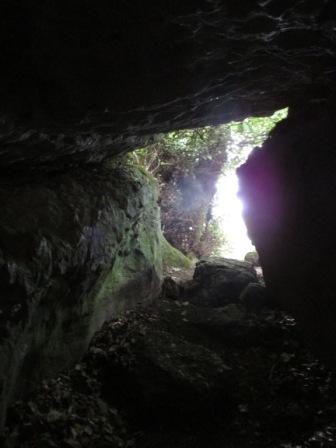
Cave, SilverdaleParker suggests Late Bronze Age ‘ritual shafts’ and ‘offering pits’ containing depositions including human and animal bones, grain, pottery and metalwork express a ‘quid-pro-quo’ relationship between the ancient Britons and the underworld gods. If he is correct, it is possible that Vindos / Gwyn, Dormarth and other kindred spirits were involved in these rites.

Gwyn’s first literary appearances are in medieval Welsh texts; ‘How Culhwch Won Olwen’ (11th C) in The Mabinogion and ‘The Dialogue of Gwyddno Garanhir and Gwyn ap Nudd’ (13th C) in The Four Ancient Books of Wales. These texts have roots in an older, oral tradition and contain fragments of tales from across Britain that predate Christianity. A significant number of these, including two featuring Gwyn, are from ‘The Old North’ (5). This is important to me because I connect with Gwyn in Lancashire.

Parker argues that superstitions about the underworld gods carry over into The Mabinogion. This is evidenced in the disappearance of livestock, children and crops. Pwyll’s encounter with Arawn, a King of Annwn, is the catalyst for the unfolding drama of the first four Mabinogi. Parker says these stories show the spirits of Annwn could not ‘be simply dismissed or ignored. Instead, a complex narrative had to be constructed in which, through a series of symbolic ritual manoeuvres, their power was drawn out, confronted and finally neutralised.’ The attempts of medieval scholars to disempower these deities can be seen at work in the development of Gwyn’s mythology.

In ‘The Dialogue of Gwyddno Garanhir and Gwyn ap Nudd,’ (6) Gwyn is presented as a divine warrior returning from battle to the Tawe near the vale of Neath. Gwyddno, ruler of Cantre’r Gwaelod, speaks of and addresses him with reverence and respect. ‘Bull of conflict was he, active in dispersing an arrayed army, / The ruler of hosts, indisposed to anger, / Blameless and pure was his conduct in protecting life.’ Other epithets Gwyddno uses include ‘hope of armies’ and ‘hero of hosts.’ ‘Host’ may refer to the spirits of Annwn.

Gwyn introduces himself as ‘Gwyn, the son of Nud, / The lover of Creurdilad, the daughter of Lud.’ He names his horse as ‘the torment of battle’ and refers to Dormarth as ‘truly the best of dogs,’ ‘handsome,’ ‘round bodied’ and ‘ruddy nosed.’ References to his possession of a ‘polished ring’ and ‘golden saddle’ are also suggestive of his status.

The title ‘Bull of Conflict’ refers to Gwyn’s role as a psychopomp. At the end of the poem he describes his travels across Britain gathering the souls of fallen soldiers. He appears to be berating this task. ‘I have been where the soldiers of Prydain were slain, / From the East to the North; / I am alive, they in their graves! / I have been where the soldiers of Prydain were slain / From the East to the South / I am alive, they in death!’

This poem contains important clues about Gwyn’s identity as a divine warrior and huntsman, whose role was to gather the souls of the dead and take them to Annwn.

In ‘How Culhwch Won Olwen’ in The Mabinogion, Gwyn is depicted as a huntsman and advisor to King Arthur. His place in Arthur’s court list and apparent subjection to both Arthur and God may be read as attempts by medieval scholars’ to explain and downgrade his position.

That ‘Twrch Trwyth will not be hunted until Gwyn son of Nudd is found’ (7) hints at his role as leader of the hunt, and knowledge of otherworldly beings. The Twrch was a king reputedly turned into a swine by God. When Gwyn does not reveal his location it is possible he is defending his own.

The advice of Gwyn and Gwythyr ap Greidol ‘Victor Son of Scorcher’ is also needed by Arthur to find Pennant Gofid in the ‘uplands of hell,’ which Evans and Bromwich say is ‘clearly situated in North Britain’ (8). When they reach this location, Gwyn and Gwythyr advise Arthur in his defeat of the ‘The Hag of Pennant Gofid,’ another otherworldly entity. The parcity of their advice, which leads to several failed attempts by Arthur’s men before the Christian King is forced to step in to slay her, may also suggest that Gwyn and Gwythyr are acting as tricksters.

A pair of lines fundamental to understanding Gwyn’s mythos, and which continue to intrigue and perplex me, are the following; ‘God has put the spirit of the demons of Annwfn in him, lest the world be destroyed. He will not be spared from there’ (9).

Taken literally, this seems to mean that at some point during the period of Christianisation God put the spirit of the demons of Annwn ‘in’ Gwyn’s person to prevent the world’s destruction. Or it may mean that he granted Gwyn rulership of them for this purpose. However, it is probable that the agency of God was brought in as a cover to excuse the prevalent belief in the existence of these spirits and their ruler.

Even if we assume God’s agency is a cover for existing beliefs, the notion that Gwyn somehow contains ‘the spirit of the demons of Annwn’ is a fascinating one. In a conversation via e-mail, Heron (10) told me the word ‘spirit,’ in Welsh, is ‘aryal,’ which can mean ‘ferocity,’ ‘essence’ or ‘nature’. He referred me to Evans and Bromwich, who say ‘Gwyn’s partaking of the ‘nature of the devils of Annwfn’ indicates a recognition on the part of the redactor of the tale that Gwyn ap Nudd belonged to a sinister and forbidden mythology’ (11). Within this mythology he may already be seen to embody the nature of these entities, or to hold power over them.

That the destruction of the world is at stake suggests Gwyn’s role was extremely significant. If it is assumed this notion has older roots, some of the offerings of the ancient Britons may be explained as attempts to placate these spirits and their ruler due to their destructive capacity. It is also possible Gwyn was invoked as the only being who could hold them in check.

Fears and superstitions surrounding Gwyn and the spirits of Annwn may lie behind the story of his abduction of Creiddylad. After Creiddylad, who is both Gwyn’s lover and sister, elopes with Gwythyr, Gwyn seizes her back. It might be assumed he takes her to Annwn, and that this suggests an underlying fear of being abducted by Gwyn and his forces.

Gwythyr amasses his armies and attacks Gwyn. Gwyn triumphs and captures a number of Gwythyr’s allies, who are mainly rulers of the Old North. During their captivity Gwyn slaughters Nwython, cuts out his heart and feeds it to his son, Cyledr, who goes mad. This could be read as a clear example of Gwyn’s ferocity and hints at existing superstitions about what goes on in Annwn.

Evans and Bromwich say the concentration of the names of people Gwyn kidnaps suggest ‘that north Britain was the ultimate place of origin for the Creiddylad episode, and that this incident was one of the surviving fragments of tradition emanating from there’ (12). It is therefore likely it originates in earlier beliefs held about Gwyn and his host by the Northern Britons.

Arthur eventually comes North to Gwythyr’s aid and frees his noblemen. Afterward he makes peace between Gwyn and Gwythyr by placing a dihenydd ‘fate’ on them. This dictates that they must fight for Creiddylad’s hand every Calan Mai ‘May Day’. An added condition, which seems particularly unfair, is that Creiddylad must remain in her father’s house, and no matter who wins neither can take her until Judgement Day. It is likely Arthur’s agency was brought in to explain an earlier myth, which was already prevalent in the Old North.

Whilst, on one level, this myth may be about fears of abduction to the underworld, it is more frequently interpreted as a seasonal drama comparable with Hades’ capture of Persephone. In this reading, Creiddylad is a maiden goddess who embodies the powers of spring and fertility. Creiddylad’s abduction by Gwyn may explain the failure of these powers at Calan Gaeaf, the first day of winter. Gwythyr and Arthur’s rescue of her at Calan Mai, the first day of summer, may explain their resurgence.

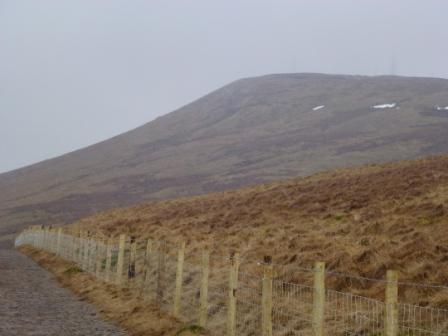
Winter Hill

Winter Hill

Gwyn is also seen as the Winter King. It is possible his white, shining qualities relate to snow and cold, associations which could date back to the Ice Age. Elen Sentier links Gwyn with the reindeer goddess Elen of the Ways (13) and the Boreal forest. He may also be connected with the North wind. The 14th C Welsh poet Dafydd ap Gwilim refers to ‘Tylwyth Gwyn, talaith y gwynt’ ‘the family of Gwyn, the province of the wind’ (14). The pervasiveness of a myth featuring Gwyn in Northern Britain could have a basis in its harsh winters.

In a later text, The Life of St Collen (14th C), Gwyn is referred to as ‘the King of Annwn and the Fairies’ and is supposedly banished by the saint from Glastonbury Tor (15). The transition from belief in Gwyn as a King of Annwn to King of the ‘Tylwyth Teg’ or ‘Fair Folk’ is a significant one. The original natures of Gwyn and the spirits of Annwn are covered over by their reduction to diminutive form. However, hints at their mythos can still be found in the majority of folktales.

Gwyn retains his status as leader of the Wild Hunt in the folklore of Wales and Somerset. There he is seen to appear on horse back with a pack of white, red-eared hounds, riding out on Nos Calan Gaeaf and through the winter months, chasing down the souls of the dead. To hear his hounds is an omen of death. The other riders are seen often seen as captive souls and may represent the spirits of Annwn.

In the North West of England, however, the hunt is assigned either to the Norse god Odin, or to Christian angels. In Cumbria it is Michael, and in Lancashire and Yorkshire Gabriel is said to lead a pack of black, red-eyed dogs, the Gabriel Ratchetts.

Coincidentally, Preston born writer Francis Thompson is famous for a poem called ‘The Hound of Heaven.’ Anybody who has felt like Gwyn’s hounds are on their tail might find these lines hauntingly familiar; ‘I fled Him, down the nights and down the days; / I fled Him, down the arches of the years; / I fled Him, down the labyrinthine ways / Of my own mind; and in the mist of tears / I hid from him, and under running laughter.’ (16)

More recently, Gwyn’s significance as an ancient god has been attested by contemporary scholars such as Geoffrey Ashe, in King Arthur’s Avalon (2007) and Nicholas R. Mann in The Isle of Avalon (1996) and Glastonbury Tor (2012). He is also the subject of a full length book called Gwyn: Ancient God of Glastonbury and Key to the Glastonbury Zodiac (2007) by Yuri Leitch.

This increase in interest suggests we are approaching a time when Gwyn and the spirits of Annwn are taken seriously as Brythonic deities again. However, the main focus of these books is Gwyn’s role at Glastonbury, with only a small mention of his place in Wales and other areas of Britain. Disappointingly there is no mention of Gwyn’s activities in the North. In this respect I have only my own experiences and conjectures to go on.

Fairy Lane

Fairy Lane

I first met Gwyn on Fairy Lane in my hometown of Penwortham, where he challenged me to journey with him to Annwn. Since then I have worked with him as a guide to the otherside of my local landscape and its hidden myths. His interest in my locality surprised me at first. However, it seems less surprising when looked at in the context of his role as an ancient underworld god of Britain, particularly in relation to the history and folklore surrounding this site.

Penwortham has been inhabited since 4000BC. The Riversway Dockfinds, a collection of animal bones, 30 human skulls, two dug out canoes and the remains of a timber structure suggest the existence of a lake village on Penwortham Marsh. Nearby is Castle Hill, a point of military and religious importance. There is a church dedicated to St Mary on the summit of Castle Hill, which means it was likely to have been a pre-Christian sacred site.

That the church is dedicated to St Mary and she was also the patron saint of a healing well at the foot of Castle Hill suggest the presence of an earlier female deity with healing powers, who has been Christianised as Mary. Three human skulls found in the wall of the church (17), which may have served an apotraic function suggest superstitious beliefs in chthonic spirits were also once popular but not openly acknowledged.

The survival of the legend of Penwortham Fairy Funeral attests to these superstitions. In the earliest version in Bowker’s Goblin Tales of Lancashire (1878), it is set on Church Avenue on Castle Hill. Two men walking home to Longton encounter a procession of fairies carrying a coffin. Robin, one of the men, looks into the coffin and sees his own miniature corpse. Frightened by the sight, they follow the fairies into St Mary’s graveyard. Robin attempts to prevent the burial by reaching out to grab the leader of the fairies. The procession vanishes and Robin, driven mad, topples to his death from a haystack a couple of months later (18). In later versions, this story takes place on Fairy Lane, which runs through Penwortham Wood at the foot of Castle Hill.

This legend may be interpreted to hint at older beliefs in underworld gods. Church ways are often identified with spirit paths. It is possible that prior to Christianity people believed chthonic spirits to have been actively involved in bearing the deceased to the underworld. The ringing of bells to drive them away and superstitions surrounding lych gates are testaments to fear of such entities. The movement of the legend to Fairy Lane may be seen as an attempt to sever their connection with the church. It is also possible it represents a shift in the energy of the area.

Gwyn ap Nudd and the spirits of Annwn (more frequently referred to as fairies today) are frightening beings. However, they play an essential role in maintaining the relationships between the worlds, the seasons, and the living and the dead. Like death itself and the cold dark of winter they will never go away. Their roles and identities, covered over or ignored for many centuries, can be recovered and understood.

Like Pwyll’s meeting with Arawn, my relationship with Gwyn has changed my life. He guides me to visions in Annwn and the physical world I would not be able to access without him. He teaches me to walk the spirit paths and inspires me to learn the song lines of this land’s ancestral heritage.

As late summer arrives, harvesters take to the fields and leaves begin to fall I sense the spirits of Annwn stirring, the first hint of the breath of winter on the wind. Monday is the date of the commemoration of the beginning of the First World War. When I help lay candles in front of Preston cenotaph for each of the 1956 soldiers who lost their lives I will remember that care of the souls of the battle dead was once believed to be Gwyn’s role.

(1) http://www.caerfeddwyd.co.uk/
(2) http://www.mabinogi.net/sections/Appendix/The_Underworld_Gods.pdf
(3) James MacKilliop, Dictionary of Celtic Mythology, (1998), p375
(4) Robin Herne, Old Gods, New Druids, (2009), p48
(5) A collection of Kingdoms in the North of England and Southern Scotland from 500AD and 800AD.
(6) Transl. William F. Skene, ‘The Dialogue of Gwyddno Garanhir and Gwyn ap Nudd,’ The Four Ancient Books of Wales, (2007), p210-211
(7) Transl. Sioned Davies, ‘How Culhwch Won Olwen,’ The Mabinogion, (2007), p199
(8) Ed. Rachel Bromwich and Simon Evans, Culhwch and Olwen, (1992), p169
(9) Transl. Sioned Davies, ‘How Culhwch Won Olwen,’ The Mabinogion, (2007), p199
(10) https://www.blogger.com/profile/02055792516386371373
(11) Ed. Rachel Bromwich and Simon Evans, Culhwch and Olwen, (1992), p133
(12) Ibid. p150
(13) Elen Sentier, Elen of the Ways, (2013), p26-28
(14) Dafydd ap Gwilim, Poems, (1982), p132 – 133
(15) http://www.maryjones.us/ctexts/collen.html
(16) Francis Thompson, The Hound of Heaven and Other Poems, (2000), p11
(17) Rev C. Nelson, St Mary’s Church, Penwortham, Lancashire, Archaeological Watching Brief and Explanation, (2011), p48
(18) http://www.gutenberg.org/files/39712/39712-h/39712-h.htm#THE_FAIRY_FUNERAL

Many thanks to Heron and Lee at Caer Feddwyd for bringing Will Parker’s article to my attention.