If the birds in my garden were the spirits of the dead

You, blue tit, in your blue hat, were that guy who worked on the log flume at Camelot Theme Park. When I took cash on the gates I was envious of how you worked yourself up from the Go-Karts, Sir Lancelot’s Chargers, Pendragon’s Plunge. Neither of us were knights but both of us dreamed of drowning under water and I was sad to hear of how you went down and didn’t surface again with splashes in your face to the flash of cameras.

You, sparrow, were that woman with the orange lipstick and fluffy cream and brown coat selling yourself near New Hall Lane at 4am as I walked past in my fishnets and army boots avoiding the cars that might ask if I was on the job. I saw you get in and kind of guessed you might not get out again. I walked on, and on, and on, guiltily glad I had not your desperation.

You, blackbird, were the wannabe magician who worked in the gaming store.  You found out about how John Dee and Edward Kelley attempted to raise the dead at St Leonard’s Church in Walton-le-Dale but had no interest in necromancy nor summoning angels. It seems demons were your thing, smoky mirrors, circles of salt, vanishing. I met you in the Zoo Cafe smelling of sulphur and looking vaguely lost on that night you vanished forever.

You, nuthatch, were the bricklayer who boxed at Penwortham Boxing Club. I’d never have picked a fight with you even on that equinox at the mixed martial arts day when I was told I had a mean right hook. You, big guy, now in your eyeliner with your big torso and determined legs, could not accept yourself. Was that why the cancer crept in that took all your strength?

You, magpie, I cannnot determine who you are. A black-and-white trickster. I accept your mask as I accept the masks of all who ride on the floats in the procession at Penwortham Gala and I accept the harshness of your mocking call.

*All personages in this prose poem are fictitious but have a loose basis in my memories.
A Mossy Holiday

A two week holiday has given me the chance to start exploring and recording the mosses and liverworts in my local area. Equipped with a x 10 hand lens and the FSC Field Guides to common species in woodlands and gardens, backed up by the British Bryological Society’s Mosses and Liverworts of Britain and Ireland a Field Guide, I have made some interesting discoveries and managed to identify more bryophytes than hoped.

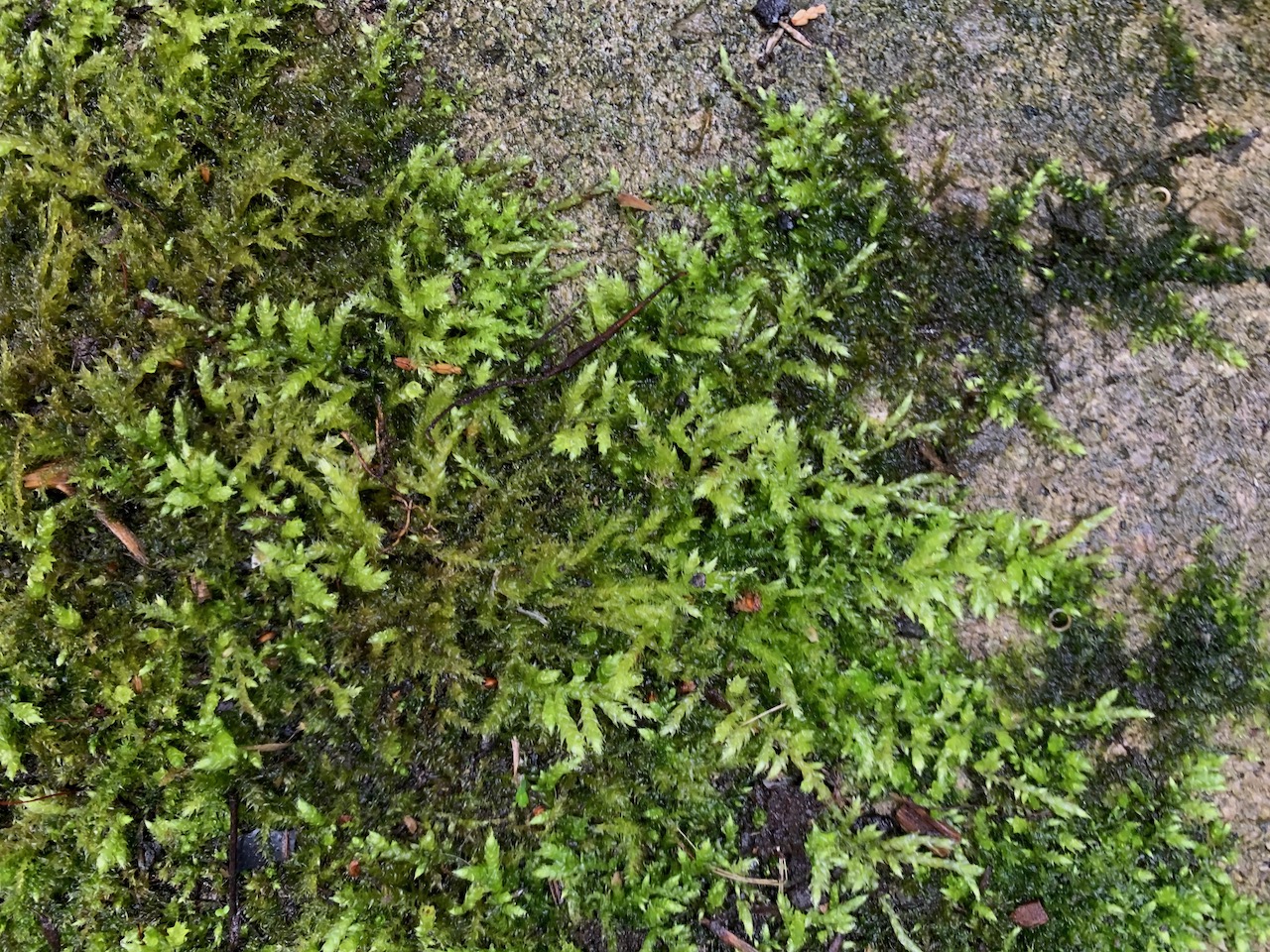
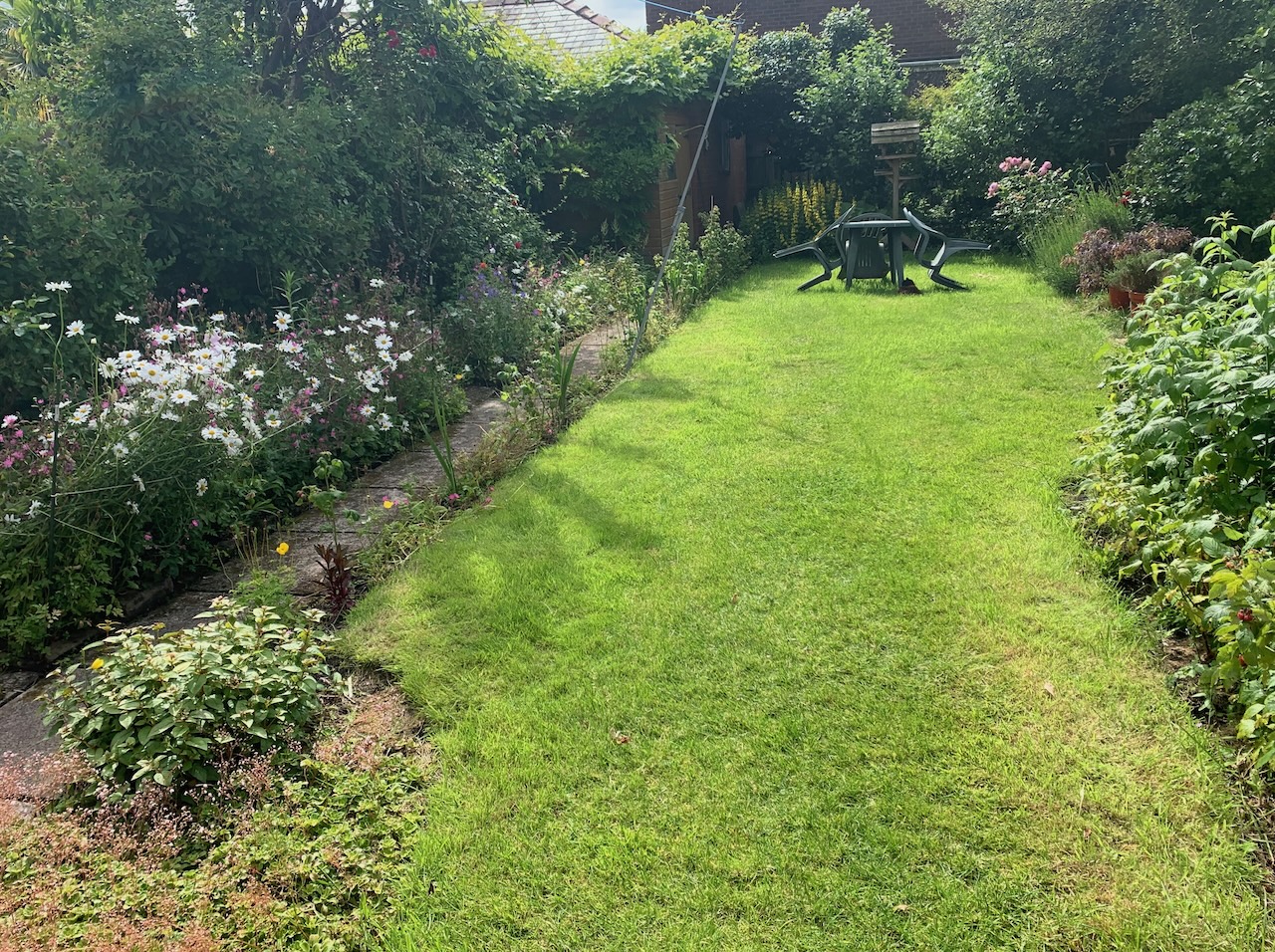
I started with my garden and firstly discovered that the moss which is everywhere is Rough-stalked feather-moss (Brachythecium rutabulum) in various stages of growth. It came as no little surprise that Springy turf-moss (Rhytiadelphus squarrosus) is in my lawn. I was excited to find the unmistakable Big-shaggy-moss (Rhytiadelphus triquestrus) on a stony area. The fourth moss, growing in a damp area beneath the shed (which is not on the FSC Field Guides, but I have identified from the key in the BBS Field Guide by its capsules) is Clustered feather-moss (Rhynchostegium confertum).

In Greencroft Valley the most abundant species of moss is Common feather-moss (Kindbergia praelonga). My guess is the acrocarpous moss covering two Elders and seen on the trunks of other trees may be Common smoothcap (Atricham undulatum).

Beside the brook I spotted Common pocket-moss (Fissidens taxifolius) alongside some fascinating plants I cannot name.

I then decided to go to Castle Hill as some of the woodland on its banks is ancient. By the steps up the hill from Well Field, past where St Mary’s Well once was, I found more Common pocket-moss, and Cypress-leaved plait-moss (Hypnum cuppreseforme) on a fallen branch.

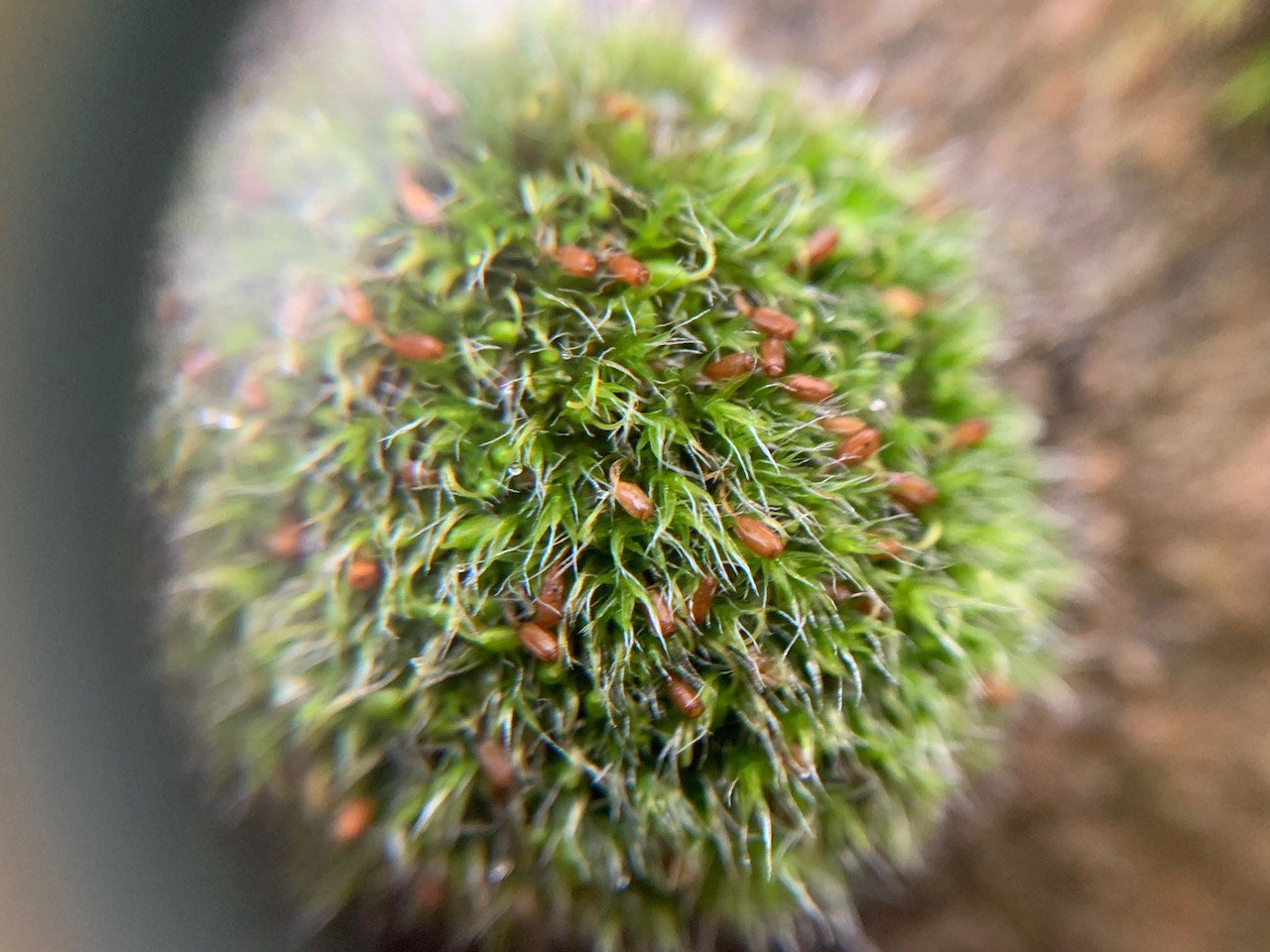
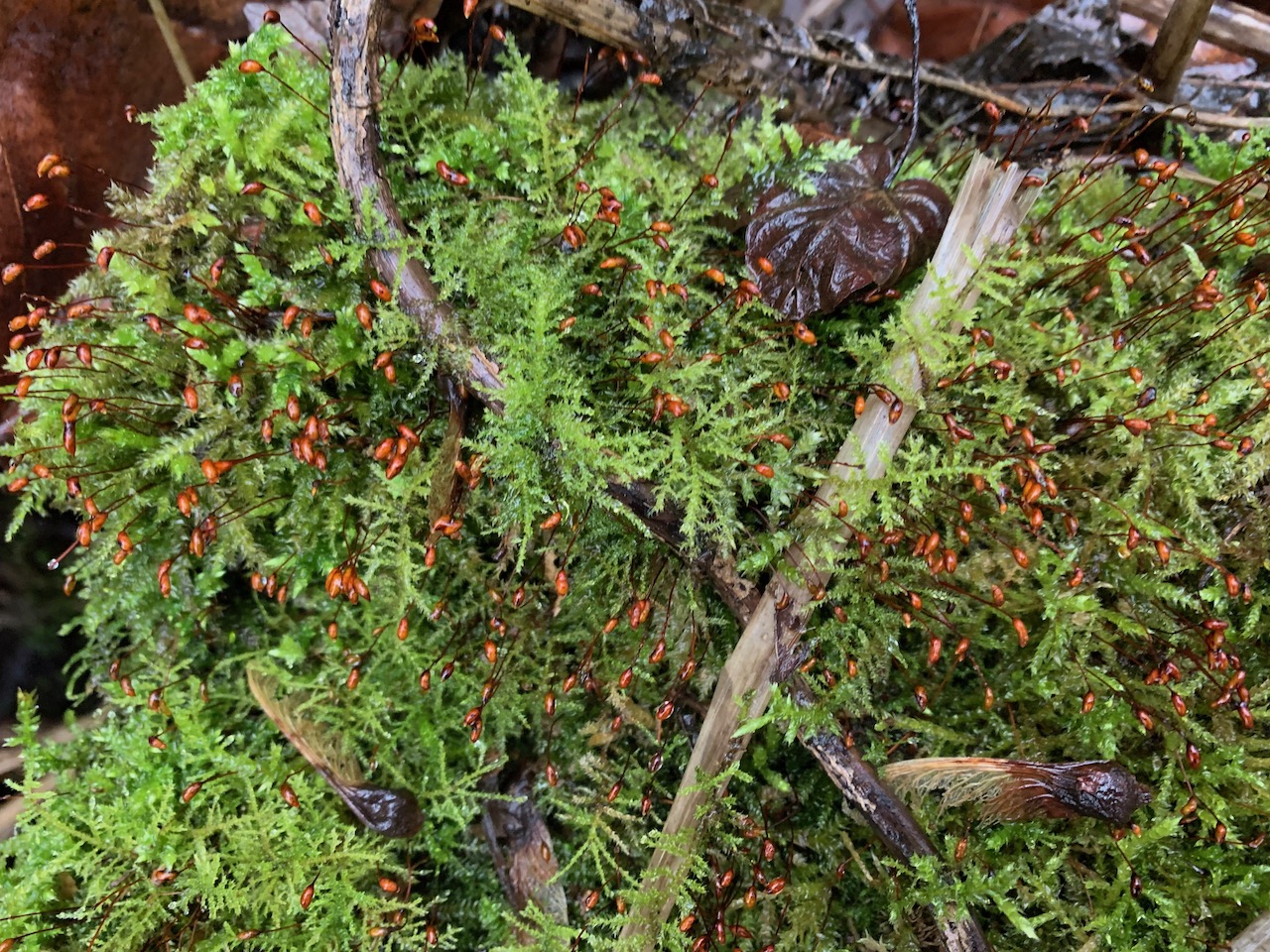
On the wall on Church Avenue and on the old stone cross halfway down was the evocatively named Grey-cushioned grimmia (Grimmia pulvinata). It is named after a German scientist called Johann Friedrich Carl Grimm yet, to me, the name ‘grimmia’ is particularly evocative of this unmistakable mossy creature. By this point I had started getting to grips with taking photos through my hand lens.

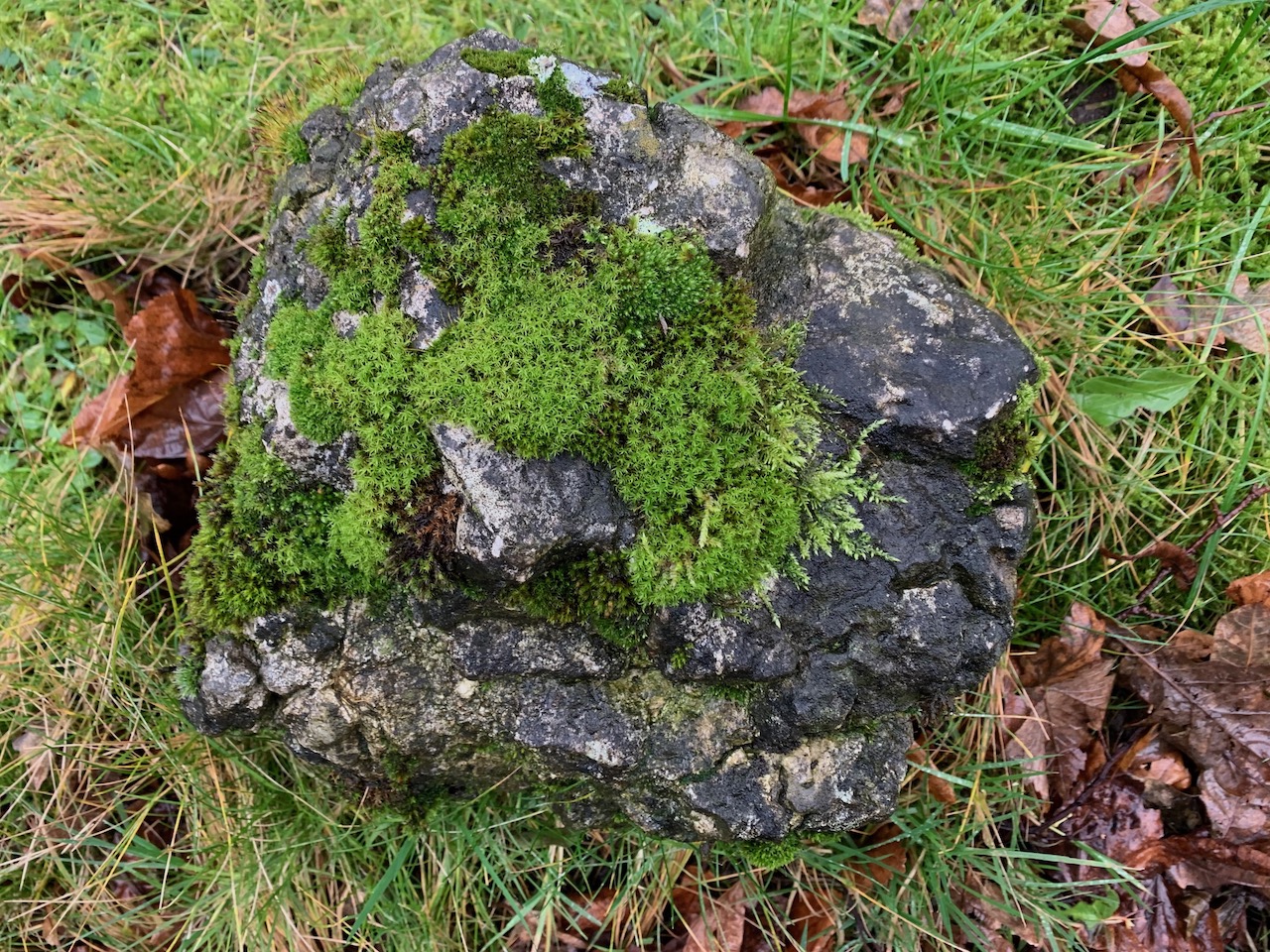
On a stone on the side of Church Avenue was this unidentified acrocarpous moss.

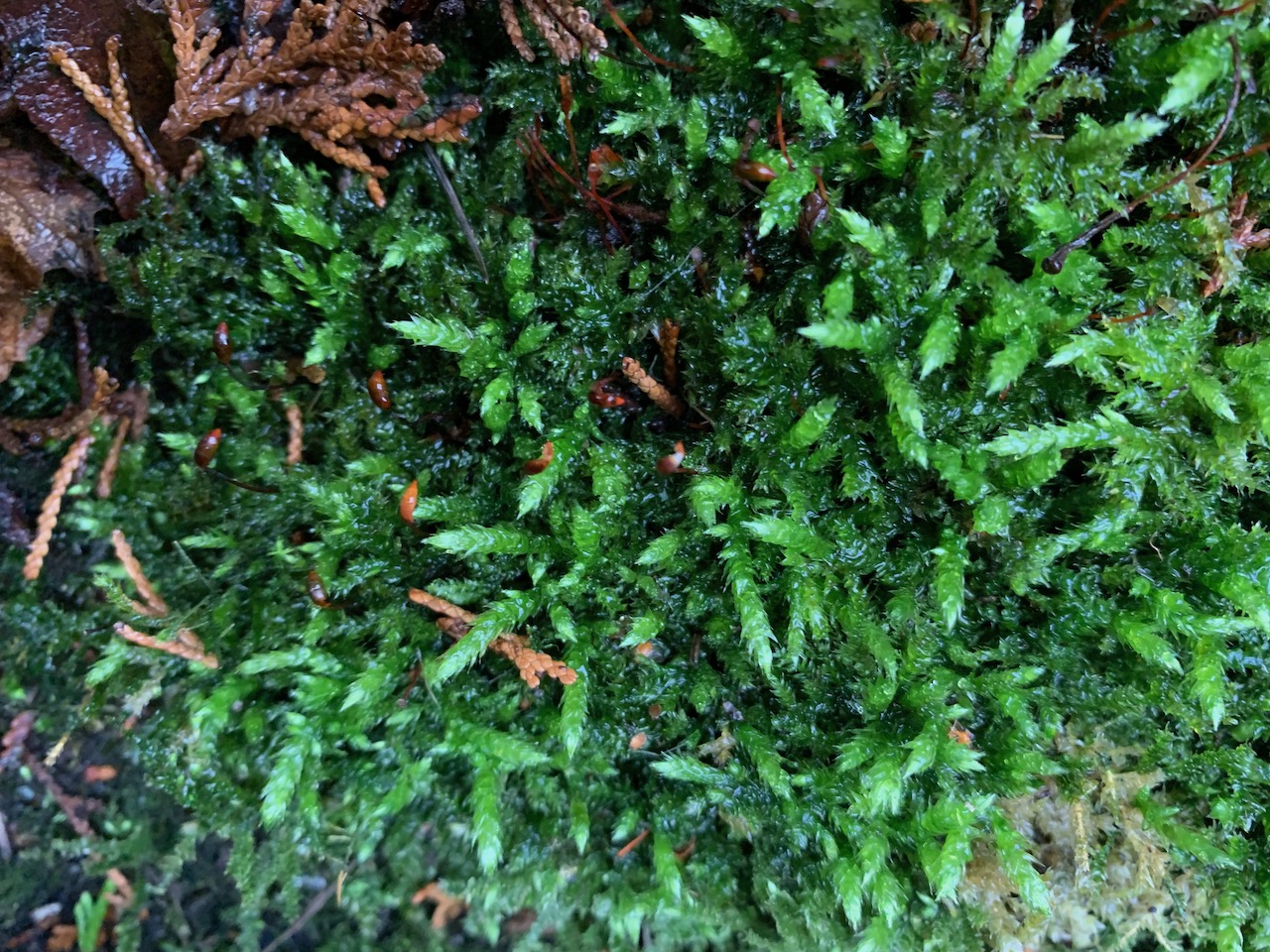
In Church Wood the most abundant moss was Common feather-moss (here with capsules present).

Another unidentified moss was found on the pathway on the fallen branch of a tree.

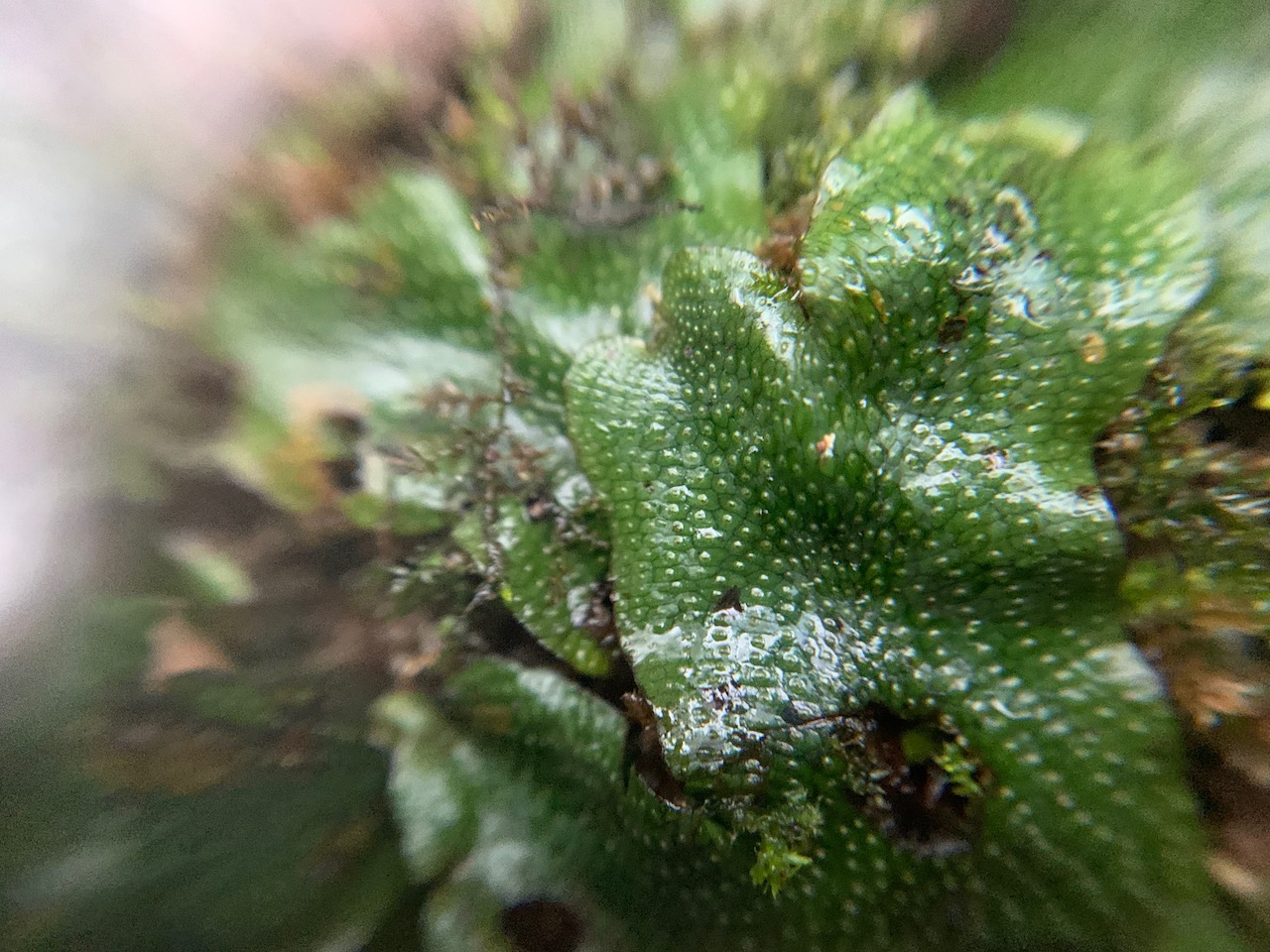
Although I didn’t identify as many different mosses as I had hoped to in Church Wood it was a treat to find Great scented liverwort (Conocephalum conicum) on a damp bank.

So far I have been delighted to discover so many mosses within walking distance of my home in a couple of days. I am planning to continue to explore and record the bryophytes of my local area and on the Manchester Mosslands in the New Year.

The Best Defence

“Laughter is the best defence against madness,”
from somewhere in my garden
my god decries.

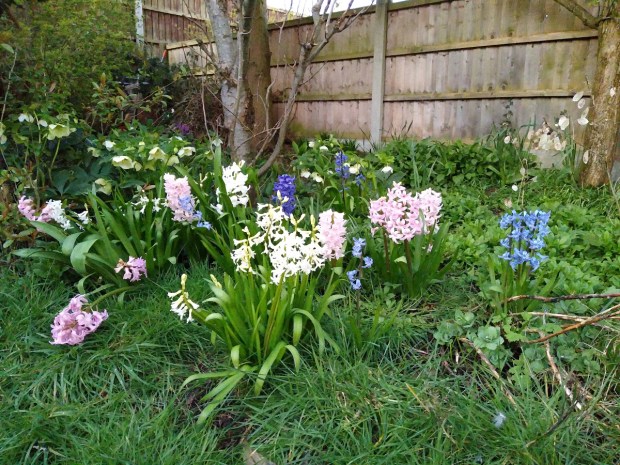
The hyacinths
are at their most beautiful –
white, pink, red, blue, and I cannot tell
if they are laughing at us or with us.

The full moon has burst her sides
(reminding me of lysis – the bursting
of cell walls, expulsion and release
of viral progeny like a sneeze).

“This crisis is no longer a laughing matter
with its potential to bring a tear to our eyes,”

I reply whilst acknowledging it’s laughable
how a strand of RNA in a protein jacket
can cause such mayhem worldwide…

… panic buying… shelves depleted
of curly strands of pasta and the virulent
internet replicating and replicating our demise…

“Stand your ground in this garden and breathe
the fresh spring air, laugh well, laugh deep,”

my god’s voice rises from Annwn grounds me.

“I can save none from the tragedy and sadness
in which my realm and your realm are steeped but
laughter is the best defence against madness.”