I. Sherwood Sandstone
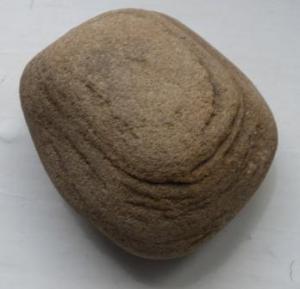
250 million years ago the island we now know as Britain was part of the supercontinent of Pangaea and lay close to the equator. The landscape and weather could not have been more different. The sun beat down on an arid desert swept by the north east trade wind.
Dunes rose and fell. Wind-rippled pavements were covered over. Sand sank, was buried, heated, compressed. The miniscule grains of sand were cemented together by water charged with minerals such as quartz and feldspar which crystallised to form basins of rock.
This rock is called Sherwood Sandstone because it lies beneath Sherwood Forest. It also forms the bedrock of Preston and its surrounding area. Now overlain by glacial deposits of sand, clay, and gravel, it can be seen in the bed of the Ribble from Penwortham Bridge.

II. The North West’s Most Important Aquifer
The porosity and permeability of Sherwood Sandstone make it an excellent groundwater aquifer. It is capable of holding vast amounts of water. The sandstone aquifer beneath Preston and its surroundings is classified by the Environment Agency as ‘a primary aquifer’ and Professor David Smythe states it is ‘the most important aquifer in the North West of England’.
A look at the old maps and research into the history of the area reveals a plethora of holy wells: natural springs bearing clean pure water from this miraculous water-holding bedrock. Many possessed healing properties, were dedicated to saints, and were sites of pilgrimage.
Because of the large number of holy wells Preston was considered to be an especially sacred place. This is evidenced by its Old English name, Preosta Tun, ‘Priest Town’. Preston’s sanctity is founded on the Sherwood Sandstone laid down 250 million years ago. It is written in the bedrock.
III. Water Worship
The Mesolithic hunter-gatherers who knapped flints on the flats between the Ribble and Darwen at Walton-le-dale no doubt paused, drank, bathed, and worshipped at the local springs. The Bronze Age village on Penwortham Marsh was located near the springs on Castle Hill.
The ancient Britons revered their water-courses as deities. In 2AD Ptolemy recorded that the Ribble was known as Belisama, ‘Most Shining One’ or ‘Most Mighty One: an immense goddess with the power to sustain life or take it away. Each spring had its deity. In Iron Age society their stories were kept alive by Bards and Druids performed their rites.
Springs were believed to flow from Annwn, ‘the Deep,’ the Otherworld. Its sparkling caverns and chthonic rivers might be seen as a macrocosm of the porous spaces between particles of sand and quartz where life giving waters are stored – the regenerative womb of an ancient goddess.
IV. Holy Wells
Between the 4th and 7th centuries many of the springs were rededicated to Christian Saints. The large number of Marian dedications – to St Mary and Our Lady – in the Preston area may be based on the association of the springs with mother goddesses dating back many thousands of years.
In the medieval period religious communities grew up around the holy wells and became important places of pilgrimage. St Mary’s Church and Priory were built on Castle Hill near St Mary’s Well, which had healing qualities. Preston Friary was next to Ladywell. Ladywell Shrine was established next to another well at Fernyhalgh.
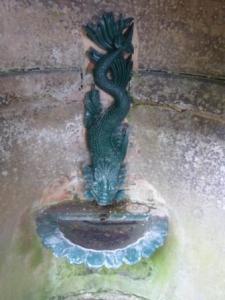
Spa Well was well known for its ‘strengthening qualities’ and Ashton Spring for ‘medicinal virtues’. Avenham Well cured eye ailments; during the Victorian period its water poured from the ‘Dolphin Fountain’, which actually took the form of a sea serpent, perhaps representing a serpentine water spirit. Boilton Spa cured consumption and the water flowed through the mouth of a stone head which could again have been a representation of its deity.
V. Shattered
During the industrial period the tycoons who built the factories and transport systems took no account of the sanctity of Preston’s landscape. If they knew the Sherwood Sandstone was the source of the holy wells they paid no heed to its import. ‘Everything sacred was profaned’.
During ‘Canal Mania’ in 1794 the channel of the Lancaster Canal was dug past Ladywell in Preston to terminate in a basin behind the Corn Exchange. Due to changes in the water table and/or damage to the sandstone bedrock Ladywell dried up. It had disappeared by 1883.
Between 1884 and 1888 the Ribble was diverted south and Riversway Dockland was built. During this process Spa Well and Ashton Spring disappeared. St Mary’s Well ran dry. An engineering survey revealed that the removal of the sandstone from the river channel had breached the groundwater aquifer which fed St Mary’s and other wells.
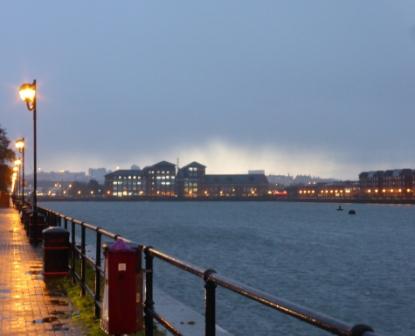
Ironically the canal near Ladywell fell out of use and was drained and filled in during the 1960s. Riversway Dockland closed in 1981 due to silting up of the Ribble. Engineering feats useful for less than two hundred years shattered the 250 million year old bedrock which had provided Preston and its surrounding area with physical and spiritual nourishment since the Ice Age.
VI. Fracking – Unholy Wells
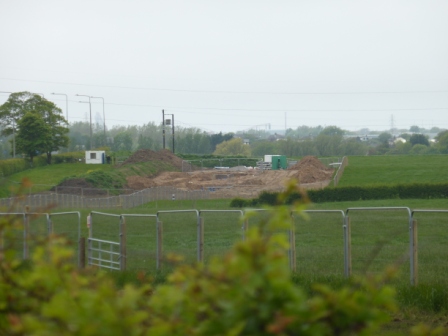
Thankfully the Sherwood Sandstone aquifer outside the Preston area remains intact. Yet it is threatened in its entirety by the plans to drill a most unholy kind of well at Preston New Road.
The decision to frack nearby on the Fylde is also based on its geology. East of the Woodfold Fault the bedrock is Mercia Mudstone, Sherwood Sandstone lies beneath, then Manchester Marl, Collyhurst Sandstone, Millstone Grit, then Upper Bowland and Lower Bowland Shale.
The Bowland Shale was laid down in the Carboniferous period 300 million years ago and contains shale gas resulting from the decay of organic materials. Releasing this gas by hydraulic fracturing is a damaging process. A borehole 3 – 4 kilometres deep is drilled then water, chemicals, and sand are pumped in at high pressure. The rocks are cracked open and the gas flows back up the borehole with the contaminated water which is removed and treated.
VII. Contaminated
In 2014 Professor David Smythe argued against fracking on the Fylde due to the risk of contaminated fluids passing through the Woodfold Fault into the Sherwood Sandstone Group aquifer. His concerns were dismissed by the Environment Agency.
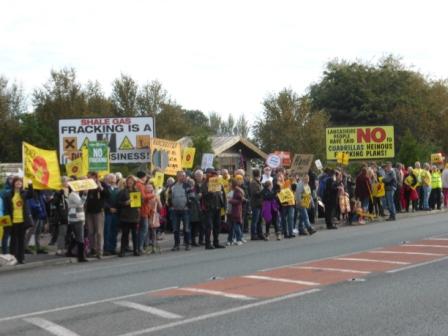
In spite of Lancashire County Council’s refusal, the storm of protests, and ongoing resistance by activists walking the lorries and lock-ons, the UK government have forced fracking on Lancashire and the well at Preston New Road will be drilled by June 2018.
If Smythe’s arguments are correct the future looks bleak. Over the course of several years the fracking fluids will slowly contaminate our sandstone aquifer and the watercourses it feeds. Preston’s drinking water, which comes from upland and groundwater sources, will run brown with sand and lethal chemicals and ignite at the stroke of a match. Our once nurturing water deities will take new forms – toxic, dangerous. Our miraculous aquifer will be poisoned beyond repair. Such formations take millions of years to create and we won’t find another one.
This disaster could be avoided if the government paid attention to the lessons of the past and what is written in the bedrock rather than sacrificing the integrity of the landscape for profit.
SOURCES
British Geological Survey, ‘Geology of Britain Viewer’
British Geological Survey, ‘Groundwater Monitoring in Lancashire’
British Geological Survey, ‘Shale Gas, the Basics’
British Geological Survey, ‘The Permo-Triassic Sandstones of Manchester and East Cheshire’
British Geological Studies, ‘The properties of major aquifers in England and Wales’
David Barrowclough, Prehistoric Lancashire, (The History Press, 2008)
David Hunt, A History of Preston, (Carnegie, 2009)
David Smythe, ‘Risk of environmental contamination from proposed fracking on the Fylde’
Environment Agency, ‘Water Abstraction Map’
Lancashire County Council, ‘Preston New Road, Appendix 8: Hydrogeology and Ground Gas Proposal’
Norman Darwen, ‘Some Holy Wells in and Around Preston’
Peter Dillon, ‘The Story of St Mary’s Well’, Stories from the Land
Ruth Hayhurst, ‘Cuadrilla expects Lancs fracking to start within six months from “excellent quality” shale rocks’, Drill or Drop
The Lancashire Group of the Geologist’s Association, ‘Preston Geotrail’





 The Sanctuary of Vindos