 On a rainy day in the not so-distant future, Tom, a tour-guide in training, decided to visit the city of Preston.
Great intrigue surrounded the town of priests, which had once been the Catholic capital of Lancashire. Every spire and street name told a story, from the cathedral of St Walburge to Friargate, to the catacombs beneath St Peter’s. Each had its relics and dealt in a great number of copies to tempt the less discerning tourist.
However, Tom was not interested in the rise and decline of Christianity. Neither did he care for the oral tales passed on by the city’s people such as the headless black dog that haunted Maudlands, the wicked fairy on the market with his tricksy ointment, or the Bannister Doll.
Tom had been led to Preston by a new myth about the underground river Syke.
This watercourse had run from present day Syke Street, through Winckley Square, parallel with Fishergate then into the Ribble at the New Bridge. At one point there had been fish garths across the Ribble and a boatyard where the two rivers met. In 1812, as industrialisation progressed, the Syke was culverted beneath the town. It had not seen daylight since.
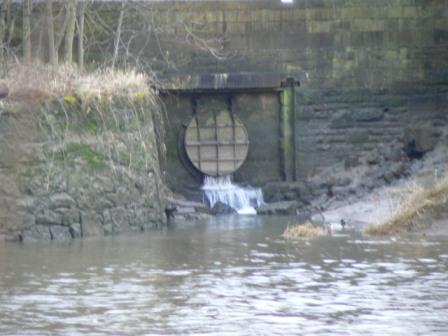
250 years later, as part of a desperate money-making bid, the tourist board decided to open its underground passageway to the public. Above the grate covering the Syke’s mouth they erected a ticket booth, then a flight of stairs leading down to a platform. Over the entrance was placed a flashing neon sign- Enter the mouth of Annwn- the Ancient British Otherworld.
Caroline, Tom’s girlfriend, had been obsessed by stories about Annwn. “It is a beautiful, terrible world,” she had used to tell him, “peopled with fairies and monsters. There are thin places where you can slip over. It is possible to find your ancestors, and the lost ones you once loved. It’s possible to escape again, if you do not fall prey to its seductions.”
Several days ago, Caroline had left on a trip to Preston and had not returned. She was not the only one. Another three people had been reported missing, mysteriously disappearing on the boat ride back to the entrance. These stories were connected with rumours of people hearing strange songs and experiencing visions of ships and fishermen, huge fish, and women with fishtails.
If it hadn’t been for Caroline’s absence, Tom would have thought this was all propaganda. However, his strongest suspicion was these tall tales were a cover for poor management. A fact left untold was that the Ribble is tidal. Should the attraction remain open as the tides washed in, the entrance to the Syke would be blocked and its passageway flooded. Tom suspected these poor souls had drowned, and he was terrified Caroline might have met the same fate.
After paying his admission, Tom entered a sheltered area where he joined two families, three couples and a group of teenage girls who were talking and laughing.
“We need to look out for ghostly fishermen.”
“Mermaids.”
“Mermen, more like.”
“It’s some kind of creature with slimy tentacles that will drag you down through the water and into the Otherworld.”
Once the preceding group had exited they were ushered down to the platform. Standing beside the Ribble’s churning grey, Tom recalled Caroline telling him how every river had its goddess and each stream its nymph. The name of the Ribble’s goddess was Belisama and it was believed she claimed a life every seven years.
“Is everybody ready to enter the mouth of Annwn?” asked the tour guide, an aging man dressed in a wax jacket and waders. His long greying hair hung damp from beneath a fisherman’s hat.
To cries of affirmation he pressed a button, which rolled back the grate. The passageway was illumined by intermittent white lights, which cast an occasional silver sheen on the dark water. One by one they entered the tunnel, walking in a single line, on the river’s left. Enthralled by its impenetrable flow, Tom could not help himself imagining Caroline trapped beneath those waters drowning amongst terrible aquatic creatures who had not seen sunlight for 250 years.
The girls in front of Tom jostled and giggled. “I can see a fish!” “I think it was a mermaid!” As their conjectures became wilder their voices grew more high pitched.
The weight of the walls pressed in and the river’s roaring voice and echo rose to an unsteadying crescendo. By the time they reached the boat, Tom was trembling and disoriented. As he crossed the gangplank onto Syke’s Trawler, it took all his effort to hold his balance. Looking beneath he glimpsed something silver, dark and serpentine, then in a flash of dread saw Caroline’s sunken face staring up at him. The tunnel spun around him.
The next thing he knew, Tom was assailed by the scent of wax and brine. The tour guide was lowering him onto a wooden bench, fastening his seat belt and placing his hands firmly on the rail. “Hold on tight. Keep your eyes well shut and be careful not to listen. You do not want to fall prey to the lures of Annwn.” There was a mocking, knowing look in his grey eyes
He cast off and took the wheel with such exuberance and expertise Tom realised he must have been a true fisherman in his time.
The boat pitched down river. The teenagers screamed.
“Sy-ke!” “Sy-ke!” Tom was almost deafened by the river repeating its name. “Sy-ke!” “Sy-ke!” Or could it be the voice of its goddess?
The limitations of the tunnel shattered to reveal bright sky and a flashing landscape, the grey shapes of yachts and fishermen.
“There are places where you can slip over,” Caroline’s words filled Tom’s mind.
He held tightly to the rail, imagining himself as Odysseus lashed to the mast.
“It is possible to find your loved ones.”
Tom realised Caroline’s voice was not in his mind. She stood on the adjacent vessel beside an older fisherman who shared her dark features. Tom guessed he was her grandfather.
“Caroline!” Tom cried.
“Tom, how I’ve missed you, I knew you would come to find me!” Caroline rushed to the edge of her boat.
“I’ve been worried sick about you,” said Tom. “What happened?”
“Come and join us,” said Caroline. As her boat drifted closer she held out her hand.
Unable to stop himself, Tom let go of the rail and unfastened his seatbelt. Leaning between the swaying boats he took Caroline’s hand and scrambled over. After all those long months they were together again, embracing and kissing. In her arms the rocking deck, perilous river and distinction between the worlds no longer mattered.
A horn blared from Syke’s Trawler.
Caroline pushed Tom away. “The tides are coming in.” The colour left her face and her skin became cold to his touch. With the sweep of a long black and silver fishtail she dove into the water. Tom noticed her grandfather had already disappeared. The boat shuddered beneath his feet then, with a dismal groan, plank by plank began to break apart.
With a thunk something round and orange struck his chest. It was a rubber ring, attached to a rope, attached to the trawler.
“Get in and keep hold,” the tour guide’s voice bellowed, “if you want to return to Preston, that is.”
Struggling against panic, Tom managed to pull the rubber ring on as the deck gave way beneath him and a wave crashed over his head. The cold water stunned him. He struggled and gasped for breath, thrown this way and that between the incoming tide and the river’s force. Hauled back onto the trawler by the tour guide he coughed up salt water before descending into uncontrollable sobs.
By the time his tears had ended, the boat was safely moored on the Ribble’s bank and the rest of the group had gone.
“You love her, but you don’t want to die for her?” the tour guide’s voice was soft in Tom’s ear. His nostrils filled with his briny scent. “I know how you feel, and I may be able to help.”
Tom looked up hopefully, “how?” he rasped.
“It is possible to walk, or sail, between the worlds,” said the old fisherman. “Why don’t you join me, as my trainee, at the helm of Syke’s Trawler? You can learn to serve our goddess. We’re desperately short of tour guides.”















 The Sanctuary of Vindos