Of Inner and Outer Voices

I recently had a revelation about a voice* that has haunted me since high school telling me if I don’t acheive certain goals such as passing exams, staying in paid work, fulfilling a role in society, my life is worthless and I don’t deserve to be here.

Mental health-wise I have been much better over the past year as a result of strength training and yoga and working on my spiritual development with my mentor Jayne Johnson. A few months ago for the first time I heard my healthy body saying ‘I want to live’ and this has helped me to combat the negative voice.

Yet I went through a difficult time after my attempt to write a novel for Gwyn failed and I realised I must truly give up my ambition to be a professional author (as I promised Him over ten years ago!). I ended up back at the Abyss with the choice between three gates – to live as I was, to die, or to change. I took the third gate.

During a period of prayer I discerned what to do next – return to outdoor work in horticulture and become a shamanic practitioner. So I started working towards those goals. I began studying for my RHS Level 2 in Horticulture and volunteering with Let’s Grow Preston. I applied for the Sacred Trust’s three year shamanic practitioner training and was over the moon when I was offered a place. However, the downside is the course and the train fares to Devon will cost all my savings and then some. 

The negative voice returned as I began to struggle with concerns about finding paid work in horticulture before my savings run out. Long term I am planning to start a nature-friendly gardening business but I am aware it will take a while to complete my training, set up, find clients and start earning. So I started applying for any outdoor work from plant nurseries and garden centres to grounds maintenance and also cleaning (which Gwyn advised me against). 

That week, the more jobs I applied for, the more I panicked, the louder the voice grew. Telling me I’m a fool to spend so much money on a course which is my soul’s calling but isn’t likely to help me earn much. Preventing me from meditating and journeying saying instead I should be applying for jobs. 

The afternoon before I attended a Radical Embodiment workshop** with Jayne and Alex Walker I had a terrible interview for a cleaning job. I arrived at the workshop scatty with the voice shouting loudly at me telling me the practices were pointless and worthless and wouldn’t help me find paid work.

I spent the first half, in the morning, battling against the voice. Then, in the afternoon, when I was more relaxed and present and connected with other bodies the voice stopped. When finally we came to dancing our insights I decided to have it out with the voice once and for all but found it had vanished.

I then received the gnosis – ‘It’s not my voice’. 

This was one of the most significant revelations of my life. For decades I thought it was a part of me, an inner critic, formed from my internalisation of the capitalist work ethic. A little like the inner Sheriff of Nottingham Nicola Smalley describes in The Path to Forgotten Freedom only a whole lot nastier.

Then, finally, it struck me, no part of my psyche would tell me I was worthless or want me dead. This voice differs from my true inner critic who, of course, is critical, can be harsh and judgemental, but is looking after my integrity.

I realised any voice inimical to my life is not my voice.

Then what is it? I began to wonder. I intuited it must be a malevolent entity. When I asked Gwyn He told me it was not one of the spirits of Annwn. I sensed it wasn’t from the underworld or any of the lower worlds but was bound up with the middleworld. Unlike the spirits of Annwn / ‘fairies’ who live in a reciprocal relationship with Thisworld but have their own independent world and reality it could not survive without parasitising upon human emotions.

Names that came to my mind were ‘liar’ and ‘deceiver’ which I remembered are applied to Satan ‘the Father of Lies’. Was I being tormented by the Devil?

When I asked one of my spiritual ancestors she replied that it was a malicious spirit, an ysbryd drygioni. Christians have blown such beings up into one big Devil in the same way they have raised Jahweh into one big God.

I asked whether I needed to hunt it down and destroy it (like Ged does the gebbeth in The Wizard of Earthsea – my experience reminded me of that story). My guide replied, ‘No’, as such beings feed on our attention and negative emotions. The best defences against it are to do the things it tells me not do because they will not help me gain a job and earn money – prayer, meditation, journeywork, sitting still in nature (which I really struggle with), being with other bodies, dancing, play and fun (which I never allow myself). 

Realising this voice isn’t mine and hearing how to defend myself from it are huge steps I am hoping will help me move forward towards earning a living in a way that allows me to stay physically and mentally well and fulfil my vocation.

I’d be interested to hear whether anyone else has had similar experiences. How do you tell the difference between inner and outer voices? I’m hoping to get to grips with such discernment processes better towards the end of my shamanic practitioner training when we approach practices such as depossession.

*Here I’m referring to intrusive thoughts not to auditory hallucinations.
**A development from embodied relational therapy.

Being in One’s Element

Over the years I have done lots of different jobs. Some I have enjoyed – poetry, writing, editing, working with horses, and others less so – packing, cleaning, admin, working in a supermarket.

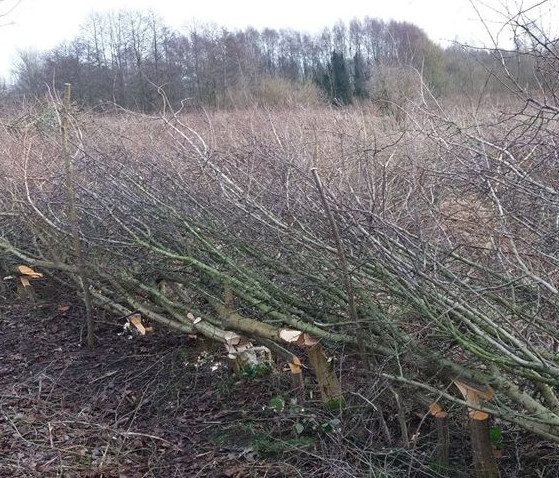
Last year I gave up my supermarket job to begin volunteering with the Lancashire Wildlife Trust as a way into a career in conservation. Since then I have worked on a variety of habitats from meadows to woodlands to wetlands to peatlands. I’ve enjoyed tree planting, coppicing, dead hedging, removing tree stumps, building outdoor classrooms, and learnt how to use an axe and lay a hedge.

At my Damson Poets committee meeting last November I described my experiences of planting cross-leafed heath and hare’s tail cotton grass for the large heath butterfly on Highfield Moss. It was a tough but fulfilling day, carrying trays of plants over boggy terrain, welly deep in water, to create finger-holes in the sphagnum for the cross-leafed heath and dig larger holes with pokey sticks in drier areas for the hare’s tail cottongrass. Afterwards Terry Quinn commented, “you were in your element.”

Yes! I thought, he’s onto something there. Far more in my element in the mud and water than when I was stacking the shelves beneath the relentless lights or in a room of a million voices at a million screens. And at the same time, I must be one of a very small proportion of people who would rather spend a cold winter day welly deep in a peat bog rather than sitting in what they see to be a cosy office.

We, as human animals, have collectively been taken out of our element. Abducted by the mad rush of commercialism by which we feed and house and clothe ourselves. Taken away from what we saw as slow hard jobs out in nature – scything the meadows, digging vegetables, chopping wood.

At a great cost both to ourselves and the land for the gain of centrally heated houses, warm baths, running water, ready food, clean clothes, instant connections through phone, email, the internet. Comforts I acknowledge as elements of my life as I sit here in my warm room writing this blog post at my laptop, along with the fact that day in a peat bog would look far less appealing if they didn’t exist.

Still, like on the occasions I’ve worked with horses, I’ve found myself pulled away from the glowing screen. Whether I’m raking up meadow grass, planting trees on the muddy banks of a new stream, or chopping stakes for a new fence to the steady drum of rain on my hood I am in my element.

Take me out of solitude in my room or quiet company out in nature and put me in a brightly lit building filled with people rushing about, talking loudly, playing loud music, arguing, I quickly go insane. And I’m probably the odd one in my love of quietude in a society so addicted to noise I knew a girl who couldn’t sleep without the television on and a woman who left a radio on for her horse…

I’m coming to realise that being in my element is essential for both my physical and mental health. The benefits of being out in nature are becoming much more widely recognised in society as a whole with doctors prescribing time outside as an alternative to counselling and medication and eco-therapy and mindfulness and well being walks proliferating. However, it’s troubling to see that these are viewed as therapies and breaks from ‘normal’ life rather than as something essential to our being.

The need to be in my element is a determining factor not only in my choice to pursue a career in conservation but also in the type of job. There are many positions within the Wildlife Trust with different balances between indoors and outdoors and practical work in nature and engaging with the community.

Over the past few months I’ve worked out that, although I’m a writer, I find offices claustrophobic so a communications role wouldn’t suit me. Whilst I’m a poet and run the occasional workshop, as an introvert I find this work incredibly draining, so a community engagement role wouldn’t work either.

What excites me and calls to me and makes me happy is spending time immersed in nature, restoring and maintaining valuable habitats, giving back to the land, in the quiet company of others. Having done a combination of work on reserves and project work I’m beginning to realise that I would prefer to be grounded in a particular place, leading volunteer work parties throughout the year, than restoring somewhere as part of a particular project and then moving on to the next. This has helped me discern that I would be a better ranger, warden, or reserve officer than a project officer.

Another question that has been raised is what kind of habitat I’d like to work on. Where am I in my element? Whilst I enjoyed my day on Highfield Moss, in the Salford area, I recognised it is not ‘my place’. There is an incongruity in driving to a project 30 miles away which aims to help with carbon capture whilst leaving my own carbon footprint.

Unfortunately the mosslands that covered Penwortham, Hutton, Longton, and Farington, along with the intertidal marshlands that lay along the banks of the Ribble, have long been drained away. What we have left, in the wake of industry, is a ‘mosaic’ of habitats which are slowly being restored by the Wildlife Trust and other organisations.

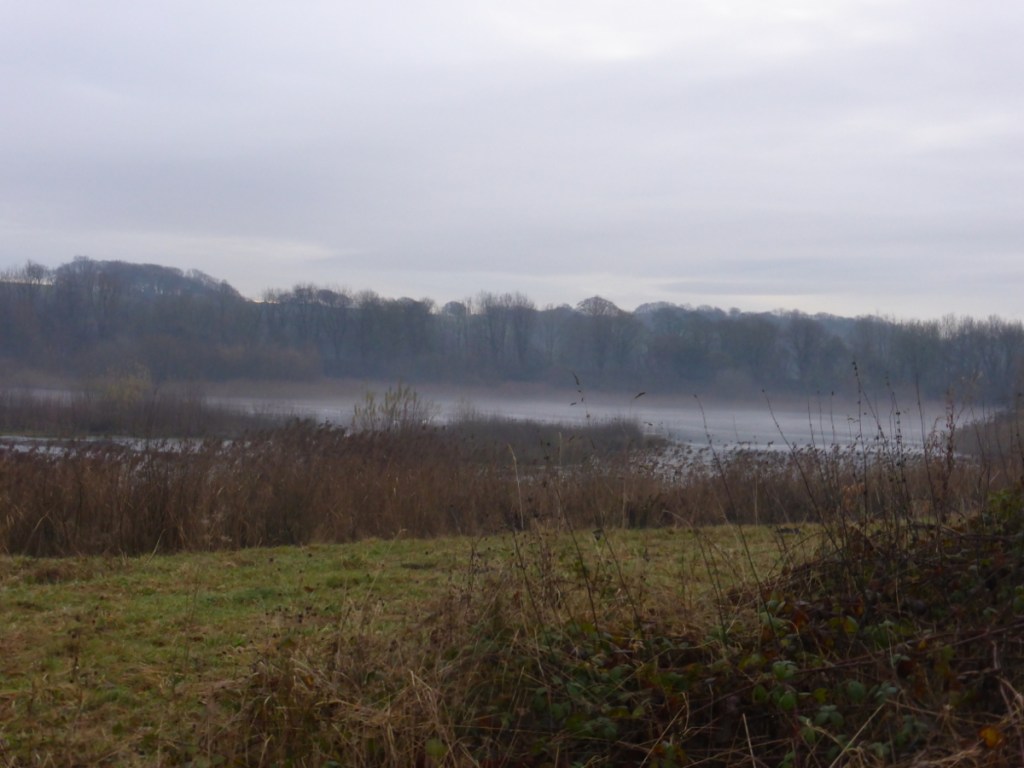
Birch and mixed woodlands on the banks of old rail and tram ways or newly planted on landfill sites. Alder carr and willow scrub on the banks of streams too steep to build on and beside old ponds. Wet meadows sandwiched between roads and houses on boggy ground. New lakes in the pits of quarries planted with reed beds and re-wetted marshlands calling to them moorhens, coots, mute swans, widgeon, tufted ducks, reclusive bitterns, beginning to recall the ancient wetlands that once were.

These messy suburban places, too often seen as inferior to urban but not quite rural, as in between but not liminal, where bags of dog shit hang on trees and one can find the weirdest bottle bongs, but also, occasionally, might see the flash of the kingfisher come to feed on the lake or hear a willow tit, are my element. Not glamorous, I know, not unique, like the Manchester mosslands. Yet they are my place.

So it is toward being a ranger or a warden or a reserve officer as locally as possible where nature and industry and people meet in all their messiness and unexpected scraps of grandeur I will strive towards.

In being in my element, striving to be at one with the elements, even as they are seen to turn against us. To reclaiming an old way of being-with humans and non-humans, listening, sharing, before it is too late.