‘My first utterance was spoken concerning the cauldron kindled by the breath of nine maidens. The cauldron of the Head of Annwn, what is its disposition (with its) a dark trim, and pearls? It does not boil the food of a coward, it has not been destined to do so.’ ~ ‘The Spoils of Annwn’
In ‘The Spoils of Annwn’, a medieval Welsh poem from The Book of Taliesin, we find mysterious lines about the breath of nine maidens kindling the cauldron of the Head of Annwn. The cauldron, the source of awen, ‘poetic inspiration’, is a central symbol within Celtic mythology.
In ‘The Story of Taliesin’ the cauldron belongs to Ceridwen. In this tale Ceridwen is referred to as a witch but it’s my intuition She is a Goddess whose crochan – cauldron / womb is a sacred vessel of rebirth (1). In Her cauldron she brews a potion from 365 herbs (one picked on each day of the year) to provide her ugly son, Afagddu ‘Utter Darkness’ with the ‘Prophetic Spirit’. She assigns a blind man called Morda to bring kindling for the cauldron and to stir the cauldron she summons a boy called Gwion. After a year and a day Gwion shoves Afagddu out of the way and steals the awen. After a shapeshifting chase he is swallowed by Ceridwen (he as a grain and She as a black hen) then reborn from her womb as Taliesin.
In ‘The Spoils of Annwn’ the model is slightly different. The cauldron of Ceridwen, the magical vessel associated with inspiration and rebirth, is in the custodianship of the Head of Annwn – the ruler of the Brythonic Otherworld. Here there is no need for kindling or a person to stir the cauldron as the breath of the nine maidens is enough to set the processes within it into motion. The ‘food’ ‘not for a coward’ that it brews no doubt refers to the awen. Taliesin accompanies Arthur and his men not only to steal the awen, but the cauldron itself, bringing it back through ‘Hell’s Gate’ to the world.
This shows that when a potential awenydd, ‘person inspired’, proves their courage to the Head of Annwn, the breath of the nine maidens or awenau, ‘muses’ (2), kindles the cauldron, then the awen is received as a gift from the Gods.
This feels like an older and deeper model for the origins of awen. The significance of the breath of the nine maidens can be further elucidated by looking at the etymology. The medieval Welsh term used for breath is anadyl and this derives from the proto-Celtic anatla which shares a resemblance with anaman the proto-Celtic word for ‘soul’. The Indo-European *uel is closely related giving us the root form of awel ‘breeze’ and awen ‘inspiration’. There seems to be something fundamental this myth is telling us about how, in Annwn, on the soul-level, the breath of the nine maidens kindles the cauldron and sets in motion the processes within the cauldron that create the awen.
It’s my personal intuition that the cauldron / womb of Ceridwen, who I know as Old Mother Universe, is a macrocosm of the universe. That it lies in Annwn ‘Very Deep’ shows the Otherworld is a deeper reality underlying the universe.
On a microcosmic level each awenydd might too be seen as a cauldron which is kindled by the breath of the nine maidens producing awen for poetic works. The breath itself might be seen as a gift from the awenau.
Microcosm within microcosm a number of Celtic Pagans have come to relate the three cauldrons in the seventh century Irish text ‘The Cauldron of Poesy’ to the three main energy centres or chakras in our belly, heart and head (3). Interestingly the Irish term coire ‘cauldron’ or ‘whirlpool’ might be seen to relate to the spiralling manifestation of the universe and the turning of the chakras.
In yogic meditation the breath is used to awaken the chakras. I was once dubious about the existence of ‘Celtic Chakras’ but I am now coming to perceive the resonsances between these shared Indo-European traditions. I wonder whether anatla ‘breath’ is the Celtic equivalent of the yogic prana ‘breath’ or ‘life force’ which Celtic Pagans have long been searching for (4).
(1)These insights derive from Kristoffer Hughes’ From the Cauldron Born. (2)This term is borrowed from Greg Hill who uses it in his poem ‘The Muses’ in his poetry collection The Birds of Rhiannon – ‘O Muses / O Awenau / You whose breath kindled the cauldron of awen in Ceridwen’s keeping.’ (3) For example see Erynn Rowan Laurie’s ‘The Cauldron of Poesy’ – https://www.obsidianmagazine.com/Pages/cauldronpoesy.html (4) Some druids have in the past mistakenly identified prana with nwyfre ‘sky, firmament’ which Mhara Starling explains is erroneous on her Youtube channel – https://www.youtube.com/channel/UCkc4iRymvz4t619FEk5dFfA/videos Interestingly the proto-Celtic anatla ‘breath’and anaman ‘soul’ share similarities with the Sanksrit atman which is sometimes translated as ‘soul’ but refers to the Self or witness-consciousness beyond phenomena and ananda which refers to bliss at escaping the cycle of mortality or uniting with a God.
‘I will not eat the leaves of the trees.’ – The Life of St Collen
Saints do not know how to eat leaves.
How to boil them in Your cauldron to make the sweetest meats, the finest of poetry.
This is the art of the awenydd, of the nun of Annwn.
She knows where to gather them, this first fall of green-browns, ash, poplar, willow, before the yellow-golds of lime, the reds, oranges, crimsons of maples to come.
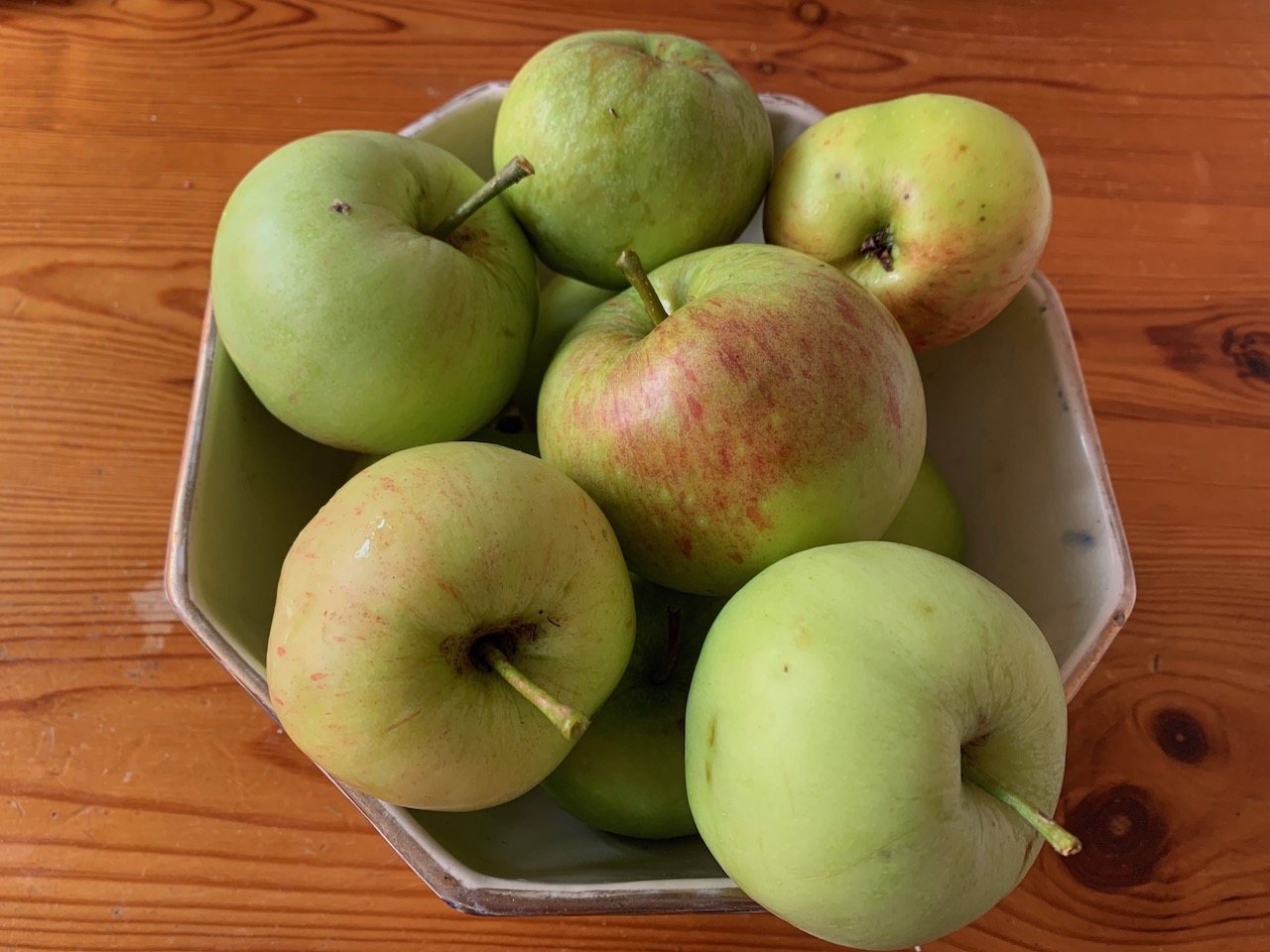
She knows how to stew them with apple and cinnamon,
how to cook for You the most delicious feast.
A poem for Gwyn’s Feast which this year falls on the full moon and is a powerful time to be offering food and mead and poetry to the Blessed One.
This year I feasted Gwyn last night with the Monastery of Annwn. This proved fitting as when I went out before dawn this morning to pour the mead I left on His altar overnight at His apple tree in our garden I saw the full moon.
It’s harvest time. I’ve been gathering in the apples from our back garden. I’ve also started to take some time out to reflect on what I have harvested on a spiritual and creative level whilst, although living with my parents, spending most of my time in solitude since leaving my ecology job in August last year.
I’ve been through a lot of changes. It was a big blow realising that the limitations of my autism rendered me incapable of coping with the demands of working in either conservation or ecology due to my inability to manage projects and people, multi-task, or work flexible shifts or do night work.
Yet my patron God, Gwyn ap Nudd, gifted me with two tasks that gave me purpose and hope. The first, writing a series of books titled The King of Annwn Cycle imagining His unknown story from His birth until the end of the world. The second building the Monastery of Annwn of which He is also the patron.
For the first few months I threw myself into those tasks with utter joy and was completely absorbed in the awen working on my first book In the Deep. I took initial vows as a nun of Annwn on the new moon in October and being part of a group of monastic devotees devoted to the Annuvian Gods and Goddesses has been an ongoing source of inspiration and support.
II. Losing Hope
Yet over the winter I had a few things that derailed me. Blocks with the book after realising that due to it being a personal vision of Gwyn’s story with only subtle links to the existing myths it is unlikely to reach as wide an audience as my work that explicitly related Brythonic content to our environmental crisis.
Minor health problems. Tests around raised liver function that never came to anything. Rosacea. Runner’s knee. Then in spring, just as my knee issues were easing and the weather was getting better I went and pulled my sciatic nerve in my glute and had to reduce my running and strength training.
At this point I was also struggling with breathwork meditation. Gwyn began encouraging me to learn to focus on my breath prior to covid and has told me holding spaces of calm free of chattering thoughts is one of the most important things we can do for the world on an energetic level.
Failing to master my internal chatter alone I tried looking to Buddhism and considered going to meditation classes at a Preston’s Kadampa Buddhist Meditation Centre. To prepare I read one of the books by the Venerable Geshe Kelsang Gyatso Riposte who founded the Kadampa tradition. It led me to the realisation the path of freeing oneself from the suffering of earthly existence isn’t for me and left me feeling profoundly unspiritual so I did not go.
On top of my feelings of despair about being called to write a series of books that would never sell, dread of my savings running out and having to return to menial work, and my nerve pain, this led to me feeling ‘there is no hope left.’
The very moment this thought popped into my mind, when I was open and vulnerable, on my way home from a local walk, my nerve bothering me, I met a person who somehow knew my name and that I ran an online monastery and invited him to join and he caused trouble and had to be thrown out.
This was a big lesson on my failure to address the negative thought patterns that had got a hold on me. I’ve long been quite good at serving my Gods but terrible at taking care of my mental health and spiritual development.
I’ve served as a vessel for Their inspiration without taking care of the vessel.
III. Taking Care of the Vessel
My recovery from what I now believe to be ‘power loss’ began with a ‘power retrieval’ journey with the Way of the Buzzard Mystery School.
Therein I was given a set of ‘wolf’s teeth’ and told that I must be ‘fiercer’. This went against my preconceptions of what being a nun meant as I was striving to be humbler. Yet I took my teeth and the advice. When I reported this to Gwyn, not long before his death and departure on May Day, He told me by the time He returns at the end of August He wanted me to own them.
Shortly afterwards, on the suggestion of my personal trainer, I started practicing yoga to help with my sciatic nerve problems and with flexibility. I had never considered it before due to issues around its appropriation by westerners.
However I decided to give it a go and immediately found a Youtube channel called Breathe and Flow led by a pair of practitioners who make clear from the start the poses are just part of a wider spiritual practice and philosophy and who make the effort to incorporate breathwork and meditation into their classes.
At once I found both a physical practice to help heal my sciatic nerve pain and improve my flexibility and mobility and support with breathwork and meditation.
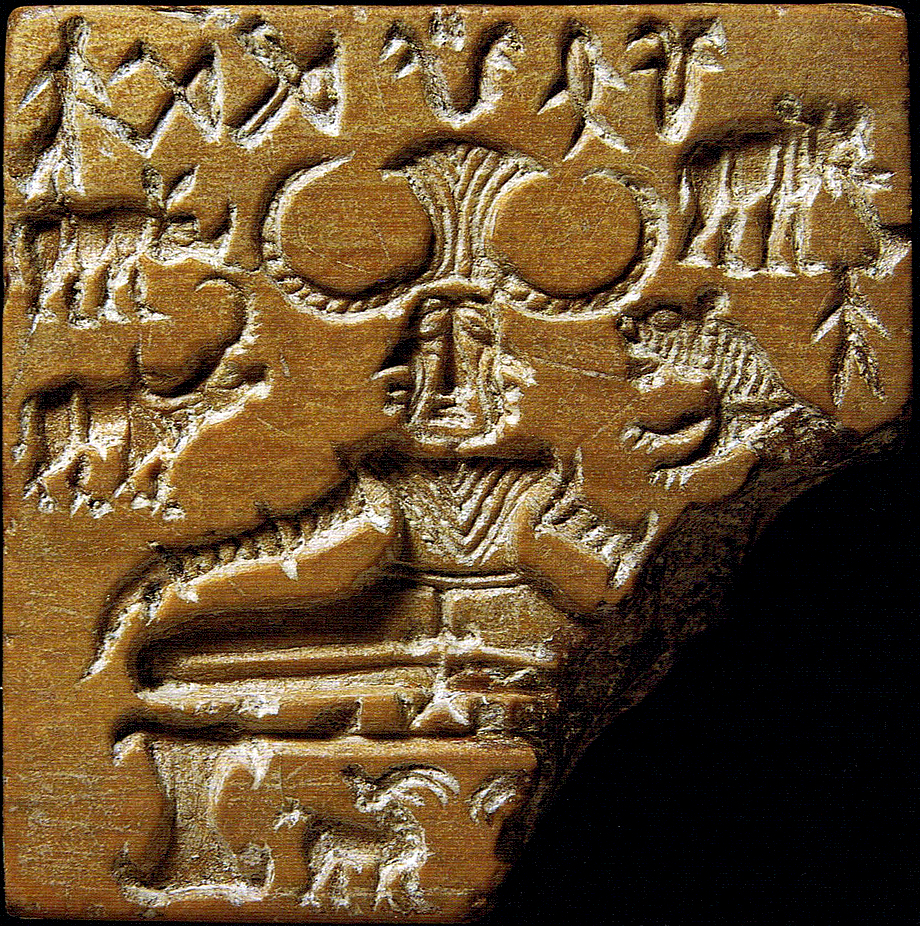
When I started reading up on the religious and philosophical background of yoga to my amazement I found out the Hindu God who is Lord of Yoga is Shiva and He bears similarities to Gwyn as a destroyer and transformer. They both have associations with bulls and serpents and, to my surprise and delight, Shiva’s serpent, Nandi, has a magical jewel on his forehead. In my personal gnosis Gwyn and the serpents of Annwn have similar jewels.
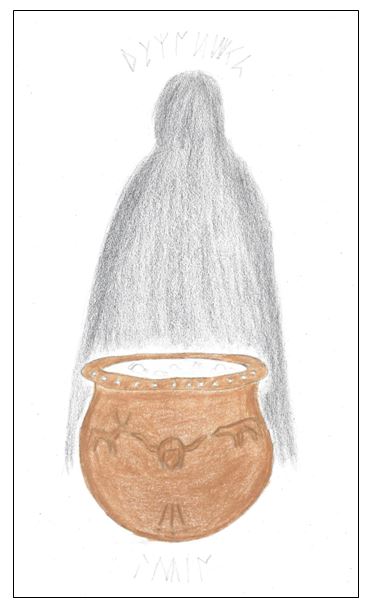
The images of Shiva and the meditating deity who I believe to be Gwyn on the Gundestrup Cauldron bear a striking resemblance. As I persevered with my meditation practice over the summer, although asleep, Gwyn began visiting me in spirit form, as ‘meditating Gwyn’, in the likeness of this image. As if he had been cut from the cauldron, in shining silver, to help me with my breathing. I finally found the practices I needed to take care of my vessel.
Another source of help and support has been working with a supervisor and therapist, who is also a shamanic practitioner and I was put in touch with by Nicola Smalley who co-runs the Way of the Buzzard Mystery School. This is the first time I have had a human teacher and it has taken a long while for the circumstances to come into play that have made this desirable and possible.
When we were looking into my fears around panicking/freezing/melting down when faced with unexpected difficulties, particulary in social situations, we journeyed together on it and she saw a red dragon on my shoulder breathing fire and was told by Merlin that I must learn to ‘tame the dragon’.
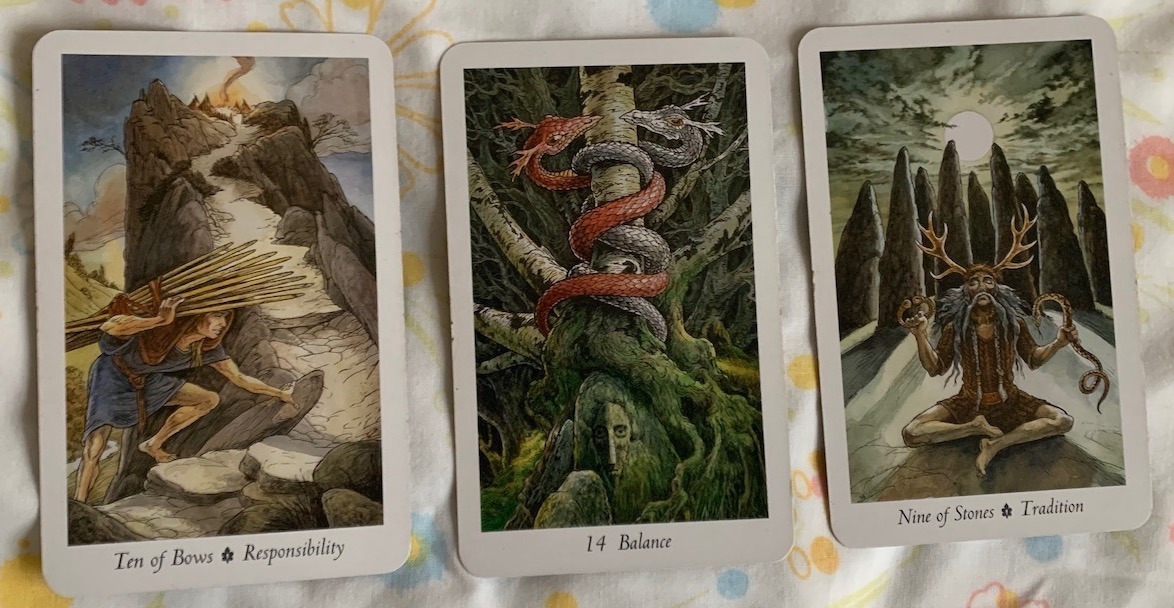
This unsurprisingly led ‘my red dragon’ to rebel which I gave voice to in a poem*. Yet a tarot reading revealed that what Merlin was calling for was the need not so much to tame the red dragon but to balance her energies with those of the white dragon through meditative traditions and taking responsibility.
Of course, in the Welsh myths, it is Merlin who reveals the red and white dragons battling beneath Dinas Emrys where Vortigern wants to build his fortress following their burial by Gwyn’s father, Nudd/Lludd. Amazingly my supervisor knew nothing of my connection with these myths prior to the journey.
I have begun a process of transmuting the anger of the red dragon to strength and the panic of the white dragon to calm in my yoga practice by coupling them with holding postures on either side and with alternating nostril breathing along with trying lion’s breath to release the fiery energy.
V. Unblocking the Flow
Prior to this I had considered alternative options for possible paid work – running courses and workshops or writing a book on Brythonic Polytheism as quite a few people have asked me for reliable material. However, whenever I have attempted to put something together I have met a block.
On the one hand I felt with my background in research into the Brythonic tradition and my experiential relationship with a few of the deities I was in a position from which I could deliver this. Yet I also knew my approach is highly personal and idiosyncratic and critical of the medieval Welsh texts, penned by Christian scribes, in which Gwyn and the spirits of Annwn, the witches, giants and ancient animals are demonised and repressed.
I’m not a person who could deliver the literary background formally, without opinion, without a few of the teeth and claws of the spirits of Annwn getting through.
When I entertained the idea again this year I was told by Gwyn to set it aside and ‘stop thinking about money’. Yet my feeling this might be a future obligation and potential source of income in spite of my blocks continued to persist.
I finally let go of this once and for all following a conversation with my supervisor. She advised that rather than acting from my sense of obligation and presuppositions about what the world wants and needs I should follow my inspiration, the flow of my creativity, asked where my passion really lies.
I said, “in my books”, “in Gwyn,” “in the Annuvian,” “in all He and the Otherworld represent”. She told me this is what I should focus on and write about in spite of my fears about my work not being well received or making money.
For the past year I had increasingly been struggling to create blog content based on what I think my readers want in terms of Brythonic content and poetry. My prayers and songs for Gwyn had all been from the heart but I’d had to drink alcohol to force the poetry out and I hadn’t managed to write much about the other Brythonic Gods and Goddesses in spite of my intent.
As soon as I let go of what I felt my obligations are I had two new poems come through without the aid of alcohol pretty much complete and was inspired to write a couple of pieces on my ‘forbidden pleasure’ – dark fantasy.
VI. The Dark Magician’s Door
At the time I was considering where my future prospects and obligations lie I dismissed the possibility that I might gain a larger readership for my books, which I would describe as mythic fiction containing elements of heroic and dark fantasy, by engaging more with the world of fantasy and its readers.
I flirted briefly with the idea of starting a new blog for thoughts on fantasy and reviews but decided it would be too time consuming and didn’t like the idea of having two blogs and profiles. I also got put off by the fact a lot of engagement takes place on social media and this is an absolute no-no for me. I took one look at Twitter and felt like I was staring into the pits of Hell.
I also dismissed the idea of posting fantasy content on this blog as I have tried it in the past and it hasn’t been well received. I decided there are enough people in the world talking about fantasy and not enough talking about the Brythonic Gods so I should continue to make that duty my focus.
I then had a seemingly unrelated experience that led to my giving up alcohol for good. I used alcohol to self-medicate my anxiety from my late teens until 2020 when I began giving it for periods and cutting down a lot. The habit of weekends and occasional mid-week drinking had snuck back during my difficulties with my sciatic nerve pain even though my body was rebelling against it – expunging it with night sweats and its stink in my piss and shit.
I really wanted to give it up for another long period but was having no success.
Then I had a dream in which my dark magician guide (who is a character in a fantasy novel who has been with me since I was around thirteen) showed up with a vision of planks leading up and down a wall to different doors, told me he was angry I had ‘closed his door’ and left through it.
The next morning he appeared again in my meditation, vivid as in a dream, in Annwn, beside the Abyss, with the part of myself who is addicted to alcohol, sweating, writhing, stinking of its excesses, wrapped in a white shroud. He told me it was time I gave up alcohol for good and that I must cast her in. Although this completely terrified me I went along with what he said. Afterwards I reported it to Gwyn and solemnly promised Him I would not relapse.
Knowing I would never have the comfort of alcohol again was scary at first but has proved to be a big release with the part of my mind obsessing about whether I’ll drink then feel guilty and like a failure having finally been laid to rest. It has opened a lot more space for communion with my Gods and creativity.
I forgot all about the dark magician’s door until the block allowing me only to write Brythonic content and poetry for my blog was released and I came up with new poems and the fantasy book reviews I had denied myself of writing.
I’d closed his door – the door to fantasy – and now it stands open again.
VII. Returning to Orddu’s Cave
Over this year of solitude I have harvested a good many things. I have produced a finalish draft of my first book, In the Deep, and am well on my way with the drafting of my second book, The King and Queen of Annwn. The building of the Monastery of Annwn is going well with our development of our shared practices, meditation group and first year of online rituals.
I’ve come a long way in discerning the direction of my path as an awenydd and nun of Annwn devoted Gwyn and learning to follow my inspiration.
Another important learning is that whereas in the past I forced myself out into various communities, spiritual, creative and environmental, I am happiest when I am alone or interacting with very small groups of like-minded people.
There is a lot of stigma around solitude identifying it with mental ill health. Yet, for me, and I would warrant a lot of autistic people, it is a source of well being.
This has led me back to the cave of Orddu, the Very Black Witch, an inspired one and warrior woman intimately connected to Gwyn who was slaughtered by Arthur.
I no longer see it as my duty to sing back the traditions in which the King of Annwn and his followers are demonised and killed but to join the inspired ones past and present who are perceiving new visions from the Cauldron of Inspiration, brewing them in their own vessels, birthing them in words. Owning my wolf’s teeth, my black beak and claws, all that Arthur forbids.
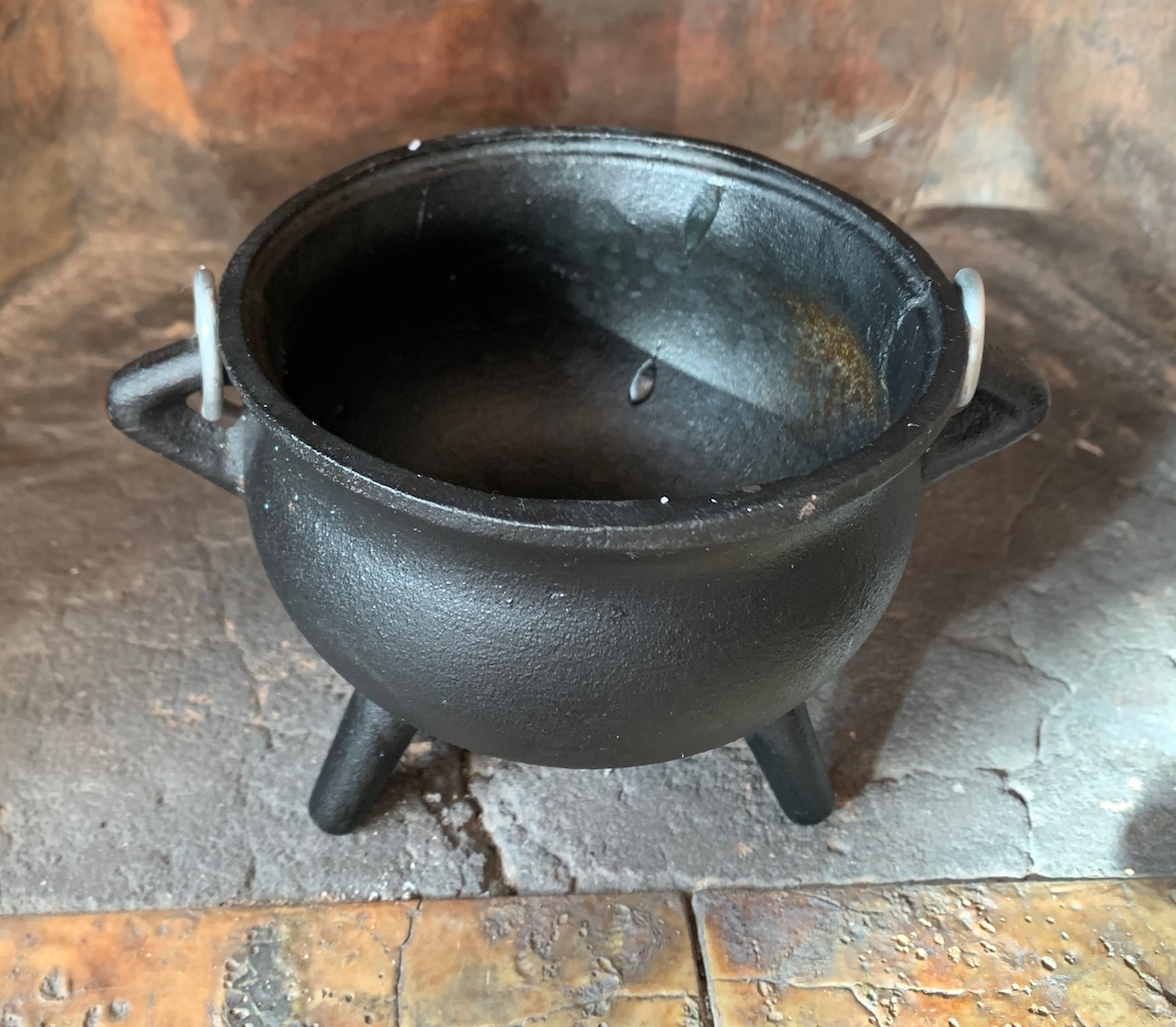
In my cave, my room, my monastic cell, I tend my cauldron and my awen sings.
*This is the poem recording my initial rebellion against Merlin’s words.
The Dragon on my Shoulder Breathes Fire
I. She sees the things that are unseen but are – the dragon on my shoulder breathes fire.
Not just any fire but Annwn’s fire, the type that warms the belly, implodes the head, bursts forth as poetry (on a good day) but is otherwise expressed as anger.
Anger that will not be satiated by death or by the spilling of blood.
Where do dragons come from?
II. There are fire eaters and fire breathers and those who swallow stars not to make a living but to avoid our soul’s death.
Dragon fire has been within us all along.
III. Red is danger and danger is anger with a letter d at the front.
Red and hatred have the same vibe. Red, goch, iron, the red at the earth’s core. My temper will not be tempered – my metalwork got melted down.
I did not master fire.
Instead I released the dragon soaring soaring from the forge wept the day I did not save my Lord from Arthur’s sword.
But it was I who freed the fiery serpents sizzling, hissing, spitting.
IV. Now a large grandfather clock is ticking down to doomsday. The dragons are fighting again and will not be quieted.
Merlin tells me that I must ‘tame the dragon’.
Why, oh prophet, diviner, madman, must I try to tame what cannot be tamed?
Why, oh son of a demon, who prophecies in dragon fire are you speaking this Arthurian language of taming?
All I know is you have demons inside you too, in your heart, in your head, that both of us like to sit beneath the apple trees.
The dragons are within me.
The Island of Prydain.
The dragons are within you too.
The dragon on my shoulder breathes fire and she sees the things that are unseen but are.
Day Eleven of Twelve Days of Devotion to Gwyn ap Nudd
I come this eleventh day to consider Your cauldron and how it will not boil a coward’s food.
“Why, then,” I ask, “do You allow me to eat from it when so many times I have failed to live up to the demands of the world, to match up to its worthy warriors and bards?”
You tell me that I “lack not courage but confidence” and remind me that everything I believe in I have done –
I have stood and recited poems for You before a world that once derided You as a devil and now derides only those who dare speak openly about their religion in public.
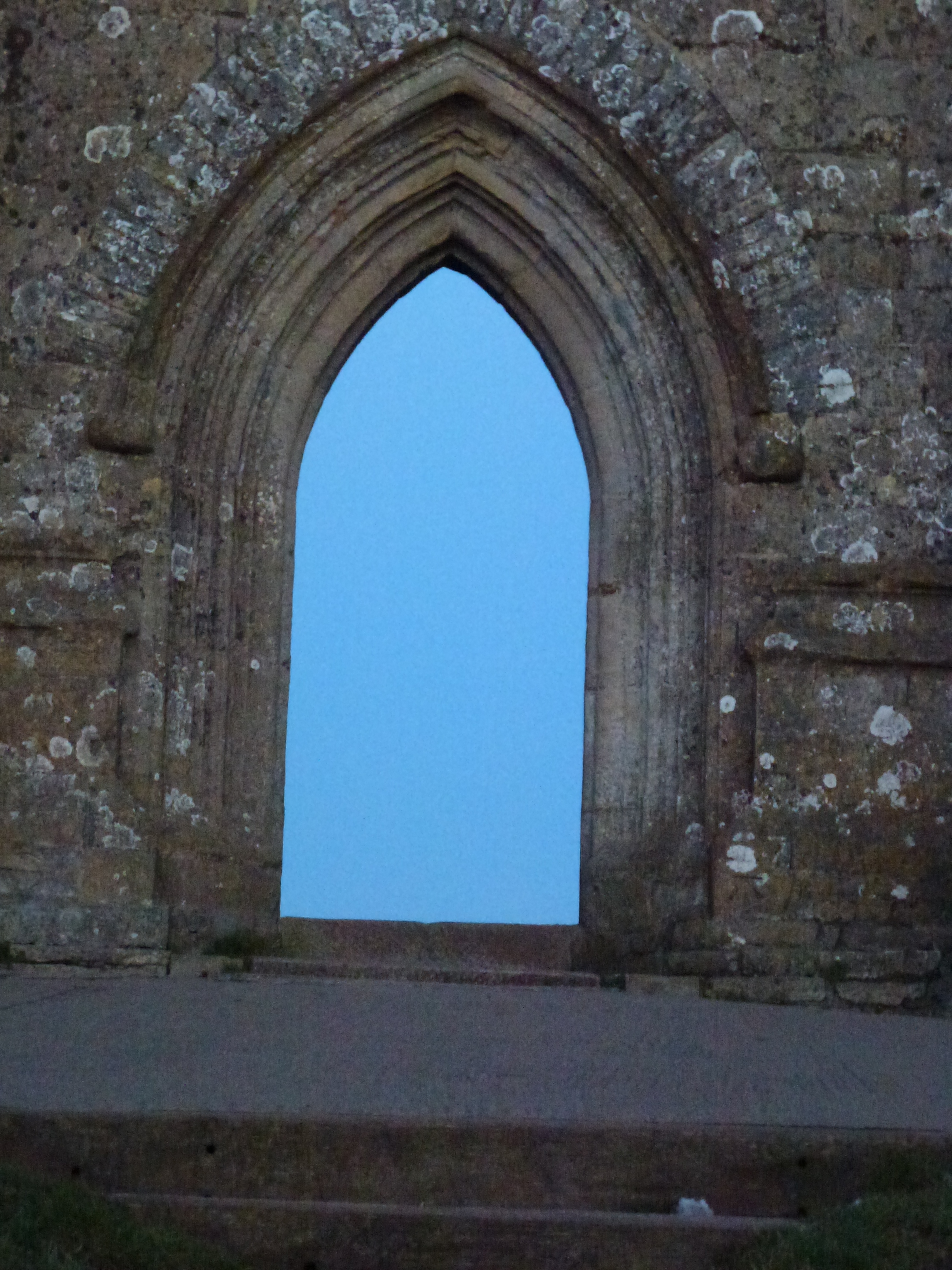
I have climbed mountains, run half marathons, forded a river in leaking waders. Ascended Glastonbury Tor in torrential rain in the dead of night to gift to You the first book I ever published.
I have stood before Your cauldron made my dedication to You.
I have fled the world, but I have not fled from You, my God.
I pray that You, Your cauldron, will grant me the courage to face my fears.
Gwnëynt eu peiron a verwynt heb tan gwnëynt eu delideu yn oes oesseu.
They’d make their cauldrons that were boiling without fire; they’d work their materials for ever and ever.
The Hostile Confederacy
In the blackness of a starless night
I could not stop brow-beating
myself with the hammer
of what is missing
inside me whilst outside
they forged a sky of black iron
with a ringing ringing beat dividing
cosmos from chaos within the metal dome
fixing the crystal constellations. They’d make their cauldrons
sturdy and strong as they’d make
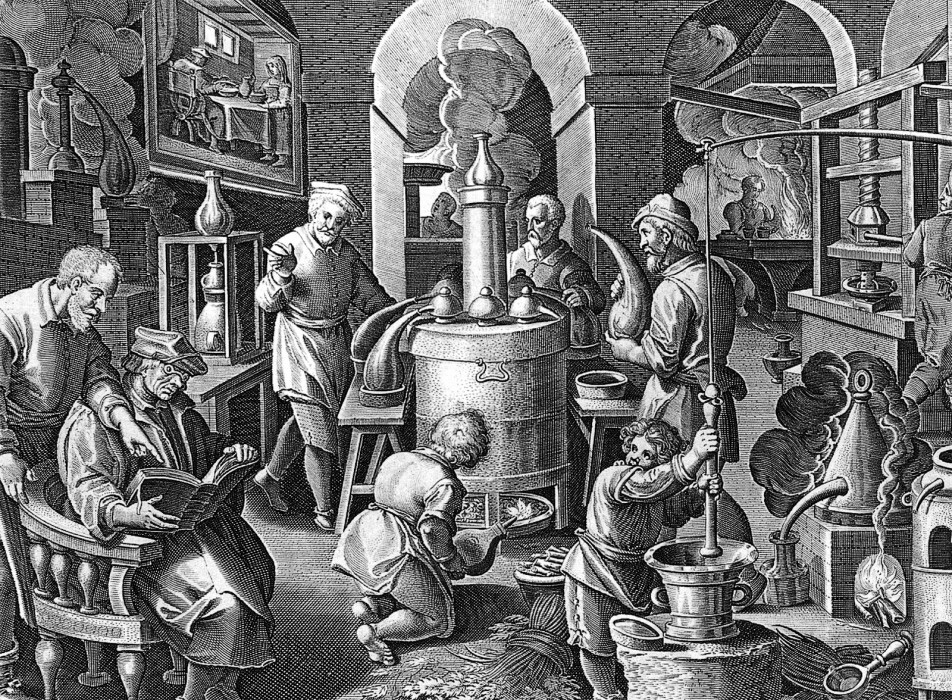
their crucibles and flasks and funnels
and their chimerical language,
working with the elements,
conjunctions of planets,
365 herbs to inspire,
voices rising like phoenixes
from the ashes of the nigredo
on magical wings higher and higher that were burning without fire
whilst we burnt everything
and our cauldrons would not boil.
I walked the plains of cold dark vessels;
leaking, cracked, the prima materia
spilling out like poison.
As we emptied the oil wells
and the gas wells and I followed
the dragon ships the emptiness
inside me grew emptier.
Whilst we built our hell they’d work their materials
in the cauldrons deep inside them.
Thus they’d brew their awen
whilst we pillaged elixirs
from other worlds
and the elements ran wild;
burning, drowning, shaking monsters.
The black sky cracked and with the crystal stars
we fell like charred birds from the heavens
plummeting without feathers for ever and ever.
‘The Cauldron of Dyrnwch the Giant: if meat for a coward were put in it to boil, it would never boil; but if meat for a brave man were put in, it would boil quickly (and thus the brave could be distinguished from the cowardly).’
The Thirteen Treasures of the Island of Britain
A warrior-bard rides his motorcycle across the north,
his words like his weapons bold and defiant,
seeking to prove his worth at the Cauldron of Dyrnwch the Giant.
Will he lose his defiance with his stuttering rifle,
like a broken mike stammer and stall? If meat for a coward were put in it would never boil.
Or will he proclaim his exploits on a megaphone
whilst miming each gun-shot wittily? If meat for a brave man were put in it would boil quickly.
Either way in the depths of the cauldron
his youthful flesh will be devoured most thoroughly (and thus the brave could be distinguished from the cowardly).
~
~
Dyrnwch the Giant is a legendary figure associated with the Old North. His epithet gawr ‘giant’ poses the question of whether he was a large human or belonged to a mythic race. References to giants such as Brân the Blessed shows they held an important position in Brythonic mythology. More confusingly, human chieftains such as Maelor Gawr, who was killed in a raid on his fortress at Pen Dinas by Gwerthmwl Wledig, were given the epithet ‘giant’.
Dyrnwch appears by the name Diwrnach Wyddel ‘the Irishman’ in Culhwch and Olwen. Here the getting of his cauldron to boil food for his wedding guests is one of the impossible tasks Culhwch must fulfil to win the hand of Olwen, daughter of Ysbaddaden Bencawr, ‘Chief Giant’.
Diwrnach is the steward of Odgar King of Ireland. Arthur fulfils the task for Culhwch. He sails to Ireland on his ship, Prydwen, with his men. Diwrnarch invites them into his house to feast. When Arthur asks Diwrnach for the cauldron he refuses to hand it over. Llenlleog Wyddel, one of Diwrnach’s men, betrays him by grabbing Arthur’s sword, Caledfwlch, and killing Diwrnach and all his retinue. Arthur and his men flee with the cauldron filled with Irish treasure.
In Brythonic mythology Ireland is sometimes a synonym for Annwn, the Otherworld, because it is likewise across the sea. If this is the case, ‘Odgar’ is a name for the ruler of Annwn and Diwrnach is his steward. This reading is backed up by the fact that in ‘The Spoils of Annwn’ the Head of Annwn owns a cauldron just likes Diwrnach’s with a pearly rim that will not boil a coward’s food, which is again seized by Arthur.
Dyrnwch also appears by the name Wrnach in Culhwch and Olwen. Culhwch is told he must get Wrnach’s sword, which is the only weapon that can kill him. In this story he is most definitely a giant for he owns ‘the largest fort in the world’ and from it comes a ‘a black-haired man, bigger than three men of this world’. Cai fulfils the task for Culhwch by posing as a furbisher of swords and killing Wrnach with his own perfectly honed blade.
‘Arthur and the Porter’ mentions Arthur fought with a hag in Awrnach’s hall. This is another variant on the spelling of Dyrnwch and perhaps associates Dyrnwch with Orddu, ‘Very Black’, a ‘hag’ who dwelled in Pennant Gofid, ‘in the uplands of Hell’. Arthur went to the North to kill her. The boundaries between the North, Ireland, and Annwn blur. All are ‘not here’.
From this proliferation of stories we can conjecture that Dyrnwch was an important figure who guarded the cauldron of the Head of Annwn and died attempting to defend it in a liminal place.
From the Bronze Age, cauldrons literally held a central role in Brythonic culture at the centre of the feast. They were essential for cooking meat, which would have been seen as a magical process. The cauldron’s property of distinguishing the brave from the cowardly seems related to ‘the champion’s portion’ in which the bravest warrior was given first choice and the finest meat.
On a deeper level, in Welsh mythology, the cauldron is associated with death and rebirth. Brân the Blessed was gifted a cauldron which had the power to bring dead warriors back to life. Taliesin was reborn from the crochan ‘cauldron’ or ‘womb’ of Ceridwen from which the Awen* originates.
It seems likely the magical property of Dyrnwch’s cauldron and the champion’s portion had a deeper origin in an initiatory function wherein only a brave person could be initiated into the mysteries of death and rebirth in the depths of Annwn and thus receive his or her Awen.
*Divine inspiration. In some medieval Welsh poems it is synonymous with one’s destiny.
~
SOURCES
Kristoffer Hughes, From the Cauldron Born, (Llewellyn, 2013)
Marged Haycock, Legendary Poems from the Book of Taliesin, (CMCS, 2007)
Patrick Ford, Mabinogi and Other Welsh Tales, (University of California Press, 2008)
Peter Bartrum, A Welsh Classical Dictionary: People in History and Legend up to about A.D. 1000, (National Library of Wales, 1993)
Rachel Bromwich (ed), The Triads of the Island of Britain, (University of Wales Press, 2014)
Sioned Davies (transl.), The Mabinogion, (Oxford University Press, 2007)
William Skene (transl.), ‘Arthur and the Porter’, The Black Book of Carmarthen, Mary Jones Celtic Literature Collective
In verse four of ‘The Spoils of Annwn’ the lines about Caer Wydyr (‘Glass Fort’) are followed by a single reference to Caer Golud (‘Fortress of Impediment’).
‘Three loads of Prydwen went with Arthur:
save seven, none came back from the Fort of Impediment.’
Nothing more is said about Caer Golud. To the best of my knowledge it does not appear in any other literature. Marged Haycock translates golud as ‘impediment’ from goludd. This suggests Caer Golud is another name for the impenetrable Caer Wydyr, which is guarded by six thousand men and an incommunicative watchman.
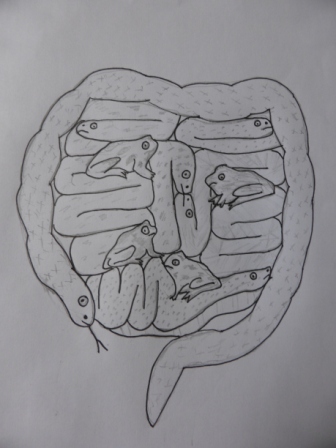
An alternative translation is from coludd (which mutates from ‘g’): ‘guts’, ‘bowels’ or ‘entrails’ This is a fascinating possibility and fits with links between the Glass Fort and Glastonbury (‘the Glass Island’) as a place the 6thC prophet, Melkin, claims is ‘greedy for the death of pagans, above others in the world.’
Melkin’s words suggest pagan beliefs and practices survived in Glastonbury into the 6thC. The word ‘greedy’ evokes devouring and the digestive processes of the guts. This would certainly tie in with other descriptions of the Brythonic otherworld.
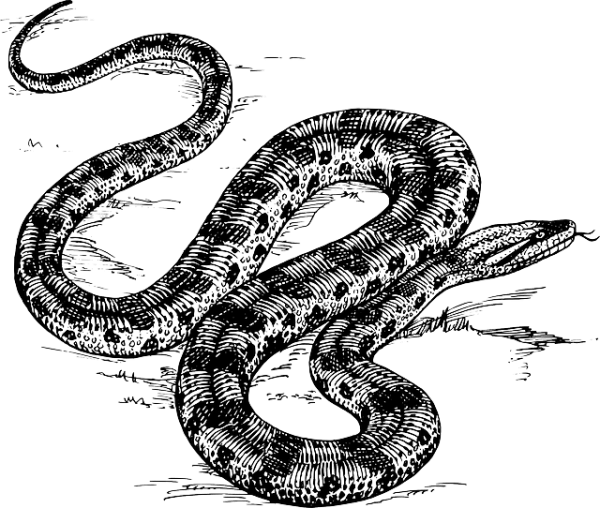
In ‘The First Address of Taliesin’ the bard inquires into the width of ‘the mouth’ of Uffern (‘inferno’). ‘Kat Godeu’ refers to ‘a great-scaled beast’ with ‘a fierce battalion / beneath the roof of his tongue’ and ‘A speckled crested snake’ with ‘a hundred souls, on account of (their) sin… tortured in its flesh.’
Public Domain
Both poems are heavily Christianised yet if we remove the punitive connotations resulting from Annwn’s identification with Uffern/Hell and thus sin, it is possible to find traces of a shamanistic standpoint far more visceral than courtly medieval portrayals of the otherworld.
We recall Gwion Bach (as a grain of wheat) was swallowed by Ceridwen (as a black hen). A sow feeds on Lleu Llaw Gyfes’ rotten flesh when, mortally wounded, he takes the form of an eagle. The Hounds of Annwn hunt down and devour souls.
Gwion’s swallowing by Ceridwen leads to his rebirth as Taliesin. In a similar Irish story, Dechtire swallows a small animal whilst drinking a glass of water and is then told she is pregnant by Lugh with the son who will grow up to become Cu Chullain.
It is possible these stories date back to a time people didn’t causally connect sex and pregnancy due to the time lapse. The belly is not only the place of digestion but gestation: eating the ‘dead’ and birthing life were connected with this mysterious place.
***
In From The Cauldron Born, Kristoffer Hughes notes that in Welsh the word for cauldron is pair or crochan, which resembles croth ‘womb’. Ceridwen’s cauldron, her belly, is where Gwion is devoured and reborn as Taliesin.
Taliesin describes his fate in language evocative of malting and brewing in ‘The Hostile Confederacy’:
‘I was a grain…
A hen got hold of me –
a red-clawed one, a crested enemy;
I spent nine nights
residing in her womb.
I was matured,
I was a drink set before a ruler,
I was dead, I was alive,
a stick went into me;
I was on the lees,
separated from it, I was whole;
and the drinking-vessel stiffened resolve,
(for) the red-clawed one imbued me with passion.’
In ‘Lake of the Cauldron’ Charlotte Hussey glosses lines from The Second Branch where the giant, Llasar, emerges from a lake in Ireland with the Cauldron of Rebirth on his back to depict a similar process.
The cauldron is described as decorated with animals and divinities including a woman with ‘long-breasts’ and a ‘sweaty belly’ stirring it ‘as if it were a pan’. The woman pushes the narrator ‘into the boil’. Llasar watches as
‘…She hacks
shoulder blades, buttocks apart,
scrapes off chunks of flesh,
bones sinking then surging to the rim,
tossed by the churning waters.’
This bears similarities with scenes of initiation from shamanic cultures. Mircea Eliade records that a Samoyed shaman was decapitated and chopped into bits by a blacksmith who boiled him in a cauldron ‘big as half the earth’ then reforged him with magical capacities. In some traditions the initiate is eaten.
In relation to the devouring snake in ‘The Spoils of Annwn’ it’s of interest amongst the Negritos there is great snake named Mat Chinoi. Thirty female Chinoi ‘of the utmost beauty’ live in its belly with their ornaments and combs. By passing two ordeals it is possible to enter the snake to find a wife.
It’s noticeable none of the Brythonic texts mention bowels or excrement. This may be because they were penned by Christian scribes in the medieval period. This contrasts with the bawdy toilet humour of the Norse myths and the mythologies of other cultures.
In Dream and the Underworld, James Hillman notes that in a late Orphic hymn the name of ‘the Goddess of the realm of death’ is ‘borborophoba, which was can render in the double-sense of shit-fearing: she who keeps it at bay, and she who makes it flow in panic.’ In the Egyptian Otherworld, where everything is reversed, people defecate through their mouths.
Hillman refers to dreams of diarrhea as ‘radical compelling movements into the underworld or as an underworld that has come to sudden irrepressible life within us, independent of who we are and what we are. Like death, diarrhea strikes when it will and all alike. Shit is the great leveller… Toilet dreams… can be read as underworld initiations.’
***
Our lack of knowledge of Caer Golud parallels the lack of attention our cerebrally obsessed culture has paid to the gut over the last few centuries. Thankfully over the past few decades scientists have begun to pay attention to this long neglected area.
In the 1960’s Michael Gershon published a ground-breaking book called The Second Brain. He draws attention to the fact that if the major nerve between the brain and gut is cut, the gut continues to work, and can function independently of the central nervous system.
The Enteric Nervous System ‘the brain below’ regulates peristalsis. One of the most important neurostransmitters in this process is serotonin. Serotonin plays an important role in the regulation of mood and 95% lies in the gut.
More recently scientists have been studying the microbiota of the gut as a ‘collective unconscious’, their symbiotic relationship with their host, and their influence on behaviour. Gut microbiota affect memory, sociability, and levels of stress and anxiety.
I’ve suffered from anxiety most of my life and a few months ago got diagnosed with IBS (Irritable Bowel Syndrome). Finding out these links was a eureka moment. When I get stressed I have bowel problems which upset my gut making me more stressed: it’s a vicious cycle.
Frighteningly 10% of people in the UK suffer from IBS and it’s the second biggest cause of absence from work yet nobody talks about it. As I’ve also done in the past, they just make excuses or take Immodium and pretend it isn’t an issue. I can’t help thinking such a high percentage of people suffering from IBS results from living in such a stressful world.
I can’t see an easy or immediate way out of this cycle. However, I do believe the root cause can be addressed. We need to stop participating in the stressful worlds our guts cannot tolerate and which are indigestible to the deities of Annwn and work toward creating alternatives.
The time has returned to learn to listen again to the forgotten worlds of our guts which are paralleled by Caer Golud and its great-scaled beasts and speckled crested snakes in the realm of our Annuvian borborophoba, Ceridwen.
SOURCES
Charlotte Hussey, Glossing the Spoils, (Awen Publications, 2012)
Cryan, Dinan, Stilling, Stanton, ‘Collective Unconscious: How Gut Microbes Shape Human Behaviour’, Journal of Psychiatric Research 63, (2015)
James Hillman, The Dream and the Underworld, (CN, 1979)
Kristoffer Hughes, From the Cauldron Born, (Llewellyn, 2013)
Marged Haycock, Legendary Poems from the Book of Taliesin, (CMCS, 2007)
Michael D. Gershon, The Second Brain, (Harper Collins, 1999)
Mircea Eliade, Shamanism, (Princeton, 2004)
Nicolas R. Mann, The Isle of Avalon, (Green Magic, 2001)
Thomas Kinsella (transl), The Tain, (OUP, 1979)
Welcome guest, make yourself at home,
My processions are coming home for autumn.
There is no lack of wood upon the hearth,
The hounds are calm, the horses fed and watered.
Put knife to meat, drink your share from the horn,
There is endless plenty in my cauldron.
Join and dream to the songs of my bards,
They play a magic from the world’s beginning.
Beneath the Faery moon and Annwn’s stars
All things are sung back to wonder.
Welcome guest, make yourself at home,
My processions are coming home for autumn.
*The original manuscript ‘Gwyn ap Nudd and St Collen’ (1536) relating Gwyn’s feast on Glastonbury Tor can be found here: http://www.maryjones.us/ctexts/collen.html It’s possible it took place on Michaelmas day, September 29th, which marks the last day of summer and beginning of Autumn.






 The Sanctuary of Vindos