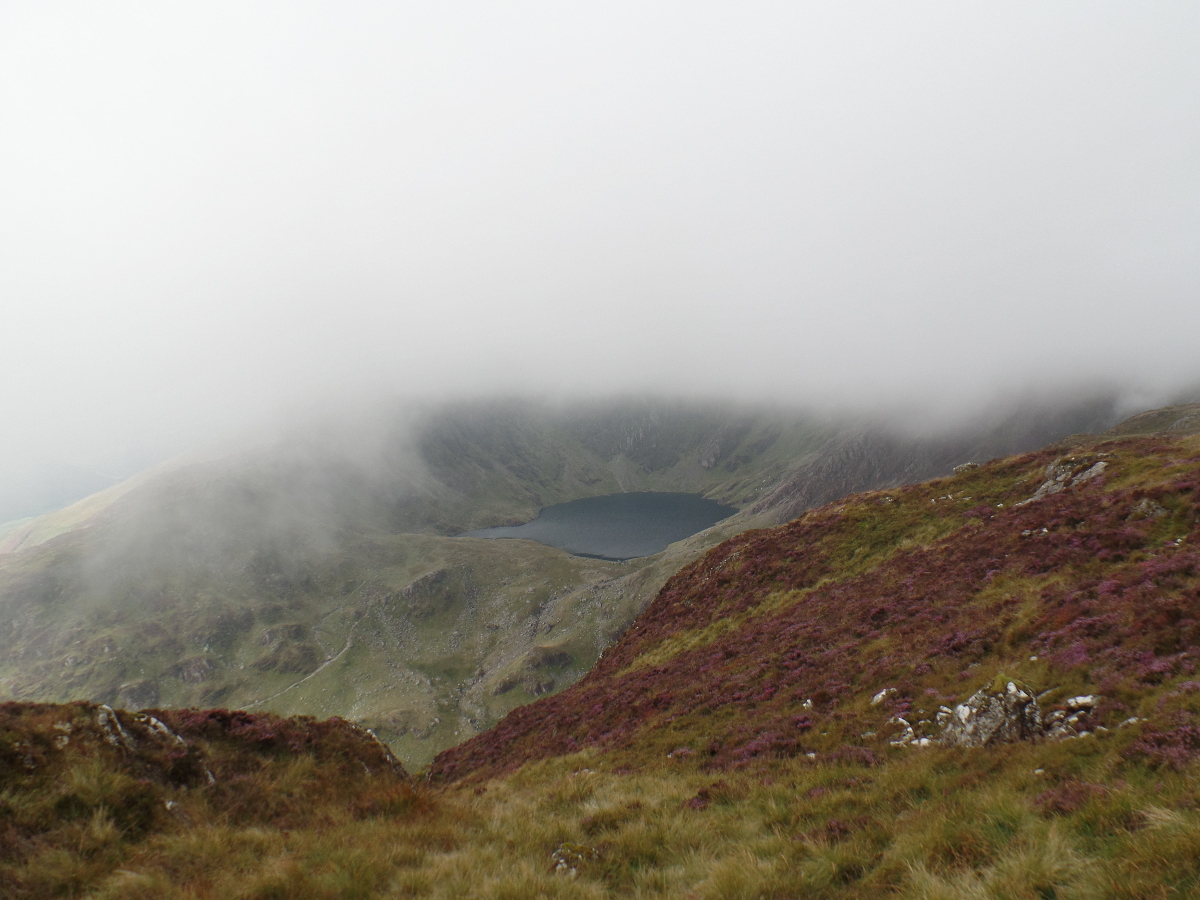
Two months ago I decided to take a break from blogging. I’d returned from Wales after climbing mist-ensorcelled hound-haunted Cadair Idris. Standing on the shoulder of a giant dizzied by his mad dreams. Staring down into Llyn Cau and Llyn y Gadair. Finding refuge in the hut of the mountain guide.
In Wales the gods are huge. Their names and stories echo from deep valleys and massive mountains and are carried in streams and rivers to where the immensity of the sky meets the immaculate sea on the western coast. From Pen y Gadair the mists of Gwyn ap Nudd never leave.
On Borth beach I read Heron’s new translation of ‘The Dialogue of Gwyn ap Nudd and Gwyddno Garanhir’. The name Borth derives from Porth Wyddno and is the location of Cantre’r Gwaelod (The Bottom Hundred); Gwyddno’s drowned kingdom. It was my intuition Gwyddno died there and the poem records a conversation between the worlds where Gwyn offers Gwyddno protection and guides him to Annwn (the Brythonic otherworld).
Reading the poem was immensely powerful. I experienced vividly the presence of these two great mythic figures speaking against the backdrop of the pebbled beach and roaring sea. Afterward at sunset I saw the otherland of which Gwyn speaks ‘where the tide ebbs fiercely on the shore’ appear on the horizon.
 I returned to Penwortham mind-blown with much to absorb in thought and dream only to experience another immensity. This time a crushing one. Walking the section of the old pilgrim’s path that leads across the A59 from the site of St Mary’s Well to the War Memorial I got trapped in the middle of the road: unable to cross because of the heavy rush of traffic at school pick-up time.
 I knew this was the result of the widening of Penwortham By-Pass. A rush which will only increase when a new stretch of by-pass is built leading over the river Ribble to Junction 2 of the M55 (which exists only in name having been planned over 40 years ago). That this was linked to the expansion of BAE, the University of Central Lancashire, to the building of new housing developments and employment sites throughout Preston and South Ribble.
I was struck by the overwhelming gnosis it was beyond me to stop the growth of this monster. I could not stop the City Deal. I’d known for a while the City Deal was something not even the most seasoned campaigners would dare take on as a whole. That each of us must find our own way of protecting what we value within the realms of possibility whether it’s by campaigning against individual developments, fracking (which will not only ruin the landscape and poison our sacred watercourses but fuel the monster), austerity, defending and caring for an area of green space or growing and nurturing a community group.
Acknowledging this insight has taken a lot of readjustment during which I realised attempting not even to save the world but just South Ribble and Preston, Penwortham even, was beyond my capability and making me ill. Not only that, Peneverdant ‘the green hill on the water’ with its aquifer shattered in 1884, its holy wells dry, its banks subsiding with falling trees and gravestones under increasing duress from the By-Pass wanted to close down. Hence the closure of ‘From Peneverdant.’
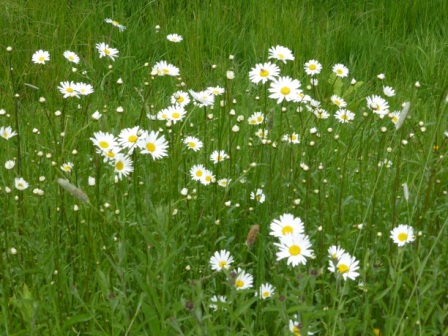
What did I have left? The Friends group I run in Greencroft Valley with its wildflowers and apple trees. The monthly poetry night I play a lead role in organising at Korova Arts Cafe & Bar which provides a safe and welcoming space for newcomers and established poets to perform. The Oak and Feather Grove.
My relationship with the land and the gods which my recent travels north and to Wales have taught me need not be limited to Penwortham. The inspiration and awe I find in my path as an awenydd devoted to Gwyn ap Nudd. The depth and magic of his known and unknown stories. A growing awareness of other Brythonic gods and goddesses and their myths.
Whilst I’ve had support and companionship from friends and family and other poets and pagans, until the past couple of months my path as an awenydd and Brythonic polytheist has been a lonely one. However, in October I went to Glasgow to a ritual to Epona-Rigantona led by Potia and last week returned to Borth and finally met Heron, whose writing has guided and inspired me for several years.
Together on Borth beach Heron and I read my story ‘The Crossing of Gwyddno Garanhir’ which I wrote after my previous visit to Borth based on his translation of Gwyn and Gwyddno’s dialogue. It was moving and beautiful reading and listening to the words, born from the place, from an ancient poem passed on from poet to poet, feeling it live on the sea breeze and the rolling tides, honouring Gwyn’s role as a psychopomp, Gwyddno’s passing and the absent cranes (‘garan’ from Garanhir means crane in Welsh) who I gave the role of soul-birds. Afterward we walked across Cors Fochno (Borth Bog), where cranes may have nested, up Cwm Clettwr and to Taliesin’s grave.
I returned nourished with my feeling of the increasing import of the Brythonic myths juxtaposed with my frustration so few people have an interest in them. Of having much to share but no-one to share with. Which led once again to despair until I had a dream which somehow I knew took place ten years in the future.
I was leading a guided tour of one or two disinterested people to ‘Cockersand Fields’ (which I interpreted to be the fields near Cockersand Abbey where a statue to Mars-Nodens was found) and was feeling ready to give up on this task and life altogether. I hadn’t put my heart into it for several years. Then I saw a group of young backpackers approaching from boats on a sunset beach with smiles and eyes filled with hope. They’d come searching for stories about Gwyn, which I’d failed to write: a failure I suddenly regretted and a friend pushed me to rectify.
The dream seemed to be telling me not to lose hope in a vocation that nurtures my soul, brings me joy and could likewise bring meaning and purpose to others because my writing doesn’t provoke immediate responses or recognition. To think of the long term rather than satisfaction in the now.
Thus for the first time since the closure of ‘From Peneverdant’ I break my silence. Whilst I can’t promise my words will save the world or even Penwortham, I hope for others led down strange paths by little-known gods they may provide signposts in the mist that lead to the strength and inspiration to live with joy and depth in this troubled world.





 The Sanctuary of Vindos