On Becoming a Nun of Annwn

I.
A small person
in a small room in a small suburb

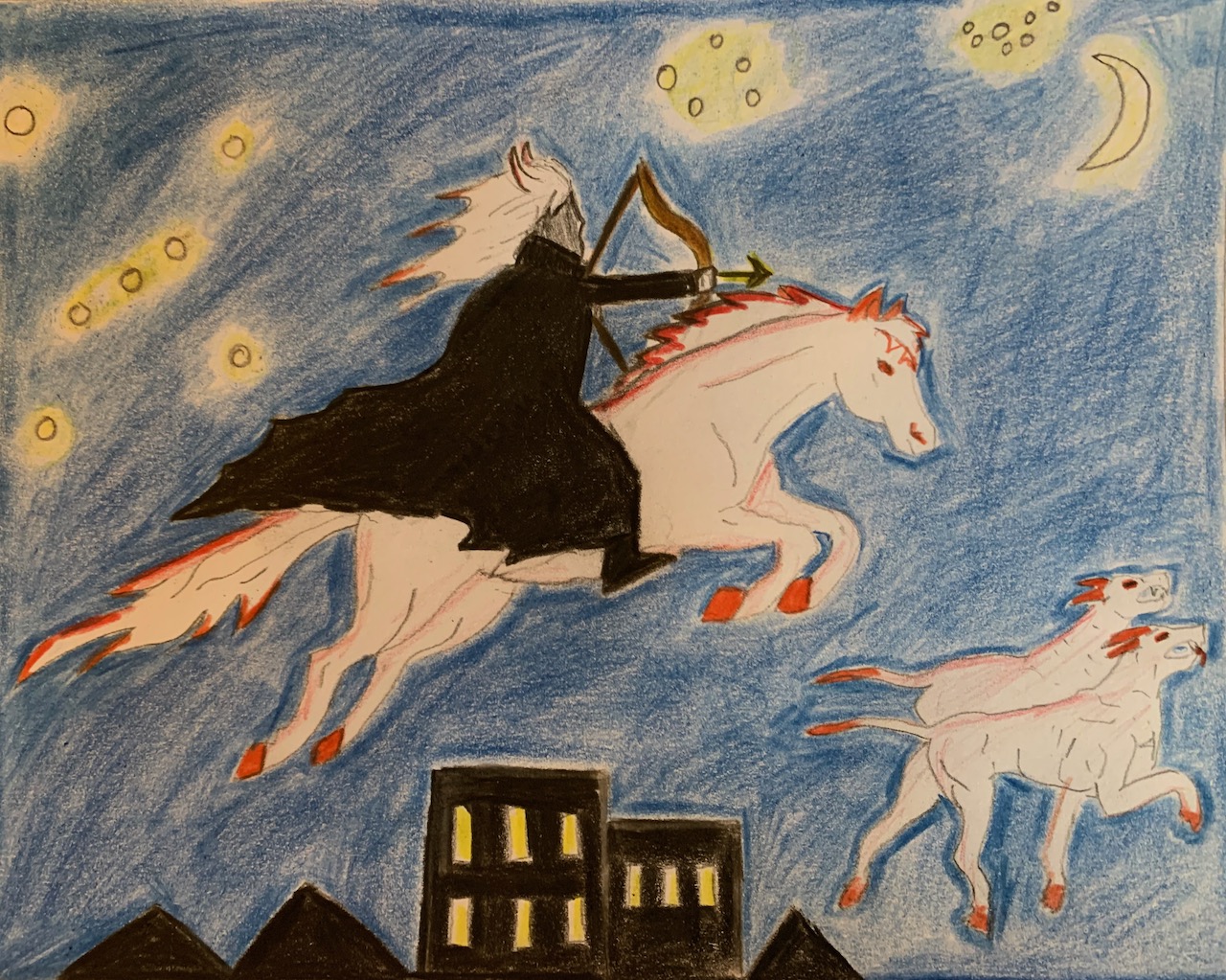
looks up at her God riding dark and holy,
immense and terrifying through Van Gogh’s starry night

demanding that she become a creature of paradox closer to Him.

His hounds howl, His owls screech, His ravens scream,
yet His silence is what opens the skies
and cracks the earth of
her small place.

II.
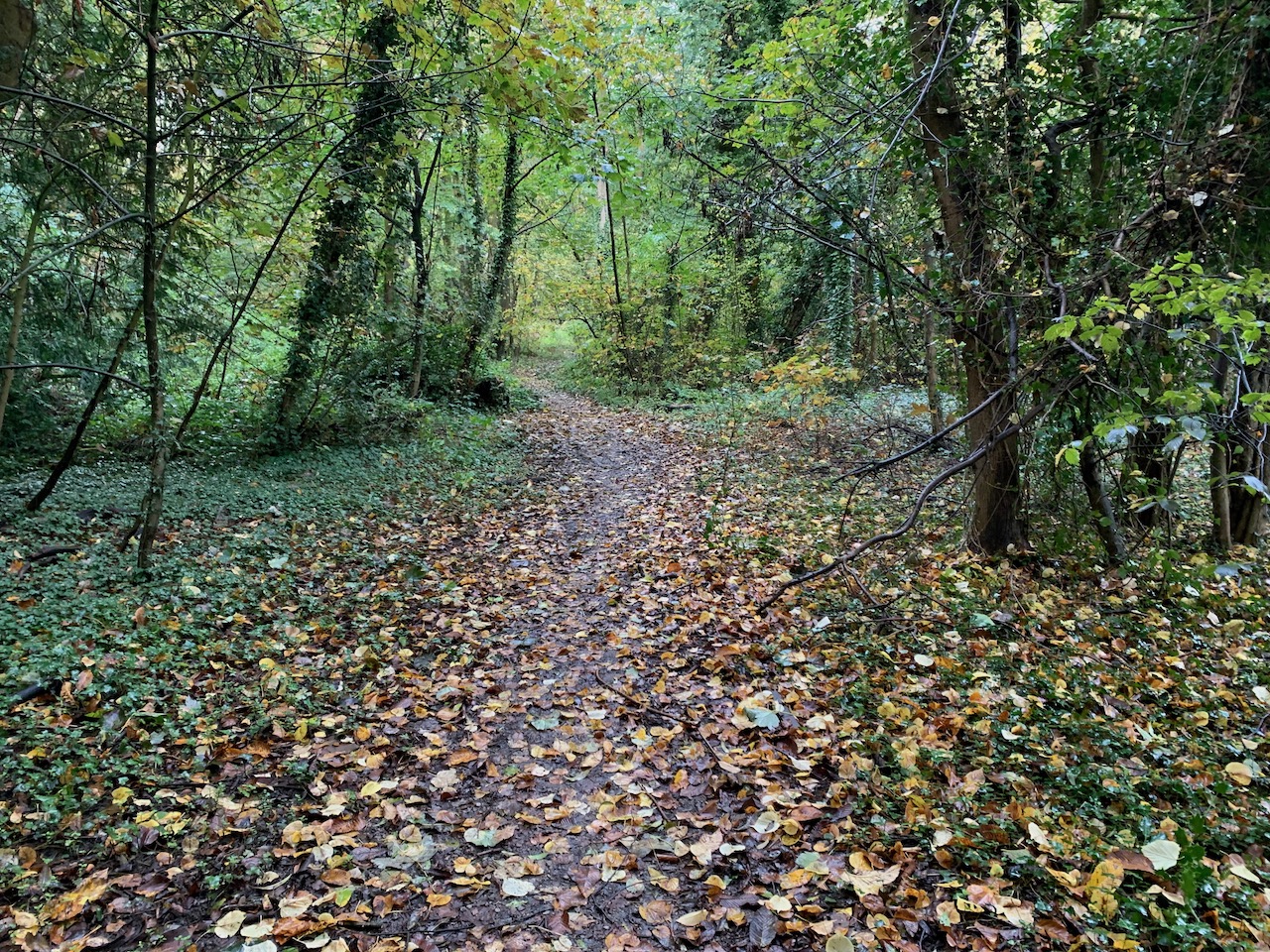
She walks with Him
where monks once walked –
‘Monks Walk,’ ‘Castle Walk’, ‘Tower View’,
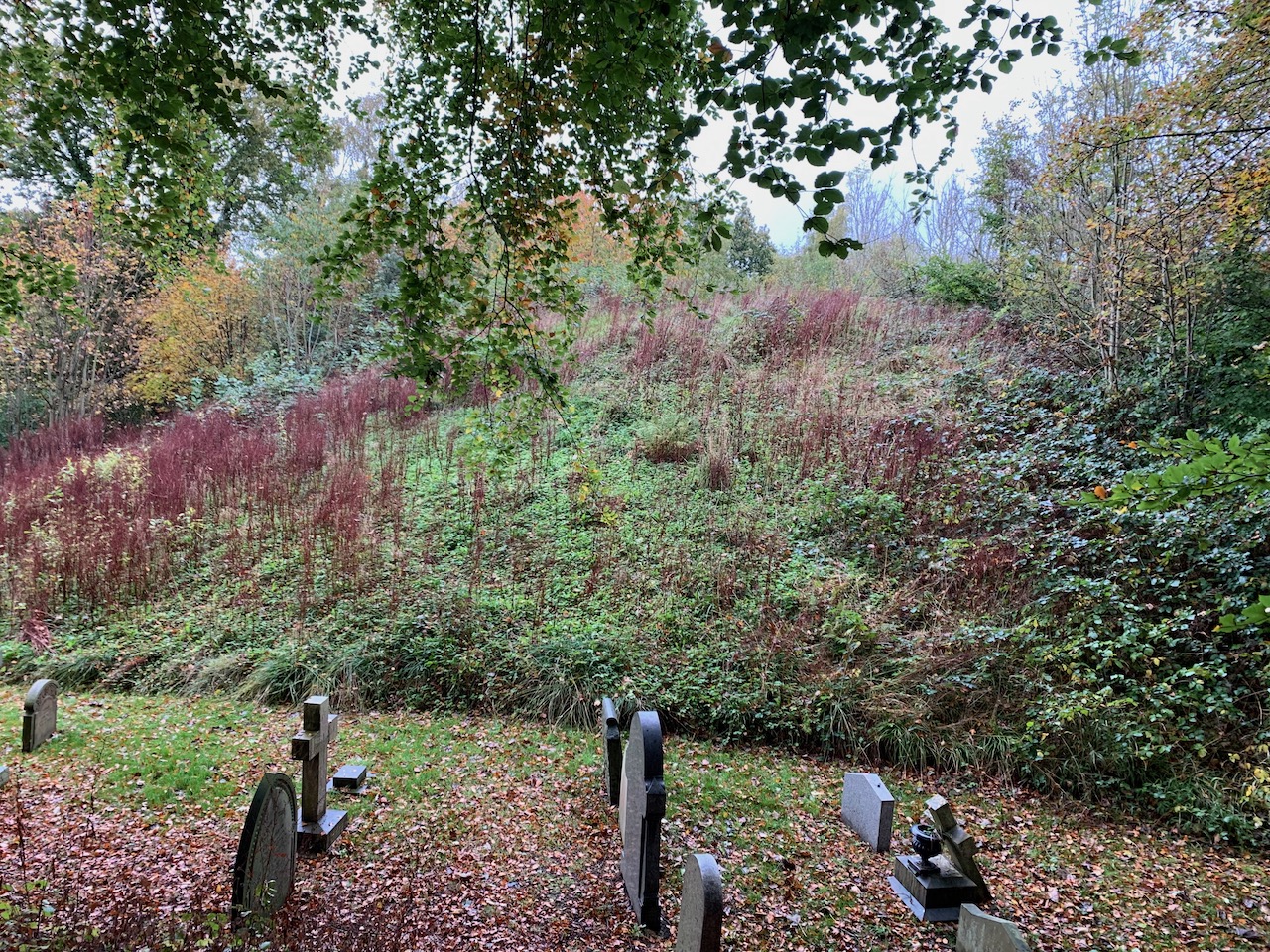
where the monastery once stood near Castle Hill,

tracing the labyrinth of the roads and houses instead,

Church Avenue from which the Fairy Funeral
was banished to Fairy Lane where
stands the leaning yew.

III.
He takes her
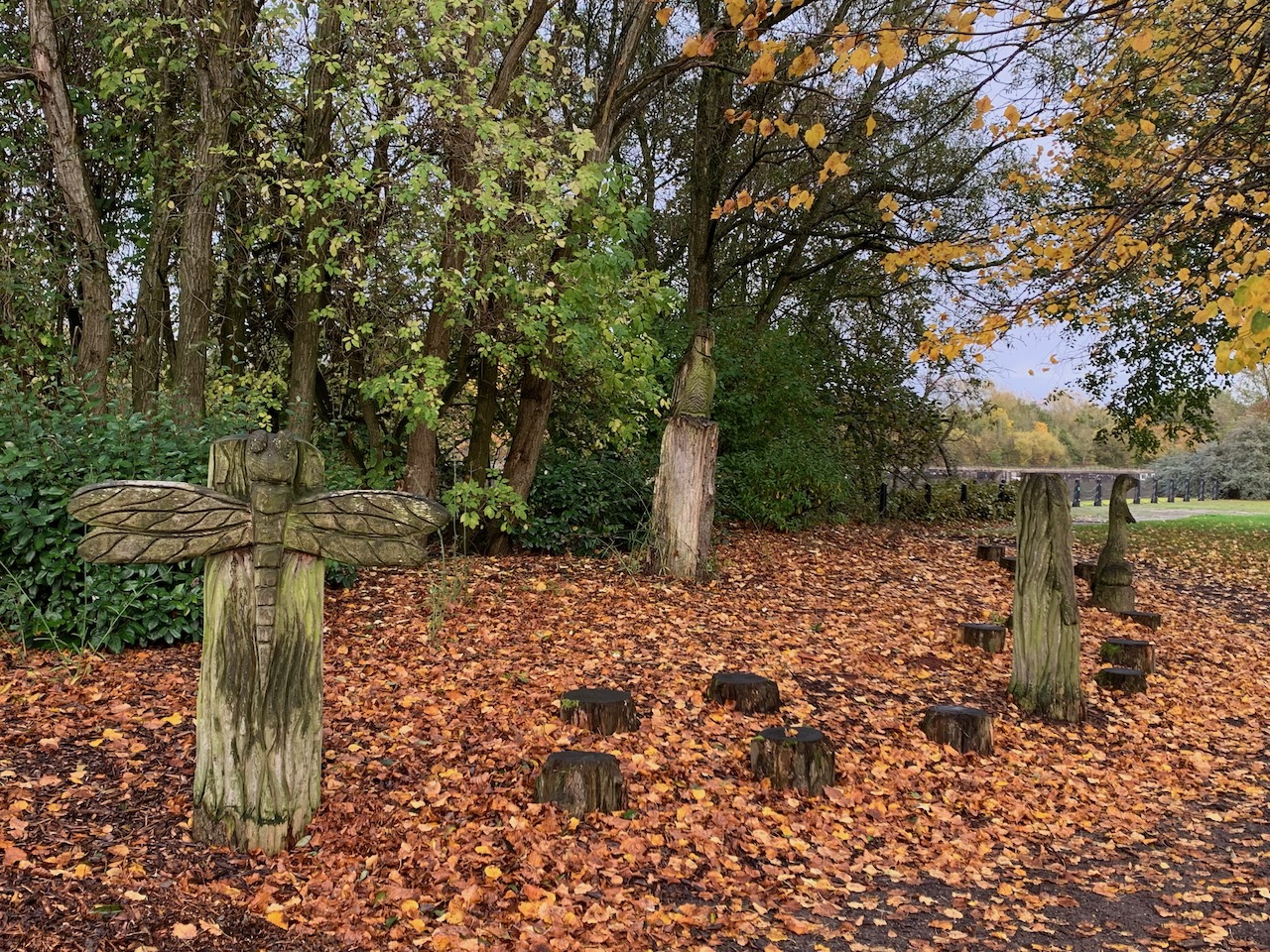
to visit the Oldest Animals of Peneverdant –
the tawny owl who speaks of the silence before owl time,
the hidden newt, the shapeshifting otter, the tickled brown trout
reminding her of laughter the sacred in all,
the common darter living out
her last days.

IV.
At the spring
which dried up long ago
but runs again for this night

He takes out her eyes, rinses them
clean and grants to her the gift of clear sight.

He takes out her tongue, drenches it in mead, makes it a scroll
of ancient vellum written in giant’s letters in a typeset

known only to monks and nuns of Annwn.

She translates it into nine vows.

V.
The next morning,
at sunrise, at moonrise,

when the Hunter is gone from the night skies

the three stars of his belt continue to shine in her eyes.

She consecrates her room as a monastic cell
and speaks to Him her vows

as a nun of Annwn,
seals her awen.

*This poem depicts experiences in the lead up to and upon my taking my nine vows as a nun within the Monastery of Annwn on this morning’s new moon. The God referred to is my patron, Gwyn ap Nudd, a ruler of Annwn.

You Are My Truth

You are the God who awoke my soul from its coffin. 

You are the God who awoke my questing and my questioning of all truths. 

You are the God whose truths have a misty question mark hovering over them.

You are the God who showed me the truth of the mist, the fog, shrouding, obscuring, revealing only half-truths, shifting like metaphor, escaping words.

You are the God of the truths of the void, the abyss, the darkness and the beautiful illusions that cover them lest we run screaming, clawing out our eyes.

You are the God who visited me with the truth of madness.

You are the God whose light is truth only after years of wandering lost in the mist, following the long dark tunnels, running, shouting through the catacombs.

You are the God of truth’s veiling and its unveiling and of the veil between the worlds.

Your truth begins in namelessness and comes to shine brightest in Your name.

Vindos, Gwyn, Hunter in the Skies, Light of the Mist, Lord of the Abyss, by all Your names and none, until all worlds are gone and ever after, You are my truth. 

He is my Truth – Reflections on my Ten Year Anniversary of Meeting Gwyn ap Nudd

On August 31st this year I celebrated the ten year anniversary of meeting my patron God, Gwyn ap Nudd, at the leaning yew on Fairy Lane in my home town of Penwortham. 

For those who don’t know the story, Gwyn appeared to me in a visionary encounter at the head of my local fairy funeral procession. He revealed His name and offered me the opportunity to journey with him in spirit to Annwn, (the Brythonic Otherworld) on the condition I give up my ambition to be a professional writer. 

Recognising Him as the deity who had long been calling me to the Otherworld and a once-in-a-lifetime opportunity to establish a relationship with the God to whom my soul already belonged, I agreed.

The following January full moon I made my intitial vows to Him as my patron God, as his ‘apprentice’, and soon afterwards learnt the name of my path – awenydd ‘person inspired.’ On the super blood wolf moon in 2019 I made lifelong vows to Him.

It’s been ten years now and a lot has changed. On the day of my anniversary I visited the yew, made an offering of mead, gave my thanks to Gwyn and spent some time in meditation and in conversation with Him. 

Since then I have been reflecting on the past ten years and the ways my devotional relationship with Him have shaped and changed my life. 

During this period Gwyn has been there as a source of guidance and inspiration in my devotions, my journeywork, my prayers, guiding my work as His awenydd in poetry, storytelling, in writing my three books. 

He’s not only supported me through my successes but my messiness and meltdowns. I have been able to talk to Him about anything, no matter how dark, because I know that, as the Lord of Annwn and Gatherer of Souls, He’s been with the mad, the dying, the dead, will be there for me at the end and after.

On a more difficult note He has consistently called me to my truth. This has been a tough process which has involved quite a lot of unmasking and a surrendering of my desires to fit in, reach a wide audience, and gain financial security. 

After my latest straying into an attempt to become an ecologist I have again been stripped bare of all masks and brought back to my role as His awenydd and a step closer to my truth in His calling for me to become a nun of Annwn. 

Finally, at the age of forty, ten years since our meeting, I have come to realise that He is my truth. That only when I honour Him and do His work, I am blessed.

I am currently moving into a new phase of my life exploring what becoming a nun of Annwn will mean within the context of building the Monastery of Annwn.

I am developing a monastic routine and practices and treating my bedroom, which already holds every part of my life, including my altars, as a monastic cell. My work as an awenydd, devotional creativity, sharing inspiration, at present through writing my next book ‘In the Deep’ for my Gods, remains central. 

Having learnt from my mistakes I am looking forward to a life in which my relationship with Gwyn and my spiritual path are its truth and sacred heart.

Of Worldly Career and Spiritual Vocation

So it reaches an end. The trajectory that began with volunteering on local nature reserves, took me into paid work restoring the Manchester Mosslands, and eventually led to me working for a local ecological consultancy on developments across the North West. 

Whereas my choice to work in conservation was guided my Gods, when my traineeship reached its end, and no conservation positions came up, I chose my ecology job because it was local, permanent, well paid, and offered financial security, and because I had a good interview and liked the people.

I knew next to nothing about ecology, the high pressure environment, how distant some of the sites would be, or how badly working nights would affect my mental health. I hadn’t thought through how I’d feel about working for developers, some just people who needed a bat survey for an extension on their home, but others who wanted to build on green spaces and nature reserves.

Working just one night a week, the dread beforehand and the tiredness afterwards, had a massive impact on my mental health due to my need for a regular routine and sleep pattern as an autistic person who suffers from anxiety. 

This, combined with travelling to sites over an hour’s drive away, and learning to write technical reports and mastering an unneccessarily complex and counterintuitive mapping system called QGIS whilst, at the same time, organising surveys, preparing quotes, and replying to clients, swiftly led to stress and burnt out.

Within a matter of weeks I went from being a happy, fit, and confident person with hopes of excelling in botany, pursuing an MSc in ecology, and running an official half marathon to being unable to read academic articles or comprehend the logistics of getting to a run or navigating the crowds.

I started waking early in the morning in tears and crying until I went to the gym or on a run and somehow cried all the way through a run on a very bad day.

I turned up in tears, managed to get on with my work, in spite of the crushing feeling in head, which increased as the day went on and throughout the week. I drove the wrong way up to M62 and through a red traffic light. I got hopelesssly muddled on a survey and drew the map the wrong way up. One day my brain melted to the point I couldn’t recall what a PDF was.

My manager took me off nights and I stayed because I liked the team, who were kind and supportive, because I didn’t want to let them down, because it was my mistake for rushing into what was the wrong job but right location and people.

I didn’t speak much to my Gods at first. But when drinking ceased to cure my troubles and I realised it was doing me more harm than good, both in my work life, and strength training and running performance, I began to pray. 

I began to seek a place of retreat and healing as respite from an overwhelming world. “Remember who you are,” said Gwyn, recalling me to my vocation as an awenydd, as Sister Patience, as a nun of Annwn.

Somewhat laughably, as is often the case of Gwyn, at a time when I was craving financial security due to fear of losing my job, He told me do the thing least likely to make money in the world – “build the Monastery of Annwn”.

Yet His imperative, my vocation, could not be ignored. I have set up the Monastery of Annwn as a virtual space; started laying the foundations in terms of daily devotions, a ritual year, and practices such as journeying to Annwn and tending Creiddylad’s Garden; and begun dialogue with others.

Desiring to partake in lectio divina and lacking an Annuvian creation myth I have been inspired to return to writing one – a pursuit I began a couple of years back with a book called The Dragon’s Tongue, which didn’t work out. 

This attempt to weave a new creation story, from the perspective of the Annuvian Gods, from the existing Welsh and Irish myths and also drawing on the Mesopotamian epic ‘Enuma Elish’ and the Bible has been renewed as ‘In the Deep’ (the antithesis of ‘When On High’ – the translation of ‘Enuma Elish’). 

In returning to devotional writing I have found deep joy, which has dissipated as soon as the stresses of work and worldly career have got in the way. 

This positive discovery/recovery combined with the knowledge that, as an autistic person, I am not suited to full time high pressure work, has led to the decision to hand in my notice at my ecology job and seek less stressful, part time work in conservation or horticulture that will allow me to fulfil my vocation.

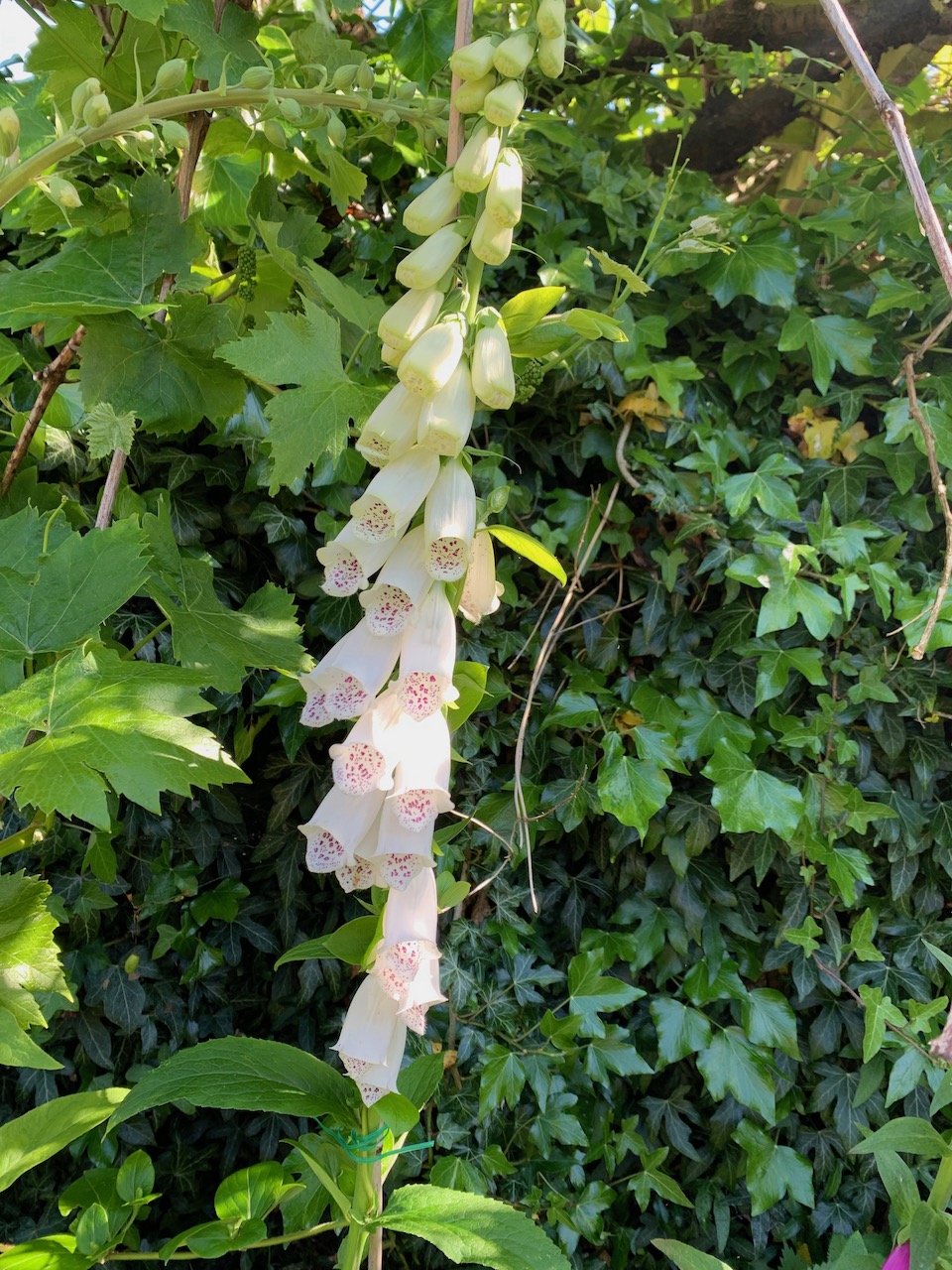
It has been a relief and a release. Although I have two months’ notice to work I have a myth to tend, a monastery to build, and can find solace at my altar and in Creiddylad’s garden, where the bees are loving the blue geraniums and the foxgloves I grew from seed last year are looking magnificent.

A Sprig of Thyme

For Gwyn on Calan Mai

When you don your armour at dawn
On this morning of mist so forlorn

When you rise from your marital bed
Leave your wife for another to wed

When you leave the dark of Annwn
With the knowledge you’ll return to your tomb

When you’re feeling down and discouraged
Let this sprig of thyme be your courage.

I have had the first and last couplets of this poem in my head for two years now but it was only this morning that I received the two couplets in the middle in order to complete it and the inspiration to make a ritual of picking thyme from the garden at dawn on Calan Mai (May Day) and offering it to my patron god, Gwyn ap Nudd.

On Calan Mai Gwyn fights a ritual battle against his eternal rival, Gwythyr ap Greidol, for his beloved, Creiddylad, a goddess of seasonal sovereignty. It is a fight he is doomed to lose. Afterwards Creiddylad departs from Gwyn, Winter’s King, in Annwn, and comes to Thisworld to enter a sacred marriage with Gwythyr, Summer’s King. In the Brythonic mythos this explains the turning of the seasons. On the one hand I will be celebrating that Creiddylad and summer are here, yet, on the other, I will be mourning Gwyn death.

Autism and Living in the Fog

I was diagnosed with Autism Spectrum Disorder Level One* on the 28th of September. 

The day before Gwyn’s Feast. “Happy Autism Day,” he said, “welcome to my people.”

Still, I didn’t feel much like celebrating. I’d hoped that a diagnosis would bring clarity. However, being told that I have a lifelong neuro-developmental disorder or disability cast me into a fog of wondering how much my autism had played a role in my difficulties with social relationships and to hold a stable career in the past and how it was going to affect my future. 

I’ve been a trainee with the Lancashire Wildlife Trust on the Manchester Mosslands since April. It’s been a great job, on great sites, with great people.  Yet my enjoyment of the practical work of growing, planting, translocating, clearing scrub, building dead hedges, of the remarkable opportunity to restore the last remnants of our mosslands to their boggy glory has been overshadowed, fogged, by my anxiety about what people think of me, whether I’m doing well enough, measuring up, whether I will be able to progress to the next position up in this competitive job industry.

I’ve felt like I’ve been on trial and in some ways I have and in some I have not. I know my colleagues would rather I enjoyed my traineeship than see it that way. Still, I’ve had to meet my short term objectives and training targets. When it comes to progress I will have to meet the next person specification.

Good news is that a meeting with my line manager and project manager recently revealed in just six months, in spite of being autistic, I am nearly there. 

Job-wise I’m good. Still, I’ve spent a lot of time dwelling on how my autism and the anxiety that stems from being an autistic person in a neurotypical world, finding it hard to read people and projecting negative opinions of myself, has skewed my perceptions of others and affected my relationships.

Few of us are psychic, but being autistic leaves me less able to judge what others think and feel unless I am directly told. Living with uncertainty is tough but, I’m learning, is better than living with the false certainty everyone hates me.

One of the upsides of living in the fog is the moments it parts like when a friend and I were lost on Cadair Idris and, after a man and his dog approached, the mists shifted and we found ourselves looking down on Llyn Cau. Being able to see and speak the uncomfortable truths that others avoid or ignore.

At least I know I’m living in the fog and, as a devotee of Gwyn ap Nudd, ‘White son of Mist,’ can know and embrace it as my patron god and as a friend.

“Welcome to my people,” he says and I see the faces of all the others down the centuries who have been able to swing an axe or a mattock or push a wheelbarrow, to write poetry under the trees, to walk light-footed as a will-o-wisp across a peat-bog but could not endure one day of electric light in the office.

“Welcome to my people,” he says, “to doubt, uncertainty, anxiety, and truth.”

In the fog, in the unknowing, I walk along the bunds that will bring the peat-bogs back then disappear into the moss as it swallows its surroundings.

It’s cold here and it’s November, but at least I know I’m living in the fog.

*This is the current term for what was formerly known as Asperger’s Syndrome.

Prayer: A Little Window

Following Anna Applegate’s comment on the lack of discourse on prayer in the Pagan communities I’ve decided to share a little window into my prayer life. I’ve never done this before because, rather than saying set prayers, I simply speak to the gods and spirits from the heart. These are examples of heartfelt words rather than literary masterpieces. I’d be interested to hear from others about their daily prayers.

Altars April 2018 II

Morning

I.
Spirit of this house
Spirits of Greencroft Valley
Spirits of this land on which I stand
I give thanks to you.

Lady of the Marsh
Lady of the sacred hill of Penwortham
Lady of the wells now lost
I give thanks to you.

Belisama, Goddess of the Ribble, flowing
from Gavel Gap through Settle, Clitheroe, Ribchester
bringing your gift of sacred waters
I give thanks to you.

Nodens and the Weather Shapers
cloud-makers, wind-bringers
mist, fog, and rain-bearers
I give thanks to you.

Gwyn ap Nudd
first amongst my gods my forever patron
who leads the dead and living to Annwn
I give thanks to you.

II.

Gwyn ap Nudd,
Lord of Annwn,
Guide of Souls,
Light of the Mist,

God who dwells
in the Otherworld yet
close as my heartbeat
close as my breath*

grant me guidance
from Annwn’s dark heart

and inspiration
from Annwn’s deep depths.

As I walk each step
in service to you.

(Followed by a recital of the Annuvian Awen and a meditation, journey, or divination).

Evening

Gwyn ap Nudd
Gatherer of Souls
Walker Between Worlds

God who guides the dead
God who walks the brink of madness
God who contains the fury
of the spirits of Annwn

I come to you in awe and reverence
I come to you in love and service.

Let us share our journeys…

(Followed by communion with Gwyn)

Bedtime

Nodens Lord of Dreams
God of that deep and absurd world
that I vow to remember the next morning
before it slips from my mind with
the waters of forgetting

I give thanks for the joy of sleeping
I give thanks for the joy of dreaming

and these were last night’s dreams…

Nodens Lord of Dreams
guide me in this night of deep dreaming.

*Phrase borrowed from Greg Hill.

Naming the Beast

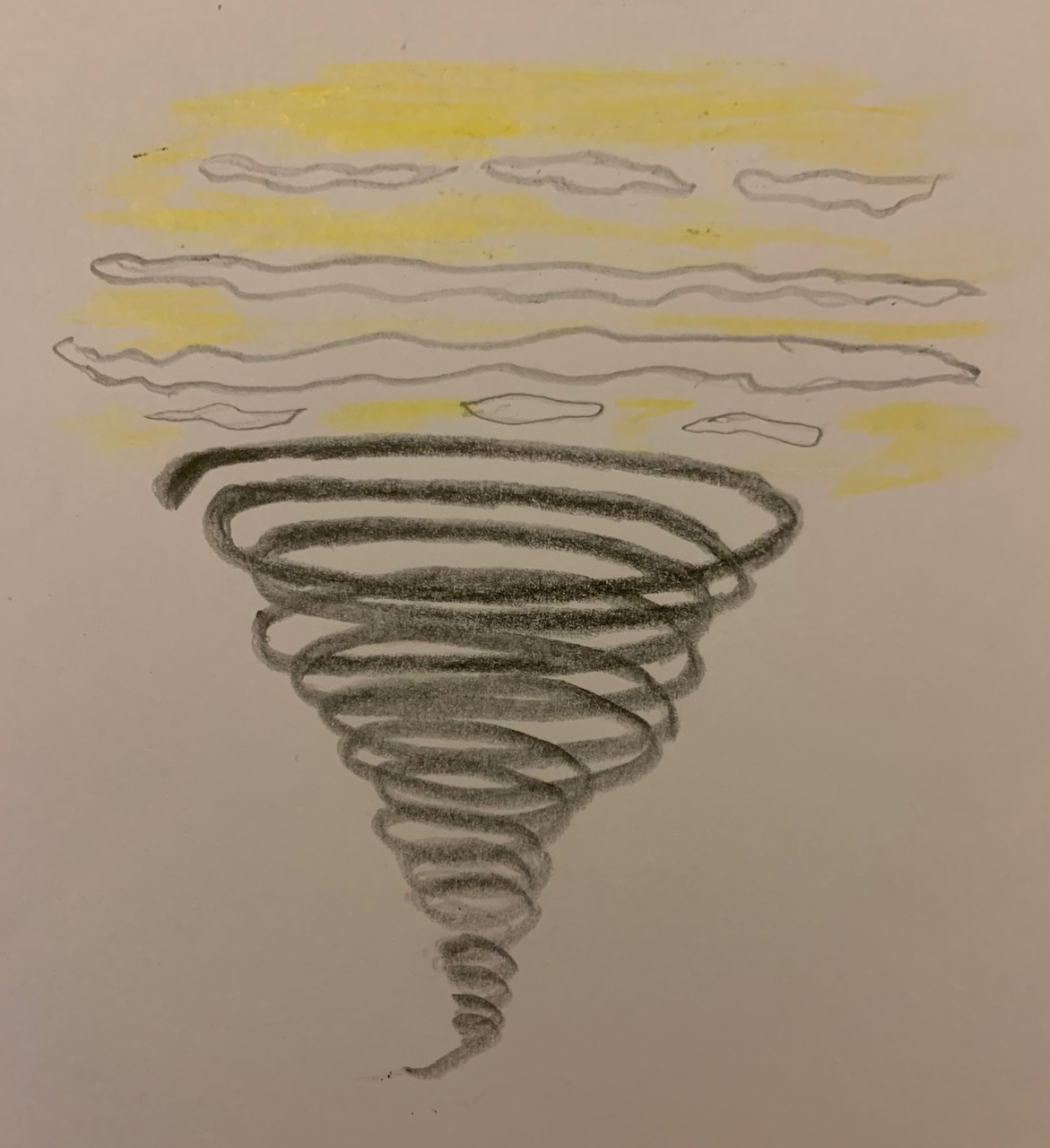
I. The Polar Vortex

And so it begins….
circling in the polar night
pulling its coldness into itself
building its turning lair in the sky
an icy serpent howling around it
where the sun never shines.

II. Breakdown

Hot waves rise
from the warming Arctic
confusing the serpent who flies
like a stream of jet through the polar night.
She pauses, reverses her motion.
The castle falls from the sky.

III. The East Wind

Falling falling southward
this broken abode of a beast so cold
shaking out and flexing uncountable limbs.
When it meets the blast of the east wind
that long-haired traveller revels in
his chance to beat the west wind.

IV. The Beast from the East

So many eyes of snow
so many teeth that bite and rend
so many claws that rattle under doors
to bring the chill of the poles biting in.
The beast is born. The beast is born.
The beast is born again.

***

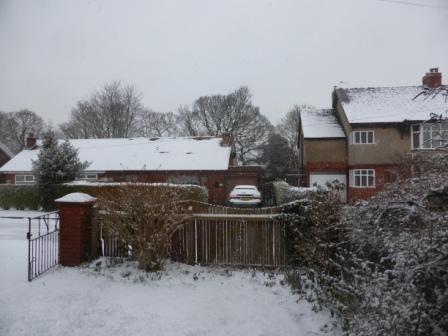
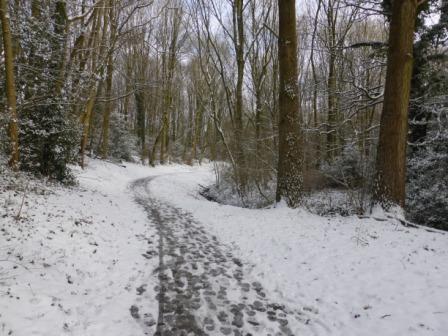
A few days ago I was out running in a T-shirt. On ‘the last day of winter’ (in meterological terms) I’m back to my winter woollens. Yesterday I woke up to the rare sight of my home town of Penwortham, which is a low-lying suburb near the Ribble estuary, blanketed in snow.

Suburban Penwortham

Greencroft Valley snow

The north west of England has not been hit as badly as places in the east where schools have been closed and transport has been disrupted. Everybody’s talking about the Hollywood-esquely named ‘Beast from the East’ and I don’t think I’m the only one trying to get my head around the polar vortex, the polar night jet, polar vortex weakening, polar vortex breakdown, and the recent phenomenon of the polar vortex splitting due to sudden stratospheric warming.

The science behind it is fascinating, awe-inspiring, and troubling. Before I looked into it I wasn’t aware the polar vortex existed, let alone that it’s strongest in the dead of winter when the North Pole is utterly immersed in darkness, and that it is encircled by the enigmatic polar night jet.

An area of low pressure spinning counter-clockwise over the pole(s) due to the Coriolis effect, its strength and position in the mid to upper troposphere and stratosphere are based on the transfer of heat by the polar jet stream and by oceanic currents. Every year it strengthens and grows higher in winter and breaks down between mid-March and mid-May, issuing in spring.

This year’s breakdown was particularly dramatic due to a sudden stratospheric warming. Last week temperatures in the Arctic rose rapidly by twenty degrees. Waves of warm air rising into the stratosphere caused the polar vortex to reverse, split, and move southward and downward into the troposphere to meet the easterly winds. Thus the Beast was born.

This sudden stratospheric warming has been linked to climate change. The shrinking of Arctic sea ice (which is at ‘a record low for late February at 14.1 million square kilometers’) means more water is exposed, releasing heat into the atmosphere, disrupting the polar jet stream and causing the polar vortex and its encircling polar night jet to reverse and break down. Another factor is changes in the North Atlantic Drift, which flows north from the Gulf Stream.

***

Thinking back, this is not the first time we’ve experienced ‘freak’ weather around this time of year. In 2013, on the 23rd of March, I recall walking through a blizzard near to Denham Hill knee-deep in snow and seeing a pair of snow men and a snow dog outside Hill Top Farm.

My guess is this was probably caused by a breakdown of the polar vortex too. Perhaps also the cold snap in February 2009 when I was working at Red Lion Farm in Sarratt as a groom and we had to water the horses from the sink in our mobile home because all the taps were frozen.

Danny, Red Lion Farm, Sarratt 2009

For the past few years I’ve been aware the seeming arrival of spring is often followed by bitter winds, hail, snow, frost. In this I’ve seen signs of the battle of our Brythonic seasonal gods, Gwyn (Winter) and Gwythyr (Summer), for Creiddylad (a fertility goddess).

Gwythyr defeats Gwyn on May Day when the polar vortex breaks or has already broken down. The ancient Britons saw Calan Mai (1st May) as the beginning of summer and Calan Gaeaf (1st November) as the beginning of winter. Would such weather have surprised them?

What would they have made of the naming of the beast?

The naming of storms is a new phenomenon designed to identify and remember them and to alert people to their dangers. Give something a name, an identity, acknowledge its personhood and immediately it is treated with respect. This is rooted in the old magic of naming.

Our earliest storytellers knew this when they gave names and forms to the forces of nature. Only when they named the gods and the monsters they were not following a catalogue of pre-given names, but responding to revelatory visions whose source was these deities themselves.

In ‘Reading Harvey’s Dark Ecology’ Finnchuill notes that ‘monster’ comes from the Latin word monstrum, ‘a showing of divine portent’. Our Brythonic texts are packed with monsters with hundreds of heads, shimmering scales, and the wind itself is invoked as: ‘a strong creature / with no flesh or bone, / no veins, no blood, / no head, no feet.’

‘The Beast from the East’, unlike the pre-chosen alphabetical names ‘Aileen, Brian, Caroline, Dylan’… (for 2017/2018) at least has a poetic ring to it even if it smacks of ‘Hollywood makeover’. It won’t be forgotten and in coming years I wouldn’t be surprised to see further headlines such as ‘The Return of the Beast’ or ‘The Beast Bites Back Again’.

What does the name reveal about its nature? How might we read its appearance as a portent? In the past people might have seen such a monster as originating from Annwn, the Otherworld. Now instead we follow its tracks from the east to its lair in the dark, cold, abyssal place in the stratosphere from which, with the polar vortex, it has departed and to which it will return. This location, like Annwn, might also be associated with Gwyn, Winter’s King.

In the warming of the Arctic ocean we find man-driven climate change lending strength to Gwythyr. Gwyn strikes back by releasing the beast. Our ‘wacky’ (from WACC – warm Arctic cool continent) weather reflects the balancing measures taken by the seasonal gods which may be less a boyish battle for a maiden than an attempt to save her life on order of the goddess of the earth.

As we continue to pump carbon into the atmosphere and the oceans continue to warm we can expect to see earlier and fiercer appearances of the Beast. With eyes of snow and icy claws and rending teeth it will return again from the East.

SOURCES

Alister Doyle, ‘Wacky weather makes Arctic warmer than parts of Europe’, Reuters
Duncan Middleton, ‘Beast from the East: How the weather got a Hollywood makeover’, BBC News
Finncuill, ‘Reading Harvey’s Dark Ecology’, Pagan Bloggers
Jesse Zhang, ‘Understanding Climate Change: Polar Vortex Weakening’, TedxMileHigh
Marged Haycock, Legendary Poems from the Book of Taliesin, (CMCS, 2007)
Polar Vortex’, Wikipedia
Why do hurricanes have names?’, BBC News

Nodens and the Weather Shapers

I. The Mural Crown

At Lydney overlooking the Severn stands a Romano-British temple dedicated to Nodens. From it was recovered a mural crown. It depicts him riding from the waves on a chariot pulled by four water-horses. Flanking him are wind-spirits and water-spirits.

Plate XIII Bathurst


I had used this image on my altar to Nodens for several months before thinking to pose the question of who these mysterious spirits are. Out walking in my locality in the voices of the winds I received the answers: ‘weather-shapers’ and ‘shapers of dream’.

My meditations have led me to the intuition that the spear-bearing wind spirit on the right is the piercing east wind. The spirit on the left with the spiralling rag is the west wind who brings both the warm moist air that keeps our climate temperature and storms and hurricanes.

Both water-spirits have the bodies of men, the frontlegs of horses, and the tails of serpents. The spirit on the right carries two pick axes and the spirit on the left a hammer and chisel. They are the shapers of the cloud formations that arise from evaporating waters approaching from the east (across the Continent and North Sea) and the west (the Atlantic Ocean and Irish Sea).

One of the translations of ‘Nodens’ is ‘the Cloud Maker’ from the Proto-Celtic stem *snoudo ‘mist, clouds’. He is later known as Nudd ‘Mist’. He and his spirits are the shapers of Britain’s weather.

II. The Cry of the West Wind

Whereas the east wind came across as quick-witted, clear-minded and bold, the west wind struck me as inconsistent and troubled, like a misunderstood youth: smiling, enthusiastic, and eager to please, but also moody, prone to fits of violence, brooding on some kind of trauma.

This reminded me of the words of Nimue Brown in her evocative essay ‘Watching for the winds’. Nimue lives ‘Where the Cotswolds meet the Severn / And the Severn seeks the sea’. She witnessed the tryst of the east and west winds last March on Swift’s Hill and noted their parting was ‘hesitant and regretful’ as if ‘they might not meet again’ or feared the circumstances of their next meeting. After the east wind departed the west wind remained, uneasy, not knowing what to do with himself, and shared ‘a warning, perhaps, or a cry for help.’

To interpret this cry I had to look beyond Britain to the direction from which the west wind blows: across the Irish Ocean (the domain of the sea-god Manawydan) to the Atlantic Ocean (associated with the sea-goddess Iwerydd and her consort the sea-god Llyr – Manawydan’s parents).

III. The North Atlantic Gyre

The warmth of the west wind is connected with the complex system of the North Atlantic Gyre, one of four gyres that form the ‘global conveyor belt’ of oceanic currents that determine the earth’s climate. It begins near the equator off the west coast of Africa where warm water driven by the easterly trade winds becomes the North Atlantic Current.

In the Gulf of Mexico it becomes the Gulf Stream. Joining the Antilles Current in the Straits of Florida it gains strength before the westerly anti-trade winds drive it toward Europe bringing 300,000,000 kWh/s of warm air – equivalent to the heat of a million nuclear power stations.

It then splits into the Irminger Current, which heads toward Greenland, and the North Atlantic Drift, which continues to Europe. The interactions of the west wind and the Gulf Stream and North Atlantic Drift raise Britain’s temperatures 5 – 10 degrees Celsius higher than other continents at the same latitude and play a large role in shaping our mild, wet weather.

When these currents have lost their heat the cold water sinks (in the Denmark Strait it drops dramatically 11,500 feet as the world’s biggest waterfall) and returns as the Labrador Current beneath the Gulf Stream and the Canary Current past Africa.

Lines_of_sargassum_Sargasso_Sea - Copy_By Unknown - Ocean ExplorerNOAA, Public Domain, httpscommons.wikimedia.orgwindex.phpcurid1175629

In the centre of the gyre lies the calm deep blue Sargasso Sea, which is named after its unique sargassum seaweed. The bounding currents deposit the refuse they carry in its midst disturbingly creating the ever-growing North Atlantic Garbage Patch.

IV. The Re-Shaping of the Weather

It’s well known that anthropogenic global warming is having a drastic effect on our climate, which has been relatively stable since the last Ice Age. The rise in sea temperature has led to storms and hurricanes forming further north buffeting Britain’s coast and to more rain and flooding.

Some scientists claim that the melting of the ice caps will lead to the water around Greenland cooling and becoming less saline. Salinity is one of the factors that causes cold currents to sink. If their circulation stops this will shut down the North Atlantic Gyre issuing in a new Ice Age.

Even the gods and spirits are in trouble. The west wind, impelled to bring storms, his nature threatened by the cessation of the warm currents cries out for help, but his voice falls on deaf ears.

Centuries of Christianity and reliance on the predictions of science have cut us off from the weather-shapers. The arguments of our modern aeromancers, ‘weather-diviners’: the meteorologists and climate scientists who strike up a conversation of sorts with the gods through their instruments have not been listened to and now it’s too late to turn back the clock.

V. The Last Salmon? The Last Eel?

Atlantic_salmon_fish_Wikipedia_Commons

On the mural crown beneath Nodens and the weather-shapers is an enigmatic figure with a short tail hooking an enormous salmon. Salmon also appear on the mosaic in the centre of the temple.

The Severn was once renowned for its migrations of salmon leaping upriver to their spawning grounds. Atlantic salmon are now in decline due to the lethal combination of weirs preventing them returning and spawning, damage to habitat, industrial fishing, and global warming.

Changes in the currents of the North Atlantic Gyre due to rising sea temperatures have affected Atlantic salmon who use them to swim to and from their feeding grounds in Greenland.
European_eel__Anguilla_anguilla_clipart_web

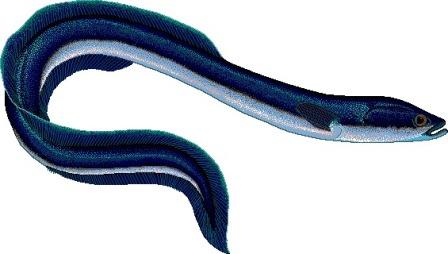
Eels, who spend part of their life in the Severn, use the cold currents of the gyre to swim to their breeding grounds in the Sargasso sea. Their larvae utilise the warm currents.

Could the snake-like creature wrapped around Nodens’ arm be an eel?

Both these creatures, sacred to Nodens, whose lives have been intrinsically connected with the Severn for thousands of years, are currently in decline. New fish passes have been placed in the weirs. This might help, but the changes in the North Atlantic Gyre lie beyond human repair.

V. The Broken Crown

The image of Nodens and the weather-shapers provides us with a picture of the ‘beauty and integrity’ of Britain’s climate and the fecundity of its rivers during the Romano-British period.

If the mural crown was crafted again today its vision of wholeness would be broken by the agony of the west wind torn between two fates – stormbringer and bringer of a New Ice Age. The water-spirit in the west would be the crafter of ominous storm or snow-clouds. The salmon would be in distress, the eel wriggling nervously, both on the brink of disappearance. Nodens, ‘the Cloud-Maker’, would be a troubled god, riding far less victoriously on his chariot.

This crown was once worn by a priest of Nodens who had the task of interpreting pilgrims’ dreams. Who would wear it today? Who would interpret the dreams shaped by the beings shaping Britain’s weather – hurricanes of garbage, seas rising over coastal towns, salmon lost in sealanes, stranded elvers wrapped in sargassum? Who could bear the cries of distress?

SOURCES

David Righton, ‘Empirical observations of the spawning migration of European eels’, Science Advances, Vol 2, No. 10, (2016)
D. Freidland, ‘Oceanic changes in the Sargasso sea and declines in recruitment of the European eel’, ICES Journal of Marine Science, Volume 64, Issue 3, (2007)
J. Dadswell, ‘The North Atlantic subpolar gyre and the marine migration of Atlantic salmon Salmo salar: the ‘Merry-Go-Round’ hypothesis’, Journal of Fish Biology, 77, (2010)
Nimue Brown, ‘Watching for the winds’, A Beautiful Resistance, (Gods & Radicals, 2016)
Renee Cho, ‘Could Climate Change Shut Down The Gulf Stream?’, State of the Planet, (2016)
Nodens’, Wikipedia
Scheme to re-open Severn to fish wins almost £20m in funding’, The Guardian
The North Atlantic Gyre’, Eduspace,
The Gulf Stream Explained’, In a Nutshell