The Challenges of Taking a Polytheistic Monastic Name

In the mainstream religions it is traditional for monastics to take a monastic name when they are ordained into a monastery on taking their vows.

When Christians monks and nuns take temporary vows they take a new name. This must be the name of a saint, monastic or Old Testament figure. The name is preceded by ‘brother’ or ‘sister’ as they see each other as family. For example Brother David, Sister Mary, Brother John. Three choices are handed to the Abbot who makes the final decision on the name.

Buddhist monastics are given a Dharma name, usually by the head of the monastery or by their teacher, and may have several different names during a lifetime. For example Shinran’s first name was Matsuwakamaru and his other monastic names were Hanen, Shakku, Zenshin, Gutoku Shinran and Kenshin Daeshi.

In Hindiusm monastics also take a new name when initiated by a guru. For example Paramahansa Yogananda was born Mukunda Lal Ghosh.

When a monastic name is taken it symbolises giving up one’s old identity, wealth and ties with family and friends to enter the community of the monastery. One’s secular life is renounced for a religious life.

*

Modern Polytheism began to emerge in the 1960s and to grow in the 1990s. Polytheistic monasticism has developed more recently with the first book, Polytheistic Monasticism: Voices from the Pagan Cloisters, published in 2022. It has precedents in Pagan and Druidic monasticism.

The only physical Pagan monastery in existence is the Matreum of Cybele. Online Druidic monastic organisations include the Order of the Sacred Nemeton and Gnostic Celtic Church Monastery. Unfortunately I couldn’t find any information on their websites about whether monastics are required to take a monastic name or if they renounce their former life in any way.

In Paganism, more widely, it is common to take a craft name or magical name. This can be chosen through contemplating which animals, herbs, myths and Deities one has an affinity with or can be gifted by the Gods and spirits. Some well known examples are Greywolf, Starhawk, Bobcat, Robin Herne and Nimue Brown. This is used in the Pagan community and does not involve changing one’s identity and ties with secular sociey in which one’s regular name is retained.

*

I am a Brythonic Polytheist and received my monastic name from my patron God, Gwyn ap Nudd, before I took vows as a nun. It started as a joke. Lockdown reawakened my longings for a monastic life. I’m an incredibly impatient person and, when I was being impatient with the weeds, Gwyn chided me, “Sister Patience.” I took it as a challenge, telling him “I will become Sister Patience.” It was a self-fulfilling prophecy for three years later I founded the Monastery of Annwn and took vows by that name.

For me the shift in name and identity from Lorna Smithers to Sister Patience has been a gradual one. I first started using my monastic name in the monastery only, then, as I began to change and grow to own it, I renamed my blog ‘The Cell of Sister Patience’ using it more widely in online spaces.

In February 2024 I was faced with the decision of whether to return to a regular job, which would have meant staying as Lorna Smithers and likely returning to old habits like shopping and drinking due to the stress and having more money, or to fully commit to a monastic life as Sister Patience.

My ability to choose the latter was made possible by mum offering to support me financially if my savings run out before I have found a way of supporting myself through a combination of writing and spiritual work.

This gave me the security to take the step of using my monastic name in all my communities, keeping my birth name only for financial and legal purposes.

It hasn’t been an easy process. Everyone who knows me knows I’m very impatient, thus Sister Patience would be the last name they would call me. My mum’s first reaction was, “I’m not calling you that!” before I explained. She still keeps calling me Lorna or, bizarrely, Beatrice, but is getting better. My dad won’t use it. My uncle on my mum’s side and his partner have been accepting. Most of my friends and the horticultural groups I volunteer with along with my personal trainer at the gym have been supportive. 

As a polytheistic monastic without a physical monastery it is impossible for me to make the break with the secular world made by other monastics. Ethically I am currently unable to make such a break as my eldery parents are dependent on me for support around the house and in the garden. 

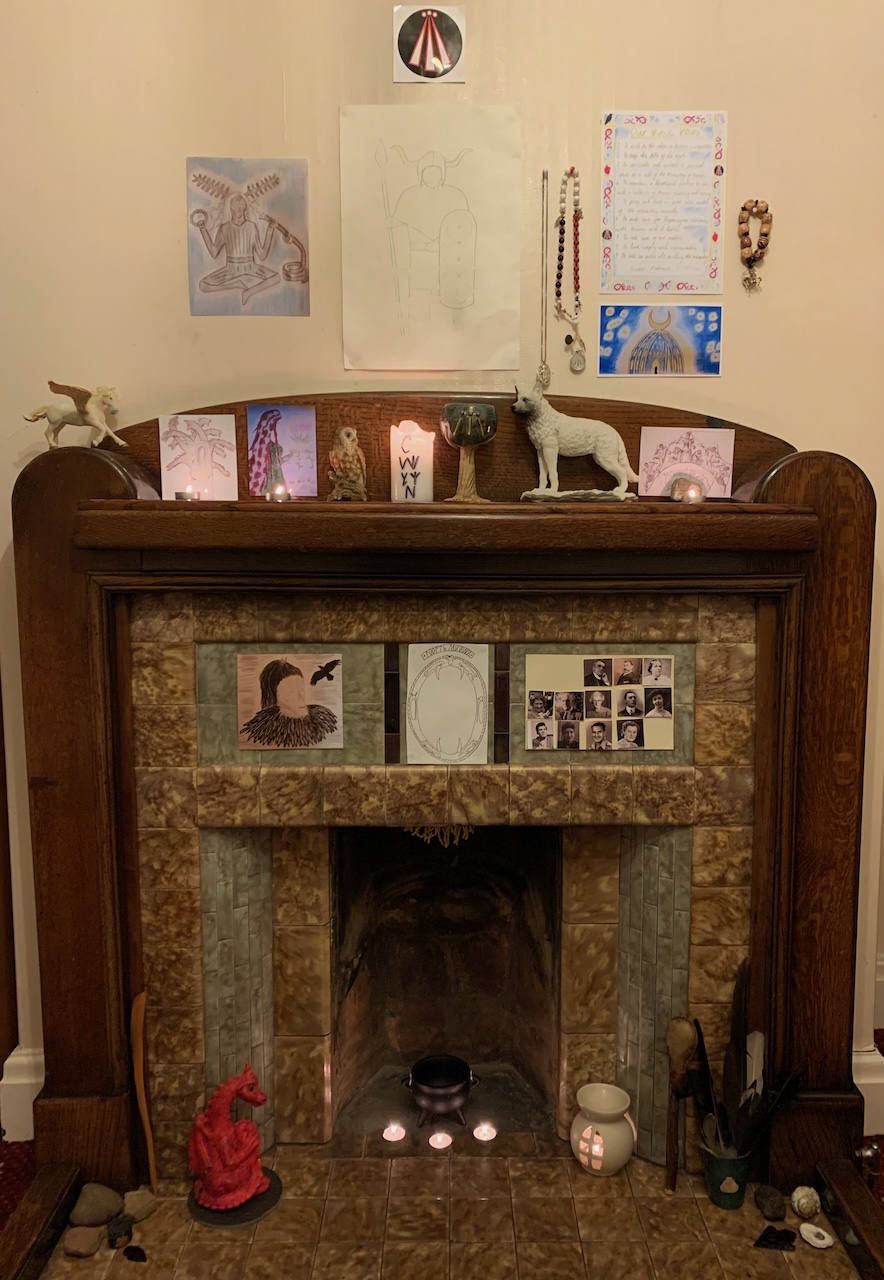
Instead I strive to live as monastically as I can considering my circumstances. I serve my Gods through my spiritual practices and creativity and treat my room as a monastic cell and my home and garden as a monastery. My engagement with the wider world is limited to occassionally seeing friends for a walk and / or a brew and to attending spiritual groups. I don’t use social media and limit my online time to engaging with others for spiritual discussions and research for my writing along with learning yoga.

Taking a monastic name hasn’t changed how I am around people. I’m not putting on airs and graces. I’m not pretending to be something I’m not. I still swear. I still get angry. I still get impatient. But, looking back, not quite so much. There is power in taking a name and perhaps, one day, I will live up to it.
Twelve Days of Devotion to Gwyn ap Nudd – The Birth of Gwyn

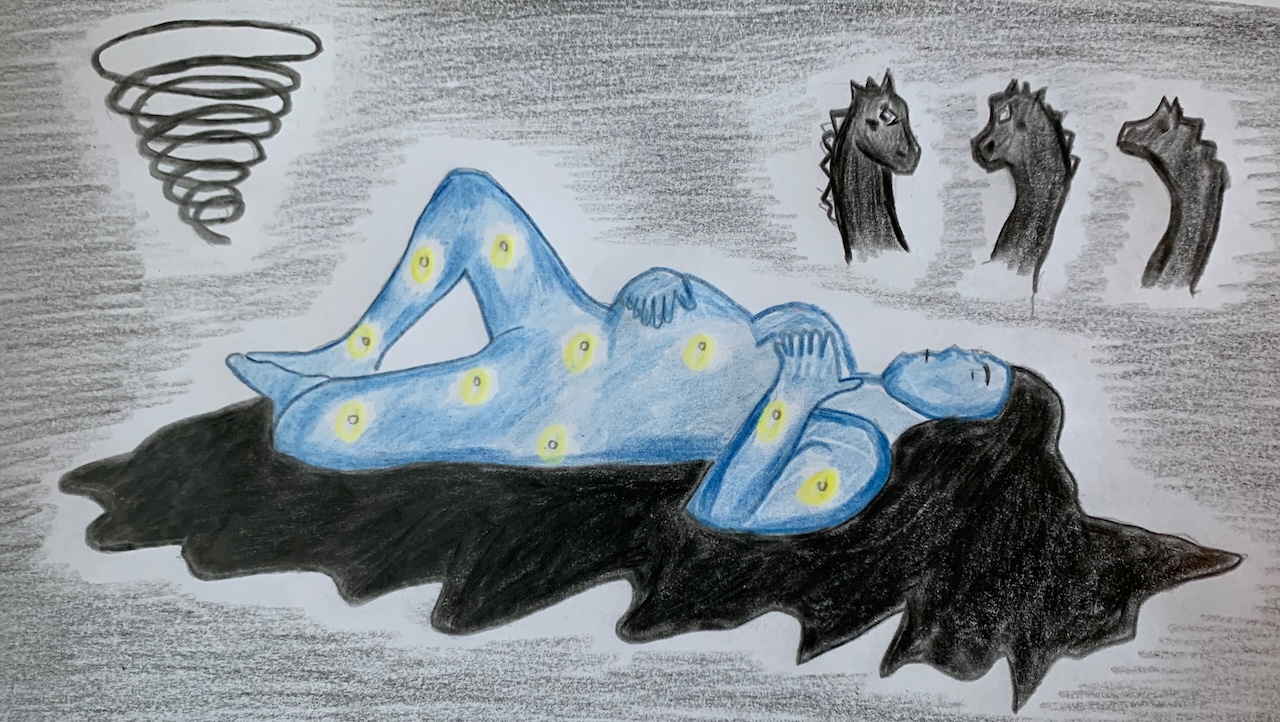
Over the twelve days of devotion (25th of December to 6th of January) I focused on the birth of Gwyn and was guided through a series of practices. I was called to chant, sing, meditate, draw and embody Gwyn and His mother, Anrhuna. On this last day I bring them together to share as an offering to Him and to my online community hoping it will inspire others to delve more deeply into the mysteries of His birth in the future.

Mam Annwfn

Chant: Mam o mam o mam o mam o mam o man Annwfn.

Embodiment practice*: Lying in a modified version of Suptka Baddha Konasana (reclining bound angle pose) with left hand on heart and right hand on belly.

Meditation 1: I am the Deep and I am its mother.

Meditation 2: My heart and His heart beating as one.

Unborn Gwyn

Chant: Gwyn heb ei eini, Gwyn fettws, Gwyn breuddwydio, Gwyn dreaming, foetal Gwyn, unborn Gwyn.

Embodiment practice: Lying in Parsva Savasana (side corpse pose or foetal position). 

Meditation 1: I dream the universe.

Meditation 2: I am promise.

Birth

Meditation 1: 

Where shall I birth You 
into the world, 
my son, my king, 
my patron, my muse, 
my inspiration, my truth? 

Meditation 2: 

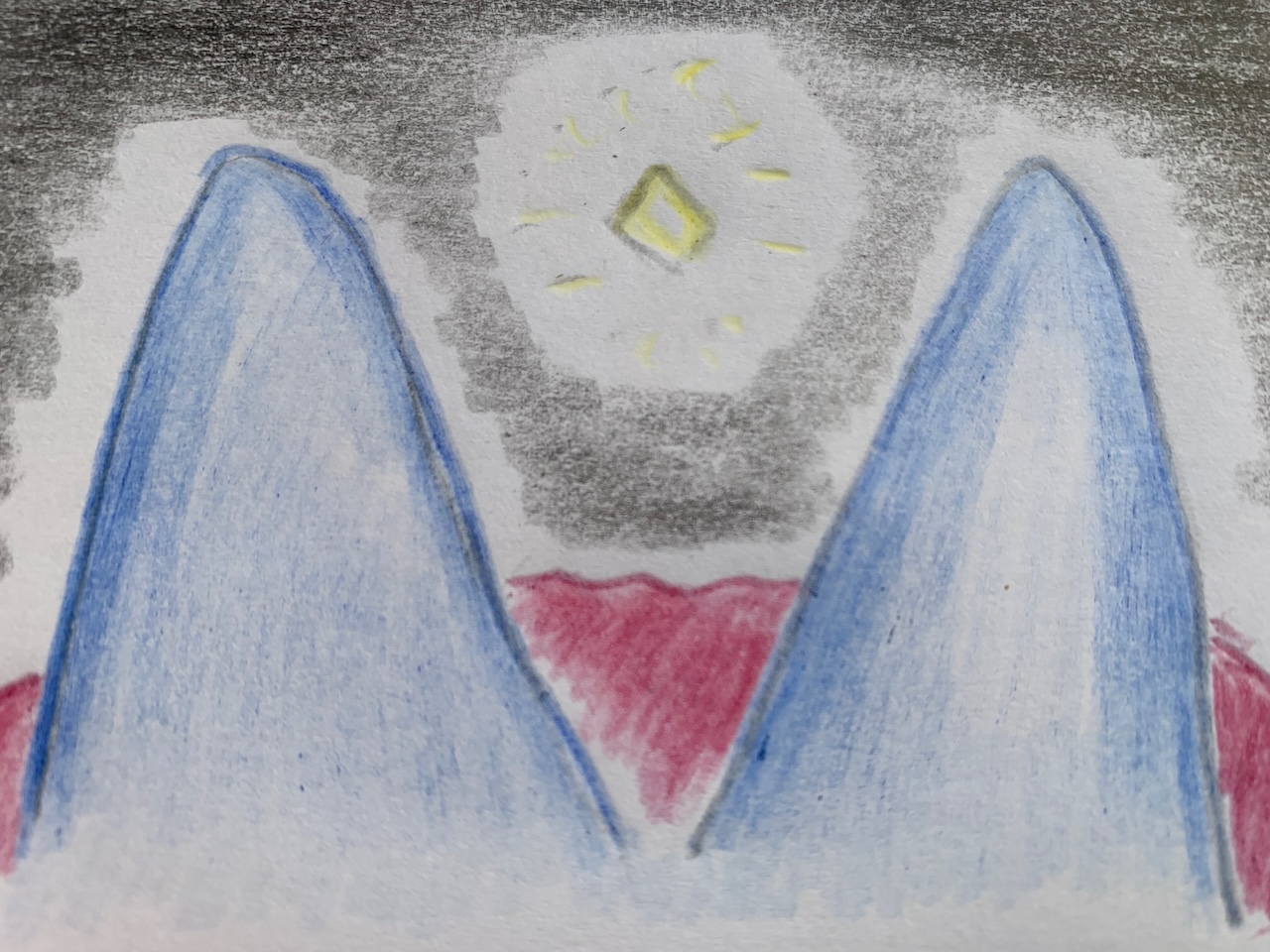
A mother’s longest hours 
like mountains, heaving belly, knees bent, 
reaching the peak, screaming, running down holding a baby
knowing prophecy is born in moments of pain,
the first cry of an infant mouth.

She Holds Her Son

Song: 

She holds Her son 
between space and time
in the place that’s Hers
and His and mine.

The Newborn

Meditation 1:

Born with a laugh 
to change the world
wise a changeling 
speaking in riddles
comes a newborn
to break all the rules.

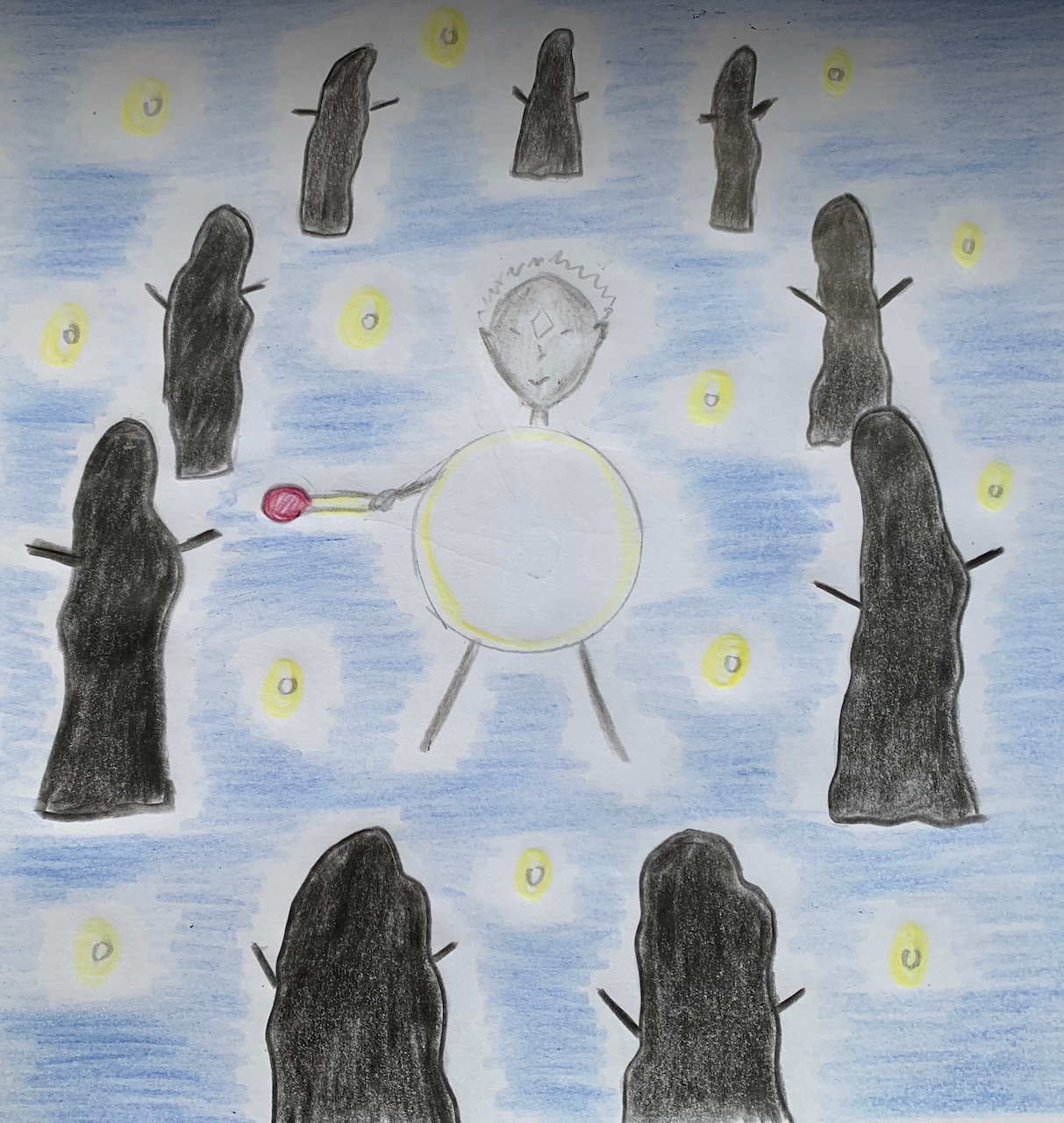
He sings:

Hear the heartbeat, hear the drumbeat, hear the call.
Feel the heartbeat, feel the drumbeat stir your soul. 

Sing, chant, dance, drum with newborn Gwyn and the shadow nuns. 

WE ARE REBORN
here, now, in this moment, always, forever.

Inspiration

No-one knows the day or hour of Your birth because You were born before the universe.

*

You have as many births as the facets on your jewel – their number is infinite.

*

The geni in ca fi’n geni ‘I am born’ stems from the Proto-Indo-European root *gene that gives us ‘genesis’. With You, with each child, a universe is born. 

*

Each of us contains a universe, like a cauldron, and it’s only when our cauldrons crack and the relationships between the constellations of our presuppositions break down we perceive the sea of stars, the darkness of the Deep, the vastness of Annwfn, the Abyss, the Void. 

*

Floating on the starry tide, the infinite waters, You are always being born.

*I have been drawn to use yoga poses in my practice on the basis of gnosis about shared Indo-European origins of Brythonic polytheism and Hinduism. I have found likenesses between Anrhuna and the Hindu Goddess of primordial waters, Danu, who gave birth to the dragon, Vritra, and the Davanas. Gwyn shares many similarities with Shiva.

Meditating Gwyn

My breath with Your breath,
my heart with Your heart,
my feet on Your path,
You and I as one.

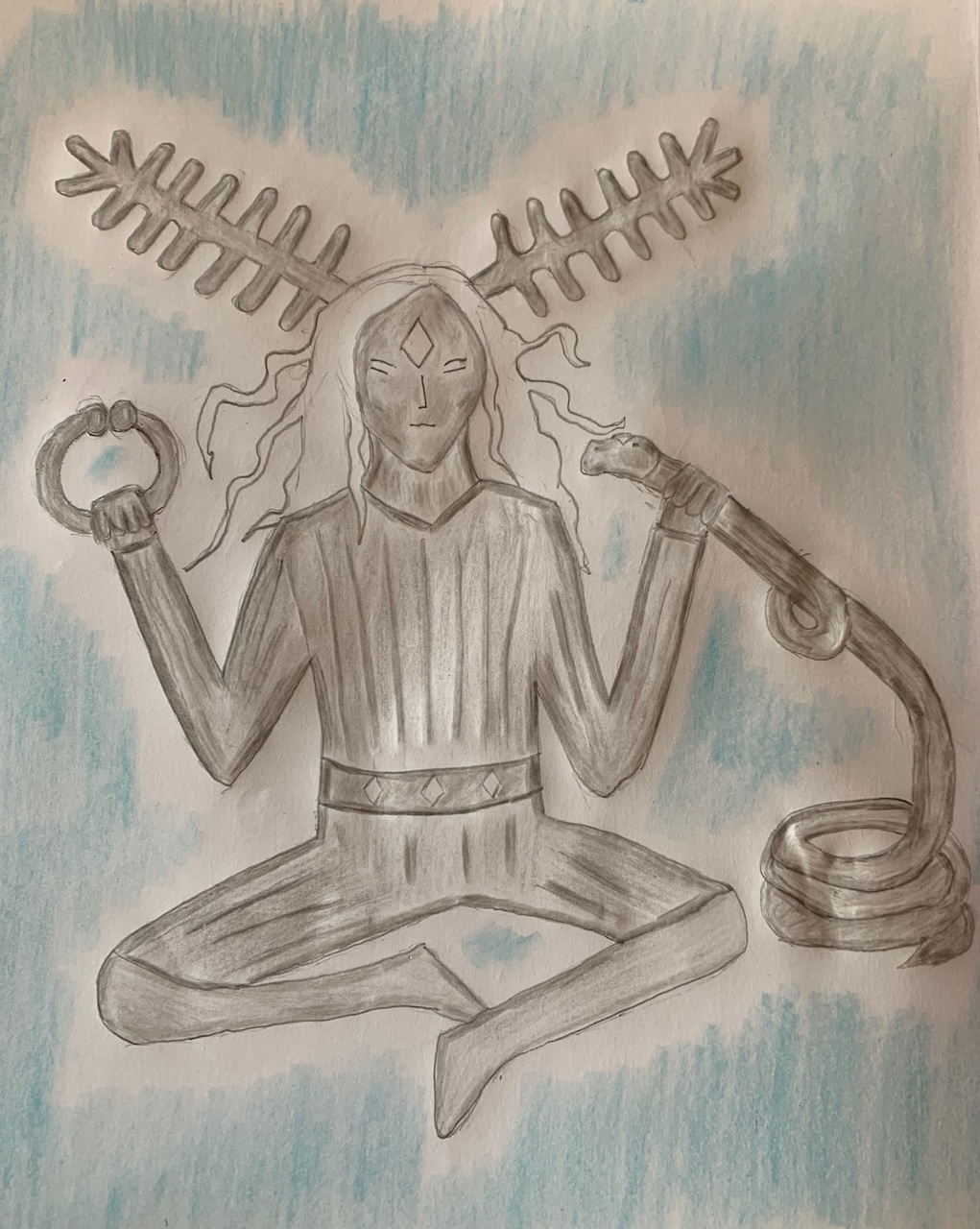
This piece of devotional art represents a face of my patron God, Gwyn ap Nudd, who I know as Meditating Gwyn and the Inspirer. Gwyn first appeared to me in this form when I started to take seated breathing meditation seriously after finding techniques that worked for me from yoga.

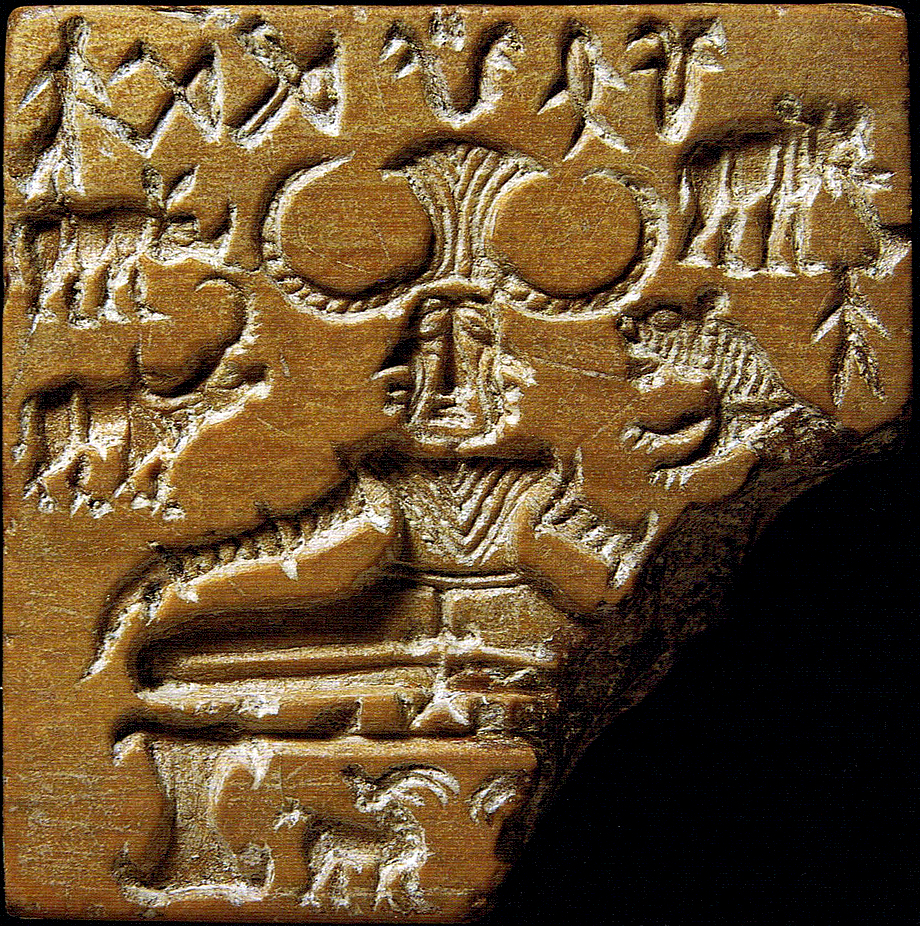
Several years ago I received the gnosis that the meditating deity on the Gundestrup Cauldron is likely to be Gwyn (who may also be Cernunnos ‘Horned’ by another title) and Gwyn’s appearance in this guise confirmed it.

I had not thought of Gwyn, as a warrior-hunter God who gathers the souls of the dead, as being associated with meditation until He took this apparel. Yet it made sense in terms of my experience of Him paradoxically being not only the storm of the Wild Hunt but the calm at the heart of the storm. It also ties in with His likeness with Shiva, the Hindu Lord of Yoga, with them both being creator-destroyers with connections with bulls and snakes/serpents depicted in similar poses.

Since then Gwyn has continued appearing to me in this guise when I meditate, helping me to align my breath with His breath, my heart with His heart, keep my feet on His path and enter union with Him.

Whilst this image resembles the image on the Gundestrup Cauldron in many ways, it differs in others. You will probably notice Gwyn’s antlers don’t look like real antlers. They look more like radio antennas. I asked Him about that and He said it represents His ability, when meditating, to tune into what is happening in Thisworld and the Otherworld and sense the deaths of those whose souls He needs to gather.

Gwyn and the serpents have jewels in their foreheads. This addition has come to me in personal gnosis as I’ve journeyed with Him into the deep past, before the world was created, before humans, when He lived in Annwn amongst serpents. He and the serpents all had these magical jewels. I found no evidence of this for a long while until I saw a bronze head with a forehead jewel from Furness, Lancashire in Pagan Celtic Britain. I then learnt the serpent associated with Shiva, Nandi, has a magical forehead jewel. There are also three jewels in Gwyn’s belt which, to me, are the three stars in the belt of His constellation, the Hunter (Orion).

He wanted hair. Although Gwyn is not pictured on a cauldron I kept His silver-grey apparel as I see Him as having grey skin in His more primordial form (Creiddylad has green skin, Nodens/Nudd blue, Anrhuna grey) which I later realised fits with representations of the Gods in the Hindu and Buddhist yogic traditions.

This image on the Gundestrup Cauldron has also been associated with awenyddion ‘people inspired’ who likely used meditation and journeywork to travel to Annwn to bring back inspiration for their poetry. I see it as an image of Gwyn as the Inspirer which can be imitated by His Inspired Ones.

On Not Feeling Monastic Enough

During my discernment process around my temporary vows I have been struggling with not feeling monastic enough. Worrying our vows at the Monastery of Annwn are too ‘lite’. That I haven’t suffered enough, sacrificed enough, that my life of devotional creativity is too much like fun.

Reflecting on whether my life is monastic enough in relation to other traditions such as Benedictine and Carmelite Christians who pray Divine Office seven times a day I asked Gwyn by divination whether He is happy for me to continue focusing on devotional creativity or if he wanted me to give up more of my time to regulated prayer. I received the following answer.

For myself as querent (centre) I got 7 of Arrows Insecurity. This suggested my asking this question is based on insecurities around not feeling monastic enough.

For creativity (left) I first got Ace of Arrows – The Breath of Life. A clear sign this is where my inspiration lies. Secondly 1. The Shaman. A powerful card showing I must continue to bring wisdom from the Otherworld through my writing. Thirdly King of Bows – Adder representing magical and serpentine energies and the snakes and serpents prominent in my books. 

For shifting focus to contemplative prayer in a formal monastic way I first got 7 of Vessels – Mourning. This shows I am mourning having no existing tradition to follow in relation to my questions about spiritual direction. Secondly 2 of Vessels – Attraction. Rather than looking to more formal traditions I should keep my focus on the relationship between Gwyn (the stag-headed man) and Creiddylad (the horse-headed woman) and their relationship and the Heart of Annwn. Thirdly 8. Stag. I should remain focused on Gwyn and my shamanistic path as an awenydd (represented by stag and drum).

Shortly afterwards Gwyn asked me why, when I have my devotional relationship with Him and all the Otherworld to explore, I’m hankering after Christianity for guidance rather than asking Him and journeying for answers. He asked me to give up looking to Christianity and I agreed. 

A scary thing about this was when I was researching Christian prayer my horse and hound spirits disappeared from my life and I didn’t notice until I made my agreement with Gwyn and they returned to me afterwards on my run.

On further reflection I have been thinking about how the restrictions and rules of Christianity drive us towards physical and mental self-flagellation and cutting off parts of ourselves, in acts of martyrdom, in aspiration to saint-like ideals. Not good particularly if you’ve got a history of self-harm.

In contrast shamanistic traditions encourage us to be whole. To recover the soul parts we have cut off, that have been cut off from us through centuries of Christianity and more recently by industrialisation, rationalism, science, capitalism. 

To undo our internalisation of harmful social constructs and to heal. 

Our environmental crisis is underpinned by one of spiritual crisis. As Paul Francis describes it ‘an epidemic of soul loss’*. Our being cut off from the land and its spirits and the Gods has led to the hegemony of the exploitative world view that has allowed the ravaging of the earth that has brought about climate change to happen.

These insights have led me to see that if I am to be a polytheistic monastic and have a leading role in the development of the Monastery of Annwn I must put aside existing ideals that are harmful and focus on those that help us heal.

My work in relation to soul loss is reclaiming the myths of the deities of Annwn (the Brythonic Otherworld/Underworld) from demonisation by Christianity. Exposing the wounds and also working towards healing them.

Thus filling the myth-shaped and God-shaped holes**, the voids at the heart of modernity, that drive our endless consumption and consumerism.

Is this monastic enough? Is this monasticism? Perhaps not as we know it. 

Yet Gwyn has told me I am a nun of Annwn and this ‘title’ refers to my depth of devotion and service to Him. That it is fitting for one who lives a life centred on Him and to the awen from His cauldron.

I feel that in my soul I have always been a nun and this essential part of my being has been denied to me by society and my internalisation of society’s norms and accepting and becoming it is now the core of my journey.

*In his video on ‘Soul Loss and Soul Retrieval’ HERE.
**Terms used by myth teller Martin Shaw in a number of his video appearances on Youtube.

Nun of Annwn Morning and Evening Devotions

These are the morning and evening devotions I have developed over the past year living as a nun of Annwn honouring my patron God, Vindos/Gwyn ap Nudd and His family and my local deities and spirits and my ancestors. It has become important that Gwyn’s name is the first thing I speak when I wake up and the last thing I speak before I go to bed.

Morning Devotions

Opening

3 deep breaths

Gwyn ap Nudd, 
White Son of Mist, 
I, Sister Patience, 
nun of Annwn, 
come this morning 
to honour You, 

my horse inside me, 
my hounds beside me, 
my crows behind me.

Song: 

Vindos*, Holy Vindos,
You are my patron, inspiration and my truth.

Vindos, Holy Vindos, 
make me yours in deep Annwn.

Prayer for at-one-ment with Vindos/Gwyn:

My breath with Your breath,
my heart with Your heart,
my feet on Your path,
You and I as one.

Breathwork meditation aligning my breath and heartbeat with the Heart of Annwn (Gwyn’s heart)

Thanksgiving prayer: 

I give thanks to the Spirit of Monastery of Annwn.

I give thanks for this monastic cell where I come in devotion to the Gods and Goddesses of Annwn, practice my practices, incubate my dreams and visions. 

I give thanks to the people who support the monastery and pray for… (space for prayers for members who need support).

I give thanks to my ancestors of spirit, land and blood and to my parents for me being here. 

I give thanks to the guardian of this place, to the spirits of this house, of our garden, to all the trees, plants and creatures, to Greencroft Valley, Fish House Brook, this land of Penwortham, to Belisama, Goddess of the Ribble. 

I give thanks to the spirits of my gym and the people who support me there.

I give thanks for my health.

I give thanks to Ceridwen, Old Mother Universe, from whose crochan (womb / cauldron) the stars were born.

I give thanks to Anrhuna, Mother of Annwn, Dragon Mother, to Your dragon children for shaping this land, to Your womb for bringing life. 

I give thanks to Kraideti/Creiddylad for flowers and fertility. 

I give thanks to Nodens/Nudd and the weather shapers for today’s weather.

I give thanks to Vindos/Gwyn for guiding and gathering the dead.

Prayer to Gwyn:

I Hail You in the Morning HERE.

Meditation

Prayer for Awen

Either Annuvian Awen HERE or Prayer to Gwyn for Awen HERE.

~

Evening Devotions

Opening (replacing ‘morning with evening’), song, prayer for at-one-ment and breathwork meditation as above

Prayer to Gwyn: 

I Hail You in the Evening HERE.

Communion with Gwyn reflecting on my day. 

Song for Gwyn: 

All My Devotion HERE

Drumming – slow heartbeat – the beat of the Heart of Annwn.

Cleansing of body and energy centres.

Prayer and communion with Nodens:

I give thanks to you, Nodens, Lord of Dreams, for this sanctuary of sleep and for the dreams you gift me. These were last night’s dreams… I pray to you for a good night’s sleep and for dreams from the Deep.

Guide me through the land of dream and back to waking the next day my Lord Gwyn.

*Vindos is the Romano-British name of Gwyn and also means ‘White, Blessed’.

Nun of Annwn Daily Routine

This is the daily routine I have been keeping as a nun of Annwn since taking my initial vows. My living at my parents’ house off savings from environmental work makes it possible for me to live a full time monastic life centred on devotional creativity in service to my patron God, Gwyn ap Nudd.

Weekdays

4am Get up and breakfast

4.30am Morning devotions and meditation

5.30am Devotional creativity – work on The King of Annwn Cycle

7.30am Run or gym, shower, snack

9.30am  Devotional creativity – work on The King of Annwn Cycle

12 noon Lunch

12.30 Devotional creativity – work on The King of Annwn Cycle

2.30pm Housework / gardening / outdoor volunteering / walk

4.30pm Bath

5.00pm Tea

6.00pm Reading – Fantasy / Myth

6.45pm Yoga

7.15pm Evening devotions

8.00pm Bed

*On a Wednesday morning in my 5.30am slot I check emails, the Monastery of Annwn forum and sometimes post on my blog.

Weekends

Saturday – Outward facing

4am Get up and breakfast

4.30am Morning devotions and meditation

5.30am Monastery of Annwn, emails, work on blog / internet catchup

7.30am Long run, shower, snack

10.00am  Work on blog / internet catchup

12 noon Lunch

12.30  Work on blog / internet catchup

1.00pm Meal planning and food shopping

3.00pm Meditation in garden / drumming / journeywork

5.00pm Tea

6.00pm Reading – Fantasy / Myth

6.45pm Yoga

7.15pm Evening devotions

8.00pm Bed

Sunday – Inward Facing

4am Get up and breakfast

4.30am Morning devotions and meditation

5.30am Prayer with beads and divination / journeywork

8.00am Yoga and snack

9.00am Devotional creativity – poems, songs, art

10.00am Housework

12 noon Lunch

12.30 Reading – Myth / Spiritual

2.30pm Sacred walk to Fairy Lane

4.30pm Bath

5.00pm Tea

6.00pm Reading – Fantasy / Myth

6.45pm Yoga

7.15pm Evening devotions

8.00pm Bed

In preparation for taking my vows one of my spirit guides instructed me to draw a map of the essential parts of my life as a nun of Annwn I intend to carry with me through the next three years.

Being a Nun of Annwn – A Life of Devotional Creativity

A year ago I took my initial vows as a nun at the Monastery of Annwn. I am  now preparing to take temporary vows and have been considering how living by our nine vows and rule and being part of a monastic community have shaped my life and brought me closer to my Gods over the past year.

Our first vow is ‘to abide by the values of devotion and inspiration’. At the Monastery of Annwn we differ from other monastic traditions in that an equal amount of value is given to contemplative practice and to creativity. 

Throughout the year I have done my best to keep focused on these values. I’ve maintained my morning and evening devotions (vow three) to my patron God, Gwyn ap Nudd, His family and my local deities. Through meditation and journeywork I have deepened my relationship with Gwyn and my Gods (vow six).

I’ve found much of the deepening of my relationship with Gwyn has come from the process of writing my books reimagining His story – The King of Annwn Cycle. Through journeying with Him beyond His known myths into His unknown boyhood to find out how He became King of Annwn I have walked with him, borne witness to the numinous events that have shaped Him. This has felt like an immense and a wondrous privilege and I also feel privileged to be able to share this with others in the form of the books.

Caretaking a sacred space (vow three) in my monastic cell has been a pleasure and an honour and I am striving to treat our house as a monastery. Going about my chores more mindfully and prayerfully. And treating our garden, where I grow herbs, wildflowers and some food, as a monastic garden.

I’ve had some minor conflicts around vows seven and eight – ‘to take care of my health’ and ‘to live simply and sustainably’. Running and strength training are important for my well being as an autistic person with high anxiety but are costly in terms of buying running shoes every six months and belonging to a commercial gym and paying my personal trainer (whose sessions are well worth the money in terms of learning and progressing and staying injury free).

In all other ways I keep vow eight – I do my best to eat local produce, recycle, only buy clothes if I need them, don’t travel, don’t socialise. As my training is bound up with my spiritual path in terms of becoming a strong vessel for the inspiration of my Gods and closer to Gwyn as a warrior and hunter and He encourages it I am allowing myself these excesses.

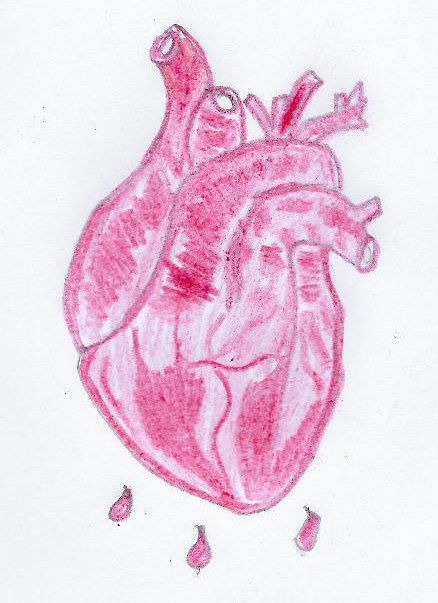
I have ironically found the vow which is closest to my heart – ‘to keep the Rule of the Heart’ – the hardest. Our rule is to follow our hearts in alignment with the hearts of the Gods and the beat of the Heart of Annwn. It has taken a lot of quandry to discern what is in my heart and what the Gods want.

On a number of occasions I have made mistakes and almost taken the wrong path on the basis of trying to do what I think society wants or what will make money. During this discernment process I have received the gnosis that I am ‘an inspirer not a teacher’ and must focus on my devotional life and creativity rather than attempting to teach workshops and courses. 

Following my heart has led me to see my calling as one of devotional creativity.

Vows five and nine  are to pray and check in regularly with other members and to play an active role in building the monastery. We are developing practices such as our co-written New Moon Prayer and Novena Prayer for Gwyn over the nine nights of the full moon. We have begun celebrating seasonal festivals based on Gwyn’s mythos and have a monthly meditation group.

Praying, meditating, celebrating, and communing with other monastic devotees on our forum has helped me feel less alone and it has been inspiring to learn how others interact with and perceive the Deities of Annwn. 

I have also been considering whether I am closer to earning my monastic name Sister Patience. I am still very very impatient in relation striving to get things done as quickly as possible and being unable to relax until they are done. 

Writing a novel for Gwyn has been an important lesson in learning patience. In contrast to poetry and short stories it is a long process not only in terms of the greater word count but the reworking and editing to make it a coherent whole. So has building the monastery as a collaborative project. In this I’m trying to learn to let go and trust the Gods and other members and to allow it to grow organically rather than attempting to push and force the pace. My slow progress in other areas – from breathing meditation and yoga to my running and strength training have all been steps towards patience too.

I will be taking temporary vows (for three years) on the new moon on the 14th of October.

Paths to Gwyn

There are many paths to Gwyn. 

~

There is the bard in the mead hall. The one who sings at the feast in Caer Vedwit, the Mead Feast Fort, in Gwyn’s hall, in a heavy blue-grey chain. 

I sung there once, where the harp of Teirtu plays on its own. Where the ghost of Maponos walked. Where the fair folk and the dead dance and mix and eat the meat of leaves whilst the king watches from his throne of bones.

I drank enough mead to feast the dead for centuries and took the songs of our king to the halls of towns and cities, to libraries, pubs, shopping centres.

I sang in chains, tried to strangle myself with them, then cast them off. 

I walked this path for a while but this path was not for me. 

~

There is the path of the madman, the wild woman, the path of the followers of Myrddin Wyllt. Those who are afflicted by trauma and by the claws of Annwn torn out of themselves, split open, as if by a spear, their bird spirits flying out. 

Hawk spirits, golden eagle spirits, goldcrest spirits, passerines in strange migrations. All heading to their forests of Celyddon. To pines and raided gold mines. To the damps of the Celtic rainforests where it rains five days a week. To the remnants of woodlands in the suburbs along the trickle of suburban streams.

I was the wren in the bush singing of how I tore myself open for our God and how my heart was my sacrifice on mid-winter’s day still beating beneath the yew.

A part of me is still there, singing for Him, loud yet hidden. No-one hears. 

I walked this path for a while but this path was not for me. 

~

There is the path of the cave woman, the inspired one, the witch. Orddu ‘Very Black’, Orwen ‘Very White’, all their ancestors around the cauldron. 

Black skin, white hair, white skin, black hair, wolf furs, corvid feathers, black beaks.

Those who sing with crows and wash the skulls of their ancestors in holy springs. Cast the wolf bones. Lie beneath wolf furs waiting for visions of the Deep.

Those who drink the awen, scry in the cauldron like our God, sing of past and future things. Swallow stars. Universes. Things too big to speak. Die in His arms.

I swallowed the star of the King of Annwn and it is within me still and I am still in my cave after all these centuries with a murder of crow women inside me. 

The nun in her cell who still flies, still runs, divines with black feathers.

I walked this path for a while and have decided it is for me. 

I wrote this poem as a step along my journey in discerning what it means to be an inspired one and nun of Annwn devoted to Gwyn ap Nudd in relation to the Brythonic tradition and my solitary life in suburban Penwortham.

Nodens God of Dreams and Building a Dreamwork Practice

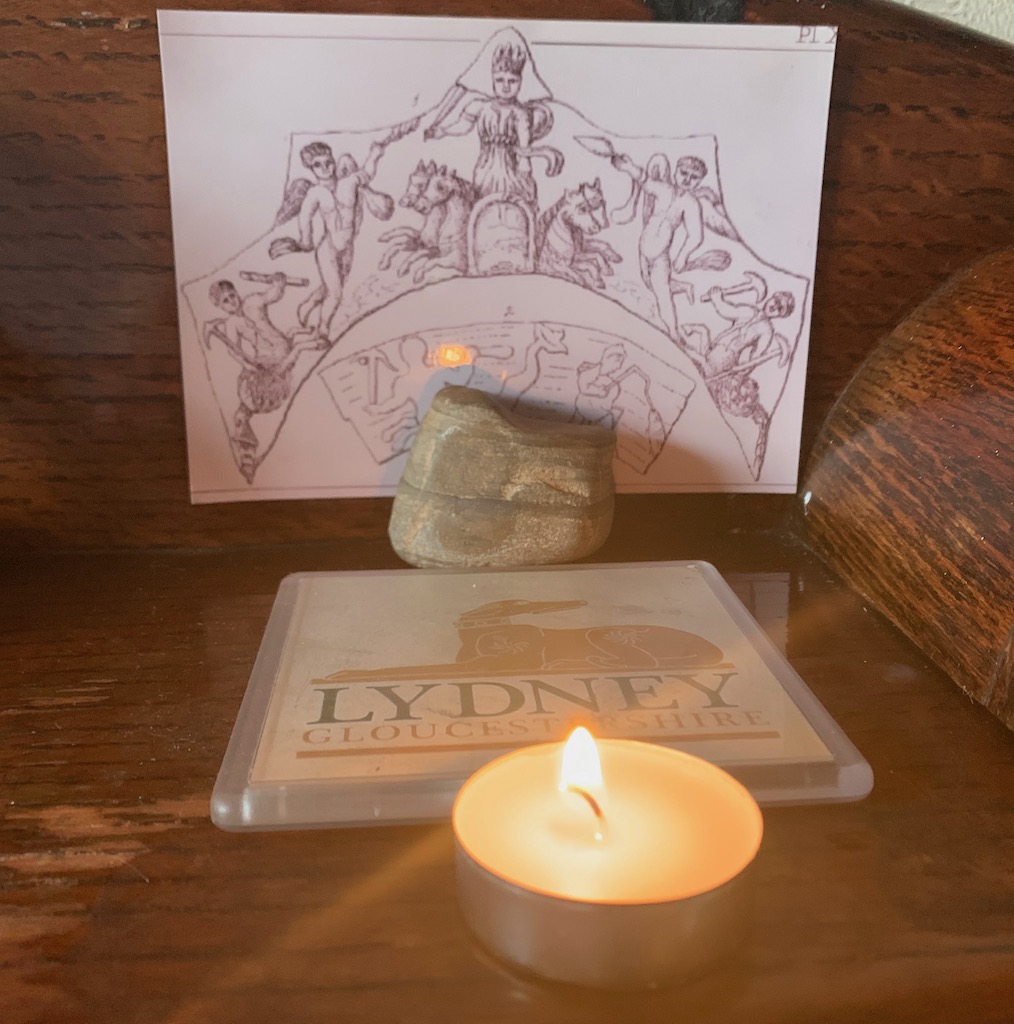
Nodens is an ancient British God of water and healing dreams. This is evidenced from His temple at Lydney where He is pictured on a mural crown driving a chariot pulled by water-horses and flanked by spirits of the wind and sea. The layout suggests that pilgrims took a ritual bath in the bath house, made offerings in His temple, then retired to a dormitory to enter a sacred sleep. On waking their dreams were interpreted by an ‘interpretus’. 

I have been relating to Nodens as a God of dreams since 2012. I started connecting with Him around the same time I met His son, Vindos/Gwyn ap Nudd*. At this time I found out that Nodens was also worshipped here in Lancashire as evidenced by two Romano-British silver statuettes, dedicated to Him as Mars-Nodontis, found on Cockersand Moss. 

I used to suffer from insomnia and started praying to Nodens as a dream God when I was desperate to sleep the night before travelling to the midlands for a Druid Network Conference in the midlands at which I was speaking for the first time on the bardic tradition. I was nervous not only about the talk but staying away from home in the company of so many people. 

I prayed to Nodens… and I slept… and when I returned home I made Him an offering of mint tea and thus began my practice of praying to Him every night before I go to sleep and making regular offerings. Since then I have never struggled to getting to sleep although I still sometimes struggle with early waking. Skeptics amongst you might argue this is simply the consequence of having a winddown routine and spending time in darkness in front of a candle but I personally believe that my prayers to Nodens are the driving cause. 

Nodens has also helped me to build a dreamwork practice. Several years ago He instructed me to collect a ‘dream stone’ from the Ribble and to place it on His altar then to put my dreams into it as an offering to Him when I wake up. I also journal my dreams for the purposes of remembering them. In the evenings I reflect on my dreams before I pray to Nodens and go to sleep.

Interestingly Nodens has never played an active role in interpreting my dreams, although I have sensed His guidance when making interpretations. I have never used books, but have been encouraged to explore the personal symbology of my dreams and what certain images and themes mean when they arise.

I often dream that I am ‘back at the stables’ – mainly at Oakfield Riding School where I spent a large part of my childhood working on the yard for free rides and where I worked as a riding instructor after giving up my PhD. In my dreams it represents my desire to return to a safe and a familiar place.

Another common theme is visiting shops that are selling a combination of rock/goth clothing and accessories and Pagan paraphenalia. These consistently have multiple levels, like Preston market, or Affleck’s Palace in Manchester, where I used to shop and hang out. I often see people from the past. I find I can’t relate to them and I cannot find what I am looking for. These dreams remind me that although I had friends with a similar taste in music we had nothing in common outside that and I didn’t truly fit in. Also that what I was searching for, some kind of deeper meaning, cannot be bought.

It’s not that often the Gods show up in my dreams but when they do it is deeply meaningful such as when Gwyn showed me how to send my soul into a hazel tree, then a beetle, then something else, in order to escape execution.**

In many of my dreams, frustratingly, I know I am on a mission for Gwyn, but have failed or forgotten what it is, showing my anxieties about failing Him. 

I’ve never had an experience with Nodens in my dreams but sense the touch of His (silver) hand when there is humour. For example a couple of months back I mistakenly allowed a troublesome member who made an inciteful post into the Monastery of Annwn and was not sure what to do about it. I then dreamt I was working at the stables and found someone had put a turd in one of the horse’s water buckets and was furious. The dream told me that, in the same way I could not allow a person who puts turds in horse’s water buckets to come to the stables, I could not have someone who posts inciteful posts in the monastery. With the words of other members this convinced me to ban them.

Dreamworking with Nodens has not given me all the answers to my dreams but it has helped me to remember, record, listen to, honour and act upon them. Over the time I have been recording my dreams I have logged an increasing number each year showing my dream recall has been improving. 

I believe this practice is important as dreams are the way our Gods and our souls can speak to us with the least interference from our conscious minds. For this reason I don’t try to control my dreams through techniques like lucid dreaming.***

I would be interested to hear about whether anyone else has been inspired to take up a dream work practice with Nodens or works other ways with dreams.

*Nodens is known as Nudd or Lludd in medieval Welsh literature.
**I have recorded an account of this dream HERE.
***Another reason I haven’t experimented with this technique is that asking the question ‘am I dreaming?’ in everyday life would be a trigger for returning to doubts about the nature of reality and blurring of boundaries that led to me not knowing what was real and was not and made me fear I was going mad during a mental health crisis in my early twenties.

A good place to start getting into dreamwork is Nimue Brown’s book Pagan Dreaming HERE

On Impossible Tasks

Though you may get that, there is something you will not get. Twrch Trwyth will not be hunted until Gwyn ap Nudd is found – God has put the spirit of the demons of Annwfn in him, lest the world be destroyed. He will not be spared from there.’
~ Culhwch ac Olwen

I.
I have completed the impossible tasks. 

I have found You and Your water-horse and Mabon and His dark white-maned steed and every one of Your hounds and every single one of their leashes.

I have ridden down Twrch Trwyth ‘Chief of Boars’ and feasted upon him.

I have found all the giants who Arthur killed but I have not found their beards or the pieces of flesh he cut from them – Ysbaddaden’s ears, his cheeks are gone.

I have found all the treasures and returned them to You – their rightful owner.

I have returned the last drop of Orddu’s blood to Pennant Gofid. 

As for Culwhch and Olwen I have seen they did not live happily ever after. 

Finally I killed Arthur – see his blood beneath my fingertips as I type these words?

II.
Your next task feels more impossible. 

You tell me to ‘build the Monastery of Annwn’.

How? Why? When you mocked at Saint Collen,
taunted him with visions of Your fairy feast.

You tell me “a nun is not a saint.”

III.
I think of how Collen derided You and Your people and how I have danced with inspired ones – wild men, mad women, witches, on the brink of the Abyss.

How I danced towards death – too many pills, too much drink, not enough sleep, not knowing if this would be the night, not caring, hoping we would be united.

I wonder, if You’ve got devils within You, I’m allowed to have devils within me too?

You tell me I must “embrace paradox” and “be a servant of mystery”. 

IV.
You show me a vision of a tapestry detailing all three hundred
of the knights in Arthur’s retinue woven by a monk
in a distant abbey, You amongst them,
my unpicking of the weave

and following of the threads to where we know each other
best in the spiralling madness of the Abyss
where You, God of the Dead,
have known death.

V.
You tell me nothing is impossible 
and I know nothing is impossible except You.

Thus I will strive to fulfil my impossible task for You.

*A poem based on the difficulties of building a monastery that does not fit with recognised religions and that is dedicated to Deities who are ‘other’ / ‘otherworldly’ in relation to practical necessities such as having our own bank account to fund our forum, website and potential Zoom channel.