For three days she journeyed there and for three days journeyed back
to return a lost son to return a lost brother and I alone stand witness at the standing stone
that might have been placed here for this day as his golden rays shine over the marshland.
How did she win him back from Winter’s King? That is for her alone to know and the birds who sing.
This poem is a follow up of my poem ‘I light a candle for Epona‘ based on the journey of the Great Mare to the Otherworld to win back her lost son. I linked this to my brother’s period of hospitalisation. I’m glad to say he is back now and on the road to recovery so many thanks to the mare goddess and to those who sent good wishes and lit candles.
The photographs are of the sun beginning to set over the winter solstice stone at the stone circle at Brockholes Nature Reserve and over the visitor village and Meadow Lake.
It happened when I was gearing up. Having given up my placement with Carbon Landscapes in Wigan as it was too office based I had returned to volunteering with the Lancashire Wildlife Trust closer to home and got the conservation internship at Brockholes.
One hundred per cent practical outdoor work, and just a 6 mile cycle ride away at a place I know and love, it promised to be my dream job. I’d completed my first 10k race in New Longton and was training for the City of Preston 10 miles. I was also preparing for my Taekwondo grading, on the Spring Equinox weekend, to gain my blue belt.
Then it struck. A series of lightning-like strikes. I’d heard the thunder. The first rumblings from China, the news the storm was getting closer, that it had hit Italy, Spain, France, arrived in the UK. We joked about it at first. Me with my perpetually runny nose, like a toddler, in spring, due to my hay fever. Anyone who coughed or sneezed, “I haven’t got coronavirus.” We’d seen it on the news but it didn’t seem real, like our little island with its green hills and fresh air granted some form of immunity. We’re British, right? We won the war. Then people started getting sick and started dying.
Around a fortnight ago hand washing or using antibacterial gel before eating became mandatory. On Monday the 16th of March when I was out with the Mud Pack at Brockholes the next step was stopping sharing PPE. No more slightly musty gloves from the collective stash. I was given my own hi-vis in preparation for beginning my internship on the Thursday. Still we worked together building a hibernaculum for great crested newts and ate our lunch outside on a day bright as coltsfoot.
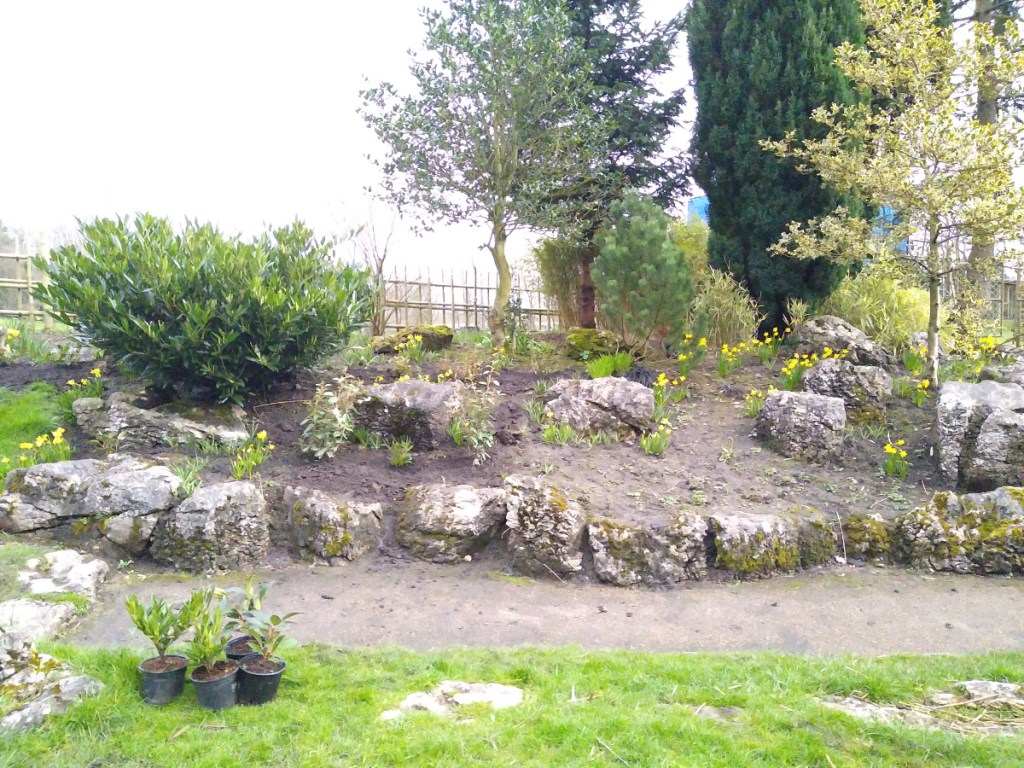
On Tuesday the 17th of March we received an email saying we could no longer share lifts in the van or meet together inside. On Wednesday the 18th of March, another glorious spring day, I went out on another work party planting sarroccoca and eleganus amongst the daffodils on the rock garden on Avenham Park. There was little joking, even amongst the guys from Preston City Council, who were helping out. Everything felt ominous. Still, it came as a shock when I got home to find out all LWT volunteer work parties had been cancelled until the end of April along with my voluntary internship.
In some ways it was a relief because I live with parents who are over 70 and in ill health. I’d been torn between the choices, if I was to continue volunteering, of moving out or risking their lives. So I accepted it was for the best I isolated with them, just going out to do our shopping and to exercise.
Still, I was bitterly disappointed. After winning the struggle to give up alcohol and manage my anxiety without it, and feeling I was finally coming home from my exodus with Carbon Landscapes to the place and the job role in my local landscape where I truly belonged… this!
Yet, I also felt, in some ways my gods had been preparing me for it. If I hadn’t given up alcohol there is no way I would have coped with the situation or with the responsibility of looking after my parents. When considering whether to quit my placement I’d heard a clear voice telling me to “come home.”
Another point is that, at the beginning of January, after I had a mild attack of exercise-induced asthma as a consequence of running my fastest time of 25.21 for 5k on the Avenham Park Run, Gwyn told me during this Taekwondo belt (green with a blue tag representing growth toward the skies) I needed to ‘learn to breathe’. Since then I’ve been trying to discipline myself to spend time in stillness, focusing on my breath, in my morning and evening meditations, but not always managing it.
(What has struck me and many others is that breath is central to this situation on many levels. Coronavirus attacks the lungs and those who get seriously ill face a battle for their breath which, in some cases, can only be won with the aid of mechanical ventilators, and in others not at all. The places worst hit have been cities where the air is badly polluted. Now flights have stopped and most people have stopped commuting by car, the skies are clear of contrails and air pollution has dropped.)
At first, after all that gearing up, I felt like Wily Coyote poised in mid-air off the edge of a cliff with my legs still running. Over the past few days I have been striving to ground myself, to slow down, to process the changes, to find space to breathe. Not easy when surrounded by panic.
My first response was to hit the news and social media to find out what’s happening and what everyone’s doing, leading only to tight chest, shortness of breath. To rush to formulate my own words, to share poems addressing the situation. Like I have some kind of gods-given responsibility… whilst aware of adding to the din of others doing exactly the same and increasing the massive strain on the internet that we forget is causing air pollution as we don’t see the power stations.
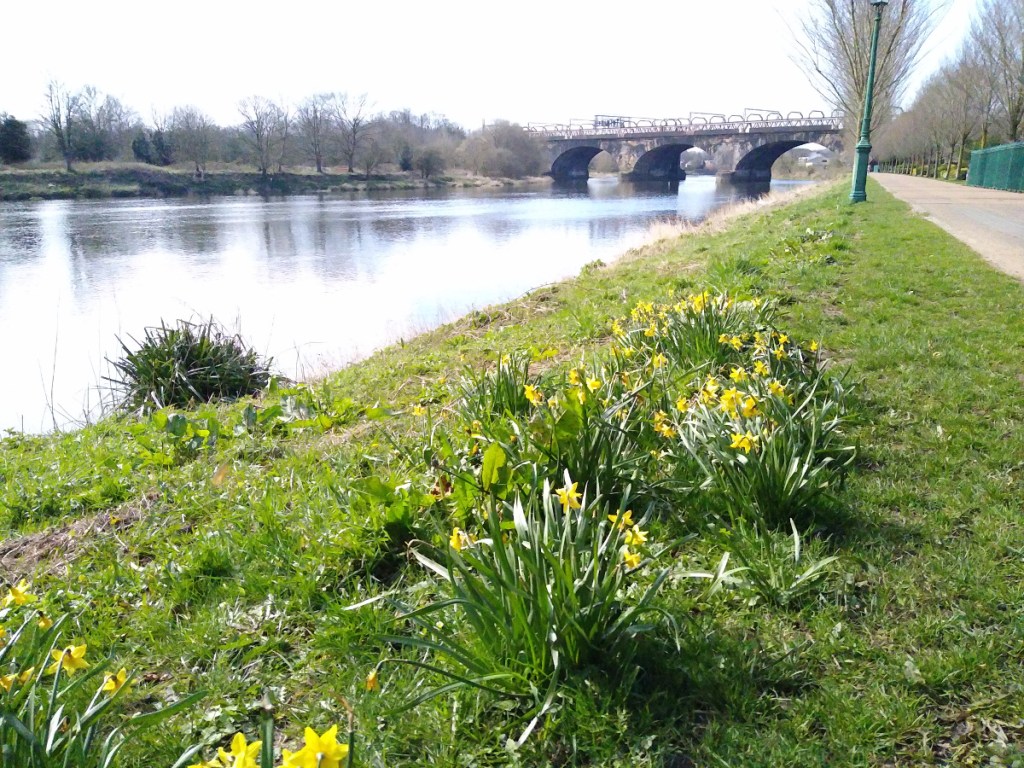
“Slow down,” the message kept coming through, from the stopping of traffic the virus has caused. As I ran more slowly, no longer worried about beating my best times, happy to be in the moment, feet steady alongside the Ribble in time with her flow where the daffodils watch with sad beautiful faces.
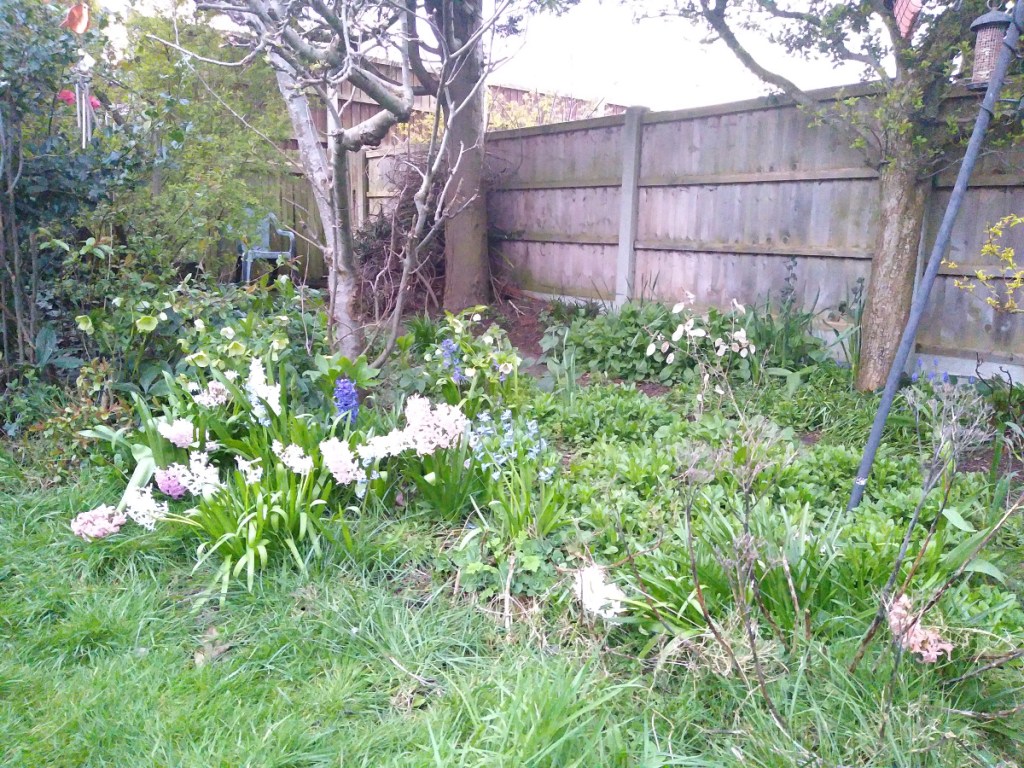
“Slow down,” as I began to take my time in my parents’ garden instead of rushing through the tasks. Appreciating the sunlight on the pastel colours of the hyacinths and the scent of the magnolia, the steady chuck of spade in earth and textures of compost from the bottom of the heap rich from years of decay.
“Slow down,” every time I sat before my mantlepiece in my bedroom where I keep altars to my deities, feathers and stones, to which I’ve recently added photos of my family ancestors knowing I’ll need their help.
I had developed a new routine based around prayer, writing, housework, gardening, shopping, and exercise when lockdown struck. It didn’t hit too hard as I was already living under those rules.
I’m anticipating a greater slowing. Right now I feel like I’m in ‘defence mode’ with my main prerogatives being to tend to the needs of and protect my vulnerable parents and to maintain my own health. I have also offered to run deliveries on my bike for family and friends, including the older members of my poetry group, if they end up isolating either due to illness or the government order.
An important point of support has been the Way of the Buzzard Mystery School online journey circles and coaching calls. I have been involved with Jason and Nicola’s drumming circles at Cuerden Valley and the Space to Emerge camp since they began and have appreciated being able to continue getting together to do journeywork and discuss the current situation from a shamanistic perspective.
With my daily routine and a support network in place I’m hoping for the best and preparing for the worst. If the UK follows Italy’s curve it is possible that my friends, family, and myself, may be not only be slowed down but locked away by illness, that we may be halted by the life-or-death battle for our breath. That we may have to face the final stopping – death – as usual a topic few think or talk about.
I’ve long had a plan for my funeral but am aware it will be invalidated by these circumstances. There is a huge lack of information about what will happen to the bodies of those who die of coronavirus in the UK. How they will be dealt with, where they will go, how their passing will be acknowledged.
Yet this great slowing gives us time to pause for thought – about the fears we’d rather not face and the solace we can find in each moment of these spring days so beautifully bright in contrast.
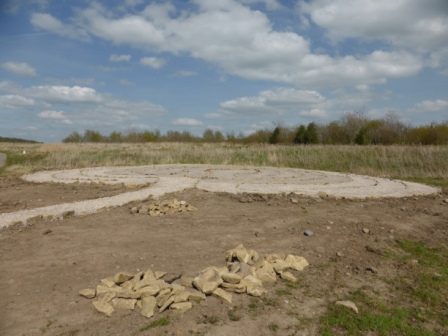
Over the past few months I’ve been involved with several of the work parties building a labyrinth for ‘fun, exploration and meditation’ at Brockholes Nature Reserve. It was designed by John Lamb (an archaeologist and Lancashire Wildlife Trust’s Senior Conservation Officer) and opened on April the 23rd 2016.
During the period the labyrinth was being built, I was researching links between Gwyn ap Nudd as a ‘bull of battle’ and Gwyddno Garanhir (‘the Knowing One with Long/Crane Legs’) and Tarvos Trigaranus (‘The Bull with Three Cranes’).
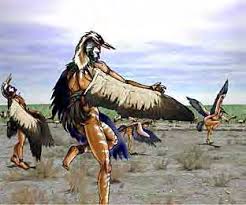
Coincidentally I came across a ritual crane-dance in Greece called geranos initiated by Theseus after defeating the minotaur in the labyrinth in Crete. Its blows and crane-like turns imitated the battle and the labyrinth’s winding course and the leader of the dance was known as geranoulkos. This got me wondering whether the name Gwyddno Garanhir may have been a title deriving from a similar role.
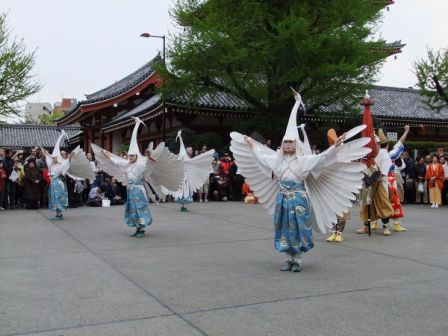
Crane-dances are found in many parts of the world. One of the most famous is the Japanese Shirasagi-no-mai ‘White Heron (‘Crane’) Dance’ which is one thousand years old and ‘was originally performed to drive out the plague and to purify the spirits on their passage to the next world.’ Cranes are also associated with the otherworld in Celtic mythology.
Shirasagi-no-mai, Wikipedia Commons
Cranes are depicted accompanying the Eight Immortals in Chinese mythology. They inhabit five islands in the Bohai Sea which include Mount Penglai. This is known as Horai by the Japanese. In both cultures it is a paradisal place with endless amounts of food and drink where nobody grows old. This is intriguing because Gwyddno is a sage-like figure.
Eight Immortals Crossing the Sea, Wikipedia Commons
One of the earliest finds relating to a crane-dance is an 8,500 year old crane wing found on top of a cattle horn core in Çatalhöyük in ancient Anatolia. The crane bones were pierced by holes of a suitable size for string which suggests they were tied to the arms of a crane-dancer. Two black cranes are depicted on a painting on one of the walls facing a bull on the opposite wall. A dance scene depicting a sacred marriage and mother and child may prove the dance focused on fertility and birth.
Crane-dances have many meanings across cultures. One theme that stands out is passage: from the trials of the labyrinth, from one world to the next on birth or death. Gwyn and Gwyddno’s conversation takes place upon Gwyddno’s passing from thisworld to Annwn, possibly in crane-form.
At Brockholes the closest likenesses to a bull (or minotaur!) with cranes are the long-horned cattle and numerous herons who can be seen on the river Ribble and lakes.
When I walked the labyrinth for the first time my intention was getting a feel for its path within the nature reserve between the car park and stone circle as skylarks loudened the summer sky and oystercatchers pipped overhead.
I found myself pondering whether a geranoulkos would have used such a setting for a crane-dance and what the steps would have looked like at various rites. But I didn’t dance. I’ll leave that to those more agile with longer legs…
SOURCES
Edward A. Armstrong, The Folklore of Birds, (Dover, 1970)
Nerissa Russell & Kevin J. McGowan, ‘Dance of the Cranes: Crane Symbolism at Çatalhöyük and beyond’, (2003) HERE
‘Hypocherma’ (Geranos), Wikipedia HERE
‘White heron (“crane”) dance: Shirasagi-no-mai and heron symbolism’, Japanese Mythology and Folklore HERE









 The Sanctuary of Vindos