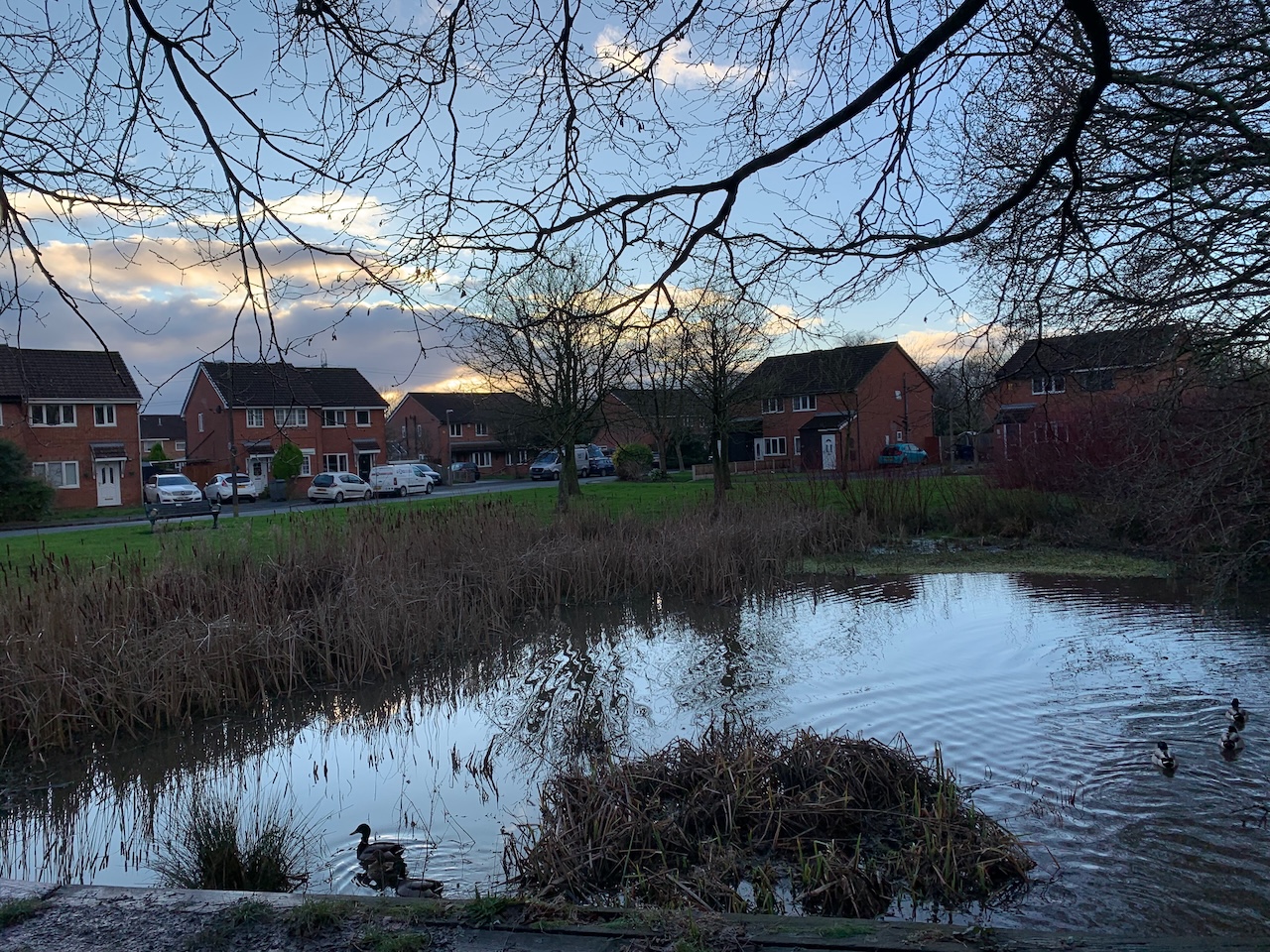
Many years ago, in early spring at sunset, the Wise Lad was wandering the Frog Song Marsh, watching the frogs and toads emerge from their places of hibernation, forming long slippery lines as they headed to the many ponds.
As darkness fell the mating calls of the male frogs and toads were deafening – a thousand thousand voices raising their caphony throughout the marshland.
Thus the Wise Lad was surprised to find a solitary frog sitting apart on a stone.
“What are you doing?” He enquired. “Why aren’t you seeking a mate with the rest?”
“I’m meditating,” the frog’s legs were crossed and his pads rested on his shins.
The Wise Lad knew a little of meditation from sitting still with his father, Nodens, staring into the waters as they waited together for a fish to take the hook.
“I’ve never known a frog to meditate before,” the Wise Lad was stunned.
The frog frowned. “Can you not see these legs were made perfectly not only for jumping and swimming but for sitting in meditation? These pads not only for catching prey and clinging onto mates but for holding hand gestures? These lungs and gills for breathing deeply both in and out of water?”
“You can meditate under water too?” the Wise Lad asked in admiration.
The frog nodded glibly and demonstrated by hopping into a nearby pool, sinking down to the bottom and once again taking up his meditating posture.
On getting out, “And don’t you believe the lies of the other frogs who will tell you I’m not a frog at all, that I’m the son of a chieftain who the Hag of Marsh Pond put a spell upon, that I’m avoiding the mating rites because I don’t want to be kissed by a frog or a woman and turned back into a human again.”
“I wouldn’t believe such lies at all,” the Wise Lad reassured him.
“Good,” said the frog as he continued meditating through the nocturnal frog-song.
This story was received as taking place near Marsh Way Pond in Penwortham.
Many years ago, when the Ribble was rich in salmon, at autumn they swam up river and up the tributaries not only to spawn. Near the source of Silver Fish Brook stood a hazel tree that was covered in nuts that were filled with wisdom. It was rumoured that if any fish ate nine nuts it would be filled with all the world’s wisdom. Yet no salmon managed to eat all nine nuts because the squirrels were greedy and the salmon were even greedier. They only managed to eat one or two until a mast year came and a big salmon barged past the rest and managed to eat nine nuts and was filled to the brim of his eyes, to the tips of his fins, to the top of his tail with all the world’s wisdom.
Nodens Silver-Hand, the Catcher, the Fisherman, the Lord of the Waters and Dream heard of the this fish. Nodens was wise but He wanted more wisdom. So He went and sat at the place later known as Fish Pan Pool, took out His silver fishing rod and He fished for three long years.
Finally, He caught the salmon, but instead of cooking him Himself He called to his son, Vindos. “Cook for me this fish but on no account eat any of his flesh.”
Vindos was a good lad. He obeyed.
Yet as He turned the fish he tempted Him, “Vindos, Vindos, eat me, eat me and you will be filled with all the wisdom of the world.”
Vindos said, “No, all the wisdom of the world already lies within me.”
He turned the fish and was careful not to get so much as a drop of fat on his fingers.
The salmon did not give up. “Eat me, eat me and you will be filled with all the wisdom of the Land of Dream.”
“No, all the wisdom of the Land of Dream already lies within me.”
Vindos turned the fish and when a drop of fat leapt at him leapt back.
The salmon did not give up. “Eat me, eat me and you will be filled with all the wisdom of the Deep Annwn – the Mysteries of the Otherworld.”
“No, all the wisdom of the Deep Annwn already lies within me.”
The fish sighed. He was nearly done. “Then feed me to your father.”
At this point Vindos beheld a vision. “No,” he said, “my father is already wise and I have foreseen that humanity will need your wisdom more in the future.”
Vindos let the salmon go and he went leaping, diving, swimming down Silver Fish Brook out to the Ribble. It is said he will not return again until the culverts are gone and the hazel tree is rich in nuts and wisdom.
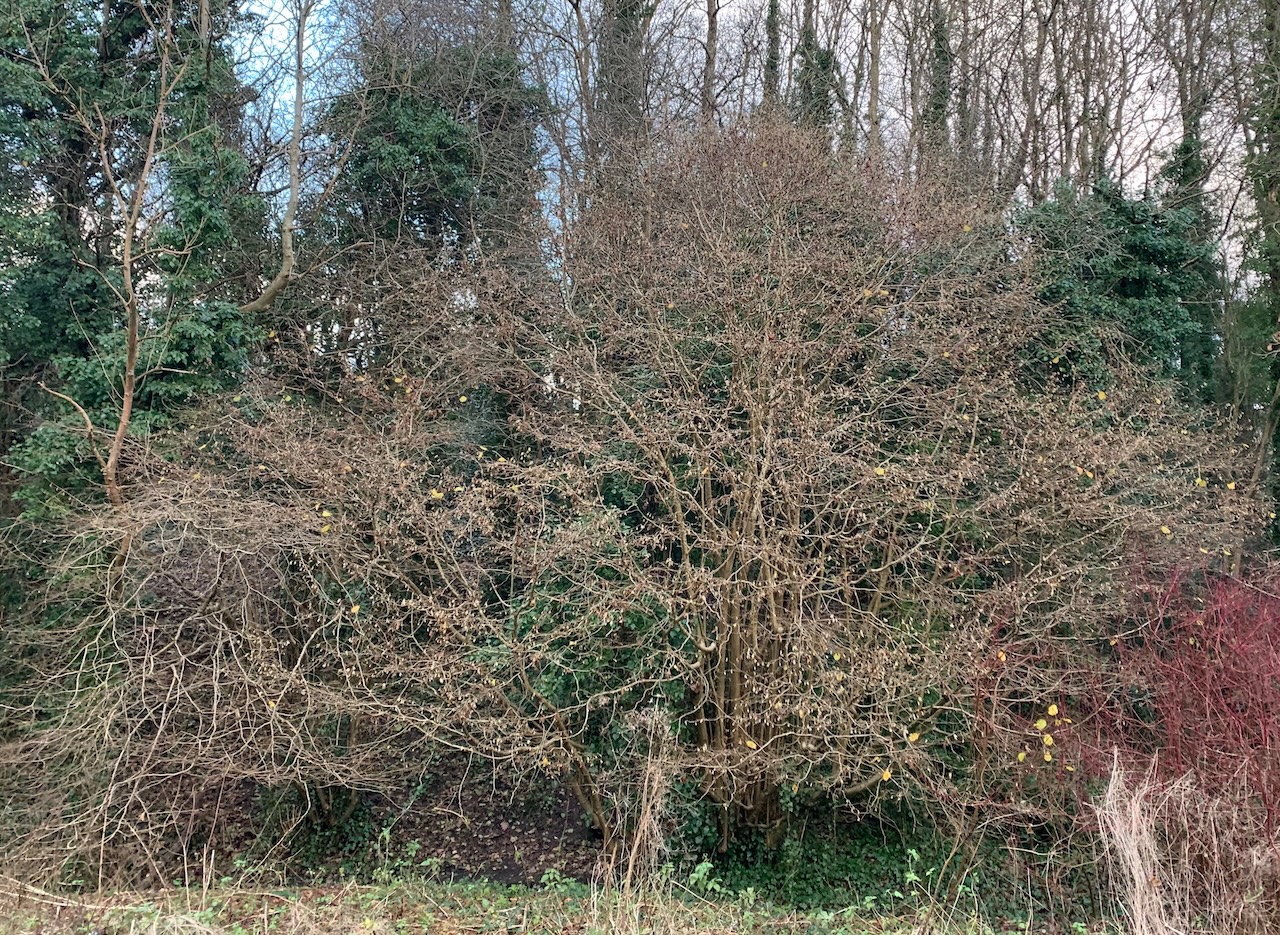
*This story is based on the Irish story of the Salmon of Wisdom in Irish mythology drawing on parallels between Nechtan and Nodens and Finn and Vindos. Silver Fish House Brook refers to Fish House Brook which flows through Greencroft Valley in Penwortham where a wise hazel tree grows.
Tonight I’m giving a talk on animal spirit guides for a local group. One of the topics I am covering is what the story of the Chasing of Rhiannon can teach us about the nature of Horse and ways of approaching Horse and the Gods and spirits in general. I’m also sharing it here.
Rhiannon is the medieval Welsh name of the ancient British Horse Goddess Rigantona ‘Great Queen.’ She appears in the The First Branch of The Mabinogion. This is my retelling of the episode of Her first meeting with Pwyll, Prince of Dyfed.
Pwyll goes to sit on Gorsedd Arberth, a sacred mound in Pembrokeshire, where it is said that if you sit there all night you will either get injured or see something wonderful. Pwyll sits the long night through and at dawn, luckily for him, he sees something wonderful – a beautiful woman in a shining golden dress of brocaded silk on a big, tall, pale white horse.
As she rides away Pwyll says to one of his men, “Quick, go after her!”
He runs and he runs and he runs but he cannot catch her.
“Quick, get on a horse!”
He rides and he rides and he rides but he cannot catch her because the faster he rides the further she gets away and finally she disappears over the horizon and is gone.
Pwyll is bitterly disappointed yet, determined to see her again, he sits on the mound a second night. And at dawn she appears again – a beautiful woman in a shining golden dress of brocaded silk on a big, tall, pale white horse.
As she rides away Pwyll says to his best rider on his fastest horse, “Quick, go after her!’
He rides and he rides and he rides but he cannot catch her because the faster he rides the further she gets away and finally she disappears over the horizon and is gone.
Pwyll is even more disappointed, yet determined to catch her the next time, he sits on the mound a third night. And at dawn she appears again – a beautiful woman in a shining golden dress of brocaded silk on a big, tall, pale white horse.
As she rides away this time Pwyll himself goes after her on his fastest horse. He rides and he rides and he rides but he cannot catch her because the faster he rides the further she gets away.
Just as she is about to disappear over the horizon, he shouts, “Maiden, for the sake of the man you love, wait for me.”
She stops, turns. “I will wait gladly,” she says, “it would have been better for the horse if you had asked a while ago.”
When Pwyll catches up to her, she draws back her veil, reveals her name, “Rhiannon.”
This story might firstly be seen to relate to Horse as a prey animal. If we chase a horse it will always run faster than us, the faster we chase, getting further away. If we stop, speak quietly, it too will stop, turn, be curious, approach, reveal to us its unique nature.
On another level it relates to the elusive nature of the Horse Goddess and to the Gods and spirits in general. Often, if we chase too hard, try too hard, they evade us. If we stop, ask direct questions, They will turn, respond, reveal Their identities and names.
In The Way of the Gods Edward Butler speaks of the ‘fractal quality’ of Egyptian cosmogony. He says: ‘There is one way in particular in which I believe that Egypt can still guide us, namely in the coexistence there of a numerous incommensurable cosmogonies, in a system which lacked any overarching structure integrating them, and which was yet highly stable over vast spans of time… If we can grasp how the Egyptians sustained the belief in many different cosmogonies without reducing them to mere images of some single, superior truth, we can scale up that model to apply to the vast number of incommensurable cosmogonies at the heart of the world’s many sacred traditions traditions, and arrive at a genuine solution to the problem of religious pluralism…. Egyptian cosmogony… has a fractal quality, because everything which comes to be does so in the manner in which the cosmos itself came to be, and continues every day to come to be.’ (1)
A fractal is: ‘an irregular geometric structure that cannot be described by classical geometry because magnification of the structure reveals repeated patterns of similarly irregular, but progressively smaller, dimensions.’ (2) The term was coined by the mathematician Benoit Mandelbrot and comes from the Latin fractus ‘broken or fractured’. (3) Fractals occur in mathematics, physics, architecture, decorative art, and natural phenmomena. Examples include tree branches, lungs, lightning, clouds, crystals, and snowflakes. (4)
*
Butler’s identification of cosmogonies as fractal can be applied more broadly to myth and can help us gain a better understanding of British mythology.
Unfortunately, here in Britain, we don’t have knowledge of any of our ancient creation myths. They are merely hinted at in medieval Welsh literature in which Taliesin, who claims to be have been born or created in various ways, is often represented as a microcosm of the macrocosmic world. In some sources he is (re)born from the womb of Ceridwen, the Goddess of the Cauldron, who takes the form of a crested black hen. (5) In others he is created by five enchanters, Math, Gwydion, Eurwys, Euron and Modron ‘from nine forms of consistency’ (fruit, God’s fruit, primroses, flowers, blossom of trees and shrubs, earth, sod, nettle blossom and ‘the ninth wave’s water’) (6) and by God from ‘seven consistencies’ (fire, earth, water, air, mist, flowers, and ‘the fruitful wind’). (7) This suggests the world was seen as originating from the womb of Ceridwen and as being created by the Gods. These stories, like the Egyptain cosmogonies, are incommensurable. This speak of the fracturing of the crochan, womb or cauldron, of Ceridwen, who I see as Old Mother Universe, with the Big Bang, at the beginning of time. Such a beginning perhaps explains the fractal nature of our myths.
Another myth that might be read as fractal is that of Merlin. Many versions of the stories of Merlin Emrys / Merlin Wyllt are located across Britain and in Brittany. Similarly with the story of King Arthur which has been told and retold since the medieval period with his court at Camelot having numerous locations including Caerleon, Celliwig, and Cadbury Castle. He and his knights are also said to be sleeping in various underground caverns.
*
It is little known that Arthur’s fractal mythos as the Sleeping King is a purloined one. This can be read from the fragments portraying Arthur’s raid on Annwn, his defeat of the Head of Annwn and his theft of His cauldron through which he claims leadership of His hunt and His role as the Sleeping King.
In Culhwch ac Olwen Arthur and his men ‘go North’ (then presumably into Annwn) to rescue Gwythyr ap Greidol and a group of northerners from the fortress of Gwyn ap Nudd, the Head of Annwn. In this fragment Arthur wins by negotiating. (8) In other fragments there is carnage, ‘Shields shattered, spears broken, / violence inflicted by the honoured and fair’. (9) Of the ‘three full loads of Prydwen’ (Arthur’s ship) to go into Annwn ‘save seven’ none return. (10) (Lllen)Lleog thrusts his sword into the cauldron and makes off with it (11) and in another fragment grabs Arthur’s sword, killing the Head of Annwn’s cauldron keeper and his retinue and likely the Head himself. (12)
Interestingly, in ‘The Spoils of Annwn’, Arthur raids seven fortresses which might be fragments of a fractal – the Head of Annwn’s fort. There is no original. All are incommensurable. Intriguingly we find Caer Wydyr ‘the Glass Fort’. Our texts are redolent with the imagery of shattering. Shattered shields, shattered forts. The Head of Annwn Himself is conspicious by His absence whereas Arthur’s presence is lauded and sung through all.
Following his victory over the Head of Annwn and theft of His cauldron Arthur usurps the hunt for Twrch Trwyth ‘the King of Boars’. The twrch was originally a human chief turned into a boar because of his sins by God. This is a Christian overlay obscuring that it was a hunt for human souls – the Wild Hunt. Thus Arthur became known as the Leader of the Hunt.
Finally, Arthur lays claim to the Head of Annwn’s role as the Sleeping King. The battle between Gwyn and Gwythyr likely has its origins in an ancient British seasonal myth wherein Gwyn, Winter’s King, is killed by Gwythyr, Summer’s King, on Calan Mai. When Gwyn dies he returns to His fortress in Annwn to sleep until His return to the world on Nos Galan Gaeaf later in the year. Arthur’s retreat to beneath the Isle of Avalon is a mirror image of Gwyn’s.
As Christianity rose to popularity the fractal mythos of Arthur replaced the fractal mythos of Gwyn. Their fractals might be seen to be like two crystals, their reflections reflecting one another, composed of fragmentary tales.
*
For the past couple of years Gwyn has been appearing to me with a jewel in His forehead. In a meditation with the Monastery of Annwn on His birth at the end of last year He said: ‘There are as many stories of my birth as facets to my jewel’.
When I first came to polytheism it was with the preconception that the Gods had one true story that could be found by piecing together the fragments into one whole or peeling them away to reveal some singular truth. Now I know better. Myths are, in their essence, fractal. There is no one truth or original.
This has been pushed home as, over the past two years, in our meditation and group at the monastery Gwyn has revealed Himself and His stories to us as monastic devotees in many diverse and sometimes contradictory ways. Yet there have also been many reflectings suggestive of their fractal nature.
I don’t think it’s a coincidence that Gwyn has revealed Himself to be associated with so many fractal things – trees, clouds, jewels, snowflakes. There is a similar beauty in the incommensurability of His myths and mysteries. Every year I look forward to different stories of our Sleeping King.
*Image of quartz crystal from La Gardette mine, Bourg d’Oisans, Isère, France, courtesy of Wikipedia commons.
(1) Butler, E., The Way of the Gods, (Indica 2022), p100 – 104 (2) https://www.dictionary.com/browse/fractal (3) https://iternal.us/what-is-a-fractal/ (4) Ibid. (5) ‘The Story of Taliesin’ in Hughes, K. From the Cauldron Born, (Llewellyn Publications, 2013), p32 and ‘The Hostile Confederacy’ in Haycock, M. (transl), Legendary Poems from the Book of Taliesin, (CMCS, 2007), p313 (6) ‘The Battle of the Trees’, Ibid. p180 (7) ‘The Song of the Great World’, Ibid. p516 (8) Davies, S. (transl.), The Mabinogion, (Oxford University Press, 2007), p207 (9) Hill, G. (transl), ‘The Conversation between Gwyn ap Nudd and Gwyddno Garanhir’, Awen ac Awenydd (10) ‘The Spoils of Annwn’ Haycock, M. (transl), Legendary Poems from the Book of Taliesin, (CMCS, 2007), p435 (11) Ibid. p146 (12) Davies, S. (transl.), The Mabinogion, (Oxford University Press, 2007), p208


 The Sanctuary of Vindos