Ribble Rising

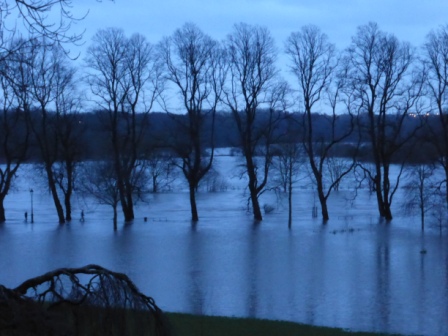
After a month’s heavy rain across northern England, rivers have risen to record levels. Following 100mm of downpour in one night in Lancashire, the river Ribble (from Gallo-Brythonic Riga Belisama ‘Most Shining’ or ‘Most Mighty Queen’) burst her banks at Ribchester and Whalley, forcing people from their homes.

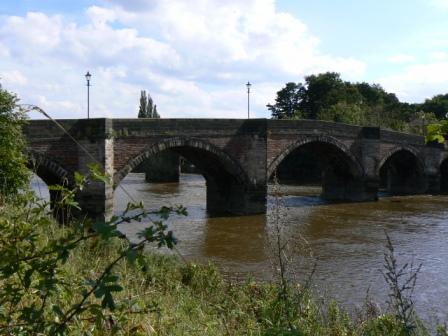
Yesterday the Ribble ran high between Penwortham and Preston swelling under Penwortham Bridge carrying trees, branches, tyres and other debris out to the sea with an urgent roar.

A playground in Middleforth with an overflowing storm drain was underwater.

Several riverside footpaths were submerged.

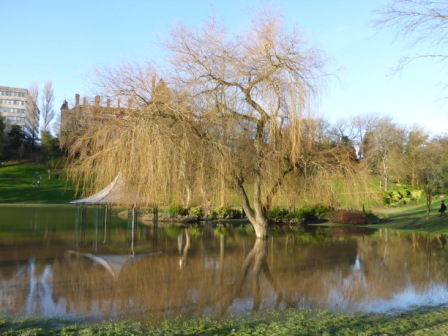
The Ribble had flooded the bottom of Miller Park completely, almost covering the fountain and pagoda.

The Pavillion Cafe was cut off like a stranded lake dwelling.

P1130527

As dusk approached, Victorian lamps illuminated the submerged pathway.

P1130534


Luckily at the most dangerous point: high tide at around 11pm, the Ribble did not break over the flood walls. Avenham and Miller Parks and the flood plains of Central Park managed the rest and no-one was evacuated.

It would have been a very different story if the Riverworks project, which intended to create a barrage on the Ribble and build on its floodplains had gone ahead. We have Jane Brunning and other ‘Save the Ribble‘ campaigners to thank that we have Central Park instead.

This morning, I walked along the old railway track to see Central Park’s flooded fields.

The floods had receded from Avenham and Miller Park and the Ribble sunk back to her normal course.

P1130579

Last night Belisama heard our apologies, songs and prayers. Today she received gratitude and thanks. This was the highest I have ever seen the Ribble rise. It was really quite terrifying and gave me a fuller understanding of why, before flood-walls, our ancestors revered and feared her as a Mighty Queen.

With temperatures increasing ten times faster than in known history and water levels rising globally I fear this will not be the last time the Ribble bursts her banks. It is a clear message everything possible must be done to slow climate change and adjustments must be made to accomodate rising rivers and returning wetlands.

Having Central Park saved us here. My thoughts are with those not so lucky in Ribchester, Whalley and in York from where 2,200 people have been evacuated.

Lund-in-the-mist and Altar to the Mothers

At the beginning of November, I cycled to the church of St John the Evangelist in Lund, which is about six miles outside Preston. Lund means ‘grove’ in Norse and Germanic thus it seems likely the church was built on a pre-Christian sacred site. This is supported by the presence of an altar to the Mothers within the church now used as a baptismal font.

Matronae ‘Matrons’ and Matres ‘Mothers’ were worshipped across Northern Europe from the 1st to 5th C particularly in Germany and Gaul and other places occupied by the Roman army. They are usually depicted in threes, often with fruit, bread, cornucopias and nursing infants.

Worship of the Mothers was widespread in Britain. Whilst some of the Mother Goddesses were clearly brought from over-seas (shown by inscriptions reading ‘To the Mothers from Overseas’ ‘To the German Mother Goddesses’) there is evidence for a Romano-British tradition centring on Matrona ‘the Mother’ and Maponos ‘the Son’ which seems strongest in north-west England and southern Scotland.

Altars and inscriptions to ‘the Mother Goddesses’ and ‘the Mothers the Fates’ have been found at Burgh-by-Sands, Carlise, Old Penrith, Skinburness and Bowness-on-Solway. The worship of Maponos in this area is evidenced by the place-name Lochmaben, the Clochmaben stone and the Locus Maponi.

Matrona and Maponus re-appear in medieval Welsh literature as Modron ‘Mother’ and Mabon ‘Son’. The story of Mabon being stolen from Modron when he is three nights old and rescued from imprisonment in a ‘house of stone’ forms an important part of Culhwch and Olwen.

In The Triads, Modron daughter of Avallach, bears Urien Rheged’s son and daughter, Owain and Morfudd. Urien’s relations with Modron and Owain’s inheritance of Mabon’s divine qualities show his family’s dependence on ancestral deities for the fertility of their land and lineage and success in battle.

Modron’s father, Avallach, is the son of Beli Mawr: one of the oldest ancestral gods of Britain. He is associated with Ynys Avallach ‘The Island of Apples’ or ‘The Island of Avalon’. This is inhabited by nine maidens: Morgan and her sisters. In Welsh and Breton folklore, Morgens are water spirits.

The Mothers are frequently associated with water: in Gaul, Matrona is goddess of the Marne. A reference from 1AD exists to ‘the Island of Sein’ ‘known because of the oracle of a Gaulish God; the priestesses of that divinity are nine in number.’ One wonders whether the god is Dis Pater, from whom the Gauls claim descent.

Avalon is often identified with Glastonbury. Another of Glastonbury’s deities is Gwyn ap Nudd, a King of Annwn who resides over spirits bearing striking similarities to the Gaulish andedion (underworld gods). Both Morgan and Gwyn become known as ‘fairies’ in later literature.

In Peniarth Manuscript 147. the mother of Urien’s children appears as the Washer at the Ford (‘The Ford of Barking’) and introduces herself as ‘daughter to the King of Annwfn’.

A pattern emerges: one, three or nine female figures connected with an underworld god.

Here in Lancashire there are altars to the Matronae and to Maponos (as Apollo-Maponus) in the Roman museum at Ribchester. This is the site of Bremetenacum ‘place by the roaring river’ and is located on a major ford of the Ribble. Ribchester was also likely to have been a centre of worship for the Ribble’s goddess: Belisama ‘Most Shining One’ ‘Most Mighty One’.

During the Romano-British period, the Ribble ran much closer to Lund. This is shown by the nearby place-name Clifton ‘Cliff Town’. St John the Evangelist also stands very close to the Roman road running from Ribchester through Preston to Kirkham and across the Fylde. Because the stone of the altar at Lund is similar to those from Ribchester, it seems possible it was made there and brought on the road. This would mean, like the Ribchester altars, it dates from 2BC.

The altar’s appearance as a font is recorded in a leaflet in the church. In ‘the records of the Parish Vestry’ it says ‘Matt Hall, Churchwarden of Kirkham in 1688 set up a scandalous trough for a font in Lund Chapel…. For this poor Matthew was presented, that is brought before, the bishop of the diocese. History does not record the outcome of the interview, nor for that matter, how he came by the ‘scandalous trough’ in the first place.’ In spite of the ‘scandal’, the ‘trough’ is still used as a font today.

When I set out to St John’s it was originally for a recky so I could get the timing right when I booked an appointment to visit. Therefore it was a pleasant surprise to find the church open (it’s open every day from 10am) and to be greeted by Joan Shepcot, a volunteer gardener and co-ordinator of the Children’s Society, who invited me in to see the altar and let me take as many photographs as I needed.

2. Altar to the Matres, front

As I approached the altar I could see it was beautifully maintained. Three female figures wearing loose dresses or robes stood in the centre. Their hair looked coiffured or perhaps they were wearing headgear. Were they one Mother Goddess in triple-form? Three individual Mothers or the Mothers the Fates?

P1120472 - Copy

On the right and left hand side of the altar female figures were depicted dancing, arms above their heads, feet tapping a beat. They were also clad in loose robes or dresses. Were these the Mother Goddesses dancing? Or perhaps nymphs of the sacred grove? Or devotees? Their swaying stances with arms raised reminded me a little of trees.


Together could they form a sisterhood of nine? Could the ancestral presence of an underworld god be felt in the background?

7. Faith, Hope and Charity

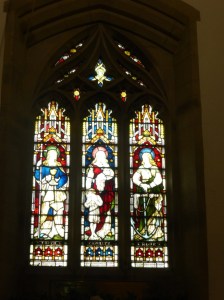
The back of the altar was blank because it once stood against a wall. Behind the altar was a stained glass window depicting Faith, Hope and Charity with the head of an unnamed male figure in blue and gold above. This is interesting because Alex Garman says these ‘three sisters’ show a strong influence of the Matronae. Considering their presence on a font I found myself imagining ‘the Mothers the Fates’ as ‘fairy godmothers’ at baptisms.

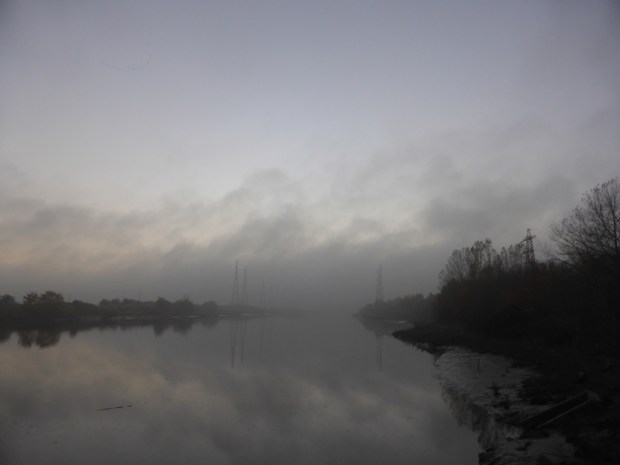
After a chat with Joan about her wildflower patch I cycled to the next point along the Roman road from St John’s: Dowbridge. As I headed back from the bridge over the river Dow, mist descended; cloaking St John’s at Lund, Clifton Cross and Clifton Mill. Rolling over Savick Brook and the Ribble.

In the cold swathes of mist passing over grey waters where time stood still I sensed the passage of underworld spirits. I had, after all, stumbled out on All Soul’s Day.

P1120528

*Many thanks to Joan Shepcot at St John the Evangelist in Lund for permission to use these photographs on my blog.

Enchanting the Shadowlands Book Launch

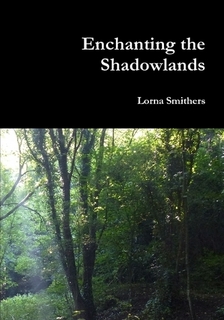
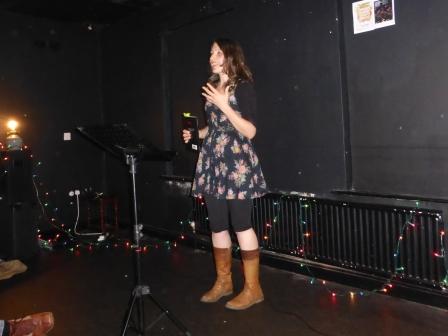
Enchanting the Shadowlands Book CoverOn Wednesday 22nd April I held an evening of poetry, song and story to celebrate the launch of Enchanting the Shadowlands at Korova Arts Cafe in Preston. The night was very special for me because it marked the publication of my first book, the completion of a spiritual journey and brought together friends who have supported me since I took to writing poetry seriously in 2012.

Storyteller Peter Dillon was MC for the night. We opened with a joint performance of ‘The Bull of Conflict’ a glosa recording the moment when my patron god, Gwyn ap Nudd, gave me the imperative of ‘enchanting the shadowlands’.

Vincent Smith’s ‘Woodland Eulogy’ and reflections on early memories of a close friend made a poignant start to the first half. Mike Cracknell brought the house down with his hilarious poem about lovers with nothing in common except filthy habits. Martin Domleo performed poems tying in with my nature themed work including ‘Thor’s Cave’ and the experience of deceleration linking to his passion for motorbikes. Nina GeorgeSinger Nina George was the first headline act. She started with a haunting piece written by a friend. Her second song, she told us, demanded to be sung at the launch! She got everybody joining in with the chorus:

‘She said this is my church here where I stand
With my hands in the earth and my feet on the ground
She said this is my church here where I stand
With my heart in my mouth and my soul in the land.’

Nina finished with a song by Jodi Mitchell. At the end of the first half I performed poems exploring local history written in voices of the ancestors and spirits of the land. These included a reluctant resident of Penwortham Lake Village, a spinner in her cellar, the spirit of the aquifer beneath Castle Hill and Belisama, goddess of the Ribble. During the break we looked out at a pink-purple sunset against fairy-lit trees and the silhouette of St Walburge’s spire. Preston Sunset from KorovaI opened the second half with  ‘Slugless’ which was written when I had a spate of people confessing to me about their slug problems. All but one…. As we often bump into each other walking beside the Ribble, Terry Quinn performed poems about the river, one set at a crucial time when a campaign run successfully by Jane Brunning saved the area that is now Central Park from a huge development scheme. Dorothy mentioned she also had a slug scene in her novel ‘Shouting Back’. Her poems included the memorable ‘City Rats’.

Nina returned to perform a song about reclaiming Druidry and a controversial tongue-in-cheek ditty called ‘The Day the Nazi Died’ by Chumbawamba. Novelist Katharine Ann Angel read excerpts from ‘Being Forgotten’ and ‘The Froggitt Chain’ and spoke of her inspiration from people, particularly working with difficult teenagers.

Nicolas Guy WilliamsThe second headliner was poet Nicolas Guy Williams. He opened with ‘Ancient by thy Winters’ saying he thought it would be suit my launch as it contains howling: ‘Hear them HOWL! HEAR THEM HOWL! Once no forest was defenceless.’ He also performed ‘Woman of the Sap’ and ‘Oh ratchet walk and seek that scent’ one of my personal favourites based on the local legend of the Gabriel Ratchets.

I ended the second half with a piece dedicated to Gwyn on Nos Galan Gaeaf called ‘When You Hunt for Souls in the Winter Rain’ and poems Lorna Enchanting the Shadowlandsrecording a journey to Annwn (the Brythonic Otherworld) with horse and hound to an audience in his hall. As a finale I performed ‘No Rules’ which summarises my philosophy of life:

‘Break every boundary.
There are no rules.
Only truth and promises
Bind us in the boundless infinite.’

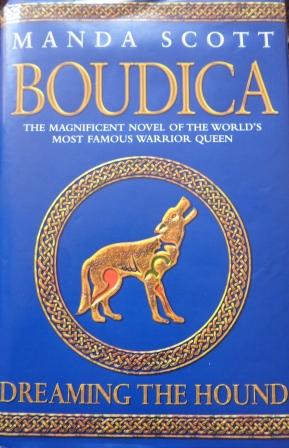
Afterward there was an open-mic where it was great to have Flora Martyr, who is missed as a host of Korova Poetry, back to perform. Following Nina’s protest songs John Dreaming the Hound Winstanley, who is involved with the Wigan Digger’s Festival, sung an old diggers song. I also opened some presents from the generous members of my grove. Nina gave me a bottle of wine (knows me too well!). Phil and Lynda Ryder gave me a book about Boudica, a warrior queen and ruler of the Iceni (horse) tribe, called ‘Dreaming the Hound’ with a wonderful bronze image of a howling hound on the cover.

When we left Korova the crescent moon was high in the sky with a bright and beautiful Venus above the fairy-lit trees. I felt the shadowlands had been enchanted. There is power in a promise… and in the support of friends without whom I wouldn’t have been able to see it through. I’d like end on a note of thanks to Peter as MC, everybody who performed and came to watch and to Sam for providing the venue. Moon, Venus and Fairy Trees

The Old North from Peneverdant

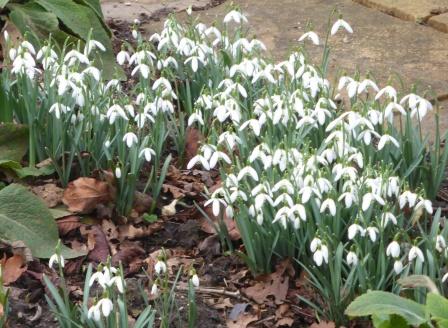
SnowdropsIn the land where I live, spring awakes. Snowdrops in their prime unfold the voluminous skirts of their lanterns. Lords and ladies push their courtship through the soil alongside first signs and scents of ransoms. Swollen mosses take on a bright green living vibrancy.

As I walk the path centuries of ancestors walked to St Mary’s Well, I hear the loudness of a thrush. Could it be the one who calls me from sleep each morning, speckled chest blanched and white as birch amongst ash and sycamore? The trees hold back for now, but I know the sap will start rising soon.

I pass the site of the healing well and cross the road to the War Memorial. Splashes of pink, purple and yellow primroses are planted in beds before the Celtic cross. Etched on blue-grey slabs are the names of seventy-three men who lost their lives in the First World War and forty-six who died in the second. They are honoured and remembered here. I also think of the dead who have no memorial or whose memories have been erased or forgotten.

I follow the footpath uphill onto Church Avenue. Leading to St Mary’s Church, it once went to a Benedictine Priory, dissolved and more recently demolished. A strange road this; trodden by pilgrims in search of miraculous cures and by funeral processions. By soldiers too, maybe armies, defending this crucial position from what we now see as the castle motte.

Passing the church on the hill’s summit I stand in the graveyard amongst tilted and fallen headstones, beneath sentinel beech trees whose shells and bronzed and curling leaves still litter the greening earth.

There’s no access to the motte’s vantage point, but through leafless trees I can make out the city of Preston with its clock tower, steeples, tower blocks and huge manufacturies along Strand Road. I recall images of its panoply of smoking chimneys, flaming windows, imagine the pounding Dickensian melancholy-mad elephants.

Preston’s sleeker now. Cleaner. Less red and black. Concrete grey. Not so smoky. But sometimes the industrial pall still holds. Somewhere behind its walls lies a medieval town and behind that…

The Pennines form a sweeping backdrop, rising higher than Priest Town’s spires ever could; Parlick, Wolf Fell, Longridge Fell, Billinge Hill, Great Hill, Winter Hill. An easterly green and purple barricade. To the west, the river Ribble, Belisama, strapped into her new course, stretches long arms to her shining estuary. A sea gull cries over the horizon and disappears.

I’ve spent several years researching the history of Penwortham. The Riversway Dockfinds mark the existence of a Bronze Age Lake Village. Ballista balls on Castle Hill and a huge industrial site at Walton-le-dale ascertain a Roman presence. Following the breakdown of Roman rule, history grinds to a halt.

There is a black hole in Penwortham’s past the size of the Dark Ages; during the time of the Old North.

Historians have conjectured about this. David Hunt and Alan Crosby agree that place names (where we find a mixture of Brythonic and Old English, like Penwortham* often conjoined) suggest a gradual settlement of the local area by Anglo-Saxons during the seventh century. They say Penwortham’s remoteness on the edges of Northumbria and Mercia meant it was not a major concern. However, this conflicts with the significance of its location as a defensive position for the early Britons and Romans and later probably for the Saxons of Mercia and the key role it played for the Normans during the harrying of the North.

History starts up again with the Saxon hundreds, invasions from Scandinavia and the Norman Conquest. But what happened in between?

Unfortunately, likewise, there is a black hole in the history of the Old North the size of Penwortham. And it isn’t the only one.

The very concept of ‘Yr Hen Ogledd’ ‘the Old North’ is problematic. It is a term used post datum by scholars to identify an area of land covering the majority of northern England and southern Scotland from the time of the breakdown of Roman rule in the fifth century until the Anglian kingdom of Northumbria came to dominate in the eighth century.

During this period, it was simply known as ‘Y Gogledd’ ‘the North’. Its people spoke a Brythonic language known as Cumbric, which was similar to the Cymric language of the Welsh. Its rulers ‘Gwŷr y Gogledd’ ‘the Men of the North’ claimed common descent from either Coel Hen (Old King Coel) or Dyfnawl Hen. Again, the genealogies are problematic because they were created by kings to certify their reign by tracing their lineage back to legendary ancestral figures.

The main kingdoms of the Old North are usually identified as Alt Clud, in the south-west of Scotland, which centred on Dumbarton and later became Strathclyde; Gododdin, in the south-east of Scotland, which had a base at Edinburgh; Elmet, in western Yorkshire and Rheged in north-west England.

The location of Rheged is a matter of ongoing debate. For Ifor Williams it centres on Carlisle and the Eden Valley and covers Cumbria, the Solway Firth and Dumfries and Galloway. John Morris posits the existence of a northern Rheged in Cumbria and a southern Rheged that extended into Lancashire and Cheshire. On the basis of landscape and resources, Mike McCarthy suggests a smaller kingdom or set of sub-kingdoms existed either north or south of the Solway. If McCarthy is correct, we do not have a name for present day Lancashire at all but a black hole the size of a county or larger!

Another problem is that textual sources about the Old North are extremely limited. We have some historical records such as the Annales Cambriae, the Historia Brittonum and Anglo-Saxon Chronicle. Much of the history of this period is derived from the heroic poetry of the Dark Age bards Taliesin and Aneirin. Later saga poetry construes dramatic dialogues between characters associated with earlier events.

Research leads to where history and myth converge but can take us no further. It becomes necessary to step beyond study across the threshold to otherworlds where the past, our ancestors and deities still live.

So I speak my intentions to the spirits of place; the Lady in the Ivy with her glance of green, wood pigeons gathered in the trees, the people buried here in marked and unmarked graves.

I speak with my god, Gwyn ap Nudd, who abides beyond this land but sometimes seems closer than the land itself. The god who initiated and guides this quest.

His suggestion: what is a black hole but a portal?

Our agreement stirs a ghost wind from behind the graves, rustling bronze beech leaves and tree whispers from above.

The hill seems greener. A single white sea gull barks. Then long-tailed tits come chittering and twirling to the brambles.

Beech trees and castle motte*Penwortham first appears in the Domesday Book in 1086 as ‘Peneverdant.’ Writing in 1857 Rev. W. Thornber claims this name is of British origin and ‘formed of three words- pen, werd or werid and want, as Caer werid, the green city (Lancaster) and Derwent, the water, that is the green hill on the water’. This describes exactly how I imagine Castle Hill would have looked during the eleventh century near the Ribble on the marsh. However, ‘verdant’ has always sounded more like French for ‘green’ to me.

Alan Crosby says ‘Peneverdant’ results from a Norman scribe trying to write an unfamiliar word (which was likely to have been in use for up to 500 years) phonetically. He tells us the ‘Pen’ element in Penwortham is British and means ‘prominent headland’ whilst ‘wortham’ is Old English and means ‘settlement on the bend in the river’.

If Penwortham had an older British name prior to Saxon settlement, it is unknown. I can’t help wondering if it would have been something like ‘y pen gwyrdd ar y dŵr,’ which is modern Welsh for ‘the green hill on the water’. It’s not that far from Peneverdant.

The Star-Strewn Pathway

‘Thence rolled down upon him the storm-clouds from the home of the tempest;
thence streamed up the winter sky the flaming banners of the Northern lights;
thence rose through the illimitable darkness on high
the star-strewn pathway of the fairy king.’
-Wirt Sikes

I write this post as a newcomer to the path of the Awenydd, having walked it in earnest little longer than a year and a day. The terms Awen and Awenydd have been familiar since coming to Druidry. In the Awen I found a name for the all-consuming force of inspiration that has burnt forever in my veins with the fire of stars in the iciest reaches of a dark universe. Its furious purpose was revealed by a god after many years of searching.

Restless years. Wilder years. Seeking Blake’s infinite. Throwing my soul into the furthermost abysses of Western European philosophy where reason bites its own tail, curls up and dies and the only way to survive the white hot sun of truth is to burn with and express its creativity.

Trying to find a framework to decipher visions of our native spirit world without knowing if my experiences were ‘real’. Searching Christian mysticism, Graeco-Roman, Saxon and Norse mythologies and finding only analogies. Discovering Britain has its own mythology in The Mabinogion, The Triads of the Island of Britain, The Four Ancient Books of Wales and regional folk and faerie lore.

Finally, Gwyn ap Nudd, my Fairy King finding me and teaching me to walk the Star-Strewn Pathway.

***

The Star-Strewn Pathway begins in one’s local area with the recognition the whole landscape is inspirited. Awen sings from the earth-sun at this world’s core through its molten mantle, sandstone bedrock, layers of clay and harrowed loam. Wonder can be found in backyards of composting earthworms and hatching spiders.

Pathways lead to suburban edgelands. Narrow valleys of trees impossible to build on, brooks shrunken by drainage systems tripping down wooden platforms. Algae-covered stagnant ponds beloved of ducks. Decaying mills pink with Herb Robert housing volleys of pigeons circling above.

These places are inspirited and there are spirits: huge boggarts who once stretched gurgling through mosslands grey and whiskery; undines clasping their last waters; newly planted woodlands arising into forms of consciousness with inherent knowledge of tree, bird and mycelia of mushrooms to the tread of deer.

Inevitably pathways lead abroad. It is necessary to trace local brooks to the river’s crashing heart, find its trickling source and greet rolling tides with the sea at its shining estuary. To meet its Great Goddess who washes her hair by moonlight and stretches watery arms throughout the watershed.

To travel ancient woodlands of oak men, snow-topped mountains of icy blasting and cities of tower blocks, steeples and malls which guard a heritage locked in catacombs and glassy vaults. Every facet of woe and joy, awe and strife, adds to the alchemy of our own sun.

***

In rain or mist, at twilight to the touch of thunder, it is possible to step from known to unknown pathways. Wandering lost in a storm-cloud of emotion I have often found myself on unfamiliar tracks with strange figures, no longer myself. Sometimes it is those dusky shadows who beckon me, footsteps leading into the wildwood’s tangled heart.

In the wildwood all the fay lights are lit by stars. They dance and glimmer, throwing bright shapes and longer shadows across paths which intertwine like roots. These paths have their own lives, untwining and uprooting to walk their own way through the wood. Where the fay strew their lanterns on the ground one might find the Star-Strewn pathway.

There is a long tradition of caves and holes leading to the underworld. Their entryways are utter darkness. Timeless. Illimitable as despair. They lead into a womb of tunnels, the edge of an abyss, to where that age-old creatrix Old Mother Universe gives birth to stars. From thence the Star-Strewn Pathway unfurls through underground heavens.

When the moon is full she lays out her bridge of vibrant stars in the river. The ripples become stepping stones. From the river-moon the Star-Strewn Pathway leads through the catastrophic beauty of falling stars to the star-decked parapets of the Fairy King’s hall.

At his banquet stars burn and freeze. The order of things is undone. In the crux of fairy arts, the Fairy King’s Star Cauldron, the wonder of the universe is reflected and re-made anew.

***

There are other ways to reach Gwyn’s Hall. As many ways as there are souls. Some fly with coveys of hounds or wild geese. Others do not need to fly at all.

This is not the path for everyone. There are many gods, stars and cauldrons.

Any soul flight requires a return to and grounding in the body of this world; dragging backward through hedgerows, screaming and echoing from slanting rock-faces to kiss the earth with bloodied and muddy lips.

Apostasies need voicing in cafes and bars, chain-stores and museums. Launching into the internet’s mirror-void where the dust-mote of a spark of Awen can be multiplied into a million blazing simulacra fading as quickly into black holes.

Following the Star-Strewn Pathway does not lead to catasterism ‘placing amongst the stars,’ but living a full life upon this earth, returning to and from the halls of our deities, knowing only our bones and star-songs will survive for future generations. Until, with our land and gods, we are swallowed by the sun. Perhaps in this manner we will receive our final catasterism.

***

*This article was written for and first published with an introduction by Heron on ‘The Path of the Awenydd‘. This blog aims to explicate and explore this lesser known path. It is also an excellent and growing resource on Bardic, Brythonic and Faerie Lore. Do check it out. Many thanks to Heron for supporting my work.

Ribble Illusions

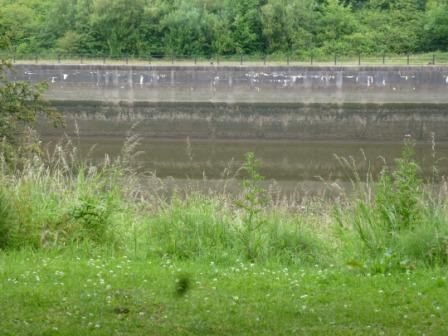
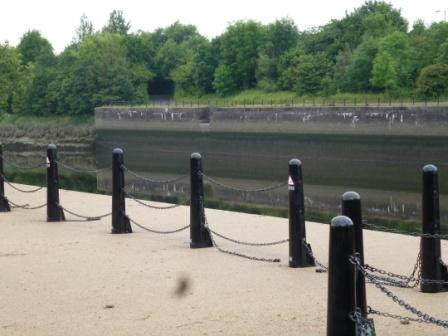
Yesterday I had a most uncanny experience. Approaching the river Ribble from Castle Hill, I found myself facing a long stretch of tide marked wall that gave the appearance it had dropped away into nowhere. I was struck by a sudden sense of vertigo. The Ribble couldn’t have disappeared, as if had fallen into a void, surely?

River RibbleOn closer inspection, seeing the reflections of the grilles and staircases, and catching subtle fluctuations in the surface of the water, I realised this was an illusion created by a combination of its stillness with the markings on the stone.

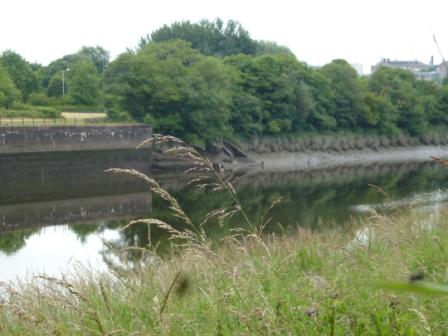
River Ribble, reflection of a grilleRiver Ribble, stairsTo my relief at either end of the concrete barriers, the ‘true’ water level was clear.

River Ribble, water level

River Ribble, water levelDrawn  to stay a while in meditation on the strange appearance and disappearance of the river, which occurred as I shifted my eye-line, I was gifted with the sight of several birds. Common and black headed gulls and terns circled, their darker shadows mirrored in the water. Another bird, which I think may have been a grebe or even a black throated diver flew in. Diving with quick flips of its tail it emerged, for the most part, triumphant with white-silver fish, which after a brief kerfuffle vanished down its throat. Finally, a heron arrived to land majestically on a piece of flotsam.

Heron, river RibbleFor me this goes to show that even where it is channelled, the Ribble is a magical and mind altering place. I give thanks to the river, all its visitors and inhabitants, and its goddess Belisama.

The River Syke

Syke StreetOn a rainy day in the not so-distant future, Tom, a tour-guide in training, decided to visit the city of Preston.

Great intrigue surrounded the town of priests, which had once been the Catholic capital of Lancashire. Every spire and street name told a story, from the cathedral of St Walburge to Friargate, to the catacombs beneath St Peter’s. Each had its relics and dealt in a great number of copies to tempt the less discerning tourist.

However, Tom was not interested in the rise and decline of Christianity. Neither did he care for the oral tales passed on by the city’s people such as the headless black dog that haunted Maudlands, the wicked fairy on the market with his tricksy ointment, or the Bannister Doll.

Tom had been led to Preston by a new myth about the underground river Syke.

This watercourse had run from present day Syke Street, through Winckley Square, parallel with Fishergate then into the Ribble at the New Bridge. At one point there had been fish garths across the Ribble and a boatyard where the two rivers met. In 1812, as industrialisation progressed, the Syke was culverted beneath the town. It had not seen daylight since.

250 years later, as part of a desperate money-making bid, the tourist board decided to open its underground passageway to the public. Above the grate covering the Syke’s mouth they erected a ticket booth, then a flight of stairs leading down to a platform. Over the entrance was placed a flashing neon sign- Enter the mouth of Annwn- the Ancient British Otherworld.

Caroline, Tom’s girlfriend, had been obsessed by stories about Annwn. “It is a beautiful, terrible world,” she had used to tell him, “peopled with fairies and monsters. There are thin places where you can slip over. It is possible to find your ancestors, and the lost ones you once loved. It’s possible to escape again, if you do not fall prey to its seductions.”

Several days ago, Caroline had left on a trip to Preston and had not returned. She was not the only one. Another three people had been reported missing, mysteriously disappearing on the boat ride back to the entrance. These stories were connected with rumours of people hearing strange songs and experiencing visions of ships and fishermen, huge fish, and women with fishtails.

If it hadn’t been for Caroline’s absence, Tom would have thought this was all propaganda. However, his strongest suspicion was these tall tales were a cover for poor management. A fact left untold was that the Ribble is tidal. Should the attraction remain open as the tides washed in, the entrance to the Syke would be blocked and its passageway flooded. Tom suspected these poor souls had drowned, and he was terrified Caroline might have met the same fate.

After paying his admission, Tom entered a sheltered area where he joined two families, three couples and a group of teenage girls who were talking and laughing.

“We need to look out for ghostly fishermen.”

“Mermaids.”

“Mermen, more like.”

“It’s some kind of creature with slimy tentacles that will drag you down through the water and into the Otherworld.”

Once the preceding group had exited they were ushered down to the platform. Standing beside the Ribble’s churning grey, Tom recalled Caroline telling him how every river had its goddess and each stream its nymph. The name of the Ribble’s goddess was Belisama and it was believed she claimed a life every seven years.

“Is everybody ready to enter the mouth of Annwn?” asked the tour guide, an aging man dressed in a wax jacket and waders. His long greying hair hung damp from beneath a fisherman’s hat.

To cries of affirmation he pressed a button, which rolled back the grate. The passageway was illumined by intermittent white lights, which cast an occasional silver sheen on the dark water. One by one they entered the tunnel, walking in a single line, on the river’s left. Enthralled by its impenetrable flow, Tom could not help himself imagining Caroline trapped beneath those waters drowning amongst terrible aquatic creatures who had not seen sunlight for 250 years.

The girls in front of Tom jostled and giggled. “I can see a fish!” “I think it was a mermaid!” As their conjectures became wilder their voices grew more high pitched.

The weight of the walls pressed in and the river’s roaring voice and echo rose to an unsteadying crescendo. By the time they reached the boat, Tom was trembling and disoriented. As he crossed the gangplank onto Syke’s Trawler, it took all his effort to hold his balance. Looking beneath he glimpsed something silver, dark and serpentine, then in a flash of dread saw Caroline’s sunken face staring up at him. The tunnel spun around him.

The next thing he knew, Tom was assailed by the scent of wax and brine. The tour guide was lowering him onto a wooden bench, fastening his seat belt and placing his hands firmly on the rail. “Hold on tight. Keep your eyes well shut and be careful not to listen. You do not want to fall prey to the lures of Annwn.” There was a mocking, knowing look in his grey eyes

He cast off and took the wheel with such exuberance and expertise Tom realised he must have been a true fisherman in his time.

The boat pitched down river. The teenagers screamed.

“Sy-ke!” “Sy-ke!” Tom was almost deafened by the river repeating its name. “Sy-ke!” “Sy-ke!” Or could it be the voice of its goddess?

The limitations of the tunnel shattered to reveal bright sky and a flashing landscape, the grey shapes of yachts and fishermen.

“There are places where you can slip over,” Caroline’s words filled Tom’s mind.

He held tightly to the rail, imagining himself as Odysseus lashed to the mast.

“It is possible to find your loved ones.”

Tom realised Caroline’s voice was not in his mind. She stood on the adjacent vessel beside an older fisherman who shared her dark features. Tom guessed he was her grandfather.

“Caroline!” Tom cried.

“Tom, how I’ve missed you, I knew you would come to find me!” Caroline rushed to the edge of her boat.

“I’ve been worried sick about you,” said Tom. “What happened?”

“Come and join us,” said Caroline. As her boat drifted closer she held out her hand.

Unable to stop himself, Tom let go of the rail and unfastened his seatbelt. Leaning between the swaying boats he took Caroline’s hand and scrambled over. After all those long months they were together again, embracing and kissing. In her arms the rocking deck, perilous river and distinction between the worlds no longer mattered.

A horn blared from Syke’s Trawler.

Caroline pushed Tom away. “The tides are coming in.” The colour left her face and her skin became cold to his touch. With the sweep of a long black and silver fishtail she dove into the water. Tom noticed her grandfather had already disappeared. The boat shuddered beneath his feet then, with a dismal groan, plank by plank began to break apart.

With a thunk something round and orange struck his chest. It was a rubber ring, attached to a rope, attached to the trawler.

“Get in and keep hold,” the tour guide’s voice bellowed, “if you want to return to Preston, that is.”

Struggling against panic, Tom managed to pull the rubber ring on as the deck gave way beneath him and a wave crashed over his head. The cold water stunned him. He struggled and gasped for breath, thrown this way and that between the incoming tide and the river’s force. Hauled back onto the trawler by the tour guide he coughed up salt water before descending into uncontrollable sobs.

By the time his tears had ended, the boat was safely moored on the Ribble’s bank and the rest of the group had gone.

“You love her, but you don’t want to die for her?” the tour guide’s voice was soft in Tom’s ear. His nostrils filled with his briny scent. “I know how you feel, and I may be able to help.”

Tom looked up hopefully, “how?” he rasped.

“It is possible to walk, or sail, between the worlds,” said the old fisherman. “Why don’t you join me, as my trainee, at the helm of Syke’s Trawler? You can learn to serve our goddess. We’re desperately short of tour guides.”

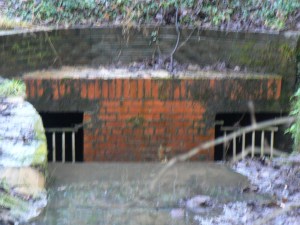
Mouth of the River Syke

The Other Side

Looking beyond the embers of bridges glowing behind us
To a glimpse of how green it was on the other side
Steps taken forwards but sleepwalking back again
Dragged by the force of some inner tide
– Pink Floyd High Hopes

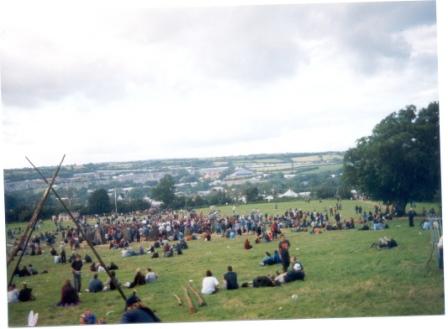
Glastonbury 2000

The world was ours, the moment all that mattered.
Our hopes were high in the mist of dawn.
We flung our friendship over the wildest horizons
riding rainbow lights and drums to distant haunts
that never satisfied the fire in our souls
nor the loneliness that lay its pall between us.
Strung out on stars, burning everything of value
we reached the ravaged borderlands and paused
so far gone even astronomers couldn’t find us.
Looking beyond the embers of bridges glowing behind us

they saw the stone circle and distant Tor,
the penumbra of a festival vanished to the night.
At last we staggered home lost and nearly blind,
dazzled by the sun we couldn’t find to tiny houses
with stiff front doors surrendering hope for certainty.
The return was hard, obeying the constant grind
of re-learning how to put one foot in front
of the other one. Re-mastering the system, unseeing
starry skies. Yet on the odd occasion reality elides
to a glimpse of how green it was on the other side.

I fought onward, eventually alone
as the division bell began to toll, making happy
families with freshly ironed clothes, polished homes
and forced smiles. From a dusty library I looked out
across the hills- a glimpse of green and beacon fire.
My feet trod through cotton grass to broken remains
of tribal ruins drawn by chants on the west wind.
The other side returned to life in the vestibules of trees.
I saw a river goddess wash her hair in the rain.
Steps taken forwards but sleepwalking back again

the fragments stayed broken, my vision incomplete.
Stunned by the Tor redrawing itself on the backdrop
of my mind I relit the embers on the Ribble’s bank
and recalled the last hint of paradise before everything
went black and time took our dreams away. Guided
by the voice of an otherworldy king I reclaimed my pride
at the Tor’s white spring. Time performed its circle,
gave back my starlit dream. The world is mine again.
To the other side and spiralling back I ride
dragged by the force of some inner tide.

Glastonbury Tor 2013

The Colloquium of the Brooks

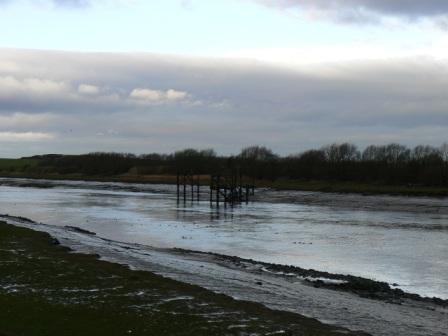
Ribble close to Mill Brook


On the silted shore of the Ribble
Where the gulls dip and call
The river banks her vista
And the tides ebb and flow
In unending expeditions
From the land to the sea
The brooks broach their quantas
And descry their misery.

Fish House Brook:
How long now?

Penwortham Brook:
Patience little sister, can’t you see the times are changing?

Fish House Brook:
I’m barely in a position to perceive change
Caught in the constrictions of the concrete culverts
Cut by the man-made channels, blinkered in blind
Alley-ways, forced through dire traps and grilles,
Stumbling in terror via that jail house prison
Cruelly manufactured for me below Hill Road South.

Mill Brook:
If you would look beyond those despotic fixities you would see
The dark pall of the industrial era has lifted, your brother
And I are freed from servitude, our water running clearer by the day.

Fish House Brook:
And you see this as consolation?
Do you not remember when the magnitude of our flow
Turned water wheels, had the force to overturn wagons
And shifted the lay of the land to sculpt our valleys?

Mighty Belisama, you must recall our glory days
Before they shifted your course from Watery Lane to Castle Hill,
Deformed our travails, forever destabilised our tables?

Belisama:
Quarrelsome brooks, stare firmly at the quintessence
Of your course and see all that remains constant is change.
Since the ice lords rode our backs, pitched us deeper
Into the frozen earth, and through the aeons before
Our wills and paths have never been wholly our own.

Fish House Brook:
That the principalities of nature shape us I do not disclaim.
But these men… with their yellow jackets
And heaving ploughs, excavators and cranes,
Winding cords, caterpillar rolls, drop down drains,
Their discernment as dense as a builder’s helmet,
Vision blank as a steel lid, they are numb as their machines.

Penwortham Brook:
Not like the orphans who worked my looms.
I remember their knocked legs stumbling to my bank,
How they stared into the rainbow of my polluted depths.
With wide white eyes they contemplated their horror in me,
Knowing not what they were or what I could be.

Fish House Brook:
At least then we were seen. Now the people stagger
By blind as drunks, ditching debris on our banks.

Mill Brook:
Humans… still given wholly to gods
They cannot see. Servile seeking invisible wealth
Not even gleaming gold. Their only idols strip plastic
Features on the screens, flip in pixels to wide dumb grins.

Fish House Brook:
The vapid screens suck out their lives.
They are not aware of, nor do they understand their sacrifice.
Whilst trapped within their drains we wither up and die.

Penwortham Brook:
Belisama, tell her that isn’t true.

Belisama:
How many years have men visited our banks?

Fish House Brook:
Well, I remember when we were treated with reverence.
Do you recall the long days spent by smiths at the forge,
The bold shatter of sparks, the bright ring of the hammer,
The beauty of gifts delivered in resonant ceremonies,
Swords, axes, heads crafted from stone and those of enemies
Whilst now all they drop in is litter and fag ends.

Penwortham Brook:
It was when the factories rose that the human race
Became effulgence and we it’s dumping ground.

Fish House Brook:
Now red fades to grey and the system is dying.
Their wonders drop, one by one, like falling dolls.
They roam the streets, jobless and desolate.
There is no hope in their eyes.
They have no strength left.

Belisama:
Bearers of the brooks, steerers of the streams,
Deliverers of my bright waters. Do not dismay!
Like the course of a river, times will change
We are bound into a whole with sea and rain.
With he who brings the tides come the waves.
I still commune with the lords of the glaciers
And they say we have not got long to wait.

Fish House Brook

Belisama: Goddess of the Ribble

Belisama is the goddess of the river Ribble, which runs from Ribble Head in North Yorkshire, through Ribblesdale, Central Lancashire and out to the Irish Sea. Her name is known from Ptolemy’s Geography 2AD, where at co-ordinates corresponding to the Ribble’s estuary he places ‘Belisama aest[1]’. Inscriptions to Belisama have also been found in Vaison-la-Romaine in Provence and Saint-Lizier, in the Pyrenees[2].

Her name has received a number of interpretations. Nick Ford translates ‘Rigabelisama (Riga-, a queen, and Belisama)’ as ‘Most Shining One’ making her the ‘Most Shining Queen’ or ‘Most Mighty Queen’[3]. Seeing the dazzling beauty of the Ribble illumined by sunlight or moonlight confirms the legitimacy of this epithet to me. However Delamarre claims the translation of bhel as ‘white or brilliant’ is based on a false interpretation of Belinus’ identification with Apollo. Belinus is ‘the Powerful One’ and Belisama is the ‘Most Powerful One’[4]. Watching the Ribble after heavy rain, particularly at high tide conveys a sense of her power, as does observing the landscapes she has shaped.

The town of Ribchester has a close connection with the Ribble. It’s native name Bremetonacon means ‘place by the roaring river[5].’ In Saint-Lizier Belisama is identified with the Roman goddess Minerva. A bust of Minerva was found at Ribchester and it was once largely accepted the town had a temple to Minerva-Belisama[6]. Whilst it would make sense that a place of worship dedicated to Belisama was located in the heart of the Ribble Valley beside the roaring ford this is based on a mistranslated inscription[7]. To whom the temple was dedicated is unknown. As a large part has been washed away by the Ribble it might be assumed either that it didn’t belong to Belisama or she didn’t want one.

A question I’ve pondered is how much to read into Belisama’s possible identification with Minerva at Ribchester- when the Romans built the fort in 70AD they were polytheists, and their experiences of Belisama may have led to this equation. Minerva is a goddess of wisdom, crafts and healing. From the Norman period (and indubitably before), until the end of the 18th century the Ribble was renown for being rich in salmon, the quintessential fish of wisdom, with the most important of the fish garths being located at Fish House Bridge in Penwortham[8]. Another possible reason for this identification is that wisdom can be gained from watching and listening to the flow of the Ribble in different spots. One of the lessons I’ve learnt from Belisama is dynamism and change; due to a combination of the tides, rain fall and the position of the sun or moon her waters never look the same in any place.

In terms of crafts, Belisama has inspired a good deal of creative writing from the poems of Richard Dugdale (the Bard of Ribblesdale 1849), James Flockhart’s ‘The River’ (1854), Gerard Manley Hopkins’ ‘Ribblesdale’ (1876) and John Heath-Stubb’s ‘The Green Man’s Last will and Testament’ – ‘the cruel nymphs / Of the northern streams, Peg Towler of the Tees / And Jenny Greenteeth of the Ribble, / Sisters of Belisama, the very fair one’ (1973)[9]. Jane Brunning, a Penwortham based author blogging as Reigh Belisama runs a site called ‘Save the Ribble,’ which played a leading role in preventing the river barrage at Brockholes and continues to oppose fracking on the Ribble Estuary[10].

Belisama’s influence on the cotton industry can be recalled by the number of old mills on her tributaries. Without Riversway Dockland, which was created by moving the Ribble from Strand Road to her present course beside Castle Hill, Preston could not have played its huge role in the industrial revolution. Whilst I’m unaware of any associations linking Belisama with physical healing, spending time beside the Ribble usually has a calming, cleansing effect on me.

Moving from Belisama to the Ribble, the first mention of the change of name is in ‘the Latin Life of St Wilfrid’ (patron saint of Preston) where ‘lands identified as ‘round Ribble’ (iuxta Rippel), Yeadon, Dent and Catlow’ are granted by the English ruler to ‘the community at Ripon’[11]. The Saxon Ripel was taken by Ekwall to mean ‘tearing, reaping’ making the Ribble ‘the tearing one’[12] relating Belisama’s qualities of power and might. Andrew Breeze suggests that Ribble may derive from the Welsh rhybwyll, which combined with the prefix ri could mean very great wisdom[13]. The name change and it’s interpretations demonstrate the qualities of flux and continuity innate to Belisama.

For me in present day Penwortham, (which without Belisama, in its current form would not exist), Belisama and her tributaries continue to shape the valleys and plains, as well as the lives of the wildlife and people who inhabit them. Belisama’s power and wisdom shine throughout her ever changing course and in those by which it is transmitted, whether by the spoken or written word, craftsmanship, or in the actions of those who stand against her exploitation and pollution.


[1] http://www.roman-britain.org/ptolemys-geography.htm
[2] Whilst this might be seen to indicate the presence of a goddess worshipped across Britain and Gaul, Nick Ford reminds us ‘most, if not all, the names of Celtic divinities seem to be descriptive epithets rather than real names.’ Nick Ford ‘Ribchester (Bremetenacum Veteranorum): Place of the Roaring Water’ Lancashire’s Sacred Landscape, ed. Linda Sever, 2010, p82.
[3] Ibid.
[4] http://theses.univ-lyon2.fr/documents/getpart.php?id=lyon2.2009.beck_n&part=159190
[5] Nick Ford ‘Ribchester (Bremetenacum Veteranorum): Place of the Roaring Water,’ Lancashire’s Sacred Landscape, ed. Linda Sever, The History Press, 2010, p82
[6] Malcolm Greenhalgh, Ribble River and Valley: A Local and Natural History, Carnegie Book Production, 2009, p83.
[7] ‘commander of the unit and region’ was mistranslated as ‘to the very mighty numen and queen’ Nick Ford ‘Ribchester (Bremetenacum Veteranorum): Place of the Roaring Water,’ Lancashire’s Sacred Landscape, ed. Linda Sever, The History Press, 2010, p82
[8] Alan Crosby, Penwortham in the Past, Carnegie Press, 1988, p48
[9] John Heath-Stubbs ‘The Green Man’s Last Will and Testament,’ Earth Shattering: Eco-Poems, ed. Neil Astley, Bloodaxe Books, 2007.
[10] http://save-the-ribble.blogspot.co.uk/
[11] Andrew Breeze, ‘Communications Yrechwydd and the River Ribble,’ Northern History, XLVII; 2, September 2010, p324.
[12] Ibid. p324
[13] Ibid. p326.