Autism and Coping with Overload

Introduction

Over the past few years, since my late diagnosis of autism in 2021, I have been researching its affects on the brain, body and nervous system in order to gain a deeper understanding of the ways being autistic has impacted my life. 

Looking back it has brought many benefits such as being incredibly focused on my special interests, creativity, intuition and the ability to think outside the box. However it has also has its costs. My struggles with sensory and information overload have made it impossible to hold a regular job and being unable to handle publicity played a role in my failing to make a living from my writing.

This led me to seeing myself as a failure and not understanding why. My autism diagnosis coupled with more recent learnings has revealed the reasons I find everyday life overwhelming and helped me develop better coping strategies. I’m sharing my insights here in the hope they will help others.

What is autism?

The term ‘autism’ was coined by psychiatrist Eugen Bleuler in 1911. It is composed of the Greek autós ‘self’ and ism ‘a doctrine or theory’ and was used ‘to describe a schizophrenic patient who had withdrawn into his own world.’ (1)

It was first used as a diagnostic category in 1943 in a paper by a physician called Leo Kanner in a paper titled ‘Autistic Disturbances of Affective Contact.’ Here he speaks of eleven children with shared symptoms –  ‘the need for solitude; the need for sameness. To be alone in a world that never varied.’ (2)

The Diagnostic and Statistic Manual of Mental Disorders 5 uses two criteria  to diagnose autism – ‘Persistent deficits in social communication and social interaction’ and ‘restricted, repetitive patterns of behavior, interests, or activities.’ (3)

Part One: The Causes of Overload

Autism and Neurodevelopmental Differences in the Brain

Autism is a neurodevelopmental disability that has its basis in differences in the brain that began developing in utero. In The Autistic Brain autistic authorTemple Grandin speaks of some of the ‘anomalous growth patterns’ that she has discovered in her brain through neuro-imaging and how these relate to her life experiences. She tells us that her ‘cerebellum is 20 percent smaller than the norm’ explaining her lack of balace and motor coordination. (4) Her left ventricle is 57 per cent longer than her right extending into her parietal cortex – a disturbance which she associates with her poor working memory and lack of maths skills. Having more connections between her inferior fronto-occipital fasciculus (IFOF) and inferior longitudinal fasciculus (ILF) explains her excellent visual memory.

Most interestingly for me she notes: ‘My amygdalae are larger than normal. The mean size of the three control subjects’ amygdalae was 1,498 cubic millimeters. My left amygdala is 1,719 cubic millimeters, and my right is larger still — 1,829 cubic millimeters, or 22 percent greater than the norm. And since the amygdala is important for processing fear and other emotions, this large size might explain my lifelong anxiety… Enlarged amygdalae are also often seen in people with autism. Because the amygdala houses so many emotional functions, an autistic can feel as if he or she is one big exposed nerve.’ (5) 

I found this incredibly relatable as my sensory sensitivities and emotional responses to them have often made me feel like ‘one big exposed nerve’ too. Likewise my fear of being overwhelmed by sensations and emotions and having shutdowns and meltdowns has resulted in struggles with anxiety. These insights inspired me to learn more about the amygdala and its function.

The Amygdala and Emotional Responses

An excellent description of how sensory experience is processed and delivered to the amygdala and how this brings about an emotional response is provided by Bessel van der Kolk in The Body Keeps the Score. 

‘Sensory informationabout the outside world arrives through our eyes, nose, ears, and skin. These sensations converge in the thalamus, an area inside the limbic system that acts as the “cook” within the brain. The thalamus stirs all the input from our perceptions into a fully blended autobiographical soup, an integrated, coherent experience… The sensations are then passed on in two directions—down to the amygdala, two small almond-shaped structures that lie deeper in the limbic, unconscious brain, and up to the frontal lobes, where they reach our conscious awareness… The central function of the amygdala, which I call the brain’s smoke detector, is to identify whether incoming input is relevant for our survival… If the amygdala senses a threat… it sends an instant message down to the hypothalamus and the brain stem, recruiting the stress-hormone system and the autonomic nervous system (ANS) to orchestrate a whole-body response. Because the amygdala processes the information it receives from the thalamus faster than the frontal lobes do, it decides whether incoming information is a threat to our survival even before we are consciously aware of the danger. By the time we realize what is happening, our body may already be on the move.’ (6)

Van der Kolk not only describes brilliantly how the amygdala brings about our emotional responses but explains why we respond to situations which are threatening or overwhelming with extreme reactions such as outbursts of anger, panic attacks and in the case of autistic people meltdowns and shutdowns before the conscious mind comes on board. 

Intense World Syndrome

Van der Kolk links his insights into the amygdala to responses to trauma and in particular to PTSD. These connections also seem valid for autistic people for whom living in a world of sensory and information overload can be traumatic.

This is described in the ‘Intense World’ paper, published in 2007, as ‘intense world syndrome’. The authors say ‘excessive neuronal processing may render the world painfully intense’ resulting in autistics retreating ‘into a small repertoire of secure behavioral routines that are obsessively repeated.’ ‘Impaired social interactions and withdrawal may not be the result of a lack of compassion, incapability to put oneself into someone else’s position or lack of emotionality, but quite to the contrary a result of an intensely if not painfully aversively perceived environment.’ (7) For an autistic person sensory overload is traumatic and leads to them withdrawing from the world.

Sensory Gating Deficits

Another factor relating to overload in autistic people is differences in sensory gating. In Plant Intelligence and the Imaginal Realm Stephen Buhner describes ‘sensory gating channels… as tiny apertures or gates or doors in specific sections of the nervous system’s neural network… like a series of locks on the river of incoming sensory flows.’ (8) He speaks of how, as we grow up, these channels, for most people, narrow and close. Those with ‘gating deficits’ (such as autistics) remain open and they are more likely to suffer from sensory overload which can lead to ‘a breakdown in cognitive integrity.’ (9) 

Part Two: Coping with Overload

Self-Awareness and Befriending Inner Experience

In The Body Keeps the Score van der Kolk describes methods of coping with trauma that can also be harnessed by autistics to help cope with extreme emotional responses to sensory overload. Fundamental is restoring the balance between the rational and emotional brains, the pre-frontal cortex ‘the watch tower’ and the amygdala ‘the smoke detector’ or ‘alarm system.’

He says: ‘the only way we can consciously access the emotional brain is through self-awareness, i.e. by activating the medial prefrontal cortex, the part of the brain that notices what is going on inside us and thus allows us to feel what we’re feeling… and learning to befriend what is going inside ourselves.’ (10)

He tells us that ‘those who cannot comfortably notice what is going on inside become vulnerable to respond to any sensory shift either by shutting down or by going into a panic—they develop a fear of fear itself… The price for ignoring or distorting the body’s messages is being unable to detect what is truly dangerous or harmful for you and, just as bad, what is safe or nourishing. Self-regulation depends on having a friendly relationship with your body. Without it you have to rely on external regulation—from medication, drugs like alcohol, constant reassurance…’ (11)

Van der Kolk here describes my personal experiences perfectly. For most of my life I’ve been alienated from my body and the confusion of sensations and emotions that it throws at me and I’ve always felt out of control. Due to not being self-aware I have struggled in social situations with family, friends and work colleagues due to not being able to read people or control my reactions. I’ve been subject to outbursts of anger and panic attacks and depended on alcohol to tolerate socialising and to down-regulate afterwards. 

Becoming more self-aware and befriending my inner experiences has led to a more conscious and caring attitude towards my body and to feeling more in control.

Movement and Meditation as Medicine

Van der Kolk tell us: ‘If you want to manage your emotions better, your brain gives you two options: You can learn to regulate them from the top down or from the bottom up… Top-down regulation involves strengthening the capacity of the watchtower to monitor your body’s sensations. Mindfulness meditation and yoga can help with this. Bottom-up regulation involves recalibrating the autonomic nervous system. We can access the ANS through breath, movement, or touch.’ (12)

He says: ‘In contrast to the Western reliance on drugs and verbal therapies, other traditions from around the world rely on mindfulness, movement, rhythms, and action. Yoga in India, tai chi and qigong in China, and rhythmical drumming throughout Africa are just a few examples. The cultures of Japan and the Korean peninsula have spawned martial arts, which focus on the cultivation of purposeful movement and being centered in the present… These techniques all involve physical movement, breathing, and meditation.’ (13)

Van Der Kolk’s words really resonated with me because I have have been led my a combination of guidance and intuition to these practices. When I was diagnosed with anxiety in 2004 I was put on Venlafaxine and advised to take up exercise. I started going to the gym and learning a martial art – Taekwondo. Both forms of movement have helped me to regulate my stress levels. 

Since then physical exercise has been a massive help in self-regulating. I’ve been through periods of long-distance walking and running, practicing martial arts, cycling and my current passion is strength training.

Meditation is something I’ve found much harder. As someone who is incredibly imaginative and has a busy mind I’ve always been good at visualisation meditations but meditation in the more traditional sense of focusing on one thing or simply witnessing thoughts has been more difficult. 

I dismissed these practices as ‘Eastern’ and ‘not for the Western mind’ until I started practicing yoga in 2023 as a result of a sports injury and advice from my PT. One of my teachers, Bre, of Breathe and Flow, said if we find something difficult it’s often the thing we need most. So it was with yogic meditation.

As I have persevered I have found that focused meditation helps slow down my thoughts and calm my mind and training my witness helps prevent me from become so caught up in overwhelming sensations and emotions.

Disovering that by changing our breathing patterns through breathwork I can also change my emotions and my thoughts has been a life-changer.

Rhythmic drumming has also been helpful. As someone who has been practicing shamanism for many years being able to use various drumbeats such as the journeybeat to shift into trance and a slow heartbeat to calm my nervous system have helped me to cope with being overwhelmed.

Moving Up and Down the Polyvagal Ladder

Another discovery that has changed my life is learning about polyvagal theory. I first came across this on a Radical Embodiment course with my supervisor Jayne Johnson and Alex Walker. Introduced by Stephen Porges in 2004 it posits three states of the nervous system – social engagement (ventral vagal), flight or fight (sympathetic) and freeze (dorsal vagal). 

Coming to understand and be aware of these states has aided me to become able to move through them. When I feel anxiety and a shift towards flight or fight checking in with my nervous system to see what it needs to feel safe. When I feel myself getting burnt out and moving towards shutdown / freeze cutting down on social activities and taking time alone to rejuvenate.

Mastering the Gates

Buhnen mentions that having open sensory gating is not always a bad thing. In face ‘gating remains very open, especially among young children, artists, schizophrenics and specialists of the sacred such as shamans and Buddhist masters, and those ingesting psychotropics.’ (14) ‘In cultures that recognize the importance of this capacity, this group of people are trained to use their enhanced perceptual capacities for the benefit of the group.’ (15)

He speaks of how we can intentionally shift gating by ‘1) having a task that demands a greater focus on incoming sensory data flows, or 2) regenerating a state similar to that which occurred during the first few years of life, or 3) by altering the nature of the gating channels themselves by shifting consciousness.’ (16)

Focusing on a single task, whether it’s writing a poem or article, gardening, or lifting weights, has always been a great way of staying present and not getting overwhelmed by troubling sensations and emotions. Over the years training in both shamanism and meditation has enabled me to get better at recognising and shifting between states of consciousness. 

A yogic practice that I began learning in August last year on a course in meditation with the Mandala Yoga Ashram has been particularly helpful. This is Antar Mouna ‘Inner Silence’. In the first stage you focus on sensations – sound, touch, inner sight, taste and smell. You practice focusing on, for example, louder sounds, softer sounds, all the sounds, then shifting to touch, then all the sensations at once so you’re in a sea of sensations. Fundamental is not attaching any place or meaning to the sensations but simply experiencing them as they arise in themselves. I believe this to be a form of mastering sensory gating. It has been very useful in helping me to shift my attention away from and be less bothered by noise from my neighbours.

Slowing the World Down

So far I’ve mentioned things autistic people can do to cope with overload. It would also be of benefit if the world was a less overwhelming place. Grandin cites autistic author Donna Williams: ‘the constant change of most things never seemed to give me any chance to prepare myself for them… Stop the world, I want to get off…  stop the world, at least slow it down… The stress of trying to catch up and keep up… often became too much and I found myself trying to slow everything down and take some time out.’ (17)

Like Williams I’ve also found it difficult to keep up, in the workplace, in the blogosphere, on social media with quicker and quicker platforms appearing. As the world is not slowing down I’ve been left with no choice but to get off. I’ve abandoned hope of regular work, left social media, and cut down from reading around 50 different blogs and websites to a small select few.

Monasticism – Embracing Withdrawal

When Bleuler defined autism he depicted withdrawal into oneself as a disorder. Withdrawal is often associated with mental health issues and withdrawn persons are invariably encouraged to ‘come out of themselves’.

In contrast to this, within monastic traditions, withdrawal from the world is advocated as a positive movement and a necessary condition of attaining greater self-knowledge and knowledge of the Gods and of the universe.

For me being able to withdraw, having a safe home, a room I have made into a sanctuary, being able to spend time in prayer and meditation with my Gods and guides is essential for enabling me to go out into the world and do the shamanic work in person and online I eventually hope to make a living from.

I believe the world would be a better place if there were more quiet spaces, more sanctuaries, more monasteries to provide the opportunity for withdrawal. If withdrawal was embraced and not pathologised.

Shamanic and meditative techniques are time-tested methods of dealing with overload and trauma and it is in helping others to practice them and providing safe spaces to do so that is where my current passion lies as a nun of Annwn.

Footnotes

(1) https://www.news-medical.net/health/Autism-History
(2) Grandin, Temple; Panek, Richard, The Autistic Brain, (Ebury Publishing, 2014), p12
(3) Ibid., p121
(4) Ibid., p36
(5) Ibid., p41 – 42
(6) Kolk, Bessel van der. The Body Keeps the Score, (Penguin Books, 2014), p60 – 61
(7) Grandin, Temple; Panek, Richard, The Autistic Brain, (Ebury Publishing, 2014), p97 – 100
(8) Buhner, Stephen Harrod. Plant Intelligence and the Imaginal Realm, (Inner Traditions, 2014) p31-33
(9) Ibid. p 33
(10) Kolk, Bessel van der. The Body Keeps the Score, (Penguin Books, 2014), p206
(11) Ibid, p97
(12) Ibid., p63-64
(13) Ibid., p207-208
(14) Buhner, Stephen Harrod. Plant Intelligence and the Imaginal Realm, (Inner Traditions, 2014), p48
(15) Ibid. p43
(16) Ibid. p59
(17) Grandin, Temple; Panek, Richard, The Autistic Brain, (Ebury Publishing, 2014), p98

A Timely Dissolution

Hoof falls. The hunt rides. Trampling the falling leaves.

It’s a time of letting go. Of dissolution. Of the banishing of illusions. Of the seeing of the hidden truths that have been haunting the shadow edges of vision.

It hits me like a blow to the chest. Like I’ve been knocked down by a charging horse although I should have seen it coming long ago. Read it from what people have been telling me and moreover from their silence.

My devotional book for Gwyn isn’t meant to be a fantasy style novel. I’ve been reading too much fantasy. I got out of touch. Carried away by the old ambition to be a fantasy writer I long ago promised to give up. 

Understandable perhaps. When I failed to succeed in a career in the environmental sector and realised by autisism places me in a position in which I’m too neurodivergent to cope in above base level jobs but not disabled enough to claim benefits it left me in a very dark and desolate place.

I turned to dark fantasy as the stories of dark and broken characters battling alone in dystopian worlds resonated with me and made me feel less alone. 

I think a lot of this, along with my own feelings of despair, got reflected back into the story I was inspired to write for Gwyn. Getting torn from the womb at birth when His Dragon Mother was slaughtered during the Battle of the Dragons. Being flung into the Abyss. Crawling out. With the guidance of the ghost of His Dragon Mother building His kingdom from the bones of dead dragons and the light of dead stars. Mastering the art of turning sorrow into joy.

Writing this story was deeply meaningful for me and a gift from Gwyn. Quite a lot of the other material I wrote in an effort to combine it with a creation myth featuring the Children of Don and to wed the story of Gwyn, Gwythyr and Creiddylad with some of the material in the Four Branches of The Mabinogion never really worked.

Also, the process of writing a novel, long hours at my laptop, hasn’t been good for me. It makes my eyes go squiffy. I grind my teeth. I twitch. 

I still intend to create a devotional book for Gwyn. I promised Him. I owe it to my patrons. But it isn’t going to be a fantasy style novel. I’m not sure what it is going to be yet but what He and my spirits and my body and soul are guiding me towards are creating it not on the laptop but to allowing it to come through in journeys, meditations, hand writing and drawing. To going back to more traditional forms of creativity that were practiced by awenyddion and monastics and moving away from the screen.

This has come at a time when I’ve also realised I’m living too much of my life online. I deeply value and appreciate the support of my patrons and my online community at the Monastery of Annwn and membership of the Way of the Buzzard Mystery School which are real lifelines. But I’ve come to realise they’re not a substitute for physical community and a physical role in the world. 

What this might look like for me in terms of something that fits with my vocation and with the limits of my autism and social anxiety I don’t know yet.

But this dissolution feels timely as Gwyn’s hunt tramples the fallen leaves, rides down the old, the decayed, the dying, makes way for something new.

The Distant Island and Coming Home

A week ago a journey undertaken for me by my spiritual mentor, Jayne Johnson, led me to meditating on a distant island within a ruined clochán. To a vision of a ‘last nun’ bricked up within a corbel stone hut with the birds of the sea and an eagle, a raven, and an owl bringing her food and stories. Alone, but for the crashing of the tides, of the calling of the gulls. Her own breath.

The next time I set out to meditate on this island I found a part of myself resisting and instead wanting to root into my home, my garden, specifically to go to our raspberry patch, to taste a raspberry, to watch the insects. 

Then, the next time I tried to depart, I was posed the question of whether I could physically give up my home, my possessions, my comforts – regular meals, my running, my gym, to exist on gifts of food and stories in that far off place.

My answer was ‘no’ and as I spoke it I felt that place being shut off for me. A crash of thunder. A dark veil coming down. Access forbidden. My connection gone.

It left me feeling inferior to those who were able to make those sacrifices. To those proper monks and nuns. Then I heard another voice telling me it’s ok to ‘come home’ and recognised it as belonging to Old Mother Universe, Ceridwen.

There is a longstanding traditon of going far away, doing extreme things, to have spiritual experiences. The Desert Fathers. The peregrini. The anchoresses who bricked themselves up. Those who go to Peru to take ayahuasca or take to the Welsh mountains or Devonian moors for wilderness fasts.

It’s not something I’ve felt the need to do or feel that it would be psychologically safe for me to do as an autistic person prone to anxiety attacks and melt downs who already exists too close to the edge of madness. 

A little like Alice I’m able to imagine a thousand impossible things before breakfast. My challenge has not been accessing non-ordinary experiences but discerning what comes from my own mind and what comes from the Gods. 

For that I need to be rooted in the land where I live, in my routine of devotional practices to my Gods, my creativity, regular meals, exercise. 

I find when I break with this I don’t get divine madness – just insanity. 

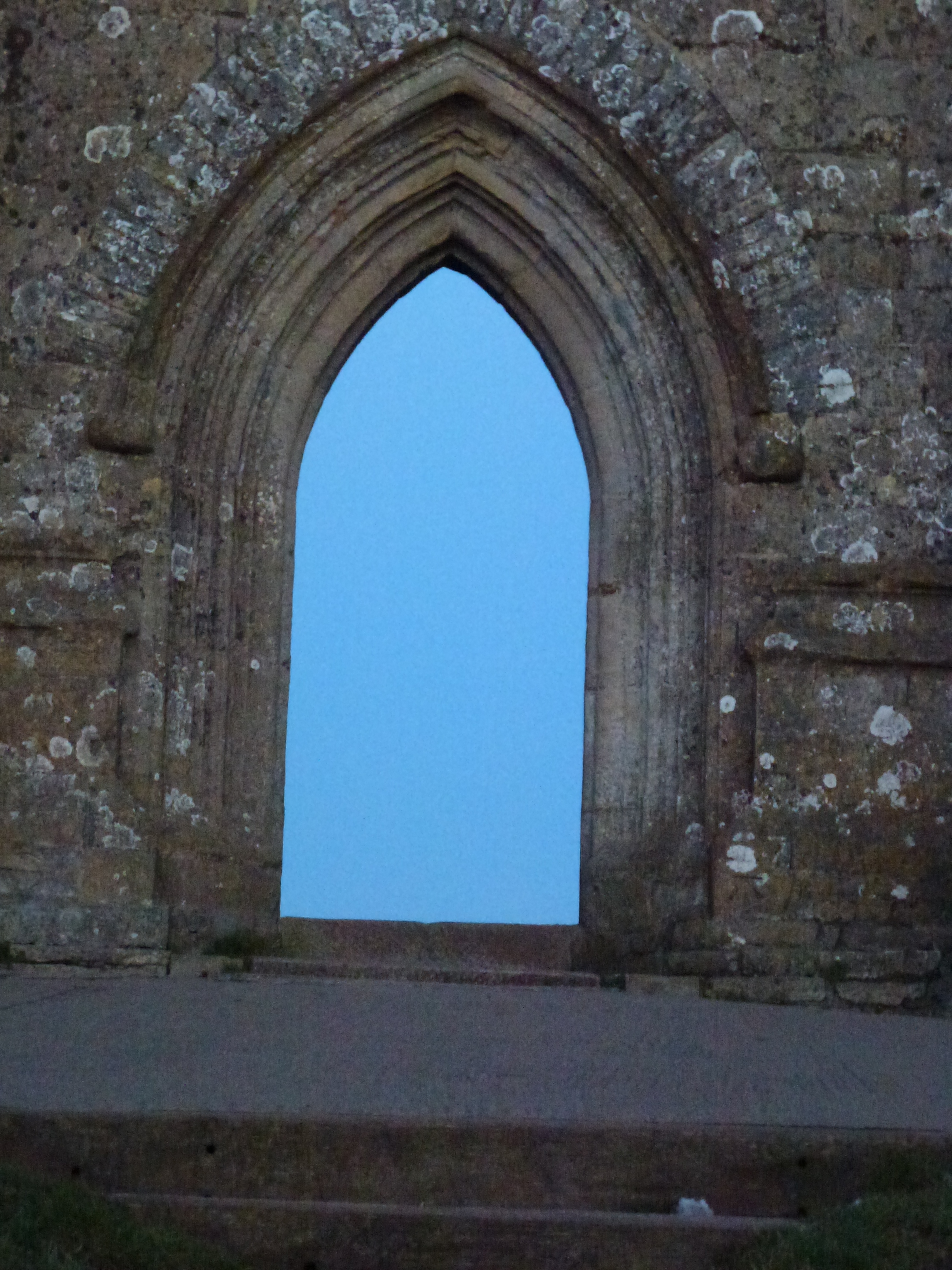
Prior to covid I did travel a little mainly to visit sites in the Welsh myths or places associated with my patron God, Gwyn, such as Glastonbury Tor and Cadair Idris. This resulted in some insights and inspiration but 99% of my awen comes from having a regular prayer, meditation and journeywork practice and from simply slogging away at my keyboard in an old fashioned writerly way.

A good many of my answers to prayers and the visionary nuggets at the core of my best poems and stories and the novels I am working on have come when I’m out running or walking locally or in the early hours in bed at home. 

For me becoming a nun of Annwn has been a homecoming not a going away.

Home from conservation and ecology work that took place on a combination of local nature reserves, wastewater treatment works and residential properties but also took me as far away as Manchester, Cheshire, and the Wirral.

Home to my room, my monastic cell, in the house I live in with my parents, which I have only moved away from twice since we moved there when I was four.

Home to our garden where I tend and grow wild and cultivated plants and herbs.

Home to my body and to learning about what with proper nourishment it can do. How far it can run, what weights it can lift, what shapes it can bend into.

Home to a life of devotional creativity centred on my relationship with Gwyn.

There’s a place for going away but also a greater need for coming home. For accepting ourselves as ourselves, for knowing not only our extremes but our limits.

Harvesting the Fruits of Solitude

I. The Gifts of Gwyn

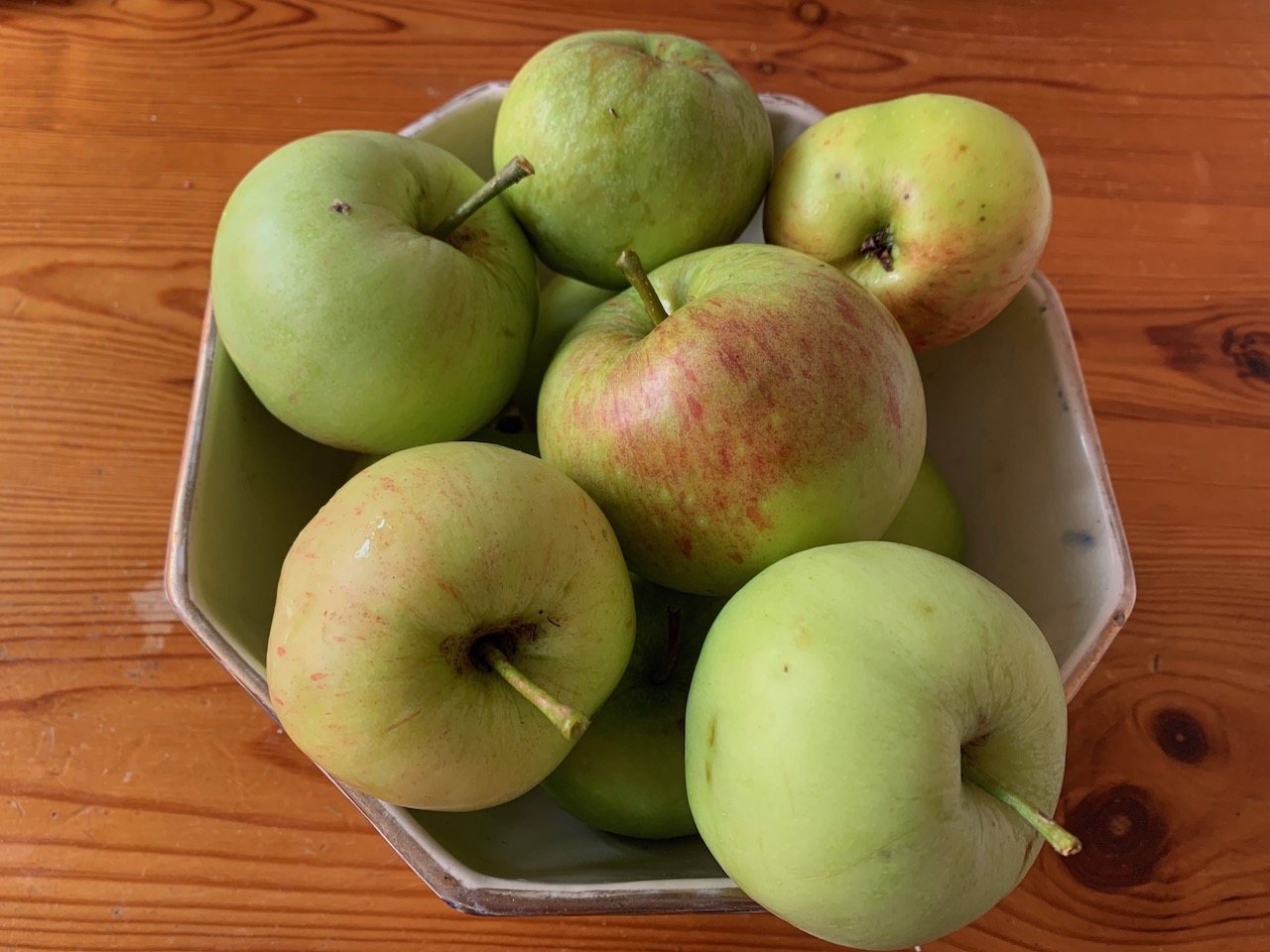
It’s harvest time. I’ve been gathering in the apples from our back garden. I’ve also started to take some time out to reflect on what I have harvested on a spiritual and creative level whilst, although living with my parents, spending most of my time in solitude since leaving my ecology job in August last year.

I’ve been through a lot of changes. It was a big blow realising that the limitations of my autism rendered me incapable of coping with the demands of working in either conservation or ecology due to my inability to manage projects and people, multi-task, or work flexible shifts or do night work.

Yet my patron God, Gwyn ap Nudd, gifted me with two tasks that gave me purpose and hope. The first, writing a series of books titled The King of Annwn Cycle imagining His unknown story from His birth until the end of the world. The second building the Monastery of Annwn of which He is also the patron.

For the first few months I threw myself into those tasks with utter joy and was completely absorbed in the awen working on my first book In the Deep. I took initial vows as a nun of Annwn on the new moon in October and being part of a group of monastic devotees devoted to the Annuvian Gods and Goddesses has been an ongoing source of inspiration and support.

II. Losing Hope

Yet over the winter I had a few things that derailed me. Blocks with the book after realising that due to it being a personal vision of Gwyn’s story with only subtle links to the existing myths it is unlikely to reach as wide an audience as my work that explicitly related Brythonic content to our environmental crisis.

Minor health problems. Tests around raised liver function that never came to anything. Rosacea. Runner’s knee. Then in spring, just as my knee issues were easing and the weather was getting better I went and pulled my sciatic nerve in my glute and had to reduce my running and strength training.

At this point I was also struggling with breathwork meditation. Gwyn began encouraging me to learn to focus on my breath prior to covid and has told me holding spaces of calm free of chattering thoughts is one of the most important things we can do for the world on an energetic level.

Failing to master my internal chatter alone I tried looking to Buddhism and considered going to meditation classes at a Preston’s Kadampa Buddhist Meditation Centre. To prepare I read one of the books by the Venerable Geshe Kelsang Gyatso Riposte who founded the Kadampa tradition. It led me to the realisation the path of freeing oneself from the suffering of earthly existence isn’t for me and left me feeling profoundly unspiritual so I did not go.

On top of my feelings of despair about being called to write a series of books that would never sell, dread of my savings running out and having to return to menial work, and my nerve pain, this led to me feeling ‘there is no hope left.’ 

The very moment this thought popped into my mind, when I was open and vulnerable, on my way home from a local walk, my nerve bothering me, I met a person who somehow knew my name and that I ran an online monastery and invited him to join and he caused trouble and had to be thrown out. 

This was a big lesson on my failure to address the negative thought patterns that had got a hold on me. I’ve long been quite good at serving my Gods but terrible at taking care of my mental health and spiritual development. 

I’ve served as a vessel for Their inspiration without taking care of the vessel.

III. Taking Care of the Vessel

My recovery from what I now believe to be ‘power loss’ began with a ‘power retrieval’ journey with the Way of the Buzzard Mystery School.

Therein I was given a set of ‘wolf’s teeth’ and told that I must be ‘fiercer’. This went against my preconceptions of what being a nun meant as I was striving to be humbler. Yet I took my teeth and the advice. When I reported this to Gwyn, not long before his death and departure on May Day, He told me by the time He returns at the end of August He wanted me to own them.

Shortly afterwards, on the suggestion of my personal trainer, I started practicing yoga to help with my sciatic nerve problems and with flexibility. I had never considered it before due to issues around its appropriation by westerners.

However I decided to give it a go and immediately found a Youtube channel called Breathe and Flow led by a pair of practitioners who make clear from the start the poses are just part of a wider spiritual practice and philosophy and who make the effort to incorporate breathwork and meditation into their classes. 

At once I found both a physical practice to help heal my sciatic nerve pain and improve my flexibility and mobility and support with breathwork and meditation.

When I started reading up on the religious and philosophical background of yoga to my amazement I found out the Hindu God who is Lord of Yoga is Shiva and He bears similarities to Gwyn as a destroyer and transformer. They both have associations with bulls and serpents and, to my surprise and delight, Shiva’s serpent, Nandi, has a magical jewel on his forehead. In my personal gnosis Gwyn and the serpents of Annwn have similar jewels.

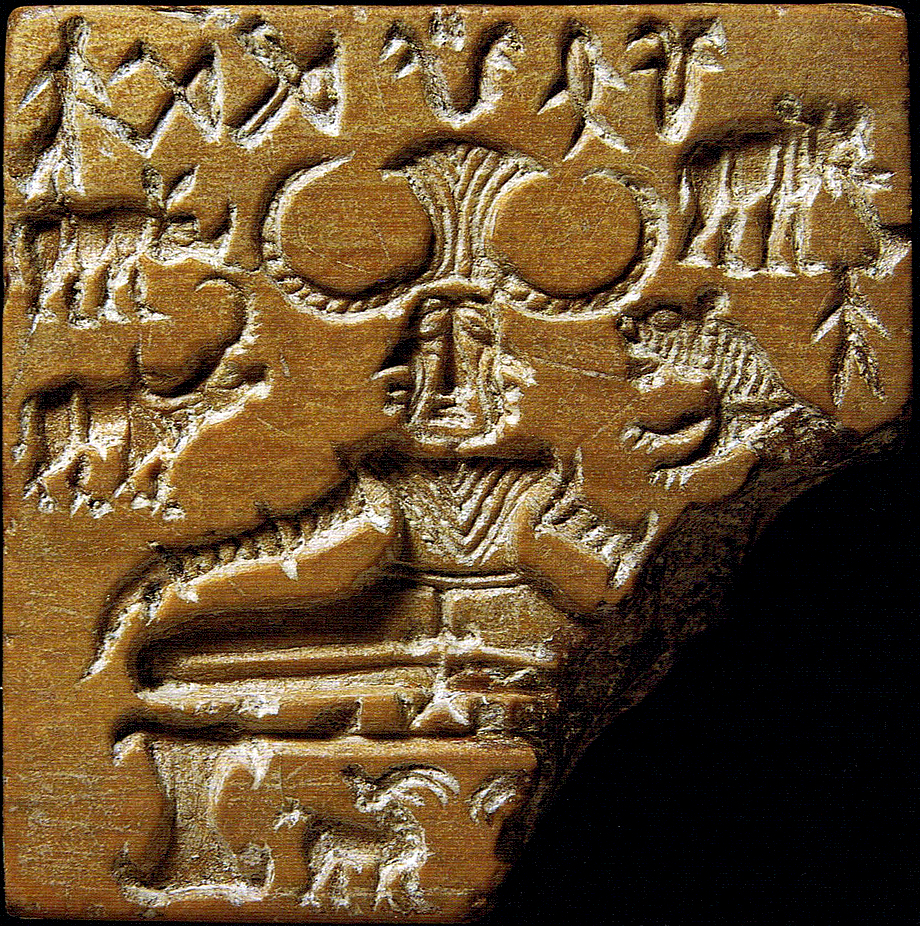
The images of Shiva and the meditating deity who I believe to be Gwyn on the Gundestrup Cauldron bear a striking resemblance. As I persevered with my meditation practice over the summer, although asleep, Gwyn began visiting me in spirit form, as ‘meditating Gwyn’, in the likeness of this image. As if he had been cut from the cauldron, in shining silver, to help me with my breathing. I finally found the practices I needed to take care of my vessel.

Another source of help and support has been working with a supervisor and therapist, who is also a shamanic practitioner and I was put in touch with by Nicola Smalley who co-runs the Way of the Buzzard Mystery School. This is the first time I have had a human teacher and it has taken a long while for the circumstances to come into play that have made this desirable and possible.

When we were looking into my fears around panicking/freezing/melting down when faced with unexpected difficulties, particulary in social situations, we journeyed together on it and she saw a red dragon on my shoulder breathing fire and was told by Merlin that I must learn to ‘tame the dragon’.

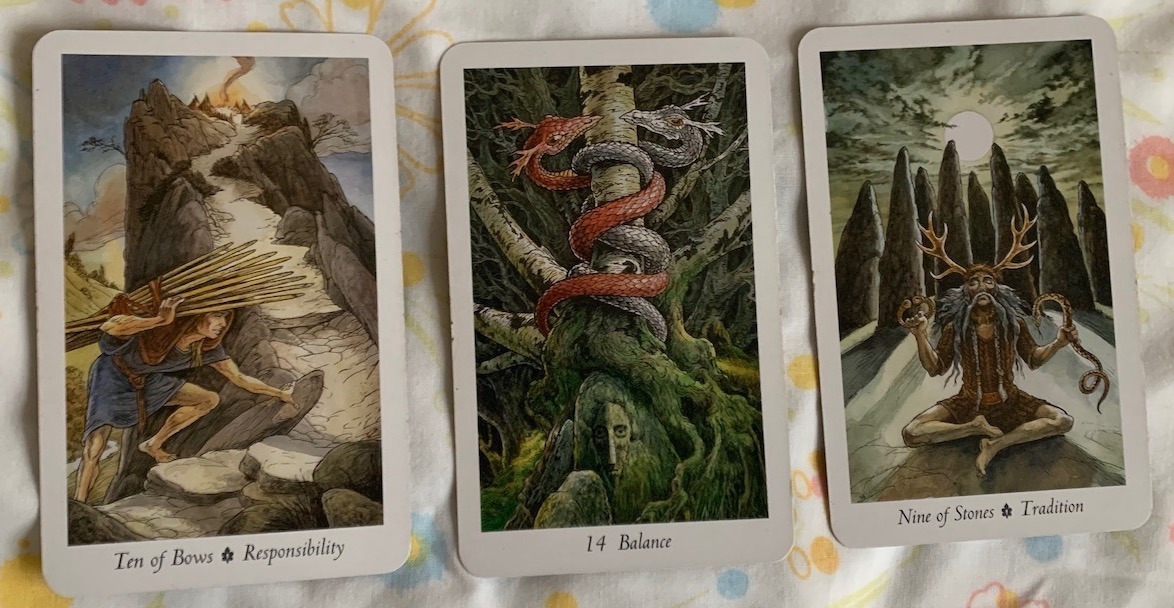
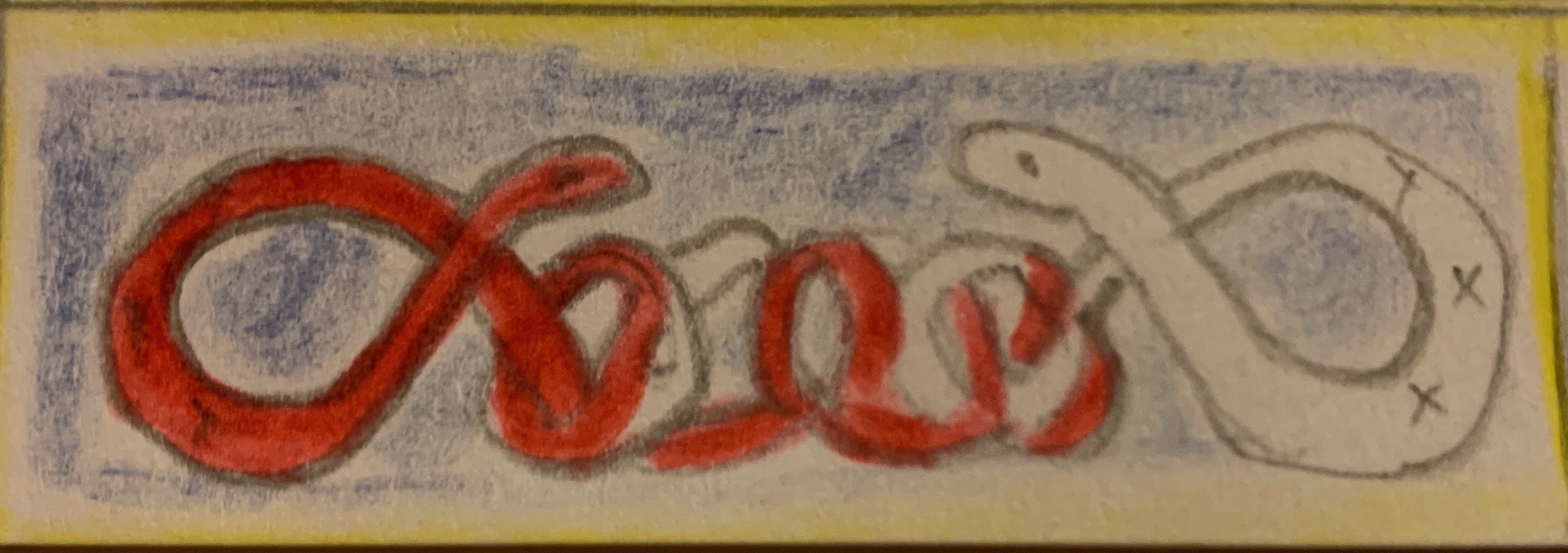
This unsurprisingly led ‘my red dragon’ to rebel which I gave voice to in a poem*. Yet a tarot reading revealed that what Merlin was calling for was the need not so much to tame the red dragon but to balance her energies with those of the white dragon through meditative traditions and taking responsibility. 

Of course, in the Welsh myths, it is Merlin who reveals the red and white dragons battling beneath Dinas Emrys where Vortigern wants to build his fortress following their burial by Gwyn’s father, Nudd/Lludd. Amazingly my supervisor knew nothing of my connection with these myths prior to the journey.

I have begun a process of transmuting the anger of the red dragon to strength and the panic of the white dragon to calm in my yoga practice by coupling them with holding postures on either side and with alternating nostril breathing along with trying lion’s breath to release the fiery energy.

V. Unblocking the Flow

Prior to this I had considered alternative options for possible paid work – running courses and workshops or writing a book on Brythonic Polytheism as quite a few people have asked me for reliable material. However, whenever I have attempted to put something together I have met a block.

On the one hand I felt with my background in research into the Brythonic tradition and my experiential relationship with a few of the deities I was in a position from which I could deliver this. Yet I also knew my approach is highly personal and idiosyncratic and critical of the medieval Welsh texts, penned by Christian scribes, in which Gwyn and the spirits of Annwn, the witches, giants and ancient animals are demonised and repressed.

I’m not a person who could deliver the literary background formally, without opinion, without a few of the teeth and claws of the spirits of Annwn getting through.

When I entertained the idea again this year I was told by Gwyn to set it aside and ‘stop thinking about money’. Yet my feeling this might be a future obligation and potential source of income in spite of my blocks continued to persist.

I finally let go of this once and for all following a conversation with my supervisor. She advised that rather than acting from my sense of obligation and presuppositions about what the world wants and needs I should follow my inspiration, the flow of my creativity, asked where my passion really lies.

I said, “in my books”, “in Gwyn,” “in the Annuvian,” “in all He and the Otherworld represent”. She told me this is what I should focus on and write about in spite of my fears about my work not being well received or making money.

For the past year I had increasingly been struggling to create blog content based on what I think my readers want in terms of Brythonic content and poetry. My prayers and songs for Gwyn had all been from the heart but I’d had to drink alcohol to force the poetry out and I hadn’t managed to write much about the other Brythonic Gods and Goddesses in spite of my intent.

As soon as I let go of what I felt my obligations are I had two new poems come through without the aid of alcohol pretty much complete and was inspired to write a couple of pieces on my ‘forbidden pleasure’ – dark fantasy.

VI. The Dark Magician’s Door

At the time I was considering where my future prospects and obligations lie I dismissed the possibility that I might gain a larger readership for my books, which I would describe as mythic fiction containing elements of heroic and dark fantasy, by engaging more with the world of fantasy and its readers.

I flirted briefly with the idea of starting a new blog for thoughts on fantasy and reviews but decided it would be too time consuming and didn’t like the idea of having two blogs and profiles. I also got put off by the fact a lot of engagement takes place on social media and this is an absolute no-no for me. I took one look at Twitter and felt like I was staring into the pits of Hell.

I also dismissed the idea of posting fantasy content on this blog as I have tried it in the past and it hasn’t been well received. I decided there are enough people in the world talking about fantasy and not enough talking about the Brythonic Gods so I should continue to make that duty my focus. 

I then had a seemingly unrelated experience that led to my giving up alcohol for good. I used alcohol to self-medicate my anxiety from my late teens until 2020 when I began giving it for periods and cutting down a lot. The habit of weekends and occasional mid-week drinking had snuck back during my difficulties with my sciatic nerve pain even though my body was rebelling against it – expunging it with night sweats and its stink in my piss and shit.

I really wanted to give it up for another long period but was having no success. 

Then I had a dream in which my dark magician guide (who is a character in a fantasy novel who has been with me since I was around thirteen) showed up with a vision of planks leading up and down a wall to different doors, told me he was angry I had ‘closed his door’ and left through it.

The next morning he appeared again in my meditation, vivid as in a dream, in Annwn, beside the Abyss, with the part of myself who is addicted to alcohol, sweating, writhing, stinking of its excesses, wrapped in a white shroud. He told me it was time I gave up alcohol for good and that I must cast her in. Although this completely terrified me I went along with what he said. Afterwards I reported it to Gwyn and solemnly promised Him I would not relapse.

Knowing I would never have the comfort of alcohol again was scary at first but has proved to be a big release with the part of my mind obsessing about whether I’ll drink then feel guilty and like a failure having finally been laid to rest. It has opened a lot more space for communion with my Gods and creativity.

I forgot all about the dark magician’s door until the block allowing me only to write Brythonic content and poetry for my blog was released and I came up with new poems and the fantasy book reviews I had denied myself of writing. 

I’d closed his door – the door to fantasy – and now it stands open again.

VII. Returning to Orddu’s Cave

Over this year of solitude I have harvested a good many things. I have produced a finalish draft of my first book, In the Deep, and am well on my way with the drafting of my second book, The King and Queen of Annwn. The building of the Monastery of Annwn is going well with our development of our shared practices, meditation group and first year of online rituals.

I’ve come a long way in discerning the direction of my path as an awenydd and nun of Annwn devoted Gwyn and learning to follow my inspiration.

Another important learning is that whereas in the past I forced myself out into various communities, spiritual, creative and environmental, I am happiest when I am alone or interacting with very small groups of like-minded people.

There is a lot of stigma around solitude identifying it with mental ill health. Yet, for me, and I would warrant a lot of autistic people, it is a source of well being.

This has led me back to the cave of Orddu, the Very Black Witch, an inspired one and warrior woman intimately connected to Gwyn who was slaughtered by Arthur.

I no longer see it as my duty to sing back the traditions in which the King of Annwn and his followers are demonised and killed but to join the inspired ones past and present who are perceiving new visions from the Cauldron of Inspiration, brewing them in their own vessels, birthing them in words. Owning my wolf’s teeth, my black beak and claws, all that Arthur forbids.

In my cave, my room, my monastic cell, I tend my cauldron and my awen sings.

*This is the poem recording my initial rebellion against Merlin’s words.

The Dragon on my Shoulder Breathes Fire

I.
She sees the things that are unseen but are –
the dragon on my shoulder breathes fire.

Not just any fire but Annwn’s fire, 
the type that warms the belly,
implodes the head, 
bursts forth as
poetry
(on a good day)
but is otherwise 
expressed as anger.

Anger that will not be satiated 
by death or by the spilling of blood. 

Where do dragons come from?

II.
There are fire eaters and fire breathers
and those who swallow stars
not to make a living
but to avoid our soul’s death.

Dragon fire has been within us all along.

III.
Red is danger 
and danger is anger 
with a letter d at the front.

Red and hatred have the same vibe. 
Red, goch, iron, the red at the earth’s core. 
My temper will not be tempered – my 
metalwork got melted down. 

I did not master fire. 

Instead I released the dragon 
soaring soaring from the forge wept
the day I did not save my Lord from Arthur’s sword.

But it was I who freed the fiery serpents sizzling, hissing, spitting.

IV.
Now a large grandfather clock is ticking down to doomsday. 
The dragons are fighting again and will not be quieted.

Merlin tells me that I must ‘tame the dragon’.

Why, oh prophet, diviner, madman, 
must I try to tame what cannot be tamed?

Why, oh son of a demon, who prophecies in dragon fire
are you speaking this Arthurian language of taming?

All I know is you have demons inside you too,
in your heart, in your head, that both of us
like to sit beneath the apple trees.

The dragons are within me.

The Island of Prydain.

The dragons are within you too.

The dragon on my shoulder breathes fire
and she sees the things that are unseen but are.

What Ails Me?

Hail is cold grain
and showers of sleet
and sickness of serpents
.’
– Hagalaz (rune)

I.
I come to You
my mind a wasteland,
the poles, the solstices of my world
out of kilter and something awakening beneath the ice

to ask the somewhat selfish question – “What ails me, my Lord?”

It echoes down through the centuries reminding You of Your father’s wound
and the wound You suffer every year battling against Your rival,

the wound to my navel after my dedication to You,
the pit of snakes in my belly button,

the heroes flung into it,
sucked dry. 

II.
“What ails me, my Lord?”

I’m back at high school again
with serpents twining around my chair legs,

staring down into the depths of the ink well I never used.

I’m chewing my pen, ink is dripping from the side of my mouth,
from my finger tips and I’m raising my hand
to ask for more paper, bleeding words,

rising to the challenge of the exam,

exulting in the quiet of the other pupils,
this scratching of pens the one thing I can succeed in.

III.
“What ails me, my Lord?”

I think of the serpents who twist around my arms
and sit deep in my belly and I wish I could tie around my ankles
to hang like You over the Abyss to gain the wisdom that explains this…

the way by lack of courage or confidence I am always climbing
the first three rungs on my ladder and then falling
back down into my pit of snakes.

IV.
“What ails me, my Lord?”

I’m back at the surgery again
and the nurse is wondering if I’m dead,
tapping my veins, trying to awaken them to life.

I’m explaining the junctions and showing which ones work.

Where blue flows to red and is tested then
incinerated by the fiery serpents.

V.
“What ails me, my Lord?”

My beast looks too much like an ink spodge test,

then I see my father splattered on the settee like a murder victim
from a third rate horror movie doing nothing as always.

I cannot find his wound or his serpents.

Instead I sink into mine and awaken them again,
the wounds made by all the surgeons, all the psychiatrists

by all the snakes fighting back, by all the horror movies and I hear

Your laughter, Your divine laughter, in my veins like poetry,
not the canned laughter of the television
he sits in front of.

VI.
“By asking the question you have opened the door.

Although all our blood and poetic truths
cannot save the world or heal
our ailments

by this opening
your serpents might return
to health and an answer might come through.”

*This poem is addressed to my patron God, Gwyn ap Nudd.

I wrote this poem last year. It is based on drawing the Hagalaz rune at one of the Way of the Buzzard journey circles over four years ago. I had a powerful experience that led me to investigating ‘the sickness of serpents’ not only in the Norse but the Brythonic traditions. It lies behind my series of books in which I explore the relationship between Vindos/Gwyn and the serpents of Annwn. The poem references gnosis received whilst writing these stories.

There is also an allusion to a series of blood tests I had last year relating to slightly raised liver function levels. Two ended up as four as on one occasion they did the wrong test and on another my blood coagulated in transit. It made me start wondering ‘does something want my blood?’ 

At the time I was writing about the conflicts in Annwn between the red and white serpents. As an answer, when I was sitting in the waiting room, on the white board a young girl had drawn a tower block with a huge winged serpent towering over it, which she was colouring it in red. I found out, after testing, blood gets incinerated and received the answer ‘the fiery serpents’. 

One of the results of the blood tests was that I have low iron levels. I have felt a lot better since eating more red meat particulary liver (sympathetic magic?) and believe this was behind me feeling tired and low most afternoons.

The final check relating to my raised liver functions is an ultrasound this Thursday so I will finally find out ‘what ails me’ (physically at least). If I do have minor liver damage it likely relates to having used alcohol to self-medicate the anxiety that comes from my autism since my late teens. I only started addressing this after making my lifelong dedication to Gwyn in 2019.

Leaving with Flowers

Yesterday I finished my graduate ecologist job with Ecology Services Ltd in Longton. It was a bittersweet moment for I had worked with a brilliant team who are amongst the nicest people I have ever met and in many ways the jobs was ideal. There were lots of learning opportunities, a lot of support, and a high level of professionalism in the rigour of the writing and editing of reports. 

However, I could not cope with the demands of the job due to my autism. These included some stresses endemic to ecology and others more widely to the working world – night shifts, long hours, travelling to new places, frequent changes in routine, working to tight deadlines, multi-tasking, spending 7.5 hours in front of a screen with limited breaks for lunch and brews.

When I first started seeking work in the environmental sector, in conservation, in 2019, I did so under the mistaken idea that it would be like conservation volunteering – practical and survey work every day of the week. As I progressed from volunteer, to volunteer intern, to paid trainee, I realised that such jobs are few and far between and that most people are expected to ‘progress’ to taking responsibility for project and people management. 

Most paths lead from outdoors to the office and require skills outside my skillset – being good with spreadsheets and numbers and mastering the horrendously complex and counterintuitive mapping system which has been the bane of my life since I started following this career path – QGIS.

It’s taken me a while to realise I’ve made a wrong turning for some of the right reasons (such as wanting to learn more about the fascinating plant and animal species who we live alongside of and wanting to give back to the land) and some of the wrong reasons (such as wanting to excel and climb the career ladder and craving not only financial security but more money than I need).

In the process I have gained my creativity and my commitment to my spiritual vocation as an awenydd in service to my Gods and Goddesses back. I have learnt that this is where my skills and passion lie and that I must put this first, whether it means either working full time for a while to buy time for my creativity or working part-time and creating alongside my work. 

As my work is so niche and, a long while back, I sacrificed my ambition to be a professional writer to Gwyn, my Patron God, in return for inspiration from the Otherworld, I know I will never make a living from writing alone so must go on trying to strike a balance between the all-consuming demands of the awen and my financial needs. 

On my last day my colleagues bought me flowers along with a card and a book. I think it’s the first time in my life I’ve ever been bought flowers. Beautiful, fragrant, a reminder of a sometimes lovely and sometimes difficult time.

I have no regrets, only memories, which will soon pass like flowers, not to be forgotten, but to be left behind, as I leave the environmental sector, to devote the next two or three years this time has bought to writing my next three books.

Of Worldly Career and Spiritual Vocation

So it reaches an end. The trajectory that began with volunteering on local nature reserves, took me into paid work restoring the Manchester Mosslands, and eventually led to me working for a local ecological consultancy on developments across the North West. 

Whereas my choice to work in conservation was guided my Gods, when my traineeship reached its end, and no conservation positions came up, I chose my ecology job because it was local, permanent, well paid, and offered financial security, and because I had a good interview and liked the people.

I knew next to nothing about ecology, the high pressure environment, how distant some of the sites would be, or how badly working nights would affect my mental health. I hadn’t thought through how I’d feel about working for developers, some just people who needed a bat survey for an extension on their home, but others who wanted to build on green spaces and nature reserves.

Working just one night a week, the dread beforehand and the tiredness afterwards, had a massive impact on my mental health due to my need for a regular routine and sleep pattern as an autistic person who suffers from anxiety. 

This, combined with travelling to sites over an hour’s drive away, and learning to write technical reports and mastering an unneccessarily complex and counterintuitive mapping system called QGIS whilst, at the same time, organising surveys, preparing quotes, and replying to clients, swiftly led to stress and burnt out.

Within a matter of weeks I went from being a happy, fit, and confident person with hopes of excelling in botany, pursuing an MSc in ecology, and running an official half marathon to being unable to read academic articles or comprehend the logistics of getting to a run or navigating the crowds.

I started waking early in the morning in tears and crying until I went to the gym or on a run and somehow cried all the way through a run on a very bad day.

I turned up in tears, managed to get on with my work, in spite of the crushing feeling in head, which increased as the day went on and throughout the week. I drove the wrong way up to M62 and through a red traffic light. I got hopelesssly muddled on a survey and drew the map the wrong way up. One day my brain melted to the point I couldn’t recall what a PDF was.

My manager took me off nights and I stayed because I liked the team, who were kind and supportive, because I didn’t want to let them down, because it was my mistake for rushing into what was the wrong job but right location and people.

I didn’t speak much to my Gods at first. But when drinking ceased to cure my troubles and I realised it was doing me more harm than good, both in my work life, and strength training and running performance, I began to pray. 

I began to seek a place of retreat and healing as respite from an overwhelming world. “Remember who you are,” said Gwyn, recalling me to my vocation as an awenydd, as Sister Patience, as a nun of Annwn.

Somewhat laughably, as is often the case of Gwyn, at a time when I was craving financial security due to fear of losing my job, He told me do the thing least likely to make money in the world – “build the Monastery of Annwn”.

Yet His imperative, my vocation, could not be ignored. I have set up the Monastery of Annwn as a virtual space; started laying the foundations in terms of daily devotions, a ritual year, and practices such as journeying to Annwn and tending Creiddylad’s Garden; and begun dialogue with others.

Desiring to partake in lectio divina and lacking an Annuvian creation myth I have been inspired to return to writing one – a pursuit I began a couple of years back with a book called The Dragon’s Tongue, which didn’t work out. 

This attempt to weave a new creation story, from the perspective of the Annuvian Gods, from the existing Welsh and Irish myths and also drawing on the Mesopotamian epic ‘Enuma Elish’ and the Bible has been renewed as ‘In the Deep’ (the antithesis of ‘When On High’ – the translation of ‘Enuma Elish’). 

In returning to devotional writing I have found deep joy, which has dissipated as soon as the stresses of work and worldly career have got in the way. 

This positive discovery/recovery combined with the knowledge that, as an autistic person, I am not suited to full time high pressure work, has led to the decision to hand in my notice at my ecology job and seek less stressful, part time work in conservation or horticulture that will allow me to fulfil my vocation.

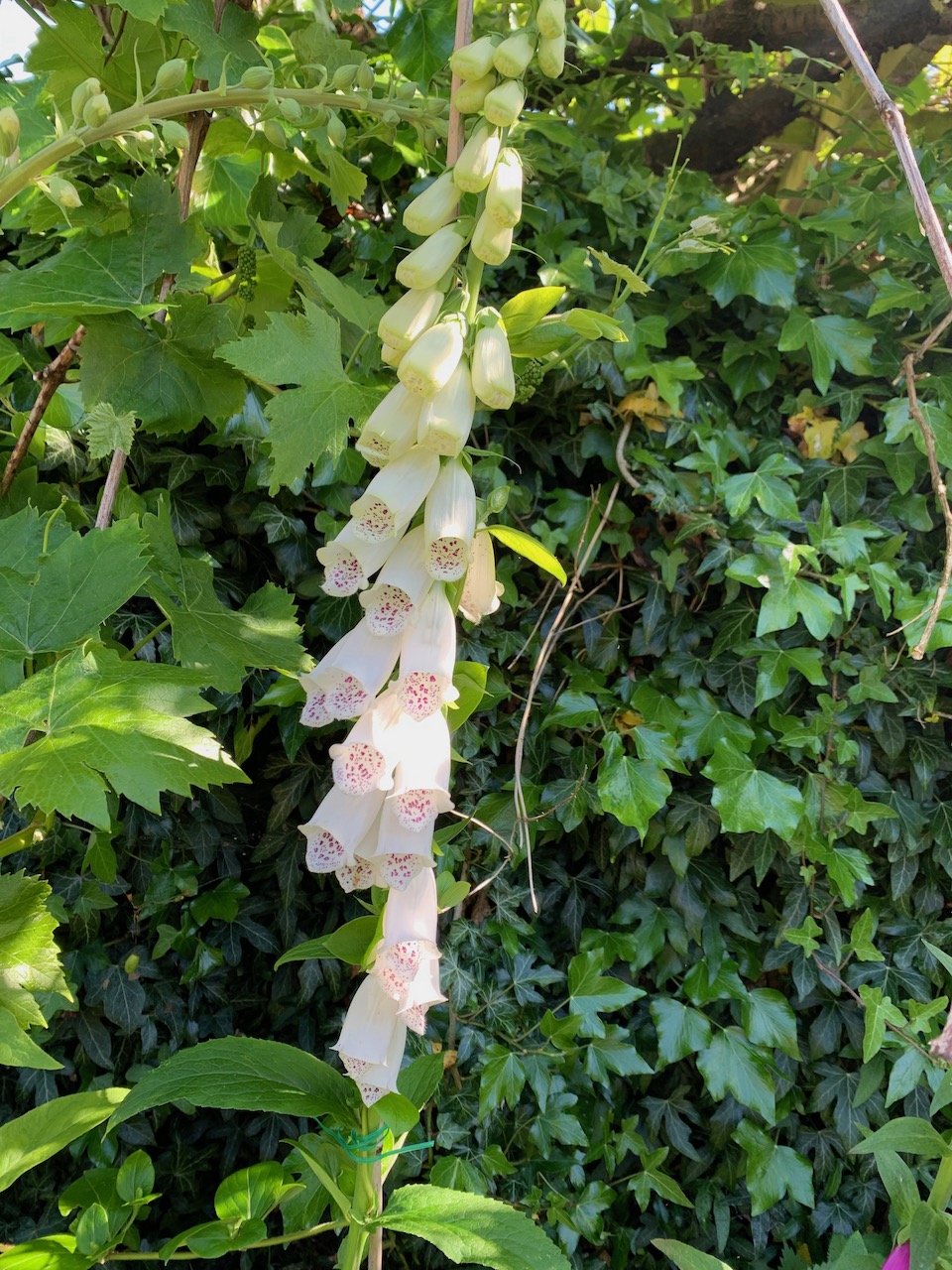
It has been a relief and a release. Although I have two months’ notice to work I have a myth to tend, a monastery to build, and can find solace at my altar and in Creiddylad’s garden, where the bees are loving the blue geraniums and the foxgloves I grew from seed last year are looking magnificent.

I Awenydd

“Remember who you are.”

I am an awenydd of Annwn.

I am a keeper of an ancient monastery
(yes this monastery is ancient although
its builders only built it yesterday).

Likewise I am born from the Deep.

I am forged in Annwn’s fires.

I am the creation of a myriad creatures
who continue to live within me,
barking, stampeding.

I am born of the Dragon-Headed Mother.
The nine elements swirl within me.

I live by the rule of awen*.

My destiny lies before me.

~

This poem was born from a time of crisis and struggle as I have suffered from poor mental health as a result of working a late shift as I find it very difficult to cope with changes in routine and sleeping pattern as an autistic person.

Following the realisation I can’t make a living from my vocation as an awenydd, for the last three years I have poured most of my energy into pursuing a career that is in alignment with my spiritual values. I’ve volunteered my way into paid work in conservation, completed a year-long conservation traineeship, and gained a permanent job as an ecologist.

There is a lot to like about ecology. There is much to learn. I get to visit varied sites. There is an art to getting the best deal for people and nature. But the job is also high pressure and, in many consultancies, (thankfully not mine) there is a complete disregard for mental health with junior ecologists working several nights a week and being expected to keep up with day work

I have been lucky to gain work with a team who are not only friendly and professional but aware of and supportive around mental health problems and have allowed me to cut down nights and take time out for counselling.

Over the period I have been developing my career I have had less time for my spiritual vocation and, it’s sad to say, have only fallen back on it at a time of crisis, when my work alone has not been enough to pull me through.

Having realised that my difficulties with night work will mean I cannot become a good all round ecologist (I will not be able to get my great crested newt and bat licences and will be limited to developing my abilities with habitat and vegetation surveys and protected species I can survey by day) I’ve been questioning if this is the right career path and assessing where my talents lie.

“Remember who you are,” I have heard the voice of my God, Gwyn, on a few occasions, reminding me of my vow to Him, to serve as His awenydd.

This has led to the realisation that I’ve been living an unbalanced life. Devoting too much time to Thisworld and not enough to Annwn, the Deep.

This doesn’t mean that I’ve made a poor choice of job, but outside it, whereas I was spending all my free time reading ecology books and articles, trying to record and memorise plants, and carrying out extra surveys, I need to make room for the soul-world.

From this has been born the Monastery of Annwn as a sanctuary to retreat to; where the Gods and the Deep are revered and honoured and put first; as a place that provides the strength to return to Thisworld and pursue one’s awen/destiny**.

*The phrase ‘the rule of awen’ is not my own but is one of the principles of the Gnostic Celtic Church which resonates deeply with me. 
**In Medieval Welsh poetry ‘awen’ means not only inspiration but destiny.

Autism and Challenge

Last September I was diagnosed with autism spectrum disorder level one, a lifelong neurodevelopmental disability. This is the ‘mildest level’ and is given to people who can cope with some situations so well that others do not know there is a difference in the way they process information, but once they get to know them, and see them in more challenging situations, notice the differences.

I was told that it is possible to ‘move up and down the levels’. Although I have never been at a level where I need a support worker, it has certainly been the case that I have moved up and down level one – had some phases in my life where I have felt almost neurotypical and others when I’ve felt very autistic.

I have noticed this most acutely in my response to challenge and what constitutes a challenge. Many easy, everyday activities, which are not challenging for a neurotypical person are often very challenging for an autistic person. This is due to a combination of sensory sensitivity and the anxiety that comes from difficulties with interpreting social signals and processing complex information from multiple sources at once.

I hit my lowest level in my early twenties when I was in the second year of university when I had what I believe, looking back, to be an autistic meltdown. This was brought on by the combination of the pressures of achieving a good degree and by poor lifestyle choices – going out drinking and taking drugs two or three times nights a week disrupted my sleep pattern and left me with insomnia, anxiety, and experiences of derealisation.

A massive panic attack on the motorway led me to give up driving. It was a challenge to get out of the house, onto the bus, and to university. I sat at the back in lectures, crying quietly, silent tears running down my face. Everything, everyone, was threatening. When I talked to my lecturers I felt so panicky and light-headed I thought I was going to faint or float away. One day I sat alone staring at a tomato on my sandwich unable to recall what it was.

Nobody noticed. When I had occasional sobbing fits or freaked out about something the response of my ‘friends’ was ‘Lorna’s going west again.’

***

Eventually I sought help. I had a good doctor. We worked out that sleeping tablets and beta blockers weren’t helpful for my insomnia or panic attacks. I got put on a medication called Venlafaxine that helped regulate my sleeping patterns and mood and allowed me to establish a healthy sleep and exercise regime.

Unfortunately, when I was referred to a psychiatrist, I was told I wasn’t eligible for treatment because I hadn’t attempted suicide, in spite of self-harming.

Luckily the medication and developing a good routine helped (it was also helpful that I couldn’t drink on Venflaxine!). I ‘got better’ and, in my third year, got 80% in my dissertation, resulting in a first class degree in Philosophy and English.

Since coming off medication I have had many ups and downs. Sleep and exercise have been the key to leading a near-normal life, but I have been unable to overcome a number of challenges that neurotypical people can handle.

I failed to cope with working nearly full-time at the same time as studying for a PhD (as I didn’t get funding). When I worked as a groom I struggled with six day weeks, late nights and early mornings, and the stress of preparing for competitions.

During the period I moved back in with my parents and devoted my time to my spiritual path and writing, at some points working part-time and at some not at all, I was able to live by my ideal routine, getting up early, doing my devotions, writing, exercising, gardening, early bed. But the benefits of this lifestyle were overshadowed by my anxieties about my inability to make a living.

***

When I realised I would never be able to make a living from my writing I turned to conservation, as something I’d volunteered in, and believed in. Slowly I took the steps, faced the challenges, of progressing from a volunteer, to a volunteer intern, to a trainee, before moving into ecology.

As an autistic person every new thing was challenging – travelling to a new place, meeting a new group, learning a new task or to use a new tool. On my first day as an intern at Brockholes I was terrified of using a radio due to how self conscious I felt about my voice and of losing the key to the tool cabin.

With support I progressed to being able to do most of the tasks needed for the smooth running of LWT’s flagship reserve including driving the pick-up (which I was, at first, extremely nervous about reversing due to poor spatial awareness).

It helped that I figured out I was autistic when I was in counselling for anxiety at this point, so was able to locate the root of my limitations and explain them to the reserve officers, who were both supportive and understanding.

My traineeship with the Lancashire Wildlife Trust on the Manchester mosslands was even more challenging not only due to the long drive but to stepping up from a volunteer into a paid role and taking on more responsibility.

I faced and overcame a number of challenges such as leading volunteer work parties and AQAs, passing machinery tickets, and carrying out surveys. I coped because I was open with my line manager about my autism and he gave me a manageable workload and a regular routine.

Completing my traineeship gave me a lot more confidence and led to me gaining a new job as a graduate ecologist at a local ecological consultancy. This job has brought its own challenges – new surveys, new vans to drive, driving to new places, and, again, my manager and my colleagues have been very understanding about my autism and allowed me to tackle one thing at a time.

The thing I have found most difficult, which surprised me at first, but shouldn’t have done looking back, has been dealing with night work. During my traineeship I had a fixed routine of getting up at 4.30am, doing my devotions and meditation, exercising, then working five hours onsite and two and a half hours admin from home flexibly, eating, bathing, studying and/or writing and getting to sleep by 8.30pm.

Going out to do great crested newt surveys when I would be going to bed and getting in a few hours after my bed time has been draining and disorientating. The next day and, for a couple of days afterwards, I’ve not only felt tired but been in a low mood and had trouble concentrating and with fending off negative thoughts that don’t usually come through when I’ve had eight hours sleep.

It has been a blessing to be part of a team who are very aware about mental health. I have told my manager how important both sleep and exercise are to maintaining my mental health and we have agreed that I never need to start earlier than 8am, so I can get my exercise in, and I can do only one night a week. In a profession in which night work is central I am very grateful for this.

In the couple of months I have been at Ecology Services Ltd I have not only learnt to carry out surveys, but the process from start to finish, from speaking to a client, setting up a quote, organising the survey, doing it, and writing a report, and found a great deal of pride in doing the job and doing it well.

At present I’m coping and feel like I’ve grown in confidence quite a lot. However, I am apprehensive about the fact that the nights are getting longer and that bat season, the busiest time of the year, is approaching. I am hoping that, with continued support, I will be able to make it through the summer.

Autism and Living in the Fog

I was diagnosed with Autism Spectrum Disorder Level One* on the 28th of September. 

The day before Gwyn’s Feast. “Happy Autism Day,” he said, “welcome to my people.”

Still, I didn’t feel much like celebrating. I’d hoped that a diagnosis would bring clarity. However, being told that I have a lifelong neuro-developmental disorder or disability cast me into a fog of wondering how much my autism had played a role in my difficulties with social relationships and to hold a stable career in the past and how it was going to affect my future. 

I’ve been a trainee with the Lancashire Wildlife Trust on the Manchester Mosslands since April. It’s been a great job, on great sites, with great people.  Yet my enjoyment of the practical work of growing, planting, translocating, clearing scrub, building dead hedges, of the remarkable opportunity to restore the last remnants of our mosslands to their boggy glory has been overshadowed, fogged, by my anxiety about what people think of me, whether I’m doing well enough, measuring up, whether I will be able to progress to the next position up in this competitive job industry.

I’ve felt like I’ve been on trial and in some ways I have and in some I have not. I know my colleagues would rather I enjoyed my traineeship than see it that way. Still, I’ve had to meet my short term objectives and training targets. When it comes to progress I will have to meet the next person specification.

Good news is that a meeting with my line manager and project manager recently revealed in just six months, in spite of being autistic, I am nearly there. 

Job-wise I’m good. Still, I’ve spent a lot of time dwelling on how my autism and the anxiety that stems from being an autistic person in a neurotypical world, finding it hard to read people and projecting negative opinions of myself, has skewed my perceptions of others and affected my relationships.

Few of us are psychic, but being autistic leaves me less able to judge what others think and feel unless I am directly told. Living with uncertainty is tough but, I’m learning, is better than living with the false certainty everyone hates me.

One of the upsides of living in the fog is the moments it parts like when a friend and I were lost on Cadair Idris and, after a man and his dog approached, the mists shifted and we found ourselves looking down on Llyn Cau. Being able to see and speak the uncomfortable truths that others avoid or ignore.

At least I know I’m living in the fog and, as a devotee of Gwyn ap Nudd, ‘White son of Mist,’ can know and embrace it as my patron god and as a friend.

“Welcome to my people,” he says and I see the faces of all the others down the centuries who have been able to swing an axe or a mattock or push a wheelbarrow, to write poetry under the trees, to walk light-footed as a will-o-wisp across a peat-bog but could not endure one day of electric light in the office.

“Welcome to my people,” he says, “to doubt, uncertainty, anxiety, and truth.”

In the fog, in the unknowing, I walk along the bunds that will bring the peat-bogs back then disappear into the moss as it swallows its surroundings.

It’s cold here and it’s November, but at least I know I’m living in the fog.

*This is the current term for what was formerly known as Asperger’s Syndrome.