“Can you hold your tongue for a year and a day?” My patron God, Gwyn, challenged me.
“No,” turned out to be my answer, “no – I cannot.”
No coincidence that this year I have been connecting more deeply with aspen. Because of the talkative rattling of is leaves it is known in Welsh as coed tafod merchen ‘tree of the woman’s tongue’ and coed tafod gwragedd ‘tree of the wife’s tongue’. Similarly in Scotland it is known as ‘old wives’ tongues’.

The English, ‘aspen’ derives from the Germanic asp perhaps relating to its snake-like bark or to snake’s tongues. Its Latin name, Populus tremens, refers to its leaves which are said to quake restlessly as it provided wood for the cross Jesus was crucified on.
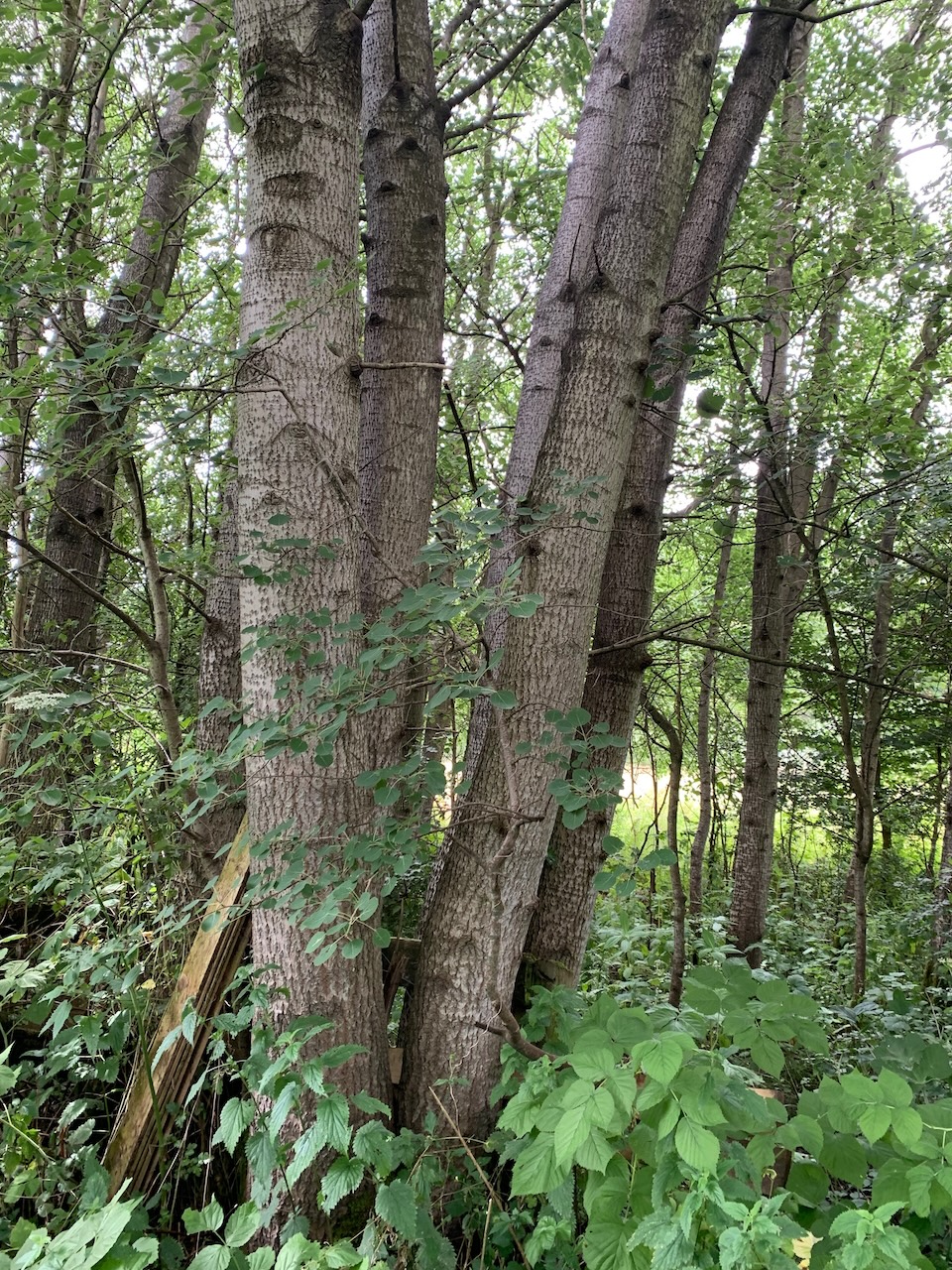
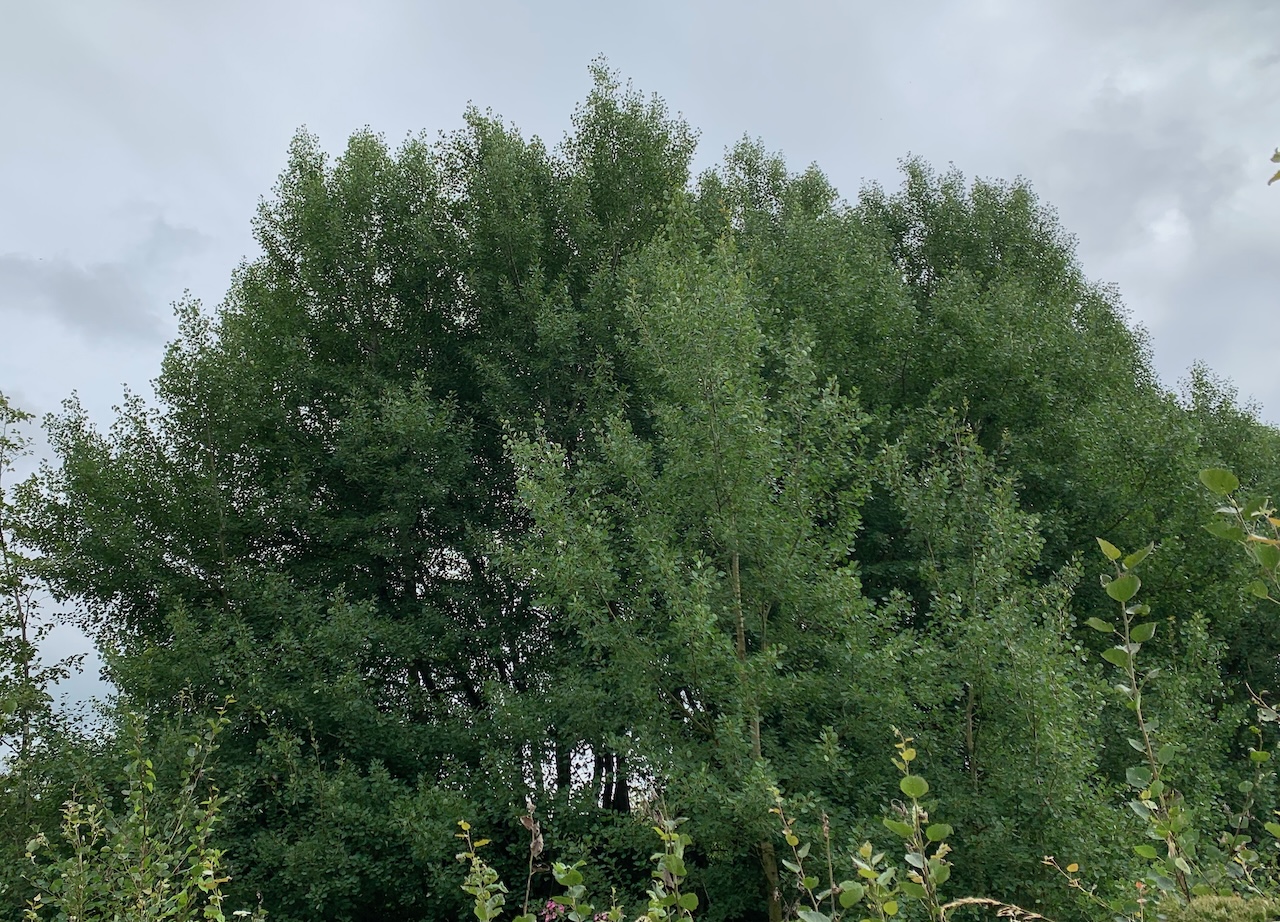
An ominous tree, associated with prophecy, until recently it existed at the peripheral edges of my vision. Small stands in local woodlands, on the edges of roads and paths, just one considerable colony at Fishwick Bottoms.
I’ve spoken to it in passing and sat beneath its leaves and listened to its chatter. I’ve journeyed to it, met the King and Queen of the Aspens, learnt that it was the favoured tree of Orddu, Orwen and and their ancestors, the Witches of Annwn who have become spiritual guides for me in the traditions of the Old North.
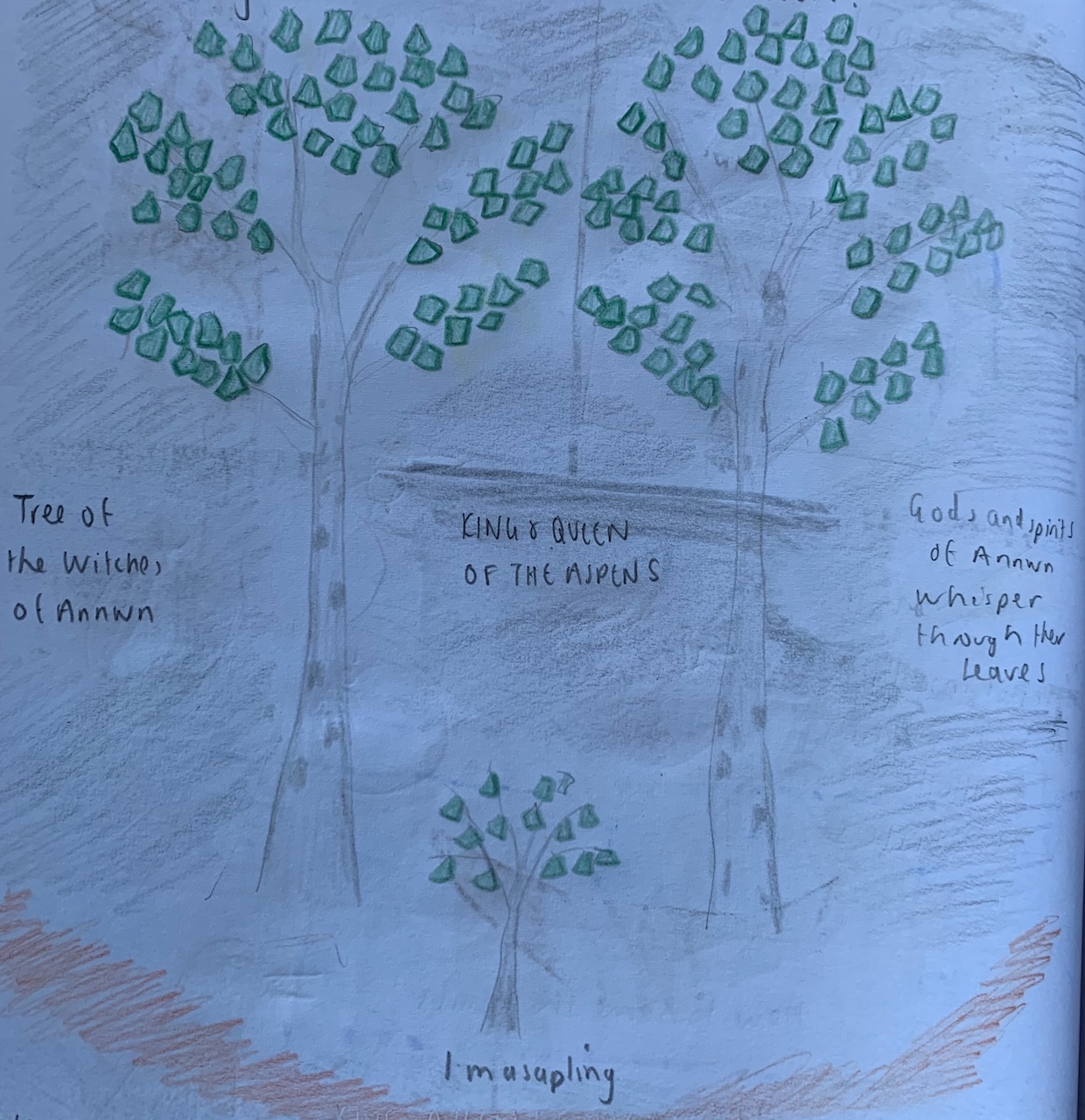
Orddu showed me that the woodland in Pennant Gofid, ‘the Valley of Grief’ was an aspen wood that had been there since the end of the Ice Age. We walked together as she pointed out the fungi and buzzing flies in areas of decay. Afterwards I learnt that aspen supports numerous detrivore species of fungi, up to 155 on a rotting log and saxoproxylic Diptera favour the microhabitats created by decaying sap under its bark.
Aspen is usually a sociable tree that grows in colonies yet Orddu introduced me to a single Talking Aspen she and her ancestors sat under to read the prophecies from its leaves. I was instructed to sit beneath it with her mother, Orwen’s skull, to listen to the wagging tales of old and dead witch’s tongue.

I was shown, in autumn, how the Witches of Annwn fly as birds of aspen.
“In winter, when the aspen is silent,” Gwyn asked me, “can you hold your tongue?”
“No,” turned out to be my answer, “no – I cannot.”
Like old women, old wives, old witches, this middle-aged nun of the aspened suburbs and wife of the King of Annwn cannot hold her tongue.
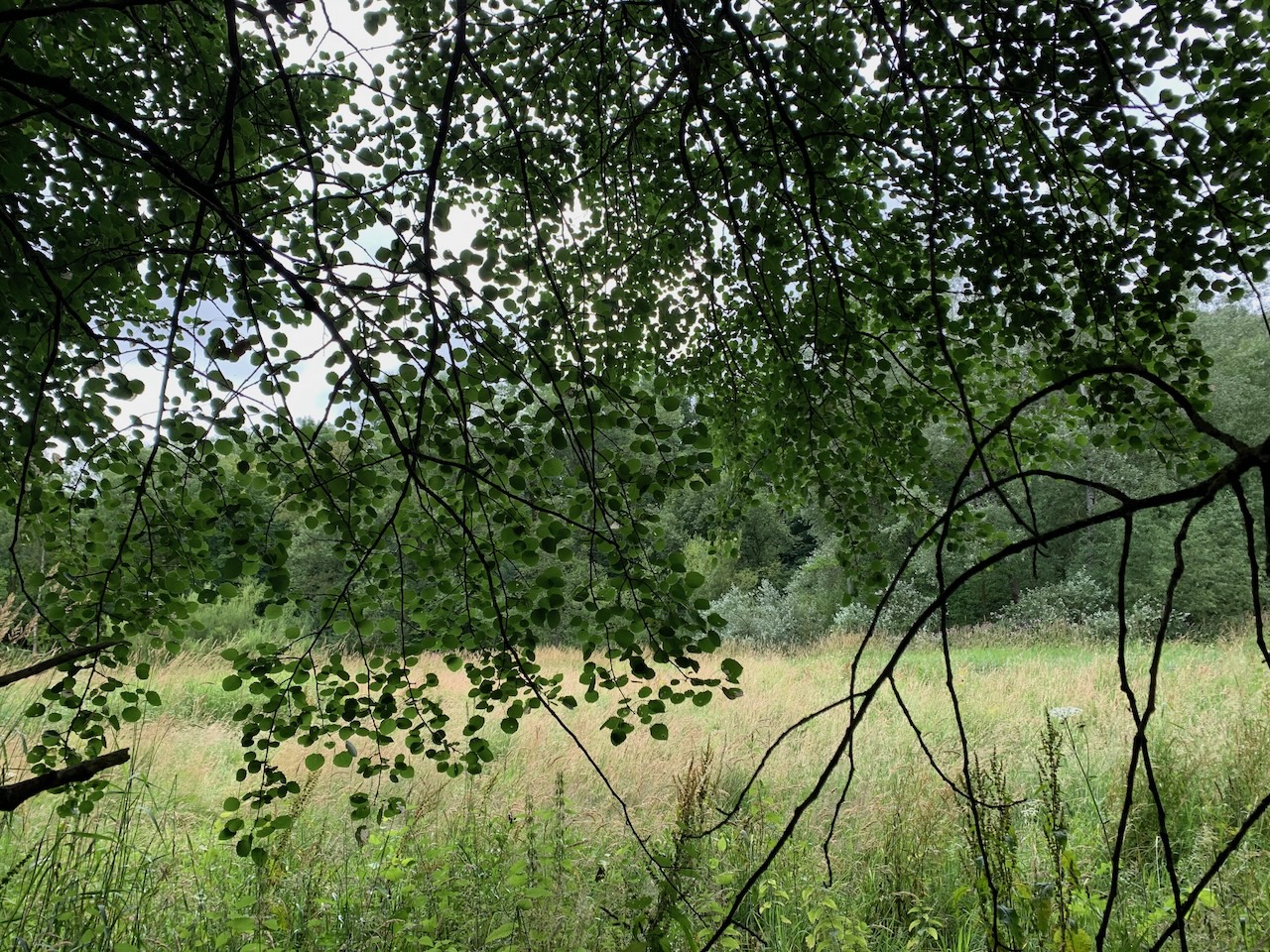
Aspen needs to tremble. Tongues need to wag. Words need to be typed. I need to write for the sake of my well being, for my Gods, for those who find inspiration in my work in spite of giving up all hope I will make a living from it.
Over my period of silence I’ve found a new way forward as a shamanic guide providing one-to-one shamanic sessions in my local community and am planning to start a shamanic circle here in Penwortham in the New Year.
Step by step my Gods and spirits are showing me my path as a nun of Annwn. Part of this is reclaiming my relationship with my abandoned creativity and embracing it as a way to health and healing for myself and others.
*Information about aspen in this document comes from ‘The Biodiversity and Management of Aspen Woodlands: Proceedings of a one-day conference held in Kingussie, Scotland, on 25th May 2001.’



 The Sanctuary of Vindos