7. The Cauldron of Dyrnwch

The Cauldron of Dyrnwch the Giant: if meat for a coward were put in it to boil, it would never boil; but if meat for a brave man were put in, it would boil quickly (and thus the brave could be distinguished from the cowardly).’
The Thirteen Treasures of the Island of Britain

A warrior-bard rides his motorcycle across the north,
his words like his weapons bold and defiant,
seeking to prove his worth
at the Cauldron of Dyrnwch the Giant.

Will he lose his defiance with his stuttering rifle,
like a broken mike stammer and stall?
If meat for a coward were put in
it would never boil.

Or will he proclaim his exploits on a megaphone
whilst miming each gun-shot wittily?
If meat for a brave man were put in
it would boil quickly.

Either way in the depths of the cauldron
his youthful flesh will be devoured most thoroughly
(and thus the brave could be distinguished
from the cowardly).

~

The Cauldron of Dyrnwch

~

Dyrnwch the Giant is a legendary figure associated with the Old North. His epithet gawr ‘giant’ poses the question of whether he was a large human or belonged to a mythic race. References to giants such as Brân the Blessed shows they held an important position in Brythonic mythology. More confusingly, human chieftains such as Maelor Gawr, who was killed in a raid on his fortress at Pen Dinas by Gwerthmwl Wledig, were given the epithet ‘giant’.

Dyrnwch appears by the name Diwrnach Wyddel ‘the Irishman’ in Culhwch and Olwen. Here the getting of his cauldron to boil food for his wedding guests is one of the impossible tasks Culhwch must fulfil to win the hand of Olwen, daughter of Ysbaddaden Bencawr, ‘Chief Giant’.

Diwrnach is the steward of Odgar King of Ireland. Arthur fulfils the task for Culhwch. He sails to Ireland on his ship, Prydwen, with his men. Diwrnarch invites them into his house to feast. When Arthur asks Diwrnach for the cauldron he refuses to hand it over. Llenlleog Wyddel, one of Diwrnach’s men, betrays him by grabbing Arthur’s sword, Caledfwlch, and killing Diwrnach and all his retinue. Arthur and his men flee with the cauldron filled with Irish treasure.

In Brythonic mythology Ireland is sometimes a synonym for Annwn, the Otherworld, because it is likewise across the sea. If this is the case, ‘Odgar’ is a name for the ruler of Annwn and Diwrnach is his steward. This reading is backed up by the fact that in ‘The Spoils of Annwn’ the Head of Annwn owns a cauldron just likes Diwrnach’s with a pearly rim that will not boil a coward’s food, which is again seized by Arthur.

Dyrnwch also appears by the name Wrnach in Culhwch and Olwen. Culhwch is told he must get Wrnach’s sword, which is the only weapon that can kill him. In this story he is most definitely a giant for he owns ‘the largest fort in the world’ and from it comes a ‘a black-haired man, bigger than three men of this world’. Cai fulfils the task for Culhwch by posing as a furbisher of swords and killing Wrnach with his own perfectly honed blade.

‘Arthur and the Porter’ mentions Arthur fought with a hag in Awrnach’s hall. This is another variant on the spelling of Dyrnwch and perhaps associates Dyrnwch with Orddu, ‘Very Black’, a ‘hag’ who dwelled in Pennant Gofid, ‘in the uplands of Hell’. Arthur went to the North to kill her. The boundaries between the North, Ireland, and Annwn blur. All are ‘not here’.

From this proliferation of stories we can conjecture that Dyrnwch was an important figure who guarded the cauldron of the Head of Annwn and died attempting to defend it in a liminal place.

From the Bronze Age, cauldrons literally held a central role in Brythonic culture at the centre of the feast. They were essential for cooking meat, which would have been seen as a magical process. The cauldron’s property of distinguishing the brave from the cowardly seems related to ‘the champion’s portion’ in which the bravest warrior was given first choice and the finest meat.

On a deeper level, in Welsh mythology, the cauldron is associated with death and rebirth. Brân the Blessed was gifted a cauldron which had the power to bring dead warriors back to life. Taliesin was reborn from the crochan ‘cauldron’ or ‘womb’ of Ceridwen from which the Awen* originates.

It seems likely the magical property of Dyrnwch’s cauldron and the champion’s portion had a deeper origin in an initiatory function wherein only a brave person could be initiated into the mysteries of death and rebirth in the depths of Annwn and thus receive his or her Awen.

*Divine inspiration. In some medieval Welsh poems it is synonymous with one’s destiny.

~

SOURCES

Kristoffer Hughes, From the Cauldron Born, (Llewellyn, 2013)
Marged Haycock, Legendary Poems from the Book of Taliesin, (CMCS, 2007)
Patrick Ford, Mabinogi and Other Welsh Tales, (University of California Press, 2008)
Peter Bartrum, A Welsh Classical Dictionary: People in History and Legend up to about A.D. 1000, (National Library of Wales, 1993)
Rachel Bromwich (ed), The Triads of the Island of Britain, (University of Wales Press, 2014)
Sioned Davies (transl.), The Mabinogion, (Oxford University Press, 2007)
William Skene (transl.), ‘Arthur and the Porter’, The Black Book of Carmarthen, Mary Jones Celtic Literature Collective

The Thirteen Treasures of the North

The Thirteen Treasures of the Island of Britain appear in a number of medieval Welsh manuscripts. The earliest is the autograph of Gwilym Tew in Peniarth Manuscript 51 and is dated to 1460. It introduces the list as ‘The Names of the Thirteen Treasures which were in the North’.

This shows the Thirteen Treasures were intimately associated with the Old North: the Brythonic-speaking kingdoms of northern England and southern Scotland that arose in post-Roman Britain and fell to Anglo-Saxon and Scottish rule between the 6th and 11th centuries. Most of the owners of the treasures are included in the genealogies of the Men of the North.

In later lists, notes were added describing the magical properties of the treasures. The following is a variant in the hand of Rowland Lewis o Fallwyd from Cardiff MSS 17 (16th C) cited by Rachel Bromwich in The Triads of the Island of Britain.

~

THE THIRTEEN TREASURES OF THE ISLAND OF BRITAIN

(The Names of the Thirteen Treasures of the Island of Britain, which were in the North):

1. Dyrnwyn (‘White-Hilt’), the sword of Rhydderch the Generous: if a well-born man drew it himself, it burst into flame from its hilt to its tip. And everyone who used to ask for it would receive it; but because of this peculiarity everyone used to reject it. And therefore he was called Rhydderch the Generous.

2. The Hamper of Gwyddno Long-Shank: Food for one man would be put in it, and when it was opened, food for a hundred men would be found in it.

3. The Horn of Brân the Niggard from the North: whatever drink might be wished for was found in it.

4. The Chariot of Morgan the Wealthy: if a man went in it, he might wish to be wherever he would, and he would be there quickly.

5. The Halter of Clydno Eiddyn, which was fixed to a staple at the foot of his bed: whatever horse he might wish for, he would find in the halter.

6. The Knife of Llawfrodedd the Horseman, which would serve for twenty-four men to eat at table.

7. The Cauldron of Dyrnwch the Giant: if meat for a coward were put in it to boil, it would never boil; but if meat for a brave man were put in, it would boil quickly (and thus the brave could be distinguished from the cowardly).

8. The Whetstone of Tudwal Tudglyd: if a brave man sharpened his sword on it, if he (then) drew blood from a man, he would die. If a cowardly man (sharpened his sword on it), he (his opponent) would be no worse.

9. The Coat of Padarn Red-Coat: if a well-born man put it on, it would be the right size for him; if a churl, it would not go upon him.

10, 11. The Vat and Dish of Rhygenydd the Cleric: whatever food might be wished for in them, it would be found.

12. The Chessboard of Gwenddolau son of Ceidio: if the pieces were set, they would play by themselves. The board was of gold, and the men of silver.

13. The Mantle of Arthur in Cornwall: whoever was under it could not be seen, and he could see everyone.

~

The whereabouts of some of the treasures can be identified through the locations of their owners. The map of the Old North below is taken from Wikipedia and originates from John T. Koch’s Celtic Culture. I have added the numbers of the treasures.

Thirteen Treasures of the North Map

~

It has been suggested that, like the Four Treasures of the Tuatha Dé Danann from Irish tradition: the Stone of Fál, Spear of Lug, Sword of Nuada, and Cauldron of the Dagda, the Thirteen Treasures of the North are ‘hallows’: holy artefacts associated with the gods and the Otherworld.

The magical properties of the Thirteen Treasures, which grant wishes, provide copious amounts of food or drink, and have a testing function, may be suggestive of origins in Annwn, ‘the Deep’, the Brythonic Otherworld, which was later known as Faery.

If this is the case, it may be conjectured that stories once existed about how the owners won the treasures. This is supported by the inclusion of the story of the theft of cauldron of Dyrnwch in Culhwch and Olwen, which also mentions the Hamper of Gwyddno and a magical horn.

In the existing lists their magic is less associated with Annwn than with the ruling elites of post-Roman Britain whose hunger for power and internecine rivalry led to the fall of the Old North to the Anglo-Saxons. This world was dominated by male warlords and, for me, as a female awenydd living in the 21st century, is one I find difficult to connect with.

For me the question has arisen of whether the Thirteen Treasures are holy artefacts associated with the gods and the Otherworld relevant to today or the rich boy’s toys of a forgotten age. Through research, meditating, journeying, and writing, I have attempted to provide an answer.

Over the next twelve days, as an alternative to the twelve days of Christmas (this works because 10 and 11 are included together), I will be posting original poems based on my experiences with the treasures along with notes documenting my research.

Annuvian Awen

Annuvian Awen

Allan o dywyllwch caf fy ngeni
Allan o waed caf fy ngeni
Allan o ysbryd caf fy ngeni

Yn canu o Annwn

Tri phelydryn golau
Tri phelydryn llais
Tri phelydryn wirionedd

I oleuo â rhyfeddod
Ac yn torri’r galon wytnaf

Yn canu o Annwn

~

Out of darkness I am born
Out of blood I am born
Out of spirit I am born

Singing from Annwn

Three rays of light
Three rays of voice
Three rays of truth

To illuminate with wonder
And break the hardest heart

Singing from Annwn

~

About a month ago I awoke with the symbol above in my mind with the name ‘Annuvian Awen’. Awen derives from the Indo-European *-uel ‘to blow’ and has the same root as the Welsh awel ‘breeze’. It is the primordial breath that binds all things, as Kristoffer Hughes says, ‘the voice of the universe speaking to itself’.

The Awen symbol was popularised by Iolo Morganwg in the 1860s. He claimed it was derived from a Welsh alphabet recorded by Nennius in the ninth century and that its meaning was ‘I am that I am’. It has been used by Neo-Druids since.

In medieval Welsh poetry ‘the ogyrven of threefold inspiration’ originate from the cauldron of Ceridwen. Crochan means both ‘cauldron’ and ‘womb’. It is the place from which all beings of the universe are born and to where they return at death.

The cauldron of Ceridwen lies in Annwn, ‘Very Deep’, the ancient British Otherworld. It is guarded by the Head of Annwn: a god with many names who I know as Gwyn ap Nudd. Gwyn guides the souls of the dead and of living initiates to the cauldron.

The black background of the Annuvian Awen represents the origin of Awen from the darkness of Ceridwen’s cauldron in the depths of Annwn. The red stands for the blood of the dead (human and non-human) whose sacrifices have made it possible the living can have Awen. The white is spirit: the breath, the voice of truth, the misty otherlight of the ogyrven ‘spirits’ contained in the person of Gwyn ‘White’ who is also known as the giant Ogyrven.

When I had created the design I received the gnosis I must write a poem to accompany it in English and Welsh. My Welsh is very basic. Having written the English version with an eye to how it looked and sounded in Welsh, translating as I went, I contacted fellow awenydd and Welsh-speaker Greg Hill for help with the translation.

Greg corrected my grammatical errors and helped me with choices of individual words. Interestingly this led to changing the tense of the English poem from past to present which was a big improvement. This fortuitous exchange of Awen between awenyddion gave birth to the poem in its present form. We decided to use it with the symbol on the front page of ‘Awen ac Awenydd’: a website providing a repository of information on the awenydd path.

For me the Annuvian Awen forms an expression of the path of the awenydd that acknowledges the importance of depth in our increasingly superficial world; the need to recover the inspiration that lies in the deeps of Annwn and in the deep places of our souls to combat the soullessness that allows the destructive systems that are wrecking Thisworld to thrive.

The ways to Annwn are dark, misty, uncertain, steeped in blood, for the most part forgotten. Yet there are gods and guides who offer to walk with us and share our quest. So we go with them through the darkness, across the river of blood, to return with the otherlight to illuminate the beauty of Thisworld because not only our lives but the lives of our souls depend on it.

SOURCES

Angela Grant, ‘A Short History of the Awen’, The Druid Network
Greg Hill, ‘Awen’, Awen ac Awenydd
Greg Hill, ‘Taliesin, the Bardic Tradition and the Awen’, The Way of the Awenydd
Greg Hill, ‘The Girl in Ogyrven’s Hall’
Kristoffer Hughes, Natural Druidry, (Thoth Publications, 2007)
Kristoffer Hughes, From the Cauldron Born, (Llewellyn, 2013)
Marged Haycock, Legendary Poems from the Book of Taliesin, (CMCS, 2007)
Awen’, Wikipedia

Du y Moroedd

Black horse of wonder
Black horse of terror
Black of the seas
Take me under

Du y Moroedd Devotional Art Benllech Beach

Devotional Art for Du y Moroedd on Benllech beach, Anglesey

Du y Moroedd, ‘Black of the Seas’, is a legendary water-horse in Brythonic tradition. His fame is attested by Taliesin in ‘The Song of the Horses’, ‘The Black, from the seas famous, / The steed of Brwyn’.

He is referred to in The Triads of the Islands of Britain in ‘44. Three Horses who carried the Horse Burdens’:

‘Du y Moroedd… horse of Elidyr Mwynfawr, who carried on his back seven and a half people from Benllech in the north to Benllech (Elidir) in Mon. These were the seven people: Elidyr Mwynfawr and Eurgain his wife, daughter of Maelgwn Gwynedd, and Gwyn Good Companion and Gwyn Good Distributor, and Mynach Naoman his counsellor, and Prydelaw the Cupbearer, his butler, and Silver Staff his servant, and Gelbeinifen, his cook who swam with two hands and on the horse’s crupper – and he was the half person.’

This passage shows that Du is not only a sea-going water-horse, as his name suggests, but of supernatural size and strength to be able to carry seven-and-a-half people and swim vast distances. He is intimately associated with the sea-lanes between northern Britain and Wales; perhaps sightings of him off the west coast were once common.

Triad 44 is set in the mid-6th century and has a historical basis. According to The Black Book of Chirk, Elidyr made a voyage from his home in the Old North to Wales to press the claim of his wife, Eurgain, to the throne of Gwynedd following the death of Maelgwn in 547, because Maelgwn’s son, Rhun, was illegitimate. Elidyr was slain at Aber Mewdus in Arfon. An army of northern men, including Clyddno Eiddin, Nudd Hael, Mordaf Hael, and Rhydderch Hael avenged Elidyr by burning Arfon, then were driven back north by Rhun to the river Gweryd.

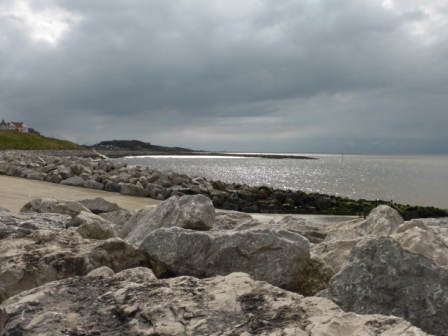
Morecambe Bay, Lancashire

Morecambe Bay, Lancashire

In Brigantia, Guy Ragland Phillips conjectures that Du might be identified with the Black Horse of Bush Howe in the Howgill Fells in Cumbria. He suggests Elidyr’s northern Benllech was Bush Howe and cites an alignment down Long Rigg Beck valley to Morecambe to Anglesey, saying the horse would be within its line of sight. This might have been the route taken by Du and his riders. ‘Benllech in Mon’ is likely to be present-day Benllech on Anglesey.

Benllech beach, Anglesey

Benllech Beach, Anglesey

Elidyr’s voyage aboard Du with seven-and-a-half or eight people was well known by Welsh poets until the early 16th century. Tudur Aled says ‘Of greater vigour than Du’r Moroedd, such was his strength and daring… for a spree with the cold wind, eight men formerly went upon his back’. Guto’r Glyn speaks of a foal whose ‘mother was a daughter to that horse of Mon who went to carry eight men: Du y Moroedd has grandsons – this one, I know was one of them.’

Another renowned rider of Du is Gwyn ap Nudd, a Brythonic hunter-god and ruler of Annwn. In Culhwch and Olwen it is stated ‘No steed with be of any use to Gwyn in hunting Twrch Trwyth, except Du, the steed of Moro Oerfeddog’ (the latter is a jumbling of Du’s name).

Because he fails to recruit Gwyn, Arthur does not manage to kill Twrch Trwyth, ‘King of Boars’, who finally escapes into the sea. Only the otherworldly Gwyn can ride Du to hunt the Twrch into the ocean, which might also be identified with Annwn, ‘the Deep’, ‘the Otherworld’.

Gwyn’s father, Nudd/Nodens, is pictured in a chariot pulled by four water-horses. At Vindolanda Nodens is equated with Neptune. Both Neptune (as Neptune Equester) and his Greek counterpart, Poseidon (as Poseidon Hippios) were associated with sea-horses (hippocampi).

Intriguingly we find a story in Irish mythology called ‘The Pursuit of Giolla Deacair’ featuring Gwyn’s cognate, Fionn, wherein fifteen-and-half of Fionn’s men are abducted into the sea by a water-horse.

Giolla Deacair, ‘the Troublesome Slave’ and his horse are taken in by Fionn. Both are described as monstrous. Giolla has a ‘twisted mouth with long pointed teeth projected from it at all angles’ and ‘eyes like black holes in the skull of a corpse’. He drags a large iron club leaving ‘a deep trench in the ground’.

His horse is described as ‘dirty, shaggy hair covered its long, spiny back and the ribs were sticking out through its sides. Its legs and feet were crooked and splayed and a leg that seemed too large for his body dangled awkwardly from a scrawny neck.’

The horse causes trouble amongst the other horses. Feargus tells Conan to jump on its back and ride it across country to break its spirit. However, it will not move until it carries the weight of its rider, Giolla Deacair, which is equal to fifteen men. This shows Giolla and his horse are gigantic. The men pummel and kick the horse yet still it won’t move.

Infuriated by his horse’s mistreatment, Giolla leaves. His horse follows with the men ‘welded’ to him ‘like a sword to its hilt’. Fionn and his remaining warriors follow, but no matter how fast they pursue the horse goes even faster, like the wind, over mountains, rivers, and valleys until reaching the sea. As it shoots into the waves one of Fionn’s warriors grabs onto its tail.

We are told that, as it journeys through the sea, ‘The waves did not touch it nor the fifteen Fianna on its back, nor the unfortunate man clinging to its tail. Instead, the water parted before the animal, so that it travelled on a path of dry land.’ We might imagine Du travelling similarly.

Fionn and his men sail after Giolla and his horse to where the riders are imprisoned in Tír fo Thuinn, ‘The Land Under the Wave’. Giolla reveals he is a magician called Abartach. Fionn’s marriage to Taise persuades Abartach to release his men. As retribution Goll claims fourteen of Abartach’s women to return on the horse’s back and his wife to cling onto the horse’s tail.

This tale suggests Du also originates from the watery regions of the Otherworld. I wonder whether, like Giolla’s horse, Du had an earlier otherworldly owner whose name and stories have been forgotten. Perhaps there was once a story about how Gwyn came to ride Du between worlds.

Du also shares resemblances with the Welsh ceffyl dwr, the northern British dobbie, and the Scottish kelpie. The latter are notorious for luring humans onto their backs then drowning them. Once a rider has mounted, their hand sticks to the kelpie’s neck and they cannot let go.

Du’s stories have fascinated me since I heard his splashing hoofbeats approaching whilst meditating on the Ribble estuary. When I travel to the west coast his presence is always on the edges of my mind: his great arched neck, his oar-like legs, the multitude of riders he has carried. My fingers are caught in his mane and he is forever drawing me toward the Otherworld…

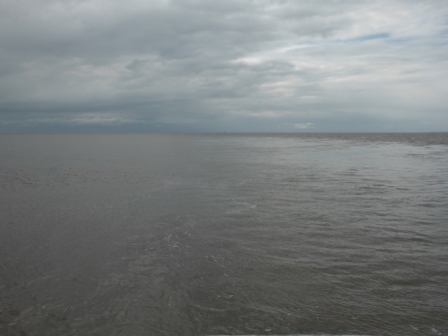
Irish Sea from Morecambe

The Irish Sea from Morecambe Bay

Orddu, the Very Black Witch

There is no document of civilization which is not at the same time a document of barbarism.’
  Walter Benjamin

Orddu has been a powerful presence in my life since I started investigating the story of her death. In the medieval Welsh tale, Culhwch and Olwen (1070AD), she meets a gruesome end. She is cut in twain by Arthur’s knife, then her blood is drained and bottled to dress the beard of the giant, Ysbaddaden Bencawr.

The murder of Orddu is the penultimate act in a trail of bloody atrocities committed by Arthur and his men so Culhwch can win Olwen. Ancient animals are hunted down, giants butchered, otherworldly treasures stolen, numerous historical and mythical figures subordinated and incorporated into Arthur’s court. Finally, Ysbaddaden is barbered and beheaded.

The civilising rule of Arthur as a champion of Christianity unifying Britain is asserted by his barbaric assault on this land’s divinities and those who interact with them. His reign as a national hero is based on his wiping out not only of the lives, but the stories, of a myriad Others cast into an abyss of ignominy from which few of us hear their screams.

Orddu’s death cry has resounded in my ears for several years now. Sadly she does not appear in any other sources. Nothing is known about her outside Culhwch and Olwen, where she takes to the stage for a brief and brutal battle before her life is snuffed from the page and from history. However, clues to her significance can be gleaned by reading the surface text otherwise, from the perspective of Annwn, ‘the deep’, the ancient British Otherworld.

Orddu is introduced as ‘the Very Black Witch, daughter of the Very White Witch’ (Orddu means ‘Very Black’ and Orwen ‘Very White’). This is suggestive of a matrilineal tradition of witchcraft passed on from mother to daughter through the generations. Whether Orddu and Orwen are titles, or refer to the witches’ skin colour, hair colour, or the type of magic they practiced remains unclear. Still, these women can be pictured singing spells, passing on plant knowledge, caring less for labels than the flow of magic that runs in their blood and sings in their souls.

When Arthur embarks on his quest to bottle Orddu’s blood he sets out for the North. Northern Britain, with its rough terrain and cold weather, where the influence of Rome struggled harder to maintain its hold, is traditionally viewed as hostile and dangerous in medieval Welsh literature.

Orddu is located in ‘Pennant Gofid in the uplands of hell’. Pennant Gofid means ‘Valley of Grief’. This may be viewed simultaneously as a place where people come to grief and a place where they come to grieve. ‘Hell’ is translated from ‘Uffern’, ‘Inferno’, a word used synonymously with ‘Annwn’. The associations with mourning and the Otherworld suggest Pennant Gofid was a valley of the dead and that Orddu was its custodian. As such it would have been viewed as profoundly sacred by local ‘pagans’, but as hellish by Christian intruders with no understanding of their beliefs. I have not managed to locate Pennant Gofid within the physical landscape, but when I journey there in spirit it is steep and stony. A white river with foaming rapids roars through it. Through its ever-present mists hardy stumpy trees can be glimpsed, cairns, dolmens and, occasionally, mountain ghosts.

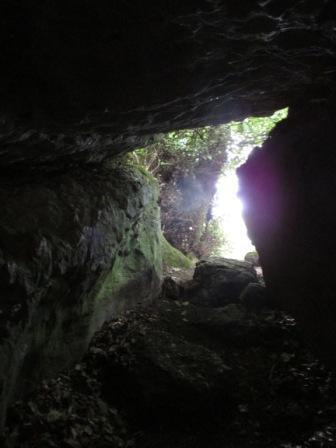
Orddu is found in a ‘hag’s cave’. This signifies her connection with ancient ancestral traditions which have no place in the civilised world of Arthur. Caves are places of access to Annwn and its mysteries. The bones of Orddu’s ancestors may have been buried in the cave’s recesses. In my journeywork it is half way up the valley; a precarious scramble. Nearby a spring emerges from the rock. There I received the gnosis it is the place Orddu and her kindred grieved for their predecessors and the dead who are buried in the valley. Their salt tears are the source of the white waters of the River of Grief. There I mourned Orddu’s death.

To find Orddu’s cave, Arthur is dependent on the guidance of the pre-Christian deities Gwyn ap Nudd (‘White son of Mist’) and Gwythyr ap Greidol (‘Victor son of Scorcher’). Gwyn is a god of Annwn and ruler of its spirits who are referred to as ‘demons’ in Culhwch and Olwen. In The Black Book of Carmarthen (1350AD) he appears as a gatherer of the souls of the dead.

Gwyn and Gwythyr are deadly rivals for the love of a maiden called Creiddylad. In an earlier episode, Arthur put an end to their conflict by placing a command on them to fight for Creiddylad every May Day until Judgement Day. Their appearance together and as advisors to Arthur seems contrived as a way of demonstrating Arthur’s power.

Read beneath the surface and we see that Gwyn’s presence in Orddu’s story has deeper roots. If Orddu is located on the edge of Annwn, then Gwyn is the deity who must be called upon to part the mists to find her. Orddu’s witchcraft may be rooted in her relationship with Gwyn as a god of Annwn and with the spirits and the dead who he presides over.

Evidence of groups working magic with the deities of the Otherworld has been found in Gaul. The Tablet of Larzac (90AD), from a seeress’s grave, refers to a coven of witches practicing andernados brictom ‘underworld-group magic’. The Tablet of Chamalieres (50AD) evidences a group of men calling on ‘Andedion’ ‘Underworld God(s)’ for aid in battle. ‘Annwn’ and ‘Andedion’ share the same stem. The poet Dafydd ap Gwilym refers to ‘witches of Annwn’ suggesting similar groups existed in Britain.

We also have records of a native tradition of prophesy and spirit-work. In his Description of Wales (1194AD), Giraldus Cambrensis refers to ‘Awenyddion’, ‘people inspired’ who are possessed by spirits and perform oracular trance when consulted on ‘doubtful events’. Orddu can be pictured prophesying with the spirits of Annwn and invoking their aid. Arthur’s subordination of Gwyn represents the negation of her source of magic.

When Arthur and his men approach Orddu’s cave she shows no sign of fear. Arthur hesitates until Gwyn and Gwythyr advise him to send in two of his servants, Hygwydd and Cacamwri. Orddu grabs Hygwydd by the hair and wrestles him to the ground, disarms and thrashes them both and beats them out ‘shrieking and shouting’. When Arthur tries to rush the cave, Gwyn and Gwythyr say, “It is not proper and we do not want to see you wrestling with a hag.” They tell Arthur to send another pair of servants in. We do not hear what Orddu does to Hir Amren and Hir Eiddil (Hir means ‘long’ or ‘tall’ – these are formidable men), only that their fate is ‘far worse’ and the four are so severely incapacitated they cannot escape without being put onto Llamrei, Arthur’s gigantic mare. After this, Arthur loses his temper and strikes Orddu dead.

It is uncertain whether Gwyn and Gwythyr are being presented as stupid or as tricking Arthur to defend Orddu. Whatever the case, in spite of being alone in her cave and outnumbered, Orddu displays considerable skill in hand-to-hand combat and puts up a courageous fight.

Comparisons may be drawn with the witches of Caer Lowy who teach Peredur how to ride a horse and handle weapons. Afterward, Peredur turns on them and slaughters them with Arthur’s aid. Conspicuously he kills one of the witches by striking her on the helmet so her head is split in two. As she dies she tells Peredur he was destined to kill her. It may be conjectured that Orddu belonged to a similar lineage of women who were not only witches but also trained the warriors of the North.

Thus it makes sense that for Arthur’s tasks to be completed this powerful woman must be removed from her position at Pennant Gofid where she teaches the arts of warriorship and utters prophecies from the mouth of Annwn. Her death signals the end of a tradition that may be as old as the ancestral remains in the cave where she abides.

Long has she lain there, her skull split in twain, her bones in two weary piles. Long has her story been forgotten, until now, as the rule of Arthur and the hegemonic brand of Christianity that gave us the Crusades, witch hunts and the British Empire united under ‘One King, One God, One Law’ begins to crumble.

The blood of witches does not stay bottled forever even in the bottles of a dwarf. The glass walls that contain magical women are shattering. Orddu’s call is to win back our powers of prophecy and fighting strength, to rebuild our relationships with Annwn and its gods and spirits. To reach into our caves of potential and fulfil our vocations with courage, remembering how her life was cut short.

Picture

*This article was solicited by Kate Large and was first published in Pagan Dawn, No 202, Spring 2017

Gods and Radicals's avatarGODS & RADICALS

We have started rebuilding from the ruins.

We are the children you never knew you would have.

We do not see you but we keep on building

the future you made your crossing for.

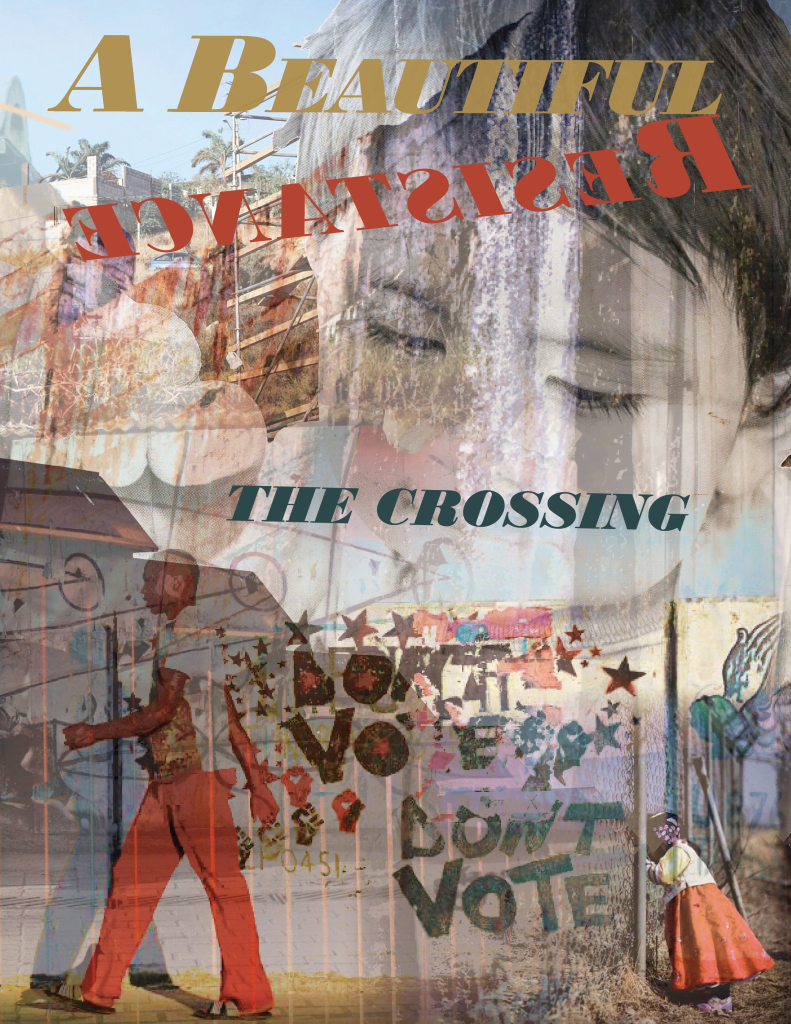
Gods&Radicals is pleased to announce that the fourth issue of our journal, A Beautiful Resistance, will be released into the world 15 November.


Edited by Lorna Smithers and Lia Hunter, foreworded by Peter Dybing, and yet again featuring the brilliant cover artistry of Li Pallas, A Beautiful Resistance: The Crossing features literary and artistic works from Europe, Africa, Asia, and North America, by:

Nina George, Nimue Brown, S. A. O’Hungerdell, Angharad Lois, Nicole Heneveld, Bryan Hewitt, Rex Butters, Rhyd Wildermuth, Lorna Smithers, Dennis Mombauer, Dr. Bones, Boham, Ingi House, Jason Derr, Aicila Lewis, Joe DiCicco, Tahni J. Nikitins, Shane Burley, Innocent Chizaram Ilo, Michael Browne, Nebulosus Severine, Finnchuill, Rune Kjær Rasmussen, Sean Donahue, Sonali Roy, Christine…

View original post 16 more words

A Prayer For When You Sleep

For Gwyn

Four months without your presence here,
May, June, July, August…

you have pulled the hill-doors shut,
drawn your shadow

into your fortress
where snow is heaped upon the roof

and you are guarded by a vigil
of loyal, loyal hounds.

In the blink of your eye
the fortress turns –

one moment
an eternity in Annwn,

here May, June, July, August…
The flowers mark the stations

of your sleep – bluebells, red campion, ox-eye daisies.
The trees are green with your rival’s victory

yet in a yew grove I see you sleepwalk,
mime the making of a bow.

For four months I count forget-me-nots,
blow white seeds of dandelions

into the silent tolling of Annwn
and gather mugwort.

Four months without your presence here,
May, June, July, August…

P1210750

Gwyn Altar - Sleeping - Caer Ochren - Meg Falconer

Image Caer Ochren, based on lines about the birth of Pen Annwn in Preiddu Annwn, by Meg Falconer

She Walks Between Worlds and Lovers (Calan Gaeaf)

It is summer in the otherworld when she is there
winter in the otherworld without her.
In Gwyn’s arms she is Lady Death:
petals fading wilting perishing discoloured
returning to the earth with work of insects,
seeds descending into soft and loamy soil,
sinking down with the work of worms.
Into his fateful embrace he takes her
down beneath bones of the dead,
fallen trunks and golden pollen.
In ancientmost forests Creiddylad
is Annwn’s Queen in sacred marriage.
Their passion in the unseen summer
stirs the dreams of sleeping corm,
bulb, knotty seed: movement
of potential, hidden, dormant
until the explosion to life. Each
underground power puts out shoot, stem, leaf,
reaching upward through snow for another sun.
She is their secret growth until the moment of flowering
when she sees her time in the otherworld is over
and walks between worlds and lovers.

Leaves in Greencroft Valley

Riddles and Howling Monks

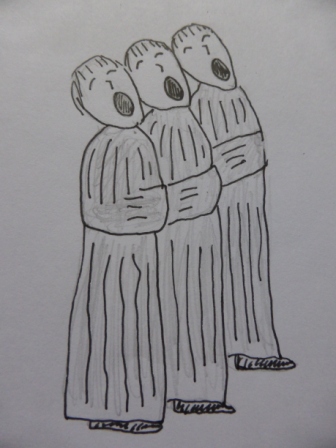
In ‘The Spoils of Annwn, after Taliesin has finished narrating Arthur’s raid, he continues to mock the monks (earlier referred to as ‘pathetic men’) because they do not know the answers to certain riddles.

The opening ‘Myneich dychnut val cunin cor / o gyfranc udyd ae gwidanhor’ has been translated ‘Monks congregate like a pack of dogs / because of the clash between masters who know’ and ‘Monks howl like a choir of dogs / from an encounter with lords who know’.

Dychnut may derive from cnut ‘pack of hounds, wolves’ or *dychnudo, an archaism meaning ‘howl’. Cun means ‘pack of dogs’ or ‘lord’. The primary meaning of cor is ‘choir’, but it is also used to refer to groups such as ‘a host of angels’ or ‘a company of bards’. Côr bytheiaid and côr hela  both mean ‘kennel or pack of hounds’. Udyd may be the plural of ud ‘lord’ or relate to udaw ‘howl’.

In these ambiguous, carefully chosen words, dogs/wolves, choirs, lords and howling are cleverly and intricately linked. These intricate connections are unfortunately not conveyed by the English language.

Within Welsh tradition numerous divine ‘lords’ are associated with hounds: Cunomaglus ‘Hound Lord’; Cunobelinus ‘Hound of Belinus’; Nudd who Taliesin refers to as ‘the superior wolf lord’ and his son, Gwyn ap Nudd, who owns a hound called Dormach ‘Death’s Door’ and hunts with the Cwn Annwn. Another is Arawn who, like Gwyn, is a ruler of Annwn and associated with white, red-eared Annuvian hounds. It seems possible Taliesin is comparing the howling monks with their howling hounds.

Cyfranc means ‘clash, contention’ or ‘tale, story’. This brings to mind Taliesin’s clash with the bards of Maelgwn in The Story of Taliesin. Taliesin enters this contest to rescue his master, Elphin, son of Gwyddno Garanhir, from Maelgwn’s imprisonment.

Gwidanhor ‘one who knows’ (from gwybod ‘know’) shares a likeness with Gwyddno Garanhir ‘knowing one’. In The Conversation of Gwyn ap Nudd and Gwyddno Garanhir, Gwyddno converses with Gwyn and meets his hound, Dormach. Gwyn reminds Gwyddno that Dormach ‘was with Maelgwn’. These complex mythic intersections would have been in a medieval Welsh audience’s mind.

Taliesin claims the lords/masters  know, ‘Whether the wind (follows) a single path, whether the sea is all one water, / whether fire – an unstoppable force is all one spark’. In The Story of Taliesin, Taliesin wins the contest with a series of poems including an extended riddle about the wind. He is claiming knowledge of the elements Maelgwn’s bards do not possess.

Taliesin counts himself amongst the ‘knowing ones’ initiated into the mysteries of the universe alongside lords/masters such as Gwyddno and Gwyn. The howling of the monks parodies their otherworldly company.

The next verse continues in a similar vein:

‘Monks congregate like wolves
because of the clash between masters who know.
They (the monks) don’t know how the darkness and light divide,
(nor) the wind’s course, its onrush,
what place it devastates, what land it strikes,
how many saints are in the void, and how many altars.’

The reference to the monks’ lack of knowledge of where darkness and light divide echoes preceding verses where Taliesin mocks them for not knowing the divisions of time nor when Pen Annwn ‘Head of Annwn’ was conceived or born. These questions are intrinsically linked as Pen Annwn is associated with the transitions between night and day, the seasons and the mysteries of death and rebirth.

The line referring to saints and altars being ‘in the void’ is intriguing. This may relate back to the transitional period between paganism and Christianity when the links between Annwn and the dead were severed and Annwn was re-construed as a hellish (hot, cold or empty) place.

In the final lines Taliesin says, ‘I praise the Lord, the great Ruler: / may I not endure sadness: Christ will reward me.’ The ending is undeniably Christian yet in Pendefic mawr, ‘great Ruler’ we find traces of a most un-Christian lord: Pen Annwn.

 So the end of the poem has been reached. Arthur and his men have raided Annwn and slammed its gate shut. As Taliesin returns to his chair in Caer Siddi we’re left contemplating a trail of destruction amongst the howling monks whose choir echoes the howling of the hounds of the Lord(s) of Annwn.

 ***

The monks howl.
We howl with them.
There is no turning back
to when Annwn was unspoilt
before the flashing sword
the stolen cauldron
and trail of death.

No turning back
only howling onwards
into the next chapter
the next myth…

P1170785 - Copy

*The translations of Preiddu Annwn ‘The Spoils of Annwn’ I have used are Marged Haycock’s from Legendary Poems of Taliesin and Sarah Higley’s HERE. With thanks to Heron for notes on cor from The University of Wales Dictionary.

Caer Ochren: The Birth of Pen Annwn and the Silver-Headed Beast

The final fort which Arthur, Taliesin and their party raid in ‘The Spoils of Annwn’ is Caer Ochren. Marged Haycock translates Caer Ochren as ‘Angular Fort’ (from ochr ‘edge’, side’). This name could relate to the fortresses having four corners/quarters/turrets/peaks. Ochr also translates as ‘aspect’ or ‘facet’. My working thesis is we’re looking at seven names for the same fort. Caer Ochren thus encompasses all its facets rolled into one.

Once again Taliesin berates ‘pathetic men’ (monks) for their lack of knowledge of certain mysteries:

‘I don’t deserve to be stuck with pathetic men, with no go in them,
(those) who don’t know on what day the Lord is created,
(nor) when, at noon, the Ruler was born,
(nor) what animal it is they guard, with his silver head.’

Haycock draws parallels with Christian tradition. ‘What hour was he (Christ) born? As the prophet says, he came at midnight from his regal thrones’. ‘At what time of the day or night was the world made, and (at what time) will it be destroyed, and (at what time) did the Lord arise from the dead?’

However, this relies on the translation of ‘Lord’ from Pen which literally means ‘Head’. Considering the poem centres on the theft of the cauldron of Pen Annwn (‘Head of Annwn’), it seems more likely he is the subject of the riddles and they refer to the day of his creation and the hour of his birth.

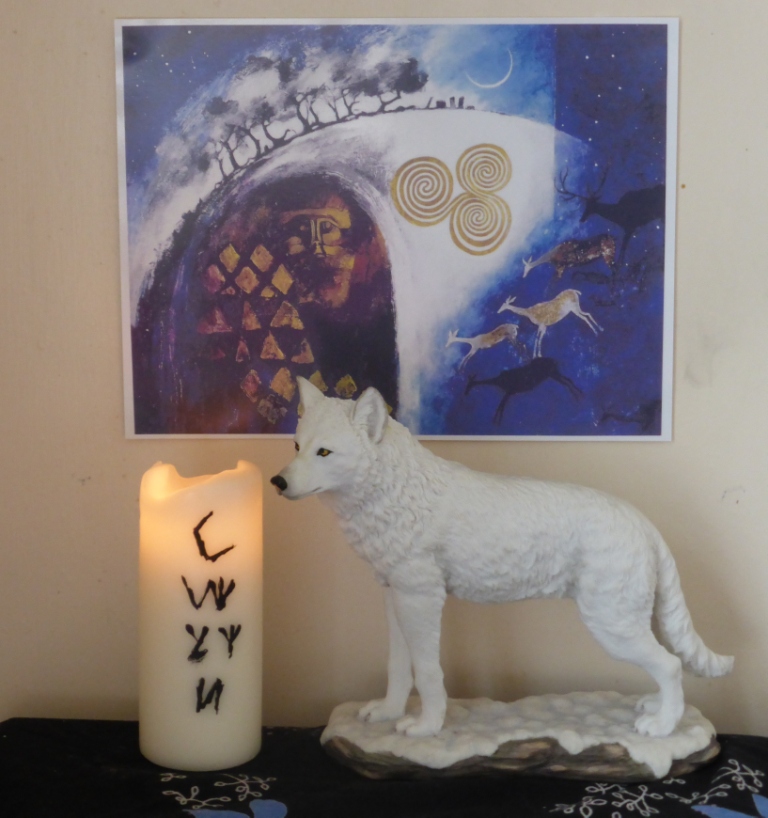
This is the interpretation of Caitlin and John Matthews, who refer to ‘the conception and birth of the Chief (of Annwn)’. In an evocative painting of Caer Ochren*, Meg Falconer depicts the Chief’s face as he awaits birth beneath a snowy mound accompanied by running deer, a triskele, and slither of new moon. The text around the painting reads: ‘Caer Ochran – the cold castle under the stone – the magic beast of the silverhead – day of the kings birth.’ It seems significant the birth of Pen Annwn is linked with the last fort in the poem.

Next we come to the silver-headed animal. ‘Animal’ is translated from vil (mil) by Haycock whereas the Matthews favour ‘beast’. We find the repetition of pen (aryant y pen ‘silver head). Sarah Higley and the Matthews translate Perchen as ‘owner’, which suggests it belongs to Pen Annwn and is guarded by his people. The question of the identity of this beastie has produced a proliferation of divergent conjectures.

Robin Melrose suggests the silver-headed animal/beast is the Brindled Ox from the previous verse. The lines about the Brindled Ox are also preceded by a similar riddle about the birth at mid-day of Dwy, ‘God’ (Pen Annwn?) and it’s possible this verse echoes the one before it. An old ox could certainly be pictured with silver hairs.

An alternative theory is put forward by Marged Haycock. She says ‘Mil is understood as an ‘animal’ guarded by the monks, perhaps a riddling question referring to ‘a silver-headed crozier with a zoomorphic crook bearing a reliquary box.’

The Matthews point out ‘The animal that most commonly has silver hair on its head is an elderly human.’ They suggest this may be a kenning for Henben ‘Old Head’, an epithet of Maelgwn Gwynedd’s chief poet Henin Fardd. Further ‘the real Henben or Old Head is Brân himself.’

The mention of a silver-headed beast puts me in mind of Twrch Trwyth, ‘King of Boars’. One of his piglets is Grugyn Gwrych Eraint, ‘Grugyn Silver-bristle’; ‘all his bristles were like wings of silver, and one could see the path he took through the woods and over fields by the way his bristles glittered.’ It seems likely Grugyn inherited his silvery bristles from his father.

In Culhwch and Olwen, Arthur leads the hunt for Twrch Trwyth, yet lines stating the hunt cannot begin until Gwyn ap Nudd is found suggest Gwyn was the original leader. Gwyn is a candidate for the title Pen Annwn and it seems possible his people guard the silver-headed beast. An objection is the Twrch is a wild animal unlikely to be owned or guarded.

Another suggestion is the animal owned by Pen Annwn is a dog. Both Gwyn and Arawn are connected with hounds of Annwn. Gwyn owns a dog named Dormach who is ‘fair’, ‘red-nosed’ and pictured with two serpent’s tails. He could possess a few silver hairs. However it’s more likely he’d be doing the guarding than being guarded!

The silver-headed beast slips from grasp like quick-silver and perhaps that’s the key. Many animals in Celtic mythology were shapeshifters and didn’t stay the same for long. Interestingly there is no record of Arthur getting his hands on this evasive beast.

The verse ends with the refrain:

‘And when we went with Arthur, sad journey,
save seven none came back from Caer Ochren.’

The journey of Arthur, Taliesin and the other survivors is complete. It is drawn into connection with the birth of Pen Annwn. In Caer Ochren end and beginning meet. Yet the poem has not finished. Taliesin has plenty of insults left for those monks…

~

Caer Ochren

I am the end and the beginning.
Count my angles. You will never count them all
because I am spinning beyond the terminal velocity
of sight. You will never know what is behind,
beyond the walls unless you come in,
scratch the head of a silver-headed beast,
a hound beside the chair of the one who rules the fort
and has been absent half a year. How he stretches
his great jaws, unrolls himself into a serpent.
Where teeth touch tail the story ends
and begins again.

P1170370

*In King Arthur’s Raid on the Underworld. Some of Meg’s paintings can be viewed HERE.

Caer Vandwy and the Theft of the Brindled Ox

A plain of blood where men once stood.
The lights have gone out in Caer Vandwy.
The clashing sea rolls over shield and spear.
The living dead. The dead dead again.

***

The sixth fortress in ‘The Spoils of Annwn’ is Caer Vandwy. This has been translated as ‘Fortress of God’s Peak’ and ‘Fort of the High God’. Marged Haycock uses ‘Mand(d)wy Fort’ but does not explain her re-rendering. It could relate to Manawydan (‘Manawyd’ in ‘Arthur and the Porter’). The connection of a sea-god with an island location seems credible.

In the verse relating to Caer Vandwy, Taliesin again berates ‘pathetic men’ (monks) for their lack of insight into certain mysteries he is knowledgeable about:

‘I don’t deserve to be stuck with pathetic men trailing their shields,
who don’t know who’s created on what day,
when at mid-day God was born,
(nor) who made the one who didn’t go to the Meadows of Defwy.’

The second line suggests the existence of a Bardic riddle enumerating mythic and/or historic figures born on certain days. In line three, Haycock reconstitutes Dwy ‘God’ from Cwy. Caitlin and John Matthews prefer Cyw ‘chick’ whereas Sarah Higley sticks with Cwy as a personal name.

Haycock’s choice fits with the translations of Caer Vandwy as a fortress belonging to (a) God. This may not be the Christian God. In the next verse Taliesin refers to the ‘pathetic men’ as ‘(those) who don’t know on what day the Lord is created’. Lord is translated from Pen ‘Head’. Perhaps this god is Pen Annwn ‘The Head of Annwn’.

Next we come across an unnamed person ‘who didn’t go to the Meadows of Defwy’. Haycock suggests Defwy is a river-name meaning ‘black’ (from def-/dyf) and poses the question ‘Was this imagined as a river between this world and the next?’

The Matthews link the Meadows of Defwy to Gweir ap Gweirioed ‘Hay son of Grassiness’ (the divine prisoner in verse one) and say ‘we may be looking at Doleu Defwy as an otherworldly meadow’.

This brings to mind the Gwerddonau Llion (translated as ‘green meadows of the sea’ and ‘green islands of the floods’). In a triad* referring to ‘three losses by disappearance of the Isle of Britain’ Gavran is said to have gone to sea in search of the Gwerddonau Llion.

Philip Runngaldier connects the Gwerddonau Llion with the sunken land of Cantre’r Gwaelod ‘The Bottom Hundred’ and says they are inhabited by ‘Gwyllion’: ‘the shades of (Llyn) Llion’ ‘the dead’. Perhaps the one who didn’t go to these mysterious meadows escaped death.

***

Taliesin continues to deride the monks:

‘those who know nothing of the Brindled Ox, with his stout collar,
(and) seven score links in its chain.’

Grazing on the Meadows of Defwy we come across an animal of great fame: Ych Brych ‘The Brindled Ox’. He appears in The Triads as one of ‘Three Principal Oxen of the Island of Britain’:

‘Yellow Spring (‘The One of the yellow of spring’)
and Chestnut, of Gwylwylyd (or ‘a meek and gentle ox),
and the Brindled Ox.’

His capture is amongst the ‘impossible tasks’ Arthur and his men must fulfil on Culhwch’s behalf in Culhwch and Olwen. For food to be grown for Culhwch and Olwen’s wedding feast, a field must be ploughed by the divine ploughman, Amaethon.

The plough must be pulled by a team of six oxen: ‘the two oxen of Gwylwlydd Winau, yoked together’, ‘Melyn Gwanwyn and the Ych Brych yoked together’ and ‘two horned oxen… Nyniaw and Peibiaw.’

Two oxen from the triad: Yellow Spring and the Brindled Ox are placed together and Gwylwylyd appears as the owner of two oxen, presumably Chestnut and an unnamed ox. Intriguingly Nyniaw and Peibiaw are the sons of the king of Archenfield ‘whom God transformed into oxen for their sins.’

John Rhŷs records a folkloric story where Nyniaw and Peibiaw are brother kings. One moonlit night, Nyniaw boasts his field is ‘the whole firmament’. Peibiaw says his sheep and cattle are grazing in his fields: ‘the great host of stars, each of golden brightness, with the moon to shepherd them.’ Nyniaw is furious and a terrible battle ensues which leads to their transformation into oxen by God.

This may be a Christianised explanation of their shapeshifting capacities. In The Tain, the two bulls Finnbennach and Donn Cuailnge are ‘pig-keepers’ ‘practiced in the pagan arts’ who can ‘form themselves into any shape’. Tricked into falling out, they battle against each other as birds of prey, whale and seabeast, stags, warriors, phantoms, and as dragons before becoming maggots, being swallowed by cows and reborn as bulls. It seems likely the Brindled Ox was originally a shapeshifter with the capacity to take human and other forms.

***

In the last lines of the verse Taliesin says:

‘And when we went with Arthur, sad journey,
save seven none came back from Caer Vandwy*’.

The final line is repeated as a refrain at the end of each verse. Of three full loads of Prydwen who went to Annwn, only seven survivors return. Some catastrophe has taken place. Lines spoken by Gwyn ap Nudd in The Conversation of Gwyn ap Nudd and Gwyddno Garanhir suggest this was a battle at Caer Vandwy:

‘to my sorrow
I saw battle at Caer Vandwy**.

At Caer Vandwy I saw a host
Shields shattered, spears broken,
Violence inflicted by the honoured and fair.’

It is my growing intuition the names of individual fortresses are in fact different names for the same fort. In the previous verse Taliesin said six thousand men and an incommunicative watchman were standing on Caer Wydyr’s glass walls. Gwyn is referring to the catastrophic battle against the people of Annwn by which Arthur and his men broke into the fort. After breaking in, they took Gweir, stole the Head of Annwn’s cauldron, and captured the Brindled Ox before slamming ‘Hell’s gate’ shut.

A couple of months ago Brian Taylor drew my attention to a passage in James Hillman’s The Dream and the Underworld which illustrates the parallels between Arthur’s raid on the Head of Annwn’s fortress and Hercules’ assault on the House of Hades: ‘drawing his sword, wounding Hades in the shoulder, slaughtering cattle, wrestling the herdsman, choking and chaining Cerberos… the Herculean ego does not know how to behave in the underworld’.

As I continue my own journey through ‘The Spoils of Annwn’ where others see a quest for inspiration, I see violence, desecration, the utmost disrespect for the people of Annwn: a trail of atrocities committed by a power-hungry warlord and ambitious bard.

Far from being a model for seekers of Annwn’s mysteries it advocates the selfish pursuit of objects of desire through deceit and brute force. Our stories of journeys to the underworld are reflected in the upperworld and we have still not outgrown this Arthurian/Herculean mindset.

New ways of approaching Annwn based on respectful relationships with its people are required. Perhaps in time these will yield the stories needed to replace Arthur’s hegemony. But first repairs must be made…

*This is referred to in The Cambro Briton but I can’t find a source. It isn’t in The Triads of the Islands of Britain.
**Rather than using Haycock’s unexplained re-rendering of Gaer Vandwy I have stuck with the name in the Welsh text.
***Heron translates kaer wantvy as Caer Fanddwy. I’ve stuck to Caer Vandwy for consistency.

SOURCES

Caitlin and John Matthews, King Arthur’s Raid on the Underworld, (Gothic Image, 2008)
Heron (transl), ‘Gwyn ap Nudd and Gwyddno Garanhir’
James Hillman, The Dream and the Underworld, (CN, 1979)
Marged Haycock (transl.), Legendary Poems from the Book of Taliesin, (CMCS, 2007)
Philip Runggaldier, Llyn Llion Theory, (Matador, 2016)
Rachel Bromwich (ed), The Triads of the Island of Britain, (University of Wales Press, 2014)
Sarah Higley (transl.), ‘Preiddu Annwn’, (Camelot, 2007)
Sioned Davies (transl.), The Mabinogion, (Oxford University Press, 2007)
Thomas Kinsella (transl), The Tain, (OUP, 1979)
Wirt Sikes, British Goblins, (Lightning Source, 1880)