‘Porth-Annwfyn. Some numinous, arcane agnomen, but which to my dream cognition was livid as moonshine and did plainly signify: Gate of Elysium.’ David Jones
Porth Annwn ‘Door of the Otherworld’. Porth so easily rolling into ‘portal’. The type of door that not only forms both a barrier and an entranceway between here-and-there but transports elsewhere.
Doors are usually boundaries between rooms in a building or its inside and outside and gates serve a similar function in walls, fences, and hedges. Doors and gates that are portals transport between worlds.
Most famously, in the Brythonic tradition, in the poem ‘The Spoils of Annwn’ we find the lines ‘A rac drws porth Vffern, llugyrn lloscit’ ‘And in front of Hell’s gate lamps were burned.’ This suggests there is a gateway through which Arthur and his warriors travelled from Thisworld to the Otherworld and that lamps were burned in the course of a vigil until he and only seven of his men returned. Annwn, ‘the Deep’, was equated with Uffern ‘Inferno’ or ‘Hell’ by Christians in medieval Wales.
Although there a number of places known as ‘Hell’s Gate’ across the world I’ve never found one in Britain. Although, at liminal times, in liminal places, I have been transported to the Otherworld. I have no control over such events.
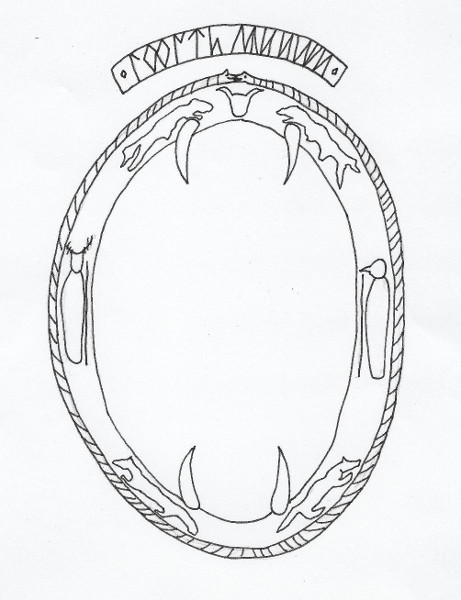
Finally, I was guided by the Witches of Pennant Gofid, who I believe were similarly devoted to Gwyn ap Nudd, my Lord of Annwn, to create my own doorway. They guided my hand in drawing it and decorating it with the head of Gwyn as bull-of-battle, shapeshifting horses and hounds, and two new guides – a bird man and antlered woman. The teeth symbolise it being the maw of Dormach, Gwyn’s Death Hound. the Jaws of Death.
When I step out of the door it is always into a misty hinterland. Occasionally I’m standing on solid ground, but often it’s marsh, and more often I’m on my winged horse treading mist with my hounds beside me. It’s said of Gwyn and Dormach that they travel ar wybir ‘on the clouds that haunt the mountaintops’ and that wybir or nuden ‘condensed floating white cloud’ ‘serves as a garment for Gwyn’.
And so we travel ar wybir, like Gwyn, until the mist clears, or someone appears to guide us out. Setting off right or left, or North, East, South, or West never works as the directions don’t function the same in Annwn (if they exist at all). I often end up in the same places, but never by the same routes. In contrast to other followers of shamanistic paths I haven’t managed to form a stable map of Annwn.
I’ve been told by numerous teachers one should always return by the same route. Some days I manage this, but other days the routes undo themselves as if Annwn is innately resistant to memory. I search instead for the mist, wait for it to come, like my god, to sweep me up, place me back at the portal.
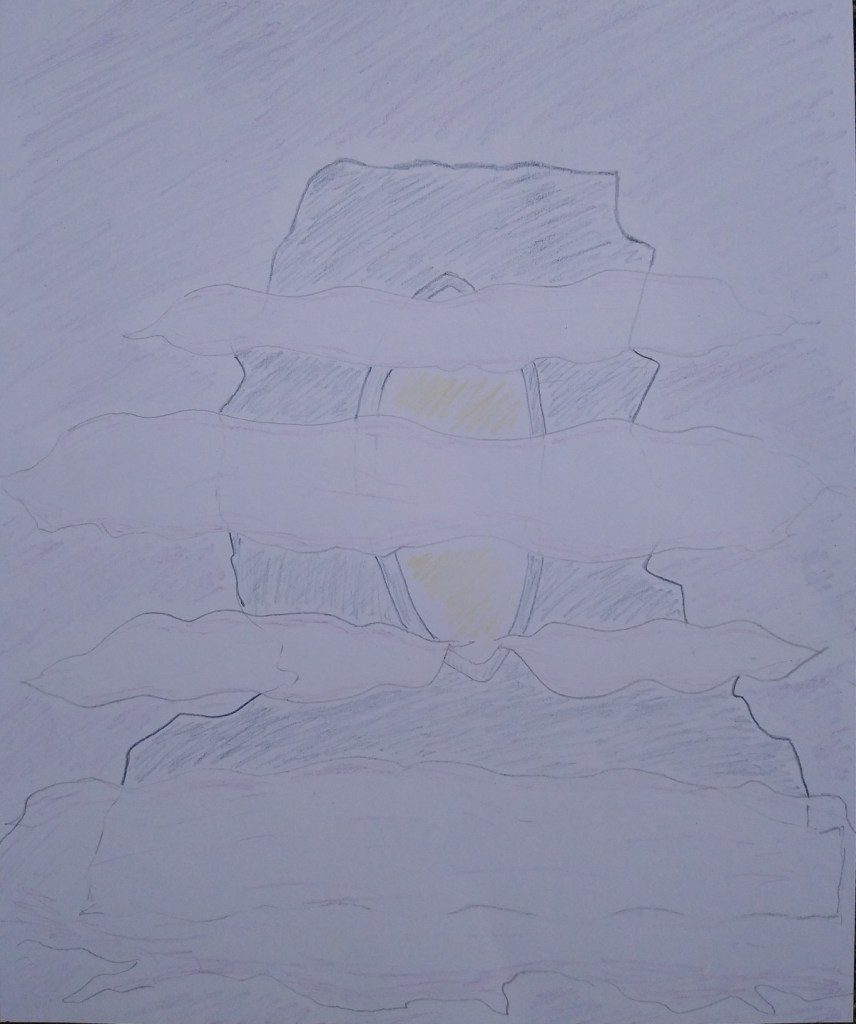
The door is always shrouded by mist and I have only just realised, after two years of constant use, that I have never seen the other side of the door. That I drew only my entryway, on my side, in my room, in Thisworld. That the origin and location of the exit, on Gwyn’s side, in the Otherworld, is a mystery.
All I know is that as I approach through the mist I have a feeling of increasing solidity. There is ground beneath my feet and the door is set within a wall. This creates the impression the door may once have been part of a fortress, shattered, fragmented, still able to float in the mist like Gwyn’s castle.
Could it be a cast-off door from the Fort of Pen Annwn rendered disposable by Arthur’s despoiling? A relic of Hell’s Gate? Or something older, or newer, but nonetheless no less mysterious? No burning of lanterns will shift the mist and again I must trust a gift of Gwyn’s that is incomprehensible.
The ship is tall, leaning. Its only crew are the gulls, who tie the knots in the sails; old, old, sailor souls. On its prow stands Barinthus, the helmsman, dark-cloaked, stern, implacable.
No-one sees if his lips move beneath the shadows of his hood as he reads out the roll call: the names of Londeners, Devonians, Bristolians, Scousers, Mancunians, Lancastrians, Glaswegians, Brummies, whose accents mix in the huge make-shift camp that has grown up in the marshy hinterland between the worlds.
They’re mostly old. Veteran souls move between them, boiling tea on stoves that burn on no gas. They drink from metal cups, pull blankets around them, attempt to recall to one another their stories.
Some of them are funny – drunken exploits – other people’s knickers and roundabouts. Some are tragic – motorcycle crashes, the loss of daughters and sons, spouses who lost their memory yet lived on.
“How did we get here?” few recall that journey or what brought them.
White hounds with red markings on their ears, noses, the tips of their tails, patrol the edges of the camp. If anyone tries to leave they are there. A grin and friendly growl is always enough. The pups like to play amongst the child souls, tongues lolling, letting their bellies be rubbed. When their master calls them, not liking them to get attached, they leave whining with their tails between their legs.
“Where are we going?” few recall that journey they have made so many times before.
“The biggest shipload since the last war,” my god’s voice from where he stands invisible so as not to frighten the souls.
Their leaving seems to take forever, one by one getting up from their camp stools, boarding across a wobbly plank and taking their places in the cabins, more cabins-worth of souls than there are cabins on board?
“The number of cabins, the space of the hold, the expanses of the deck, are limitless, infinitesimal,” Gwyn informs me. Speaking ominously “no matter how many passengers the ship is never full.”
I watch with Gwyn as the camp fires go out and the ship sinks deeper and deeper into the waters.
As a gull flies down and with a practiced twist of her yellow red-spotted beak unties the mooring rope I clasp my hands, bow my head in mourning, say farewell to 980 Britons who I never knew.
As I leave, dropping a tea bag in a pot for the next souls, I see them already beginning to arrive. Some are escorted by their ancestors, others by the hounds, others by white birds. A little boy is carrying a white red-spotted hamster wrapped up in his school blazer.
Creiddylad most majestic maiden in the Islands of Britain, let me know your majesty
in this garden
on my knees two hands clasped together on this trowel making offerings of water
amongst flowers where you walk unveiled, stunning, bees dancing around you.
Let me be your bee!
Feed me when I’m hungry. When I fall exhausted pick me up gently
and I will make the sweetest honey.
“Stay here in this garden,” my patron god, Gwyn ap Nudd, advised me a week before the lockdown. A couple of days before my conservation internship was cancelled and, like many, I was rendered jobless.
We’ve been on lockdown in the UK for over a fortnight now and how I’ve to-and-froed, some days accepting this advice and, on others, after reading the news, wishing I was doing something more important, more heroic, than shopping and cleaning for my parents, tending the garden, doing my best to find the focus to pray, meditate, spend time in devotion to my gods, and to write for my supporters.
My main battle has been against feelings of guilt and uselessness caused by my awareness of the utter contrast between my easy life, touched by the bliss of the spring sun, and the hell that the nurses and doctors are going through on the front line, risking their lives fighting for the lives of others. The risks taken by the funeral services. The chaos and stress faced by supermarket staff. Our dependence on the long hours and monotonous work of fruit and veg pickers usually imported from abroad.
I’ve thought of applying for, have actually applied for, some of these jobs (which may have necessitated moving out of my parent’s house so I do not put them at risk), but nothing has come of it.
“Stay here in this garden.” I accept the gods have their reasons when the Blasted Oak, spelling disaster, appears in a tarot reading on what will happen if I take a veg picking job.
And deep within I know if I took any of the above jobs I’d likely get physically or mentally ill. That there is something fundamentally wrong with this industrialised and militarised system that keeps comparing the ‘fight’ against this virus with the Second World War and tries to inspire a wartime ethos.
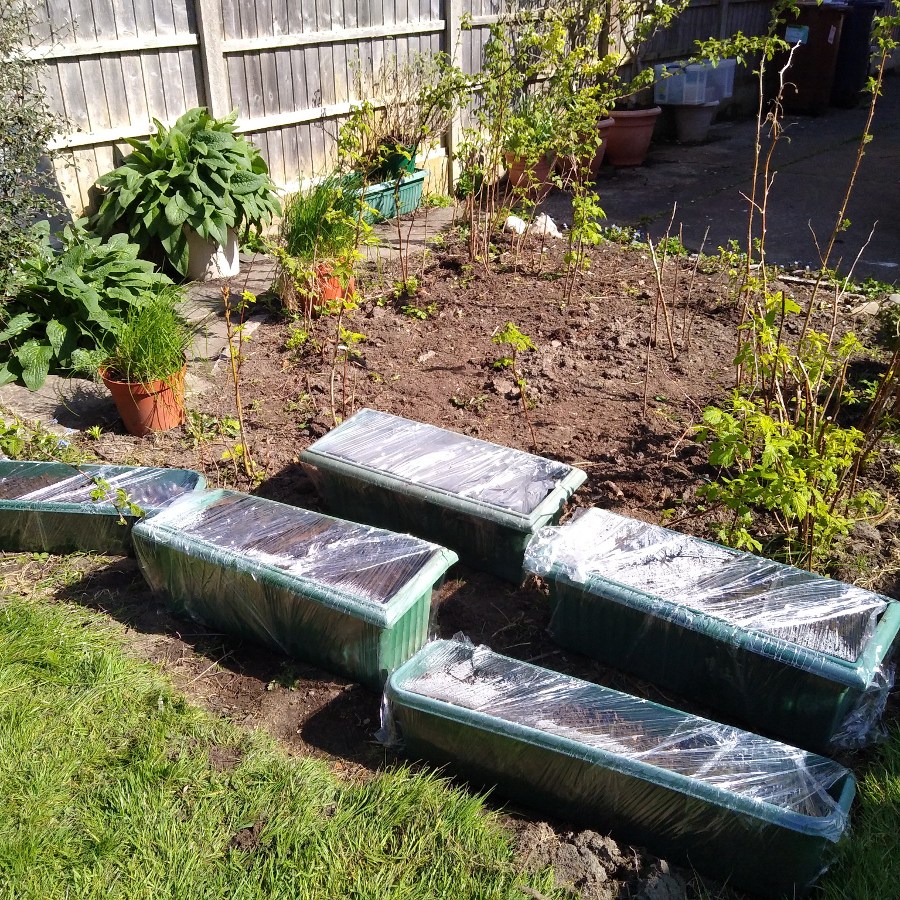
And so I tend my parents’ garden, cutting back years of overgrowth, clearing the paths, weeding amongst the many beautiful flowers that already grow here – hyacinths, daffodils, bluebells, honesty. And the shrubs and trees – apple, pear, rose, quince, camelia. Watering the raspberry canes. Sowing herb and lettuce seeds in troughs and veg seeds – carrot, turnip, onion, cauliflower, broccoli – in the soil.
And somewhere along the way it enters my mind this is ‘Creiddylad’s Garden’. And once the thought has entered it will not leave. I come to see the face of Creiddylad, ‘the most majestic maiden in the islands of Britain’, one of our Brythonic goddesses of flowers and spring, in each flower.
Creiddylad is a sovereignty deity who walks between worlds and lovers. This ‘majestic maiden’ is truly a majesty, a Queen, the lifeforce of nature who inspires great awe in her worshippers and the male deities, Gwyn and Gwythyr, Kings of Winter and Summer, who fight for her every Calan Mai.
Through the Winter she dwells with Gwyn, in the Otherworld, as Annwn’s Queen. In the Summer, with Gwythyr, she is May Queen, a great sovereign in Thisworld, revealing herself slowly flower by flower.
In Creiddylad’s contrary nature I find a better understanding of my own pulls between darkness and light, Thisworld and Otherworld. There is a part of me that wants to walk with Gwyn, a warrior and psychopomp, facing death, disease and sorrow. And at the same time an awareness he and other humans do this so the rest of us can appreciate the flowers and the sunlight and the lives that are our gifts.
It sometimes seems easier, more worthy, to embrace pain than pleasure. Why? I do not know. Only that in Annwn the sadness of the dead is transformed into great beauty and joy, and it this is that Creiddylad brings with her when walks from the Otherworld, into the light, and embraces Gwythyr.
Many of the flowers in my garden speak of similar myths through the correlates of other cultures. The narcissus, or the daffodil, was the plant Persephone was picking before Hades took her to… Hades. The hyacinth was born from the blood of Hyacinth, the lover of Apollo, killed by his rival Zephyrus, and its beautiful petals are inscribed with ‘AI AI’ ‘Alas’. Lungwort’s petals turn from pink to blue as the flowers are pollinated, edging toward death, like flesh, or deoxygenated blood.
Nature and myth, death and life, Thisworld and Otherworld, are deeply intertwined in Creiddylad’s garden. A place where I work slowly, contemplating the mysteries, where I meet flowers, goddess, gods. It seems they don’t want me to be a hero but instead a small suburban bee offering a taste of Creiddylad’s honey.
It’s the last day of March. It has been a week since the lockdown to contain coronavirus began in the UK. I wake at 4am, as has become my habit, and lie awake with my mind running through all the things I need to do and all the worries that it is useless to worry about and then I beat myself up for worrying about them. By 5.30am I’ve had enough and decide to get up and do something useful.
Breakfast, my morning prayers to my gods and the spirits of place, my daily too often failed attempt to sit and breathe and listen. Then I fire up my laptop, open Firefox, and click on the link to gmail. ‘This webpage is unavailable’. Agh. How the hell am I going to send my patron newsletters? Now my conservation internship has been cancelled until who knows when I have no route into paid work and my Patreon account is my only source of income. My heart’s racing and I can’t breathe as I check the modem (green lights on) and my network connection (fine) then turn the machine on and off.
Thankfully it starts working. I can breathe again. And now I’m looking back at my reaction. What the fuck? How, in the space of a few days, have I gone from being happy in a role that involves making positive changes out in nature alongside likeminded people – building a hibernaculum for newts, planting wildflowers, installing an outdoor classroom – to being completely dependent on something as ineffable and fallible as the internet not only for money but for a place in society?
~
Over the past few days I have been reflecting on how much of my identity and reason for being have become bound up with this blog, which provides a platform for my voice as an awenydd in service to Gwyn and the gods and spirits of my landscape and my online communities, as well as for book sales.
Its small successes have partly been down to my use of social media platforms such as Facebook and Twitter. Over the past few years the former, in particular, has had a massively detrimental effect on my mental health. For me it’s the virtual equivalent of walking into a large, noisy crowd in a magical castle that has no walls but the multiplicity of glass screens that grant us access and contain us.
Attempting to find friends and acquaintances at some illusory fairy feast where the food looks its tastiest but cannot be touched and interacting only with their reflections in their best party gear. Like the speechless dead their mouths do not move and their facial expressions do not change one bit.
Yet words appear on the page and conversations take place, stuttering, dragging on for days, as people blink in and out of existence, moving between the worlds, like ghosts. Being able to flit in and out of the crowd, of groups, creates a perennial nosiness. It takes up an incredible amount of headspace trying to keep up, to find the right answers, to argue against points of disagreement, to read responses in the absence of real faces. When I get offline a part of me remains in the glass castle, a shadow of myself arguing with shades of my own imagining, exhausted, distracted, lost.
I recognise this. But it’s only when coronavirus hits and so many people are forced online for work and to communicate due to the social distancing rules I realise just how powerful the internet has become. To the point we can neither earn a living nor live without it. The web has made it possible for us to work and meet without travelling (which is also greener) and set up groups for mutual support. I admit these are very good things yet something within me is screaming a warning about the surrender of our power to the invisible rulers of the halls of the internet on their glass thrones.
I make the decision to leave Facebook. It’s hard. I know the costs. I will lose contact with people, I will miss events, I will be giving up opportunities for publicity. Less people will see my blog posts and buy my books. These are the teeth, like a monster of Annwn, it has sunk into me. These are the tendrils of dependency that the beast beneath the glass castle has coiled around me, extending from my virtual being to my well being in Thisworld. It hurts when I pull them off, although there is no blood.
I return to Peneverdant, to the green hill in this virtual space between Thisworld and Annwn. I look back at the times I’ve been lost in the ether of pointless arguments and at the good it’s done. Through it I’ve helped real people connect with real lands and real gods and put real books in their hands. But at the cost of the loss of a piece myself, the surrender of part of my identity, to the glass castle.
Looking forward, to the promised ‘when this is all over’, I realise, if I survive, I no longer want to be ruled by the web. I want to walk again amongst the people of Thisworld and Annwn. To put down firmer roots in my land and my community – I determine that I will carry on volunteering for the Wildlife Trust whether it leads to paid work or not and put my name on the waiting list for an allotment. I will continue my service of blogging here but I will not let it rule or define me.
I whistle to that lost piece of my soul and pray to my god, Gwyn ap Nudd, to guide it back to his glass castle in Annwn where our souls are reunited and the dance of the dead reconciles illusion and truth.
~
Only once this process is complete do I feel ready to face the scary now this piece self-indulgently avoids. The escalating infections, the escalating deaths, of course relayed in figures and graphs by the internet. The rising numbers worldwide, across the UK, here in Lancashire. I see people are infected in Liverpool, Salford, Bolton, Wigan, Chorley, Blackpool, dying in the Royal Lancaster Infirmary.
That soon it will be here in South Ribble and Preston. That people will be fighting for their lives and dying in the Royal Preston Hospital, where the day centre has been allocated to coronavirus patients. I fear for my elderly parents, friends who are old or have health problems, know I’m not immune.
I’m asked to provide a pagan perspective on faith requirements in relation to excess deaths as a result of COVID-19 for the Lancashire Resilience Forum (Lancashire County Council’s emergency planning service). A small useful thing I can do. I revive my Microsoft laptop to attend a Skype meeting.
Right now there is no avoiding using the halls of the internet’s glass castle to bring about physical changes. All over the world fellowships are founded with people we may or may not see on the otherside. I walk these spaces more mindfully, my eyes on the goal, not allowing myself to get lost. I pray that one day some of us will meet on the green hills of Thisworld and, if not, on the hills of Annwn.
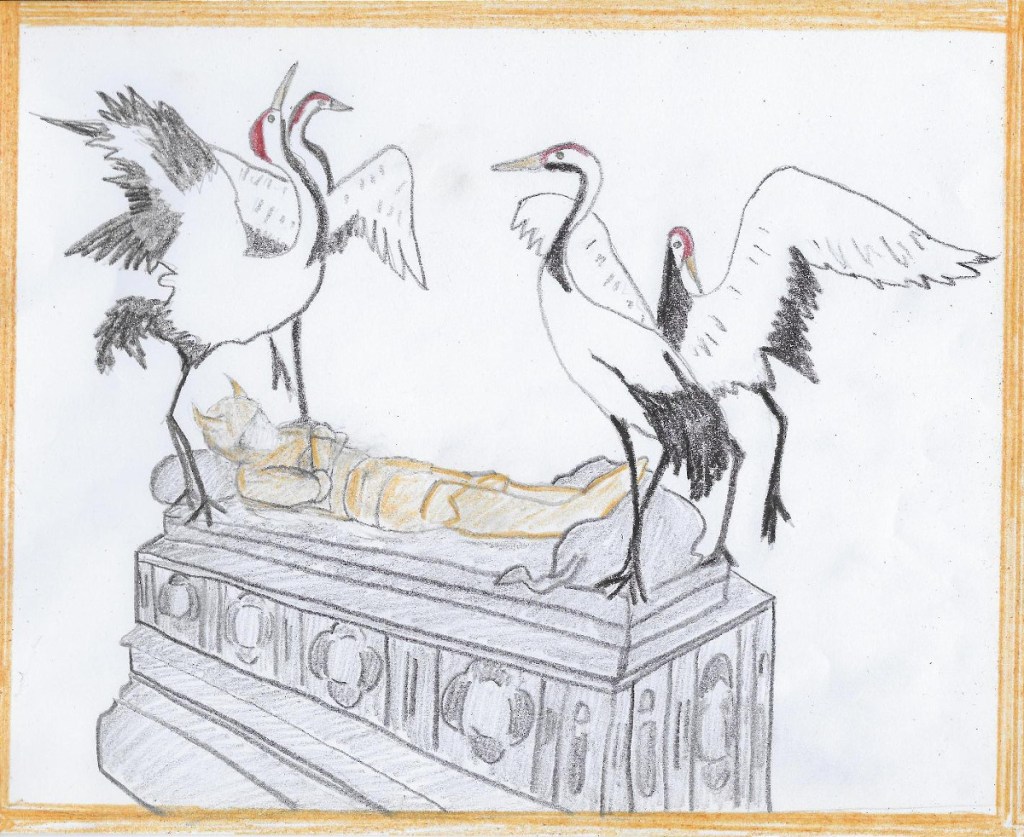
‘guided by Barinthus to whom the waters and the stars of heaven were well known. With him steering the ship we arrived’ Vita Merlini
What stars will you navigate by when they have fallen from the sky? Where is North when there is no North Star? How will the swans fly?
When your boat is stuck on a turning oar in the blackest of midnights shall I tie my blindfold with a sailor’s knot? Trust your sightless eyes?
Speak the words that have never been heard this side of the sunrise? Place my payment shiny and cold in your spitless mouth that never lies?
Your cloak of stars ragged torn will you wrap around my shoulders tight as you swear by dead sea-gods we will arrive on your boat that flies
on the wings of a swan where the sea is filled with the Northern Lights? Find the frost-dark isle of my mysterious god where the sun escapes the sunrise?
Where the living are dead and the dead alive and the blind no longer blind will we find the oar, the compass, the stars, bring them back with the starlight?
*This image is the Six of Arrows – Transition – from the Wildwood Tarot.
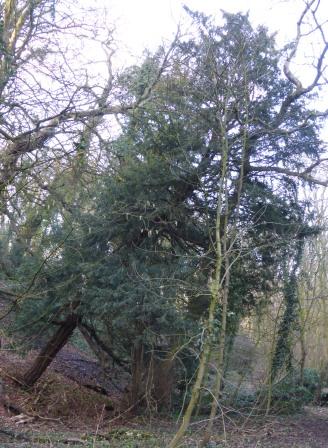
A year and a day ago I made my lifelong dedication to Gwyn ap Nudd, a Brythonic warrior-hunter god and ruler of Annwn, following a vigil on the night of the ‘super blood wolf moon’ beneath the leaning yew on Fairy Lane in my home town of Penwortham.
Unlike my initial dedication to Gwyn as my patron god at the White Spring beneath Glastonbury Tor it wasn’t easy. Beforehand I’d suffered from a stress fracture to my foot and I was awaiting an umbilical hernia repair operation shortly afterwards.
The vigil, of six hours before I went out and made my dedication during the lunar eclipse at around 4am, was based around six tarot cards and took me on an intense journey of death and rebirth.
Looking back and interpreting the meaning symbolically I saw the foot injury forced me to slow down and the operation on my naval, my natal place, was bound up with the rebirthing process.
Once I’d recovered I realised, to my surprise and disappointment, in spite of having been through an intense inner experience my external life had not changed. I was still in the same situation as before. Skint and living with my parents, my book recovering Gwyn’s mythos written, with no idea of what to do with the rest of my life aside from knowing I must live within the parameters of my vows.
To remedy my financial situation I took a job in a supermarket. Frustratingly, in my own work, which I had hoped would take me deeper into Welsh mythology and into Annwn I hit several brick walls.
Firstly, after near-completing a course called ‘The Gates of Annwn’ for Gods & Radicals, seeing myself on the videos attempting to teach in six weeks what has taken me years of questioning, doubt, being torn apart and put back together, I realised I’d made a mistake. An Annuvian path is one people find themselves (or are found by). It cannot be taught.
Secondly, I really wanted to write a book called Porth Annwn documenting my explorations of Annwn. However, the deeper I went, the further away I got from traditional depictions in Welsh mythology and folklore, attaining instead personal visions that were fantastical, paradoxical, and contained elements of ‘faerie’, but could not be linked directly to the Brythonic sources.
My third block was failing to learn Welsh as I am not embedded in the culture. This was accentuated by my awareness of the debates about cultural appropriation and the derogative attitudes of Welsh scholars (who are mainly non-conformist Christians) towards Brythonic polytheists.
My frustrations with my work and my supermarket job reached a nadir and resolution when I accidentally killed a dragonfly whilst cycling to Brockholes. This led me to leave the supermarket to volunteer with the Lancashire Wildlife Trust as a way of finding paid work in conservation and to shifting my creative focus away from Wales and Welsh mythology back to the (once Brythonic-speaking) land where I live.
Both these shifts have helped me to deepen and renew my relationship with Gwyn. I feel far more connected with him in my everyday life when I am outside working on the land, whether I’m tree planting, coppicing, clearing scrub, dead hedging etc. than when I was stacking shelves or, worse, sitting on a till beneath the artificial lights in the supermarket.
My new creative project ‘The Dwellers in the Water Country’, which focuses on the prehistoric people of wetland Lancashire, has guided me back to the earliest hunter-gatherers who may have venerated Gwyn as a hunter god. My outdoor work and research have knitted together as I’ve learnt skills and used tools our ancestors would have used.
This new more physical connection with Gwyn has also manifested in my running and in taking up Taekwondo. Interestingly, the Fianna, the followers of Finn, Gwyn’s Irish cognate, lived in the woodland, and had to master poetry along with physical feats that involved fighting and running*. These and my work outdoors have made me more connected with Gwyn as a warrior-hunter.
I have also experienced a deepening of my personal relationship with him through spending more time at my altar in stillness and prayer as well as continuing to journey with him.
So a year and a day on, after spending eight months lost, I have finally gained a vision of the path ahead and the central facets of a life shaped around my devotion to Gwyn:
*Personal devotions *Working on the land *Poetry *Journeywork *Practicing a martial art and running
I have moved on from confusion and frustration to feeling excited about a future full of challenges and promise.
*In ‘A Wildness Comes on the Heart of the Deer’ Christopher Scott Thompson cites the initiation tests of the Fianna: ‘And there was no man taken into the Fianna till he knew the twelve books of poetry. And before any man was taken, he would be put into a deep hole in the ground up to his middle, and he having his shield and a hazel rod in his hand. And nine men would go the length of ten furrows from him and would cast their spears at him at the one time. And if he got a wound from one of them, he was not thought fit to join with the Fianna. And after that again, his hair would be fastened up, and he put to run through the woods of Ireland, and the Fianna following after him to try could they wound him, and only the length of a branch between themselves and himself when they started. And if they came up with him and wounded him, he was not let join them; or if his spears had trembled in his hand, or if a branch of a tree had undone the plaiting of his hair, or if he had cracked a dry stick under his foot, and he running. And they would not take him among them till he had made a leap over a stick the height of himself, and till he had stooped under one the height of his knee, and till he had taken a thorn out from his foot with his nail, and he running his fastest. But if he had done all these things, he was of Finn’s people.’






 The Sanctuary of Vindos