with all the sisters who have lost their brothers.
We flit like bats against the walls.
We are searching for our oldest animals
to lead us through the darkness
to the prison of the child now a young man.
On the solstice when the sun stands still by candlelight
we will bring him back.
Today, December the 18th, is the festival of Epona, the Great Mare. Over the past few years the story of the search of the Mare Goddess for her lost son has been revealed to me as a relief of Epona riding through the Otherworld with engravings of animals, Rhiannon’s loss of Pryderi, and Modron’s loss of Mabon have sealed into one.
It’s my personal belief the episode in Culhwch ac Olwen featuring the search of Arthur and his men for Mabon with the help of the Oldest Animals and his rescue from the House of Stone replaced an earlier version in which the Great Mare (Epona) / Great Queen (Rigantona) / Great Mother (Matrona) searched for her son and rescued him from Annwn, where he was taken by his father, Annwn’s King. A similar story is told in the modern film, Labyrinth, where Sarah rescues her brother from the Goblin King.
It has taken on a personal meaning for me this year because, at the beginning of the month, my brother was admitted to hospital for brain surgery. It went well and he came back home to stay with me and my parents to recover, but was readmitted due to complications. We are hoping he will be returning from the hospital, a liminal place like the House of Stone that was Mabon’s Annuvian prison, between sickness and health, life and death, some time after his reassessment on the winter solstice.
‘Arthur said, “Are there any of the wonders we have still not obtained?
One of the men said, “Yes, the blood of the Very Black Witch, daughter of the Very White Witch from Pennant Gofid in the uplands of hell.
Arthur set out for the North, and came to where the hag’s cave was.’
– Culhwch ac Olwen
I. The Witch’s Cave
In the medieval Welsh story Culhwch ac Olwen (1090), Orddu ‘Very Black’, a ‘witch’ who lives in a cave in Pennant Gofid ‘the Valley of Grief’, battles against the servants of Arthur and is slaughtered by him in a gristly scene where he cuts her in twain with his knife to drain her blood.
In this tale Gwyn ap Nudd, a Brythonic god of the dead and ruler of Annwn, is dubiously made to appear beside his eternal rival, Gwythyr ap Greidol, as an advisor to Arthur. I judge this to be a move by a Christian interlocutor do demonstrate Arthur’s power not only over Orddu but her god.
It is my personal belief that Orddu was the last of a lineage of ‘witches’ of the Old North who resided in the cave at Pennant Gofid, which is identified with hell, showing Annuvian associations. They were powerful warrior-women and prophets who shared a kinship with the Witches of Caer Loyw who trained Peredur and with Scatach ‘the Shadow’ who schooled Cú Chulainn.
Their martial prowess and ability to commune with Gwyn and the spirits of Annwn to prophecy were seen as a threat to Christianity thus Orddu met her brutal end at the hands of the Christian king.
Orddu’s story has long haunted me. A few years ago it led me to trace her lineage through a series of spirit-journeys and in inspired writing from her mother, Orwen ‘Very White’, back to Snow, the first of her ancestors to arrive in Pennant Gofid (then known as the Valley of Winter) after the Ice Age.
Of all the stories I have written Snow’s has felt the realest, the deepest and the most profound. It tells how she and her people were led by Vindos/Gwyn and his wolves and ravens, following the reindeer and wild horses, to her northern cave, where it is remembered in her lore her ancestors once lived.
I have no idea whether Orddu, Orwen, or Snow are real or mythic persons or whether Pennant Gofid is an actual place in northern Britain (if it is I haven’t found it yet). However, archaeological evidence demonstrates that people lived here in caves after the last Ice Age and in the interstadials.
During recent research I found out from Barry Cunliffe’s Britain Begins and Stephen Oppenheimer’s The Origins of the British that a high percentage of the modern population can trace its ancestry back to the period after the last Ice Age when people recolonised Britain from Northern Iberia along the Atlantic seaways and from the North European Plain across Doggerland.
Up until now it had never occurred to me to question who Orddu’s people were and where they came from. To follow their footsteps back to the continent, into older times, and deeper into the cave.
II. After the Ice Age
Following the end of the last Ice Age, the Younger Dryas Stadial, (12,900 to 11,700 BP), the earliest evidence for the inhabitation of Britain comes from caves in south-west Wales. The oldest human remains from Worm’s Head include a human scapula (9920 BP), an ulna (9450 BP), a femur (9420 BP), and a cranium (9360 BP). Human bones dating from between 9000 and 7000 BP have been found at Paviland, Foxhole Cave, Ogof-yr-Ychen ‘Cave of the Oxen’, Potter’s Cave, and Daylight Rock.
One of the most famous Mesolithic burial sites is Aveline’s Hole in the Mendip Hills of Somerset. It was discovered in 1797 and investigations reported the presence of between 50 and 100 human skeletons. Unfortunately most of the finds and documentation were destroyed by bombing during World War II. Only 21 skeletons remain and they have been dated to between 9115 and 8740 BP.
Most were adults and adolescents, but they also included three children aged between 2 and 7 and an infant of 6 – 18 months. One of the skeletons was buried ceremonially in a disused hearth with ‘red ochre, abundant animal teeth some of which were perforated, and a set of fossil ammonites’.
The cave was sealed after the burial. This may have symbolised closing a connection to relatives become ancestors and to the Otherworld, or may have been a precaution to prevent their return.
In 2003 ‘an engraved panel’ consisting ‘of two rows of crosses with six in the upper row and four in the lower’ was discovered in Aveline’s Hole. Because the cave was sealed after the burial it is suspected this cave art belongs to the Mesolithic. Further art, three engravings taking the form of ‘rectilinear abstract designs’, possibly of a similar date, were found nearby, in Long Hole.
Other finds from the Mendips from this time include a mandible (9360 BP) and cranial fragments (9060 BP) from Badger Hole and the skeleton of Cheddar Man (9100 BP) from Gough’s Cave. Research into DNA has made possible a reconstruction of Cheddar Man’s appearance. His genetic make-up shows he had dark skin of a pigmentation ‘usually associated with sub-Saharan Africa’ and blue eyes.
This suggests that the earliest inhabitants of Britain, including Snow and her people, were dark-skinned. Snow received her name because she was born in a snow storm not because she had snow-white skin. Dark skin is hinted at in the way I describe Snow’s Very Great Grandmother whose face was ‘wrinkled like an old crowberry’, crowberry (empetrum nigrum), being black. Perhaps Orddu ‘Very Black’ was herself black due to a gene that linked her back to oldest ancestors.
In northern Britain a piece of human thigh bone contemporary with the burials in Aveline’s Hole was found in Kent’s Bank Cavern near the Kent estuary where it enters Morecambe Bay. Other evidence of human inhabitation of this area includes microliths and an antler point from Bart’s Shelter.
III. Creswell Crags Cave Art
Snow possessed stories about her cave, passed down by her ancestors, suggesting her people had lived in Britain in the past. Archaeological finds from a number of caves show the landmass, then attached to the continent, had indeed been occupied during the Lateglacial Interstadial (14,670 – 12,890 BP).
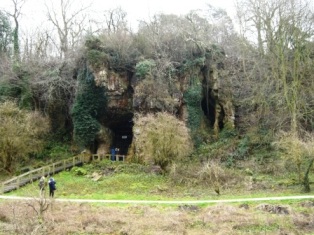
Creswell Crags, a limestone gorge in Derbyshire, is famous for its parietal and portable cave art and stone tools. According to Paul Petitt these have ‘very direct parallels with material from France, Belgium, the Netherlands, and Germany… the term Magdalenian… links these British industries to a much wider population dispersal into empty areas of Europe following the Last Glacial Maximum. This dispersal has its roots in the Magdalenian of south-western Europe… Magdalenian sites in Britain cluster relatively tightly between 12,600 and 12,200 radiocarbon years ago, which places the sites in the relatively mild conditions of the first half of the Lateglacial Interstadial.’
There are 25 examples of parietal art at Creswell; 23 in Church Hole, one in Robin Hood Cave, and one in Mother Grundy’s Parlour. All are engravings that often use the structures of the cave walls.
The clearest engravings are of a stag, bison, and an ibis. The latter is a bird for whom we have no faunal remains in Britain, but would have been seen on the continent by the highly mobile artists.
One of the most intriguing is a bird/woman motif, which has been interpreted as ‘long-necked birds of some kind…. cranes, herons, bitterns, and swans’ and ‘schematic human females, drawn upside down.’
Another, equally ambiguous, is described as ‘a diving bird, a serpentiform or a stylised human female?’ There is a also a ‘headless horse’, ‘small incomplete engraved animal’ and ‘abstract designs such as a ‘boomerang’, ‘engraved triangle’, ‘horn-like motif’ and ‘two small triangles’. ‘Figures of uncertainty’ include a ‘square’, a ‘bison-head profile’, a ‘horse-head’, and a ‘bear’.
In Robin Hood’s Cave was found a rib engraved with a horse coloured by red ochre. William Boyd Dawkins described it in 1867: ‘the head and fore quarters of a horse incised on a smoothed and rounded fragment of rib, cut short off at one end and broken at the other. On the flat side the head is represented with the nostrils and mouth and neck carefully drawn. A series of fine oblique lines show that the animal was hog-maned. They stop at the bend of the back which is very correctly drawn.’
The Ochre Horse shares parallels with portable Ice Age horse depictions from the caves of Perigord in France and Kesserloch in Switzerland. It is also contemporary with a decorated horse jaw from Kendrick’s Cave, Llandudno, which had five panels of chevrons cut into it creating a zig-zag effect. That people carried these representations with them may suggest horses held a special place in their traditions. Whether this was simply as a prey animal or as a spirit guide or deity remains unknown.
In Pin Hole Cave, engraved on the rib-bone of a woolly rhincoeros, was a masked figure described by Albert Leslie Armstrong as a ‘masked figure in the act of dancing a ceremonial dance.’ Again, the identity of this figure and why he was carried into and left in the cave remains a mystery.
Other British examples include an engraving of a reindeer from Gower Cave in Wales and engraved plaquettes from La Varines in New Jersey featuring abstract designs and ‘zoomorphic representations’, possibly of horses, mammoths, a bovid, and human face, dating to 14,000 years ago.
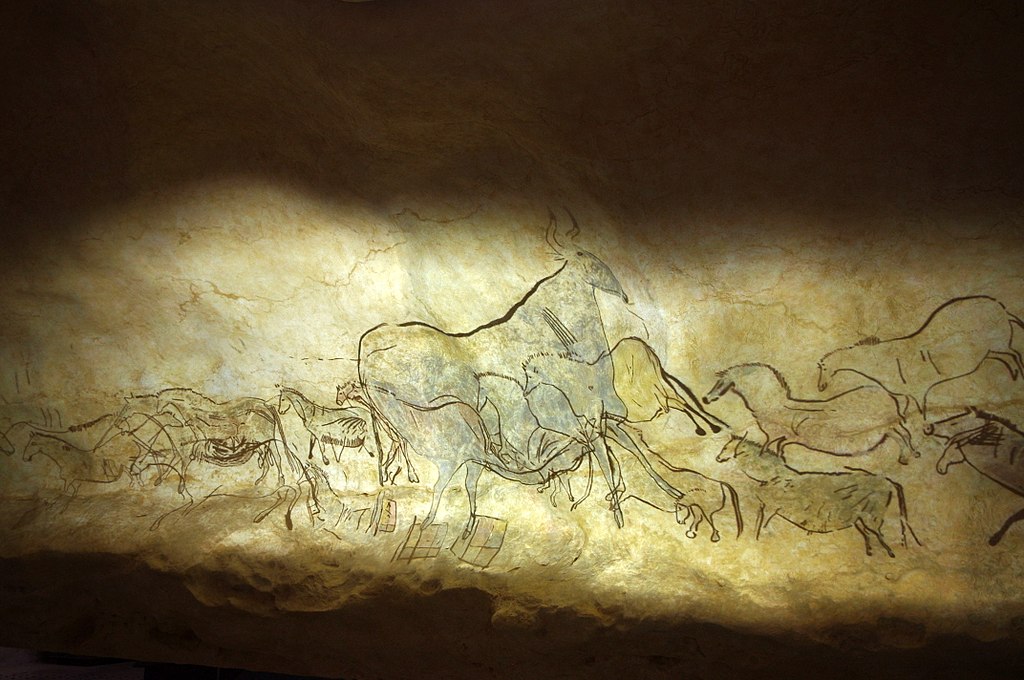
The art of Creswell Crags shares similarities with Magdalenian art from across south-western Europe. Paul Pettitt links its characteristics artworks at Altamira in Spain and Lascaux in France. He suggests the Creswell Crag artists spent their summers in this area and retreated to the lowlands that now form part of the North Sea or the Netherlands and central Rhine areas and says they would have been in contact with people from Ardennes and the Dordogne, which was also accessible on foot. “The Magdalenian era was the last time that Europe was unified in a real sense and on a grand scale.”
IV. Prehistoric Chapels and Rites of Initiation
The French archaeologist and Catholic Priest, Abbé Breuil, referred to Lascaux as ‘the Sistine chapel of prehistory’. The caves of the Franco-Cantabrian area have long been seen as sacred sites that were central to the religion of the Magdalenian people and their predecessors who made earlier paintings.
According to Bruno David these caves were used for ritual performances and rites of passage. He describes Cougnac: ‘Human engagements in the deep, dark space of the cave are intriguing: here are found animals that take shape along rock walls in a combination of natural concretions and painted red or black lines. At the entrance of chambers, palms of hands were dipped in red ochre and fingers smeared with black pigment, and then pressed against rock walls to leave distinctive marks. Animals were neatly arranged along rock walls, their viewing intentionally and carefully choreographed. Depictions were made of repeatedly speared humans or human-like creatures, and rocky concretions were tapped to make a ringing sound, it appears. This is the stuff of rituals… It formed part of an inner sanctum of knowledge, of an inner life, one that needed to be performed.’
David speaks also of ‘orchestrated performance’ at Tuc d’Audoubert where, adjacent to the Gallery of the Clay Bison, in the Chamber of Heels are found ‘183 impressions of the balls of human heels and myriad shallow impressions of fingertips’ ‘which show that those who walked this space did so on the heels of their feet, carefully avoiding placing the flat of their feet on the ground… The size of the heel imprints… indicates they were not made by adults but by youths probably adolescents.’
‘What we see in the art and imprints in the clay are the products of choreographed actions involving youths walking on the balls of their feet and pressing fingertips into clay along long and sometimes narrow tunnels underground, leading to sculpted clay bison that were never meant to be seen by the broader populace of the outside world. These were rituals along passageways that were, we think, literally rites of passage for youths approaching adulthood. The art was not just to be seen, but to be performed.’
David Williams argues that Lascaux holds ‘the key to major mysteries’ as a place for ‘vision quests’ leading to shamanic initiation. He says ‘different rituals were performed in contrasting areas’. In the ‘Hall of the Bulls’ the only area that can accommodate a large number of people, ‘dancing, music, and chanting’ may have taken place. He describes this area as a ‘vestibule’. In the Axial Gallery the Roaring Bull might have evoked auditory hallucinations and the Falling Horse sensations of falling and descent.
The dense engravings in the Apse featuring ‘crowded images of horses, bison, aurochs, ibexes, deer, and a possible wolf’ etched on top of one another might have provided a glimpse of the spirit world. Having passed a pair of ‘Cerberus-like paired bison’ and crawled down a tunnel to the Diverticule of the Felines to eight formidable cave-lions, ‘a horse seen face-on’, and ‘bison with a raised tail’, ‘questers came face to face with visions of power and made personal contact with the spirit realm.’
The Shaft, and end area, which falls away into a deep well is where offerings with ‘broken signs’ were left. Here is the famous painting of a bison wounded by a spear charging down a bird-headed man with a bird-staff. Williams says here ‘we have transformation by death: the ‘death’ of the man paralleling the ‘death’ of the eviscerated bison. As both ‘die’, the man fuses with one of his spirit helpers, a bird’. He interprets this as the ‘zoomorphic transformation… becoming a shaman necessitated.’
It seems possible that Creswell Crags was also seen as a prehistoric ‘chapel’ where people communed with spirit animals and sought and then engraved visions of the spirit world. Perhaps the witch’s cave at Pennant Gofid was also used for rituals of descent presided over by Orddu and her kin that led to initiates, like them, becoming awenyddion, ‘people inspired’, the Brythonic term for ‘shamans’.
V. Gough’s Cave – Skull Caps and Cannibalism
A discussion of the cave-based rituals of the people living in Britain during the Magdalenian period would not be complete without mention of the skull caps of Gough’s Cave, Somerset, and ritual cannibalism.
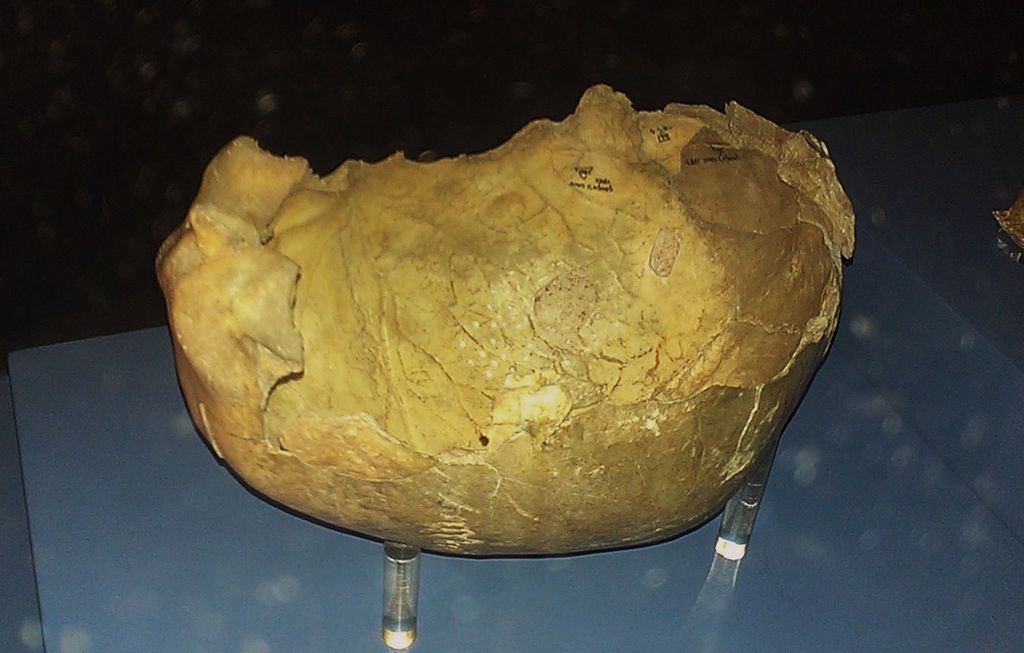
There were discovered the skeletal remains of ‘a Minimum Number of six individuals: a child (aged 3.2 years), a young adolescent (approximately 12–14 years old), an older adolescent (approximately 14–16 years old), at least two adults and an older adult’ dating to 14,700 BP. Results of the research by Silvia Bello et al. ‘suggest the processing of cadavers for the consumption of body tissues (bone marrow), accompanied by meticulous shaping of cranial vaults. The distribution of cut-marks and percussion features indicates that the skulls were scrupulously ‘cleaned’ of any soft tissues, and subsequently modified by controlled removal of the facial region and breakage of the cranial base along a sub-horizontal plane. The vaults were also ‘retouched’, possibly to make the broken edges more regular. This manipulation suggests the shaping of skulls to produce skull-cups.’
These skull caps resemble those from other Magdalenian sites such as La Placard Cave and Isturitz in France, and from Herxhein, Germany, in the Neolithic period, and El Mirador, Spain, in the Bronze Age.
In Gough’s Cave was also found a human radius engraved with a zig-zag pattern of ‘87 incisions: 33 single-stroke incisions, 32 to-and-fro sawing incisions’, also bearing evidence of cannibalism. What was particularly interesting is that ‘the decorative pattern seems to have been applied in the middle of this process: the break where the bone was snapped to extract marrow cuts across the zig-zag. It seems that the arm’s flesh had been removed, but then the butchery was paused while someone engraved the bone, and only then was it broken to get at its contents.’
This shares similarities with an ulnus from Kent’s Cavern with fine cut marks and percussion marks dating to 8185 BP. The zig-zag also resembles the pattering on the Kendrick’s Cave decorated horse skull.
It is clear that complex rituals and beliefs surrounded these acts of cannibalism and the creating of skull-caps and engraving of bones. Were these acts performed to honour the ancestors? Was eating one’s kindred an act of holy communion through which their life’s essence passed from the dead to the living?
What did the marks on the bones symbolise? Days? Acts? The release of the spirit from the bones? Was the creation of skull caps linked to belief that the soul presided in the head and with its release? What did wearing or drinking from the skull caps mean? Answers to these questions can only be guessed at.
It is worth nothing that, in Culhwch ac Olwen, Gwyn is associated with ritual cannibalism. He feeds the heart of Nwython, the ruler of Strathclyde to his son, Cyledyr, who becomes wyllt ‘mad’ or ‘wild’, but later becomes a rider on the hunt for Twrch Trwyth – a veiled version of the Wild Hunt. Here the consumption of the flesh of an ancestor is initiatory, leading first to madness, then to prowess.
Orddu is associated with Gwyn and witchcraft and her abode is described as hellish. One wonders whether the practice of cannibalism lived on and was practised by her and her ancestors in the Old North.
It certainly continued into the Iron Age in other areas of Britain. In the Bone Cave of Alveston, in Gloucestershire, the remains of seven individuals were found including an individual murdered by a pole-axe. The femur of one these adults ‘had been split longitudinally and the bone marrow scraped out.’
The skeletons were deposited with dog bones, cattle bones, a possible bear vertebra, and wooden twigs.’ Mark Horton says: ‘This was a highly structured deposit that can only have got there as a result of some form of ritual activity. This region was an important centre for underworld cults during the later Iron Age, some of which survived into the Roman period; in particular the Celtic Hound God, Cunomaglus, was represented as a dog guarding the underworld in a local temple sculpture.’
VI. Further Back in Time and Back to Now
The footsteps of Snow and her ancestors might be followed back from Britain to the continent and back again through earlier glacials and interglacials. The famous ‘Paviland Red Lady’, actually a male hunter found in Goat’s Hole Cave, Paviland, on the Gower Peninsula in Wales, his bones stained with red ochre, with mammoth ivory and nerite shells, dates to 33,000 BP. This is our earliest evidence for a ritual burial and thus for beliefs linking caves and the Otherworld.
The first record of Homo sapiens in Britain comes from a maxilla fragment from Kent’s Cavern, Devon, and is dated to between 34,700 and 36,400 BP and an Aurignacian burin busqué from Ffeunon Beuno, Wales, dated to 36,000 BP may have belonged to an early ancestor.
Homo sapiens arrived in Europe in 43,000 years ago having travelled through Israel after dispersing from Africa 120,000 years ago where the earliest evidence, from Omo I, dates to 195,000 years ago.
The stories of Snow and her predecessors remind us of our shared European heritage and its origins in Africa when, as Brexit approaches, Britain is cutting itself off from the EU and limiting foreign aid.
Whilst the cave art of the Magdalenians appears to have been born of a shared culture and religion, much later on, due to Christianity, Orddu, the last carrier of these traditions, appears alone in her cave. Isolated like those of us drawn to the Brythonic tradition today and those isolating due to COVID-19.
Dare we hope, instead of fearing death by Arthur’s knife, for a happier time when we can meet safely in caves and other sacred places to celebrate our bond with the Otherworld and its gods and spirits?
Don is a Brythonic goddess who is best known as the mother of ‘the Children of Don’. In ‘The Fourth Branch’ of The Mabinogi she is named as the sister of Math ap Mathonwy (this shows Mathonwy was her father), and her children are named as Gwydion, Gilfaethwy, and Arianrhod. In the Bonedd yr Arwyr they are listed as Gwydion, Gilfaethwy, Gofannon, Efydd, Amaethon, Hunawg, Idwel, Elestron, Digant, Kynnan, Hedd, Addien, Elawg, and Arianrhod.
In Triad 35. Beli Mawr is named as the father of Arianrhod and this may suggest Beli fathered some or all of her other children. Beli is also named as the father of Nudd/Lludd Llaw Eraint, Caswallon, Nyniaw, and Llefelys in Lludd ac Llefelys and it is possible they too are Children of Don.
Don is likely to be identical with Anna, the consort of Beli, in the Harleian Genealogies, and is thus the grandmother of Afallach (Gwyn ap Nudd), who is the father of Modron and the grandfather of Mabon. Don and Anna are named as the forebears of the lineages of many of the kings of the North and Wales.
Parallels exist between the Children of Don and the Tuatha Dé Danann ‘the Children of Danu’. Unfortunately we know nothing about Danu from inscriptions, place-names, or Irish literature. The nominative *Danu is a hypothetical reconstruction from the genitive ‘Danann’.
However, there are strong parallels between some of their children. Nuada and Nudd/Lludd are both warrior-kings with silver arms, Gofannon and Goibnu are both divine smiths, and Lugh and Lleu (more distant descendants of Danu and Don) are many-skilled gods who wield deadly spears.
I was highly excited when, online, I found claims for links between Don and Bel and Danu and Bile. I was disappointed to find out these are based on a loose claim about ‘British analogies’ from Charles Squire in Celtic Myths and Legends (1905) and there are no etymological or textual grounds for Danu and Bile having been consorts or parents of the Tuatha Dé Danann.
Nothing more is known about Don from medieval Welsh literature or from inscriptions but she gives her name to the rivers Don in Yorkshire and Aberdeen and perhaps to the river Dee. This forms part of the boundary between the the Wirral and Wales and is known is Wales as the Afon Dyfrdwy. This might derive from Dyfrdonwy with Donwy being an earlier name of the goddess Don.
It is possible that there might be connections between the Irish Danu, the Brythonic Don, and the Hindu goddess Danu rooted in a shared Indo-European tradition. Her name may derive from the Proto-Indo-European root *dʰenh₂- ‘to run, to flow’ and be the source of the river-name Danube.
In The Rig Veda Danu is named as the mother of the 100 Danavas – demonic beings known as asuras. One of these is a dragon called Vritra who holds back the water of the world’s rivers. Vritra is slain by the thunderbolt of Indra and the river-water is released. Vritra then attacks and defeats Danu. This suggests Danu and her descendants are associated with primal waters and rivers.
This is of deep interest to me as it suggests parallels between Danu as the mother of the dragon, Vritra, who is slain by Indra, and Don as the mother of the dragon-goddess Anrhuna, who is slain by Lugus. (Anrhuna is not known in any Brythonic sources but she revealed herself to me as the consort of Nodens/Nudd and the mother of Vindos/Gwyn ap Nudd. I was inspired to write a story about how she was killed by Lugus. I hadn’t guessed that Don might be her mother until now. In my story it was not Don who birthed hundreds of demons but Anrhuna who birthed monster-serpents).
The notion that, like Danu, Don is the mother of primordial waters, is one that has long accorded with my intuitions. Several years back I had a vision of Don as the source of generation and I associated her with Fidelma Massey’s ‘Water Mother’ sculpture on the cover of Greg Hill’s Creatures.
The possibility that Don did not only birth the ‘culture gods’ but the dragon-goddess Anrhuna and maybe other dragons and demon-like beings associated with water is one that speaks deeply to me.
As I have been writing this essay the words an dubno have repeatedly come into my mind. When I looked them up I recalled that several years ago I came across the proto-Celtic root *dubno or *dumno meaning ‘the deep’ or ‘dark and gloomy’ and Liz Greene’s claim Danu’s ‘dark face was Dumno’.
An means ‘not’ or ‘very’. The term an dubno thus shares its meaning with Annwn, ‘Very Deep’, the Otherworld. Perhaps this is telling me that Don was originally an Annuvian goddess who proceeded Anrhuna as the Mother of Annwn. In my story both Don and Anrhuna were amongst the oldest children of Old Mother Universe but I am now considering that Anrhuna may be the daughter of Don. This opens new possibilities for when the time returns to resume work on my mythic book.
SOURCES
Alexei Kondratiev, ‘Danu and Bile: The Primordial Parents’, The IMBAS Journal of Celtic Reconstructionism, Vol. 1, No. 4, (1998)Asterope, ‘Danu/Don’, Deity of the Week, (2011), http://deity-of-the-week.blogspot.com/2011/11/danudon.html Peter Bartrum, A Welsh Classical Dictionary: People in History and Legend up to about A.D. 1000, (National Library of Wales, 1993) Rachel Bromwich (ed), The Triads of the Island of Britain, (University of Wales Press, 2014) Sarah E. Zeiser, ‘Performing a Literary Paternity Test: Bonedd yr Arwyr and the Fourth Branch of The Mabinogi’, Proceedings of the Harvard Celtic Colliqiuim, Vol. 28, (2008) Sioned Davies (transl.), The Mabinogion, (Oxford University Press, 2007)
*Updated 15/11/2020 to include the river Don in Aberdeen following a comment from angharadlois.
Gwythyr ap Greidol ‘Victor son of Scorcher’ appears in the medieval Welsh story Culhwch and Olwen as the rival of Gwyn ap Nudd ‘White son of Mist’ for the love of Creiddylad ‘Heart’s Desire’. That he is a fitting opponent for Gwyn and consort for Creiddylad, who are the son and daughter of the ancient British god Lludd/Nudd/Nodens, suggests he is also an important British deity.
Strip away the Christian veneer from Culhwch and Olwen and we have a story in which Gwyn (Winter’s King) and Gwythyr (Summer’s King) battle for Creiddylad (a fertility goddess). On Nos Galan Gaeaf, Winter’s Eve, Gwyn abducts Creiddylad to Annwn* and Gwythyr rides to Annwn and attempts to rescue her and is imprisoned. The abduction of Creiddylad and imprisonment of Gwythyr explain the coming of winter. On Calan Mai, the First Day of Summer, Gwythyr battles Gwyn for Creiddylad, wins, and she returns with him to Thisworld and together they bring fertility to the land. This explains the coming of summer. Gwyn and Gwythyr may earlier have been seen to slay one another on Nos Galan Gaeaf and Calan Mai and take it in turns to enter a sacred marriage with Creiddylad, who acted as a powerful sovereignty figure rather than just a maiden to be fought over.
It is clear from this tale that Gwythyr is our ancient British god of summer. In another episode in Culhwch and Olwen we catch a glimpse of Gwythyr’s associations with fire and sunshine. As he is walking over a mountain he hears ‘weeping and wailing’ and sees its source is a burning anthill. He cuts the anthill off at ground level and rescues the ants from the blaze. We do not know what caused the fire. Did their nest, which ants orientate toward the sun, a little like solar panels, in a summer day, absorb too much heat? Or was the fire caused by Gwythyr’s scorching feet? We have seen that one translation of his father’s name, Greidol, is Scorcher, and we know wildfires break out in the summer. Here we see the dangers of fire and the sun and Gwythyr’s attempt at remediation.
The ants go on to help Gwythyr to gather nine hestors of flax seed which was sown in ‘tilled red soil’, in a field that has remained barren, so it can be ploughed into a new field, to provide the linen for Olwen’s veil in preparation for her marriage to Culhwch. It is possible to read Gwythyr’s association with seed being linked to the ‘male’ side of fertility and with doing the groundwork for the arrival of summer for his bride, Creiddylad, might also require a linen veil for her wedding dress.
The ancient Britons used fire to clear the forest to plant hazel trees and wildfires bring about new growth – in Gwythyr’s associations with fire and seed we find these processes.
These stories show that Gwythyr is a god of summer, fire, and generation in Thisworld who is opposed to Gwyn, a god of winter, ice, and the destructive forces of Annwn, the Otherworld. On the surface one is a bringer of life and the other a bringer of death yet their relationship is one of interdependence. It is necessary they take it in turns to enter a sacred marriage with Creiddylad as an eternal summer or an endless winter would have equally deadly consequences for both worlds.
As Gwythyr’s story was passed on through the oral tradition he and his father were depicted as allying with Arthur against Gwyn and the ‘demons’ of Annwn and playing a role in their demise. Thus Gwythyr is associated with other culture gods like Amaethon, the Divine Ploughman, and Gofannon, the Divine Smith, who help the Christian king to civilise the wild and shut out the Annuvian.
This process may be traced back to the Neolithic revolution when farming began to replace the hunter-gatherer lifestyle, the cultivation of seed hunting and foraging, the grain god (Gwythyr) the hunter (Gwyn). Christians did their best to eliminate the veneration of Gwyn by depicting him and his spirits as demons yet they continued to be loved in folk culture as the fairies and their king.
The stories of Gwythyr, by name, did not survive in the folk tradition, but it possible to find a likeness between him and other grain gods** who die a ritual death at the end of the harvest – when Gwyn, the harvester of souls, reaps down his rival and Gwythyr and the seed return to Annwn.
From the Neolithic period our society as a whole has favoured Gwythyr over Gwyn. We have created an eternal summer with the fire of Gwythyr in the engines of industry creating a society in which the cold and darkness of winter has been eliminated by electric lighting and central heating. Crops grow all year round under artificial lights. This has unsurprisingly led to global heating, to the climate crisis, to the scorching fires on Winter Hill where I perceive Gwythyr battling his rival. Ironically, and tellingly, these two great gods and the great goddess they battle for have been forgotten.
Yet, slowly, the worship of Gwyn and Creiddylad is reviving amongst modern polytheists. I know few who venerate Gwythyr and believe this is because his stories have been subsumed by those of other grain gods. This is a shame, for Gwythyr’s stories contain deep wisdom relating how fire, sun, summer and seed have played a role in the climate crisis from a polytheist perspective.
As a devotee of Gwyn, committed to the otherside, to the Annuvian, to redressing the balance, Gwythyr is a god whose powers I acknowledge through the summer and during the harvest period although I do not worship him. I would be interested to hear how and whether other polytheists relate to Gwythyr at this time.
*Annwn has been translated as ‘the Deep’ and the ‘Not-World’ and is the medieval Welsh Otherworld or Underworld. **Such as Lleu Llaw Gyffes/Lugus and John Barleycorn.
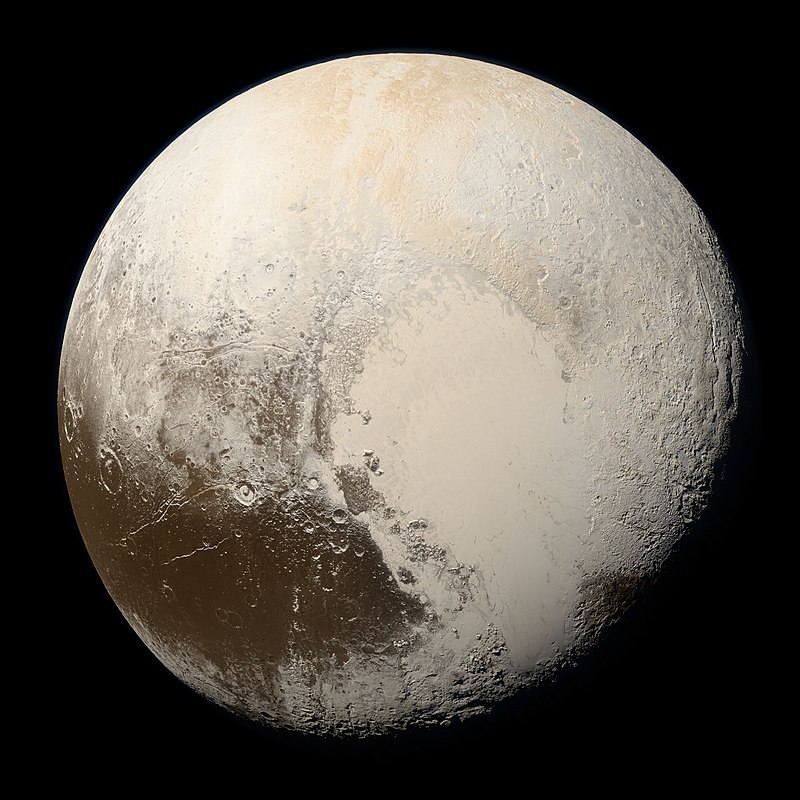
was the night you were furthest away from the world like a distant asteroid – like Pluto.
From now you’re coming back – your land of ice and darkness will thaw and the mists will make it beautiful again.
From the coffin where you dream of nuclear winter you will step into a new suit of armour.
Summer is a’coming to Annwn and winter is already on its way here.
This poem is based on my gnosis that whilst it is summer in Thisworld it is winter in the Otherworld. It is addressed to Gwyn ap Nudd, a Brythonic ruler of the Otherworld and Winter’s King, who is killed by his rival, Gwythyr ap Greidol, Summer’s King, on Calan Mai, and sleeps through the Summer.
After I received this poem in a vision this morning I looked up Pluto, a planet named after the Roman King of the Underworld and saw that, in Japanese its name is Meiōsei – ‘Star of the King of the Underworld’. I thought this was very beautiful and apt for the planet that rules my birth sign, Scorpio, much as Gwyn, my patron god, is the ruling force in my life.
I then returned to an essay by Brian Taylor called ‘Photographing the Underworld? A Note of NASA’s Pluto Fly-by’ which has had a big influence on me. Here he speaks of how the photographing of Pluto ‘ruler of occultation, and protector of the integrity of mystery’ may have been saved from being an act of ‘casual intrusion’ by the plutonium powered spaceship carrying the ashes of Clyde Tombaugh ‘discoverer of Pluto’ (as a kind of offering to the underworld gods?).
Brian also speaks of how he ‘traced the exteriorisation of Pluto in the history of the nuclear era, and found the planet’s signature etched into the geography of the discovery region, most notably in an extraordinary spatial co-incidence. Pluto was discovered in 1930 at the Percevall Lowell Observatory in Flagstaff Arizona. Ten years later Plutonium was manufactured at the Lawrence Livermore Laboratory in California, and five years after that the first atomic bomb was detonated at the Trinity Test Site north of Alamagordo in New Mexico. Curiously these three sites fall in an almost perfect straight line, about a thousand miles long, that maps the connection between the planet and the nuclear project on to the land in the most unexpectedly graphic way.’
Coincidentally I have been returning to these themes, which I touched on in The Broken Cauldron, in the later sections of the new book I am writing, which explores more deeply the influence of the gods within the modern world and Gwyn’s connections with nuclear war and nuclear winter.
At the bottom of the essay I saw an old comment I left for Brian in 2015 mentioning a dream I had about Gwyn and nuclear winter, leading me to recall it. Brian notes that the spaceship made closest contact with Pluto on a dark moon and the moon was dark last night.
‘My soul, where are you? Do you hear me? I speak, I call you – are you there? I have returned. I am here again.’ Carl Jung
In his Red Book Carl Jung speaks of refinding his soul and rebuilding his relationship with her after a period of soul loss. He was called to do this by ‘the spirit of the depths’ who is opposed to ‘the spirit of this time’:
‘The spirit of this time would like to hear of use and value… that other spirit forces me nevertheless to speak beyond justification, use, and meaning… He took away my belief in science… my understanding and all my knowledge and placed them at the service of the inexplicable and the paradoxical. He robbed me of speaking and writing for everything that was not in his service.’
Jung records how the spirit of the depths opened his eyes to vision – to his soul, the things of the soul, and the soul world. This spirit forced Jung to stop treating his soul as a ‘scientific object’ and told him to ‘call upon her as a living and self-existing being. I had to become aware that I had lost my soul.’
Once he reached that awareness Jung called out to his soul and encountered her as a person and as a living landscape. She appeared to him in a number of guises (all female) – as Salome, as the spirit of a dead girl (who forced him to eat her liver!), as a serpent, and as a ‘small white bird’. She showed him a variety of visions, some of which predicted the First World War, some beautiful, most Hellish. She appeared to him as a desert, and, it may be argued, as the many places in Hell he explored.
Jung learnt that he is merely the ‘symbol and expression’ of his soul. She taught him that everything he does and says ‘comes from and belongs to me’. Ultimately he entered ‘the service of the soul’.
***
Jung’s words are of interest not only because they contain a great deal of mystical depth and wisdom but because they remind me of my own calling to serve Gwyn ap Nudd, a god of Annwn (‘the Deep’ – the soul world in the Brythonic tradition) and to restore my relationship with my own soul.
Like Jung I was called away from service to ‘the spirit of the times’ by ‘the spirit of the depths’.
From doing something ‘of use and value’ to the ‘inexplicable’ and ‘paradoxical’ – to ‘the service of the soul’. This happened when I decided to write my PhD thesis on ‘Imagination’ in William Blake’s prophetic books rather than trending topics and in my choice to write books based on personal visions that challenge the grounds of already obscure Brythonic/Welsh myths rather than a ‘how to’.
It’s only since I’ve accepted I’m never going to be able to make a living from such work and stopped using social media to publicise it I’ve managed to make space to journey and write more deeply.
Over the past month I’ve begun a quest, like Jung’s, for ‘a myth to live by’, that has been calling me even further away from the myths that others recognise from the medieval Welsh texts. To visions of my gods that are more direct, unfiltered by Christianised narratives, but less recognisable and hence relatable (unless, as I hope, I ultimately succeed on touching, through the personal, on the universal…).
In this space, as a way of repairing my own soul loss, I have been reconsidering my relationship with my soul. This began the day I met Gwyn leading the fairy funeral procession on Fairy Lane in my home town of Penwortham. Unlike in the original legend in which the fairies were tiny black-clad men clad with red caps they were taller than me and dressed in Victorian funeral garments. Gwyn, who I didn’t recognise, was wearing a black hat and leaning on a walking cane, his only recognisable feature being his long, silky white hair. As in the original the ‘fairies’ carried a coffin. And, like the hapless protagonist, I looked into the coffin and saw my own corpse. Only she looked ‘other’. Gwyn told me “a part of your soul is trapped in Annwn” before revealing his identity.
When I started journeying to Annwn with Gwyn I was reunited with this lost part of my soul. She appears as a warrior-huntress (who I am and/or watch) aboard my white winged mare with hounds. She’s everything I’m not – practical, courageous, able to fight, hunt her own food, survive in the forest.
At first I wondered whether this is simply facile wish fulfilment. Shouldn’t I, a suburban muppet, be more like my usual bumbling, clumsy, scatter-brained self? To this Gwyn replied with a resounding “No!” and told me this is the exact form my soul needs to take to get work done in his world.
I wasn’t completely certain she was my soul at first and I’m still not sure she’s the whole of my soul. Yet I haven’t found any other parts yet. I’ve has inklings in intuitions and dreams of past lives as a soldier and a nun but they feel like past selves my soul has inhabited rather than soul parts. There is also the dark magician who sometimes shows up in my dreams and who I’ve chased through a number of books and who I’ve always kind of wanted to be if only I was good at magic. I spent a while wondering if he is my animus* but have reached the conclusion he has his own enigmatic existence, that dark magicians don’t give away their secrets, and accepted him as a guide of sorts.
In contrast to Jung I’ve found that my soul rarely speaks to me. For the past eight years since I’ve journeyed with/as her she hasn’t said a word and it’s only since reading Jung I’ve tried to speak to her. This resulted in her telling me to ‘be silent’ and ‘to come’ (to see what she had to show me). This demonstrates it’s not that she can’t speak but she’s not very talkative. I’m guessing this may be because I’m so full of words and chatter and her silence compensates like with our other qualities.
I think it’s possible that my white winged mare and perhaps my hounds are also parts of my soul. I believe my mare has been with me since birth and am tentatively referring to her as ‘my soul animal’ or ‘my spirit animal’ (as opposed to ‘a spirit animal’) to avoid terms from other cultures such as ‘power animal’ or ‘totem animal’. This manifested early on in me galloping round and round the playground on my own pretending to be a horse when the other children were playing games. Eventually I started horse riding and spending all my time at a local riding school working for rides, training as a riding instructor, and later returning to a career in horses after finishing my PhD.
And with horses there were always yard dogs – labradors, terriers, the crazy cocker spaniel I shared a mobile home with. Unlike with horses I’ve never had my own dog (my parents are cat people) so I’ve never got to know dogs that intimately. Whilst I generally feel at one with my horse I often feel like I’m full of yappy excitable hounds jumping up and down inside me that refuse to calm down. Like the dogs that come and shake all over me or out me when I’m meditating I find them annoying. Whilst I’ve only got one horse** my first hound guide was an old shaggy wolf hound and he was replaced by two young Hounds of Annwn when I decided to make my lifelong dedication to Gwyn.
So my current view contrasts with Jung’s in that my soul appears as many parts at once. Also my soul is both male and female – my huntress is female, my mare is female, and both my hounds are male.
My main challenge in this deepening ‘service of the soul’ is learning to trust my soul. Putting aside my feelings of bitterness and resentment that my soul will never earn me any money and my fears that by following my soul away from known Brythonic mythology I may lose my already small audience.
But what are these fears compared to losing one’s soul?
*Mainly because Jung states that that men have a female anima and women have a male animus – a gendered binary logic that doesn’t ring true to me. **Ok there’s ‘the dark horse’ but I think he’s a water-horse, a land spirit, rather than a part of my soul.
In previous posts I have spoken about how I’ve come to know Anrhuna ‘the Lady of Peneverdant’ or ‘the Mother of the Marsh’ as the ancient British mother goddess associated with marshlands and healing waters who was replaced by Saint Mary the Virgin at the well and church on Castle Hill in Penwortham.
As the mother of Vindos/Gwyn (a ruler of Faerie/Annwn whose presence at Castle Hill may be attested by a local fairy funeral legend) by Nodens/Nudd/Lludd, I have more recently been getting to know her as ‘the Mother of Annwn’ and in this guise she appears to me as a nine-headed dragon.
This is an image I have never come across in Brythonic mythology. However, stories of dragons abound across Britain and Nodens/Nudd/Lludd and Vindos/Gwyn are associated with them. In the Temple of Nodens at Lydney is a mosaic of two sea serpents and Nodens is depicted on a mural crown with ‘icthyocentaurs’ with serpent tails. Plus, as Lludd, he stops the battle of two dragons. Gwyn’s dog, Dormach, is depicted with two serpent tails and Robert Graves calls Gwyn ‘the Serpent Son’.
At the Temple of Nodens, who is surrounded by the watery subliminal imagery of the dream world and where sick people received healing dreams, a statue of a mother goddess holding a cornucopia was found. Pilgrims offered her pins for aid in childbirth. This may be a representation of Anrhuna. Maybe, just maybe, the two sea serpents are Anrhuna and Nodens in more primordial forms. In this context the appearance of Anrhuna, Mother of Annwn ‘the Deep’, as a dragon makes more sense.
Yet her myths are lost. I have recently returned to the Babylonian creation epic, Enuma Elish, which features a dragon-goddess called Tiamat, who shares similarities with Anrhuna, to look for clues. Tiamat is a goddess of the salt sea. Her name may be cognate with the semitic tehom (‘the deep’ or ‘the abyss’) and she appears as a dragon or sea serpent. After she gives birth to the gods they turn on her. Against them she births an army of monster-serpents and puts her son, Kingu in the lead. Following a primal battle she is slain by the storm god, Marduk, and the world is created from her remains.
I’ve long found the following lines about Tiamat’s birthing of monsters beautiful and awe-inspiring:
Ummu-Hubur [Tiamat] who formed all things, Made in addition weapons invincible; she spawned monster-serpents, Sharp of tooth, and merciless of fang; With poison, instead of blood, she filled their bodies. Fierce monster-vipers she clothed with terror,cc With splendor she decked them, she made them of lofty stature. Whoever beheld them, terror overcame him, Their bodies reared up and none could withstand their attack. She set up vipers and dragons, and the monster Lahamu, And hurricanes, and raging hounds, and scorpion-men, And mighty tempests, and fish-men, and rams; They bore cruel weapons, without fear of the fight. Her commands were mighty, none could resist them; After this fashion, huge of stature, she made eleven [kinds of] monsters. Among the gods who were her sons, inasmuch as he had given her support, She exalted Kingu; in their midst she raised him to power.
I’ve wondered whether we once had a story in which Anrhuna gave birth to Monsters of Annwn such as the Great Scaled Beast, the Black Forked Toad, and the Speckled Crested Snake who feature in ‘The Battle of the Trees’. This depicts a conflict between the forces of Annwn and the Children of Don and perhaps records a primordial battle between monsters and culture gods that shaped the world. The parallels suggest Anrhuna gave the kingship of Annwn to her son and made him leader of her armies.
I am currently exploring these ideas in early drafts of my next book ‘The Gods of Peneverdant’. You can find out more about what is going on behind the scenes in my monthly newsletter and see unseen work by supporting me on Patreon HERE.











 The Sanctuary of Vindos