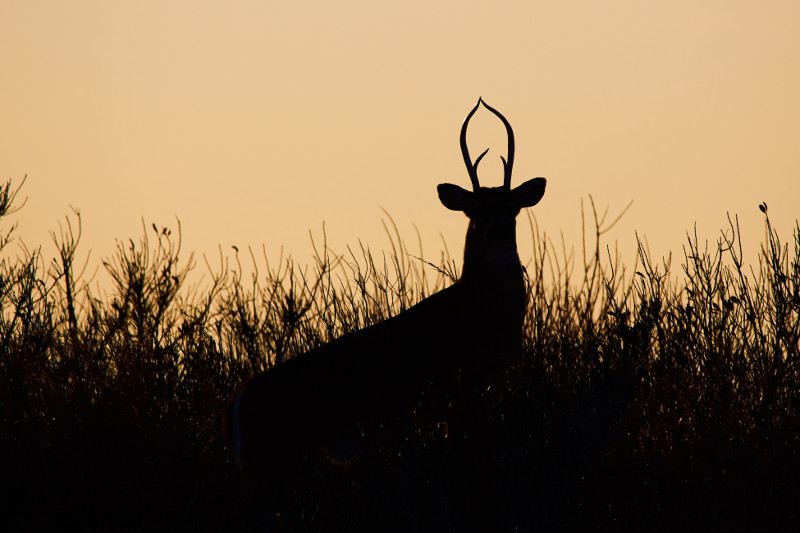
This post begins to list the inhabitants of Annwn: deities, guardians, otherworldly animals who move between the worlds, and denizens regarded as monstrous. It’s notable that many of these Annuvian figures are opponents of Arthur and his warband who are hunted down and/or slaughtered.
Deities
The Head of Annwn
‘The cauldron of the Head of Annwn, what is its disposition
(with its) a dark trim, and pearls?’
– The Spoils of Annwn, The Book of Taliesin, (Haycock transl.)
Arawn
‘He (Pwyll) could see a rider coming after the pack on a large dapple-grey horse, with a hunting horn round his neck, and wearing hunting clothes of a light grey material…
“Lord,” said Pwll, “good day to you. And which land do you come from?”
“From Annwfn,” he replied. “I am Arawn, king of Annwfn.’’
“Lord,” said Pwyll, “how shall I win your friendship?”
“This is how,” he replied. “A man whose territory is next to mine is forever fighting me. He is Hafgan, a king from Annwfn. By ridding me of that oppression – and you can do that easily – you will win my friendship.”
“I will do that gladly,” said Pwyll. “Tell me how I can do it.”
“I will,” he replied. “This is how: I will make a firm alliance with you. What I shall do is put you in my place in Annwfn, and give you the most beautiful woman you have ever seen to sleep with you every night, and give you my face and form so that no chamberlain nor office nor any other person who has ever served me shall know that you are not me. All this,” he said, “from tomorrow until the end of the year, and then we shall meet again in this place”…
After defeating Hafgan and resisting the temptation to sleep with Arawn’s wife, Pwyll wins Arawn’s friendship. They exchange horses, hunting-dogs, hawks, and treasures. Pwyll becomes known as ‘Pwyll Pen Annwfn’.
– The First Branch, The Mabinogion, (Davies transl)
Gwyn ap Nudd
‘Twrch Trwyth will not be hunted until Gwyn son of Nudd is found – God has put the spirits of the demons of Annwfn in him, lest the world be destroyed. He will not be spared from there…
No steed will be of any use to Gwyn in hunting Twrch Trwyth, except Du, the steed of Moro Oerfeddog…
‘Creiddylad daughter of Llud Llaw Eraint went off with Gwythyr son of Greidol, but before he could sleep with her Gwyn son of Nudd came and took her by force. Gwythyr son of Greidol gathered a host, and came to fight against Gwyn son of Nudd, and Gwyn triumphed, and captured Graid son of Erai, and Glinneu son of Taran, and Gwrgwst Ledlwm and Dyfnarth his son. And he captured Pen son of Nethog, and Nwython, and Cyledyr Wyllt his son, and he killed Nwython and cut out his heart, and forced Cyledyr to eat his father’s heart, and because of that Cyledyr went mad. Arthur heard of this and came to the North, and summoned Gwyn son of Nudd to him, and released his noblemen from prison, and made peace between Gwyn son of Nudd and Gwythyr son of Greidol. This is the agreement that was made: the maiden was to be left in her father’s house, untouched by either party and there was to be battle between Gwyn and Gwythyr every May day forever from that day forth until Judgement Day, and the one that triumphed on Judgement Day would take the maiden.’
– Culhwch and Olwen, The Mabinogion, (Davies transl.)
‘Where is the land from which you come?
I come from many battles, many deaths
With shields held aloft,
Many heads pierced by spears…
My horse is Carngrwn from battle throng
So I am called Gwyn ap Nudd
The lover of Creiddylad, daughter of Lludd.’
– The Conversation of Gwyn ap Nudd and Gwyddno Garanhir, The Black Book of Carmarthen, (Hill transl.)
Edern ap Nudd
‘Suddenly they heard a noise. They looked in the direction of the noise, and they could see a dwarf… a woman… close to her a knight on a great, muddy charger, with heavy, shining armour on him and his horse. And they were sure that they had never seen a man and horse and armour whose size impressed them more, and all riding close together…
Then the Knight of the Sparrowhawk was making the proclamation and asking the lady to take the sparrowhawk.
“Do not take it,” said Geraint. “There is here a maiden who is fairer and more beautiful and more noble than you, and has a better claim to it.”
Geraint spurred his horse and charged him, warning him and striking him a blow severe and keen, bloody and bold in the strongest part of his shield so that his shield splits and the armour breaks in the direction of the attack and the girths break so that he and his saddle are thrown over the horse’s crupper to the ground…
(Geraint) struck the knight on the top of his head so that all the armour on his head shatters and all the flesh splits, and the skin, and it pierces the bone and the knight falls to his knees. He throws his sword away and asks Geraint for mercy…’
– Geraint son of Erbin, The Mabinogion, (Davies transl.)
Rhiannon
‘As they were sitting, they could see a woman wearing a shining golden garment of brocaded silk on a big, tall, pale-white horse coming along the highway that ran past the mound. Anyone who saw it would think that the horse had a slow, steady pace, and it was drawing level with the mound…
He (a member of Pwyll’s court) took the horse, and off he went. He came to the open, level plain, and set spurs to the horse. And the more he spurred the horse, the further she drew away from him. She was going at the same pace as when she had started. His horse became tired; and when he realised that his horse’s pace was failing, he returned to where Pwyll was…
“Groom,” said Pwyll, “I see the rider. Give me my horse.” Pwyll mounted his horse, and no sooner had he mounted his horse than she rode past him. He turned after her, and let his spirited, prancing horse go at its own pace. And he thought that at the second leap or the third he would catch up with her. But he was no closer to her than before. He urged his horse to go as fast as possible. But he saw it was useless for him to pursue her.
Then Pwyll said, “Maiden,” he said, “for the sake of the man you love most, wait for me.”
“I will wait gladly,” she said, “and it would have been better for the horse if you had asked that a while ago!”’
– The First Branch, The Mabinogion, (Davies transl.)
Modron
‘In Denbighshire there is a parish which is called Llanferes, and there is there Rhyd y Gyfarthfa (the Ford of Barking). In the old days the hounds of the countryside used to come together to the side of that the ford to bark, and nobody dared go to find out what was there until Urien Rheged came. And when he came to the side of the ford he saw nothing except a woman washing. And when the hounds ceased barking, and Urien sized the woman and he had his will of her; and then she said “God’s blessing on the feet which brought thee here.” “Why?” said he. “Because I have been fated to wash here until I should conceive a son by a Christian. And I am daughter to the King of Annwfn, and come thou here at the end of the year and then thou shalt recieve that boy.” And so he came and he received there a boy and a girl: that is, Owein son of Urien and Morfudd daughter of Urien.’
– Peniarth MS 147, (Bromwich transl.)
Mabon
‘There is no huntsman in the world who can hunt with that dog (Drudwyn – a hound of Annwn), except Mabon son of Modron, who was taken when three nights old from his mother. No one knows where he is, nor what state he’s in, whether dead or alive…
“With every flood tide I travel up the river until I come to the bend in the wall of Caerloyw; never before in my life have I found as much wickedness as I found there. And so that you will believe me, let one of you come here on my two shoulders.”
The ones who went on the Salmon’s shoulders were Cai and Gwrhyr Ieithoedd. And they travelled until they came to the other side of the wall from the prisoner, and they could hear lamenting on the other side of the wall from them.
Gwrhyr said, “Who is lamenting in this house of stone?”
“Alas, sir, he who is here has reason to lament. It is Mabon son of Modron who is imprisoned here, and no-one has been so painfully incarcerated in a prison as I, neither the prison of Lludd Llaw Eraint nor the prison of Graid son of Eri”…
Arthur summoned the warriors of this Island and went to Caerloyw where Mabon was in prison. Cai and Bedwyr went on the shoulders of the fish. While Arthur’s warriors were attacking the fort, Cai tore through the wall and took the prisoner on his back, and fought the men as before. Arthur came home and Mabon with him, a free man.’
– Culhwch and Olwen, The Mabinogion, (Davies transl.)
Sovereigns
The Fisher King
‘And on the shore of the lake there was a grey-haired man sitting on a cushion of brocaded silk, and young lads fishing in a small boat on the lake. As the grey-haired man saw Peredur approaching, he got up and made for the court, and the man was lame…
“I am your uncle, your mother’s brother.” Peredur sat down next to his uncle and they talked.
Suddenly he could see two lads entering the hall, and from the hall they proceeded to a chamber, carrying a spear of huge proportions, with three streams of blood running from its socket to the floor. When everyone saw the lads coming in this way, they all began weeping and wailing sot that it was not easy for anyone to endure it. Yet the man did not interrupt his conversation with Peredur. The man did not explain to Peredur what that was, nor did Peredur ask him about it. After a short silence, suddenly two maidens entered with a large salver between them, and a man’s head on the salver, and much blood around the head…
“Lord,” said the lad,” I came in the guise of the black-haired maiden… the black-haired man… And I brought the head on the salver, all covered in blood, and the spear with the blood streaming along it from its tip to its hilt. And the head was your cousin’s, and it was the witches of Caerlowy who killed him, and they made your uncle lame. And I am your cousin, and it is foretold that you will avenge that.’
– Peredur son of Efrog, The Mabinogion, (Davies transl.)
The Lady of the Well
‘And following that crowd he could see a lady, her yellow hair let down over her shoulders and covered with the blood of many wounds, and she was wearing a dress of yellow brocaded silk, which was torn, and boots of speckled leather on her feet. And it was surprising that the tips of her fingers were not worn away, so violently did she wring her hands together. Owain was certain that he had never seen such a beautiful woman, if she had been in her usual form. And her cries were louder than those of all the men and trumpets in the crowd. And when he saw the woman he was inflamed with love for her until it filled every part of him.
Owain asked the maiden who the lady was.
“God knows,” said the maiden, “a woman you could say is the most beautiful of women, and the most chaste, and the most generous, and wisest and noblest. She is my mistress, known as the Lady of the Well, the wife of the man you killed yesterday.’
– The Lady of the Well, The Mabinogion, (Davies transl.)
Guardians
The Keeper of the Forest
‘“You will see on top of the mound an enormous black-haired man no smaller than two men of this world. And he has one foot, and he has one eye in the middle of his forehead; and he has an iron club which I assure you would take two men of this world to lift. He is not a violent man, but he is ugly. You will see a thousand wild animals grazing around him. Ask him the way out of the clearing. He will be rude to you, and yet he will tell you the way so that you will find what you want.”…
And when I got there the wild animals I saw were three times more remarkable than the man described. And the black-haired man was there, sitting on top of the mound. The man had told me he was big, but he was far bigger than that. And the iron club which the man had said would take two men to lift, I was sure, Cai, that it would take four warriors. Yet he held it in one hand!
And I greeted the black-haired man, but he replied discourteously. I asked him what power he had over those animals. “I will show you, little man,” he said. And he took the club in his hand, and with it he struck a deer a great blow so that it gave a great bellow. And at his bellow wild animals came up until they were as numerous as the stars in the sky, so that was scarcely room for me to stand in the clearing with them, what with all the serpents and lions and vipers and other kinds of animals. He looked at them, and ordered them to go and graze. And they bowed their heads and did homage to him as obedient men do to their lord. And he said to me, “Do you see, little man, the power I have over these animals?”
And then I asked him the way. And he was rude to me, but nevertheless he asked me where I wanted to go. And I told him who I was and what I was looking for. And he showed me.’
– The Lady of the Well, The Mabinogion, (Davies transl.)
The Black Knight
“And with that you will see a knight on a pure black horse dressed in brocaded silk of pure black, with a banner of pure black linen on his spear.”…
And the birds’ song was most pleasing to Owain, he could see a knight coming along the valley. And Owain went to meet him and fought with him fiercely, and they broke both their lances, andf they drew their swords and began to fight. And with that Owain struck the knight a blow through his helmet and mail cap and hood of Burgundian cloth, and through the skin, flesh, and bone, until it wounded the brain. And then the Black Knight knew that he had received a mortal blow, and turned his horse’s head and fled.
And Owain pursued him, but he did not succeed in striking him with his sword though he was not far behind him. And then Owain could see a large, shining castle; they came to the castle gate and the Black Knight was let in, but a portcullis was let down on Owain. And it struck him below the hind-bow of the saddle so that the horse was cut in half, and it went through the rowels of the spurs on Owain’s heels; and the portcullis dropped to the ground, with the rowels and rest of the horse between the two gates. And the inner gate was closed so that Owain could not escape.’
– The Lady of the Well, The Mabinogion, (Davies transl.)
Defender of the Hedge of Mist
‘“Down there,” he said, “is a hedge of mist, and within it there are enchanted games. And no man who has gone there has ever come back”…
There was no-one inside the pavilion except for a single maiden, sitting in a golden chair, and an empty chair facing her. Geraint sat in the empty chair…
Suddenly they could hear a great commotion near the pavillion… a knight outside on a charger, wide-nostrilled, high-spirited, impatient, big-boned, and a mantle in two halves covering him and his horse, and plenty of armour under that.
“Tell me, lord,” he said to Geraint, “who asked you to sit there?”…
they began to fight… Geraint struck him in the strongest part of his shield so that it splits, and the head of the spear is in his armour, and all the saddle-girths break, and he himself is thrown over his horse’s crupper the length of Geraint’s spear and the length of his arm head-first to the ground. And quickly Geraint draws his sword, intending to cut off his head.
“Oh lord,” he said, “your mercy, and you shall have whatever you want.”
“I want only that this game is gone from here for ever,” he replied, “together with the hedge of mist, and the magic and enchantment which have existed.”
– Geraint son of Erbin, The Mabinogion, (Davies transl.)
Gatekeepers
‘You’re asked:
what is the name of the porter?’
– The First Address of Taliesin, The Book of Taliesin, (Haycock transl.)
‘What man is the porter?
Glewlwyd Gavaelvawr.
Who is the man that asks it?
Arthur and the fair Cai.’
– Arthur and the Porter, The Black Book of Carmarthen, (Skene transl.)
‘They made for the gate. Gwrhyr Gwalstawd Iethoedd said, “Is there a gatekeeper?”
“Yes. And as for you, may you lose your head for asking…
Knife has gone into food and drink into horns, and a thronging in the hall of Wrnach. Except for a craftsman who brings his craft, it will not be opened again tonight.”’
– Culhwch and Olwen, The Mabinogion, (Davies transl.)
Judges
‘When everyone’s separated out
I’ll come with a song
of a profound one who became flesh:
there has come a conqueror,
one of three judges in readiness.’
– The Hostile Confederacy, The Book of Taliesin, (Haycock transl.)
Witches of Annwn
Orddu and Orwen
‘Arthur said, “Are there any of the wonders we have still not obtained?”
One of the men said, “Yes, the blood of the Very Black Witch, daughter of the Very White Witch from Pennant Gofid in the uplands of hell.”
Arthur set out for the North, and came to where the hag’s cave was. And Gwyn son of Nudd and Gwythyr son of Greidol advised that Cacamwri and Hygwydd his brother should be sent to fight the hag. As they came into the cave the hag attacked them, and grabbed Hygwydd by his hair and threw him to the ground beneath her. Cacamwri grabbed her by the hair and pulled her off Hygwydd to the ground, and she turned on Cacamwri and thrashed both of them and disarmed them, and sent them out shrieking and shouting… Hir Amren and Hir Eiddil… if the first two had difficulties, the fate these two was far worse, so that God knows how any of the four could have left the place, had it not been for the way they were all put on Llamrei, Arthur’s mare. And then Arthur rushed to the entrance of the cave, and from the entrance he aimed at the hag with Carwennan, his knife, and struck her in the middle so she was like two vats. And Caw of Prydyn took the witch’s blood and kept it with him.’
– Culhwch and Olwen, The Mabinogion, (Davies transl.)
Ointment of the Witches of Annwn
‘Unsightly fog wherein the dogs are barking,
ointment of the witches of Annwfn.’
– ‘The Mist’, Dafydd ap Gwilym, (Bromwich transl)
The Witches of Caerloyw
‘“There are nine witches here, friend,” she said. “together with their father and mother. They are the witches of Caerloyw. And by day-break we shall be no nearer to making our escape than to being killed. And they have taken over and laid waste the land, except for this one house…
And at dawn Peredur heard a scream… a witch was grabbing hold of the watchman, and he was screaming. Peredur attacked the witch and struck her on the head with a sword until her helmet and mail cap spread out like a dish on her head.
“Your mercy, fair Peredur son of Efrog, and the mercy of God.”
“How did you know, witch, that I am Peredur?”
“It was fated and foretold that I would suffer grief at your hands, and that you would receive a horse and weapons from me. And you will stay with me for a while as I teach you how to ride your horse and handle weapons.”’…
Peredur and Gwalchmai decided to send for Arthur and his retinue, to ask him to set upon the witches. And they began to fight the witches, and one of the witches killed one of Arthur’s men in front of Peredur, and Peredur told her to stop. A second time the witch killed man in front of Peredur, and a second time Peredur told her to stop. A third time the witch killed a man in front of Peredur, and Peredur drew his sword and struck the witch on the top of her helmet, so that the helmet and all the armour and the head were split in two. She gave a scream and told the other witches to flee, and said it that it was Peredur, the man who had been learning horsemanship with them and who was fated to kill them. Then Arthur and his retinue attacked the witches, and all the witches of Caerloyw were killed.’
– Peredur son of Efrog, The Mabinogion, (Davies transl.)
Hounds
Hounds of Annwn
‘And as he (Pwll) was listening for the cry of his pack, he heard the cry of another pack, but these had a different cry, and they were coming towards his own pack. And he could see a clearing in the forest, a level field; and as his own pack was reaching the edge of the clearing, he saw a stag in front of the other pack. And towards the middle of the clearing, the pack that was chasing caught up with the stag and brought it to the ground.
Then Pwll looked at the colour of the pack, without bothering to look at the stag. And of all the hounds he had seen in the world, he had never seen dogs of this colour – they were a gleaming shining white, and their ears were red. And as the whiteness of the dogs shone so did the redness of their ears. Then he came to the dogs, and drove away the pack that had killed the stag, and fed his own pack on it.’
– The First Branch, The Mabinogion, (Davies transl.)
Dormach
My hound is sleek and fair,
The best of hounds;
Dormach he is, who was with Maelgwn.
Dormach rednose – why stare you so?
Because I cannot comprehend
Your wanderings in the firmament.
– The Conversation of Gwyn ap Nudd and Gwyddno Garanhir, The Black Book of Carmarthen, (Hill transl.)
‘Of the hound Dormarch we have a pictorial representation at the foot of page 97. Cerberus was a bodiless three-headed monster, with a serpent’s tail. Dormarch differs in having two front legs, and but one head. His body, however, is attenuated into a sort of forked tail, terminating in fan-like ends. An animal of this description was not adapted to run along the ground, and our text informs is that he moved ar wybir, ie. rode on the cloud that haunts the mountain-tops.’
– J. Gwenogbryn Evans, introduction to The Black Book of Carmarthen
Drudwyn
Drudwyn means ‘Fierce White’. It is likely he is a hound of Annwn.
‘You cannot hunt Twrch Trwyth until you get Drudwyn, the whelp of Graid son of Eri…
There is no leash in the world that can hold him, except the leash of Cors Cant Ewin…
The chain of Cilydd Canhastyr to hold the collar along with the leash.’
– Culhwch and Olwen, The Mabinogion, (Davies transl.)
Rhymhi and her Whelps
‘the two whelps of the bitch Rhymhi, Gwyddrud and Gwydden Astrus…
“She is,” said one, “at Aber Daugleddyf.”
Arthur came to the house of Tringad in Aber Cleddyf and asked him, “Have you heard about her here? In what form is she?”
“In the form of a she-wolf,” he said, “and she goes around with her two whelps. She has killed my livestock many times, and she is down below in Aber Cleddyf in a cave.”
What Arthur did was to set off by sea in Prydwen, his ship, and others by land, to hunt the bitch, and in this way they surrounded her and her two whelps. And God changed them back into their own shape for Arthur.’
– Culhwch and Olwen, The Mabinogion, (Davies transl.)
‘There were two old men from the Land of Enchantment,
Gwydre the abstruse and Odrud.’
– Cywydd to Dewi Sant, Iolo Goch
Aned and Aethelm
‘Twrch Trwyth will never be hunted until you get Aned and Aethlem. They are as swift as a gust of wind; they have never been unleashed on a beast they did not kill.’
Culhwch and Olwen, The Mabinogion, (Davies transl.)
Glas, Glessic and Gleisad
‘Bwlch and Cyflwch and Syfwlch…
Glas, Glesig, Gleisiad their three hounds…
These three men blow their horns, and all the others come to shriek until no one could care whether the sky fell on the earth.’
Culhwch and Olwen, The Mabinogion, (Davies transl.)
Glas means ‘to bark’.
Cynvyn (Dog-Heads)
In Mynyd Eiddyn,
He contended with Cynvyn;
By the hundred there they fell,
There they fell by the hundred,
Before the accomplished Bedwyr.
– Arthur and the Porter, The Black Book of Carmarthen, (Skene transl.)
Gwrgi Garwlwyd
On the strands of Trywruid,
Contending with Garwlwyd,
Brave was his disposition,
With sword and shield;
Vanity were the foremost men
Compared with Cai in the battle.
– Arthur and the Porter, The Black Book of Carmarthen, (Skene transl.)
‘And Diffydell son of Dysgfdawd who slew Gwrgi Garwlwyd (‘Rough Grey’). That Gwrgi used to make a corpse of one of the Cymry every day, and two on each Saturday so as not to (slay) one on the Sunday.’
– Triad 32, The Triads of Ancient Britain, (Bromwich transl.)
Swine
Swine of Annwn
‘Pryderi son of Pwyll, Lord of Annwfn, with the swine of Penndaran Dyfed his foster-father. These swine were the seven animals which Pwyll Lord of Annwfn brought, and gave them to Penndaran Dyfed his foster-father. And a place he used to keep them was in Glyn Cuch in Emlyn. And this is why he was called a Powerful Swineherd: because no-one was able to either to deceive or force him.’
– Triad 26, The Triads of Ancient Britain, (Bromwich transl.)
‘“Lord,” said Gwydion, “I hear that some kind of creatures that have never been in this island before have arrived from the South.”
“What are they called?” asked Math.
“Hobeu, lord.”
“What sort of animals are they?”
“Small animals whose flesh is better than beef. They are small, and their name varies. They are called moch now.”
“Who owns them?”
“Pryderi son of Pwyll – they were sent to him from Annwfn by Arawn, king of Annwfn.” (And to this day that name survives in the term for a side of pork: half a hob.)
“Well,” said Math, “How can we get them from him?”…
– The Fourth Branch, The Mabinogion, (Davies transl.)
White Boar
‘They approached the thicket. As they approached, a gleaming wild white boar rose from it. Encouraged by the men, the dogs charged at him. The boar then left the thicket and retreated a little way from the men. And until the men closed in on him, he would keep the dogs at bay without retreating; but when the men closed in he would retreat and break away. They (Pryderi and Manawydan) followed the boar until they saw a huge, towering, newly built, in a place where they had never been before seen any building at all. The boar was heading quickly for the fort, with the dogs after him. When the boar and the dogs had gone into the fort, then men marvelled at seeing the fort in a place where they had never before seen any building at all…
In spite of the advice he received from Manawaydan, Pryderi approached the fort. When he entered, neither man nor beast, neither boar nor dogs, neither house nor dwelling place could be seen.’
– The Fourth Branch, The Mabinogion, (Davies transl.)
Ysgithrwyn
‘I want the tusk of Ysgithrwyn Pen Baedd to shave with. It will be of no use to unless it is pulled from his head while he’s alive…
And then Arthur went to the North… and he went after Ysgithrwyn Pen Baedd. And Mabon son of Mellt went holding the two dogs of Glythfyr Ledewig, and Drudwyn, the whelp of Graid son of Eri. And Arthur himself went on the chase, holding Cafall, Arthur’s dog. And Caw of Prydyn mounted Llamrei, Arthur’s mare, and held the boar at bay. And then Caw of Prydyn armed himself with a small axe, and with fierce vigour set upon the boar, and split his head in two. And Caw took the tusk. It was not the dogs that Ysbaddaden had demanded of Culhwch that killed the boar but Cafall, Arthur’s own dog.’
– Culhwch and Olwen, The Mabinogion, (Davies transl.)
Twrch Trwyth
‘There is no comb and shears in the world that can dress my beard, because of its stiffness, except the comb and shears that lie between the ears of Twrch Trwyth son of Taredd Wledig. He will not give them willingly, nor can you force him…
Twrch Trwyth was, with his seven little pigs…
He was a king, and for his sins God changed him into a swine…
And Arthur fell upon Twrch Trwyth, together with the warriors of Prydain… And they grabbed him first by his feet and soused him in the Hafren until it flooded over him. Mabon son of Modron spurred his horse on the one side and grabbed the razor from him, and on the other side Cyledyr Wyllt rushed into the Hafren on another horse and snatched the shears from him…
Whatever trouble he had caused them before was mere play compared to what they then suffered in seeking the comb. But after one difficulty after another, the comb was taken from him. And then he was chased out of Cornwall and driven straight into the sea.’
Culhwch and Olwen, The Mabinogion, (Davies transl.)
Henwen
‘And the third, Coll son of C(o)llfrewy with the swine of Dallwyr Dalben in Glyn Dallwyr in Cornwall. And one of the swine was pregnant, Henwen was her name. And it was prophesied that the Island of Britain would be the worse for the womb-burden. Then Arthur assembled the army of the Island of Britain, and set out to seek and destroy her. And then the sow went about to farrow, and at Penrhyn Awstin in Cornwall she went into the sea, and the Powerful Swineherd followed her. And in the Wheat Field in Gwent she brought forth a grain of wheat and a bee. And therefore from that day to this the Wheat Field in Gwent is the best place for wheat and bees. And at Llonion in Pembroke she brought forth a grain of barley and a grain of wheat. Therefore, the barley of Llonion is proverbial. At the Hill of Cyferthwch in Arfon she brought forth a (wolf-cub) and a young eagle. The wolf was given to (B?)ergaed and the eagle to Breat, a prince of the North: and they were both the worse for them. And at Llanfair in Arfon under the Black Rock she brought forth a kitten, and the Powerful Swineherd threw it from the Rock into the sea. And the sons of Palug fostered it in Môn, to their own harm: and that was Palug’s Cat, and it was one of the Three Great Oppressions of Môn, nurtured therein. The second was Daronwy, and the third was Edwin, King of Lloegr.’
– Triad 26, The Triads of Ancient Britain, (Bromwich transl.)
Stags
Arawn’s Stag
‘And he (Pwyll) could see a clearing in the forest, a level field; and as his own pack was reaching the edge of the clearing, he saw a stag in front of the other pack. And towards the middle of the clearing, the pack that was chasing caught up with the stag and brought it to the ground…
Then he came to the dogs, and drove away the pack that had killed the stag, and fed his own pack on it…
“I have seen no greater discourtesy in a man,” he (Arawn) said, “than to drive away the pack that had killed the stag, and feed your own pack on it; that,” he said, “was discourtesy: and although I will not take revenge upon you, between me and God,” he said, “I will bring shame upon you to the value of a hundred stags.”
– The First Branch, The Mabinogion, (Davies transl.)
White Stag
‘“A stag have I seen in the forest (of Dean), and I have never in my life seen anything like it…
It is pure white, lord, and it does not walk with any other animal out of arrogance and pride because it is so majestic”…
“I shall do the appropriate thing,” said Arthur, “and go and hunt it tomorrow at dawn”…
“Then Gwalchmai said to Arthur, “Lord,” he said, “would it not be appropriate for you to allow the one who catches the stag while hunting to cut off its head and give it to anyone he wishes, either to his own lover or the lover of a friend of his, whether it is a mounted man or a man on foot?”
– Geraint son of Erbin, The Mabinogion, (Davies transl.)
Oxen
The Brindled Ox
‘those who nothing of the Brindled Ox, with his stout collar,
(and) seven score links in its chain.
And when we went with Arthur, sad journey,
save seven none returned from Man(d)wy Fort.’
– The Spoils of Annwn, The Book of Taliesin, (Haycock trans.)
Nyniaw and Peibiaw
‘Two horned oxen, one from the far side of Mynydd Banog and the other from this side, and brought together under one plough. They are Nyniaw and Peibiaw, whom God transformed into oxen for their sins.’
– Culhwch and Olwen, The Mabinogion, (Davies transl.)
Cats
Cath Palug
‘And at Llanfair in Arfon under the Black Rock she (Henwen) brought forth a kitten, and the Powerful Swineherd threw it from the Rock into the sea. And the sons of Palug fostered it in Môn, to their own harm: and that was Palug’s Cat, and it was one of the Three Great Oppressions of Môn, nurtured therein. The second was Daronwy, and the third was Edwin, King of Lloegr.’
– Triad 26, The Triads of Ancient Britain, (Bromwich transl.)
Against Cath Palug
When the people welcomed him.
Who pierced the Cath Palug?
Nine score before dawn
Would fall for its food.
Nine score chieftains…
– Arthur and the Porter, The Black Book of Carmarthen, (Skene transl.)
Mice
The Retinue of Llwyd
‘towards midnight, he heard the loudest noise in the world. He looked. There was a huge army of mice – they could not be counted or measured. The next thing he knew, the mice were making for the field, and each one was climbing up along a stalk and bending it down, and breaking the ear and making off with the ears, and leaving the stalks behind. And as far as he knews there was not a single stalk without a mouse to it. And they ran away carrying the ears with them. Then, enraged and angered, he charged in among the mice. He could no more keep his eye on them than on the gnats or birds in the air. But he could see that one was very fat, and unlikely to be able to move quickly. He went after that one and caught it, and put it in his glove, and tied the mouth of the glove with string, and kept hold of it and made for the court…
“I intend to hang it tomorrow. And by my confession to God, had I caught them all, I would hang them”…
Then he came to Gorsedd Arberth, taking the mouse with him, and he pushed two forks into the highest point of the mound…
As he was hoisting it up, he could see a bishop’s entourage and his baggage and his retinue, and the bishop himself approaching…
“I am Llwyd son of Cil Coed, and it is I who placed the enchantment on the seven cantrefs of Dyfed, and I did so to avenge Gwawl son of Clud… And having heard that you were living in the land, my retinue came to me and asked me to turn them into mice so they could destroy your corn. The first night they came alone. And they came the second night too, and destroyed two fields. But the third night my wife and the ladies of the court came to me and asked me to transform them too, and I did that. My wife was pregnant. And if she hadn’t been pregnant you would not have caught her. But since she was, and you did, I will give you Pryderi and Rhiannon, and I will remove the magic and enchantment from Dyfed. I have told you who she is, now let her go.”
Monsters
The Silver-Headed Beast
‘what animal it is they guard, with his silver head.
When we went with Arthur, sad conflict,
save seven none came back from the Angular Fort.’
– The Spoils of Annwn, The Book of Taliesin, (Haycock transl.)
Great-Scaled Beast
‘I pierced a great-scaled beast:
there were a hundred heads on him,
and a fierce battalion
beneath the roof of his tongue;
and another battalion is
in (each of) his napes.’
– The Battle of the Trees, The Book of Taliesin, (Haycock transl.)
Black Forked Toad
‘A black forked toad:
a hundred claws on him.’
– The Battle of the Trees, The Book of Taliesin, (Haycock transl.)
A Speckled Crested Snake
‘A speckled crested snake:
a hundred souls, on account of (their) sin,
are tortured in its flesh.’
– The Battle of the Trees, The Book of Taliesin, (Haycock transl.)
Beast with an Enormous Claw
‘Teyrnon gets up to examine the sturdiness of the foal. As he doing this he hears a loud noise, and after the noise an enormous claw comes through the window, and grabs the foal by its mane. Teyrnon draws his sword and cuts off the arm at the elbow so that part of the arm, and the foal with it, are inside. Then he hears a noise and a scream at the same time. He opens the door and rushes off after the noise. He cannot see the cause of the noise because the night is so dark; but he rushes after it and follows it. Then he remembers that he has left the door open and returns. And by the door there is a small boy in swaddling-clothes with a mantle of brocaded silk wrapped around him.’
– The First Branch, The Mabinogion, (Davies transl.)
Monster in a Cave
‘They replied that there was a monster in a cave who killed them every day…
“You are going to fight the monster, but it will kill you. And not because it is brave but because it is cunning. It lives in a cave, and there is a stone pillar at the mouth of the cave, and it can see everyone who enters but no one can see it. And with a poisonous spear from the shadow of the pillar it kills everyone. And if you promise to love me more than all women, I will give you a stone so that you will see the monster when you enter, but it will not see you”…
Peredur came to the cave, and took the stone in his left hand and the spear in his right hand. And as he entered he saw the monster and thrust the spear through him and cut off his head.’
– Peredur son of Efrog, The Mabinogion, (Davies transl.)
The Black Serpent of the Cairn
‘There is a mound called the Mound of Mourning and in the mound there is a cairn, and in the cairn there is a serpent, and in the serpent’s tail there is a stone. And these are the attributes of the stone: whoever holds it in one hand will have as much gold as he wishes in the other hand.’
– Peredur son of Efrog, The Mabinogion, (Davies transl.)


 The Sanctuary of Vindos