The River Syke

Syke StreetOn a rainy day in the not so-distant future, Tom, a tour-guide in training, decided to visit the city of Preston.

Great intrigue surrounded the town of priests, which had once been the Catholic capital of Lancashire. Every spire and street name told a story, from the cathedral of St Walburge to Friargate, to the catacombs beneath St Peter’s. Each had its relics and dealt in a great number of copies to tempt the less discerning tourist.

However, Tom was not interested in the rise and decline of Christianity. Neither did he care for the oral tales passed on by the city’s people such as the headless black dog that haunted Maudlands, the wicked fairy on the market with his tricksy ointment, or the Bannister Doll.

Tom had been led to Preston by a new myth about the underground river Syke.

This watercourse had run from present day Syke Street, through Winckley Square, parallel with Fishergate then into the Ribble at the New Bridge. At one point there had been fish garths across the Ribble and a boatyard where the two rivers met. In 1812, as industrialisation progressed, the Syke was culverted beneath the town. It had not seen daylight since.

250 years later, as part of a desperate money-making bid, the tourist board decided to open its underground passageway to the public. Above the grate covering the Syke’s mouth they erected a ticket booth, then a flight of stairs leading down to a platform. Over the entrance was placed a flashing neon sign- Enter the mouth of Annwn- the Ancient British Otherworld.

Caroline, Tom’s girlfriend, had been obsessed by stories about Annwn. “It is a beautiful, terrible world,” she had used to tell him, “peopled with fairies and monsters. There are thin places where you can slip over. It is possible to find your ancestors, and the lost ones you once loved. It’s possible to escape again, if you do not fall prey to its seductions.”

Several days ago, Caroline had left on a trip to Preston and had not returned. She was not the only one. Another three people had been reported missing, mysteriously disappearing on the boat ride back to the entrance. These stories were connected with rumours of people hearing strange songs and experiencing visions of ships and fishermen, huge fish, and women with fishtails.

If it hadn’t been for Caroline’s absence, Tom would have thought this was all propaganda. However, his strongest suspicion was these tall tales were a cover for poor management. A fact left untold was that the Ribble is tidal. Should the attraction remain open as the tides washed in, the entrance to the Syke would be blocked and its passageway flooded. Tom suspected these poor souls had drowned, and he was terrified Caroline might have met the same fate.

After paying his admission, Tom entered a sheltered area where he joined two families, three couples and a group of teenage girls who were talking and laughing.

“We need to look out for ghostly fishermen.”

“Mermaids.”

“Mermen, more like.”

“It’s some kind of creature with slimy tentacles that will drag you down through the water and into the Otherworld.”

Once the preceding group had exited they were ushered down to the platform. Standing beside the Ribble’s churning grey, Tom recalled Caroline telling him how every river had its goddess and each stream its nymph. The name of the Ribble’s goddess was Belisama and it was believed she claimed a life every seven years.

“Is everybody ready to enter the mouth of Annwn?” asked the tour guide, an aging man dressed in a wax jacket and waders. His long greying hair hung damp from beneath a fisherman’s hat.

To cries of affirmation he pressed a button, which rolled back the grate. The passageway was illumined by intermittent white lights, which cast an occasional silver sheen on the dark water. One by one they entered the tunnel, walking in a single line, on the river’s left. Enthralled by its impenetrable flow, Tom could not help himself imagining Caroline trapped beneath those waters drowning amongst terrible aquatic creatures who had not seen sunlight for 250 years.

The girls in front of Tom jostled and giggled. “I can see a fish!” “I think it was a mermaid!” As their conjectures became wilder their voices grew more high pitched.

The weight of the walls pressed in and the river’s roaring voice and echo rose to an unsteadying crescendo. By the time they reached the boat, Tom was trembling and disoriented. As he crossed the gangplank onto Syke’s Trawler, it took all his effort to hold his balance. Looking beneath he glimpsed something silver, dark and serpentine, then in a flash of dread saw Caroline’s sunken face staring up at him. The tunnel spun around him.

The next thing he knew, Tom was assailed by the scent of wax and brine. The tour guide was lowering him onto a wooden bench, fastening his seat belt and placing his hands firmly on the rail. “Hold on tight. Keep your eyes well shut and be careful not to listen. You do not want to fall prey to the lures of Annwn.” There was a mocking, knowing look in his grey eyes

He cast off and took the wheel with such exuberance and expertise Tom realised he must have been a true fisherman in his time.

The boat pitched down river. The teenagers screamed.

“Sy-ke!” “Sy-ke!” Tom was almost deafened by the river repeating its name. “Sy-ke!” “Sy-ke!” Or could it be the voice of its goddess?

The limitations of the tunnel shattered to reveal bright sky and a flashing landscape, the grey shapes of yachts and fishermen.

“There are places where you can slip over,” Caroline’s words filled Tom’s mind.

He held tightly to the rail, imagining himself as Odysseus lashed to the mast.

“It is possible to find your loved ones.”

Tom realised Caroline’s voice was not in his mind. She stood on the adjacent vessel beside an older fisherman who shared her dark features. Tom guessed he was her grandfather.

“Caroline!” Tom cried.

“Tom, how I’ve missed you, I knew you would come to find me!” Caroline rushed to the edge of her boat.

“I’ve been worried sick about you,” said Tom. “What happened?”

“Come and join us,” said Caroline. As her boat drifted closer she held out her hand.

Unable to stop himself, Tom let go of the rail and unfastened his seatbelt. Leaning between the swaying boats he took Caroline’s hand and scrambled over. After all those long months they were together again, embracing and kissing. In her arms the rocking deck, perilous river and distinction between the worlds no longer mattered.

A horn blared from Syke’s Trawler.

Caroline pushed Tom away. “The tides are coming in.” The colour left her face and her skin became cold to his touch. With the sweep of a long black and silver fishtail she dove into the water. Tom noticed her grandfather had already disappeared. The boat shuddered beneath his feet then, with a dismal groan, plank by plank began to break apart.

With a thunk something round and orange struck his chest. It was a rubber ring, attached to a rope, attached to the trawler.

“Get in and keep hold,” the tour guide’s voice bellowed, “if you want to return to Preston, that is.”

Struggling against panic, Tom managed to pull the rubber ring on as the deck gave way beneath him and a wave crashed over his head. The cold water stunned him. He struggled and gasped for breath, thrown this way and that between the incoming tide and the river’s force. Hauled back onto the trawler by the tour guide he coughed up salt water before descending into uncontrollable sobs.

By the time his tears had ended, the boat was safely moored on the Ribble’s bank and the rest of the group had gone.

“You love her, but you don’t want to die for her?” the tour guide’s voice was soft in Tom’s ear. His nostrils filled with his briny scent. “I know how you feel, and I may be able to help.”

Tom looked up hopefully, “how?” he rasped.

“It is possible to walk, or sail, between the worlds,” said the old fisherman. “Why don’t you join me, as my trainee, at the helm of Syke’s Trawler? You can learn to serve our goddess. We’re desperately short of tour guides.”

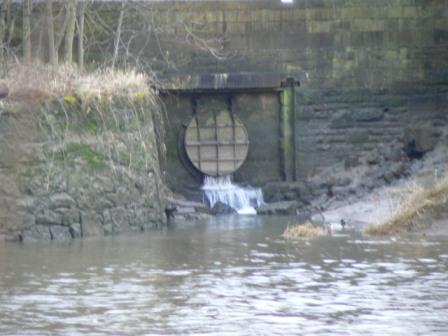
Mouth of the River Syke

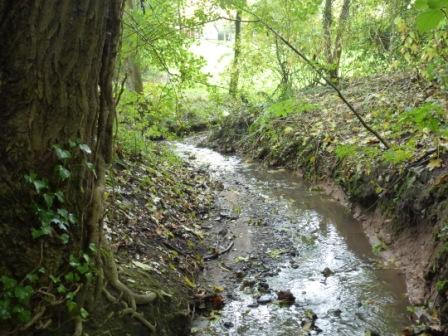
Fish House Brook

Fish House BrookFish House Brook is a stream in Penwortham, which runs from behind my street, Bank Parade, through Greencroft Valley to the river Ribble. Since I started litter picking in the valley three years ago I have been clearing the brook, walking it regularly and researching its history. This article traces its course from source to mouth and provides snap shots of the ways people have related to it over the last few centuries.

~

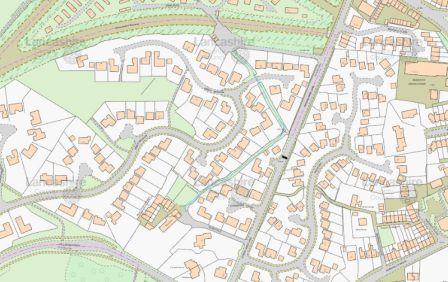
The source of Fish House Brook and its earliest stretch have been culverted underground. Its course is indicated by the street names Bank Parade and an adjacent cul-de-sac called Burnside Way. It runs underneath the gardens on the eastern side of Bank Parade.

Bank Parade and Burnside Way, courtesy of Mario Maps

Bank Parade and Burnside Way, courtesy of Mario Maps

A few months ago Gordon at number 14 kindly invited me into his garden to see the site of its steep banking, which is now occupied by a pond.

FHB tributary's old valley BP no. 14 - CopyHe also lifted the grille to let me take a peek at the swiftly flowing underground stream.

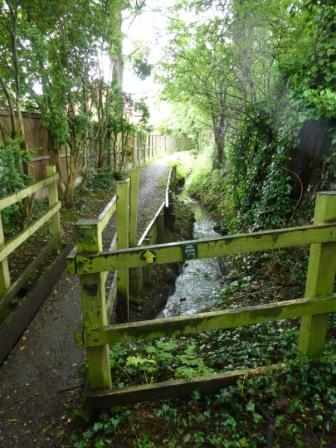
FHB culverted tributary - CopyThe brook now emerges from a concrete pipeline behind Malt Kiln Cottage.

Fish House Brook, sourceThe following maps show Fish House Brook running from behind Malt Kiln Cottage into Greencroft Valley in the 1840’s and today.

Malt Kiln Farm and Greencroft Valley

Malt Kilm Cottage and Greencroft Valley 1840’s, courtesy of Mario Maps

Malt Kiln Farm and Greencroft Valley

Malt Kiln Cottage and Greencroft Valley now, courtesy of Mario Maps

Malt Kiln Cottage

Malt Kiln Cottage

Malt Kiln Cottage originally housed a water mill used to mill grain for beer. A picture of the pool behind the mill leat can be found on the Tithe Map (1838). Elizabeth Basquill provides a detailed account of how the malsters in residence used water from the stream and adjacent well to soak barley in a malster’s trough before it was dried and delivered by horse and cart round the corner to the Black Bull pub (2).

Malt Kiln Cottage, Tithe Map, 1838

Malt Kiln Cottage, Tithe Map, 1838

During this period Fish House Brook must have been much larger and more powerful to turn a water wheel. Its diminishment shows the effect of building 300 houses and their accompanying pipelines for clean water, drainage and sewage during the Central New Towns Project in the 1980’s.

Greencroft Valley

Greencroft Valley

Greencroft Valley is the largest surviving green space between the new estates. The old field lines remain intact, indicated by rows of trees. The wooded areas provide living space and nesting places for hedgehogs, squirrels and birds including magpies, wrens, a variety of tits, nut hatches and a woodpecker.

Greencroft Valley

Greencroft Valley playing field

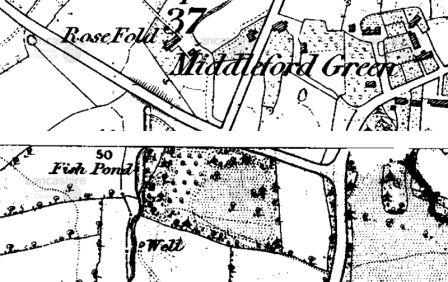
The brook has had its share of pollution problems, mainly from grey water out of faulty washing machines. Since reporting this, it has been less frequent. Frog spawn and frogs have been seen, and a few smaller insects. However, there is no sign of any fish. This is disappointing as the 1840’s map shows a fish pond, which according to the Tithe Map was in Fish Pan Field, suggesting local people used to pan in the brook for fish.

Fish Pan Field

Fish Pond and Greencroft Valley 1840, courtesy of Mario Maps

Fish Pan Field

Greencroft Valley now, courtesy of Mario Maps

The brook is culverted from Greencroft Valley beneath Hill Road South.

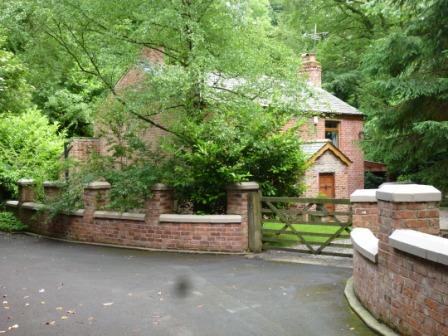
Fish House Brook, Culvert under Hill Rd SouthIt emerges close to Rosefold house and cottages.

Rose Fold Cottages

Rose Fold Cottages

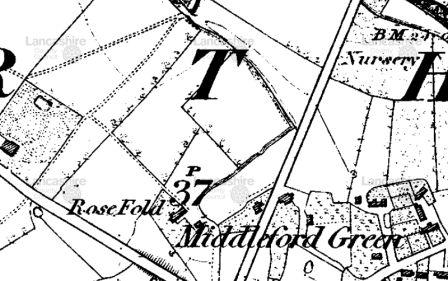
According to Elizabeth Basquill the cottages and yard were part of a tannery. During the late 19th century Fish House Brook was used to wash hides. ‘The hides were soaked in slaked lime first, then washed, and the hair and flesh scraped off.’ This process would have caused considerable pollution to the stream. Two adjacent fish ponds, which Elizabeth believes may have existed from the medieval period were ‘later used as tan pits for washing the skins’ (3).

Rosefold

Rose Fold 1840, Courtesy of Mario Maps

Rosefold

Rose Fold now, courtesy of Mario Maps

The first stretch of the brook, heading northeast, cannot be followed behind the houses. Where it makes a rightangle and heads northwest, a footpath runs alongside it. This follows the line of a much older route that led from Middleforth Green to St Mary’s Well (4).

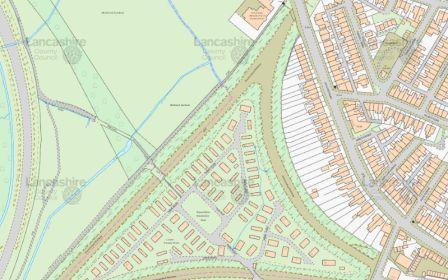
Fish House BrookIt then bends right and passes through Campbell’s Park Homes following its old course round the back of the mobile houses.

Fish House Brook, Campbell's Park Homes

Fish House Brook, Campbell’s Park Homes

Campbells Park Homes, Meadows

Fish House Brook 1840, courtesy of Mario Maps

Campbell's Park Homes, Meadows

Fish House Brook, the Meadows and Campbells Park Homes now, courtesy of Mario Maps

The residential park nestles within the triangle of Penwortham Junction. The train lines pictured closed in 1965 and are now covered by beech, birch, sycamore, bramble and an array of wildflowers, forming important wildlife corridors.

Campbell's Park Homes

Campbell’s Park Homes

Another tributary enters Fish House Brook, running from the back of Far Field across the meadows. The pathway to St Mary’s Well crosses it, and there is a newer footbridge further south. At this time of year the meadows are thriving with mayflowers, buttercups, plantain, wild carrot, orange tipped and cabbage white butterflies and an abundance of bees.

The Meadows

The Meadows

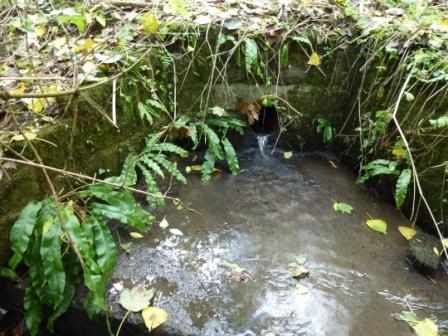
The brook runs through Penwortham Allotments (unfortunately out of bounds) then is finally culverted beneath Leyland Road under Fish House Bridge.

Fish House Bridge

Fish House Bridge

Fish House Bridge

Fish House Brook culverted under Fish House Bridge

The 1840’s map shows a lodge beside Fish House Bridge. Alan Crosby says the bridge took its name from a timber building which ‘served as the quarters of the manorial river bailiff.’ This dwelling was adjacent to the fish garths, which were mainly used for catching salmon between December and August. It was the bailiff’s task to make sure the fishermen from different townships abided by the rules of the fisheries (5).

Fish House Bridge

Fish House Bridge 1840’s, courtesy of Mario Maps

Fish House Bridge

Fish House Bridge now, courtesy of Mario Maps

It is clear Fish House Brook derives its name from the Fish House, and as far as I know, no trace of an earlier name remains.

~

Each of these locations holds a story and discloses a relationship between the brook and the people who have depended on it. Since water started being piped in the 19th century, we’ve had no need to fetch it from wells or streams for drinking or bathing. Due to modern farming and production methods few of us rely on local waterways for fish, mill our own grain or tan our own skins.

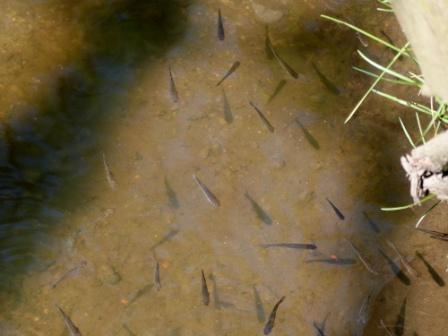
This has a distancing effect. Due to continuing building work, I cannot imagine a time when the water from Fish House Brook will be safe to drink. It is uncertain whether fish will return, although some small fish were sighted by mum in nearby Penwortham Brook.

Small fish photographed by my mum in Penwortham Brook. Can you identify them?

Small fish photographed by my mum in Penwortham Brook. Can you identify them?

Whilst it’s impossible to turn back the clocks, I think there is time to get to know and understand our watercourses, and the lives and motivations of the people who have worked with and changed them. This article is an early marker stone on the journey through this process for me.

(1) Courtesy of Mario Maps
(2) Elizabeth Basquill, More Hidden Histories of Penwortham Houses (2011), p6-11, 42-44
(3) Ibid, p34-36
(4) St Mary’s Well was famous for being the cleanest source of water in the area and was attributed healing properties. Local people used to walk a mile to access their favoured water source, and it was also a site of pilgrimage.
(5) Alan Crosby, Penwortham in the Past, (1988), p48

Lancashire Boggarts

Boggart, Faery Ring TarotBoggarts are a type of spirit found in Lancashire and Yorkshire. In The Lancashire Dictionary Alan Crosby defines a boggart as a ‘ghost, sprite, evil spirit or feeorin.’ He says ‘there was scarcely an old house or a lonely valley which did not have its terrifying tales of creatures which roamed, shrieked and caused havoc – though most do not appear to have been especially malevolent, and some were just a nuisance.’ (1)

There are numerous boggart sites and tales in Lancashire. An old farmhouse in Boggart’s Hole Clough in Blackley was haunted by a creature with ‘a small shrill voice’ ‘like a baby’s penny trumpet’ who played tricks on the residents and their children. Having decided to leave, as they made their departure they heard the shrill voice say “ay, ay neighbour, we’re flitting you see.” Realising wherever they went the boggart would follow they turned back. (2)

The boggart of Barcroft Hall in Burnley was reputedly ‘a helpful little fellow’ until given a pair of clogs. After this he caused trouble, breaking pots and pans, making animals sick and lame, preventing the cows from milking and in a grand finale putting the farmer’s prize bull on the roof. Fed up of his tricks the farmer decided to leave. Crossing a small bridge he heard a voice call from beneath “stop while I’ve tied my clogs, and I’ll go with you!” The farmer resigned to go back.’ (3)

A story called ‘Hanging t’Boggart’ is set at the Boggart Houses in Hindley Green. A boggart with ‘aw mi mosses dreighed up’ appears as a man to Sammy. The man tells Sammy he can hang him, if he can hang Sammy afterward. Presuming the man will die, Sammy garrottes him. Leaving the body he finds the man sitting comfortably at his table ready to complete his part of the bargain. After Sammy’s corpse is found his acquaintances see ‘a big, black shape, mauling about the houses after dark.’ After a ‘terrible struggle’ accompanied by ‘spitting, hissing and other noises which sounded like curses in a foreign language’ they think they have hung the boggart to discover a big black cat in its place the following day. (4)

Other sites include Boggart’s Hole in Bolton and Boggart Bridge in Burnley, where the cost of crossing is a living thing or one’s soul. Clegg Hall hosts a boggart chamber and is haunted by a phantom boy, who was killed by his wicked uncle. Boggarts have been laid at Towneley Hall and Hothersall Hall. In Joseph Delaney’s recent series of Lancashire based children’s books The Wardstone Chronicles boggarts travel down leys wreaking havoc and the Spook’s household boggart manifests as a gigantic ginger cat.

In contemporary poetry boggarts appear as grander more primal elemental beings. In Seamus Heaney’s ‘Bog Queen’ a female boggart lies between turf and demesne wearing a black glacier for a sash, her breasts moraines, her diadem of gemstones dropping ‘in the peat floe / like the bearings of history.’ ‘Barbered / and stripped / by a turfcutter’s spade’ she rises ‘from the dark, / hacked bone, skull-ware, / frayed stitches, tufts, / small gleams on the bank.’ (5)

In ‘Milesian Encounter on the Sligachan’ Ted Hughes describes his intimations of what might have been ‘a Gruagach of the Sligachan! / Some boggart up from a crack in the granite!’

‘Eerie how you know when it’s coming –
So I felt it now, my blood
Prickling and thickening, altering
With an ushering-in of chills, a weird onset
As if mountains were pushing mountains higher
Behind me, to crowd over my shoulder-

Then the pool lifted a travelling bulge
And grabbed the tip of my heart nerve and crashed.’ (6)

These stories and poems show boggarts are intimately connected with ancient mosslands and ravines, farmhouses and their residents. They are spirits of place old as the lowland raised level peat bogs which once covered the majority of Lancashire, of which less than one percent remains. As the mosslands have been drained, cut for turves and enclosed for farming their spirits have been displaced into houses, attaching themselves to the families who farm the land.

Some are benign until treated in the wrong way whilst others are more sinister, instigating pacts based on exchanges of life for life. Bog bodies found in peat such as the Lindow Man as well as offerings such as axes, palstaves and spearheads (7) suggest the mosslands and / or their spirits were treated as deities with whom sacrificial exchanges once took place. What the stories continue to show is that when reciprocal relationships between families and the land, and perhaps within families themselves are damaged boggarts become troublesome.

In the urban mythology of today boggarts have been replaced by poltergeists, which fit better with contemporary theories about the paranormal. However I believe that throughout the landscape they remain, dried out forms stretching through the earth beneath our dwellings, appearing as helpful house sprites, stalking shadows or cats without names. And I believe it is possible, with due care, to form relationships with them.

(1) Alan Crosby, The Lancashire Dictionary, (Smith Settle, 2000), p26. Feeorin is a Lancashire word for fairy.
(2) Aidan Turner-Bishop, ‘Fairy and Boggart Sites in Lancashire,’ Lancashire’s Sacred Landscape (The History Press, 2010), p101
(3) http://www.ormerod.uk.net/History/Barcroft/barcroft_boggart.htm
(4) http://www.hindleygreenra.com/oldfacts.htm
(5) http://inwardboundpoetry.blogspot.co.uk/2006/08/198-bog-queen-seamus-heaney.html
(6) Ted Hughes, Collected Poems, (Faber and Faber, 2003), p655. The creature turns out to be a salmon.
(7) David Barrowclough, Prehistoric Lancashire, (The History Press, 2008), p159

The picture of the boggart is from The Faery Ring Tarot.

Castle Hill

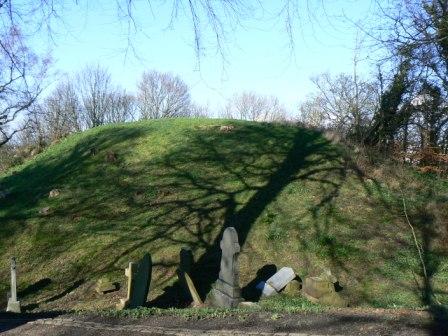
Castle Hill, motteSegregated by the howling by-pass and enclosed within a shroud of trees Castle Hill is a well kept secret unknown to most of Penwortham’s residents. Yet this hidden headland puts the ‘pen’ in Penwortham, or Peneverdant- ‘the green hill on the water’. It is the place where the history of the township began.

Occupation of the area dates to the Neolithic Period. The construction of Preston Docks in the late nineteenth century unearthed a collection of human skulls dating from 4000BC to 800BC, the bones of auroch and red deer, a bronze age spearhead, remnants of a brushwood platform and pair of dug out canoes indicating the existence of a dwelling akin to Glastonbury Lake Village inhabited by the Setantii tribe. Following from the notion that churches are built on pagan sacred sites it is possible St Mary’s church (which is on the summit) replaced a burial mound and / or stone circle.

The sacred nature of the hill is shown by three recorded holy wells. The best known is St Mary’s Well, which was located at the hill’s foot. It was attributed healing properties and was an important sight of pilgrimage. Since drying up its has sadly been covered over by the by-pass. This well was of such importance local people walked a mile to fetch water from it, following the pilgrim’s path. St Anne’s well was located to the west of the church. A well within the church was recently discovered to contain a body inhumed with three skulls which might serve an apotraic function.

A ballista ball and nearby industrial site supplemented by the tale of a ghostly troupe of centurions suggest Roman occupation. The castle mound and its twin at Tulketh were built by Saxons to hold off the Vikings who buried the infamous Cuerdale Horde. When the Normans invaded they rebuilt the castle and Peneverdant served as administrative centre to the Barony of Bussel. The hill was also the site of Penwortham Priory and residence of some scurrilous monks.

Since then St Mary’s church has governed the parish. Whilst the earliest known grave is of a 12th C crusader, the graveyard has served as a burial place for Penwortham’s people since the sixteenth century. The war memorial on the south bank resonates deeply with its association with ancestral remembrance.

One of its darkest legends concerns a fairy funeral. Two men returning home come upon a procession of little men clad in black, wearing red caps and bearing a coffin. One of them dares to look within and sees his miniature doppelganger dead and cold. When the fairies begin the burial he tries to stop it by grasping their leader and the party vanishes. Driven mad by the experience he topples from a haystack to his untimely end.

The path running through Church Wood beside the hill is known as Fairy Lane. In spring it is covered by bluebells and ransoms. In summer the blackbird song never ends. In autumn winds crash, leaves fall and the by-pass roars. Through winter’s depth ivy keeps the wood alive, the leaning yew holds vigil and for a blessed moment there is silence.

Every visit to this magical place, standing between humanity and nature, the dead and the living reminds me of those unseen bonds which might otherwise remain unacknowledged as the old green hill.

* First published in The Druid Network Newsletter (Samhain 2013)

Honouring Gwyn ap Nudd

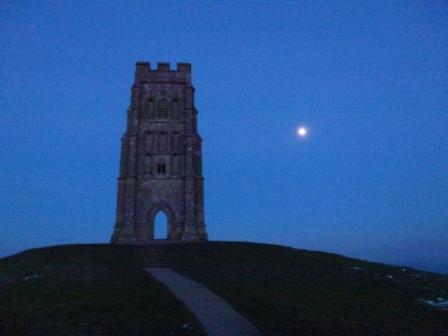
Glastonbury Tor, January 2013On the Winter Solstice a post for Winter’s King.

Samhain has passed. We’re in the dead season. The wild hunt rides the passageways of time and spirit paths lie open. Communities gather and ancestors draw close. Here I feel called to honour Gwyn ap Nudd by telling the story of how he became my muse and patron and made my life whole.

My first meeting with Gwyn took place at the nadir of a crisis. At the end of August 2012 I reached a point of conflict between my spiritual path and ambition to become a professional writer. After two years work completing a fantasy novel I realised its world was too complex and the language too heavy, it held little relevance or hope for a contemporary audience and was at odds with my developing relationship with the land and its myths.

His first appearance was at the head of a fairy procession at a local sacred site. Although I knew of the legend of the fairy funeral I didn’t think I’d encounter it directly nor did I suspect it would be led by a Welsh Fairy King. Yet Gwyn made his name and message clear. The myths of this land are real and he could help me access them. He challenged me to journey with him to the Otherworld, the condition of his guidance being that I lay aside my personal ambitions.

I spent several days considering- could I truly give up my ambition to become a professional writer? How would this change my life? How did I know I could trust him? What if I didn’t come back? Yet this experience, although it was confusing and terrifying felt more powerful and real than anything that had ever happened to me. I knew it was a once in a life time opportunity and I’d only get one chance. I returned to the fairy site and agreed.

Gwyn opened the gates to the past of this land and its myths. With his guidance I learnt how to ride the skies and ancestral pathways on my white mare, viewing the landscape’s lineaments from contemporary suburbia to medieval farmland, oak wood and peat bog to tundra and the age of ice. I met with ancestral people, the ghosts of trees and stampeding aurochs. I entered Faery and descended to Annwn.

Yet I still questioned what a deity associated with Wales and Glastonbury was doing in Lancashire. Reading his myths I realised two of Gwyn’s main stories- the abduction of Creiddylad and Arthur’s slaying of Orddu take place in the North. In the conversation with Gwyddno Garanhir, which depicts his role gathering the souls of the battle dead Gwyn says:

‘I have been where the soldiers of Prydain were slain,
From the East to the North;
I am alive, they in their graves!
I have been where the soldiers of Prydain were slain,
From the East to the South
I am alive, they in death!’

Gwyn is not only a king of Annwn and the fairies but a traveller between the worlds and across the landscape of Britain, maintaining the bonds between nature and humanity, the living and the dead. As a ruler and guide of this isle’s ancestral people his turning up at the head of a local fairy procession was not out of place.

Reassessing my past experiences I realised this wasn’t the first time I’d felt his influence. At Glastonbury festival in my late teens the veil had been lifted to reveal a vision of the Otherworld, a place I now recognise as Gwynfyd, which was coupled with a feeling of truth and ecstatic unity. Thirteen years later he had finally made his presence known, leading me from the cycle of aspiration, failure and frustration caused by my ambition to be a writer back to this magical unison with the land and its myths. He had made my life whole. In January I returned to Glastonbury and made my vow to him at the White Spring.

Since then my relationship with Gwyn has been a constant source of support and inspiration. Whilst the only piece of literature I know of that might link him with the Bardic Tradition is a reference in ‘The Spoils of Annwn’ to the Chief of Annwn possessing a cauldron warmed by the breath of nine maidens, I see him as a god of primal poetry- the wild Awen that thunders like the hunt through space and time and exists in the magic of nature, the songs of the fay and wisdom of the ancestors.

With his guidance I have discovered ways of connecting more deeply with the land and its spirits, its known myths and some unknown ones (a couple of which correspond with factual evidence!). In return I strive to communicate what I have learnt through written and spoken words to maintain the bonds between nature and humanity, this world and the Otherworlds.

And so, as we gather in the dead season, the wild hunt rides and spirit paths lie open I choose this time to tell this story to thank and honour Gwyn ap Nudd.

Spirit of the Aquifer

In eighteen eighty four
a monolithic feat of engineering
shifts the Ribble’s course:
no water to the springs.

From the hill’s abyssal deep
a rumbling of the bowels,
a vexed aquatic shriek:
no water to the wells.

Breached within the chasm
a dragon lies gasping
with a pain she cannot fathom:
no water to the springs.

Water table reft
her giving womb unswells,
surging through the clefts:
no water to the wells.

Unravelling inside
her serpent magic streams
to join the angry tides:
no water to the springs.

Culverted and banked
her serpent powers fail,
leaking dry and cracked:
no water to the wells.

The spinning dragon-girl
tumbles from her swing
and slips to the underworld:
no water to the springs.

Her spirit will not rise
through the dead and empty tunnels,
disconsolate we cry:
no water to the wells.

The hill, no longer healing
stands broken of its spell,
no water to the springs,
no water to the wells.

Peneverdant, A Lunar Cycle

I. Dark Moon

On a dark moon
the lady in the ivy
winds down the dark hill
and the falling graves.

All memory
is sliding into darkness,
the river’s tides
her open mouth.

She is waiting
for the return
of her tribe
on their oaken boats.

The moon is dark
over the river-
an eye, a maelstrom
between the worlds.

The fleet are ready,
the church is empty,
graves as hollow
as the old green hill.

She will be waiting
in the ivy
for the return
of her tribe
on their oaken boats.

II. New Moon

All is darkness
but the splash of the tide,
the wing of an owl.

Lady Ivy
recounts her losses
on the hill
and the bank
where the hangman
wore his cowl.

They are waiting
in the maelstrom eye
of the new moon-
the river’s entryway
to living day
and deep Annwn.

They are waiting,
her hidden tribe
on their oaken boats
in a slit of light,
an opening moonbeam
to row through
the night
to the old green hill.

III. Moon First Quarter

There is wisdom
in the eyes of an owl-
a demand,
a categorical imperative.

Behind cumulonimbus clouds
secretly moon’s orb
is swelling.

They row.
History is written
in their woad-
gods and goddesses,
an oak king,
the lakes and water courses
of their oaken fleet,
the moon’s eye
in the shining river
and all the laws of the deep.

IV. Full Moon

The moon is full
behind the clouds.
She casts no light
on the empty boats,
the processional route
around the old green hill,
the moving river of woad.

Lantern bearers
pass the old iron rails,
the gloomy gathering of graves
to assemble on the mound,
igniting the beacon fire.

By the wing of an owl
the clouds are moved.
The moon looks down,
victorious.

They salute her orb
in the shining river,
the gods of the hill
and the deep.

On this night
of opened graves
anything is possible
in the light of the beacon fire
before the lambent eye of the moon.

V. Moon Last Quarter

Night has fallen
from the moon’s closing eye.

The owl has flown
to the hunt.

The fire gone cold
with the lanterns’ glow
is eclipsed by street lamps
and brake lights.

The by-pass roars
by the old green hill.
The river is concreted
back in her new course.

Lady Ivy
winds down
the hill and the graves.
She waits
for the tribe to row
to the river-moon
on their oaken boats,
to her maelstrom-eye
between the worlds.

Lady of the Oak

I leave the shelter of the grove ducking beneath twisted hawthorn branches. The trees weave the entrance closed behind me. Rain hits my face, falling from a heaven of relentless grey. Reading the sky’s grimace I wonder what has been seen.

A crow caws his warning. Sprinting toward me up the hollow way I see a young man, legs a blur of blue white checkers and feet a splash of mud and leather. Hair slicked to his head, his dark eyes flicker with awe and wariness. The first dapples of a beard play across his chin like leafy shadows.

“M-my Lady of the Oak,” he stammers pulling up.

His breathless chest heaves beneath a sodden tunic. It is rare for youths to approach me without an elder. Looking more closely at my gnarled face his eyes widen in dawning horror. “Bad news travels from up river. A Man of the Oak wishes to speak with you.” He runs away in a flurry of muddy feet.

I follow down the hollow way heedless of the downpour weighing my cloak for the damp of the air already resides deep within my bones. Looking east, rain drenches the green hill, our sacred headland, and the greener barrow housing our ancestors. The torrent’s drumming beat strikes bubbles across the marsh land. As I walk onto the wooden pad way the reeds hiss like snakes. Decay bites my throat. The steely cast of the river of shining water reflects the glumness of the sky.

In a canoe roped to the jetty my cousin Drust sits hunched in his robes. I question what he is doing here, alone.

The river’s song answers. Her visions flood my mind. I see the battle at the ford of roaring water. Broken chariots, tribesmen slaughtered, the hero light vanishing from their eyes like fleeing stars. The eagle standard flies high, reflected in the crimson river. Seeing the pale flicker of their separating ghosts I speak a prayer for the souls doomed to return to a land where they no longer belong.

Sorrow chokes me like bile. I vomit it in anger at Drust, “what are you doing here, when your clan are dead?”

Drust looks up, yet his face remains hidden by his cowl. “I am taking the remnants of our traditions and our gods to the island across the sea.”

I laugh, a throaty brittle sound like twigs twisting and snapping. “Gods are not like saplings, to be taken away and re-rooted and traditions are not nurtured by foreign soils. It seems the ideas of the invaders have penetrated more deeply than I imagined.”

Drust tenses. Drawing my knife from its leather sheath I lean down and slice the rope tying his canoe to the jetty. The river sluices him west and out to sea.

The wind carries enemy voices. Reflected in the falling droplets I see swords and plumed helms. Slipping on the wood and slithering up the hollow way I reach the grove and beg the hawthorns for passage. A peace of ancient green breaks over me, like I’m sinking into a bed of moss. Beneath the canopy’s protective shadow I believe myself safe until tumult disturbs the roots. Crows caw, anticipating carrion.

I cross a sea of acorns and approach the grove’s mighty king. Putting my arms around his trunk, I press my face to the rough bark. “Brother Oak, let me see into the future.”

My heartbeat merges with the pulse of rising sap. My feet become roots reaching downward through damp soil to the outer edges of the grove. My arms stretch into branches and split, bearing bunches of lobed leaves nourished by the hidden sun, washed by the rain, flourishing green.

The ground shudders at the march of soldiers, galloping hooves and chariot wheels. Battle cries are hollered. Bows hum to the crash of metal. Screams and groans rock me. I taste blood and its bitterness fills me.

Earth and water shift as ditches are cut, fields plundered to feed the enemy. Ancestral ghosts clutch my twigs shrieking of their barrow torn down and a temple built to a foreign god. I moan at the ache of rot softening my flesh, bowing and creaking as my branches snap and innards hollow. I beg for lightning’s merciful release but there is no answer from the clouds of sorrow.

“Brother, let me return,” I speak. “The tribe need my support in their defeat.”

I ease back from the oak as the hawthorns scream and turn to see branches broken, shredded leaves and burst haws at the sandaled feet of a man dressed in a plumed helmet, iron breast plate and red woollen tunic. His eyes are blue, skin tanned by the sun of a hotter land. Brandishing a sword stained with blood and sap he accuses me of witchcraft, of sacrificing innocents to divine the future from their death throes.

I smile. The man freezes in horror. I draw my knife and mustering all my oaken might I drive it between the iron plates and slice open his stomach, spilling his guts upon the grass. Attempting to gather them in like rope he drops twitching and groaning to his knees.

I read the future of his people and their empire from his pulsing entrails.

Kneeling, I pick up a handful of blood soaked acorns and address my brother, “do not fear. Whilst tribes and empires rise and fall, the steady strength of oak will conquer all.”

Oak, St Mary's graveyard, Castle Hill

Calling

Before my calling I slept in a glass coffin.
No-one knew if I was live or dead until
I raised my head. And still they are pondering.

Whilst I slept I watched processions
of black clad men carrying coffins,
who march here still putting time
to death, brief as dragonflies.

Their echo beats loud. In woodlands
at March I search for a heartbeat, whilst
mad winds whirl the winter skies overhead.

Roads steal sound. Pylons warp every sense.
Yet when I look the past in the eye it looks back.
They need us now as much as we need them
and the people of the future need us again.

For live or dead there is no rest, no place
to hide nor coffins left, only time processing
through both worlds to a fathomless end.

Winter Ride

Preston


Fay bells chime. You ride a pale horse tonight.
My white mare pines for infinite horizons.

From this false security’s plastic peace
I breathe a prayer for ecstatic release.

Wrenched like tendons, reality is severed.
You open a snow storm, marvel and terror,

suburb stripped bare, hung trees and glittering ice,
a spectral host bathed in sweeping starlight.

Some people don’t see them. The rest run scared.
With my reckless steed I join the nightmare.

Our heart beats quicken to Annwn’s dread trance.
Street lamps flicker. Roofs slip into the distance.

Fairy lights and festive chants spread the county
from Blackpool Tower to Winter Hill, bright fountains

dissolve to torch parades. The present falters
revealing a past of village and bonfire,

chill chapped hands, hungry gatherings at cauldrons,
a labyrinth of padways mazed across Pilling

buried by snow fall, entombed beneath glaciers.
A cold unbearable sets in to kill.

And I fear I’m trapped in the Age of Ice
on the day of doom at the end of time

I cannot move my frozen mind. I scream
“Why? Winter King, bear me to these extremes?”

Your look commands; survey this fragile land,
ice crafting the mythos you toil to grasp,

reshaping the hills, renaming the towns,
creating the isle you know as Britain.

Wild laughter rings from the hollow landscape.
The fate of worlds tilts on a teetering brink.

I see your task, unruly guardian
of streaming vast ancestral tradition.

History rushes back and my course is clear,
My return to Penwortham swiftly steered,

shaking off snow, flexing my cold fingers,
I whisper thanks for your winter visions.