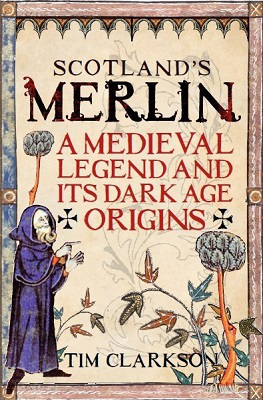
Review: Scotland’s Merlin by Tim Clarkson

Scotland's Merlin by Tim ClarksonTim Clarkson is an independent researcher and historian who gained a PhD in medieval history from the University of Manchester in 2003. He has since written four books on the history of Scotland and the Old North. Scotland’s Merlin: A Medieval Legend and its Dark Age Origins is his fifth.

This clearly written and well-researched book traces the story of Merlin, a figure best known from television as a wizard and advisor of King Arthur associated with Wales and Cornwall, back to its origins in Dark Age southern Scotland, which was then part of the Old North.

Clarkson begins with Geoffrey of Monmouth’s Historia Regum Britanniae as the source of Merlin’s depiction as an Arthurian wizard then turns to the Vita Merlini where we find a different ‘Scottish’ Merlin: a ‘Man of the Woods’ possessed ‘by a strange madness’ after a battle who seeks solitude in the Forest of Calidon and predicts his own threefold death.

This depiction originates from Geoffrey’s knowledge of medieval Welsh poems about Myrddin Wyllt, who became wyllt (‘wild’) after fighting in the Battle of Arfderydd and fled to the forest of Celyddon where he found solace beneath an apple tree with a little pig.

One of Clarkson’s more contentious arguments is that this northern wildman was not originally called Myrddin but Llallogan. The earliest roots of his story may be found in Vita Merlini Silvestris, where Lailoken (Llallogan) tells St Kentigern he became mad after a battle then begs for sacrament before his three-fold death.

The name Myrddin arose from the false etymology of ‘Carmarthen ‘Merlin’s Fort’ (Welsh Caerfyrddin, with ‘m’ softening to ‘f’)’. There is no ‘need to imagine that Lailoken of the North was already known as ‘Myrddin’ before his story migrated to Wales’.

More contentiously, Clarkson claims that Myrddin was not pagan but Christian. This is partially based on textual evidence. Lailoken pronounces ‘I am a Christian’ and petitions Kentigern for the sacrament. In the medieval Welsh poems, Myrddin addresses Jesus and his sister, Gwenddydd, urges him to take communion before he dies.

Clarkson also contests Skene and Tolstoy’s views that Gwenddolau, the northern British ruler who Myrddin fought for at Arfderydd was a pagan. The 5thC archaeological evidence shows ‘the aristocratic landholding elite proudly displayed their Christian credentials on memorial stones’.

‘the organisational infrastructures of paganism were unlikely to have survived the onslaught of the new religion. The two institutions could not exist side-by-side. Wherever Christianity came, the old beliefs died out within a couple of generations. Christian missionaries in the Celtic lands were not, as it is sometimes imagined, willing to turn a blind eye to pagan worship. They were determined to eradicate it. In such a climate of non-tolerance it is very unlikely that druidism, in whatever form, was able to survive… we should envisage Gwenddolau as a Christian king.’

Although Clarkson claims Merlin was not a pagan he admits it is possible to see him as a Celtic seer, shaman, or awenydd, in the Christian tradition. Rather than asserting his view as correct he encourages readers to make up their own mind whether ‘the original story was sprinkled with Christian allusions by later writers and all references to paganism were expunged’ or ‘there was no pagan narrative from the outset.’

Before I read this book it was my personal opinion that the medieval poems about the pagan wildman Myrddin Wyllt formed the earliest strata of the Merlin legend, and that the vitae of St Kentigern and Vita Merlini Silvestris contained later Christianised variants as propaganda promoting Kentigern and the Christian church. I haven’t been persuaded otherwise. It remains my opinion that Gwenddolau was one of the last pagan rulers of the Old North and that Myrddin was pagan; the allusions to Jesus and communion were added by Christian scribes.

Minor personal disagreements aside, this is an excellent book which does valuable work in tracing the origins of the Arthurian wizard, Merlin, to their roots in the story of a northern British warrior who became ‘wyllt’ at the Battle of Arfderydd, found solace amongst the wild creatures of the forest and became a renowned prophet.

I’d recommend this book to everybody interested in Merlin, British mythology, and the history of southern Scotland and the Old North. As somebody based in Lancashire it’s encouraging and inspiring to see the forgotten Dark Age histories of the north returning to life and being reclaimed.

You can find out more about Scotland’s Merlin and how to buy a copy on Tim Clarkson’s blog HERE.
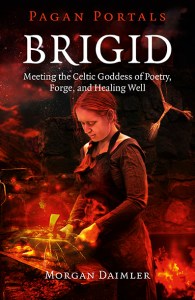
Review: ‘Brigid: Meeting the Goddess of Poetry, Forge and Healing Well’ by Morgan Daimler

Brigid by Morgan DaimlerBrigid: Meeting the Goddess of Poetry, Forge and Healing Well is an introduction to the multi-faceted Celtic goddess, Brigid, by Irish Polytheist Morgan Daimler. In this book, Morgan traces the threads of the ‘enormous, brightly coloured tapestry’ that gives form to Brigid in the twenty-first century to their original sources.
Morgan centres on the well-known Irish depiction of Brigid as three sisters in the 14th C Sanas Cormac: ‘Brigid of the Poets, Brigid of the Forge, Brigid the Healer’. She introduces Brigid’s earliest representations as the daughter of the Dagda and member of the Tuatha dé Danann in The Caith Maige Tuired and Lebor Gabala Erenn. Lesser know Brigids from the Ulster Cycle: Brigid the Hospitaller, Brigid of the Judgements and Brigid the Cowless are also introduced.

A chapter focuses on Brigid by other names: the Gaulish Brigandu, British Brigantia, Scottish Bride, Welsh Ffraid and Saint Brigid. Morgan traces a trajectory from her earliest worship in Gaul and Britain through her introduction to Ireland by northern British settlers in the 1st C to her arrival in Wales with Irish settlers in the 7th C.

Brigid’s Irish myths are covered along with variants of the Scottish seasonal story of Bride’s imprisonment by the winter goddess, the Cailleach, and rescue by her lover, Angus. A wealth of folkloric material is presented including the Imbolc rhyme ‘the serpent comes out of the mound’, the background of Brigid’s crosses, Bride dolls (brideog ‘little Brigid’) and the braht Bride (Brigid’s mantle or cloak).

My favourite part was the menagerie of creatures associated with Brigid; two famous kings of oxen, a king of boars, a king of rams, an oystercatcher, linnet, dandelion and Ffraid’s smelt. Morgan also shares traditional and modern prayers, chants and charms including her own translations and magical workings.

Each chapter ends with a section on Morgan’s relationship with Brigid. Three of these voice minor miracles. The first is remarkably evocative. Morgan speaks of going to a public chant circle led by pagan folk singer Kellianna. A small candle was lit in the centre of the room but before they called to Brigid it went out. In spite of this everyone held hands and sang a chorus for Brigid. The room was filled with warmth and Morgan felt Brigid’s presence. When she looked down, the candle flickered into life then settled into a steady burn and did not go out until the end of their songs. When I read this, I felt like I was in the room with Morgan experiencing her awe.

I’ve known Brigantia as the goddess of the Pennines for several years. I’ve learnt a little about Brigid from books and websites but have never seen her mythos brought together with such lucidity and coherence. I’ve also learnt new things to follow up such as the associations between Brigid the Cowless and the fian.

I would highly recommend Brigid: Meeting the Goddess of Poetry, Forge and Healing to anyone starting to seek Brigid on the grounds of its clarity, depth of research and provision of an excellent bibliography. I’d also endorse it to people with some knowledge of Brigid and longstanding devotees because it’s packed with fascinating information and shares touching personal testimonies to Brigid’s presence in the modern world.

Brigid: Meeting the Goddess of Poetry, Forge and Healing will be released on the 25th of March and is available to pre-order HERE

Review: Glossing the Spoils by Charlotte Hussey

In 2012 I wrote a very short review of ‘Glossing the Spoils’ by Charlotte Hussey. In response to a call-out from Chris Funderburg at The Druid Network, I recently wrote a more detailed review as this book has been such a powerful and lasting influence on my path as an awenydd. I’m re-posting it here as I’ve gathered followers since 2012 and believe ‘Glossing the Spoils’ deserves to be widely known.

Glossing the Spoils

Charlotte Hussey lives in Canada and is a lecturer in Creative Writing and Arthurian Studies and Celtic Literature. She has also trained with OBOD and studied Celtic Shamanism with Tom Cowan. Glossing the Spoils is a poetry collection which Charlotte describes as a ‘march’ through the earliest texts in Western European literature to ‘mend a break in tradition and time’.

The medieval glosa is the perfect form for this purpose. It enables the author to take four lines from an existing text and weave them as end lines into each of four ten line stanzas. The effect is the creation of a space where one can ‘gloss’ the lines: explaining, interpreting, re-imagining, bringing ancient often obtuse fragments to life for a contemporary audience.

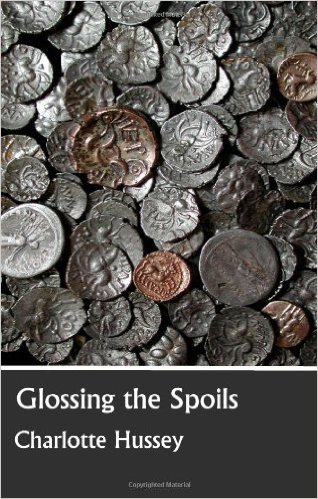
On the cover are coins from the Hallaton treasure at Harborough museum in Leicestershire. The book is concerned with the treasure-hoard of our past literally and metaphorically. In several instances the ‘spoils’ are shown to have a strange, animistic, frequently dangerous life of their own.

In ‘Lake of the Cauldron’ the narrator is pulled into the Cauldron of Rebirth by the goddess etched upon it with ‘dreadlocks’, ‘long breasts’ and ‘a sweaty belly’, to be dismembered and boiled in the ‘churning waters’. In ‘Matter’, a shield empowered by an engraved dragon implodes as the cyclone of atoms tearing apart at Hiroshima, upon its destruction. A branch cut from a crab apple tree ‘possesses a potency all of its own, / calling, called to those it chooses/ like the silver one from fairyland.’

Figures from the deepest strata of Western European mythology are presented in new ways; uncanny and familiar. Beowulf is ‘working for the crime squad’: a ‘vigilante’ ‘on a mission to purge the city’ taking on monsters like the ‘psycho TV star’ tacked to the narrator’s door. Fand is the tear in the eye of a girl, ‘bruised and weeping’ on the morning bus. The Fisher King, a Vietnam veteran, watches his recruits sucked into the brown river of his wound as napalm falls.

Variants of Parzival are explored from a range of angles. In ‘Trolls’ the knightly quest is critiqued from the standpoint of the Loathly Lady. The hero is depicted ‘steely eyes fixed on some distant / vanishing point: a crusading convoy to join, another holocaust to start, / or a melancholic witch to burn.’ The Lady speaks: ‘Thoughts about whom next to destroy deprive you of joy.’

Another recurrent theme is otherworldy and magical conceptions. ‘Daemon Lover’ covers the conception of Merlin. ‘Devil May Care’ forms a tongue-in-cheek depiction of how an otherwordly being in the form of a woman collects ‘white spume’ from a male youth then, as a man, uses his ‘vis vitalis’ to ‘make a woman conceive.’ ‘Make Over’ re-tells how, with Merlin’s aid, Uther Pendragon takes on ‘the appearance of the Duke’ to sleep with Igraine (leading to Arthur’s birth).

‘Naked’ celebrates male and female sexuality. Based on lines from Geoffrey of Monmouth referring to a naked giant riding a dragon it opens with the Cerne Abbas giant ‘defending his turf, toughened / nipples like second eyes; roused / cock sticks out from his thighs.’ However it is modernist artist Georgia O’Keffe who throws her clothes off, ‘shakes her paint brush… like a shillelagh, / to evoke a dragon, horned, crested, / and then ride upon it naked.’

I have covered only a selection of poems from this treasure-hoard of glosa, which never fail to shock, disturb and delight. I would highly recommend Glossing the Spoils to all students of Druidry, pagans and poets as exemplary in re-envisioning the oldest myths of Western European tradition with formal mastery. Charlotte’s methodology has been central to my poetic and imaginative practice since this book was released in 2012 and I can’t thank her enough.

Glossing the Spoils can be purchased HERE.

Review: Snowdonia Folk Tales by Eric Maddern

Snowdonia Folk Tales by Eric MaddernFor my birthday a friend bought me a copy of Snowdonia Folk Tales signed by its author, Eric Maddern. I visited Snowdonia earlier in the year and was sad to leave, so it has been heartening to return through these tales breathed into new life by Eric’s local knowledge and enthusiasm and a fresh gust of Snowdonian air.
Eric was born in Australia but ‘after a ten-year journey around the world’ moved to Snowdonia and founded the Cae Mabon eco-retreat centre. Working in Aboriginal communities he came across the notions of the Dreamtime, songlines and ceremonial sites through which a people maintained a spiritual connection with their land and ancestors.

The Aborigines observed white Australians have no dreaming. Likewise In Britain we have largely lost touch with our spiritual heritage. In Snowdonia Folk Tales, Eric sets out to remedy this. The book is founded on a great song-line running through the Pass of Two Stones east-west through the Snowdonian mountains. Who walks this pass?

In the first two sections ‘Mythic Roots’ and ‘Legends of Arthur’ Eric covers the Matter of Britain. What I love about this section is that he has crammed in pretty much every tale from The Mabinogion which is linked to Snowdonia! These old, old, myths contain deep wisdom but in the translations I have read can come across as inaccessible and wooden.

Eric really gets into the bones of the characters and brings them to life. His re-working of the story of Lleu and Blodeuwedd is exemplary in conveying their feelings, teasing out the humour but also maintaining a sense of the numinous. The dragons buried at Dinas Emrys by Lludd form a narrative thread worming their way into the story of Merlin and Vortigern. Merlin disappears as mysteriously as he appears with the Thirteen Treasures of Ancient Britain. ‘Rhitta and the Cloak of Beards’ is hilarious. An unexpected gem is a brave reworking of the story of Lindow Man (how Eric connects him with Snowdonia I will leave out as I don’t want to spoil the surprise).

The following sections are ‘The Lives of Saints’ ‘The Tylwyth Teg’ ‘Folk Tales’ and ‘Historic Legends’. Arthur gets his come-uppance from St Padarn for coveting his richly woven clerical robe. The ‘fair tribe’ travel from Cader Idris to make mischief by inspiring endless dancing with the gift of a magical harp. The harp reappears floating hauntingly on Bala Lake after the old town of Bala was drowned and the harpist made a narrow escape with the aid of a robin. The stories of Maelgwn Gwynedd, Owain Glyndwr, Mari Jones and others illustrate beautifully how the lives of real people become the stuff of legend.

I enjoyed this collection of Snowdonian myths, oral tales and embellished histories immensely. I would recommend it to all people interested in Snowdonia and Britain’s heritage and to everybody who enjoys a good story. I also hope it will encourage people to visit some of the incredible places where these tales are set and share them with a wider audience.

P1110692 - Copy

Bala Lake

Enchanting the Shadowlands Book Launch

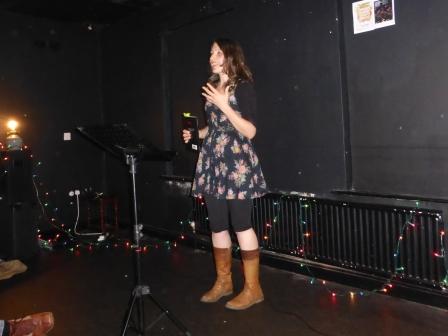
Enchanting the Shadowlands Book CoverOn Wednesday 22nd April I held an evening of poetry, song and story to celebrate the launch of Enchanting the Shadowlands at Korova Arts Cafe in Preston. The night was very special for me because it marked the publication of my first book, the completion of a spiritual journey and brought together friends who have supported me since I took to writing poetry seriously in 2012.

Storyteller Peter Dillon was MC for the night. We opened with a joint performance of ‘The Bull of Conflict’ a glosa recording the moment when my patron god, Gwyn ap Nudd, gave me the imperative of ‘enchanting the shadowlands’.

Vincent Smith’s ‘Woodland Eulogy’ and reflections on early memories of a close friend made a poignant start to the first half. Mike Cracknell brought the house down with his hilarious poem about lovers with nothing in common except filthy habits. Martin Domleo performed poems tying in with my nature themed work including ‘Thor’s Cave’ and the experience of deceleration linking to his passion for motorbikes. Nina GeorgeSinger Nina George was the first headline act. She started with a haunting piece written by a friend. Her second song, she told us, demanded to be sung at the launch! She got everybody joining in with the chorus:

‘She said this is my church here where I stand
With my hands in the earth and my feet on the ground
She said this is my church here where I stand
With my heart in my mouth and my soul in the land.’

Nina finished with a song by Jodi Mitchell. At the end of the first half I performed poems exploring local history written in voices of the ancestors and spirits of the land. These included a reluctant resident of Penwortham Lake Village, a spinner in her cellar, the spirit of the aquifer beneath Castle Hill and Belisama, goddess of the Ribble. During the break we looked out at a pink-purple sunset against fairy-lit trees and the silhouette of St Walburge’s spire. Preston Sunset from KorovaI opened the second half with  ‘Slugless’ which was written when I had a spate of people confessing to me about their slug problems. All but one…. As we often bump into each other walking beside the Ribble, Terry Quinn performed poems about the river, one set at a crucial time when a campaign run successfully by Jane Brunning saved the area that is now Central Park from a huge development scheme. Dorothy mentioned she also had a slug scene in her novel ‘Shouting Back’. Her poems included the memorable ‘City Rats’.

Nina returned to perform a song about reclaiming Druidry and a controversial tongue-in-cheek ditty called ‘The Day the Nazi Died’ by Chumbawamba. Novelist Katharine Ann Angel read excerpts from ‘Being Forgotten’ and ‘The Froggitt Chain’ and spoke of her inspiration from people, particularly working with difficult teenagers.

Nicolas Guy WilliamsThe second headliner was poet Nicolas Guy Williams. He opened with ‘Ancient by thy Winters’ saying he thought it would be suit my launch as it contains howling: ‘Hear them HOWL! HEAR THEM HOWL! Once no forest was defenceless.’ He also performed ‘Woman of the Sap’ and ‘Oh ratchet walk and seek that scent’ one of my personal favourites based on the local legend of the Gabriel Ratchets.

I ended the second half with a piece dedicated to Gwyn on Nos Galan Gaeaf called ‘When You Hunt for Souls in the Winter Rain’ and poems Lorna Enchanting the Shadowlandsrecording a journey to Annwn (the Brythonic Otherworld) with horse and hound to an audience in his hall. As a finale I performed ‘No Rules’ which summarises my philosophy of life:

‘Break every boundary.
There are no rules.
Only truth and promises
Bind us in the boundless infinite.’

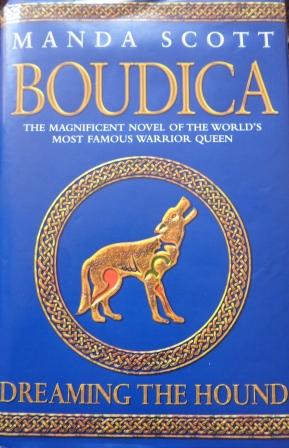
Afterward there was an open-mic where it was great to have Flora Martyr, who is missed as a host of Korova Poetry, back to perform. Following Nina’s protest songs John Dreaming the Hound Winstanley, who is involved with the Wigan Digger’s Festival, sung an old diggers song. I also opened some presents from the generous members of my grove. Nina gave me a bottle of wine (knows me too well!). Phil and Lynda Ryder gave me a book about Boudica, a warrior queen and ruler of the Iceni (horse) tribe, called ‘Dreaming the Hound’ with a wonderful bronze image of a howling hound on the cover.

When we left Korova the crescent moon was high in the sky with a bright and beautiful Venus above the fairy-lit trees. I felt the shadowlands had been enchanted. There is power in a promise… and in the support of friends without whom I wouldn’t have been able to see it through. I’d like end on a note of thanks to Peter as MC, everybody who performed and came to watch and to Sam for providing the venue. Moon, Venus and Fairy Trees

Review: Your Face is a Forest by Rhyd Wildermuth

Your Face is a ForestRhyd Wildermuth is a writer and social worker based in Seattle. He writes for ‘The Wild Hunt,’ ‘Patheos Pagan’ and ‘Polytheist.com’ and blogs at ‘Paganarch.com.’ He describes himself as ‘a dream-drenched, tea-swilling leftist pagan punk bard.’ He is also a student of Druidry with OBOD. What drew me to his work was his boldness, passion, vision and the fact he proudly and outspokenly ‘worships gods.’

Your Face is a Forest is a collection of essays and prose. Rhyd describes his style as ‘weaving a forest from meaning’. This book’s a tapestry of poetic prose and prose poetry woven from themes that make sense as a whole only in the non-rational way trees make a forest. It’s rough, edgy and raw, and also a little rough around the edges, which adds to its anarchic charm.

Rhyd invites the reader to step into his life and accompany him through the places where he lives into forests behind to meet the faces of ‘the Other’ in ‘tasselled willows’, pines and alders, satyr dances and Dionysian revels. To find the tooth of an elk long dead and buried where cars now drive. A world full of life and another world behind it.

What I love about this book is that Rhyd speaks deeply and richly of both worlds. On pilgrimages to France and Germany he tells of the wonder of waking in a field of rabbits, playing flute with locals on unknown streets, sitting within the pink fur womb of a Berlin bar. He speaks of his despair at social inequality and the continuing repression of homosexuality in Christian colleges. He is a poet of the sacredness of this-worldly life on all levels.

He also shares some of his innermost visions of the gods and otherworlds. These have guided his life and thus form the reader’s guiding threads. Outstanding was a vision of Bran, which deserves quoting in full; ‘When I saw Bran, his great black cloak rippled in an unseen wind, his powerful form straddling a Breton valley between the River of Alder and the sea. But the cloak fled from his body, a myriad of ravens having stripped from his flesh sinew and skin, leaving only great white pillars of bone, the foundation of a temple and a tower. I do not yet know where his head lies.’ On his pilgrimages we find a mysterious tower on a mountain, a stone head in a fountain and a magical cloak. But Rhyd doesn’t give all his secrets away.

Other deities include Arianrhod, Ceridwen, Brighid, Dionysos and the unnamed gods and spirits of the city streets, buried forests and culverted rivers. What I liked most about these sections is that rather than kowtowing to being acceptable, Rhyd speaks his experiences directly and authentically. This was encouraging and inspiring for me and I think will be for other polytheists whose encounters with the gods go beyond known mythology and conventional Pagan text books. There are few modern authors who speak of the mystical aspects of deity and Rhyd does it exceptionally well.

I’d recommend Your Face is a Forest to all Pagans who are looking for real, undoctored insights into nature and the gods. Because it’s not only about Paganism and is written by somebody fully immersed in the beauty and pain of life and the search for love I’d recommend it to non-Pagans too, particularly those interested in spiritual journeys and visionary prose and poetry. Quoting Rhyd’s dedication, to ‘Everyone who’s ever looked into the Abyss / And brought back light for the rest of us.’

Your Face is a Forest is available through Lulu: http://www.lulu.com/shop/rhyd-wildermuth/your-face-is-a-forest/paperback/product-21887986.html

Review: Bard Song by Robin Herne

Bard SongThis review is long overdue. Coincidentally I was re-reading Bard Song with the intention of reviewing it at the time Robin published his recording of Gwynn’s Guest, dedicating it to me, which has spurred me along.

I’m not sure if I can give this book an objective review as I’ve owned it so long and like it so much. The pages are scored with under-linings. Against many of the poems are pencilled a’s, b’s and c’s from my attempts to decipher complex metres. The spine bends open on my favourite poems, which I return to frequently, have shared with my local Poetry Society and used as examples in Bardic workshops. But I’ll give it a go.

Robin Herne is a polytheist Druid based in Ipswich. Bard Song provides an introduction to reading and writing honorific and seasonal poetry (in English) in mainly Welsh and Irish metres. This fulfils an important role in Brythonic and Gaelic polytheism, giving people like myself who have not yet mastered the language of their gods the tools and inspiration to compose poems based on Celtic metres. It also opens new and exciting vistas for future developments within poetry as a whole.

In his introduction Robin speaks of the Awen, the source of Bardic inspiration as ‘a wild spirit, a passionate and consuming Muse that imparts not just pretty turns of phrase, but a new vision of the world.’ Poetry is a magical art which can be used to commune with and honour gods and ancestors, attain and express a spiritual vision, record history, praise (or deride) a person and for fun. Its ultimate purpose is re-enchantment.

The first four parts of the book are divided in accordance with the Gaelic festivals; Samhain, Imbolc, Beltaine and Lughnasadh. In each section Robin introduces the festival with associated myths, traditions, deities and suitable metres before sharing a selection of his poems, many of which have been used by his clan in ritual.

For Samhain, Robin introduces the forsundud, an Irish genealogical poem for the ancestors. We meet the Cailleach holding ‘cold vigil’ in ‘The House of Winter’ and rutting stags. ‘Gwynn’s Guest,’ one of my favourite poems of all time (written in tawddgyrch cadwnog metre) records St Collen’s encounter with the Welsh Fairy King on Glastonbury Tor. The first stanza captures Gwynn’s wild nature so perfectly I can’t resist quoting it;

‘Wind tears the Tor, unravels hair
Bound in plaits fair, wild blood yearning
For thunder’s roar, this hill my Chair,
Blessed wolf’s lair, white fire burning.

Tribes rise and fall…’ And the ending is wickedly humorous.

At Imbolc’s core stands the hearth of Brigit. ‘Sisters of the Hearth’ introduces her triple role as smith, healer and poet. ‘Brigit’s Song’ takes place in her Hall. Robin’s words in ‘Three Flames’ resonate most strongly with my personal experience of her as Brigantia, goddess of northern England and the fires of inspiration which consume and heal;

‘Light of compassion white burning
Thaw the ice that scalds my mind
Stir the flesh from torpor afresh,
Night-blind, scars mesh; pray be kind.’

The section on Beltaine speaks of magical and military poetry. ‘Cu Chulainn at the Ford’ provides a heart-wrenching representation of Cu Chulainn and Ferdiad’s tragic battle in Ae Freisilighe metre. On a more cheerful note we find ‘The Honey-Tongued,’ dedicated to Ogma ‘carpenter of song,’ who is the patron god of Robin’s Clan. Since its publication this poem has fittingly given its name to a new brand of mead.

Lughnasadh introduces the stories of Lugh and Tailtiu, recording Lugh’s arrival ‘At Tara’s Gates’ and Tailtiu’s death and ‘funereal commemoration.’ It covers the story of Gobanos, a god of smithing and brewing and there is also discussion of famed cauldrons in Celtic mythology and the important role of select brews in the arts of inspiration.

I have mentioned only a small selection of poems and themes. In later chapters Robin shares poems devoted to Heathen, Greek and Roman gods and those written for fun. In the appendices he provides guidelines for writing in Irish and Welsh metres. These are clearly introduced with rhythmic and syllabic patterns with examples. For Englyn Penfyr;

‘######a##b
###b##a
######a’

‘The old hunter sought the beast in the night,
Though without might, hope never ceased,
Yet frail, his skill found the feast.’

I have learnt vast amounts from this book about Celtic metres, composed some poems of my own in the Welsh ones and found it to be an excellent resource for use in Bardic workshops. Robin’s dedication to the Old Gods shines throughout his work and this alone has inspired me on my path as an Awenydd and polytheist.

Bard Song is a must read for Bards, Fili and people of Celtic and other polytheistic religions. I’d also recommend it highly to all Pagans and to poets looking for new and exciting metres with origins in the British Isles.

***

Bard Song can be purchased through Moon Books: http://www.moon-books.net/books/bard-song

Robin’s most recent poems, which continue his exploration of world mythology in carefully chosen metres can be found in Moon Poets: http://www.moon-books.net/books/moon-poets

His blog ‘Round the Herne’ is here: http://roundtheherne.blogspot.co.uk/

Review: Creatures by Greg Hill

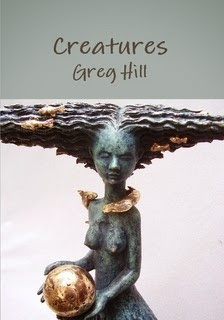
Creatures by Greg HillGreg Hill lives in Wales. He was editor of The Anglo-Welsh Review and contributes regularly to Welsh literary magazines. I’ve followed his blog for a while and was delighted when I heard about the release of his first full length collection of poetry in print; Creatures.

The title alone creates intrigue. What kind of creatures? The epigraph replies; ‘All creaturely things… Plants growing, / Roads running, / Rivers flowing, / Places that sing.’ It is clear from the outset this collection is about an animate landscape where every being is a creature, alive and sentient.

The first ekphrastic poem is based on the picture on the cover; Fidelma Massey’s sculpture, ‘Water Mother,’ who dreams thoughts of water into being. Here, the ‘cosmic ebb and flow’ of thought and water is contained in the poem. Analogies between living water and perception recur throughout the book. In ‘Cwm Eleri’ the poem’s tight structure fails to contain the river, which slips from grasp like time. In ‘Myddleton’s River’ water-ways link London, Wales and the underworld, forming a conduit for complicated alchemical processes of mental and physical transformation.

The contrast between our immediate perception of creatures and those aspects of their being impossible to grasp is central. A jackdaw sitting happily in the hearth becomes ‘an image… a token of wildness… like a jigsaw piece from another puzzle;’ a homely and familiar event made strange. Greg writes that as a heron dips out of sight ‘a part of me fell out of the sky with it,’ lost ‘except that something / settles in the flow of these words.’ We can never completely grasp our perceptions. Only through words can they find permanent representation.

Several poems present roads, paths and boundaries as living entities and how our understanding of them shifts once they are crossed and they slip into memory. If we try to return, the roads are ‘dull,’ ‘dusty,’ ‘empty.’ Our former selves are shadows, unfamiliar reflections. ‘Strange border guards’ usher us ‘from what / we neither know nor recognise.’ These haunting and complex poems demonstrate how choices shape our relationship with the landscape and hence our memories.

The mysteries of the Bardic Tradition and its creatures are explored in novel ways. ‘Awen’ depicts a shepherd lad inspired to speak poetry by a spirit ‘like a forest god’ who is elusive as the words he inspires. Four episodes from the Mabinogion are covered. I was fascinated by ‘A Scaffold for a Mouse,’ which depicts ‘Manawydan living in a dream / landscape with the life / conjured out of it like a flat plane.’ Through his ‘firm grip’ on the mouse, ‘a small thing / for a great purpose,’ he breaks the ‘powerful magic’ of Llwyd, awakening ‘form to its true nature’ thus freeing Rhiannon, Pryderi and Cigfa.

This collection depicts a relationship with the creaturely world that is on the surface simple and direct yet beneath mysterious and disconcerting. Each time I return to these poems I discover new meanings and thematic relationships within the whole. I’d recommend this book to anybody who likes poetry with lots of depth and has a love for nature, myth and creatures.

Creatures can be purchased through Lulu here: http://www.lulu.com/spotlight/greghillpoetry

Greg Hill’s poetry site is here: http://greghill.weebly.com/
Greg’s blog, Hill’s Chroicle can be found here: http://hills-chronicle.blogspot.co.uk/

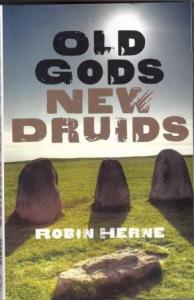
Review: Old Gods, New Druids by Robin Herne

Old Gods, New DruidsI discovered this book a year ago at the same time I discovered Druidry. On a re-read it has been fascinating returning to parts that have inspired and shaped my relationships with the Old Gods and nature spirits of my local area, as well as finding new meanings to fit the present period of my life. The title alone has a magical resonance.

Old Gods. Robin Herne is a polytheist Druid who lives in East Anglia. He runs an Eisteddfod in Suffolk and is part of a long running Clan whose patron deity is Ogmios. He writes about Druidry due to his conviction `of the existence of the Gods.’ This sense of passion and connection flows through the book, affirming and celebrating their existence. My own life has been characterised by a wild desire to hunt for the divine; my restless and insatiable mind and feet leading me through fantasy novels, horses, crazy festivals and the dirtiest rock clubs, Romanticism, Greek and German philosophy and tragedy, more horses, long walks, and at last to the Old Gods of this land, which has been a huge homecoming.

Reading this book for the first time confirmed my developing intuitions and taught me some important lessons. We can build better relationships with the gods if we address them rather than attempting to invoke them. Instead of approaching them with demands we should get to know them. Rather than turning up with an armful of offerings or a page full of verse we should find out what they want us to do for them.

Until Phil and Lynda Ryder introduced me to Druidry my connection with deities had taken place away from home, and in many ways been an escape from the banality of suburban life. After opening my eyes to what was outside my door I became more aware of the nature spirits of my local area. Robin’s book has been really useful as he offers sound advice on how to connect with them. For example before approaching the spirit of a water course learning if it’s artificial or manmade, whether it’s been diverted and what it’s old uses were. This process turned up some interesting research about my local valley and it’s brook as well as deepening my understanding of the spirits.

As a poet I found the following lines inspirational: `in Clan, we wonder at what body of land-stories may have once existed, that saw and celebrated the spirits of the land. We wonder too at what stories we, and others, could create anew to reinvest the spirit in the Sacred Land.’ They played a part in leading to me writing a book of poetry about the valley to raise money for the Friends group I set up there.

An exercise that stuck in my mind was a visualisation where Robin says `you may feel the urge to chant, sing, clap a beat with your hands, or do various other activities. Go with the flow…’ Whilst I’ve found other people’s visualisations don’t work for me these words stuck in my mind, because I knew, frustratingly, this was something I’d never been able to do. Following a prompt to sing one of my poems to Belisama, the goddess of the Ribble, I recalled these words, with my frustration. I decided to try it, an experience which has transformed and deepened our relationship. Building on this I’ve learnt to let go entirely, allowing a song to take me into a trance, strangely and inexplicably met Gwyn ap Nudd, a deity whose wild, terrifying nature connects to my soul, and journeyed with him to the Otherworld.

New Druids. Robin’s values as a young man coalesced `in the mythic image of the Druid.’ The label of `Druid’ has been a sticking point for me. Up until last year my world view was based on Nietzsche’s artist’s metaphysics and William Blake’s visionary excavation of London, combined with my growing intuitions about the local land, its Gods and their myths and stories. This amalgamation made me see myself as some kind of pagan poet-philosopher, my totem mare fleeing tradition, stamping and shaking her head like a horse refusing to go into a box.

For Robin to reject tradition involves dismissing `those ancestors that adhered to polytheism within that time and who might well guide the living from beyond the grave.’ A question I ponder frequently is why am I called to the Gods of ancient Britain and the tribes who lived in relationship with them, and to the divine figures whose tales, hunting horns and battle cries, with the scream of ravens echo from The Mabinogion and The Books of Ancient Wales? Why me? Why now? Why is Druidry returning, or perhaps, why is Druidry being brought into being by those who are called by the land and its Old Gods?

Robin’s suggestion is that `Gods are astounding entities and a new spirituality could be built around them that would enlightening, liberating, awe-inspiring and magnificent. If the world had never had a body of polytheistic naturalists seeking meaning and beauty and sapience in the land around them, then the 21st century would be a fantastic time for it to gain one.’ `Myths inspire the future.’ For Robin the draw of the mystical religions is their capacity to restore wonder, mystery and enchantment to the world. This restoration does not take place solely in ritual and meditation but by working with and sharing the energy and inspiration that are gifts of the land and its deities, a task Robin performs through teaching, storytelling and poetry.